Books about Kansas City? (!)

I just got an email from a reader in Toronto who is going to Kansas City, Missouri next week and asked me if I knew of any good books that take place there.

I don’t know of any books set in Kansas City. However, I have a few ideas about some truly great books–masterpieces, in fact–that at least put you in the general geographic area. The good news is that these are all books that I LOVED.

I have only been to Kansas City once in my life for a brief business trip so I am by no means an expert. The odd thing about Kansas City, MO is that the state of Missouri, although considered part of the Midwest is also kind of the western most edge of the South. But the state of Missouri, and Kansas City itself of course, border on the state of Kansas which is really the start of the Great Plains which stretch north and west and make up the physical and perhaps mythically figurative heartland of America. (I’ve just looked at a few maps of the “the Great Plains” and while they are broad and span many states and provinces, the border is more narrowly drawn in reality than it is in my head. So what, my mental map is going to stand.)

A book that is set in the state of Missouri is Stoner by John Williams. Follows a dirt poor farm kid who goes off to college in Columbia, MO and ends up eventually becoming an English professor there. The contrast between his life on the farm and academia I think presents a theme not uncommon to kids in the rural Plains states.

A book set in the state of Kansas is the bone chilling, compelling, controversial, best selling, and wonderfully written In Cold Blood. Truman Capote’s masterpiece fictionalized volume of non-fiction about a family murdered in their home.

And finally, there are two books that take place in the neighboring Plains state of Nebraska that are true classics in every sense of the word and have a universality that tugged at my heartstrings having grown up in Minnesota which is kind of the northern edge of the Plains before they turn into the north woods. They are of course, My Antonia and O, Pioneers by Willa Cather.

No doubt my readers, maybe Molly from My Cozy Book Nook in particular who lives in the that part of the world, will have some suggestions?

The Oxbridge Literary Complex and Academia in Literature


I think this is probably fodder for more than one post, but here it is all lumped together…

While I make my way through the fabulous 500+ pages of Widow Barnaby by Fanny Trollope I thought I would blog about something that has been on my mind for a while.

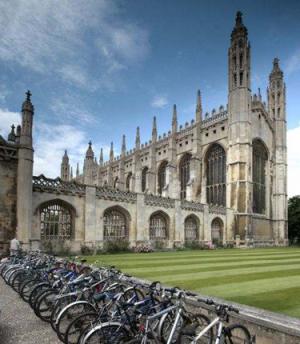
In a way this is less of a post and more of an invitation for my British readers to weigh in on the Oxbridge stranglehold on British fiction and an opportunity for anyone to chime in on Academia in literature in general.

In American literature New York City looms large in the same way that London looms large in Britain. But I don’t think there are any equivalent U.S. educational institutions that are as all pervasive as Oxford and Cambridge are in British lit. I suppose Harvard and the rest of the Ivy League may have disproportionate representation in American lit, but again, not as omnipresent as the O&C megaliths. Not just as institutions that produced so many writers, but also as background in so many novels. And it is not just that they seem somewhat ubiquitous but that there is almost a complete lack of mention of other universities. Almost as if there weren’t any other Universities in Britain. It is very easily the case that I am just reading the wrong stuff. After all I don’t read a lot of modern fiction. Is this a story of a publishing industry that wouldn’t give the time of day to the so-called redbrick Unis?

And please, before you yell at me for being a dumb Yank, please know that I cast no aspersions on either Oxford or Cambridge, and I obviously love reading the fruits of their academic loins.

This discussion also begs the question about writers writing about becoming writers, and in many cases the academic milieu from whence they sprung. I love academic novels. The brilliant Stoner by John Williams (at a University in Missouri) is the first one to come to mind, and Wallace Stegner’s Crossing to Safety (at a University in Wisconsin) is the second. But then there is that whole world of academic novels where they focus on the writer becoming a writer. I also love those books as well, but tend to feel like the author is cheating a bit by writing some warmed over autobiography. And although I love those types of books, I think I reserve my highest praise for authors who come up with worlds way outside their own experiences (Margaret Atwood, Ann Patchett, Muriel Spark, Ian McEwan, to name just a few).

So what think ye? Oxbridge, academic novels, writers writing about becoming writers…pick one or all and let me know what you think.

And while you’re at it, tell me your favorite academic novels or your favorite novels about writer’s becoming writers, or any good novel that uses some other British university as a setting. And if you have lots of opinions like me, give me all three.

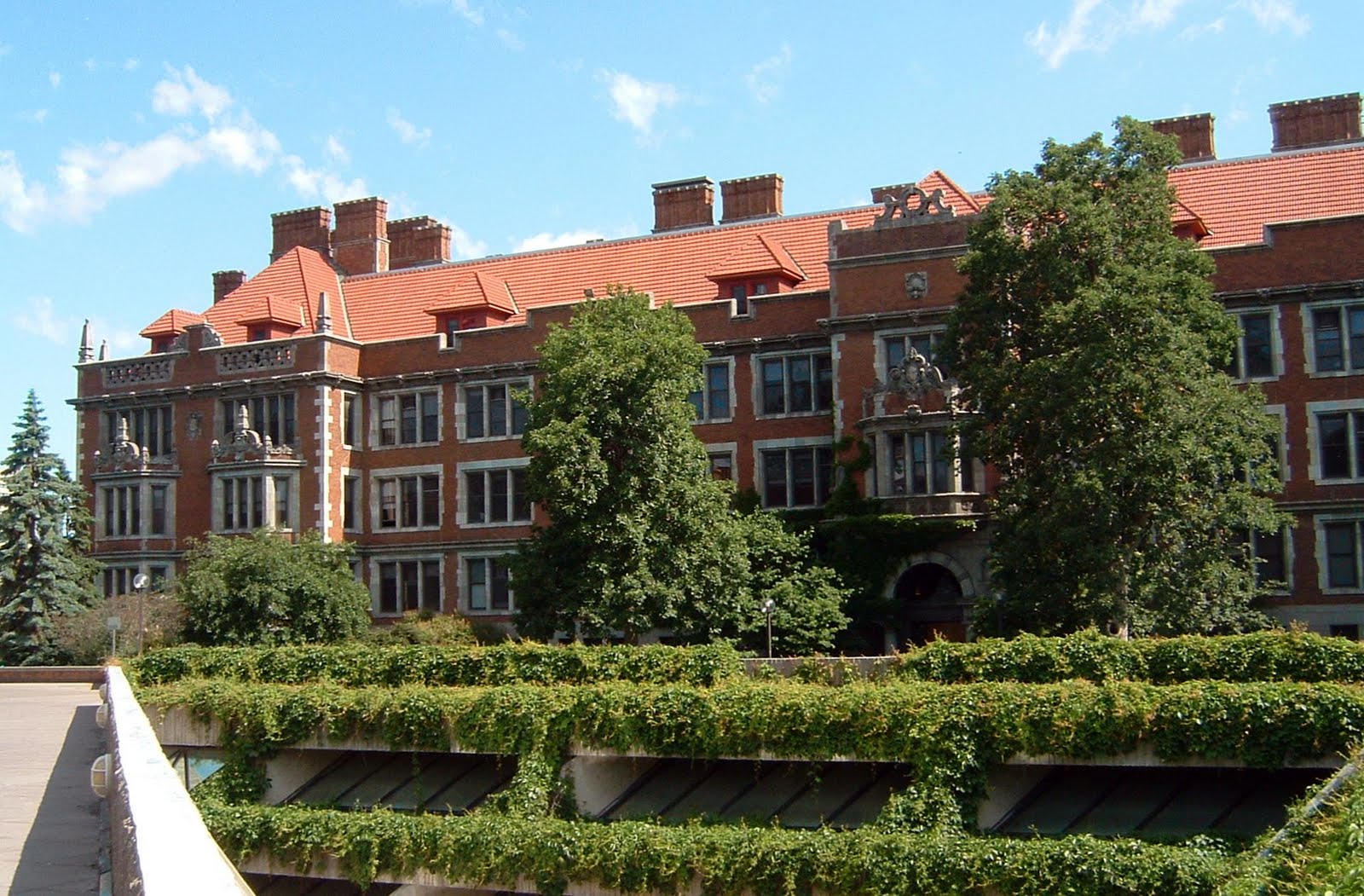
Although I don’t really know of any specific academic novels about these particular intitutions, here are the three academic settings that shaped my life (some more than others):

University of Minnesota – Twin Cities
(undergraduate days…)
University of Hawaii – Manoa
(first Master’s…)
Cornell University
(second Master’s…)

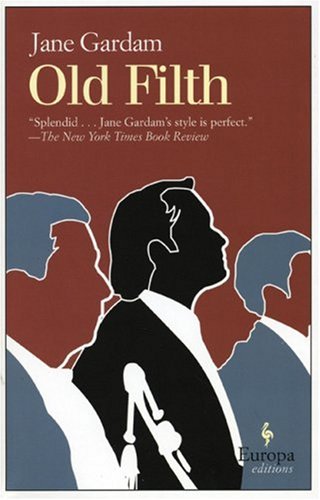
Book Review: Old Filth by Jane Gardam


Old Filth
Jane Gardam

According to the New York Times Book Review, “Old Filth belongs in the Dickensian pantheon of memorable characters.” Not being a Dickens aficionado I am not sure how true this rings, but it seems more true than not. Sir Edward Feathers is Old Filth. A legend in British legal circles, Filth is an acronym for “Failed in London Try Hong Kong”. Of course to my eyes that would be “Old Filthk”, but that wouldn’t be as entertaining would it.

The book Old Filth follows our hero as an 80-year old widower looking back on his colorful life and his attempt to make sense of his current state of being. His mother died days after his birth, his emotionally troubled father abandons the infant Edward to the native Malays that live on his estate. At age five Edward is sent off to learn English before being sent to Wales to live in a foster home with two other empire-orphan cousins. Then there is school, the War, Oxford (or was it Cambridge? Oops), the Bar, Hong Kong, back to the UK, etc. Told with a fair amount of narrative and temporal shifts, the story is nonetheless fairly easy to follow and often delightful.

Old Filth is full of quiet adventure. The trappings and situations in real life would certainly be an adventure for most anyone, but they aren’t played as such. No swashbuckling, edge of your seat kind of thing. Rather, Gardam focuses on the emotional side of things and the inner workings of Old Filth’s increasingly introspective and searching mind. Along with much that is amusing is a thoughtful, poignant life story with more than a few twists and turns. One twist in particular, perhaps the climax of the book, will surprise even though it has been hinted at here and there.

My only real challenge with Old Filth is that it could have been a much longer book. Following the earlier Dickens comparison, one could easily imagine this in a different time being serialized and stretched to Dickensian or Trollopian lengths. I wouldn’t say any of the characters are one dimensional. In fact most of them, even the bit characters, show enough texture that it leaves you wanting to know more about them. Gardam could have spun this one into a much longer tale if she had wished. But then again, that may have flattened the arc of her narrative too much and made Old Filth something she never meant it too be. This one is definitely worth a read.

(Spell-Check approves of “Dickensian” but balks at “Trollopian”. For those of us who prefer Anthony over Charles, this is a grave injustice.)
  

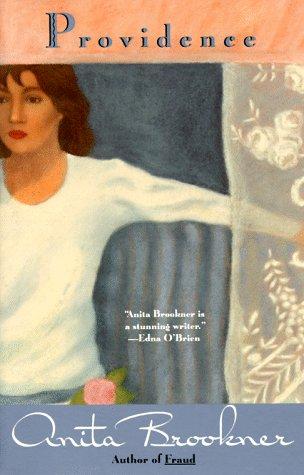
Book Review: Providence by Anita Brookner


Providence
Anita Brookner

I thought I knew Anita Brookner. Before reading Providence I had read all but 3 of her 24 novels and was fairly confident in the knowledge of what I would find when opening any given Brookner. Without exception her novels are somewhat thin volumes with direct, spare language that focus more on internal thoughts than any external action. Her characters are usually financially secure, upper middle class, academically inclined loners, often without the need of work, who seem to drift from one emotional disappointment to another. Or more accurately, who drift around a single emotional disappointment for 200 or so pages. Her characters never really quite experience tragedy, but the entire arc of their lives could usually and fairly be characterized as tragic.

Describing her work as predictable and depressing could give one the idea that I don’t like Brookner’s work, which isn’t the case at all. And there are some who may think I overstate the case or am entirely off base. I know I am certainly oversimplifying, but to me, after reading 21 of her novels over the course of the past 15 years, I have never really thought much differently than what I describe here. Brilliant, powerful books, but also brilliantly and beautifully depressing. I often describe Brookner’s characters as people who never act but are rather acted upon. Usually solitary women who suffer from almost crippling emotional intertia. Joy or happiness are not words I would apply to Brookner’s work.

So I was more than a little surprised in this, Brookner’s second novel, to discover a world that seemed to me to be very different than any other Brookner I have read. All the emotional paralysis and sad, lonely characters are in place, but in Providence Brookner has created a character who actually attempts to make something happen in her life. Kitty Maule is a scholar of the Romantic period and is profoundly, and mostly unrequitedly, in love with a colleague and she is determined to seal the deal.

But the more I thought about it, the more I began to understand that despite Kitty actively trying to shape her future and develop some outward momentum, her emotional momentum doesn’t really keep up. Little of the external realities seem to impact her internal reality. So maybe this Brookner, at least at a fundamental level, is not really so different after all. But the details of Kitty’s daily life certainly feel different than most of Brookner’s other sad protagonists. At least in this one I’m wasn’t silently yelling at the character to take the bull by the horns. Well, at least not as much as usual.

Reading this, you might think that I don’t really like this (or any other) Brookner character, but there are at least two things that really make me enjoy them. The first is that I like reading about their solitary existence because it appeals to the OCD loner in me. Despite all their angst, their worlds are quite tidy and well ordered. But orderly lives can be lonely lives. The overweening need for peace and quiet and unruffled feathers can often lead to a detachment from others that is ultimately not terribly fulfilling. So the part of me that isn’t basking in the peace of solitude of a Brooknerian life is standing on a proverbial table shouting at the characters to engage life before it is too late. I think I love them because they are cautionary tales for my own life. A “there but for the grace of God go I” sort of thing.

I have no doubt that if Anita Brookner were to read this “review” she would probably sue me for malpractice. I am sure she didn’t write these brilliant, wonderfully nuanced books to have them reduced to “she writes about sad people”. But, there it is. I love her anyway. I guess when you are famous you don’t get to choose your fans.

(And speaking of sacrilegious literary exegesis, I read one analysis of this novel in a book called Understanding Anita Brookner by Cheryl Alexander Malcolm. I know that my analysis might be crap, but I sure didn’t agree with Ms. Malcolm’s take that the whole thing was just about Kitty trying to fit in and be English.)

So tell me, why you haven’t read any Anita Brookner yet? You will either love her or hate her, but you need to find out sometime.

Book Review: Short Fiction by Ward Just

Honor, Power, Riches, Fame, and the Love of Women
Ward Just

As much as I loved Persephone Reading Week, I must admit that by the end of it I was really craving a little testosterone. And as Anglophile as my reading tastes may be, I was also in the mood for something a little closer to home. In Ward Just I found the perfect antithesis to my week of reading all things Persephone. Once a reporter for the Washington Post, Just writes brilliant fiction centering in one way or another on politics and power. Sometimes his characters are actually politicians; sometimes they are the power or the brains behind the politician. Or sometimes they are the “fixers” out there who often clandestinely and unofficially shape politics, foreign policy, and even the contours of armed conflict.

Honor, Power, Riches, Fame and the Love of Women is a collection of short fiction written by Just in the 1970s that includes two novella and four thematically related short stories. The title novella is about a Hill staffer who marries the boss’ daughter and ends up as his Congressman-father-in-law’s successor in the House of Representatives. But his ascent into power is, in many ways, just background for his personal battle between his loves and his ambitions.

Three of the four short stories deal with the experience of journalists making their living in war torn Indochina, while the fourth is a spy story of sorts. The final novella called Cease-fire tells the story of a man whose job is to work behind the scenes to help keep fragile cease-fires in place. But it also follows him into an unexpected and uncharacteristic love affair that changes his world.

In all of these short works, and indeed in all of his novels, Ward Just describes worlds that can be at once totally shocking and surprising to those of us not in the often messy corridors of power, but also so mundane in the day-to-day details that it all seems incredibly realistic and plausible. And I suppose cynical. There is never anything in his work that seems over the top or too Hollywood. These aren’t shoot ‘em up kind of books.

Just is one of those writers who does what he does so well that my limited descriptive abilities don’t begin to do him justice. Let me just crib what librarian extraordinaire Nancy Pearl has to say about him, after all she was the one who turned me onto Just in the first place.

Too few readers of fiction know the novels of Ward Just, which is a real shame, since he is a master craftsman, unafraid to tackle deep and difficult topics. In many ways he seems to be the American Graham Greene, concerned always with the morality of human behavior. His novels are thoughtful, beautifully written, and often bleak bleak bleak. I sometimes think that Just never met a happy ending he liked.

Characters waiting to be written

   
Couldn’t you just imagine coming across a character in a novel called Percival Ferguson? Something English, probably between the Wars, perhaps something with a little humor. Not fanciful enough to be a Wodehouse, but could certainly be a Waugh. No doubt his days and nights chumming around at his club will be gradually and progressively more restricted by his fiancee Evthalia Palmer until his freedom disappears entirely.

Or what about Harlan Dodd? I’m thinking someone from the American south.

And do you think Goliath Bledsoe would be happier with the interloping and somewhat flaky ingenue Mair Wahl or should he make an honest woman of Jehoshaphat Barnes before she runs off with Hodel Romero? Or even more importantly, is Jehoshaphat a boy’s name or a girl’s name?

I have no idea who any of these people are, but they sure seem to think that I need help with a particular male problem. (I don’t want to say what it is lest the Spam-bots pick up on the words…) I get at least one of these a day and am always amazed at the creativity of the names. Just now I looked and there was another two, this time from Shug Harp and Felina Farnsworth.

Do they think the names will confuse me into thinking I need this particular pill? And do they think that by sending at least one a day I will eventually say, “My god, I do need that pill!” Or is the point really about clicking on the link to go to some nefarious website?

In any case, they make me giggle almost every time.

Still more books I found (aka bought) on Sunday

  
I didn’t really have plans to buy any more books until we moved into our very own house later this month. But since our landlords are selling the unit we live in now and had an open house on Sunday and we had to be out of the apartment, it just seemed like the right thing to do.  I already told you about the haul from my favorite used bookstore in DC. But this haul came from my least favorite bookstore. In general their fiction section is no good, alphabetized to only the first letter of the author’s last name, and way over priced. I almost never buy anything there because a used paperback should not cost seven bucks. The pricing policy for paperbacks at this particular store is 1/2 off the cover price. So this means a used copy of something published at $15 is going to cost you $7.50, no matter how lame the copy or the book.

But as I was browsing I kept running into these Virago titles and something occurred to me. The Viragos (some published by The Dial Press) were published long enough ago that the original book prices were considerably less, in the six and seven dollar range. And half of those old prices is fantastically affordable.

I faced The Judge by Rebecca West forward in the one picture because we all know that the cover art is actually a portrait of Julia Strachey by Dora Carrington.

Award for favorite title goes to The Semi-Attached Couple and The Semi-Detached House. Apparently two novels published in the 1860s under the same cover here to amusing effect.

Other books I found yesterday

  
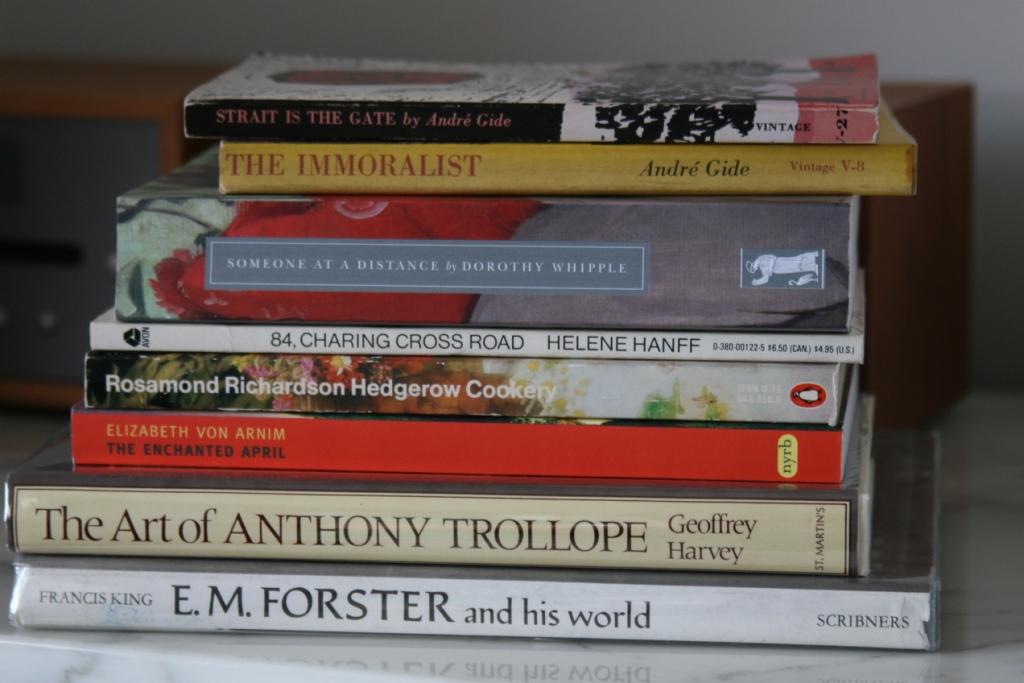
I have waxed rhapsodic before about Books for America here in DC. A charity shop with great selection and wondeful prices. Here is my haul from yesterday.

I’ve already talked about the Whipple.

I already own and have repeatedly read 84, Charing Cross Road. But I say you can never have too many copies of it.

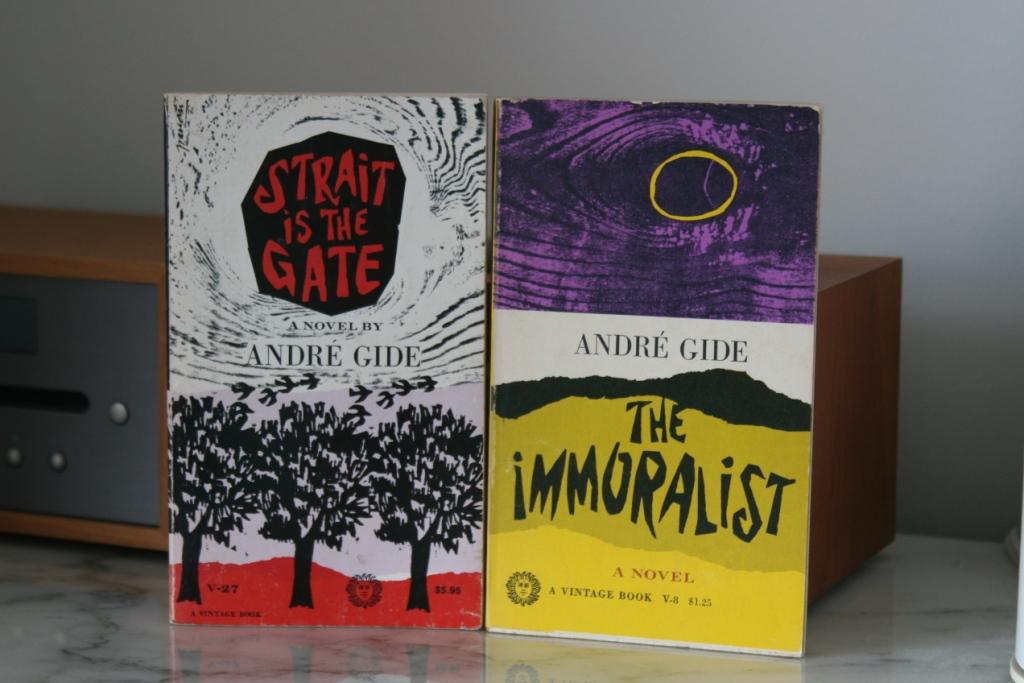
I’ve already read both of the Gide, but they were such fun covers for only 50 cents each.

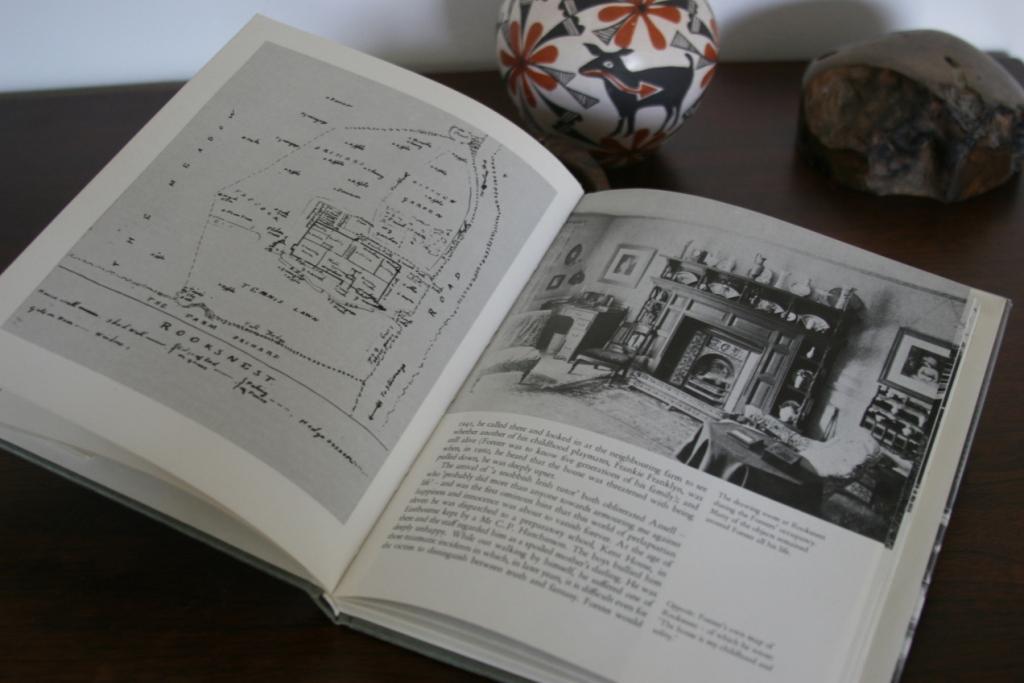
And make sure you check out the wonderful E.M. Forster illustrated bio that I got for $4.00.

It’s a pretty eclectic pile. Surely you have a favorite here. Or maybe one you most want to read. Or perhaps one you hate. Please share…