And you thought Persephone Reading Week was over…

 
I guess it doesn’t end for me until midnight Eastern Daylight Time. How absolutely, positively serendipitous that on the last day of PRW I actually found a Persephone Classic in a used bookstore here in DC.  And it was a Whipple to boot. And one that I don’t already have! I mean hell-o, what a find. And it was only THREE DOLLARS. But of course now I am wondering who owned it. Someone in DC is reading Whipple. I doubt it is one of my fellow DC book bloggers, they would never give it away, they would still be clutching it to their bosom vowing to never let go of it…

Best part is I got it at Books for America. A charity shop. yay.

Persephone Reading Week Wrap-up


PERSEPHONE READING WEEK

As Persephone Reading Week draws to a close, I am more enthusiastic than ever about his wonderful boutique publisher. They have done such a brilliant job bringing some great books back to life in unquestionably the most stylish packaging in the market today. The look good, they feel good, they smell good. I can’t wait to buy more Persephone. I can’t wait to read more Persephone. I can’t wait to blog more about Persephone.

It was so much fun bopping all over the Web reading so many different Persephone Posts. There were at least 10 bloggers who participated that were new to me and who have now been added to my feed reader. And I can’t wait for the fabulous Claire and Verity to host next year’s PRW. Thanks to them and the bloggers like Simon T., Simon S.,  and Dovegreyreader Scribbles who first piqued my interest in these lovely little lovelies.

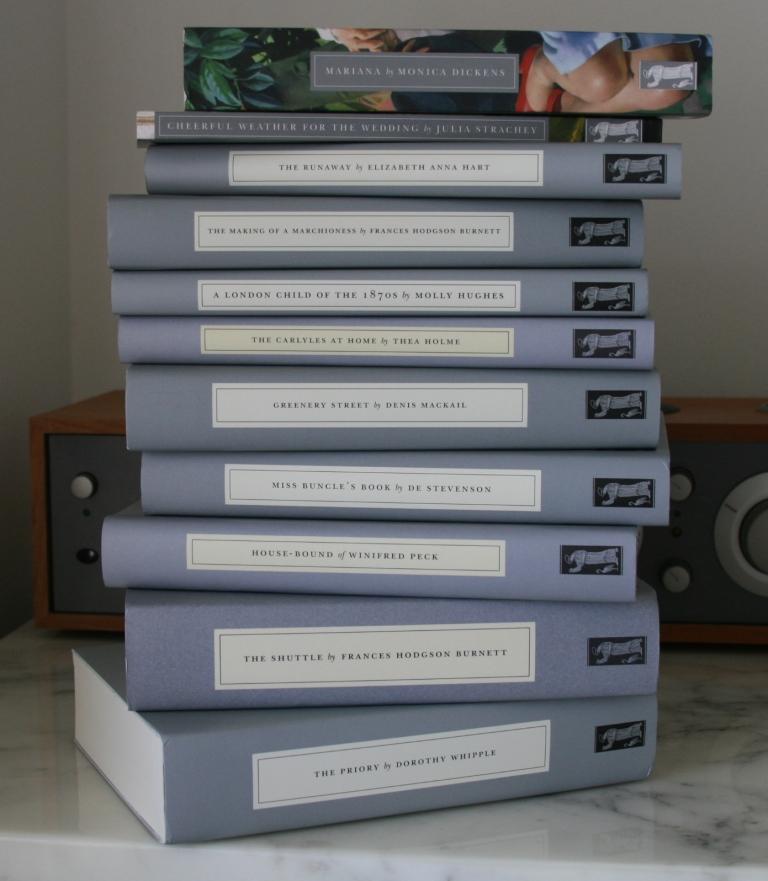
To round out my posts for PRW, I thought I would leave you all with a ranking of sorts of the 9 Perephones I have read so far with links to my reviews. (I only read 4 for this week, don’t think I read all these for PRW.)

The Great
The Home-Maker by Dorothy Canfield Fisher
High Wages by Dorothy Whipple

The Very Good
The Priory by Dorothy Whipple
The Making of a Marchioness by Frances Hodgson Burnett
Greenery Street by Denis Mackail

The Good
House Bound by Winifred Peck
I think Peck had a hard time making up her mind what this book should be about.

The Okay
Cheerful Weather for the Wedding by Julia Strachey
I think this one would improve with a re-read, now that I understand the pacing.

Mariana by Monica Dickens
I think the online hype killed this one for me.

The Kinda Boring
The Runaway by Elizabeth Anna Hart, Illustrated by Gwen Raverat
I am not much of a children’s book reader and found this much too slow and simple to keep my interest. The woodcuts illustrations are amazing. I had hoped to scan some of the more brilliant ones but my scanner died. Boo hoo.

Book Review: Greenery Street by Denis Mackail


PERSEPHONE READING WEEK

Greenery Street
Denis Mackail

In high school I had a dream one night where I was in some city that was unknown to me. I woke up feeling like this was the place I needed to be. There was something about the physical setting of the dream that just gave me a groove. I could never quite put my finger on what it was that made that particular dreamscape so special. Years later after I moved to Washington, DC, I realized that DC, or something very much like it, was the city in my dream a decade earlier. A dense but picturesque walkable neighborhoods filled with old brick buildings, pockets of green space with statuary and monuments tucked everywhere, and lots of vibrant street life. Although there are plenty of reasons to complain about DC, from an aesthetic and urban design perspective this really is the embodiment of that nebulous and lovely image that was tucked somewhere in my brain all those years.

Well, Felicity Hamilton has a similarly nebulous and lovely image in her head.

A picture began to form itself in Felicity’s mind of two rows of symmetrical doorsteps, of first-floor French windows which opened on to diminutive balconies, of a sunny little street with scarlet omnibuses roaring past one end and a vista of trees seen facing the other. Sometimes it was so clear that she could almost read the name on the corner lamp-post; sometimes it faded to a blur or the view-point changed so that only one house was visible. Neat little area railings, a brightly painted front door with a shining brass knocker. It opened and showed a narrow passage-hall, lighted by a window on the turn of the stairs; and in that window there came the green light of sunshine filtered through leaves. ‘That’s the house we’re going to live in,’ she said to herself. ‘But where did I see it?’ Where could she have been going when a momentary glimpse from a taxi had shown her that passage-hall and that window? And why had she forgotten all about it at the time, only to find it lodged so obstinately in her memory now?

As luck would have it, Felicity does finally find Greenery Street again, and she and her fiancé Ian Foster manage to find a place of their own there to move into after they are married. It would be wrong to say that Greenery Street is the background for the story of this young couple’s new life together. The street itself, is as much a character as they are. Just as we learn about Ian and Felicity’s personalities and foibles, so too do we learn about the foibles and personality of the street itself. With little exception the street is home to young couples making their way and their new lives together. Staying in Greenery Street just long enough for the first baby or two to come along and require a move to more spacious accommodations.

It would be equally wrong, however, to say that the book is actually about Greenery Street. It certainly plays a central role, but there is plenty going on in the life of the newly married Fosters to keep one’s attention. Money, housekeeping, families, the ups and downs of a couple getting to know each other; although the circumstances may be very different, the themes are somewhat universal. More than once I saw elements of my own marriage (and our house hunting for that matter) illuminated in Greenery Street. Thankfully, I believe that modes of interpersonal communication have improved immensely since the 1920s so that many frustrating situations can be avoided, but some of the same relationship pitfalls seem unavoidable 90 years later.

Although some of the situations and challenges seem a little twee and of a time and class foreign to most of us, the story is still relatable and quite a lot of fun. Mackail’s narrative style is eclectic at times and his voice is sometimes front and center. Like a narrator holding a large story book relating the action to the audience just before the scene dissolves to depict the action at hand with the narrator fading from the screen. It is a playful omniscience that allows the street to become a character, and I found it, and the book itself, charming and humorous.

Dorothy Whipple, meet Julia Louis-Dreyfus


PERSEPHONE READING WEEK

Anyone who likes Persephone is bound to like the publisher’s colorful endpapers and bookmarks unique to each title.

Imagine my surprise as I watching the moderatly funny sitcom “The New Adventures of Old Christine” and said outloud “Persephone!” The show’s star, Julia Louis-Dreyfus (Elaine from Seinfeld) was wearing a print dress that absolutely had to have been inspired by the vintage fabric used for the endpapers for Dorothy Whipple’s The Priory.  Unfortunately this is the best image I was able to find of the episode, but I still think you can see the link between Julia’s dress and the vintage pattern.

The original pattern is ‘Wychwood’, a 1939 design by Noldi Soland for Helios.

Part of the joke is that she over did it on the fake tan. Hence the orange skin.

Book Review: The Making of a Marchioness by Frances Hodgson Burnett


PERSEPHONE READING WEEK

Work and home life have been a bit crazy this week so I haven’t been as post-y as I was hoping to be during PRW.

The Making of a Marchioness
Frances Hodgson Burnett

My first and only previous experience with Frances Hodgson Burnett was in reading The Secret Garden at the ripe old age of 33. Somehow that classic children’s book had eluded me entirely. I knew it existed but that was about all. I was staying with a friend in London one grey autumn and decided to go up to Cambridge for the day to hear Evensong at King’s. Not surprisingly I found myself wandering through a bookstore and lit upon a table with loads of classics in cheap paperback editions. For some reason I decided the time had come to read both Heidi and The Secret Garden.

What does this have to do with The Making of a Marchioness? Not much really, I just like telling the story. And speaking of stories, Burnett really knows how to tell a good one. The title of the book kind of gives away the overall thrust of the plot, but in large part the narrative is not all that predictable. We know that our well-born, but poor, thirty-something heroine, Emily Fox-Seton, is going to become a Marchioness at some point, but we certainly don’t know how it all will unfold and what will happen once it has. The novel is divided into two parts and was intended to be two separate books. The first part is the rather sunny romantic build up to Emily’s betrothal. Kind of what you would expect of the author of The Secret Garden. Our hard-working heroine is the model of personal and professional virtue, and although there is plenty of romance, it is built on the underpinnings of class and the status of women without means.

The second part takes a considerably darker turn. One begins to wonder whether or not our Marchioness is going to survive. Lies, distrust, misdeeds, misdirected letters. There were moments when I thought that Wilkie Collins may have stepped in with some plot advice. Because my proclivities lean toward the sunny side of this kind of romantic fiction, I was naturally more interested in the first part. Rags to riches and all that. But my recent induction into the world of Wilkie Collins has given me an appreciation of a darker, more suspenseful plot line.

I had a great time reading The Making of a Marchioness. It is definitely one of those books that makes for a cozy few days of reading. You don’t want to be too far from it until it’s finished. Of course then it leaves you a bit disappointed that it is over. But that can’t be helped. Thankfully I have Burnett’s The Shuttle patiently waiting in my Persephone stack.
  

These Ladies are Dreaming of My Porch

PERSEPHONE READING WEEK

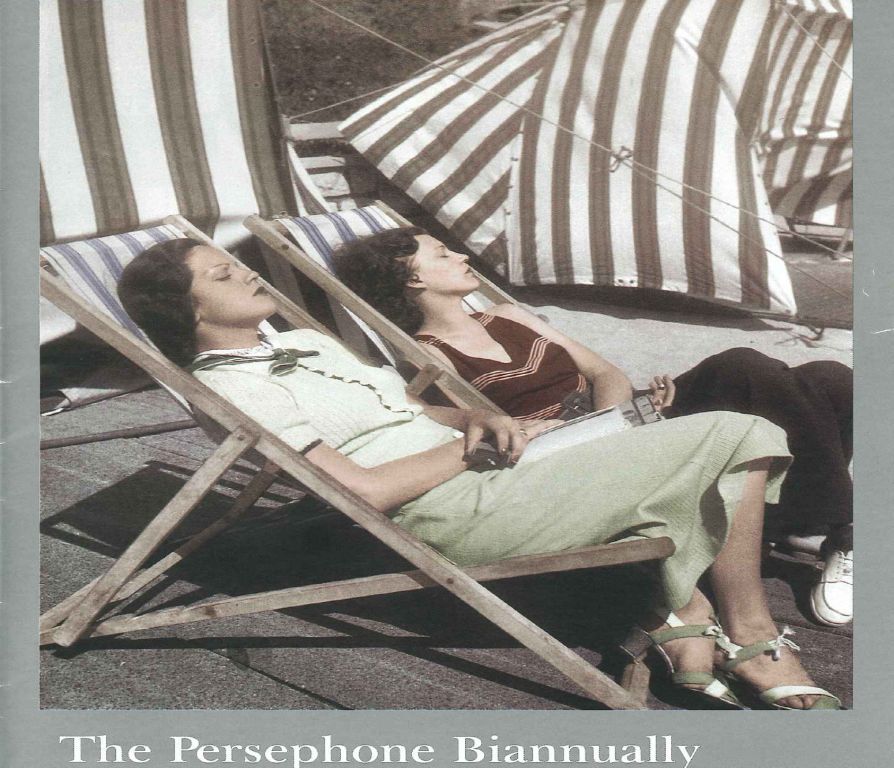
Imagine my surprise when I opened the mail yesterday to see yours truly had his review of Dorothy Whipple’s The Priory quoted in the brand new issue of the Persephone Biannually. I had seen some other folks in the UK blogosphere last week write about how they had been included and I thought wistfully how fun it would be quoted in the Biannually. And boom, this week there it was. What fun.

I meant to review The Making of a Marchioness tonight, but work ran late and I barely have the energy to pop out this little self-congratulatory bit of boasting. But after all, if one doesn’t have the energy for that, does one have the energy for life?

My First (well-thumbed) Persephone Catalog


PERSEPHONE READING WEEK

My entrance into the world of Persephone has been well documented previously on My Porch so I won’t go into it all again. (Those of you who are new to Persephone might find it helpful.) But I thought I would share with you my first Persephone catalog. It has been much used since I received it.

You can see from the crease in the lower right corner that it has been subject to much use.
On an early pass I circled the ones that looked interesting to me. Then, after some time and further perusals I went back and assigned dots to each book that I had previously circled. You can see Bricks and Mortar got the maximum five dots. That  means it was part of my first Persephone order. (I have not read it yet.)
Dorothy Canfield Fisher’s book The Home-Maker only got three dots, which meant I was interested, but not enough to make it part of my first order. Well, Claire at Paperback Reader was my Persephone Secret Santa and sent it to me and I absolutely loved it. To date it has been my favorite Persephone and certainly deserving of more than three dots. Oddly enough other books that I rated more highly and ordered, didn’t live up to their dots.
All of the studying and dotting of the catalog led to my initial order. I have gotten a few additional ones since this first order, but I am holding off until we are moved into the new place before I order any more.

Book Review: High Wages by Dorothy Whipple


Today begins Persephone Reading Week being hosted by Verity at The B Files and Claire at Paperback Reader. I am afraid I must kick-off my celebration of Persephone Reading Week with a stern warning to this niche publisher.

Dear Persephone Books:

Dorothy Whipple wrote 18 books. You have only reissued 6 of them. To those of us who have read even some of Mrs. Whipple’s work, I think it is safe to say that we are unwilling to countenance this unacceptable situation. It shouldn’t be too difficult for all of the good folks at Persephone to sit down and work out a schedule for the timely reissuance of the rest of Whipple’s oeuvre.

Whether intended or not, by reintroducing the discerning reading public to the wonders of Dorothy Whipple, Persephone has entered into a serious commitment akin to the sacred covenant between God and her chosen people. Well, you have made us believers, now please don’t leave us in the desert for forty years. Some of us, and perhaps the printed publishing world itself, may not last that long. And I doubt that a Whipple would smell as good on a Kindle as it does in a Persephone paperback.

Believe me to be, very truly yours,

Thomas at My Porch

Seriously folks, Whipples aren’t easy to find this side of the Atlantic, and I don’t want to run out once I finish the six that have been reissued so far. Perhaps I have already read the only two decent books Whipple ever wrote. But I kind of doubt that. First with The Priory and now with High Wages I am totally smitten with Whipple and would love to sit down and read them all in one sitting.

High Wages
Dorothy Whipple

Unfortunately, I absolutely hate trying to synopsize book plots in my amateur reviews. I just don’t have the patience to try and condense the action of a book in a way that won’t put you all to sleep. I read other bloggers’ plot summaries and am amazed at their skill in doing so. It is rare that I can pull it off, so I am not going to try too hard…High Wages is about Jane Carter, an 18-year old Lancashire woman who manages to secure herself a bit of freedom by snagging a job in a drapers’ (fabric) shop thus enabling her to move out of her stepmother’s house. The action begins in 1912 so you can imagine the limitations on employment and advancement available to Jane. But advance she does. She soon becomes indispensible to her employer and a favorite of customers and co-workers alike. Over time she chafes at being kept in her low-wage position and manages to open her own shop—much to the chagrin of her former employer. Whipple expertly sets this tale in the context of the social transitions of the times and changes in the world of ladies garments as custom clothing began to give way to ready-to-wear.

I loved this book for its subject, setting, and prose style. It is a true “coming into her own” kind of story that I really didn’t want to end. I can’t wait to read the remaining four Persephone Whipples.

Sunday Painting: Lady Agnew by John Singer Sargent

   
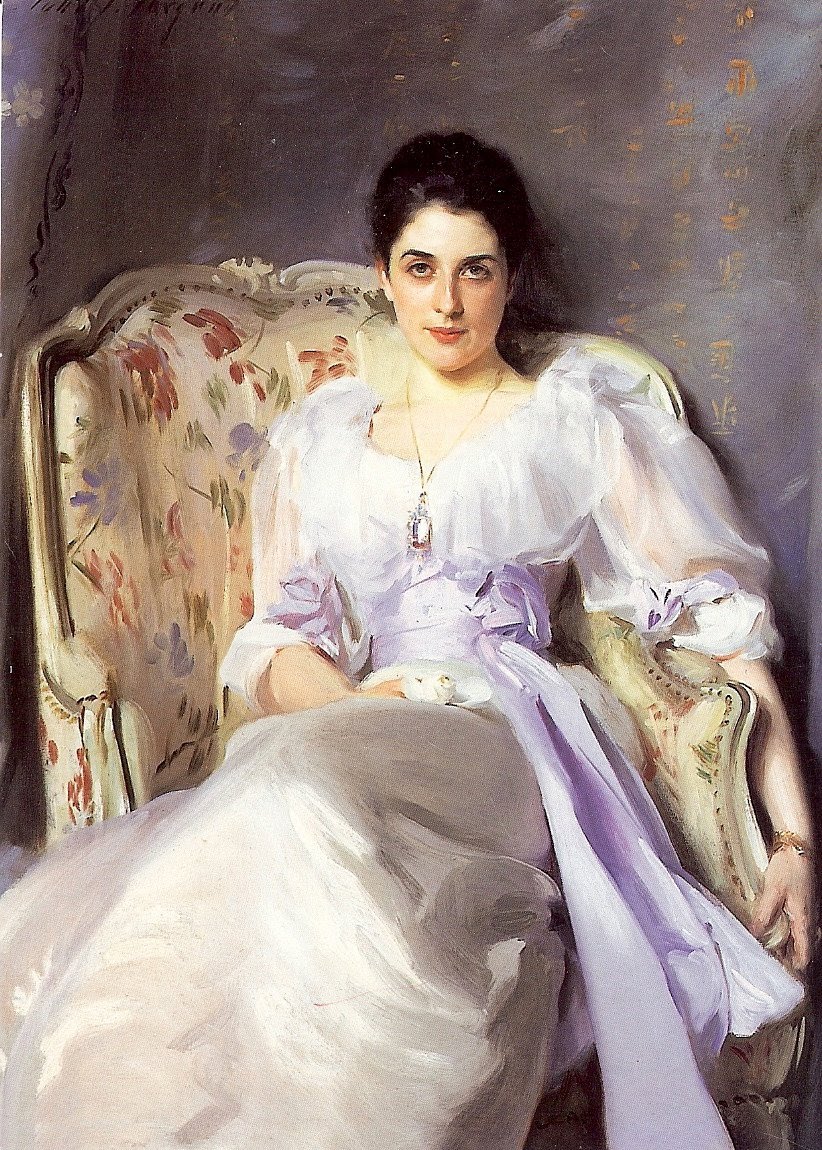
Since I fell in love with this marvelous portrait by John Singer Sargent at the National Gallery of Scotland in 1997, I have seen it crop up in many places and on many a book cover. But perhaps the most interesting literary tie-in that I have come across is in the movie Mrs. Dalloway where the young Clarissa (played by Natascha McElhone) wears a gown identical to the one Lady Agnew is wearing in the portrait.  Oddly enough the film came out the same year I first saw the painting, but I think I saw the film first. So it wasn’t until about a year ago when John and I made a double feature of Mrs. Dalloway and the The Hours that I noticed (with an assist from the ‘pause’ button) that the young Clarissa was wearing this gown. The pause feature on the DVD also came in handy during the viewing of The Hours when I noticed that Julianne Moore’s character had a copy of Iris Murdoch’s Under the Net next to her bed, which wasn’t actually published until a year or two after the time of the action in the film. But I digress, on to the lovely Lady Agnew…

Gertrude, Lady Agnew of Lochnaw, (1865-1932)
John Singer Sargent, (1856-1925) American