This week: “A Yellow Sun” by American Abstract Expressionist Jon Scheuler who spent much time in Mallaig, Scotland where this was painted.
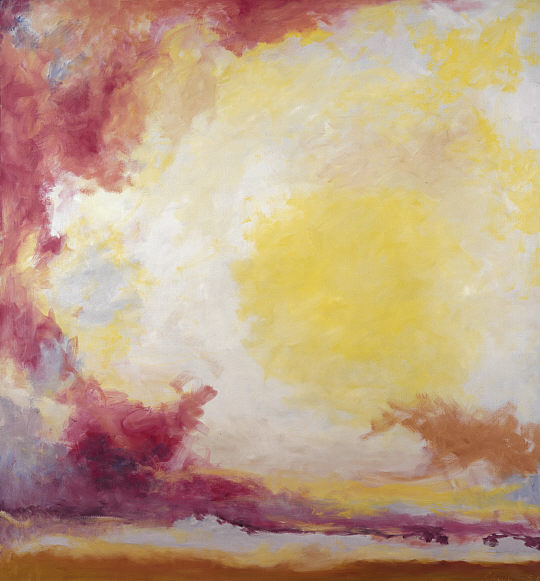
A Yellow Sun
Jon Schueler
National Galleries of Scotland
Copyright: Jon Schueler Estate
This week: “A Yellow Sun” by American Abstract Expressionist Jon Scheuler who spent much time in Mallaig, Scotland where this was painted.
Old Books in the Old World: Reminiscences of Book Buying Abroad
Leona Rostenberg & Madeleine B. Stern
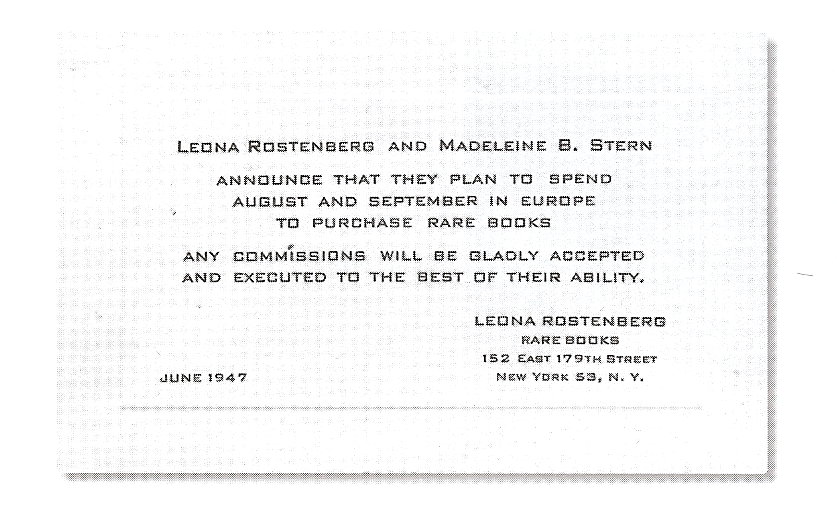
Imagine transatlantic crossings on the Holland America Line, spending a month and half each summer digging through antiquarian books in the capitals and countryside of Europe, buying hundreds of old books to ship back to the United States to resell for a profit. My own interests in books do not run to the antiquarian side of things, but given the chance I would gladly immerse myself in such excursions. Leona Rostenberg and Madeleine Stern were business partners, friends, and companions for 60 years. Beginning in 1942 the pair became partners in their rare book firm in New York and spent a chunk of their summers traveling to Europe to buy stock. Both were Columbia University educated literary scholars, and considered themselves literary sleuths. In addition to writing five books on the antiquarian book trade, their achievements include a major discovery about Louisa May Alcott. The following passage is taken from a wonderful tribute to Stern at louisamayalcott.org:
Miss Stern was enormously proud of the fact that she and her dear friend, business partner, and companion “literary sleuth,” Leona Rostenberg, helped bring to light Louisa May Alcott’s unknown tales of intrigue, murder, adultery, suicide — and as Miss Stern put it, “thuggism, feminism, hashish, and transvestitism” to boot.
“One of our greatest thrills,” Miss Stern wrote in 1997, “was our discovery of the double literary life of America’s best-loved writer of juvenile fiction. The revelation that the author of Little Women was also the author of clandestine sensational shockers was our blood-and-thunder story.”
The reminiscences in Old Books in the Old World are taken from Rostenberg and Stern’s diary entries from their book buying trips to Europe between 1947 to 1957. After most entries the authors include retrospective epilogues that provide perspective on their experiences as well as dishing the details on where some of their book finds ended up and how much they sold them for.
I love books of all kinds. But the world of antiquarian books is one that I doubt I will ever enter so I don’t know much about it. Old Books in the Old World gives a wonderful glimpse of what goes on in that world. These are seriously old books on seriously old topics. Sixteenth and Seventeenth century manuscripts, books, pamphlets and other ephemera on politics, science, history, geography, religion, philosophy and other topics written in English, French, German, Italian, Dutch, and other languages. Rostenberg and Stern knew what they were doing but often bought things on a hunch, not really knowing what they had in their hands until they get it back to the U.S. to study it and figure out where it fit into the antiquarian universe.
Until I read Old Books in the Old World I never really wondered where universities and libraries got their rare book collections. Not the ancient universities of Europe, those probably grew organically over hundreds of years, but some of the more “recent” universities in the New World like Yale, Columbia, and Cornell. And institutions like the Newberry, Folger, and Library of Congress. And in some cases, books that they bought and overseas and shipped back to New York were eventually sent back across the Atlantic where they found homes at places like the British Museum and the University of Basel.
Besides the tales of treasure hunting for good deals and great books (which of us aren’t drawn to that?), Rostenberg and Stern also give a fantastic firsthand account of post-war Europe. Traveling through England, France, Germany, the Netherlands, Belgium, Italy, and Austria they provide many details of everyday life that are so often missing from World War II histories. I knew about rationing and food shortages in Britain following the war but didn’t realize that a piece of bread could be considered one of the courses in a three course meal at even the nicer restaurants in London. Or another instance where Rostenberg refuses to sit at a table of Germans at an antiquarian conference in Austria. It is hard to imagine what those relationships would have been like so soon after the liberation of the Nazi death camps. Throughout their travels between 1947 and 1957 the duo also heard firsthand accounts of how some of their bookseller friends, Jewish and otherwise managed to survive the war. And with each bookbuying trip they see improvements as England and Europe eventually return to normalcy. They also see the prices of books rise as antiquarian treasures become harder and harder to find.
Old Books in the Old World would be great for anyone with even a passing interest in the antiquarian book trade or for someone interested in a little post-war social history or gossipy European travelogue.

I have been meaning to write this post for several days now. And since I am already halfway through my challenge list, I figure it is now or never.
Bibliofreak is hosting a reading challenge this month based on novellas that looked pretty interesting. Too often I get interested in challenges but then don’t want to follow through on them once I have made my list. However, I knew I could complete this challenge just by taking things from my TBR pile. I tried to keep them under 150 pages (some sources say 120 pages is the top end of the novella range) and was only able to come up with four titles. So I guess that means I will only make it to Level II. If I come across others I won’t hesitate to shoot for Level III (eight novellas) before the end of the month, but I doubt that I find four more lurking somewhere in my collection.
So here are my four:
The Pilgrim Hawk by Glenway Wescott
Cheerful Weather for the Wedding by Julia Strachey
The Old Man and the Sea by Ernest Hemingway
The Bookshop by Penelope Fitzgerald
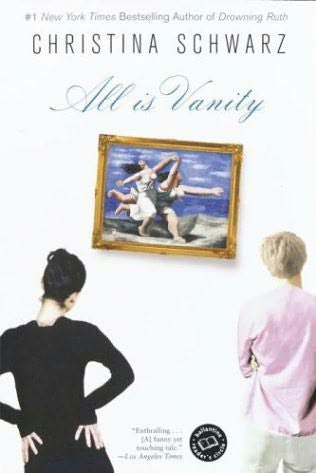
All is Vanity
Christina Schwarz
Ah, the struggling writer trying to get published. All is Vanity is one of those books. I actually tend to enjoy this kind of storyline, but wonder to myself while I am reading them whether or not the author will ever be able to write about characters who do something other than try to be writers. I think about Ann Patchett or Margaret Atwood or any other writer who really knows how to create fictional worlds that are more than just embellished autobiography.
Perhaps I am so aware of this kind of writing because it is probably all I would ever be capable of. When I attempted to write fiction it was all very autobiographical. I figured if I made the main character something other than a writer I could get away with it without ever having to admit borrowing heavily from my own life. A popular method for lazy or unimaginative writers. Another parallel between All is Vanity and my own feeble attempts at writing a novel is the fact that Schwarz’s main character is a thirtysomething writer who decides to skip over taking classes, or starting with short stories, or any other activity that might actually help her become a writer. Like I did, she also thinks that it is just a matter of applying yourself. Sit down and write. It will come. Margaret’s delusional goals, however, are different from mine in that she thinks she is going to actually write a great novel with all kinds of layered meaning and profound imagery. I never thought I would even try to do that.
But enough about me. I enjoyed All is Vanity but there is much that annoyed me as well. The basic plotline is that Margaret ends up using long emails from her best friend Letty as the basis for the novel she is writing. She takes whole scenes from her Letty’s life and writes them up as fiction without telling her. What’s worse is that she actually encourages Letty’s profligate behavior in real life to make the “fictional” Lexie more interesting. You can see where this one is going from about a mile away. You know at some point, that Letty is going to find out, blah, blah, blah. Kind of writes itself from that point on. All is Vanity also included lots (and lots) of epistolary material (email) that include a fair amount “quoted” dialogue. Regular readers will know that this is one of my pet peeves. People just don’t write emails that way.
Schwarz does do an amazing job showing through Letty how so many Americans have gotten themselves into such deep financial sh*t. The interesting thing is that Schwarz wrote about it about five years before the housing market meltdown made it impossible for folks to ignore their mountains of debt.
But finally, to show you just what a class act Schwarz is (although it might be her publisher’s fault) I am going to quote, in full, the author blurb inside the back cover of the book:
Christina Schwarz is the author of Drowning Ruth, a bestseller in both hardcover and paperback, which was selected for Oprah’s Book Club and optioned by Wes Craven for Miramax.She lives in New Hampshire.
Wow, where to start with that illuminating biographical sketch? Let me try, this could be translated to:
I sell lots of books, no really, I sell a mother lode of books, the numbers would make you blush, and by the way it might be made into a movie so I will eventually sell even more books. Oh, and I live in New Hampsire (big house, lots of land).
All really is vanity.

At some point in the past eight months or so I became aware of a publishing house called Persephone Books. Although I don’t remember exactly when it happened, and I certainly don’t remember what bookish terms I punched into The Google, but I do believe that Simon T at Stuck in a Book was my gateway into the world of Persephone. From his blog I clicked my way through a whole new world of links to book blogs. It is not like I hadn’t seen book blogs before, but this particular corner of the Interwebs was chock full of people who had reading tastes remarkably similar to my own. And so many of them were raving about Persephone Books.
Right off the bat I recognized the aesthetic allure of this small publishing house and almost as quickly was drawn to their list of mainly neglected works by authors who are (to a large degree, but not entirely) female and British. Although very curious to see the goods for myself, it wasn’t until I requested and received the Persephone catalog that my interest really began to pick up. I found myself pouring over the beautiful catalog in the same way my partner pours over seed and plant catalogs during the winter months.
As I am prone to do, I went into organization mode, got out a black Sharpie and began to mark up the catalog. For those shocked that I would deface my catalog, I knew I could always get another copy if I needed to. And besides, prioritizing my interests in the books was key to figuring out which to order first. After reading a description of each book I put between one and five dots next to the title. I judged each book individually. In this first round I made no attempt to choose one title over another. Once I had gone through and rated all 82 of them (there are now 86 available) I compiled a list of all of the titles that garnered five dots (indicating a high degree of interest). It came out to about ten books. Since we had a fair amount of travel coming up I forced myself to hold off ordering them until we finished so they wouldn’t arrive when we were out of town. This was probably back in July, and it meant I had to wait until about October 13th before I could place my order. By the time I did get around to filling out the online order form my priority list had shifted somewhat, and grown somewhat. Persephone gives a little price break for every three you order so I had to make the total a multiple of three. Which of course forced the number up to 12 rather than down to 9.
Unfortunately one of them is still missing in action (hence the Persephone Eleven) but here are the twelve I ordered (with the descriptions from the Persephone Biannually):
And for those of you who haven’t seen one in person, they are softcover books with matching dust jackets and beautiful endpapers. The bookmarks that come with each book if you order directly through Persephone match the endpapers. You can look at my collection of bookmarks below to get a better idea of what I am talking about.
No.2, Mariana by Monica Dickens
First published in 1940, this funny, romantic first novel describes a young girl’s life in the 1930s.No.29, The Making of a Marchioness by Frances Hodgson Burnett
A wonderfully entertaining 1901 novel about the melodrama after a governess marries a Marquis.No.32, The Carlyles at Home by Thea Holme
A 1965 mixture of biography and social history which very entertainingly describes Thomas and Jane Carlyle’s life in Chelsea.No.35, Greenery Street by Denis Mackail
A delightful, very funny 1925 novel about a young couple’s first year of married life in a (real) street in Chelsea.No.37, The Runaway by Elizabeth Anna Hart
Victorian novel for children and grown-ups, illustrated by Gwen Raverat.No.38, Cheerful Weather for the Wedding by Julia Strachey
A funny and quirky 1932 novella by a niece of Lytton Strachey, praised by Virginia Woolf.No.40, The Priory by Dorothy Whipple
A much-loved 1939 novel about a family, upstairs and downstairs, living in a large country house.No.49, Bricks and Mortar by Helen Ashton (the missing 12th volume)
An excellent 1932 novel by a very popular pre- and post-war writer, chronicling the life, and marriage, of a hard-working, kindly London architect over thirty-five years.No.61, A London Child of the 1870s by Molly Hughes
A classic memoir, written in 1934, about an ordinary, suburban Victorian family in Islington, a great favourite with all ages.No.71, The Shuttle by Frances Hodgson Burnett
A 1907 page-turner about Rosalie Vanderpoel, an American heiress who marries an English aristocrat, whose beautiful and enterprising sister Bettina sets out to rescue her.No.72, House-Bound by Winifred Peck
This 1942 novel describes an Edinburgh woman deciding, radically, to run her house without help and do her own cooking; the war is in the background and foreground.No.81, Miss Buncle’s Book by DE Stevenson
A middle-aged woman writes a novel, as ‘John Smith’, about the village she lives in. A delightful and funny 1934 book by an author whose work sold in millions.
I haven’t read any of them yet. I am not sure where to start. I think I will probably read No.32 first as part of the November Novella Challenge. But who knows.
I am participating in the Persephone Secret Santa over at Book Psmith.
You might also be interested in checking out the Persephone Post which is a great place for a little visual inspiration.
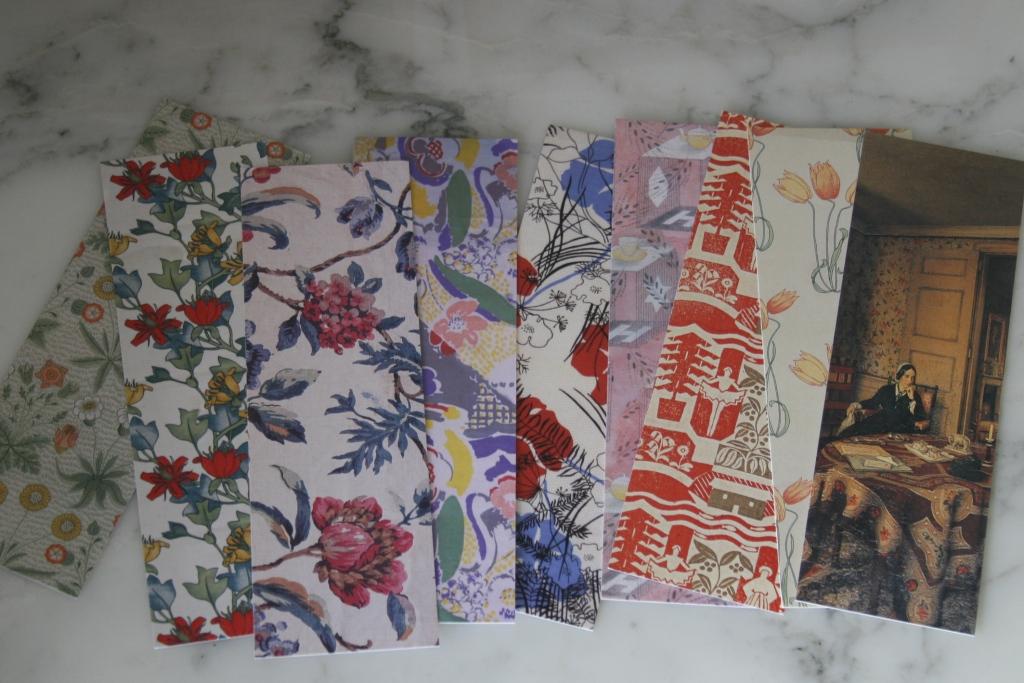

I just got an email today from Penguin UK noting that this incredible box of 100 postcards is finally available. Since Penguin UK won’t let me order off of their site, I headed right on over to The Book Depository to order mine. And, let me tell you, it can’t arrive soon enough. Hmm, I could get on a plane at 5:00 tonight, arrive at Heathrow by 6:00 am tomorrow head into London to buy the “book” and get back to Heathrow in time to get the 4:00 plane home. Let’s see, that fare right now would be $2,046, plus the cost of the Heathrow Express, plus the cost of the book…or maybe I could just pay $19.95 and wait for my delivery from The Book Depository.
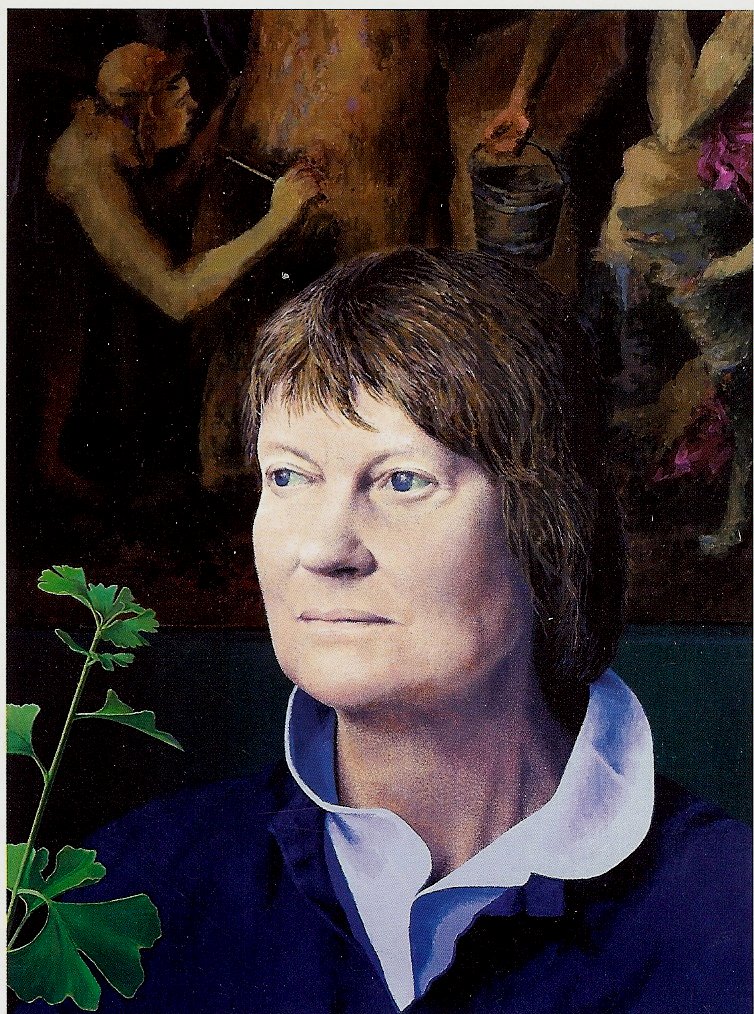
Iris Murdoch: As I Knew Her
A.N. Wilson
I’ve only read one other book by A.N. Wilson (his history of London) and didn’t really know much about him. What little I know now I picked up by reading his personal reflection of Iris Murdoch. Early on I took a dislike for Wilson. I am not sure what it was, but there was something about his attitude that annoyed me enough that I had bit of an anti-Wilson chip on my shoulder for the rest of the book.
Partly I was a little confused by the blurb on the front flap of the book: “Fifteen years ago, Iris Murdoch asked A.N. Wilson to be her biographer.” Ooh, sounds portentous. “This book is a tribute to the novelist he knew for thirty years.” Hmm, does that mean he turned her down, or is this book supposed to be that biography? After reading the whole book I still can’t answer that question.
The second thing that kind of rubbed me the wrong way is that Wilson seems to be, or has been, miffed at the two books Murdoch’s husband John Bayley wrote about her descent into dementia. It made me feel like a bit of chump for having been moved by Bayley’s account about the real life struggle of Alzheimer’s disease portrayed in both his books and in the film “Iris”. Wilson seems annoyed either because the film depicted the filth in which the aging couple lived or because it didn’t explain why they lived that way. But after reading the whole book I still can’t answer that question either.
By the end of the book I do understand some of the reasons Wilson is upset that Murdoch became a figurehead for Alzheimer’s awareness. She probably would not want to have been remembered that way. And perhaps it is a little unfeeling toward Murdoch’s legacy that a chair was endowed at Oxford in her name, but not for philosophy or literature but for Alzheimer’s. I am somewhat sympathetic to this point of view. But on the other hand I feel like no one has control over their own legacy and there was perhaps an opportunity for good to come out of her terrible situation. And frankly, I think that a caregiver to someone with Alzheimer’s has as much right to the story as the afflicted. Wilson seemed upset by the frankness with which Bayley tells the story. That it somehow took away Murdoch’s dignity. But I don’t buy that at all. I think Bayley’s books, although at times unflinching in their portrayal of the situation, were never gratuitous or inappropriate in their detail.
In this way Wilson gives the impression early on that Murdoch deserves better. One begins to think that his intent is to buff away all of Bayley’s smudges on Murdoch’s image. Yet there is much in Wilson’s book that does the opposite. He spends a lot of time talking about his mentor Bayley and a fair amount talking about himself. And what he says about Murdoch doesn’t add up to a particularly flattering portrayal. But he seems of two minds. He proclaims her genius now and then and talks about what a wonderful person she was, yet the overwhelming feeling I developed about Murdoch is that I don’t really like her much. And maybe I don’t like her books as much as I thought I did. Maybe the real issue is that Wilson is annoyed with Bayley showing Murdoch in an unflattering light because Bayley essentially beat Wilson, the “official” biographer, to the punch? Or maybe because Bayley sold a lot of books, yet I found Wilson’s for $1 on a “please take these books” cart parked outside the bookstore. You know, the kind of sale cart where the shopkeeper doesn’t even care what impact the weather might be having on the merchandise.
I didn’t hate the book but I also didn’t find it all that interesting. There is some insight into Murdoch’s reading likes and dislikes.
The Lord of the Rings she read and reread, enjoying detailed conversations about it with its author, or with Christopher Tolkien, the author’s son. She loved the Hornblower stories and the Patrick O’Brian sea stories, though she deplored the love interest and felt that Stephen Lefanu’s infatuation with Diana Villiers was soppy stuff which spoilt the excitement of the adventures. At mentions of the works of Olivia Manning, Elizabeth Taylor or Jean Rhys, let alone Penelope Lively or Margaret Drabble, she would merely smile or shake her head. She spoke, always, with love and respect of Elizabeth Bowen, her mentor, and A.S. Byatt, her disciple and interpreter, but she spoke of them as ‘beloved beings’. Bowen herself dissected the novels of contemporaries, read them closely, remembered what she admired about them. IM never spoke in this way about the work of female contemporaries.
I am not sure how enlightening this is about Murdoch’s tastes in fiction. It seems to speak more about what Wilson may not have known despite his 30-year friendship with Murdoch. He also tells us that Bayley loved Barbara Pym and read and re-read her frequently, but he didn’t seem to have much interest in, or praise for, Murdoch’s books.
I finished the book rather bored and unimpressed with Wilson. Unfortunately, I also finished it liking both Murdoch and Bayley less than I did when I started. If that was Wilson’s intent, then job well done. Thankfully it won’t keep me from reading the rest of Murdoch’s novels.



We Have Always Lived in the Castle
Shirley Jackson
Always late to jump on the bandwagon, this one has been reviewed a lot in the blogosphere…
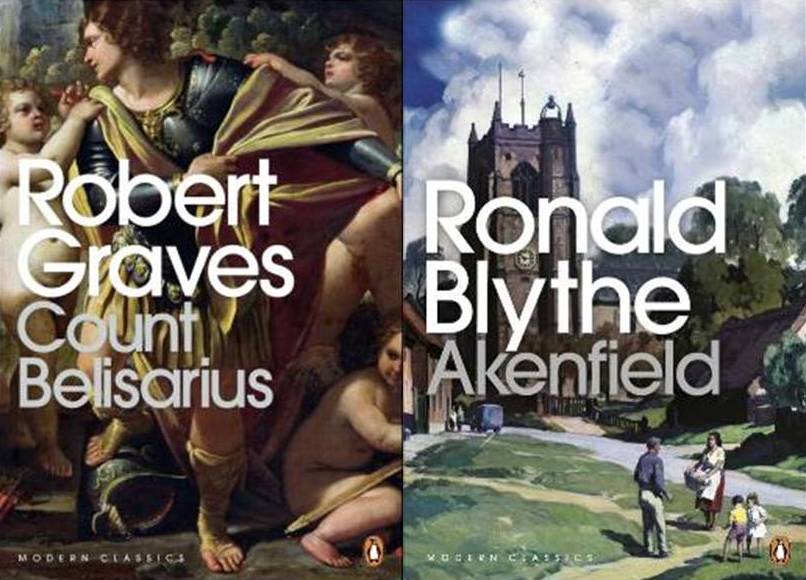
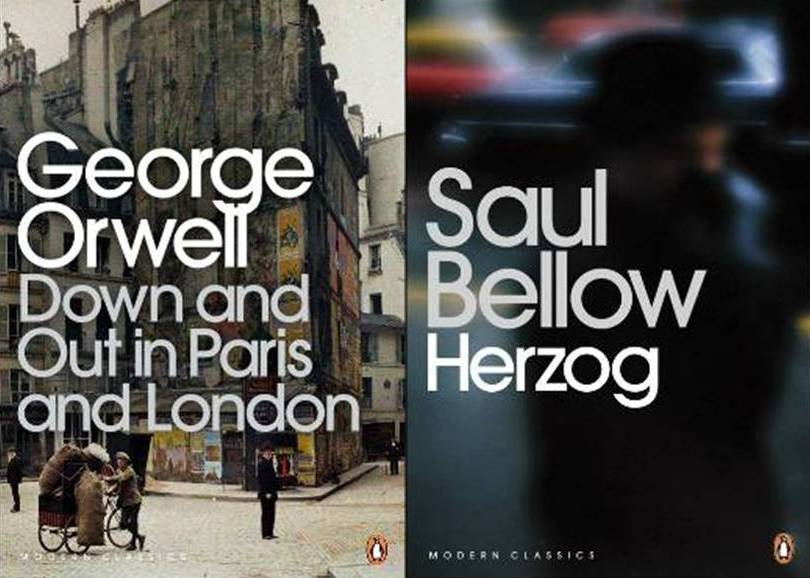
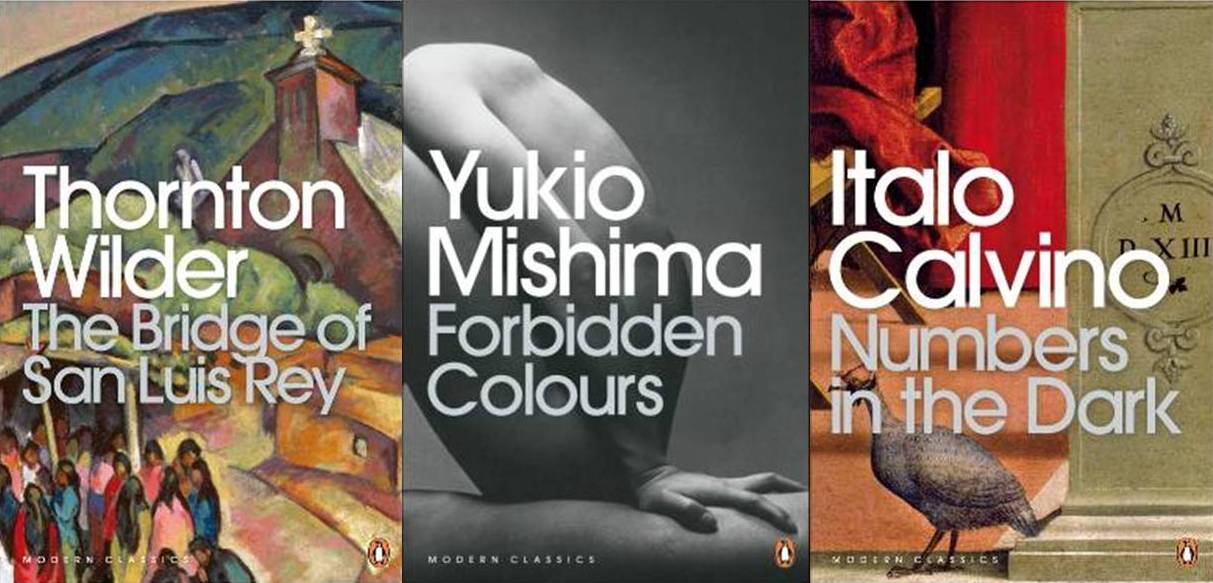
During the past month or so, I kept seeing these great Penguin covers on blogs across the Interwebs. I believe Penguin (in the UK at least) is using this general design for a range of modern editions, but the ones I kept seeing were for Shirley Jackson titles. Unfortunately, the copy of We Have Always Lived in the Castle that I stumbled across at a charity shop was an ugly American edition (as opposed to an ugly-American edition). For some reason Penguin thinks that we Americans can’t handle good graphic design. (Of course they may be right, but that is the subject of another post.) Despite its lame cover art (see below), I bought the book anyway. I figured I needed to discover myself what all the Shirley Jackson hubbub was about.
The only thing I knew about this book before I read it, was that it was a bit macabre, something good for Halloween. So I picked it up this weekend to see if I would get scared. At a slim 214 pages, WHALITC does manage to build quite a bit of suspense. I am glad I didn’t read the plot teaser on the back of the book. It wouldn’t have spoiled the book by any means, but not knowing the premise made the narrative all the more suspenseful in the opening chapters. The book opens with Mary Katherine (aka Merricat) Blackwood running errands in the small village near her family’s estate. But it is soon clear that, for Merricat, running errands is more like running a gauntlet. She goes about her business rather skittishly, hoping no one will notice her, plotting her route to have as little contact as possible with the townsfolk. Frankly, it reminded me a bit of when I was in junior high and would plan my day, in and out of school, so as not to come within shouting distance of anyone just waiting to call me a fag. And like my junior high days, Merricat is only partially successful in avoiding the teasing and vituperations cast her direction.
As the story unfolds we learn that Merricat lives an isolated life with her sister Constance and their invalid Uncle Julian. We also learn that Merricat is highly superstitious, burying objects all over their property and silently incanting “magic” words in the hopes of keeping them all safe. It isn’t long before we find out why the Blackwood’s are so isolated from society. Even though the back of the book would tell you, I am not going to. You will have to read it. Even once their secret is out to the reader there is much that is mysterious and just plain weird. The climax is brought about by the appearance of a long lost cousin whose presence threatens to upset the order of things for Merricat and presumably the others. Some things aren’t as they seem, but you wouldn’t be alone if you guessed ahead of time what secret still remained hidden.
At its essence WHALITC is a family drama with quirky characters, lots of dark secrets and denial, and an angry mob thrown in for good measure.
Ugly cover:


Frances over at Nonsuch Book had a really fantastic giveaway and I won! I am getting a four volume collection of Paris Review interviews with notable authors. I will excerpt Frances’ description of this great prize:
For over fifty years, the Paris Review has published conversations with the most gifted writers of the day. Not just any conversations either. Conversations that eschew the obligations of publicity or marketing, and embrace the issues of the craft in the most direct and transparent fashion. Once you start reading these detailed interviews, it is difficult to put them aside. They are about both reading and writing, and offer such an exquisite banquet of rich detail, you will find yourself comparing all other author interviews you read with these. As publisher Picador describes them, the Paris Review interviews are “the gold standard of the literary Q&A.”
Thanks Frances!
Confessions of a Shopaholic is the worst excuse for a movie I have seen in a long, long, time. I even had very, very, low expectations, yet it is way worse than I thought it would be.


