Book Review: The Fortnight in September by R.C. Sherriff


I know it has been said before here and elsewhere, but where in the world would we be without Persephone? After finishing The Thin Man, I felt a real reading funk coming on. Worse then nothing jumping out at me, I began to think about playing solitaire on the computer. I knew I needed to find something that was sure to please. And what pleases me more reliably than Persephone? I almost picked a Whipple, the ultimate sure thing, but then I spotted this Sherriff sitting on the shelf. I thoroughly enjoyed his apocalyptic novel The Hopkins Manuscript so I was curious to see what Sherriff would have to say about a family taking their holiday by the seaside.
I have read other blogger reviews of The Fortnight in September here and there over the past year or so, and the one theme in those reviews that sticks in my mind is that nothing much happens in the novel. It is true that The Fortnight in September is not plot driven, but the chronicle of the Stevens family’s two-week holiday is wonderfully wrought, with lots of humor and poignancy.
Written in 1931, it is a bit of a snapshot social history of a suburban London family barely over the cusp of the middle class. In addition to Mr. and Mrs. Stevens there is 20-year old Mary, 17-year old Dick and little Ernie who is maybe a good seven years younger than Dick. (I don’t recall if his age is mentioned.) The family has been going on their holiday to the same house in Bognor for 20 years and are first encountered as they prepare for their annual trip.
It is in these opening chapters that I felt a kindred spirit in Mr. Stevens. He is nothing if not organized and detail oriented. These can be good qualities but they can also go too far. It shouldn’t be surprising to my regular readers that my own mild OCD can be both bane and boon. Sometimes wanting everything in its place means missed opportunities and unnecessary stress. Thankfully for me, I have taken great steps in learning how to weed out what I should be worried about and what I shouldn’t worry about. (Thankfully for Mr. Stevens and the social and gender mores of his time, his family never question or challenge his need to have everything in its place.) Like Mr. Stevens, my mind will go into overdrive thinking of all the things that could go wrong and all the things that need to happen to ensure that nothing does. That fact that I can find humor in these passages rather than stressing out is testament to what a little therapy can do.
I tend to get a little nervous on travel days. I have no fears of flying or anything like that, but I do worry about all the little things–most completely out of my control–that could wreak havoc on my travel plans. I also share Mr. Stevens inability to trust information given by just about anyone. When facing down the challenge of getting from one platform to another at Clapham Junction:
Mr. Stevens did not like relying upon the word of one ticket collector and always preferred to take a consensus opinion from as many officials as possible.
And in another passage that could have been lifted right out of my brain, Mr. Stevens contemplates the crowd on the platform:

The crowd was certainly a big one: much bigger than last year, and Mr. Stevens could not help feeling a little worried…With a smile to his wife he added “some are bound to be for another train,”–but in his heart of hearts he was afraid they were all for theirs.

Although this kind of worry has happened many times in my life, I remember very clearly a time in 1989 when I was headed to the Tate Gallery. When I got off the Tube (at Pimlico?) I was convinced that everyone getting off the train was also headed to the Tate and that I needed to hurry to beat the crowd. Of course what really happened is that no one who got off that train headed to the Tate. Not to mention that the Tate is a big place and could have handled a whole train load of visitors without much impact on my experience.
On a less worrisome, but no less obsessive note, I also share a trait with Ernie, the youngest of the Stevens children. His way to puzzle out a situation rarely includes asking someone who may know the answer. Rather he lets his imagination fill in the blanks. While his father spends his time worrying about the potential for things to go wrong, Ernie wonders about the ticket agent at the station:

For years he had wondered how they got the man through that tiny opening from which he served the tickets. Was he pushed in as a baby–or built in at a later period of his life?


He had received a shock of disappointment when the romance he had built round this wistful prisoner was shattered by Dick, who one day pointed out the very ordinary side door. The Railway Company had dropped a little in his estimation.

Once the Stevens family arrive in Bognor they all start to decompress with the worst of their worries eventually falling away. During the course of the holiday, each of the family, with the possible exception of Ernie, work through a personal issue or two on their own. For those of us who are used to social, educational, and economic mobility in our own lives, it is sometimes hard to fathom what it would have been like to have our life opportunities as limited as they were for the Stevens’. Yet there is something comforting about their limited world view. Maybe I am romanticizing their lives a little too much, but I think there is some perspective to be gained by appreciating the small pleasures in life. Mrs. Stevens doesn’t like the seaside much. She goes along because her family enjoys it. But she does look forward to those two weeks when she can have a quiet hour to herself each evening as she sips her “medicinal” sherry–something she would never do the other 50 weeks of the year. And Mr. Stevens doesn’t have much hope of advancing beyond being a clerk but at least he has those two weeks where he can breathe in the fresh sea air and go on long solitary rambles in the nearby countryside. When I think about all that I have had the opportunity to do in my 41 years, the Stevens’ life could seem quite depressing. But then I think about how excited I get each day to spend time with John and truly enjoy our life together and I realize that despite all my yearning for more, I really do appreciate the small things in life. Of course it is always good to be reminded of that.

The more the memory of the book bounces around in my head the more I appreciate what R.C. Sherriff pulled off in The Fortnight in September. Although it is a charming tale of a family on holiday it has so many more layers to appreciate: brilliantly, but quietly quirky and likable characters, a fascinating look into days long past, and a rather touching exploration of life’s priorities. Even among Persephone fans I think this one deserves more attention.

Heaven: The Last Copy Fiction Depository

     
This article about the Montana Last Copy Fiction Depository makes me want to go to Billings and sneak into the basement of the library.  This is the place where they send last copies of fiction that no one wants to check out. You know, those books that we LOVE to read. The article even mentions Elizabeth von Arnim’s Elizabeth and her German Garden.
Like most great things in the world, this one might disappear.
Four Things Meme Hijacked

I love this four things meme that has been flying around lately. I couldn’t resist making some changes which you will notice in red.
From the film Babette’s Feast
Four Jobs I Did to Help Pay for College I Have Had in My Life:
  1. Dormitory janitor 
  2. Potato sorter/packager
  3. Parking lot attendant (aka getting paid to read) 
  4. Scooped ice cream at Haagen-Dazs (good thing I was 19 and had a monster metabolism because I ate a lot of ice cream)

Four Books Movies I Would Read Have Seen Over and Over Again:

  1. A Room with a View (Merchant-Ivory version of course)
  2. Six Degrees of Separation
  3. Babette’s Feast
  4. 84, Charing Cross Road 

Four Places (other than DC) I Have Lived:

  1. London
  2. Honolulu
  3. Minneapolis
  4. Ithaca (NY)

Four Books from the Modern Library Top 100 List that you probably haven’t considered reading that I Would Recommend:

  1. Deliverance by James Dickey
  2. An American Tragedy by Theodore Dreiser
  3. Darkness at Noon by Arthur Koestler
  4. The Magnificent Ambersons by Booth Tarkington

Four (I can’t believe I got to go there) Places I Have Been:

  1. Masai Mara, Kenya 
  2. Lizard Island, Australia (Great Barrier Reef)
  3. Siem Reap, Cambodia
  4. Amalfi Coast, Italy 

Four of My Favorite (aka Carb City) Foods:

  1. Perfectly cooked and sauced pasta 
  2. Squishy white dinner rolls 
  3. Hamburger on a charcoal grill (with a squishy bun of course) 
  4. Pad Thai 

Four of My Favorite Drinks (that make it look like I have the palate of a 10-year old):

  1. Sparkling lemonade made from fresh lemons at Pizzeria Paradiso in DC
  2. Williams Sonoma hot cocoa with “hand crafted” marshmallows 
  3. Orange Fanta (The European kind, not the kind in the US, but I think even the European stuff is starting to taste like the Ameican kind.)
  4. Root Beer Float (What? It counts.)

Four Places I Would Rather Be With a Book When the Weather is Perfect Right Now:

  1. Sissinghurst (on a bench near the moat looking out at the pasture land)
  2. Monhegan Island, Maine (in a hammock)
  3. On the veranda of my cabin on the Celebrity Eclipse
  4. Sonoma, California

Four Things That Are Very Special in My Life:

  1. John 
  2. Lucy 
  3. My family
  4. My friends
Monhegan Island, Maine


Book Review: The Whole World Over by Julia Glass


Julia Glass won the National Book Award for her novel Three Junes. I enjoyed reading Three Junes but I am not sure why it won an award. It is an easy-to-read tale of contemporary Manhattan, but there was something about it that I felt was kind of amateurish. Likewise with The Whole World Over. I enjoyed it, at no point did I want to set it aside, but it isn’t really a good book. There are likable characters and interesting enough plot lines, but I always felt a little too aware of the author. Especially since there were so many little details that kind of annoyed me, either because they weren’t accurate or because they didn’t seem all that plausible.

Things that annoyed me:

  • While visiting New York, the governor of New Mexico tastes Greenie’s desserts at a restaurant and decides that he wants her as his chef. Why would he assume that she could cook anything other dessert? Good pastry chef doesn’t equal chef and vice versa.
  • To audition for the chef job Greenie cooks a meal in the kitchen of the governor’s hotel room. I suppose a really high end hotel suite may have a real kitchen rather than a poky little kitchenette, but then the governor’s aide provides special equipment that Greenie requested. Really? The aide goes out and buys or otherwise procures special kitchen equipment for one meal rather than Greenie bringing her own. Doubt it.
  • Greenie is a trained chef and we are told she is a lover of wine, but she confesses that she doesn’t know anything about wine. And in another scene she keeps an open bottle of red wine on a window sill, in sunny Santa Fe no less. What chef with any sense would expose wine or any ingredient to sunlight?
  • And speaking of wine, the Republican governor character likes to portray liberals as wine drinkers. Fine. But raise your hand if you equate Ralph Nader with fine wine (as the author does)? Nancy Pelosi and her husband’s well-heeled millions? Yes, I am sure she is no stranger to fine wine. But Ralph, rumpled suit, bad hair cut Nader? Not exactly a poster child for limousine liberalism.
  • The governor of New Mexico is portrayed as a kind of glamorously slick, sophisticated character, a real power player who gets everything he wants. I don’t doubt that this could be the case, but it felt like a New Yorker trying to imagine what the governor of a western state would be like. Plus for all his sophistication he treats his cook (Greenie) like she is one of the family. I am not saying that such a character would be incapable of treating his employees well or even being familiar with their personal lives, but his involvement in Greenie’s affairs seems to be a little too much especially given there is no romantic interest. I think the governor of even a small state has enough on his plate personally and professionally that he doesn’t have all that much time to hobnob in the kitchen.
  • Greenie’s parents go over a cliff in their car in Scotland where there are no guardrails. Greenie thinks that in the US there would be concrete barriers that would protect cars but mess with the view. This may be true in some areas, and there are certainly guardrails (wood post with metal rails) in many scenic spots, but concrete barriers are by no means ubiquitous. Apparently Greenie has never driven the Highway 1 in Northern California, or gone up into the Gila National Forest in New Mexico, or any other of the thousands of miles of scenic roads that don’t have concrete barriers lining them.
  • Beverly Sills’ nickname was “Bubbles” not “Bev”.
  • The EPA does not administer the Endangered Species list. The governor of New Mexico would know better. (It’s actually the US Fish and Wildlife Service and the National Marine Fisheries Service.)
  • It’s Corey Flintoff of NPR, not Cory Flintoff.
  • What in the world could this mean: “…a gaudy medallion that looked like Prince Charles had worn at his Duke of Earl coronation…” Prince Charles has many titles but Duke of Earl is not one of them. And Dukes don’t have coronations.
  • Greenie’s boyfriend is a water conservation advocate so she is careful when she fills a pitcher “…not turning on the tap until it was right above the mouth of the pitcher.” Really Greenie? Wouldn’t someone do that just to keep the outside of the pitcher from getting wet? Or does the author think that people just turn on the water and then hope against hope that the stream of water and the mouth of the pitcher will find each other?
  • When was the last time you heard a teenage boy on a skateboard call out “Cute baby, man!”?
  • And then there is 9/11. Why do so many authors feel the need to sneak 9/11 into the story? I am not opposed to 9/11 narratives, but I hate it when they try and be all clever and slip it in as if they were trying to recreate the same surprise as the attacks themselves. Guess what, we are not surprised. If your New York novel was published after 2002 we are pretty much just waiting for the 9/11 reference. There really isn’t much that is clever about it. (In Claire Messud’s The Emperor’s Children (another disappointing book) she at least comes up with a clever 9/11 effect. A philandering husband (or was it wife?) was supposedly out of town when in reality he was with his lover in lower Manhattan. Then after the planes hit he can’t plausibly keep up the charade that he was out of town. Now that is a twist.)

You might still want to read this book. But you might want to suspend your disbelief more than I did.

Laying Low and Loving Lucy

  
This is the first weekend in about six weeks that we haven’t either had guests or been preparing for guests. It has been a lot of fun having good friends and family staying with us but it is also nice to have nothing to do this weekend. And on top of it our TV is inoperable until at least Wednesday, so lots of time to read and blog. (The TiVo went belly up which means we can’t watch anything. I sure hope the new box arrives by Thursday or I won’t be able to watch the Royal Wedding early Friday morning!)

So I have posted lots of pictures of some of the sightseeing I have done recently with our guests. But to kick everything off, here is Lucy keeping the guest bed warm until my parents come for their visit in two weeks.

Playing Tourist: The Folger Shakespeare Library

    
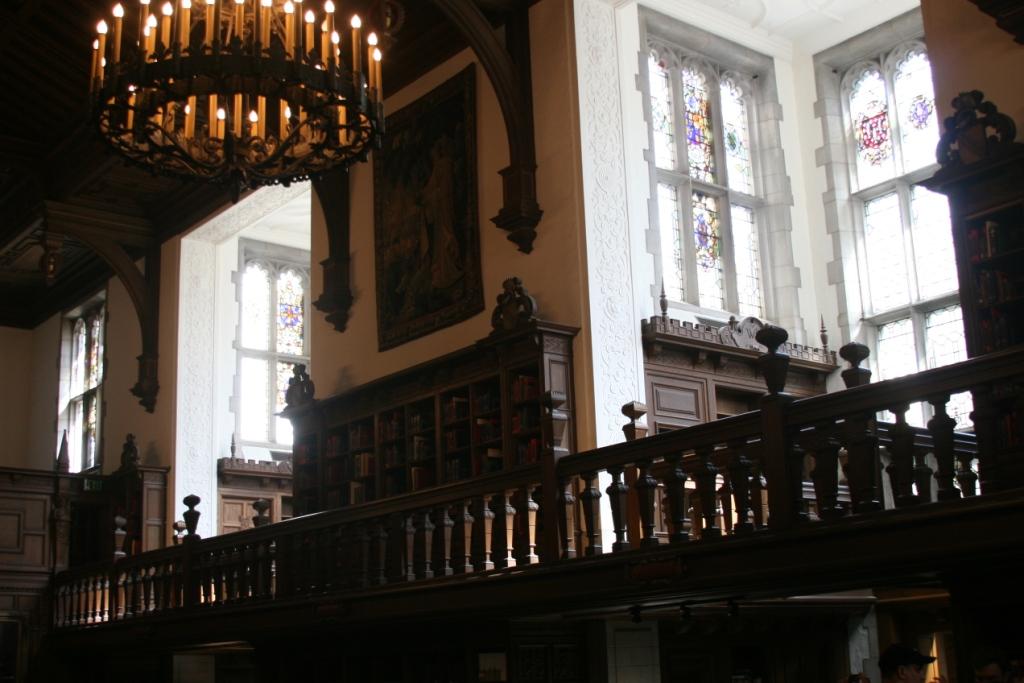
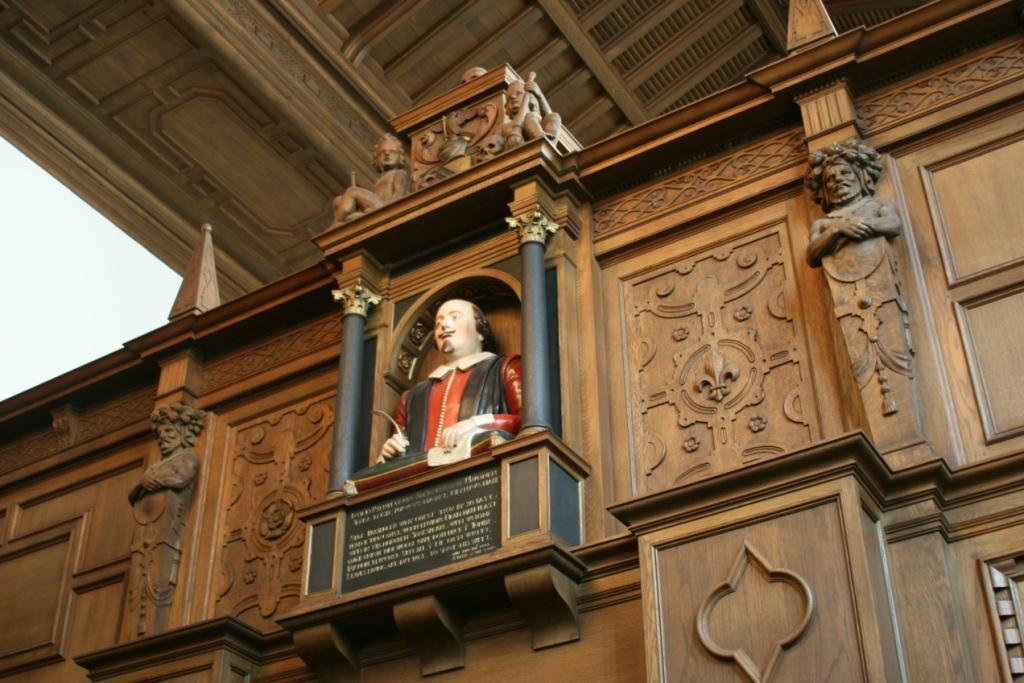
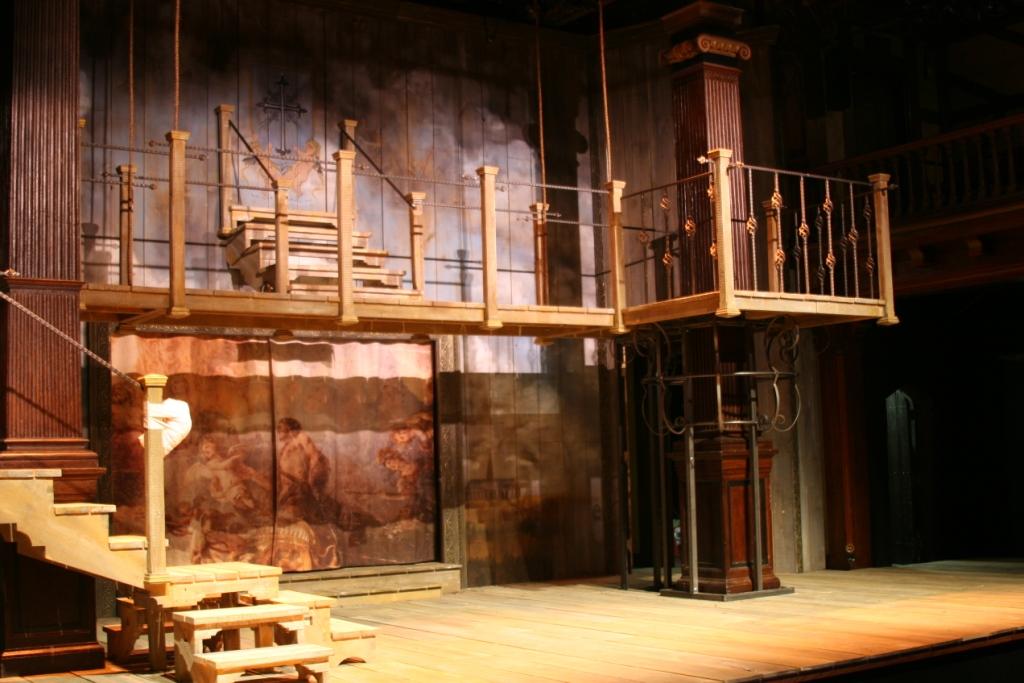
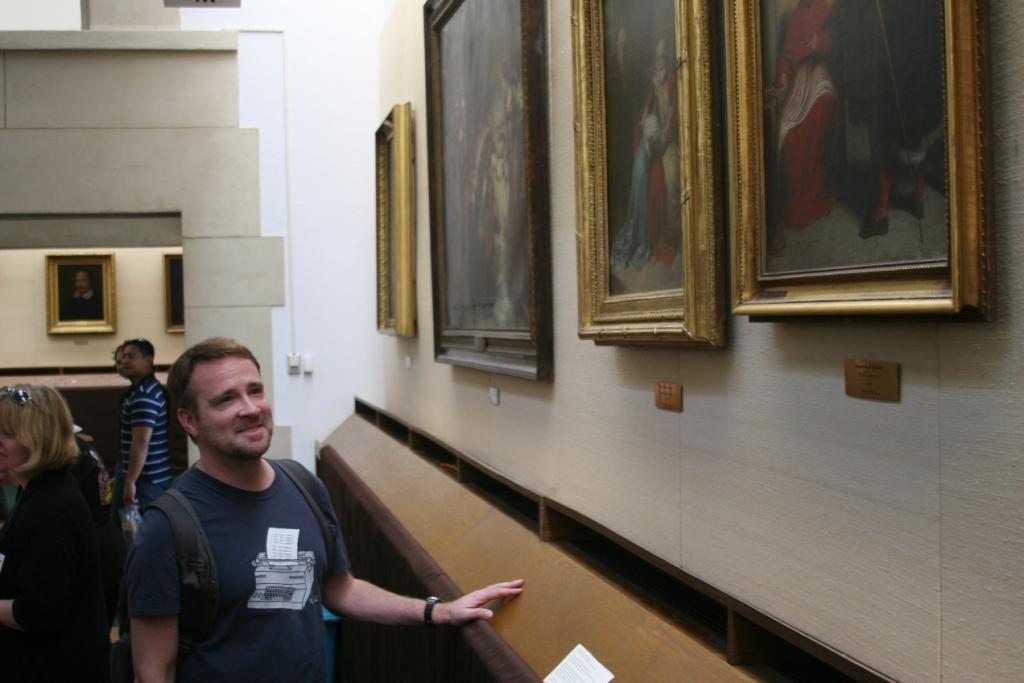
I have lived in DC for a decade and have never visited the Folger Shakespeare Library. So when my friend Ron, an English teacher, visited it was time to go have a look. Happily it was the same day as their Shakespeare Birthday Open House so we got to see the reading room which is usually only open to scholars.

The Reading Room

The Theatre

Ron

A nearby alley.


Would you belive that this picturesque alley is only 3 blocks from the capitol building?


Playing Tourist: Udvar-Hazy Air and Space Museum

 
When you visit DC many who have visited the city before will tell you to go to the Air and Space Museum on the National Mall, especially if you have kids. Well, the original Air and Space Museum on the Mall is not a very dynamic place these days. It really needs a makeover. Instead you need to go out the the Air and Space Museum “annex” out near Dulles Airport. Much more interesting. In addition to tons of planes and space craft (I only show one section of the hanger here) they have an Imax theater and an obvervation tower that overlooks the two runways at Dulles.