There isn’t enough money in the world.

There isn’t enough money in the world.
Can anyone guess in which film (and presumably which novel) Aunt Julie utters the line “Dear old digitalis.”
UPDATE: Karen’s comment made me go off to the Google and I couldn’t find the answer. I wonder what search terms she used. What I did find out was that Aunt Julie is actually Aunt Juley. It has been decades since I read the book, but I have seen the film a million times. And, as Karen says, Googling is cheating.
And here is another quote from Aunt Juley in the same film/book:
All the [insert family name] are exceptional. They are British to the backbone, of course, but their father was German, which is why they care for literature and art.

It has been a year since we moved into our house. We have finally gotten to the point where the money we are pouring into it is starting to actually be visible. For so many months nothing we did made the place actually look better. In some cases, like pipe replacement that required tearing out parts of a ceiling, work actually made the place look worse. Nothing like spending money to make your house look bad.
In the past year we have:
I am sure there is more that I am forgetting. In the end the thing that has really helped us turn the corner is the window project. Makes it look like a million bucks.
We are looking for a bit of a respite before we embark on anything else. My tiny, barely functioning, ugly kitchen remains.


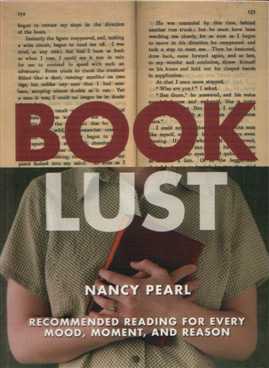
I have written about Nancy Pearl on many an occasion, even as far back as 2006. That was before I considered myself a book blogger. For those who haven’t perused her first Book Lust book you are missing a wonderful guide for what to read next. Granted, many of us have more than we could possibly need in our TBR piles, but Pearl helps one get beyond our normal comfort zones. Or if nothing else, I know we all like a list so you can page through it and check off the ones you have read.
I found a clean, used copy of this for 50 cents at a book sale and couldn’t pass it up even though I already own it. So I am going to give it away. Unfortunately, I am going to have to limit it the giveaway to North America. The US Postal System’s rate structure is killer when sending things abroad. (I nearly bankrupted us sending out those Anita Brookner copies.) The UK system must have cheaper options or I doubt that The Book Depository could exist.
So if you reside in North America and want a crack at this book, just leave a comment below by June 10th saying you want to be entered into the giveaway.
Nothing but the title links Iris Murdoch’s novel The Sandcastle, which I just reviewed yesterday, to this beach scene.
 |
| Nudes on the Beach [Desnudos en la Playa] (1922) Josep Togores (1893-1970) Museo Nacional Centro de Arte Reina Sofia |

Published in 1957, The Sandcastle is the third of Iris Murdoch’s 27 novels. For those who have yet to dip their literary toes into Murdoch’s work, I think her novels from the 1950s are a great place to start. I find most of her work is pretty accessible but these early works gently ease one into the sometimes cerebral world of Mudoch’s fiction. Contrary to my intentions, I have probably now scared more than a few of you off. You shouldn’t be.
At the risk of gross oversimplification, I think it is fair to say that most of Murdoch’s novels are really just soap operas. Sure, they may delve into politics, religion, philosophy, morals and any number of other deep thoughts, but they are at heart soap operas. And I mean this in a good way. Lots of English folk running around having affairs or near affairs with other English folk. These are the kind of affairs that, while physically consummated, most times seem to be driven much more by intellectual stimulation than physical. Some of her later work in the 70s takes on a real who’s shagging who kind of vibe. These earliest novels deal with many of the same issues but the affairs are undertaken with far more seriousness, or in a reflection of the more rigid moral standards of the time in which they were written, don’t happen at all.
The Sandcastle (finally he gets around to the book at hand) takes place at a “sound and reputable public school of the second class”. Bill Mor, a senior master at the school, and his wife Nan have a less than ideal marriage. Both seem bored and at odds about their future ambitions for themselves and their family. Their two teenage children seem equally alienated from family affection. This is the kind of family that Americans like to look at and think, “tsk, tsk, those English”. You know the kind of family where a handshake between father and son seems like a gross public display of affection. (No doubt you in England have an equally reductive stereotype of American families that you fall back on when you feel intellectually lazy.) So all this goes along as one would expect until the famous young painter Rain Carter comes to campus to paint a portrait of the former headmaster. And let me just say stuff happens. Rain and Bill…well I’m not saying…and then the son who appears to have more than a mancrush on one of his father’s friends not to mention a Maurice-ian relationship with his best pal Jimmy Carde does something that is really scandalous, but isn’t necessarily what you think it might be…but it is wife Nan who ends up defining the outcome in an unexpected way. (Her manuever at the end reminded me a bit of Dorothy Whipple’s short story called The Handbag.)
Hard to say if any of the characters will ever get what they want and be happy, but most readers will. So for those of you sitting on the fence about Murdoch, do you really want to continue to be that person. The one who has never read anything by Dame Iris? Grab one of these novels from the 1950s and if it helps, think of them as really smart chick-lit. Remember how saucey Kate Winslet…I mean the young Iris Murdoch was in the movie Iris? Well art imitates life.
For the most part I don’t talk about my job much on My Porch. This is partly because I have one of those jobs where only authorized individuals are allowed to talk to the press. And while My Porch isn’t the press, it is available to the public and as such I don’t want to get into trouble for speaking out of turn.
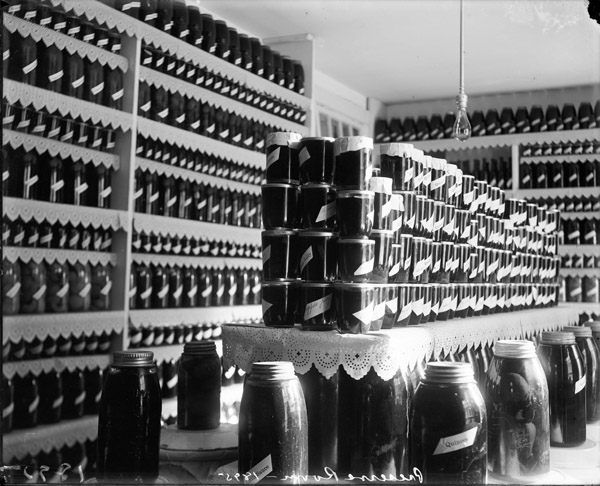 |
| The Preserves Room |
But let me just say this much. I work on a historic preservation project related to an abandoned insane asylum. Some of what I do requires me to do research including going through great old photographs that make this asylum look downright quaint by contemporary standards. The idyllic campus-like setting and the wonderful old buildings are a far cry from what passes for mental hospitals today. I know this is a romantic view of what must have been a less than happy place. In addition to the unhappy nature inherent in a mental hospital, there was also chronic overcrowding and funding shortages. It was also a time when epileptics, TB patients and other sane folks were kept in insane asylums.
 |
| Bakery in 1915 (the ovens are still there) |
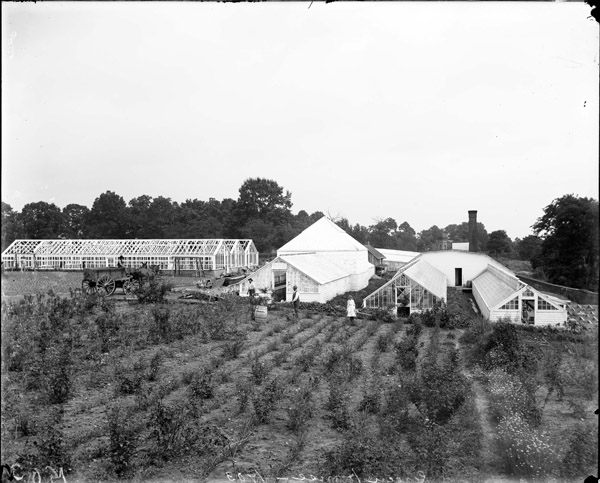 |
| Greenhouses and crops |
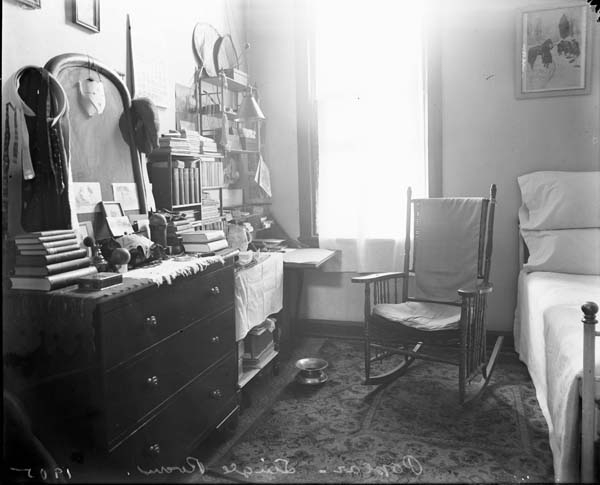 |
| Patient room (this would have been for a less disturbed patient) |
 |
| Patient day room |
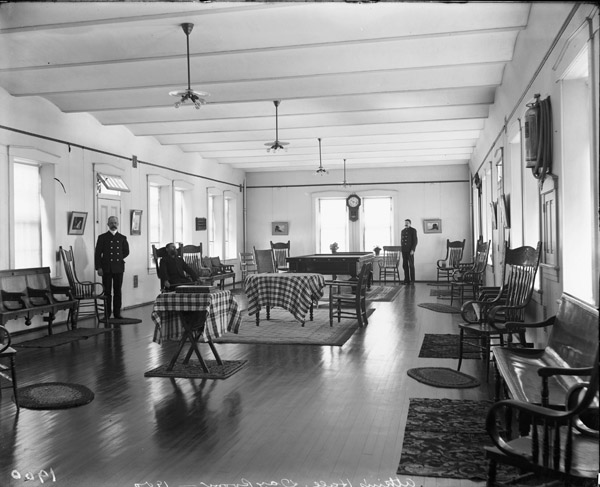 |
| Patient day room |
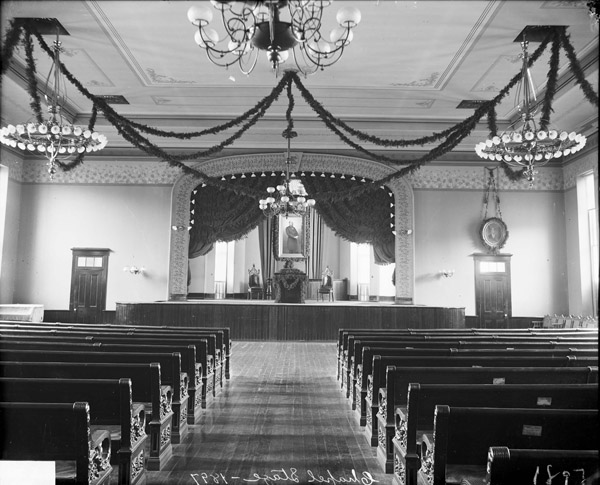 |
| Chapel |
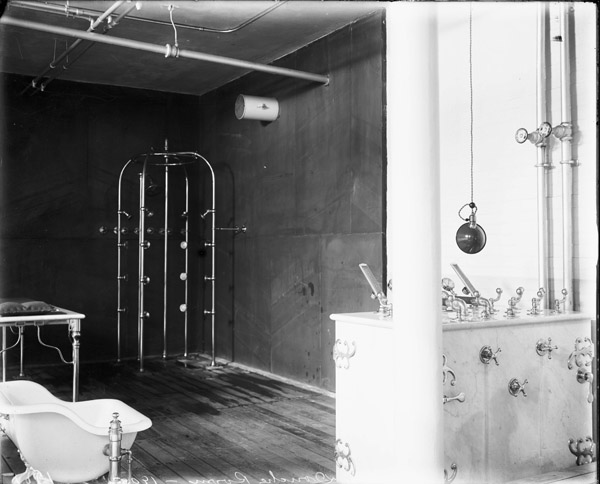 |
| Hydrotherapy Room |
Most of you probably know writer, director, actor Mike Leigh from his films Vera Drake and Secrets and Lies or his most recent Another Year (which I have yet to see). But his films that were made for the British televsion series Plays for Today in the 1970s are wonderful in their own dismally funny way. Seemingly made on a shoestring, they often deal with class issues and feature quirky, rather depressing, sometimes hilarious characters.
In Nuts in May, uber anal and officious Keith and his talkative wife Candice Marie go for a 10-day tenting holiday and run into issues with other campers who don’t share their ordered view of the world.
In the next clip, I love the way Keith feels the need to explain who is singing each line of their song about going to the zoo.
This next clip isn’t very good quality but it hilariously shows just how precise Keith can be.
Alison Steadman (who was married to Leigh at the time) not only played Candice Marie, but she also plays Beverly in Abigail’s Party. Does anyone else see shades of a Catherine Tate character in this?
Finally, the following clip is from Hard Labour, the film that first got me interested in these early films. You see a youngish Liz Smith from Vicar of Dibley fame playing an overworked char woman. With a lazy, boorish husband, bitchy daughter, and snotty employer.
Happiness is finding a Whipple for sale online for only 99 cents plus shipping. I have no idea what my edition of Because of the Lockwoods will look like, but I would love it if it had endpapers like the ones Rachel shared on her blog. I know it doesn’t have the dust jacket.
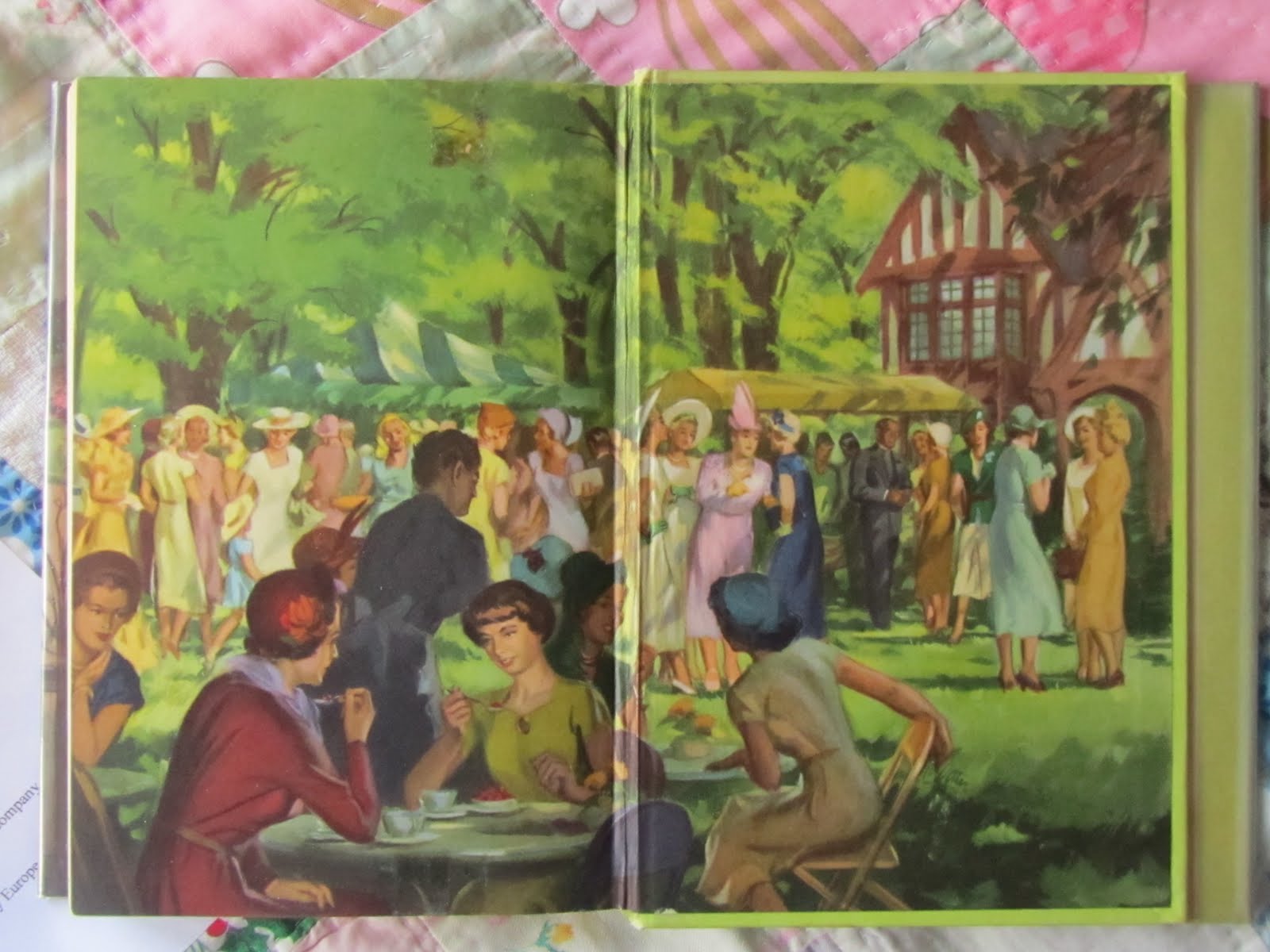 |
| Photo from Book Snob |
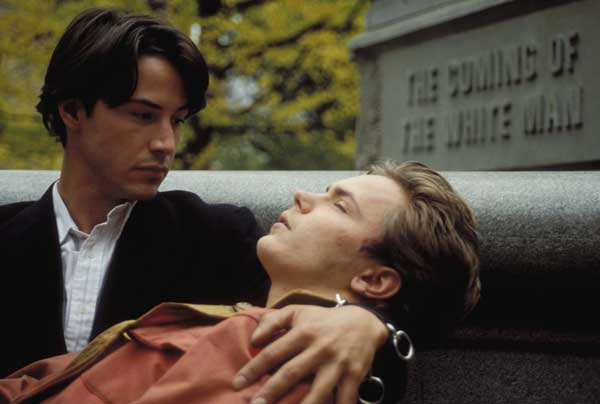
The headline to this post was going to be “My Own Private Readathon” but I couldn’t resist typing “My Own Private Idaho”. I haven’t seen that film since it first came out back in 1991. I don’t remember a lot about it except that both Keanu Reeves and River Phoenix were in a film with a gayish theme.
So what does this have to do with a readathon? Nothing. But c’mon weren’t they cute?
I’ve decided that next weekend is going to be an all weekend readathon for me. I am not going to stay up all night or anything crazy like that. I just want to focus on reading. With the cavalcade of guests and home improvements since mid-March, I just want to put my feet up and do nothing but read.