![]() |
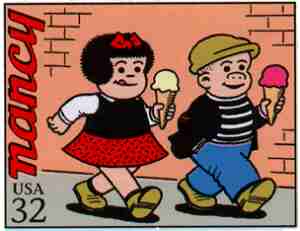
| Ernie Bushmiller’s classic comic characters Nancy and Sluggo enjoying an ice cream. |
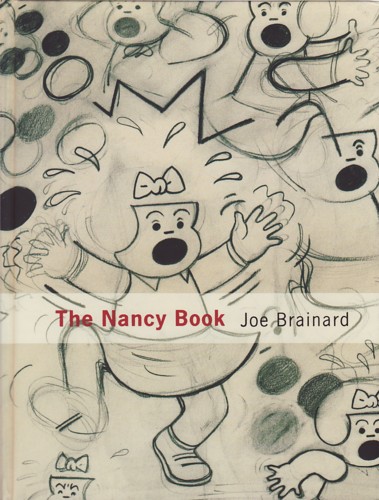
Poet Joe Brainard (1942-1994) created more than 100 works of art using Nancy. This is my favorite:
![]() |
| Sarah Palin’s almost son-in-law Levi has nothing to do with this post, but this picture came up when I did a Google image search on “reading lots of books” |
This year my work life has taken a turn for the intellectual, exercising my research and writing muscles for eight hours a day, five days a week. As a result I haven’t had much mental energy to write reviews for this blog. I feel like I am in danger of of losing my status as a book blogger. Admittedly my reviews were never traditional reviews and, although some were pretty good with actual insight, they were pretty inconsistent in their approach, content, and quality. I thought I might stop writing them altogether. Not to mention the fact that out of everything that I post about my reviews get the least amount of traffic and comments.
But…
I originally started writing reviews here so that I could remember better what I had read. The other night I was updating my “Books Read” spreadsheet and there were a few titles on the list from this year which were like big blank spots in my brain. Clearly if I don’t write something down, I run the risk of not remembering much about what I read. One could argue that if a book doesn’t remain in my brain, it might not be worth remembering. But I have found that not to be the case.
So I have decided to make an effort to write at least a paragraph about each book I read. It might not make for scintillating reading for you, but it will at least provide a record for me to jog my poor memory.
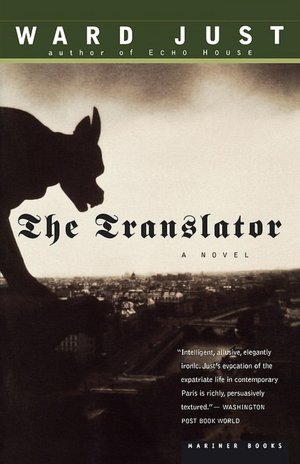
The Translator is another interesting, well written novel by Ward Just. A former Washington Post reporter, Just has the knack for writing interesting stories intelligently intertwined with political intrigue. In this case the political slant is a young German who leaves Germany soon after the end of World War II to become a translator in Paris. He eventually meets and marries an American and the two make their lives as expats. For him it is the scepter of communist East Germany where his mother has chosen to make her home, and for her it is the pall of a brother killed in Vietnam and the tarnished power of the U.S. in the wake of the failre in Southeast Asia. Add in a developmentally disabled son, and the fall of communism and you start to get a pretty complex, but readable story.
This wasn’t my favorite Just, I think he could have used a little editing, but overall enjoyable.
I think this 1992 review from The New York Review of Books makes an interesting and apt comparison to C.P. Snow.
Ward Just is in many ways the contemporary American equivalent of the late C.P. Snow. Like Snow’s, his novels are situated with great precision in the “real” world, realistically rendered, and they are concerned with power, with decision making, and with the far-reaching consequences of the decisions made. While they often include family conflicts—most poignantly those of fathers and sons (as in Snow’s The Conscience of the Rich and Just’s The American Ambassador, 1987)—the domestic struggle is nearly always placed within a larger, more public sphere. The ethical quotient in their novels is always high, for the choices made typically involve questions of loyalty to one’s colleagues or (as in Just’s Jack Gance, 1989) to one’s sense of personal integrity. Expert or “inside” knowledge plays a large part in the fiction of both men—Snow drawing heavily upon his experience as a scientist and civil servant, Ward Just upon his years as a Vietnam War correspondent and prominent Washington journalist.
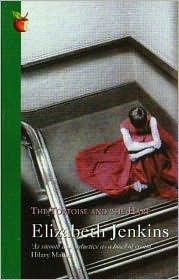
I feel like Virago has really been coming through for me lately. It makes me want to stick to a steady diet of green spines. When I read the synopsis for The Tortoise and the Hare I was pretty sure of which characters I was going to root for. The plot centers on Evelyn, a 52-year barrister who takes an interest in his 50-year old tweedy neighbor Blanche at the expense of his beautiful younger wife Imogen. As uncharitable as it may sound, I was all set to be happy for Evelyn and Blanche for finding an age-appropriate relationship, thinking that Imogen must no doubt be some vapid, flighty, money grubbing, shrew. Instead I found myself furious at Evelyn and Blanche and all I could think of was the Charles – Diana – Camilla tragedy.
Was Imogen/Diana the perfect mate for Evelyn/Charles? No, but it was no fault of her own and it was unfair for Evelyn to expect Imogen to be someone she wasn’t. Was she profligate with his money? No. Did she vamp around with other men? No. Did she provide the requisite son? Yes. Being older and more experienced, should Evelyn have known himself and his desires better before choosing a mate? Yes. Should Blanche/Camilla have stayed the hell away from a married man? Yes.
And the worst part is that Evelyn and Blanche never get their comeuppance. I found that part the most frustrating thing about the book. Evelyn was so awful to Imogen I thought for sure at some point there would be some coal in stocking. There is a ray of hope for Imogen in the end, but it didn’t keep me from wanting some pain for Evelyn and horsey Blanche. Even with this frustration, I really enjoyed this book and found it emotionally compelling.
These magazine clippings keep getting moved around my office. I finally decided to tidy up some paper work and decided to finally scan these and then recycle the originals. And since I know my readers, I thought I would share them with you.
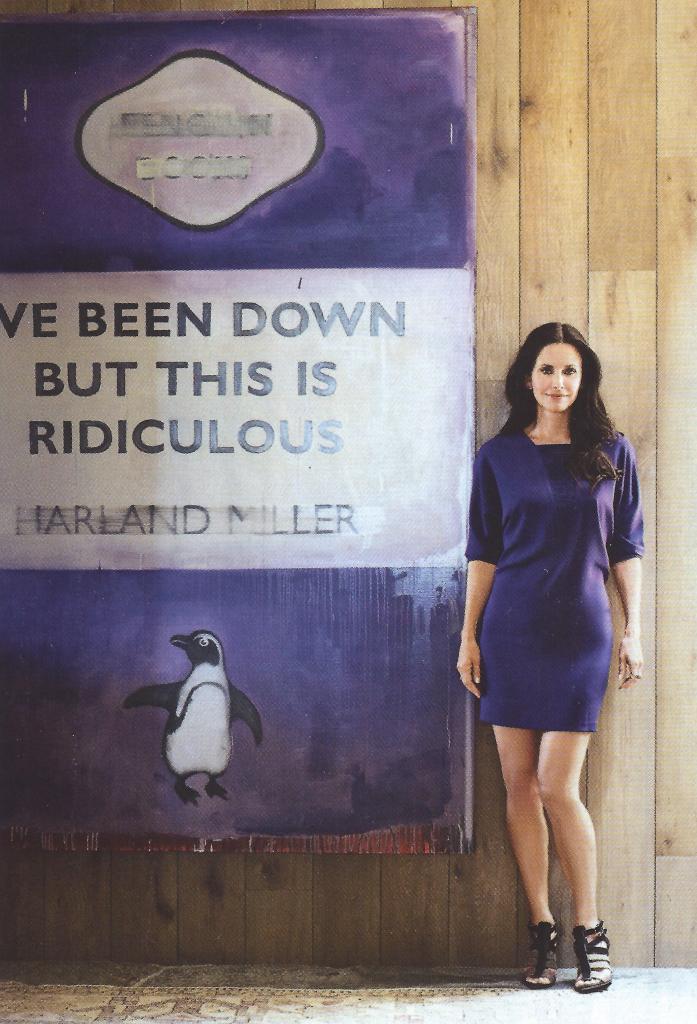
[UPDATE 7/9/12: Last night I Googled “Harland Miller” to see if this was a real Penguin title. It isn’t. Turns out that Harland Miller is an author and painter. He has done lots and lots of paintings and prints of fantastic Penguinish covers. I really want one. Just do a Google image search on his name. The pictures that come up are many and great.]
![]() |
| Love, love, this painting. Do you think she reads? (I know a Tasmanian and a Western Australian who will love this.) |
![]() |
| I love how utilitarian these shelves are. I don’t love the dead bear on the floor. |
![]() |
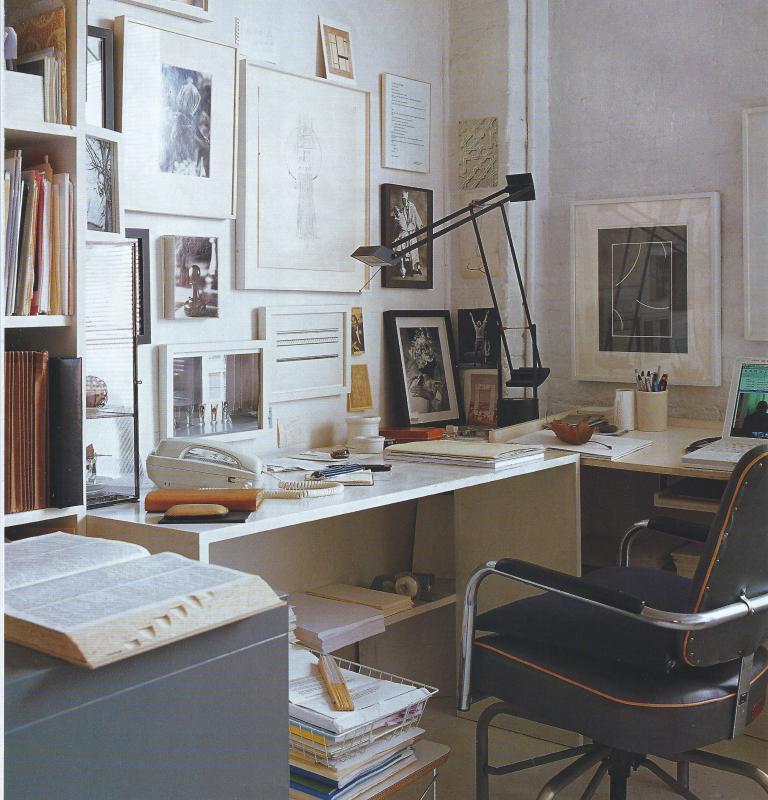
| I love how this looks like someone really uses this office. Love the open dictionary, the real phone with a handset that doesn’t exacerbate my tennis elbow (I hate mobile phones for that reason). |
![]() |
| I want a messy bulletin board like that, but I am not sure if John will permit it… And a map, who doesn’t love a map? |
![]() |
| Although my mind is well ordered, I don’t necessarily like too tidy a bulletin board. But I like how this one suggests a creative person. Plus it gives me a good idea of where to put my Emmy. |
![]() |
| Simon made the button too. (At least I am assuming he did.) |
When Simon and I had tea in last month in Oxford, I may have blamed him for exacerbating my OCD with his A Century of Books challenge. I was all set to abandon it, but I wouldn’t let myself. I feel like I have to finish this list or I won’t ever be able to read anything again. Sounds a little strong I know, but that is the way the mind is twirling right now.
It is clear that I won’t finish all 100 years in 2012 like Simon plans to. I have only read a pitiful 29 books so far this year so it doesn’t look too promising. I think I am going to remove the deadline entirely and replace it with the constraint that I can only read 20th century novels until the 100 years are all filled up. And on top of that I can only read from years that aren’t already crossed off the list. This might be entirely foolish, but I seriously haven’t been able to allow myself to read a pre- or post-20th century book since I opted into the challenge back in February anyway, so I might as well go along with it right?
I am not going to limit myself with the books I have listed here, but I did have fun fleshing out the list tonight. Many of the books on the list I already own so it gives me the added benefit of narrowing down my TBR pile. If some of the books look a little ominous it is because I filled in the gap with books from 1000 Books You Must Read Before You Die, and a lot of those aren’t exactly pleasure reads.
I have tried to keep re-reads down to a minimum but there are a few on the list (Atwood, Brookner, Shields)
You will notice a few years are blank, perhaps you can help me fill them in. And if anyone can find an alternatively to Women in Love for 1920 I would be grateful. I am not sure I can go back to that one even though I am a 100 or so pages in. [Update: I have filled in the holes on the list with readers’ suggestions, except for 1918, must have been a bad year for literature.]
I have already completed the one’s that are crossed out. Those marked “ML100” are on the Modern Library’s list of the top 100 novels of the 20th century, which I have been working my way through since 1997.
[List last updated 10/10/12]
1900 – Claudine at School by Collette
1901 – Claudine in Paris by Collette
1902 – The Immoralist by Andre Gide
1903 – The Riddle of the Sands by Erskine Childers
1904 – The Golden Bowl by Henry James (ML100)
1905 – The Duel by Aleksandr Kuprin
1906 – Young Torless by Robert Musil
1907 – The Secret Agent by Joseph Conrad (ML100)
1908 – Love’s Shadow by Ada Leverson
1909 – Martin Eden by Jack London
1910 – Impressions of Africa by Raymond Rousse
1911 – Zuleika Dobson by Max Beerbohm (M:L 100)
1912 – The Charwoman’s Daughter by James Stephens
1913 – T. Tembarom by Frances Hodgson Burnett
1914 – Dubliners by James Joyce or maybe Penrod by Booth Tarkington
1915 – The Underdogs by Mariano Azuela
1916 – Under Fire by Henri Barbusse
1917 – Gone to Earth by Mary Webb
1918 – Patricia Brent – Spinster by Herbert George Jenkins
1919 – Consequences by E.M. Delafield
1920 – Queen Lucia by E.F. Benson
1921 – Dangerous Ages by Rose Macauley
1922 – The Judge by Rebecca West or Jacob’s Room by Virginia Woolf
1923 – The Ladies of Lyndon by Margaret Kennedy
1924 – Some Do Not by Ford Madox Ford (ML100)
1925 – Mrs Dalloway by Virginia Woolf
1926 – Winnie the Pooh by A.A. Milne
1927 – Rhapsody by Dorothy Edwards
1928 – Quartet by Jean Rhys
1929 – The Last September by Elizabeth Bowen
1930 – Angel Pavement by J.B. Priestly or The Deepening Stream by Dorothy Canfield
1931 – The Square Circle by Denis Mackail
1932 – Young Lonigan by James T. Farrell (ML100)
1933 – Frost in May by Antonia White or Ordinary Familes by E. Arnot Robertson
1934 – The Young Manhood of Studs Lonigan by James T. Farrell (ML100)
1935 – A House and Its Head by Ivy Compton-Burnett
1936 – Summer Will Show by Sylvia Townsend Warner or Eyeless in Gaza by Huxley
1937 – Lady Rose and Mrs. Memmary by Ruby Ferguson
1938 – Princes in the Land by Joanna Cannan
1939 – Pale Horse, Pale Rider by Katherine Anne Porter
1940 – Sapphira and the Slave Girl by Willa Cather
1941 – The Living and the Dead by Patrick White or Hangover Square by Patrick Hamilton
1942 – Clark Clifford’s Body by Kenneth Fearing
1943 – Gideon Planish by Sinclair Lewis
1944 – Cluny Brown by Margery Sharp
1945 – The Pursuit of Love by Nancy Mitford
1946 – Every Good Deed by Dorothy Whipple
1947 – Under the Volcano by Malcolm Lowry (ML100) or Not Now, but Now by MFK Fisher
1948 – The Loved One by Evelyn Waugh
1949 – Love in a Cold Climate by Nancy Mitford
1950 – Our Spoons Came From Woolworths by Barbara Comyns
1951 – A Game of Hide and Seek by Elizabeth Taylor
1952 – The Far Country by Nevil Shute
1953 – Lucky Jim by Kingsley Amis
1954 – Tortoise and the Hare by Elizabeth Jenkins
1955 – The Talented Mr. Ripley by Patricia Highsmith
1956 – The Flight From the Enchanter by Iris Murdoch
1957 – Angel by Elizabeth Taylor
1958 – A Glass of Blessings by Barbara Pym
1959 – The Flame Trees of Thika by Elspeth Huxley
1960 – The Bachelors by Muriel Spark
1961 – Stephen Morris by Nevil Shute or Catch-22 by Joseph Heller (ML100)
1962 – Pale Fire by Vladimir Nabokov (ML100) or A Clockwork Orange by A. Burgess (ML 100)
1963 – The Old Man and Me by Elaine Dundy or An Unsuitable Attachment by Barbara Pym
1964 – Arrow of God by Chinua Achebe
1965 – August is a Wicked Month by Edna O’Brien or Everything that Rises Must Converge by Flannery O’Connor
1966 – The House on the Cliff by DE Stevenson
1967 – My Friend Says It’s Bullet-Proof by Penelope Mortimer
1968 – Sarah’s Cottage by D.E. Stevenson
1969 – The Waterfall by Margaret Drabble
1970 – Troubles by JG Farrell
1971 – A Meaningful Life by L.J. Davis or My Own Cape Cod by Gladys Taber
1972 – Augustus by John Williams
1973 – After Claude by Iris Owens
1974 – The Diviners by Margaret Laurence
1975 – Heat and Dust by Ruth Prawer Jhabvala and Crucial Conversations by May Sarton
1976 – The Takeover by Muriel Spark
1977 – Golden Child by Penelope Fitzgerald
1978 – The Sweet Dove Died by Barbara Pym
1979 – The Safety Net by Heinrich Boll
1980 – The Name of the Rose by Umberto Eco
1981 – Midnight’s Children by Salman Rushdie (ML100)
1982 – Wish Her Safe at Home by Stephen Benatar
1983 – Look at Me by Anita Brookner
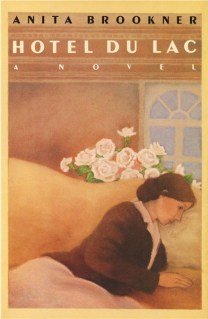
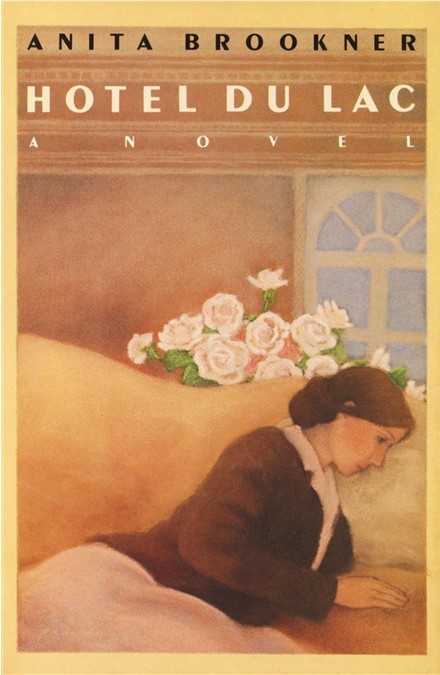
1984 – Hotel du Lac by Anita Brookner
1985 – Oranges Are Not the Only Fruit by Jeanette Winterson
1986 – Anagrams by Lorrie Moore
1987 – Postcards From the Edge by Carrie Fisher
1988 – The Temple by Stephen Spender
1989 – London Fields by Martin Amis or A Natural Curiosity by Margaret Drabble
1990 – Then She Found Me by Elinor Lipman
1991 – The Translator by Ward Just
1992 – Arcadia by Jim Crace
1993 – While England Sleeps by David Leavitt
1994 – The Longings of Women by Marge Piercy
1995 – Behind the Scenes at the Museum by Kate Atkinson
1996 – Alias Grace by Margaret Atwood
1997 – Grace Notes by Bernard MacLaverty
1998 – The Book of Lies by Felice Picano
1999 – Cryptonomicon by Neal Stephenson
Belgian photographer Filip Dujardin has created a series of “photographs” of sometimes seemingly plausible, but totally fictional, buildings. I would love to own one of these, but since the Metropolitan Museum of Art bought two of his pieces, it is unlikely I could ever afford to do so.
![]() |
| This is the one I mots covet. I could stare at it for hours. |
![]() |
| Minus the cantilevered portion, this makes me think of a building in Tuscany south of Siena. |
![]() |
![]() |
| Moshe Safdie with a little Ralph Rapson thrown in for good measure. |
![]() |
| I think I walked down this street. |
![]() |
| My first thought was Hugh Newell Jacobson, but perhaps more likely to be H&dM again. |
![]() |
| Perhaps Richard Rogers’ Lloyds of London building? |
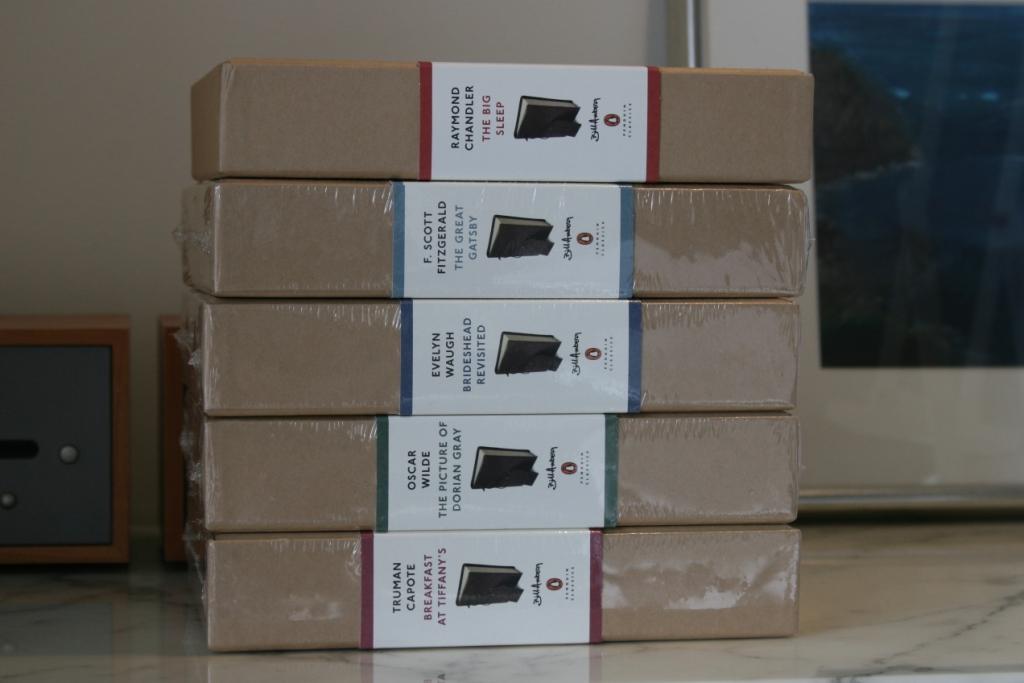
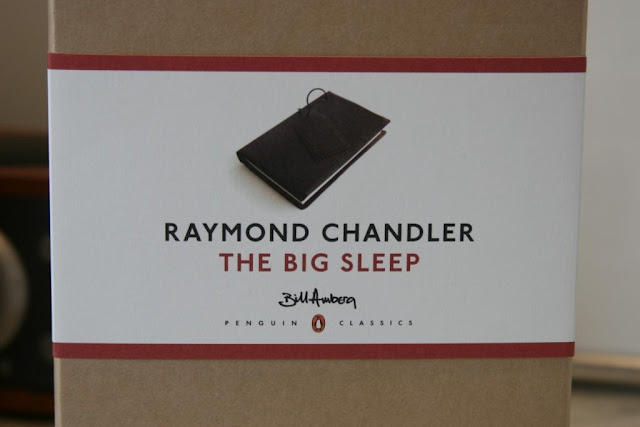
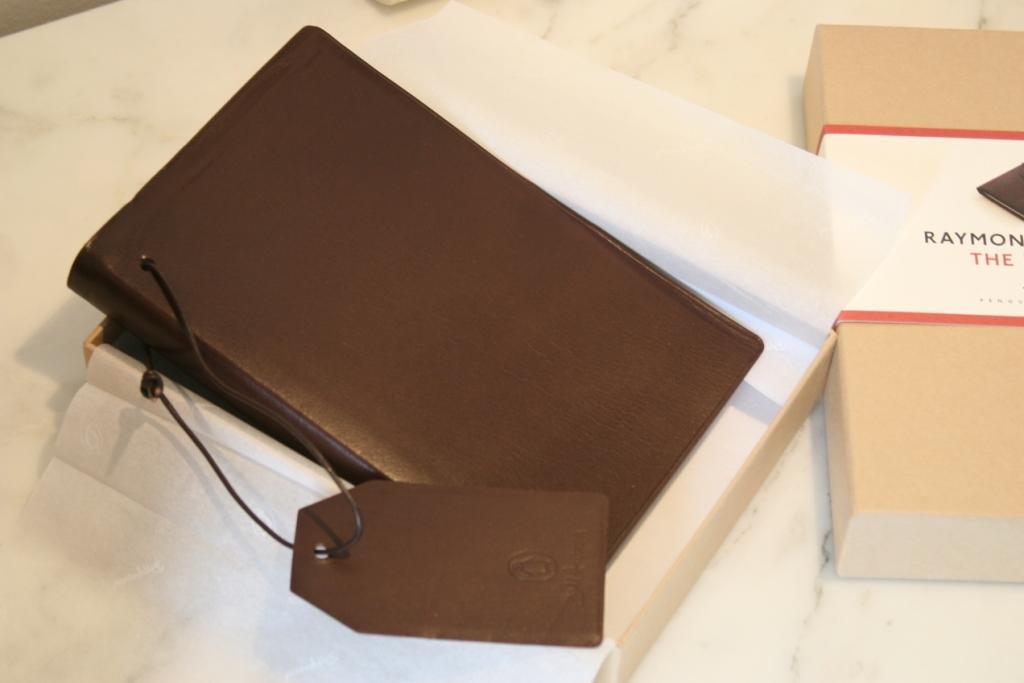
A few years ago John bought me these wonderful, leather-bound Penguin editions. I had read all but one of them and those six books are among the best and most enjoyable books I have ever read. So I thought it was time to take on the one volume that I hadn’t read, The Big Sleep by Raymond Chandler. Not being able to bring myself to subject one of these beautiful editions to my less than delicate hands, I went to the public library and found a beat up old paperback edition to read.
I knew even before I started that The Big Sleep wasn’t going to be my cup of tea. But, since so many you love the book and think that Chandler is a master at what he does, I at least thought that I could appreciate it for what it is. I was wrong. By page 94 (of 231) I was so bored (and annoyed) by all the sexy dames and the corny, clichéd, Cagney-like dialogue I couldn’t imagine enduring one more minute of it. 
What is worse is that my urge to check this one off my list was so strong that I kept forcing myself to plod through it at the expense of other more interesting books. So to save myself the boredom and free myself to read other things I put the library reading copy into the DNF (did not finish) pile. Meanwhile, I put the beautiful Bill Amberg edition back on my shelf next to the others. But in my mind I put the title in a new DNR (do not resuscitate) pile. I won’t be giving this one a second go. I will never be in the mood for it.
Another book joining the DNF/DNR piles
After a run of good books recently, I was a little nonplussed that The Big Sleep wasn’t the only book that was slowing my reading pace. Although I found bits of Mrs. Miniver by Jan Struther charming, it is more of a collection of vignettes than it is a novel and it just wasn’t enough to keep my attention.
When the Forward is more like a Forewarned
I normally don’t normally read forwards or prefaces and for good reason. As much as I tried, I could not get into Margaret Bonham’s collection of short stories, The Casino. I fear it was the preface that did me in. It was written by Bonham’s daughter Cary Bazalgette and told how Bonham was an unfeeling, neglectful, abandoning, selfish, self-involved mother. Normally this wouldn’t have much of an effect on me but when slivers of the truth emerged in the stories I had a hard time having any sympathy for the some of the characters. I may return to this one at some point but no time soon.
Lucky me I finally finished Lucky Jim
Another “this should have been my thing” kind of book but my overall impression was ambivalence at best. I had even read half of this book many months ago and lost interest. When I picked it back up, I decided to start over. I enjoyed it slightly more, but not enough to care. Frankly, I think David Lodge does the comic academic novel better than Kingsley Amis, yet Lucky Jim is on the Modern Libraries list of the top 100 novels of the 20th century. Hmph.
Virago saves the day
I guess I could characterize this all as a reading slump. After all the Struthers and the Bonham should have been right up my alley. But it didn’t feel like a classic slump–the urge to read was too strong. The Janet Frame book I mentioned last week was part of pile of stuff that wasn’t doing it for me. But I also have two or three started that just aren’t going anywhere for me. After The Ladies of Lyndon, I had a strong urge for another Virago but was resisting picking up another one because I wanted to do a bit of clean-up by finishing all of the books in progress. When I realized the effect this was having on my urge to read I tossed them all aside in favor of The Tortoise and the Hare by Elizabeth Jenkins which I am loving. Thanks Virago.
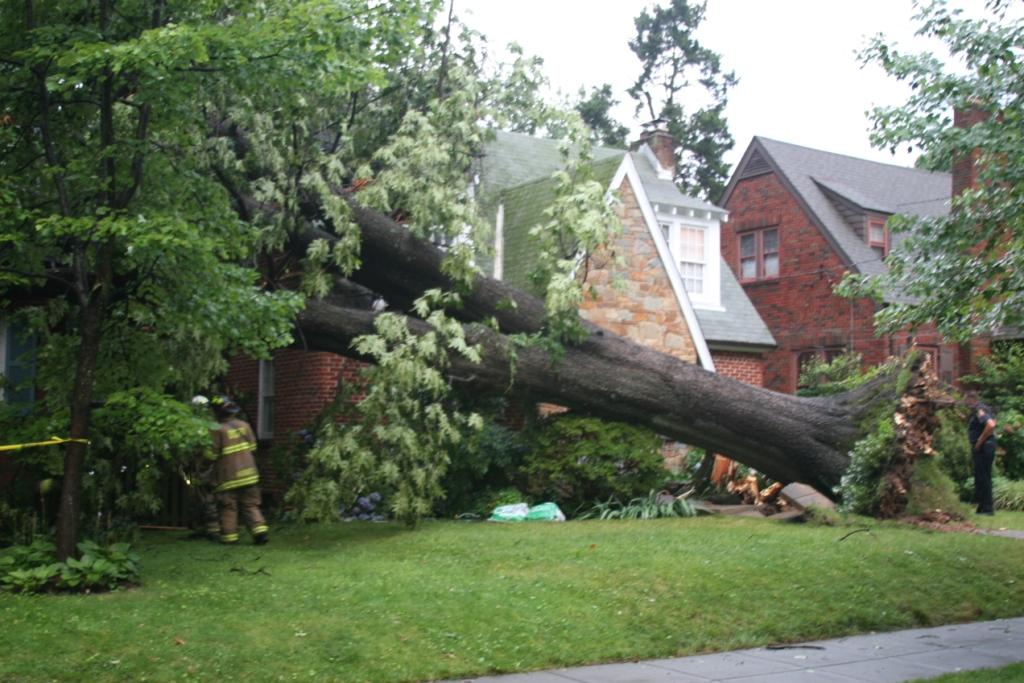
When good trees go bad
Last Friday we had quite the storm in our neighborhood. I say our neighbhorhood because it really was a bit of a microburst that didn’t seem to have much effect on adjacent neighborhoods or the rest of the city. Three doors down and across the street from us, one giant oak decided to attack two houses. Thakfully the big storm that hit the DC area this weekend didn’t do too much in our neck of the woods.
Gratutitous Photos
More of John’s garden…
![]() |
| That’s Lucy in the background |
![]() |
| Reading T. Tembarom |
Mapp and Lucia on Facebook
Until this week I didn’t realize there was a Mapp and Lucia group on Facebook. And the folks there are so friendly. With about 600 members it is a cozy little subculture chatting about all things Benson. I certainly haven’t read all of Benson’s work but my recent return to Rye has re-kindled my interest and now I have a hankering to start the Lucia series from the beginning.
Frances Hodgson Burnett flirts with Wilkie Collins
I bought Frances Hodgson Burnett’s novel T. Tembarom without knowing a thing about it. I wasn’t sure what to make of the title but I love FHB in general so I thought it was a good gamble. Turns out it was a pretty good gamble. Orphaned at an early age, T. Tembarom is slowly making his way in the world, working his way from a newsie to a beat reporter in Harlem. That is until he finds out that he is the only surviving heir of a great estate in Lancashire. Next thing you know it he is on a boat headed to England and his future–and not knowing a thing about either. But then the fantastic rags to riches story turns into a bit of a Wilkie Collins type mystery. You can kind of see it coming for miles but that doesn’t mean its not interesting. I definitely think FHB could have used a more judicious editor. There were some passages that could have used some cutting and the novel would not have suffered one bit. Still, for FHB fans, this one is worth a read. And the good news is, it is available on Project Gutenburg so this probably out of print 1913 bestseller need not elude you.
Janet Frame may not get a second chance
There are two things I know about Janet Frame, the 1990 bio-pic Angel at My Table and the first 40 pages of her novel Daughter Buffalo. And I must say I don’t really like either of them. I haven’t seen the film since it first came out, but all I remember is a very depressed person and electric shock therapy. Until now, I had never read any of her novels. I don’t know if Daughter Buffalo is representative of her work, but it was a rather depressing treatise on death. That, in itself, would not necessarily make dislike a book, but when the main character, a medical student, practices operating on his pet dog–something that is eventually fatal to the dog–I drew the line and tossed the book aside. And unless someone can recommend a Frame novel that doesn’t require mood altering chemicals, I don’t think I am going to try anymore of her work.
The Ladies of Lyndon is unputdownable
Although I regularly enjoy most of what I read, it is always nice to come across a book that makes one want to forget about everything else and just read. T. Tembarom did that, but I was really entranced by Margaret Kennedy’s The Ladies of Lyndon. Ostensibly about the various wives, sisters, mothers who kind of orbit around an Edwardian estate (Lyndon), I think the real breakout star is the protagonist’s brother-in-law James a wannabe artist who is portrayed as developmentally disabled. In reality he turns out to be a real artist whose main problem is that he speaks his mind regardless of consequences. Such an enjoyable book.

Gratuitous Photos
After all of those photos of English gardens, I thought I would share some of John’s garden. And couldn’t resist throwing in a few of Lucy.
[For a little music while you read, scroll to the bottom of this post and play the video.]
As we awoke to rainy looking skies on day 8, it seemed appropriate to leave behind our sheep-filled rural idyll for the teeming metropolis of Oxford. By chance, our chosen driving route passed right by Blenheim Palace. I had been there once before on a lovely summer day in 1992, but John had never been. While I knew the grounds were beautiful, I also knew that the gardens were a bit on the formal side to be terribly ingteresting to John. But then I remembered the long library in the palace. Not only is it a magnificent library full of books and comfy furniture, but it also has a pipe organ. Like a dream for me. So, we turned in and had a look.


![]() |
| Books and a pipe organ. Sigh. |
![]() |
| Despite its enormous size, this is actually a very cozy library. |
I hadn’t realized that John had had a childhood fascination for Winston Churchill so the visit turned out to be quite interesting for him. And the library, although it contains lots of very fancy looking volumes had a few modern books here and there that gave one the impression that people actually use this library–that it isn’t just an historic artifact to look at. A comforting feeling for bibliophiles.
We arrived in Oxford just after 1:00 pm. After a fairly annoying parking situation which put my OCD into overdrive (would the car have a clamp on it the next morning when we needed to get to the airport?!), we walked around dodging tourists and townies for about an hour before I went back to the hotel to meet up with the inimitable Simon. Thankfully one of the concierges on duty was able to put my mind at ease about the car before I went into The Drawing Room at the Randolph Hotel for tea.
Before I say anything about meeting up with Simon, let me just say a word about the tea itself. The Drawing Room was a pleasant space with comfy chairs that weren’t too close together so we never felt jostled by people at other tables. This might have been the best thing about the tea because (in my humble opinion) the scones sure weren’t up to snuff. Although I had a piece of Victoria Sponge earlier that day at Blenheim, which might have put a damper on my hunger, I had also consumed seven scones at four different places in the preceding seven days, so I had good scone data for comparison for making a comparison, and the Randolph did not fare very well. If you want a comfy, elegant setting for tea while you are in Oxford, go to the Randolph. It you want a good scone, go somewhere else.
But in the end I didn’t mind the dry scone because that was secondary to the engaging conversation with Simon. We had met once before in 2010 at a much better tea at the British Museum in London, but on that occasion the scones were good, but being in a large group I didn’t have much opportunity to talk much with Simon.
Originally, this meet up in Oxford was to include voracious reader, librarian, swimmer, and soon-to-be Olympic torch bearer Verity. Unfortunately, she had a relative who was not well and made the right choice to spend time with her family. She was there in absentia in the form of a lovely gift that she and Simon gave to me. This wonderful book about the Bodleian Library. I am not sure how they knew I would love it.
And what to say about Simon? I could say a lot, but chatting with people in real life, unless expressly on the record, is an off the record kind of thing. As Simon has noted in his account of the afternoon, we didn’t talk all that much about books. Which is true. Although if we were typical of the population at large, it probably would have been enough book talk for a year. In some ways not talking about books was much more fun because we discussed things that wouldn’t necessarily come up on either of our blogs, and also because it proves that our shared love of books is not the only thing there is to talk about. I might have put my foot in it once or twice. It is always hard for me to tell in the UK. If I did, Simon must have forgiven me by now. For those who haven’t met him, Simon is as funny and charming (and quirky) as his blog.
We certainly could have talked longer than the mere 2.5 hours we were together. But I had to take off to meet John so we could go to Evensong at New College Chapel. Since I hate feeling like a tourist, and I love going to a good choral Evensong, I thought it would be a good opportunity to experience one of Oxford’s colleges without just being a gawker. I also knew that they were doing Zadok the Priest that day, no doubt in honor of the impending Jubilee. Zadok was written by Handel and has been performed at every British coronation since it was written. For those of you who know it, I don’t have to say much, but for those who don’t have a gander at the YouTube clip. It is a very different setting than New College (the wedding of a Danish prince in 2004) but it is a pretty darn good performance of the piece. Plus, it is with full orchestra which makes the opening so much more dramatic–starting out quite softly and building to a lovely great crescendo as the choir makes its entrance. The organ-only version that they did at New College lacked subtly in the organ intro, but the opening line of the choir left with a smile on my face and watery eyes.
And so ends our UK trip. We had a rainy drive to Heathrow on day 9 and were very happy to get home to our darling pup Lucy.
Rather than quench our thirst for British travel, it has only re-whetted our appetite. No doubt there will be many future trips.