Getting to know my library

a library
Recently I blogged about my reading resolutions for 2016. One of them was to spend some time in my library. As I mentioned, we have been back in the house of over a year and I hadn’t spent much time in the library at all. I not entirely sure why that was, but since I made the resolution I have taken steps to rectify the situation. I’m happy to say a few simple steps have unblocked whatever mental blocks I may have had that were getting in the way of enjoying this great room.

Joan, who blogs at Planet Joan, commented on my New Year’s post that she sometimes finds herself distracted by all the books in her library, as if they were whispering to her and breaking her concentration. In my current mood I have found that my books appear to be whispering encouragement, almost egging me on to read. Sometimes when I am at a bookstore I get so excited about books that I feel the need to run home and read something. That’s kind of what’s happening right now with my library. I’m finding them inspirational rather than distracting.

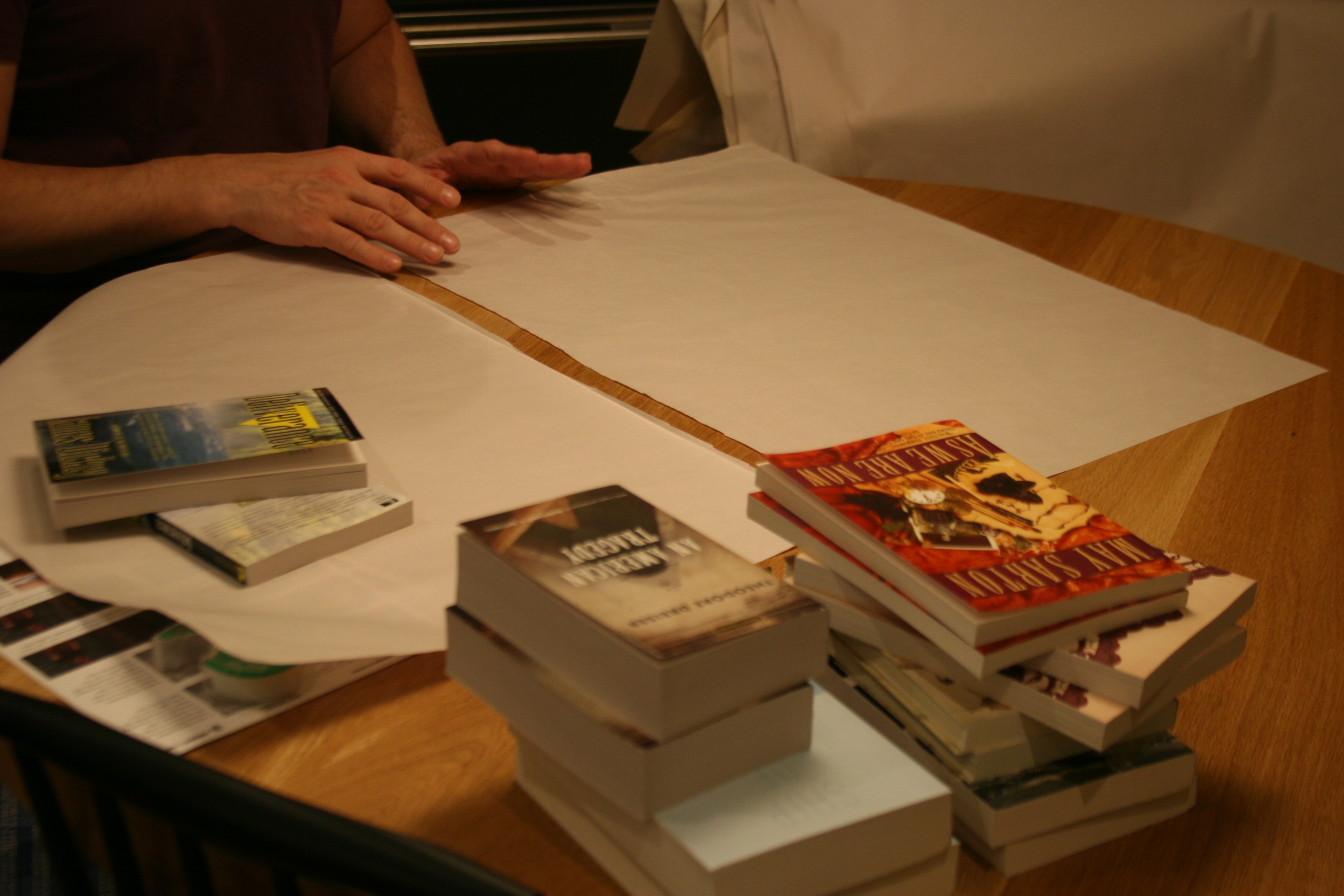
The first thing I had to do was a bit of organizing. In general my books were pretty well organized but I had kind of stuffed John’s books every which way. That muddle, along with the stacks of books I bought this summer were keeping me from feeling relaxed enough to read in the room. Thankfully it wasn’t a wholesale organizing effort that was necessary (like the one in the picture. That would have kept me from reading for a week. But I did weed out about three bags of books, get my recent acquisitions on the shelves and sort out John’s books.

The second thing was to get some music in the room. I don’t need music to read, but I definitely needed something that would allow me to listen to my neglected classical CD collection. That option has warmed up the room and made it much more of a destination for me.

The third thing I did was reassess the comfort of the one chair in the room. It really does work pretty well for reading but less so for napping. Turns out not being able to nap in the chair is actually conducive to reading, but somewhere I got it in my head that the chair wasn’t comfy for reading.

With these simple changes in place I have actually been reading in my library. It helped that John was out of town one night this week so instead of being cozy with him on the couch in the family room I was cozy in the library instead.

One morning I had 20 minutes before I needed to leave for work so I thought I would go in the library and read. I found myself distracted by a book on the shelf, but in a really good way. I saw a volume that I had zero, and I mean zero, recollection of buying. I was intrigued enough to take it off the shelf and sit and read it for 20 minutes. That’s my definition of a good distraction. The book was…

a brahmsAn Evening with Brahms
Richard Sennett

Although I couldn’t remember buying this book, I wasn’t surprised that I did. I’m always on the look out for novels that depict classical music in an interesting and intelligent way and this book certainly looked like it might fit the bill. With lots of wonderful detail about cello pedagogy, the world of classical music making, and descriptions of various pieces of music the novel tells a fascinating family and marriage tale that encompasses the U.S. immigrant experience, the Chicago business world of the 20s-50s, the U.S. Communist Party, race relations, and New York in the 1970s. It was almost as if my favorite sociology, history, and music professors had gotten together and wrote an interesting novel. Incidentally, Sennett wrote about three novels in the 1980s but has spent the rest of his career teaching and writing (since at least 1969) in the field of sociology. And his sociology texts look as interesting as his novels.

I’ll take a year in Rome

american academy
Four Seasons in Rome

Anthony Doerr

In 2004 the writer Anthony Doerr was awarded a fellowship at the American Academy in Rome. The Academy awards about 30 fellowships each year to artists, architects, historians, writers, and other scholars so they can spend a year living at the Academy and pursuing independent projects. Given an apartment in Rome and a $1,3000  stipend per month, fellows are allowed to really do whatever they want and aren’t required to produce anything to satisfy the terms of their fellowship. In the case of Doerr, that’s a good thing. He essentially spends his year with writer’s block managing to squeeze out a short story, some book reviews, and completely ignoring the novel he is writing about World War II, which I am guessing is All the Light We Cannot See which took him about another eight years to finish.

Did I mention that he moved to Rome with his wife and 6-month old twins?

What Doerr gives us is a thoroughly enjoyable but pretty standard travelogue of Rome studded with stories of his rapidly developing twins, the Iraq War, and the death of John Paul II. The narrative falls into the fish out of water memoir that reminds me of A Year in Provence and Under the Tuscan Sun. But Doerr doesn’t attempt the kind of humor found in those books, and his writing has  a more poetic quality with plenty of interesting Roman and Italian history thrown in to good effect. In fact, there was a section of the book that I found completely fascinating and beautiful where Doerr opines about what Italian village life would have been like hundreds (thousands?) of years ago with no noise except for birds and the sound of the wind. And he poignantly describes how insular the villagers’ lives would have been in a way that found fascinating and beautiful but also kind of sad giving the kind of global lives we live today. I really did find it moving and wanted to quote it here, but alas I can’t find the section.

As I looked for photos to illustrate this post, I was surprised at how idyllic the Academy and its park-like neighborhood is. I’ve spent maybe a total of two months of my life in Italy and have stayed in Rome a few times so I know how crazy and frenetic the city can be. Doerr writes about this as well–especially given that he and his family moved from the quiet of Boise–but his descriptions made me think that his life at the Academy was in the midst of all that hubbub. But after looking at the images online I see that the Academy itself and its immediate environs are positively sylvan in comparison to the rest of the city. As I dug deeper into the Academy’s website, sure that there must some more urban location where Doerr stayed, I was also struck by the fact the Academy looks like a much more impressive, lively place than Four Seasons in Rome had me thinking. I don’t want to ding Doerr for not writing the kind of memoir I think he should have written, I’m always a little annoyed by blogger reviews who do that. But I do feel like perhaps he missed an opportunity or two, either in his real life/actual experience or in the telling of it. Maybe too much about twins and troubles buying groceries? And definitely more than I cared to read about the death of the Pope, even though when in Rome it is hard not to feel the impact of the Pope’s presence. But overall I did enjoy Doerr’s slice of Roman life. Different than the one I would have lived, but enjoyable nonetheless.

This is the kind of density I think of when I think of Rome.


Two books in one?

at hawthorn timeAt Hawthorn Time
Melissa Harrison

One of the books Simon Savidge gave me when he visited the U.S. in September for our road trip to Booktopia was a signed copy of Melissa Harrison’s second novel At Hawthorn Time. Given the excitement of the trip and the heaps of books I acquired along the way, it is no surprise that I didn’t pay much attention to this book until I picked it out of my TBR pile last week.  What I discovered as I began reading is that the novel is almost like two books in one. On the one hand there is a compelling narrative revolving around four people: a disaffected, somewhat estranged married couple who have recently moved from London to try their hand at rural life; a socially awkward 19-year old village boy; and a itinerant laborer who feels more at home in nature and just wants to be left alone. On the other hand there are brief, but beautiful pastoral descriptions of florae and faunae threaded throughout the story. Sometimes these descriptions have a direct relationship with the story and at other times they serve as background, but they never seem out of place or superfluous.

As I sit back and think about the devastating conclusion to the book I am struck by how deeply the nature theme is layered throughout the action and lives of the people in the book. Without being obvious or cloying or in any way cliche, the natural world serves as metaphor for everything the humans experience. Seasons, new beginnings, the passage of time, decay, violence, sudden death, uncertainty, fragility. Perhaps I belabor this point because it didn’t feel that way as I read it, thankfully. Nothing worse than feeling like an author is trying to be clever.

On a more surface level I was drawn into the lives of the characters and the community they inhabited. And, although you don’t need to to love the book, I loved the descriptions of the natural world. At some point over the past decade I began to really appreciate the natural world in a way that I had ignored previously. I think part of it was meeting my husband who is an avid gardener and who brought me back into contact with growing things. Part of it was seeing the Masai Mara in Kenya. Part of it was seeing an English hedgerow up close and really noticing the biodiversity it contains. Part of it is seeing how much wildlife there is in our DC neighborhood. Harrison taps into all of this in a wonderful way. In addition to weaving it throughout the story, she begins each chapter with brief notes about what is in bud or bloom and what the birds and insects are up to. I found myself Googling a lot. This is what I mean about two books in one. I could see Harrison taking those same headings and writing a wonderful garden/nature memoir at some point. I hope she does.

I had no idea what dog's mercury was.
I had no idea what dog’s mercury was.
Isn't this pineapple weed (wild chamomile) lovely?
Isn’t this pineapple weed (wild chamomile) lovely?
Red campion
Red campion
Umbellifers
Umbellifers


Intelligent and comforting

a few green leaves
A Few Green Leaves

Barbara Pym

As big a fan as I am of Barbara Pym—indeed she may be my favorite author of all time—I have yet to finish all of her novels. Now that I have finished A Few Green Leaves, I think I only have one left, Civil to Strangers. And that one is only an unfinished fragment I think. Part of the reason I am so unclear on some of these points is that I have been keeping myself from knowing too much about her and her work. As if keeping myself in the dark will somehow make it seem like there are reams of her work still to discover. I really shouldn’t worry. I’ve already discovered that re-reading Pym novels is even better than reading the for the first time.

From it’s opening line, A Few Green Leaves sets the reader smack in the middle of Pym’s universe.

On the Sunday after Easter—Low Sunday, Emma believed it was called—the villagers were permitted to walk in the park and woods surrounding the manor. She had not been sure whether to come on the walk or not. It was her first weekend in the village, and she had been planning to observe the inhabitants in the time-honoured manner from behind the shadow of her curtains.

What follows is the comings and goings of village life centered around the rectory and the doctors’ surgery. Potential love interests both local and imported, flower rosters, pubs, the Church Times, The Archers, and Women’s Hour. It’s as observant as E.F. Benson but without the sting and snark.  Perhaps more so than Pym’s other novels, A Few Green Leaves is more about the journey and less about the destination.

You can never go home

orwell
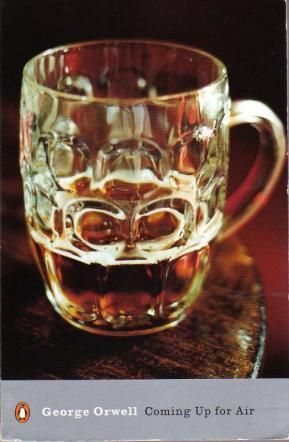
Coming Up for Air

George Orwell

I’m always a fascinated by novels set before or during World War II that were actually published before or during WWII. It is interesting to see what authors had to say about the conflict without the benefit of hindsight. In Coming Up for Air George Orwell reminds us just how clear it was for most of the British public that war was inevitable. It’s probably wrong of me to focus on this point since so much of this book really has less to do with the War and more to do with how society and life had changed since the first world war.

Coming Up for Air is the story of 45-year old George Bowling who, on the occasion of taking delivery of his new dentures, reminisces about his childhood in the Thames valley. Idyllic days of fishing in contrast to his somewhat loveless marriage and life as father and insurance salesman. Eventually he decides to take a surreptitious week to visit his childhood village only to find things different than he expected. What most interested me about that was how Bowling was upset in 1939 at how much things had changed since his Edwardian childhood. The way that Orwell writes about it, you would think the sprawl and ugliness of the 1970s and 1980s had already happened. I guess everything is relative.

Although Orwell includes a few more fishing scenes than I have the ability to appreciate, I thoroughly enjoyed reading the book and always had the sense that I was in the hands of a master. Orwell shows how well he can spin a tale with humorous, subtle, social commentary. George Bowling’s adult life is pretty depressing but I found myself chuckling at his buffoonery at the same time I was rooting for his success.

Seven books and a guessing game

IMG_5174

Eons ago–August 2014 to be exact–Simon Savidge visited Washington, DC after attending Booktopia in Asheville, North Carolina. We had plans to record lots of episodes of The Readers while he was in town so that we could have some back-up episodes for when we didn’t have time to record. Well you know what they say about the best laid plans:
“Simon ignores them and runs around Washington instead.” It’s an oddly specific bit of folk wisdom that seems to be entirely true.

One of the episodes we were going to record then was to choose seven books that each of us wanted the other one to read. Not necessarily our favorite books, but books we thought the other one would enjoy but probably not pick up on his own. (I think the initial thought was five books, but then I wanted to do 10 so we had to split the difference.)

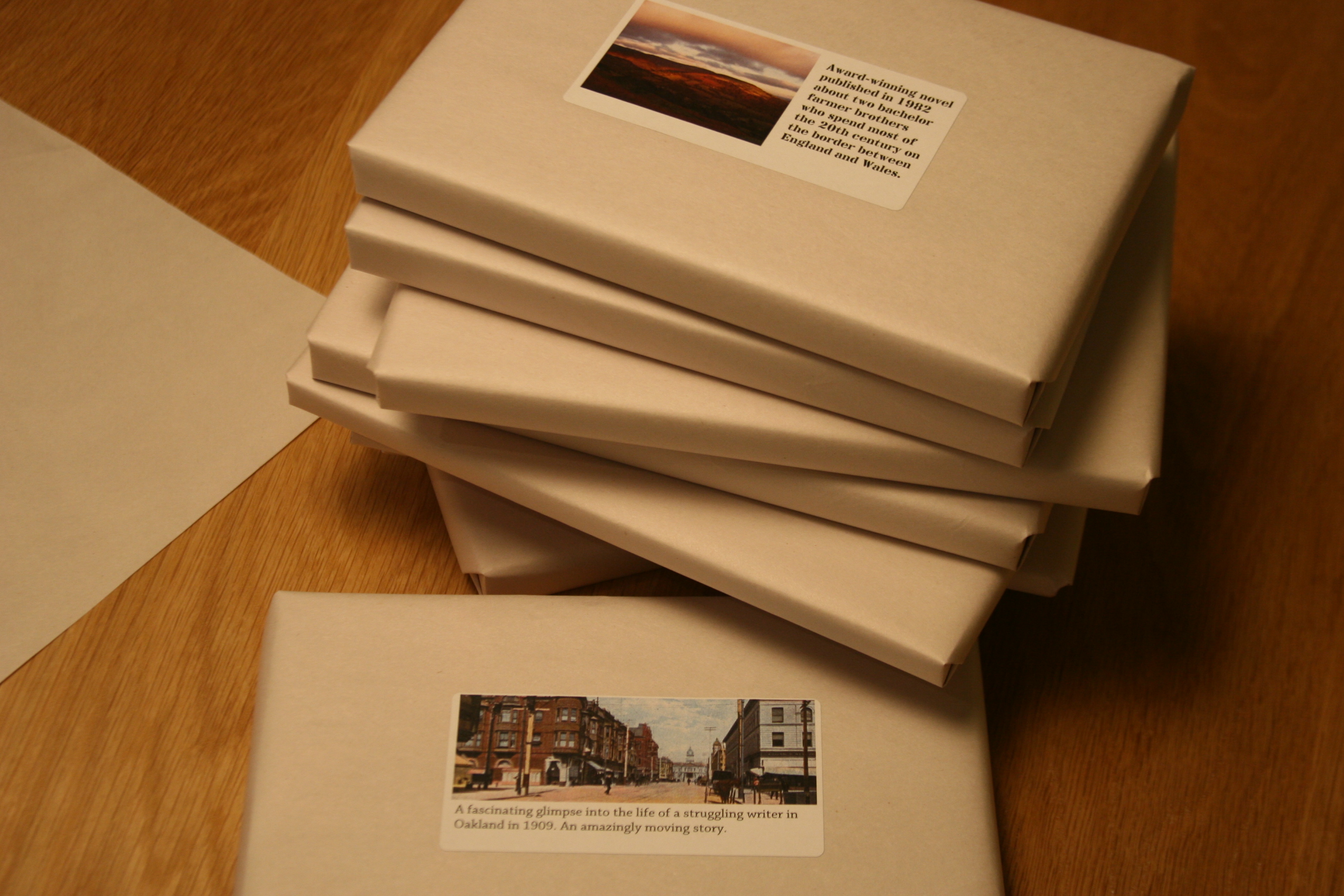
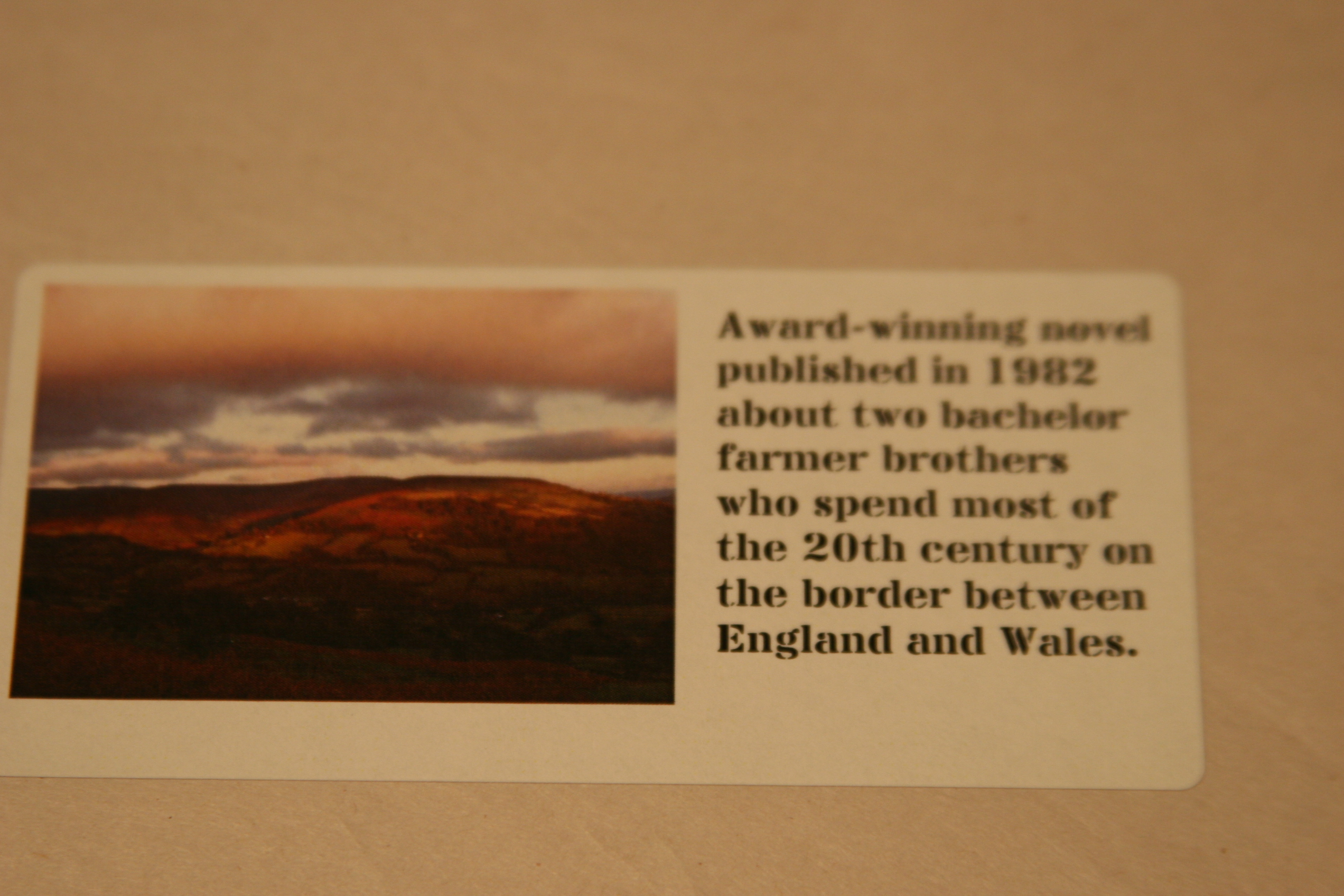
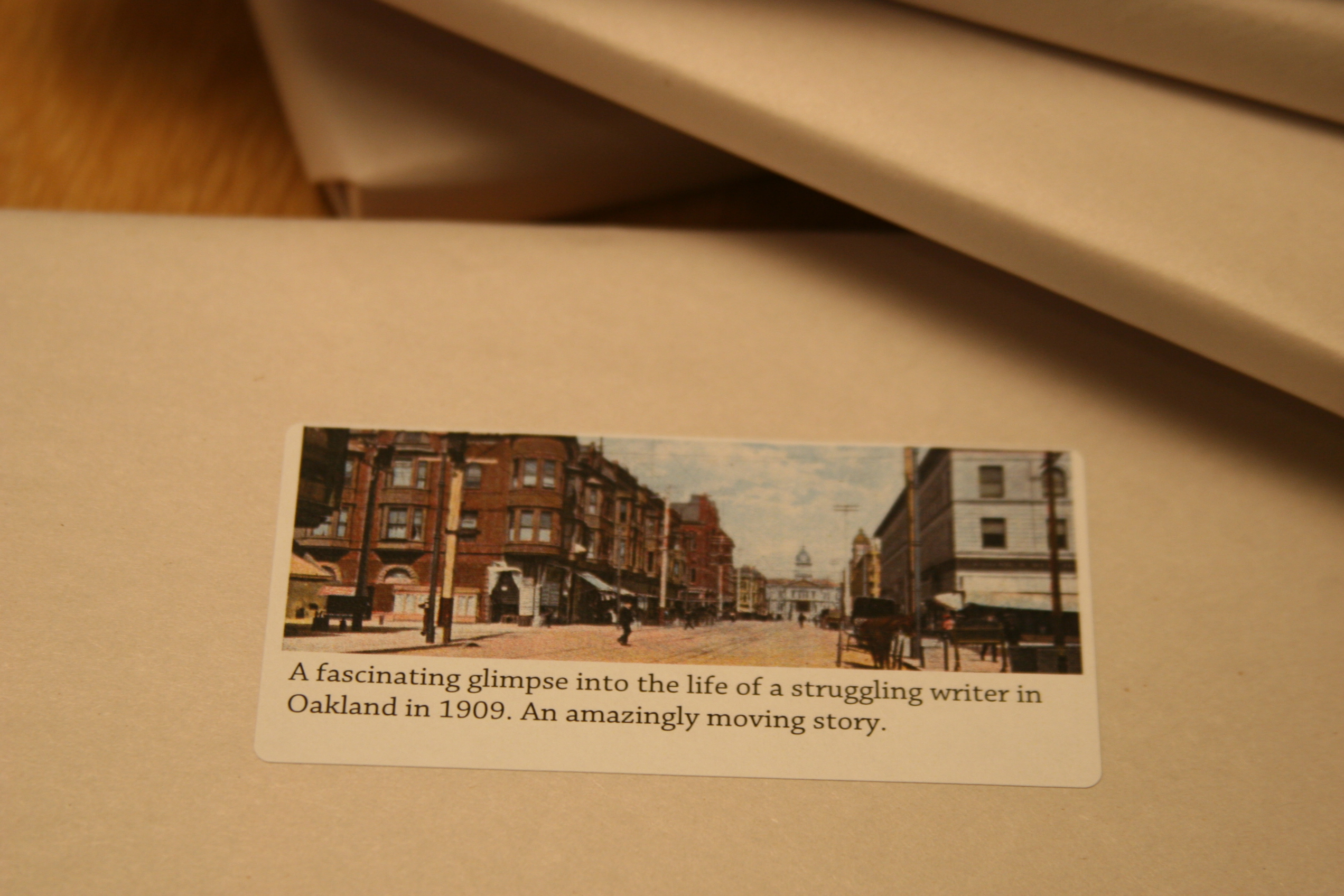
Well, we finally got around to recording the episode about 18 months later and it went live recently. Before it was recorded I wanted to do something nice for two women who had done something very nice for me and who are listeners of The Readers, so I sent them each a copy of my seven books. I wrapped up each book and affixed book-specific labels that gave clues to the contents of each package.

High on my list of things I love to do is wrap gifts. Especially firm, rectangular gifts. Such a joy.

See if you can match the books with the labels.IMG_5173 IMG_5180 IMG_5178 IMG_5176IMG_5168 - Copy IMG_5163 - CopyIMG_5158 - Copy

IMG_5152 IMG_5151IMG_5139

This is how it’s going to go

I know that a lot of us love a bookish list and love to make, read about, and break bookish resolutions for the new year. But I am also guessing that about now many of you may be beginning to tire of reading those new year’s lists. Which is why I didn’t use that language in the title of this post, but the reality is, I am about to give you my list for the year. (Cue Kermit the Frog waving his arms and saying “yaaaaaay!”) That’s right, I just cat-fished you into reading one more list of reading resolutions for 2016. Let’s see how many of you hang in there to the end.

152

Get back to 100
I think it has been a couple of years now since I made it to a 100 books in a year. Last year was a respectable 81, but 2014 was a measly 63. I need to up my  game. The only way this is going to be possible is if I read really short books watch less TV. And here it is January 4th and I still haven’t finished a book. I am already behind. But let’s make this more interesting. Instead of 100 books, how about the equivalent of two books a week and make it 104 books for the year? Sounds good, 104 it is. Now I am even further behind.

Come to terms with platform confusion
I keep track of books I read in at least four ways: 1.) A handwritten list in a notebook that I started keeping in 1994; 2.) An Excel spreadsheet; 3.) Goodreads; and 4.) This blog has tabs for books for recent years and then alpha lists by author. This is going to take some thinking. There are redundancies and things that are annoying and time consuming and there are also new possibilities afforded by my conversion to WordPress. Not sure how this will resolve itself, but I have resolved to resolve it.

Limit book purchases to newly published books
I bought a LOT of books last year and most of them used. When Simon Savidge was here in September I vowed that my resolution for 2016 would be to only buy books published in 2015 or later. I still want to do this, but I’ve also resolved that I am going to break this resolution whenever I want. This may seem like no resolution at all, but there is a nuance in it that oddly makes sense to me. Besides, NW DC is getting a new used bookstore and I consider it my civic duty to support that venture.

Spend some time in my library
I’m not talking about the public library, I’m talking about the beautiful room in my house that was completed over a year ago, is chock full of books, but almost never gets used. In fact, I have really only used it to store books. Lucy often curls up on the chair, but due to less than adequate seating and lighting, I haven’t spent one minute (seriously, not one) in there reading. This means I really only read in bed. How have I gone so long without a reading spot? Must make seating and lighting for that room a priority.

Figuring out the ineffable
There is something else I want to achieve in 2016 relative to reading, but I can’t quite put my finger on it. As I sit here thinking about it, I think it may boil down to feeling like I frittered away far too much time that could have been used for reading. There were many times during the year when I wanted to go read and then an hour or more later I would still be futzing around not doing much of anything. So I think carving out longer spans of time to read it definitely part of it. And I think maybe I just need to shut-up and read.

The 2015 Hoggies have been announced

hoggieLOS ANGELES – The awards for best reads of 2015 were awarded last night by the Academy of Reading Arts and Sciences during a live telecast from Dorothy Chandler pavilion in Los Angeles. This year’s ceremony brought out the usual mix of gowns and glamour as the world’s literati arrived to recognize the achievement of the books that most moved, enthralled, and entertained over the past year. Thomas Otto, president of the Academy reflected on what the awards mean to the reading community “This is one night of the year where we can look past all that separates us and forget about all the troubles in the world, and just come together to celebrate the best in fiction.” When asked about the exclusion of wildly popular work by Lana Danagihara and anything actually published in 2015, Otto pointed to Rachel Cusk’s novel Outline. After reporters pointed out that Outline was actually published in 2014,  Otto seemed momentarily deflated, but defended the Academy’s decisions “Look, the Hoggies shine a light on the best and brightest. Without the Academy’s work the reading public really doesn’t have a clue.”

Controversy of another kind spilled onto the red carpet when Margaret Atwood excoriated E! News reporter Giuliana Rancic on-air for asking probing questions about her books while failing to ask even one question about her outfit. “Would you ask me such deep questions if I was a man? One of these years I wish one of you bottom feeders in the press would ask me who made my gown.” Later, Rancic defended her red carpet questioning “I ask the questions our viewers care about most and they are much more interested in alternative interpretations than they are in Atelier Versace.”

Despite the red carpet encounter, the ceremony went off without a hitch. Host Neil Patrick Harris wowed the audience with a stunning musical opener about subject/verb agreement, but more importantly kept the pace of the awards moving. At a brisk 9 hours and 14 minutes, this year’s telecast was the shortest ever. Harris’s secret? Waving boxes of Franzia wine and cubes of supermarket cheese just off stage but in sight of the the evening’s winners. When asked where he got the idea, Harris grinned “I know what authors like.”

Last night’s winners

BEST NOVEL – FEMALE Ben, In the World by Doris Lessing

BEST NOVEL – MALE Any Human Heart by William Boyd

BEST AUDIO RECORDING (tie) The Song of Names by Norman Lebrecht and Any Human Heart by William Boyd

BEST RE-READ – FEMALE Consequences by Penelope Lively

BEST RE-READ – MALE The Song of Names by Norman Lebrecht

BEST NOVEL – DEPRESSION ERA Tobacco Road by Erskine Caldwell

BEST NOVEL – SLIGHTLY VINTAGE EURO/MIDDLE EAST Minotaur by Benjamin Tammuz

BEST NOVEL – CLASSICAL MUSIC WITH LESBIAN TWIST Chamber Music by Doris Grumbach

BEST THOUGHTFUL, INTERESTINGLY TOLD, SLIGHTLY ANITA BROOKNERISH NOVEL Outline by Rachel Cusk

BEST SHORT STORIES Mr. Loveday’s Little Outing and Other Sad Stories by Evelyn Waugh

BEST CRIME NOVEL Gang of Lovers by Massimo Carlotto

BEST NEW DISCOVERY – John Wyndham (The Day of the Triffids, The Chrysalids, Chocky, and The Midwich Cuckoos)

LIFETIME ACHIEVEMENT AWARD – Barbara Pym

A final bit of everything

I am determined this year to write something, no matter how inane, for every book I have read. I’ve already done a few omnibus posts in recent months to try and clear up the enormous backlog and this promises to be the last. Knowing what I am reading now, anything I will finish before the end of the year will be easily, and I hope interestingly dispatched. My reading tends to slow around the holidays as well so that should make it easier. I’m clearly not going to make it to 100 this year, but maybe a nice even 80.

This is a case where the cheesy cover actually closely approximates the text and tone of the book.

The Postman Always Rings Twice by James M. Cain
I think I probably grabbed this audiobook in a recent sale on Audible because the title was so familiar. I thought that was the case because I knew it as a movie title, but it turns out it is also one of the Modern Libraries Top 100 novels of the 20th century. I can see why. It’s a fun, fast-paced read about a couple of miscreants who like rough sex and don’t think twice about murder. In a way it reminds me a little bit of the fabulous Tobacco Road. They are roughly the same vintage and portray rather tragic characters who nonetheless make you chuckle at them rather than with them.

Emma by Jane Austen
Not having read much Austen, I decided to join in the December read along of Emma in honor of its (or Austen’s?) 200th anniversary hosted by Dolce Bellezza. Well, it was a bit of a mixed bag for me. I’ve enjoyed all of Austen’s films, but I am not in love with her books. I definitely enjoy books that are more about manners and atmosphere, but I just don’t find hers all that compelling. In terms of the story itself, I find Emma a completely unpleasant person. I love the crazy, uncouth, social climbing Mrs Elton, and the nattering Miss Bates. But Emma herself, not so much.

The Acceptance World by Anthony Powell
A Buyer’s Market by Anthony Powell
Books two and three of Powell’s twelve-book series A Dance to the Music of time. All twelve of these books, which consist of 3,300-some pages and are most often found in four, three-book volumes, count as one single book on the Modern Library’s Top 100 list. That is absolutely nutso and I was so happy to be finally making progress in the series after having a lovely four volume-edition on my shelves for about five years. I enjoyed the first book which takes place during the narrator’s school days, but I must say I found the second two to be a little tedious. From what I understand the series sweeps through the 20th century following the same cast of characters. It reminded me somewhat of William Boyd’s excellent Any Human Heart. But I think Boyd does it better–and his book is actually enjoyable to read. I don’t think I am going to continue with the remaining nine books. If I do, it will only be to tick another box on my Modern Library list.

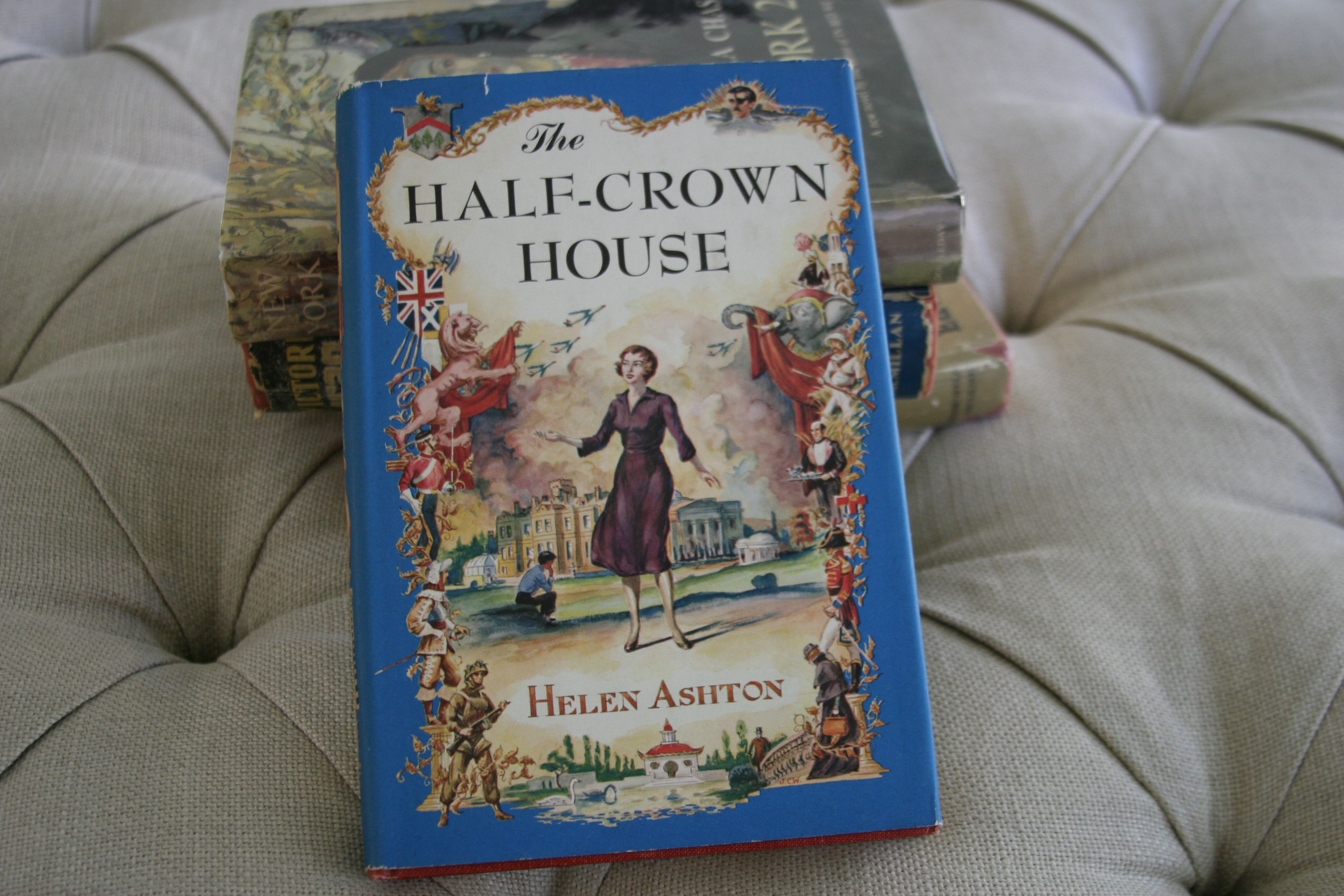
034Half-Crown House by Helen Ashton
I stumbled across this book and its fabulous cover during one of my book buying binges this summer and thought it was worth six dollars regardless of content. It was only after a blogger friend of mine here in DC posted a picture on Facebook of his recently finished copy of the exact same edition that I picked it up to read it. It was at that same time that I realized that Ashton also wrote Bricks and Mortar which Persephone reissued. I thought Bricks and Mortar was an enjoyable, interesting novel about a female architect so I expected more from Half-Crown House. But the book, which is about life in and around an old manor house that is open every so often to tourists for a half-crown, is really quite boring. I found myself waiting for it to be over. I think others will find it much more interesting than I did.

Fifty Days of Solitude by Doris Grumbach
Novelist Grumbach’s curated journal from 50 days of self-imposed solitude. I enjoyed it, but it wasn’t as good as Grumbach’s wonderful novel Chamber Music which I read this year and it didn’t enchant me like May Sarton’s wonderful journals.

Red Anger by Geoffrey Household
Not as good as Household’s Rogue Male, but they have some things in common and has a lot to recommend it. This one is a cold war spy chase through the British countryside. I love this kind of book.

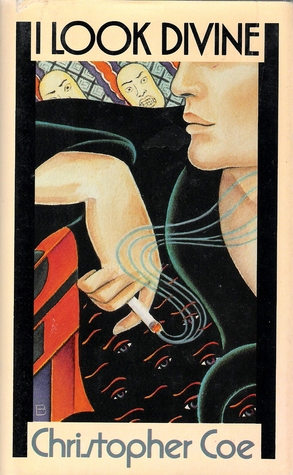
i look divineI Look Divine by Christopher Coe
I found this slim volume by chance and picked it up as an afterthought when I spent an afternoon outside of New Haven in a giant book barn with about 2 million books. I’m not quite sure what to make of the story itself but I found it so sad and beautiful. Coe wrote two books before he died in 1994 at age 41 from AIDS-related complications. As I read this hard cover first edition with a very tight binding, I couldn’t help but think of this clearly unread copy, discovered like a needle in a haystack, as a metaphor for all those authors and artists and everyday people who died too young. In the bigger picture all human life is fleeting, but I was taken with the feeling that opening up this almost forgotten volume was breathing life back into the tragically short life of a talented man.

The Bedwetter by Sarah Silverman
A hilarious, fun, but not inconsequential memoir of the hilarious, fun, and not inconsequential comedian Sarah Silverman. And I listened to Sarah read it so it was like being best friends with her for a week.

Latest Readings by Clive James
With a cancer diagnosis Clive James reconsiders his reading past and his reading future. It was an interesting read but James appears to be a much more serious reader than I am so my enjoyment could only go so far. He was, however, responsible for getting me off my ass to open up A Dance to the Music of Time.

The Musgraves by D.E. StevensonAfter 
I think with this little blurb, I am going to vow to not write recaps or impressions of D.E. Stevenson’s novels. I love them all in varying degrees, but they definitely all fit into a niche. So unless I read one that breaks free from the chaste-until-married, everything-turns-out-great, mold, I am going to forgo saying anything about them. We’ll see.

The Professor’s House by Willa Cather
Rebecca by Daphne du Maurier
Any Human Heart by William Boyd
What do these three books have in common? Not much, except that they were part of the reading challenge that Simon and I participated in with Ann and Michael of Books on the Nightstand. The four of us each read favorite books chosen by the other three. I chose the Cather, Simon chose Rebecca, Michael chose Any Human Heart, and Ann chose The Sparrow by Mary Doria Russell which I quite liked and wrote about in 2014. I won’t say much about any of them here and will instead direct you to the episode of The Readers where we chatted about two of them (with links to the BOTN chat about the other two). However, in short, after reading it for a third time the Cather is still one of my favorites, on listening to the audio version of Rebecca, I am now a fan of the book which I didn’t like when I first read it, and I thought Any Human Heart was a wonderfully epic book that was a joy to read.

A Coffin for Dimitrios by Eric Ambler
You can never go wrong with Ambler if you are looking for intelligent, vintage, spy thrillers. Having said that, this one was not my favorite Ambler. It might have been that I read it on a river rafting trip which may not have been conducive to that kind of taut writing.

Dredging up ancient history

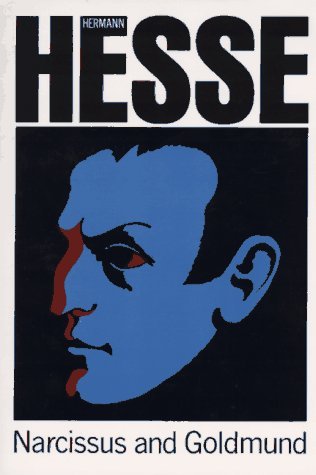
narcissusIn many ways re-reading Narcissus and Goldmund by Hermann Hesse was the re-read of all re-reads. It was a novel I read in high school and considered it to be one of my favorite books. It was also the first Hesse novel I read and it spurred me on to read most of his other novels and short stories over the years. Vaguely remembering what it was about (think medieval monastic cloisters) I wasn’t sure if I would still find it interesting. When I read it the first time I was highly impressionable and read it for a very specific reason. As a young gay-in-training in the mid 1980s in smalltown Minnesota, I often found myself reading gay novels that were over my young head but venerated them anyway because they were hard to come by. My only source of gay fiction was to buy them at A Brother’s Touch bookstore in Minneapolis and my $3.35 an hour part-time job at the Elk River Public Library didn’t leave much spending money for books.

In one of those contemporary gay novels–I think it may have been A Boy’s Own Story by Edmund White–the main character talks about reading various books and references the gay subtext of Narcissus and Goldmund. Since this could easily be found at the library–perhaps even the school library–I was quick to pick it up and dive in. And the author wasn’t wrong. The story of monk-in-training Narcissus and the slightly younger, and beautiful pupil Goldmund was just the thing to warm the heart of a young gay boy who often felt isolated in a sea of hetero classmates all able to live their high school romances out in the open. Narcissus and Goldmund have a chaste but very close relationship that ends when Goldmund meets a girl and spends the rest of his life drifting, and boozing, and womanizing, and murdering, and sculpting. When the two are reunited towards the end of the book they speak of their love for each other in a way that is hard to believe is not homosexual in nature. I know that in less macho times, same-sex friendships were written about using much more intimate language than we would today, but even taking that into account there is something that feels very gay about these two. And so I choose to believe that were indeed in love with each other. I need to go find out what Hermann Hesse had in mind when he wrote this, because it seems to me that it couldn’t have been an accident.

For decades I have conflated Hesse (1877-1962) and the composer Gustav Mahler (1860-1911). Not that I ever got them confused, but in my head they just seemed to go together. Both are of Teutonic origin and of a similar vintage, and both explore fate, love, existence, faith, art, body, and soul. And Narcissus and Goldmund certainly does that. No doubt the young practicing Catholic me would have appreciated the religious exploration more than the agnostic adult me, but not so much of  difference that I couldn’t still appreciate it.

Overall I was surprised by how much of this novel stayed with me over 30 years and how much of it didn’t. There were more than a few moments when I could vividly remember what it felt like to read it the first time. In particular I remember reading it one day in class when we had a substitute teacher. In the first place I remember how great it was to be transported by this book into a lovely, interesting place while I sat in the middle of gabbling high school students. In the second place, the young female substitute teacher we had that day said “Oh, you are are reading one of my favorite books.” Words to make a young book nerd’s heart soar for sure. And then, it wouldn’t be high school without the bullies, one of my regular tormenters said “It must be written by [insert name of well-known local gay]”. I was crushed that this a-hole had ruined a lovely moment I was having with the sub, and self-conscious that he had somehow guessed the gay content of my book. Of course he didn’t, but the threat of exposure seemed real enough. I tell this story somewhat apropos of nothing other than how much this book, and the reading of this book made a mark on my young reading life–and in some ways on life in general.

So did it hold up after so much history? It did. I liked it for some of the same reasons I did 30 years ago and was intrigued to become reacquainted with the plot and some forgotten themes. Is it still one of my favorite books? No, not really. I don’t even think it is one of my favorite Hesse books, but a fantastic book nonetheless.