Victoria 4:30

Victoria 430
Last summer when we were at Powell’s City of Books in Portland, Oregon I found myself going just a little crazy filling two baskets full of books that I had never heard of, by authors I had never heard of. Not everything I bought was new to me, but for some reason I did buy an awful lot that day that was a total risk. One of those books that I picked up was Victoria 4:30. Even before I saw the lovely cover drawing I suspected it might be referring to a train at Victoria Station in London. Given my predilection for train travel–especially of the vintage variety–I couldn’t help myself.

Even though I popped the book in my basket, I was thinking that I might be spending $5.95 on an unworthy book. Not only were both author and title unknown to me, but there was nothing else by the author on the shelf (suggesting he wasn’t very successful), and I’m always a little bit wary of old hardcovers that still have dust jackets in fairly good condition. It suggests to me that the book didn’t circulate much over the decades. So I was fairly convinced that I had made a purchase solely because I liked the nostalgic drawing of a train station on the cover.

I’m gong to hazard a guess that there are two moments of supreme bliss in a reader’s life that surpass all other pleasures of reading.

  1. Having the opportunity to curl up with the latest (or newest to you) novel of a favorite author.
  2. Taking a chance on a complete unknown and having it turn into something delightful.

Victoria 4:30 by Cecil Roberts
With all of this lead up (not to mention my raving about it on a recent episode of The Readers), it will come as no surprise when I say that I loved this book. There is no single plot, but for most of the book there is a single plot device. For the first 2/3rds or so, the reader is introduced to a cast of characters from very different walks of life and with very different motivations, all making their way to Victoria Station to catch the 4:30 boat train that will connect with the Arlberg-Orient Express. In total, we meet 13 main characters whose stories unfold just enough to let us know why they are getting on the train and where they are headed. Among them:

  • A famous conductor on his way to Salzburg
  • A young Slavonic prince who has to leave his English boarding school to assume the throne after his father’s assassination
  • An English nun who refuses cancer treatment in order to live out her last days at her convent in Transylvania
  • A grand, old, Russian General who has been reduced to being a tour guide to rich tourists in order to make ends meet
  • A bachelor who is fed up with his ungrateful extended family who treat him like their own person bank book, who decides to go on an adventure and leave them all in the lurch
  • A prolific author facing unprecedented writer’s block who is in search of a plot

Once we are introduced to all 13 characters we see how they cross paths and interact (or not) on the journey, and we get resolution for at least some of the stories as various passengers get off along the way and meet their fate. Although the book feels very genteel in manner, it doesn’t shy away from getting real and story lines have dimension and depth. Not every story gets resolved and some resolved in ways I didn’t like, but that is just me wanting 13 happy endings.

I just looked Roberts up on Wikipedia and note that he published about 40 books in his life. One called Grand Cruise, makes me think he might have repeated the Victoria 4:30 formula on a ship. To which I say: “Yes, please.” With so many books published, I think I have just discovered new quarry for my book browsing adventures. And on a side note, Roberts had a way of describing some of the male characters that makes me think he may have had some sugar in his water.

This would make a perfect Persephone offering. I might need to drop them a line.

An Electrifying Detective Story

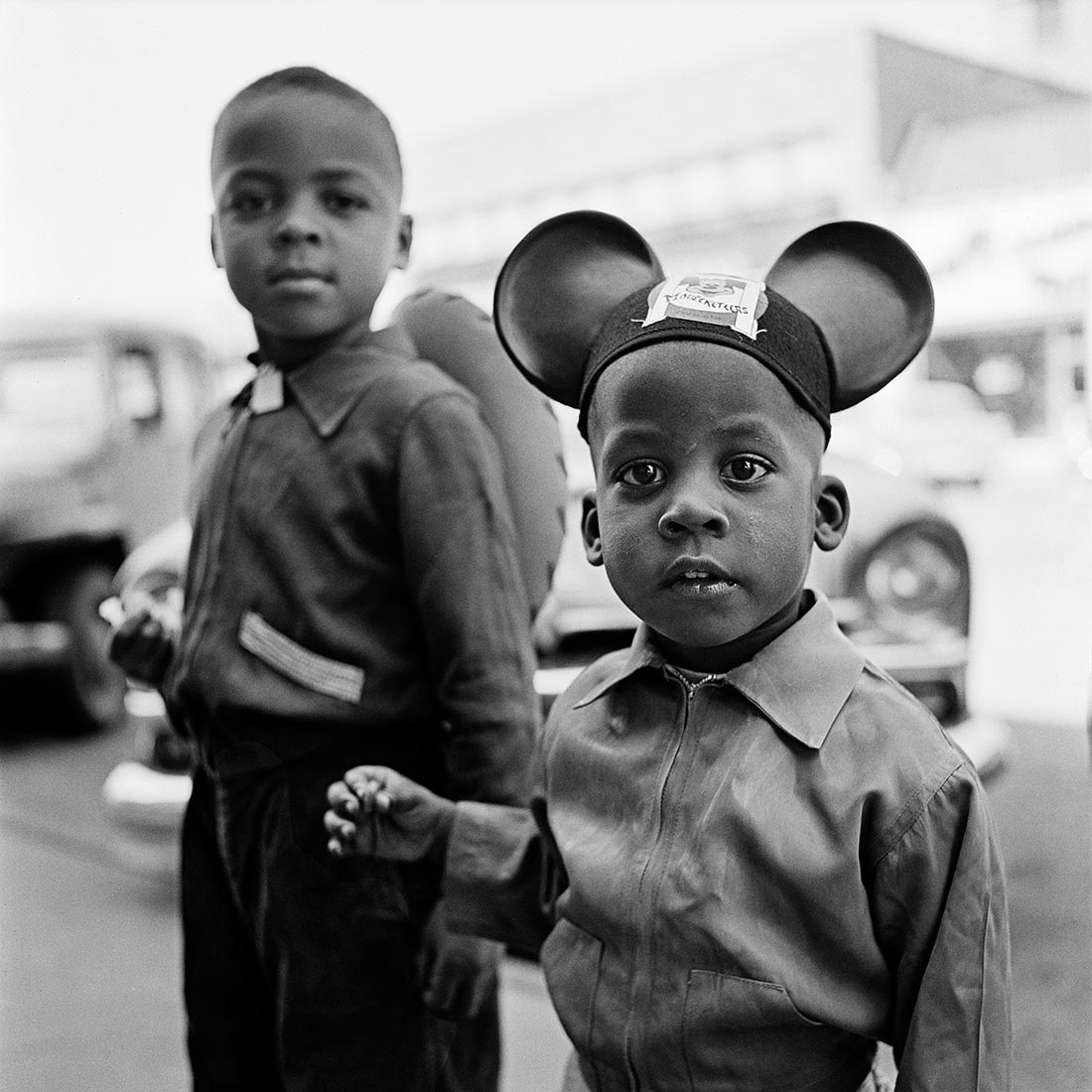
1004_may_5th_1955

[All photo credits:Vivian Maier from the Maloof Collection.]

I’ve said it before that I am prone to hyperbole, but there is something about the documentary Finding Vivian Maier that makes me want to jump up and down and scream about it until every single person I know sees it.  In 2007 a young historian buys an auction lot of 30,000 photo negatives that he hopes will provide some illustrations for a book he is writing about his Chicago neighborhood. He doesn’t find anything for his book, but he does find an artist and a thoroughly compelling mystery.

One does not have to be a mystery lover, a history buff, or a photography expert to fall in love with this story. But if you are one or more of those things, it is possible your head may explode. Here’s what happens: John Maloof buys a bunch of negatives at an auction. He discovers that the images are unexpectedly good, museum-grade, photos. He knows nothing about the photographer–only knows her name, can’t find even a whisper about her online. When he does track down information about her, he finds out she spent her life working as a nanny and never showed her photos to anyone. He also discovers that Vivian was more complex and darker than she seems at first.

I will say no more about plot and I deliberately left out details so I won’t give too many surprises away. Maloof reveals Maier’s story quite masterfully, setting up the mystery, taking us along on the investigation, and revealing the woman behind (and some times in front of) the camera. And it is an amazing story. It has the feel of a novel and it is ripe with possibilities for a novelist.

What will also be attractive to book lovers is the fact that there is so much in the film that will make the detective/historian/archivist in you tingle with excitement. After Maloof tracks down some people who knew Maier, he helps them clean out a storage unit that belonged to her. In the process, he ends up with thousands of rolls of undeveloped film, letters, receipts, tickets, clothing, hats, shoes, and hundreds of other things that help him unravel the mystery. In the film, Maloof lays out all the artifacts on the floor. It’s almost like he went to a store and bought a life/mystery in a box. A sort of life-sized game or kit that gave him just enough information and material to get him started but left big holes in the story for him to fill in.

VM1976K05714-08-MC

This film appealed to me on so many levels. It reminds me of a few mysteries I have tracked down myself, but in much less spectacular ways. The time I tracked down the life of book cover illustrator Jackie Shulman and gave her a digital footprint that was all but non-existent previously. Then there was my 20-year effort to find the 1960s folk group The Womenfolk. The book I got to research and write about a 160-year old insane asylum. Playing around on Ancestry.com. You get the picture. I love that kind of mystery. Is it any wonder this film made me a little delirious?

museum

They’ve recently added it to Netflix streaming which is how I came across it. The film came out in 2013 and was nominated for an Academy Award. As usual I am right on top of things.

VM195XZ06951-04-MC

What I learned in México

Last month we went to San Miguel de Allende, México to celebrate a friend’s 50th birthday. While we were there, four of the twelve of us took a 5-hour cooking class where we learned to make mole and two other dishes. Prior to this class I was no fan of mole, but since I love to cook and the birthday boy wanted to learn how to make mole, I went with the flow and learned how to make the labor-intensive recipe. Now mole is really just a sauce with many variations and each state in México has it’s own approach to it. Most of us in the USA know of mole as a very chocolatey affair that is a bit of an acquired taste. In reality there are only really two Mexican states that use chocolate in their mole. The version we were taught had chocolate. But the sauce was so damn good and the chocolate was more of an undertone to the flavor and it tasted nothing like anything I had ever had before.

A week after we were home I decided I had to give making mole at home a whirl. Part of me wanted to make sure I didn’t forget the method we learned since my notes were a little spotty. Part of me wanted to show John what mole was supposed to taste like since he hadn’t been at the class. And part of me just wanted the chance to eat it again.

A good mole has at least 20 different ingredients in it. I think the recipe I have has about 25. Finding all of them required a trip to a Hispanic market in Silver Spring.
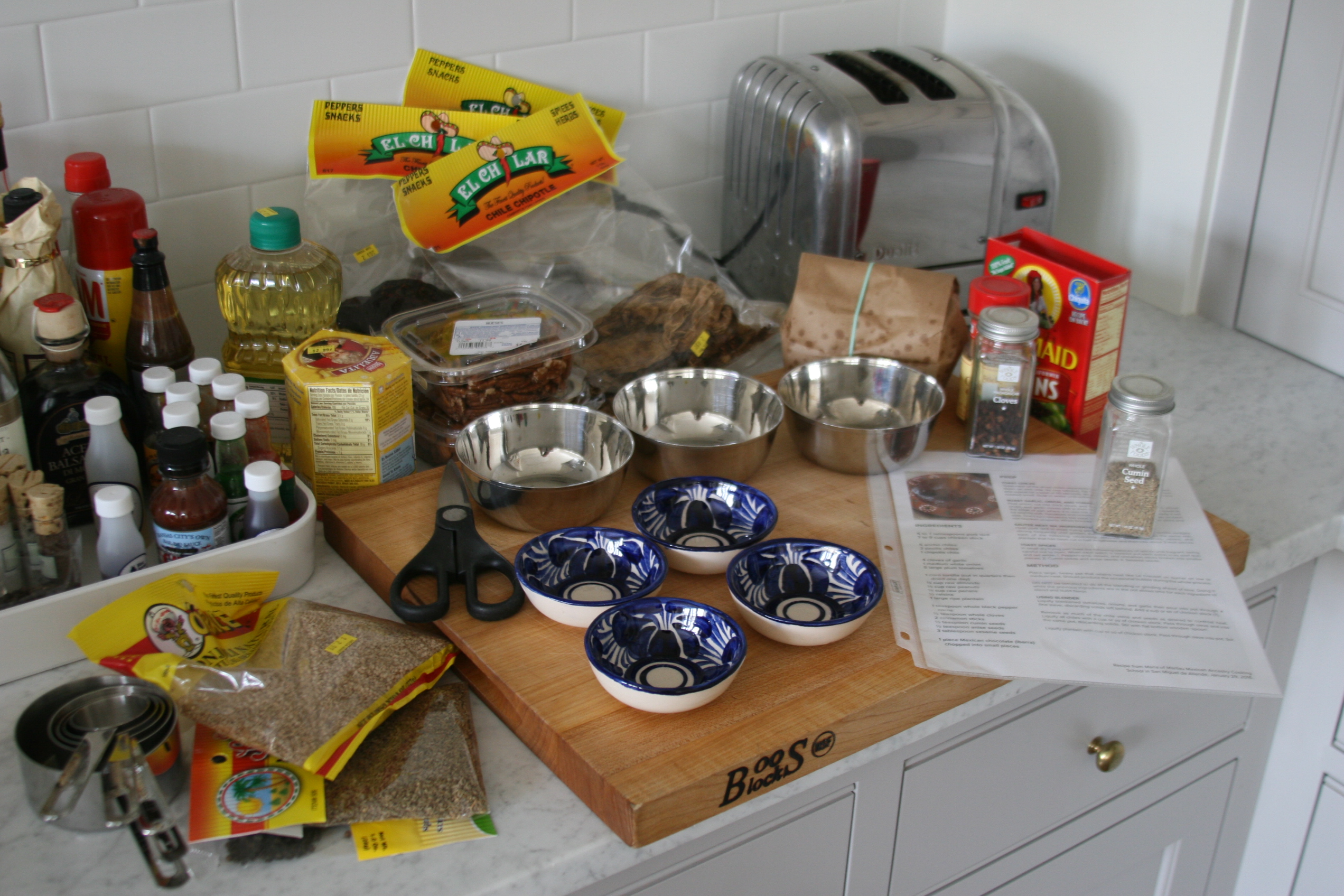
Prep is everything. Getting all the raw ingredients measured and ready to go is a must. Over the next several houses we'll be toasting, roasting, and frying most everything you see here.
Prep is everything. Getting all the raw ingredients measured and ready to go is a must. Over the next several hours we’ll be toasting, roasting, and frying most everything you see here.
Did I mention I had to make stock the day before?
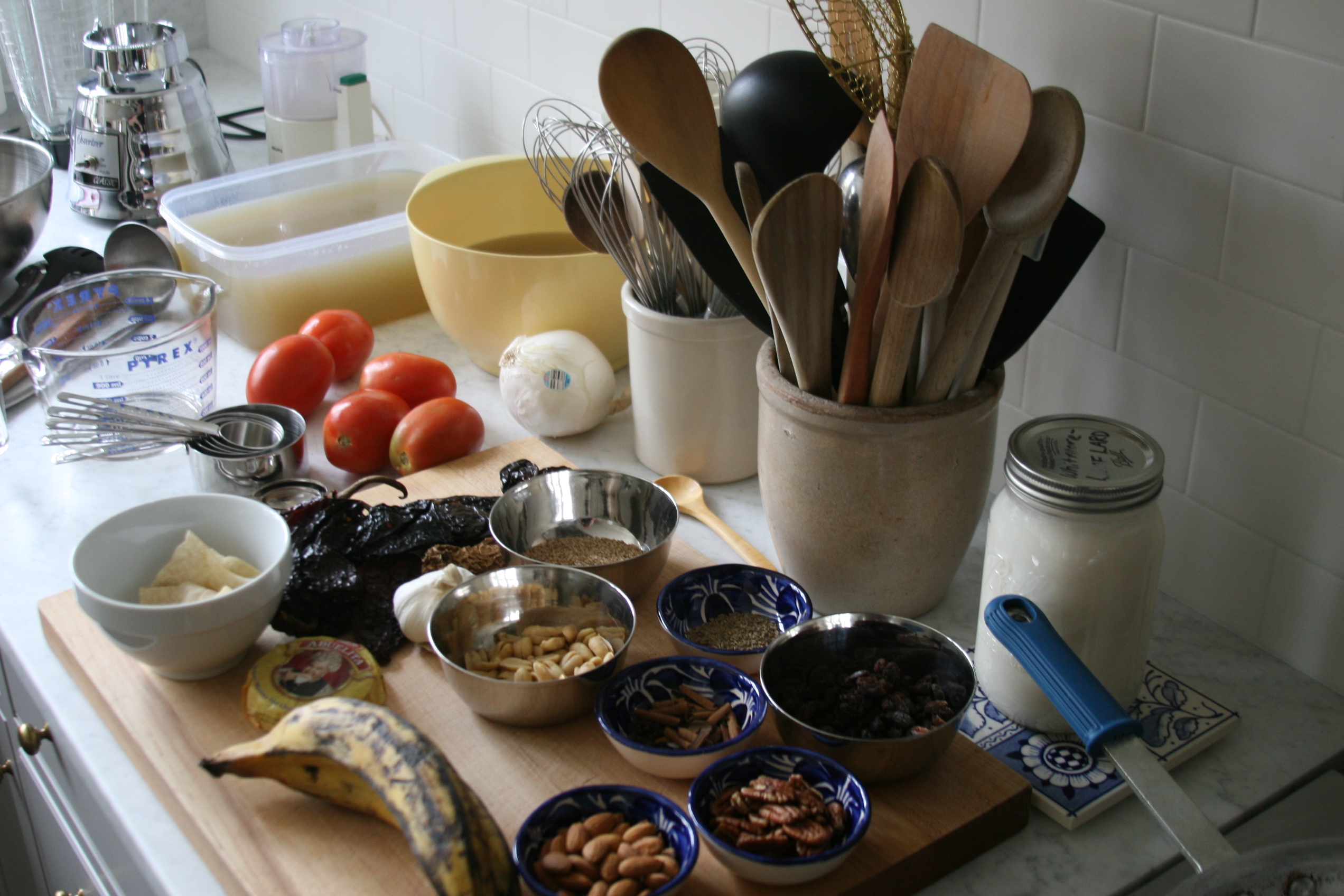
Everything appears to be ready.
When we learned how to make it in class, the instructor had us taste the sauce after every addition. I wanted John and our friend Sarah to have the same experience so I had them taste it after each step.
When we learned how to make it in class, the instructor had us taste the sauce after every addition. I wanted John and our friend Sarah to have the same experience so I had them taste it after each step. We even used these little tasting spoons that I bought in the market in SMdA for almost no money.
IMG_5335
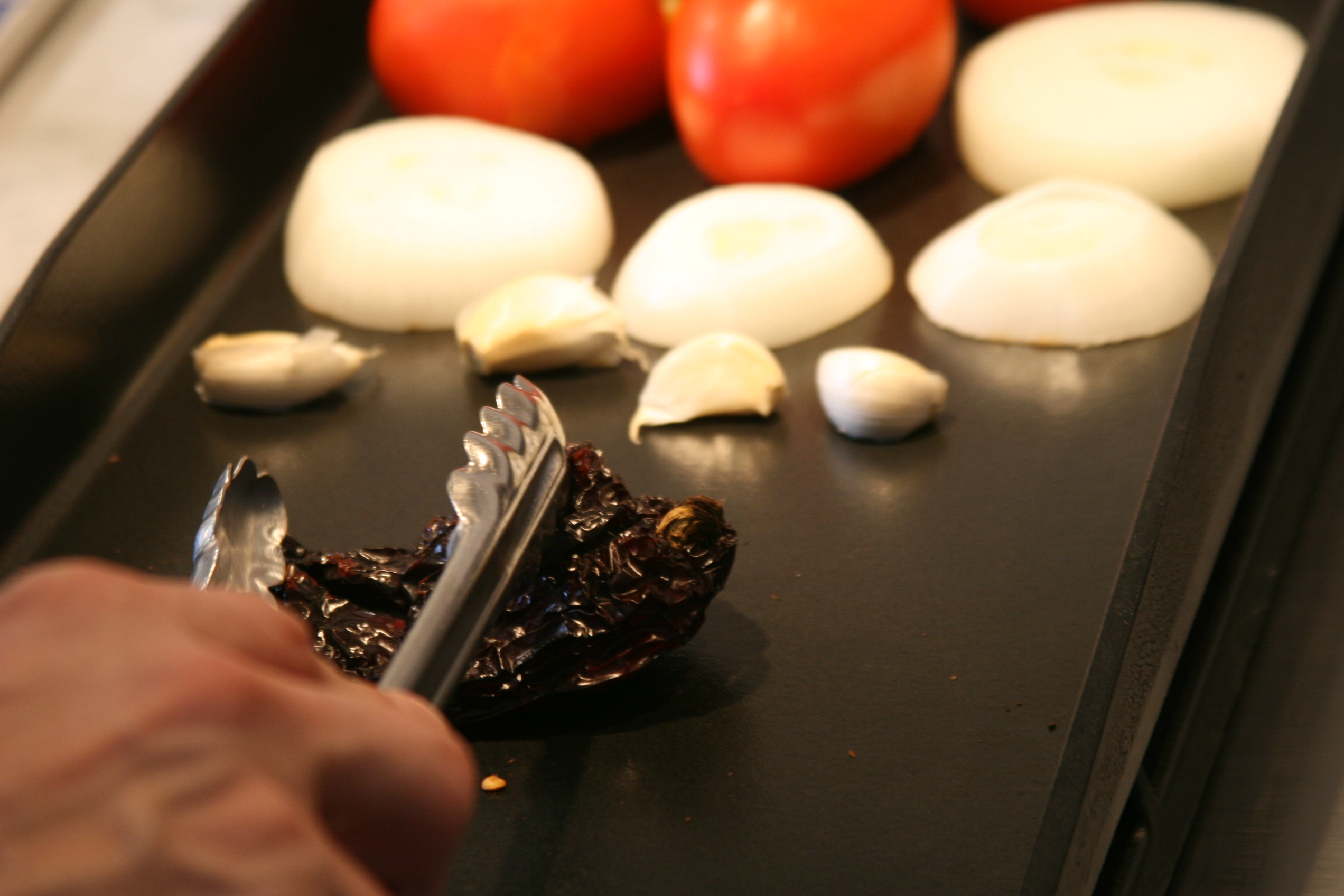
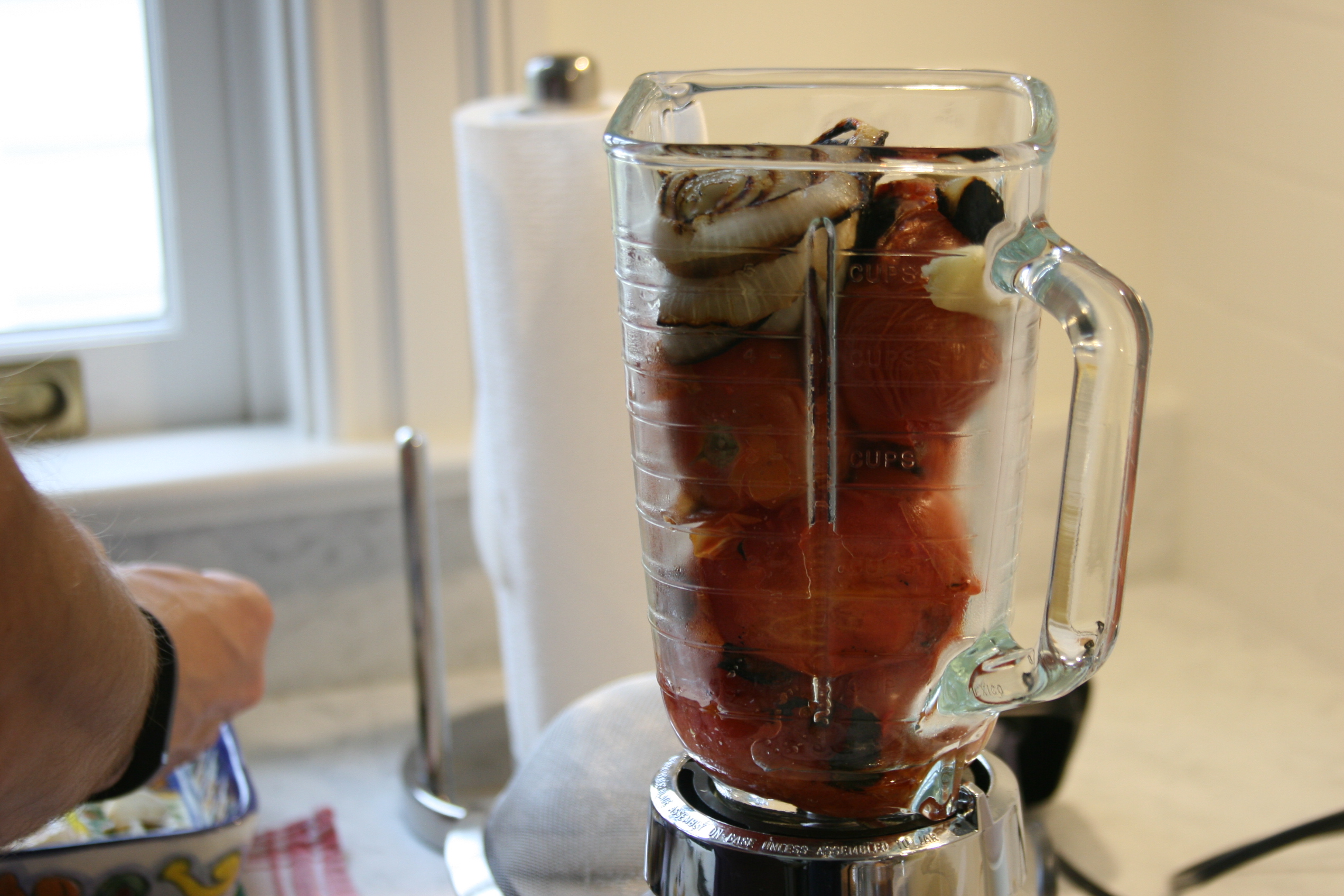
After charring, these will all get liquefied and form the base of the sauce along with the chicken stock.
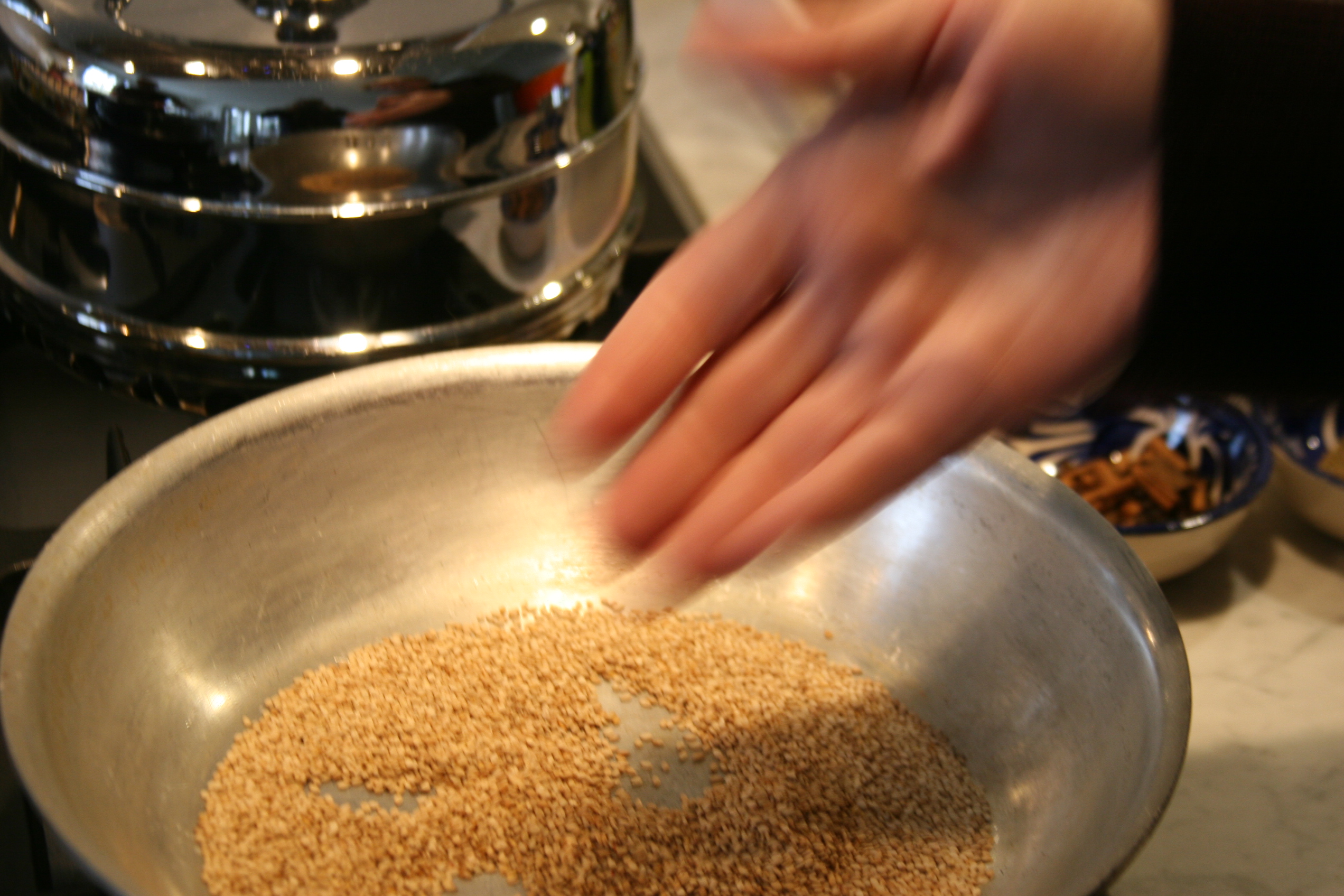
Some things, like sesame seeds get dry toasted.
Peppercorn, clove, and cinnamon stick also get dry toasted.
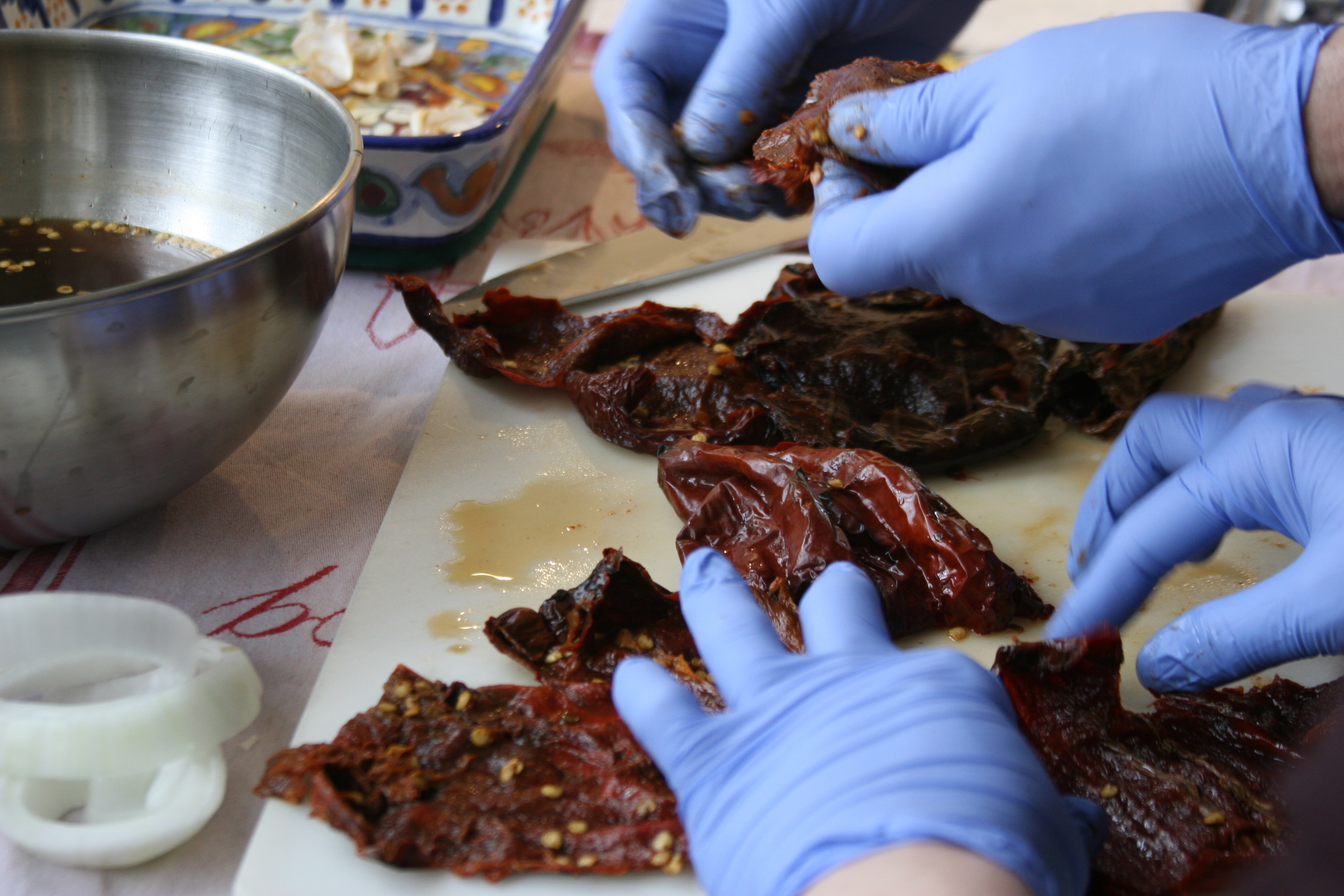
Three kinds of dried chiles get toasted before being soaked in water.
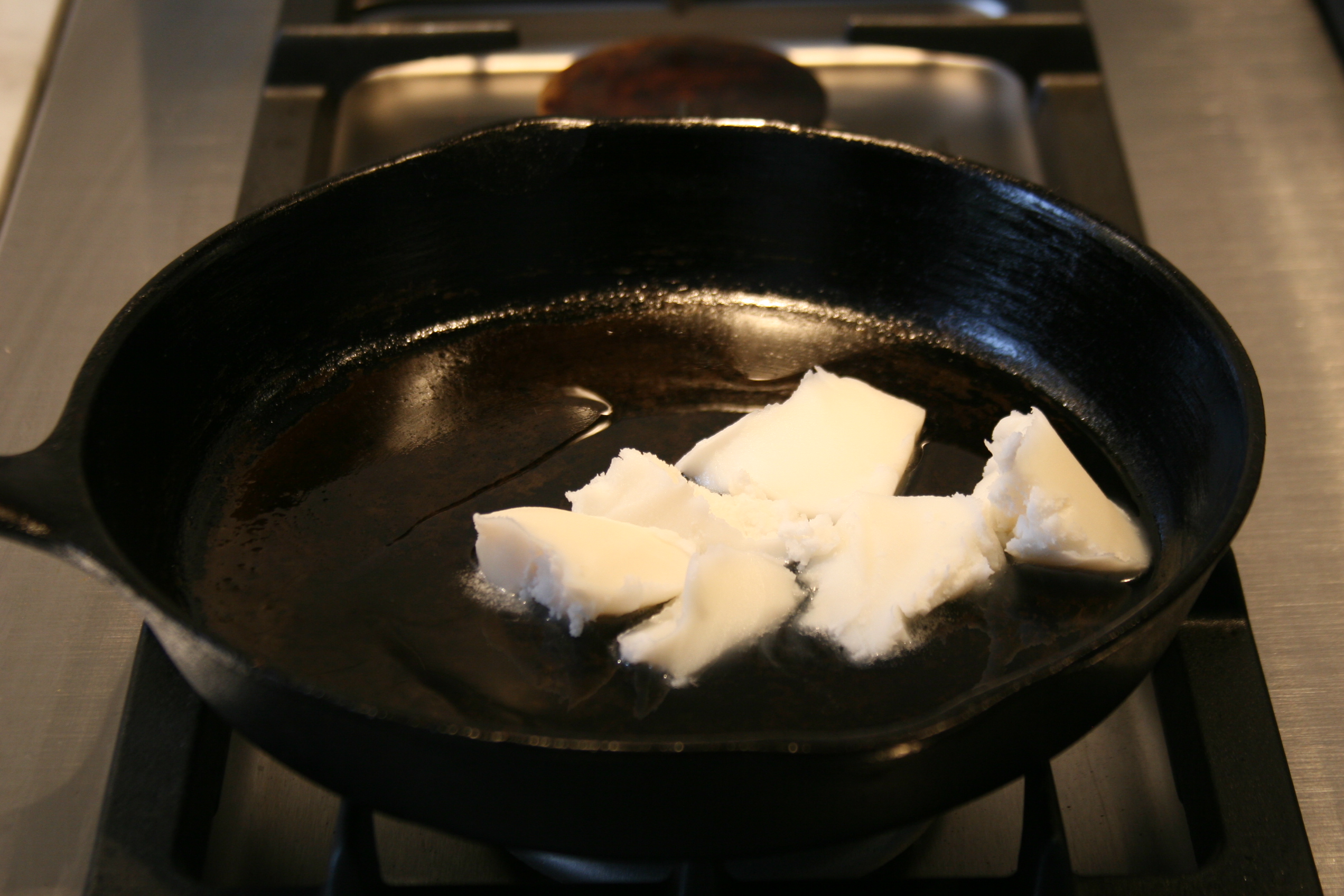
And then the frying in pork lard begins.
This is what raisins look like after being fried in lard. They sure plump up.
Plaintains getting golden in the lard.

IMG_5365 IMG_5381

Getting the toasted and soaked chiles ready for the blender.
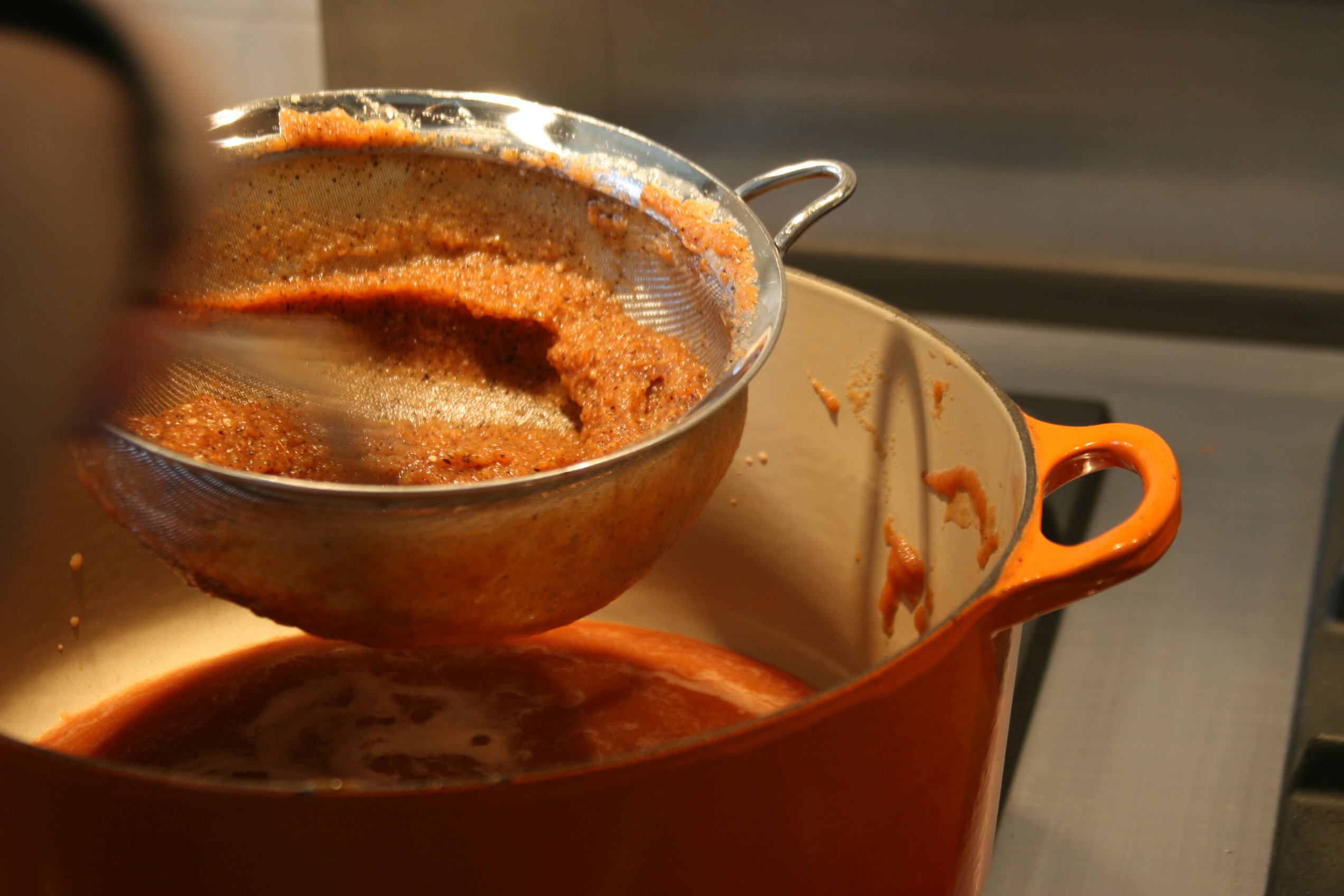
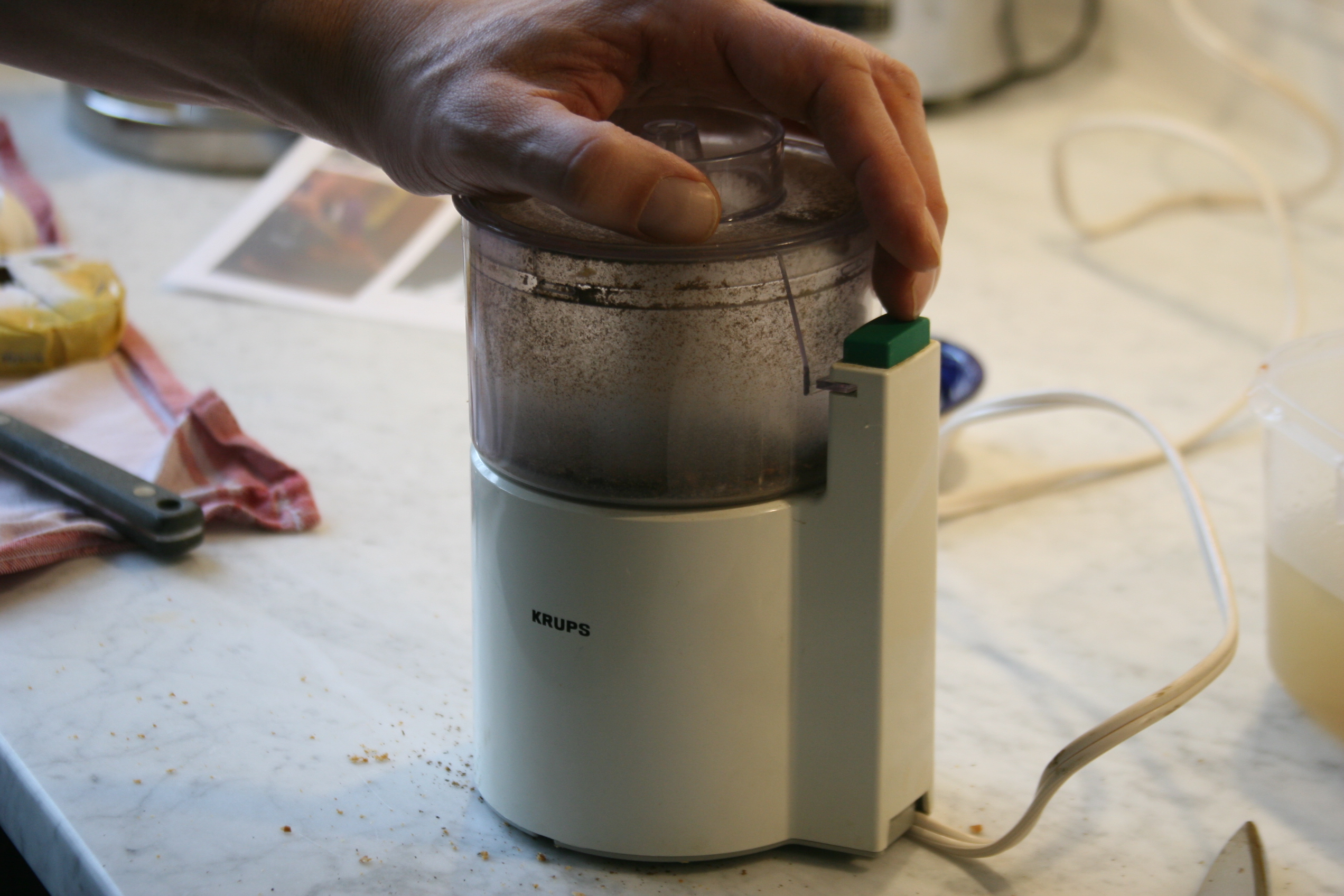
All the dry ingredients get ground down into the finest power or paste. The goal is a very smooth sauce.
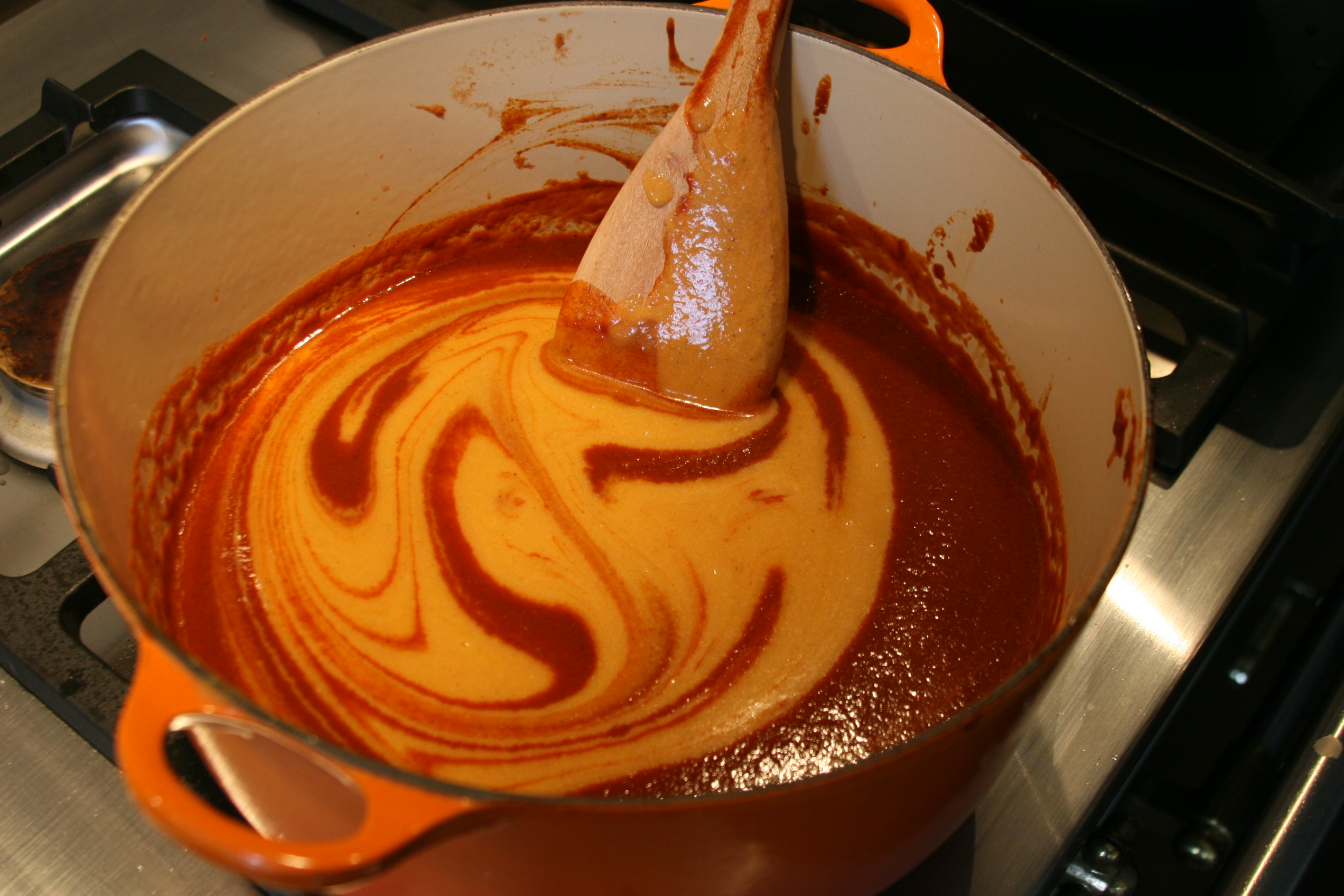
This is what it looks like after you swirl in the pulverized plantain.
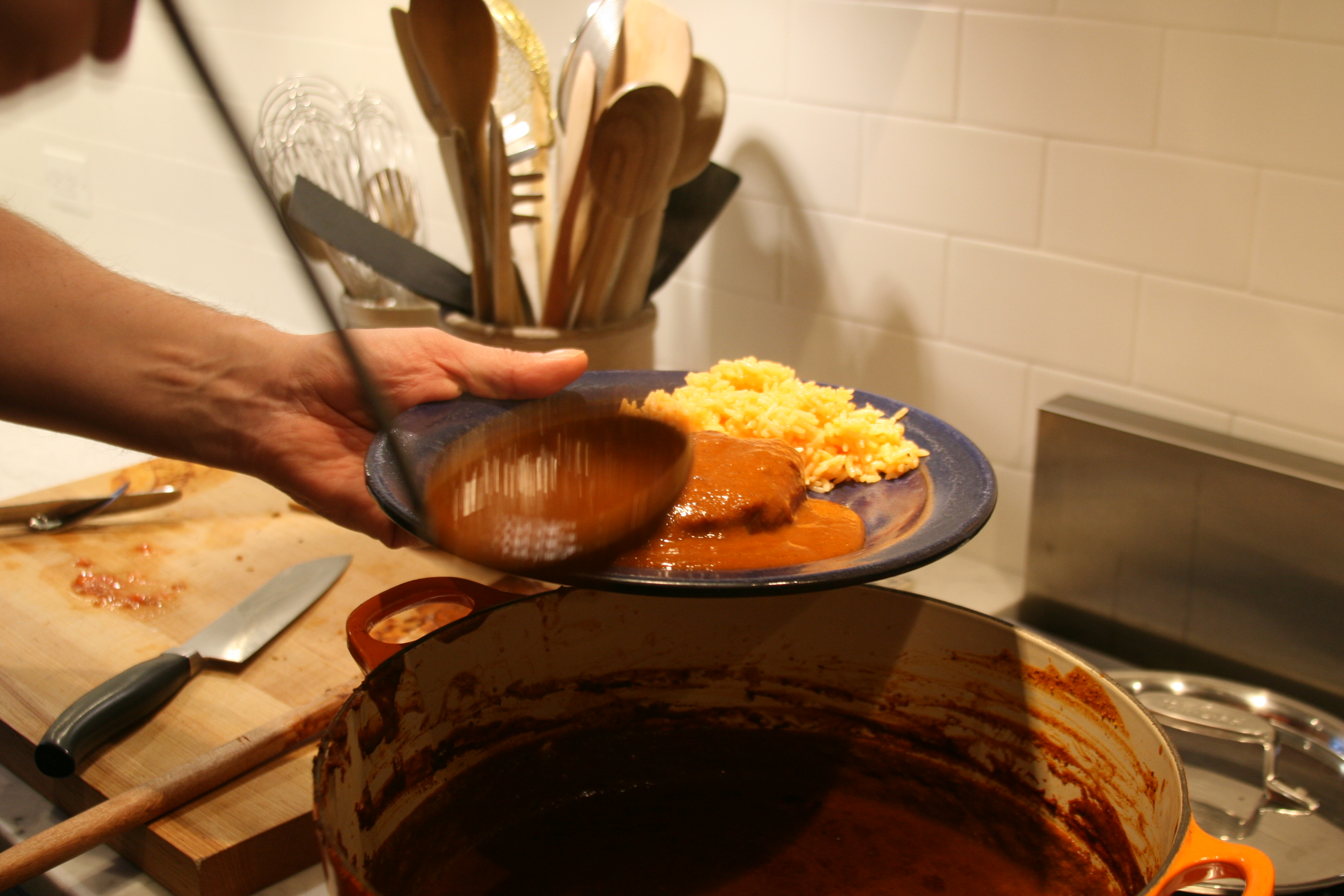
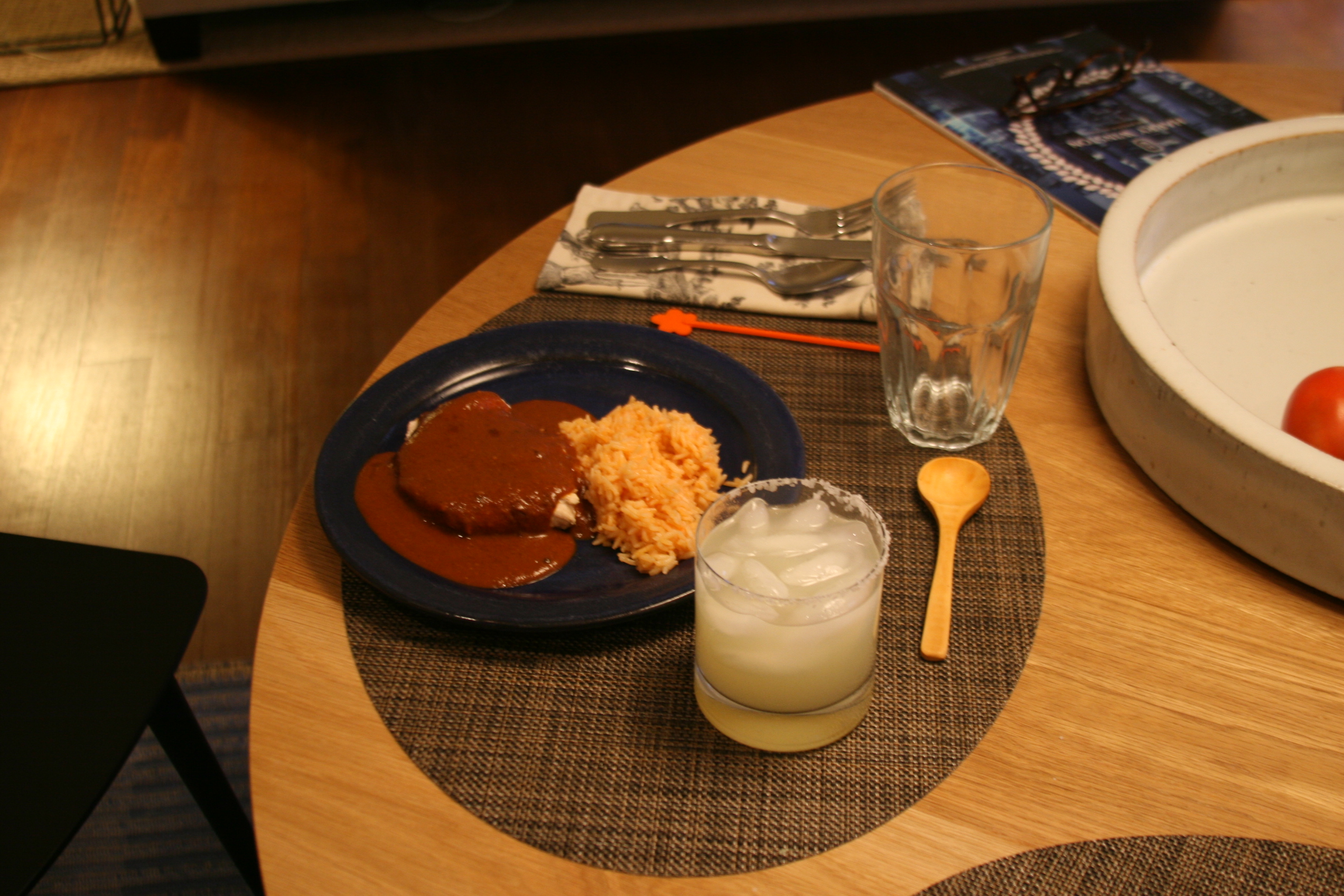
Plating up with a little rice and poached chicken.
If the cooking instructor's version was a 10. Mine was about an 8.5.
If the cooking instructor’s version was a 10. Mine was about an 8.5.

What have I been reading lately?

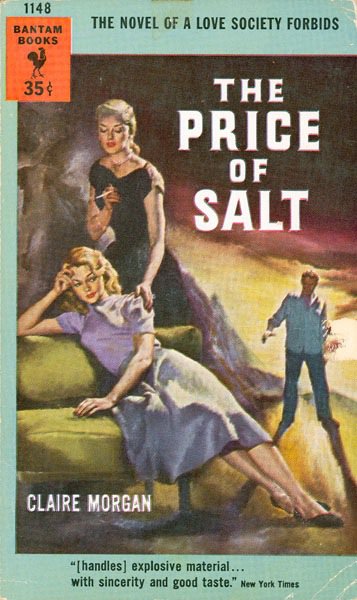
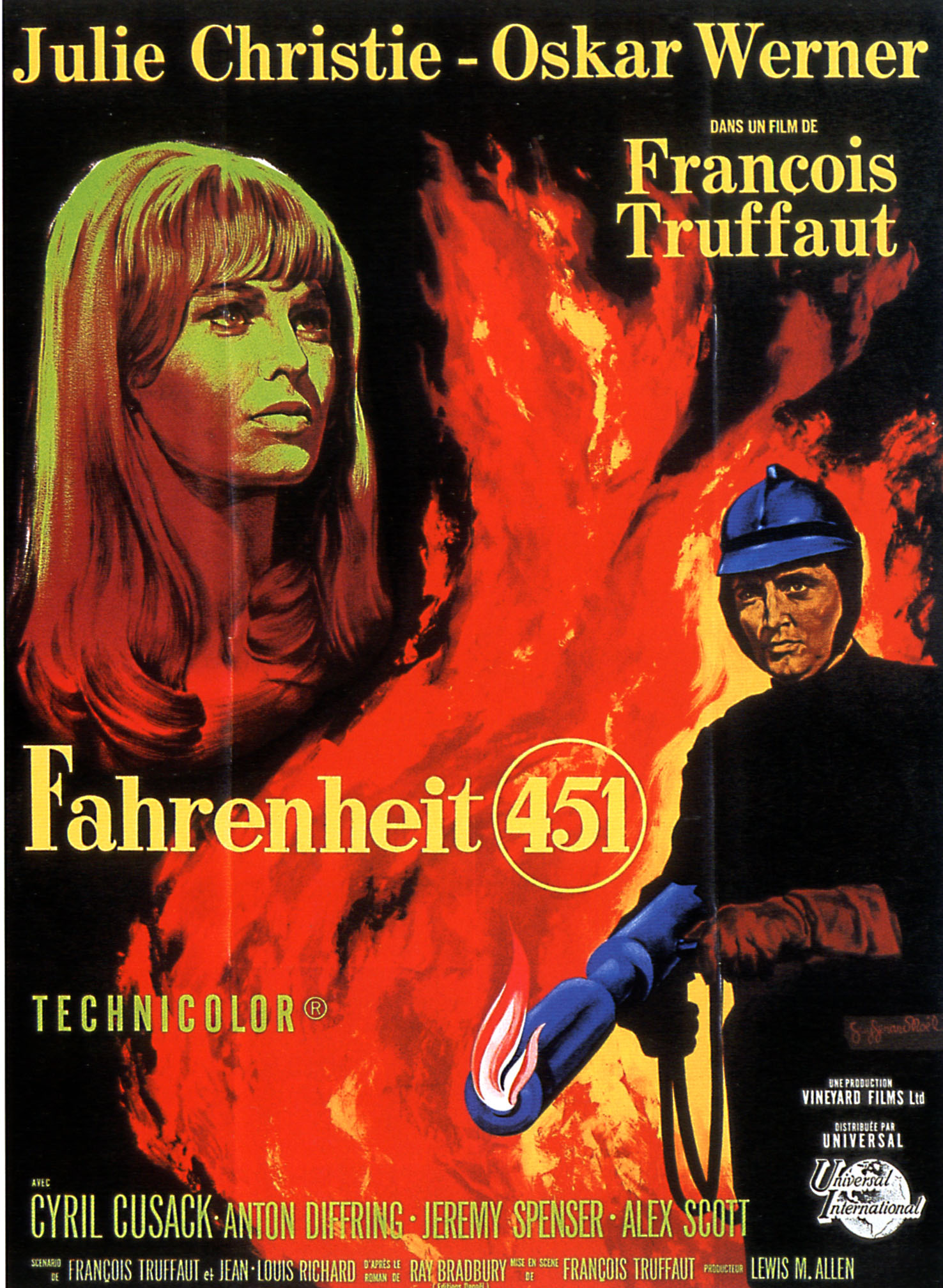
I love that fact that four out of the five books I’ve written about below have crazy pulp fiction covers (or in one case a movie poster).

price of saltThe Price of Salt by Patricia Highsmith
Despite having five books already in my bag on a recent trip to Phoenix and Austin, I couldn’t resist going into the book store at the Phoenix airport and having a bit of a browse. Given my full book bag, I was a little surprised I bought something. But after reading the modern (1990s) Peter Cameron novel The Weekend, I was in the mood for something more contemporary than the other books in my carry on. Given all the praise I have heard about the novel The Price of Salt and the film adaptation Carol, it seemed like the right moment to pick up the book. I wasn’t a big fan of Highsmith’s prose in The Talented Mr Ripley so I wasn’t sure how I would get along with this one. TPOS makes me think I may need to read more Highsmith. I read about half the book flying from Phoenix to Austin and finished it off on the plane from Austin back to Washington. I’m not sure it is worth saying much about the plot given how much has been written about it in recent months. I enjoyed the book very much but also found it pretty sad and depressing that the women in the book (and perhaps Highsmith herself?) had such crappy choices available to them.

malteseThe Maltese Falcon by Dashiell Hammett
I guess this is called hard-boiled detective fiction. I’m sure everyone in the world knows who Sam Spade is, but until now I only kind of knew who he was. A book that reads like a 1940s film script, The Maltese Falcon kind of tickled my fancy for vintage detective/spy fiction, but Hammett is no Eric Ambler. Too many dames in mock distress and too many broads throwing themselves at Spade. Not to mention all the booze and cigarettes. Still, I must say I kind of enjoyed it with tongue planted firmly in cheek. I think I am going to try and stream the movie version this weekend while the book is still fresh in my mind. I hope the film shows as much of San Francisco as the book talks about, but I kind of doubt it.

The Adventures of Augie March by Saul Bellow
I have been trying to read this one forever. I can’t even tell you how many times I’ve failed in the past. After seeing it included recently in a list of misogynistic books that women should still read I thought maybe I should again make the effort. I used an audio version of it to finally get me over my hump and draw me into the story. Even switching back and forth between the book and the audiobook didn’t entirely innoculate me from boredom. Having said that, once I finally got into it, I was quite engrossed. There were times when I got swept up in it and felt the things you are supposed to feel for a character. Essentially this is a sweeping coming of age/life saga showing the patterns of U.S. cultural/political/economic evolution over the course of the first half of the 20th century. At times I wondered if there was anything that made it so special to earn its place on the Modern Library top 100 list. I think maybe yes. But also thinking about the misogynistic book list it was on made me wonder about how a female would have written a parallel version of that same cultural sweep.

For all its manly bluster, there are many good things about this book. The short passage about Augie and his mother leaving his developmentally disabled adolescent brother at an institution was gut-wrenchingly sad.

Fahrenheit 451 by Ray Bradbury
A dystopian future where books are illegal. A classic that I have been meaning to read forever. I completely enjoyed reading it, but I kept thinking how much better it could have been if it had been written by a different author. So many interesting ideas and concepts that would have been more interesting with someone more skilled writing the book. In fact, I think the only reason it appears on so many lists of important books is for the premise of the book alone. If this one is such a classic, Atwood’s The Handmaid’s Tale and her MaddAddam trilogy should be lauded as classics times infinity. But, a quick read that allows one feel superior for having read something on so many damn lists.

The Forgers by Bradford Morrow
A bit of a detective novel about book forgers, book collectors, and book sellers. A bit of a beach read or snowy day kind of read.

Of books and knitting needles

While boarding a recent flight, I stepped away from my aisle seat so a woman could take the window seat. She had a couple of carry-on bags and seemed a bit discombobulated so I made a move to help her put her roller bag into the overhead compartment. She said “Oh no, I can’t have you do that, the bag is full of library books!” At first I thought she was worried I might somehow damage them, like she was worried about an expensive vase or something. Then I realized she didn’t want to put me out because the bag would be heavy from all the books. I looked at her and said “Are you kidding, I’ve got five books in my bag, it’s no problem.” To which she immediately said “Which ones?” So we moved out of the aisle and I emptied the contents of my bag for her inspection.

My five books for an eight-day trip.

She turned out to be reading Look Who’s Back by Timur Vermes. I just read the NYT review of the book and while I find the idea interesting and the book appears to be well executed, I don’t think I can enjoy a novel that is essentially one book-length gag.

She had a second, much smaller carry-on bag that she was trying to put in a spot I knew the flight attendant would not approve of. When I gently suggested that she would need to put that in the overhead bin as well she was a bit flummoxed. It was clear she had thought very carefully about what to pack in the bag she thought would be at her feet. She grabbed her book of course, then was having trouble deciding which of her two knitting projects she would take out of the bag. She decided on the smaller one, but even then began debating whether to keep that one with her or keep it in the bag that would go overhead. Being patient and gentle in a way that I am not normally inclined to be, I encouraged her to keep the small knitting project with her. What if we get delayed on the runway I asked her.  When she was ready to put the second bag overhead she insisted that I shouldn’t be troubled in doing it for her. Nonsense, I told her, it’s no problem at all. When she protested further, I told her “The very fact that  you don’t expect me to help makes me want to help. If you were one of those people who expects everyone to help out, that would be a different story.” No doubt I felt her a book-reading, organized, kindred spirit, but truly the fact that she had no expectation of help is what made me want to help her. Too many travelers act like their problems should be everyone else’s problems as well.

I had only had four hours of sleep the night before so I was a little sleepy and wasn’t sure  I was going to get get any reading done despite all the reading material I had. But after a little snooze I perked up enough to get down to three hours of reading.

Weekend-210The Weekend by Peter Cameron
Sometimes I think I am crazy for taking five books for a week long trip. Especially since this trip wasn’t really a vacation. Not only would I be busy with family things, but I would be teleworking during the weekdays. Why did I need five books? Because when I am on a plane I need variety. Two of the five books were already underway when I got on the plane and I was almost done with an audio book as well, but none of those appealed to me at that moment. For some reason Cameron’s book did, and was engaging enough to keep me busy over the course of my two flights. The knitting woman was also on my second  flight and I had a notion of finishing it so that  I could give the book to her. On the earlier flight she had read the back blurb and pronounced herself interested in it. And, although I enjoyed the  book, I knew that I had a second copy at home–the result of  too  many book buying binges where I don’t remember that I already own something. At any rate I was still about 30 pages short of finishing and I didn’t want to rush the experience too much so I was unable to pass this copy along.

At some point in this post I will get around to talking about The Weekend, I promise, but first a little more in the way of reading habits. Although I obviously find the time to read a fair amount, it is not often that I get the feeling of curling up with a book. That sense of deliberately sitting down, getting comfortable and just reading. I guess this stems a bit from the fact that  most of my reading time seems to be before bed or with some looming appointment or some chore, or Lucy to walk, or something that is niggling in the back of my brain while I read. While staying with my parents I had one of those golden moments to get comfy on the couch with absolutely nothing on my mind other than finishing the final 30 pages of The Weekend. You all know the feeling I am talking about. I see many of you Tweeting about embarking on that most perfect combination of comfort, time, and no responsibilities, to just sit and read. It has been a long time since I had that feeling, and it was wonderful.

Now, on to the book. I became a fan of Peter Cameron after reading his novel Andorra. Without investigating anything about him or his other books, I put him on my ‘must buy’ list for book buying excursions. What I didn’t realize until I read The Weekend and then finally investigated his Wikipedia page is that Cameron is gay and/or has written gay themed novels. Published in 1994, The Weekend, definitely feels like a gay novel written in 1994. That isn’t a disparaging remark, I quite liked the book and felt like it was well written. It captures a certain something that feels so completely gay and 1994. Of course HIV/AIDS is background, perhaps even middle- or foreground depending on how you look at it. There is a strong gay man/straight female friendship. It’s New York-based. Concepts of relationships and the value of monogamy are up for discussion. The protagonist’s immediate circle is open and accepting of the his sexuality and there is a general feeling of gay liberation that was fairly new at the time. It was a real time capsule of a book.

In some ways I feel like The Weekend was a little half-baked–but only a little. It had all the makings of good novel but I think some of the characters needed a little more fleshing out and I’m not sure Cameron entirely sold me on the the motivations of some characters and their resulting actions. I  also feel like Cameron didn’t mean for the two main characters, Lyle and Marian, to be unlikable, but they are. I could be wrong on that point, and I think some of my perception has to do with the period in which the book was written. I imagined reading this back in 1995 and how I probably would have liked Lyle and Marian much more than I do in 2016.


So how is my book buying ban going?

One of my New Year’s resolutions was to only buy books published in 2015 or 2016. I bought so many books last year–most of them used and decades old–that I felt the need to slow the heck down. But I didn’t want to miss out on anything new that might strike my fancy. Well, it was a resolution I knew full well I would break. Just didn’t realize it would be so soon.

This weekend I was at the farmer’s market outside our neighborhood library when I decided to pop inside to see what the Friends of the Library book sale room had on offer. I thought maybe I would find one or two things that would be special enough to buy. This is the same FOL after all, to which I donated about 10 shopping bags of books on one occasion–I didn’t want to be buying back all my own books.

I didn’t do so well. Or rather, I did too well. Surely buying 13 books doesn’t break my resolution?

IMG_1606
They had a darn good selection of fiction including a lot of beloved titles that I already own. I wanted to start a shelf with all my personal picks on it, but I am not sure the volunteer would have appreciated those efforts.
IMG_1607
There is no way anyone could consider this 13-book purchase breaking my resolution.


Lysistrata takes on gang violence, the NRA, and income inequality

01 chiraqOne summer when I was in college, a very sweet, cute, aspiring actor asked me out on a date. Soon after that he invited me to a performance of Aristophanes’ play Lysistrata that he was in that took place in a park near my apartment. It was a beautiful Minnesota summer evening and it was a fun, no budget, production that took place right on the grass in front of us–in other words, a very far cry from Chi-Raq, Spike Lee’s adaptation of Lysistrata.

For those that don’t know the original play, it is about how Lysistrata convinces her fellow women to withhold sex until their men stop making war. Spike Lee takes the story and plops it in the middle of violence-plagued, modern day Chicago. As far as I could see he spared no sacred cows in assigning blame and the experience is heartbreaking and angering–especially when you stop to think about the scale of the violence going on in the city. In the 6 weeks they were on location making the film, 65 people were shot dead in Chicago and another 331 were injured by gun fire.

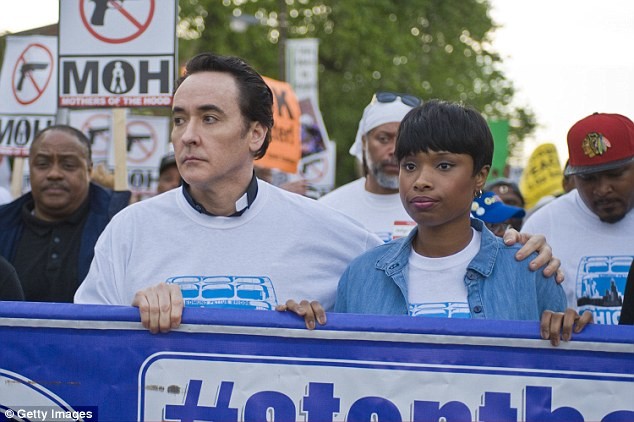
Lee has a great cast including John Cusack as a priest and Jennifer Hudson as the mother of a slain child. Hudson's portrayal was especially moving, knowing that her mother, brother, and nephew were killed by gun violence in Chicago.
Lee has a great cast including John Cusack as a priest and Jennifer Hudson as the mother of a slain child. Hudson’s portrayal was especially moving, knowing that her mother, brother, and nephew were killed by gun violence in Chicago.

The satire and humor that Lee uses is just enough to let us into the deep pain and frustration that mark the lives of the people living in violence-torn neighborhoods. And he maintains all the theatricality and poetry of ancient Greek drama but makes it distinctly of our time. His message is direct, and powerful, and entertaining. Some have complained that this kind of tragedy shouldn’t be entertaining but if it gets even a few people thinking, that’s a good thing.

The film is available streaming on Amazon and is well worth it. I suggest using the subtitles when you do because it really helps you appreciate the cleverness of all rapid fire poetry. It’s like reading/seeing/studying an ancient Greek drama. You don’t want to miss any of the nuance.

Lysistrata tries to convince her fellow Spartan women (in purple) and the Trojan women (in orange) to join together to stop the violence.

I’m reading >4 books right now

It’s not unusual for me to have more than one book going at a time. What is unusual is to be so into all of the books I am reading. I seem to be in one of those moods where everything I pick up turns into something I want to devour. My appetite right now is insatiable and it is exacerbated by all the books I keep buying (!) and the fact that I am spending too much time in front of digital media. With 8 books completed in January I feel I am on a good pace to reach my goal of 104 books this year, but there is part of me that feels the need to take giant piles of books and just cram them into my head.

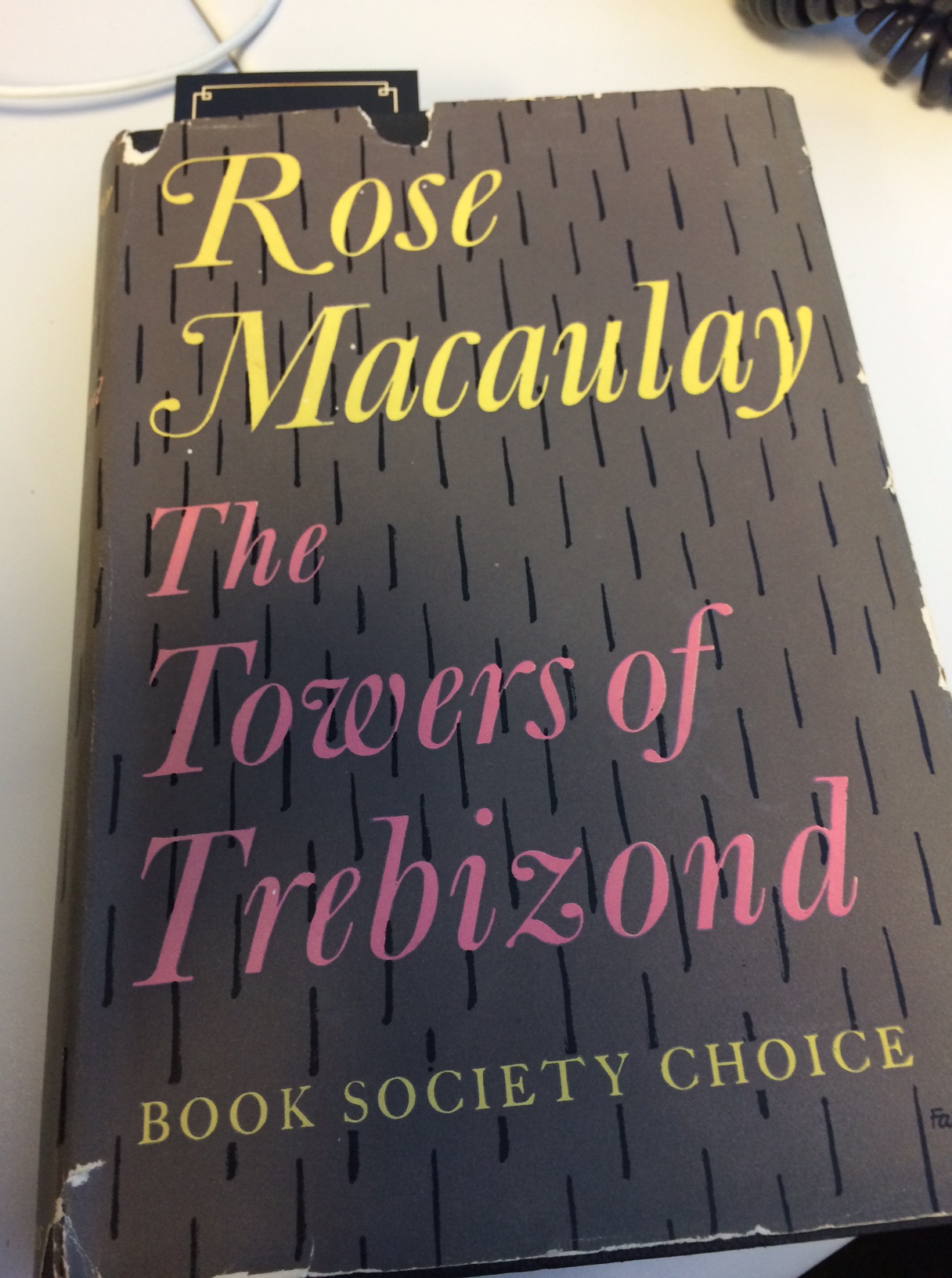
I started this one in early January and I love it. I didn't take it on our recent trip to Mexico because I didn't want to bang up my copy so I left it home about 2/3rds finished. The crazy thing is I totally forgot about it when I came home. It wasn't that I was a good 30 pages into the Macaulay (see below) that I remembered I was reading this one. But I love it so much I don't want to pick it up again until I have a good chunk of time to read it.
I started this one in early January and I love it. I didn’t take it on our recent trip to Mexico because I didn’t want to bang up my copy so I left it home about 2/3rds finished. The crazy thing is, I totally forgot about it when I came home. It wasn’t until I was a good 30 pages into the Macaulay (see below) that I remembered I was reading this one. But I love it so much I don’t want to pick it up again until I have a good chunk of time to read it.
I read two other books while staying in the colonial town of San Miguel de Allende in Mexico but didn't pick up this Mexico-based Graham Greene until the plane ride home.
I read two other books while staying in the colonial town of San Miguel de Allende in Mexico but didn’t pick up this Mexico-based Graham Greene until the plane ride home.
Simon at Stuck in a Book mentioned that he was about to start reading this. I tweeted him that if he waited until I was back from my trip in a few days we could read it together. He agreed so I had to take it off the shelf as soon as I got back. I think I got a head start on it, but given everything else I have going, he may beat me to the finish.
Simon at Stuck in a Book mentioned that he was about to start reading this. I tweeted him that if he waited until I was back from my trip in a few days we could read it together. He agreed, so I had to take it off the shelf as soon as I got back. I think I got a head start on it, but given everything else I have going, he may beat me to the finish.
I read this waaaaay back in high school, a young gay wanting to read about a young gay, but I have no recollection of what it was about. So when I saw this copy of the same edition I owned 30 years ago, I couldn't resist. Started it at about 1:30 in the morning and am 35 pages in.
I read this waaaaay back in high school–a young gay wanting to read about a young gay. I have no recollection of what it was about. So when I saw this copy of the same edition I owned 30 years ago, I couldn’t resist. Started it at about 1:30 in the morning and am 35 pages in.

In addition to these four titles that have me pretty well captivated I have about five other books that are in various stages of being started but I am finding them less captivating. Some of those may get abandoned for good but I am holding out on naming them until I give them another go.

Lucy helps out in the office

On Thursday, as part of a conversation about dogs, my employer said “we should have a dog in the office”. I said “Okay, I will bring Lucy in tomorrow.” And I did. It was a  lot of fun to have her there, but there were enough anxieties associated with it that it wasn’t the unalloyed joy I was hoping for. Most office space leases do not allow animals so I was worried that building management would see her. And I was worried there may be someone who has issues with dogs. But Lucy was super well behaved and those that like dogs liked having her around. Still, I don’t think I will do it again.

IMG_1591
Ready for her first assignment.
IMG_1604
Taking a break after lunch.

IMG_1590

Lucy loves to sit by the window and see what is going on outside. But the windows in our 3rd floor office are pretty high off the floor so I had to put her up on this high table so she could see out. She quite enjoyed it.

IMG_1597IMG_1605IMG_1599

4,894 pages of Trollope

a trollope
Well, Trollope’s 200th birthday was last year so I could say that my completion of the six Palliser novels in January 2016 is a bit of a day late a dollar short. But on the other hand, I just finished almost 5,000 pages of Trollope, so who cares if I am 20 days late. I suppose I should also point out that I didn’t read all six of them in 2015 but I did read four of the six last year.

Overall I still prefer the Barsetshire novels over the Palliser novels mainly because I prefer Church of England gossip over parliamentary gossip. And there were moments in the Pallisers where the political talk got a little boring because I didn’t understand enough about the issues being discussed to get really interested. Small point though. I love Trollope.

Now that I am finished. What did I think? Will I always ask myself questions? Just a cheap literary cheat when I don’t have the energy to be clever? Even lazier, I am going to make a list.

Ranking the Pallisers

6. Phineas Finn (Book 2)
5. Phineas Redux (Book 4)
4. The Duke’s Children (Book 6)
3. The Eustace Diamonds (Book 3)
1. (tie) Can You Forgive Her? (Book 1)
1. (tie) The Prime Minister (Book 5)

This was way harder then I thought it would be. The Prime Minister tied for the top spot because I loved how awful Ferdinand Lopez was. Without him, Can You Forgive Her? would not have t share number 1.

Favorite character names: Sir Gregory Grogram (appears in Books 1, 4, and 5) and Samuel Cheesacre (Book 1).

Favorite meta moment: When one of the characters talks about putting a letter in a pillar box–the mail receptacle Trollope helped introduce  into usage in the Channel Islands and ultimately mainland UK.

great-britain-pillar-box-stamp-set-2002