My Life at the Library


All the recent posts in the blogosphere about the American Library Association conference here in DC have gotten me thinking about my own relationship with libraries.

The Early Years
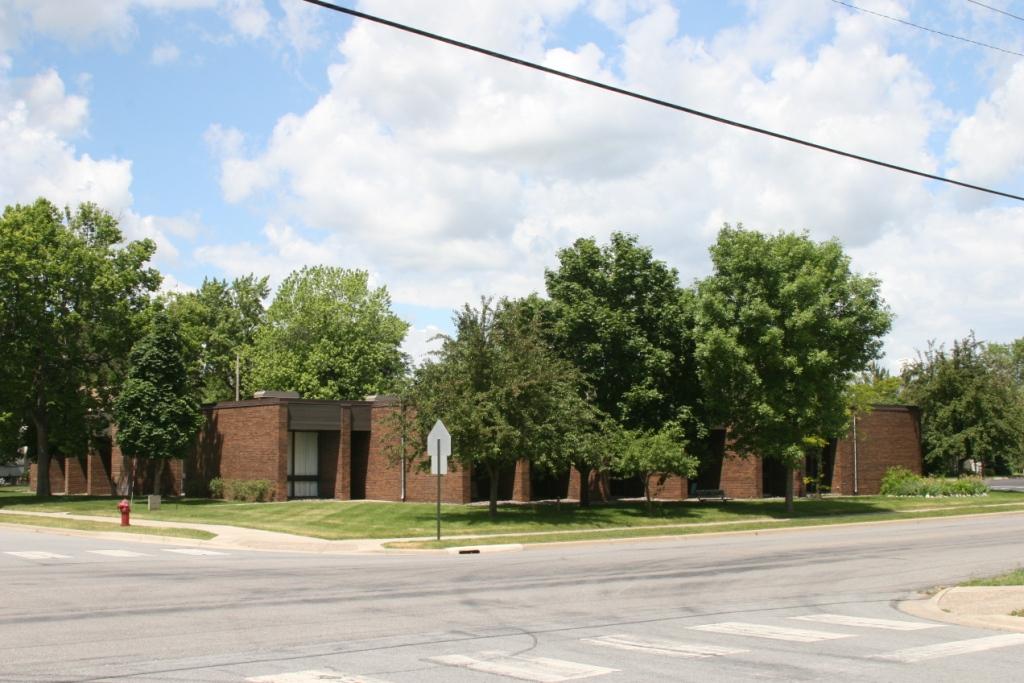
When I was a little kid I practically lived at the library. About the time I was seven years old, a brand new library opened just two blocks from my house. I was well aware of it even before it opened because my older brother had been assisting the construction workers by making trips to the Dairy Queen for their lunches, scoring himself DQ treats as payment for his efforts. Don’t think I wasn’t jealous of that. And when the new building opened it was like a revelation. At that point the books themselves were somewhat secondary to my interest in the new facility. It was this big (to me) modern (to me) building the likes of which I had never really been in. It was a dark brown brick building with a curving wall, giant doors, and what seemed like acres of bright green carpet apparently meant to suggest grass. Growing up in an old house that was perpetually being remodeled in the old part of the small town of Elk River, Minnesota, the new library was like a fantastic spaceship. And I was just old enough to make the short trek all on my own.

The children’s area was astounding, they had coat racks in the shape of giraffes, this great play set based on Richard Scarry characters, bean bag chairs–it was like kid heaven. It is surprising that I even noticed the books. But notice I did. As I sit here today I realize that over time I worked myself counterclockwise through the library’s fiction collection. Every few years or so moving generally west through the stacks from the ‘E’ section (easy? Elementary?) to ‘J’ (juvenile) to ‘YA’ eventually to ‘A’. In those days I didn’t ignore non-fiction the way I do now, maybe because kid’s non-fiction has all those great pictures and drawings. I would spend hours browsing paging through anything that looked interesting. Including a book on human reproduction that I still remember to this day:

Part of your father fit inside your mother like a key in a lock, like a foot in a sock.

Wow. Really?

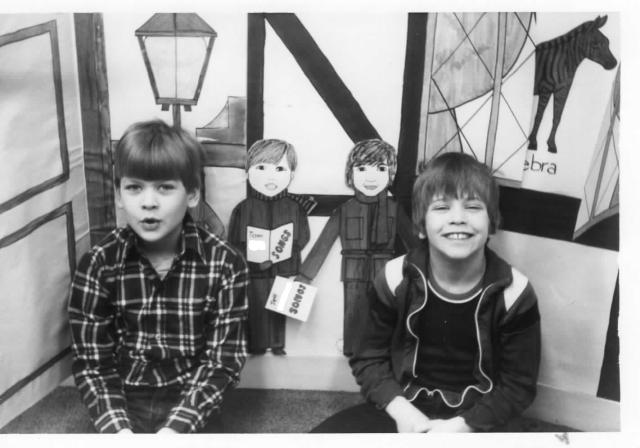
And of course there were also the programs: reading programs, summer films (pre-video), hobby night, and many others I know I am forgetting. When I was still quite young, Janet, the librarian in charge of children’s programs, created this giant Dickensian holiday street scene to go up on the wall in the children’s area. It was like one of those advent calendars where there is a window that opens for each day until Christmas. Except it was giant, it had to be at least eight feet tall and covered the whole wall. My friend Jeff and I were lucky enough to be able to help Janet do some of the coloring which we loved. We were rewarded by being included in the Victorian vignette as little carolers. Despite being over the moon about this at the time, I oddly did not remember it until recently when I came across this picture in my parent’s photo album. I am the one on the left.
Not Making a Living on the Wages of a Library Page
When I was eleven my sister got a job at the library which I thought was the coolest thing ever. Five years later when I applied for a library page position of my own I thought I was a shoo-in. Not only was I a sibling legacy, but I knew that library backwards and forwards. I knew the Dewey decimal system not because I studied it, but because I knew every single book on the shelves and where they were located. And there wasn’t an element of the collection that I hadn’t used over the previous nine years. Periodicals, the A/V collection, every section of books, the catalog on microfilm, the inter-library loan system. I knew it all. I even knew more than I should about romance novels having indulged my OCD on more than one occasion by surreptitiously organizing the twirling racks of mass market editions by publisher and the color of the spines. So imagine my surprise when I didn’t get the job! The head librarian was new and not someone who had known my years of hanging out at the library. He hired someone a year younger than me on the notion that they wouldn’t graduate from high school as soon as I would. I was crushed. Not only because other job prospects weren’t so hot, but this was MY library. Well, after a week the other guy didn’t show up for work. I happily stepped in on short notice when the call came and needed almost no training whatsoever.

It was during my two years working there that I really began a relationship with books and other book lovers. I had always been a reader, but this was the first time I had the chance for adult-like conversations with colleagues and patrons about books. And what great friends I made while working there. A wonderful woman named Mick (short for Margaret) eventually replaced the head librarian who hired me and children’s programs were taken over by a kind, creative, bubbly woman named Georgia Jones who for some reason always made me think of a young Connie Francis. We had so much fun it was astounding. Probably the best work mates I have ever had. With the books, the gossip, and the giggling, I didn’t mind that I was only making $3.25 an hour. Unfortunately my career at the Elk River Public Library was cut two months short. Needing to make more money the summer before I went off to college I ended up working at a Sanford and Sons, a potato farm in nearby Big Lake where I would make a whopping $3.75 an hour and get many more hours than my 20 hours a week at the library. Needless to say, working at the potato farm was not as fulfilling as working at the library.

Oh, the Libraries I Have Known

The place where it all started: The old “new” Elk River Public Library. They have since closed this library and opened a bigger one out on the highway in a location that no 7-year old is going to be able to walk to.

And who couldn’t like the library system at the University of Minnesota where I went to college. With almost 7 million volumes in 14 collections, it is a treasure trove I still miss.

The Holborn Library, not a fantastic library but it was my local back when I worked in London in 1992.

An old Carnegie Library, the Hawaii State Library in Honolulu was a great place to hang out during my two years in graduate school at the University of Hawaii. This was the place where I would head for pleasure reading as soon as the semester was over and the place where I first met Willa Cather, Vladimir Nabokov, James Baldwin, Leo Tolstoy and many others. A real time of discovery in my mid-20s.

The libraries at Cornell University in Ithaca, New York were of course wonderful but I didn’t spend as much time in them as you might think while I was in graduate school there. I was studying Regional Planning and much of the data we needed in our studies and research was available online by the time I was there in 2000. Still there were a few wonderful places to immerse myself in books.

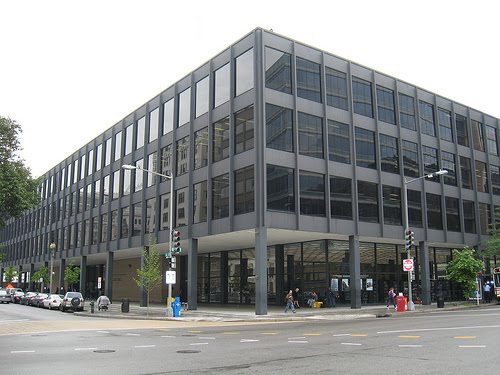
And then the sad case of Washington, DC. I haven’t yet checked out the branch in my new neighborhood, but my experience with DC libraries has been less than gratifying. The main library is a Mies van der Rohe building that has seen better days and always feels more like a homeless shelter than a library. I think the majority of folks in this very highly educated part of the country must be buying all of their books.

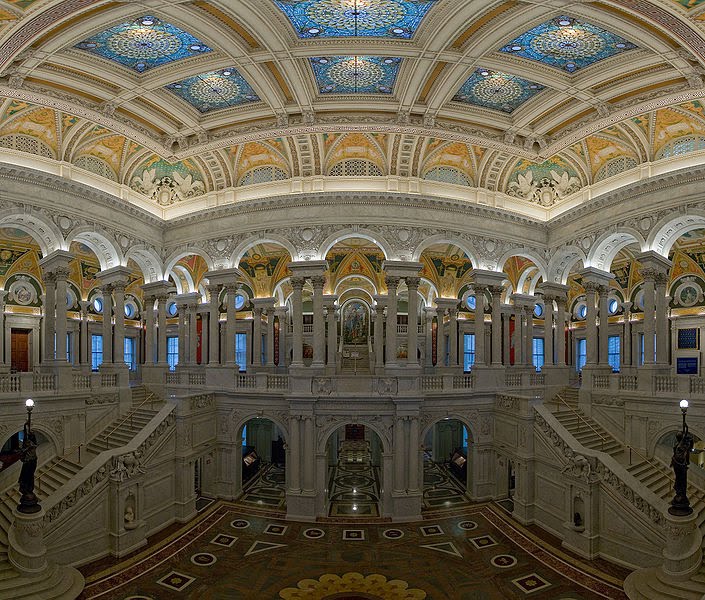
Of course there is always the Library of Congress which is an unbelievable resource, but not one that one uses for anything other than serious research. Unfortunately, between the sad state of libraries here and the fact that I have been buying so many books in recent years, I don’t go to the library very often these days.

(Photo Credit: David Iliff)

A Month Ago…

The long Independence Day weekend is giving me time to catch up on a few things. These pictures were taken back in late May/early June when I was in California and Minnesota.

Sonoma County, California
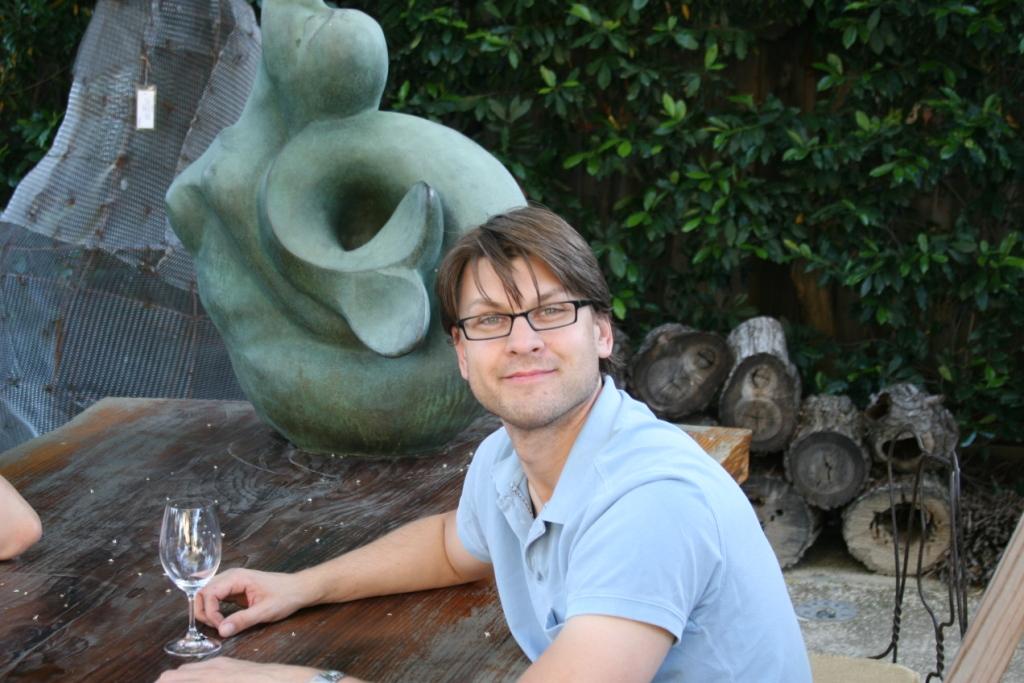
We spent Memorial Day with friends who have a really beautiful weekend house in Sonoma. We had a great time and the weather was perfect. The second to the last one is me enjoying Widow Barnaby after a swim.

Under the flight path for MSP
Would you believe that this beautiful wetland was right next to our airport hotel in Minnesota. Despite the “closed” signs, my sister and I took a nice walk in the evening as an antidote to our dinner at the nearby Mall of America.

Book Review: The Enchanted April by Elizabeth von Arnim


The Enchanted April

Elizabeth Von Arnim

I remember seeing the trailer for the film adaptation of this book when it first came out in 1992. It looked right up my alley. A period film of the English in Italy, had echoes of “A Room With A View”.  But for some reason over the last 18 years I never bothered to see it.  And then recently I came across a nice used copy of the NYRB edition and thought the time had come to give The Enchanted April a whirl.

The story begins with Lotty Wilkins having a miserable February day in rainy London. She notices an advertisement for an Italian house (castle) rental in the Times with the heading: “For Those who Appreciate Wistaria and Sunshine”. She becomes obsessed with the idea of spending a sunny April in Italy and manages to convince Rose, a woman from her club and church, whom she hardly knows, to split the cost of the rental. To save money the two decide to advertise for others to share the castle and end up with Mrs. Fisher a older widow who had a childhood filled with Ruskin and Carlyle and Robert Browning (literally, her father knew all these “great men”) and just wants to spend her time at the castle being left alone to “remember” better times. And with Lady Caroline Dester a 28-year old beauty who also wants nothing more than to be left alone.

So off they go to Italy where indeed the sun is shining and everything is more beautiful then they had imagined. It isn’t long before Lotty’s infectious enthusiasm melts Rose’s defenses and while it takes a little longer, eventually does the same for Lady Caroline and Mrs. Fisher. She credits the house and Italy with transformative powers, but it is clear that Lotty has just as much to do with the transformations as the house.

Throughout the story there are wonderful moments of light humor. Not roll on the floor kind of humor but genuinely funny moments that make one chuckle in delight. Perhaps my favorite instance is the struggle between Rose and Mrs. Fisher for dominance of the over the tea pot and who is serving whom. Over the course of the book each of the women are rescued from their personal despair by letting go of their ingrained old notions of themselves and their relationships and embracing a new attitude.

I really enjoyed reading this charming book, the same can’t be said for the film, which I watched almost immediately after finishing the novel. There was some good casting–Miranda Richardson as Rose and Joan Plowright as Mrs. Fisher–but the other two weren’t so great. The actor portraying Lotty way overplayed her character’s quirkiness. I think given the reserve of the other characters her words alone would have been shocking, she didn’t need to make everything sound like an over excited twelve year old. And the actor who played Lady Caroline, well, she had the wrong color hair and wasn’t the knock down beauty the book promised. But even these miscastings could have been overlooked if they hadn’t taken a few liberties with the plot that in my opinion dumbed down the story in a way that seemed unnecessary. And they used way too many fake flowers to make the gardens seem over the top beautiful. Merchant-Ivory never would have made that mistake.

So, a hearty “yes” to the book, and a hearty “maybe if you are bored” to the film.

Of Birds, Buskers, and Books

 
I seem to have so many great ideas for blog posts running through my head these days, but the “new” house is really taking its toll on my free time. Between dealing with unpacking, cleaning, dying AC units, and just general moving mayhem, I haven’t had a whole lot of time or energy to put pen to paper as it were.

But I thought I would give you some idea of the nicer things that are a part of my new routine up here in the wilds of Chevy Chase, DC.

Birds
Even though we just moved about four miles north of our previous home near Dupont Circle the difference is amazing. Our new neighborhood is so peaceful with nothing much other than lots and lots of song birds to break the quiet. It has been a marvel to watch and listen to the birds in our leafy, breezy back yard. My particular favorite is the Gray Catbird who seems to greet us every time we walk out back. He is a pretty little fellow with a beautiful song repertoire. (I didn’t take this lovely picture, it is from a website for Bayberry Beach in New York.)

Buskers
I have written here before about buskers and how magical they can be (and how maniacal they can be). One evening this week at my new Metro stop as I road the long, long escalator out of the station, I heard this wonderful music emanating from above. At the top of the escalator was a woman playing an acoustic guitar and singing. She was like Tracy Chapman, but her voice was stronger than Chapman’s and seemed much more versatile. Would she sound good on a record? I am not sure, possibly, but in that setting she was wonderful and sang with such passion, it was a real performance. Thankfully I had about ten minutes to stand and listen. Five dollars didn’t seem like much to give for what she gave me. Hopefully I will see her again.

Books
The same evening I heard the great busker, a woman near me on the bus was reading Anita Brookner’s Lewis Percy. Now I have toyed with the idea of posting what I see people reading on my commute like Karen does at Bookish NYC, but she does it so well, I have refrained from being a sad copycat. But it isn’t every day one sees someone reading my beloved Anita Brookner. In fact, I am not sure I have ever seen anyone reading Anita Brookner. I took advantage of the opportunity to chat with her about Brookner. I took this to be a good omen for my new life. If even one person in my new neighborhood is reading AB, it makes up for the thousands on the Metro reading those Steig Larsson books that I have been avoiding because of their ubiquity. I guess it is the contrarian in me.

The Blog?
So, until we get a little more settled, the posts will be fewer than I would like. But at least in all the chaos there are lots of little things to be happy about.

This lovely Penguin wrapping paper confuses me…

I have had a sheet of this wrapping paper on the wall of my work cube for some months now and something occurred to me recently.

The titles and authors on the spines of these early Penguins run vertically up the spine rather than down the spine. I have a whole library of books, and with the exception of one Russian/English copy of Elmer Gantry by Sinclair Lewis that I found in Prague, none of them have the titles going up rather than down.

Were all the early Penguins like this? When did they change? Who can enlighten me?


(Sorry for the poor image quality.)

Book Reivew: Heat Wave by Penelope Lively

UPDATE: D’oh! Simon at Stuck in a Book just pointed out I mixed up my Penelopes. This is Lively not Fitzgerald! Headings have been corrected to rectify this error. (Probably because I just read a PF book…I’m just sayin’)

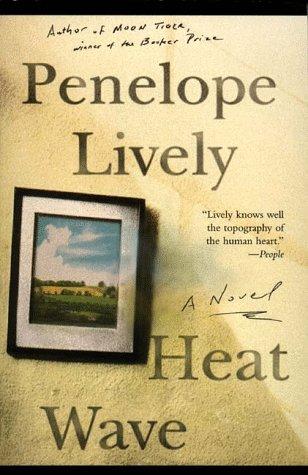
Heat Wave
Penelope Lively

It is appropriate that I should be writing about Penelope Lively’s Heat Wave since our A/C is still non-functioning and the weather is starting to get hot. Then again, a heat wave in England is probably still more pleasant than a typical summer day here in DC where 90 degree weather and 80% humidity are the rule not the exception. This is probably why I failed to feel, or believe in the heat as Lively describes it. Not that her powers of description are lacking, quite the opposite in fact, it is just that I know better when it comes to English summers. I have lived through a couple of heat waves in England and they just don’t compare in the same way that all my whining about the heat in DC would be laughable for someone living through a summer in Southeast Asia.

But back to Penelope Lively’s Heat Wave. The gist of the plot has copy-editor Pauline spending her summer in a two-family cottage in the English countryside. Her daughter Teresa and her husband and baby are staying in the cottage next door. As the bucolic summer starts to turn hot Teresa’s marriage begins to run into trouble. Pauline observes the tension through the lenses of her own failed marriage some decades earlier.

As in most of her books Lively does a wonderful job writing about home and family in a way that is comfortable, and, I hate to say it, cozy despite the emotional strife she invariably inserts. In Heat Wave Lively paints a picture nothing short of bucolic. Although she tries to poke holes in our romantic notions of country life, as I will write about shortly, I still couldn’t keep myself from thinking of composer Ralph Vaughan Williams’ aurally iconic “The Lark Ascending”. To me this is tone painting at its finest. Even without visual images to go along with it, I defy you not to be transported to some idyllic countryside setting while listening to this piece. This is only an excerpt of the piece and will leave you wanting to hear more. Hit the play button while you read the rest of this review…or better yet go get a recording of The Lark Ascending, go lay on the grass or in a field or somewhere outside and listen to it on your headphones. The perfect blend of nature and art.

Meanwhile, back to this book review. Lively builds dramatic tension by using the expanding heat wave as background for expanding personal tensions. She also reinforces the notion that most things, once you scratch the surface are rarely what they seem. That underneath every pleasant surface is a complex and often contradictory set of factors that belie superficial observation. Thus her bucolic country cottage is surrounded by meaning apparent to those willing to look beyond what they see.

Pauline sometimes thinks of the people who have lived at World’s End before her. The real inhabitants – those who lived here seriously, because they had to. She sees stunted people with skins ripened by dirt and weather. Most of these people would have been old at fifty-five – at her age – keeling over, heading for heir hole in the turf, worked quite literally into the ground. They would have looked rather differently upon the silver gleam of winter sunshine on ploughlands, upon the billowing gold of an August cornfield. All very fine for us, thinks Pauline – playing at Marie Antoinette, soothing the troubled soul with contemplation of nature. Time was, this place was for real.

In the same way, Lively uses Teresa’s husband Maurice to further poke holes in the surface story. A scholar of cultural history, Maurice is spending the summer refining his book on tourism and making frequent weekend visits to tourist attractions. While most of us understand that there is a kind of sliding scale of touristic honesty—the difference say between a guided tour of York Minster on one end of the spectrum, with the time machine ride at JORVIK Viking Centre at the other. But which of us isn’t susceptible to the enjoyment of ersatz reality on some level? Do we think about the conceits required to enjoy those experiences? Raise your hand if you have never purchased a bar of soap, pot of honey, or other such memento not even remotely related to the site visited. Pauline is on the case:

Worsham is doing good business. Raking it in. Each of these visitors will spend something, presumably, if only on refreshments and a postcard. Quite a few will fall for a pot of allegedly home-made chutney, or framed assemblage of dried flowers, or a patchwork cushion. Acquisition is one of the purposes of a day out, after all – the acquisition of new sights bolstered by something a bit more tangible. And Worsham has centuries of marketing experience – it has been a trading centre all its life, though traditionally for more essential commodities than dried flowers.

Lively’s deconstruction of these tourist outings and other elements of her daily life feel interestingly dated to me. Published in 1996, the cynicism in Heat Wave feels very much of its time. Perhaps it is just my own personal experience in the 1990s. As a graduate student in American Studies in the middle of the decade, it was hard not to have a hyper-critical eye trained on the details of daily life. But it also seems like the decade was rejecting the la-la land of the Reagan ‘80s as it rushed to embrace the tech bubble of the ‘90s and the heady march toward Y2K. Correct me if I am wrong, but wasn’t the ‘90s the decade where we all became so fascinated with the recent past? With an attitude that said “we are enjoying this, but only ironically” we embraced swing dancing, Rhino Records started re-releasing nostalgic music collections by the score, TVLand came into existence filling cable TV with Mary Tyler Moore Mondays and enough Brady Bunch and I Dream of Jeanie to put us all in a time travel coma. Wasn’t this the same period when twenty-somethings started to carry lunchboxes and wearing t-shirts with Sesame Street characters? But we did it all with a wink and a nudge that said that we knew better. In many ways I feel like the cultural assessments in Heat Wave are indicative of the kind of critical reckoning that many of us had in the mid-90’s that eventually led to the “who cares, we know it is lame but are enjoying it anyway” late-90s and beyond. Lively’s criticism seems part of the trajectory of cultural criticism that eventually led some of us the “post” world. That is, the world where we got so tired of our own cynicism that we became post-everything: post-feminist, post-gay, post-racial. What else could explain how former warriors of the political correct movement turn into rabid fans of Family Guy like myself and so many of my college cohort?

But I digress…Heat Wave is not as non-fictiony or complicated as all that. It is, I am happy to say, typical Lively. In fact, I would put it down as my second favorite Lively. Not as good as Consequences but better than The Photograph and Moon Tiger.

Book shopping in St. Paul

Even though I am sitting around waiting for various contractors to do their various jobs around the house, it is hard to not enjoy the day. Beautiful weather, lovely breezes, birds singing their little hearts out. And a quiet minute or two to attend to my blogging life.

A few weeks ago I was in Minnesota for my nephew’s high school graduation. While there my sister and I managed to pop into Half Price Books in the Highland Park neighborhood of St. Paul. I probably wouldn’t have made my way to this particular bookstore since my normal gravitational pull when I am in the Twin Cities is toward Minneapolis. But my friend Steve happens to work there so I thought I would check it out. And I did manage to find a few things that made browsing quite fun. And although my suitcase was already dangerously heavy I couldn’t pass up to opportunity to take a few things home with me.

Please ignore the ugly bedspread. (Comfort Inn near the airport.)
The Provincial Lady in London was my favorite find since it is in the same edition as my copy of The Provincial Lady’s Diary.
I have already read and reviewed Fitzgerald’s Human Voices, which I liked a lot. A couple of NYRB editions including Clark Clifford’s Body by Kenneth Fearing whose The Big Clock I really liked…you get the idea.
I don’t know much about the J.B. Priestly book but the cover art and the little illustration on the inside made it hard to pass up.

O-ver-whelmed


Before you scroll down to read my brilliant insights into Penelope Fitzgerald’s Human Voices, I just thought I would let you all into my 3D world for a moment. I am a little overwhelmed at the moment trying to settle into a new house. Not only is there all the unpacking, but there are also more than a few contractors running around sorting out things like floors, hot water, and electrical panels. This would be stress enough along with work and a million other things that need seeing to at the moment. But it appears that we have well and truly entered into the life of homeowners with our unpredictable pile of bricks that we can now officially call a Money Pit. When your electrician calls you at work to tell you that your air conditioning system has gone belly up just as we enter into the stinking hot, humid slog of a DC summer, you can really only laugh. Long, loud, hysterical laughs that are in direct proportion to the amount of money it will take to fix the situation.

But alas, you don’t all come here looking for sob stories–unless someone wrote them into a fabulous novel–so I will truncate my “poor me” diatribe. The bottom line is that once we get past this bit we will have a wonderful place to call home. One with lots of birds and butterflies (seriously) and a whole room I like to call my library. Plus I have some great pictures of northern California and all kinds of other fun posts in store. It is just going to take me longer to post about them.

(No that isn ‘t our new house, and no, we don’t live in Newhouse. It just seemed apt.)

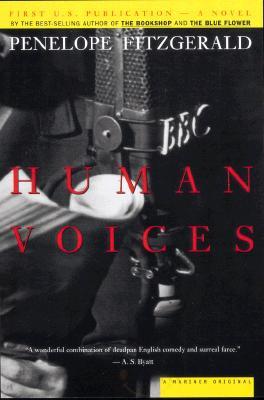
Book Review: Human Voices by Penelope Fitzgerald

 
Human Voices
Penelope Fitzgerald

In Human Voices I found a different Penelope Fitzgerald than the one I am used to. I guess having only previously read two other Fitzgerald novels I don’t qualify as an expert, but this one feels very different than The Gate of Angels or The Bookshop. There is something much more straightforward about Human Voices than the others. It feels less oblique, more tangible. More accessible.

Drawn from Fitzgerald’s own work experience, Human Voices takes place in the halls of Broadcasting House (the BBC’s London headquarters) during World War II. Like the other Fitzgeralds I have read, this is a novel of details with just a gentle arc of a plot. Things happen – some very dramatic indeed – and there is a certain peak to the plot, but overall this isn’t one of those narratives that builds and builds towards one inexorable, unavoidable climax. Instead the reader is treated to the stories of various BBC employees whose lives become increasingly interrelated. As the air raids and war effort in general escalate, the lines between work and personal lives become blurred as the intensity of both mirrors the intensity of war.

What is amazing about Human Voices is Fitzgerald’s ability to give dimension to so many characters in only 143 pages. There are certainly plenty of minor characters – not everyone gets equal treatment – but at no point did I feel like there wasn’t a whole character beneath the surface even when the character was not explicitly fleshed out.

And through it all Fitzgerald manages to convey a sense that the “stiff upper lip” had plenty of soul and emotion behind it. She captures the spirit of the blitz without turning any of it into caricature. This is a must read for anyone interested in wartime London, providing further dimension to a place and time with a seemingly endless supply of unique and extraordinary stories.

It is also a must for anyone interested in the inner workings of the BEEB before television came along. Fitzgerald subtly and masterfully makes the setting as integral to the story as the characters. For me one of the hallmarks of a truly great author is her ability to convey information about time, place and setting without drawing attention to any of them. In