Me, London, the Proms, and Dame Kiri

   
After my post about A Room With a View and the Puccini aria “O Mio Babbino Caro” the fabulous Architect Design and I exchanged a few personal recollections about soprano Kiri Te Kanawa. When I mentioned to him that I had pictures of Te Kanawa that I had taken in 1992, it occurred to me that my loyal readers might enjoy the tale of my summer at the Proms. For those who don’t know, the Proms is shorthand for The Henry Wood Promenade Concerts presented by the BBC. The Proms is an eight-week classical music festival held at Royal Albert Hall in London. With over 70 concerts each year, the Proms is an amazing place to hear the world’s greatest orchestras, conductors, and soloists.

On my first trip to London in 1989, I managed to get to a concert by the venerable Chicago Symphony Orchestra performing Berlioz’s The Damnation of Faust with Anne-Sofie von Otter, Jose van Dam and conductor Sir Georg Solti. It was a fantastic concert but what always seems to pop up from my memories of that night is the fact that before the concert I tripped and fell flat on my face in front of hundreds of people. Thankfully I was unhurt and I never saw those hundreds of people again.

In 1992 when I was working in London I got a half-season pass for the Proms so I could go to as many concerts as I wanted to over the final four weeks of the eight-week period. The thing about the Proms is that they have two rather large areas for standing room, the entirety of the circular main floor and the very top gallery. Those who want the main floor (the Arena) stand in one queue, and those that want the gallery queue in another. At the time the cost of a single Promenade ticket was about £2—a steal even by 1992 standards. The other thing to know about the Proms is that various self-selecting groups among the rabble who take standing room places on the floor and gallery often breakout with witty comments that they annunciate loudly to the rest of the auditorium before the concert and during the interval. Unfortunately, I think I only ever understood what they were saying once. They also make sound effects whenever the grand piano is raised up onto the stage.

Over the course of the season I heard an amazing array of concerts by an even more amazing array of orchestras, Cleveland, Vienna, Berlin, St. Petersburg, London, Royal Phil, BBC, City of Birmingham, BBC Welsh, and the list goes on. But the cultural highlight of the season, if not musical highlight, is the Last Night at the Proms. The program is heavy on light music with a decidedly British emphasis and rowdy renditions of “Land of Hope and Glory”, “Rule Britannia” and “God Save the Queen”. Thankfully this American knew the words to each of these patriotic chestnuts and was able to join in with just as much enthusiasm as the Brits and Commonwealthers who surrounded me. I found out later from those watching on telly that I was on camera a fair amount. Years later I managed to procure a video of that evening and I am indeed quite clearly on camera singing my heart out, but looking rather grim at the same time.

So what does all of this have to do with Kiri Te Kanawa? Well the Last Night of the Proms always features a vocal soloist and in 1992, that turned out to be Dame Kiri. I was in the equivalent of about row seven so I had a fantastic view of her. It was kind of a full circle moment for me. One of the earliest manifestations of my Anglophilia was getting up at 3:00 AM when I was 12 years old to watch Charles and Diana get married. As I am sure all of you know, Te Kanawa sang at the wedding and so began my fascination with her career. That twelve year-old boy in Elk River, Minnesota sitting alone watching the wedding in the wee hours would have never imagined that eleven years later he would actually be living in London seeing Kiri Te Kanawa in person at the Royal Albert Hall.

If you don’t have at least a half-season ticket to the Proms, you have to enter into a lottery to gain entrance to the final night. Since I had a half-season I cleared that hurdle. But then you still need to queue up the day of the concert to make sure you get a good spot (or get in at all). I arrived at 6:43 AM and placed my name on the queue list, which allows you a certain amount of freedom of movement throughout the day without losing your place in line. This is a fuzzy, pre-digital photo, but here is the list where I am number 130.

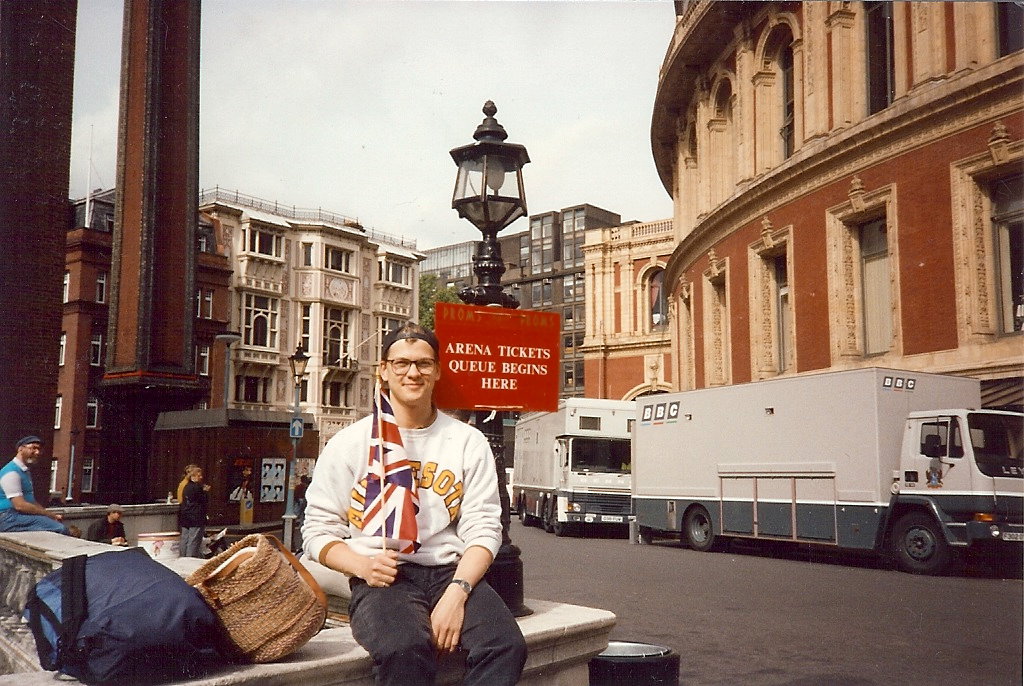
Here I am with my Union Jack at the start of the Arena queue.

The hall before the performance.

The hall once everyone got inside.

Kiri in dress number one – in which she sang arias from operas by Massenet.

Kiri in dress number two, decidedly showing her commonwealth and Kiwi pride. She sang the verses on Rule Britannia.

The post concert aftermath.
A Room With A View: The Book, the movie, the soundtrack ( x 7)

Regular readers of My Porch will know that I love, love, love the book and film, A Room With a View. But I also love the soundrack. I first heard the aria “O Mio Babbino Caro” from Puccini’s one-act opera Gianni Schicchi in the fantastic Merchant-Ivory adaptation of A Room With a View. New Zealand soprano Kiri Te Kanawa does the honors with a beautiful translucence and purity. This video captures the magic of the film, the aria, and the performance by Te Kanawa.

One of the many great things about YouTube is the ability to listen to the same aria sung by many different singers. And what a way to while away the hours when you could be doing something more productive. “O Mio Babbino Caro” is one of those little chestnuts that most every soprano sings at some point in her career and often as an encore in a solo recital. So there is a lot to chose from.

The sound quality on this 1981 recording of Leontyne Price with the Boston Pops isn’t so good, but her high notes are flawlessly pure.

The cherubic Lucia Popp has a wonderful silvery shimmer in her voice. No actual video here, but the recording is too beautiful not to share.

Not only is Angela Gheorghiu beautiful, but her voice is lovely with lots of kick and spin that must make it thrilling in person.

Some of Anna Netrebko’s vowels on the low notes seem a little under water, but her voice has lots of beautiful color. I would love to hear her live.

This is kind of an odd, uneven performance, but there are parts of it that show some of the nicer qualities of Sumi Jo’s voice.

And how about this violin version from Joshua Bell. With all his money and talent he never seems to come up with a decent haircut.

There are tons more where these came from including train wreck versions by Callas and Battle. Long in the tooth versions by Tebaldi and Caballe. And many, many amateur versions, which I did not screen for this post.

Now that I have listened to so many different versions, I am not sure I want to hear it again for a while.

Book Review: Excellent Women by Barbara Pym


Excellent Women
Barbara Pym

There are three things that make Barbara Pym’s world foreign to me. Not the English part, I have been inhaling all things England since I was 11. And not the clerical milieu, I grew up next door to a parsonage and became very familiar with the life and work of a protestant clergy family (despite having been raised Roman Catholic and having spent lots (and lots) of time at an RC church across town).

Now that I think about it, the three foreign things are kind of related to the two mentioned above. First, food. Perhaps it is the 1950s setting of Excellent Women that has our heroine Mildred Lathbury eating sad little meals because of lingering food shortages in the wake of World War II. And the War experience at least in my mind, is quintessentially British, so that might all be part and parcel of the whole English-ness of the book. (Don’t worry, I’m not using British and English interchangeably…)

Second, and this I guess must also relate to post-war circumstances, housing shortages. I have lived in some pretty, er, Bohemian settings over the years, but none of them ever required sharing a bathroom with another apartment—College dormitories don’t count. The fact that grown adults in the industrialized world had to consider such housing arrangements is indeed foreign to me.

Third, religious intolerance. Granted religion and other aspects of familial, civic, and political life have always mixed in a rather unholy way. But I think I must have grown up in an ecumenical atmosphere. Personal animus related to religion was not really an acceptable position either at home or next door at the parsonage. And whenever my parents would talk about the old days when marrying outside one’s faith was a huge deal that had broken up families, etc. it was always in the context of thank goodness we’re not like that. I don’t think Mildred Lathbury in Excellent Women is intolerant, but she certainly is surrounded by lots of parochial thinking that is as off putting as it is foreign to me.

In essence Excellent Women is about those excellent women who keep things moving. They make tea, they comfort, they volunteer, they are trustworthy and can be depended upon. But they don’t get married. And, as in Mildred’s case, they often get taken advantage of by the coupled and the male. More than once I wanted Mildred to flip them all the bird and tell them to do it themselves.

Excellent Women is vintage Pym with some darker overtones than earlier works like Some Tame Gazelle (which remains my favorite Pym). And having recently read a bio of Pym certainly heightened my enjoyment and understanding of the work.

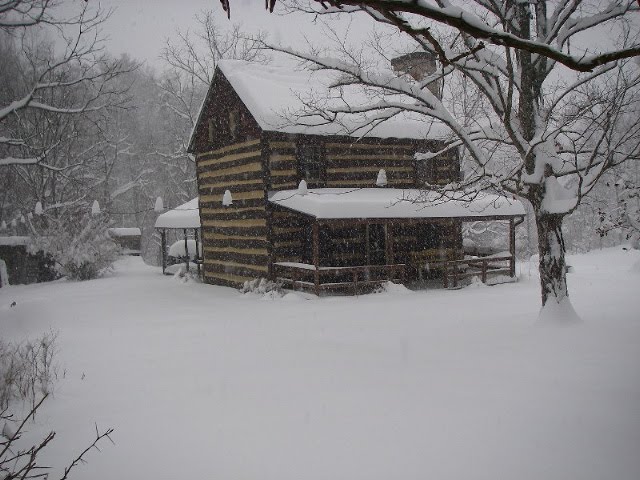
Last weekend looked something like this (or, Willa Cather slept near here)

   
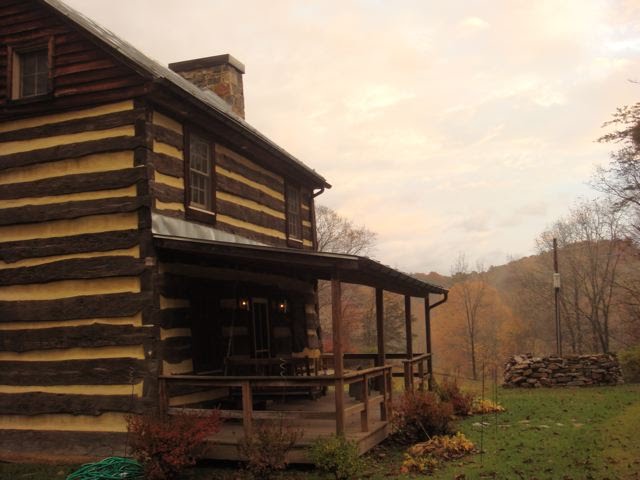
Last weekend we took a spontaneous trip out into the hills of West Virginia to visit friends of ours who have this lovely, lovely cabin. There was lots of snow on the ground, but it wasn’t actually snowing while we were there. It was a great place to and hang out with friends.

Only after our return when I began reading a biography of Willa Cather did I realize that Cather’s Virginia roots (which I knew about) were in the town of Gore, not far from the West Virginia line and our friend’s rustic weekend retreat. We were within miles of her birthplace and didn’t know it. Next time we visit these friends I am definitely making a pilgrimage to Gore. (Actually when Cather was growing up there the town was called Back Creek but was later renamed after her aunt Sidney Gore.)

The Best Evensong in London: St. Bride’s Fleet Street


You don’t have to be a Believer to enjoy Choral Evensong. Without going into lots of detail, Choral Evensong is a service of evening prayer in the Anglican Church that is almost entirely sung. In the English cathedral tradition, the choirs have traditionally been made up entirely of men and boys. Since my first trip to the UK in 1989 I have been to many a Choral Evensong in the Cathedrals of Canterbury, Coventry, Ely, Gloucester, Lincoln, Salisbury, Wells, Winchester, Worcester, York, and St. Paul’s in London as well as St. George’s Chapel Windsor, and King’s College Chapel, in Cambridge. The combination of a good choir, good music, and amazing acoustics made each of these experiences special in one way or another.

But in 1992 while I was working in London I was working the day shift one Sunday at the front desk of the Sydney House Hotel in Chelsea trying to figure out where to go to Evensong that night. I had been to St. Paul’s a number of times, but I was a little tired that day and wanted something that started a bit later so I could take a little nap between work and Evensong. So I decided to take advantage of the somewhat later starting time at St. Bride’s. Just down the road from the enormous edifice of St. Paul’s Cathedral, St. Bride’s is a lovely little church tucked in between a few office buildings. Designed by Sir Christopher Wren, St. Bride’s has a tiered spire that is said to be the inspiration for the tiered wedding cake. Located just off of Fleet Street, St. Bride’s has traditionally been the journalists’ church.

When I walked into St. Bride’s for the first time I was surprised at the interior. It looked brand new and was set up so that the entire body of the church looked like the “choir” section of a large cathedral. What I found out later is that the church had been badly bombed during World War II and that the interior looked so new because it had been rebuilt after the war.

The next thing I noticed was that the choir (the group of singers, not the architectural feature) was made up of men and women not men and boys. And the sound that issued from that small group of maybe 12 singers was one of the most amazing things I have ever heard in my life. The strong, clear sound of the choir and the incredibly bright acoustics of St. Bride’s made me feel like my body was soaring up among the barrel vaults of the church along with the music. Since that first experience at St. Bride’s I haven’t even wanted to check out Evensong at other churches. I even arrange my trips to the UK so I can be in London on at least one Sunday evening just so I can go to St. Bride’s for Evensong. There is something to be said about hearing one of the great cathedral choirs in the spacious acoustic of a great cathedral, but the choir and space at St. Bride’s provides a magical experience that is a must do for anyone with a predilection for choral music.

Here is a recording of the choir at St. Bride’s. It is a lovely recording, but it doesn’t begin to do justice to hearing them in person.

And here is a short video that shows the interior of St. Bride’s.

Notebook Giveway

     
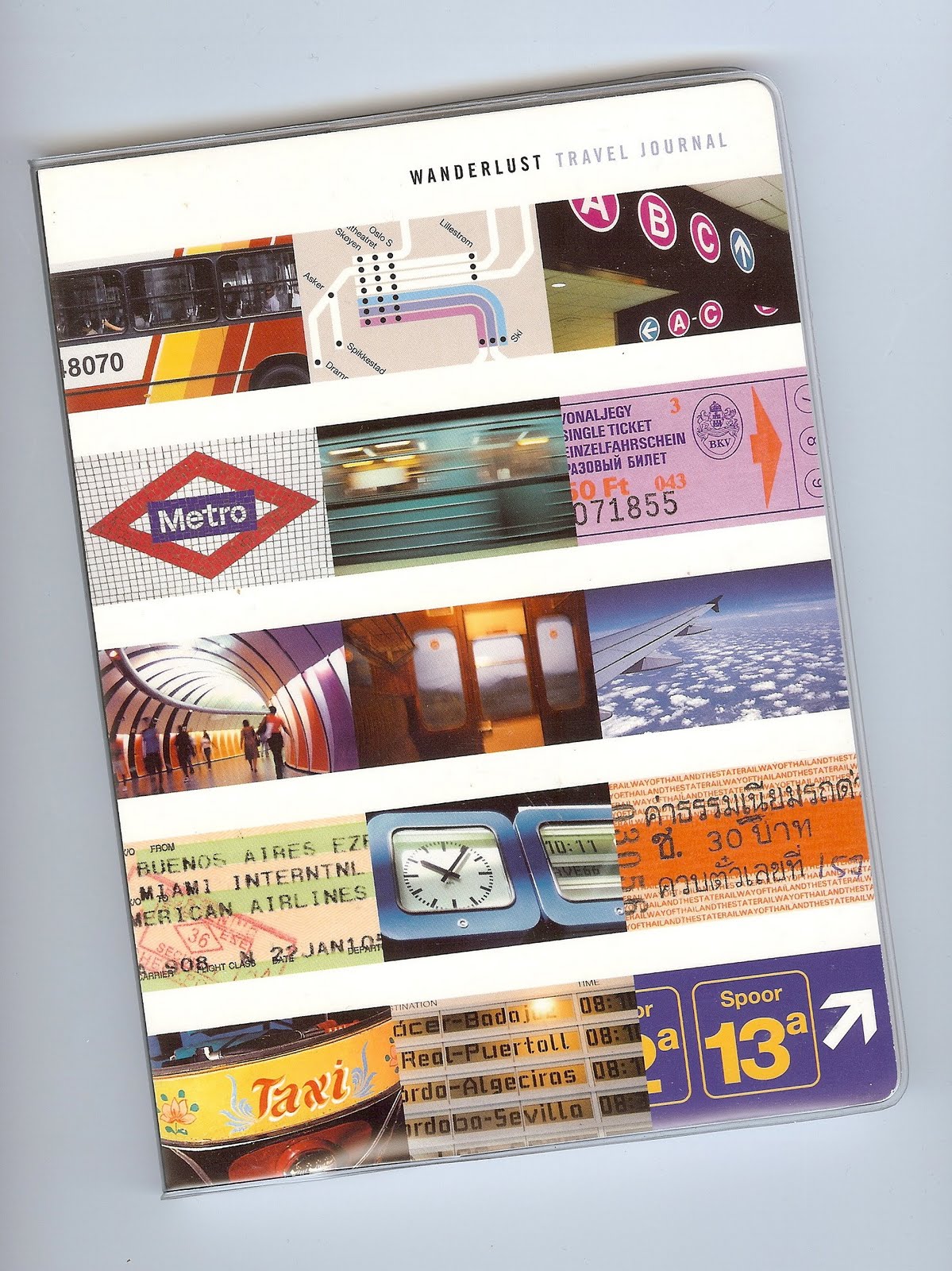
I realized after I posted about John Hughes’ notebook collection that I am not the only one fascinated by notebooks. So, since I have two of these fabulous Wanderlust Travel Journal notebooks, I would give one of them away.

It is about 5 3/4″ by 8″ in size. Has lots of great travel-related images like the ones on the cover dotted throughout the notebook. Most pages are unlined, some are graph paper, some are lightly colored. There is a section in the back for phone numbers and addresses. Overall it is a wonderful object, whether you plan to use it or not.

So, just leave me a comment letting me know you are interested by midnight (GMT + 6) March 7, 2010, and you could be the lucky winner. I WILL SHIP ANYWHERE IN THE WORLD (AND A FEW PLACES ON THE MOON.)


The Notebook Club

   
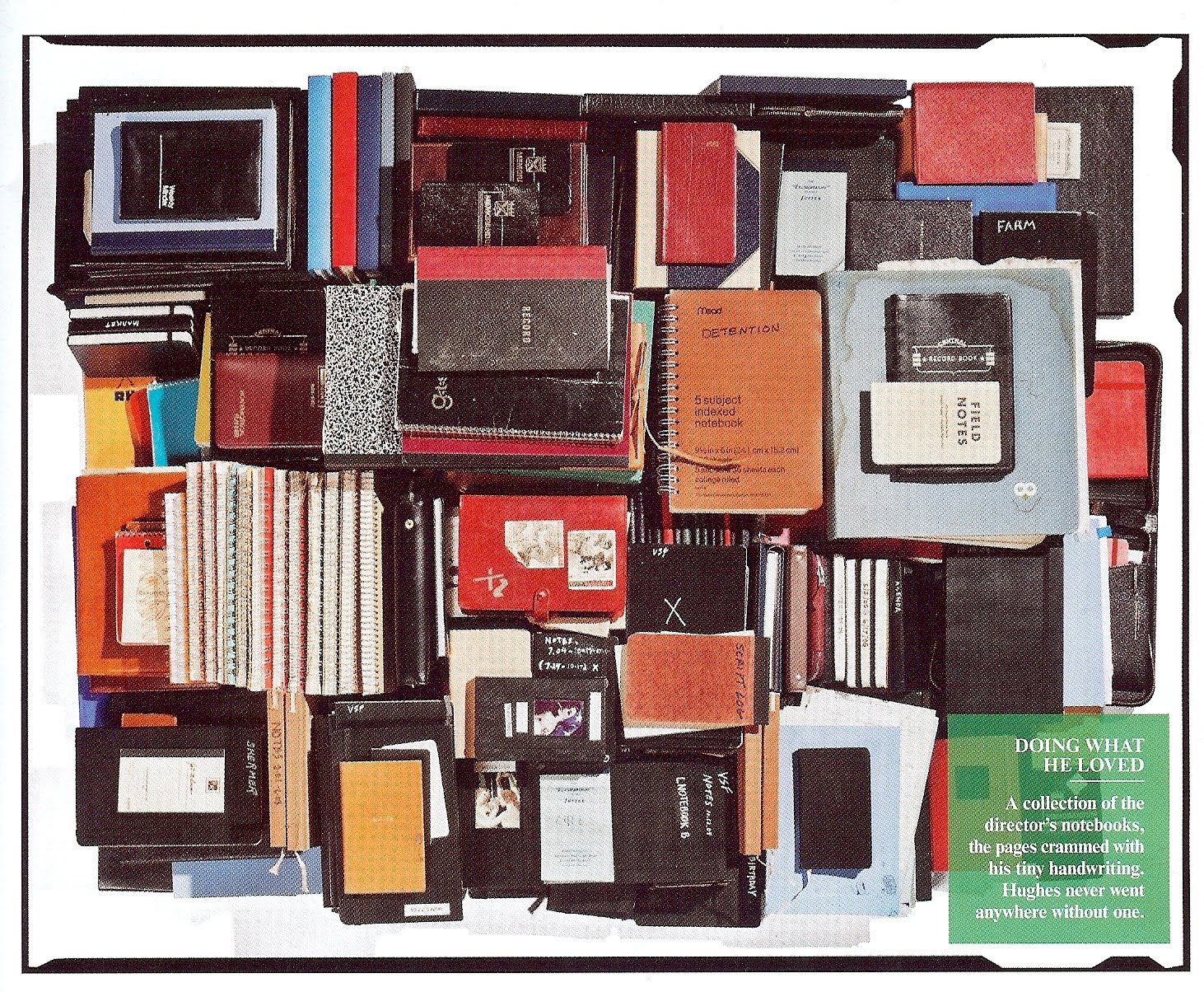
In the March 2010 issue of Vanity Fair they have a story on the late great film director John Hughes. His films Breakfast Club, Pretty in Pink and Sixteen Candles helped summarize and define the adolesence of so many American teens in the 1980s.

Here is a fantastic photograph of his collection of notebooks.

My English Journey Set is Complete Thanks to Jill and Cornflower

A few months ago in a post about the books in my nightstand I wrote about how I had 19 of the 20 volumes in Penguin’s English Journey series. The one that was missing was AE Housman’s A Shropshire Lad which was out of stock at The Book Despository. At the time I blamed Cornflower because her book club had just read the book so what else could I conclude? Months later the book is still out of stock and the Penguin website won’t sell these to the US. I was beginning to get worried that I would never be able to complete the set. So I thought I would appeal to Cornflower to see if anyone in her book club had a clean copy they were willing to part with. Within no time, Jill from Victoria, Australia came to my rescue and offered to send me her copy.

In exchange I offered to buy the book of her choice that would cover the cost of the book and shipping. Jill’s choice was Henrietta’s War. Since she had done me a kind turn, and because the price of Henrietta’s War didn’t seem enough to make up for the effort and expenditure on Jill’s end, I decided that I would send her a few of my favorites in addition to Henrietta. Since Jill lives in Australia, I decided I would send her something by American authors so I chose The Inn at Lake Devine by Elinor Lipman and The Professor’s House by Willa Cather. Two of my favorites for very different reasons. I hope she likes them.

Yesterday I got this cute package in the mail from Jill. She not only sent me the Housman I needed to complete my set but she also sent me a copy of A Fortunate Life by A.B. Facey-an “Australian Classic”

Born in 1894, Facey lived the rough frontier life of a sheep farmer, survived the gore of Gallipoli, raised a family through the Depression and spent sixty years with his beloved wife…

The long awaited volume…Now that the set is complete I am toying with the idea of reading all 20 of them over the course of a month. None of them are very long so I don’t think it would be too difficult to do.

Here are the rest of them just waiting for A Shropshire Lad.

I’ve Been Tagged by Nadia


Nadia over at A Bookish Way of Life tagged me as a Kreativ Blogger. To accept this lovely, gracious tag, I am supposed to list 7 random things about me.

1. I wish Merchant-Ivory had made a film that consisted of 2 hours of British people in period dress buttering toast and eating scones.  (I couldn’t find a picture of the scene from Howards End where Margaret, Helen, and Tibby are having tea and scones when Mr. Bast arrives out of the rain so we will have to make do with the picture above from A Room With A View with two of my favorite British legends and the moderately decent actress who broke up Emma Thompson’s marriage.)

2. I am always worried that someone is going to be ahead of me in line.

3. I don’t like exclamation points.

4. I don’t want my cremated remains to be sprinkled in the “South” so I specified in my will that they be sprinkled in a state or territory that fought on the side of the Union in the Civil War.

5. When I think about time travel, I always think about going backward.

6. I would like to be a weekend guest at Martha Stewart’s house, but I know I would probably have a better time at Ina Garten’s.

7. I wish I was in a choir that never performed. Why can’t we just practice?