A Persephone Triple Play

  
Since I first started buying and reading Persephone editions I have been keeping an eye out for books by Persephone authors in secondhand shops. In particular I have been looking for Dorothy Whipples. There is a reason Persephone is doing the reading world a service–the authors they publish are pretty hard to find otherwise. And since I buy too many books but don’t want to deprive myself of shopping for books, I have been focusing on finding literary needles in haystacks rather than more easily available fare. So I hunt for the hard to find. But don’t get this confused with antiquarian books. I don’t have much time for expensive books that have already been “discovered” and shined up by booksellers. I like finding the forgotten copies.

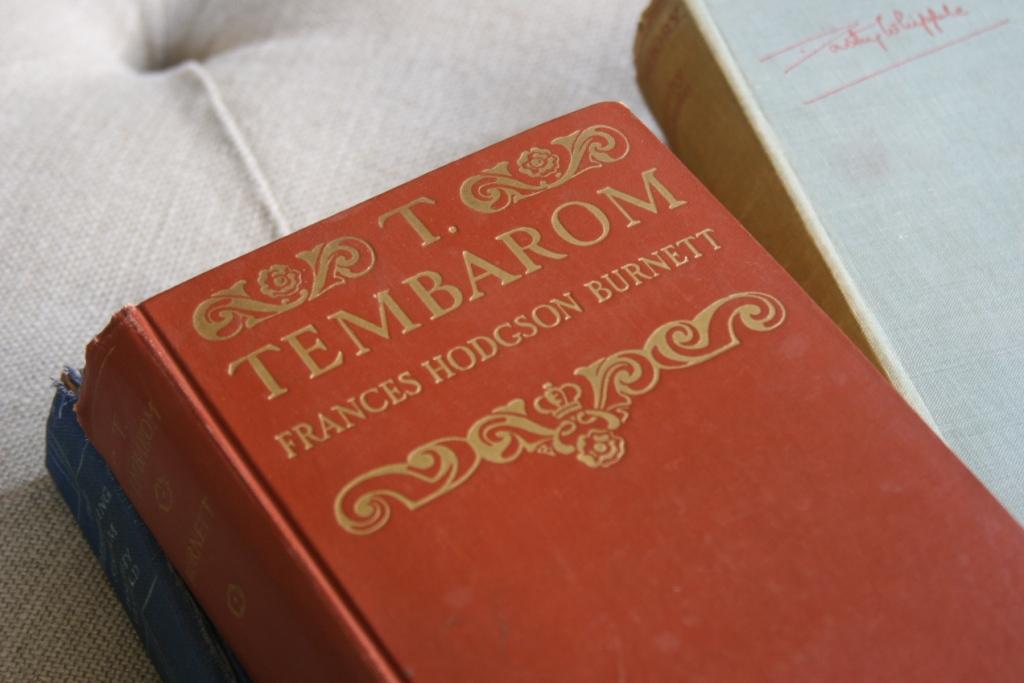
Last week when we went out to see the beautiful ocean, we stopped at Unicorn Bookshop along Route 50 in Trappe, Maryland. Lo, and behold, I found not one but three Persephone authors.

Find of finds. A Dorothy Whipple on this side of the Atlantic.

Once I found it I got greedy and wished it was a Whipple title that
Persephone doesn’t publish. Still, I wasn’t going to pass it up.

I loved, loved, loved the Persephone edition of Dorothy Canfield Fisher’s
The Home-Maker so I couldn’t pass up this one either.

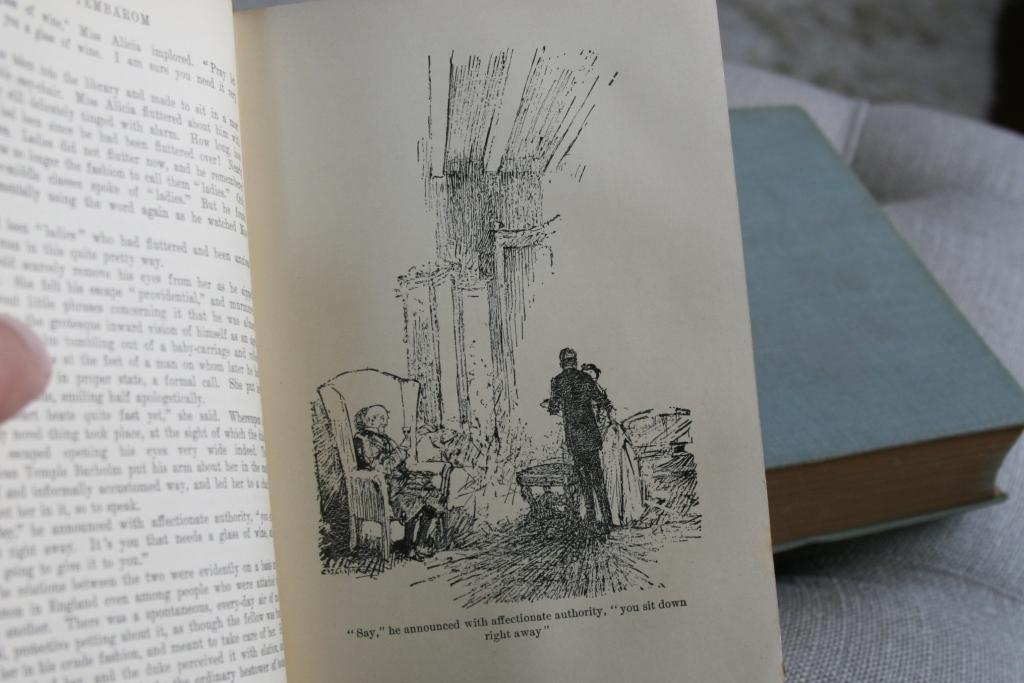
FHB isn’t as hard to find in the US as Whpple but this one was still a must have.

Not in perfect condition, but I can’t wait to read it.

The Most Expensive Souvenir of All Time


When John and I were in London back in November you may remember that I went a little crazy collecting all 100 of Penguin’s Great Ideas books. Well, that was nothing compared to the other purchase we made while we were there. Since we moved into our house last May, we have been looking for library chairs that would be comfy for both reading and dozing. I am six foot two and need a fair amount of lumbar support, so finding the right chair that would be cushy but still offer support for my back is no easy task. On top of that, the door into our library is only about 25 inches. You would be surprised how few chairs fit through that kind of opening.

Anyhoo, we had checked out all the usual local sources for chairs and were coming up with nothing. We thought since we were in London we would check out George Smith. Both of us had been a fan of their classic look for years and we knew their quality was second to none. Mind you, we only went into LOOK. We had no intention of buying. That is of course until we went in the store, sat down ,and realized that we would never find a more comfortable library chair.

So many, many pounds (and even more dollars) later we had purchased two chairs and a large ottoman. And then lickty split, only four months later (!) our chairs and ottoman made their way through the narrow library door (thank god) and have become my favorite place to sit in the house.

I wasn’t going to post this picture because the rest of the room isn’t really up to snuff yet. We have put off painting the walls until the windows are finished. And the window work may require replacing the less than pretty shelves sooner rather than later. And it is clear there isn’t much insulation in the walls, and the fireplace flue needs to be replaced…did I mention that I love my chairs?

Who knew? This is just over three hours from my house.

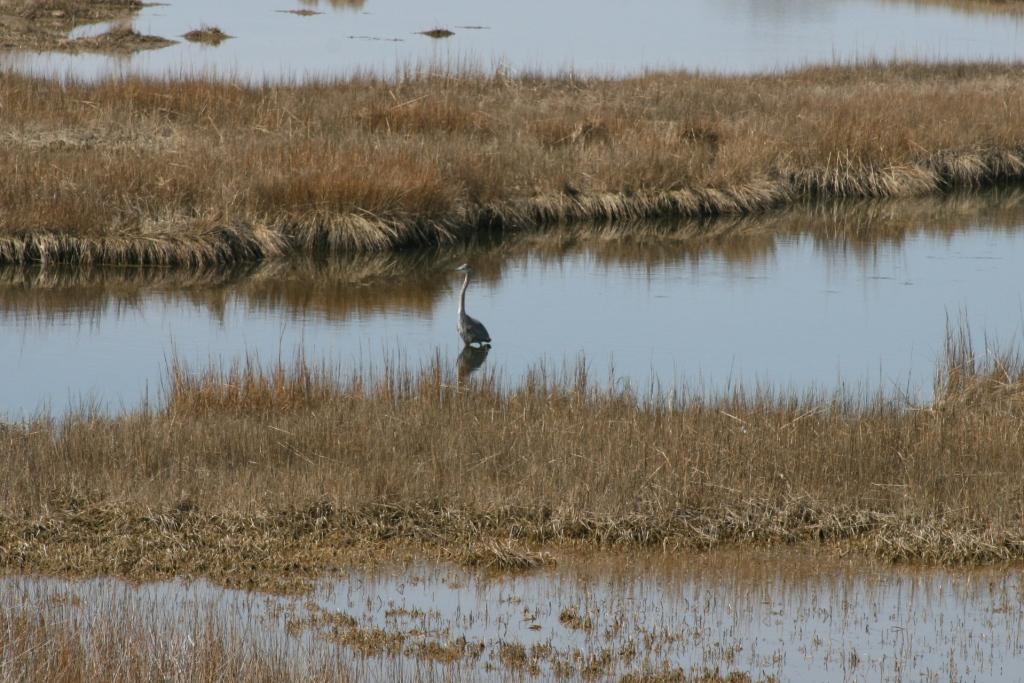
Well, John knew. He is always trying to get me to take jaunts out of the city on weekends but I almost always say no. And of course I knew that the ocean was only about 3 1/2 hours away (in good traffic), but near DC, I had only ever been to Rehoboth Beach, Delaware which is way too busy and commercial to feel very special to me. Plus they have those awful little planes with banners advertising things flying over the beach. So it was quite a surprise yesterday to discover a beach so beautiful so close to DC. The March weather meant that the Assateague Island National Seashore in Maryland was pretty quiet.

Assateague is famous for the wild horses that live there. They are often down
by the beach, but this is the closest we got to them when they were on the bay
side of the barrier island.

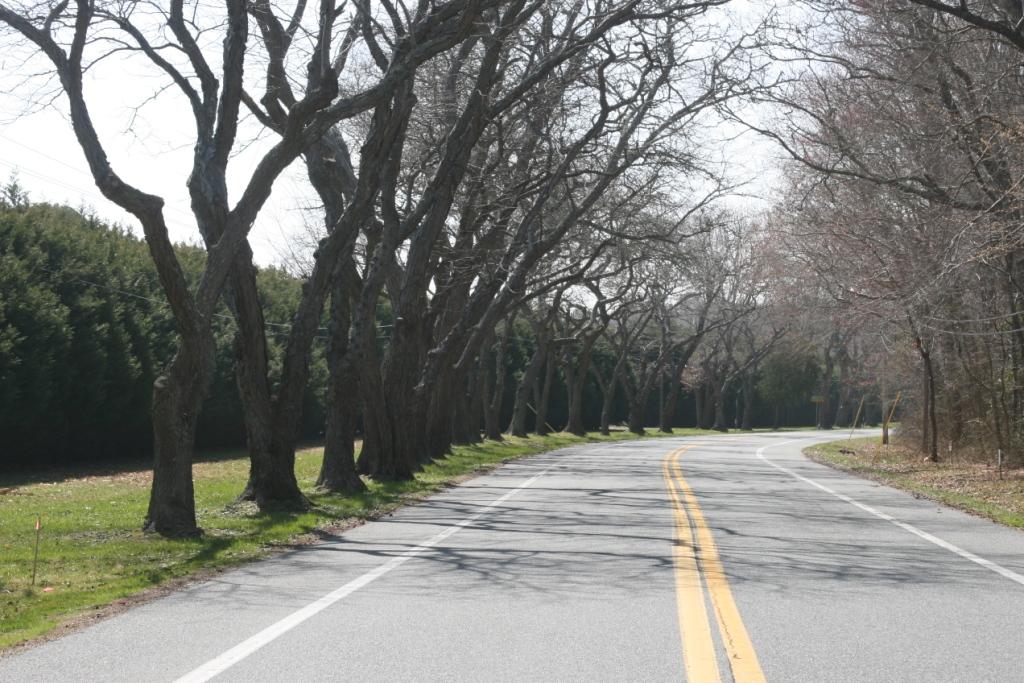
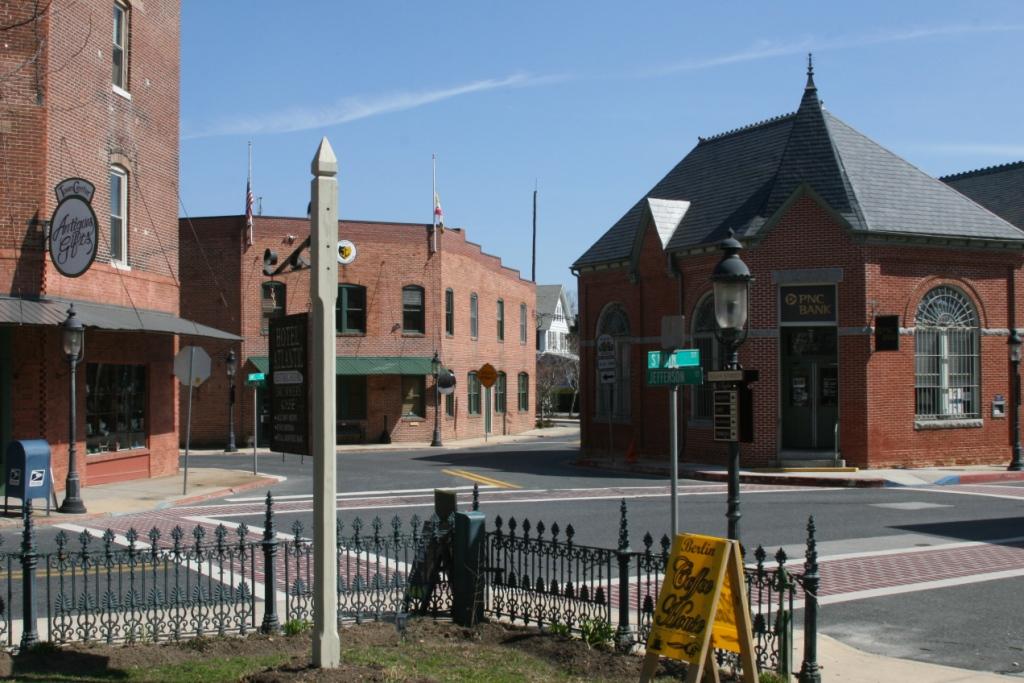
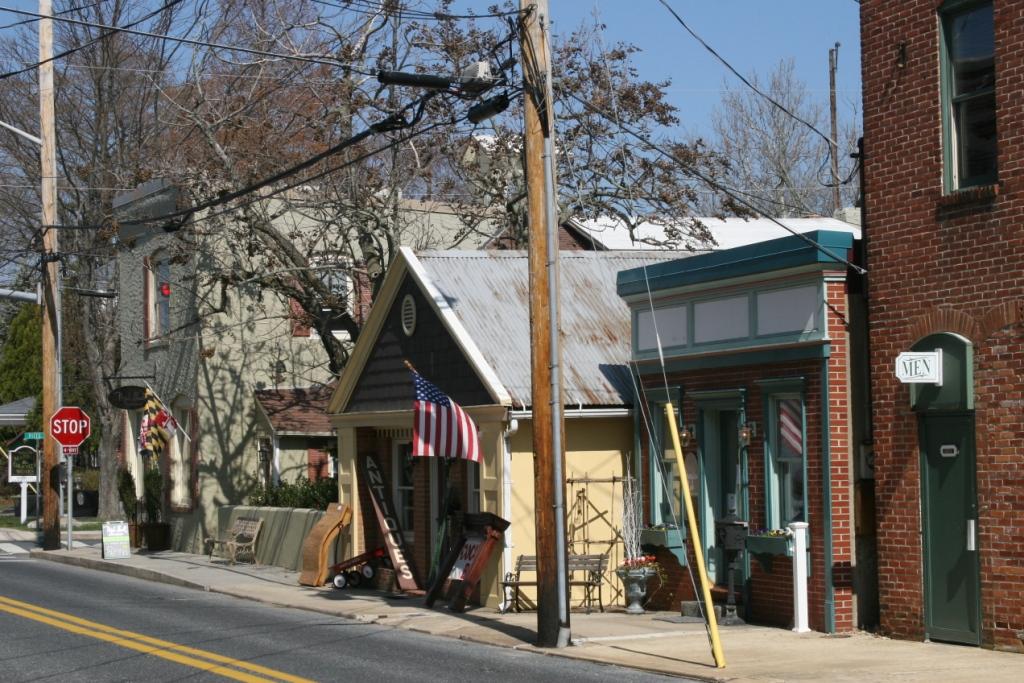
The road from Berlin, Maryland, the nearest town.

Berlin, MD

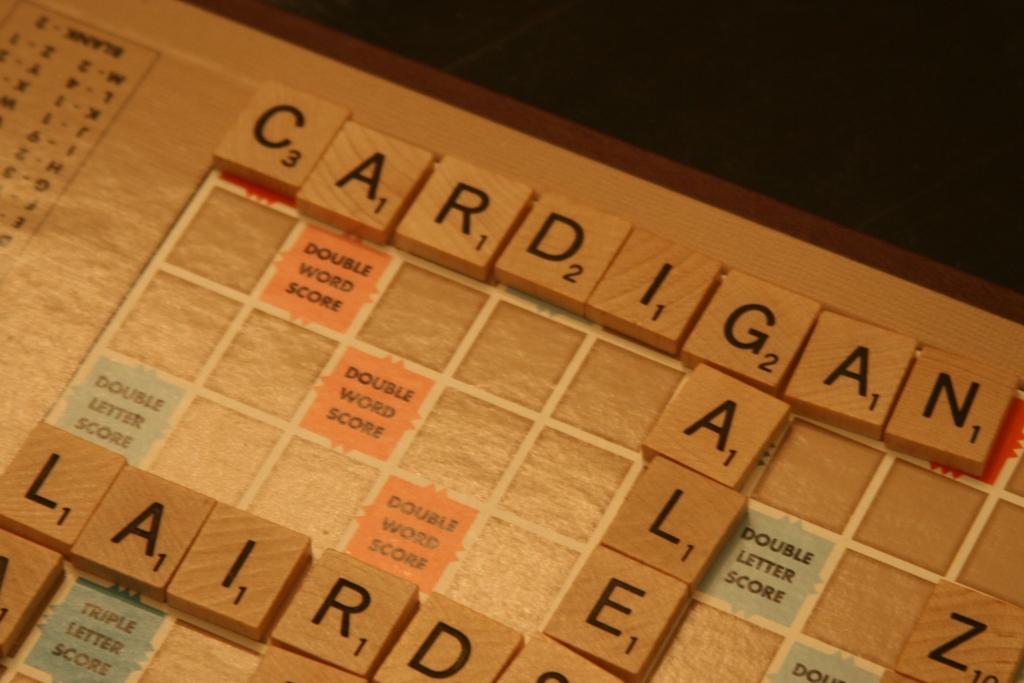
176 Points!

      
That’s right folks, 176 points for one word. My sister and her family are visiting from Arizona and this was our third game since Sunday. And the fact that the word was “cardigan” made the moment even more special. (Remember my post about the Cardigan Mafia?)

The breakdown:

14 points for the word (including one double letter score for the “D”.

I got to triple the word twice because it fell on two Triple Word Scores. (We verified this scoring with the official rules on the printed in the box.)

And then, because I used all of my seven tiles I got an additional 50 points.

Needless to say this is the highest score I have ever gotten for one word in Scrabble. Too bad the word didn’t have a “Z” or “Q” in it.

Book Review: This Secret Garden by Justin Cartwright


To quote Simon T. completely out of context: “Meh”.

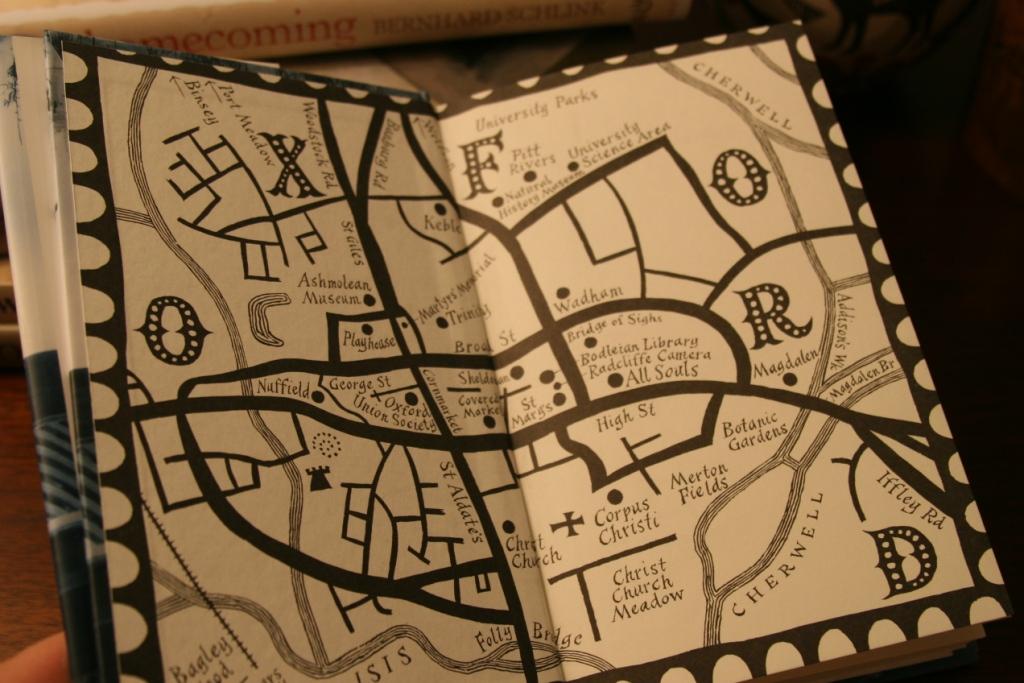
I bought this memoir of Oxford because, well, c’mon, it was about Oxford and because the edition could not be cuter. Plus I have read about 3 or 4 of the other titles in this “The Writer and the City” series. I had never heard of Justin “One of the finest novelists currently at work” Cartwright. He may indeed write amazing novels but after reading this somewhat tedious memoir I am not so sure. I wonder if one could interpret that quote from the Guardian quite literally by defining the word “currently” very narrowly as the exact second the quote was written. How the Guardian writer knew that Cartwright was working at that exact moment, I don’t know.

I started off liking this memoir but then he seemed to go on about Oxford folk I had never heard of, which wouldn’t necessarily be off-putting, but he didn’t make it interesting enough for me to care. I think this might be a better read for someone who has studied at Oxford. He says next to nothing about the city of Oxford.

I have many other quibbles with this book, but I think the biggest problem happens when Cartwright goes on a bit about the Brideshead myth. I understand the reference to the wonderful Evelyn Waugh book but then Cartwright makes a fatal error. He refers to the fictional Lord Sebastian Flyte’s teddy bear as “Algernon”. Algernon?! Now anyone worth their salt knows that Sebastian’s bear’s name was Aloysius. I mean come on.

Cartwright, game over.

One more thing, why the title This Secret Garden? I mean I understand why he would want to call it that, but he didn’t think it sounded too much like another book? Was he hoping someone might confuse it with The Secret Garden?

Book Review: Shadows on the Rock by Willa Cather

  
In Shadows on the Rock, Willa Cather tells a story of Quebec in the 1690s. As I consider what to write about this book, three things immediately come to mind. The first is how well Cather evokes different places and different times in her novels and how she piques my interest in uniquely North American experiences that wouldn’t necessarily be of much interest to me. No surprise to regular readers of My Porch, but I get a little fixated on Western Europe and the genteel, urban Northeast of the U.S. But whether writing about the prairies, the Southwest, or the early days of French Canada, Cather not only holds my interest in these places, but also creates a real enthusiasm for them that makes me want to experience them first hand.

The second thing that comes to mind is what a great book this would make for kids. I don’t have kids so maybe I am off base. Maybe there is a theme or two that may not be appropriate for young eyes, but then again maybe not. The action centers around a young Cecile and her widowed father. The two lead a pretty happy life that put me in mind of the book Heidi. I think Shadows on the Rock is more complex and sophisticated than Heidi, but Cecile reminded me of Heidi’s joy and zest for life. Cecile and her father have the perfect relationship. Caring father and doting daughter, each taking good care of the other and so clearly happy with each other’s company.

The fact that the father and daughter rely so much on each other brings me to the third thing that jumps out at me when thinking about Shadows on the Rock. They have to rely on each other because of the long, often harsh winters, but also because of the frontier isolation of  Quebec in 1697. The book begins in October just as the last ship of the season leaves for France, cutting off the city from the rest of the world until things warm up again in the spring. Quebec’s only link to the rest of the world during the winter was via the rarely used overland connection to the English colonial port in New York which stays open throughout the year. I don’t tend to read much historical fiction so I am always a little in awe when an author manages to immerse me in another world. And, as a North American, I am also in awe of the fact that there is a North American story that is as old as the 1690s. I know intellectually that Europeans were active in North America much earlier than that, but I don’t think I ever really took onboard what that would mean in real terms. I am probably also stunted by my upbringing in the Midwest which has a history that doesn’t really get going until the 19th century. And when it comes to the East Coast, my mind doesn’t really check-in until the years leading up to the Declaration of Independence in 1776. So I guess Cather manages to chip away at my decidedly limited conception of North American history.

I am not sure if Shadows on the Rock is a good candidate to represent who Willa Cather is as a novelist, but it is a darn good read and is rather uplifting, and to a certain degree lighthearted. I think it would a be great try for someone who isn’t quite sure if Cather is their cup of tea.

Things to look at on a rainy Sunday


1. My review of the Booker Prize winning Offshore by Penelope Fitzgerald.

2. My Sunday Painting.

3. My post on neglected literary classics. I want to hear what you think. And I did a random draw and Claire from Paperback Reader won my extra copy of As for Me and My House by Sinclair Ross. Maybe I should send it with delivery confirmation since she only has three months from reciept of the book to read it and write a review…that was the deal Claire, no backing down. (Oh, and can you email me your address?)

4. My latest intallment of Seen on the Subway.

Book Review: Offshore by Penelope Fitzgerald


I think these may be the wrong kind of
boats, but the picture conveys the
feel of the setting better than
the pretty edition I own

Penelope Fitzgerald fills the 141 pages of Offshore with an odd assortment of Londoners living on boats moored on the Battersea Reach of the Thames during the swingin’ sixties. It is not so much that each of the boat dwellers is odd, but taken as a whole they make for an odd assortment. And in a way, even the most conventional among them seem a little eccentric based solely on the fact that they have chosen to live on the Thames despite the practical and emotional complications imposed by doing so. For some, living offshore makes them quirky, for others being quirky makes them want to live offshore.

Richard kind of steals the show for me. In some ways he is the archetype former military character that pops up so frequently in British popular culture. Doesn’t there always seem to be a fussy colonel or major tucked away somewhere in so many books?  And it is no surprise that the control freak in the book is the one that appeals to me. Sure I was touched by single(ish) mom Nenna and amused by her lively, resourceful daughters Martha and Tilda. And yes, Maurice the rent boy was as amusing as he was tragic (although I unfortunately kept picturing John Inman from “Are You Being Served”). Compared to the others, Richard’s demons and desires seem much less dramatic, but set against his own reality they are no less consequential. Here Fitzgerald introduces us to Richard:

All the meetings of the boat-owners, by a movement as natural as the tides themselves, took place on Richard’s converted Ton class minesweeper. Lord Jim, a felt reproof to amateurs, in speckless, always-renewed gray paint, overshadowed the other craft and was nearly twice their tonnage, Just as Richard, in his decent dark blue blazer, dominated the meeting itself. And yet he by no means wanted this responsibility. Living on Battersea Reach, overlooked by some very good houses, and under the surveillance of the Port of London Authority, entailed, surely, a certain standard of conduct. Richard would be one of the last men on earth or water to want to impose it. Yet someone must. Duty is what no-one else will do at the moment. Fortunately he did not have to define duty. War service in the RNVR, and his whole temperament before and since, had done that for him.

And from time to time Richard’s inability to cope with anything but the most straightforward and linear makes him seem a little vulnerable. There are repeated, rather humorous references to his need to block out anything extraneous to his line of thought at any given moment.

On the whole, he disliked comparisons, because they made you think about more than one thing at a time.

Offshore is by no means Richard’s story. Nenna is really the focus of the book. And the other characters are more than just bit players. Fitzgerald packs a lot into a short book. Compared to other Fitzgeralds I have read, I think Offshore is less introspective and more accessible than The Bookshop but defintely more emotionally sophisticated than Human Voices. Not surprising that this is the one that won her the Booker Prize.

Our day has come. A Ten Best List for the cardigan mafia.

     
There is a giveaway somewhere in this post.

It has been wonderful finding kindred spirits in the blogosphere. We relish our collective predilection for forgotten novels of the past and once popular authors finding new life thanks to Virago, Persephone, NYRB Classics and other smaller presses. And even though most of us are fairly broad in our reading we often feel a little left out by top 10 lists, or top 100 lists, or even top 1000 lists that don’t seem to give appropriate consideration to the books we love. You know the lists, the ones where Philip Roth and Saul Bellow seem to be the only two authors on the planet.

And then, like a gift from Nancy Pearl, The Guardian runs a top 10 list of the best neglected literary classics. I clicked on the link quite skeptically, sure that it would be a lame list with all the usual authors. But much to my surprise the list was strikingly sympathetic to the likes of My Porch and my bloggy friends. No doubt this is still a list to be quibbled with. There are so many forgotten classics it would be hard to believe that any list of 10 could even scratch the surface let alone find the best 10. But at least this one is interesting (and different) with the likes of Barbara Comyns, FM Mayor, and Marghanita Laski. And I have actually read three of the novels, Olivia Manning’s School for Love; The Wife, perhaps the best of Meg Wolitzer’s enjoyable output; and one of my own personal NYRB breakout hits, Darcy O’Brien’s A Way of Life, Like Any Other. I think the only author on the list who has any broad recognition is probably H.G. Wells.

I decided to come up with a list of titles that I would like to nominate to a top 10 list of the best neglected literary classics. I only chose books that I have read, and that I think don’t get enough notice in the blogosphere. So even though some of these titles may be easy to find and some may not be that old, they all deserve more attention.

In no particular order:

As for Me and My House by Sinclair Ross
Such a wonderful, sad, short novel that takes place in Dust Bowl-era Saskatchewan. This is a quiet book where there isn’t much action, but it seems like so much happens. If you like this kind of book, have a blog, and are willing to read and review within three months of receipt of the book, I have an extra used copy of this hard-to-find book. Just include the following pledge in your comment: “I have a blog and am willing to read and review the prize book within three months of receiving it.”  I will ship anywhere in the world EXCEPT for Canada. I love Canadians, but I feel like you owe it to your native son to find and read your own copy of this book.

Stoner by John Williams
I have talked about this one every chance I get and it has been getting a fair amount of notice in the blogosphere. But it is one that should definitely be more widely read.

On the Black Hill by Bruce Chatwin
Chatwin traveled widely in his life and wrote about his adventures including the rather famous Patagonia. But in this beautiful novel, no one goes anywhere. Identical twin bachelors spend their Spartan lives on a farm on the English-Welsh border.

Reunion by Fred Uhlman
Two German boys, one Jewish, become friends in the early days of the Third Reich. I really liked this novel and haven’t really seen much about it elsewhere.

The Student Conductor by Robert Ford
Takes place in Germany in the time just before the wall comes down and one of the few books that I have read that expertly weaves in classical music without sounding pedantic or name-droppy. And so far as I can tell, the only novel by Robert Ford has written.

The Rise of Silas Lapham by William Dean Howells
If Anthony Trollope had been an American and less verbose, he may have written The Rise of Silas Lapham. A tale of money and status in 1880s America. A bit of a rags to riches to rags story.

The Game of Opposites by Norman Lebrecht
Lebrecht has written two novels and is a rather well-known critic in England. His fiction doesn’t get the attention it deserves. His first novel Song of Names won a Whitbread First Novel award.

I would have put Elinor Lipman’s The Inn at Lake Devine, but I don’t think the title is as forgotten here in the US as they may be in the rest of the world.

What would you like to nominate? And don’t forget to enter the giveaway if you meet the criteria and are willing to take a solemn oath.