Book Review and Sunday Painting: Mariana and Amity

Mariana
Monica Dickens

First, the literary review: Spirited English girl comes of age. Enjoyable, somewhat cozy, romantic tale.

Amity
Bernard Fleetwood-Walker

Now for the painting(s): I’ll be truthful. I ordered this Persephone because of the cover. I love the standard gray Persephone covers, but they have done such a great job choosing paintings for their Classics editions that they are hard to resist. And two of them, Mariana and Cheerful Weather for the Wedding had images too compelling to pass up. (Thankfully I enjoyed Mariana much more than Cheerful Weather.) The cover painting on Mariana is called Amity and was painted by Bernard Fleetwood-Walker in 1933. I am drawn to it not only for the bright colors and the idyllic scene depicted, but I am also fascinated because there is something slightly subversive in the painting. Stylistically, the painting is almost illustration-like in the vein of American Norman Rockwell, but it also has a bit of an ironic twist like toned down John Currin.

Whatever Fleetwood-Walker’s intent, the two figures look as if they are related and there seems to be something going on below the surface that hints at an “innocent” incest in the same way the relationship between the cousins in Mariana does. And although the painting seems to be the epitome of wholesome sweetness at first glance there is something highly sexual about it as well. There seems to be a hint of Balthus-like perversion and more than a little of Cadmus’ cartoonish sexuality thrown in. The female figure recumbent, lazily offering up her flower with a basket of (perhaps forbidden) fruit. The male figure slightly erect with his muscular but fleshy head thrust forward. They look bored by whatever it is they are watching (other members of the party perhaps) but they also look as if things may have been interrupted just before they got going and are now just biding their time until they are alone again. .

Do you think the folks at Persephone had these things in mind when they chose this painting? Caustic Cover Critic points out that Penguin also used the painting for Colette’s The Ripening Seed. If Penguin chose the same painting for Colette’s tale of sexual awakening, I guess my take on the painting isn’t as far fetched as I may have initially thought.

Fleetwood-Walker’s Amity:

Like a combo of Norman Rockwell…

and toned down John Currin…

Heartless, 1997
John Currin

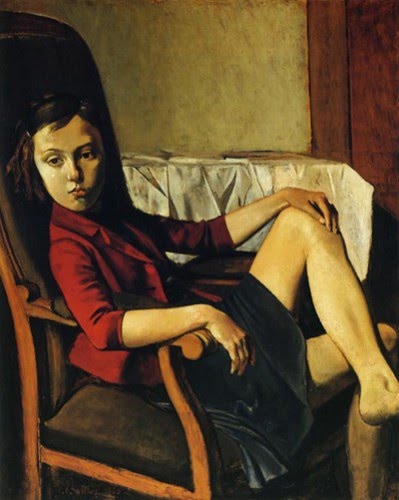
with hints of perverted Balthus…

Theresa, 1938
Balthus

and sexual Paul Cadmus

Jerry, 1931
Paul Cadmus

Book Review: House-Bound by Winifred Peck

House-Bound
Winifred Peck

The first time I browsed the Persephone catalog I was drawn to House-Bound. Ostensibly, it is the story of Rose Fairlaw’s attempt to keep house when World War II-induced labor shortages make it near impossible to find servants. Rose’s struggle to bring her large house to heel and keep up standards is at times humorous, but also provides a framework for a broader look at whether or not those old standards and ways of life will survive the democratizing effects of the War. I think it can be justifiably said that the beginning of the end of the traditional master-servant dynamic in the UK was sealed in the previous World War when those “in service” got war jobs in factories that paid far better than their usual servant wages and with fewer rules imposed. The massive loss of life during the Great War caused many to question the value of upholding the old order. In that way the Great War played a part in a perfect storm of class consciousness over the course of a couple of decades that included the death of the Victorian era, massive labor strikes, a revolution in Russia, and the inevitable pull of popular culture and its ever-loosening moral standards. (Or perhaps I should say the democratization of loose moral standards. The gentry had long participated in behavior deemed unacceptable for the lower classes.)

But I digress. Suffice it to say similar tensions are at play in House-Bound. They are not, however, as central to the action then one would think at the outset. They get a fair amount of play at the beginning and a bit of lip service at the end, but the central chapters of the book have much more to do with family joys and sorrows as the Fairlaws cope with war. Perhaps most surprising is a storyline about Rose’s daughter that catches one a bit off guard, not only because it is unexpected but it also feels so much more modern than the trials that have preceded it.

Overall House-Bound feels a bit episodic. It is as if Peck had too many ideas floating around her head and found it difficult to either settle on one or two of them or to provide the necessary framework to fully develop them all in a mini-epic. This is no more evident than the role of Major Hosmer, an American who always seems a little too conveniently placed, propelling the story forward in somewhat unnatural ways. Rather than feeling like he is part of an organic literary whole, he seems more like an omnipresent deus ex machina whose only value is to help Peck advance the action. Major Hosmer’s presence is also indicative of Peck’s inability to really commit to any number of themes. On the one hand Peck wants Hosmer to represent the future: open, democratic, and slightly socialistic. On the other hand he is dismissed by some of the characters in a way that suggests that Peck is similarly dismissing him and what he represents. She wants to show Rose breaking free from her house-boundedness but she seems unwilling to commit to all that that would entail. As if Peck wants to break free of everything but class privilege.

Although I have quibbles with the overall arc of the book it was worthy of a read if for no other reason than for the critical thinking that it provoked. And many of the episodes were enjoyable in their own right. Some were comic, some were fascinating with domestic detail, and some were touching and hopeful. But in the end House-Bound falls short of being more than the sum of its parts.

My Favorite Reads for 2009

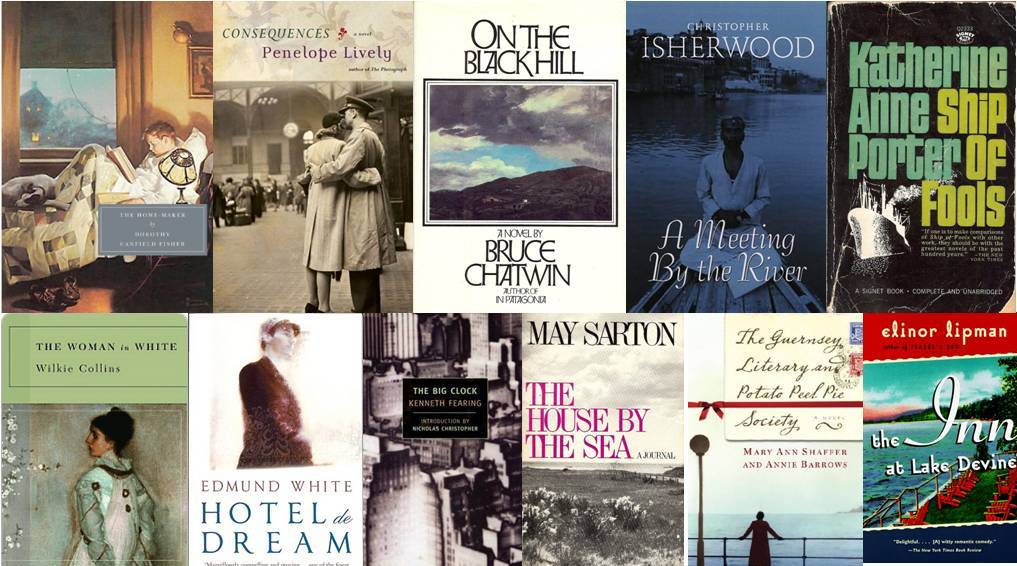
Wow, 2009 was a good year for reading. Not only did I read many more books than in previous years, but the quality of the reads was so much better. If you look back on my recap for 2008 you will see it was pretty slim pickins last year. This year I have almost 30 books that I really liked or loved. So was tough to narrow it down to my top 10 for the year.

Don’t be misled, these aren’t the finest, best-written books I read in 2009, they are just the ones that I enjoyed the most. And they are in no particular order.

The Home-Maker by Dorothy Canfield Fisher – My favorite Persephone so far. Review here.

Ship of Fools by Katherine Anne Porter – German ocean liner sailing from Mexico to Germany in the 1930s. A really interesting story about the disparate lives of the first class and mostly anti-Semitic passengers, the way they mix and the way they don’t mix.

Hotel de Dream by Edmund White – A wonderful bit of historical fiction about American author Stephen Crane and a manuscript about a male prostitute. Review here.

The Woman in White by Wilkie Collins – My first Wilkie Collins but definitely not my last. Lots of plot, lots of twists and turns. I loved it. Review here.

The Guernsey Literary and Potato Peel Pie Society by Shaffer & Barrows – Life in the Channel Islands during WWII and plenty of book talk. Not perfect, but really, really enjoyable. Review here.

The Big Clock by Kenneth Fearing – A different kind of thriller that definitely keeps you in suspense right up to the end. Review here.

Consequences by Penelope Lively – A really wonderful multigenerational story that I didn’t want to end.

A Meeting by the River by Christopher Isherwood – A brother goes to India to see his brother who is about to become a brother. A Hindu monk that is. The story is told from both brothers’ perspective.

The House by the Sea by May Sarton – One of Sarton’s many journals. Books, garden, chores, neighbors, solitude. I read them whenever I need something quiet and evocative of simpler times.

On the Black Hill by Bruce Chatwin – An amazing novel of two farmer-brothers and their life in the Welsh borderlands. The writing and the story are quite beautiful.

The Inn at Lake Devine by Elinor Lipman – Lipman is the queen of the intelligent, easy read. This was my first Lipman (I read two others this year and have another two lined up) and I loved it. This is the perfect introduction to what will become your love affair with Elinor Lipman.

As you can see, I couldn’t quite narrow it down to 10. The closest I could come was 11.

Honorable Mentions
My Latest Grievance – Elinor Lipman
The Year of the Flood – Margaret Atwood
Pied Piper – Nevil Shute
The Return of the Soldier – Rebecca West
Plant Dreaming Deep – May Sarton
Some Tame Gazelle – Barbara Pym
Fly Away Home – Marge Piercy
Strangers – Anita Brookner
The Game of Opposites – Norman Lebrecht
Deluxe – Dana Thomas
Journal of Solitude – May Sarton
Anything for Jane – Cheryl Mendelson
A Jest of God – Margaret Laurence
Mr Phillips – John Lanchester
Love, Work, Children – Cheryl Mendelson
Brave New World – Aldous Huxley
The Trick of It – Michael Frayn

Book Reviews: City Boy and Hotel de Dream by Edmund White

City Boy
My Life in New York During the 1960s and ’70s
Edmund White

With one notable exception I have always felt like I should like Edmund White more than I do. He has written some good novels, lots of reviews and criticism, and a big ol’ doorstop of a biography of Genet. But overall I am somewhat ambivalent about his work. I thought this memoir of his would be kind of interesting. And it indeed has some interesting tales of life in New York before it was the safe, tourist-friendly city it is today. But it also has a streak of New York exceptionalism that drives me a bit crazy. The same kind of exceptionalism that make New Yorkers feel (and exclaim repeatedly) like they are the only ones in the USA capable of pulling together in a crisis (like during the 1970s blackouts). Like if an attack of 9/11 proportions would have happened in Chicago or Des Moines or Seattle, citizens of those backwater towns would have turned away and let the dead and dying fend for themselves. Underlying most of it, White also seems to be what I call a New York City bumpkin. New Yorkers so enamored of their island life and its insular, self-congratulatory social, political, and artistic milieu that they sometimes sound a lot narrower than their supposedly cosmopolitan existence would have you otherwise expect them to be.

So, I am not going to say much more about this memoir and instead focus on one of his novels that I truly like, and think more people should read.

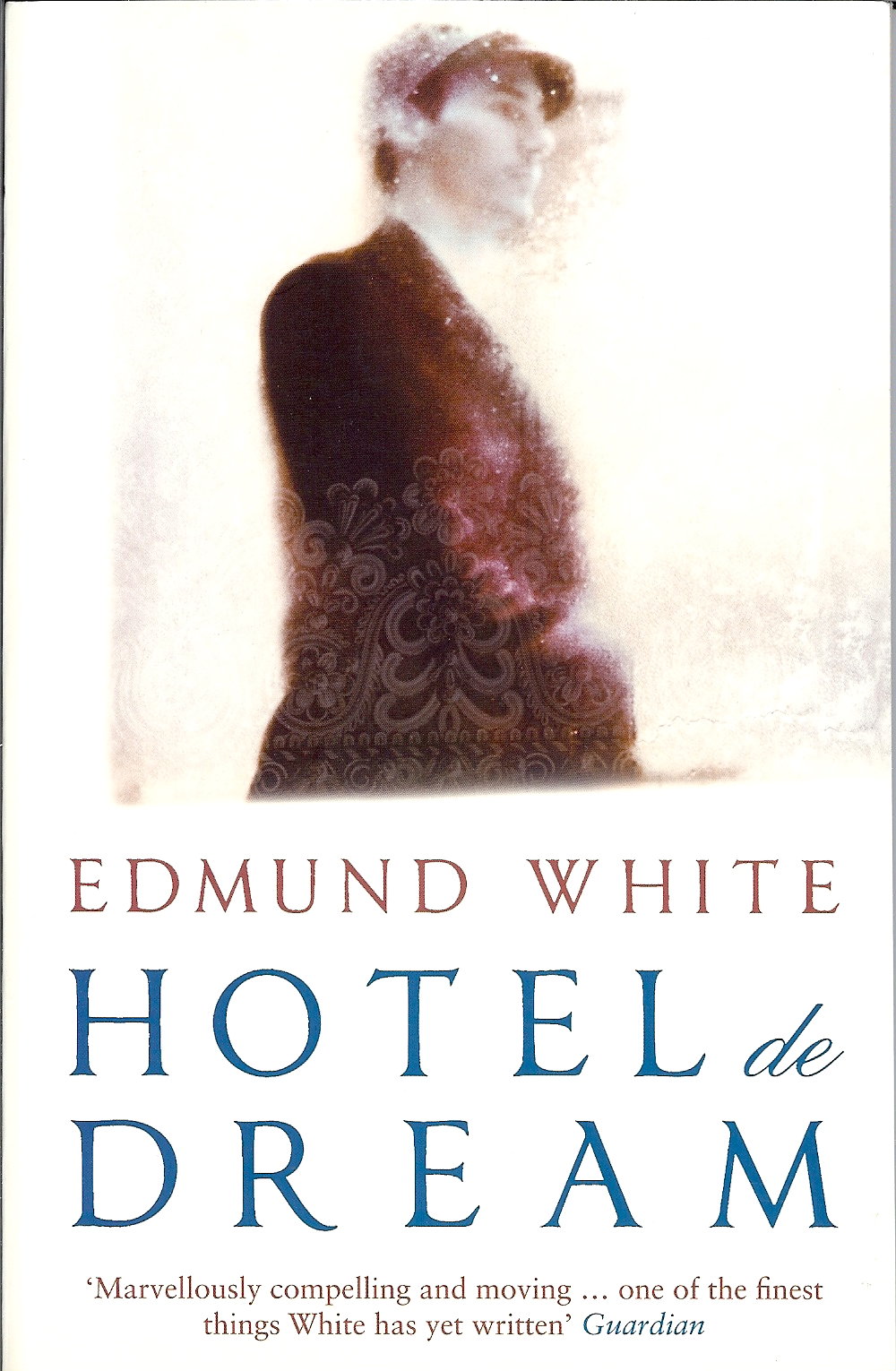
Hotel de Dream
Edmund White

This is a wonderful bit of historical fictions that imagines the final days of American author Stephen Crane (1871-1900), famous for such works as Maggie, Girl of the Streets and The Red Badge of Courage. Apparently there is some (perhaps apocryphal) evidence that Crane was working on novel about a male prostitute whom he had met (in a platonic way) when the boy came to him begging for money.

In Hotel de Dream, Edmund White not only imagines “what if” Crane had written that novel, but he actually supplies the imagined Crane manuscript that forms a book within a book. And both White’s narrative of Crane’s final days, and the imagined manuscript fragments are interesting and beautiful. White provides what feels like an authentic look into the life of a turn of the century boy prostitute in a way that is engaging and sensitive. In the process White finds a way of filling a gap in a historical record where gay lives often go ignored.

I think this is a really fine book. I will let Ann Patchett have the final word:

The book is a marvel of the subtle layers of storytelling, and at every layer it is fascinating, tragic and utterly beautiful.

My Persephone Secret Santa and Book Review: The Home-Maker

My Persephone Secret Santa
The delightful Claire over at Paperback Reader was my Persephone Secret Santa. Even before I unwrapped the package I was excited seeing that Claire was my Secret Santa because she is a voracious commenter and she and I have had some fun and informative exchanges over the past few months on both of our blogs.

My Persephone History
I am fairly new to the world of Persephone Books having only heard about them earlier this year and receiving my first order less than two months ago. My husband takes an aesthetic interest in these wonderfully beautiful books and has redubbed them Perstephones. So now it is common for both of us to add that interior “t” when referring to them.

My “Dot” System
When I first got the Persephone catalog I went through with a marker and made dots on each title according to how interested I was in each book. Five dots meant I was really interested, and those titles so marked, ended up being my first order of twelve books. Four dots meant I was pretty interested but could wait until the second round of ordering once I finished the first twelve. Three dots indicated a strong interest but it would probably be a while before I got around to buying them.

Claire’s Choice for Me
Well Claire bought me a three dot title. And having now read it, I couldn’t be happier. And it makes me hope that all my five dots are as wonderful. (Having already read Julia Strachey’s Cheerful Weather for the Wedding–a five dotter–I already know that that isn’t the case.) Being a bit of a control freak, when I signed up with Book Psmith to participate in this Persephone Secret Santa, my inclination was to give a list of titles that I wanted. But therapy seems to be working so I decided to throw caution to the wind and let my Secret Santa have an open playing field (except for the ones I already owned). I am so glad I did, because Claire’s choice was perfect.

The Home-Maker
Dorothy Canfield Fisher

First off, DON’T read too much of the catalog description of this one. Thankfully I didn’t remember anything about it so all of the plot twists were a surprise to me. I don’t think reading the catalog blurb would ruin your experience, but I do think it has unnecessary spoilers.

The Home-Maker is the story of Evangaline Knapp and her family. And let me tell you she is one uptight home-maker. Always harping on kids and husband, never happy with anything. To be honest, I identified with her quite a bit, and not in a positive way. I saw in her all of the behavioral traits that I have been trying to modify in myself (with some success I may add). Her husband Lester is a frustrated poet working in accounts at the local department store. The kids are perpetually afraid of their mother. The neighbors alternate between helpful and judgmental.

And then stuff happens. (No spoilers here.) A little bit of tragedy. A little bit of transformation. A surprise twist or two.

I loved this book because:

  • It had great, interesting characters. And although some are portrayed at times as heroes or antiheroes, none of the main characters are so one dimensional as to get stuck in either rut.
  • I love a good transformation story and this one had plenty to make me happy.
  • There are extended scenes about Evangeline finding her niche and being uber-organized and driven to excellence. A woman after my own heart.
  • It deals with some interesting gender issues that seem ahead of their time. These issues and their resolution also made me sad for the characters who had to endure 1924 gender roles that were antithetical to their happiness. It also made me a bit sad that, although things have changed greatly since 1924, there is still plenty of room for improvement. Often discussions of gender roles play out in terms of women’s roles in society, and I truly understand that women have not come close to reaching true parity with men in the workforce. But I think women today have emotional access to non-traditional gender roles in ways that men still don’t. Feel free to correct me if you think I am overstating the case, but in my experience the label “tom-boy” for a girl does not carry the same shaming sting that “sissy” carries for a boy. I have long thought that it all boils down to misogyny in any case. Traditional female roles have been so denigrated as second class or menial for so long that any male who would somehow identify with those roles or choose a “female” vocation is suspect at best and violently reviled at worst. Yes, all of this springs from this ultimately charming story written in 1924.

I hope you read it and I hope you enjoy it like I did. And thanks Claire. It might have been a long time before I got around to this one.

Book Review: Christmas Holiday

Christmas Holiday
W. Somerset Maugham

I couldn’t resist this opening line:

With a journey before him, Charley Mason’s mother was anxious that he should make a good breakfast, but he was too excited to eat. It was Christmas Eve and he was going to Paris.

Christmas Eve…Paris…breakfast. What could be better? If you pick this up hoping for a cozy holiday read as I did, you could be disappointed. But it is more likely that you will end up liking the book anyway. Charley heads off to Paris to see his old school friend Simon, look at some “pictures” (i.e., paintings at the Louvre) and meet some girls. Once in Paris Charley finds out Simon has turned into a bit of power-hungry, slightly disturbing, proto-dictator with socialist ideals. Pretty promptly after dinner the two head off to a brothel where Simon introduces Charley to Lydia, a Russian prostitute who later that evening accompanies Charley to midnight mass at Saint-Eustache. (How many of you plan to spend your Christmas Eve that way?) From there the narrative turns into the retelling of the circumstances surrounding the imprisonment of Lydia’s husband for murder.

Long (but interesting) story made short, Charley spends the week not falling in love or having sex but getting to know more than he probably wanted to about Lydia’s sad life and seeing a side of life he didn’t know existed. He also finds out what a freak Simon has become. Not surprisingly Charley returns to England a changed man. But even understanding that, I wasn’t quite prepared for the impact of the final phrase of the final sentence of the book:

It was a fact he had done nothing; his father thought he had had a devil of a time and was afraid he had contracted a venereal disease, and he hadn’t even had a woman; only one thing had happened to him, it was rather curious when you come to think of it, and he didn’t just then quite know what to do about it: the bottom had fallen out of his world.

I enjoyed this book, even for what turned out to be an unplanned re-read. I was about 80 pages into it when I realized that I had actually read it before. I checked out my “Read Books” spreadsheet and sure enough, there it was: January 21, 2001. I could forgive myself because this was one of the books I picked up in a secondhand store Thanksgiving weekend. Not having my list with me, how was I to know? However, this story has an ironic twist. Close readers of My Porch will know that I started keeping my “Books Read” list in 1994 when I found myself 30 pages into a novel I had previously read. And the book that prompted me to start the list? Cakes and Ale. By whom you ask? Wait for it… W. Somerset Maugham.

Two lessons:

1) Always travel with your “Books Read” list, and;

2) Maugham is always worth a re-read.

Book Review: Official Book Club Selection

Official Book Club Selection
A memoir according to Kathy Griffin

I wasn’t going to read this book. I thought it was just going to kind of rehash Kathy Griffin’s life as it is seen on her television reality show “My Life on the D-List”. Don’t get me wrong, I love the show. I just couldn’t imagine taking away time from reading other books. But then I was in a bookstore at the airport in Phoenix, and well, despite having four books with me to read, I still picked this one up, read a line or two, chuckled, and then decided I needed to have it.

(By the way, she calls the book Official Book Club Selection hoping that the reading public will think it is part of Oprah’s book club, thus makinng Griffin millions.)

It you like Kathy’s show, you will like her book. Not only do you get more gossip in the book than you normally do on the show, but you also find out some interesting things about Kathy’s childhood and her 4-year marriage.

If you don’t like Kathy’s show you will want to skip this.

If you have never watched Kathy’s show, or have never even heard of her, you will only like this book if you are in the mood for a sacrilegious, gossipy tell-all with lots of foul language and fantastically base humor.

I thought it was great.

Book Review: The Brontes Went to Woolworths by Rachel Ferguson

The Brontes Went to Woolworths
Rachel Ferguson

The Brontes Went to Woolworths is the rather quirky tale of the Carne family’s prodigious creativity. Despite one daughter’s attempt at being a novelist, and another’s quest to be an actress, the Carnes don’t really have much in the way of productive outlets for the output of their endlessly spinning minds. Between the four of them (mother plus three daughters) they have created a web of imaginary relationships with people they don’t really know. That is, until one day they actually get to know two of their imagined friends. Thankfully for the Carne family their quarry is interested in playing along.

The Brontes Went to Woolworths was definitely an enjoyable read, but I really think you need to be in the mood for something so whimsical it borders on nonsense. Despite some of its rather edgy subject matter (for 1931) the book feels somewhat saccharine. Like a mix of Waugh and Wodehouse but without being very clever. One could imagine a room full of Hollywood studio types turning this quirky, sweet tale into a thriller about a family of psychotics stalking a judge and his wife. In that tale someone would no doubt end up dead or in jail. No such outcome in this book.

Don’t get me wrong, there were many enjoyable moments reading The Brontes Went to Woolworths. I think I just wasn’t in the mood for that much whimsy. It is also entirely possible that I may have missed the point. It wouldn’t be the first time a meta-narrative went over my head.

For a more sensitive and substantive take on the book check out Dovegreyreader Scribbles.

Book Review: The Big Clock by Kenneth Fearing

The Big Clock
Kenneth Fearing

It took me a while to get into The Big Clock, but once I did, it was hard to put down. Written in 1946 this murder mystery doesn’t keep you wondering whodunit, but it does keep you wondering who is going to get away with what.

The victim is Pauline Delos, mistress to publishing magnate Earl Janoth who is also her killer. (Janoth’s publishing empire is strikingly similar to Time Inc. during the time of Henry Luce.) It turns out someone saw Janoth with Delos right before she was murdered. Trying to stay ahead of the police investigation, Janoth’s right hand man Steve Hagan uses a false premise to put crime-magazine writer and Janoth employee George Stroud in charge of finding the unknown witness. But it turns out that Stroud himself was the witness. Fearing for his marriage, his liberty, and even his life, Stroud has no choice but to lead the investigation. Compelled to use the full resources of the company, Stroud has to stay one step ahead of the 53 employees investigating a trail that can only lead to him.

I won’t say anymore about the plot. But I will say that I really enjoyed this book. Not much of a reader of mysteries, I may not be the best judge of how this stacks up with others in the genre. On the other hand, my outsider status should give assurance to anyone similarly inclined that you don’t need to be a mystery fan to like this book.

Raymond Chandler, perhaps a bit full of himself, had this to say:

I’m still a bit puzzled as to why no one has come forward to make me look like thirty cents. But except for an occasional tour-de-force like The Big Clock, no one has.

But I will let the wonderful Nancy Pearl have the last word:

Read The Big Clock to get a feel for Kenneth Fearing as social critic, spinning out an edgy corporation-as-hell thriller.

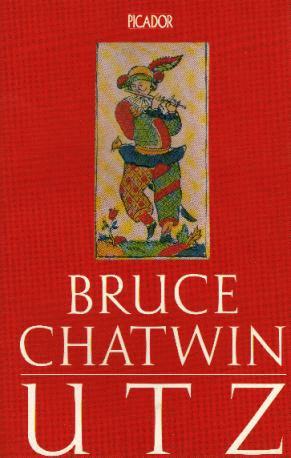
Book Review: Utz by Bruce Chatwin

Utz
Bruce Chatwin

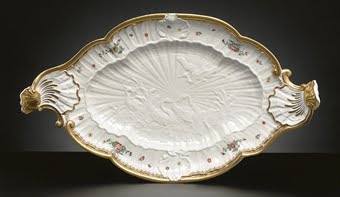
Despite World War II and the later challenges of a repressive Communist state, Kaspar Joachim Utz has managed to collect over 1,000 pieces of Meissen porcelain and cram them into his tiny two-room flat in Prague. The novel begins with Utz’s funeral in 1974 and the tale unfolds through the recollections of the narrator who interviewed Utz once in 1967 and whose knowledge of Utz’s life is less than perfect or complete.

At the heart of the story is Utz’s decision to stay in Communist Czechoslovakia despite having the opportunity and financial means to defect to the West on his yearly state-approved pilgrimage to the healing waters of the spas in Vichy. His reticence to leave Czechoslovakia is largely based on not wanting to leave behind his collection, but he also harbors a secret and seemingly intense love for his housekeeper. The luxuries of the West also seem to Utz to have lost their attractiveness and he seems rudderless at the prospect of choosing somewhere new to live.

Switzerland? Italy? France? Three possibilities. None of them inviting. Germany? Never. The break had been final. England? Not after the Dresden raid. The United States? Impossible. The noise would depress him dreadfully. Prague, after all, was a city where you heard the snowflakes falling. Australia? He had never been attracted to the colonies. Argentina? He was too old to tango.


The more he considered the alternatives, the clearer the situation seemed to him. Not that he would be happy in Czechoslovakia. He would be harassed, menaced, insulted. He would have to grovel. He would have to agree with every word they said. He would mouth their meaningless, ungrammatical formulae. He would learn to ‘live within the lie’.


But Prague was a city that suited his melancholic temperament. A state of tranquil melancholy was all one could aspire to these days!

Interestingly, Bruce Chatwin’s book was published in 1988, the year before the start of the Velvet Revolution and the opening of Czechoslovakia’s borders. Chatwin died young (49) in 1989 and I am not sure if he lived long enough to see that happen.

I have only read one other book by Chatwin, his amazing On the Black Hill. Although Utz and On the Black Hill are worlds apart in setting, they both deal with characters who make choices that may seem restrictive and unattractive to those of us used to a large degree of self-determination. But their lives seem to retain a richness nonetheless. For those of us who are warm and well fed and have the personal and political freedom to make seemingly infinite choices, it is a little hard to understand. But it is also comforting to know that diminished or limited circumstances don’t have to mean a diminished or limited life.

I liked Utz quite a bit. But for me, if you are only going to read one book by Bruce Chatwin, make it On the Black Hill. (Recently Cornflower has been writing glowingly about On the Black Hill as well.)