I first read and loved Stonerby John Williams back in 2010. Not long after that I bought his two other novels in print, Butcher’s Crossing and Augustus. The former is more or less a literary Western (I may have made that up) and the latter is a depiction of Augustan Rome. Whereas Stoner, an academic novel, is well within my reading comfort zone, the other two are well outside of it. That is why it has taken me eight years to get around to Butcher’s Crossing despite having heard from trusted readers that it is a great book.
The story centers on Will Andrews, a Harvard boy who decides he wants to head west and participate in a buffalo hunt. It’s unclear what motivated him to leave Cambridge for the western frontier but he quickly sets to bankrolling a buffalo hunt under the direction of grizzled hunter Miller who engages one-handed, drunken, Christian Charley Hoge and skinner Fred Schneider to complete the hunting party. They go off into the mountains of Colorado to find a herd of buffalo the size of which had not been seen in many years. But Miller is convinced it is out there despite the fact that he hasn’t been out that direction for about nine years.
What happens when they go looking for that herd is devastating and beautiful.
Devastating because Miller is hellbent on killing the entire herd. Every. Single. Buffalo. Over 4,000 of them. Devastating because the Anglo hunters only want the buffalo hides, unlike the Native Americans who used every part of the animal to stay alive and killed in sustainable numbers. And Devastating because life can be bleak and short. (The modest rebound of the native bison populations is the only thing that kept me from totally losing it over the senseless and unsustainable slaughter. Because of over hunting and disease spread by cattle, the number of bison in North America went as low as 540 in the 19th century, but came back to a level of about 530,000 today, with about 15,000 of them being truly wild.)
But Butcher’s Crossing is also beautiful because Williams paints a picture of the truly wild west were few humans had trod prior to that time. It is as irresistible as it is hard to imagine, a broad valley in the foothills of the Rockies that is full of buffalo and coyotes with no imprint of humans anywhere. And really fascinating to me, a sky with no planes and no satellites, and the industrializing world at such a distance as to have no impact whatsoever. It reminds me of some of Willa Cather’s descriptions of the southwest, which included the presence of long gone native tribes, but were also evocative of an unimaginable, quiet isolation. The notion of weather and nature and time that has no association with humans. I keep harping on the no humans part because I find the absence of them comforting.
And then there is the Jack Londonesque sense of adventure and danger. Some of the things they endured, the ways they coped, and the results (which I will not divulge), are just as unfathomable to me as virgin territory. And like Jack London, John Williams writes well enough about outdoor adventures to draw in even the most committed city slicker.
Butcher’s Crossing is one of those novels that proves that good writing and good storytelling can overcome any aversion I may have to a particular topic or genre.
I like to look backwards. I like older books. I like history. I like to spend hours on Ancestry. I like nostalgia. I tend to live in the past. I find it both scary and comforting that so much has come before me. Cather’s scenes about long gone Native American cliff dwellers in both The Professor’s House and The Song of the Lark make me think deeply about lives lived so long ago. And this passage from Let Go My Hand by Edward Docx gave me a similar shiver of revelation.
One of the things that Dad blames ‘it’ on is the sudden acceleration of human ‘progress’. Think about it, he used to say, invitingly, calmly: in ancient Mesopotamia 7,000 years ago – rough figures, rough figures – the fastest human communication could move was the speed of a horse, pigeon or sail; in the England of the 1820s, the situation was much the same…That’s 6,800 years (or three hundred-odd generations) of the same pace for everything. No change. (Not to mention Homo sapiens‘ one hundred and ninety-five thousand pre-civilization years.) And then (here he used to become more animated), in the withering flash of two hundred years, or a mere eight generations, we get…we get this. All of it. Modern Life.
March came in like and lion and then got bored, took a nap, did some jigsaw puzzles…
So March wasn’t the best month for reading both in terms of quantity and enjoyability. I was averaging 11 a month (including in short February) but then things just slowed down a bit in March. I only got through nine books. There were a few that were great but a lot that I just found so-so.
Here they are in descending order.
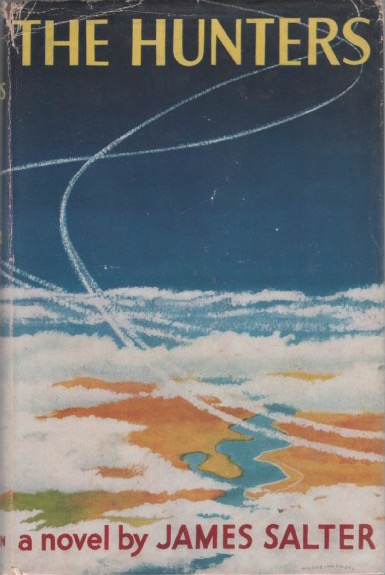
The Hunters by James Salter
I’m not sure what prompted me to buy this book. I had never read anything by James Salter and, in fact, didn’t even really know who he was. It turned out to be my favorite book of the month. Published in 1956, the novel is about an ace fighter pilot who has less than an ace time when he is deployed to Korea. I loved everything about this book. I loved the period detail. I loved the plot and character development as the well regarded pilot has trouble maintaining his reputation and starts to see the whole situation differently. I also liked imagining what Nevil Shute would have thought of this book. So many similar themes with his fiction, but so much better written. (And this from a die-hard Shute fan.) This is a book I will read again even though I know how it ends.
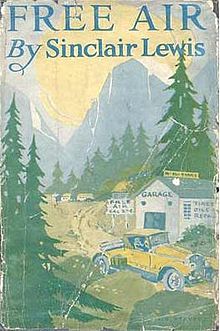
Free Air by Sinclair Lewis
I liked this almost as much as I liked The Hunters. I’ve read and loved most of Sinclair Lewis’s novels but had no idea this one even existed until I ran across it at Powell’s a few years ago. Published in 1919, it is a fairly humorous story of New Yorker Claire Boltwood driving her father from Minnesota to see relatives in Seattle. For health reasons she wants to get her father away from his stressful job. For herself, she seems to be searching for something but doesn’t know what and at the same time she seems to be running from her older boyfriend who would be the perfect society match if she only loved him. Along the way they run into a local who becomes so immediately smitten with Claire that he packs up his car and follows them across the country. By the time they all get to Seattle, despite the appearance of Claire’s quasi-fiancee, Claire and Milt appear to be in love. It’s that “will they, won’t they” kind of love like Pam and Jim on “The Office”. In Seattle things come to head when Milt’s working class background really begins to clash with Claire’s friends and family. It’s more light-hearted than Lewis’s magnum opus Main Street which was published a year later. It’s progressive in outlook and full of fascinating period detail. After all, who could imagine doing a road trip of that length at a times when cares were cold, slow, and uncomfortable, road were sometimes mud tracks, and decent meals and lodging were hard to find along the way.
I wish I had this copy.
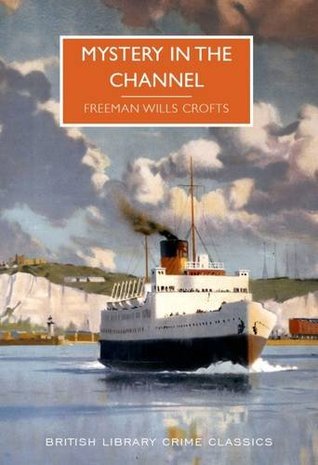
Mystery in the Channel by Freeman Wills Crofts
Just like Crofts’ The 12:30 from Croydon, a very enjoyable vintage mystery from the British Library Crime Classics. This plot-driven, detail-oriented mystery at its best–well at least to me who likes lots of detail gibble gabble.
Invitation to the Waltz by Rosamond Lehman
So this was my third favorite book in March yet I remember almost nothing about it. Published in 1932 its the tale of young Olivia on her birthday and on the cusp of going to her first dance. I really did enjoy it despite not remembering much about it.
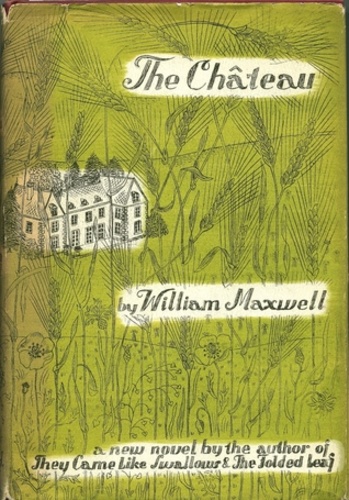
The Chateau by William Maxwell A youngish American couple visits France in 1948 as the country tries to recover from WWII. Published in 1961, there is much I really liked about this book. Partially because I don’t know that I have ever read a novel that depicts France in the immediate aftermath of the war but also because there were so many wonderful observations about life and human nature along the way.
In the Country of Men by Hisham Matar
On some other more objective list, this novel would rank much higher than it does here. It is an excellent book about a little boy and his family living through the political purges of Qaddafi’s early regime. A fascinating story that is hard to fathom for someone who hasn’t really experienced strife in his life.
Happy House by Jane D. Abbott
Read like YA from the 1920s. Two college girls named…nuts Anne Something…I’ve forgotten their names and already donated the book to the FOTL. And no one online seems to have written about it in enough detail to give out that information. Anyhoo the two Annes switch places for the summer unbeknownst to one Anne’s estranged aunt who doesn’t know her from Adam. It was a fun story and like other books this month, I really liked the period detail–especially the perspective of college women in 1920–but it was pretty hokey. Too hokey to want to read again, which is really kind of a pity.
First Love by Gwendoline Riley
One of those short books that takes too damn long to read.
Catalina by W. Somerset Maugham
Normally I am a huge fan of Maugham. but this was such a snooze fest. It’s a story of power and religion during the Spanish Inquisition. I suppose it was well written, but I just found it so tedious I couldn’t wait for it to end.
In retrospect, maybe not as bad as I thought. I think Catalina really put a damper on things.
Unlike the first time I did A Century of Books, this time I am loving it. In three months I’ve read 31 books and all but two of them count toward myA Century of Bookschallenge. So I only have 71 years to go. And all of them have been from my TBR. That must be some sort of record. And not just for me, for every person alive or dead.
Based on my brief analysis below, I would say that so far I’ve enjoyed the 1950s the most.
19teens
Since 1919 is the only year I need to read from the 19teens, there isn’t too much to say here. I did take a whack at The Haunted Bookshop by really didn’t like it and didn’t finish it. I moved on to Free Air by Sinclair Lewis and ended up really liking it.
1919 – Free Air by Sinclair Lewis
1920s
Just three months into ACOB and I have only three years of this decade to go. As I look at the list I’ve read so far I think my success here has been more an initial desire to start at the beginning of the century as none of these books necessarily jumped off the shelf. It has been interesting to read so many from the same decade so close together. It’s really given me a sense of the era in a much more relatable way than The Great Gatsby.
1920 – Happy House by Jane D. Abbott 1921 – Vera by Elizabeth von Arnim 1922 – A Son at the Front by Edith Wharton 1924 – The Unlit Lamp by Radclyffe Hall 1925 – Rex by E.F. Benson 1926 – Marazan by Nevil Shute 1929 – The Bride’s House by Dawn Powell
1930s
Kind of interesting that three of the five books I have read from this decade have been mysteries/thrillers, and fabulous ones at that. Also interesting that R.C. Sherriff’s novelization of his novel Journey’s End has now been made into a movie. Was amazed to see the trailer in the theater recently.
1930 – Journey’s End by R.C. Sherriff and Vernon Bartlett 1931 – Mystery in the Channel by Freeman Wills Crofts 1932 – Invitation to the Waltz by Rosamond Lehmann 1934 – The 12:30 from Croydon by Freeman Wills Crofts 1939 – The Confidential Agent by Graham Greene
1940s
Very surprised that I’ve only read one novel so far from the 40s. Given that it was set during the Spanish Inquisition it wasn’t too evocative of the era in which it was written. Also, I love Maugham, but really found this one boring as toast. Scratch that, I love toast. It was boring.
1948 – Catalina by W. Somerset Maugham
1950s
So far the 1950s have been fantastic for reading. I supposed this is due partially to the fact that both Shute and Ambler are two of my favorite authors. But even at that, these are great examples of their work. I’d never read James Salter before and really liked this novel about an American fighter pilot during the Korean War.
1954 – Slide Rule by Nevil Shute 1956 – The Hunters by James Salter 1959 – Passage of Arms by Eric Ambler
1960s
These three books do not exactly depict the swinging 60s. I guess given my tastes this should not be too surprising. Maybe the second half of the decade will be a little hipper.
1961 – The Chateau by William Maxwell 1962 – Morte D’urban by J.F. Powers 1965 – My Dog Tulip by J.R. Ackerley
1970s
The MacInnes was a fabulous throwback to another era. Not old fashioned but it could have been pretty much set anytime after WWII. The Spark on the other hand, while not something I even remotely enjoyed, was definitely evocative of its time.
1971 – Not to Disturb by Muriel Spark 1976 – Agent in Place by Helen MacInnes
1980s
Without taking the time to think hard about these three titles it is pretty much impossible to make any sort of generalization. Aside from the Sarton journal, the one I am most likely to read again is the Auster. A damn good book.
1980 – Recovering by May Sarton 1986 – To the Land of Cattails by Aharon Appelfeld 1987 – In the Country of Last Things by Paul Auster
1990s
I hope I enjoy the rest of the 1990s more than I enjoyed these two books. I hated the Fisher and, although I loved Cusk’s Outline, I had a hard time liking Saving Agnes despite some brilliant moments.
1990 – The Boss Dog by M.F.K. Fisher 1993 – Saving Agnes by Rachel Cusk
2000s
Love O’Farrell, but this was kind of bush league. Her second novel and not as good as her first or any that came after it. Back when President Pumpkinhead banned visitors from various muslim-majority countries I bought novels from each them. This is me finally getting around to reading one of them. Mata’s books takes place in Libya.
2002 – My Lover’s Lover by Maggie O’Farrell 2006 – In the Country of Men by Hisham Mata
20teens
Nothing yet! I am kind of holding these in reserve for the moments when I find I need a break from older books. Interesting that 31 books and three months in and I haven’t felt that need yet. But I think it’s coming.
The Whole Century So Far
1919 – Free Air by Sinclair Lewis 1920 – Happy House by Jane D. Abbott 1921 – Vera by Elizabeth von Arnim 1922 – A Son at the Front by Edith Wharton 1924 – The Unlit Lamp by Radclyffe Hall 1925 – Rex by E.F. Benson 1926 – Marazan by Nevil Shute 1929 – The Bride’s House by Dawn Powell 1930 – Journey’s End by R.C. Sherriff and Vernon Bartlett 1931 – Mystery in the Channel by Freeman Wills Crofts 1932 – Invitation to the Waltz by Rosamond Lehmann 1934 – The 12:30 from Croydon by Freeman Wills Crofts 1939 – The Confidential Agent by Graham Greene 1948 – Catalina by W. Somerset Maugham 1954 – Slide Rule by Nevil Shute 1956 – The Hunters by James Salter 1959 – Passage of Arms by Eric Ambler 1961 – The Chateau by William Maxwell 1962 – Morte D’urban by J.F. Powers 1965 – My Dog Tulip by J.R. Ackerley 1971 – Not to Disturb by Muriel Spark 1976 – Agent in Place by Helen MacInnes 1980 – Recovering by May Sarton 1986 – To the Land of Cattails by Aharon Appelfeld 1987 – In the Country of Last Things by Paul Auster 1990 – The Boss Dog by M.F.K. Fisher 1993 – Saving Agnes by Rachel Cusk 2002 – My Lover’s Lover by Maggie O’Farrell 2006 – In the Country of Men by Hisham Matar
Wayne Smart, an Australian living in Dubai, posted this memory of his encounters with Helene Hanff to the Fans of Helene Hanff Facebook Group. I thought it was so lovely I wanted to share it with a broader audience and I knew that regulars of Hogglestock would enjoy reading it. I’ve posted it in total with Wayne’s permission.
I became acquainted with Helene Hanff when I first saw the movie 84, Charing Cross Road in the mid 80’s. I subsequently went about reading every book of hers that I could get my hands on.
As a university student in Australia at the time, all I wanted to do was visit NYC (something I have done more than a dozen times since). Helene’s descriptions of NYC made me long to go.
After reading 84, Charing Cross Road several times, I decided to write to Helene. Problem was, I didn’t know where to get her address. (This was long before the internet). One night after a few gin and tonics, I decided to see if her phone number was listed. I decided to CALL her!
I called the “International Directory” number and asked for NYC listings – there was only one H Hanff listed in NYC – I got the number and then dialed.
A very friendly voice answered- I explained I was a fan – and that I was calling from Australia. Helene then exclaimed: “THIS MUST BE COSTING YOU A FORTUNE – HANG UP AND WRITE TO ME!!”….. I explained that I didn’t know her address. She laughed loudly and asked if I had a copy of 84. I said I did, and she said her address was printed on the top of every second page for the entire last part of the book (It was a book of letters!).
I wrote to her in the late 80’s, and always received a lovely handwritten reply on a personalised post card.
In 1991 I visited NYC for the first time. I called Helene, and we met at Rumpelmayers on Central Park South – (long gone now) for coffee. It was the most delightful hour. She was gracious, and regaled me with many stories. We shared a love for not only books, but also classical music.
I continued to write to Helene throughout the 90’s, and in January 1997 whilst visiting NYC, I went up to 72nd Street to leave flowers with the doorman. He told me Helene was very sick and that I should go up and deliver the flowers myself, as she would like company. He said I would find the door open – and he called her to announce me.
When I arrived up at her apartment, Helene was sitting on a couch near the window looking out towards 2nd Ave. She was obviously very sick – she appeared not very mobile. She asked me to fetch her some drinking water. I arranged the flowers. We chatted. She invited me to go into the alcove at the side of the apartment where there was a huge bookshelf. She said “go ahead – take down some books – touch them – they have brought me so much joy”. The original Marks and Co sign from the shop in London was on the top bookshelf.
A few months later, in April 1997, a friend faxed me Helene’s obituary from the NY Times. The headline was: “Helene Hanff, Wry Epistler Of ’84 Charing,’ Dies at 80”.
Memories I will always cherish – and sustained by my occasional re-readings of her wonderful books.
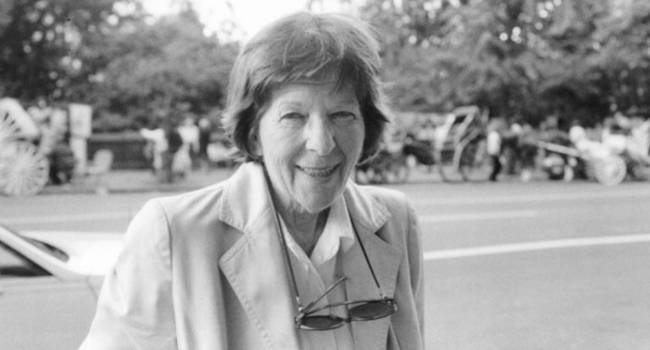
Hanff and Anne Bancroft during the filming of 84, Charing Cross Road–for most of us, the introduction to Hanff and her wonderful world.
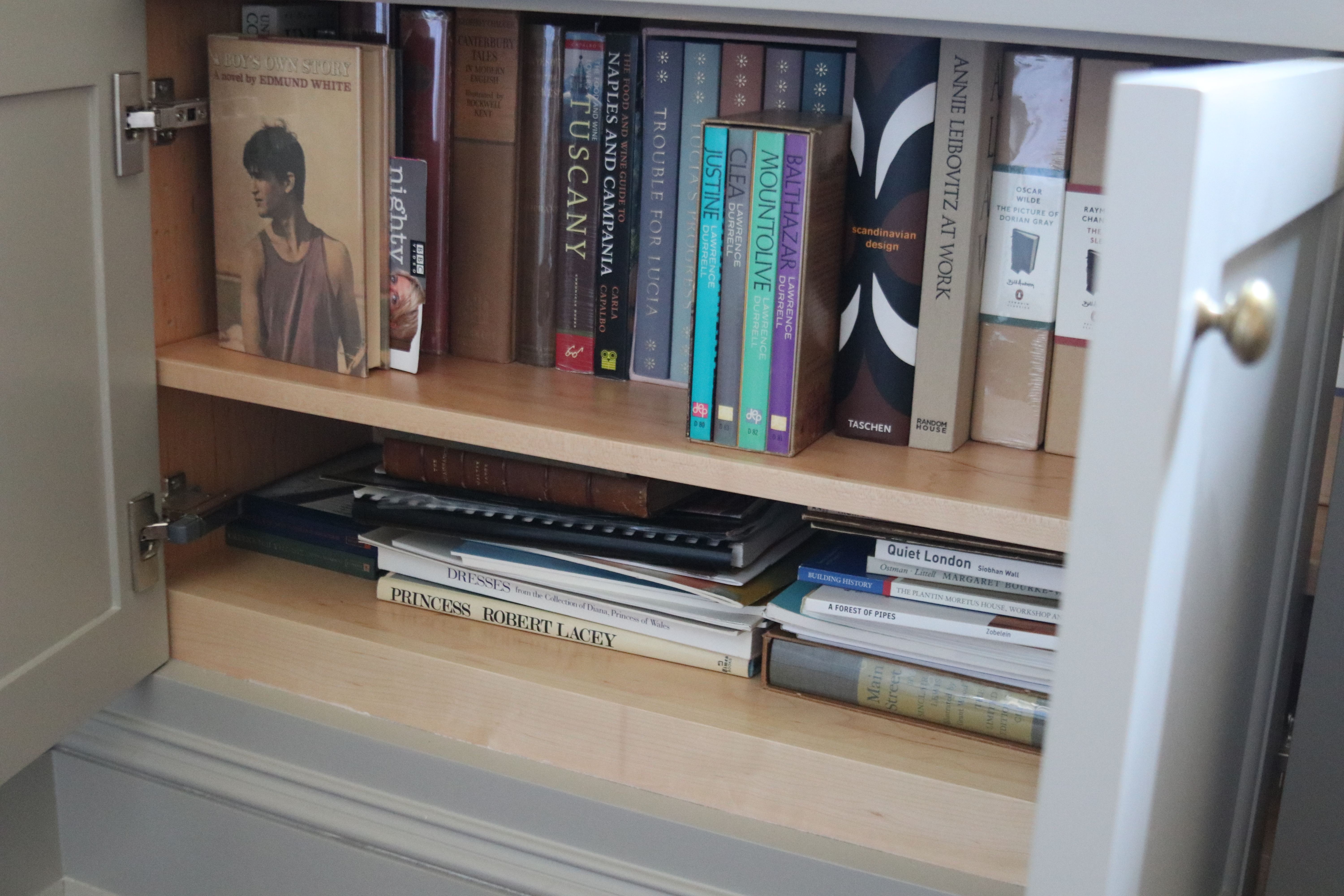
Today I opened up a cabinet in my library and rediscovered all sorts of things I forgot I had. When I first set-up my new shelves a few years ago, I didn’t know what to do with various things that didn’t fit in with my general organizational scheme so they got chucked (carefully) into a cabinet. The only problem is, out of sight, out of mind. On the other hand that made for a rather fun Saturday morning having a good fossick through the contents.
So let’s have a look…
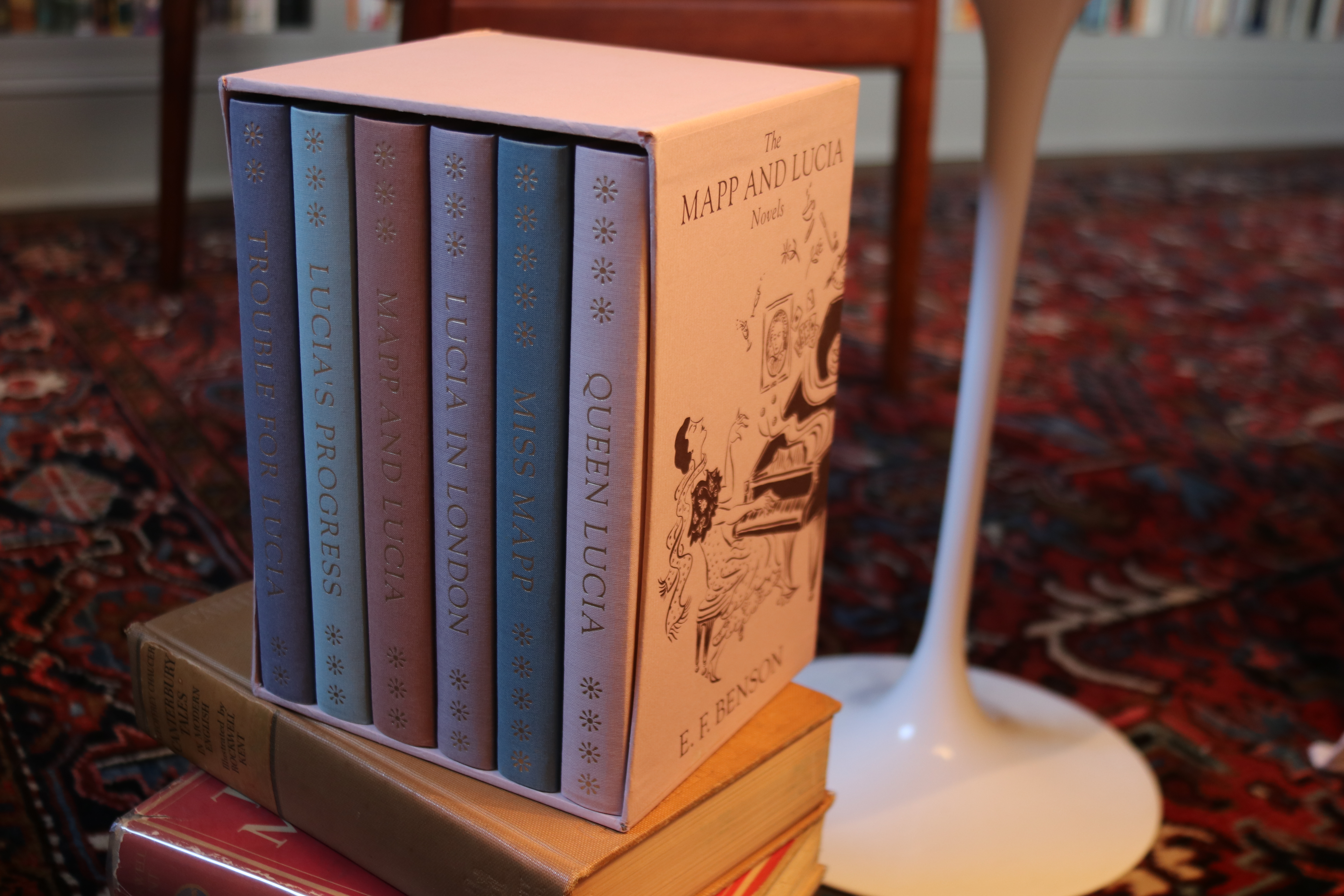
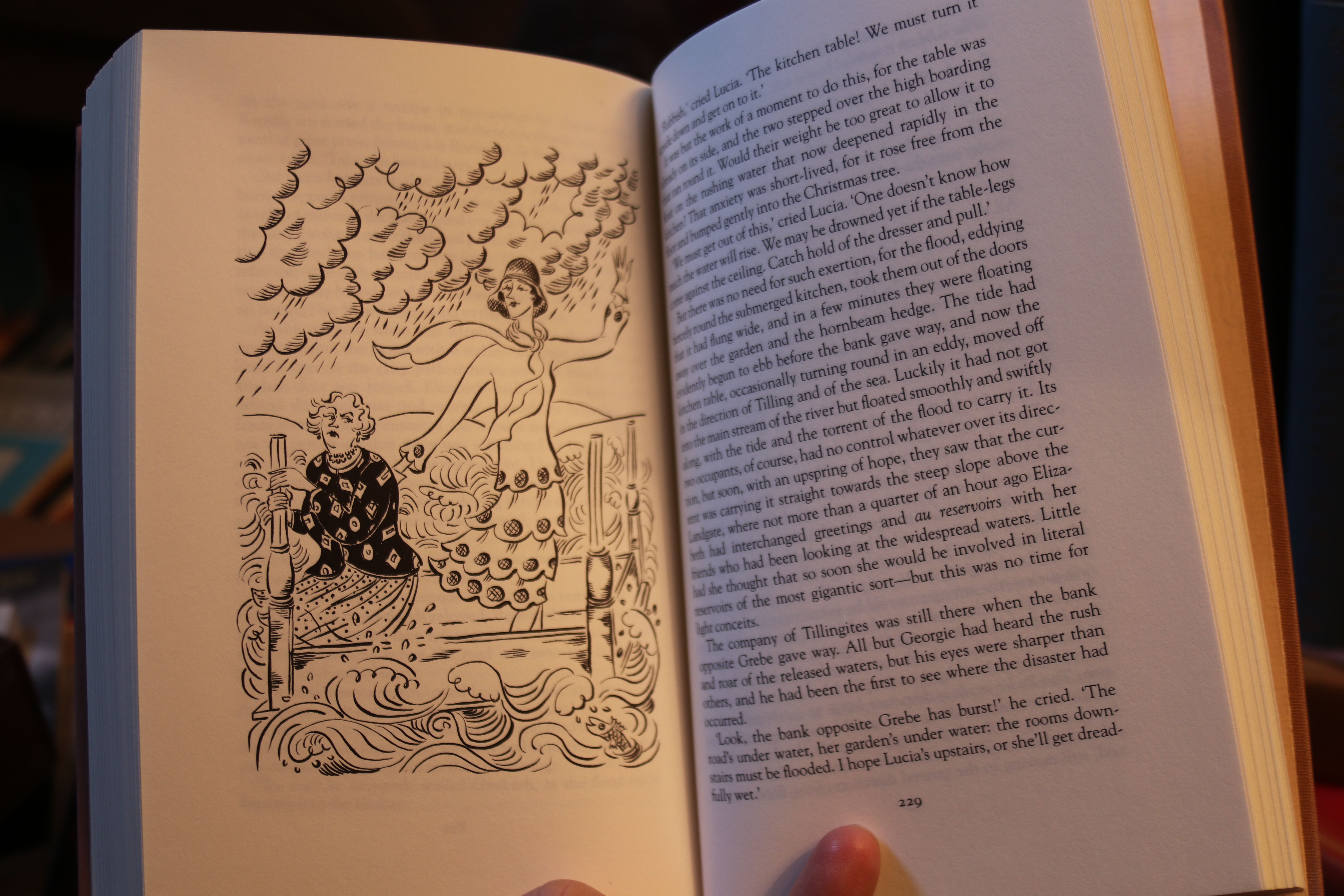
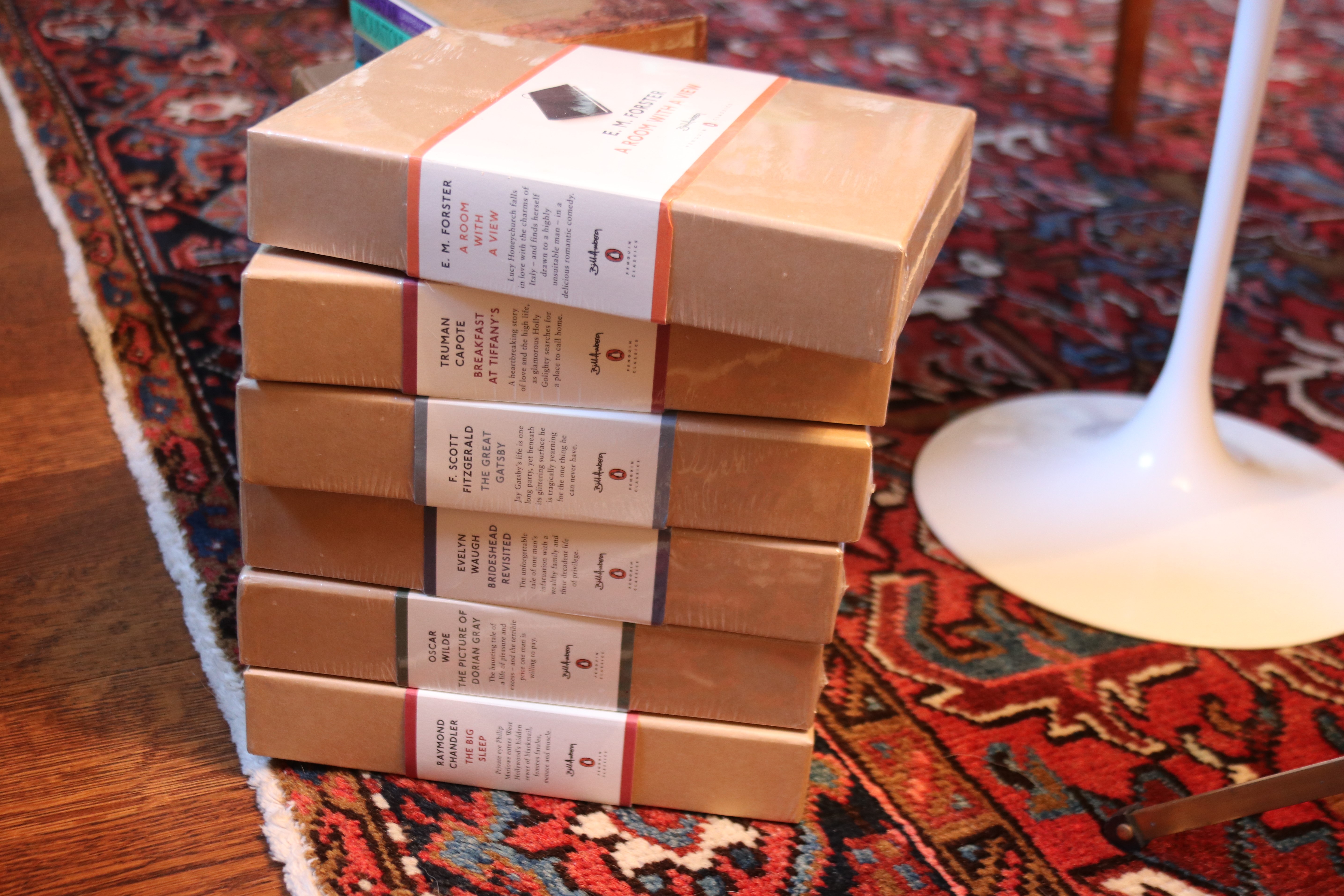
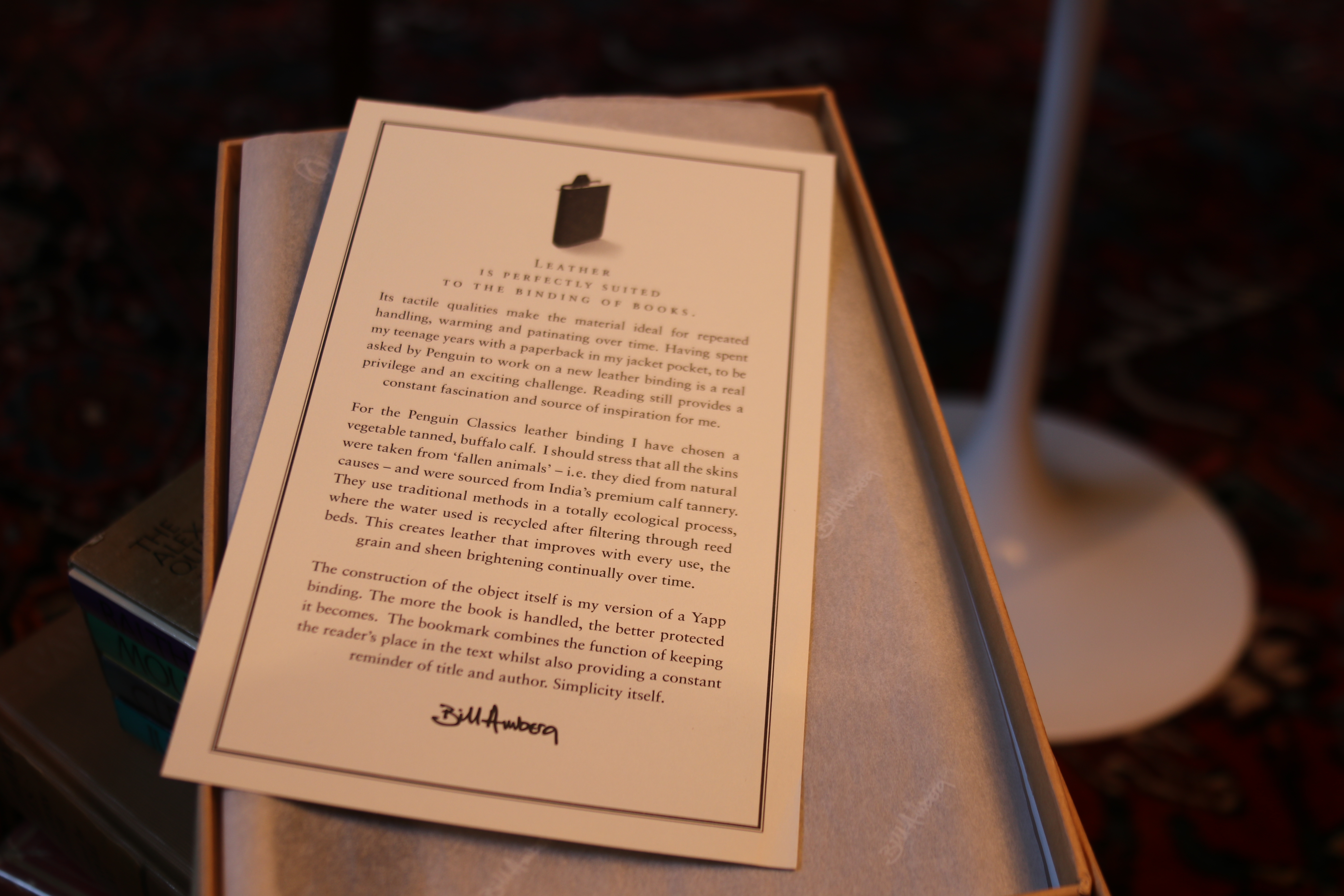
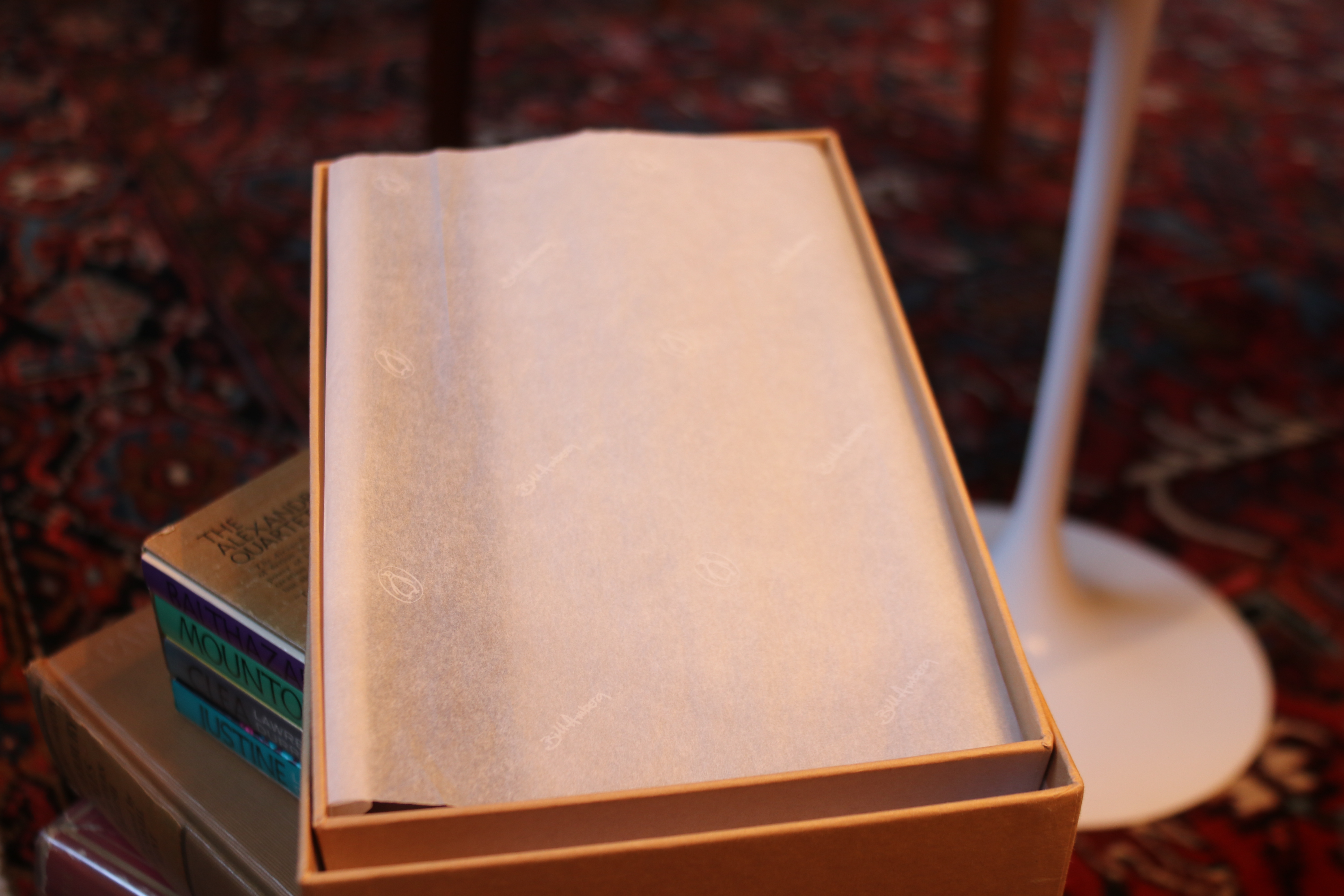
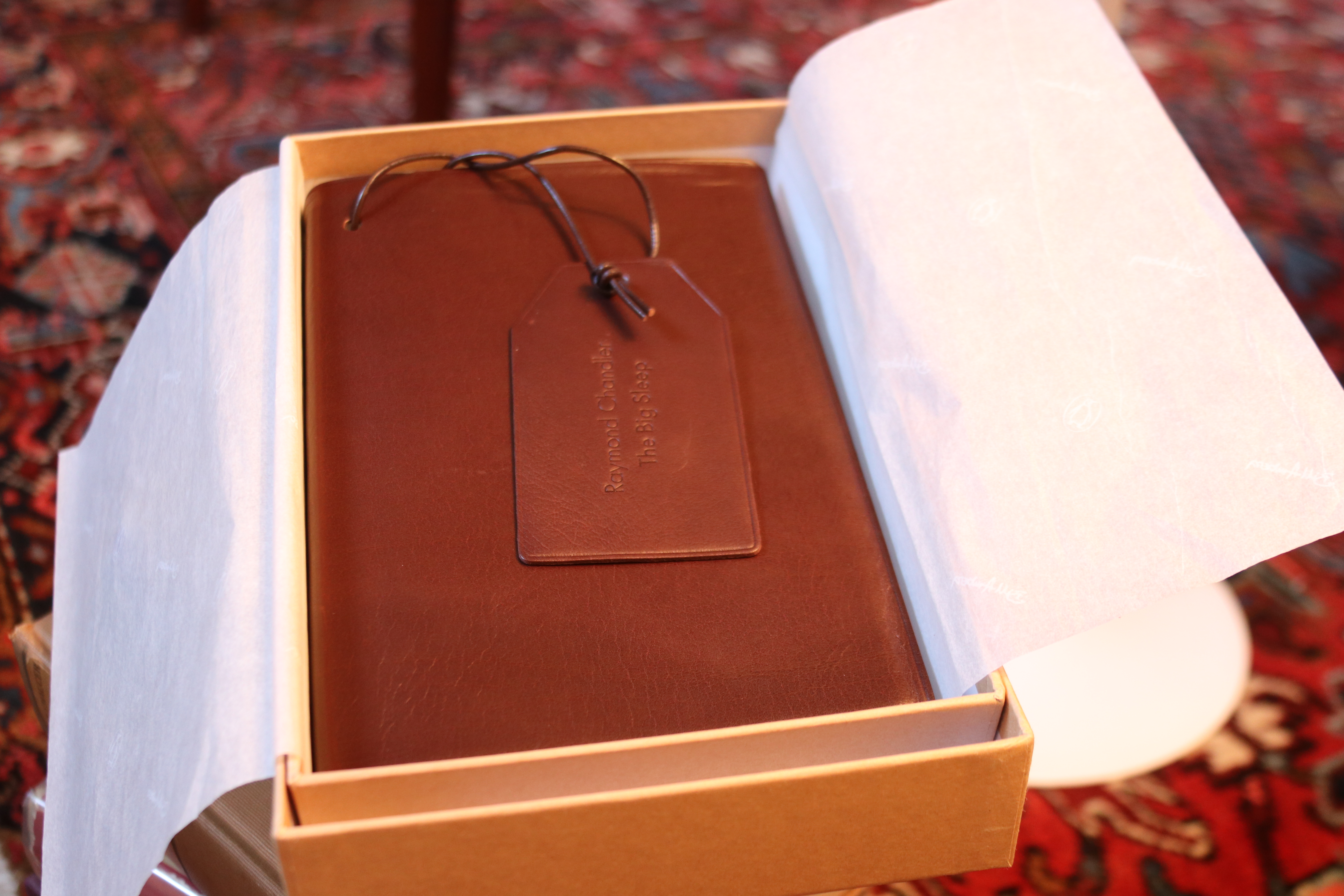
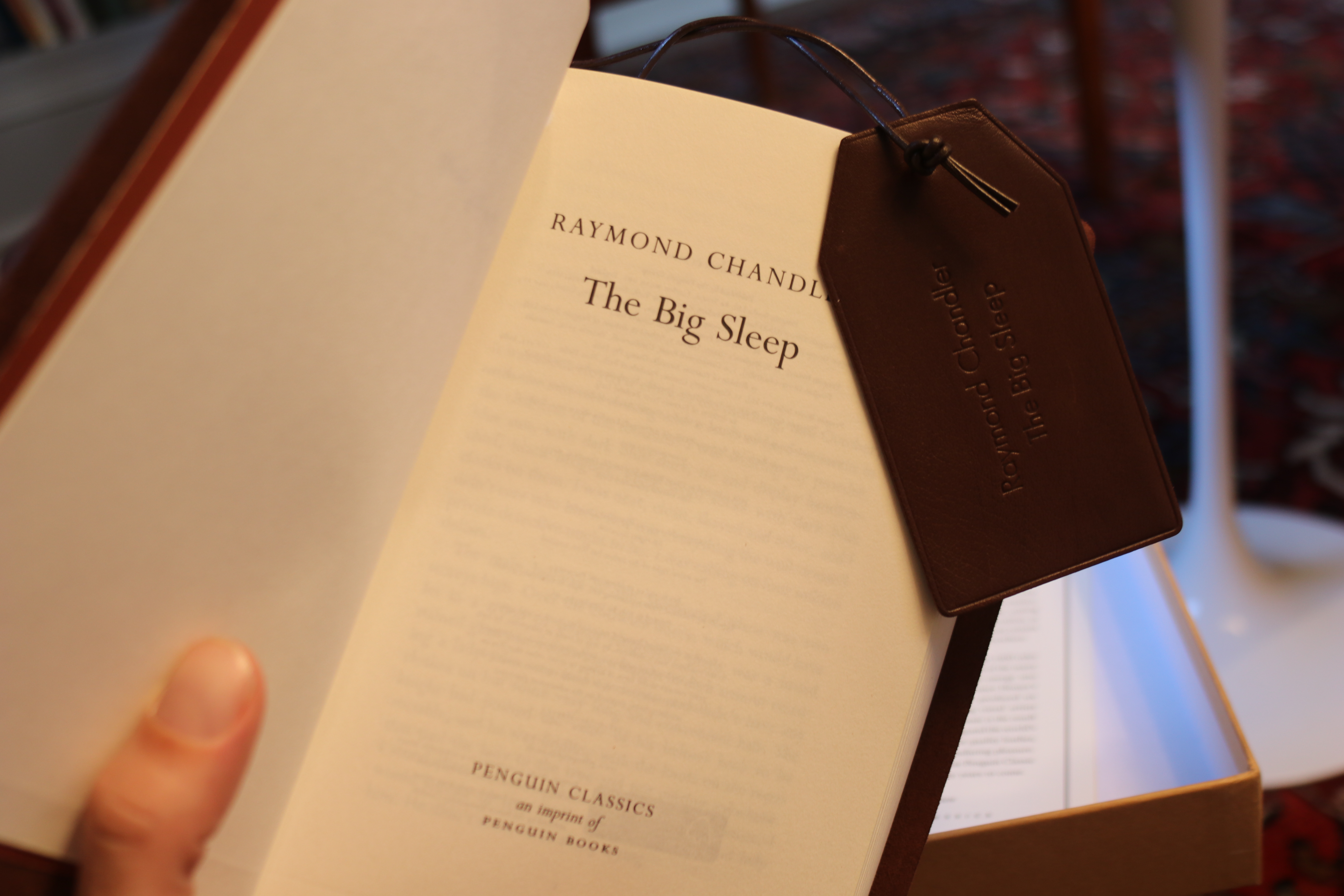
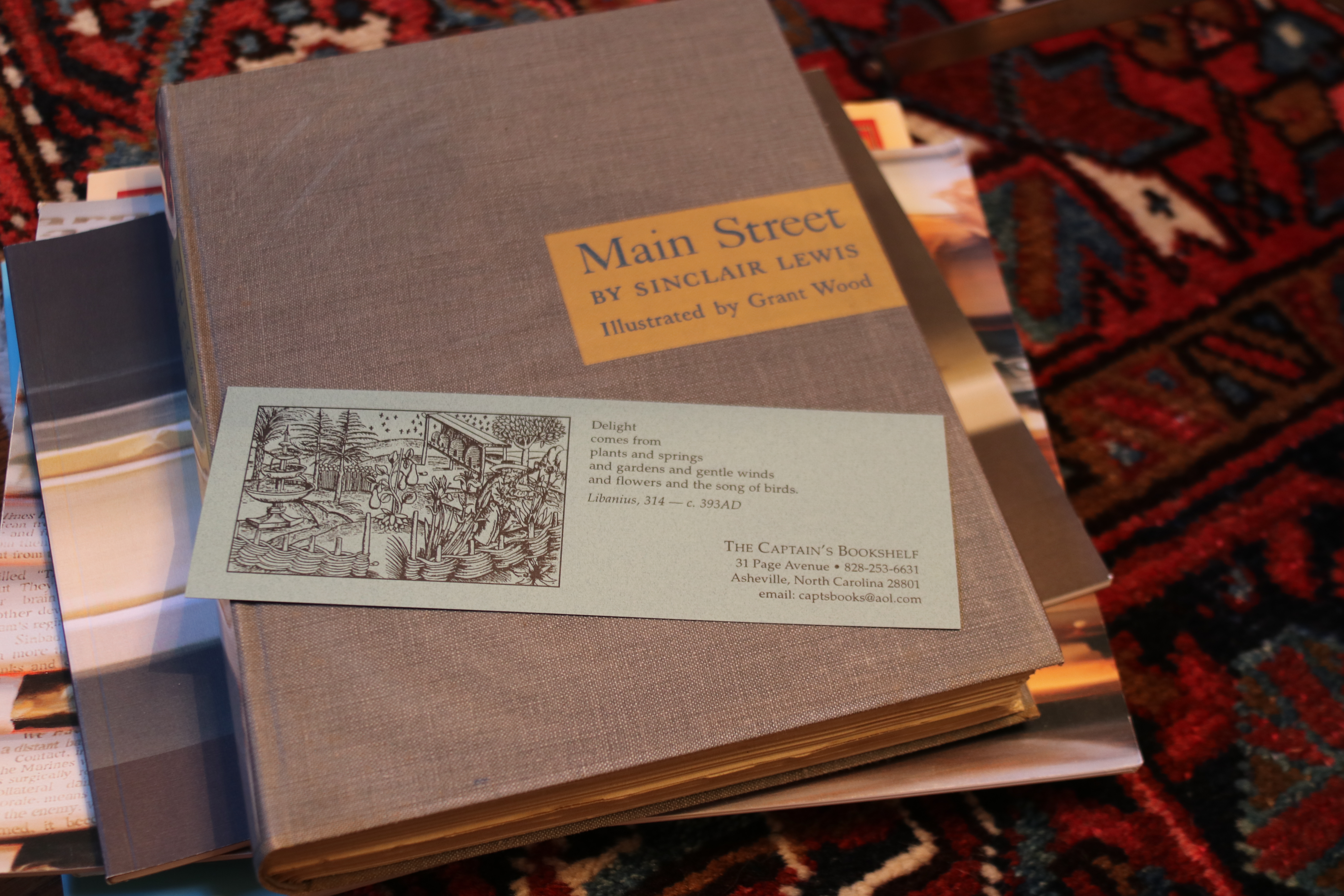
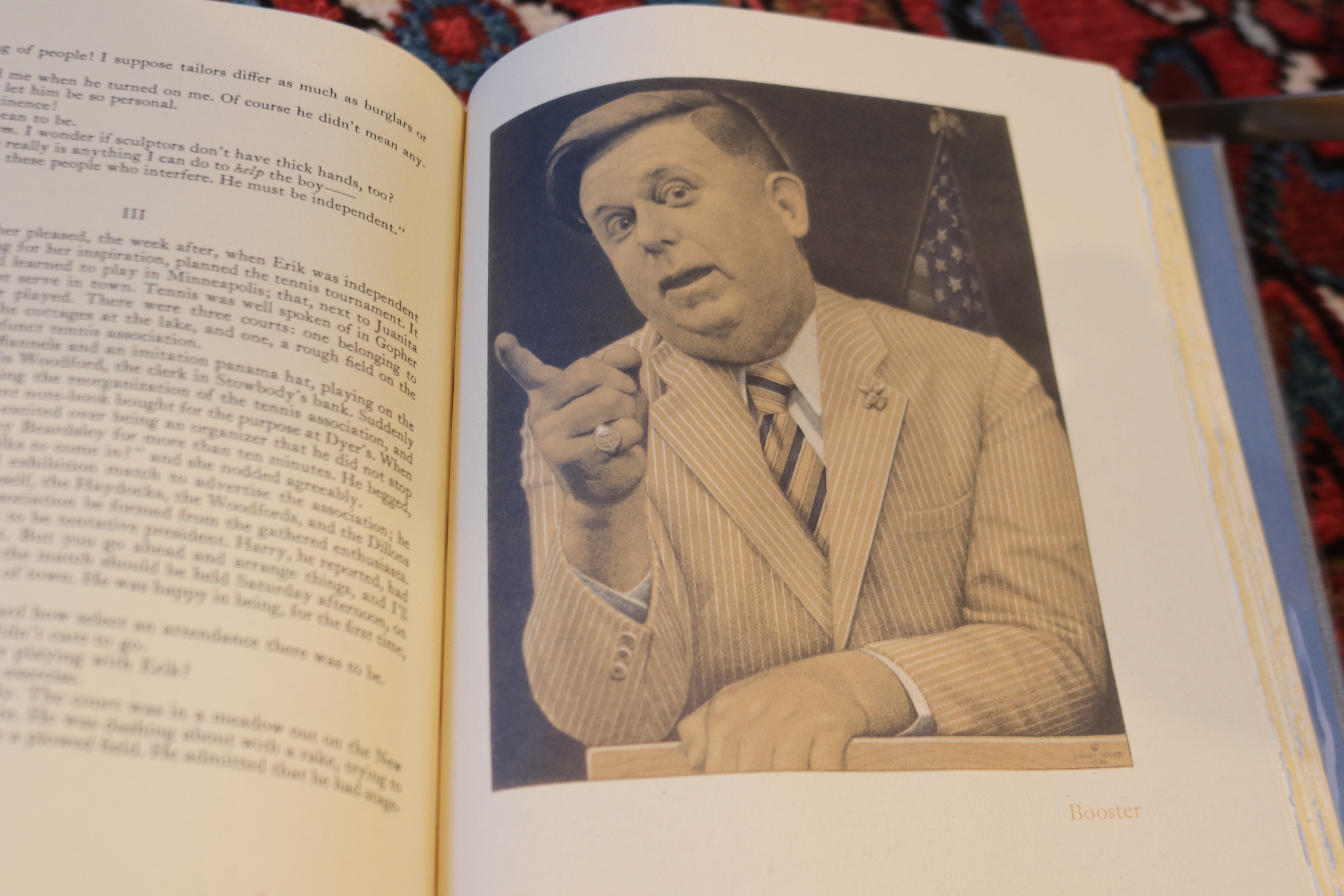
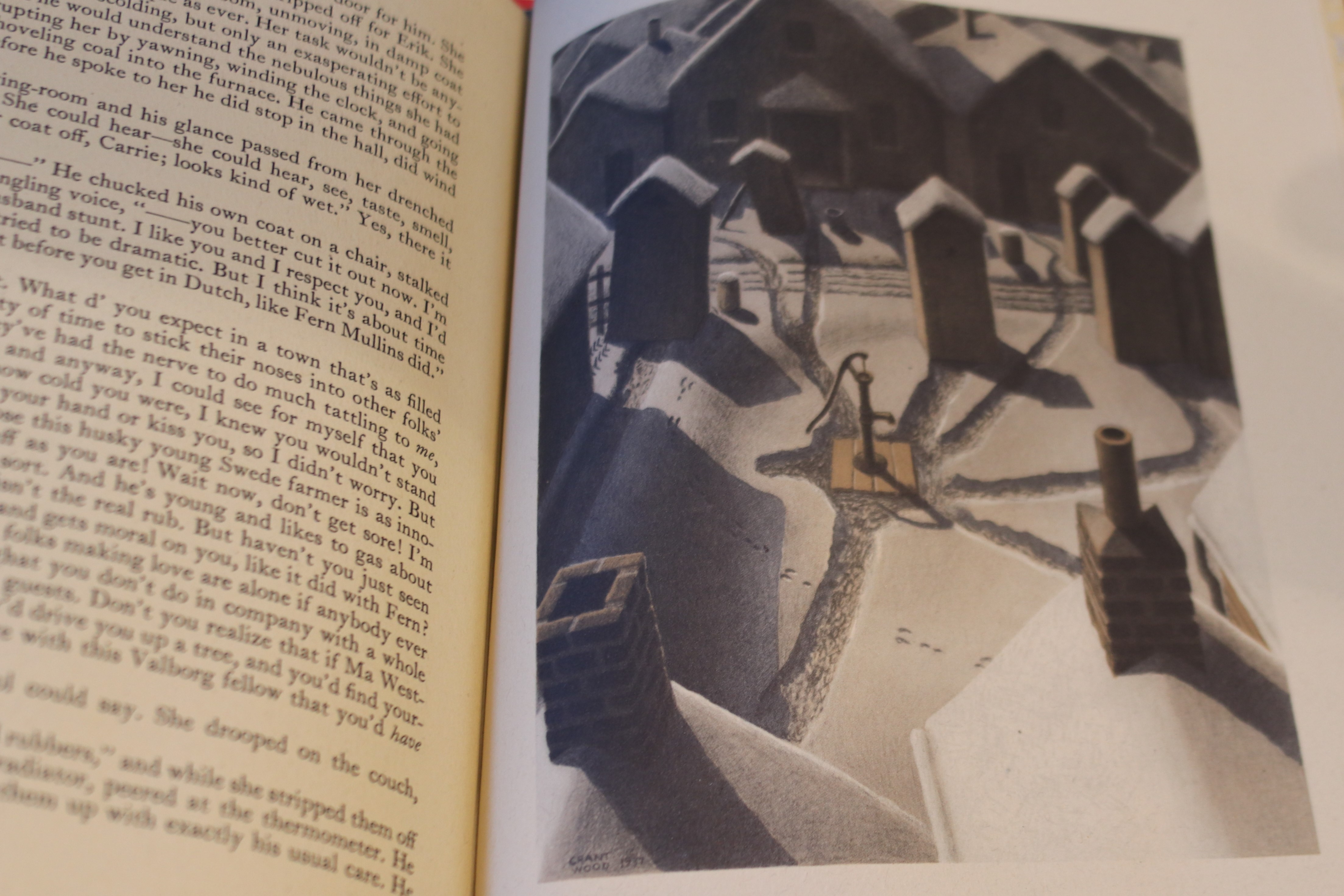
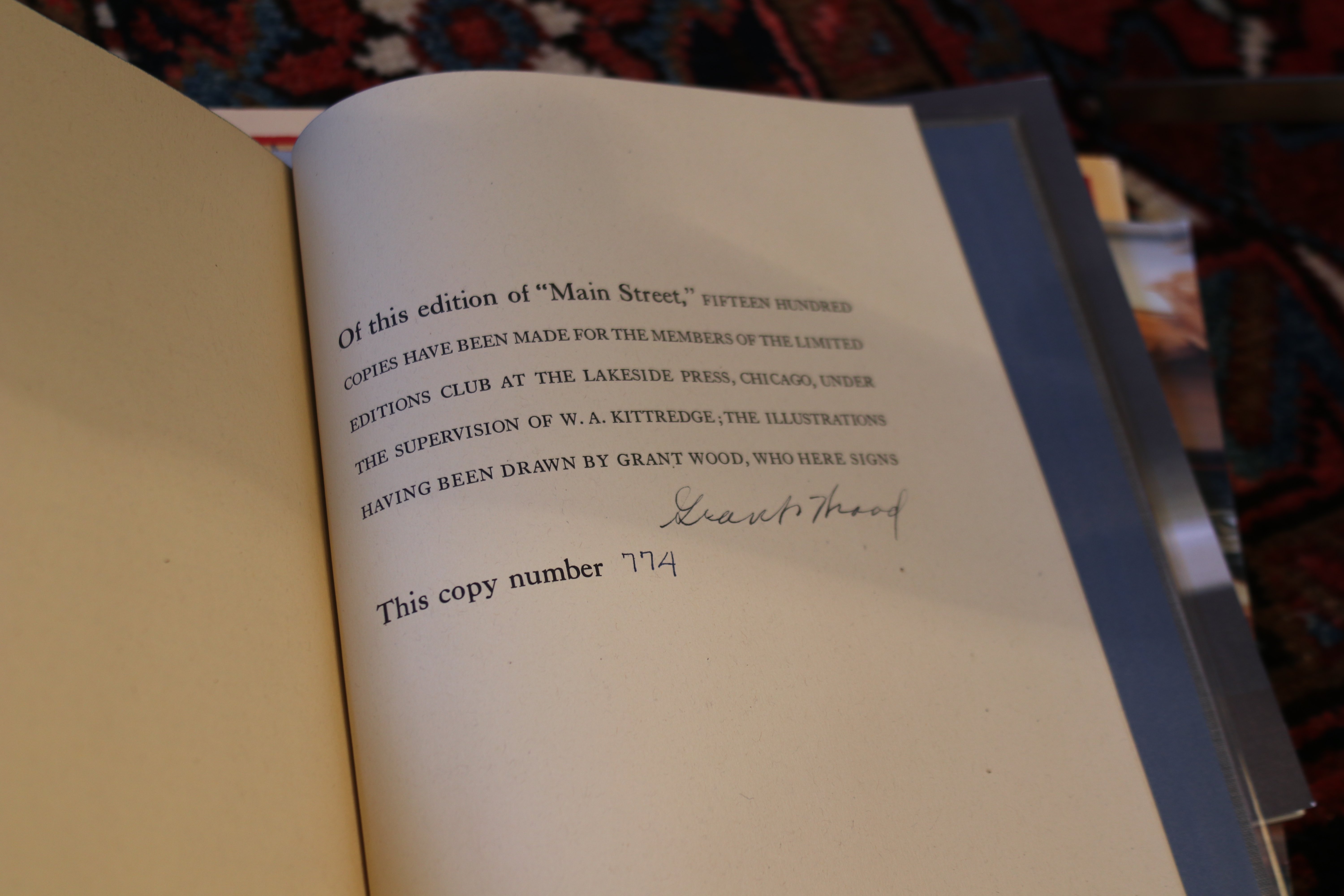
The main theme of this cabinet is really simply overflow. Even though there are some odds and ends in here, many of these books are things I would read, but I simply ran out of room on my shelves. They ended up in here mainly because they were too fine the be reading copies and so did not need to be easily accessible.When I mentioned once that I wanted to find the Mapp and Lucia books in similar editions John ran with that and surprised me at Christmas with this Folio Society boxed set. They are lovely, but they take up a lot of darn room.Mapp (L) and Lucia (R) floating away on flood waters on an upturned kitchen table.And speaking of boxed sets, this Bill Amberg set from Penguin was a special edition from their 75th anniversary, I think. Another gift from John.I’ve had these for about 10 years and only took the shrink wrap off of one of them.Amberg is a leather goods maker and these books are packed in tissue like a fine pair of shoes or handbag.The leather is buttery smooth and the attached luggage tag can also serve as a bookmark.Out of the six books, this was the only one I had never read which is why I took it out of the shrink wrap.A limited edition Main Street illustrated and signed by Grant Wood.I include the bookmark from the bookseller because he went above and beyond. I’ve never been to The Captain’s Bookshelf but John was in there mentioning to the owner the kinds of things I liked. The owner said that he had just the thing, left the shop, went home home, got this book, and brought it back for John to buy.Grant Wood was the artist who painted the famous American Gothic. He captures Lewis’s characters perfectly.Small town Minnesota ‘slum’.
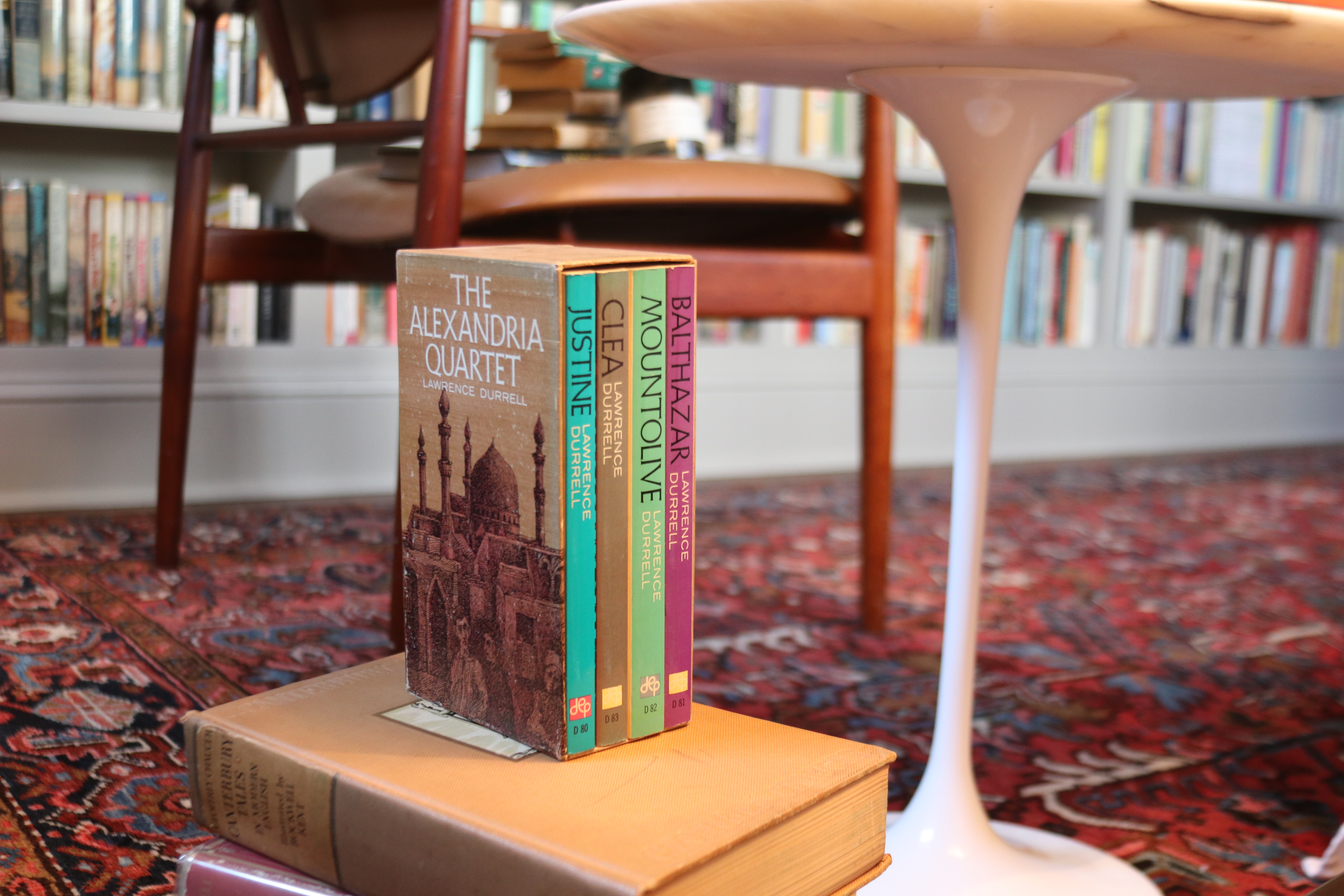
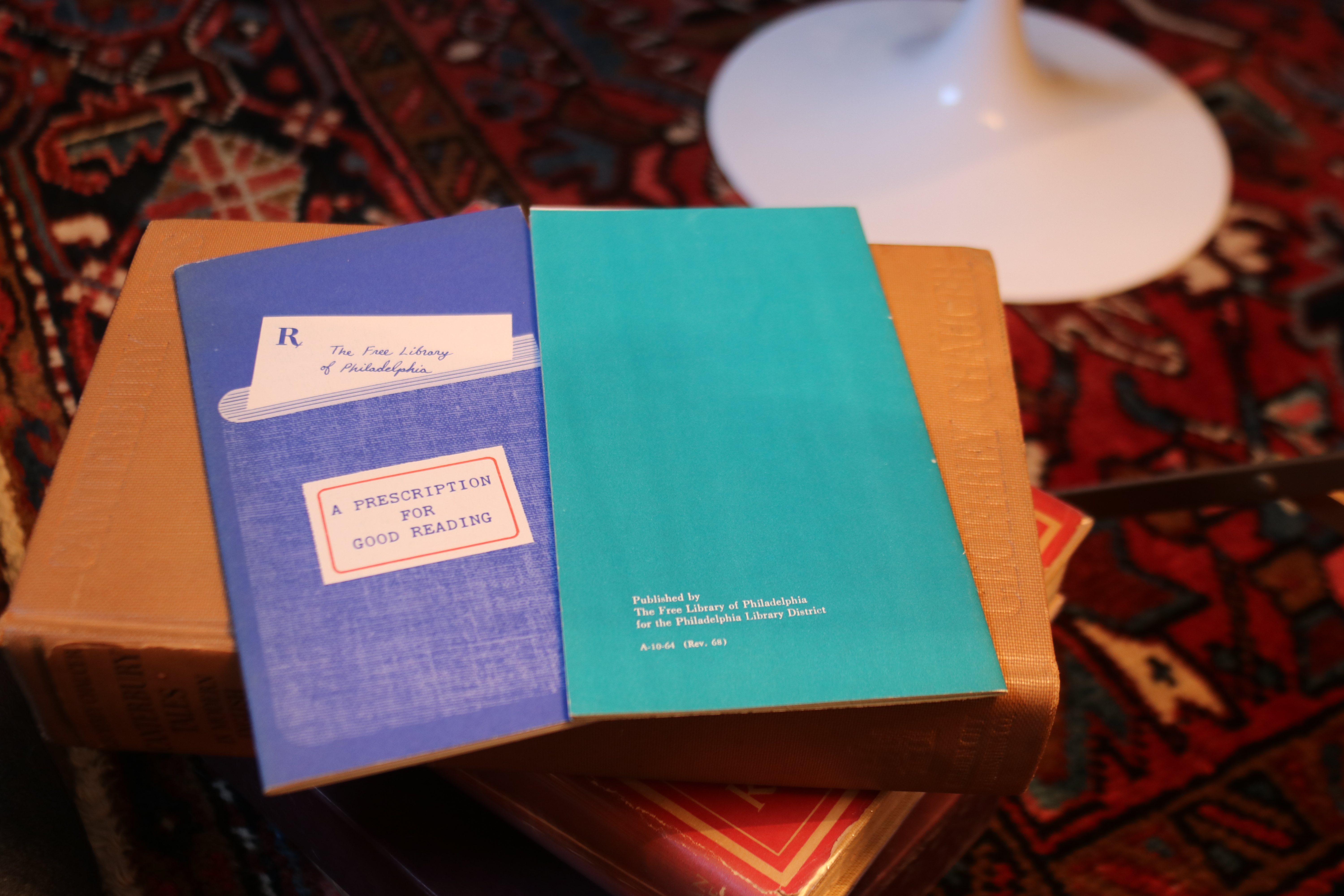
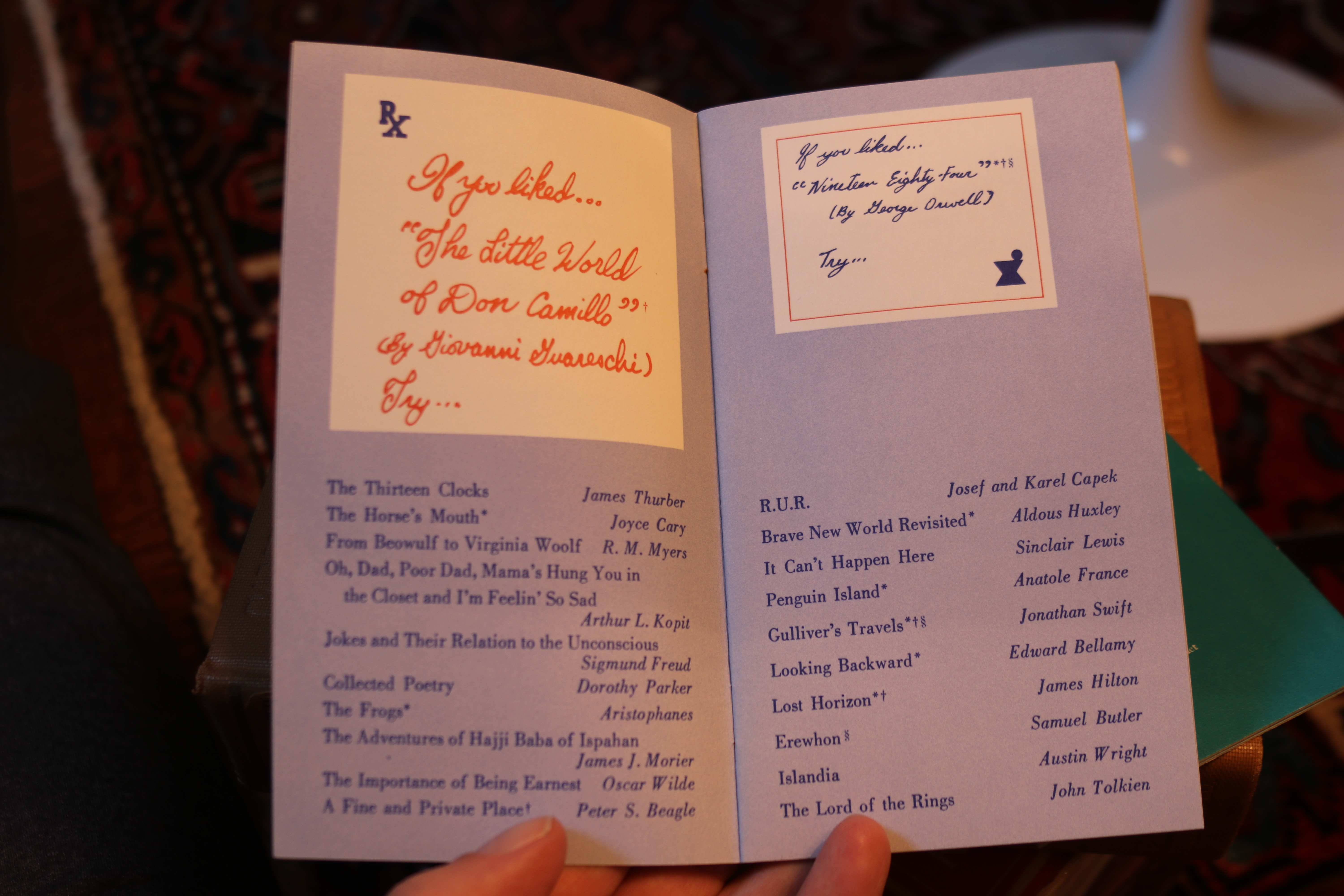
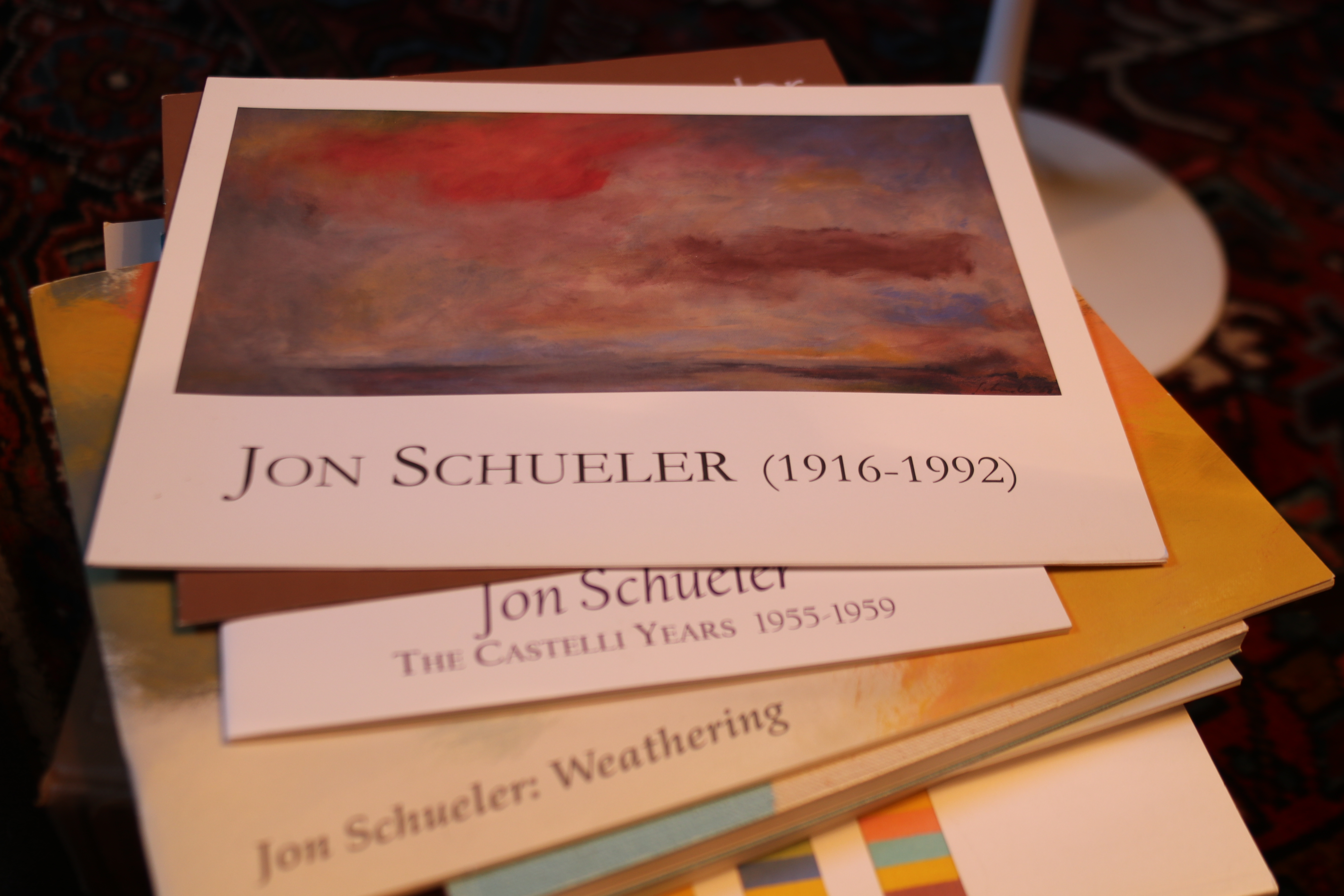
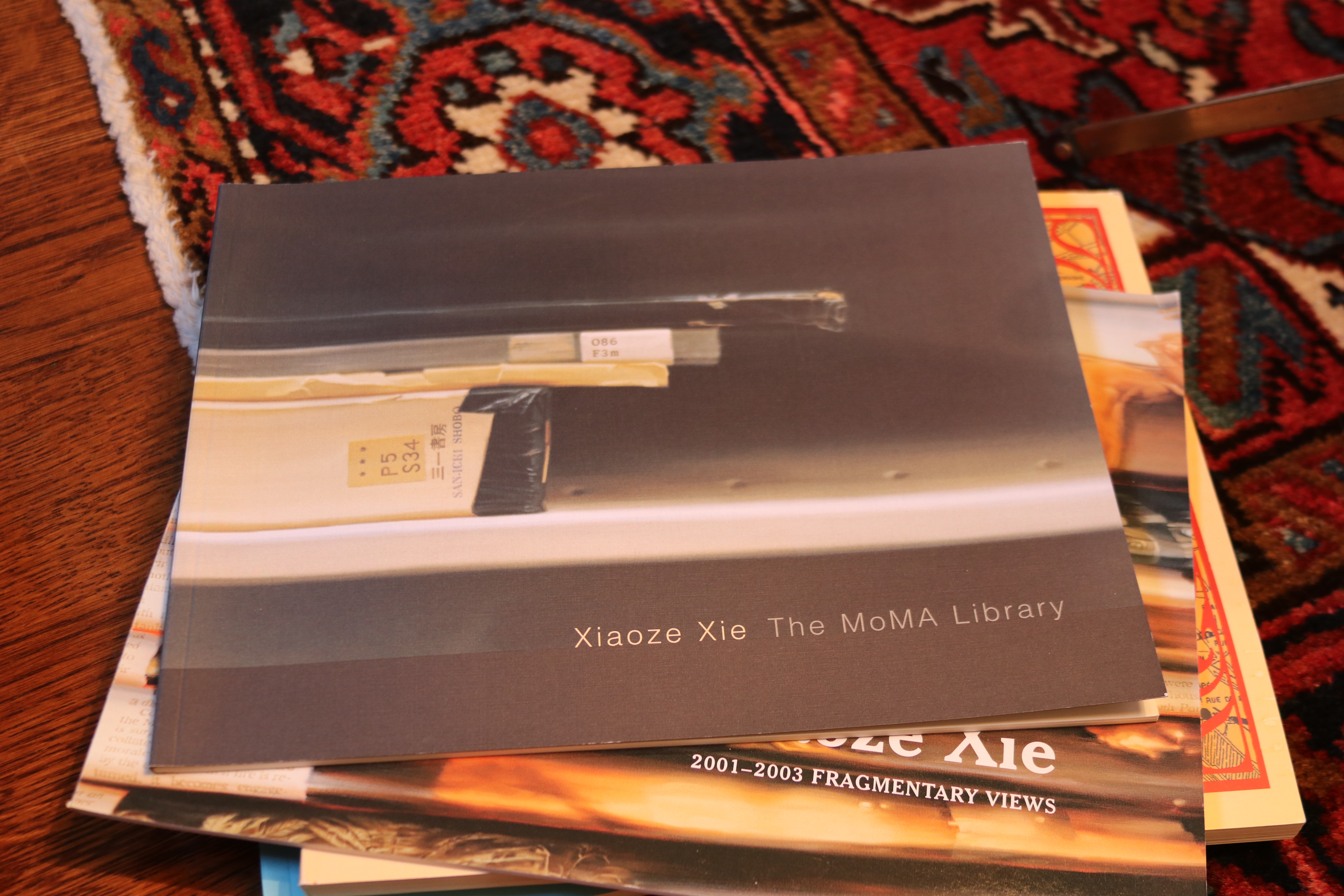
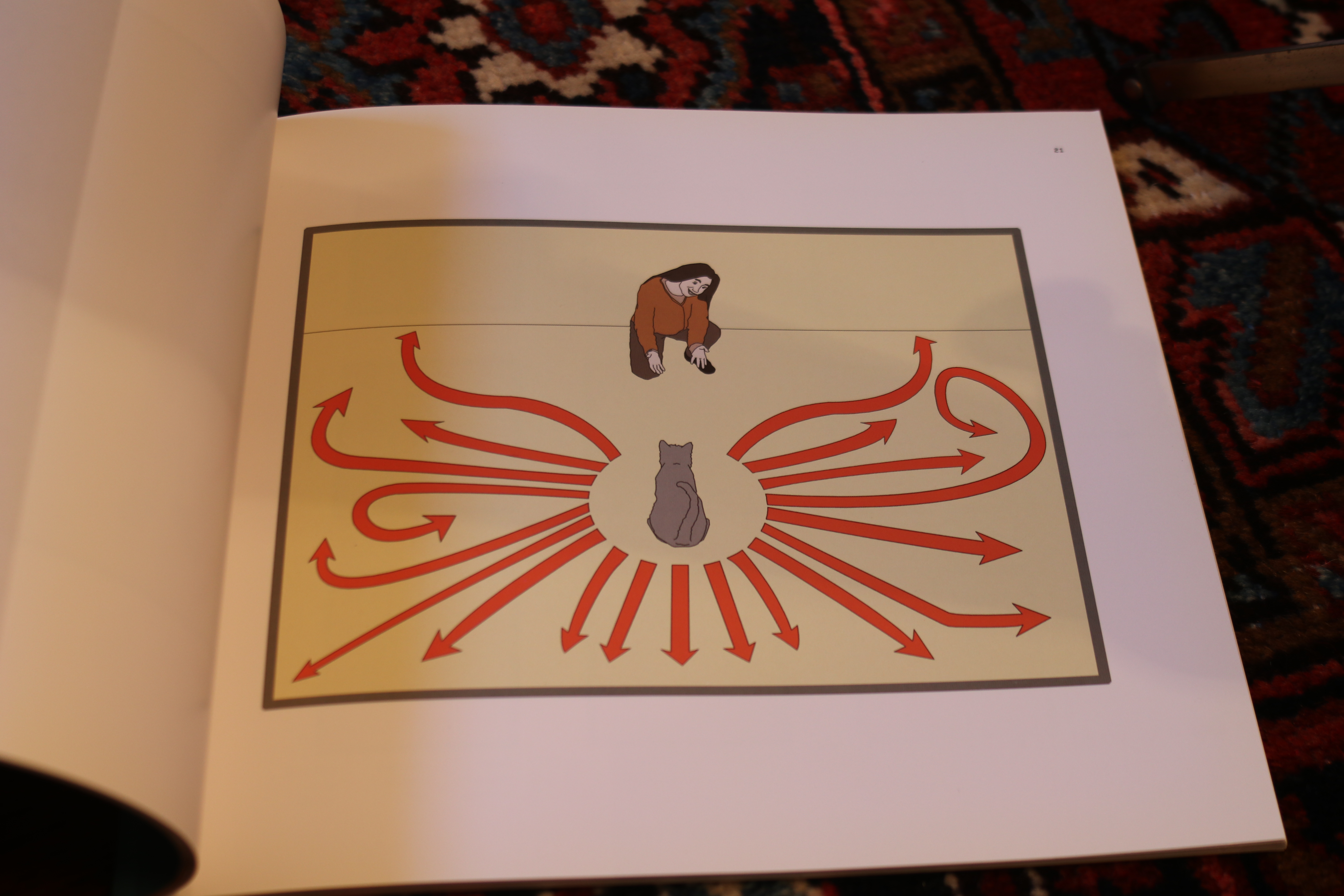
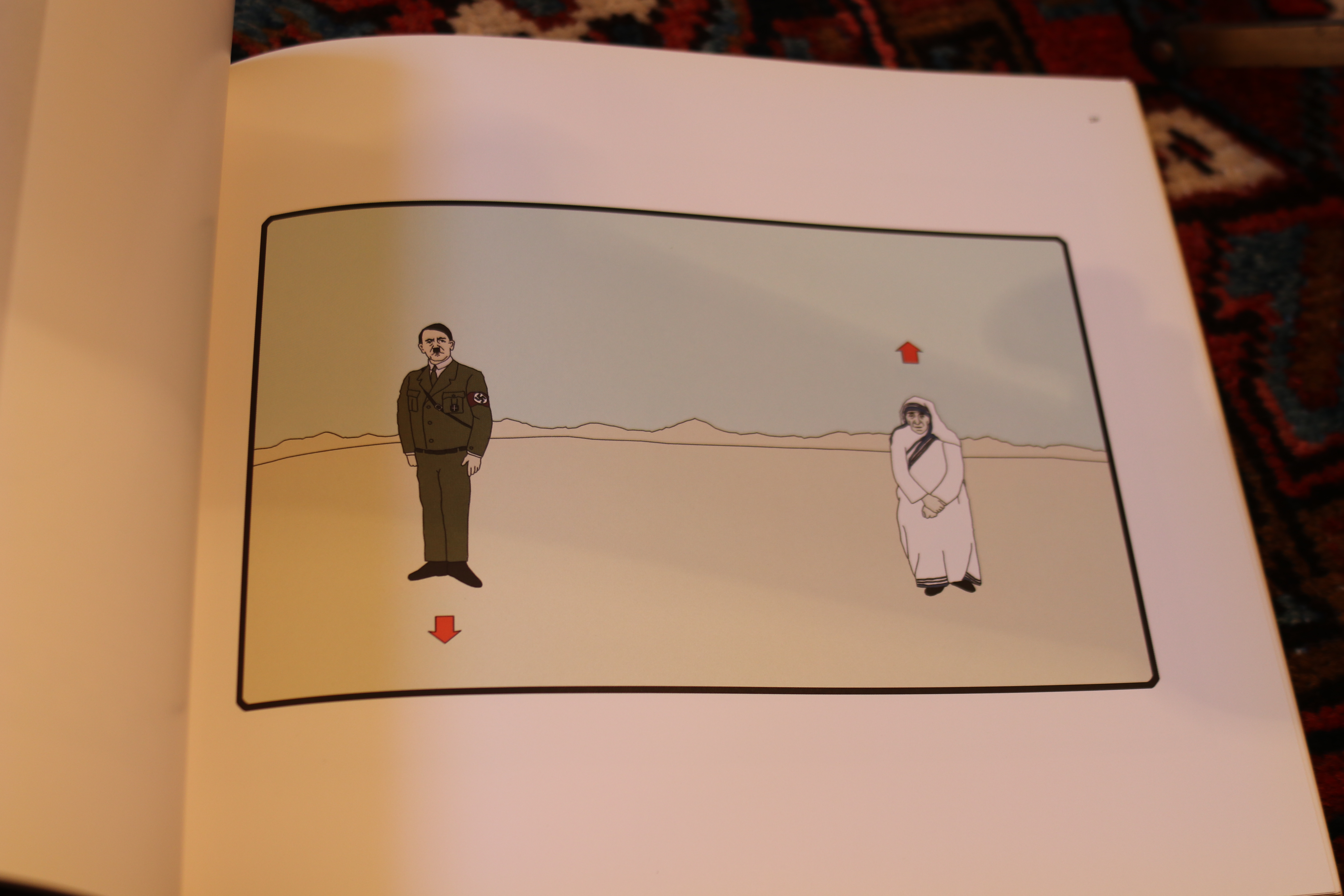
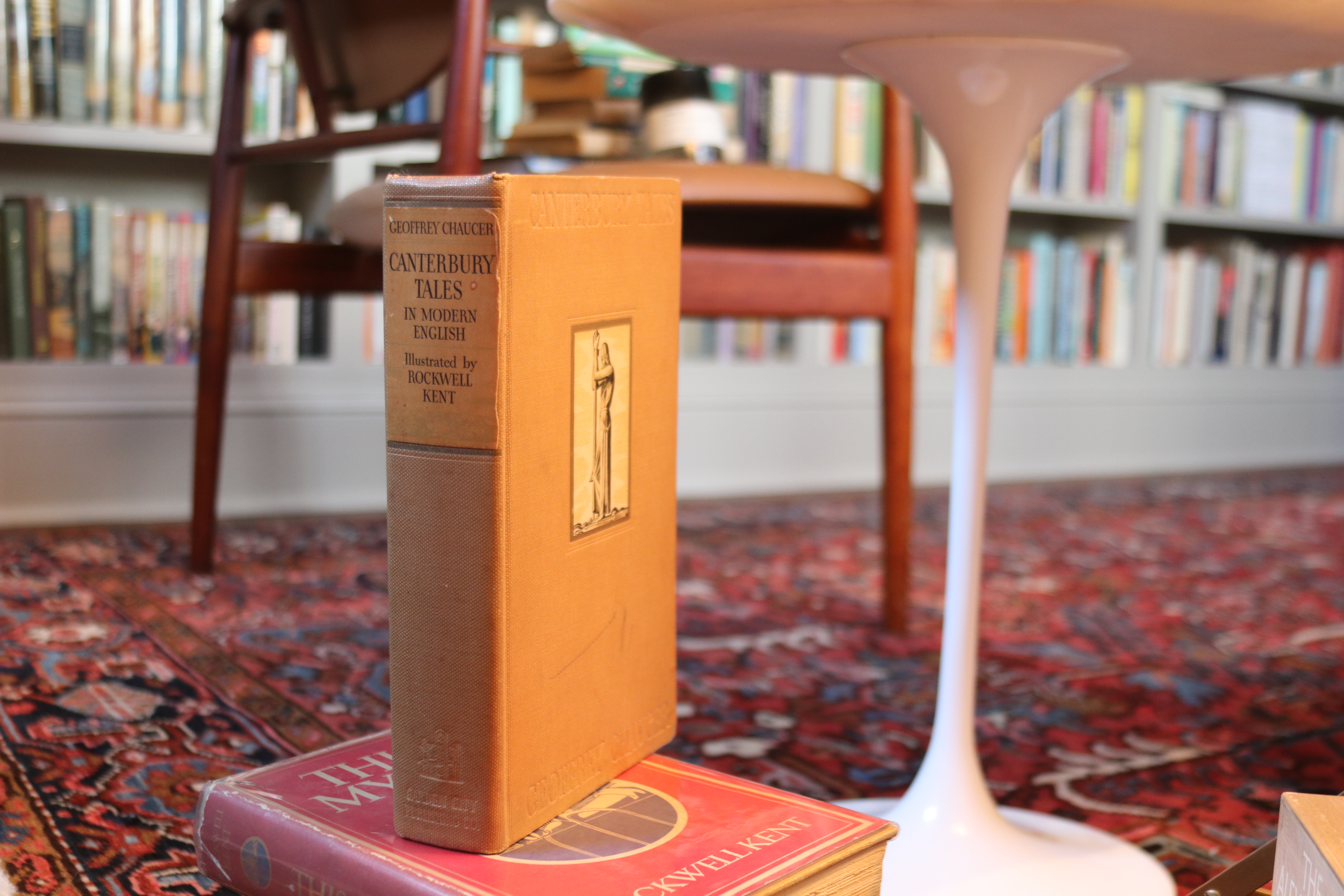
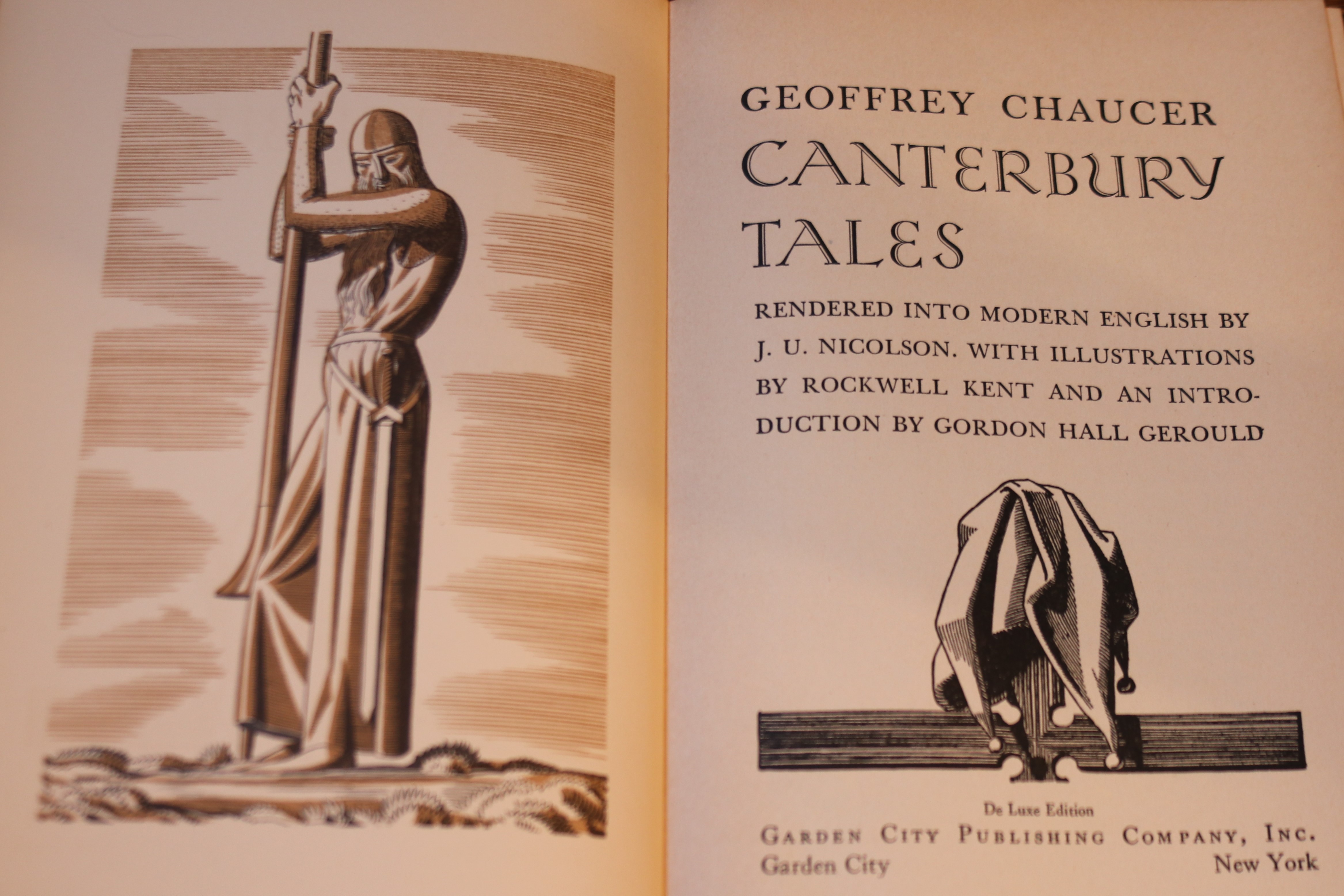
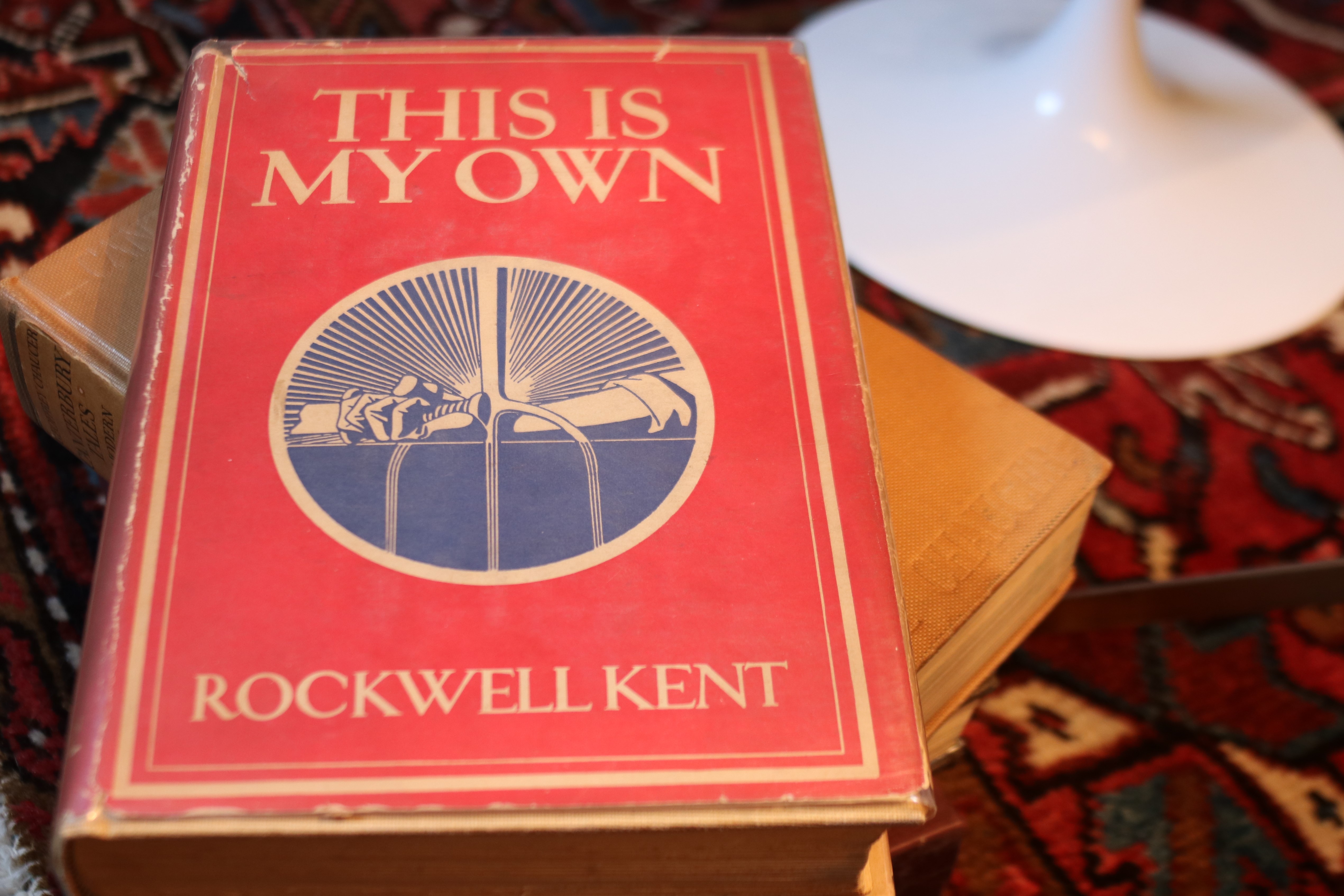
This boxed set isn’t particularly valuable, but it is in pristine shape. I already own an unboxed set of Faber editions that live on my shelves, but when Nonsuch Book and I were on one of our book hunts I saw this and couldn’t pass it up.A bunch of little things that would have have kind of disappeared amongst all the bigger books if I had included them on the shelves.Some bona fide ephemera. If I wasn’t careful I could find myself collecting ephemera. Who doesn’t love old pieces of paper?In this case, two pamphlets from 1964 and 1968 that were issued by the Philadelphia Free Library to aid patrons in finding books they may like. I bought these at a really lovely antiquarian bookstore Wickhegan Old Books in Northeast Harbor, Maine, right near Acadia National Park. I really wanted to buy something there but their stock was so fine and expensive, I had to limit myself to some pamphlets.Lots of wonderful exhibition catalogs that would have gotten lost among the shuffle of the art books.I came across this artist when I saw a work he was commissioned to do for a federal courthouse in Davenport, IA. https://www.gsa.gov/cdnstatic/101_Xiaoze_Xie.pdfXiaoze Xie specializes in photo-realist paintings of books and other printed matter. Certainly a subject after my own heart.Information graphics with a twist by Matthew Vescovo. I believe the cover image is titled ‘Dark and Curly’. http://www.mattvescovo.com/‘Cats are not Dogs’‘Karma’I doubt I will ever read Canterbury Tales, but John and I do really like Rockwell Kent.
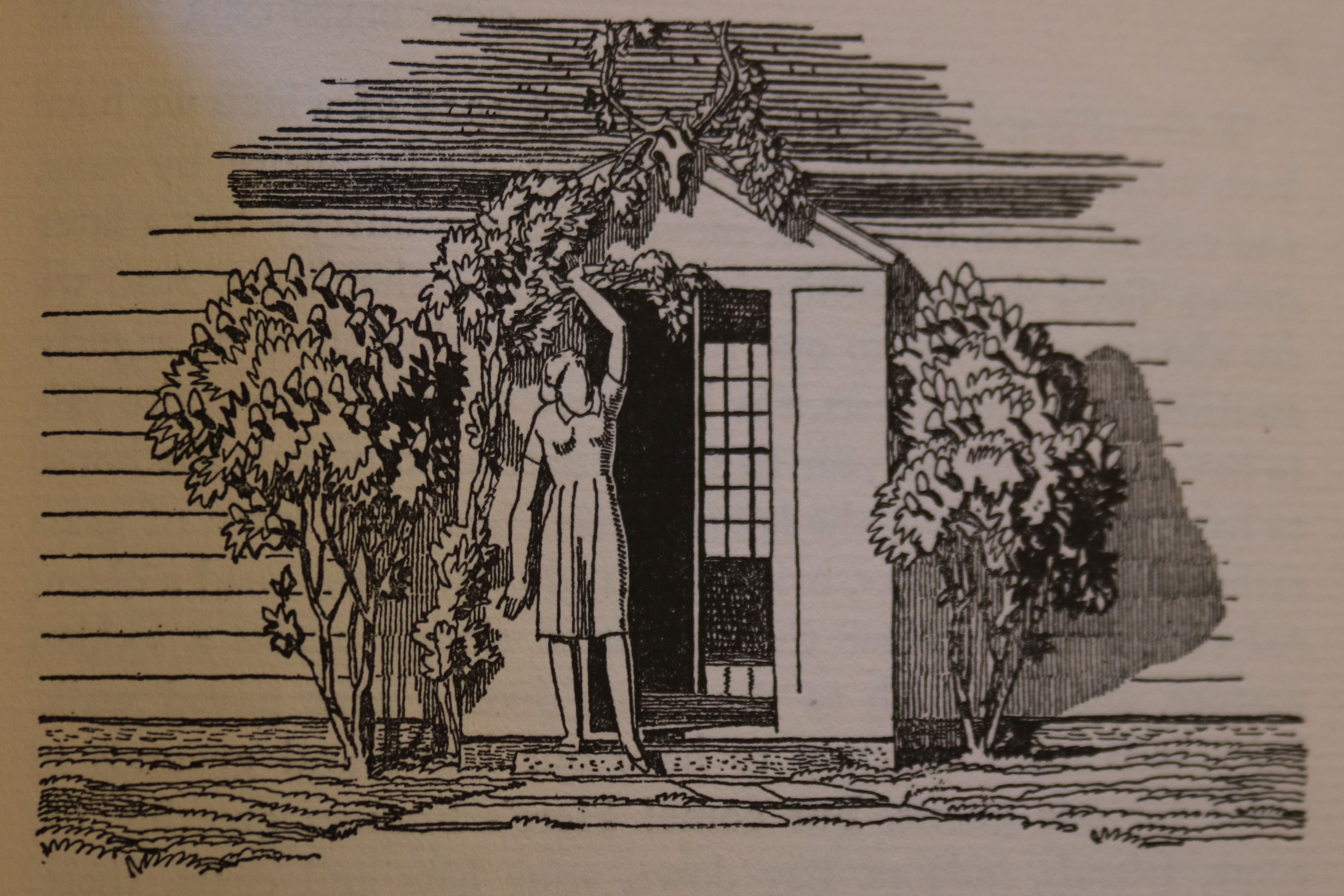
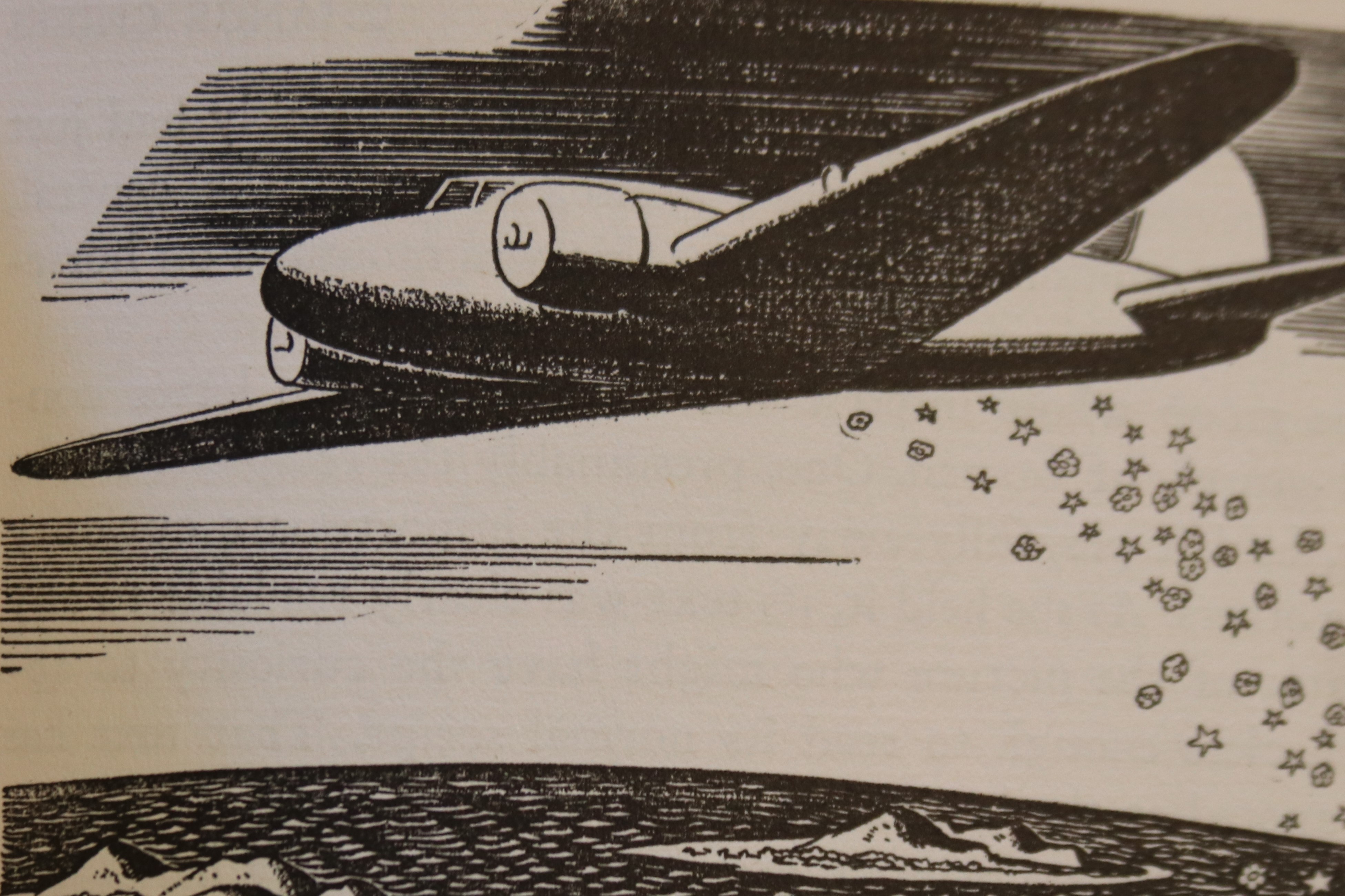
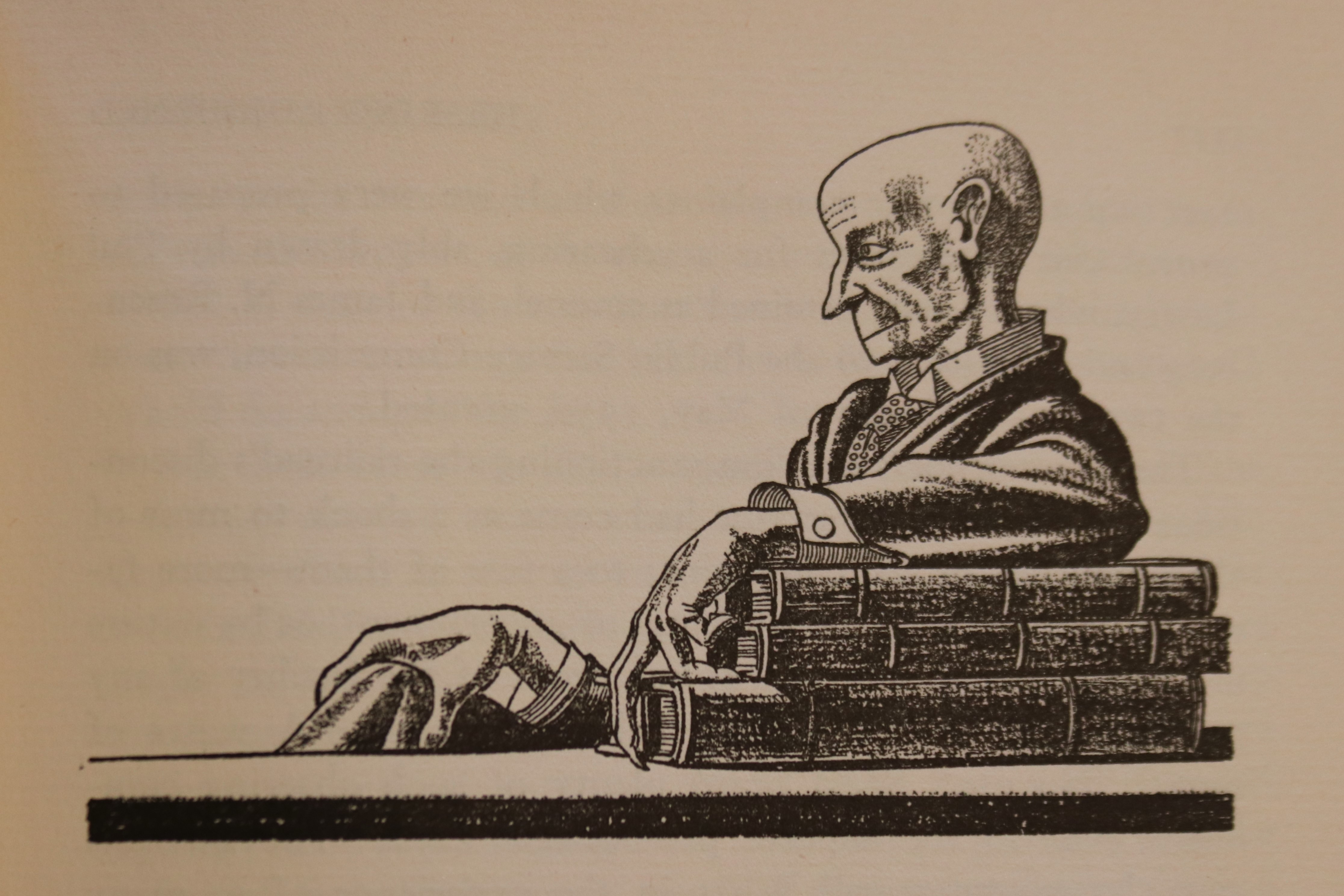
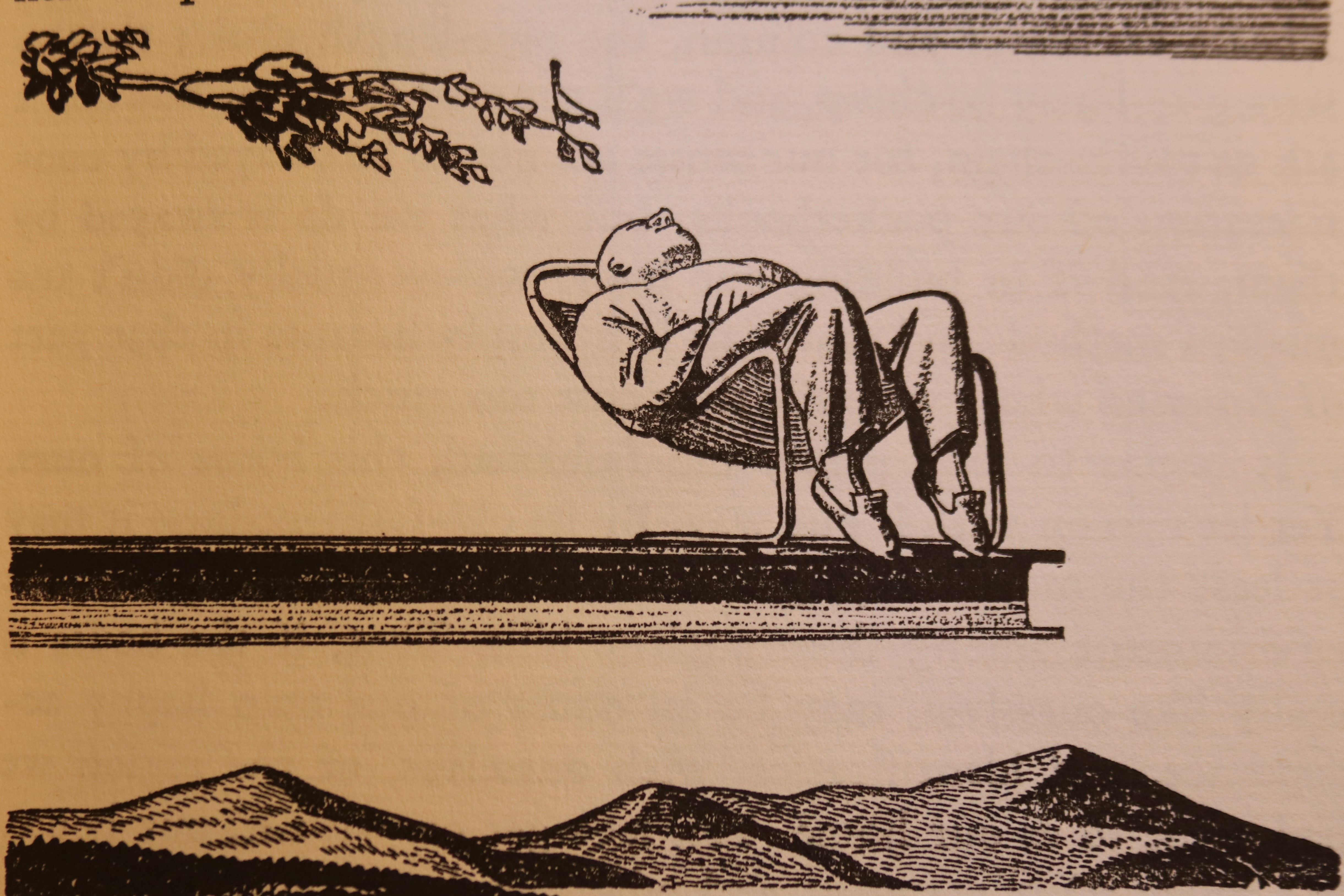
A bit of a memoir (I think) of Rockwell Kent’s time in upstate New York. So far I have only looked at the pictures.
This makes me think that Kent and Nevil Shute should have teamed up to create some illustrated editions of Shute’s work.
No way can I get rid of this. I even have a print out of the sale prices for all of the lots.
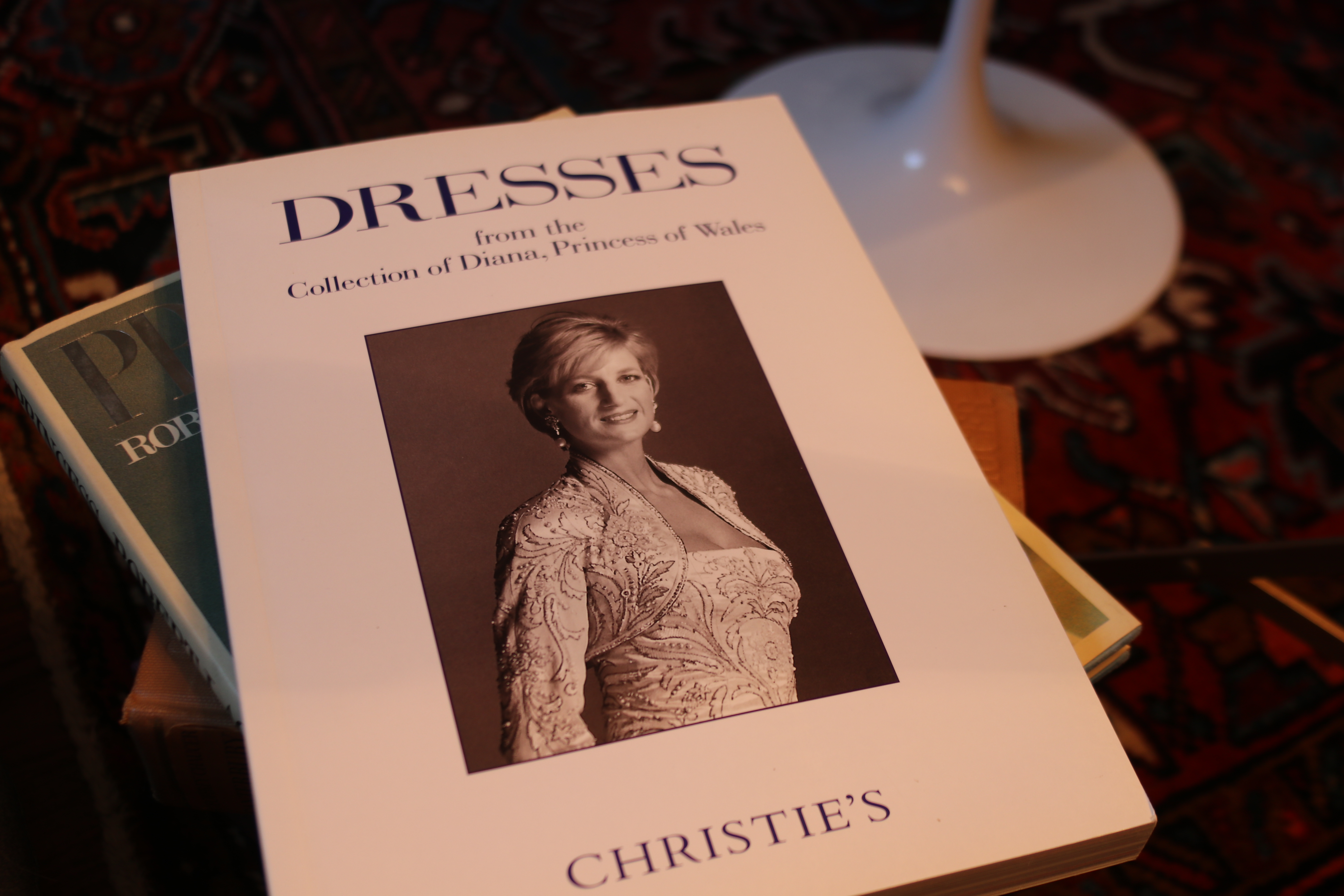
The central thesis of my thesis for my first Master’s degree still holds up but could use an update. Who wouldn’t want a copy of this on their shelves? Turns out, me.
My reading pace has slowed down a tiny bit this month, but given it was the shortest month of the year, 10 books read is not too bad. Not only am I making good progress toward my A Century of Books Challenge but I don’t feel even remotely tempted to read anything that is not already on my TBR shelves. Putting them all in one spot and in chron order is really paying off.
The titles read this month are not, however, in chron order, they are in order of how much I liked them, with my favorite at the top and so on.
The 12:30 from Croydon by Freeman Wills Crofts
I bought this purely because of how great the British Library Crime Classics covers are. I’m not big on mysteries but I couldn’t resist. The nod on the cover to air travel gave this one an edge when determining which of the BLCCs to buy. The book did not disappoint on so many levels. It starts off with an elderly man dying on the 12:30 flight from Croydon to France. The action moves from the circumstances surrounding his death to following the relative who murdered him. I loved all of the detail surrounding the air travel itself, the business circumstances that led to the murder motive, the great pains the murderer took to go undetected, and then what happens as the net starts to gather around him. I have a feeling that others may not find all of that detail fascinating but I love it. Chapters and chapters about how the murderer’s business is failing. Like a cross between Trollope, Wilkie Collins, and Nevil Shute. Loved it.
Agent in Place by Helen MacInnes
I fear I am becoming more and more of a nostalgia queen. If this 1976 spy thriller had been written in 2016, I’m not sure I would have cared about it. As it turns out I loved it. A Soviet/East German spy living in Washington, D.C., opens a tale of spy vs. spy that ends up in the French Riviera. It wasn’t all secret codes and eavesdropping, MacInnes writes very smart books that immerses one and explain things without being obvious. There’s nothing flashy about her writing or content. Imagine if Ward Just wrote spy novels. (I know, you haven’t read Ward Just so you have no idea what I mean–so maybe it is time you read some Ward Just. Probably easier to find than Helen MacInnes.)
Recovering by May Sarton
One of May Sarton’s calming, beautiful journals. This one written when she was about 67 and recovering both from a mastectomy and the poor reception of her novel A Reckoning. Like her other journals this one can be quite cozy with plenty about gardening, her pets, dinners with friends, her process, etc., but there is plenty that isn’t cozy including depression exacerbated by professional woes and loneliness. One of the saddest things ever comes in the early pages of the journal when Sarton describes what turned out to be a very unsuccessful Christmas. Her long term partner’s Christmas visit from the nursing home is cut short because her dementia has reached the point where she no longer seems to be aware of Sarton and Sarton finds it nearly impossible to take care of her. As I read about Sarton’s concerns over the viability of her being able to make enough money to live on, all I could think was “Hang in there, in about five years you are going to write one of my favorite books of all time.” (The Magnificent Spinster)
Marazan by Nevil Shute
This was Shute’s first published novel. And he wrote it while working full-time as an engineer on Britain’s airship program. True to Shute’s form, Marazan is not without its aeronautical and nautical scenarios, but this time the crisis has to do with a murder and illegal drug importation into England. A bit of racist language to be overlooked and a rather simple minded–very 1926–understanding of drug interdiction don’t diminish the storytelling. Having read all but three of Shute’s novels, what surprises me about Marazan (and his novel Most Secret), is that Shute seems to prize doing what his characters think is right over what is legal. I’m not sure I’ve picked that up in his other work. I guess I am such a rulesy kind of person that I generally prize what’s legal over what is right.
My Lover’s Lover by Maggie O’Farrell
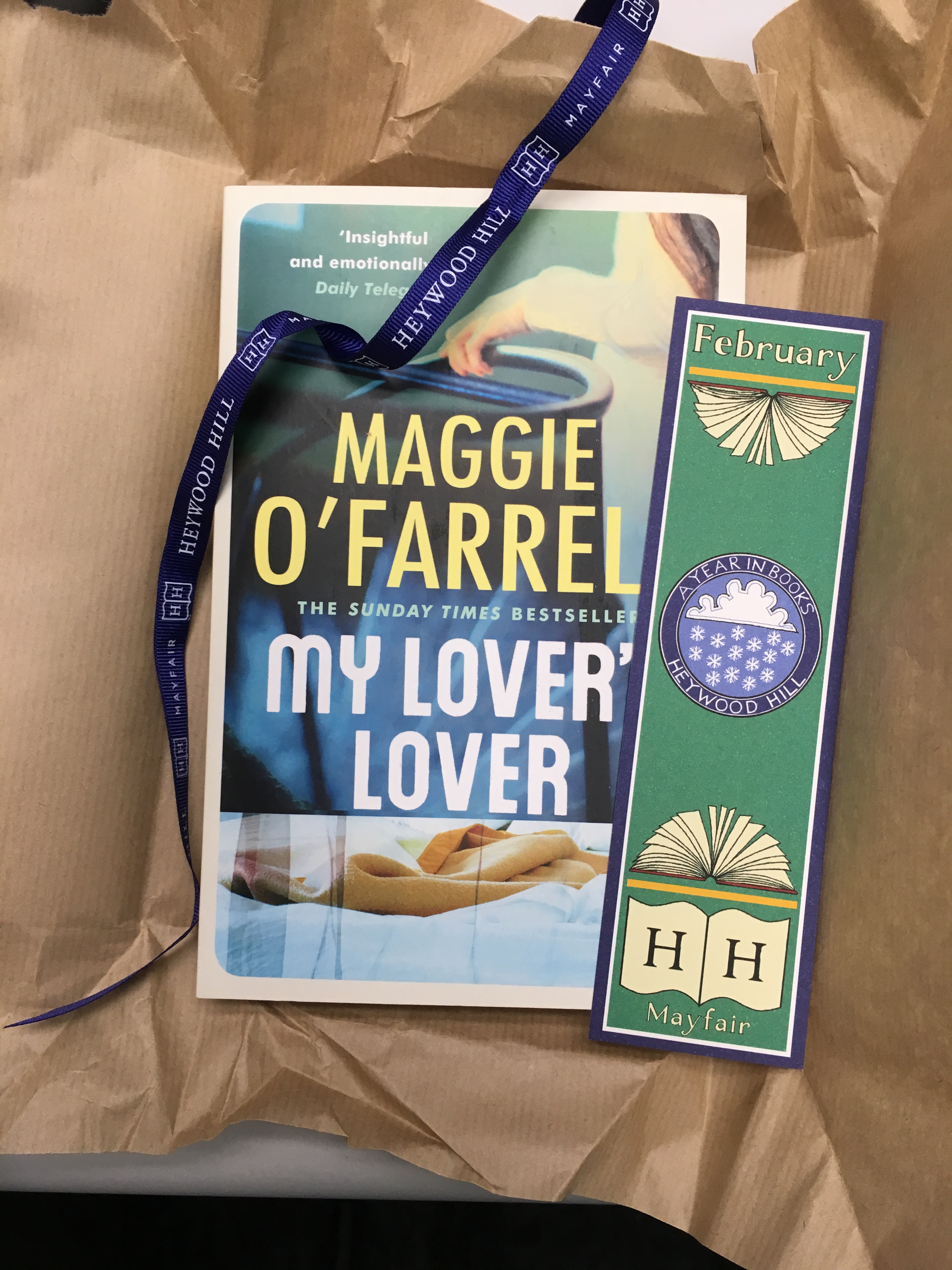
I’ve now read all but O’Farrell’s latest novel. This one, from 2002 is O’Farrell’s second novel and one that I have never seen in the U.S. so kudos to Heywood Hill’s Year of Books subscription for finding me something I didn’t know I needed. It doesn’t live up to any of O’Farrell’s other novels but it is still a decent read. Lily has moved in with Marcus an architect she has quickly fallen in love with. He seems to be full of secrets including the fate of his previous girlfriend. He is a grade-A creep and many moments in this book had me thinking of all the nefarious male behavior being presented in recent days by the #MeToo phenomenon. It feels like a call out of how awful men can be and how much women have been socialized to put up with it–but I don’t think that was O’Farrell’s point, I think it more just a sign of the times. Or maybe it was the point and women have been purposely making that point for a hundred years, but I’ve just considered it to be part of the background. That’s depressing.
Saving Agnes by Rachel Cusk
Young woman sharing a flat with two people she knew from university. I wanted to like it and there many moments when I did like it, but overall I wasn’t a big fan. I really enjoyed Outline, I have even read it twice since it came out in 2014, so I was surprised this one didn’t work out better for me. I believe it was her first novel. It was published 21 years earlier than Outline so maybe I prefer late Cusk. In some ways it made me think it could have been an edgier Anita Brookner who was writing a novel a year at this time. I think her writing style comes close. It certainly has an old fashion feel to it. I should note that I started this one as an audio book but I was somewhat unreasonably annoyed by the narrator’s voice so I switched over to my print copy.
Not to Disturb by Muriel Spark
I am beginning to think I may not like Spark as much I thought I did. From the 1972 New York Times review by Lawrence Graver “A group of servants in the Klopstock mansion near Geneva wait for the Baron to commit suicide after killing his wife and their mutual lover, so they can sell scabrous memoirs to the press.” I don’t mind Spark’s darker side (The Driver’s Seat), but this was all a little bit too whimsical for me.
Rex by E.F. Benson
Young Rex is an aspiring playwright who does not get along with his father and is a bit of an unfeeling user of people. At first I thought this was going to be charming but I ended up disliking Rex so much. I’m not entirely sure Benson was trying to portray him is quite that unsympathetic light, but it is hard to know. I kept hoping for failure/comeuppance and/or transformation. Neither seemed to be in the offing.
My Dog Tulip by J.R. Ackerley
Although I found more than a few things interesting in this “bio” of Ackerley’s dog Tulip, he spent way too much time on anatomical descriptions of the process of trying to get her impregnated. I wouldn’t have minded this if he hadn’t kept bringing those things up and writing about them in a way that was far too poetic to be scientific. The effect ways creepy. There were also moments that I completely identified with, so it was amusing and emotional on some levels. The other thing about this book is that the way we live with dogs today is so much different than it was in Ackerley’s time. From sterilization to picking up poo to calling female dogs bitches. I’m glad we’ve progressed.
Morte D’urban by J.F. Powers
A successful, charismatic, Catholic priest in Chicago is sent off to a derelict retreat house in the wilds of Minnesota by his superior who seems to be jealous of, or threatened by, his presence. He is a priest in the order of St. Clement making him a Clementine. I don’t know if the small, easily peeled, citrus fruits of the same name were as popular in the 1960s as they are now, but it sure made me chuckle ever time I saw it in print. This was kind of charming and funny but I think I would have appreciated it more if there had been less of it.
ACOB PROGRESS
1921 – Vera by Elizabeth von Arnim
1922 – A Son at the Front by Edith Wharton
1924 – The Unlit Lamp by Radclyffe Hall 1925 – Rex by E.F. Benson 1926 – Marazan by Nevil Shute
1929 – The Bride’s House by Dawn Powell
1930 – Journey’s End by R.C. Sherriff and Vernon Bartlett 1934 – The 12:30 from Croydon by Freeman Wills Crofts
1939 – The Confidential Agent by Graham Greene
1954 – Slide Rule by Nevil Shute 1959 – Passage of Arms by Eric Ambler 1962 – Morte D’urban by J.F. Powers 1965 – My Dog Tulip by J.R. Ackerley 1971 – Not to Disturb by Muriel Spark
1976 – Agent in Place by Helen MacInnes
1980 – Recovering by May Sarton 1986 – To the Land of Cattails by Aharon Appelfeld
1987 – In the Country of Last Things by Paul Auster
1990 – The Boss Dog by M.F.K. Fisher 1993 – Saving Agnes by Rachel Cusk
2002 – My Lover’s Lover by Maggie O’Farrell
Like any other reader out there who is on social media, I have done my fair share of moaning about how social media has kept me from reading. Now that I’ve spent countless hours updating my Goodreads page to include every book I have since 1994 I can tell you that my moaning may be misplaced. Here are a few of my observations:
Prior to social media the quality of my reading was hit or miss
As I plugged in all of my book data one thing became clear, back in the days before I found my social media family of like minded readers, my book choices missed their mark more than they hit. Some years, 2005 comes to mind, just seemed to be nothing but a seemingly endless stream of 2- and 3-star books. It was kind of depressing to see how much time I wasted on boring, lackluster, totally forgettable books. The only light during this period was the publication of Nancy Pearl’s Book Lust. She was key to me finding books I actually liked. In particular she turned me on to Ward Just and Barbara Pym, just to name two.
An example of a rare hit in a sea of misses.
A book group helped
For a while after 2005 I was in a monthly book club where people just brought in books they had been reading and talked about them and then we swapped. Over time we got to know whose interests were similar and I got recommendations that were better than just pulling books off the library shelf at random and hoping for the best. My ratings were much perkier during the book club period.
An example of finding one of my all time favorites at my book club.
2009 was a watershed year
Sometime in the summer of 2009 I discovered book blogs. It seems a little weird that I had been blogging (sometimes about books) for three years before I discovered actual book blogs. It’s possible I had found a few prior to that, but it was around then that I found Savidge Reads and Stuck in a Book. I don’t remember which one I found first, but those two Simons and their blogrolls turned me on to a whole world I didn’t know existed. It was at this point where I really started to find books I liked. Not surprisingly it was also about this time that I stopped taking recommendations from people IRL because I didn’t know their tastes as well as I knew the tastes of the bloggers I followed. This was also the year that I discovered many firsts: My first sensation novel (The Woman in White), my first Persephone (Cheerful Weather for the Wedding), my first Europa (Queen of the Tambourine), my first Bloomsbury Edition (Henrietta’s War), and my first NYRB Classic (Manservant and Maidservant). The Wilkie Collins was the only one that was an unqualified success at the time, but the others were enticing enough that they set me on a much better path to a world of books that were “up my alley” as it were.
An example of a book blogger recommendation that opened up a whole new world.
social media does not seem to be a culprit
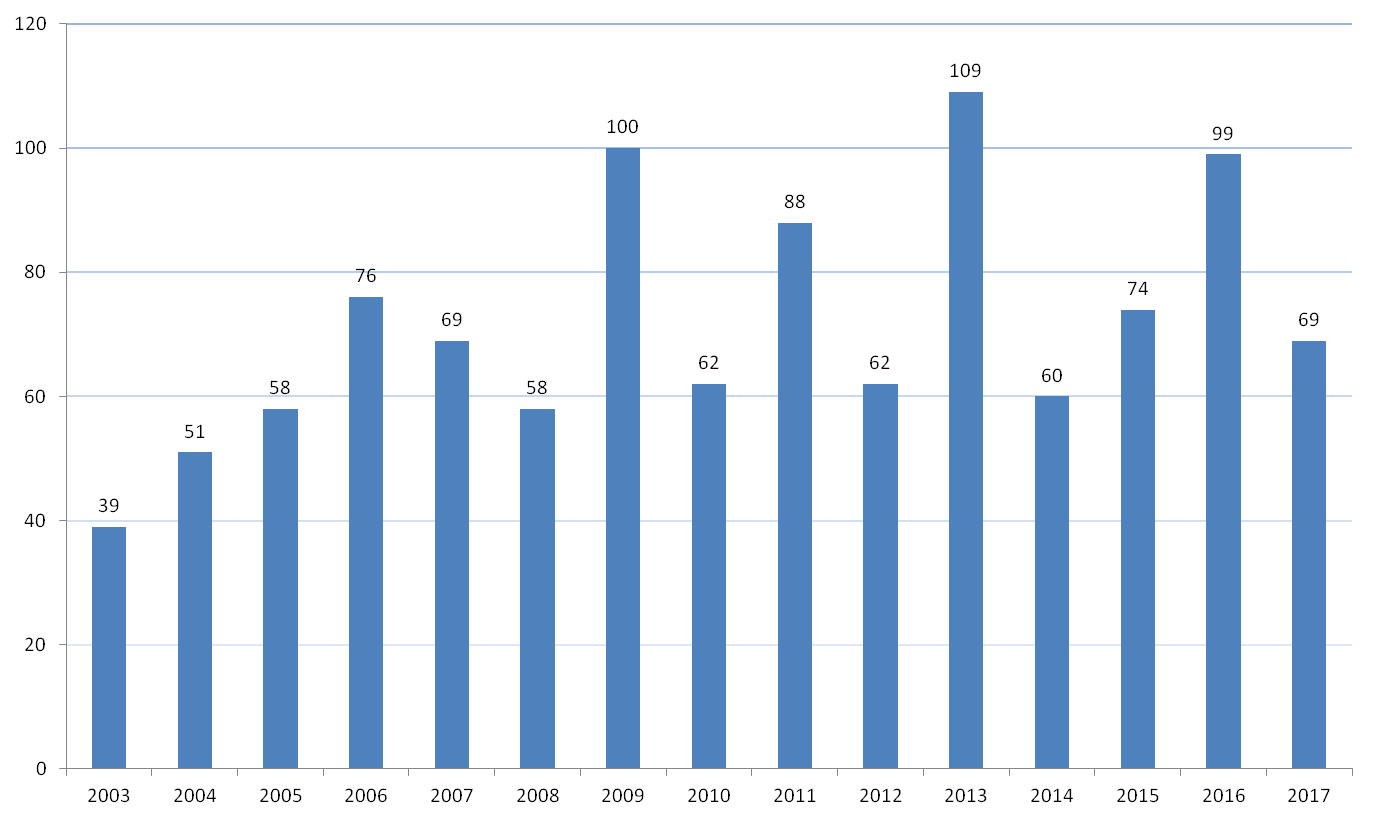
If you look at the chart below, the only thing that seems to be clear is that I tend to have a good year followed by a not-so-good year. I started blogging in 2006 which was a banner year for books. I started focusing mainly on books in 2009 which was another banner year. I started on Twitter in 2013 which was my bannerist year of all time. I’m not sure when I started on Facebook so I can’t really make any judgments about that.
What does it all mean?
The biggest takeaway from all this is that social media has definitely provided me with reading recommendations from trusted sources that would have been unavailable to me in real life. No question about it. I also think the competitive nature of social media has helped me up my game in terms of quantity. It’s true that sometimes I do spend too much time staring at a screen, but overall it hasn’t really negatively impacted the amount of reading I do. A net gain for sure.
And let’s get real, people
Just think how much grayer my life would be (and I am not talking about Persephones) if I didn’t have you all to interact with. If we all lived in a little reading village where we could get together for cocoa and book talk that would be great. But we don’t, so virtual reality works out pretty damn well. At least it has for me.
The Promenade Deck on the British airship R101. See Slide Rule by Nevil Shute below.
I made really good progress in January against both my goal of reading 100 books for the year and of reading books only from my TBR for the A Century of Books Challenge. I would love it if I could keep this pace up for the year. There really is no reason I couldn’t, except for TV, the internet, and laziness. I read 12 books total, 11 of them counting towards ACOB.
A Son at the Front – Edith Wharton
This Wharton is perhaps the most neglected Wharton I have come across. Although it is back in print, it is not one you are likely to find very easily (unless you want it on Kindle). John Campton, a successful American portrait artist living in France tries to keep his son George out of the war. Very much worth reading.
The Boss Dog by M.F.K. Fisher
Americans in Provence in the 1950s or so, a village dog, I feel like I should have loved this book. But there was something about the writing style that not only put me off the book but made the 118 pages seem like an eternity. Each of the chapters is its own little vignette that all just felt like they were trying to be amusing and charming.
The Confidential Agent by Graham Greene
Given its title, not terribly surprising that this is one of Graham Greene’s thrillers. The agent in question, only identified as ‘D’, is in England to buy coal to support his side in his country’s civil war. Almost from the moment he lands in England he is hampered in his task by ‘L’ who wants to keep D from getting the contract for coal and get it for himself instead. I liked the story quite a bit for its 1930s setting and logistical detail, not to mention D’s ability to escape complicated and sometimes harrowing circumstances. I never did believe in the love interest Greene inserts into the tale. It seemed a little lazy and superficial. Like I said a good book, and I love some of Greene’s other books immensely, but this one just proved to me how much better Eric Ambler is at this kind of thing.
Journey’s End by R.C. Sherriff and Vernon Bartlett
I am a huge fan of Sherriff’s two very different books The Hopkin’s Manuscript and A Fortnight in September. Finding this novelization of Sherriff’s play of the same name was quite a surprise when I came across a few years ago. (I think it was at King Books in Detroit when I was on my Booktopia road trip with Savidge Reads.) It’s a good, if fairly standard World War I story, that was well worth reading but didn’t knock my socks off.
In the Country of Last Things by Paul Auster Being a bit of a Paul Auster fan I was excited both by the fact that this is a dystopian novel and that I had an audio recording of it read by none other than Vanessa Redgrave. I was entranced right from the start. But then I realized the Redgrave recording was an (unmarked!) abridged version. What a tragedy. Her reading was marvelous. So I set the recording aside and picked up the actual book. I kind of loved it. It was sad and beautiful. Sometime in the near future, Anna Blume, trying to live through the insanely poor, hardscrabble, almost MadMax-like life in a volatile, unnamed city tells her tale through one long letter written to a friend who is elsewhere away from violence and chaos. Before I knew what was going on in the books, I thought it was set in a Jewish ghetto during the Holocaust. It wasn’t, but it sure seems like Auster’s intentions were to write an allegory–or would it be a metaphor?–in any case I think he did. High marks for this one. If you think you may not like Auster, I think this shortish novel might be a good place to start. (Although now that I think of it there may have been one or two slang references to female anatomy that seemed a little jarring and unnecessary. But it is still a fantastic book.)
The Bride’s House by Dawn Powell
I’ve had several Dawn Powell novels for quite some time. I feel absolutely proud of myself for finally reading one of them. This one, published in 1929, takes place in rural Ohio and tells the story of Sophie who is a beauty who is torn between two men. That makes it sound superficial, which it isn’t. Powell really is a fine writer who must have shocked audiences when this was published. Aside from the period trappings it feels pretty modern.
The Unlit Lamp by Radclyffe Hall
This novel doesn’t have the same crazy writing style of the far more compelling The Well of Loneliness but it could have used more rigorous editing for sure. I can like some good old fashioned unfulfilled lives morphing into life long complacency, but I really wanted this one to have a happy ending. It didn’t, maybe not tragic, but not happy. One has to put aside what could be perceived as child sexual predation–although I don’t think it got phsyical (if ever) until Joan is older. It seems less creepy in 1924 than it does today. Maybe. I love many of the reviews on Goodreads by people who enjoyed it more than I did.
Slide Rule – Nevil Shute I always knew that Nevil Shute had an engineering background, but until I read this memoir I didn’t realize just how involved he was in aviation prior to giving it up to focus full time on being an author. For instance he was an engineer for Britain’s air ship (aka blimp) program and intimately involved in its development. This was fascinating on so many levels, not the least of which was the fact that these early airship designs were really conceived of as ships with dining rooms, saloons, and cabins, etc. After that program was shut down, he co-founded an airplane manufacturing company Airspeed Ltd in 1931. At first I thought it was going to be a tale of a well-intentioned but ultimately unsuccessful attempt to make airplanes, but it wasn’t. They produced numerous types of aircraft and it lasted for 20 years until it merged with de Havilland. Shute left the company sometime in the late 1930s and it made him enough money to not have to work for about 10 years if he had decided to. Although Slide Rule does cover Shute’s novel-writing efforts (which he did in his spare time), this really is a memoir of an engineer. I loved the book and was only disappointed that it didn’t chronicle the next 20 years of his life which was full of WWII, emigrating to Australia, and becoming one of the world’s best selling authors.
Passage of Arms – Eric Ambler
I. Love. This. Book. Amblerian perfection. American couple steaming their way across the world stumble into an arms smuggling plot. One of the things I loved about the story was how we see the deal from inception to completion from some really disparate points of view. It starts in the jungle where a clerk who dreams of owning a bus transportation company comes a cross an abandoned rebel arms dump and he fashions a plan to sell the arms so that he can buy his first bus. Then we see the efforts of the middle man he has enlisted to try and sell them. And then come the American dupes. All told with ample amounts of glorious officefilaic and logistical detail. And did I mention a steam ship making ports of call in southeast Asia.
Vera – Elizabeth von Arnim
I started off loving this book. Older, recent widower Everard, meets and consoles the much younger Lucy who has just lost her father. They fall in love and get married and he instantly becomes controlling and abusive. I don’t really agree that this is “darkly comic”. It think it is just plain tragedy and fairly superficially told at that. This is the book that has sealed the fate of von Arnim for me. I loved The Enchanted April, but her other books have left me bored or annoyed. So I got rid of the rest of her titles on my TBR.
To the Land of Cattails by Aharon Appelfeld
A Jewish mother and her son make their way back to her eastern European homeland as Nazism is on the rise. They unknowingly stumble into the mass deportation of Jews. Interesting and poignant in many ways, but overall, as a reading experience it was just okay.
ACOB progress
1921 – Vera – Elizabeth von Arnim 1922 – A Son at the Front – Edith Wharton 1924 –The Unlit Lamp by Radclyffe Hall 1929 – The Bride’s House by Dawn Powell 1930 – Journey’s End by R.C. Sherriff and Vernon Bartlett 1939 – The Confidential Agent by Graham Greene 1954 – Slide Rule – Nevil Shute 1959 – Passage of Arms – Eric Ambler 1986 – To the Land of Cattails by Aharon Appelfeld 1987 – In the Country of Last Things by Paul Auster 1990 – The Boss Dog by M.F.K. Fisher
Seinfeldia by Jennifer Keishin Armstrong
Lately I’ve been watching a lot of Seinfeld reruns. I’ve seen most episodes multiple times. But after a period of a few years of not seeing any episodes I now find them perhaps even funnier than before and on top of that I now feel nostalgic for the 1990s. Seeing the group of four friends and all the socializing and informal pop-ins makes me hanker for my easy-breezy 20s. So when I saw the book at Politics and Prose, and not in the market for any new fiction given my ACOB goals, it seemed like this clearly enjoyable, easy-to-read, bit of fluff wouldn’t make much of a dent in my reading time. I was right on all counts. I enjoyed it for some of its behind the scenes gossip and much of it made me laugh out loud reminiscing about episodes and how they were received at the time they first aired. It was also interesting to read about how the show first came to be and how it almost didn’t survive it’s pilot episode. The second part of the book kind of breaks down a bit and turns into a lot of disparate anecdotes that felt like the author was stretching for material. But still a very fun read. [I’m not counting this one toward ACOB because it was not part of my TBR and because there are too many other books from 2016 to from which to choose.]
Regular readers will know that the first two months of my year of books from Heywood Hill bookshop in Mayfair were absolute hits (see hereand here). They were so good I was beginning to think they were living in my head. I wondered if they could keep it up. On the whole I would say yes, they did keep it up. However…
This choice was a winner because Heywood found something that is both in my comfort zone in setting, tone, and writing style. And they get kudos for giving me a ghost story, something I would never pick up on my own. I wanted them to challenge my usual reading choices. So no faults for their choice. Where it falls down is that the book just isn’t that good. I kind of liked it at first but then I started to have problems with the one dimensionality of the characters and a story that I grew to care less and less about as each page passed.
This choice was a winner because it is exactly the kind of book I would love. But. I read it when it first came out and hated it because I thought Hill set up a narrative framework and then proceeded to ignore it and just blather about whatever bookish topic she wanted to blather about. And don’t even get me started on her thoughts on book bloggers. What a dip.