Book Review: Excellent Women by Barbara Pym


Excellent Women
Barbara Pym

There are three things that make Barbara Pym’s world foreign to me. Not the English part, I have been inhaling all things England since I was 11. And not the clerical milieu, I grew up next door to a parsonage and became very familiar with the life and work of a protestant clergy family (despite having been raised Roman Catholic and having spent lots (and lots) of time at an RC church across town).

Now that I think about it, the three foreign things are kind of related to the two mentioned above. First, food. Perhaps it is the 1950s setting of Excellent Women that has our heroine Mildred Lathbury eating sad little meals because of lingering food shortages in the wake of World War II. And the War experience at least in my mind, is quintessentially British, so that might all be part and parcel of the whole English-ness of the book. (Don’t worry, I’m not using British and English interchangeably…)

Second, and this I guess must also relate to post-war circumstances, housing shortages. I have lived in some pretty, er, Bohemian settings over the years, but none of them ever required sharing a bathroom with another apartment—College dormitories don’t count. The fact that grown adults in the industrialized world had to consider such housing arrangements is indeed foreign to me.

Third, religious intolerance. Granted religion and other aspects of familial, civic, and political life have always mixed in a rather unholy way. But I think I must have grown up in an ecumenical atmosphere. Personal animus related to religion was not really an acceptable position either at home or next door at the parsonage. And whenever my parents would talk about the old days when marrying outside one’s faith was a huge deal that had broken up families, etc. it was always in the context of thank goodness we’re not like that. I don’t think Mildred Lathbury in Excellent Women is intolerant, but she certainly is surrounded by lots of parochial thinking that is as off putting as it is foreign to me.

In essence Excellent Women is about those excellent women who keep things moving. They make tea, they comfort, they volunteer, they are trustworthy and can be depended upon. But they don’t get married. And, as in Mildred’s case, they often get taken advantage of by the coupled and the male. More than once I wanted Mildred to flip them all the bird and tell them to do it themselves.

Excellent Women is vintage Pym with some darker overtones than earlier works like Some Tame Gazelle (which remains my favorite Pym). And having recently read a bio of Pym certainly heightened my enjoyment and understanding of the work.

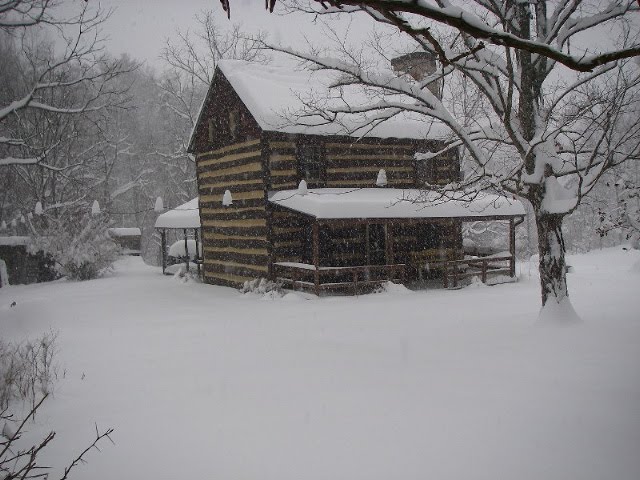
Last weekend looked something like this (or, Willa Cather slept near here)

   
Last weekend we took a spontaneous trip out into the hills of West Virginia to visit friends of ours who have this lovely, lovely cabin. There was lots of snow on the ground, but it wasn’t actually snowing while we were there. It was a great place to and hang out with friends.

Only after our return when I began reading a biography of Willa Cather did I realize that Cather’s Virginia roots (which I knew about) were in the town of Gore, not far from the West Virginia line and our friend’s rustic weekend retreat. We were within miles of her birthplace and didn’t know it. Next time we visit these friends I am definitely making a pilgrimage to Gore. (Actually when Cather was growing up there the town was called Back Creek but was later renamed after her aunt Sidney Gore.)

The Best Evensong in London: St. Bride’s Fleet Street


You don’t have to be a Believer to enjoy Choral Evensong. Without going into lots of detail, Choral Evensong is a service of evening prayer in the Anglican Church that is almost entirely sung. In the English cathedral tradition, the choirs have traditionally been made up entirely of men and boys. Since my first trip to the UK in 1989 I have been to many a Choral Evensong in the Cathedrals of Canterbury, Coventry, Ely, Gloucester, Lincoln, Salisbury, Wells, Winchester, Worcester, York, and St. Paul’s in London as well as St. George’s Chapel Windsor, and King’s College Chapel, in Cambridge. The combination of a good choir, good music, and amazing acoustics made each of these experiences special in one way or another.

But in 1992 while I was working in London I was working the day shift one Sunday at the front desk of the Sydney House Hotel in Chelsea trying to figure out where to go to Evensong that night. I had been to St. Paul’s a number of times, but I was a little tired that day and wanted something that started a bit later so I could take a little nap between work and Evensong. So I decided to take advantage of the somewhat later starting time at St. Bride’s. Just down the road from the enormous edifice of St. Paul’s Cathedral, St. Bride’s is a lovely little church tucked in between a few office buildings. Designed by Sir Christopher Wren, St. Bride’s has a tiered spire that is said to be the inspiration for the tiered wedding cake. Located just off of Fleet Street, St. Bride’s has traditionally been the journalists’ church.

When I walked into St. Bride’s for the first time I was surprised at the interior. It looked brand new and was set up so that the entire body of the church looked like the “choir” section of a large cathedral. What I found out later is that the church had been badly bombed during World War II and that the interior looked so new because it had been rebuilt after the war.

The next thing I noticed was that the choir (the group of singers, not the architectural feature) was made up of men and women not men and boys. And the sound that issued from that small group of maybe 12 singers was one of the most amazing things I have ever heard in my life. The strong, clear sound of the choir and the incredibly bright acoustics of St. Bride’s made me feel like my body was soaring up among the barrel vaults of the church along with the music. Since that first experience at St. Bride’s I haven’t even wanted to check out Evensong at other churches. I even arrange my trips to the UK so I can be in London on at least one Sunday evening just so I can go to St. Bride’s for Evensong. There is something to be said about hearing one of the great cathedral choirs in the spacious acoustic of a great cathedral, but the choir and space at St. Bride’s provides a magical experience that is a must do for anyone with a predilection for choral music.

Here is a recording of the choir at St. Bride’s. It is a lovely recording, but it doesn’t begin to do justice to hearing them in person.

And here is a short video that shows the interior of St. Bride’s.

Notebook Giveway

     
I realized after I posted about John Hughes’ notebook collection that I am not the only one fascinated by notebooks. So, since I have two of these fabulous Wanderlust Travel Journal notebooks, I would give one of them away.

It is about 5 3/4″ by 8″ in size. Has lots of great travel-related images like the ones on the cover dotted throughout the notebook. Most pages are unlined, some are graph paper, some are lightly colored. There is a section in the back for phone numbers and addresses. Overall it is a wonderful object, whether you plan to use it or not.

So, just leave me a comment letting me know you are interested by midnight (GMT + 6) March 7, 2010, and you could be the lucky winner. I WILL SHIP ANYWHERE IN THE WORLD (AND A FEW PLACES ON THE MOON.)


The Notebook Club

   
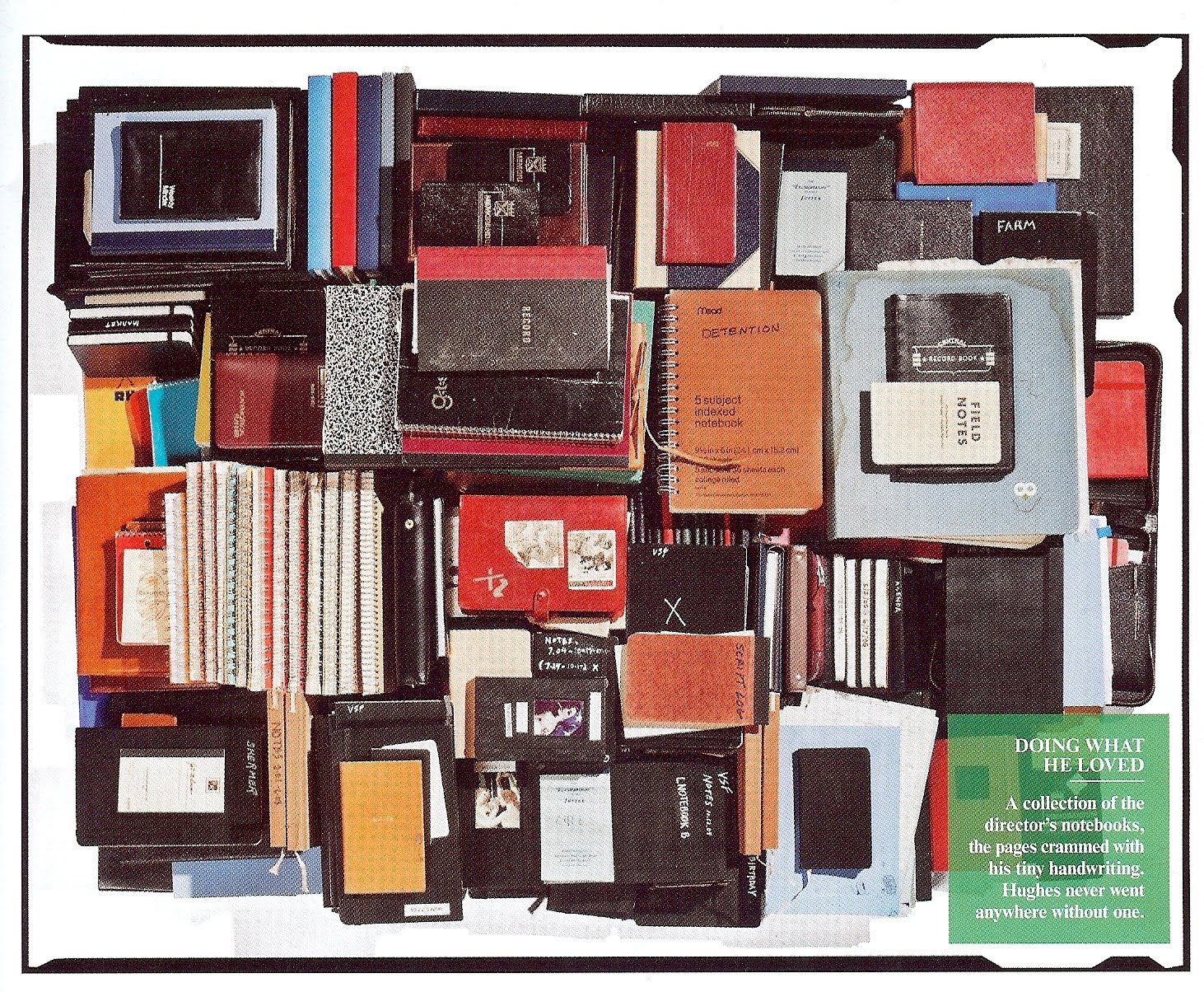
In the March 2010 issue of Vanity Fair they have a story on the late great film director John Hughes. His films Breakfast Club, Pretty in Pink and Sixteen Candles helped summarize and define the adolesence of so many American teens in the 1980s.

Here is a fantastic photograph of his collection of notebooks.

Book Review: A Lot to Ask: A Life of Barbara Pym


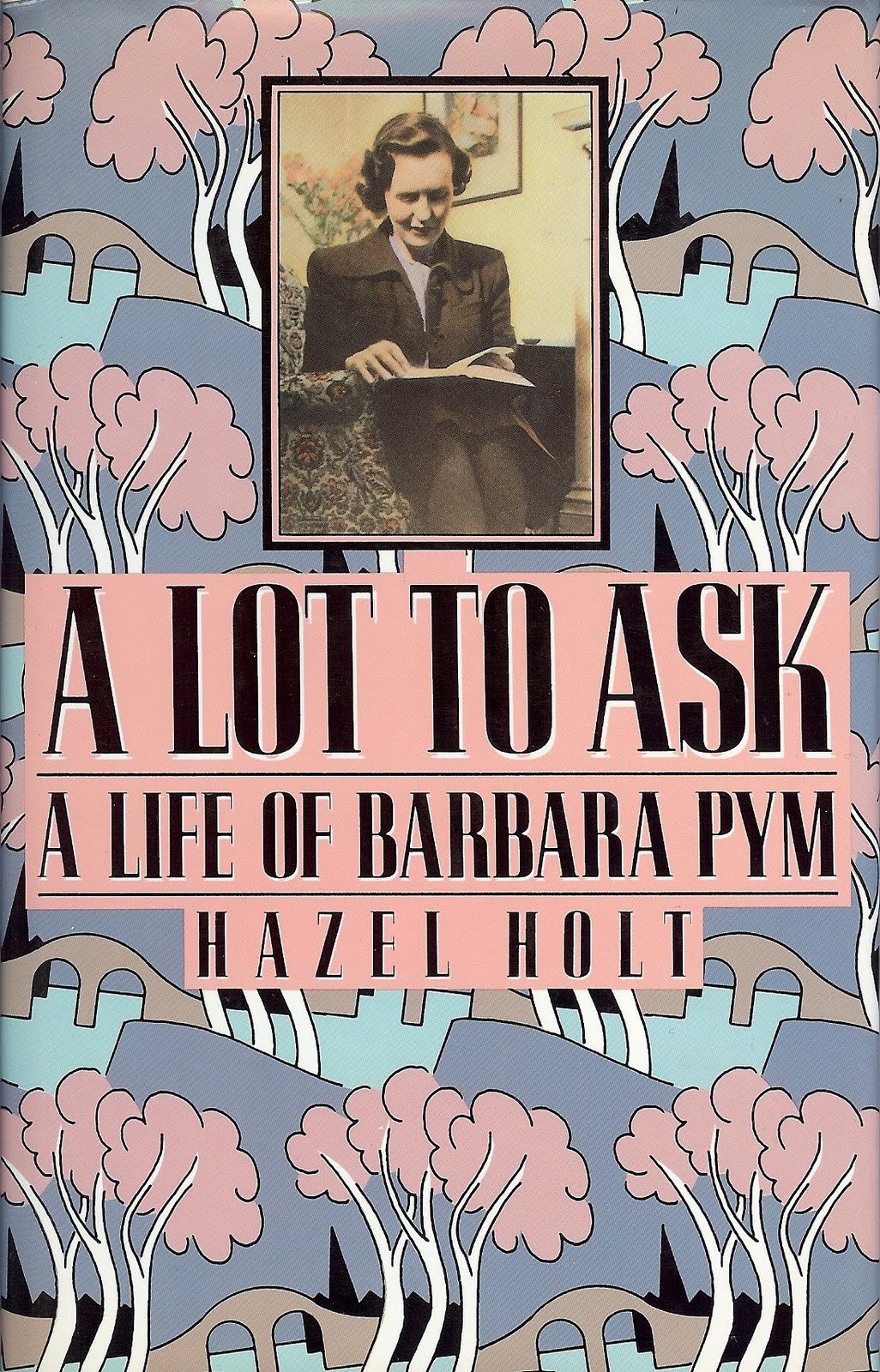
A Lot to Ask: A Life of Barbara Pym
Hazel Holt

I read my first Barbara Pym novel back in April 2002. It was Crampton Hodnet and I must admit I remember nothing about it. I remember that I enjoyed it in a mild kind of way. Later that year I followed it up with A Glass of Blessing and then again in 2004 with Jane and Prudence. In each case I remember enjoying them but not being able to remember a blessed thing about any of them. It wasn’t until this past August when I picked up Pym’s first novel, Some Tame Gazelle, that I really understood the brilliance of Barbara Pym. Not only did I thoroughly enjoy Some Tame Gazelle, but I actually remember what happened and think of various scenes from that book with some frequency and with more than a little amusement. So when I came across this copy of A Lot to Ask I couldn’t pass it up.

Hazel Holt, Pym’s friend, colleague, and literary executor has pulled together a short life of Barbara Pym using extensive excerpts from Pym’s diaries, correspondence, and published works. The result is a somewhat choppy, episodic narrative that nonetheless delights because it is rich with the same kind of detail that one finds in Pym’s novels. As I am with most biography, I was bored with the details of her childhood, but once Pym heads off to Oxford my interest started to quicken. And by the time she gets to writing novels I was completely enthralled. What becomes clear is how much of Pym’s fictional output is pulled from real life. Not necessarily autobiographical, but it does seem like Pym’s novel are repositories for a vast catalog of observations, experiences, and collected stories (gossip) that she picked up and recorded in her diaries over the years.

Not surprisingly I was particularly taken with passages that detail Pym’s interest in various authors and books. Her shared love of Ivy Compton-Burnett with her friend Jock led them to correspond with one another in the style of ICB. In practical terms this meant clever, funny letters with lots of dialog that read more like scenes from novels than correspondence. She also writes more than once of her love of Anthony Powell’s, six volume magnum opus, A Dance to the Music of Time. (I have the complete set and Pym’s encouragement from beyond the grave is moving them ever higher in my TBR pile.) And I am dying to find out more about Denton Welch, an author with whom Pym was “besotted”.

Perhaps the most difficult time in Pym’s life was the period in the 1960s and 70s in which her work was unpublishable. Having had six novels published between 1950 and 1961 Pym was devastated when her publisher, Jonthan Cape, declined to publish An Unsuitable Attachment. Even in her despair Pym recognized that the literary landscape had changed with the popularity of such work like William Burrough’s The Naked Lunch and Henry Miller’s Tropic of Cancer as well as the works of James Baldwin and others. Indeed it is hard to reconcile the dissonance of the era with the quiet challenges of a typical Pym story line. Recording everyday life observations in her notebook she bemoans the unfashionable quality of what she loves to write:

Mr Claydon in the Library – he is having his lunch, eating a sandwich with a knife and fork, a glass of milk near at hand. Oh why can’t I write about things like that any more – why is this kind of thing no longer acceptable?…What is wrong with being obsessed with trivia? Some have criticized The Sweet Dove for this. What are the minds of my critics filled with? What nobler and more worthwhile things?

It wasn’t until 1977 when the Times Literary Supplement included a feature on underrated authors in which both Philip Larkin and Lord David Cecil pronounced Barbara Pym as their favorite, that Pym’s career got back on track. Not only was her reputation (and publishing) revived but she achieved sales and accolades like never before. It was, however, a bittersweet revival given that Pym died of cancer only three years later in 1980 at the age of 66.

For anyone who likes Pym this is a must read. It has certainly put me in a Pym mood. I have already started on Excellent Women and am finding the experience all the more rewarding for having read A Lot to Ask.

Sunday Painting: A Woman’s Work by John Sloan

  
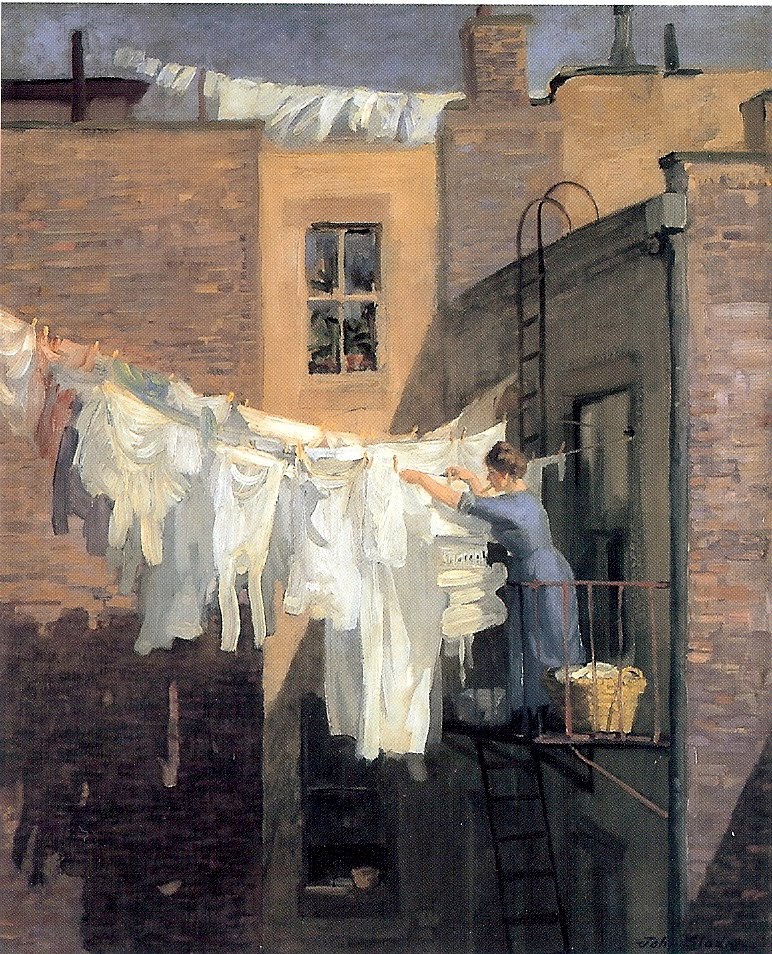
Back in January, Linda over at Under the Gables did a blog post about the romance of laundry. She posted a bunch of wonderful images depicting the act of doing laundry. As most of you know I destest doing laundry, but I kind of like hanging laundry out on a clothesline. And I love depictions of clotheslines in art. When Linda first blogged about these images, somewhere in the back of my brain I recalled that I had post card of a great painting of a woman hanging clothes on a line, but I couldn’t remember where I put it. Last week I finally uncovered the card and decided to make it my Sunday Painting for the week. I haven’t posted a Sunday Painting since before we went to Thailand so it is about time I get back on schedule and return to this regular weekly feature.

The title of this painting is particularly appropriate since Linda’s blog is “Dedicated to Discussion of Women and their Work.”

A Woman’s Work, 1912
John Sloan, American, 1871-1951
  

My English Journey Set is Complete Thanks to Jill and Cornflower

A few months ago in a post about the books in my nightstand I wrote about how I had 19 of the 20 volumes in Penguin’s English Journey series. The one that was missing was AE Housman’s A Shropshire Lad which was out of stock at The Book Despository. At the time I blamed Cornflower because her book club had just read the book so what else could I conclude? Months later the book is still out of stock and the Penguin website won’t sell these to the US. I was beginning to get worried that I would never be able to complete the set. So I thought I would appeal to Cornflower to see if anyone in her book club had a clean copy they were willing to part with. Within no time, Jill from Victoria, Australia came to my rescue and offered to send me her copy.

In exchange I offered to buy the book of her choice that would cover the cost of the book and shipping. Jill’s choice was Henrietta’s War. Since she had done me a kind turn, and because the price of Henrietta’s War didn’t seem enough to make up for the effort and expenditure on Jill’s end, I decided that I would send her a few of my favorites in addition to Henrietta. Since Jill lives in Australia, I decided I would send her something by American authors so I chose The Inn at Lake Devine by Elinor Lipman and The Professor’s House by Willa Cather. Two of my favorites for very different reasons. I hope she likes them.

Yesterday I got this cute package in the mail from Jill. She not only sent me the Housman I needed to complete my set but she also sent me a copy of A Fortunate Life by A.B. Facey-an “Australian Classic”

Born in 1894, Facey lived the rough frontier life of a sheep farmer, survived the gore of Gallipoli, raised a family through the Depression and spent sixty years with his beloved wife…

The long awaited volume…Now that the set is complete I am toying with the idea of reading all 20 of them over the course of a month. None of them are very long so I don’t think it would be too difficult to do.

Here are the rest of them just waiting for A Shropshire Lad.

I’ve Been Tagged by Nadia


Nadia over at A Bookish Way of Life tagged me as a Kreativ Blogger. To accept this lovely, gracious tag, I am supposed to list 7 random things about me.

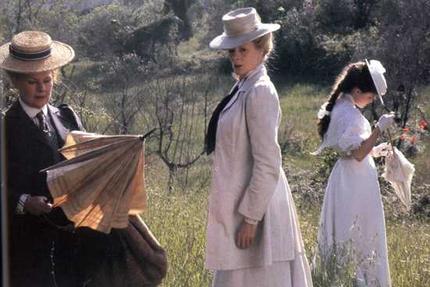
1. I wish Merchant-Ivory had made a film that consisted of 2 hours of British people in period dress buttering toast and eating scones.  (I couldn’t find a picture of the scene from Howards End where Margaret, Helen, and Tibby are having tea and scones when Mr. Bast arrives out of the rain so we will have to make do with the picture above from A Room With A View with two of my favorite British legends and the moderately decent actress who broke up Emma Thompson’s marriage.)

2. I am always worried that someone is going to be ahead of me in line.

3. I don’t like exclamation points.

4. I don’t want my cremated remains to be sprinkled in the “South” so I specified in my will that they be sprinkled in a state or territory that fought on the side of the Union in the Civil War.

5. When I think about time travel, I always think about going backward.

6. I would like to be a weekend guest at Martha Stewart’s house, but I know I would probably have a better time at Ina Garten’s.

7. I wish I was in a choir that never performed. Why can’t we just practice?