Oh the scones I’ve known

Some American “scones” may be delicious in their own way, but they aren’t scones. Now that we’ve got that clear, let’s move on.

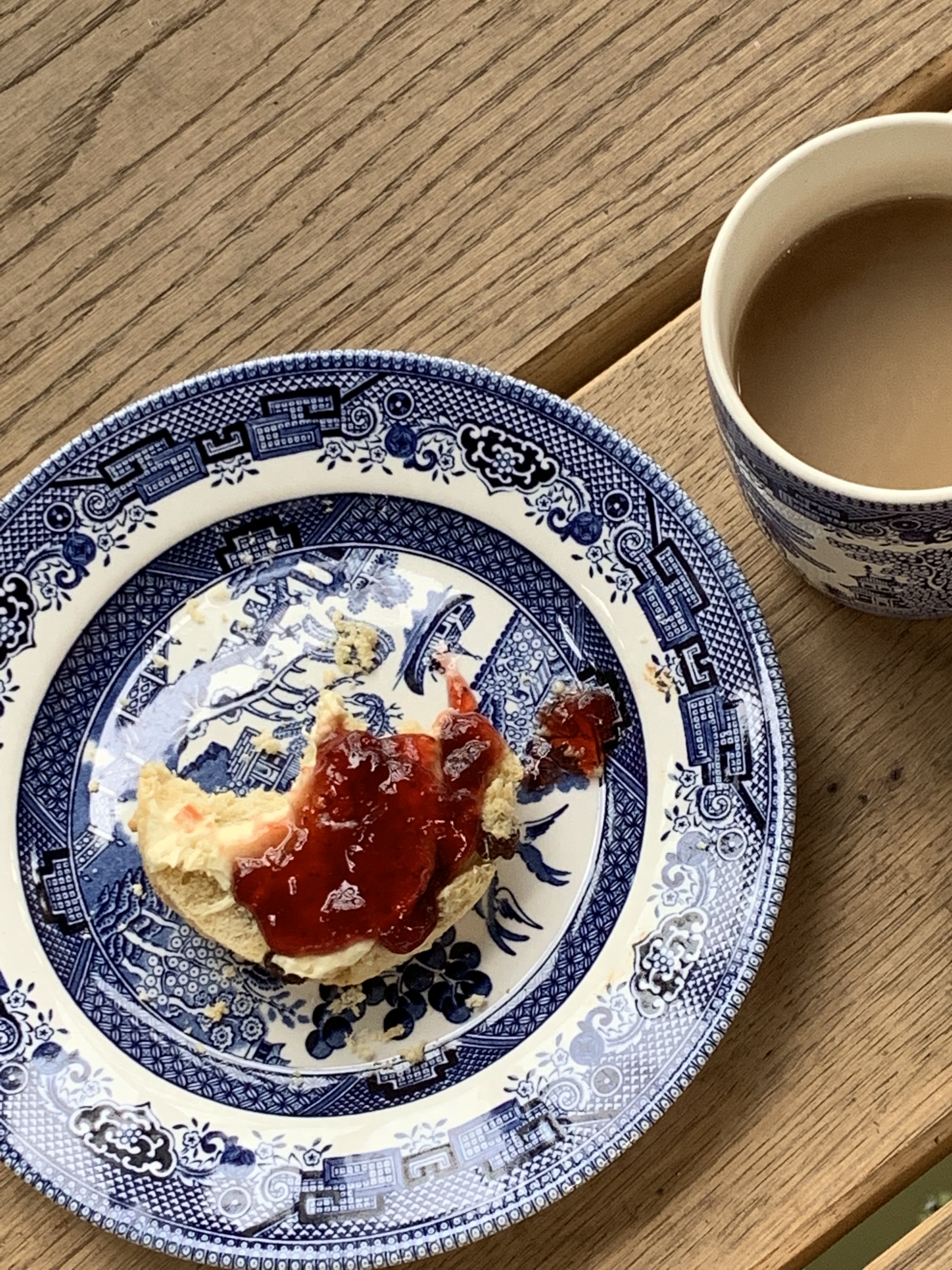
Scone + clotted cream + strawberry jam.

I had at least one a day. The scones they made at the restaurant across from the gift shop were seriously good. I had one or two there, but more often than not we would get them to go so we could sit out in “our” garden. This would mean that I was eating them at 5:30 pm most evenings, but hey, when the sun doesn’t disappear until almost 10, why not?

Absolutely perfect. If I do say so myself.
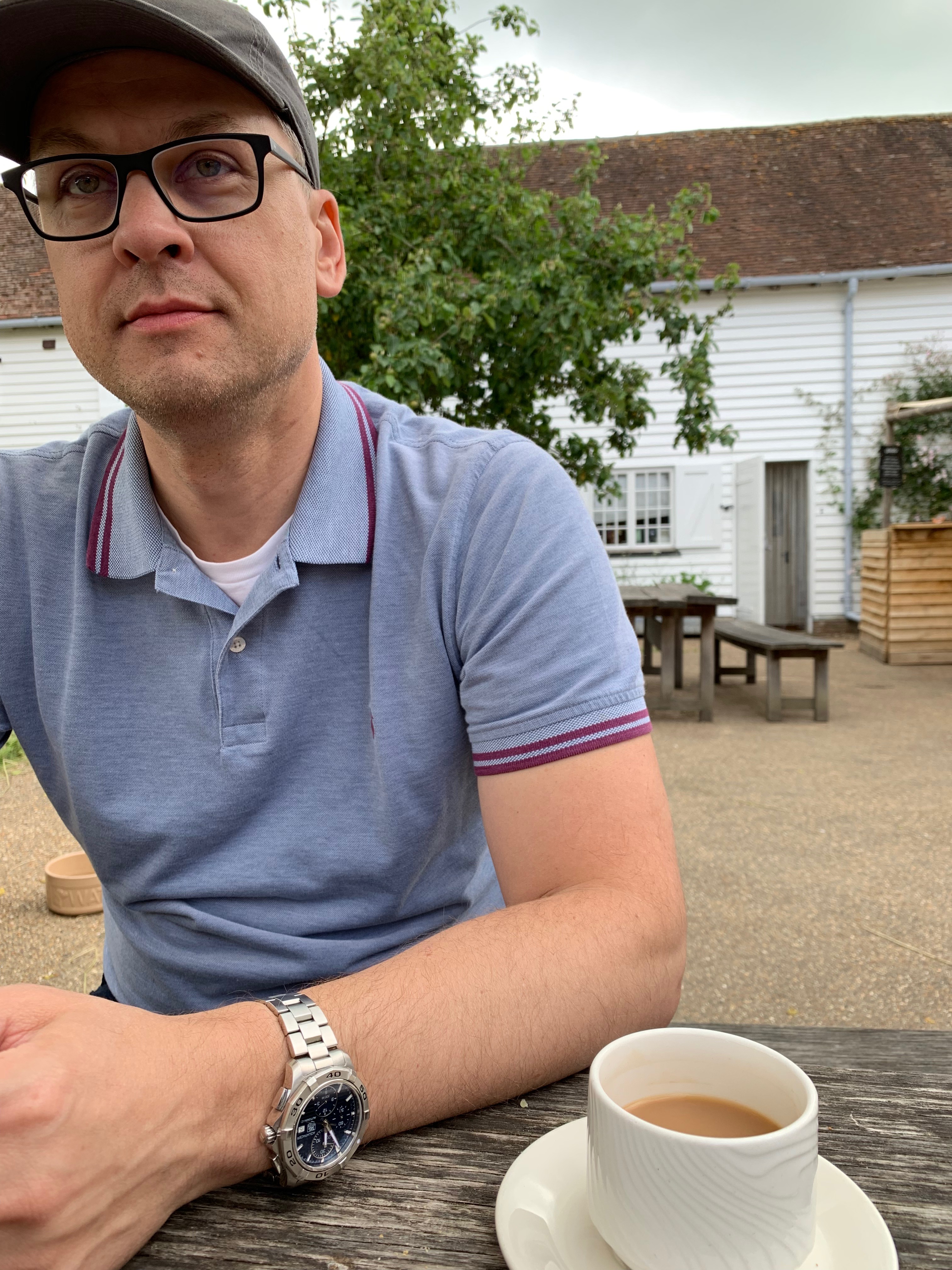
At the cafe for this cuppa. I should say that I’m not much of a tea drinker, but when accompanying a scone, it kind of hits the spot.
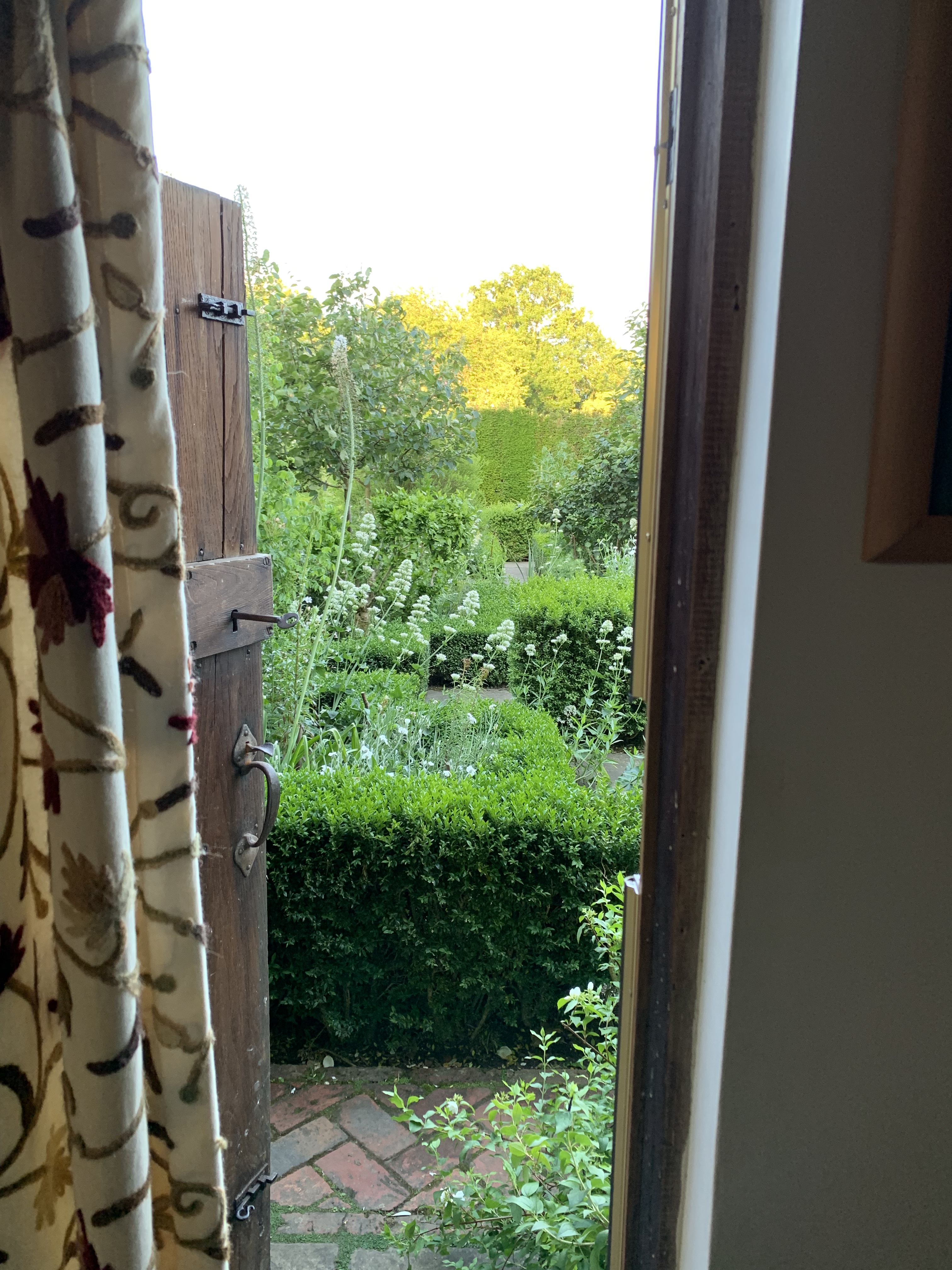
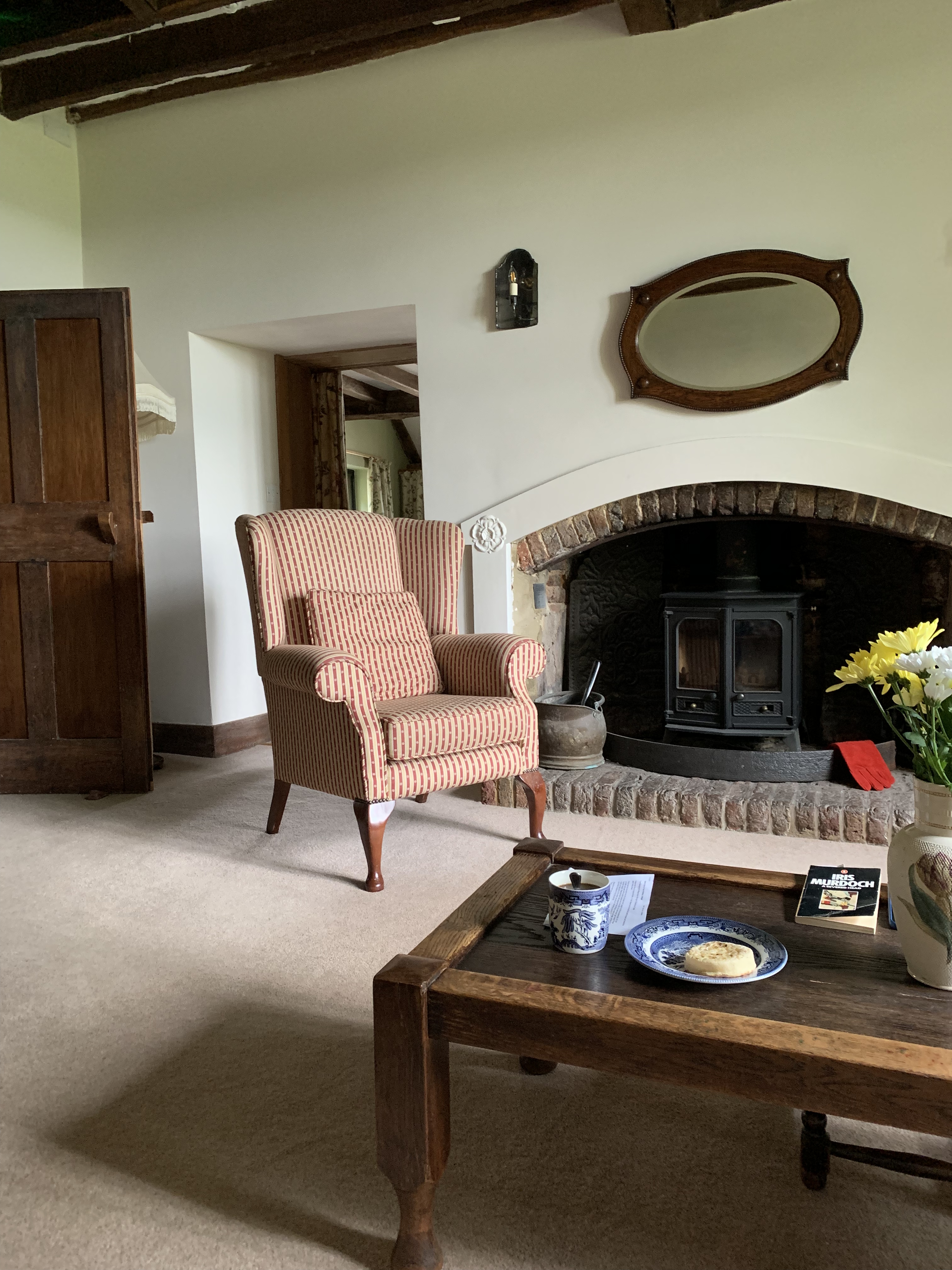
At 5:30 each night, after everyone else is gone, the living room door opens out onto the White Garden, we emerge, and it’s time for (late) afternoon tea.
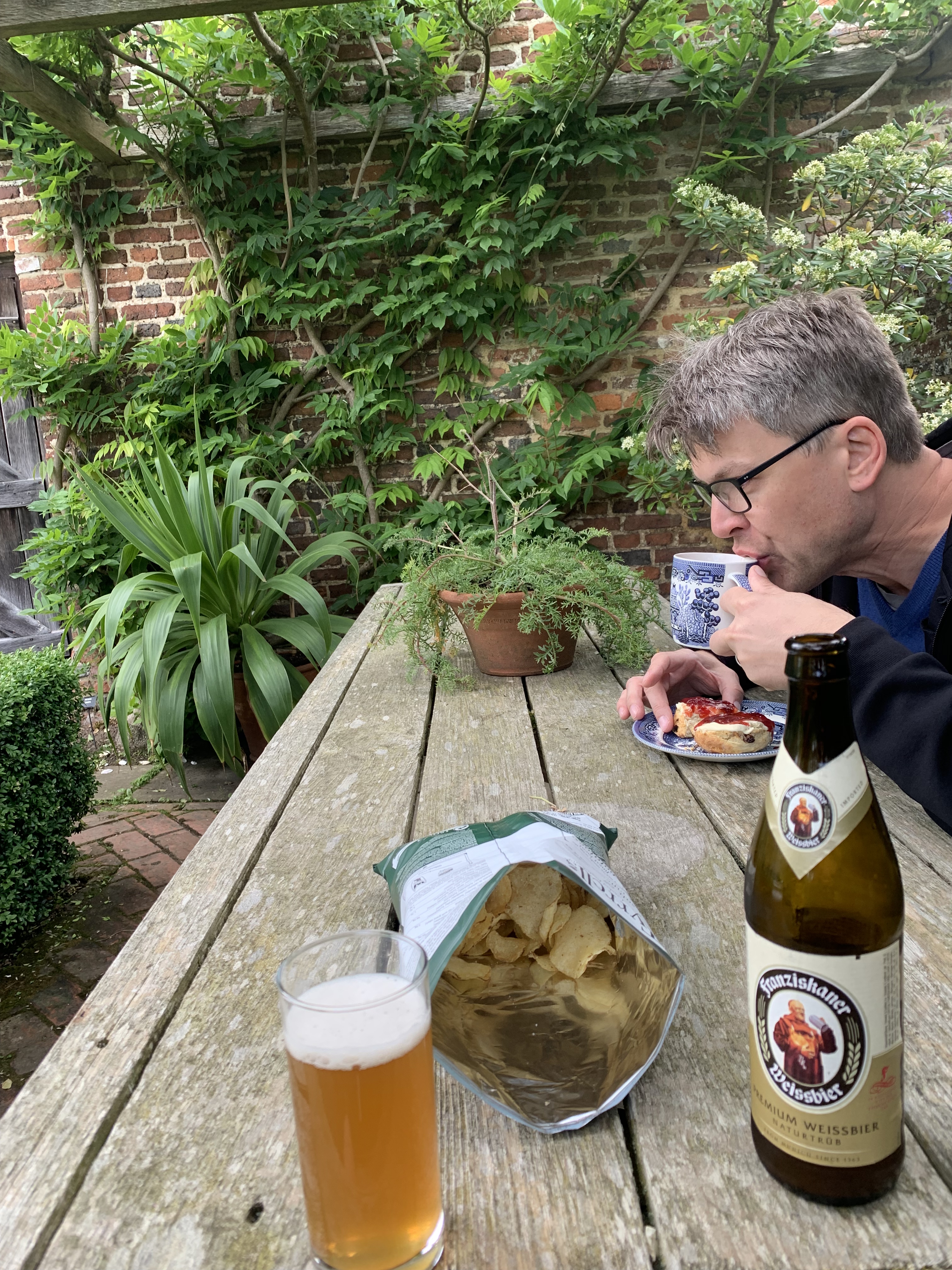
Our table in the White Garden. After a few days John preferred beer and crisps over scones and tea.
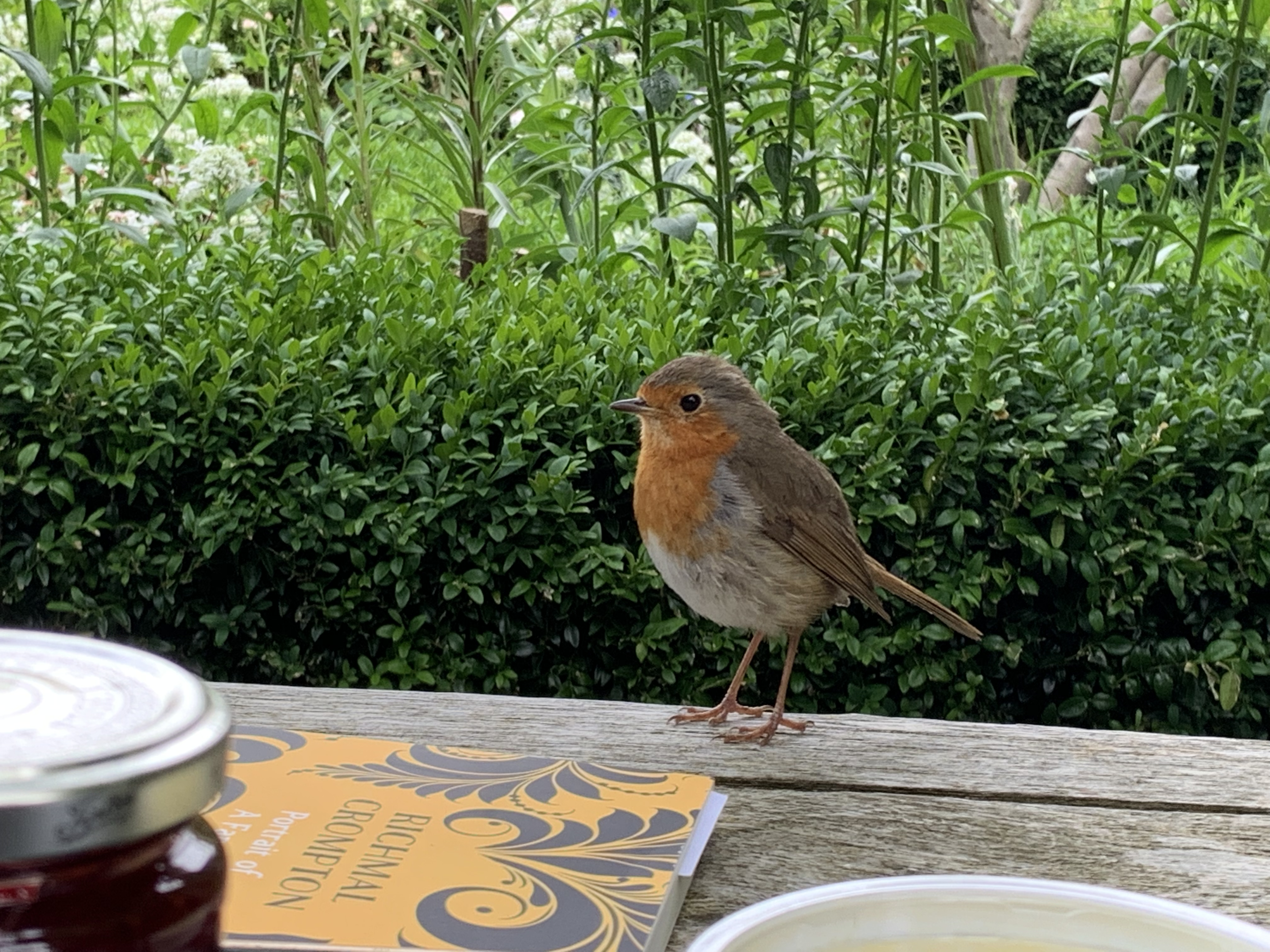
One evening this little guy came to visit.
At the end of the trip, the scones in the BA business class lounge were pretty awful. The scone itself might have been okay, but the industrial strength strawberry jam was almost entirely without taste. Interestingly, the scone BA gave us on the plane was delicious.
Not my last scone of the trip, but I couldn’t leave you with that substandard BA scone.

The most perfect room in England

I’m a big fan of rooms that are frozen in time, especially if they feature papers, or maps, or books, or push pins, or typewriters (Cabinet War Room anyone…). When you add Vita Sackville-West to this equation, and factor in the idyllic setting at Sissinghurst and the fact that her study is up in a tower, the whole concept starts to reach a ridiculous level of perfection. A room frozen in 1962, chock full of books, art, and a cozy chaise-longue.

During our week-long stay at Sissinghurst I visited Vita’s study in the tower on three separate occasions. Happily, each time I went it was late enough in the day that no other visitor was blocking the view and no one was waiting to see the view so I could stare to my heart’s content. Since you can’t actually walk into the room, my only regret is that I didn’t have binoculars to get a better look at the titles on the shelves. But I did stand there, probably with my mouth open, fantasizing about the space being mine. I would have settled for a couple of hours inside to browse the shelves and take a closer look at everything.

Bottom line is that it is the perfect room for me. I will let the pictures speak for themselves, with one exception. They keep the curtains drawn to preserve the books, art, and textiles, but the room has large banks of windows on both sides of the tower, which would make it a very light room–and one with cross breezes.

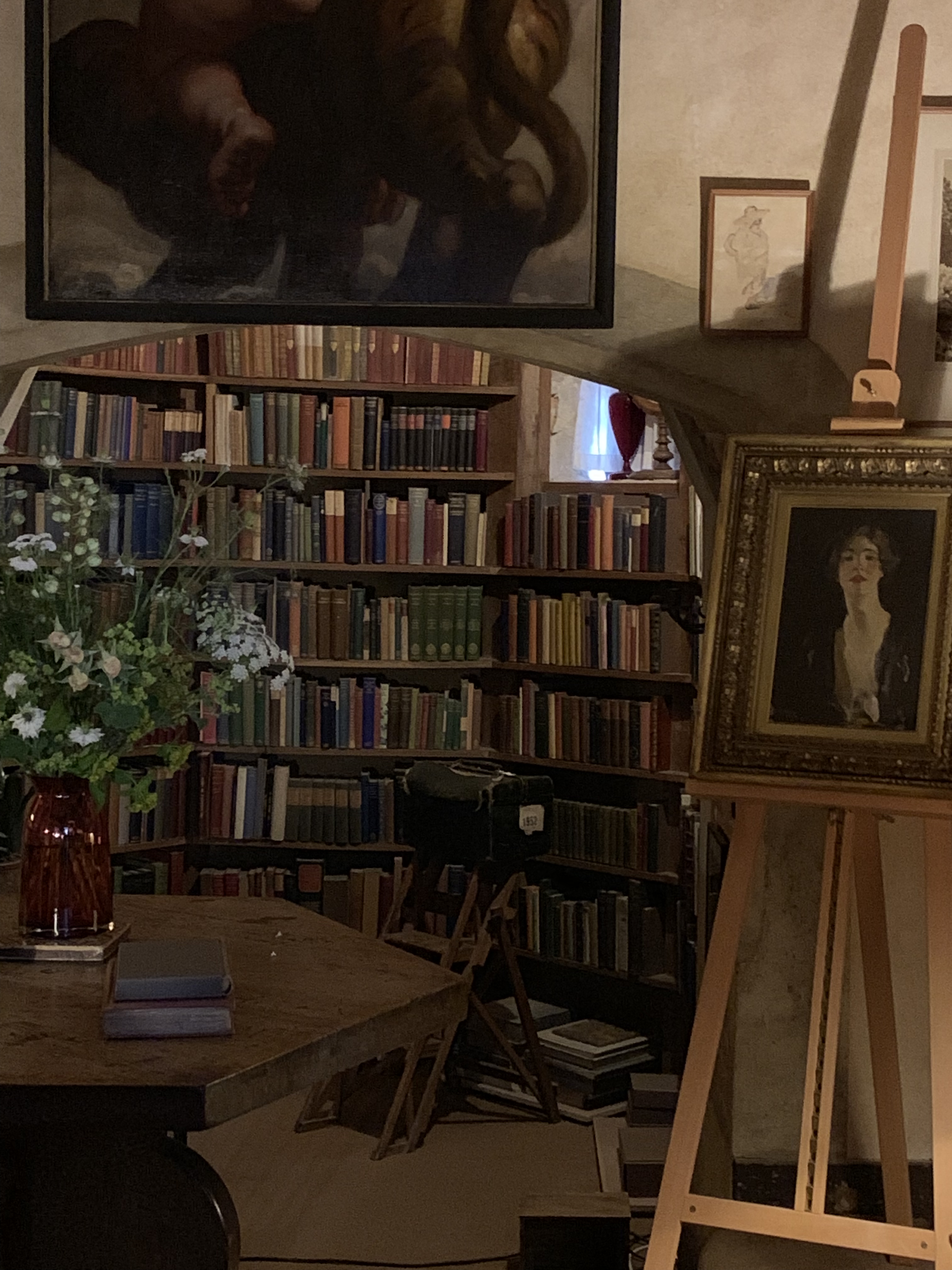
Without being able to go into the room, it is hard to take a good picture through the metal gate . This is the best I could do. To the left, up against the wall where the door is is Vita’s desk. To the right is the chaise-longue, and directly ahead is what I call the book cove.
There is not an element of this room that I don’t love.
Vita’s study is behind the large bank of windows on the lowest level, just above the gate that goes under it.
Imagine those curtains open, light and breeze streaming in, laying on the chaise reading a book (or napping).
I was particularly taken by the print in the middle and the painting above it.
Never have I coveted a space more.
Scroll down further for a professional photo of the book cove, which is much taller than this photo would suggest.
The desk, which is immediately to the left of the door, and very hard to photograph through the grill.
I love the rack next to the desk for reference books, things I’m working on at the moment…
Perfect clutter.
The chair in the foreground gives you an idea of the relationship of the desk to the rest of the room.
Anything there you want to read? Makes me question my current weeding policy. Maybe I need to go back to keeping everything.
Vita bought the blue ceramics on a trip to Persia. She gave one piece of it to Virginia Woolf–whose photo sits prominently on Vita’s desk.
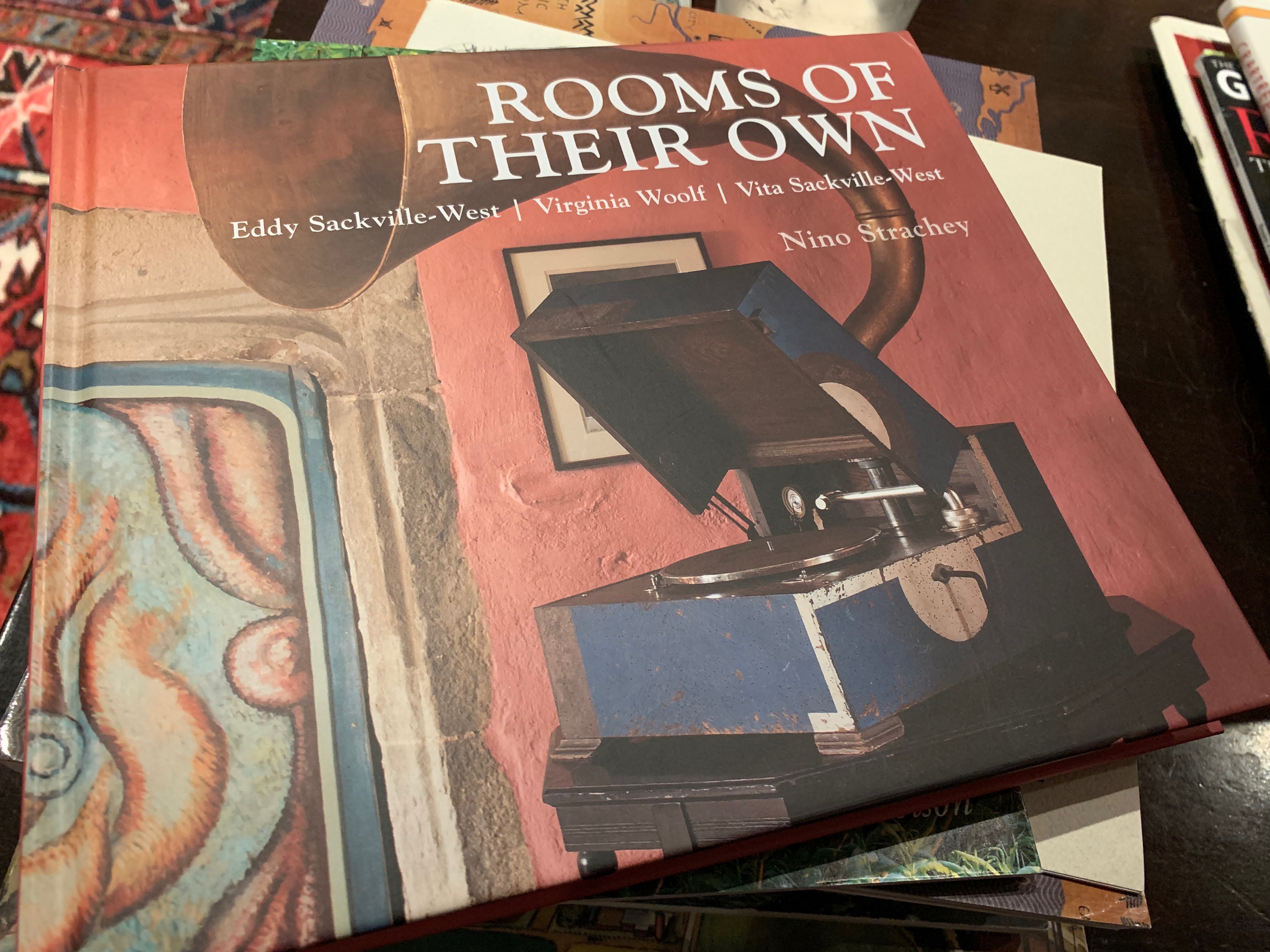
This is a fantastic book. It has amazing photos of the study (and other rooms of Vita’s) that show all the things I didn’t have access to.
A much better look at the book alcove from the Strachey book.

The time Adam Nicolson came over for drinks*

Day four of our Sissinghurst adventure started with sun and ended with sun…well, and then a bit of lightning.

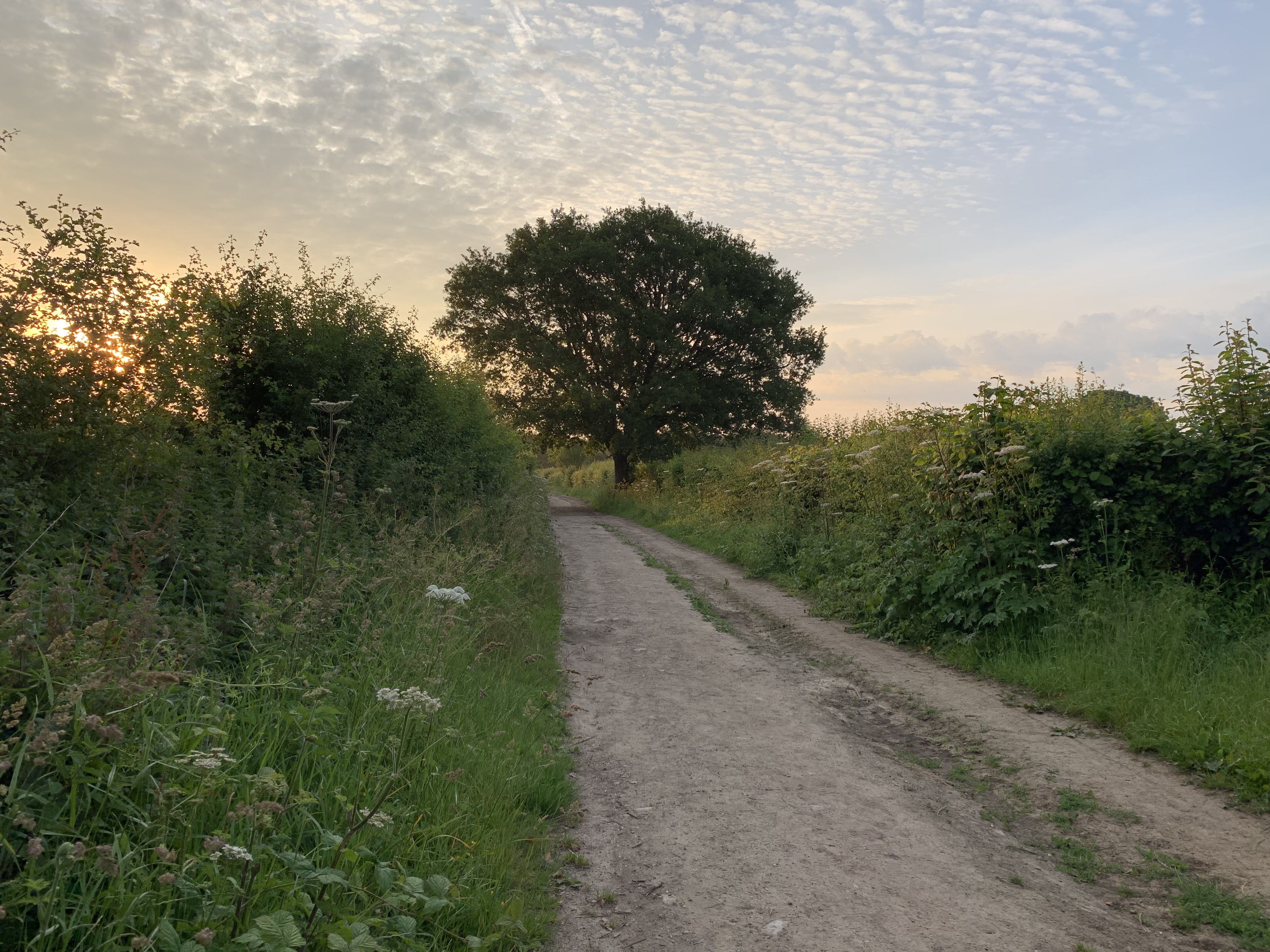
When my eyes popped open around 5:00 am with sunlight flooding our room, I decided not to fight it and went for a walk across the fields. The weather was gorgeously cool in the low sixties (he says as he types in hot, humid, DC) and it was fantastically peaceful.
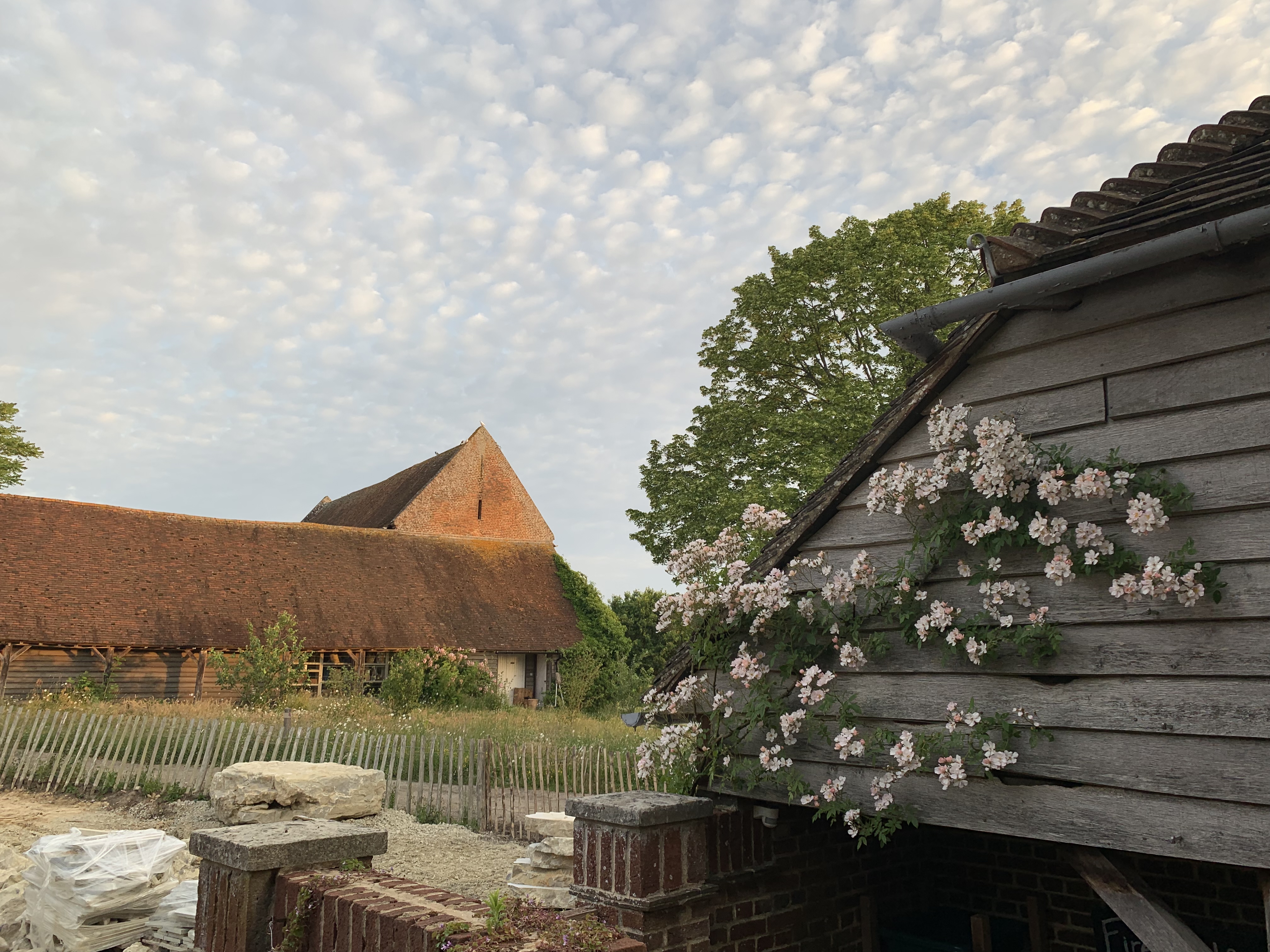
The view from our stoop. Not a particularly interesting picture, but the quality of the light on the barn and the puff ball clouds were too lovely to pass up.
The start of my walk at 5:18 am.

Just after lunch our young, charismatic, fun, smart, bookish, telejournalist, British friends,  William and Lorna, who Simon Thomas virtually introduced us to several years ago when they moved to DC, arrived for an overnight stay. After a very brief orientation, I sent them out into the gardens before it started to rain and so they would have plenty of time to see Vita’s study and the library before they closed. In the true spirit of the setting, I was pleased when they came back to the house and said they wanted to just chill out and read while it spitted rain.

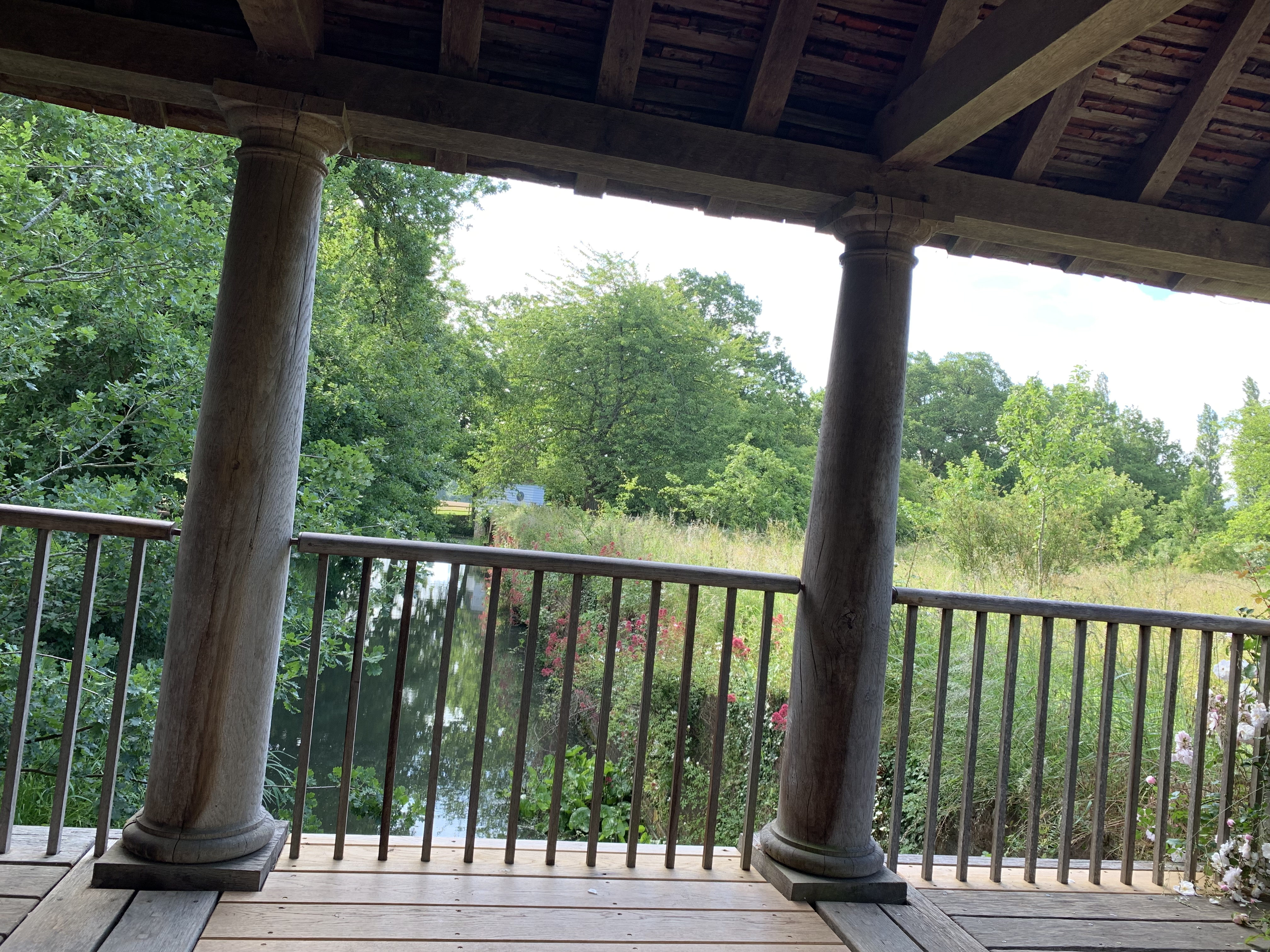
When drinks time rolled around, the light rain had stopped, the sun was coming out, the garden was closed for the day, Lorna made Pimms Cups, and we went and sat in the boat house pavilion. After a bit we heard applause in the near distance. Something of some sort was going on in our garden.

A few minutes later a tall man carrying a champagne flute and bearing the visage of a Nicolson/Sackville-West appeared, introduced himself as Adam Nicolson and explained they were having a little event and that he hoped we weren’t inconvenienced. We assured him there was no problem at all, John fanboy’d for a bit, and I asked if there was any part of the garden he would like us to avoid. All of this was significant for a couple of reasons. First, this was the author Adam Nicolson–grandson of Vita and Harold–coming over to make sure we were okay with him using his ancestral home for a small event. Second, even though by this time in our stay we were pretty comfortable roaming the property at all hours, it was a whole new level of comfort to have Adam Nicolson welcome us and reassure us that his garden was our garden. Third, the event included Adam’s wife Sarah Raven who is a garden maven herself and John tells me has Martha Stewart level cache in the UK. Again John fanboy’d, albeit from a distance this time, when we walked by while she was chatting with some guests in the White Garden.

I wish I had a some sort of picture to represent this, but alas, I don’t.

For dinner we went to the nearby Three Chimney’s gastro pub for dinner where they happily still had the smoked haddock with creamy leeks on the menu that I had had about six years previously. Then it was back to the house where we strolled in the garden as it got dark and the sky started to fill with lightning. By the time we all trundled off to bed we were in the middle of a proper storm with lightning, rain, and thunder–or at least what passes for thunder in the UK.
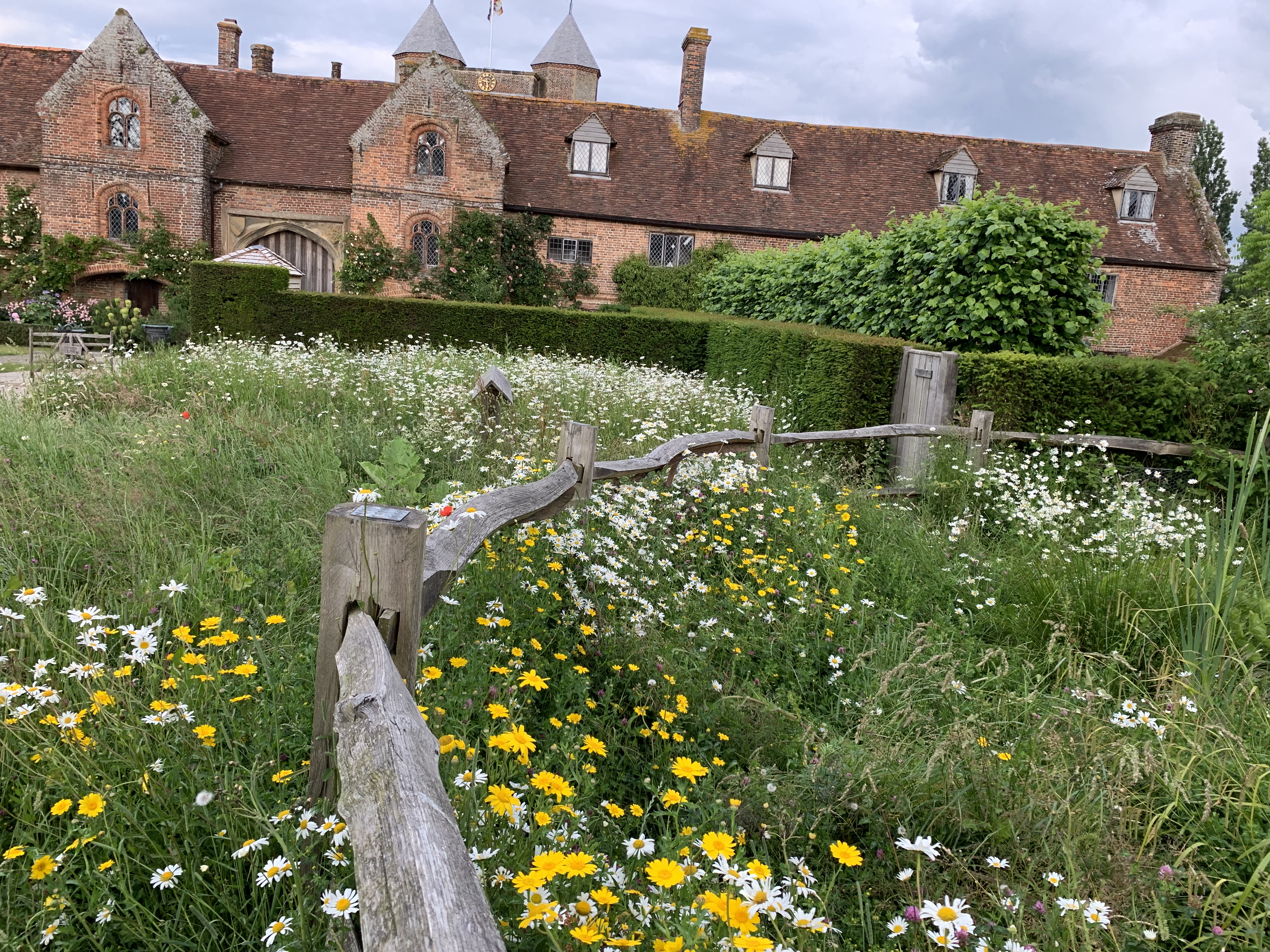
Field Day at Great Dixter

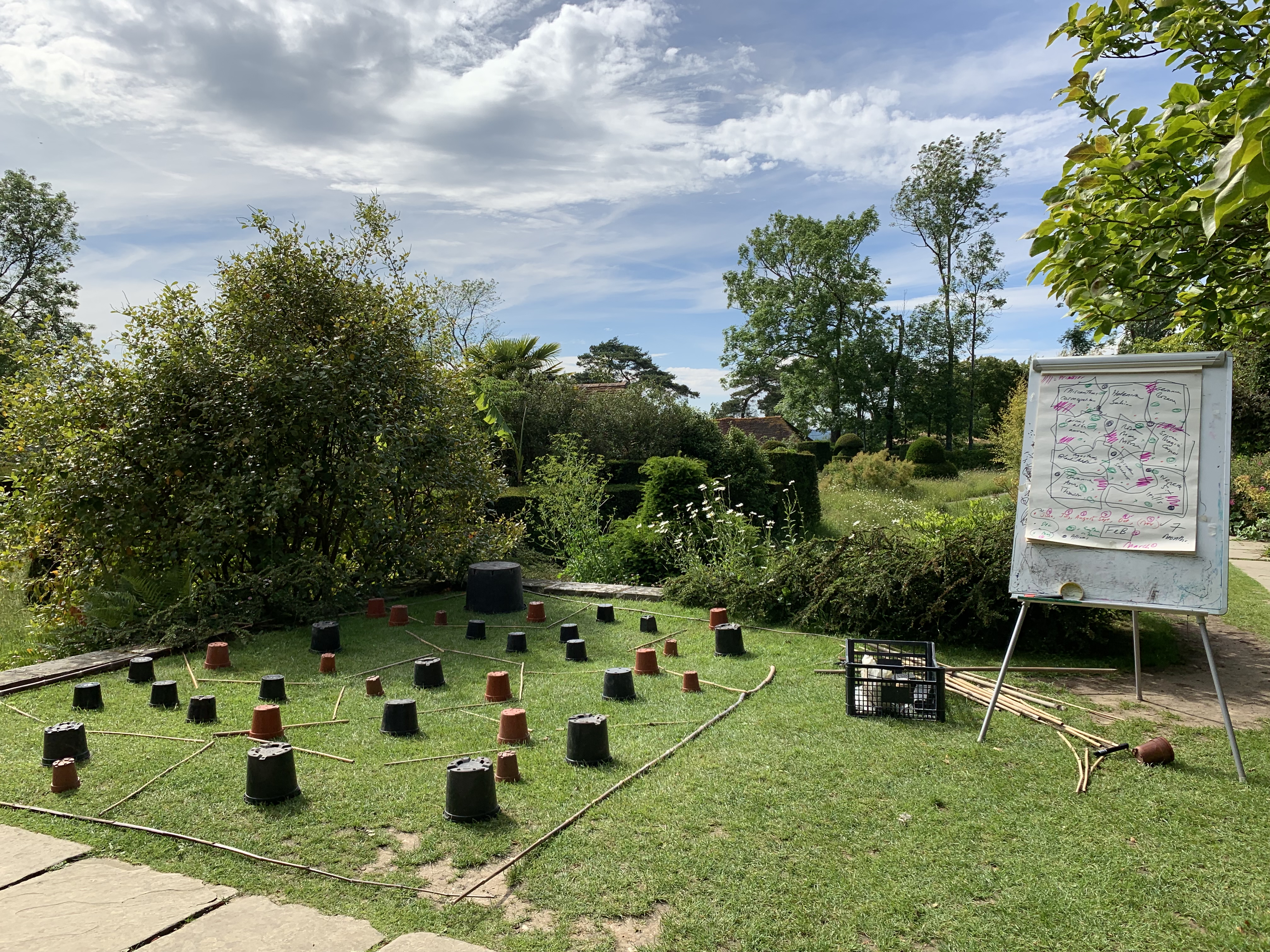
What do you do for a day trip when you are spending the week at a world-famous garden? Why, visit another world-famous garden of course. John has always wanted to attend a study day at Great Dixter. As luck would have it, they were offering a full-day workshop on succession planting while we are staying at Sissinghurst, and since the two gardens are only about 30 minutes from each other, it seemed like a no-brainer. I decided to be a good sport and go along with John, but I ended up really enjoying myself. First off, we had been to Great Dixter once before and I knew it was beautiful. Second we had perfect weather. Third, we met very nice like minded people. Fourth, since it was a Monday, the garden was closed to visitors. Fifth, I really learned a lot and feel like I have graduated from Assistant to the Gardener to Assistant Gardener.

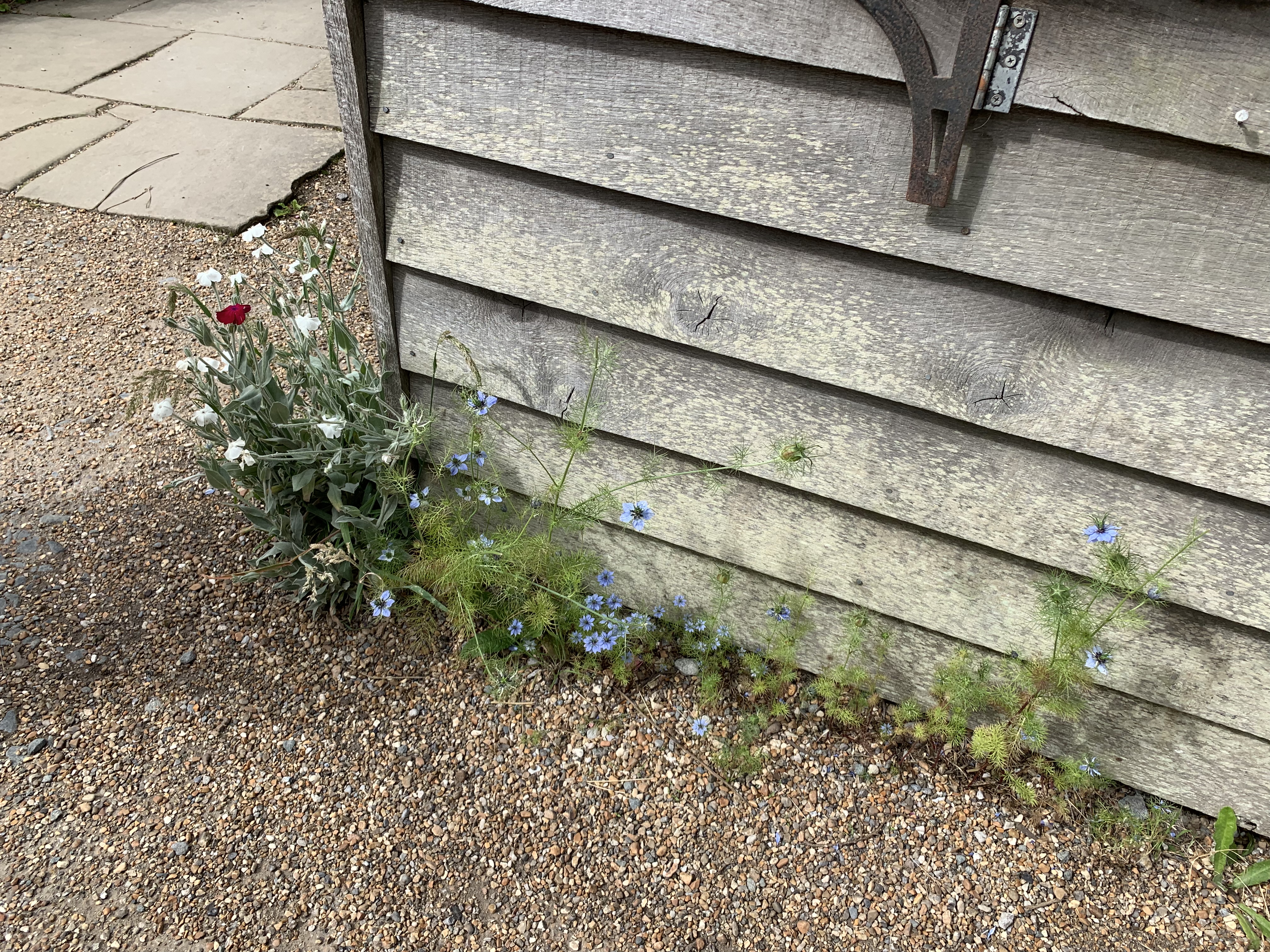
Wildflowers, thatched roof, brick paving make for a charming walk from the car park.
Picturesque volunteers at the ticket booth.
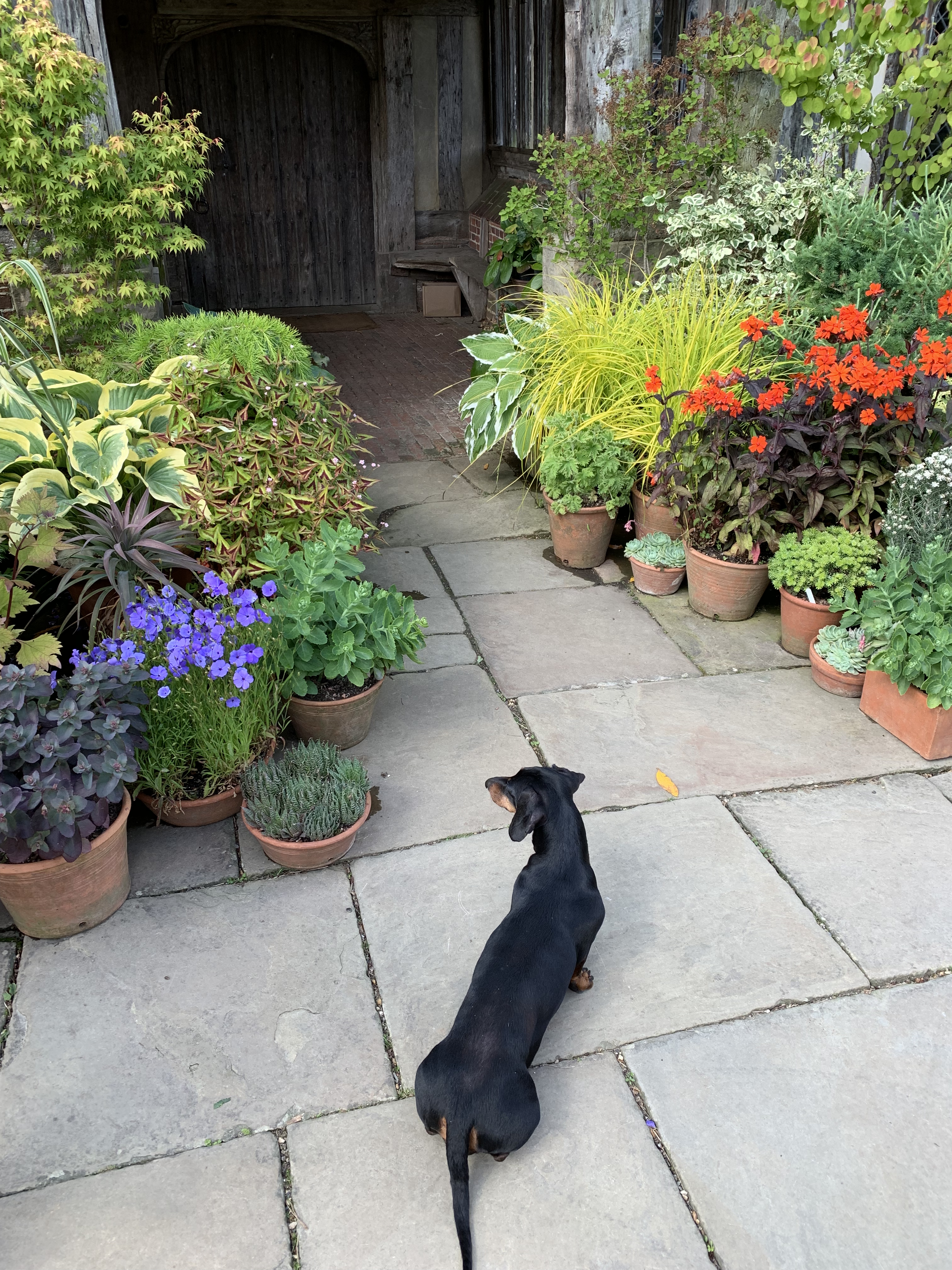
Dog with pot garden.
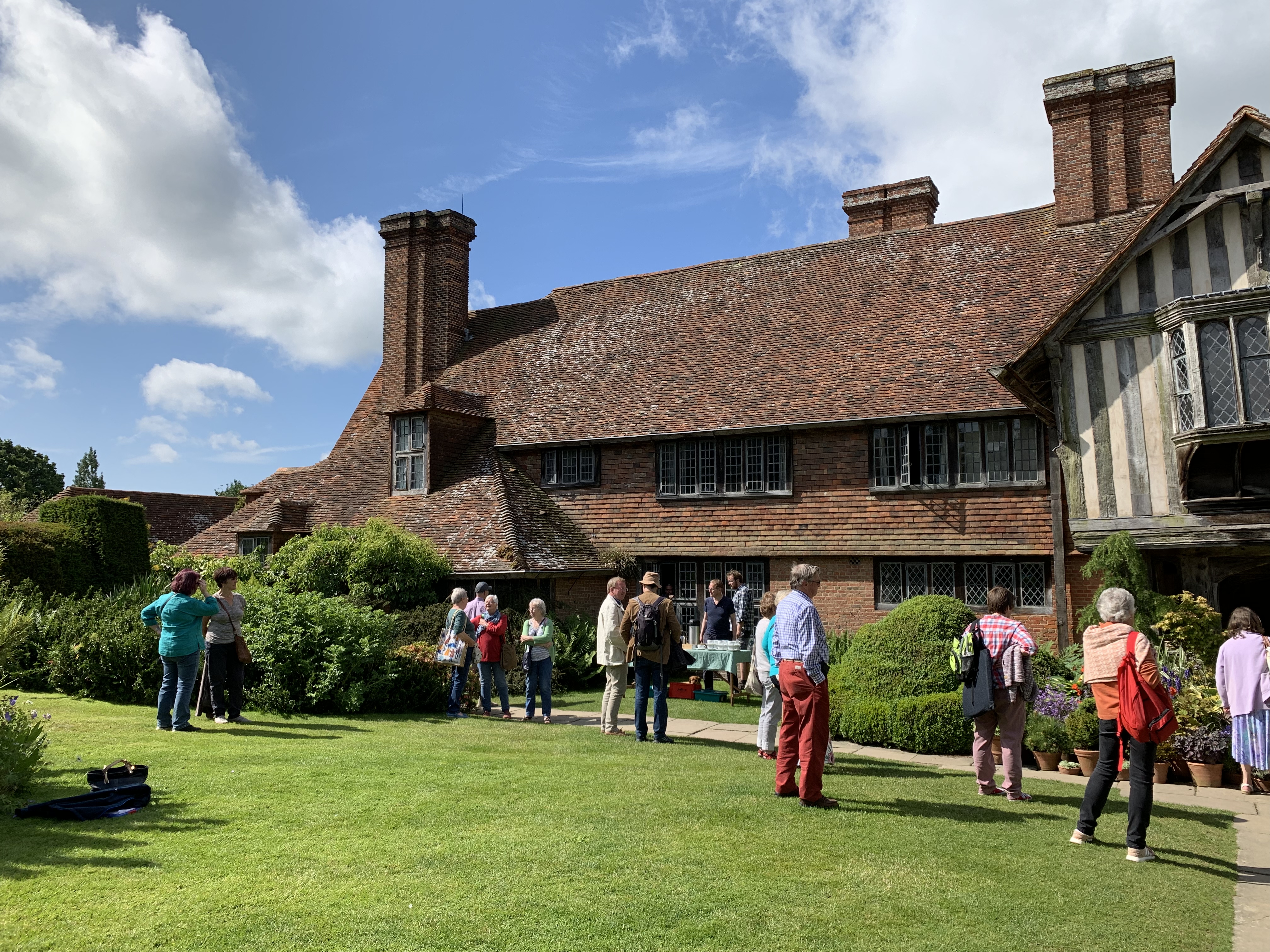
Our classmates upon arrival. Note how the Lutyens addtion meets the Tudor house.
Pay attention, there will be a quiz.
I snapped several pictures in the house before I saw the sign telling me not to.
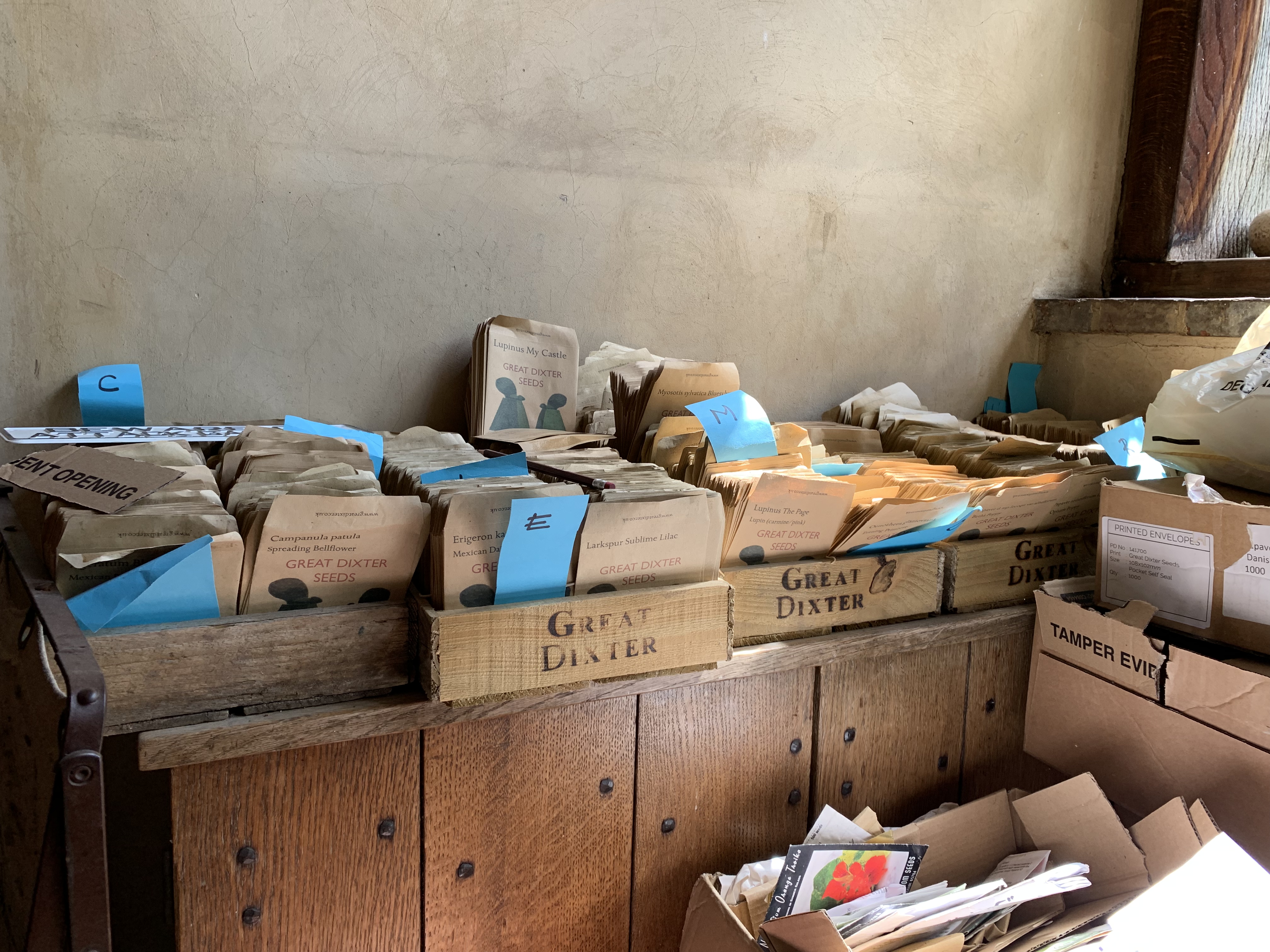
Seeds.
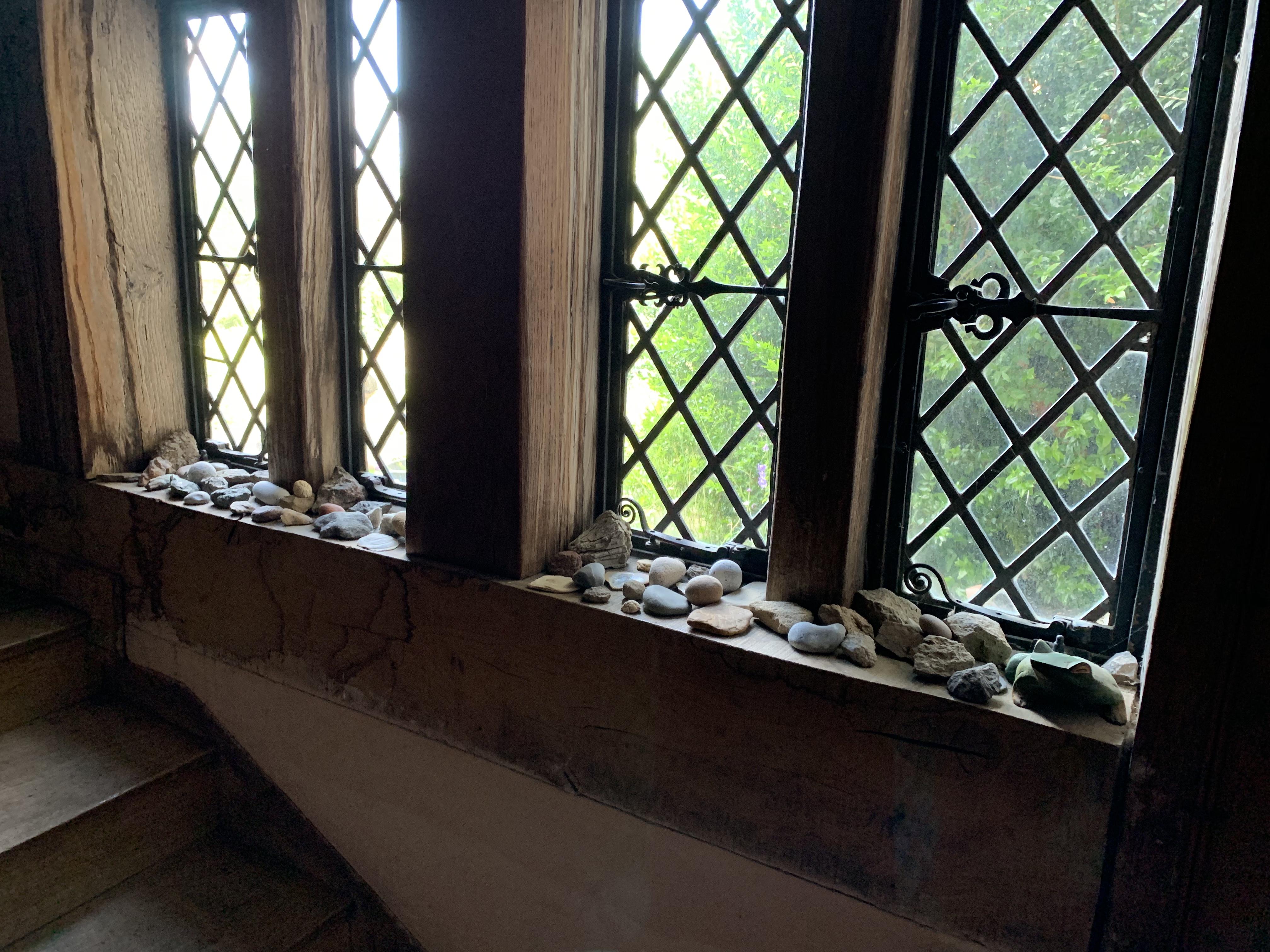
This made me realize that since we renovated the house, almost five years ago, I haven’t put my rock collection out.
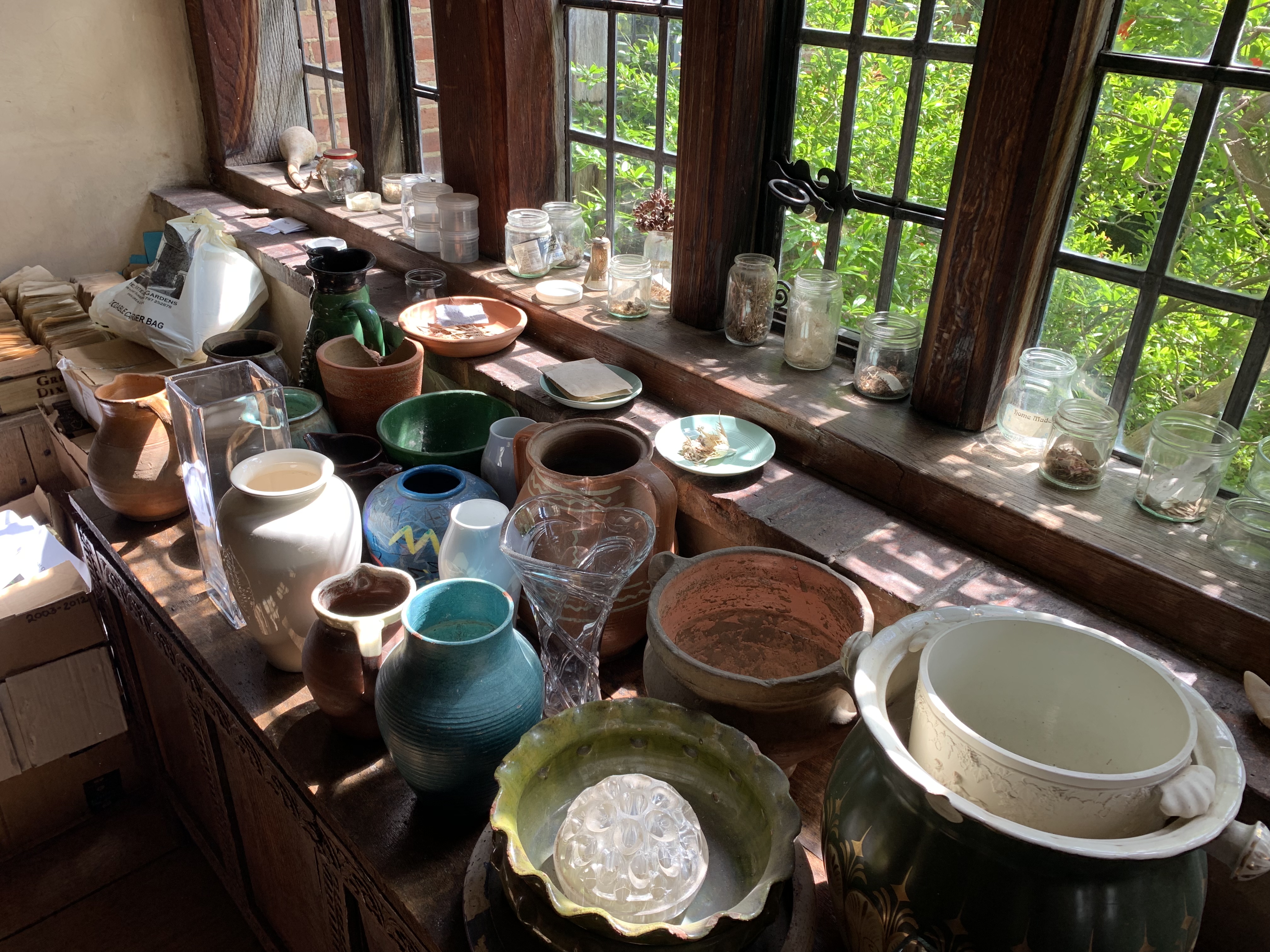
I love a pot garden.
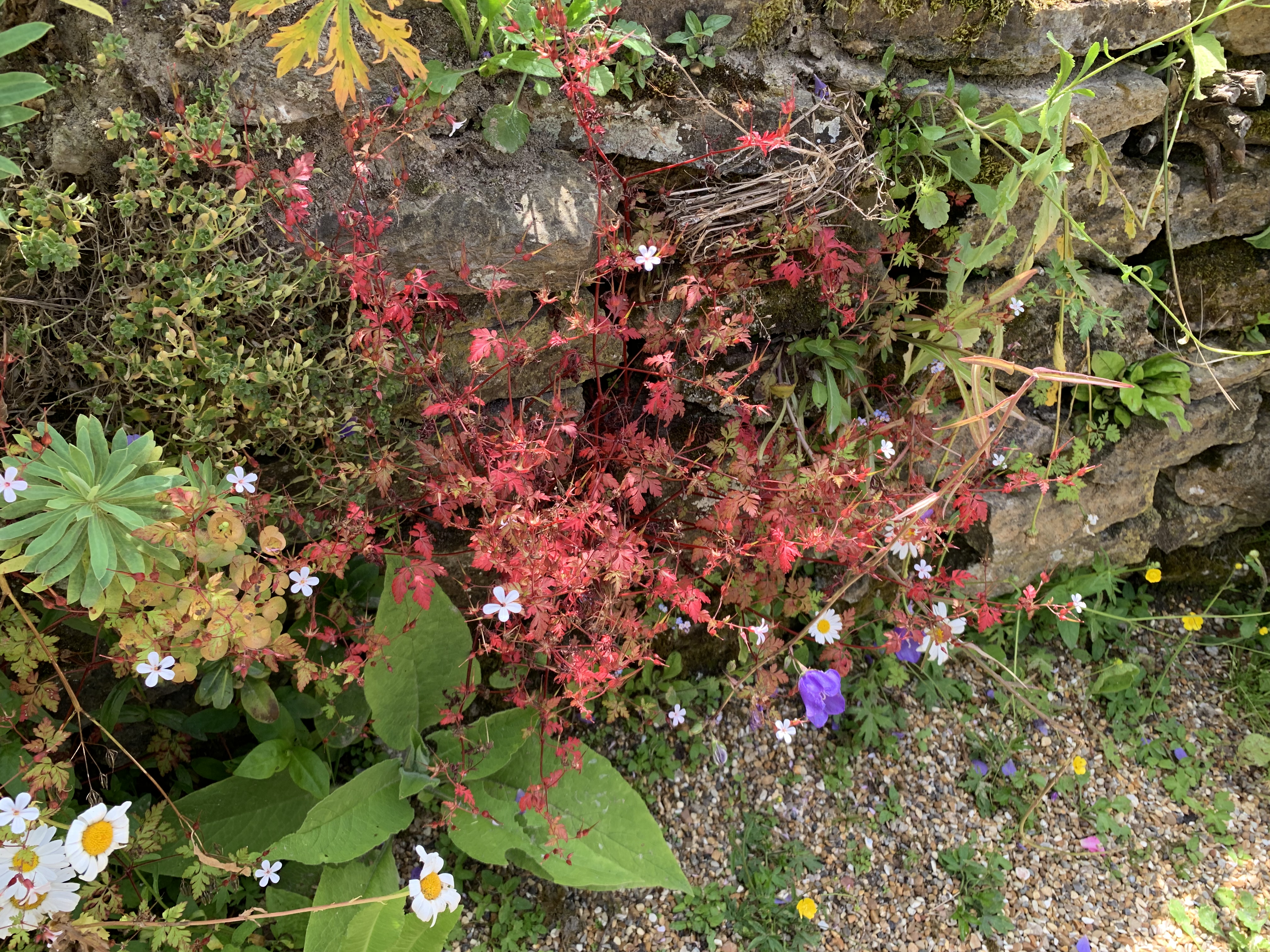
One of the many glories of Great Dixter is all the things growing out of places they weren’t meant to be.
The house on a perfect day.
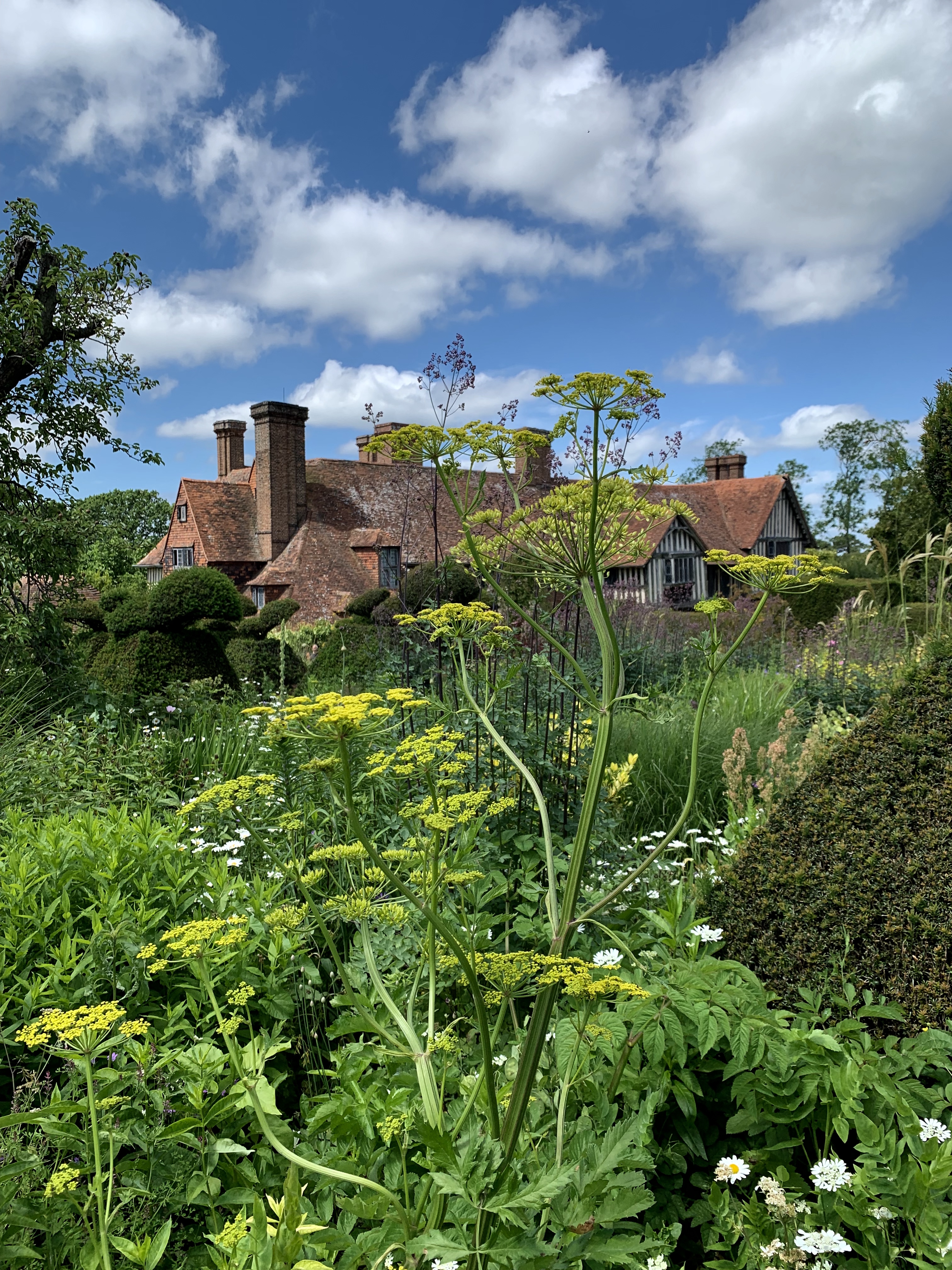
An umbellifer making a good show of it.
I don’t think this sempervivum climbed onto the roof on their own.
More lovely volunteers.
I don’t know how this doesn’t cause water infiltration into the house. It would at my house.
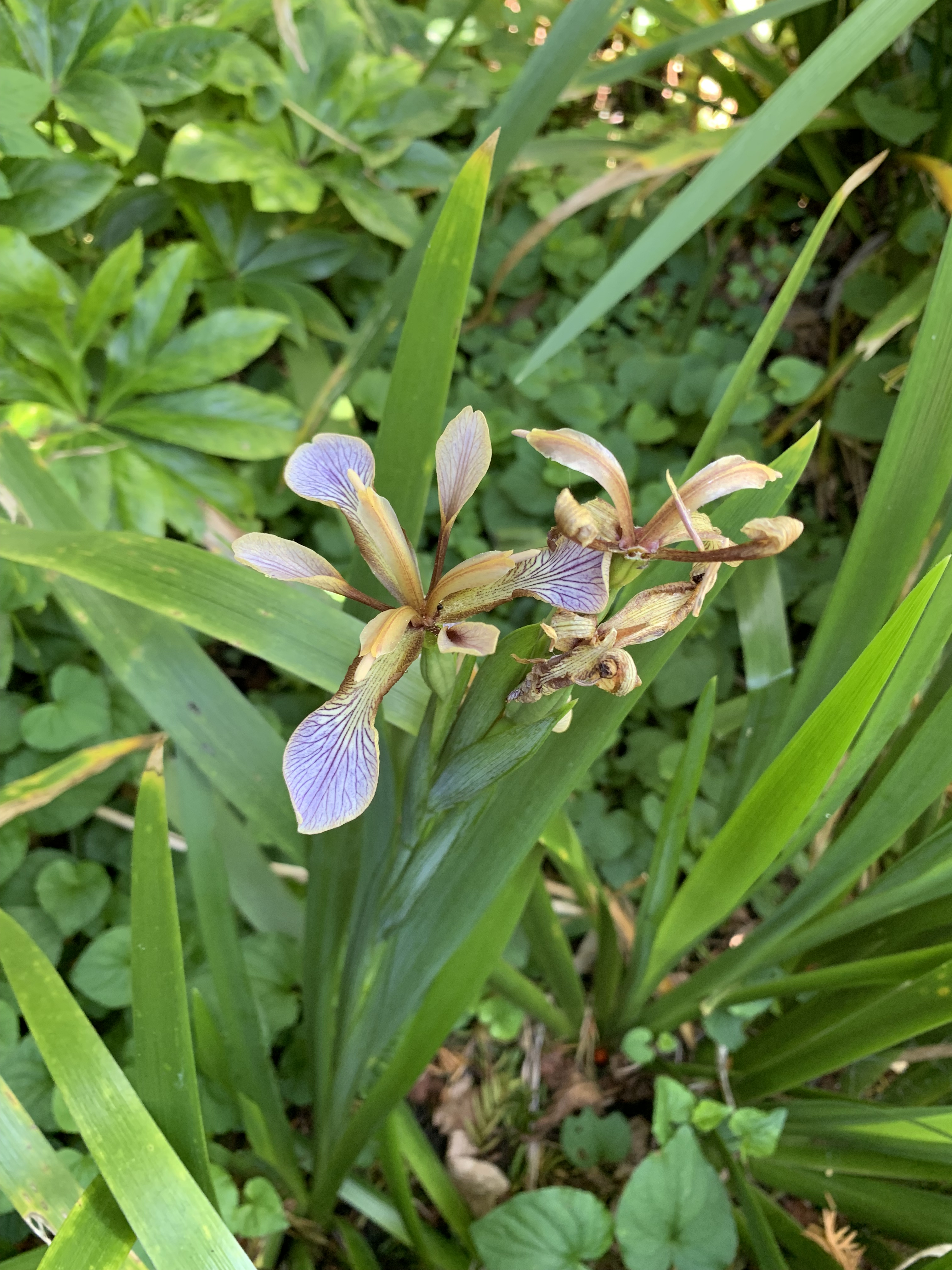
Such a lovely iris.
Fergus Garrett, head gardener at Great Dixter.
You had to be there. This makes sense.
Taken on my phone, if you can believe it.
I’m not sure the Dachshunds would hold enough water.
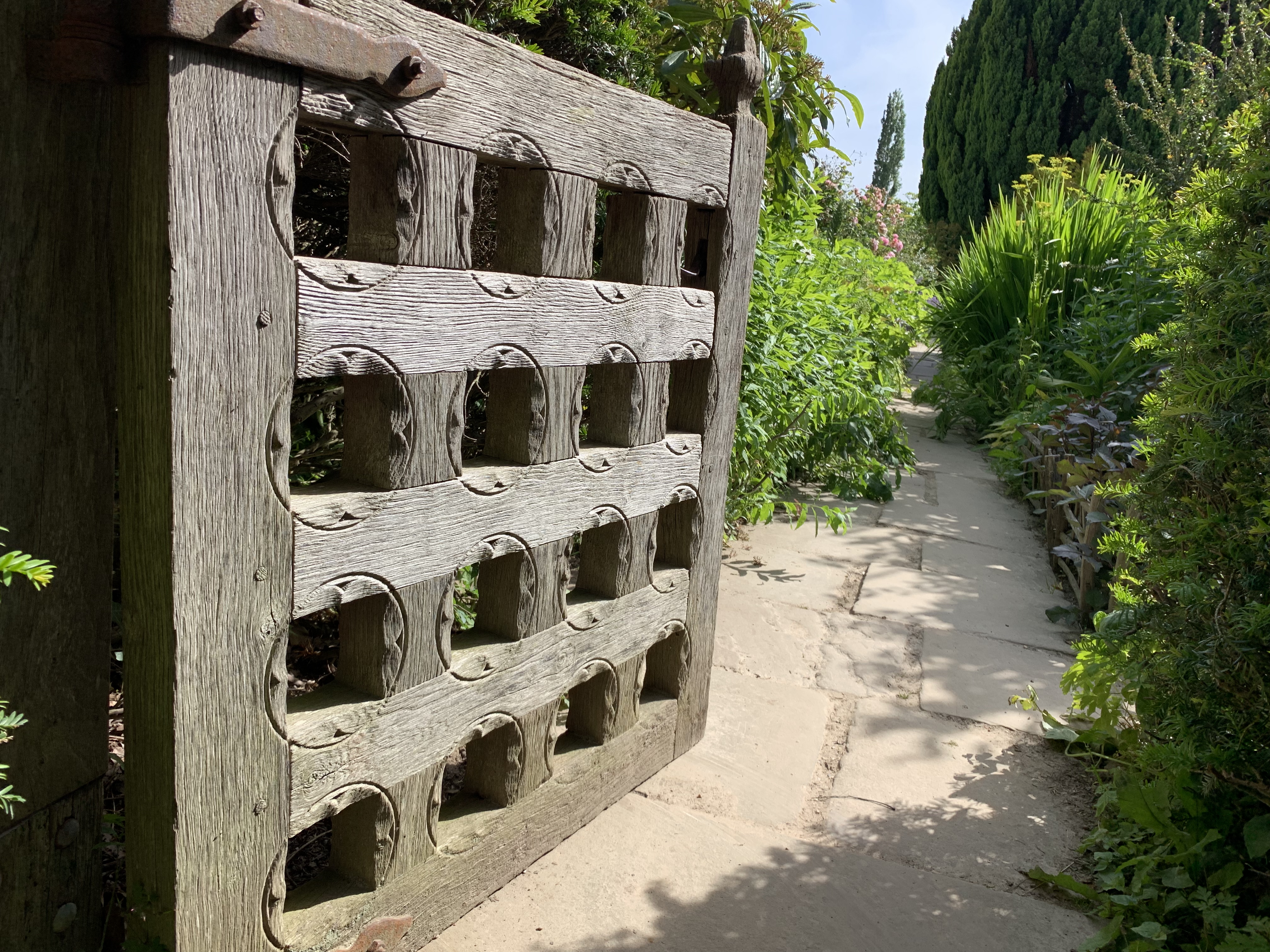
Such a beautiful gate.
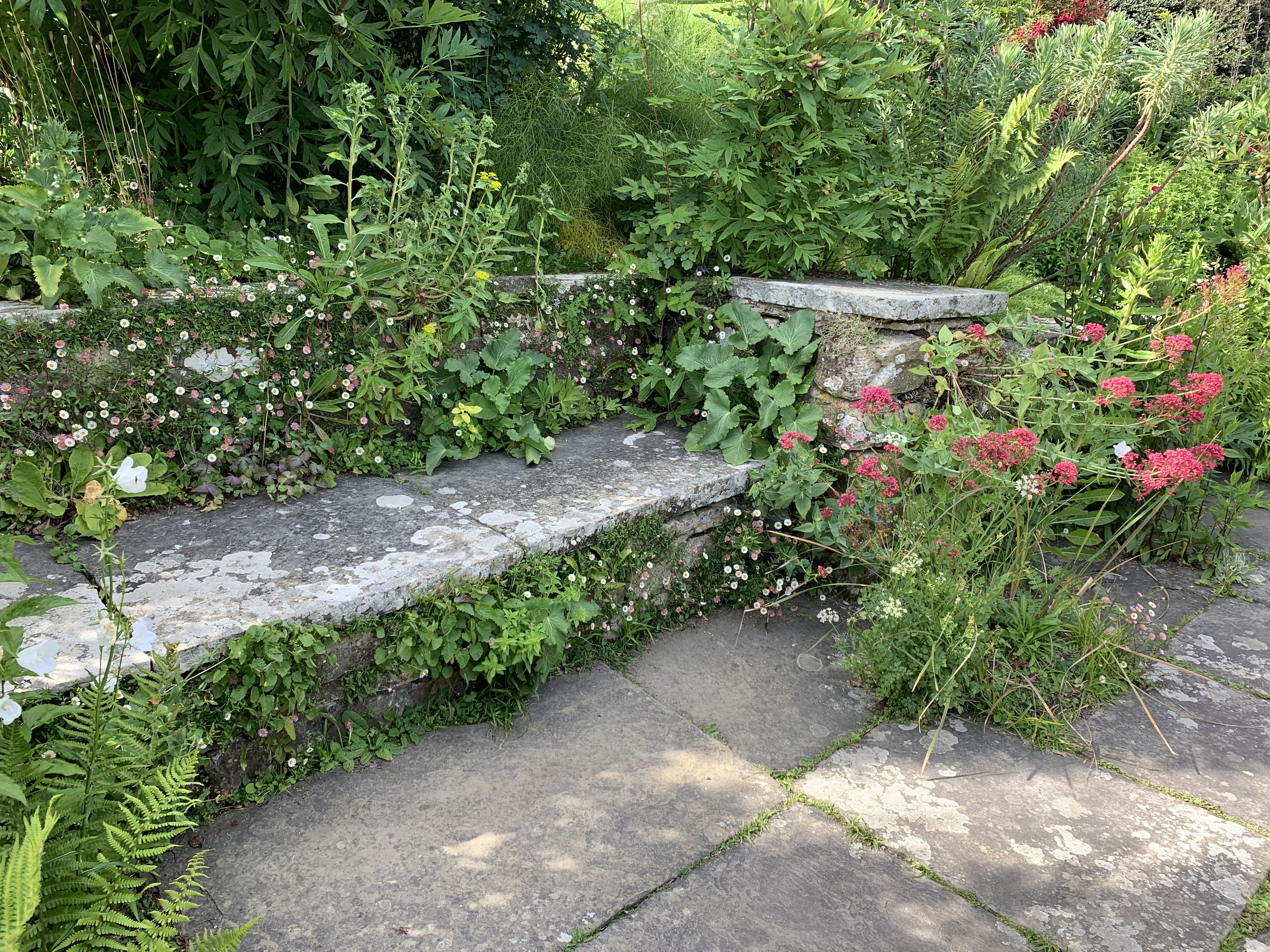
The bench is being eaten by plants.
The walk up to the prim lawn at the front of the house is this lovely meadow.
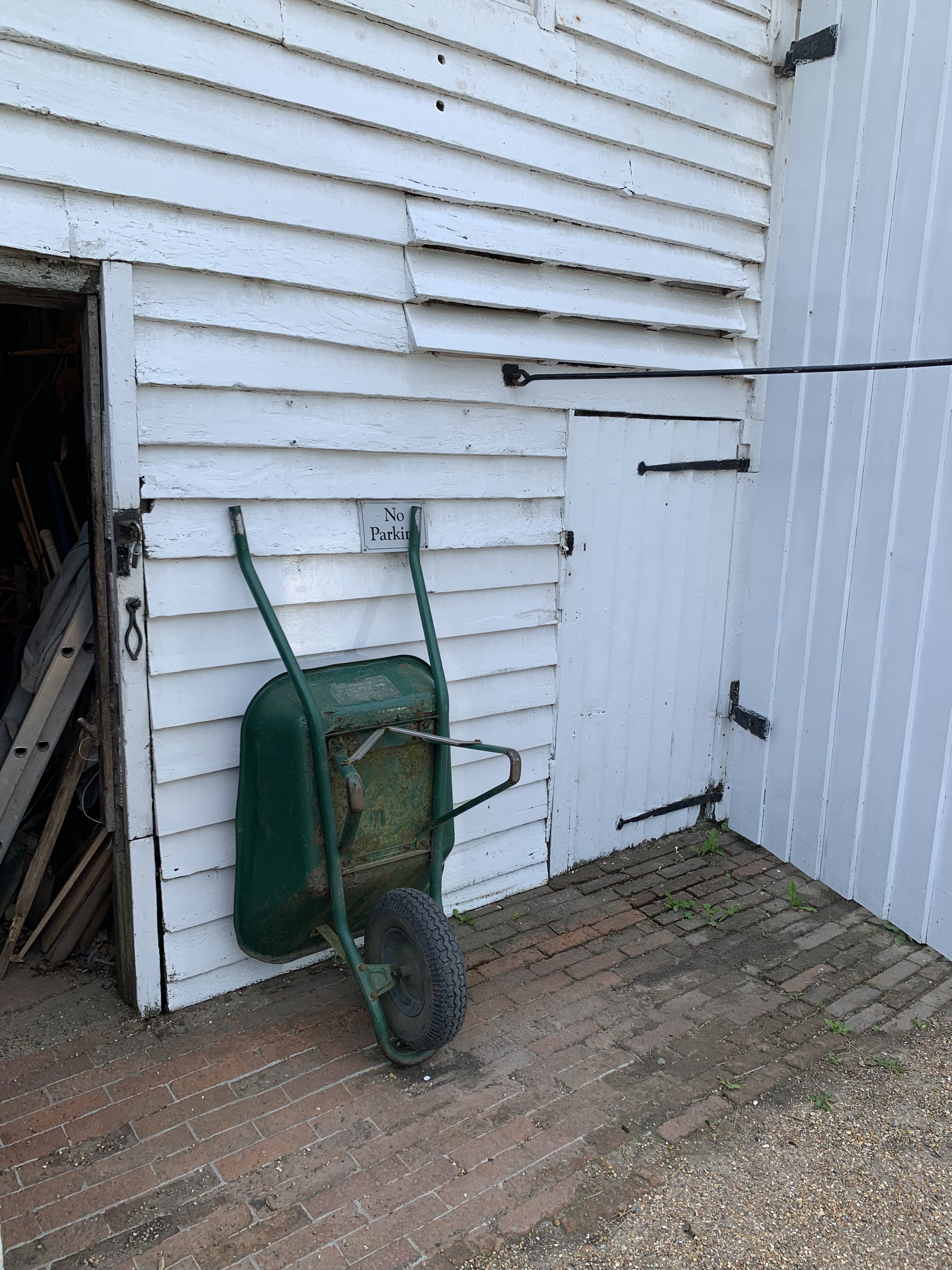
He almost got a ticket.
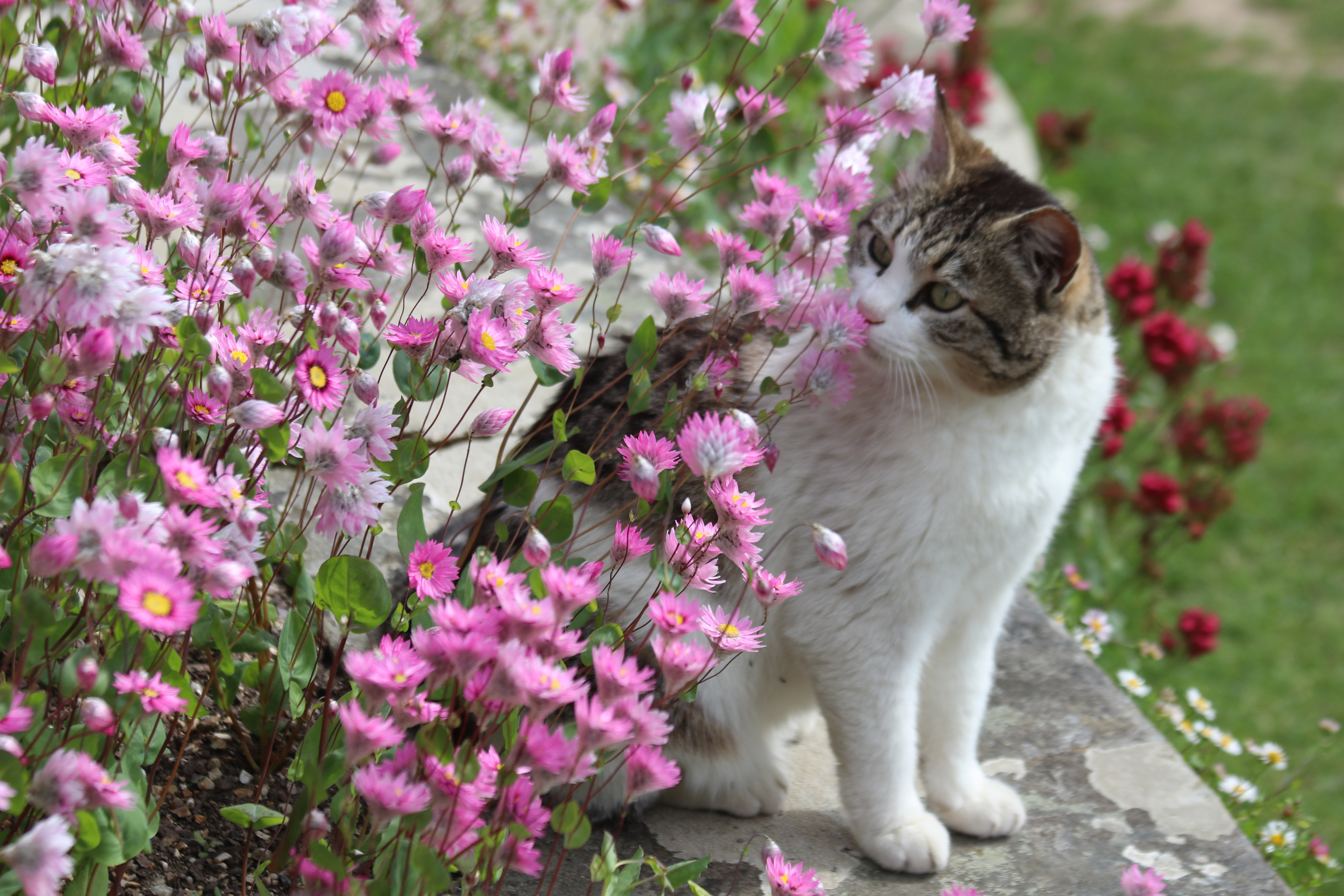
Fergus’ brother brought this rescue cat back from Afghanistan.

A bookish interlude

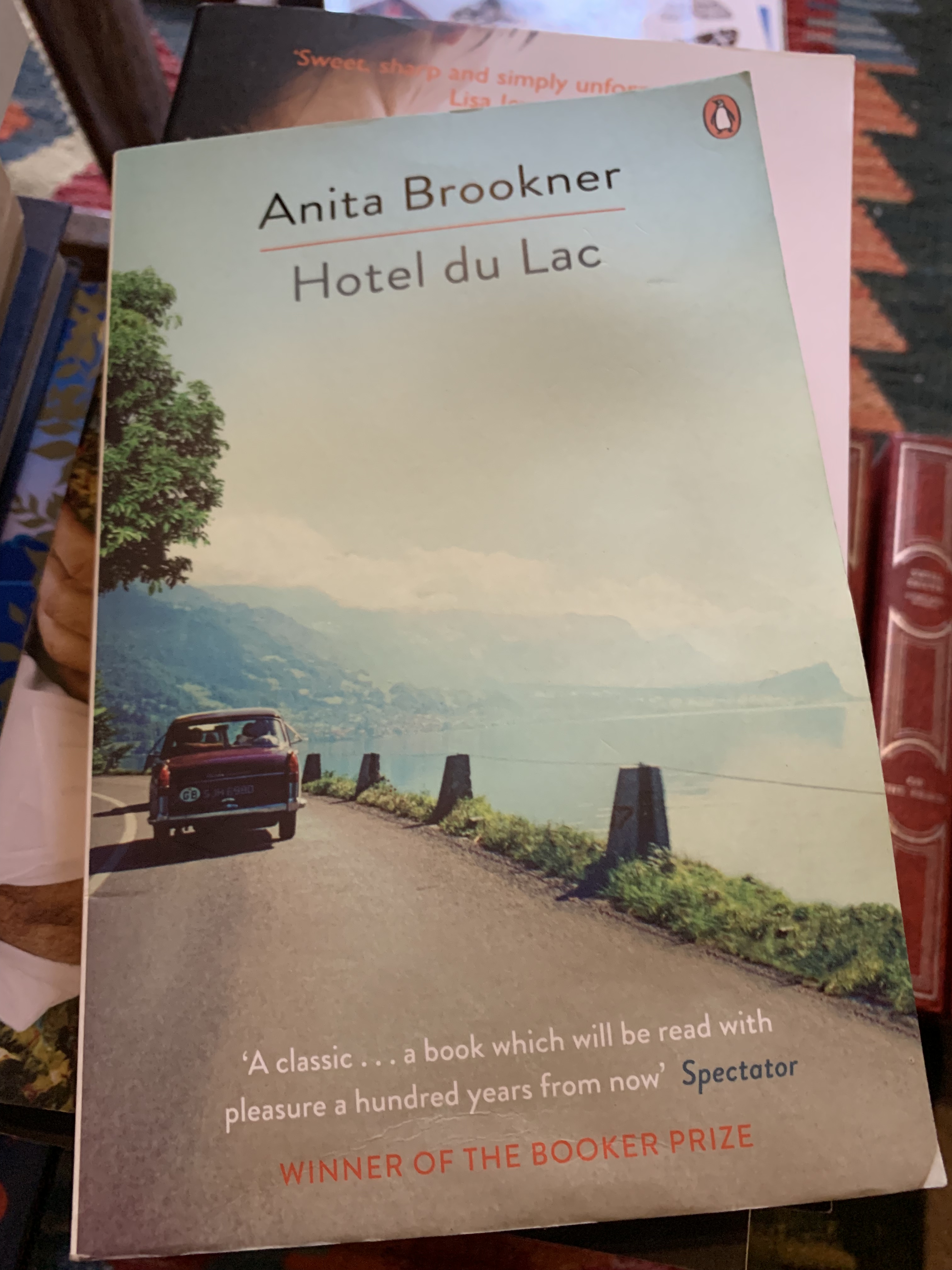
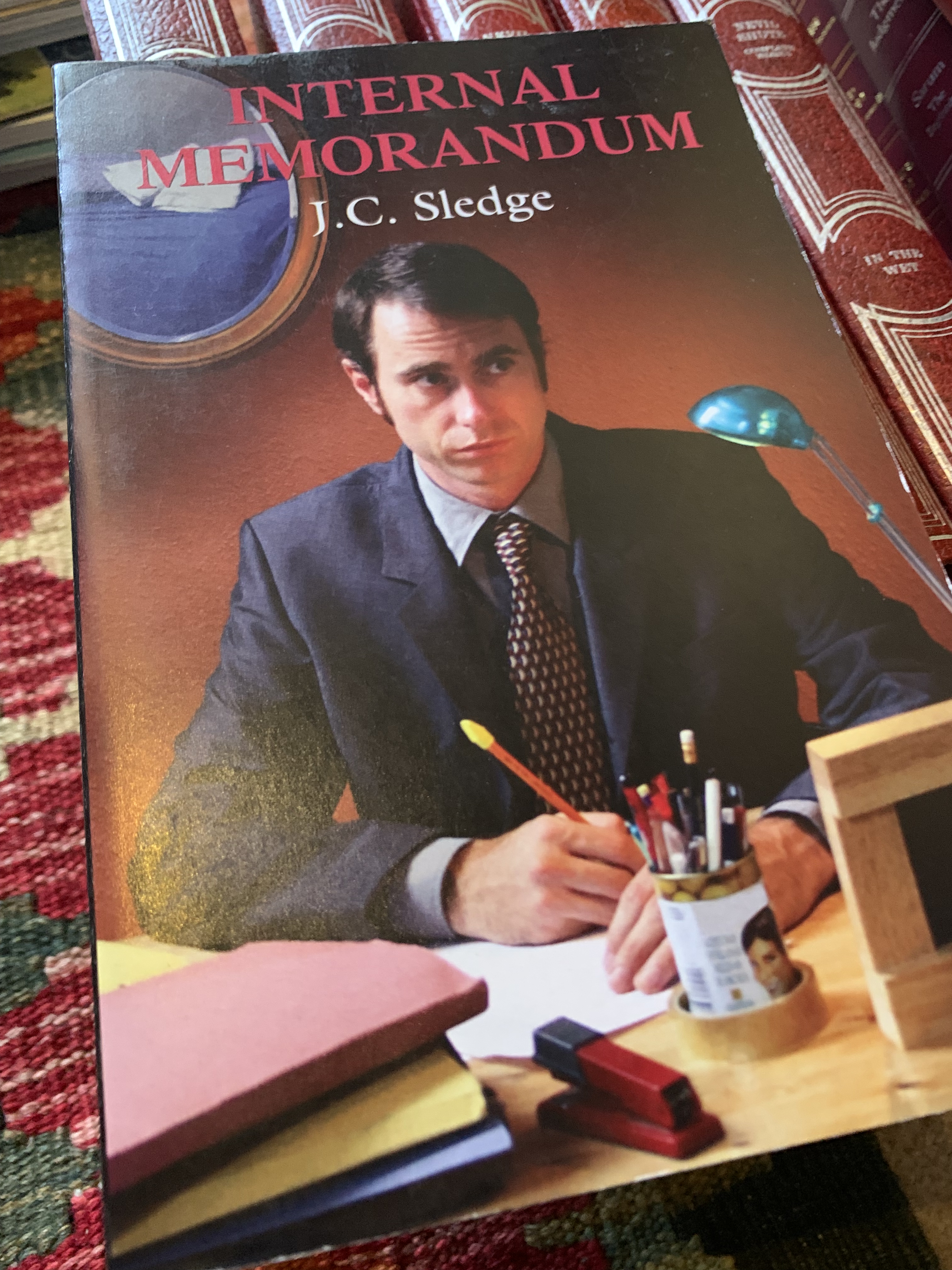
I thought you might want a bookish change of pace in the midst of all the Sissinghurst photos. So what better than a run down of book purchases from our trip. The majority of them were purchased on our one day in London. I had sent out an SOS on Twitter hoping for recommendations for used bookstores in London. I know where pretty much all the new bookstores are, and I knew there are used stores along and near Charing Cross Road, but for all the times I have been to London, I have never really explored the second shops there and realized that I didn’t know where to start. Happily the Twitterverse crowdsourcing paid off and I had a great day running around London with John popping into many stores.

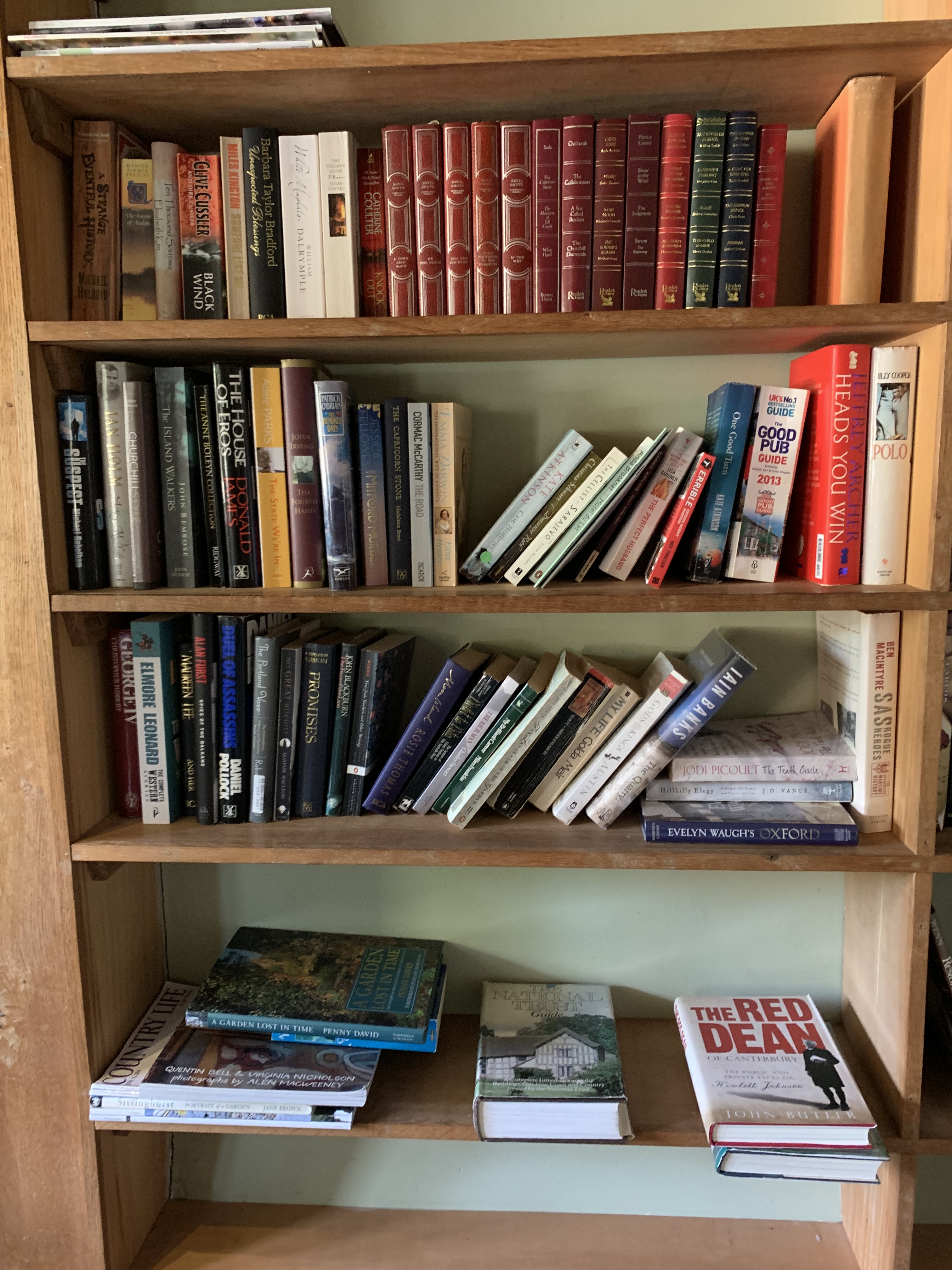
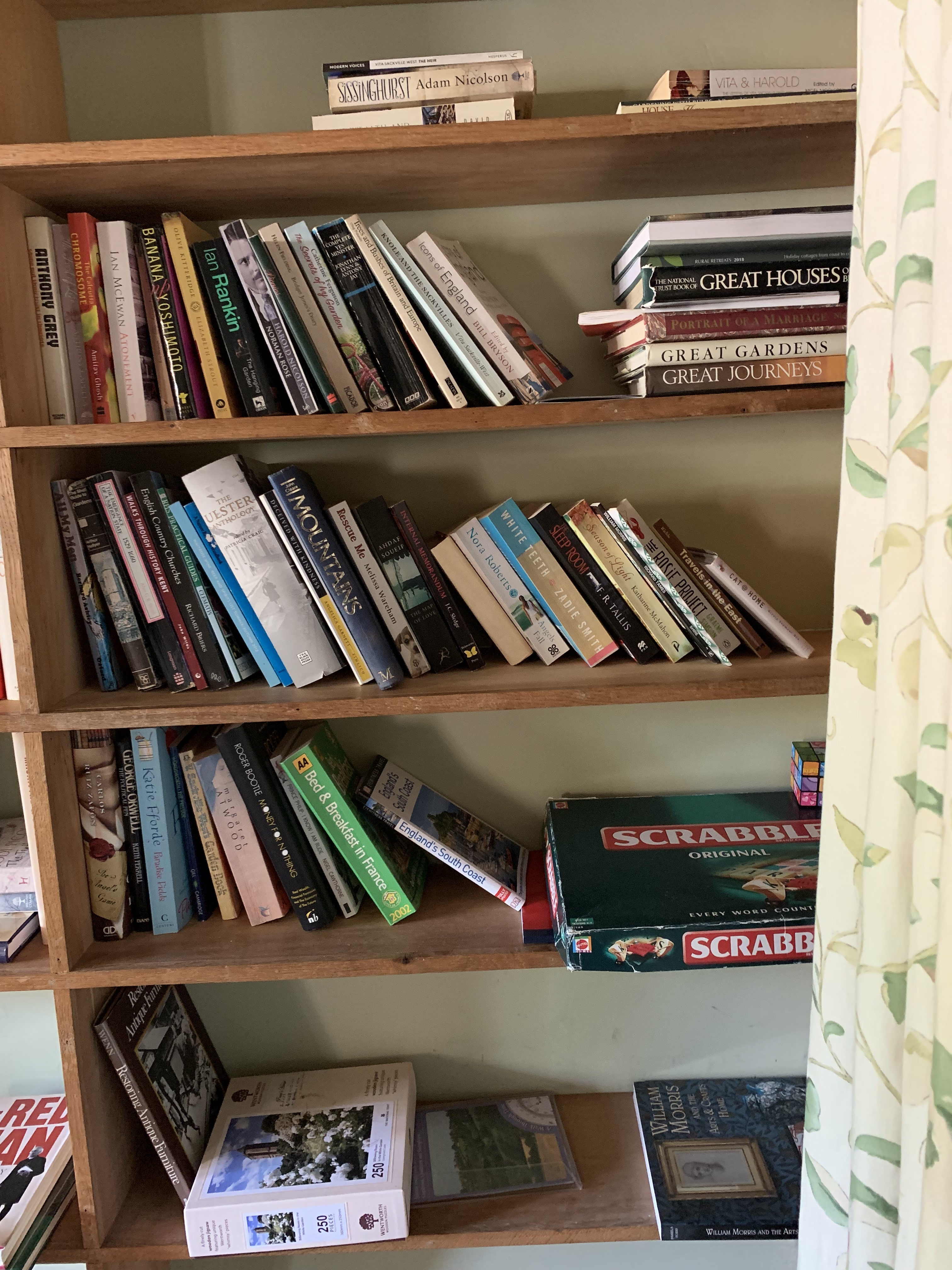
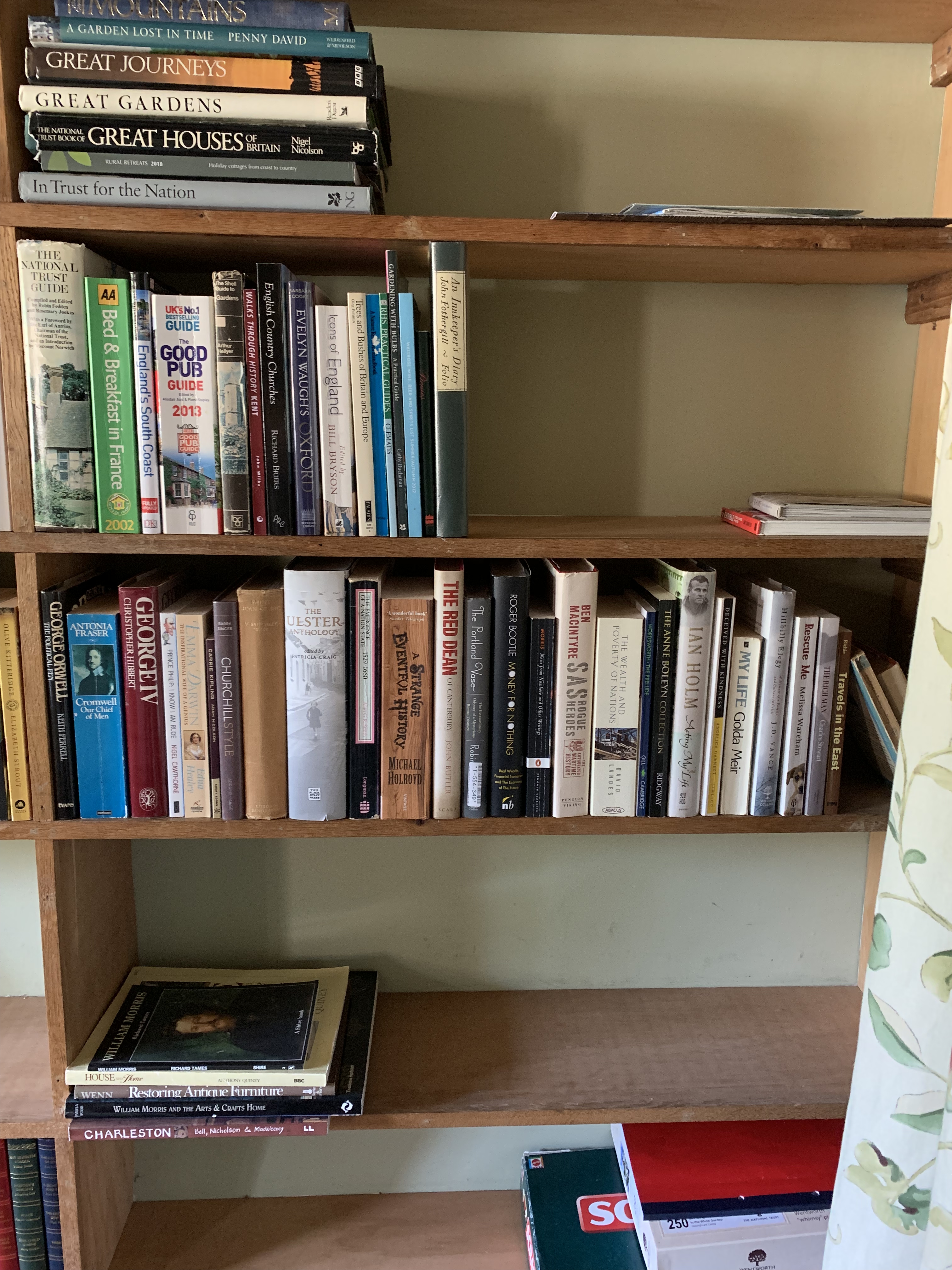
I should mention that near the car park at Sissinghurst there is a little cafe/plant shop that also had a charity secondhand book stall inside. It would have been perfect if I had run out of reading material (I didn’t) as the books in the snug in our cottage didn’t really excite me too much. But more on that in a future post.

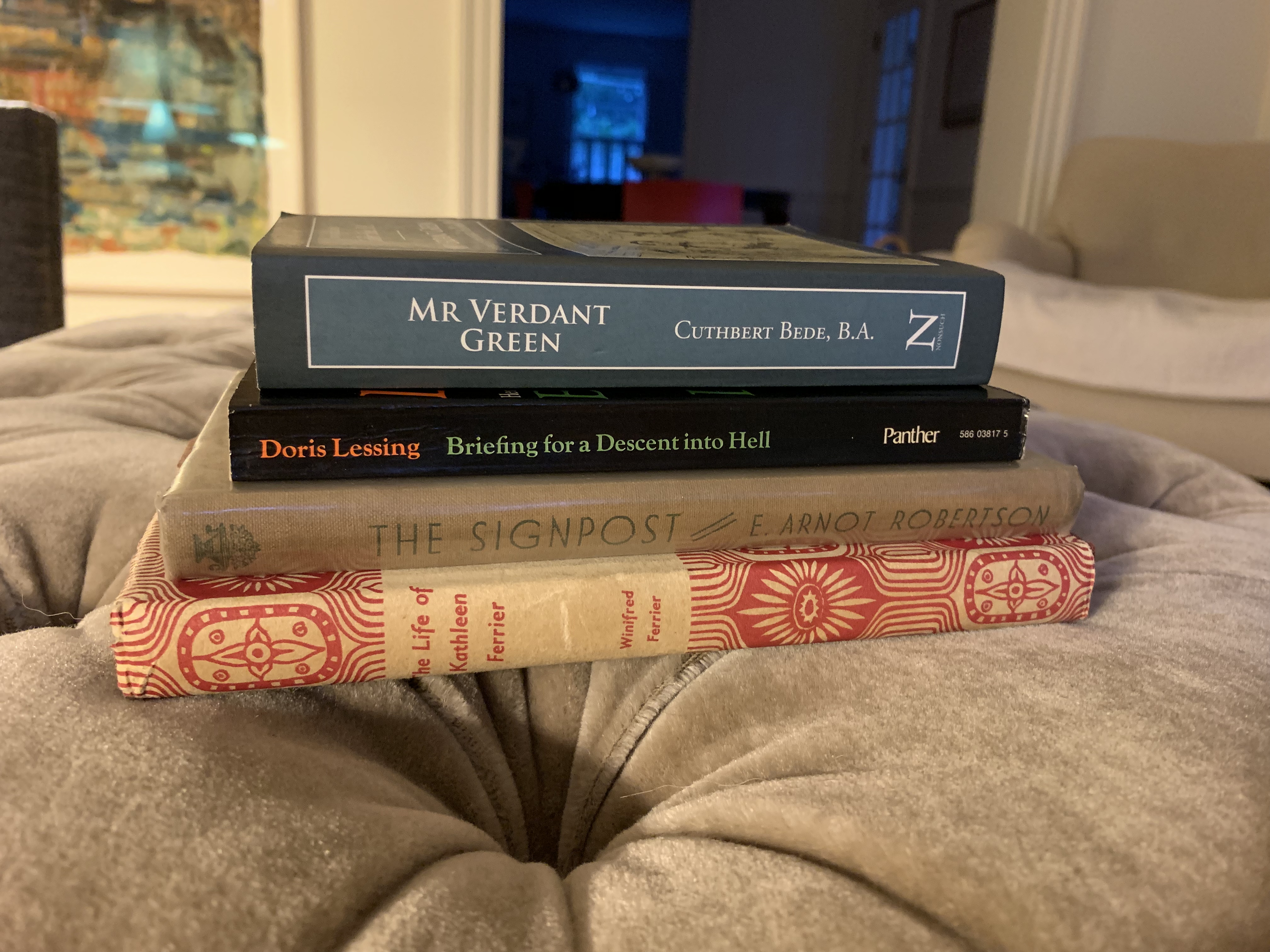
Good thing we had plenty of extra room in the luggage.
Here is my mini-haul from the charity book stall at the cafe at Sissinghurst. Not bad for about a total of two pounds fifty. Turns out I already own a hardcover of The Signpost, but not this edition.
I hadn’t been here since I lived in London in 1992 (and was too poor to buy books), but I hadn’t really planned on stopping in, but one of the secondhand shops someone told me about was nearby so it was silly not to check it out.
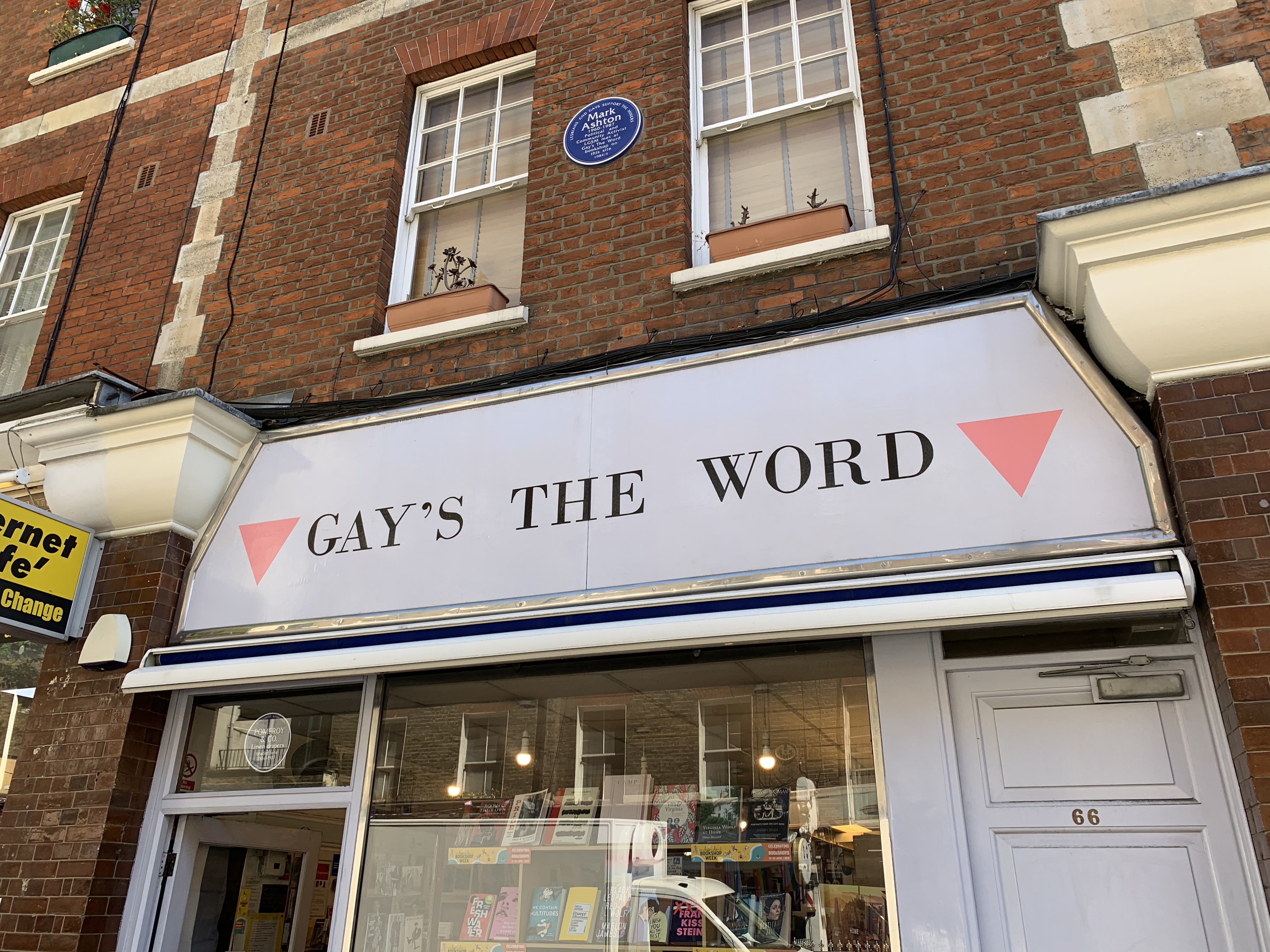
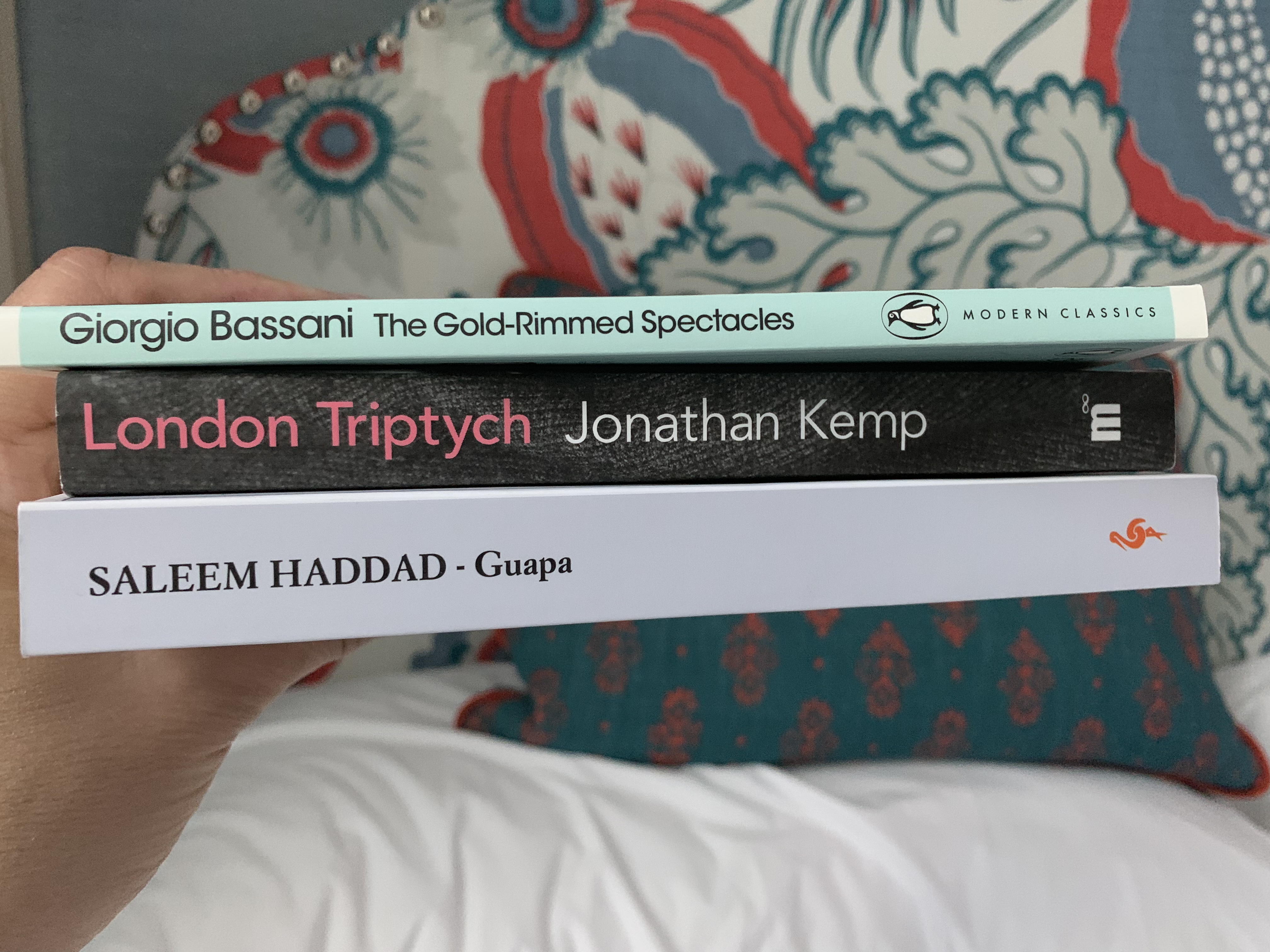
My haul from Gay’s the Word. I realized once I got inside that since the demise of Lambda Rising in DC, I haven’t been in a Gay bookshop in a long time and saw so many things that looked interesting. I had to stop myself at three.
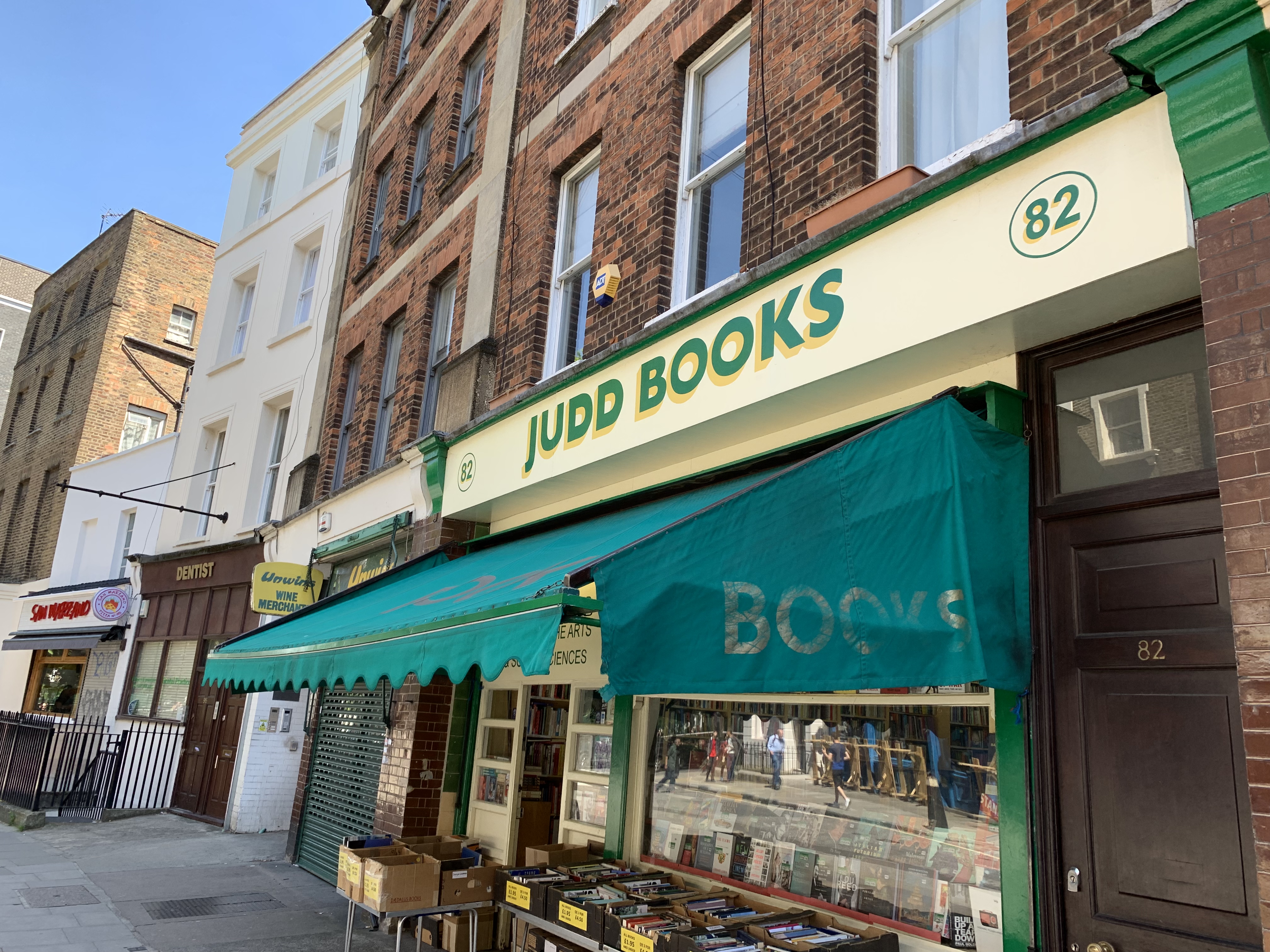
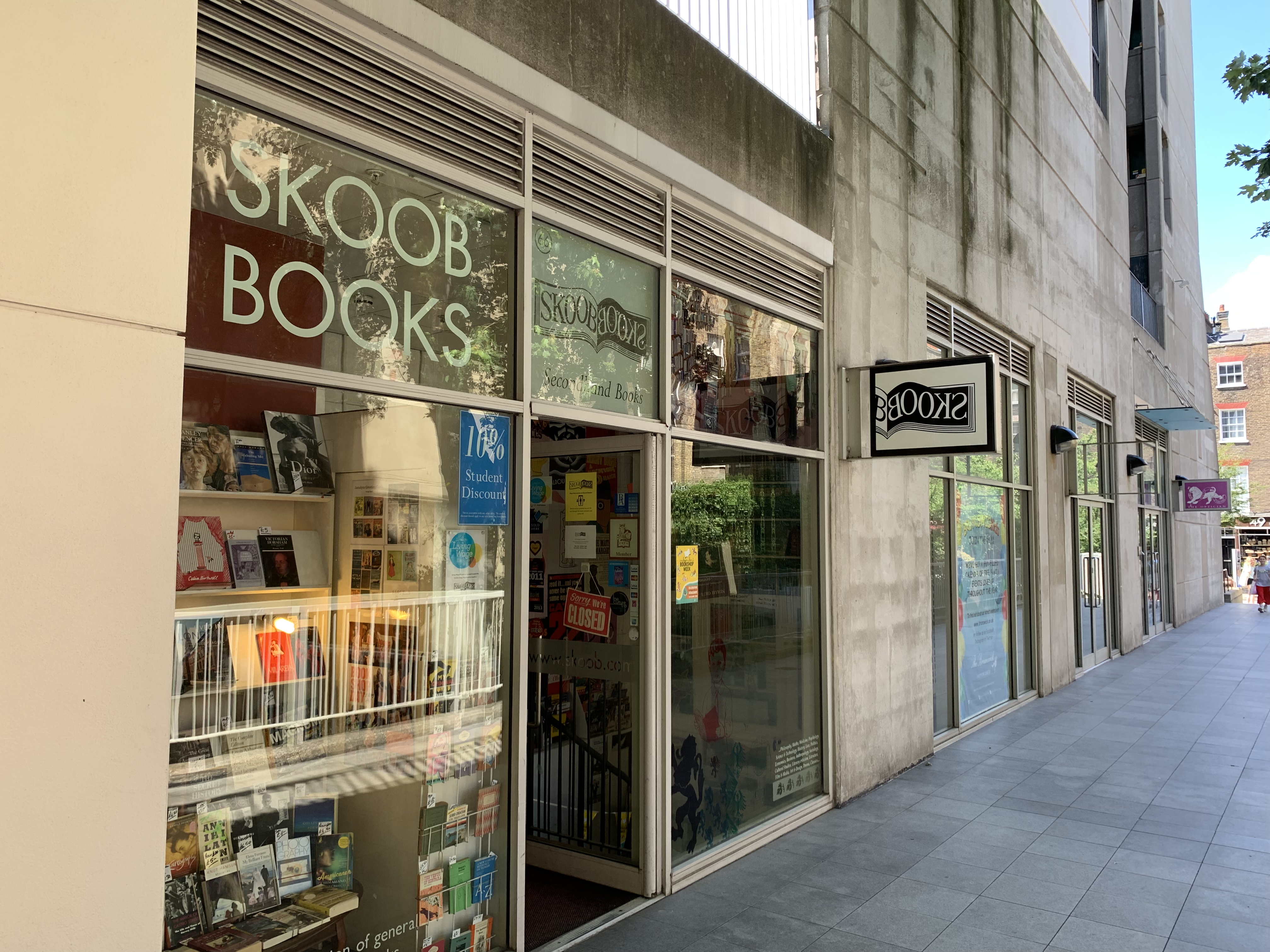
I knew nothing about this shop, and it wasn’t on my list to visit, but John sat at a nearby cafe for some morning coffee and I missed a turn and assumed from the word “books” on the awning that this was Skoob Books. Naturally I had to go in despite my mistake.
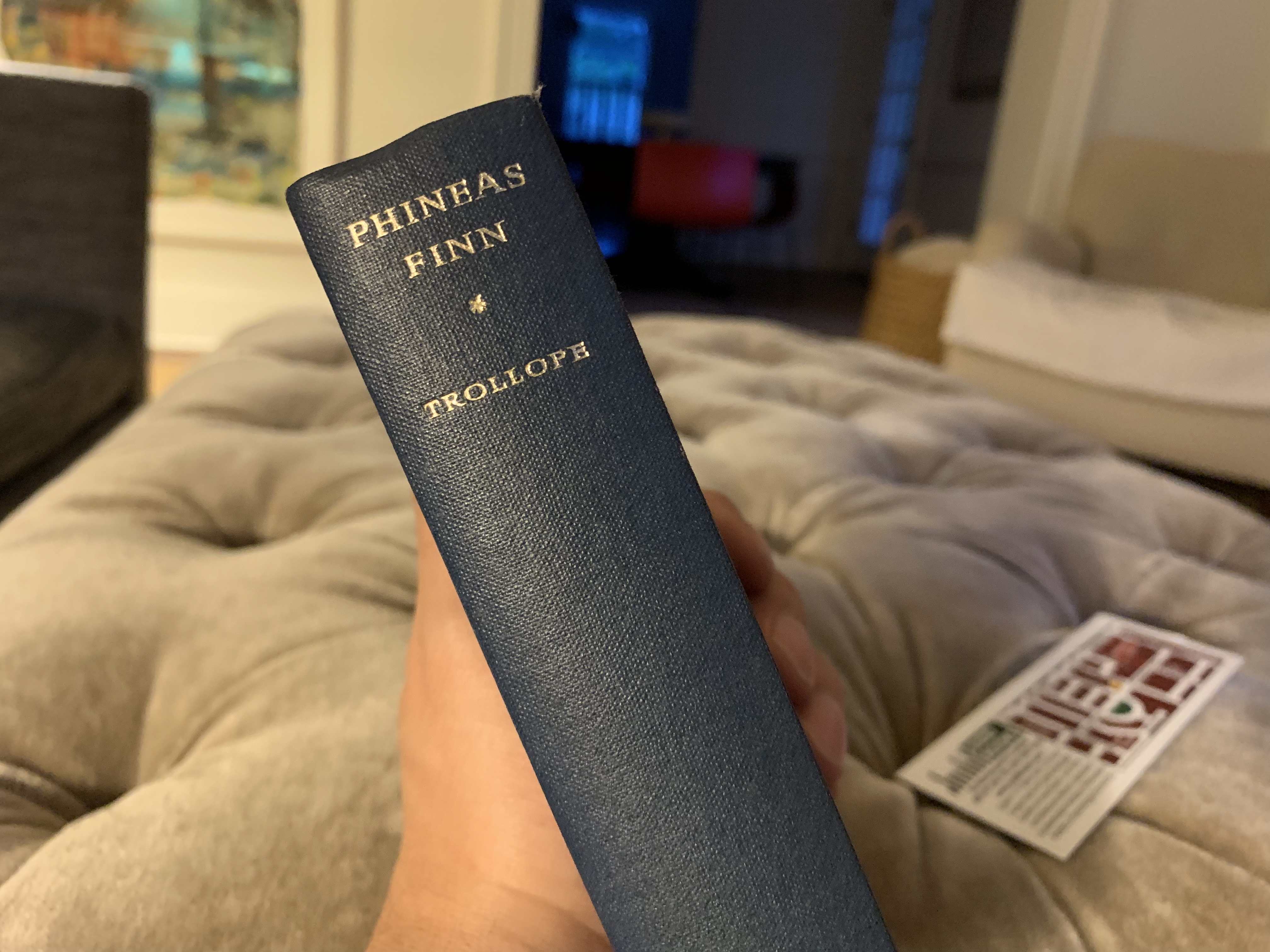
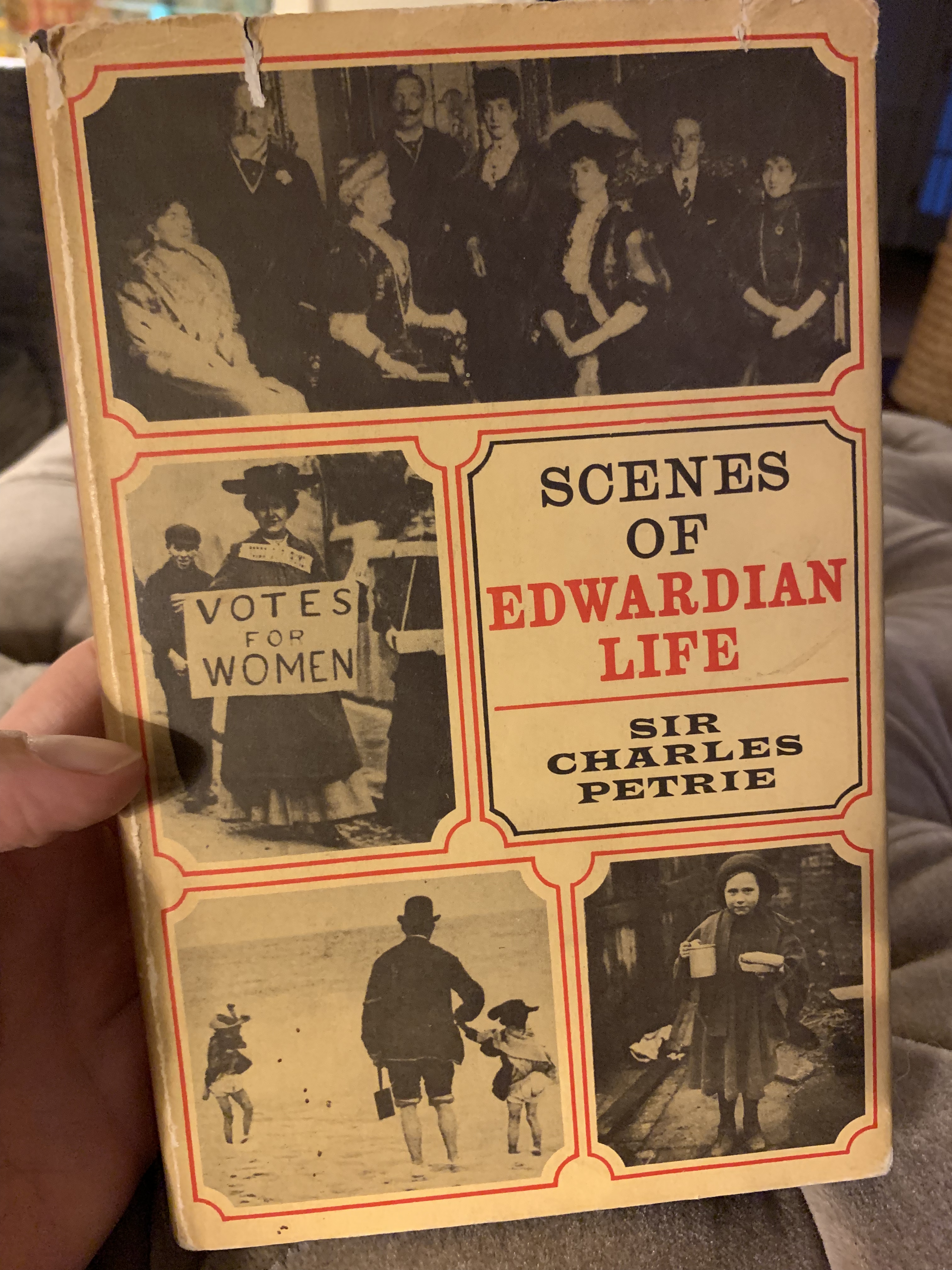
And naturally I had to buy something. I love these little Oxford University Press pocket editions of Trollope. They had a bunch of others in nice dust jackets, but they were more expensive and I couldn’t remember which ones I owned.
This is the kind of place I would go to if I wanted to find something to read. But, since I didn’t need anything to read, I wasn’t quite sure what to look for.
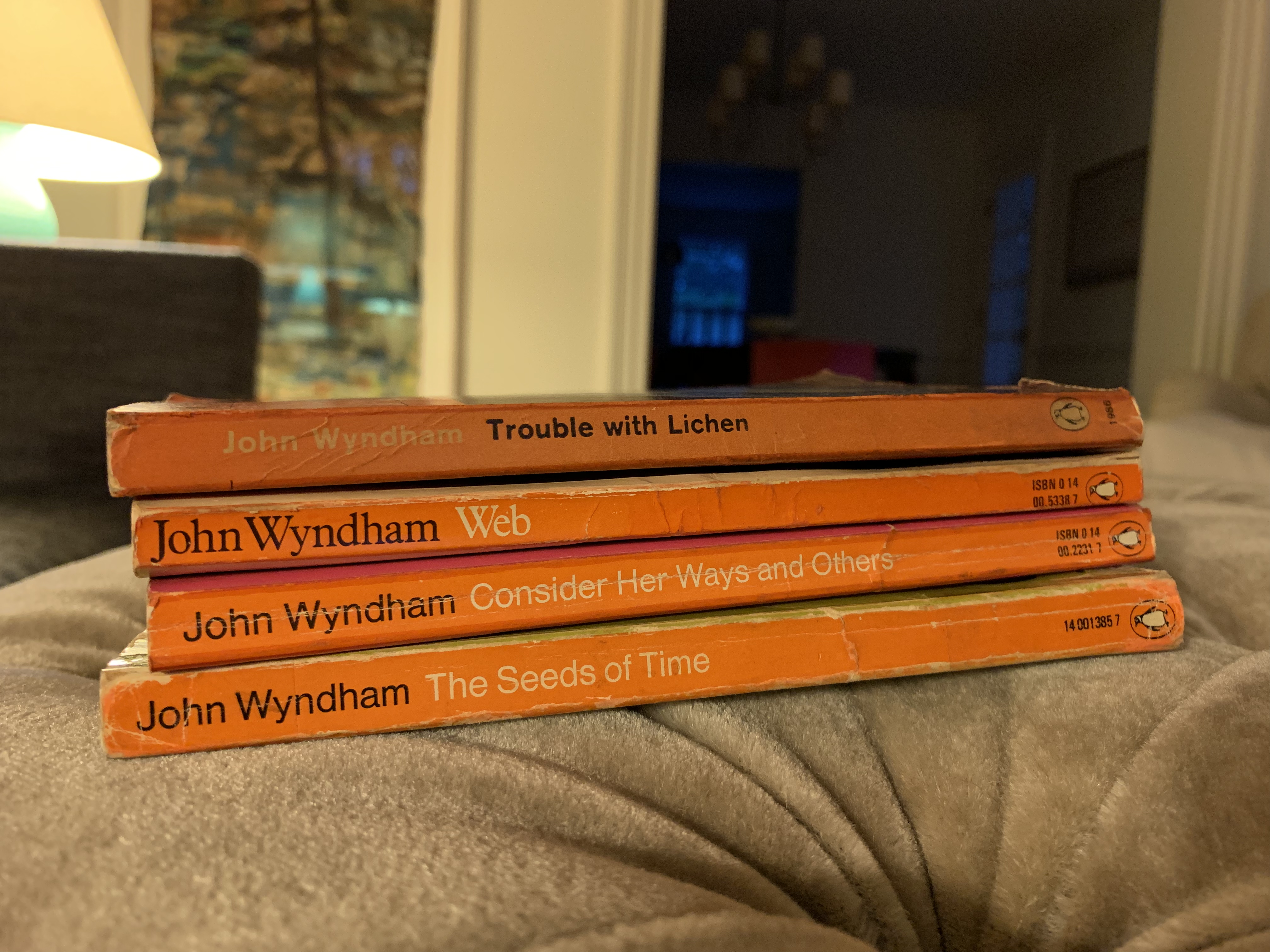
Skoob had lots of great stock but not much in the way of the kind of thing that I like to hunt for. Until I saw the section of old Penguin paperbacks. That made me think I might find some UK titles that would be hard to find in the US. At first nothing was too out of the ordinary, then I got to the Ws and realized how hard it is to find John Wyndham in the US. These were a huge score for me.
I couldn’t be in the neighborhood and not stop into Persephone. There was a man browsing with the catalog trying to figure out what to buy. I really, really wanted to walk him through the 30 or so that I have read, but I refrained from being so pushy.
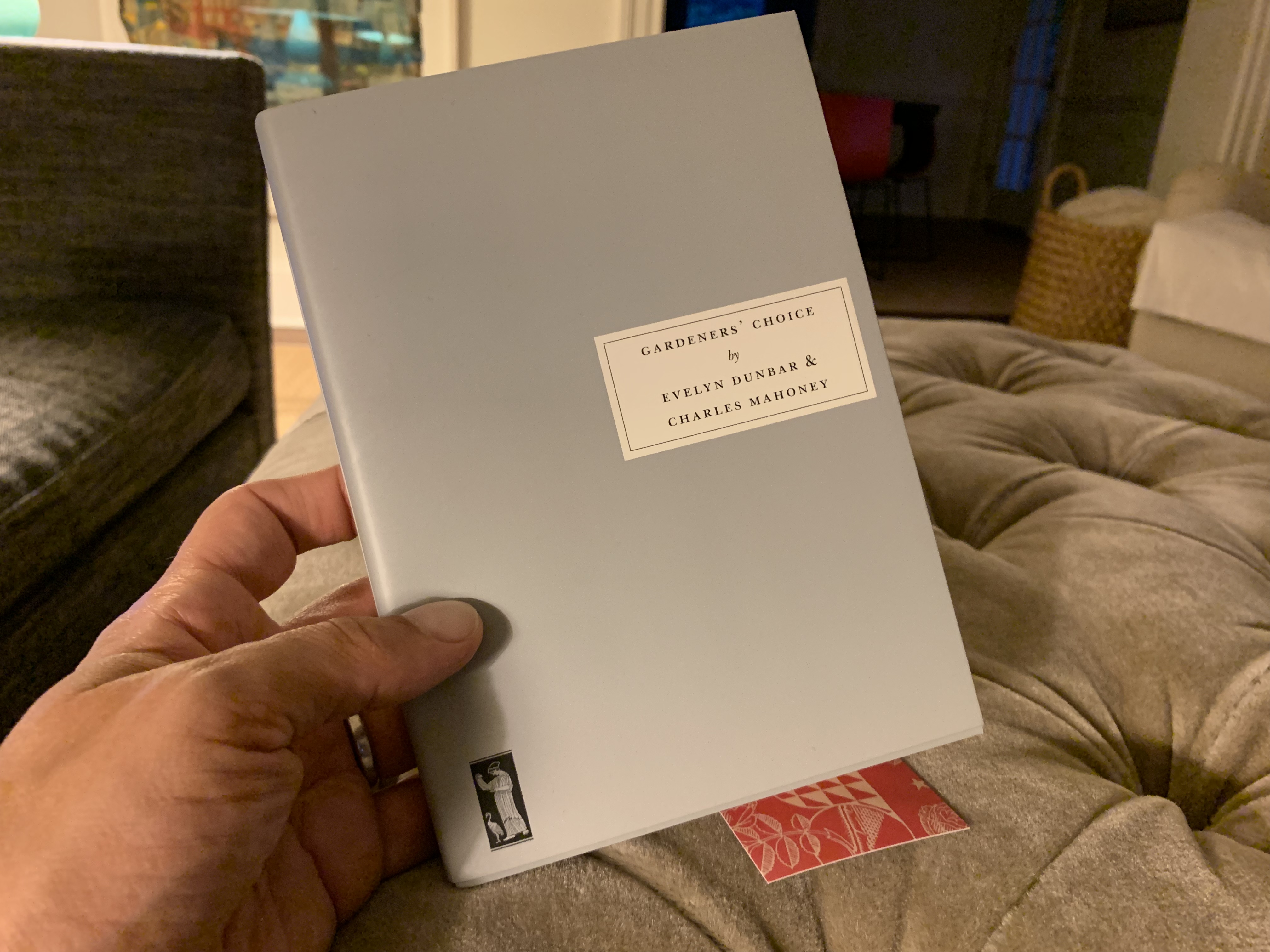
I had no intention of buying anything given that I find it pretty easy to order online and I needed time to do some research (like the guy walking around with the catalog). As I glanced through some of the newer editions I realized I haven’t kept up with Persephone’s offerings in the past couple of years. I’ve been missing out. Since I had already set a precedent for buying something in every store I couldn’t break tradition here. This gardening related title seemed totally appropriate for this trip.
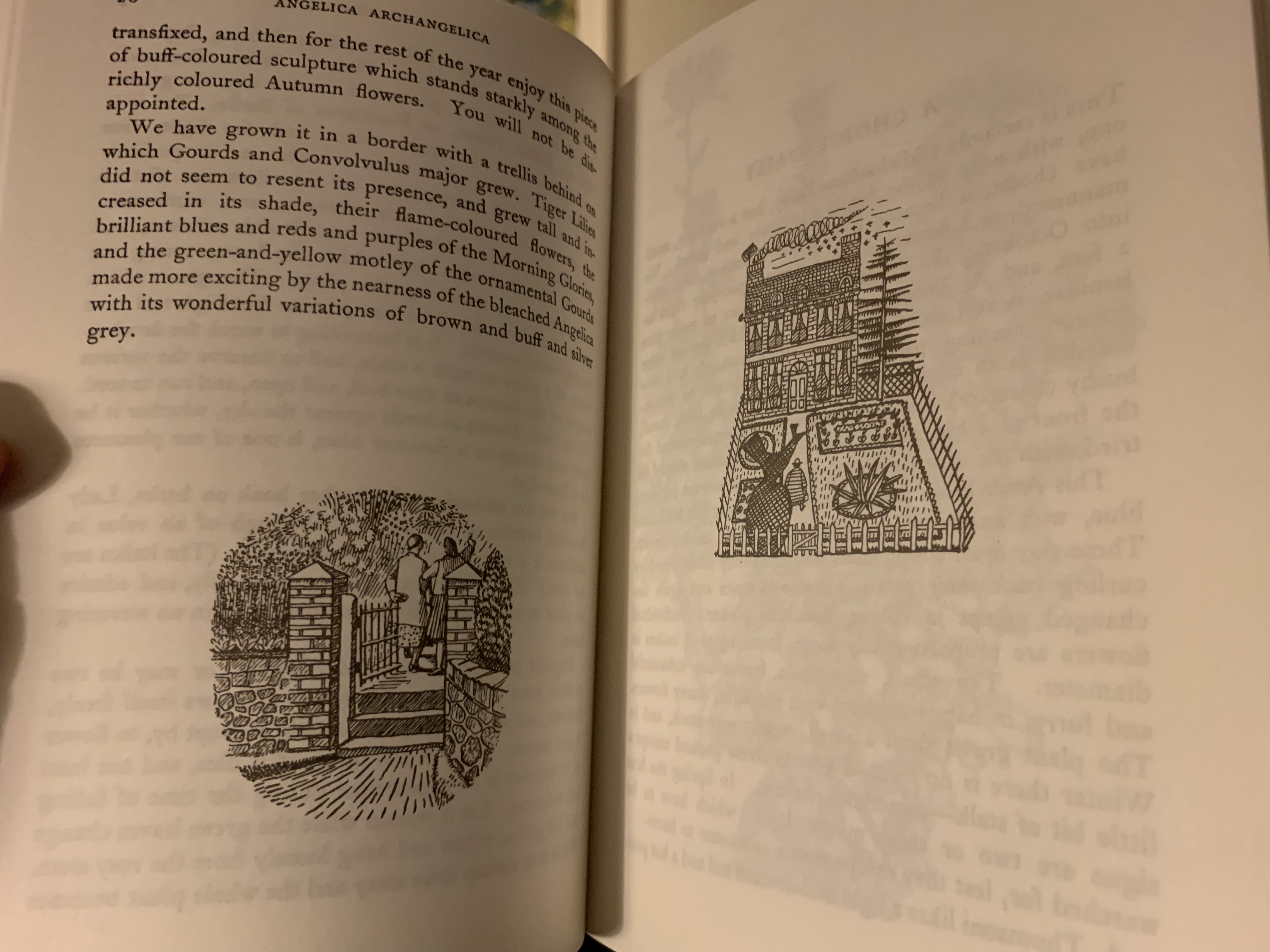
My first thought is that this would be more of a John book, but as I page through it, I think it will be right up my street.
As we were looking for a lunch spot, I decided to take John down Store Street where I lived in the BUNAC Hostel for six months in 1992. Well, Store Street has gentrified and looks quite a bit different than it did 27 years ago. And another bookstore I hadn’t expected.
With a focus on hocus pocus–sorry I couldn’t resist–on magic and similar, I wasn’t sure I was going to find anything at Treadwell’s that I wanted to buy, but then this book saved the day.
And on to Charing Cross Road. I was a bit surprised that so many bookshops have survived here. Although I have been to London many times since I lived in this neighborhood in the 1990s, I can’t remember the last time I walked down CCR.
It is possible that I bought this at Any Amount of Books rather than Pordes, but I don’t remember. And I don’t have a picture of AAB. After a week at Sissinghurst I felt I needed to buy something by Vita. This one is dedicated to her sister-in-law (and sister-in-love) Gwen St. Aubyn.
Just off Charing Cross Road is Cecil Court which is happily still chock-a-block with second had shops, print shops, coins, galleries, etc. I could spend a month of Saturdays here. But I whizzed in and out pretty quickly. I only had one day after all.
One of the more affordable offerings at Peter Ellis.
This place was packed and only a few minutes walk from our hotel on Dorset Square. It is just the kind of crazy jumble I was hoping to find.
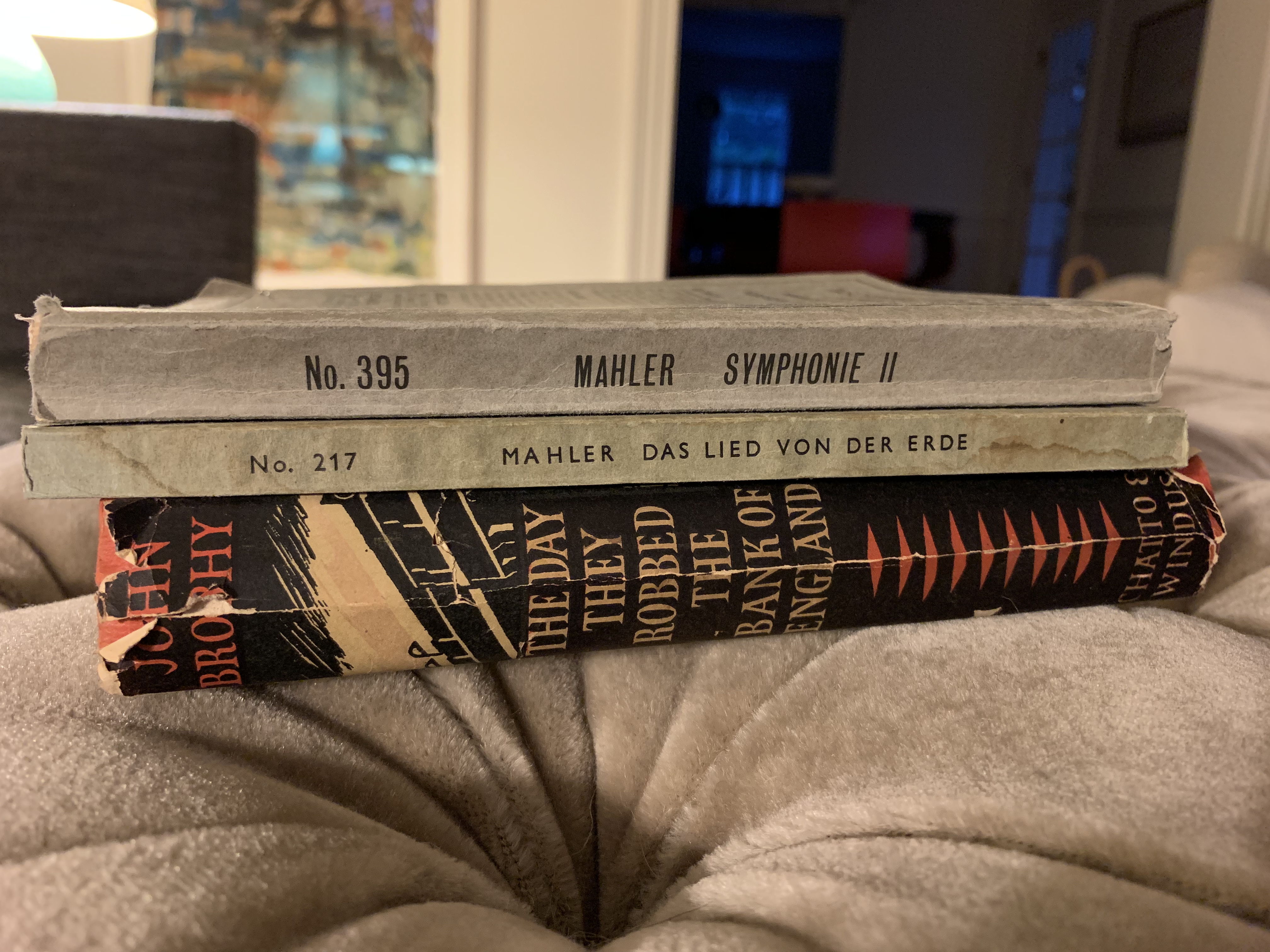
Archive Books had lots of music books and sheet music. They also had full orchestral pocket scores which I don’t run into much anymore. I’m kicking myself for not also getting the Mahler 1. The novel on the bottom is something that seemed like it might be a fun read and worth taking a chance on.
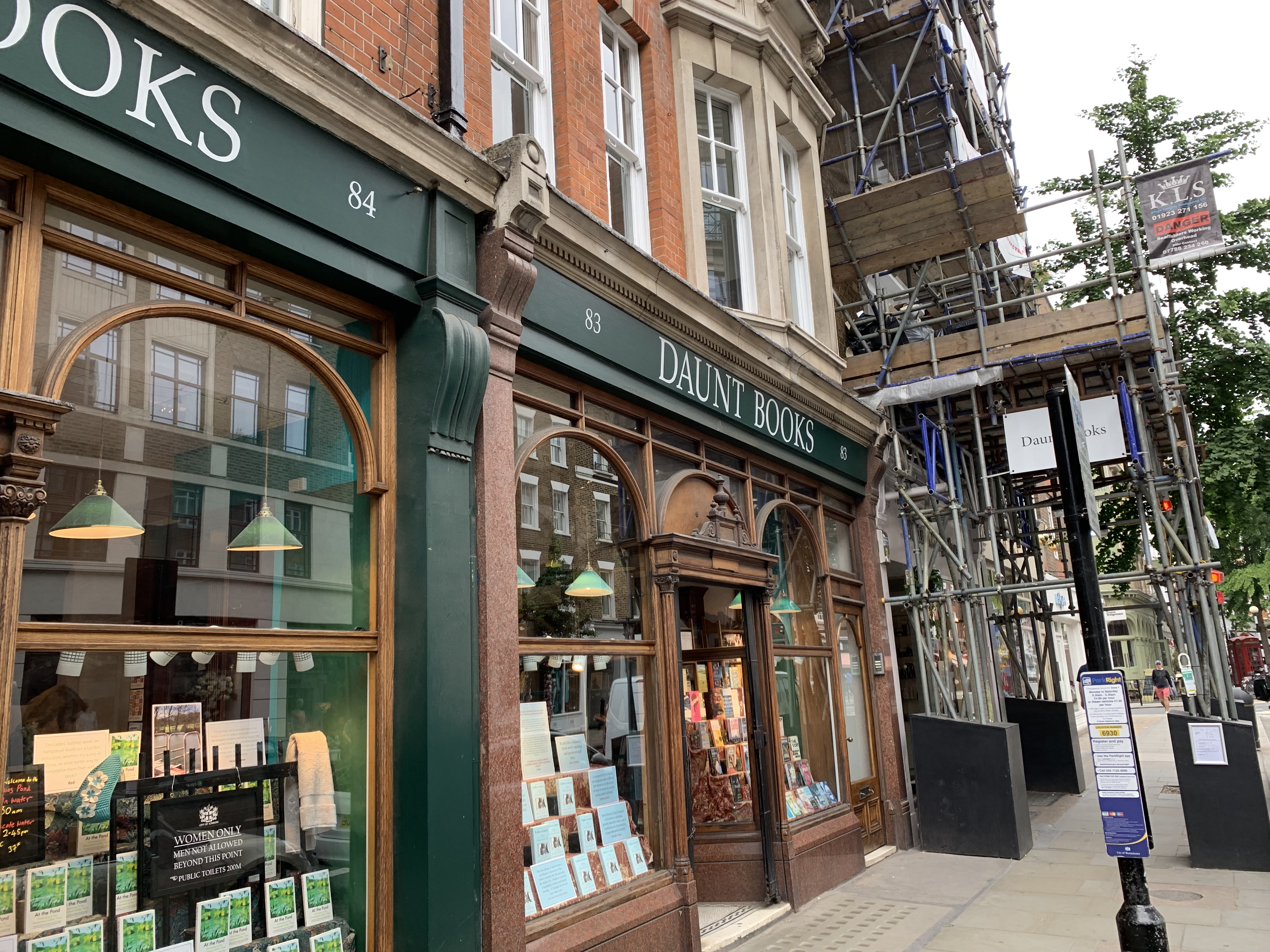
The original Daunt Books has been a favorite of mine since my best friend Ron lived right around the corner from it about 20 years ago. I hadn’t planned to stop in on this trip, but we had some time between the Wallace Collection and our flight home, so it seemed silly not to stop.
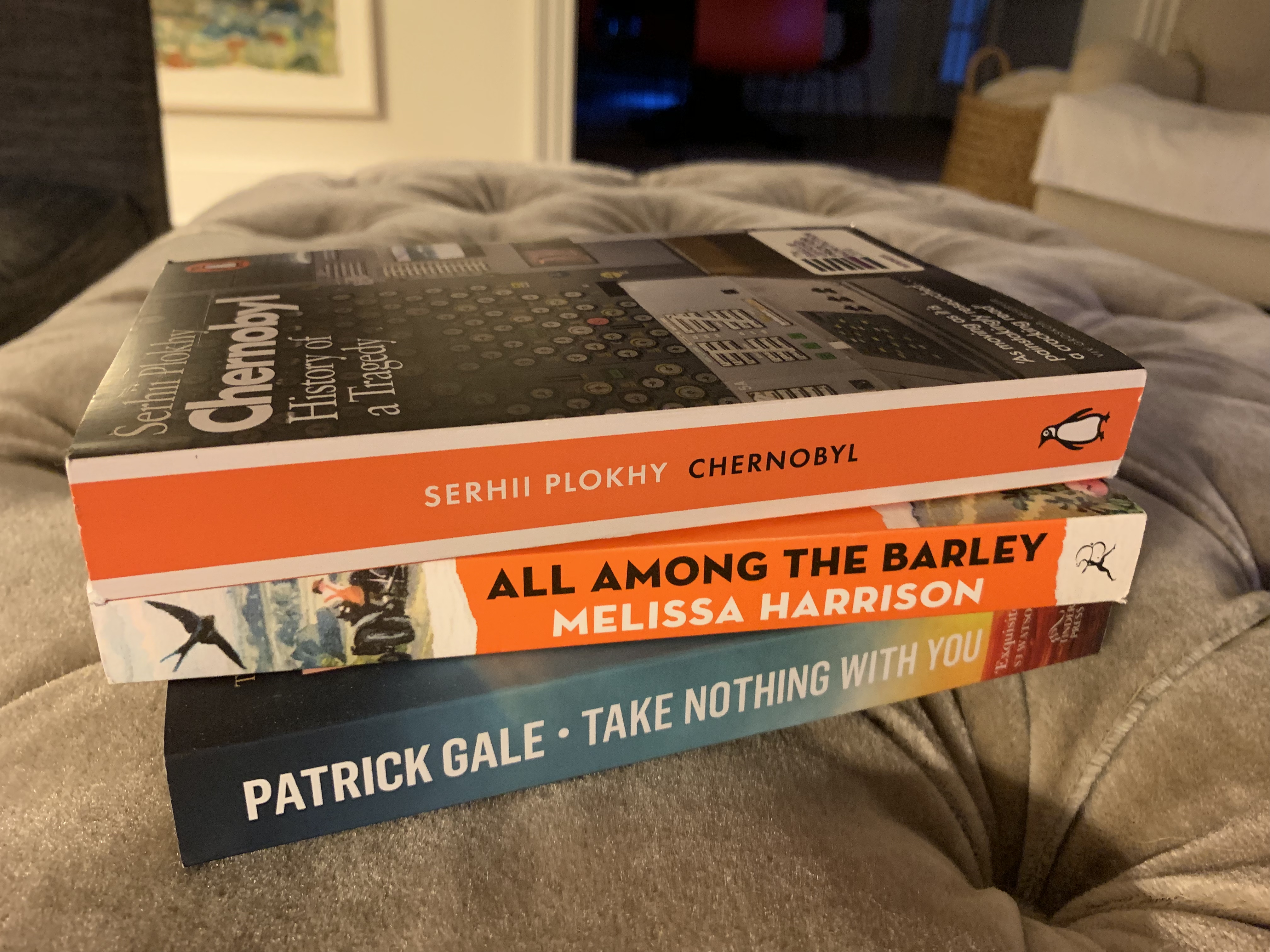
Not having thought about what I might want ahead of time, I wasn’t quite sure what to do with myself in a new bookstore. But I love Melissa Harrison and I liked Gale’s A Place Called Winter. After seeing the amazing drama about Chernobyl on HBO, I couldn’t pass up the top volume. I have so many questions I hope it will answer.

Our full first day at Sissinghurst

After a very good night’s sleep, woke up to bright sunshine around 6:00 am. Nothing ahead of us for the day except for friends arriving from London for the day. By the time they arrived around 11:00, it was starting to spit rain. So we sat under a market umbrella outside the restaurant and had tea. Then a wander through the woods followed by lunch at the Milk House pub nearby in the tiny blip in the road known as Sissinghurst Village.
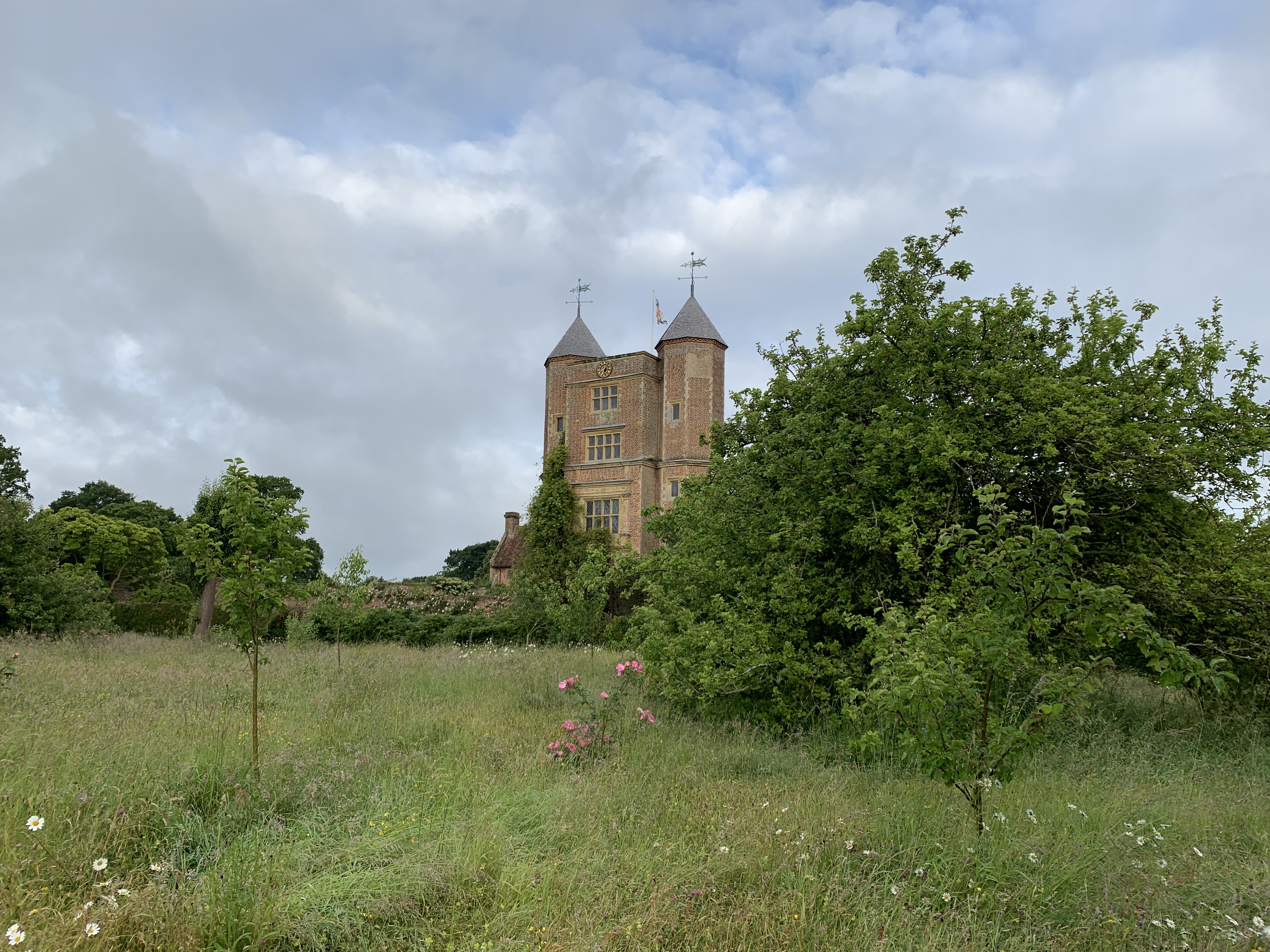
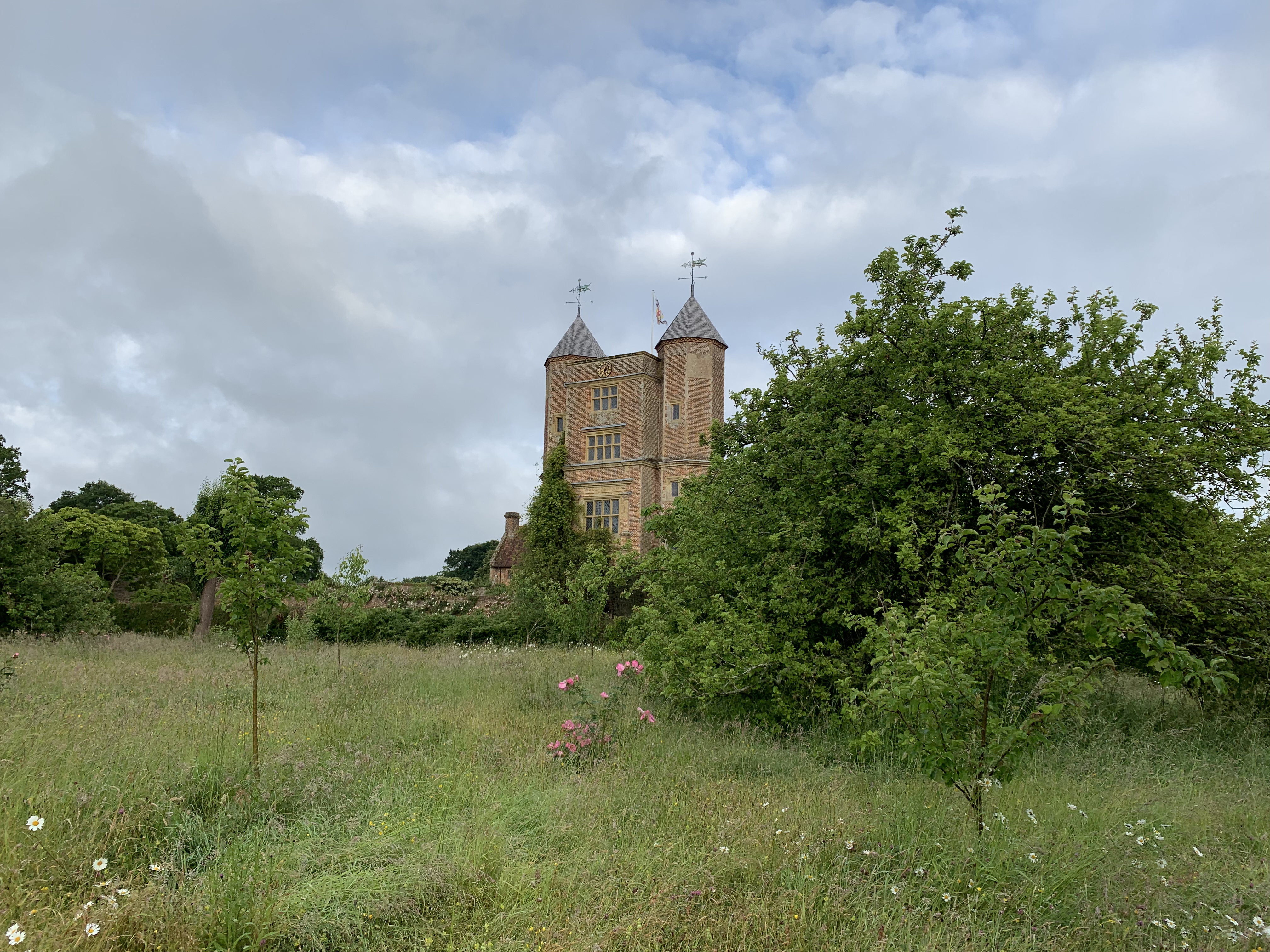
The start of my 6:00 am wander through the garden. From the orchard looking back at Vita’s tower.
I love things growing where they aren’t supposed to.
Now it’s 7ish, John’s up.
Heading into the cutting garden.
These allium were almost as tall as I am.
Years of floral serendipity.
The big wooden entrance doors, with us on the right side of them.
With that blue sky, surely it won’t rain today…
Back at the house around 8:00 for a tea and crumpet–which we are about to take out to the boathouse pavilion to eat.
Coming out the living room door into the White Garden.
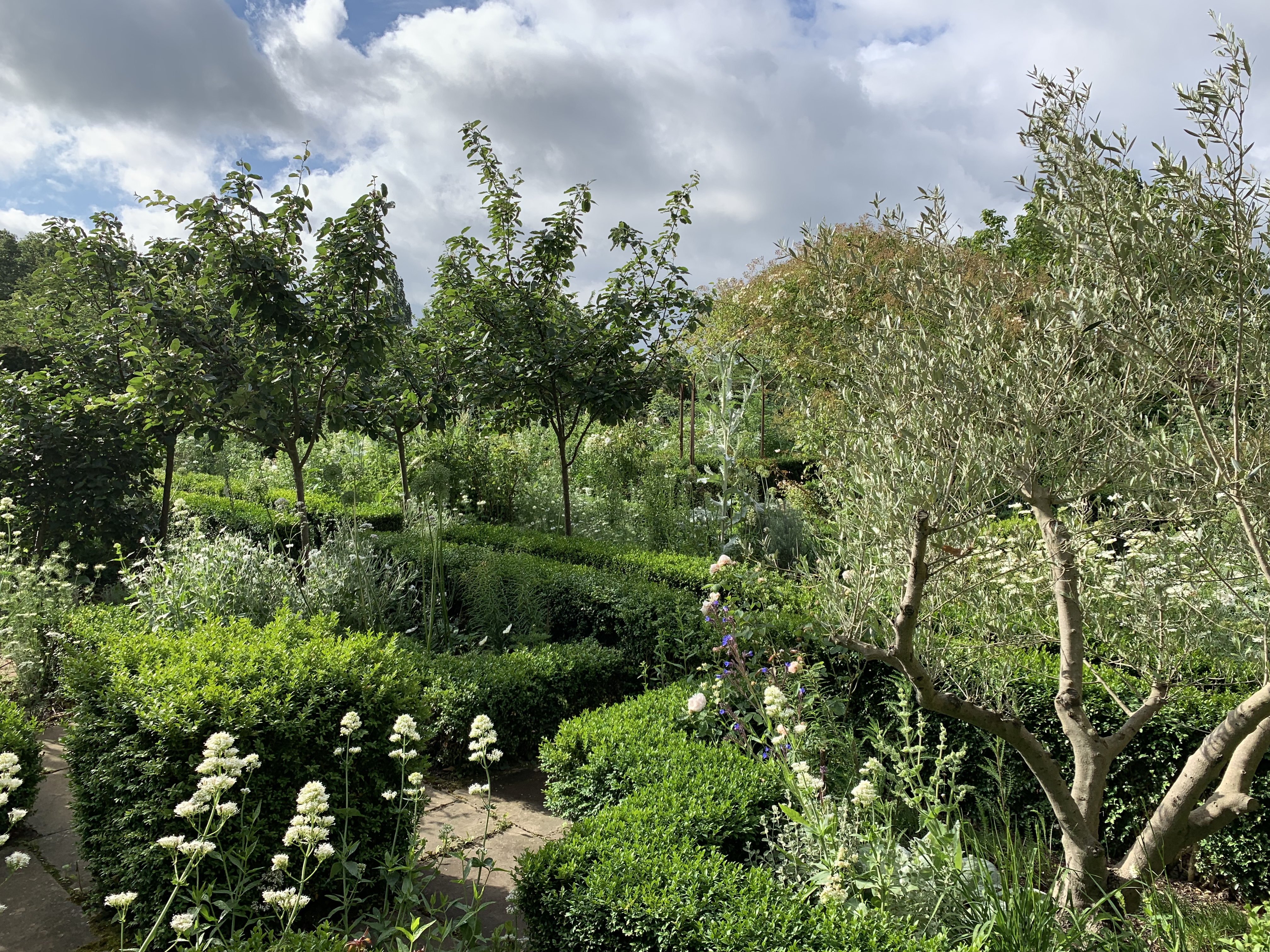
The White Garden
A rather lopsided view of our breakfast spot.
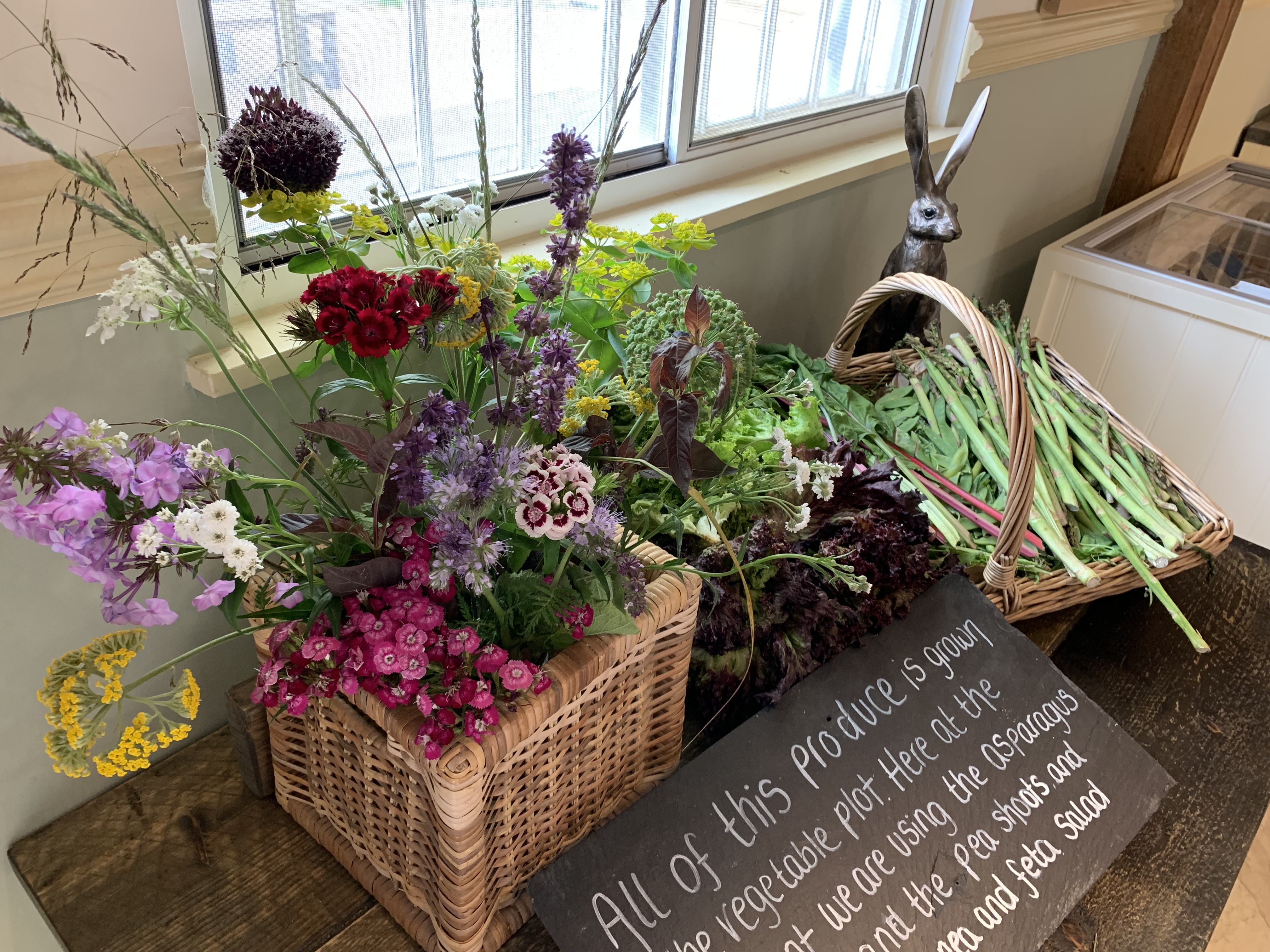
Flowers in the restaurant where we had our late morning tea with Ros, Layla, and Kaseki.
Me being interesting on our walk with Ros and Layla (and Kaseki down there somewhere).
Ros and Kaseki at lunch.
Poppy
White Garden
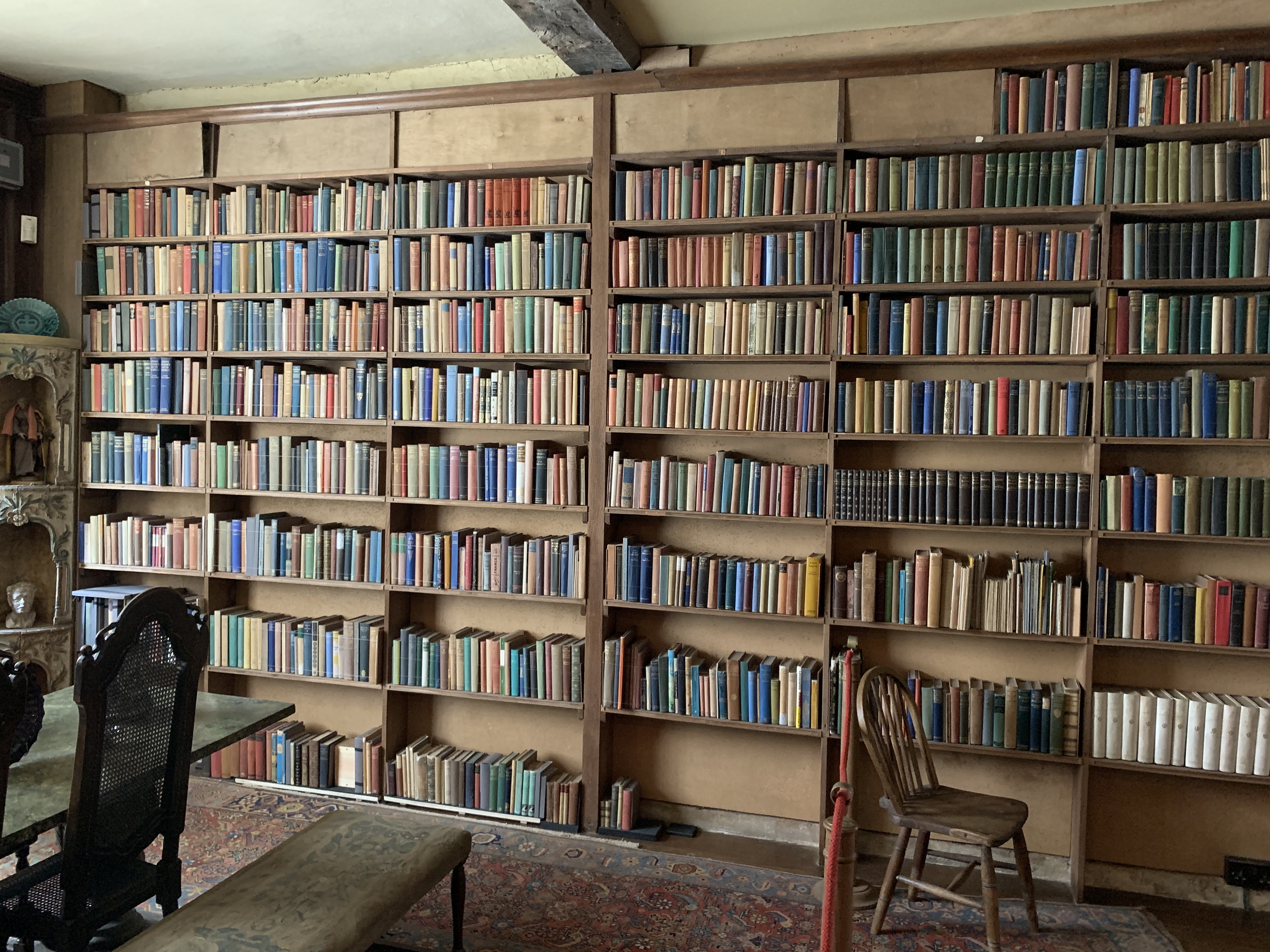
A quick peek at Vita and Harold’s library. Much more on this in the coming days.
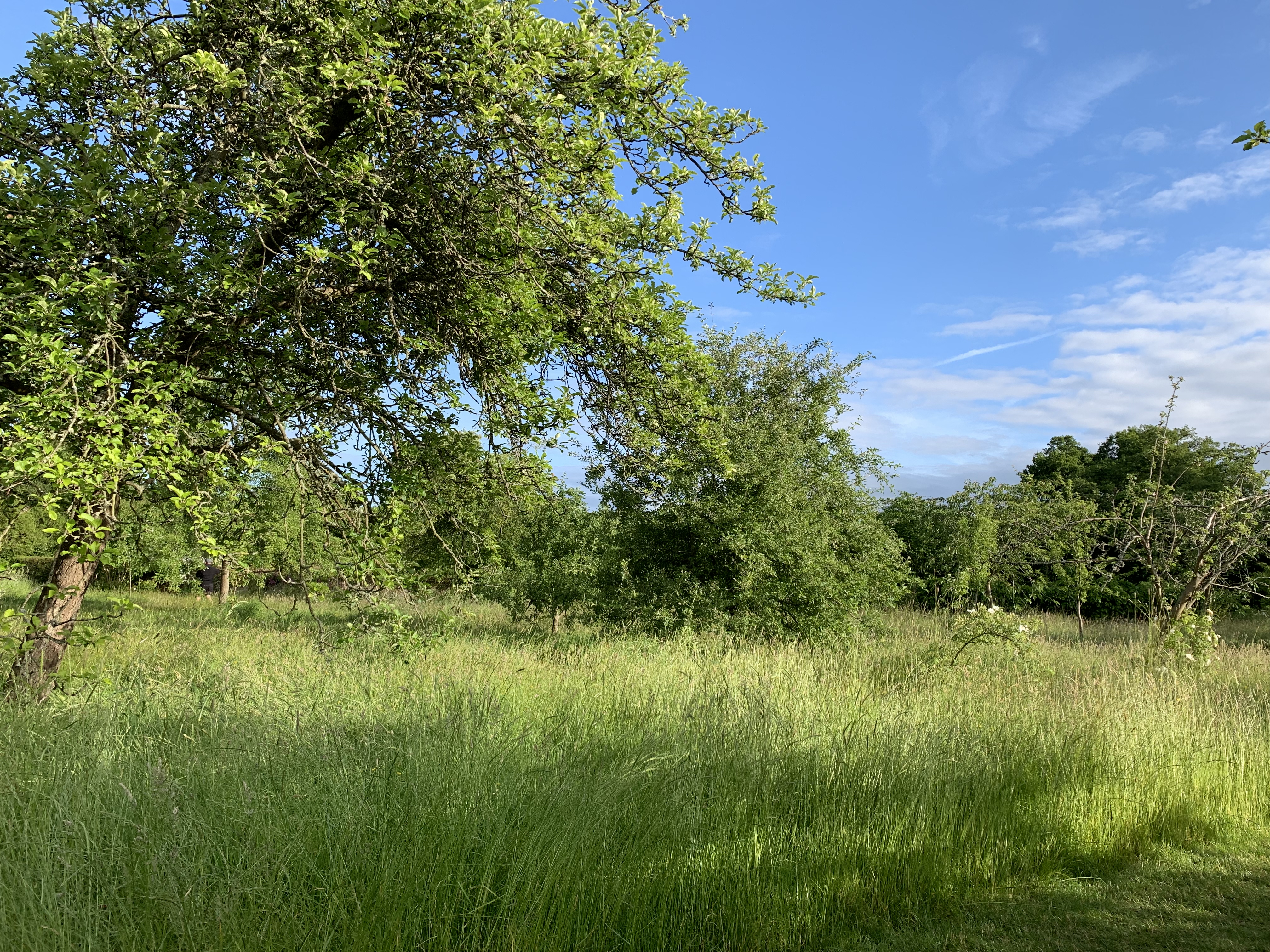
Perfect evening in the orchard.
I can never get enough of views like this.
I was a bit of an indoors kid and I would have hated this setting. Now I find it sublime. I like it better than the gardens themselves.
End of the day stroll with Iris Murdoch in my back pocket.

Playing house at Sissinghurst

Still getting used to the fact that we had the place to ourselves, we decided to stay in for dinner. And not having a ton of energy after not getting much sleep on our overnight flight, we decided a simple meal was in order. We relished our bread and cheese dinner with some hummus and olives thrown in, followed by fresh strawberries with vanilla custard.
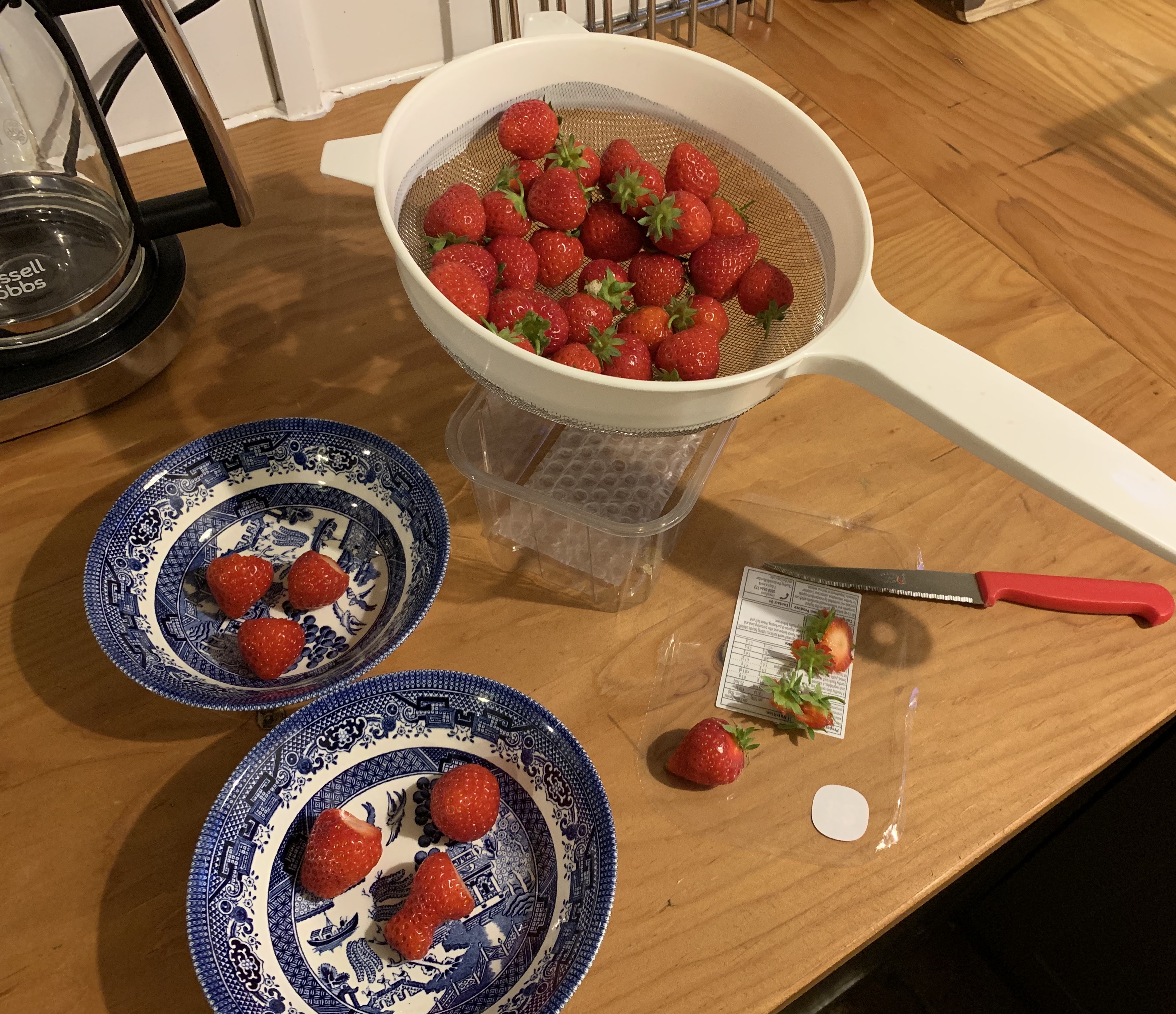
It was strawberry season in the UK and I think we had them every day of our trip. This moment was significant for two reasons. One: Our work lives have been so busy over the past couple of years that we don’t do much cooking in the evening. We’ve become very lazy, or it we do cook it’s just one more busy thing. Even though I had planned the simplest of meals on our first night I  had to force myself to clean the berries. Once I started though, it actually felt very calming. I could feel another layer of daily stress slipping away. Two: It reminded me of the scene in As Time Goes By where Jean and Lionel leave Penny out in the garden to prepare some strawberries and cream.

They had a very nice digital radio in the kitchen/dining room which meant we could double down on the English-ness of the moment with the BBC. I’m not sure what I expected, but I was a little disappointed in what was available. Instead of classical music on Radio 3 they were playing a dramatization of something. But this was no Day of the Triffids or Cranford, it was some modern thing with lots of s***s and f***s. And Radio 4 didn’t provide something homey like Barbara Pym on Desert Island Discs or the shipping forecast, it was some news programming with too many American accents. It wasn’t always like this during our stay, but that first night it was kind of disappointing that the radio was in 2019 not 1949.
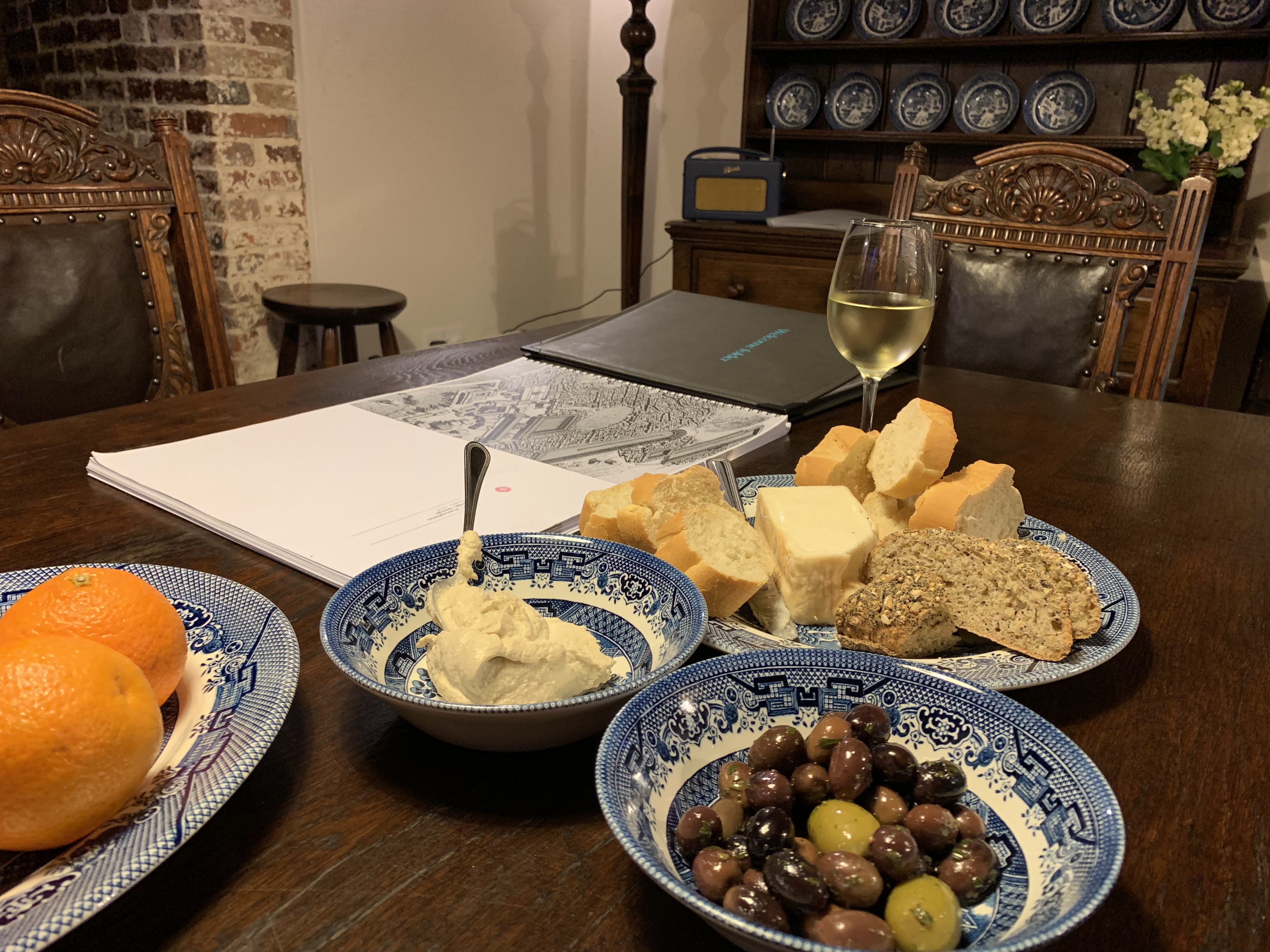
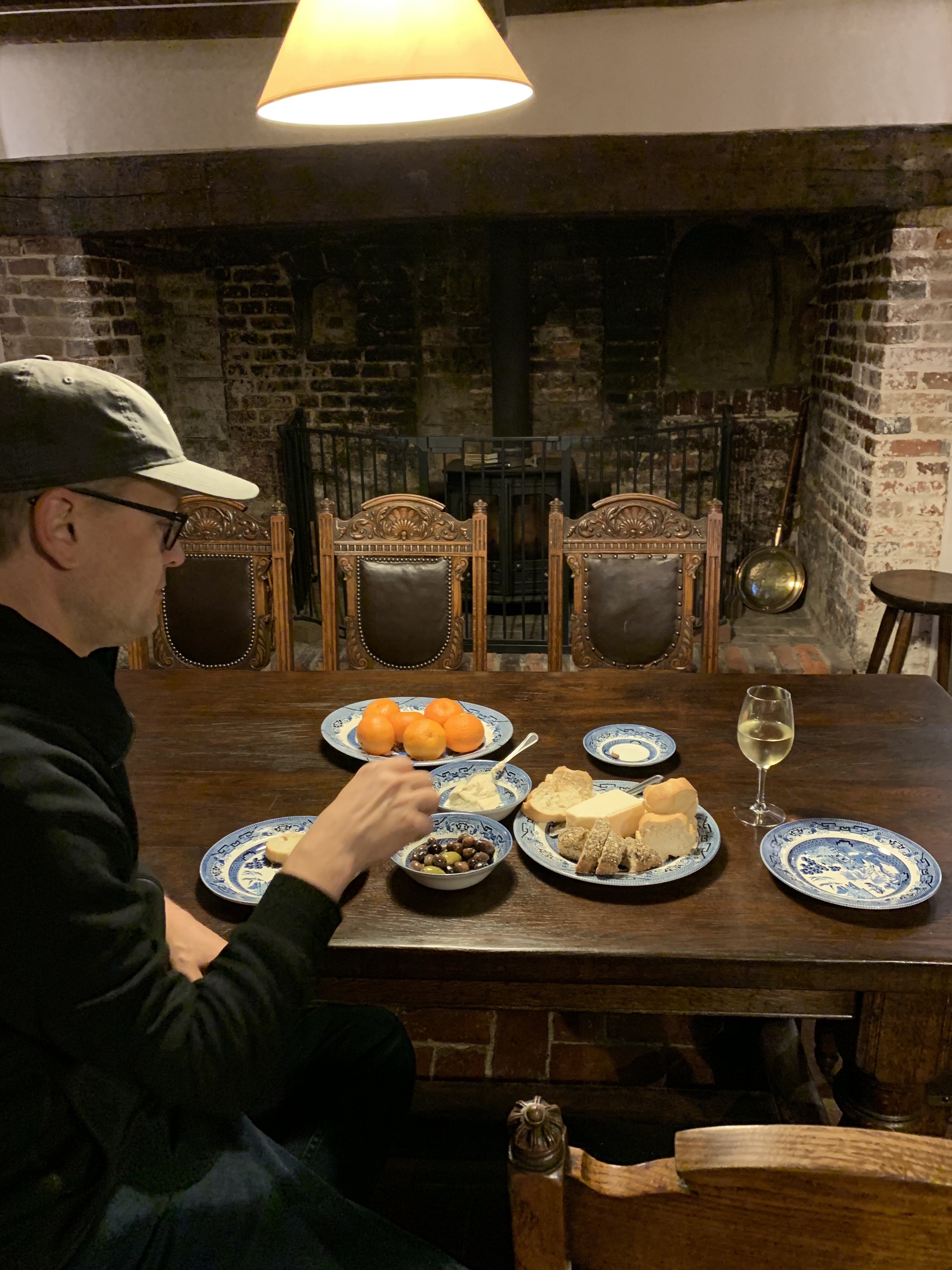
Our modest, but delicious collation. Note the old timey (but digital) radio in the back that did not play 1940s programming.
It looks a little sparse, but it was really quite satisfying. I wore my jacket inside because it was a little on the chilly side. It’s always nice to get away from the heat in DC so we loved the cool nights–although not all of them required jackets inside the house.

We did manage to stay up until about 10 pm. And then, what I like to call, the sleep of the ages. That feeling of total, beautiful, exhaustion after having been up for over 24 hours. It feels so good. And to be able to sleep with the windows open, cool air flowing in, snuggled under a cozy duvet. Bliss.

Arriving at Sissinghurst

We had been to Sissinghurst twice before. The first time was on a day trip from London during a rather dry July. The second time was at the start of a late-May driving tour that included Rye, Great Dixter, Hidcote, the Cotswolds, and Oxford. On that second trip we stayed overnight at the very nice B&B that is immediately adjacent to the gardens on the estate grounds. Staying there we saw how nice it was to be in the garden toward closing time at 5:30 when the bulk of the tourists had left for the day. So a few years ago when John came across something online that said that you could rent the Priest’s House and have after-hours access to the garden it seemed too good to be true. It didn’t take long before we decided we must give it a go.

Given that we wanted to stay there in June, a very popular month for gardens, we thought it might be a little hard to get a reservation. When I called the National Trust they told me we could book up to two years in advance. And that is exactly what we did. I waited until it was exactly two years before the dates we thought would work and made the reservation and put down a 50% deposit.

And then suddenly, two years later, there we were. There were many moments over those two years where I was convinced that there was a typo somewhere and we wouldn’t really have after-hours access to the garden. But then we got there and I happily discovered that I had been worried over nothing.

We. Had. The. Whole. Place. To. Ourselves.

Yes, there appeared to be a caretaker couple who lived on site, and some of the Nicolsons still have a weekend home in part of the main building and use the South Cottage in the month of June, but, with very little exception, these folks were invisible during our stay. And yes, in the morning there were gardeners on site, but they also didn’t get in our way and were super helpful and friendly when we had questions.

I should also mention at this point that England in June has really long days. We are talking sun up at 4:40 AM and sunset close to 10 PM. Since the garden is only open to the public from 11:00 to 5:30, this meant we had about 10 hours of daylight in the garden pretty much all to ourselves. I’m beginning to sound like a broken record, but it is still amazing to me that we had such an amazing opportunity to experience Sissinghurst as if it were ours (without all the work).

More details and photos in the coming days, but I thought I would post a few snaps to give you a sense of our living conditions for the week.
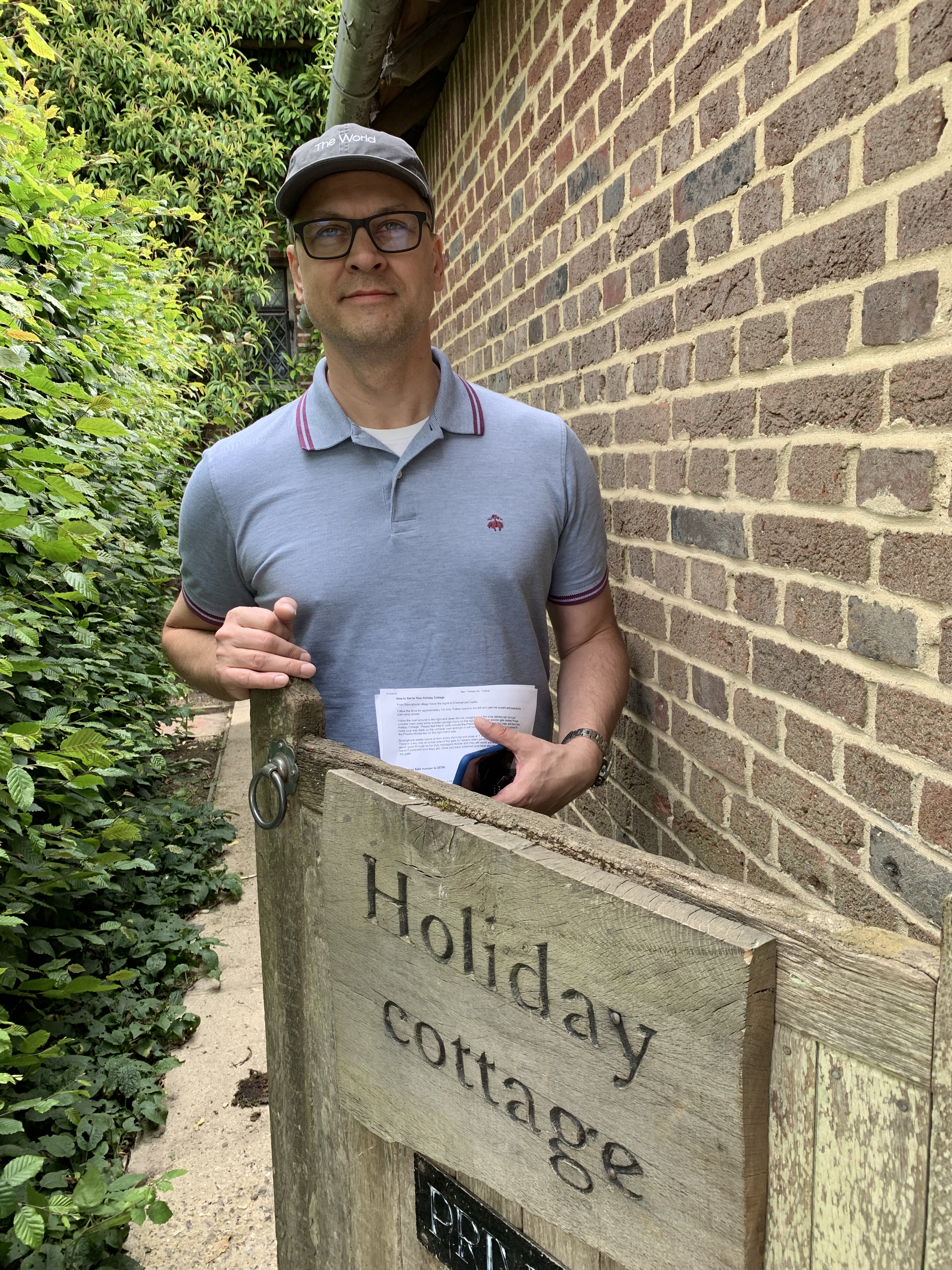
I think we found it.
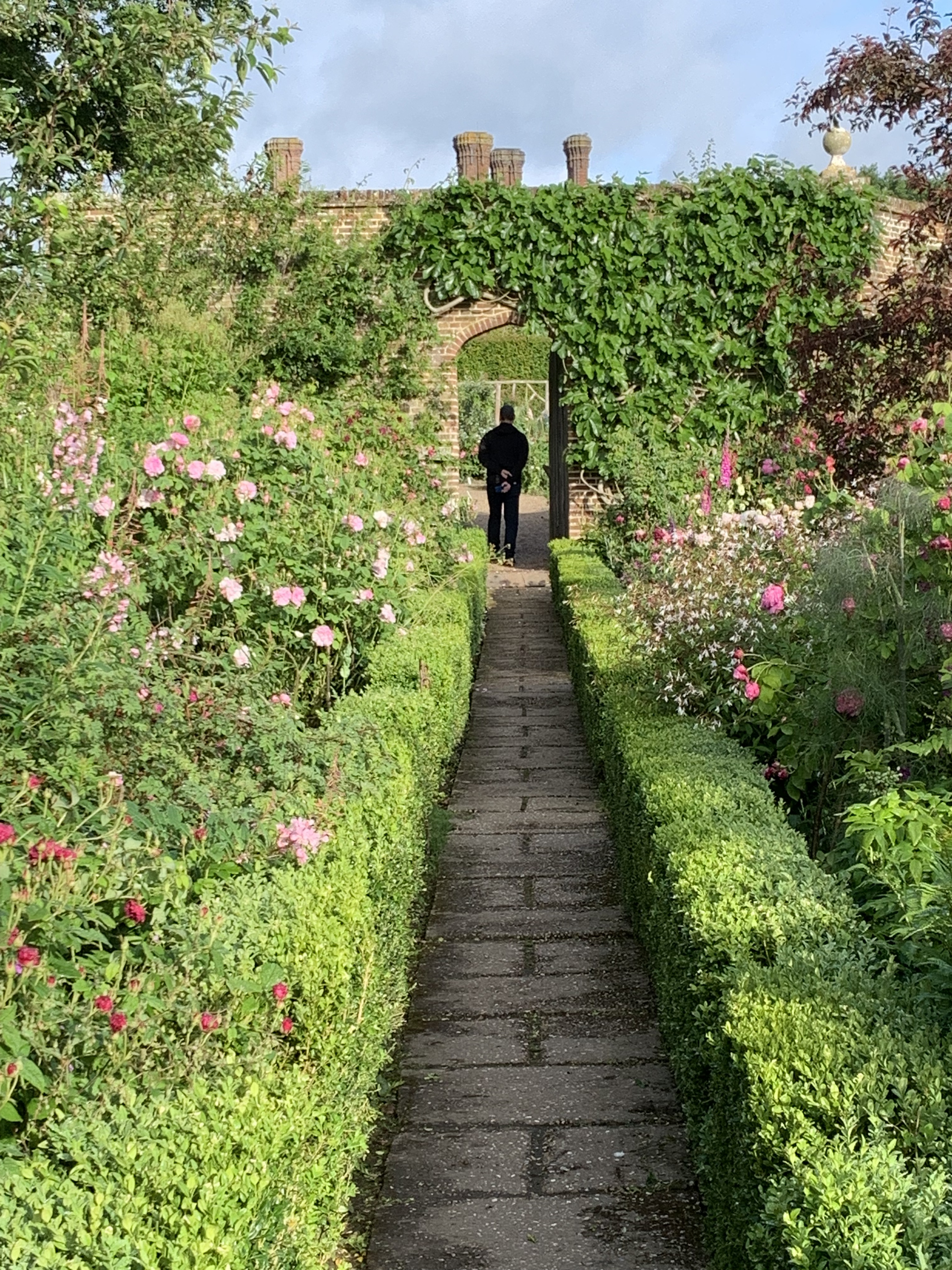
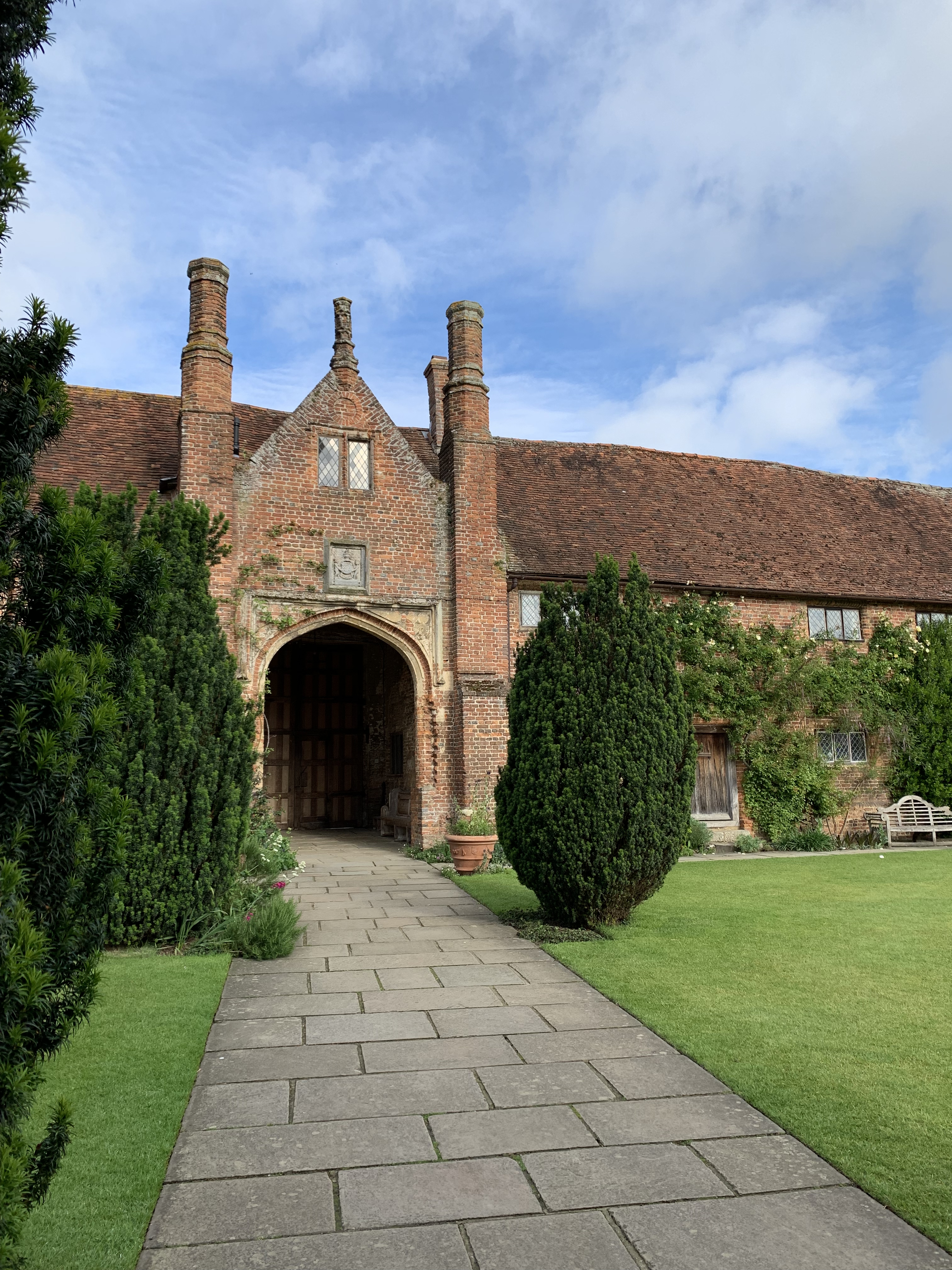
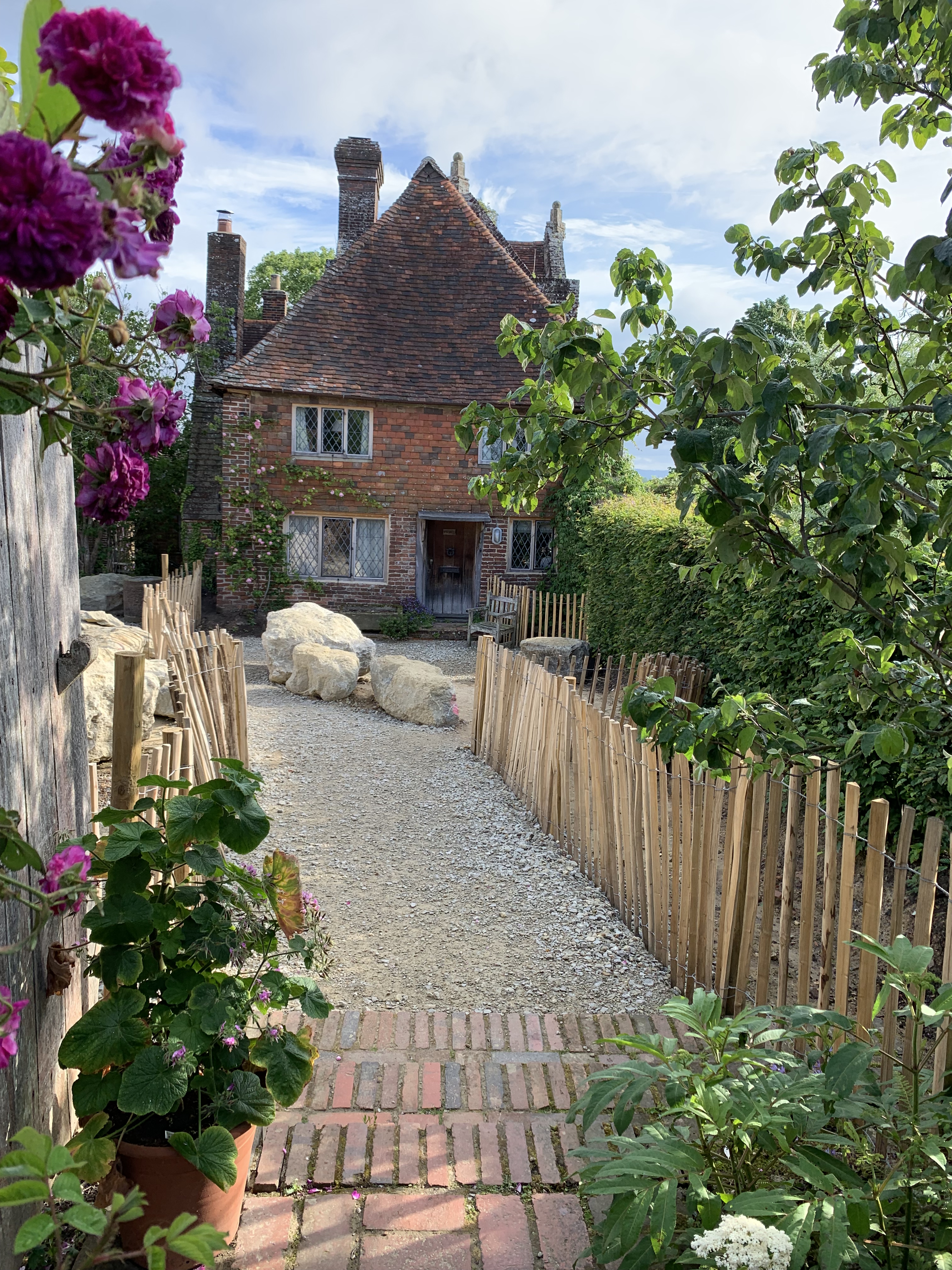
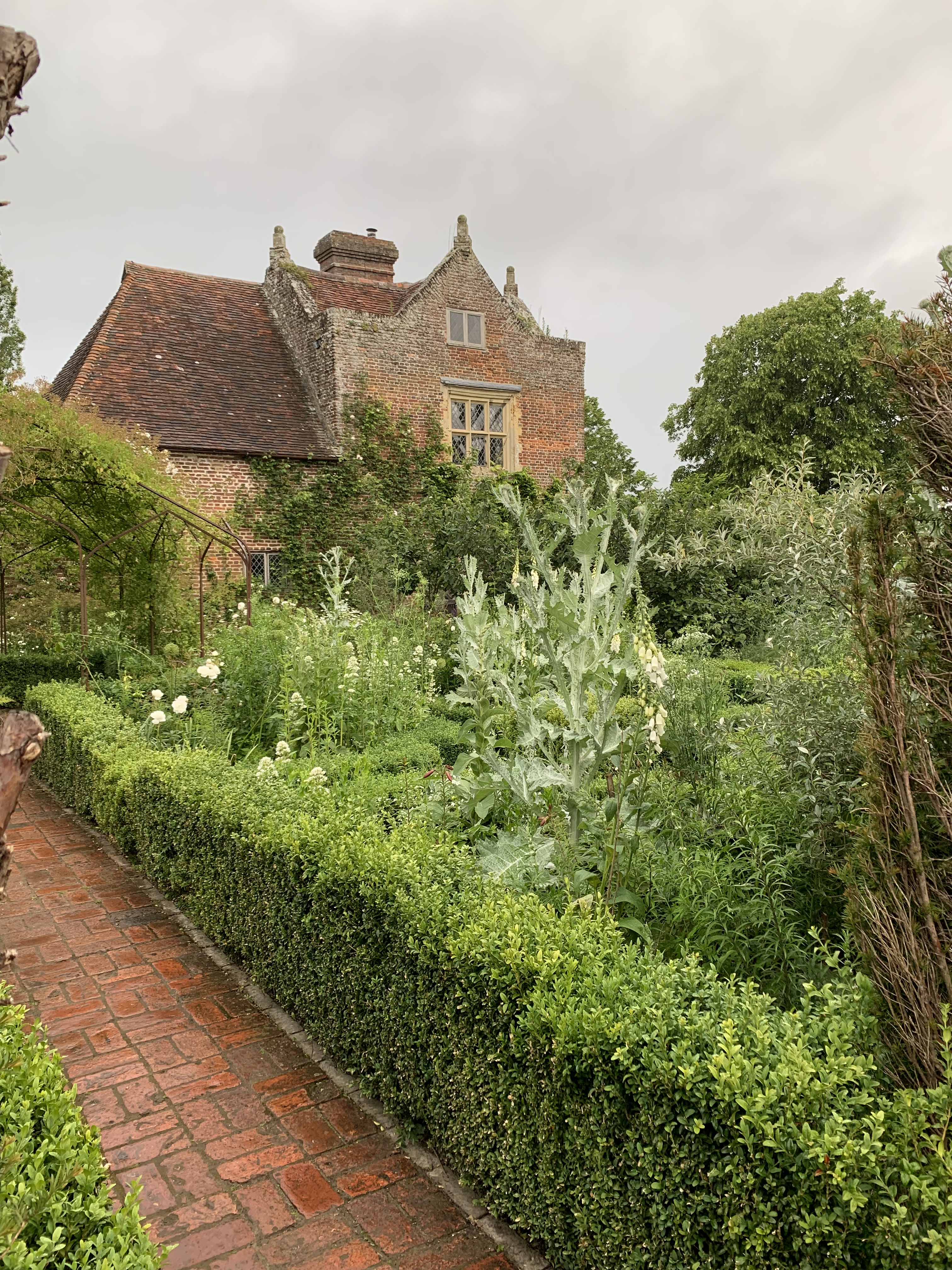
A view of the Priest’s House from the White Garden–essentially our back yard for the week.
The welcome tray with a handwritten note for us made it clear they were expecting us.
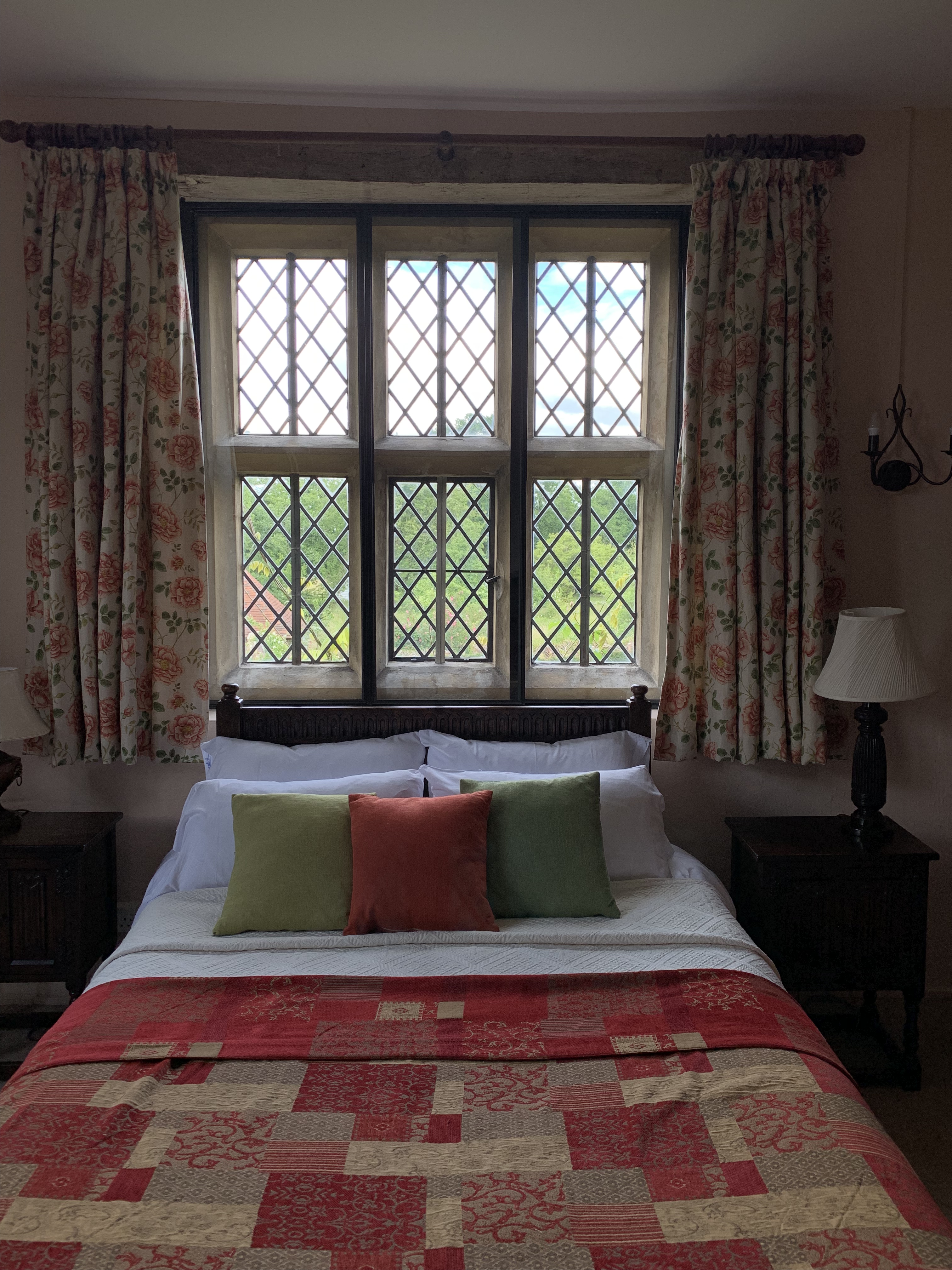
Our bedroom. Right outside those windows is the White Garden.
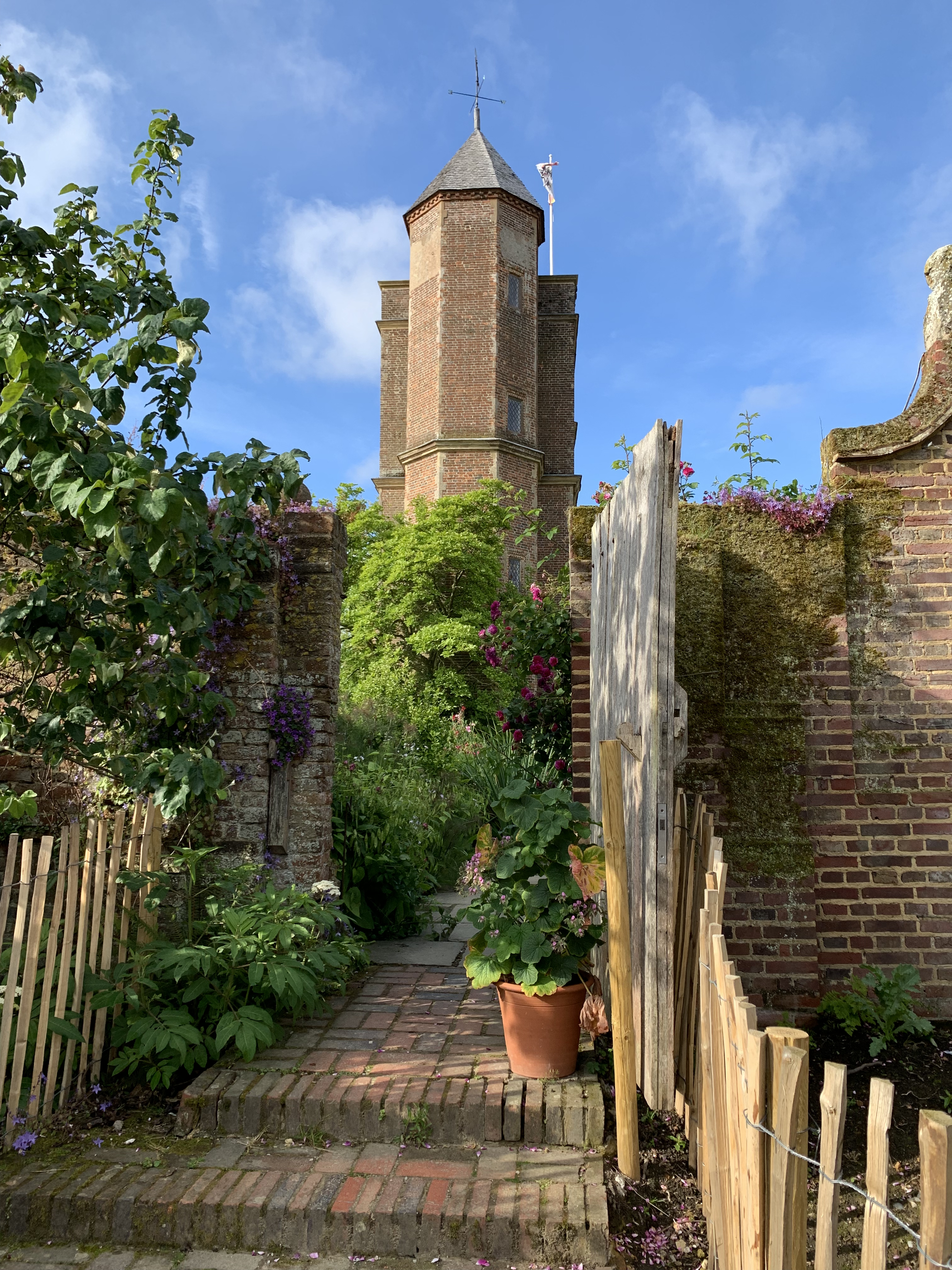
The view from our kitchen door. Looking over at the tower where Vita Sackville-West had her study.
And the view looking from the direction of Vita’s tower back to our house. The fencing is temporary while they work on the Delos garden right next to us.
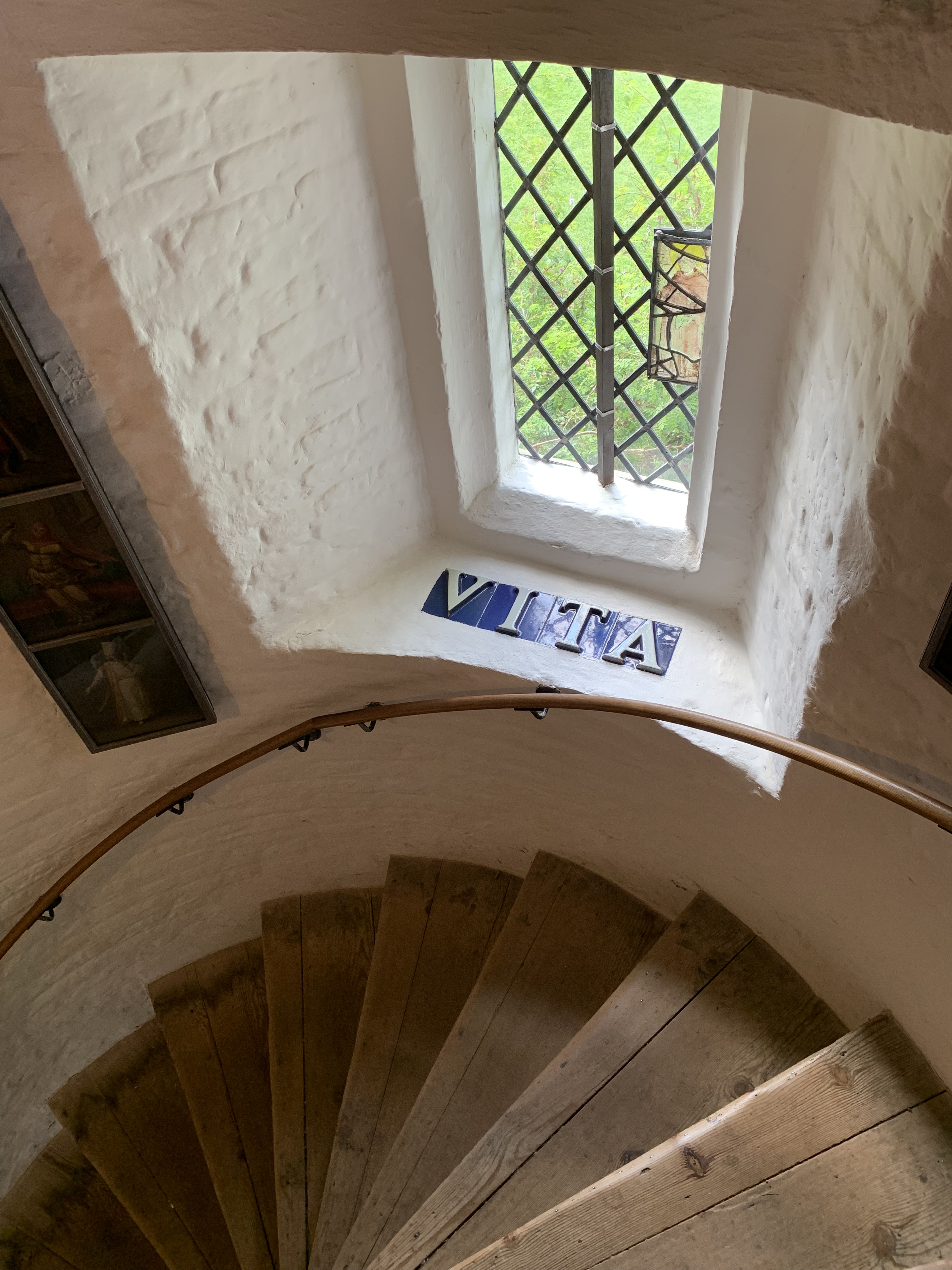
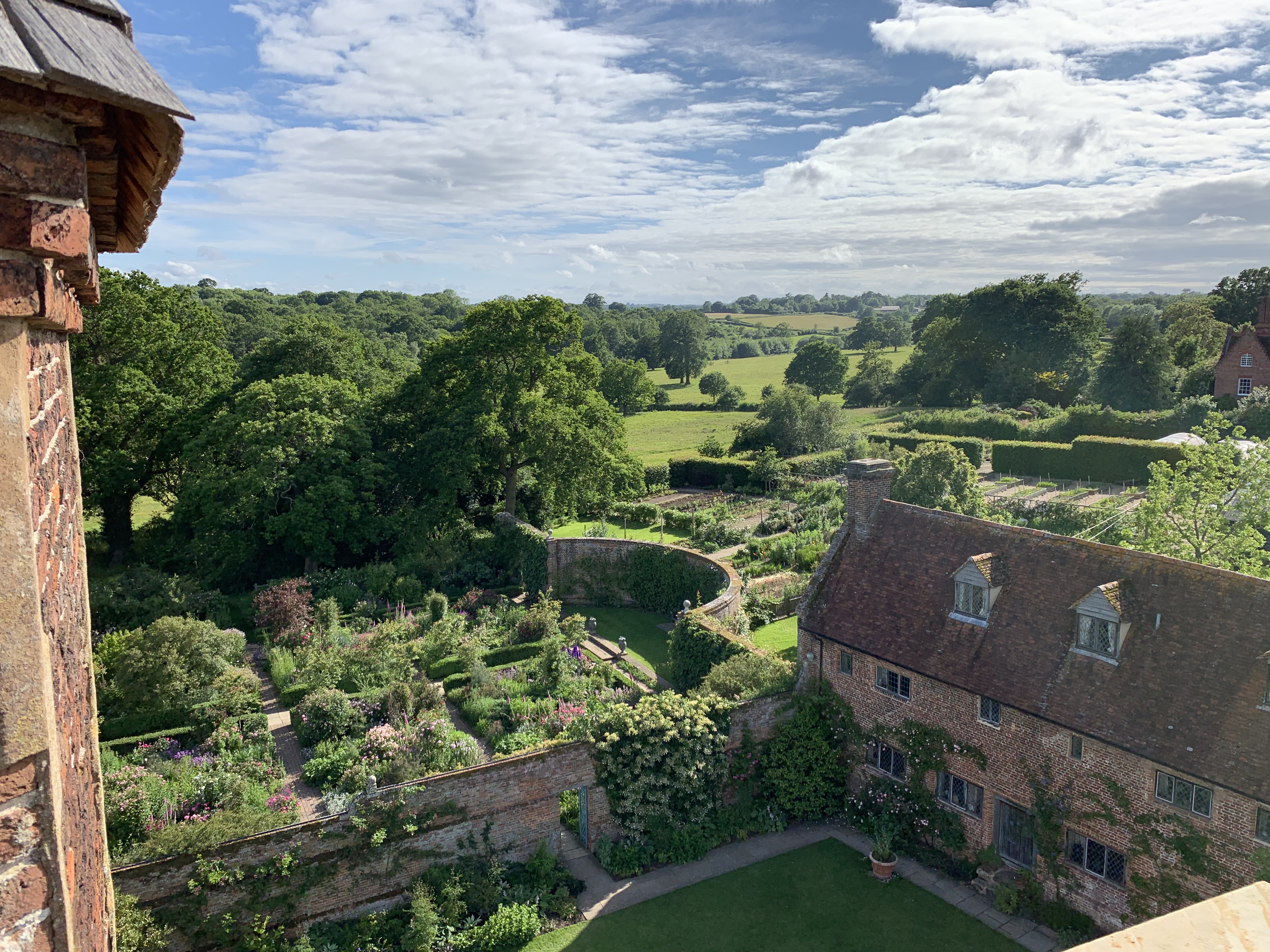
A view of our house from the roof of Vita’s tower. We could only access the tower during opening hours which explains those people right outside our living room.
Another shot from the tower in the opposite direction from our house showing some of the amazing garden rooms we had to ourselves after opening hours.
If memory serves, these areas out in front of the main building were lawn the last time we were here. We very much approved of the more naturalistic plantings. So lovely and full of birds and pollinators.
Looking back toward the tower from the orchard.
A beautiful evening in the White Garden looking back at our place.

In the Knole

As I mentioned in an earlier post, John and I planned to spend a week at Sissinghurst Castle Gardens in Kent, England–much more on that in the days to come–but we had some time to kill between our overnight Transatlantic flight and our 3:30 check-in time. Since Sissinghurst belonged to Vita Sackville-West and her husband Harold Nicolson, it seemed appropriate that we while away a few hours at her ancestral home of Knole which is conveniently located between the motorway and Sissinghurst.

When we arrived at Knole, I could not have been happier. The weather was gorgeously in the mid-sixties and the air felt so fresh, especially after flying all night. The sight of the house itself was like a calming tonic after the hour-long drive from Heathrow. Nothing unpleasant happened on the way, but I pretty much live in terror of driving in the UK. The first and last time I tried was about six years ago, and after a day of it I handed the keys to John and abdicated all driving responsibilities for the rest of the trip. It isn’t so much the other side of the road business as it is the narrowness of the traffic lanes and the propensity of giant trucks and buses and everything else to come flying at you at 70 mph on said narrow lanes. At any rate, John is much better at it than I am. I think it was because of his youth driving on the narrow, winding roads of coastal northern California that makes it more natural for him than for me who learned on the wide, straight, roads of Minnesota. So for this trip there was no question that John would be the sole driver. Despite having our GPS calling out directions, it was still pretty necessary for me to act as navigator, and so I was only marginally less stressed out sitting in the passenger seat. So when we parked the car, saw the splendid old house set in a medieval deer park and felt the fresh air on our faces, it truly did feel like we had arrived a long way a way from the stress and speed of our daily lives.

It also turned out to be a great introduction for our week-long stay at Sissinghurst. Knole was the house Vita grew up in and it meant the world to her. Being an only child, and a female, the house passed to her cousin Eddy Sackville-West, a writer, music lover, and all around aesthete. In fact, it was her dispossession that led her on the path to the ruined castle at Sissinghurst and the amazing gardens that she and Harold created there.

But, more than any of that, it was just a very pleasant place to begin to decompress.

Even looking at this photo now I can feel my blood pressure go down.
Before we could get down to any site seeing, however, I needed sustenance. Potato leek soup and lots of butter on fresh bread did the trick. When I saw the cherry almond cake I had to get a slice–it reminded me of Mrs Bridges passing around slices of “nice cherry cake” in the servants’ hall on the original Upstairs Downstairs.
Hard not to be captivated by the scene. The postcard perfect blue sky doesn’t hurt.
I didn’t get any pictures of the medieval deer herd that still roams the grounds but this gives you an idea of the idyllic setting.
The lichen certainly helps convey the age of the place.
I love things growing out of places and am charmed when I see a volunteer like this growing about a hundred feet above the ground.


The pleasure of Doris Grumbach


About five years ago when I spent at least two solid hours reading the fiction shelves from A to Z at Powell’s Books in Portland, Oregon, I came across a novel called Chamber Music by Doris Grumbach. I had never heard of her but the novel seemed right up my alley. The story of a widow who finds new life after her world famous composer husband dies. At the time I remember thinking that if I ended up liking the book, it would be insane not to have bought all the other Grumbach titles they had while I had the chance. So I put a pile of them in my already heavy basket, even though I was just on the Gs. (For more on that spectacular haul, click here.)

Unlike Chamber Music, The Pleasure of Their Company is a memoir/journal rather than a novel. It focuses on Grumbach planning her 80th birthday party and has definite shades of May Sarton’s journals. In fact, Grumach knew Sarton and mentions her a few times.

I pretty much read the entire 118 pages on the train up to New York where I was meeting one of my best friends who was flying in from the Netherlands. Anticipating seeing my dear friend of 27 years and the fact that I always get a little wistful and contemplative when I take the train north, I was in the perfect mood for Grumbach’s journal. (I am a northern boy to the core and have a somewhat odd predilection for faded industrial urban areas. I don’t like the trash one sometimes sees out the window, but as the train moves north of Baltimore it stops feeling like DC and starts feeling like vacation, and the past. Small towns with that once had small industries. Sleepy little towns with freshly mowed grass flanking old, modest, brick warehouses. Empty tarmac that looks like grey carpet waiting for a kid with a bike. Viaducts and underpasses. I even find chain link fence romantic. Not great, tall, sections of it used for security, but the kind that might be lined with decades-old peonies or rhubarb separating some old lady’s house from her neighbor.)

So what does this have to do with Doris Grumbach? Not much. It’s just to say that I was in the right kind of mood to read the retrospective musings of a bookish 80-year old planning a party in Maine. It’s full of quiet observations, unpretentious name dropping, glimpses of her reading life (Jim Crace and Penelope Fitzgerald), and event planner-like OCD about her party.

I particularly appreciated her discussion of slow reading. I like the idea that old age can bring more patience rather than less.

In the years before the party I was slowly shedding my old habit of speed reading…I read slowly, savoring the good prose and the artful development of the story. I resolved in the future to read only such books as would demand that I abandon my lifelong bad habit of hasty reading. Slow is beautiful would be my directive.

She might have had more of an interest in reading “important” books more than I do, but I am drawn to the freedom of not feeling like I am in a reading race. It doesn’t bother me one bit that by this time last year I had read 54 books and this year I am only at 17. Grumbach’s focus on quality over quantity is also spilling over into her writing. She quotes Primo Levi: ” Distillation is beautiful.” which gets her thinking:

I thought of the reduction Willa Cather must have exercised when she was writing A Lost Lady and My Mortal Enemy, surely among the best of her works, condensed, short, and so wholly effective. I remembered Jeannete Haien’s fine novella, The All of It, her first and most perfect book, May Sarton’s very short, As We Are Now, of all her may novels (to my mind) the best, and James Crace’s The Gift of Stones.

I especially concur with her assessment of As We Are Now, and think of how brilliantly some slim volumes can pack in outsized emotional punch and epic stories in so few pages. Novella-length fiction that makes you wonder why anyone needs 200 pages. Books like As For Me and My House by Sinclair Ross and Train Dreams by Denis Johnson. Of course I’m also the guy who loves Trollope so take that with a grain of salt.

I sense that not all of Grumbach’s work would be this pleasing to me. I gave up on one novel she wrote about Hollywood. But, Chamber Music is a wonderful novel (and one I talk about on a recent episode of Reading Envy) and The Pleasure of Their Company will scratch your itch for thought literary memoir.