 |
| Not Borders. |
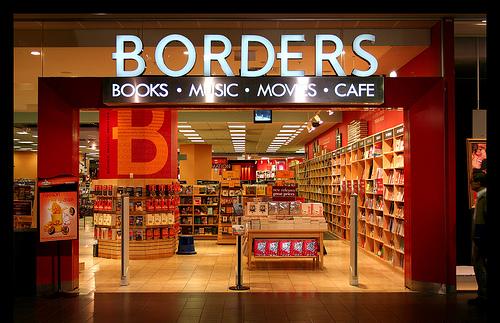
Borders, the bane of so many small, independent bookstores has gone into full meltdown. Filing for bankruptcy this week, Borders plans to shutter most of its stores. I wouldn’t be surprised if this were just the prelude to end of the chain’s final demise.
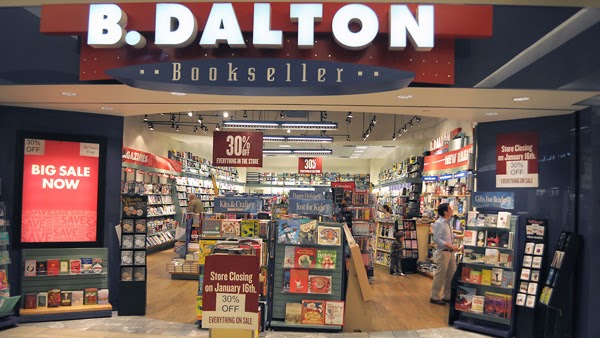
Like many of you, my relationship with big box booksellers has been confusing to say the least. Having grown up in the far suburbs of Minneapolis the nearest bookstore (that I knew of) was a pitiful B. Dalton at Northtown Mall about 30 minutes from my home. I didn’t know it was pitiful at the time. I loved the place. But in contrast to the big boxes that would emerge in the late 1980s and early 1990s, that little B. Dalton was indeed pitiful. (Of course in retrospect the mall itself was, and probably still is, pitiful as well, but it was like Shangri-La to a kid from the sticks.)
Then in college I was exposed to independent bookstores in Minneapolis like Odegard Books and Baxter Books. And of course there was the wonderful (and new to me) world of used bookstores. The Book House in Dinkytown was a particular favorite. But then sometime around 1989 or so I went to my first Barnes and Noble in Roseville. Fifty thousand square feet of books. I couldn’t quite believe how much fun it was.
Not long after this I began to understand the socio-economic-geo-politico-david-goliath implications of big box retailers in general and booksellers in particular. The two arguments most often heard from the independents were that the independents offered much better customer service and that the big boys would have a homogenizing effect on book publishing. No doubt the big guys have had an impact on publishing but I have a hard time believing too much in the homogenizing horrors that were predicted. My access to small presses and esoteric books has never been better. (Of course that is thanks to the Internet, which has its own set of issues.)
And as for the smaller guys having better customer service, that hasn’t necessarily been true in my experience. In fact, in late 1999 I took an evening job at the very same Barnes and Noble that I first walked into a decade earlier. It turned out to be an amazing experience. Not only did I love working in a bookstore, but I was really impressed with the book knowledge of my co-workers. We really knew our books. Workers had specialities for sure and weren’t necessarily experts at everything, but it was truly wonderful how well our in-store network of knowledge worked for the customer.
This still doesn’t mean that I am a total fan of big box booksellers, but they have been really helpful over the years. When I moved to Honolulu (sight unseen) in 1995, I was definitely missing the familiarity of my life back on the mainland. The one spot in town that made me feel at home was the Borders. It was a giant book oasis in a town that had pretty awful small bookstores. The fact that it was within spitting distance of the beach and gorgeous Pacific Ocean didn’t hurt it much either.
Over the years I gradually moved away from the big boxes favoring either small bookshops, or more often second hand bookshops. And when I do favor the big boxes these days I much prefer Barnes and Noble. I also prefer Barnes and Noble online over Amazon. I like the fact the B and N is primarily about books as opposed to Amazon’s we sell everything approach.
And let’s face it, for those of us who can remember the lifestyle shopping center boom of the 1990s the demise of Borders can’t be too much of a surprise. For those that don’t know what I am talking about, retailing in the 1980s was all about the regional and sub-regional mall. Enclosed shopping centers with a few department store anchors linked together by chain stores. In the 1990s we started to see glorified and yuppified strip malls pop up. But instead of the mattress stores and beauty shops they had things like Borders, REI, Old Navy, Petco, Staples/Office Depot and even Tower Records. And the stores were big. And the Borders, Barnes and Noble, and Tower Records seemed to be less about buying and more about browsing, meeting friends, having coffee, and experiencing the product in the store.
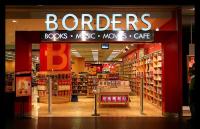
The fun and abundance of these wonderfully big mega book stores seemed to go perfectly, and ironically, hand in hand with the tech boom of the ’90s. Everything looked rosy, people were making money hand over fist, the tech companies taught us that life and work were supposed to be fun, fun, fun. And the stores were everywhere. Every suburb seem to have its own giant Borders or Barnes and Noble or both. I could never go into to one without thinking “who reads all these books?” I did, but I knew I wasn’t in the majority. So how were these stores staying open?
The original tech boom quickly went bust because the thousands of Internet start-ups knew how to have fun but didn’t know how to make money. Now that Internet commerce has come of age, the bricks and mortar stores that thought that abundance and fun, fun, fun would help save them are feeling the death blow from the Internet and perhaps the advent of the e-book.
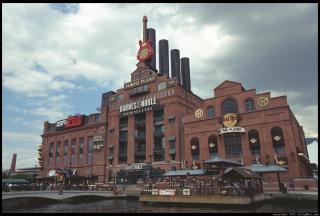
So am I happy or sad that Borders is going belly up? I don’t know. I would be greatly depressed if brick and mortar book stores, whether big or small, become too hard to find. But then there is a part of me that thinks that secondhand shops will never disappear. But who am I to try and predict the future? I do grieve the loss of Tower Records a few years back. Far worse than small bookstores, small record stores, especially those who carry classical music, have become harder to find than dinosaurs. Tower was the only game in town if you wanted to see rows and rows of classical CDs. Sigh. I really miss them. Buying classical music on iTunes is a bit of a joke and going to CD retailers on line makes it much harder to discover new and unique classical music.
Which puts me in mind of the human cost. Back when Tower was open here in DC there was a manager there, probably in his later 40s at the time who used to be fairly knowledgeable about classical music. After Tower disappeared, he reappeared at the big Borders here in town. I just saw him in there the other day and wondered how long his job would last. And where a fifty-something man, who had obviously made his life in retail would find his next job. Starbucks?











 hogglestock