Antiquing happened

The reason we hired someone to help us to decorate our house was that it had been six years since our renovation and we hadn’t really made much progress filling in gaps and doing things like replacing our dining room table. Although John had a very good eye, we suffered from more than a little decorating inertia. Whenever we went to antique shops, there was much to admire, but we really didn’t know where to start.
A good friend of mine is an antiques hound and lives in Bucks County, Pennsylvania which is rich with, and adjacent to, lots of great antiques shops. This past summer I went to stay with him and his husband and we tooled around their neck of the woods and went up to the Catskills and Hudson River Valley as well. It took me a minute to figure out what direction I might want to go with my purchasing, but once I did, I really hit a groove and came back with a crap load of stuff.

An amazing vignette at Kabinett & Kammer in Franklin, New York. It is amazingly well curated and really reasonably priced. I ended up buying that wooden form behind St. Francis with his head blown off and my friend bought St. Francis.

The whole adventure was extremely bittersweet. One of the many facets of survivor guilt is its appearance when you start to have fun. Mine was exacerbated by the fact that John would have loved to have been on this kind of a trip. In fact, we had tried to do so the previous summer up in New England, but a combination of things including Hurricane Henri thwarted all our efforts. So as I ran around with my friend having a great time, it made me quite sad to think that once we made our decision to decorate in earnest, John never had the chance to get over his decorating inertia in real life. And here I was living it up doing all the stuff he never got to do. It sucks. And it makes me sad.

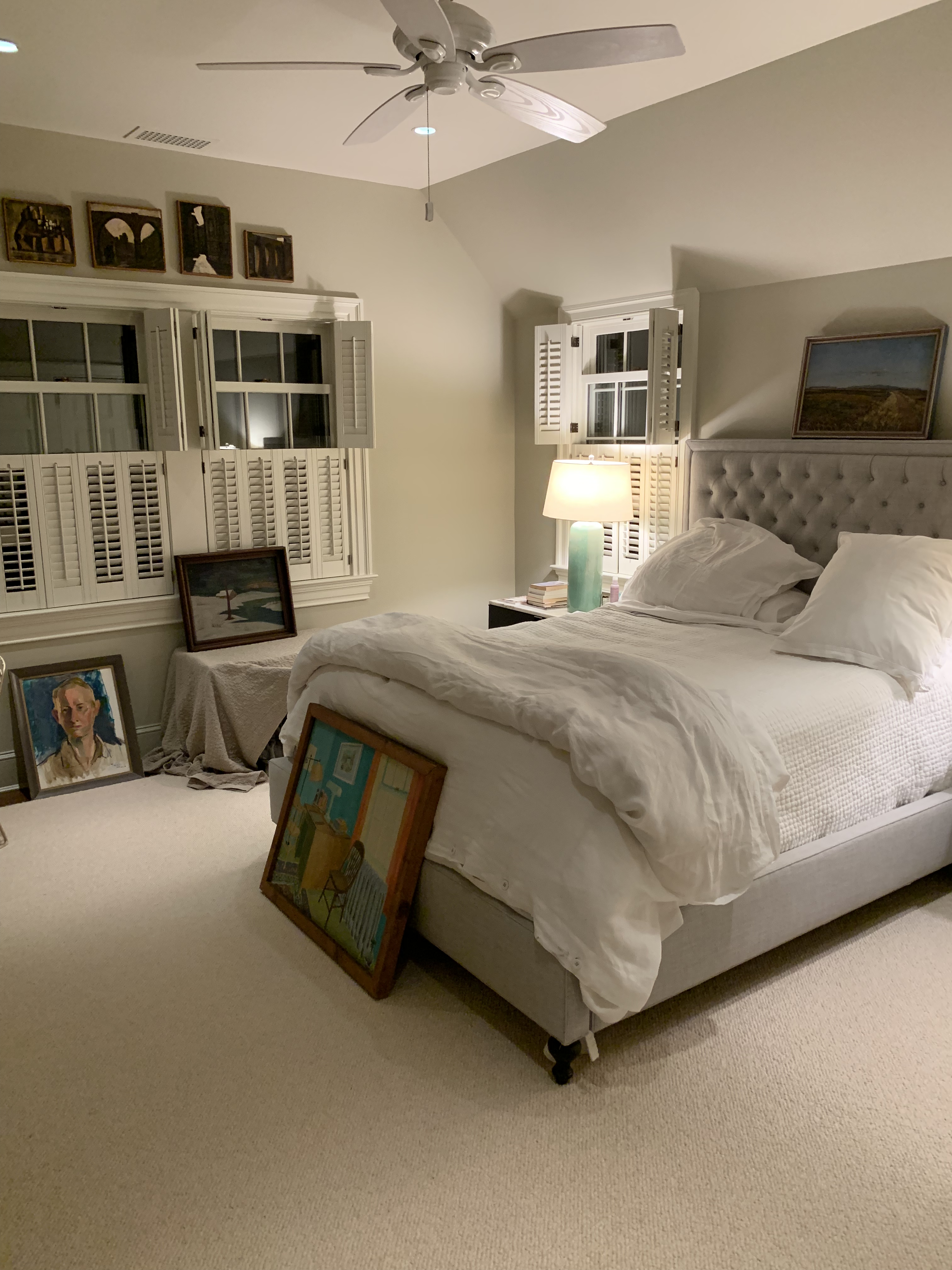
At first I stuck to buying art–it was what I felt most assured of. When it came to objects and furniture I was much more unsure of myself. But as the days went by, I got over that as well. It helps to have a friend who gives good advice, but it also just comes down to buying what you like. I was immediately drawn to the giant painting of the soldier but I was thinking I didn’t want something that militaristic. But then I realized it looked like England in WWII and I thought of all the great English fiction I love from that period and then I had to have it.

I should mention that I don’t “collect” antiques, or even art for that matter. I buy what I like. I don’t really care if it is a good example of something, or has a good provenance or any of those things collectors care about.

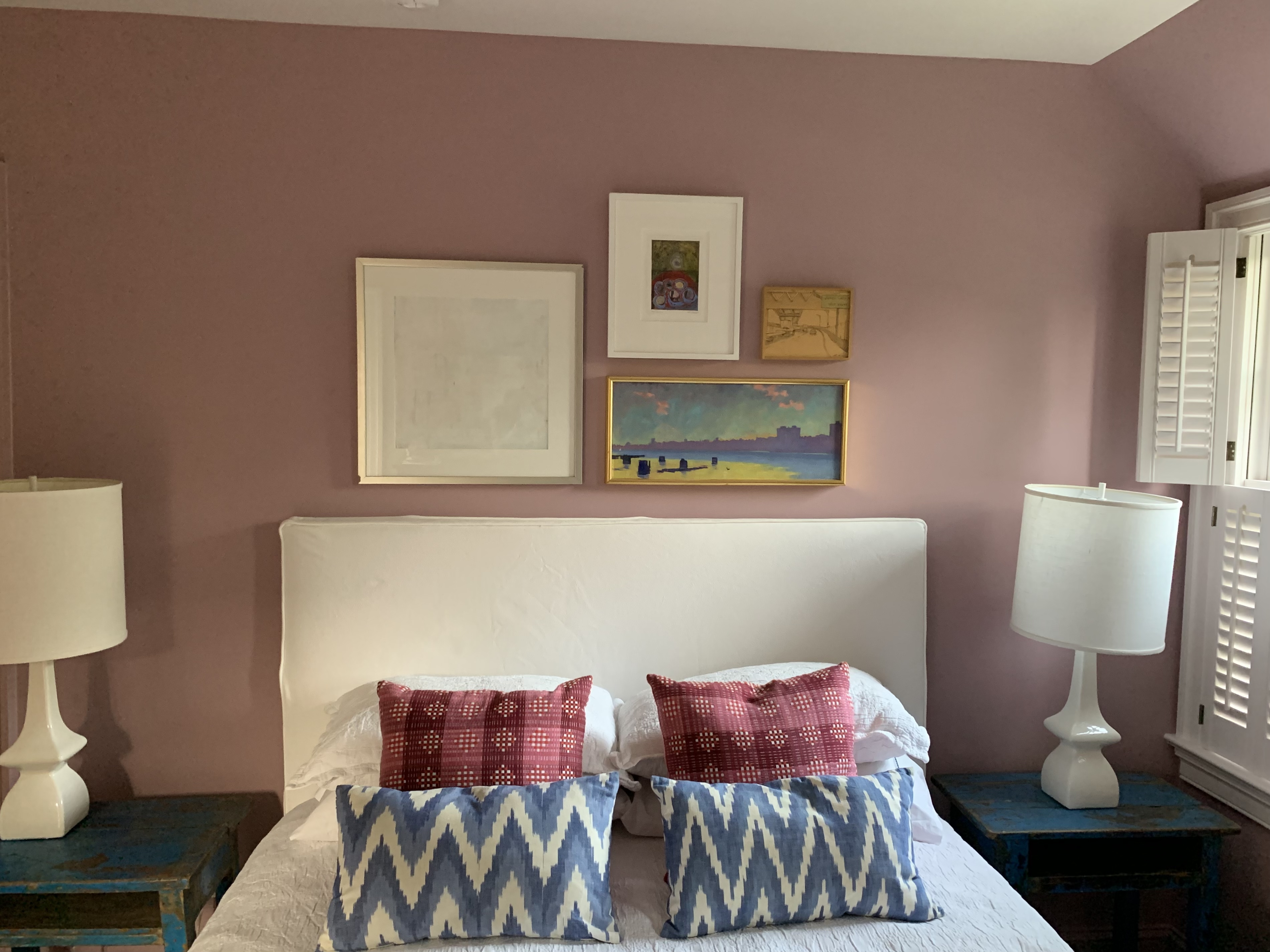
I wanted to find a painting that spoke to my officephilia, and this painting kind of did the trick. Especially with the little industrial desk I found to go in the corner of my bedroom.

A diorama happened

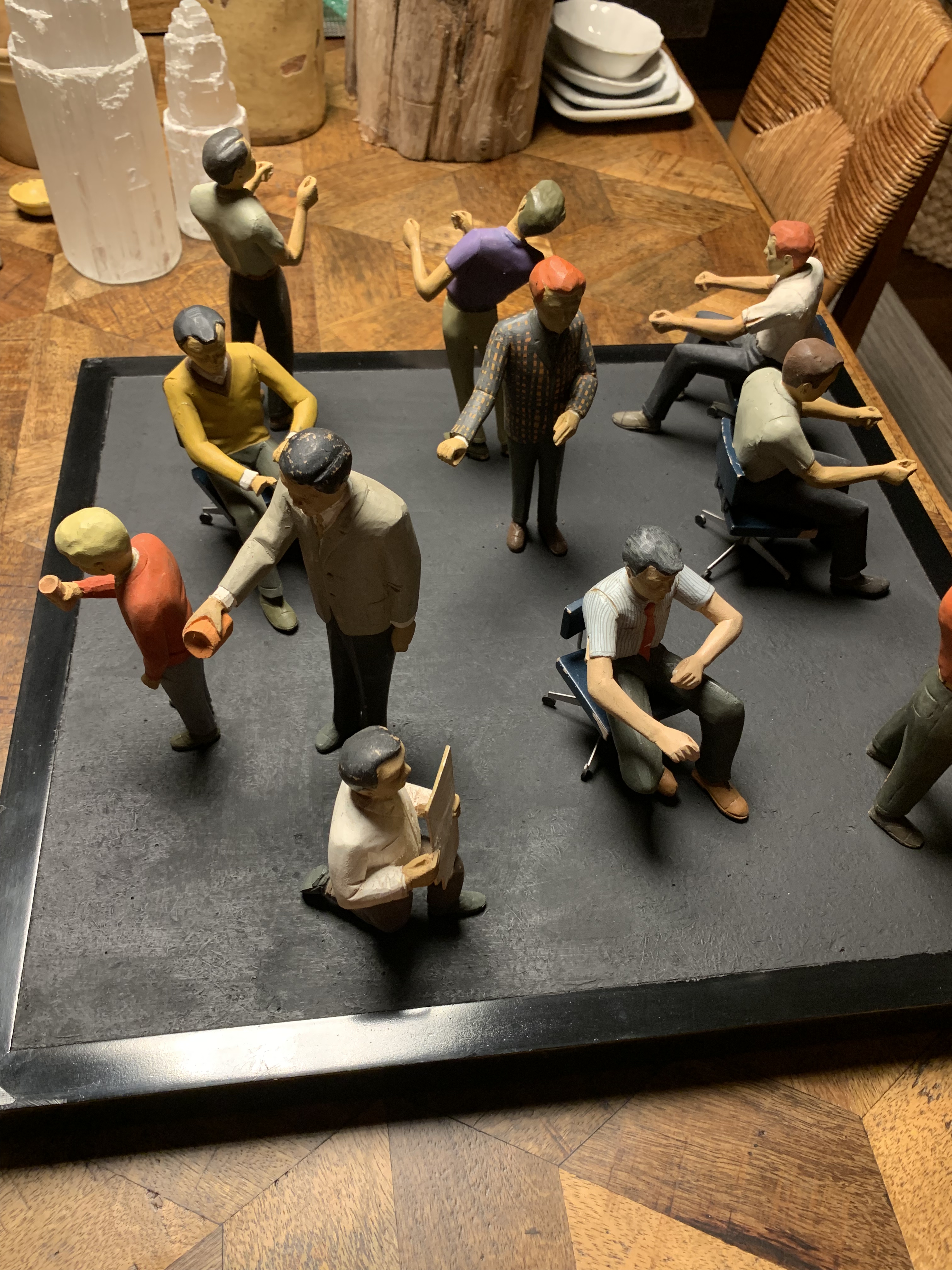
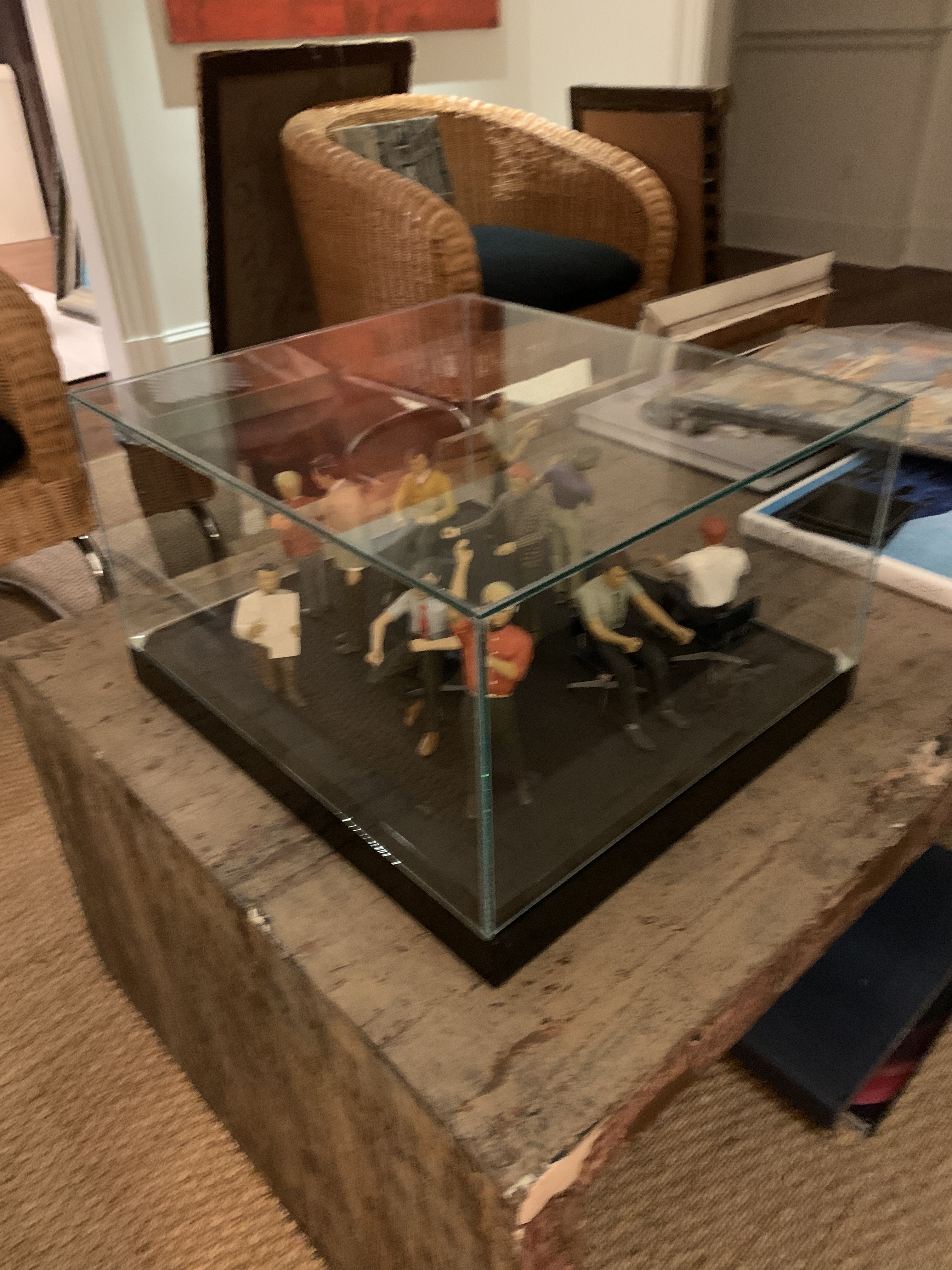
Who hasn’t woken up and said “I think I’m going to buy a diorama today”?

When I was out running around antiquing I saw this odd diorama from the 1960s or 1970s and decided I needed it. I know next to nothing about it, but the figures appear to be on a TV soundstage.

Books (kind of) happened

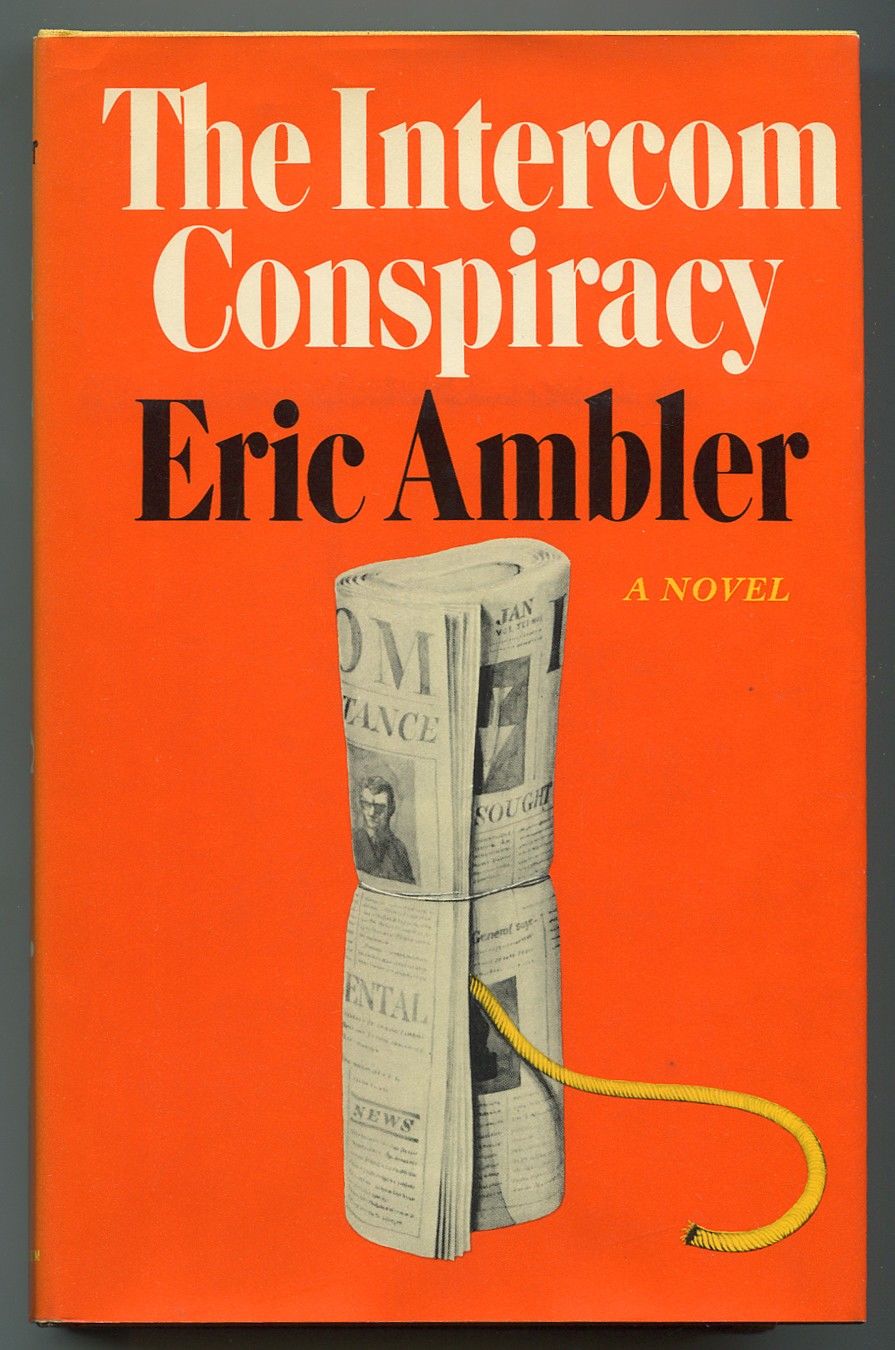
During the orange guy’s administration I really retreated into older fiction. Although I have long leaned that direction, his anxiety-inducing tenure had me craving fiction that existed before him. The pandemic further pushed my anxiety buttons and had me seeking out older fiction. And then John’s death in 2022 really sent me to the metaphorical hills. My reading in 2023 was chock a block with old fiction and many re-reads of books by authors I love like Nevil Shute, Eric Ambler, D.E. Stevenson, and Barbara Pym.

Here are six of my favorites for the year. The Ambler and Wyndham were re-reads. Other highlights included The Red and the Green by Iris Murdoch and Anthony Powell’s epic 12-novel A Dance to the Music of Time. Really a brilliant work. Volumes 11 and 12 were less to my taste, but work in the context of the rest of them. I also decided after finally reading Who Was Changed and Who Was Dead that I was done trying to like Barbara Comyns. But those are fighting words around here, so I won’t say any more about that.

I also went to Hobart, NY which is sometimes referred to as the Hay-on-Wye of the US, but I’m guessing it isn’t.

My Hobart stack.

This wasn’t open when we passed through on a Sunday morning which was a disappointment.

I made some attempts to reorganize my library but was only partially successful.

Travel happened (and didn’t)

I discovered in 2022 that travel didn’t interest me much. I was in Europe three times, went to different US cities, etc., but being with friends was the only thing that made it worthwhile. I didn’t care that I was in Sicily, the Netherlands, Germany, etc. I could have been anywhere. When I stayed with friends in the French countryside, I only left their property one day the whole week I was there.

I decided in 2023 I wasn’t going to plan much in the way of travel. I saw friends in Puerto Rico, Ohio, and Pennsylvania, but then on a planned trip to hear classical music and see friends in Minnesota, I didn’t want to get on the plane.

I had gotten up at 4:45 AM, got to the airport, hung out until about 15 minutes before my flight boarded and decided I didn’t want to go. I didn’t want to fly. I didn’t want to pick-up my rental car, I didn’t want to make small talk, I didn’t even want to go to the concerts. So I went up to the counter, explained to the surprised agent that I wasn’t going to fly, left the airport, and went home. I didn’t even want to get back into an Uber, I took Metro and walked about 25 minutes to get home. Clearly this isn’t normal.

I did go to Maui in June with John’s family. It was nice being with them but it definitely had moments that were hard for me to handle. I lived in Hawaii in the 1990s and that time for me was one of feeling alone and unsure of my future. Here I was, almost 30 years later feeling the same way. One night as John’s older brother was grilling dinner, I felt the lovely Hawaiian trade winds and looked at the amazing sunset and I was transported back to my lonely 20s but with a big pile of grief on top of it. It was more than I could handle.

John’s family and me. Minus John.

Food somehow happened

I used to love to cook. Not so much since John died. I’ve gone through various food preparation stages since then, but low grade depression keeps me from finding my level as it relates to putting food in my face.

I started off the year strong with this lovely bowl of noodles inspired by a chef I follow on Instagram. But there weren’t many moments like this throughout the year. There was a lot of Doordash and ready made meals. And not enough fruits and vegetables.

My antiquing friend in Bucks County lives near a DQ so for two weeks a large vanilla cone was a regular thing for me.

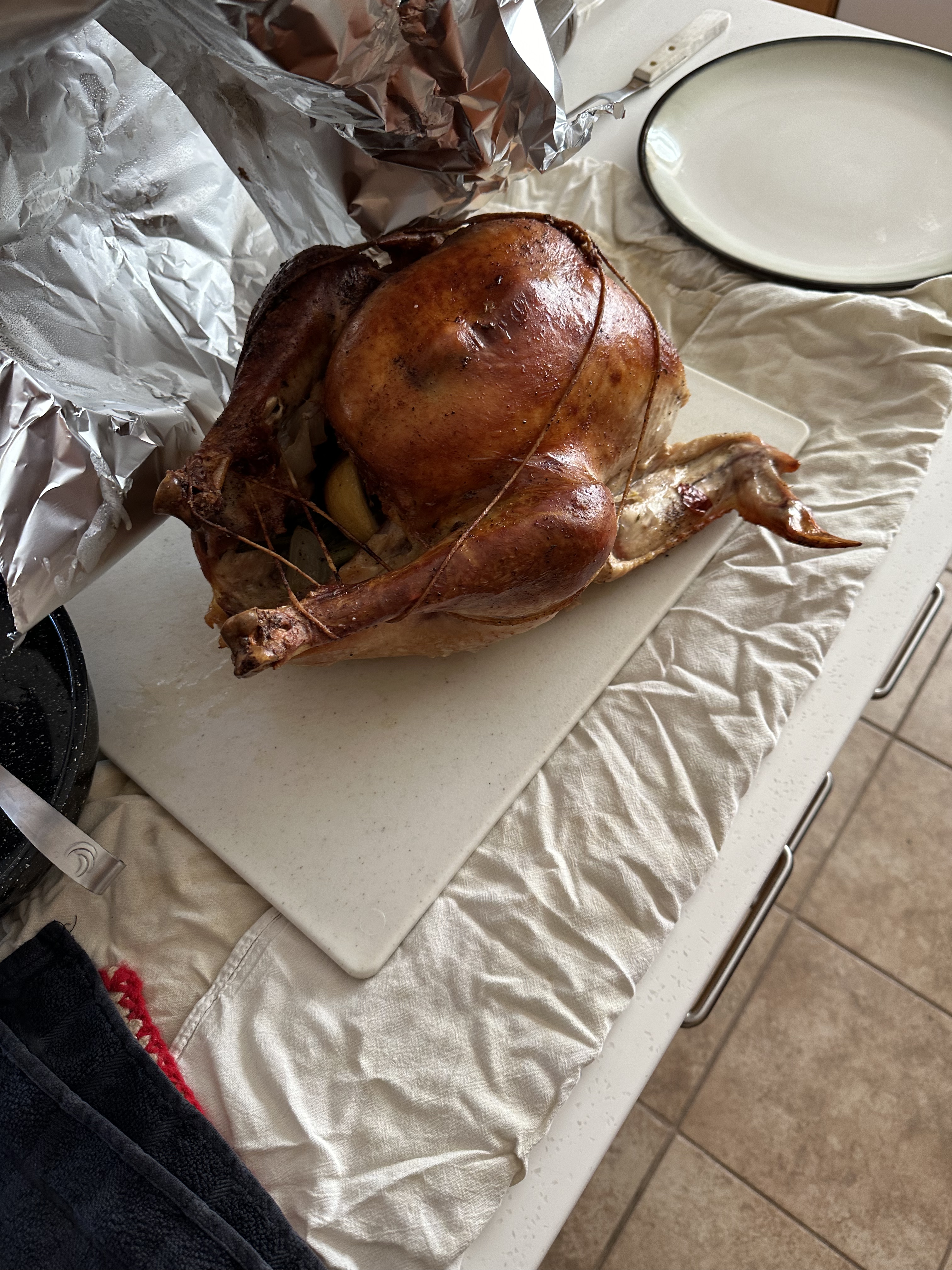
I did manage to pull together a turkey for Thanksgiving with my parents and sister. It was kind of interesting, when I’ve done this in the past, I always swatted away people offering help. This year I was calling out orders (requests?) to everyone in hearing range. It actually made things so much more efficient and less stressful. Who’d a thunk?

Grief happened

There is no getting around it. After over a year and half, grief is something that is with me pretty much every hour. The intensity of it varies and shifts, and joy and contentment are still possible, but it’s always there somewhere.

Some of the things I’ve had trouble coming to terms with is how I keep John’s memory alive and what part of his life is my responsibility to keep alive. John had a pretty important position in his field and he was largely closeted, so his work world hasn’t really known how to deal with me. Even though his work was very much a part of my life for 20 years, I was not a part of his work world. This was the easiest to let go of. His work legacy will live on without my intervention, so that can just be what it is.

He also had 39 years of life before he met me, so I was faced with boxes of letters and photos and other things from people and parts of his life that are largely unknown to me. There are vacation snapshots of views I never saw or people I don’t recognize. We have no kids. There is no museum of John. All of our stuff is going to be landfill at some point.

I went through these mementos, kept the ones that made sense to me, and put the rest out in the trash. But the night I put the trash can out on the curb for collection the next morning, I was in bed and suddenly felt like I was throwing John’s memory away. I ran out in the middle of the night and dug the bag out of the garbage. After a few weeks I opened the bag and sorted all the correspondence out by sender. I had to ask his family who some people were, and for a few they didn’t know, I had to do some sleuthing online to figure out who people were. I ended up sending these stacks of letters and cards back to the people who sent them to John over the decades. Family, friends, old boyfriends. Hopefully they appreciated getting these mementoes of their own past, but it was also fitting reminder of John and their relationships with him. Now that he is gone, I can never know those 39 years before me, but returning those letters and photos gave me a some bit of closure, at least on that front.

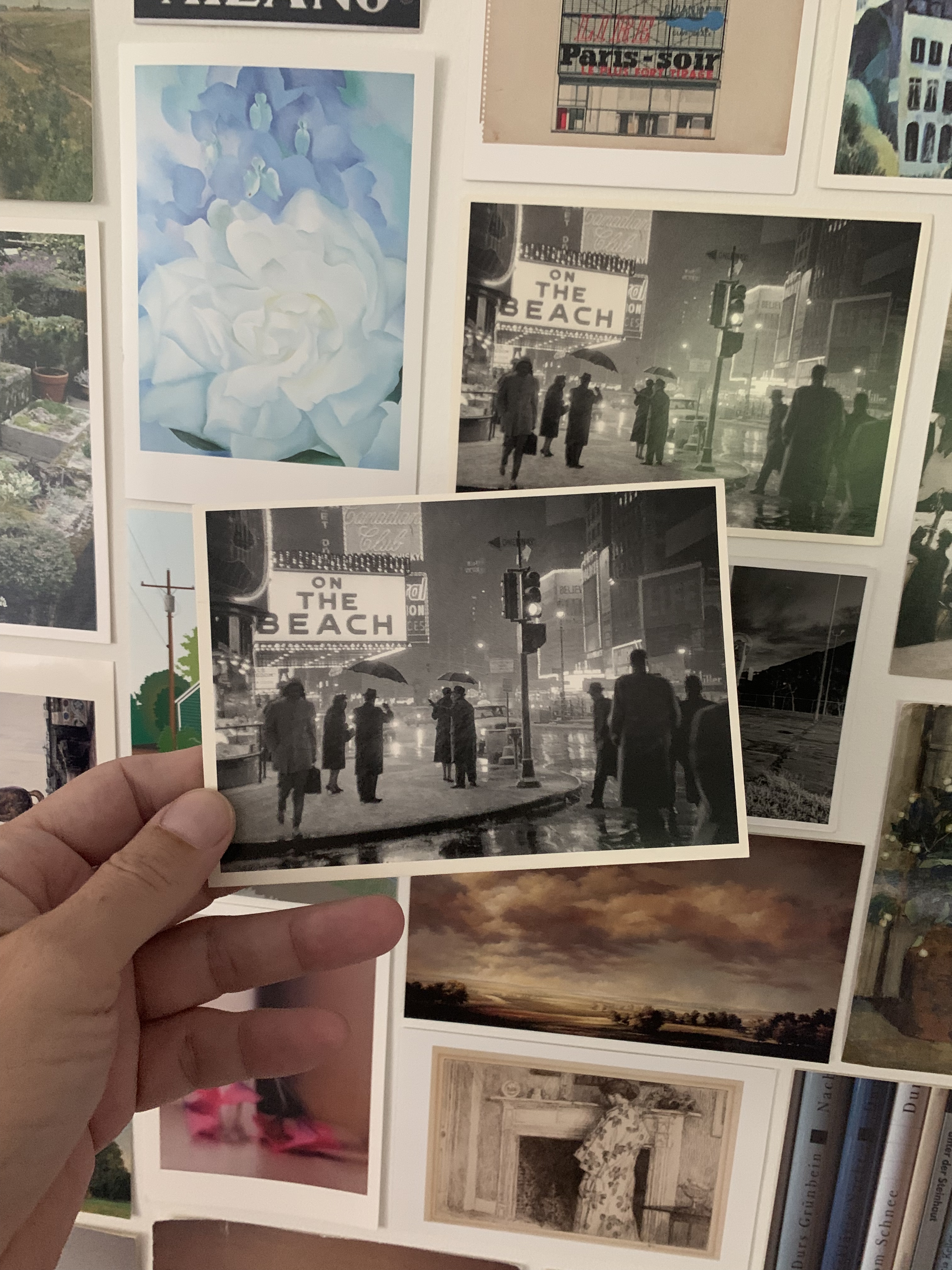
One of the things I found was a postcard that John had purchased before he met me. It was one that I had also purchased before I met John and had hanging on the wall in my office.

When I had friends over for dinner who all knew John before they knew me, I pulled out these napkins that John had gotten at India Hicks’ shop on Harbour Island in the Bahamas. Both the island and shop had been on John’s bucket list for a long time and we finally got there in January 2022, just a few months before he died. Using these napkins that he never had the chance to use was heartbreaking.

With persistent low grade depression and higher level anxiety, I decided I could probably use some therapy. One of the things that has come out of those sessions is I came up with the notion (apparently not a unique one) that maybe the grief is a gift. Not in the sense of something that someone wants, but that it is an intense reminder of intense joy. Not that the grief brings joy, but that without it it would be too easy to forget the joy we shared. It is a pretty helpful notion. It doesn’t make the grief any less, but it does kind of help in coping with it.

Although Covid probably played a role in John’s death, the two years we had at home together because of it were an amazing for us. We were lucky enough to be safely working from home, John’s work travel went from 50% to 0%, and we loved every minute of it. Of course we had our moments of being stir crazy, but to spend all that time together, enjoying the seasons, and our garden, and Lucy, was truly a gift. We talked about how the experience had proven that we had nothing to fear about the togetherness that retirement would bring. He was four years short of that retirement when he died and now I am facing a retirement alone instead of with my soul mate.

In Mexico in 2019

I don’t want any of you to think I’m not okay. I’m doing pretty well. I know I’ll be okay in the long run. I just need to figure out anew what my life is and who I am.

23/24 Season Post I: Women Conductors

This is the third year I have populated a database with subscription season concert information for North American orchestras. The original (and ongoing) purpose is primarily to see what repertoire is playing where to determine where I might go hear music that is harder to find in person. I’m lucky to have both the Baltimore Symphony Orchestra and National Symphony Orchestra performing about five miles from my house (although in different venues), but last season I also trekked to Buffalo, Cleveland, Cincinatti, Detroit, and Nashville. (I also had a ticket for Atlanta, but the Ives symphony I wanted to hear was mysteriously taken off the program, so I saved the cost of a plane ticket and hotel and didn’t go.)

(Venezuelan conductor Glass Marcano will conduct the Orchestre Métropolitain in works by Tchaikovsky, Revueltas, Moncayo, and Orrego-Salas in May 2024)

The first year, I only looked at 19 orchestras, last year I upped that to 51, and this year I did about 64, I think. For purposes of consistency and comparison I didn’t expand my analysis of women conductors beyond the 51 I looked at last year. (And even then, I reduced that number by three because of lack of information or, in the case of the SPCO, a largely conductorless approach.) If you scroll through my blog a bit, you will see all the ways I sliced and diced that data last year related to rep and composers, but for now, I’d like to look at women conductors for the 2023/2024 season.

an unfortunate downtick

The big news for the 23/24 season is that as a percentage of total concerts programmed, women conductors are only conducting 17% of them, down from last year’s 18%.

(Click on the image to see the details.)

The good news is, a lot of orchestras made some marked improvement over last season, and none more notable than the Cleveland Orchestra. Last year I rightly gave them a fair amount of crap on Twitter because they had zero women conductors in their subscription season. Given how few of their subscription concerts are conducted by their music director (Welser-Möst), they could certainly do better than only three, but that is a 300% improvement for them. So look out for Dalia Stasevska, Barbara Hannigan, and Susanna Mälkki on the august Cleveland podium next season.

After my disappointment that my hometown band, the Minnesota Orchestra went with yet another man to be their new music director, it was nice that they upped their game in getting more female guest conductors for next season, but perhaps if they had done that sooner their MD decision may have been different. (Incidentally, I was quoted in an article in the StarTribune‘s reporting on Minnesota’s choice and was labeled by an offended commentor that it was clear from my blog that I was **obsessed** with race and gender.)

women music directors

With the exit of Marin Alsop at the Baltimore Symphony Orchestra, we were in danger of not having a major U.S. orchestra with a female music director but then the Atlanta Symphony Orchestra stepped in and kept that from happening with their appointment of Nathalie Stutzman. What’s even better is that Atlanta has three women guest conducting next season as well. The other orchestras with women music directors (Buffalo, Hartford, New Jersey, and Richmond) all lost ground in the percentage of concerts conducted by women, with none of them programming a woman guest conductor for any concert.

(Nathalie Stutzmann, music director of the Atlanta Symphony Orchestra)

And speaking of music directors, it appears that the Seattle Symphony is looking for new one. I’m hopeful that their strong showing last year and even stronger showing this year means they will be appointing a woman MD in the near future. One can hope.

(Is Shiyeon Sung on Seattle’s shortlist for music director? Next season she conducts them as well as the Detroit, Edmonton, Pacific, and Vancouver orchestras.)

big losers

The “big” old grand orchestras of the rust belt and northeast sure do have a problem prying the baton out of the clutches of old white European men. Given the fact that they have a whopping 31 concerts in their season, the Chicago Symphony Orchestra is perhaps the most disappointing with only three women (Elim Chan, Susanna Mälkki, and Gemma New) on the podium. The disappointment is compounded by the fact that they are looking for a new music director, so pretty much all of those 31 concerts are guest conductors presumably auditioning for the job, (Their now former MD, Ricardo Muti is only conducting two concerts next season. )

Other big guys that could do a lot better include Boston, Detroit, Pittsburgh, and St. Louis to name a few. Another loser in this category is the National Symphony Orchestra. With Noseda only conducting eight of their 20 concerts, they could surely do better than only having two women conducting (Simone Young and Xian Zhang).

(Joana Carneiro will conduct the Detroit Symphony Orchestra in November 2023 in works by Stravinsky, de Falla, and Mason Bates.)

A special negative shoutout also goes to the New World Symphony which has 19 subscription concerts and the only one being conducted by a woman (Lina Gonzales-Granados) is a concerto showcase with no actual programming. Why is this academy reinforcing bad habits?

Although women conductors have lost a bit of ground, one positive aspect is that more women are included this year. Last year the list only had 41 conductors on it, this year it’s up to 52.

(Anna Sulkowska-Migon will conduct the Philadelphia Orchestra in January 2024 in works by Tchaikovsky, Yun, and Nowowiejski.)

(One of the august old guard, Jane Glover will lead the New York Philharmonic, Cincinnati Symphony Orchestra, and the North Carolina Symphony next season.)

Books in Cincinnati

On my way to Cincinnati last month to hear an orchestra concert, as an afterthought, I Googled “used books Cincinnati.” Much to my delight, there was a promising looking used bookstore about three blocks from my hotel. And let me tell you, Ohio Book Store is the real deal. It is exactly the kind of bookstore I like. It’s big (five floors). It has a big general fiction section that was full of the kind of 20th century middlish brow fiction I tend to like. And the best part is, the internet doesn’t seem to exist in this place. In fact, the whole place gave off a distinct, lost in time kind of vibe. The building was old, the signs were old, the phone was old, and blessedly, the stock was old.

And the best part is that I had plenty of time on my hands. I think I spent about two and a half hours combing the shelves and absorbing the atmosphere.

The main floor had some of the rarer, pricier stock. In a first edition fiction section they had this mouthwatering display of Pyms. Those that know my blog, know that I already have all of these. Still, I almost bought the copy of Less Than Angels as my copy at home has a bit of a faded spine.

But for me, the real prize was on the top floor. The general fiction section. It was big, it was spacious, it was easy to browse, and, on a Friday afternoon, is was largely all mine.

You see that? From here to the windows. Both sides and part of the way down the side on the left edge of the photo. All general fiction. There was fair amount that was ex-library, but for someone like me who is looking for reading copies, that didn’t bother me one bit. And this was my kingdom for about two hours. I slowly went down the rows, kind of looking for familar authors, but when I began to discover the general vintage of the stock, I knew this would be an opportunity for new discoveries.

Seriously, how could I say no to this cover? Some sort of mid-century office drama. Yes, please.

This one was giving off a Nevil Shute vibe, and rightly so. I’ve already read it and quite enjoyed it, and there are many similarities with some of Shute’s work. Has a certain A Town Like Alice thing going for it. I should say, however, sometimes Shute’s choice of language was racially insensitive, but his message was generally not. Glaskin’s insensitivity seemed to go deeper than his poor choice of words. But since the man is dead and this was a used copy I didn’t feel like I was ennabling bad behavior by buying this one.

An author I know and like so I didn’t have to think too hared about picking up this great cover. You will see later in the photo of the stack of all my purchases that this wasn’t my only Jameson. And there were even more I left behind on the shelf.

Another author known to me, making an easy choice.

This one is the fictional diary (at least I think it is fictional) of a man who lives underground and whose job is to have one of the keys for the launch of a nuclear weapon.

What about this title, cover, illustrations, and opening lines makes you wonder why I put this one in my cart? Actually I didn’t have a cart, or even a basket. Made it somewhat of a challenge to get back down to the first floor with my purchases.

The whole stack. And all I had was carry-on luggage. Still, I managed to get it all home.

I didn’t buy this book, but don’t think I wasn’t tempted just for the bookplate. On the surface it is a lovely plate, but then look outside the open window, even the view is fantastic.

I worry about how many of these bound volumes of The Bookman I would buy if I lived in Cincinnati. Shelves and shelves of them. They had other bound periodicals as well, that would have provided years of good browsing, buying, and reading. Maybe I need to retire to Cincinnati.

Cincinnati wasn’t all books (or music for that matter). I was wary of Cincinnati Chili, cinammon doesn’t seem like something that should be in chili. But prior to my trip I did some research on food I should eat while I was in Cincy and read a bit about this dish. It’s seasoning comes out of a Greek tradition and doesn’t really have much (or anything?) to do with the chili that the rest of us know. So, thinking of it that way, I decided to give it a go, and I really liked it. In fact I had it again the next day. And now, about a week later, I would love another plate of it.

Locals waiting in line at the Blue Oven Bakery at Findlay Market seemed to have their sights set on loaves of bread and fresh-made pretzels, but I was intrigued by what were described as sliders. I got the sausage gravy one. Imagine a good, southern sausage gravy inside of a soft/chewy dinner roll. Yes, it was that good. Peppery and pillowy and one of the best things I have ever eaten. I went back the next day just to have it again and also had their cheeseburger version, which I may have liked even more. So good.

I went to the Cincinnati Museum Center just because it is housed in this fabulous train station from 1931. I really didn’t have much idea of what collections it had.

As if the fabulous building wasn’t enough, the history museum housed in one of its wings had enormous scale models of downtown Cincinnati. The biggest of them depicts the city in the 1940s. Another one, showing the train station is from the 1930s, and then there were other parts of town sown in other eras. If they had given me a stool to sit on, I would have stayed in front of the models all day. I lived out so many time travel fantasies while I studied these fantastic models.

The thing that really made these models come to life is the fact that so much of the historic fabric of the city is still there. And studying the models really gave me fresh eyes when I walked around the city. If they had better flight connections to the rest of the world, I would consider living in Cincinnati.

2022/2023 Season Post V: Works by Living Composers

[This year I collected and analyzed the subscription concert programming for 51 orchestras in the U.S. and Canada. This is a pretty big expansion from my effort last year when I just looked at the ‘top’ 19 orchestras in the U.S. You can see last year’s posts here and here.]

Recently in the Twitterverse I got into a couple of different discussions with people who were opining about the dearth of works by living composers in orchestral programming. In each case I did some quick number crunching and presented some numbers that gave all of us pause. When I count strictly the number of works being performed, living composers make up almost 25% of all works programmed. That seems kind of promising, but there is at least one huge caveat.

Length does matter

The length of the pieces being programmed leans heavily in favor of the dead guys. In a typical North American configuration, most concerts programmed look like this:

Opener – c. 3 to 15 minutes
Concerto – c. 15 to 35 minutes
Symphony – c. 30 to 60 minutes

This is one of the reasons why I keep track of program order. It serves as a proxy for length of a piece. (I should note that two days ago, on a long walk through my parents’ neighborhood, in the blistering heat, at six in the morning, I thought, hey, why not just look up the durations for all 2,236 works in my data set, how long can that take? I got as far as Beethoven when I decided to stop. Finding durations for works by living composers was really time consuming and in some cases impossible.) So anyhoo, program order matters. Grabbing a shot of four orchestras on a given weekend in Sept/Oct we see the following that illustrates what is typical:

You will notice that none of the living composers make it into the coveted third position, three of them are relegated to the opening spot, and one of them makes it into the concerto slot. Of course this isn’t always the case, but it is pretty typical.

Out of the works by living composers, over 53% are in the number one spot, with 30% in the second spot, and 12% in the third spot. And for those of you who know math, that leaves 5% in the 4th or 5th position which tend to drop down in duration to the 15-20 minute category. (And I swear, concerts with four or more pieces always seem to include Bolero or some such.)

The Deads

Given the vast difference in stage time between the living and dead its almost useless to continue to count number of pieces, but that won’t stop me. If we look at that total number of pieces by living composers, 543, it only takes the top six deads to total more than all the living composers combined.

Mozart 124
Beethoven 114
Tchaikovsky 84
Rachmaninoff 82
Ravel 82
Brahms 79
TOTAL 565 pieces

And before someone out there starts to say that I’m trying to cancel Beethoven, piss off, no one is saying that. Now Mozart? I wouldn’t mind cancelling him. ;)

2022/2023 Season Post IV: Works by American Composers

[This year I collected and analyzed the subscription concert programming for 51 orchestras in the U.S. and Canada. This is a pretty big expansion from my effort last year when I just looked at the ‘top’ 19 orchestras in the U.S. You can see last year’s posts here and here.]

Sigh. Along with works by BIPOC composers and women composers, the percentage of programming devoted to U.S. composers also declined from 21/22 to 22/23. Last season it was 23% of all programming. Just by looking at the top 20 orchestras, you sure can’t blame the expanded data pool, given that 15 of the top 20 are smaller bands that weren’t part of last years list, and, as you will see further down this post, some of the big guys failed in a really spectacular way.

some observations

First off, I didn’t think it fair to keep the six Canadian orchestras in the mix, so all of the dashboard calculations were based only on the 45 U.S. orchestras in my dataset. Here are some other thoughts:

  • How about the Albany Symphony? It’s number one in American music, it was number one in music by BIPOC composers, and it was number nine in music by women composers. They certainly seem like a shoo-in to come up as the orchestra with the most diverse programming.
  • The little guys in general. What is it about smaller markets that seem to respond better to more diverse programming in general, and in this case, a warm embrace of American music. This year the lowest percentage to make it into the top 20 was 22.6%. Last year that score would have gotten you into the top 10.
  • Only one of the small guys, Phoenix, relies a bit too much on the BBC (Bernstein, Barber, Copland) to earn their spot on the list. Not that there is anything wrong with any of those composers, they just tend to be the ones that crop up when someone says American composer..
  • It does appear that orchestras are using their American programming to come up with a fair chunk of their programming of both BIPOC and women composers. Perhaps it means that the US is a hotbed for encouraging BIPOC and women composers, or perhaps, more cynically, orchestras don’t want to chip away at the market share they give dead, white, European guys.
time to clean house

For each of the categories I have looked at so far, it’s clear that some orchestras could really benefit by looking somewhere other than Europe for their programming and their leadership. I’m tired of the cult of the composer and the maestro. Many of these idolized men are brilliant, but hype begets hype, and I find knee-jerk veneration of all things European in the musical context really boring. (And trust me I LOVE Europe–even the UK bit.)

And this is no more evident than in the hall of shame. These fine orchestras are devoting less of their seasons to U.S. American composers than the Canadians. What’s up with that?

canadian music

Since I added in six Canadian orchestras this season, I would be a true chauvinist if I didn’t say something about music by Canadian composers. Nine U.S. orchestras have all programmed one piece by Canadian composers (Albany, Boston, Cleveland, Kansas City, Milwaukee, NSO, New York, Pittsburgh, and Toledo). Among the Canadian orchestras, Orchestre Métropolitain leads the pack with 26.8% of their programming devoted to Canadian composers, then Calgary at 20%, Toronto at 13.9%, Vancouver 9%, Montréal 6.7%, and Edmonton 6.3%.

With Samy Moussa and Iman Habibi leading the pack with five pieces each, other Canadian composers who get multiple plays next season include, Alan Gordon Bell, Vivian Fung, Stewart Goodyear, and Rita Ueda. I must admit Samy Moussa is the only one I knew prior to crunching this data. I had come across and fell in love with a recording by the Orchestre symphonique de Montréal of his work for organ and orchestra, A Globe Itself Infolding. One of the few pieces in the repertoire that effectively integrates organ into the orchestral texture. It also got a play at the Proms a season or two ago.

the whole list and nothing but the list
This includes all 51 orchestras so the total won’t match the dashboard above