Finding Small Treasures

As any regular reader of MyPorch will know, I have a particular penchant for the past. I will be the first to admit that my fascination for the “olden days” is highly romanticized and pretty darn selective. When I imagine walking the streets of pre-war London I edit out the car exhaust and cigarette smoke. When I fantasize about living in the LP days of the superstar classical conductor and packed concert halls I filter out the pre-Stonewall reality of gay oppression. And when I write myself into an Edith Wharton or E.M. Forster novel, I rarely think of the hot, scratchy clothes I would have to wear, or the fact that my socio-economic class wouldn’t really permit me a very satisfactory role in these Edwardian dramas.

One of the the manifestations of my fascination with the past is that I love finding old pieces of paper in used books. Tram tickets, photos, letters, shopping lists, business cards, prayer cards, you name it. Not only is it fun to ponder who left the item in the book but it can also give some clues as to where the book has been. Recently when I was reading The Ice Age I came across a receipt. Big deal right? What makes this receipt special is that unlike so many others I have found in used books, it is clear that the receipt is actually the original receipt for the book when it was newly purchased in 1978. Often times the receipts I find will be for something else like lunch or maybe one from the secondhand sale of the book. In this case the price and date match the price and date on the book itself. This in itself is very interesting to me. That the receipt has stayed tucked in the book since the day it was first purchased 30 years ago. But even more interesting is the fact that the book was purchased at Kramerbooks here in Washington, DC. So not only is the receipt 30 years old, the independent bookstore that sold it is still in business and is within walking distance of where I live.

Now I just wish I could remember where I got this used copy of The Ice Age. I thought I got it on our peregrinations around New England last summer, but I don’t remember. The existence of the Kramerbooks reciept inside leads me to think I got it locally…but where I don’t know.

(And for those that might not remember, Kramerbooks is the place where Monica Lewinsky bought Nicholson Baker’s Vox, a novel about phone sex, the purchase of which was part of Ken Starr’s ridiculous investigation. )

What a Difference 40 Minutes Make

Yesterday I was all crabby and bored and a little depressed. If you read my post about jobs you won’t be surprised to hear me say that. The job situation was kind of incidental to my crankiness. My real problem was caused by two things: lack of exercise and bad carbs.

You see for at least the last month or so we have been getting up at 6:00 AM and doing 40 minutes of cardio. We had spent years of trying to do it after work in the evenings, but given our schedules that never ever worked for us on a regular basis. Now we go about 5 times a week and my body has really gotten a bit addicted to it. If I skip a morning I get cranky during the day, pure and simple. And yesterday was one of those days that I skipped. And on top of that my lunch was a little carb-heavy. And not the good kind but the bad kind (can you say Little Debbie?). So I was on a double-whammy downward spiral of self-loathing and cantankerosity.

Today I am back on track and feeling great. I still don’t know what I will do about my career, but thanks to 40 minutes of cardio the future doesn’t look dismal.

What to Be or What Not to Be, That is the Question

Lately as I contemplate my next career move I am caught in a familar internal struggle: do I look for meaningful work or do I look for work that provides a meaningful paycheck? I have had both kinds of jobs and the resulting joys and sorrows of each have not helped clarify which I prefer. Of course I could try and find one that does both, but that seems less likely than my time travel fantasies.

It was in this frame of mind that I watched “History Detectives” on PBS while I made dinner last night. I have never really been much interested in the show before, but last night it really piqued my interest. For those that don’t know the show, the history detectives on “History Detectives” take some artifact (last night: an abolitionist banner, a WWII LCT “boat”, photo cards for a Victorian era marriage introduction service) and do primary source research around the country to find out more about the story behind the object. Kind of like an in-depth Antiques Roadshow without the valuation part of the show.

As I watched the history detectives talk to experts and visit libraries and archives, I kept thinking of my undergraduate degree in History and wondering what it might be like to be a history detective. But then I just go back to the fact that I am never happy in any job–they never really keep my attention long enough to turn into a career. On top of that, I tend to work really fast and usually finish my work in about half the time allotted. You would think that would be a good thing, but in my experience employers are rarely resourceful enough to keep me busy, and the “free time” becomes a burden after a while.

No doubt in these days of high unemployment I am whining way too much. But the economy isn’t going to stay bad forever, and I am going to need a career track that will sustain me for the next 20+ years. And as 40 rapidly approaches, I realize employers are going to start seeing me as an unfocused dabbler rather than a hard-working rookie.

I have spent time with a career counselor. I know what I am good at and what I am not good at. I know what types of things I want to do and what types of things I don’t want to do. My biggest fear is that I will never be happy with any job. And for me happy in a job doesn’t necessarily mean a brilliant career. It just means getting paid to do something that keeps me reasonably occupied for 8 hours a day. Shouldn’t be a tall order right?

What would you do?

Okay, I would LOVE it if EVERYONE who read this post left a comment related to this topic. Easy to do, be anonymous, identify yourself, whatever, just let me know what you think.

Q: If you could spend a semester studying anything you wanted, what kind of classes would you take?

Rules:
1. Assume everything else in your life is manageable (e.g, your
family isn’t neglected, bills are paid, you don’t have to work, etc.)

2. Choose classes that you would want to take just for the fun of taking them. That
is, stay away from stuff that would get you a promotion at work or help you to
finish a degree or something like that. This is your chance to explore anything
you want.

3. Extra points for being specific.

4. Double extra points for telling me where you would want to spend your semester.

A: If I had to narrow it down to one semester, this would be my course schedule:

  • Survey/History of British Lit
  • History of Victorian and Edwardian England
  • Infrastructure 101 (A more in-depth, much smarter version of all those Discovery channel shows about utilities and transportation and stuff like that.) This class includes a two week “field trip” to learn about European passenger rail infrastructure.
  • Photography
  • Choir

As to where, I am tempted to say Cornell because it is a nice campus in a beautiful setting and is
kind of isolated. Cozy and big at the same time. Or someother similar campus in the Northeast.

Now tell me, what would you do? Go ahead, click the comment button…

Who Said Scientists Don’t Have a Sense of Humor

The following is an abstract for a study done at the University of Michigan on the efficacy of nasal irrigation. The study concludes that nasal irrigation does work better than saline sprays.

But the really interesting bit is the test they use to determine symptom severity is called the 20-Item Sino-Nasal Outcome Test or better known as SNOT-20. I checked out the etymology of the word snot, to make sure it didn’t actually derive from this acronym. Turns out that the word derives from the Old English word gesnot. So, cheers to the scientists/doctors who clearly love their jobs enough to create this funny and slightly disgusting acronym.

Department of Otolaryngology, University of Michigan Health System, 1904
Taubman Center, 1500 E Medical Center Drive, Ann Arbor, MI 48109-0312, USA.
pynnonen@umich.edu

OBJECTIVE: To determine if isotonic sodium chloride (hereinafter “saline”) nasal irrigations performed with large volume and delivered with low positive pressure are more effective than saline sprays at improving quality of life and decreasing medication use. DESIGN: A prospective, randomized controlled trial. SETTING: Community. PARTICIPANTS: A total of 127 adults with chronic nasal and sinus symptoms. INTERVENTIONS: Patients were randomly assigned to irrigation performed with large volume and delivered with low positive pressure (n = 64) or spray (n = 63) for 8 weeks. MAIN OUTCOME MEASURES: Change in symptom severity measured by mean 20-Item Sino-Nasal Outcome Test (SNOT-20) score; change in symptom frequency measured with a global question; and change in medication use. RESULTS: A total of 121 patients were evaluable. The irrigation group achieved lower SNOT-20 scores than the spray group at all 3 time points: 4.4 points lower at 2 weeks (P = .02); 8.2 points lower at 4 weeks (P < .001); and 6.4 points lower at 8 weeks (P = .002). When symptom frequency was analyzed, 40% of subjects in the irrigation group reported symptoms "often or always" at 8 weeks compared with 61% in the spray group (absolute risk reduction, 0.2; 95% confidence interval, 0.02-0.38 (P = .01). No significant differences in sinus medication use were seen between groups. CONCLUSION: Nasal irrigations performed with large volume and delivered with low positive pressure are more effective than saline sprays for treatment of chronic nasal and sinus symptoms in a community-based population.

UPDATE: An anonymous commenter indicates that I forgot the citation in my original post: Pynnonen MA, Mukerji SS, Kim HM, Adams ME, Terrell JE. “Nasal saline for chronic sinonasal symptoms: a randomized controlled trial.” Arch Otolaryngol Head Neck Surg. 2007 Nov;133(11):1115-20.

The Year of Acquiring Nothing: Slips #2 and #3

Okay acquiring nothing is going to be harder than I thought.

#2: The existing 5-year old laptop has a serious virus that would require serious Geek Squad help. Rather than put the money into the old piece, we have ordered a new Dell, that has, thanks to advances in technology, a hard drive that has 12 times more capacity than the old one. (I guess this counts as a big slip.)

#3: Trying to plan a European train journey online is next to impossible. The resources just aren’t there unless you are taking an mainline route. So I broke down and bought the Thomas Cook European Rail Timetable.

Minnesota, Hail to Thee

For a few months now I have been contemplating taking a creative writing or a literature class. I had lots of writing practice and critique in college and grad school but that was writing for the social sciences and not very creative. I thought it would be fun to be in a structured situation with an instructor assigning themes, topics, forms, length, etc. to force me to think more creatively when I write. More recently I have been thinking it would also be fun to take a literature class. Although I have had eight years of post-secondary education, my last lit class was in high school and it couldn’t have been terribly penetrating even if I had paid attention. My interest has been further piqued by reading Jasper Fforde’s The Eyre Affair. It portrays a kind of Harry Potter-like world but with Special Ops agents focusing on literary crimes, and all the attendees at a John Milton conference are called John Milton (much to the chagrin of the hotel manager Liz Barrett Browning). It has occurred to me as I read this book that there is a lot I don’t know about the history of literature in general and British lit in particular. I have read lots and lots of 20th century British lit (and a lot of Victorian Trollope) and I remember some Carlyle, Dickens, and Shakespeare, but beyond that I only have a faint notion of how it all hangs together.

So, I set out to find some kind of class that might be interesting to take. Unfortunately Washington DC does not have much in the way of meaningful adult education. One is stuck with either really remedial things like ESL and parenting classes, or programs meant to churn out professional degrees. Among Georgetown, George Washington, American, Howard, Trinity, and Catholic, you would think I would be able to find something. You would be wrong. Even if some of these institutions do offer classes that would fulfill my desires they don’t offer anything at night, unless of course you want to get a public policy degree or an MBA.

I even checked out the University of Maryland College Park. It would be inconvenient to get to, and I really don’t like the campus, but desperate times call for desperate measures. Their University College program has the kinds of classes I am looking for but all but one of them was online only, no actual classroom time. Call me a dinosaur, call me a Luddite, call me whatever you want. There is no way in hell that an online course can take the place of the classroom experience. No doubt there are times and subjects when distance education makes sense, but to see such a wholesale move to web-based classes by a major university was really depressing to me.

Throughout my search I kept thinking of all of the hundreds (if not thousands) of classes offered in the evenings at the University of Minnesota. The dearth of evening classes here in our Nation’s capital, however, made me think that my recollections of the University of Minnesota might be woefully out of date. So for grins and giggles I checked out the U of M’s website where I discovered that evening classes are still alive and strong in the Twin Cities. For the current semester there are 12 literature classes that meet in the evening. And none of them are web-based. (They may actually offer web-based classes, but I filtered those out when I did my search.) The point is that there is so much to choose from. Instead of focusing on just those classes that lead to professional degrees like so many institutions today, it appears that Minnesota has not given up on educating its populace by providing curricula that is broad as well as deep.

I always used to joke that Minnesota was a nice place to live, but I wouldn’t want to visit there. (This being the opposite of what most people say when they travel–especially to places like New York.) Minnesota may not have the excitement of a tourist destination, but it has quality of life popping out all over the place. Washington DC has culture popping out all over but so much of it is either geared towards tourists or serious researchers. And the stuff that is geared towards residents seems hopelessly wound up in the world of politics. Great stuff if that is the sum total of your interests.

So if you are in Minnesota, be proud of your University. If you are in DC and you know where I can take a literature class at night, please, let me know…
The Year of Acquiring Nothing: Slip #1

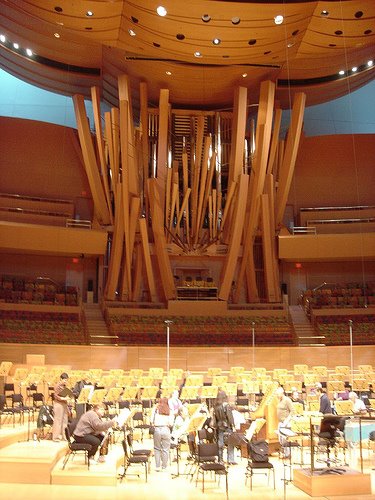
Well, it didn’t take long for me to slip up on my quest to acquire nothing over the next 12 months. I am out in Los Angeles right now for the express purpose seeing the iconic Walt Disney Concert Hall and its fabulous looking pipe organ. It has a physical design unlike any organ I’ve ever seen, and I would guess unlike anything else in the world. I will have more to say about Disney Hall in the near future, for now I just need to admit that I had my first bit of back-sliding on my pledge to acquire nothing for the year. I knew there would be slip-ups, I just didn’t know how quickly it would happen.

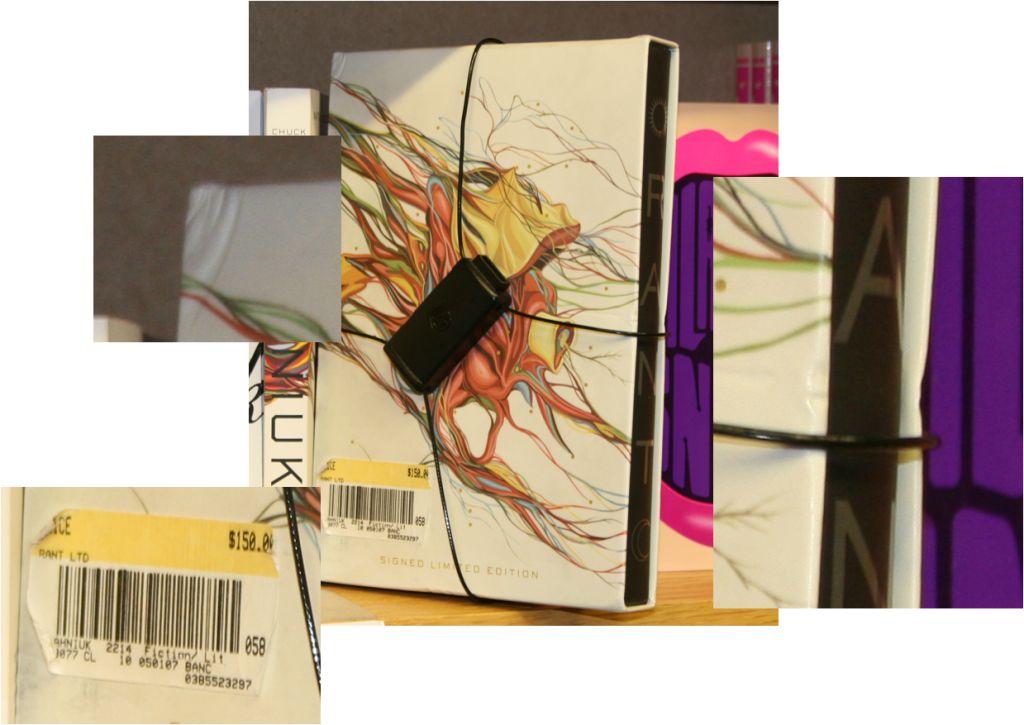
As I mentioned in my blog post about this pledge, gift/book shops while traveling are my biggest downfall and danger. So it should have come as no surprise to me when I walked into the gift shop at Disney Hall that I would get into trouble. And there was a one of a kind book that I couldn’t live without…

The book, A Forest of Pipes by Jennifer Zobelein, is the story of the Walt Disney Concert Hall Organ. Not only does it have fascinating bits about the design, construction and installation of the fabulous french fry-like organ, but it also includes a CD with a “tonal tour” and explanation of the organ’s sound. I ask you, how could anyone pass that up?

The Year of Acquiring Nothing?

Since we finally made the decision to start looking in earnest for a house to buy about this time next year, I have been thinking about ways to get us better prepared for that event. We have definitely been good about building up our savings and we have been even better at keeping our debt pretty much at zero, but I still feel like there is more that we could be doing.

Of course my getting back into the fulltime job market will be a key element–but that isn’t scheduled to happen until the end of August for various reasons. And we certainly need to refresh our memories about the process itself, find a agent we like and trust, the best way for us to structure the deal, etc. But it occurred to me that we could help ourselves out financially and logistically if we stopped acquiring “things” over the next year. We would obviously save money and we would have fewer things to move when we do find the right house. Of course not acquiring things for a year won’t put much of a dent in the overall amount of what will need to be moved, but hey, at least we won’t be adding to it.

The rules for this year of non-acquisition are a little squishy at the moment. I want it to be meaningful, but I also realize that there will be things that come along that aren’t “needs” but we feel are important nonetheless. For instance I know John is going to want to replace a few pots out in the garden and will be buying plants for the upcoming growing season. And I am going to start going to a sing-along group and there is a song book that I will have to buy. But these will be exceptions to the rules. Too often the inclination is to buy first and think about other options second. We are by no means shopaholics–not even close–but we do tend to buy what we want without thinking much about it or putting it into a larger context of its utility. This especially happens when we travel. Museum book/gift stores are probably are weakest moments.

And I should be truthful, I am not really proposing some set of austerity measures. We love to travel and have several trips already planned for the next year. So we sill still be spending money–and doing our bit to stimluate the economy–but there are lots of little things along the way that we don’t really need. And given that I have been blessed with the oppoturnity for so much wonderful travel, I don’t really need birthday or Christmas presents.

I haven’t talked to John about this yet. I think I can get him onboard–as long as I exempt his gardening budget. Still, I am determined to do it even if he decides not to. I love having a goal. I will let you all know when I fall off the wagon.

And don’t even get me started on the necessity for consumer spending to prop up all of our livlihoods. We consume, therefore we live to eat and breathe another day. And the crazy notion/reality that we have to consume our way to a more sustainble, green planet. Ridiculous of course, but it is a bind we seem to find ourselves in.