My First (well-thumbed) Persephone Catalog


PERSEPHONE READING WEEK

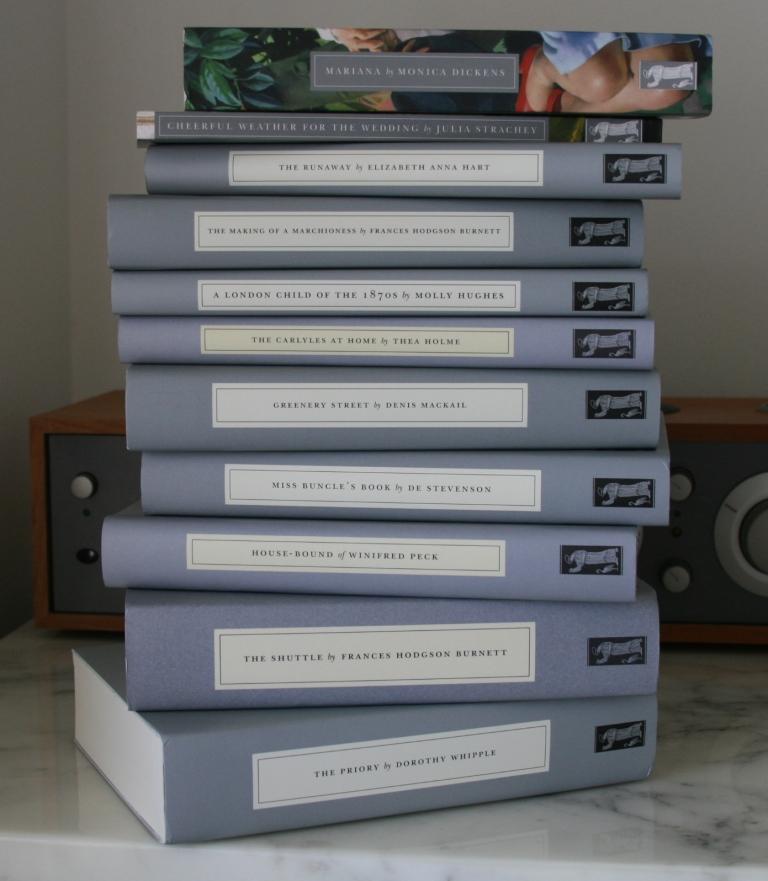
My entrance into the world of Persephone has been well documented previously on My Porch so I won’t go into it all again. (Those of you who are new to Persephone might find it helpful.) But I thought I would share with you my first Persephone catalog. It has been much used since I received it.

You can see from the crease in the lower right corner that it has been subject to much use.
On an early pass I circled the ones that looked interesting to me. Then, after some time and further perusals I went back and assigned dots to each book that I had previously circled. You can see Bricks and Mortar got the maximum five dots. That  means it was part of my first Persephone order. (I have not read it yet.)
Dorothy Canfield Fisher’s book The Home-Maker only got three dots, which meant I was interested, but not enough to make it part of my first order. Well, Claire at Paperback Reader was my Persephone Secret Santa and sent it to me and I absolutely loved it. To date it has been my favorite Persephone and certainly deserving of more than three dots. Oddly enough other books that I rated more highly and ordered, didn’t live up to their dots.
All of the studying and dotting of the catalog led to my initial order. I have gotten a few additional ones since this first order, but I am holding off until we are moved into the new place before I order any more.

Book Review: High Wages by Dorothy Whipple


Today begins Persephone Reading Week being hosted by Verity at The B Files and Claire at Paperback Reader. I am afraid I must kick-off my celebration of Persephone Reading Week with a stern warning to this niche publisher.

Dear Persephone Books:

Dorothy Whipple wrote 18 books. You have only reissued 6 of them. To those of us who have read even some of Mrs. Whipple’s work, I think it is safe to say that we are unwilling to countenance this unacceptable situation. It shouldn’t be too difficult for all of the good folks at Persephone to sit down and work out a schedule for the timely reissuance of the rest of Whipple’s oeuvre.

Whether intended or not, by reintroducing the discerning reading public to the wonders of Dorothy Whipple, Persephone has entered into a serious commitment akin to the sacred covenant between God and her chosen people. Well, you have made us believers, now please don’t leave us in the desert for forty years. Some of us, and perhaps the printed publishing world itself, may not last that long. And I doubt that a Whipple would smell as good on a Kindle as it does in a Persephone paperback.

Believe me to be, very truly yours,

Thomas at My Porch

Seriously folks, Whipples aren’t easy to find this side of the Atlantic, and I don’t want to run out once I finish the six that have been reissued so far. Perhaps I have already read the only two decent books Whipple ever wrote. But I kind of doubt that. First with The Priory and now with High Wages I am totally smitten with Whipple and would love to sit down and read them all in one sitting.

High Wages
Dorothy Whipple

Unfortunately, I absolutely hate trying to synopsize book plots in my amateur reviews. I just don’t have the patience to try and condense the action of a book in a way that won’t put you all to sleep. I read other bloggers’ plot summaries and am amazed at their skill in doing so. It is rare that I can pull it off, so I am not going to try too hard…High Wages is about Jane Carter, an 18-year old Lancashire woman who manages to secure herself a bit of freedom by snagging a job in a drapers’ (fabric) shop thus enabling her to move out of her stepmother’s house. The action begins in 1912 so you can imagine the limitations on employment and advancement available to Jane. But advance she does. She soon becomes indispensible to her employer and a favorite of customers and co-workers alike. Over time she chafes at being kept in her low-wage position and manages to open her own shop—much to the chagrin of her former employer. Whipple expertly sets this tale in the context of the social transitions of the times and changes in the world of ladies garments as custom clothing began to give way to ready-to-wear.

I loved this book for its subject, setting, and prose style. It is a true “coming into her own” kind of story that I really didn’t want to end. I can’t wait to read the remaining four Persephone Whipples.

Book Review: Penguin Special by Jeremy Lewis

Penguin Special: The Life and Times of Allen Lane
Jeremy Lewis

Raise your hand if this sounds like fun:

As office boy and general dogsbody, he worked as a packer and as a ‘looker-out – picking particular books off the shelves and matching them up with a bookseller’s order – before graduating to royalties and the accounts department, and his understanding of the trade was improved still further when, in due course, he began to deal with printers, binders, blockmakers and paper merchants; but he really came into his own when he was allowed to go out on the road, first with Uncle John and then on his own account, visiting bookshops in London and the suburbs.

So goes Allen Lane’s first job working for his publisher-uncle at The Bodley Head. Truth is I like doing most of the rather mundane things mentioned, but then add to that the fact that it’s all happening in the fascinating world of pre-war publishing in London. Well geeze, how could I not find that enticing?

For anyone with an interest in publishing, especially those of you out there who love the good old days of vintage Penguin, this book is worth a look. Penguin Special is most successful when it describes the early days of Penguin and the more innovative side of Lane’s approach to bringing good books to as wide an audience as possible. Tales of wartime publishing are also fascinating, not only because of the paper rationing and other challenges but also the role publishers played in the war effort. And then of course there was the unexpurgated edition of Lady Chatterley’s Lover that Penguin published in 1960, as well as lots of stories about some of the greats of 20th-century literature like George Bernard Shaw.

Writing to Shaw in November 1945, Lane revealed that he planned to celebrate the old boy’s ninetieth birthday the following July by reissuing ten of his works in print-runs of 100,000 each. Inspired by gratitude and commercial acumen, the ‘Shaw Million’ was the first of several ‘Millions’, or ‘Tens’ as they were also known, awarded to bestselling authors on the Penguin list: later recipients included Evelyn Waugh, H.G. Wells, D. H. Lawrence, George Simenon and Agatha Christie.

Shaw’s ‘million’ sold out in six weeks.

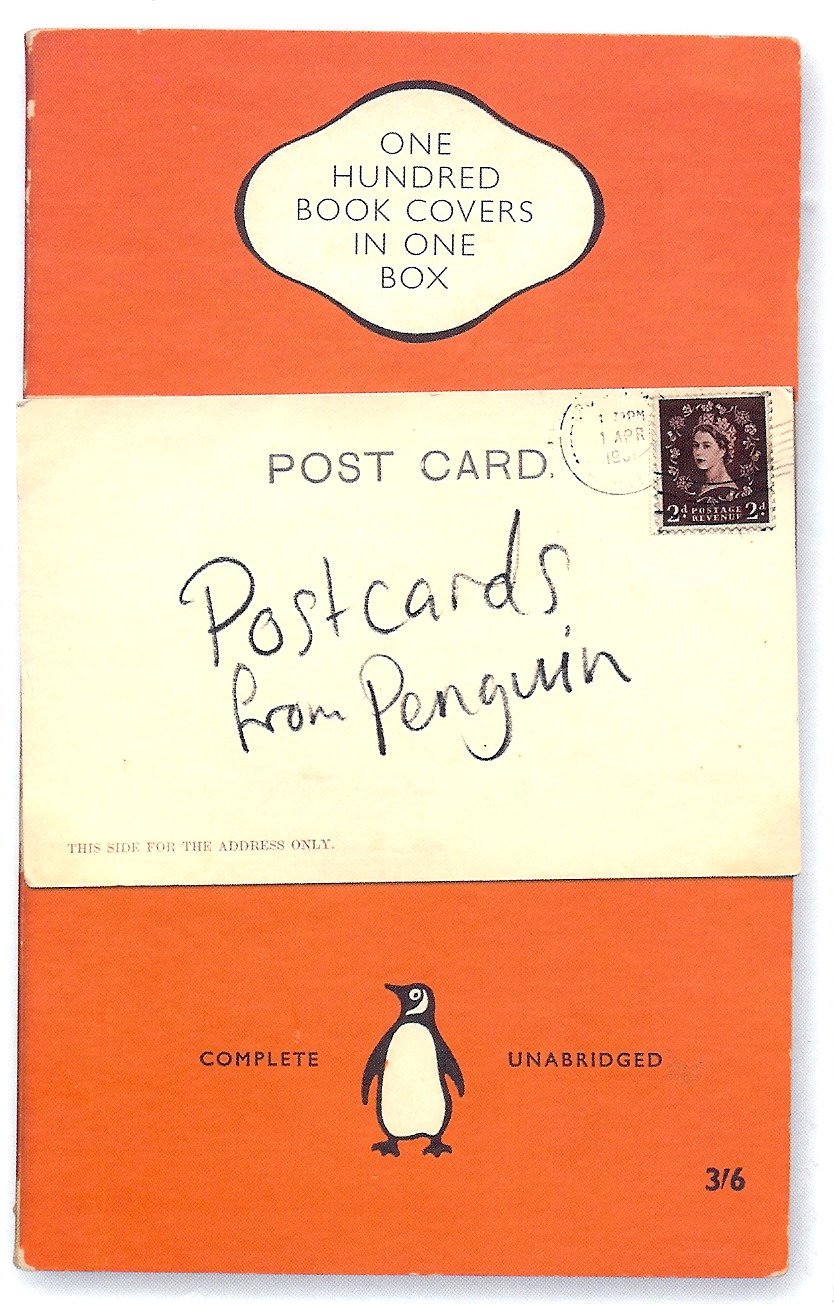
Penguin Special has plenty of pictures, but series of threads in the book that really cold have used more images was the fascinating but somewhat frustrating parts that dealt with design. Like many of you out there, I am a little obsessed with Penguin’s distinctive look and I wanted to see examples to go with the text that described its evolution. Thankfully, all I had to do was walk over to my shelves and pull out two other Penguin products to conjure up images to go along with the text. Penguin by Design by Phil Baines is a great full-color book that delves into the history of the Penguin aesthetic, and Postcards from Penguin, a box of 100 postcards of Penguin covers. Of course the reemergence in popularity of the original graphics-only orange and white covers jumps backwards over many decades of artwork experimentation and innovation that was not always successful. (Lane resisted mightily against illustrated book covers, especially the variety that were first popularized in America.)

Perhaps my only real beef with Lewis’ Penguin bio-history is that a good narrative often got bogged down in too many details. So much so that I kind of wanted to see a table or two, or maybe a timeline, a publishing house “family” tree, anything that would have brought some graphic clarity to the overwhelming amount of detail. All together though I enjoyed this walk through Penguin history and it was a nice way to wrap up the first half of my English Journeys challenge.

This book is fantastic graphic history of the Penguin cover aesthetic. Lots of great examples with just enough text to tell the story.

This is kind of a fun collection of postcards, but to be perfectly honest, for anyone interested in Penguin covers, the Phil Baines book Penguin by Design is much more satisfying. In fact, looking through the Baines book makes one realize that the editor/compiler of the box of postcards didn’t make the best choices when it comes to the covers included. Plus it doesn’t have any of the back story included in Penguin by Design. If you can only buy one, buy the Baines.

Uncle! I am crying Uncle!

Close readers of My Porch will know that I really rebel against expectations, even when they are my own. Well, I am beginning to rebel against my self-imposed goal of reading all 20 of the Penguin English Journeys volumes in the month of April.

In terms of page count it really isn’t all that oppressive, but in terms of content it is. I have really liked some of them so far, the one of food, and the more pastoral, nature filled ones seem to be far more interesting to me. And thankfully there are several of those coming up. I am quite looking forward to the Gertrude Jekyll. But ye gadz, some of these are just so tedious. Part of the problem may be that it is too much of one thing all at once. And reading them in number order may not have been the best plan either. I realized that they are are numbered in alphabetical order by author’s last name. It might have been smarter to mix and match so that there was more contrast from book to book.

I am still going to try and read the rest of them, but you are all on notice that I reserve the right not to finish any that I find too tedious to bother with, and to keep my “reviews” of those down to the bare minimum.

Call me a poseur, call me a loser, I don’t care. I have too many other fabulous books waiting for my loving caress. And now, back to our regularly scheduled program:

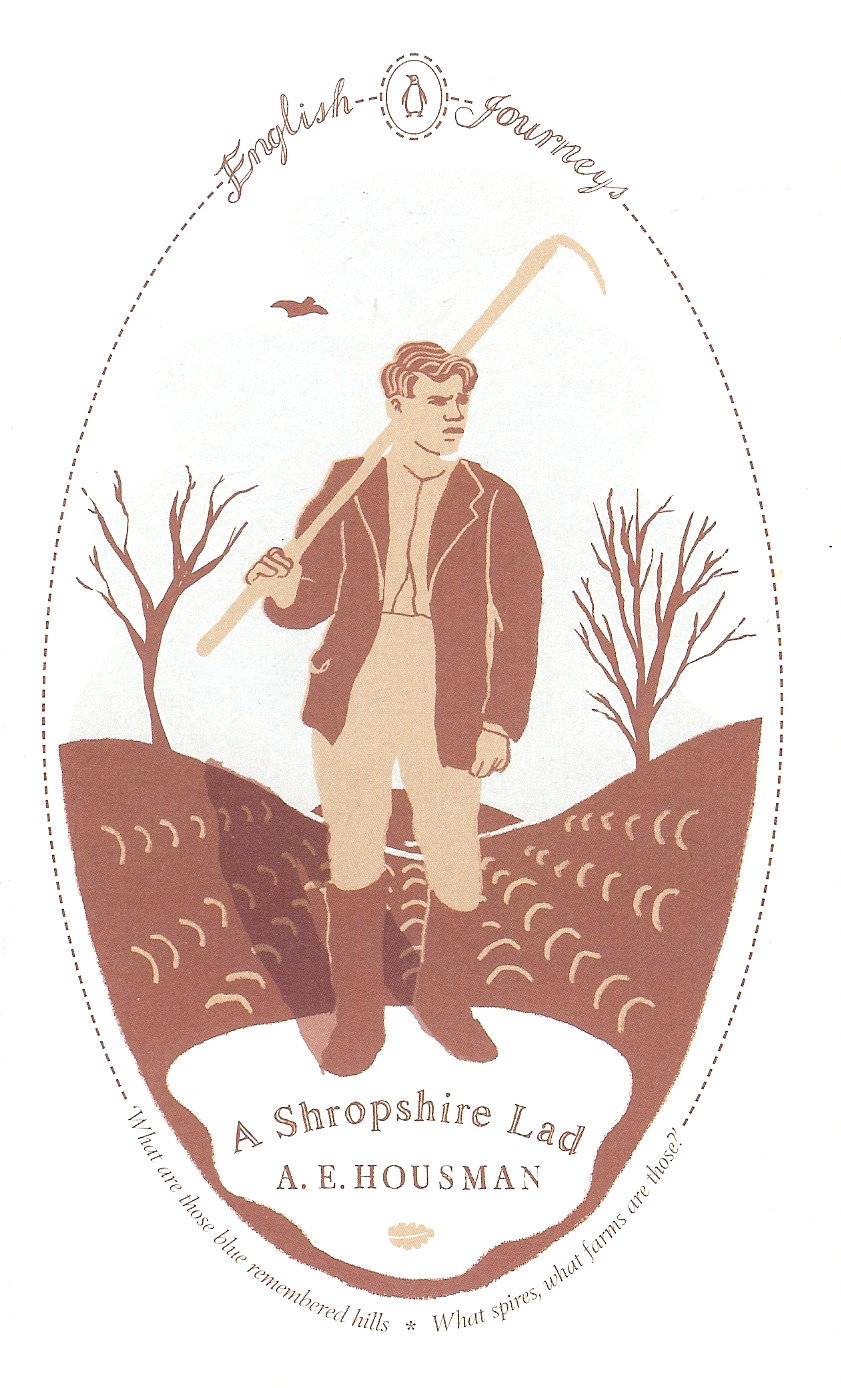
These are the seventh and eigth of 20 volumes of the Penguin English Journeys series. I plan to read all 20 in the month of April.

A Shropsire Lad
A.E. Housman

I feel like I said all I could about poetry in my last post. Well, that isn’t true, I could say a lot about Walt Whitman and some other poets who really speak to me. But alas, A Shropshire Lad, though perfectly pleasant, didn’t do too much to elevate my mental plane whilst I read it.

Cathedrals and Castles
Henry James

I am not a big James fan to begin with. Don’t get me wrong, I don’t dislike him, but I never like his books as much as I think I should, and I think Edith Wharton kicks his literary ass. And though James describes some very special places that I have visited (Wells, Chester, Salisbury, etc.) he just makes it so darn boring. Maybe I am hankering for pictures or maybe his language is so prolix and dry. In any event I found myself skimming so much I just had to chuck it to the side.

Despite my current state of annoyance, I am indeed looking forward to the next two titles in the series:

Walks in the Wheat-fields by Richard Jeffries
The Beauties of a Cottage Garden by Gertrude Jekyll

Hopefully I won’t be disappointed.

This Man is My Latest Obssession


Until today I had never heard of this composer. I was listening to BBC Radio 3 online and came across Wojciech Kilar’s piece Orawa. And now I am obssessed. Thanks Radio 3, I have been searching for classical music that is new to me.

It is amazing. There are many videos of this piece on YouTube but I chose this one because the acoustic of the room makes for an interesting effect and the conductor looks like Iris Murdoch. If you listen to this make sure you give it a minute or two to really get into it. And if you stay to the end you won’t be disappointed.

Holy Week at St. Paul’s Cathedral in 1992

 
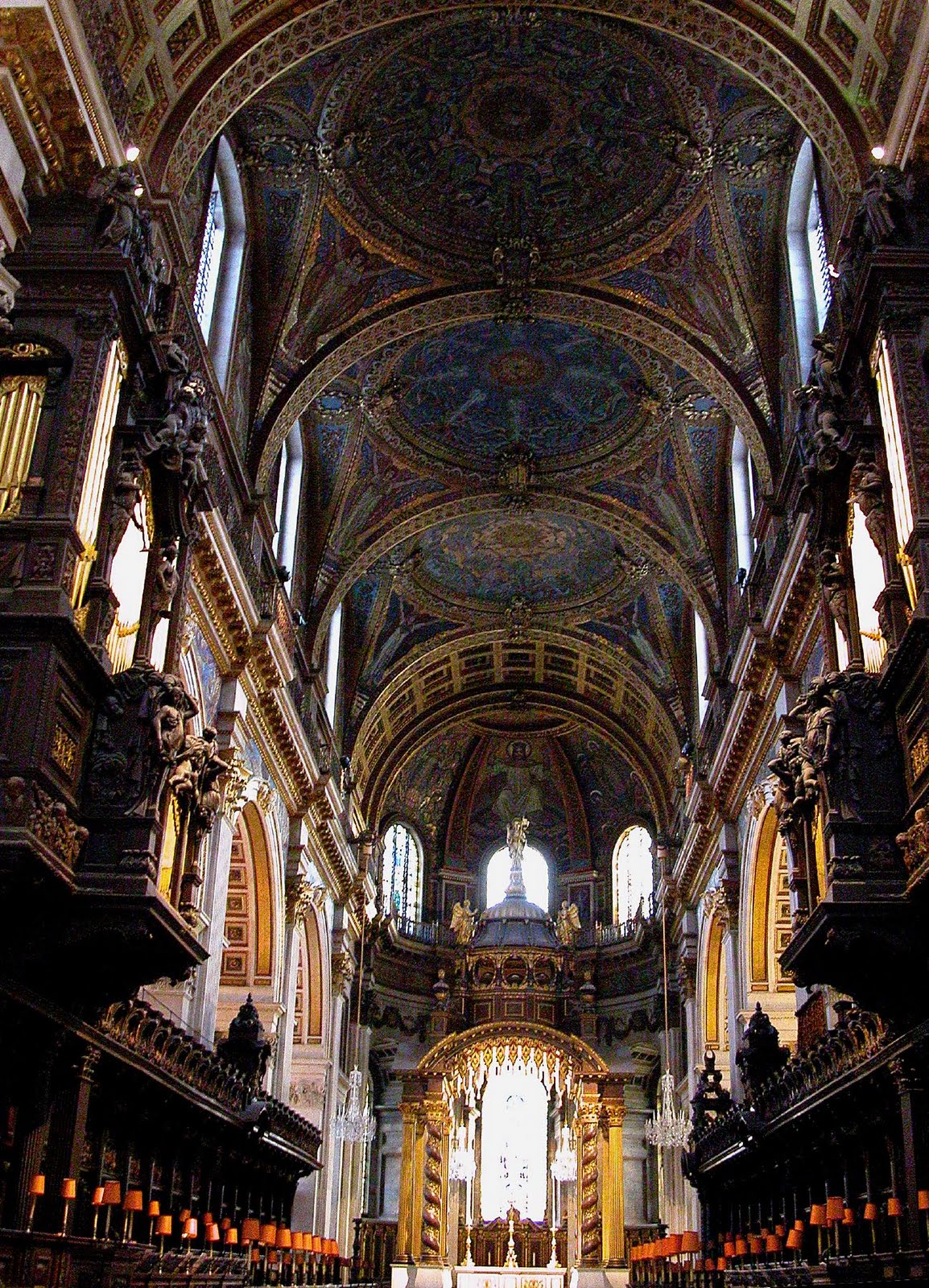
In 1992 I worked for six months in London. My arrival was nicely timed to coincide with Holy Week. Although still somewhat of a practicing Christian at the time, I was perhaps most interested in the musical opportunities that would be available during that period. My first Sunday service upon arrival was Palm Sunday at St. Paul’s Cathedral.

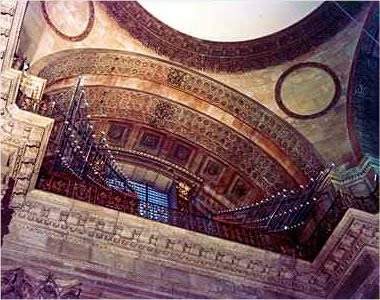
I don’t remember what the music was that Sunday 18 years ago, but I do remember one of the hymns ended with the use of the State Trumpet stop on the organ. The pipes are en chamade (horizontal rather than vertical) and are high above the nave over the enormous West Door of the cathedral. Since the main bits of the organ are in the choir and in the triforium near the huge central dome of Sir Christopher Wren’s magnum opus, the contrast between the trumpet stops over the West Door and the rest of the organ was truly amazing.

I also spent Good Friday at St. Paul’s and had a mystical music experience of another kind that brought tears to my eyes. The choir sang Allegri’s Miserere. When sung well it is a stunning piece with a solo tenor line and a solo (boy) soprano line that goes soaring up to a glorious high C (I think). I am not sure if they still do it, but that year at St. Paul’s they had a temporary altar set up under the Dome and the choir was under the Dome as well rather than back in the choir stalls. For this particular piece they put the soloists somewhere else in the Cathedral–I think they may have been up behind the high altar. Wherever they were the separation of the solo voices from the rest of the choir made the piece even more stunning. The effect was that the building itself became one of the musicians, enveloping all in an ethereal moment that I will never forget.

Here is the superb choir of Kings College, Cambridge singing the Misrere. If you don’t feel like sitting and watching all 9 minutes, I suggest you hit play, open another browser window and continue your journey through your favorite blogs while the music plays. I can guarantee that you will peek back to check out the video once you hear the boy soprano soar over the top of the rest of the ensemble.

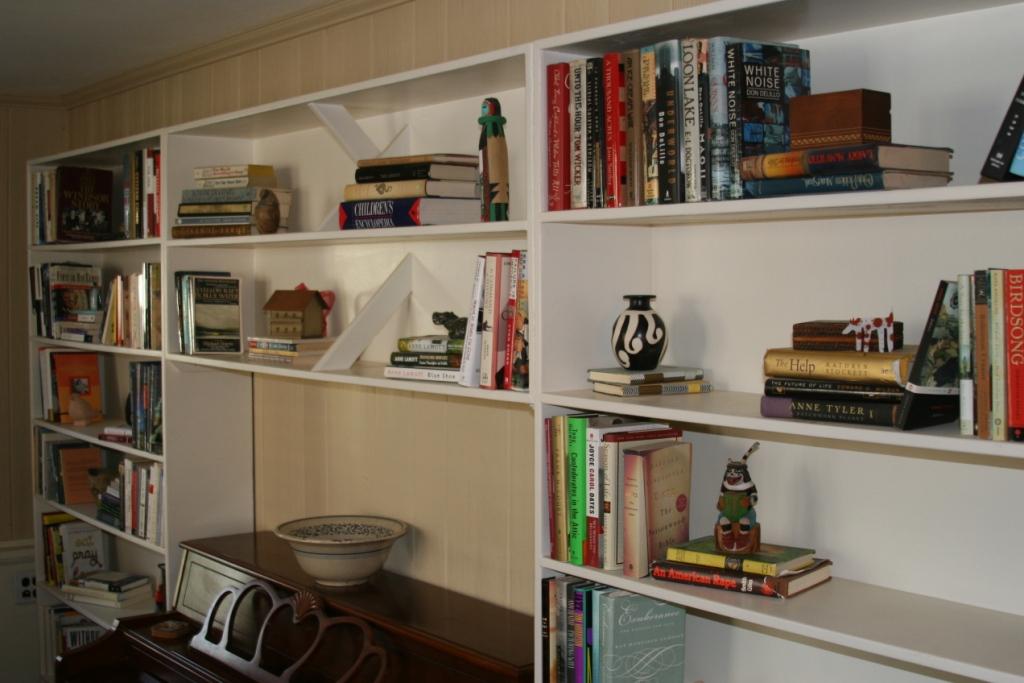
One day soon these shelves will be mine…

  
Thanks to all who left such kind comments on my last post. We definitely feel lucky to have found a house that has what we dreamed of at a price we could afford. We are both in our 40s, are first time homebuyers, and have been looking (in some despair) off and on for the past six years. So we definitely feel like our time has come.

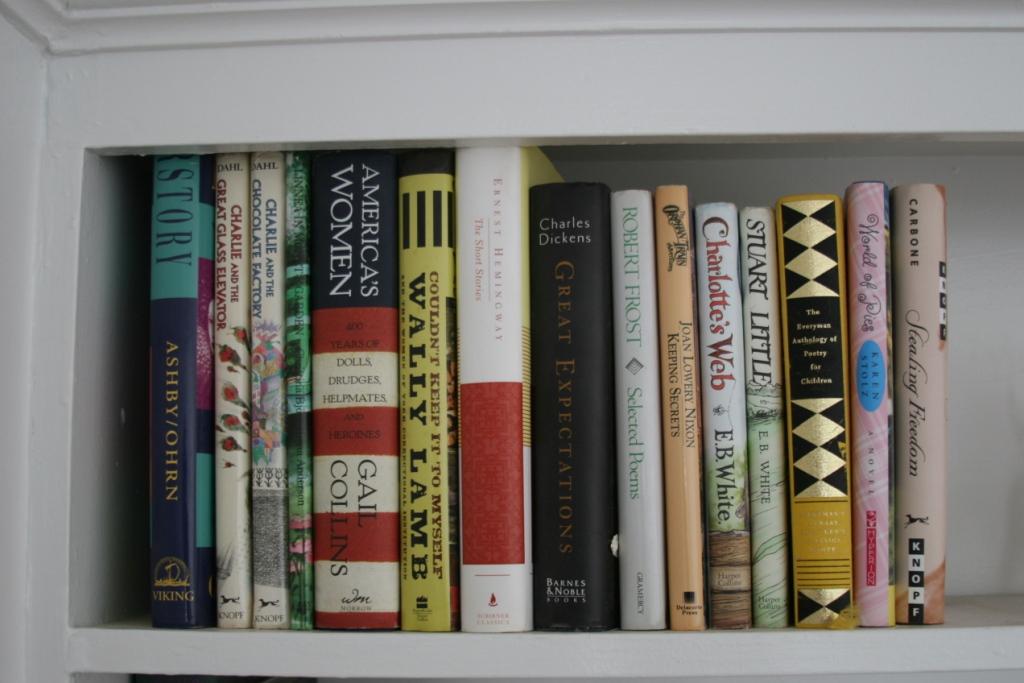
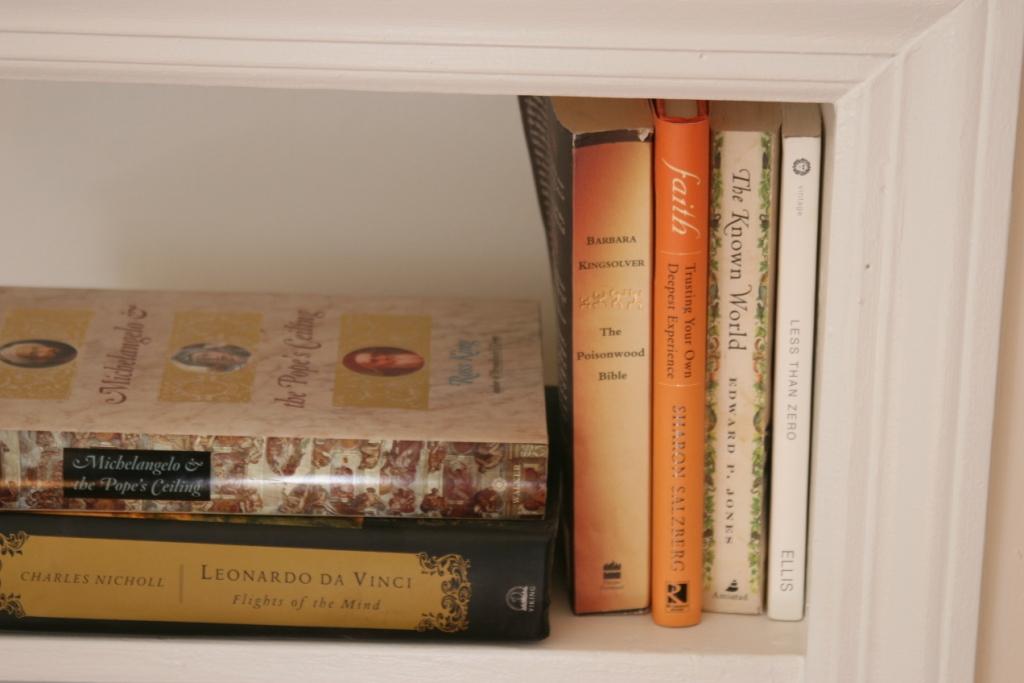
As we did our home inspection today, I couldn’t help but notice that the seller has pretty good taste in books, and while, not seemingly a bookaholic, has more volumes than your average American home. The owner definitely dabbles in the classics, (Shakespeare, Dickens, Wharton, Cather), but also seems to listen to Oprah and the bestseller lists. But nothing looked too frivilous. Two copies of Wolf Hall and one of my favorites The Inn at Lake Devine by Elinor Lipman.


My Porch is Finally Getting a Porch!

  
Things in my reading/blogging world have been a little slow lately with work, an overseas guest, and the fact that we are finally (finally!) buying a house. The last time we tried to buy a house was in 2005 at the peak of the housing bubble. So, five years later we have finally found something that will work for us that we can afford. We still have to get through the home inspection and the appraisal, but hopefully there won’t be any challenges there.

Bottom line is, I am finally getting my porch (which we will turn into a screened porch), and…wait for it…a LIBRARY. It actually has a separate room with nothing but bookshelves.