Is the book Possession as badly written as the first five minutes of the film?

3 minutes in: “You’re that American that’s over here.” Brilliant.

4 minutes in: Rich American professor ponders why the poor Irish professor even bothers showing up for auctions at Sotheby’s.

6 minutes in: He couldn’t look obvious stealing the letter from the library if he tried.

7 minutes in: I guess when they are not buying rare manuscripts at Sotheby’s scholars spend all there money paying for spacious London flats.

8 minutes in: even his solicitor landlord is a scholar. How lucky.

11: “How many jars of gooseberry jam did his wife Ellen make in 1850? This is not a job for a grown up.”

14: “what is it you chaps are always saying: ‘how’s it hanging’?” More of that crazy linguistic gulf between the US and UK.

15: “or if you prefer the American vernacular she’s a real ball breaker.”

16: Lincoln University must be paying Gwenyth well, such nice clothes.

17: I really don’t like Paltrow especially when she plays British.

17: all the instant, snarky, we are going to end up in bed banter. Is the book this lame?

19: By all means sit in my office and do your research.

20: And he is already going to spend the night. That happened quicker than I expected.

21: Show her the stolen letter and then you areg surprised that she thinks you did the wrong thing–oh, because you are an American…and why did you have to steal the letter to study it?

22: and then she doesn’t even want to read the letter all the way through. She must really need to use the bathroom.

23: “He’s an American…he’s probably off trafficking drugs…”

25: an invitation for another night in Lincoln. And at he big house this time. Lucky guy.

28: middle of the night tearing apart dolls that apparently have been sitting there uncovered for 150 years.

29: why not bring the letters back to the room that actually has a working light.

I think I need stop watching. I think Glee is on…

Will Claire Share With Verity?

  
Some of you may remember back in February when I created a list of 10 largely forgotten novels that would be good reads for the Cardigan Mafia.  I was so enthusiastic about those books that I even gave away a spare copy of As For Me and My House by Sinclair Ross. Since this book is rightly a giant in Canadian literature, the giveaway wasn’t open to Canadians who don’t have to walk far to find a copy. I was so hoping to expand the audience for this neglected gem that one of the other qualifiers for the giveaway was that entrants had to read and review the book within three months of receiving it.

So, happy day, Claire of Paperback Reader won the copy and it was duly posted to the UK.

But then Claire appears to have gotten stimulating, full-time employment that, while great for her, is bad for those of us who would like to hear more from her. Yes, that is right, I will just come out and say it: Claire, your job is interfereing with your blogging. Where are your priorities? I think your employers, in addition to paying you, should compensate the blogging world for our loss.

Worn out from work, Claire despairs the tyranny of blogging.*

So, here is my thought…I know you UK bloggers don’t all live in the same little village (although I would love to visit that village if you did), but perhaps you could lend the aforementioned book to Verity who was also very interested at the time of the giveaway. Not to mention the fact that her voracious appetite for books is truly mindboggling.

Verity voraciously reads while waiting for her train on the Oxford Underground.**

Or if Verity is unwilling or unable to take the book off your hands temporariliy maybe you could lend it to Simon T who also showed an interest. But then again his TBR pile has no doubt left his floor joists sagging dangerously, so any blogger you know who might be interested in reading the book would work.

Simon’s TBR pile.***

And I won’t even suggest that the person you pass it off to should blog about it. They can just read it. If they find it half as good as I do, then the spirit will move them to do the right thing.

What is the reason for this slightly insane public pleading? I just re-read As For Me and My House for the first time in about fifteen years and it is everything I remember and more.

So Claire, what do you say?  My review of my re-read follows…

* Not really Claire.
** Not really Verity (and Oxford doesn’t have an Underground).
***Not really Simon’s TBR pile. His is much bigger.
 

Happy Adoption Day Lucy!

   
A year ago yesterday Lucy came to live with us. I don’t know what we would  do without her. If you are thinking of getting a pet, go to a shelter…lots of great dogs and cats are waiting for homes.

Not only are her ears soft and big, but that is where the love is.

Relaxing after a play session.

Lucy trying to steal Lucy’s stick. It just so happens that Lucy’s
best friend in the neighborhood is also called Lucy.

Speed racer.

Re-reading Childhood


Cozy domestic tale? check

Life affirming family story? check

A pet sheep called Rachel? check

Clothes being fashioned from other clothes? check

Post-war Europe? check

Life in a converted rail car? check

I mean hello, what isn’t to love about this book?

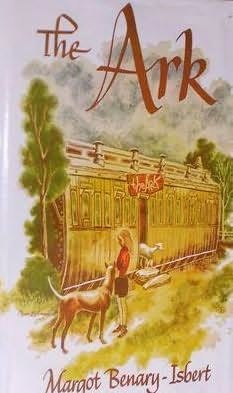
When I was in grade school I read The Ark by Margot Benary-Isbert. I have no recollection of why I checked it out of the library years ago but it has stayed close to my heart in the 32 years since I read it. I thought of it recently and decided to see if I could find a copy online. Out of print and seemingly scarce, I found a few copies around $45 but the prices went up quickly from there. Maybe I could find a copy in the underfunded DC Public Library system. And lo and behold there it was, the only library copy in DC at my neighborhood library.

Being in the juvenile section of the library was trippy enough but to find the exact edition that I read all those years ago was fantastic. Even the pages smelled the same as they did when I was 10.

So would The Ark live up to my childhood recollections? Yes. I loved this book as much now as I did then. Except now I am also fascinated by the fact that the WWII refugees in this case were from Silesia and Pomerania who may have indeed fought on the side of the Nazis, although it isn’t explicit, and the author does take a moment to mention that the family was not sympathetic to the government. On the one hand it is a little hard to feel much sympathy for the deprivations suffered by these refugees given the horror that had so recently been suffered by six million Jews. On the other hand…well it is hard to come up with another hand, I have never really read anything about how life in German attempted to get back to “normal” after the war and the Holocaust. I have certainly read all about the big stories of war criminals and such, but never anything about the average German trying not only to survive but somehow make sense of what had gone on in the Fatherland. Right or wrong these issues don’t play much of a role in this book.

I really wish this book was in print so I could send out a few copies into the blogosphere for review. I think many of you would enjoy it, but I am also curious how it should be approached vis-a-vis the Nazi question above.   And most of all, I think this would make a great Persephone re-issue. It is certainly a more interesting children’s book than the Persephone-published The Runaway.

The Habit of Art


The young Alan Bennett.

I have long been a homebody. When I get home after work the last thing I want to do is go somewhere.–even when I like the place I am going. I used to go to orchestra concerts and operas all the time. Less often I would go to plays or participate in other evening activities. In recent years, maybe over the last decade perhaps, I go to fewer and fewer such events. Often I miss some really wonderful things because I can’t budge myself from being cozy at home. So when I saw that Alan Bennett’s play The Habit of Art was playing at the Studio Theatre here in DC I thought I should give it a go. Not only do I love Bennett’s work in its many forms but the subject of this one also interested me. The Habit of Art deals with an imagined conversation between estranged friends W.H. Auden and Benjamin Britten. I know little about author Auden but I know lots about composer Britten.

With all good intentions I bought myself a ticket. I even planned to go while John was out of town. At least I thought I did. For some reason I bought my ticket for the night John was returning home from an 11-day business trip. You can imagine how hard it was for me to tear myself away from John, Lucy, and home on John’s first night back in town. But, contrary to some previous bad behavior and lots of lost money over tickets not used, I actually did manage to get myself to the theater and I am so glad I did.

I found Bennett’s The Habit of Art so much more interesting than his play The History Boys. I will, however, admit that part of my dislike of The History Boys had to do with the fact that I saw it on a big proscenium stage on Broadway. I just don’t like seeing theater in that kind of venue. Having cut my theatrical teeth in the audience of the (original) Tyrone Guthrie Theater in Minneapolis with its thrust stage immediacy, I am left cold by productions in more traditional theater spaces. Anyhoo, being in the second row of the gently thrusting Studio Theater for The Habit of Art was intimate indeed.

The more vigorously thrusting stage at the
original Guthrie in Minneapolis

Ah, but the play’s the thing. (But wait, it is only the fourth paragraph and you are already going to write something about the play itself? Wow.) I am not sure that I found the overall theme of The Habit of Art to be particularly profound, in fact there were moments where I found it slightly cringe-worthy in its theme of “somebody always gets left behind”. But, as with so many things by Bennett, the beauty (and fun) is not so much in the overall message but in the details and the language. He is a master of dialogue and nuanced, pithy, poignant, and hilarious observations of everyday things.

The Habit of Art presents a play within a play which makes it somewhat hard for me to convey the plot. Unlike some other plays within plays, this one is rather intricately woven together in a way that really blurs the lines sometimes. And I think Bennett goes out of his way to toy with the conceit. Set in a rehearsal room at the National Theatre in London a group of actors rehearse a play about Auden and Britten. While I enjoyed the play within the play as it explored the lives of Auden and Britten, I think I appreciated the play outside the play even more. As I struggle to write this I realize I won’t come close to conveying how this all works out and how much fun it is. But it is fun. One of the funnier moments that illustrates the moving back and forth between the play and the play within in the play happens when actor Fitz who is rehearsing his role as Auden audibly farts. He looks at the stage manager and says “That was Auden farting, not me.”

The set was wonderfully cluttered and English, right down to the fire exits and the acting was generally very good. Since most of you aren’t local, I won’t go into too much detail about the actors. Ted van Griethuysen played the actor playing Auden and was fantastic. However, Paxton Whitehead who was also fantastic as the actor who was playing Britten is someone you have all seen before. That is if you have watched popular US sitcoms or films over the past 20 years. On those sitcoms (Friends, Frasier, Mad About You, etc.) he is generally forced to play stereotypical caricatures of the British gent, but here he was able to be a much more normal version of the same.

Ted van Griethuysen and Paxton Whitehead. Photograph by Scott Suchman

With all of its quiet references to various aspects of English life, music, literature, drama, and pop culture, I do wonder how much of it was picked up by the rest of the audience. If you don’t know 20th century British classical music, do you really get the discussions of Britten’s music or the references to Walton and Tippett? And if you haven’t been so lucky to attend the bunker-like National Theatre in London would you pick up on the references to the Lyttelton, Cottesloe, or Olivier? I wanted to ask for a show of hands to see how many people knew what RADA is. But in the end, as much as I loved these references, I am not sure they mattered given how well the audience enjoyed the show. That is, except for the guy next to me who began checking his watch about 30 seconds into the first act and didn’t let up until it was all over.

Seeing something this enjoyable makes me think I need to get back into the habit of art.

I am glad I am not a publicist


Debi Mazar who played the
foul mouthed publicist on Entourage
(and who has nothing to do with this post).

I got the following email today from an author’s publicist:

With Halloween approaching, I wanted to let you know about Irish author, broadcaster and literary historian [Author’s Name] Kindle Single, [Book Title]. The Birth of Dracula, in which he deconstructs the myth of the modern vampire by revealing the relationship between blood, sex and everlasting life and by revisiting the 19th century birth of Dracula at the hands of his countryman, Bram Stoker.

From his eye-witness account of a castle that inspired Stoker, to his re-telling of myths from the Bible, to the gothic Victorians, to the modern screen, [Author] weaves a visceral and compelling thesis, contending that the vampire story has been a part of the human narrative from the time stories were first shared.

Please consider covering [Title] on your blog. I’d, of course, be happy to offer you a free download, which can be read with the Kindle app on many e-readers, smart phones and your desk- or laptop with the Amazon Cloud Reader. 

I know they send out mass emailings hoping someone will bite (no pun intended) but this one is so off base it is laughable.

1. Vampires bore me.

2. I read very little non-fiction.

3. I don’t use an e-reader.

4. Only once in my life have I accepted a review copy (by the wonderful Maggie O’Farrell).

Do you think this counts as me covering this book on my blog?

The Great British Bake Off


Oh Rob.
Many of you across the pond have been watching the Great British Bake Off. Thanks to my good friend Ron who forwarded me YouTube links to the first episode of the new season I have finally been able to see what all the fuss is about.
First, I love to bake and second I love good food TV. Not the baloney Gordon Ramsay screaming kind, but the kind that shows talented people being talented in the kitchen. I love the GBBO, but as much as I love to bake, I have zero interest in being in such a competition.
The show is co-hosted by Sue Perkins who is one of the funniest women on the planet. I would love to hang out with her. 
Sue Perkins (right) and some other woman.
But really, even if the show were boring watching the dishy Rob bake is worth the price of admission. One thing these pictures don’t convey is just how pretty his eyes are. They are kind of a light brown–rather luminescent, and well, more than a little dreamy.  [Update: Now that I have watched another episode his eyes look a little green, maybe they are hazel. Either way…sigh.]

Bits and Bobs

Do you have an ear for Austen?
My dad recently read his very first Austen (Pride and Prejudice) and Bronte (Jane Eyre). He enjoyed his experience (and has moved on to The Tenants of Wildfell Hall) but he had a question for me: “Did they really talk that way?”  My first thought was “of course they did”. But then I began to wonder if that was truly the case. Obviously I understand that verbal communication during the eras of Austen and Bronte would have sounded much different then our own today. But was it indeed as formal and convoluted as depicted in the works of the authors of those eras? I guess my real question is: Was there anything about the conventions of novel writing at the time that would have had authors writing narrative in a more formal style than the way they would have spoken in daily life? Thoughts anyone?

My reading life
It has been a while since I finished a book which would suggested that I am not reading much these days. The truth of the matter is that I have many things in progress and one of these days there will be an avalanche of books finished in close succession. (Lessing, Shute, du Maurier, Sarton and more all hovering near completion.)

Update on e-books
I have said many times that e-books are not the thing for me. Of course that was before I tried them. I decided to take my very expensive Scrabble machine (also known as an iPad) and try out an e-book. Not willing to pay for a test model I downloaded some free Trollope. It took me about 30 seconds to reach a verdict. No, e-books are still not for me. Blech. Fooey. Not interested. Glad you all like them, but I will die reading from dead trees. But speaking of trees…they are a renewable resource that can be managed responsibly and books are essentially biodegradable. E-books on the other hand are a pile of non-renewable metals and petroleum-based materials that are not only not biodegradable, but leave a pretty toxic trail at all points of their life cycle. Not to mention the fact that even in broad daylight one is using electricity to read a book. Think about that. “My book is powered by coal…” Of course I own the iPad (not to mention a computer and TV and TiVo and on and on) so my environmental footprint is no smaller than all of you reading e-books. So I guess it all gets back to my love for the look, feel, and smell of paper.

Dewey’s Readathon coming up
The annual Dewey’s 24-hour Readathon is coming up on 10/22 (I think) and I am not sure if I am going to participate. I kind of enjoyed myself last year, but there was something about it that felt a bit like a weekend killer. I don’t mind devoting a weekend to reading but I really don’t like trying to stay awake to cleave to the 24-hour format. I have never really liked staying up beyond about 1:30. I feel like it just turns the next day all topsy turvy. Plus I think the need to go online every few hours to blog about my progress is too disruptive to the cosiness of reading. Perhaps most importantly for me,  I only really enjoy extended periods of reading if I have a book that has me so enthralled I can’t put it down. I obviously read a lot of books but I tend to do it in short bursts and in stolen moments (commuting, before bed, etc.) And unless I have one of those page-turners, which even among wonderful books are pretty scarce, I just won’t enjoy hours and hours of reading over a specific period. So I think the short answer is that I am going to allow myself the opportunity for lots of reading on the readathon weekend but I am not going to  force it. If it happens it happens. (And I will go to bed at a normal time, and watch TV, and surf the web, and hang out with John and Lucy…)
     

Bad Teacher Delays Daphne Discovery By 24 Years


As many of you may know, Simon of Savidge Reads and Polly of Novel Insights are hosting Discovering Daphne this month. When they first announced it many, many months ago, I wasn’t really thinking too much about participating. For some reason I have had a bias against Daphne du Maurier for as long as I can remember. I have never read anything she has ever written so I wasn’t quite sure where the bias came from.

But then I remembered an incident in high school. In the spring of my senior year I had a class on European literature. It was supposed to have been an advanced placement class but what happened in class that trimester couldn’t really have been called much more than advanced loafing and advanced lameness. At first it seemed like it was going to be a great class. The  class was a little smaller than most and most of the students in the class were friends of mine or were at least fun and friendly. And most importantly, given the supposedly advanced nature of the class, there weren’t any bullies in class–at least not the kind that made picking on me their life’s work.

I was also kind of excited because the teacher had always been billed as one that students just love. And at first she did seem like a lot of fun. But it didn’t take long for the lameness to kick in. First off, she didn’t have much of a syllabus for the course, and what little outline she did share with us was fairly quickly abandoned in favor of a general aimless drift in her teaching methods and subject matter. There was a literature anthology for class and there were days when, in lieu of doing any real teaching, she would sit in front of the class and page through the anthology until she found something that caught her eye and then she would read a sentence or two and then move on. This was all interspersed with lots of chit-chat and stories that had nothing to do with anything.

Now don’t get me wrong, in the final months of high school, I didn’t care too much that she was being totally lazy and not teaching us a thing. But then there was a bit of a situation. We had been waiting to get back a graded assignment for some time. She kept telling us we would get it back tomorrow, and then the next day, and then the next week etc. Well, we only had one other large assignment that was going to count for the majority of our grade and feedback on the earlier assignment seemed pretty crucial in knowing how to move forward. So one day, after many, many delays in returning our graded assignments she delayed yet again. So I chimed in: “How do you expect us to be responsible to keep deadlines when you aren’t responsible to us?” (I still remember the exact words to this day.) So how did she respond? She burst out crying (somewhat of a put on in my opinion) and gives us a big sob story about how she is going through a divorce.

So half the class, taken in by the sob story, look at me like I am evil. Like I had been the one who had said something out of bounds and inappropriate. But being roughly the age now that the teacher was then I still don’t have much sympathy for her. I can’t imagine a grown adult thinking it appropriate to burst out with such a story in a classroom full of 16 and 17 year olds. And I have a hard time believing that she had no family, friends, or co-workers in whom she could have confided and let off emotional steam related to the divorce. But why did I expect much from a teacher whose popularity was high among jocks, cheerleaders, and legions of underachievers who thought she was such a great teacher that she was our graduation commencement speaker?

What does any of this have to do with Daphne du Maurier? Well, that very same teacher went on and on about how much she loved du Maurier (pronounced “do more-year”). So you can imagine that I didn’t feel much of an urge to discover what this lame teacher thought was so great.

But now. 24 years later, I know so many readers whose taste in fiction I trust who also love du Maurier. So maybe it is time to give Daphne a try.  About 40 pages into Hungry Hill I am beginning to think that my lame teacher may have been right about at least one thing.