My TBR by the decades – The 1920s

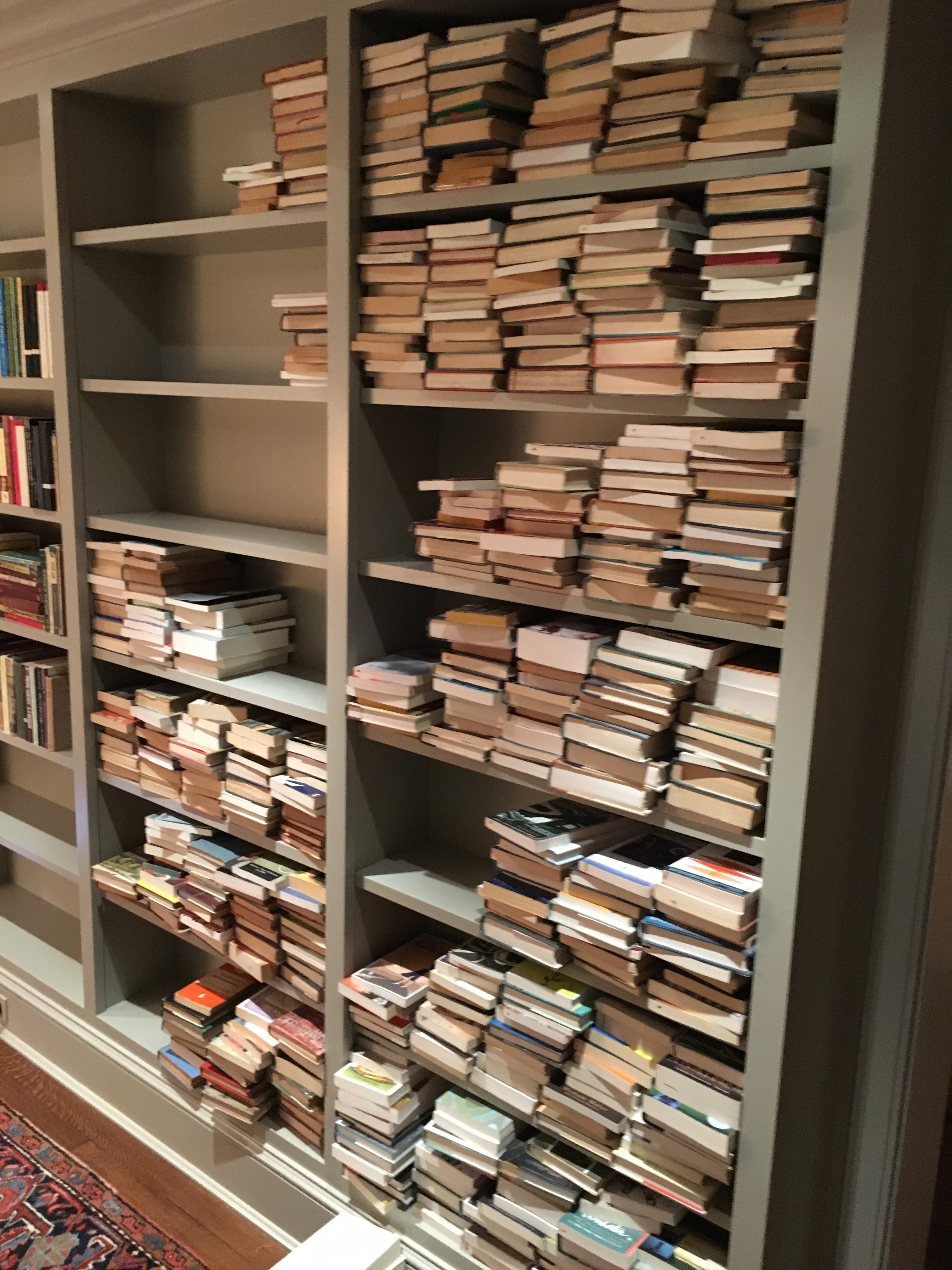
I’ve managed to stop doing the Charleston long enough to catch my breath so we can chat about my my 1920s TBR shelf. You will probably note that my shelves are devoid of many of the august books of the 20s which is mainly due to the fact that I have already read most of those.

As usual, the full TBR can be found at the bottom of the post.

[For those who don’t know, I am participating in A Century of Books this year which requires me to read one book from each year from 1919 through 2018.]

1920

Happy House – Jane Abbott
Klingsor’s Last Summer – Hermann Hesse

The Abbott was a vintage find of which I have no knowledge and the Hesse is far too enticing to pass up. I think I may have actually read it when I was on a Hesse binge in college, but that was before I started keeping track.

1921

Vera – Elizabeth von Arnim
Joanna Godden – Sheila Kaye-Smith

I’ve already read Vera this year so 1921 is complete.

1922

The Camomile – Catherine Carswell
My Mother’s House – Colette
Ulysses – James Joyce
The Heir – Vita Sackville-West
Life and Death of Harriett Frean – May Sinclair
Seven for a Secret – Mary Webb
A Son at the Front – Edith Wharton

There is much here I would like to read, including Ulysses. I had sworn off Joyce until I read The Dead. Then I read a bit of Ulysses and thought “Hmm, that is way more readable than I thought.” But I won’t be reading it this year, I’ve already read Wharton’s A Son at the Front.

1923

Colin – E.F. Benson
Antic Hay – Aldous Huxley
Peter West – D.E. Stevenson

Let’s just be honest, it’s going to be the Benson or the Stevenson. I have tons of Benson on my TBR and quite a bit but much less of Stevenson. Both are likely to be comfort reads so this should be a cozy year to read.

1924

The Unlit Lamp – Radclyffe Hall
Seducers in Ecuador – Vita Sackville-West

I really liked Hall’s The Well of Loneliness because it is still so relevant and so ahead of its time in content. Her writing, on the other hand is a bit tortured at times.  And the Sackville-West is about 3 pages long. Still, it’s up in the air.

1925

Mother – E.F. Benson
Rex – E.F. Benson
Pastors and Masters – Ivy Compton-Burnett
Corydon – Andre Gide

I thought I had sworn off Ivy Compton-Burnett, but then I found a nice edition of this short work and thought I would give it another go. Less likely to read Benson’s Mother as it is literally about his mother. 

1926

Her Son’s Wife – Dorothy Canfield
Marazan – Nevil Shute

This is Shute’s first novel and one of the few I haven’t read. I think it is going to take the prize.

1927

Leadon Hill – Richmal Crompton
Wintersmoon – Hugh Walpole

I know nothing about the Walpole and I’ve loved all the Crompton’s I’ve read. On the other hand, Walpole is taking up a fair amount of space and I have had it for a long time. It might be time to move it along one way or the other.

1928

Brook Evans – Susan Glaspell
Quicksand – Nella Larsen
The Quarry Wood – Nan Shepherd

The Shepherd is part of an omnibus that I am not sure I want to commit to. I enjoyed Nella Larsen’s Passing and she might be the only person of color that I have in the 1920s. On the other hand I have never read any Glaspell and am very curious to understand what she is all about.

1929

Paying Guests – E.F. Benson
Sido – Colette
The Other One – Colette
Living – Henry Green
The Lacquer Lady – F. Tennyson Jesse
The Bride’s House – Dawn Powell
Three Came Unarmed – E. Arnot Robertson

Although there is much that attracts me here, I think I might go for one of the Colettes. I want to know if they are like the Claudine books, which I hated, or more like The Ripening Seed, which I loved.

For the whole list:
TBR Chron


My TBR by the decades – The 19teens

As noted previously, I’ve decided to pursue A Century of Books based on Stuck in a Book’s plan to read the century 1919-2018 rather than 1900-1999. As I went through my giant TBR re-sort recently, it became clear that this was a good idea. I would have had a hard (and boring) time filling those years from 1900-1919.

The only weird thing about this shifted century is that I have this one year is a bit of an orphan and doesn’t have any decade pals. So it stands here on its own.

As you can see below the year 1919 is pretty darn compelling. I’ve only ever read (and loved) Canfield’s The Homemaker, so I am curious about that one. I really love Hermann Hesse and I really want to read this one, but there is more Hesse coming up so I thought I would give this one a pass for now. I’ve read a lot of Lewis and this one looks interesting. For some reason the May Sinclair novel doesn’t speak to me at the moment. And then there is the Morley. I know there is lots of blogger/reader chatter about him, but I really know nothing about him or his work. With a title like that, however, I decided to give it a go and am actually already about 10 pages in.

With a great selection like this for 1919 (and even better ones in other years as you will soon see), it makes me want to read everything I have for that year. Like maybe I change my ACOB approach to reading every book that I already own from each year. With 725 books on my TBR that would take about 7 years. Hmm…

1919

The Brimming Cup – Dorothy Canfield
Strange News From Another Star – Hermann Hesse
Free Air – Sinclair Lewis
The Haunted Bookshop – Christopher Morley
Mary Oliver: A Life – May Sinclair

For those of you participating in ACOB and needing ideas for your list I thought I would post the whole list at once rather than make you wait for my blog posts about each decade. Also helpful because it has all of my TBR books published prior to 1919 as well.

TBR Chron

For those of you NOT doing ACOB, you just might be curious to see whats on my TBR.

TBR Alpha


Out of chaos

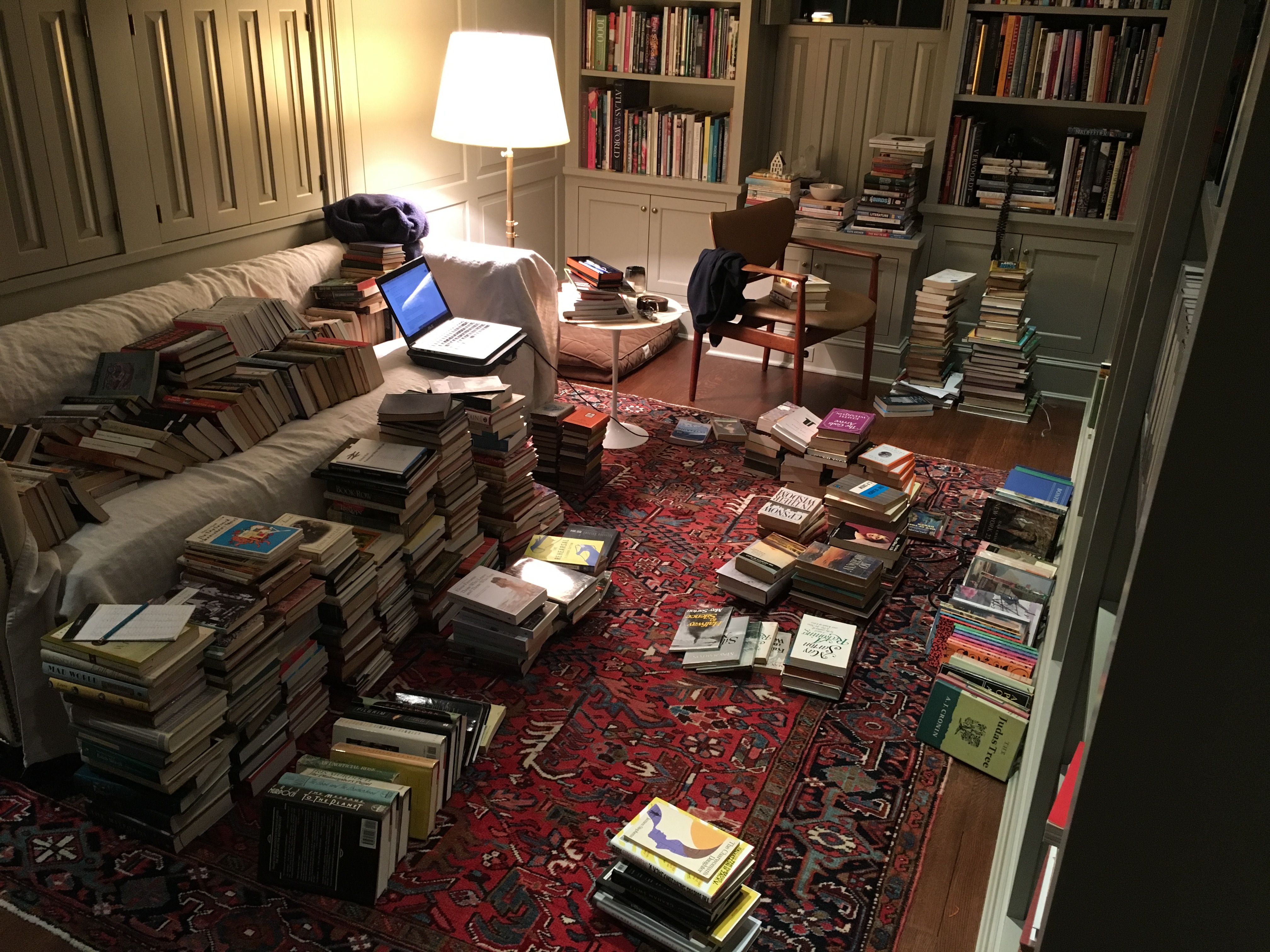
My library doesn’t normally look like this. But I got a bee in my bonnet while choosing what to read next and then this happened.

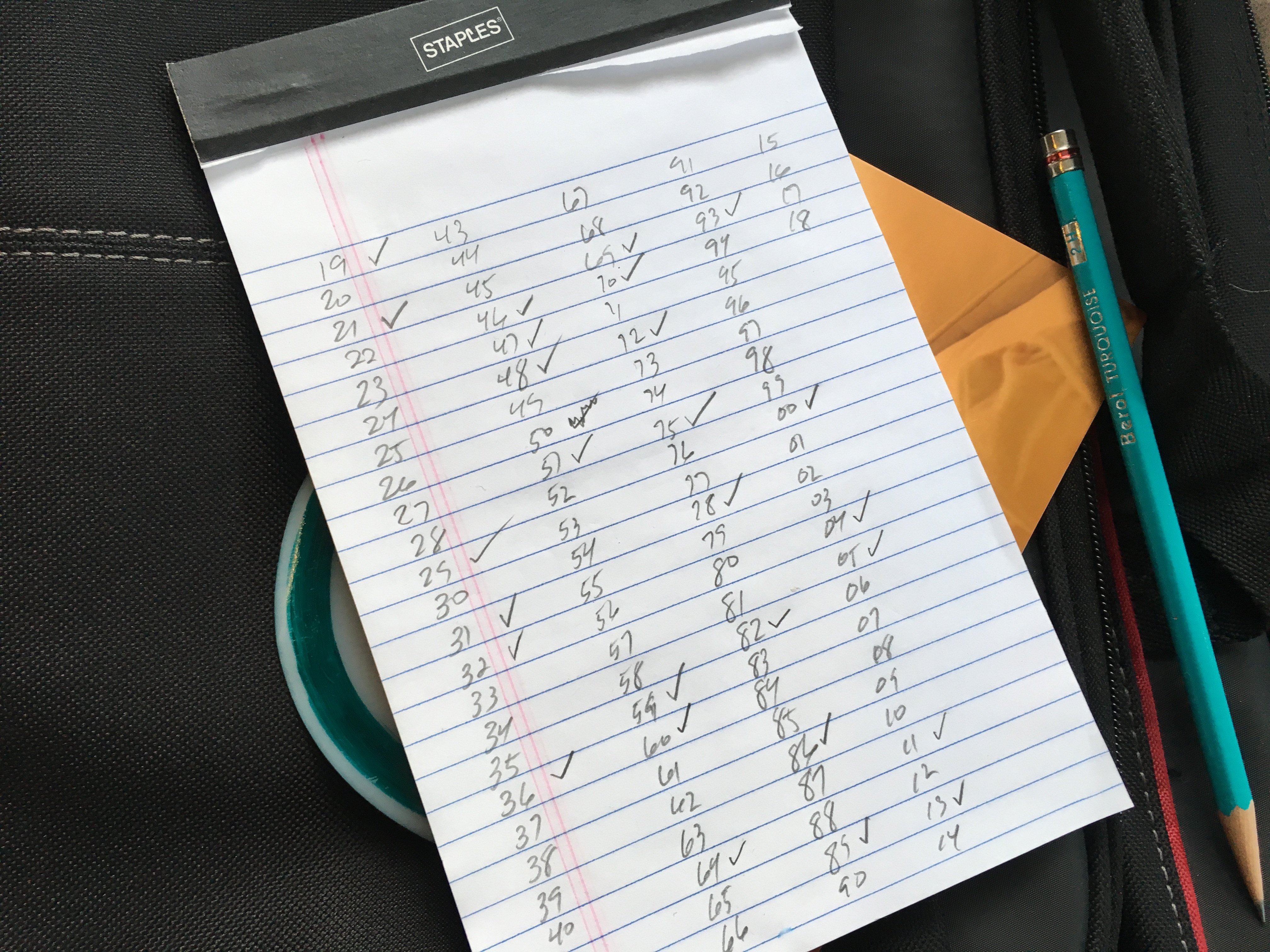
The other night I was picking a selection of books off of my shelves in order to decide what to read next. While doing so, I was cognizant of my decision to take part in A Century of Books and thought I should start keeping track of the years in which each of them was published.  I made a checklist to make sure I didn’t duplicate years.

After I had pulled together an interesting looking pile of almost 30 books to take up to my nightstand…I had a mental breakdown brilliant idea. Wouldn’t it be great to have a full list of all the books I own but haven’t read organized by year published so that I could make my ACOB choices from all that was available to me?

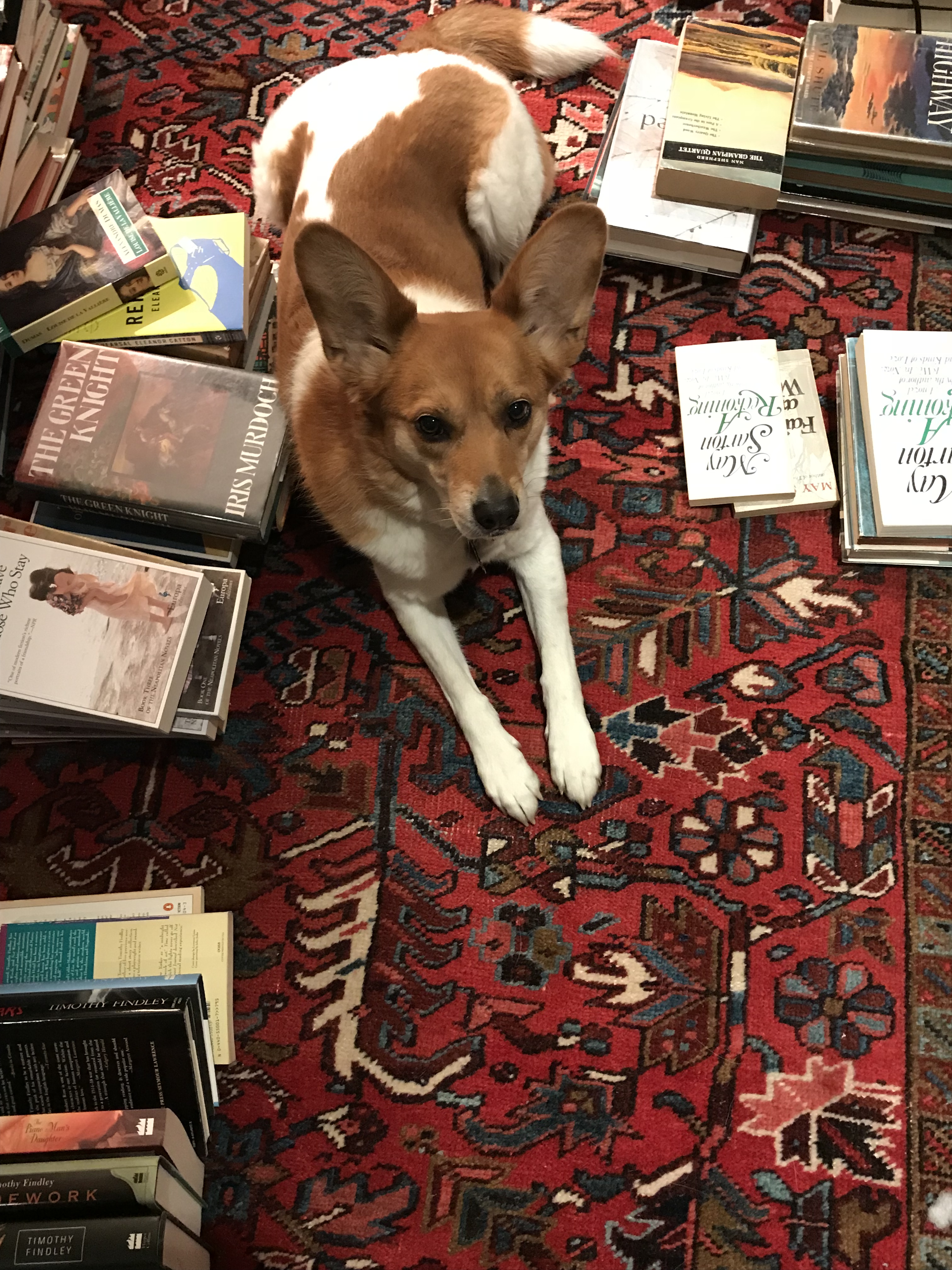
Lucy helping me get things organized. I’m checking the internet to see when certain things were published.

Here is what I did:

  1. Took every book I haven’t read yet off of my shelves.
  2. Moved all of the books I have read to one side of my bookcase and kept them alphabetical by author. It turned out that out of 30 shelves of fiction, the ones I have read only took up 10 shelves.
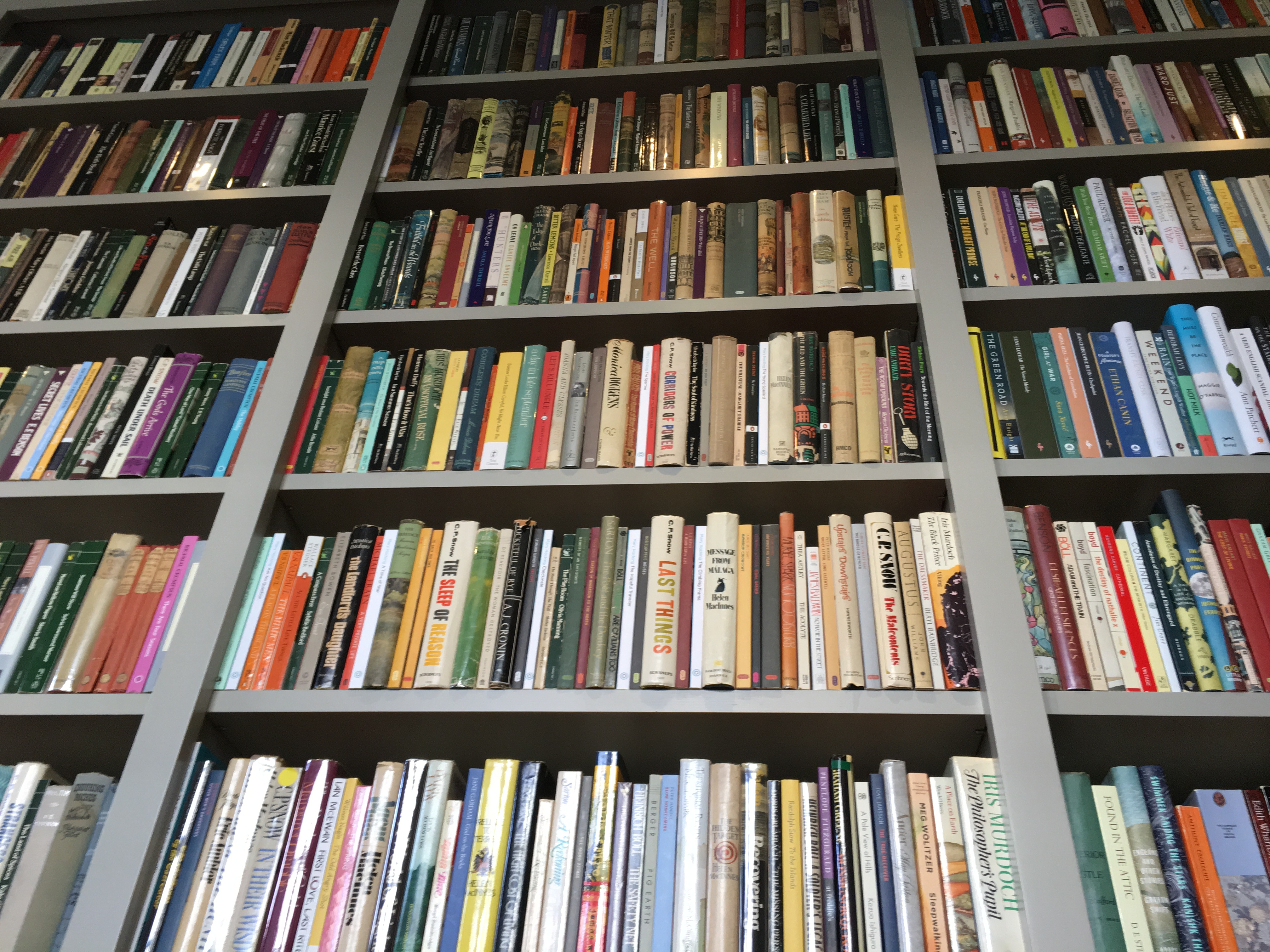
  3. Opened up every single unread book to check the publishing date and put it on a shelf corresponding to a decade. (See picture below for what that looked like.)
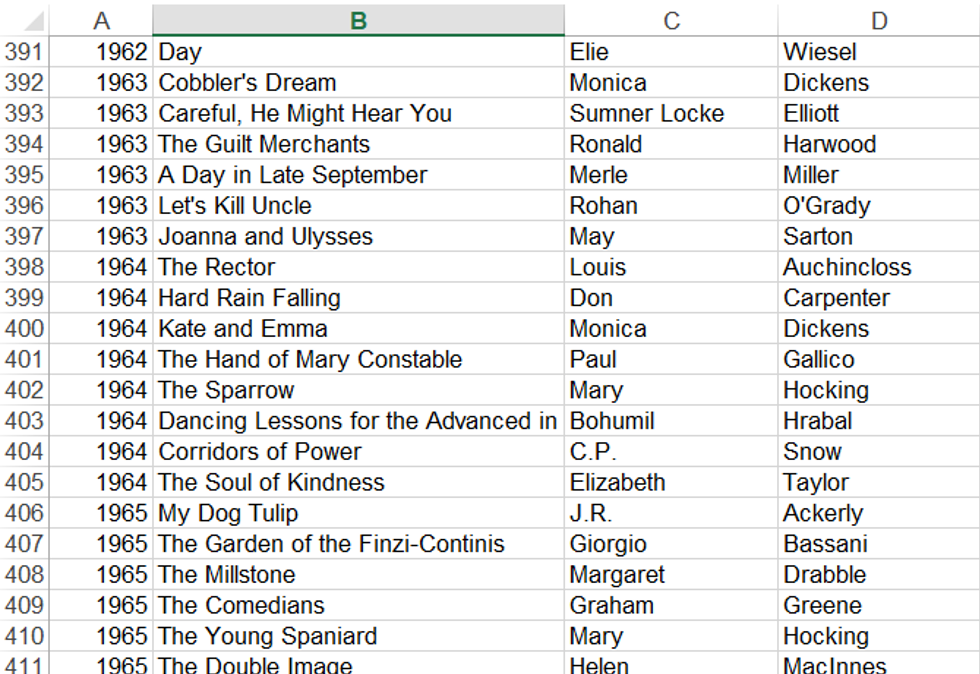
  4. Went by decade and created a spreadsheet with year published, title, and author for every book, then stacked the books according to the corresponding year of that decade.
  5. Once I finished a decade I would sort the spreadsheet so I could put the books on the shelf in order without having to alphabetize in my head.
Part of the TBR sorted by decade.


A sampling of spreadsheet delight. The beauty of having all of my TBR in this format will make ACOB so much easier to pursue.

Let me say I was astounded by how many unread books I own. I was even more astounded by how inter-shelving read and unread books kept me from understanding how much variety I had to choose from. Once they were all sorted and put in order–all 726 of them–it became clear that I would be able to satisfy 99 out of the 100 years of books for ACOB. 2018 is the only year for which I don’t already own a book. Most years I have at least four or five books to choose from. I think there is only one year for which I only have one book.

Lucy trying to tell me I’m crazy.

In the coming weeks I am not only going to make my full TBR list available, but I am going to be breaking it down by year. In the meantime you can look at the organized shelves. Also check out the video at the end of the post.

Coming soon to a basement near me

I’ve pared my books down to the bone. And still there are books stacked in places my husband would rather not see them. The result is that I get to have more shelves built. In our basement rec room there is a bookshelf built as part of a radiator enclosure that was here when we bought the house. So we are going have some shelves built on top of that.  It should net me about 23 more linear feet of shelf space. I can’t wait.

Am I really going to try this again?

I said I would never do this again. Simon Thomas at Stuck in a Book has reissued his dastardly A Century of Books challenge. The first time (has he done it more than once?) the century was 1900 to 1999 and participants were to read 100 years of books in a year, one from each year. I made the stupid mistake last time of trying to read them in chronological order which really hindered my progress. And, as much as I read old books, getting through the first 20 years of the century was way more painful than I had thought prior to starting. This time around Simon has proposed that the century consist of 1919 through 2018. This twenty-year shift is just enough for me to make this a much attractive (and doable) challenge.

Although the first 20 years from the last time around had a few books that I truly enjoyed (and one that is an all time favorite), the overall memory of those 20 years still makes my stomach churn six years later.

1900 – Claudine at School by Collette (so boring)
1901 – Claudine in Paris by Collette (so boring)
1902 – The Immoralist by Andre Gide (kind of enjoyed)
1903 – The Riddle of the Sands by Erskine Childers (really needed to be 100 pages shorter)
1904 – Peter Camenzind by Hermann Hesse (loved)
1905 – The Duel by Aleksandr Kuprin (kind of okay)
1906 – Young Torless by Robert Musil (really disliked)
1907 – The Secret Agent by Joseph Conrad (why is he so hard to read?)
1908 – Love’s Shadow by Ada Leverson (enjoyed)
1909 – Martin Eden by Jack London (all-time favorite)
1910 – Clayhanger by Arnold Bennett (snooze)
1911 – Zuleika Dobson by Max Beerbohm (man, I hated this book)
1912 – The Charwoman’s Daughter by James Stephens (fine)
1913 – T. Tembarom by Frances Hodgson Burnett (enjoyed)
1914 – Penrod by Booth Tarkington (snooze)
1915 – The Underdogs by Mariano Azuela (boring)
1916 – Under Fire by Henri Barbusse (unpleasant writing style)
1917 – Gone to Earth by Mary Webb (kind of liked)
1918 – Patricia Brent-Spinster by Herbert George Jenkins (loved)

I guess that only half the list makes me shudder in recollection.  But then there were 4 more that I only kind of enjoyed. I think the problem was that there are too many “esteemed” books on the list that I should have chucked instead of finished. This time I plan to set books aside and find something more enjoyable.

Like last time I am going to try and read mainly from my TBR pile, but the shift in dates, and the fact that my TBR is much bigger and more diverse this time around means, I hope, that I won’t run into so many problems finding enjoyable books. Last night I stayed up way too late combing the shelves to fill in my century. So far I like the way that list is shaping up and will post about it in the coming days.

In the meantime, I think this one challenge may encompass every urge I have this year for reading resolutions. Anyone who listened to the year end recap that Simon Savidge and I did on The Readers will know that I am anti-resolution this year, but my resolution to not have resolutions seems to be wavering. By participating in this one challenge, I think I can manage to

  1. Read at least 100 books.
  2. Greatly reducing my TBR pile.
  3. Pick up the pace on my Brookner re-read–If I wanted to, all 12 of the remaining Brookners I have to re-read could be put on the list.
  4. Follow whims–the addition of 2000-2018 really allows for room to read recent and diverse novels.
  5. Get a complete accounting of my TBR–I’m going to make a list by year so that I know what I have to choose from, and if I have more than one book for a given year I can choose the most enjoyable one.

I do know this. I will fail. My hope is that this time I don’t let that keep me from reading or ruining my year. If it does…well, I can always blame Simon Thomas.

Annual Hoggies dodge Armageddon

LOS ANGELES – The awards for best reads of 2017 were awarded last night by the Academy of Reading Arts and Sciences during a live telecast from Dorothy Chandler pavilion in Los Angeles. The third annual Hoggie Awards were held earlier than usual this year out of fear the planet would be uninhabitable by mid-January. Academy president Thomas Otto was caught earlier this year at the National Book Festival in Washington, DC on a live mic saying “Atwood couldn’t make this sh*t up. The smell of sulfur coming from 1600 is overwhelming.”

As usual, this year’s ceremony brought out the usual mix of gowns and glamour as the world’s literati arrived to recognize the achievement of the books that most moved, enthralled, and entertained over the past year.

BEST NOVEL – FEMALE 
Judgment Day
 by Penelope Lively

BEST NOVEL – MALE
The Mezzanine by Nicholson Baker

BEST AUDIO RECORDING
Nutshell by Ian McEwan

BEST RE-READ
Ben, In the World by Doris Lessing

TROLLOPE OF THE YEAR
Rachel Ray by Anthony Trollope

BEST EPIC BOOKER SHORTLISTED BOOK THAT WAS UNFAIRLY PREJUDGED
4 3 2 1 by Paul Auster

BEST THOUGHTFUL, INTERESTINGLY TOLD, SLIGHTLY ANITA BROOKNERISH NOVEL
Asa, As I Knew Him by Susanna Kaysen

BEST WORK OF NON-FICTION BY NOW DISGRACED POLITICAL HERO
Giant of the Senate
 by Al Franken

BEST THRILLER IN WHICH TYPEWRITERS PLAY AN INTEGRAL ROLE
The Intercom Conspiracy
 by Eric Ambler


BEST NOVEL ABOUT CLASSICAL MUSIC
An Equal Music by Vikram Seth

BEST NOVELS BY NEW-TO-THE-ACADEMY AUTHORS
Three Daughters of Eve by Elif Shafak
Atlantic Hotel by João Gilberto Noll
Ties
 by Domenico Starnone
Bitter Almonds by Laurence Cosse
Capital by John Lanchester

THE E.F. BENSON LIFETIME ACHIEVEMENT AWARD FOR BEING E.F. BENSON
Mrs Ames
 by E.F. Benson

Not just any bookmark will do

I know I’m not the only one who has bookmark preferences and proclivities. Mine have certainly evolved over the years. From where are sit today, these are my general rules.

  1. They must by paper
  2. They must have no metal, fabric, string, yarn, or any other 3D embellishment
  3. The thinner the paper the better–without being too thin
  4. Shorter is better
  5. Free is better
  6. I prefer location-specific bookmarks that remind me of a place or bookshop I’ve been to
  7. I like finding ones that someone else has used, rather than using brand new one
These are essentially my favorite bookmarks these days. Shorter, thinner, free, and evocative of a trip somewhere.
These Persephone bookmarks match the end papers of each of the Persephone books I have. While I think they are nicely done, they are not really my cup of tea. Too big and thick for my tastes. I will keep them because they go with the books, but I don’t use them.
Monhegan Island has one of the cutest libraries on the planet and they always have great artists who specially design their bookmarks.
Some of my favorite book marks are bits and bobs. Some of these are post cards, one is some sort of Dutch order form and one is a coffee-stained notice that Dr. Charity of Helperby House in Helperby, York had his power cut off for two hours on the morning of 30 November 1971.
And speaking of bits and bobs, I love this old business card I found in an Ambler novel. I particularly like that it is a travel “bureau” not agency. And on Nantucket no less.
There are two main places I need bookmarks: in the library and in bed. Thankfully I have duplicates of these 5 favorite bookmarks so I can have a supply in both locations.
I picked these up in 2009 at Powell’s Books in Portland, Oregon. They are on the big and thick side so I don’t use them for bookmarks, but I do keep track of what I read off of them.
When ugly bookmarks happen to good bookshops. Both of these great shops could step up their games.


And for a clearer look at how size matters when it comes to bookmarks, check out this video.

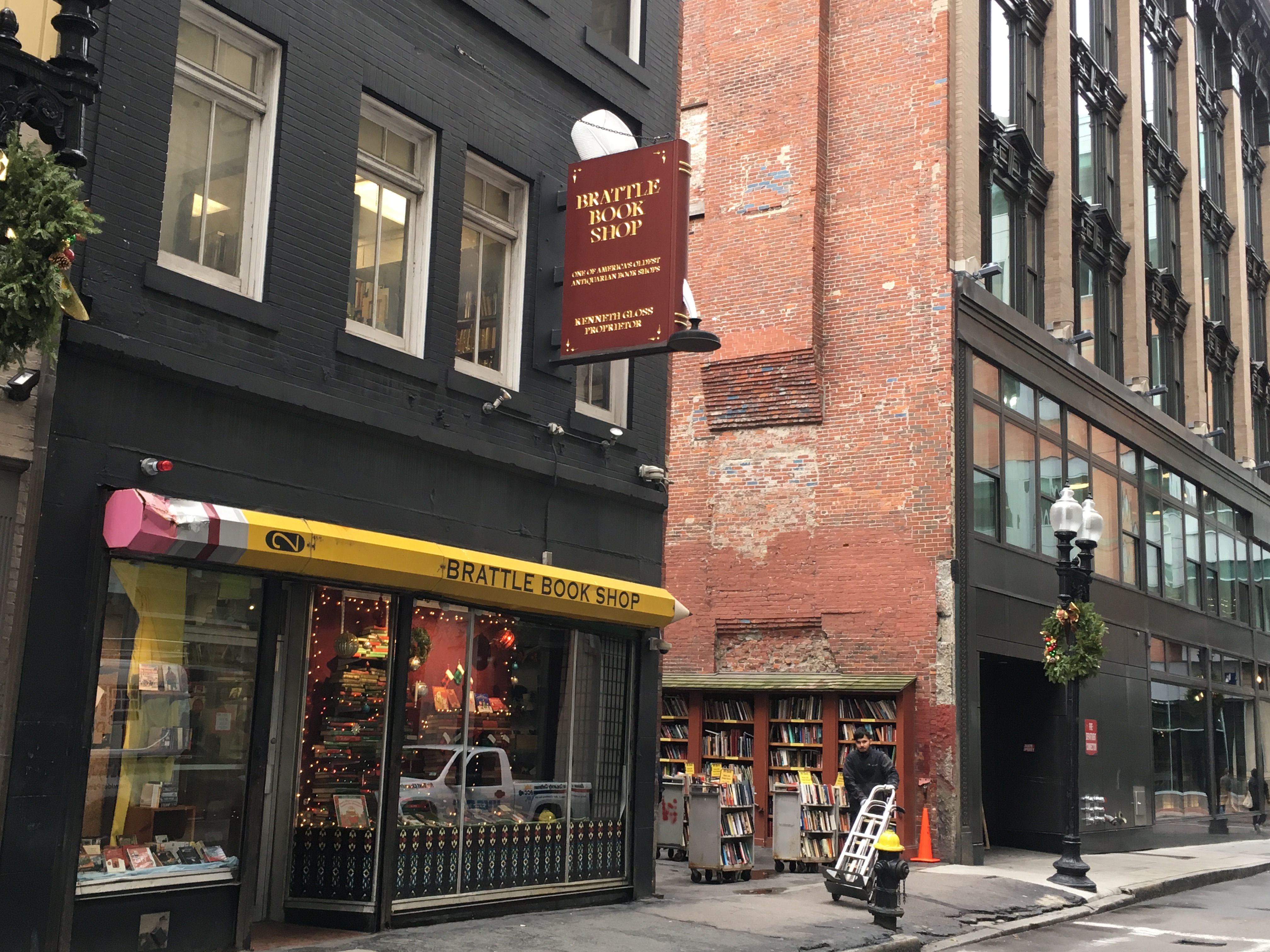
Brattling my way home

I was in Boston last week for about 24 hour for work and I had enough time to get my butt over to Brattle Book Shop and do some serious damage. Before I even started to look at their extensive outdoor book selection (yes, outdoors in Boston on a cold December day with an unignorable wind) I went inside and asked them if they shipped. Since I had less than zero room left in my luggage, this was a crucial question. Thankfully the answer came back in the affirmative.

Even the cold couldn’t keep me away from browsing the extensive outdoor carts and shelves. 
Mid-transaction. There was no way I had room for even one of these books in my luggage.
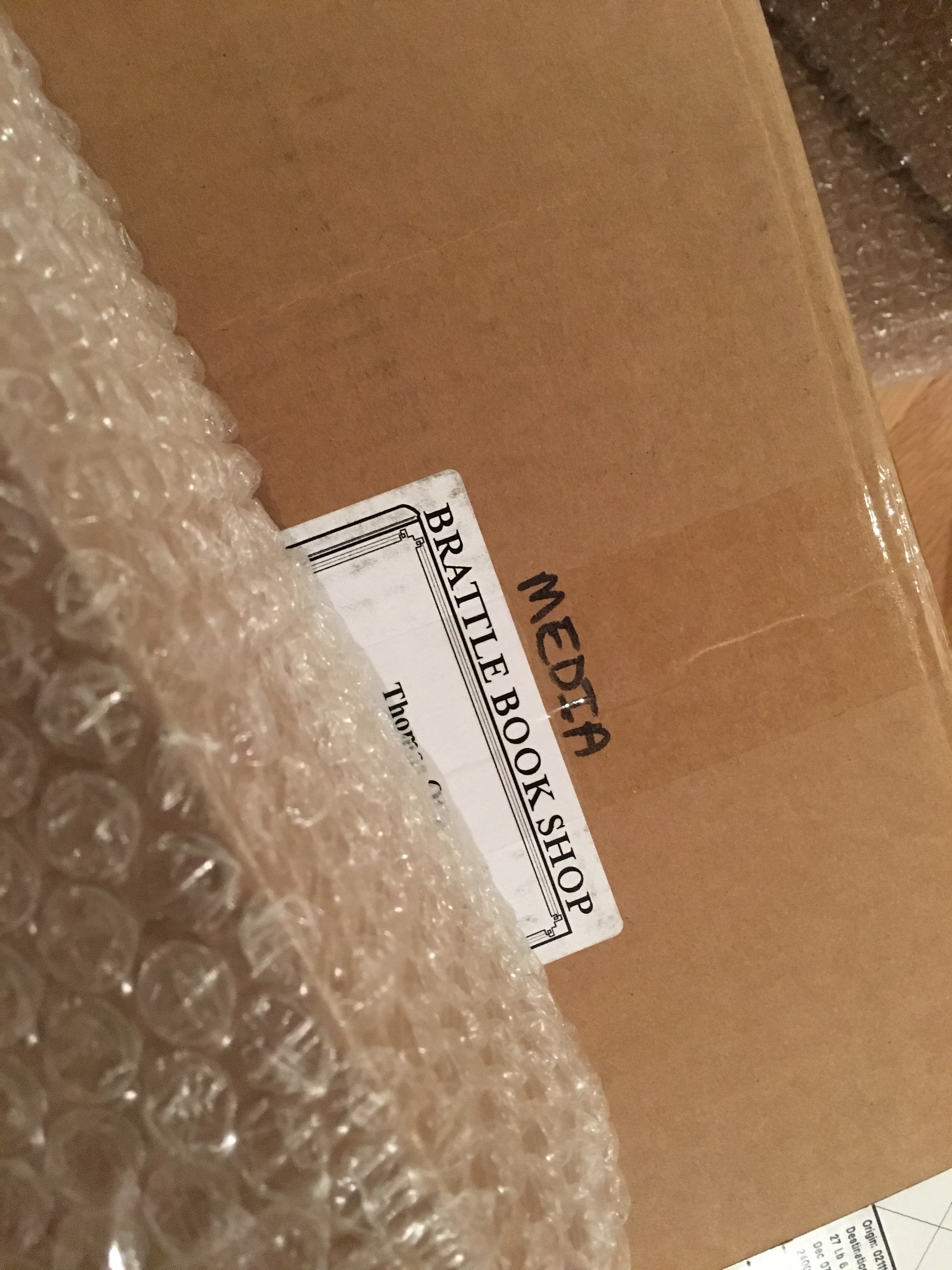
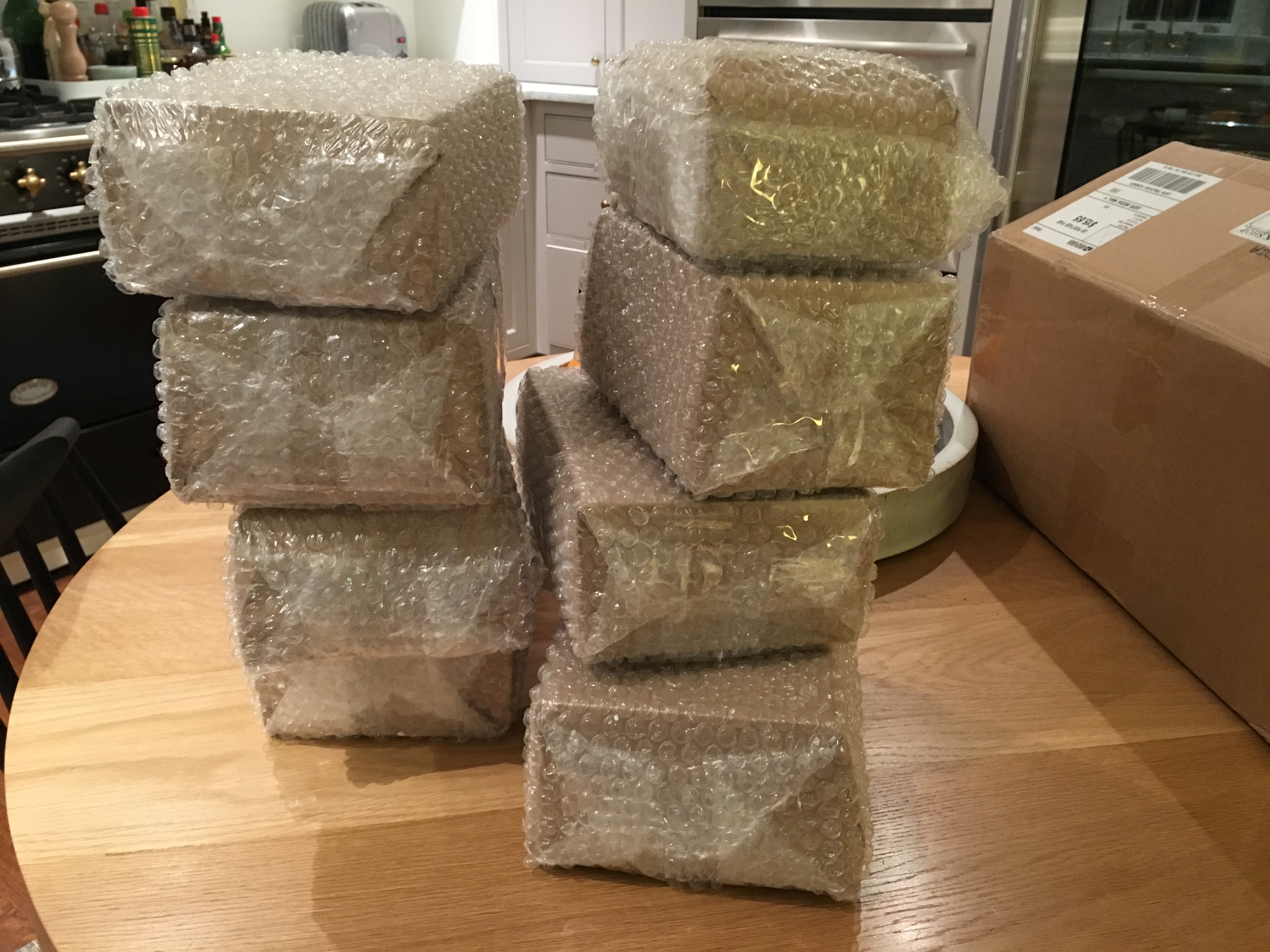
God bless the USPS and their efficient and cheap Media Mail rate.
I didn’t expect them to be so carefully wrapped. Nice job. Now if they could forgo the styrofoam peanuts…
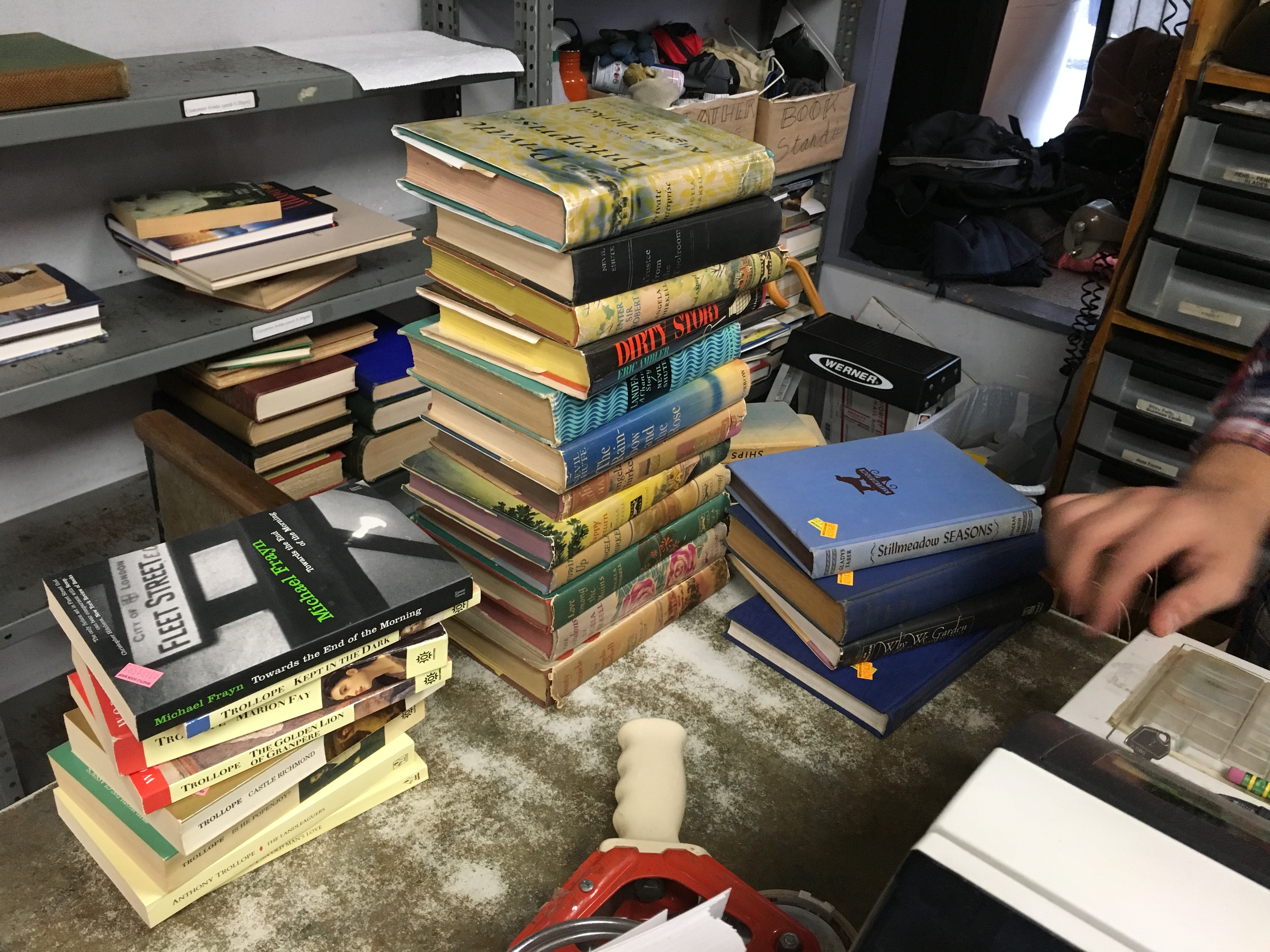
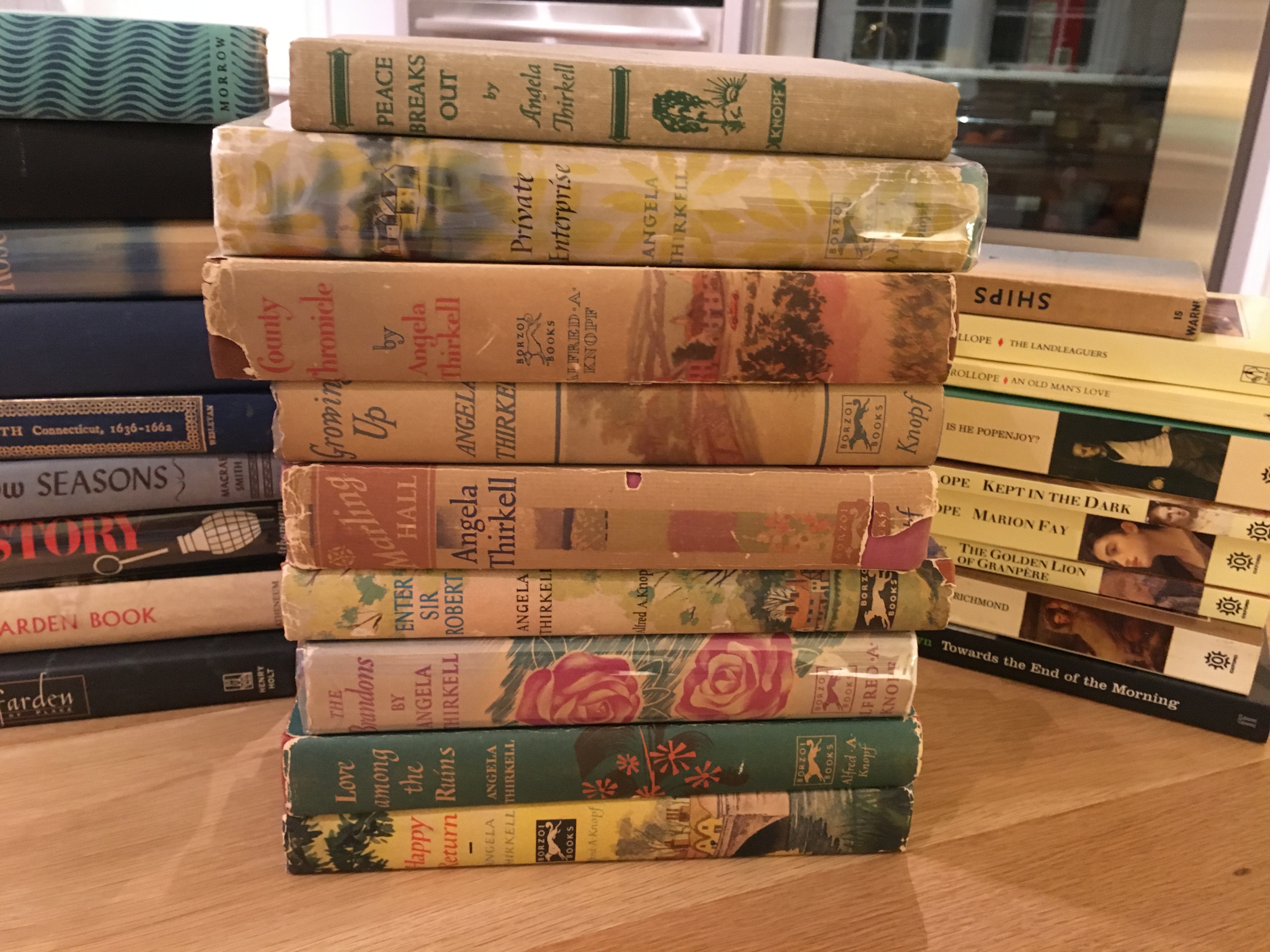
The first thing I saw when I walked into the warmth of the store was this pile of vintage Thirkells. I couldn’t remember which paperbacks I already had at home, but I figured I couldn’t pass these up.
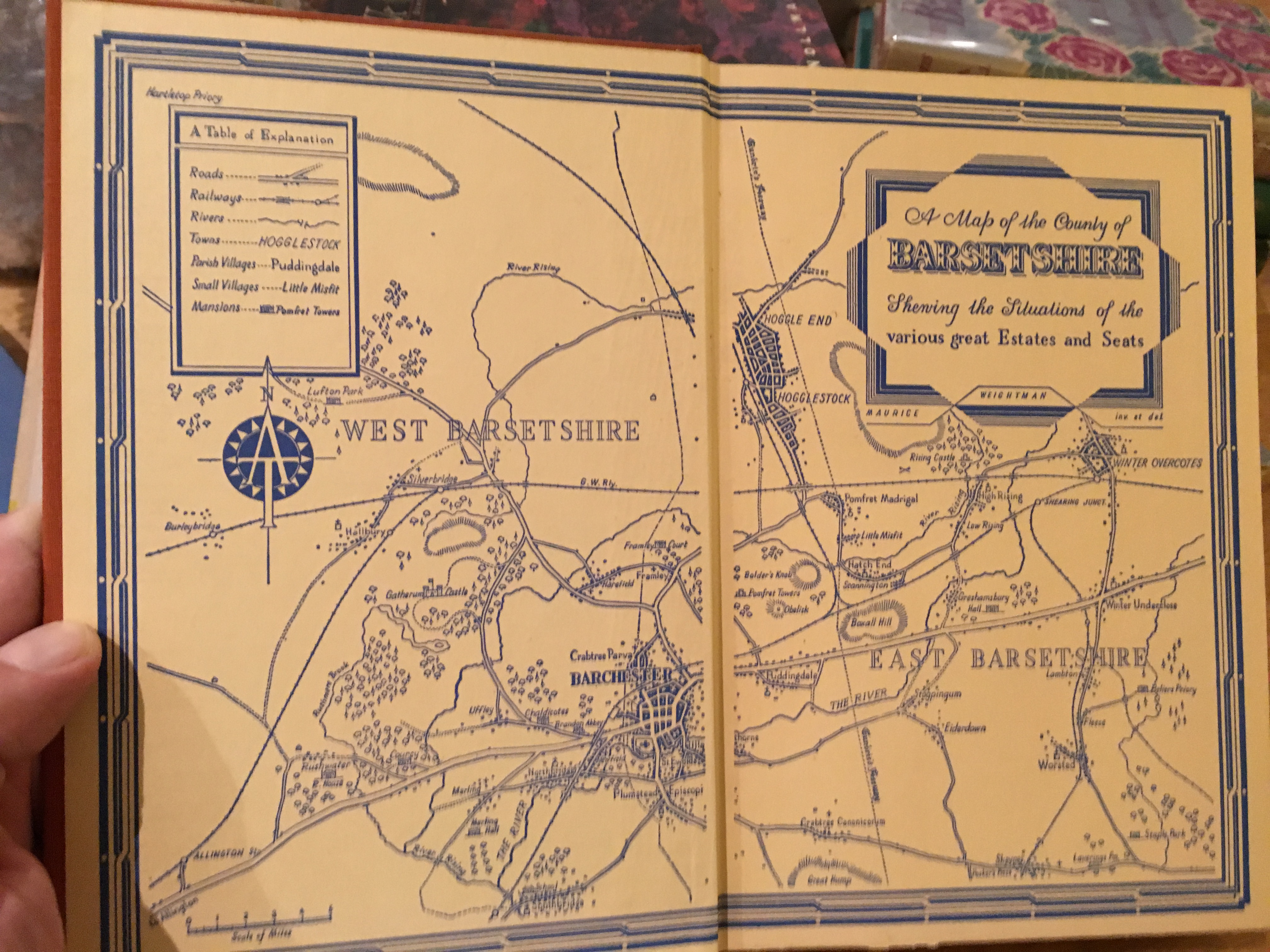
Many (most? all?) of Thirkell’s books take place (years later) in Anthony Trollope’s Barsetshire. And who can pass up a map for end papers?
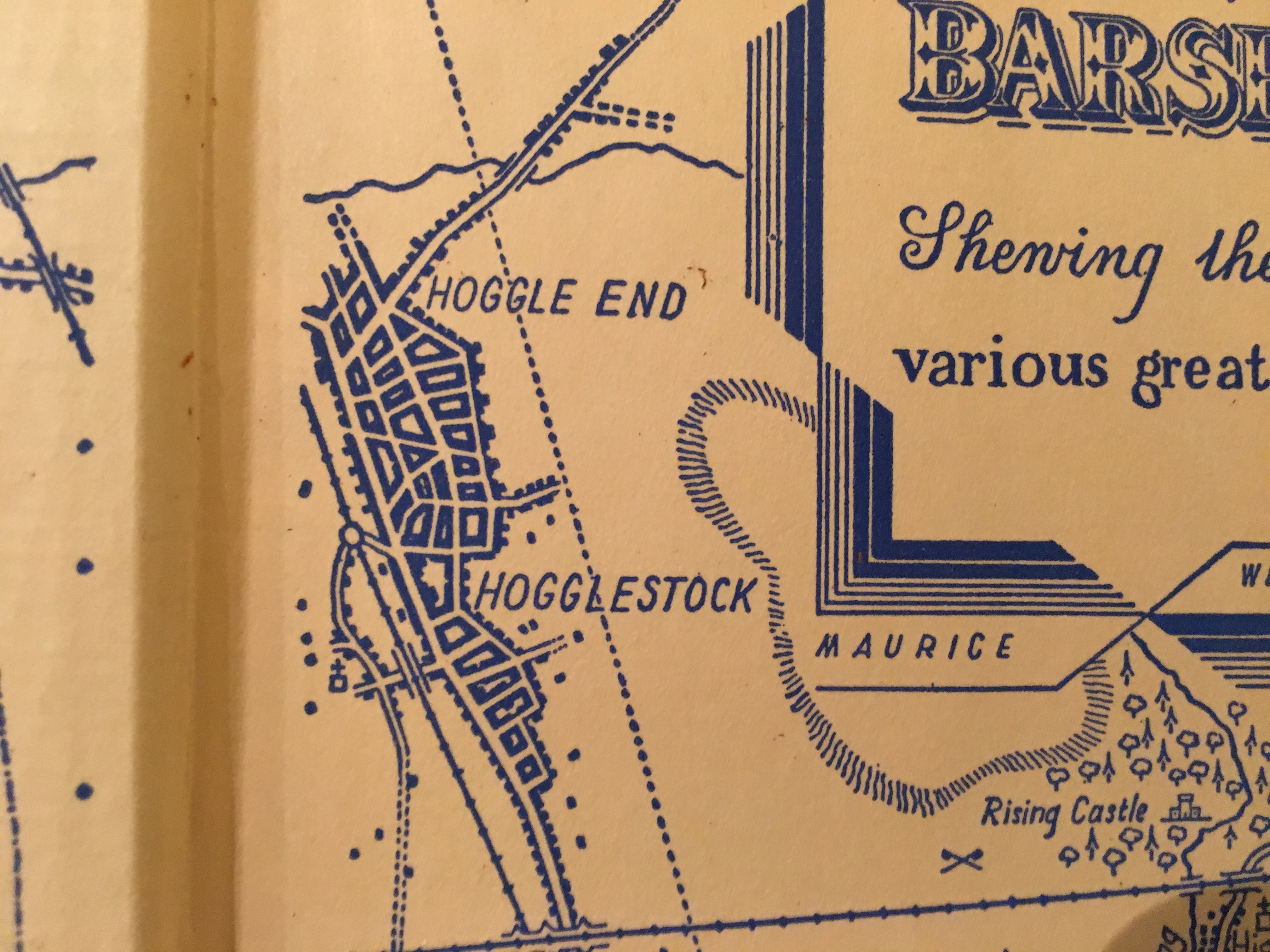
And there it is, the inspiration for my blog name. Good thing I didn’t choose Hoggle End. Then again, I am not sure that one appears in Trollope.
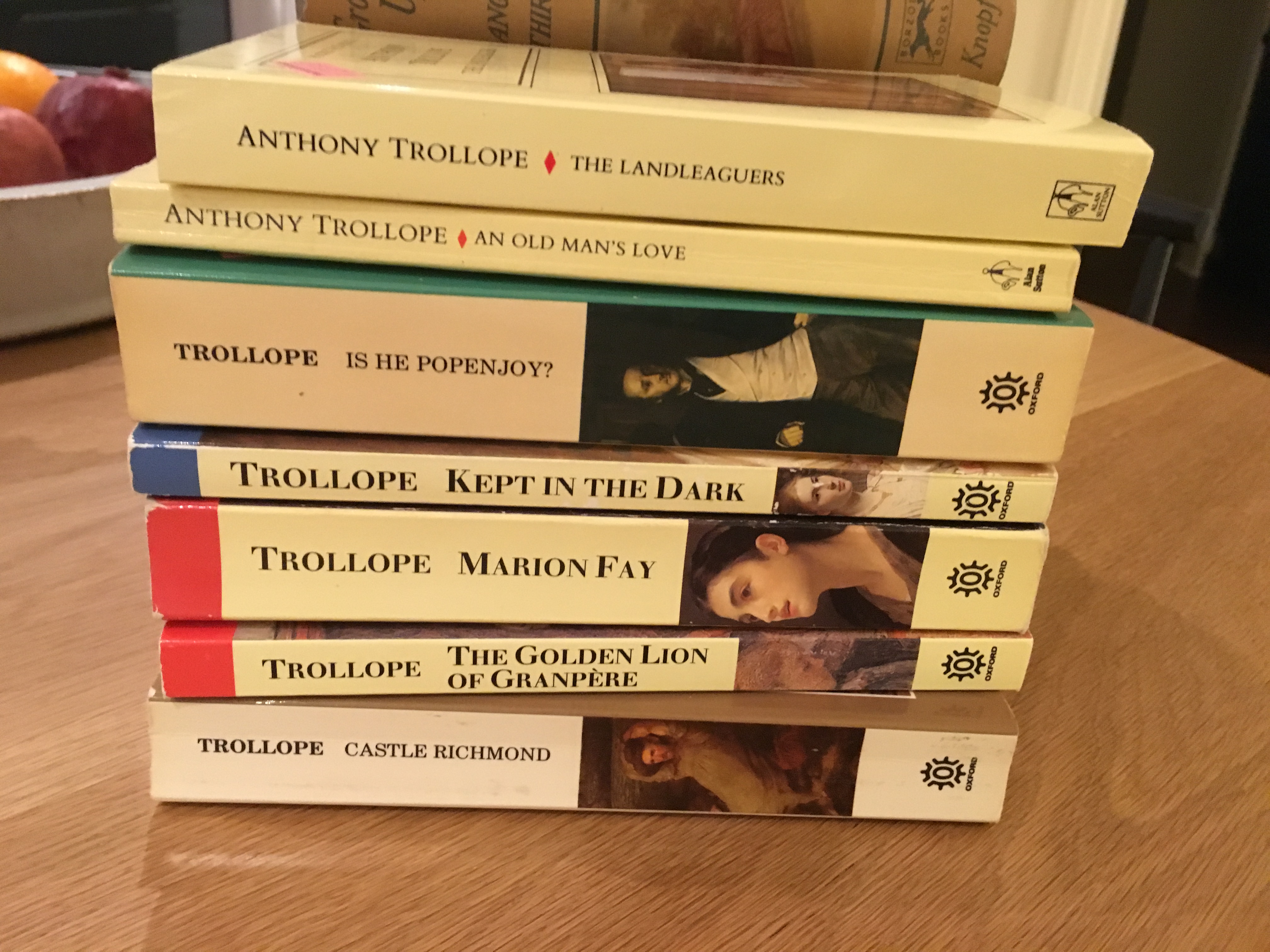
And speaking of Trollope…these editions are nothing special except for the fact that they exist. These stand alone Trollope novels aren’t exactly easy to find in the U.S.
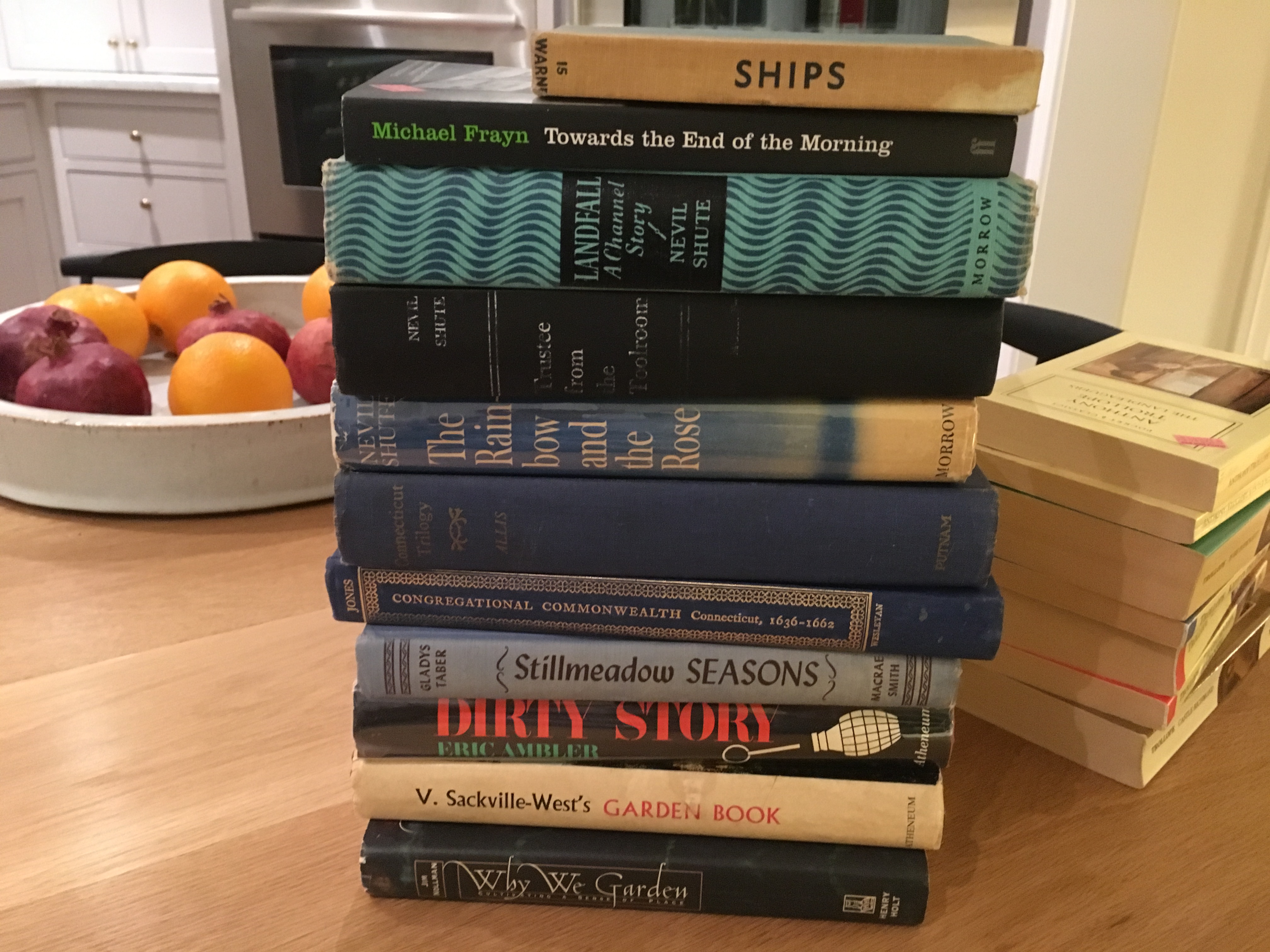
A little bit of everything. The bottom two garden books are for John. Turns out I already owned Ambler’s Dirty Snow, but not quite as nice as this one. Two books on Connecticut history. A Gladys Taber novel (memoir?), three Shutes I didn’t have in hardcover, a misc Michael Frayn, and a guidebook of ships.
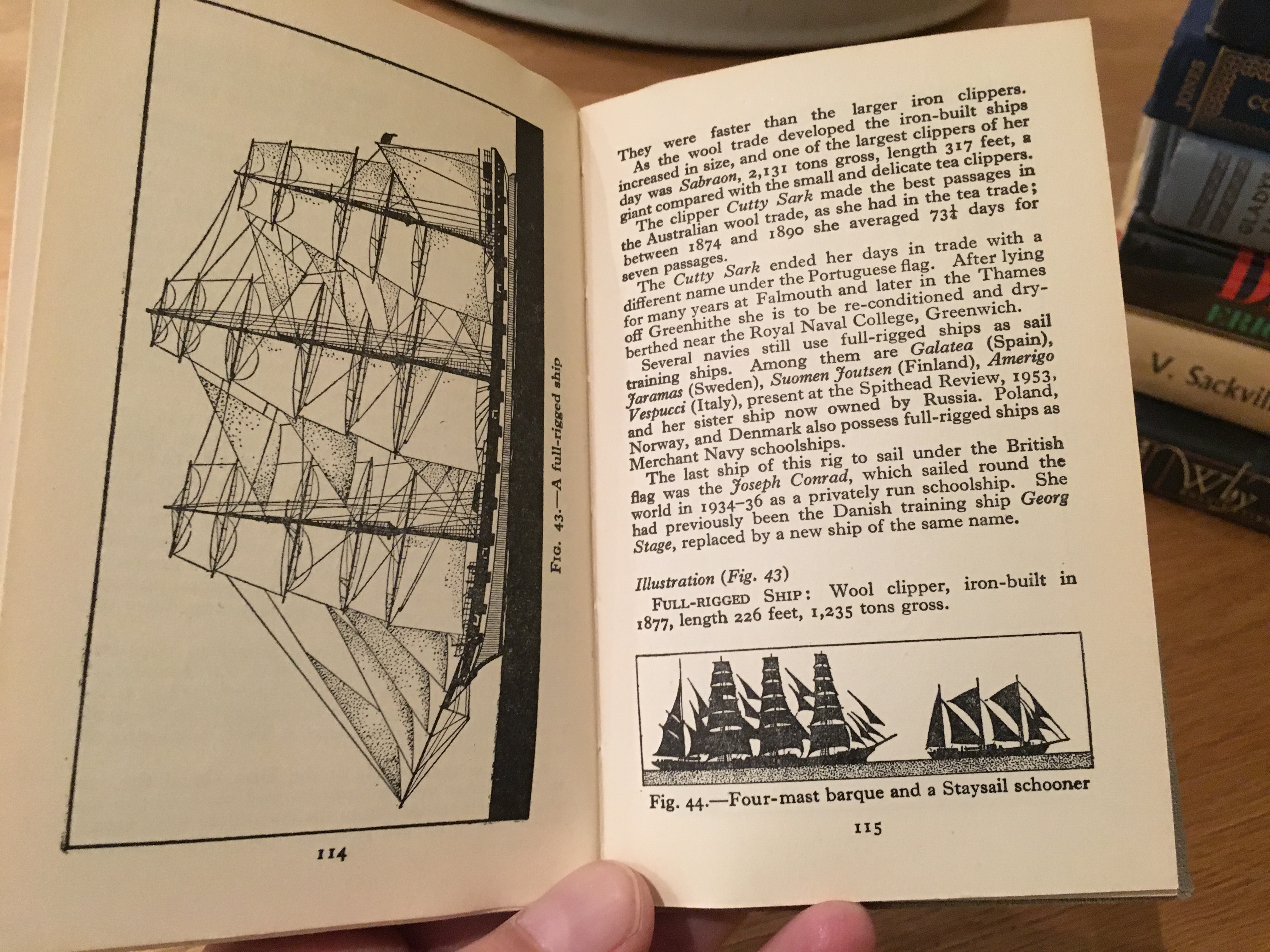
The ship book is from the Observer guidebook series. I already have volumes on birds and flags. This cover on this one isn’t in the best shape, but the guts are good.
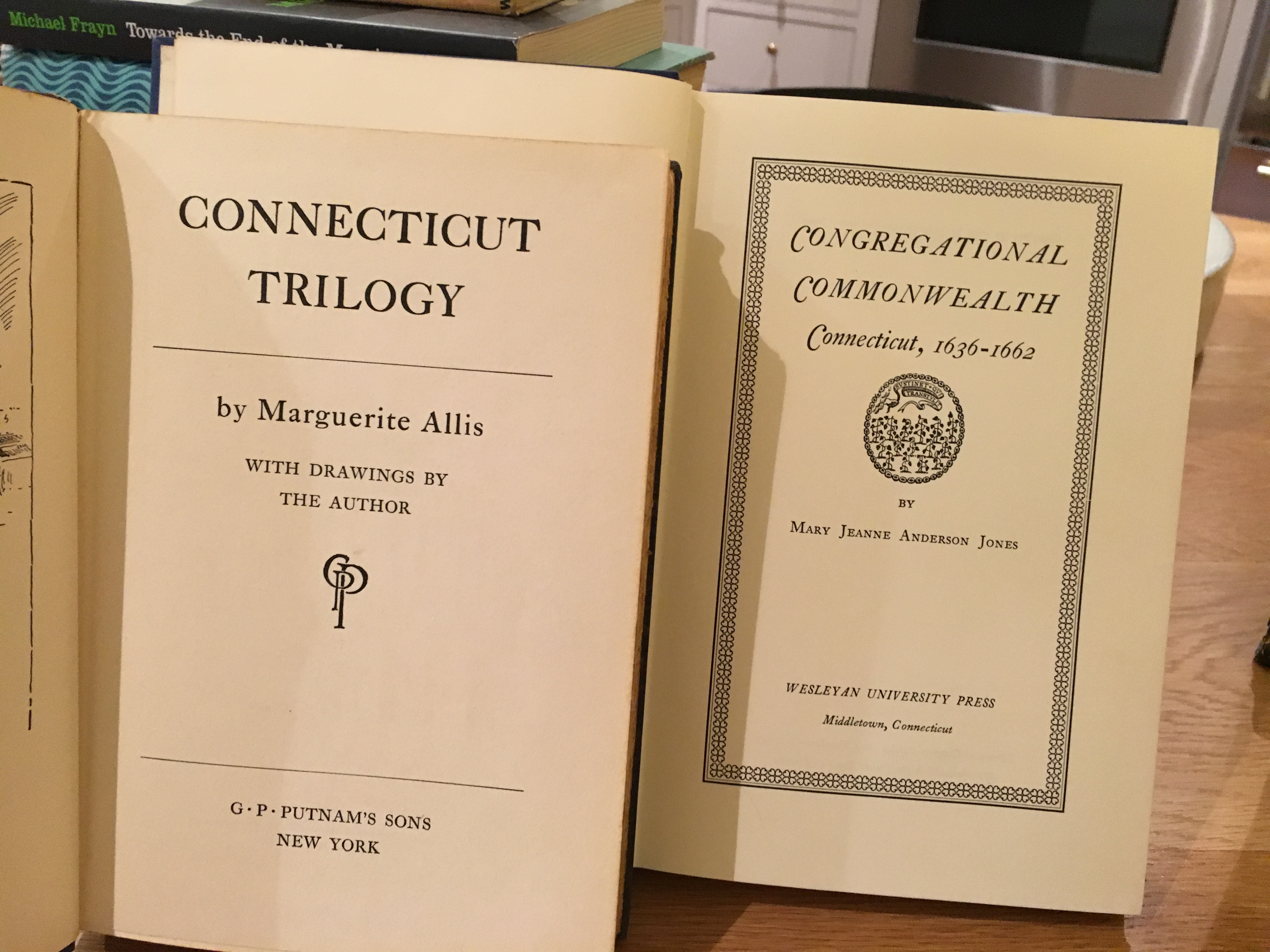
Since I’ve discovered that a branch or two of my family was in Connecticut as early as 1629, I’ve been interested to find out more about its history. These two were on the $3 racks outside the store.
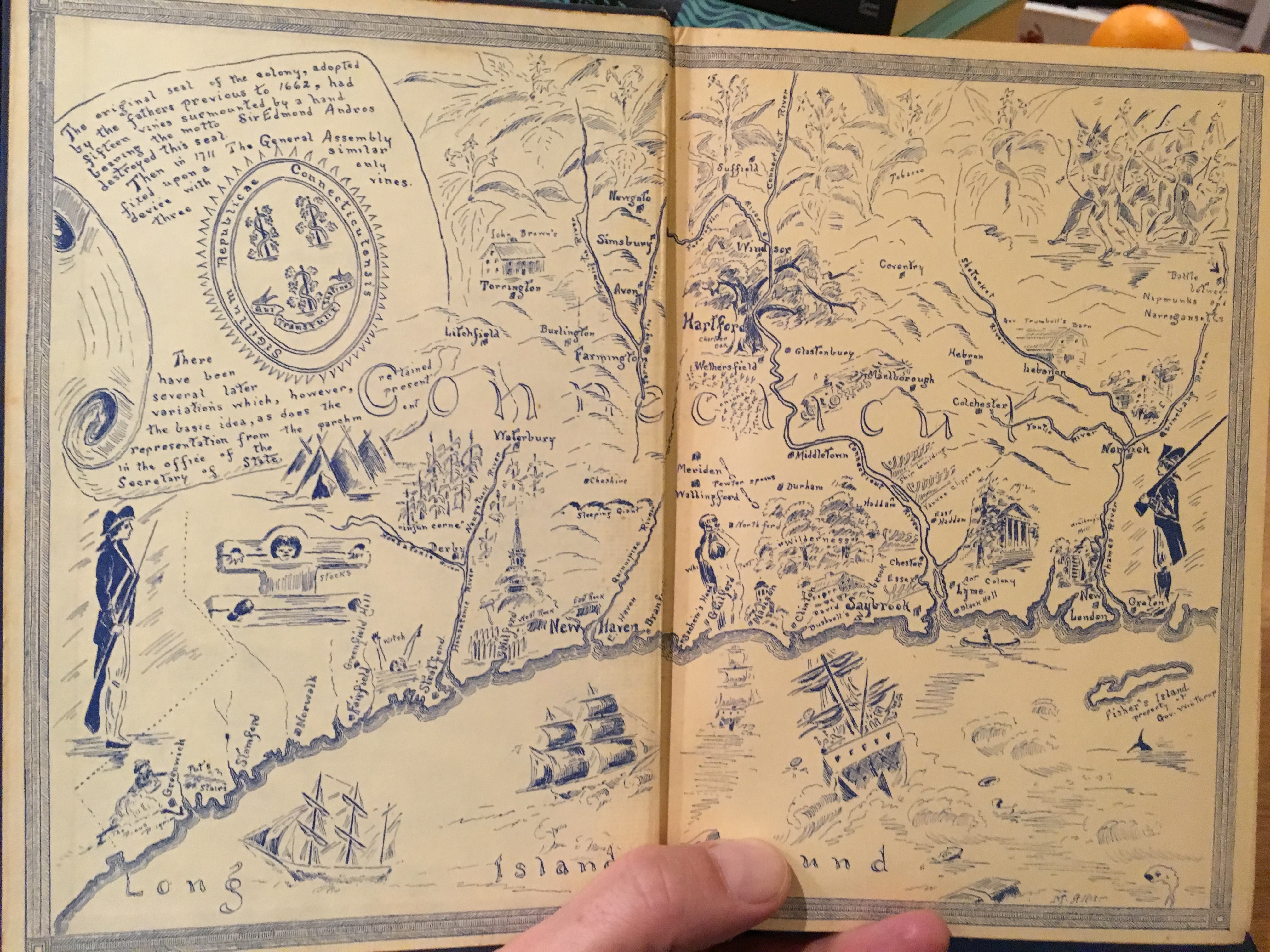
And another map for end papers. This time showing my ancestral stomping grounds in and north of Hartford.
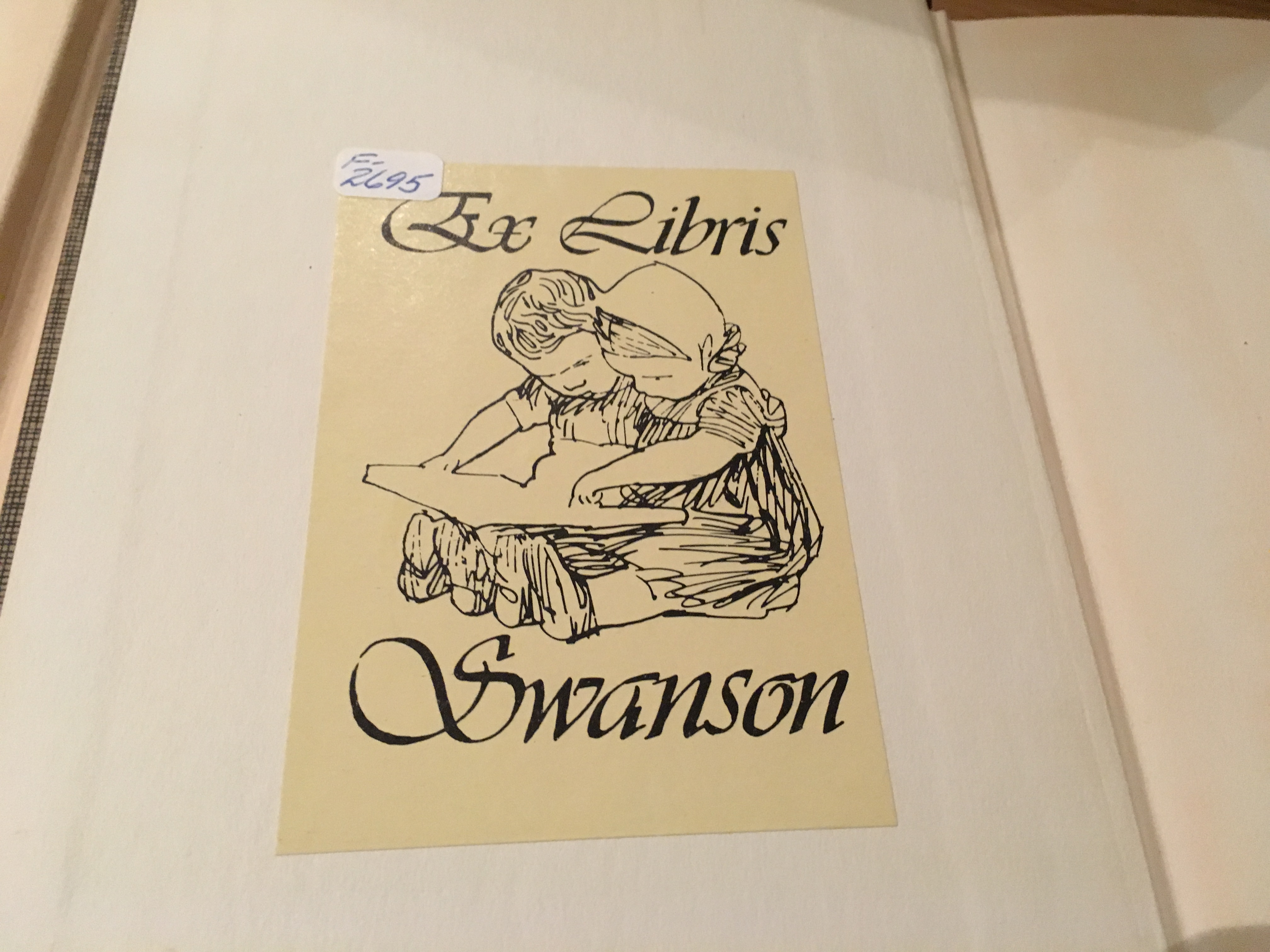
Two of three Shutes had this bookplate and what appears to be some sort of cataloging system. Perhaps ‘F’ for fiction followed by the number assigned to this volume?

Heywood does it again

I’ve received and read my second Year in Books delivery from Heywood Hill, and their bespoke service is growing in my esteem. This on top of an already great first delivery. The logical part of me realizes that they have competent booksellers who read my detailed consultation information and are pulling books for me that they think I might like. But then another part of me is convinced that one of them is living inside my brain sending radio signals back to Mayfair telling them what to wrap up and send my direction. Of course, ever the doubting Thomas, another part of me is convinced they have made two lucky guesses and next month it will all crash and burn when they send me Eat, Pray, Love. But I kind of doubt that third scenario.

This time around was Vikram Seth’s 1999 novel An Equal Music. I’ve read Seth’s doorstopper A Suitable Boy which I enjoyed but perhaps not enough to look at what else he has written. And clearly I must have said something on my consultation form about liking novels about classical music. But on that point I was still a bit trepidatious. So many books with classical music as a subject, or even background, can really come off as forced, self-conscious, exercises in name dropping (cf., both of Alexander Chee’s novels).

Although my intention with my Heywood Hill subscription is to read each novel the month it arrives, I was a bit surprised how quickly I picked this one up. One night before bed I was between books and, as I sometimes do, I gathered 5 or 6 titles I was considering reading and read the first three or four lines out loud to my husband and then had him tell me which one sounded the most interesting to him. There were a lot of really good options, and An Equal Music wasn’t the one John picked, but before putting it down to start on the book I thought I was going to read, I read a few more lines of the Seth, and then a few more, and before I knew it I was all in.

This book was everything I wanted it to be. It was smart without being too smart, I was easily swept up in the characters and the story, and the musical details were expertly woven into the book without ever feeling obvious. And for me, it was unputdownable. The kind of book that made me turn off the TV, had me staying up far too late, had me reading at 6:00 in the morning before I went to work, had me trying to juggle a Ruben sandwich and the book at the same time, and was engrossing enough to allow me to ignore airport chaos. An utter freaking delight.

Having said all that, it is possible that this book might not work if you aren’t a music nerd–or perhaps if you are too much of a music nerd. I think I am probably at the right level of musical nerd-dom. Too little and you might find the discussions of musical keys and time signatures confusing. Too much and you might find those same discussions laughably unrealistic. But on the latter end of the spectrum I don’t know. I wonder what a real musician would think of this novel. And I love a novel that provides its own soundtrack that one can look up online and listen to immediately, as one reads. An Opus 1 Beethoven trio that gets turned into a quintet later in Beethoven’s life as Opus 104, yards of Schubert, heaps of Hayden, glances of Brahms and Mozart and Vivaldi.

Beyond the music, if that is possible, is the lovely, sometimes heartbreaking story of violinist Michael Holme who walked away from Julia, his piano trio and his piano-trio partner and piano-playing girlfriend 10 years earlier because of what he perceived as an incompatibility with his mentor. Finding the teacher/student relationship overwhelming and fraught with unpleasantness Michael flees from Vienna and waits too long to get back in touch with Julia. In the intervening decade no one in Julia’s life will tell him where she is, and this being the gloriously old fashioned days before the internet juggernaut we know and love today, he is unable to track her down. Until one day he sees her on a bus headed the opposite direction. The two do meet again and, well, I’m not sure I am allowed to tell you what happens next.

Beyond the relationship angle, if that is possible, Seth creates completely compelling back stories and numerous subplots that definitely provide the complete package. Michael’s family, his violin, his musical upbringing, the relationship within his string quartet, programming concerts, deals with agents and managers and record companies, looking for gigantic violas, bidding on violins…all of this appeals not just to my love of details but all those gossipy behind the scenes things that happen in the world of classical music. I’m not sure how this would play (no pun intended) for those who don’t know or care about such details. For me it was like being dropped into a pool full of hot cocoa and floating around on a toasty marshmallow. That’s how much I love that kind of stuff.

And then there is Venice. This is another point where I am certain the Heywood Hill team is living in my brain. We are headed to Venice in June and I relished the scenes that took place there. Like his writing about music, Seth includes lots of details without making you feel like he is trying too hard. And again, the internet brings it all to life as image search after image search provided a brilliant background to the text–not that one needs it, the imagination, etc., but it is quite fun.

So there we are. Another successful pick from Heywood Hill. They are 2 for 2. Two very different books about very different things. I love the variety. Have they peaked too early? Stay tuned.

A blurb too far

” . . . strange, daring, and very moving. . . . The book is a rare and dazzling feat of art.” —George Saunders, The Paris Review Daily
“Disturbing, one-of-a-kind . . . “ —Tom Nolan, Wall Street Journal
“Unforgettable. . . . An ambitious tour de force that demands the reader’s attention; those willing to follow along will be rewarded with a singular and haunting story.” Publishers Weekly 

If I had read Reservoir 13 without having heard anything about it, I would have loved it.  I would have appreciated the details of daily life in a small village in the Peak District. I would have enjoyed the way the novel tantalized me into thinking I was about get a clue about who abducted 13-year old Rebecca Shaw only to have my hopes dashed and later built back  up again. I would have relished the way McGregor gradually reveal the layers personality/foible/secrets of the numerous characters that move in and out to the story.

I think most of all, I would have appreciated the yearly, cyclical, rhythm of the book. I liked hearing about the condition of the cow parsley in the hedgerows, or the quality of the chestnut mast. I liked how McGregor repeated certain phrases each year–particularly his yearly observance of Mischief Night, Bonfire Night, and New Year’s Eve.

In fact, I don’t have any issue with the high praise the book received, I think that is probably deserved. What I do have a problem with is the praise that made me think that something unbelievable was going to happen. The George Saunders’ excerpt above may have been taken out of context, but I saw a lot of similar blurbs. That this was the book about an abduction that was going to surprise and amaze me. Well it didn’t. I feel like this book was click-baited to death. I’m a fan of Anita Brookner–I can handle slow. I like repetition in books. I don’t need a plot. I like authors who twist things on their sides. But McGregor’s twists are extremely subtle, and anyone who was led to believe they were going to be blown away are left wondering what the fuss was all about.

Dazzling, haunting, chilling, disturbing, one-of-a-kind? No. Just stop. I’m not going to click on you. Stop talking. Shut down the blurb factory.