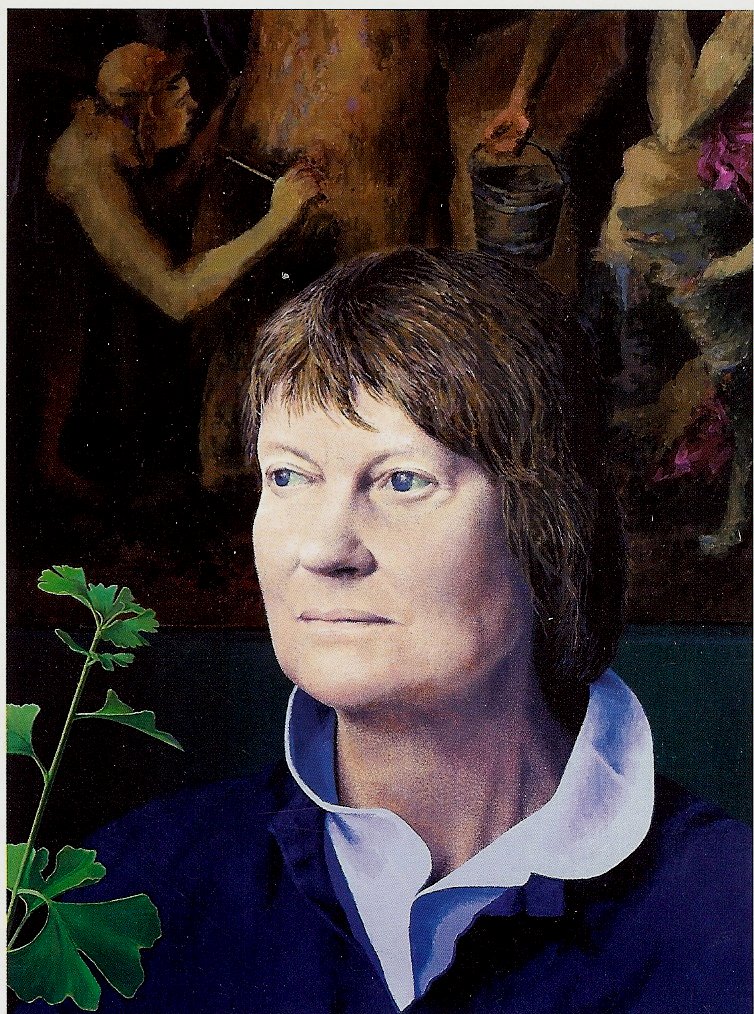
Book Review: Iris Murdoch: As I Knew Her

Dame Iris Murdoch, 1919-99
Tom Philips, 1984-6
National Portrait Gallery, London

Iris Murdoch: As I Knew Her
A.N. Wilson

I’ve only read one other book by A.N. Wilson (his history of London) and didn’t really know much about him. What little I know now I picked up by reading his personal reflection of Iris Murdoch. Early on I took a dislike for Wilson. I am not sure what it was, but there was something about his attitude that annoyed me enough that I had bit of an anti-Wilson chip on my shoulder for the rest of the book.

Partly I was a little confused by the blurb on the front flap of the book: “Fifteen years ago, Iris Murdoch asked A.N. Wilson to be her biographer.” Ooh, sounds portentous. “This book is a tribute to the novelist he knew for thirty years.” Hmm, does that mean he turned her down, or is this book supposed to be that biography? After reading the whole book I still can’t answer that question.

The second thing that kind of rubbed me the wrong way is that Wilson seems to be, or has been, miffed at the two books Murdoch’s husband John Bayley wrote about her descent into dementia. It made me feel like a bit of chump for having been moved by Bayley’s account about the real life struggle of Alzheimer’s disease portrayed in both his books and in the film “Iris”. Wilson seems annoyed either because the film depicted the filth in which the aging couple lived or because it didn’t explain why they lived that way. But after reading the whole book I still can’t answer that question either.

By the end of the book I do understand some of the reasons Wilson is upset that Murdoch became a figurehead for Alzheimer’s awareness. She probably would not want to have been remembered that way. And perhaps it is a little unfeeling toward Murdoch’s legacy that a chair was endowed at Oxford in her name, but not for philosophy or literature but for Alzheimer’s. I am somewhat sympathetic to this point of view. But on the other hand I feel like no one has control over their own legacy and there was perhaps an opportunity for good to come out of her terrible situation. And frankly, I think that a caregiver to someone with Alzheimer’s has as much right to the story as the afflicted. Wilson seemed upset by the frankness with which Bayley tells the story. That it somehow took away Murdoch’s dignity. But I don’t buy that at all. I think Bayley’s books, although at times unflinching in their portrayal of the situation, were never gratuitous or inappropriate in their detail.

In this way Wilson gives the impression early on that Murdoch deserves better. One begins to think that his intent is to buff away all of Bayley’s smudges on Murdoch’s image. Yet there is much in Wilson’s book that does the opposite. He spends a lot of time talking about his mentor Bayley and a fair amount talking about himself. And what he says about Murdoch doesn’t add up to a particularly flattering portrayal. But he seems of two minds. He proclaims her genius now and then and talks about what a wonderful person she was, yet the overwhelming feeling I developed about Murdoch is that I don’t really like her much. And maybe I don’t like her books as much as I thought I did. Maybe the real issue is that Wilson is annoyed with Bayley showing Murdoch in an unflattering light because Bayley essentially beat Wilson, the “official” biographer, to the punch? Or maybe because Bayley sold a lot of books, yet I found Wilson’s for $1 on a “please take these books” cart parked outside the bookstore. You know, the kind of sale cart where the shopkeeper doesn’t even care what impact the weather might be having on the merchandise.

I didn’t hate the book but I also didn’t find it all that interesting. There is some insight into Murdoch’s reading likes and dislikes.

The Lord of the Rings she read and reread, enjoying detailed conversations about it with its author, or with Christopher Tolkien, the author’s son. She loved the Hornblower stories and the Patrick O’Brian sea stories, though she deplored the love interest and felt that Stephen Lefanu’s infatuation with Diana Villiers was soppy stuff which spoilt the excitement of the adventures. At mentions of the works of Olivia Manning, Elizabeth Taylor or Jean Rhys, let alone Penelope Lively or Margaret Drabble, she would merely smile or shake her head. She spoke, always, with love and respect of Elizabeth Bowen, her mentor, and A.S. Byatt, her disciple and interpreter, but she spoke of them as ‘beloved beings’. Bowen herself dissected the novels of contemporaries, read them closely, remembered what she admired about them. IM never spoke in this way about the work of female contemporaries.

I am not sure how enlightening this is about Murdoch’s tastes in fiction. It seems to speak more about what Wilson may not have known despite his 30-year friendship with Murdoch. He also tells us that Bayley loved Barbara Pym and read and re-read her frequently, but he didn’t seem to have much interest in, or praise for, Murdoch’s books.

I finished the book rather bored and unimpressed with Wilson. Unfortunately, I also finished it liking both Murdoch and Bayley less than I did when I started. If that was Wilson’s intent, then job well done. Thankfully it won’t keep me from reading the rest of Murdoch’s novels.

Cool Covers of the Week AND Book Review: We Have Always Lived in the Castle

After the cool covers, my review of We Have Always Lived in the Castle.

We Have Always Lived in the Castle
Shirley Jackson

Always late to jump on the bandwagon, this one has been reviewed a lot in the blogosphere…

During the past month or so, I kept seeing these great Penguin covers on blogs across the Interwebs. I believe Penguin (in the UK at least) is using this general design for a range of modern editions, but the ones I kept seeing were for Shirley Jackson titles. Unfortunately, the copy of We Have Always Lived in the Castle that I stumbled across at a charity shop was an ugly American edition (as opposed to an ugly-American edition). For some reason Penguin thinks that we Americans can’t handle good graphic design. (Of course they may be right, but that is the subject of another post.) Despite its lame cover art (see below), I bought the book anyway. I figured I needed to discover myself what all the Shirley Jackson hubbub was about.

The only thing I knew about this book before I read it, was that it was a bit macabre, something good for Halloween. So I picked it up this weekend to see if I would get scared. At a slim 214 pages, WHALITC does manage to build quite a bit of suspense. I am glad I didn’t read the plot teaser on the back of the book. It wouldn’t have spoiled the book by any means, but not knowing the premise made the narrative all the more suspenseful in the opening chapters. The book opens with Mary Katherine (aka Merricat) Blackwood running errands in the small village near her family’s estate. But it is soon clear that, for Merricat, running errands is more like running a gauntlet. She goes about her business rather skittishly, hoping no one will notice her, plotting her route to have as little contact as possible with the townsfolk. Frankly, it reminded me a bit of when I was in junior high and would plan my day, in and out of school, so as not to come within shouting distance of anyone just waiting to call me a fag. And like my junior high days, Merricat is only partially successful in avoiding the teasing and vituperations cast her direction.

As the story unfolds we learn that Merricat lives an isolated life with her sister Constance and their invalid Uncle Julian. We also learn that Merricat is highly superstitious, burying objects all over their property and silently incanting “magic” words in the hopes of keeping them all safe. It isn’t long before we find out why the Blackwood’s are so isolated from society. Even though the back of the book would tell you, I am not going to. You will have to read it. Even once their secret is out to the reader there is much that is mysterious and just plain weird. The climax is brought about by the appearance of a long lost cousin whose presence threatens to upset the order of things for Merricat and presumably the others. Some things aren’t as they seem, but you wouldn’t be alone if you guessed ahead of time what secret still remained hidden.

At its essence WHALITC is a family drama with quirky characters, lots of dark secrets and denial, and an angry mob thrown in for good measure.

Ugly cover:

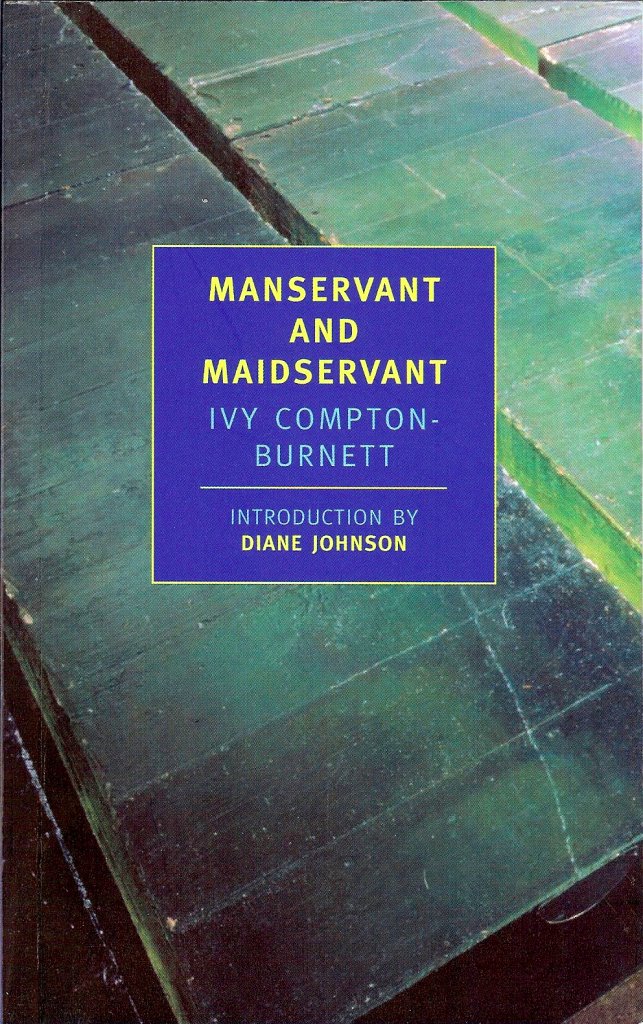
Book Review: Manservant and Maidservant by Ivy Compton-Burnet

Manservant and Maidservant
Ivy Compton-Burnett

Until Simon over at Stuck In A Book had the idea to do an Ivy Compton-Burnett read along I didn’t really know anything about ICB. I had a vague notion that her books were a little quirky and her writing style an acquired taste. But those impressions suggest that I knew more about her than I did. There was even a moment before I got myself into all this when I wondered if ICB was a male with one of those once antiquated unisex names like Evelyn or Leslie. Although I have met my share of male Leslies here in the US, I think you would be hard pressed to find a male Evelyn. Then again, it is just as unusual in Britain. Maybe Evelyn Waugh was the only male Evelyn, ever. But suffice it to say, Ivy was a woman.

I think Simon first brought up the idea in late September but I didn’t get onboard until the middle of October. I wasn’t even entirely sure what a read along was. In the end my curiosity about ICB and the worry that I might be left out of something interesting got the best of me and I ordered my copy of M and M.

I am never a fan of having to write a plot summary, in fact in some ways I don’t like plot summaries full stop. I don’t want to know too much ahead of time. So I am going to let the jacket blurb give you the general idea:

[Manservant and Maidservant] focuses on the household of Horace Lamb, sadist, skinflint, and tyrant, a man whose children fear and hate him and whose wife is planning to elope. But it is when Horace undergoes an altogether unforeseeable change of heart that the real difficulties begin. Is the repentant master a victim along with his sometime slaves? What compensation, or consolation, can there be for the wrongs that have been done?

Horace could be the archetypal villainous parent, the wicked stepmother, if he wasn’t so humorous. The comparison that pops into my head is Basil Fawlty, John Cleese’s brilliant television character, who is a miserable human being, but so funny at the same time. Horace tries his best to make his children’s lives miserable but his interactions with these precocious little ones makes it clear that although he may have control over their daily comfort, he has no control over their hearts and minds.

Lamb’s household staff also play a role in M and M. Much like the fabulous 1970s television series Upstairs Downstairs, there are three parallel storylines in play. The upstairs storyline, the downstairs storyline, and the storyline that comes into being when those two worlds intersect. The relationship between Mrs Selden the cook and her kitchen maid Miriam reminded me a lot of the relationship between Mrs Bridges and Ruby on Upstairs Downstairs. Generally abusive but bordering on affectionate. The butler Bullivant, however, is no Hudson. He seems like he would be more at home in the servant’s hall in Gosford Park than 165 Eaton Place on Upstairs Downstairs.

Manservant and Maidservant is one of those books that I enjoyed, and I understood why I enjoyed it, but would be hard pressed to explain what it all meant. There are some sub-plotlines that seem to have no poinnt and I must admit I don’t fully understand everything that happened in M and M. I think I would need a discussion with others to tease out what it was all about, so I can’t wait to see what the others who participated in the read along have to say. Overall, I really enjoyed reading this book. The brilliance of the book, I think, is in the humorous writing. Horace receives a letter from his cousin Mortimer:

You told me not to write to you, but I am never so malicious as to take people at their word. It is almost like telling them that they have made their bed and must lie on it.

It is nice of you to miss me so much, when I wronged you under your own roof. But it was not my fault that I had no roof of my own, and had to do things under yours.

ICB is definitely a writer whose work I want to explore further. I am glad that I ordered her other favorite book A House on its Head when I ordered Manservant and Maidservant.

Book Review: Smoke and Mirrors are on the Landing

Howards End is on the Landing
Susan Hill

There are many in the book blogosphere who have loved this book. And there are many who thought they would love this book and then were kind of disappointed by it. Although there were moments of unalloyed joy as I read HEIOTL, I think I fall into the disappointed camp of book bloggers. Although, disappointed is probably too strong a word. It is a book about reading and books and cozy chairs and lists. What isn’t to love?

For those that may be reading about this book for the first time, Hill decides to limit her reading for a year to books that she already owns.

Much has been written by bloggers about Hill’s take on bookplates (she is against them) and book blogs (she is sort of against them). While I agree somewhat with Hill’s assessment that bookplates are largely unnecessary I don’t agree that they are for “posers”. Many who love to read, including Hill, not only love the content of books, but also love them as objects. Aesthetically pleasing fetishes that we not only love to read, but we also love to arrange, re-arrange, look at, hold, feel, and smell. Why is it surprising then that lovers of this particular kind of printed beauty might fall in love with an aesthetically pleasing bookplate?

Hill’s thoughts on the Internet (and by extension book bloggers):

The start of the journey also coincided with my decision to curtail my use of the internet, which can have an insidious, corrosive effect. Too much internet usage fragments the brain and dissipates concentration so that after a while, one’s ability to spend long, focused hours immersed in single subject becomes blunted. Information comes pre-digested in small pieces, one grazes on endless ready-meals and snacks of the mind, and the result if malnutrition.

The internet can also have a pernicious influence on reading because it is full of book-related gossip and chatter on which it is fatally easy to waste time that should be spent actually paying close, careful attention to the books themselves…

And since book-related gossip and chatter on the Internet is pernicious and is full of fragmented, small pieces of pre-digested ready-meals, Hill decides to publish 236 pages of fragmented, small pieces of pre-digested book-related gossip and chatter. Give them what they want, make your money, but somehow act like you are above it all. (Reminds me a bit of Jonathan Franzen’s bullshit moment in the Oprah book club. You are decidedly crass, and pedestrian, but I will take your money anyway, if only to teach you all a lesson.)

Some of the more enjoyable aspects of the book for me were all of the tales of encounters with famous authors. Even as a writer herself, I feel like Hill may have had more than her fair share of encounters with great writers of the recent past. Hill comes of literary age in a period and milieu where some of “the greats” were still alive and kicking. Imagine EM Forster dropping a book on your foot!

And then of course there are moments in HEIOTL when Hill writes about some of one’s favorites. Having recently read, and having absolutely loved, On the Black Hill, I was gratified to see Hill give Bruce Chatwin’s amazing work its due. But then there are other sections where she talks about authors unread by me or even unknown to me. Which could be a great thing, opening up new worlds to me, but Hill’s descriptions did little to incite my interest in the authors. There may be one or two I may now feel compelled to hunt down but none jump out at me. (For inspiring introductions to books and authors you never knew you wanted to read, I say check out Nancy Pearl’s Book Lust.)

Perhaps most disappointing to me was that I felt like there was a little bait and switch going on. Hill writes about going on a “year-long voyage through her books”. Yet there was very little to suggest that Hill actually did what she said she was going to do. Or, if she did, she has so distilled her year of reading from home into little snippets of literary musings, that the reader gets no sense of the actual journey. Much of what she writes has the smell of her life of reading and writing, and doesn’t describe a journey, at least not a new journey, at all. HEIOTL gives no sense of time passing, no moments of “it is only January 15th and I am already finding it hard to avoid that new book by X in the shop window” or “as Autumn arrives I am drawn to that copy of X that I stumbled across back in July” or something like that.

It is certainly Hill’s prerogative to favor a more abstracted look at her year-long journey rather than describe the journey itself. But she seems a little scattered and unwilling to commit to one approach over the other. Here and there Hill describes certain books or types of books being in certain rooms of the house. I actually appreciate this part of the narrative, it does suggest a journey and it is detail I find interesting. But as an organizing motif she doesn’t really follow through enough for it to really work. She confuses the issue in the final chapter when she writes about finally making it to the top of the house. “I am taking out far too many books. I need at least another year of reading from home.” Is she suggesting that the climb to the top of the house has been stretched out over a year and now she has reached the last room and won’t have time for all the books she is pulling off the shelves? And are we really to believe that her reading over the year was directed by a systematic and seemingly linear tour through the rooms of her house?

Perhaps Hill, wanting to write a collection of literary musings, decided she needed a clever hook or some kind of framework in order to sell the collection. I have no problem with that, but don’t lure me in with a plot device that I find fascinating only to ignore it once you start waxing rhapsodic about your tastes and experiences. Many of the chapters don’t even attempt to follow any premise other than “I want to talk about this author so I will”. In some parts of the book there is some sense of the chronological aspects of the year-long journey, but the mentions are few and don’t really provide the structure suggested in, or interest created by, the opening chapter. The main body of the book is a sometimes fascinating compilation of book-related thoughts and experiences Hill supposedly had during the year broken down thematically. But where is the journey I was promised?

And did anyone else get the feeling that she did a lot more re-reading than she did discovering new things hiding in her enormous collection of books? I have a vague memory of her opening up a few long ignored volumes. But I never really felt like she had any moments of real discovery. I am not the closest reader in the world so I wouldn’t be surprised if I missed something, but where were the “aha” moments? Her journey of discovery reads more like a description of her daily commute down a well-trodden, and entirely familiar, path.

The more I write about HEIOTL the more I want to read the book she promised, not the book she wrote.

Book Review: The Photograph

The Photograph
Penelope Lively

This review might be a little on the short side. As much as I like Lively, I am a little ambivalent about The Photograph. Not to say I didn’t like it. I just expected more. The plot is pretty clever and can be summed up fairly easily. Glyn finds a picture of his deceased wife Kath that suggests that she had an affair with her sister Elaine’s husband Nick. Glyn confronts Elaine, Elaine confronts Nick, etc. Not wanting to give away any of the twists and turns I think I will leave it at that.

The Photograph is an enjoyable, easy read. The characters are believable and have interesting jobs that provide interesting context (landscape designer, publisher, historian), but the twists and turns of the relationships themselves—while understandably fascinating to others—was not all that interesting to me. And if I went into great detail about the book (and included some spoilers) I could detail the ways in which I don’t think some of the events and characters portrayed ring true. And there are even a few things that happen that explain why this book carry’s the “Today’s Book Club” seal. (For those that don’t know or remember this was the Today Show’s attempt to cash in on the popularity of Oprah’s book club. And we aren’t talking about Oprah’s better choices either…plus it was on morning TV with Katie Couric. In other words this is not a badge of honor.)

If you are only going to give Penelope Lively’s fiction one shot, read Consequences instead. Far more interesting and compelling. If you plan to read everything she as written because she is a wonderful writer (which she is), or you are looking for something to read on a plane, The Photograph is still worth the time.

Book (cover) Review: Persuasion

Persuasion
Jane Austen

With so much written about her over the years, how does one “review” Jane Austen. One doesn’t. At least this one doesn’t. Although I find reading Jane Austen enjoyable, and I completely understand the literary and sociological merit of her work, I tend to like the Jane Austen films better than the books. (Please, no hate mail.)

So you will get no substance out me on Persuasion. It is actually one of my favorite JA flicks. But the one from 1995. I am not so sure how I feel about the version from 2007, I seem to remember the plot of it was skewed differntly than the ’95 version. Now that I have read the text, I want to see both of them side by side and make my determination not only about which one I like, but which one is closer to the text. I have them queued up on Netflix, so I should be able to blog about that in the near future.

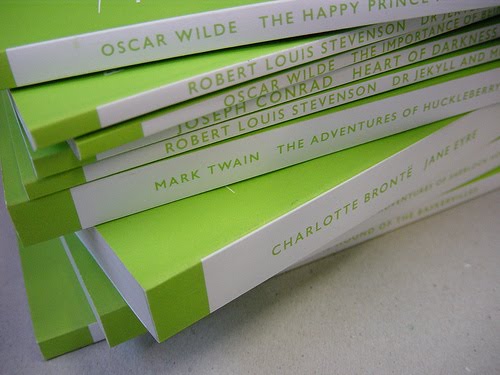
What I really want to talk about is the cover of the edition I read. I picked it up at that English bookstore I went to in Den Haag. As far as I know, we don’t have these Penguin Popular Classics editions in the US. I was totally drawn to their simple, GREEN covers. But when I tried to photograph it, it came out very bright greeny yellow. I thought it was something to do with my camera skills. So this morning I tried to scan the cover and the same thing happened to the color. So I headed off to the Interwebs to see if I could find a good representation of the color of the cover. And I did, BUT, I also came across many, many, many other pictures that suffer from the same yellowing problem that I had.

It is like vampires not showing up in mirrors. Have the scientists in the Penguin laboratory discovered a way to make their covers not appear correctly in photos? Also, I love the fact that they are using recycled pulp, but it doesn’t make the tactile experience very pleasant.  UPDATE: I just noticed that even The Book Depository wasn’t able to get images with the proper color covers.

See if you can guess which of these images is mine.

Book Review: The Return of the Soldier

The Return of the Soldier
Rebecca West

At 185 pages, and with a really big font and really big margins, this one definitely falls into the novella category. But what a crackerjack little novella it is. Written in 1918, the essence of the plot is about Captain Chris Baldry, a WWI soldier who returns to England with post-traumatic stress disorder that leaves him with amnesia. He remembers Margaret, a love interest from 15 years previously, but doesn’t remember Kitty, his wife of 10 years. The fact that Margaret is of a lower class than his own, and perhaps more importantly, than his wife’s, is an added twist that really seems to drive the Kitty mad.

I think some of the class material is a little heavy handed and even some of the plotting is a little clumsy at times, but I really enjoyed this book. It was one that I found myself reading while walking down the street and riding in elevators because I didn’t want to put it down when I arrived at work. Which is a bit of a shame in some ways. There are moments in the book that compel one to want to read on, but much of the book is also rather atmospheric and would have benefited from more relaxed and sustained reading sessions. The final chapter makes for a pretty fabulous, but not necessarily happy, ending.

Victoria Glendinning’s introduction written in 1980 is rather un-illuminating. John thought it sounded like an uninspired term paper. Are introductions even necessary to most books? In some cases they helpfully explain context that enhances the main event (i.e., the narrative itself). But in many cases they seem rather gratuitous. A way to throw a few dollars, or in this case pounds, to a writer or academic. Not that I am opposed to that, but at least make them good. And more importantly, if an introduction or preface doesn’t help put things in context then make it an afterword instead. Don’t tell me what to think about a book before I read it. Tell me what I thought of it after I have read it (he said, tongue firmly in cheek). What do you think? Are introductions a gratuitous waste of trees?

Book Review: A Lively Life

Oleander, Jacaranda
Penelope Lively

Penelope Lively is a novelist of prodigious talent. She won the Booker Prize in 1987 for her novel Moon Tiger (which I haven’t read, but it is in my TBR pile). Oleander, Jacaranda is a short memoir of her childhood in Egypt and eventually England. Born of English parents in Cairo in 1933, Lively lived in Egypt until the final year of World War II when she was sent back to England to live, shuttling between her maternal and paternal grandmothers until she was sent off to boarding school.

Like most children, young Penelope is more open to the experiences of the environment she lives in than are the adults in her life. The narrative contains its share of fond memories typical to a childhood memoir, but the typical childhood bit only goes so far in this particular autobiography. The subtitle of the book “A Childhood Perceived” aptly describes Lively’s approach to her material. Threaded between snippets of insect hunting and comic tales of her nanny’s attempts to home school her, Lively confronts and analyzes the impact her adult intellectual filter has on her memories. Some of it is pretty straightforward like the adult knowledge of sanitation versus her childhood desire to join local children playing in a stream. At other times Lively’s focus is more academic. Some of her observations considering childhood perceptions are offered in the abstract, and others are directly related to her own situation “growing up in accordance with the teachings of one culture but surrounded by the signals of another.” With an emotionally absent mother and an often physically absent father Lively’s Englishness is enforced by her zealously patriotic British nanny.

Lucy’s patriotism was absolute and implacable. There was English, and there was other. To be English was to be among the chosen and saved; to be other was simply to be other. There were gradations of other. American or Australian was other but within shouting distance, as it were. French, Italian, Greek were becoming unreachable; everything else was outer space. Within the unrelenting xenophobia there was a stern creed of tolerance and respect for alien practices, especially religious practice. I knew that it was offensive to stare when Muslims were at prayer, that mosques must be entered with the same reverence as Cairo’s Church of England cathedral. The world of other was different, and hence of no great interest [to adults], but you accorded it a perfect right to carry on as it did.

The blurb on the back of the book describes this as a bittersweet memoir, and there was plenty in Lively’s childhood that could fall into the bitter category. But Oleander, Jacaranda is also an interesting, sometimes sweet and sometimes humorous story. It is a contrast of cultures and attitudes that are foreign not just because of the geographical juxtaposition of an English child in Egypt, but also because it captures a moment time that I find fascinating. A good read for Lively fans, WWII English childhood fans, and Egypt fans.

(P.S.: Lively’s description of a return visit in 1988 has cured me of my interest in finding Lawrence Durrell’s Alexandria. According to her, barely a shred of the physical setting of the Alexandria Quartet survives. Not that she has much affection for Durrell’s work, but that is beside the point.)

Book Review: Home to Roost at 37,000 Feet

Home to Roost
Deborah Devonshire

Last week while we were enjoying ourselves discovering The Hague, I stumbled across an English language bookshop. But it wasn’t merely an English language bookshop, it was really an English bookshop full stop. I didn’t see any American editions of anything. Everywhere I turned there were editions of books I have only seen on British based book blogs–books that are for the most part unavailable in the United States. When I saw the bright blue Bloomsbury Group edition of Miss Hargreaves I couldn’t say no. The same was true for the lavender Bloomsbury Group edition of The Brontes Went to Woolworths. Although I have heard much about both of these books on various blogs, perhaps most notably on Stuck in a Book, I had made no attempt to order either of them. But seeing them sitting on a table right in front of me I couldn’t resist. And right next to these two little beauties was Deborah Devonshire’s Home to Roost. And it turned out to be perfect reading for the plane ride back to DC. I read it cover to cover somewhere over the Atlantic.

Deborah Devonshire, born one of the six (in)famous Mitford sisters, otherwise known as the Dowager Duchess of Devonshire has intrigued me since the earliest days of my Anglophilia. I remember reading years ago the story of how she and her husband, the 11th Duke, had to get really smart and creative to save their magnificent house Chatsworth from ending up on the auction block to pay off huge death duties. Most things that I have read about her over the years had kind of a behind the scenes quality that I love. When I visit a stately house like Chatsworth I am less interested in the grand history, art, and decoration than I am in the behind the scenes workings of such a large estate. Call it the Upstairs, Downstairs Syndrome. So it was with that in mind that I picked up Home to Roost. I wasn’t expecting gossip mind you, but a peek behind the official curtain was what I hoped for. There was a bit of that but surprisingly the parts of the book that I found most interesting weren’t about the house at all. They were the chapters about Devonshire’s relationship with the Kennedys and her eye witness account of the inauguration of President Kennedy as well as his funeral two years later. I suppose it was behind the scenes after all, but more about where I live (Washington, DC) than about Chatsworth. Similarly her memories of the “Treasure Houses of Britain” exhibition at the National Gallery here in Washington was pretty interesting. I have a vague recollection of this exhibit despite the fact that I was in high school in Minnesota at the time. Reading Devonshire’s account of it I am really disappointed I didn’t get to see it.

Overall I enjoyed reading the book but I found parts of it slightly annoying as well. Some of the chapters seem to be nothing but a list of words that once upon a time meant one thing and now mean something else. There is nothing interesting, enlightening, or even new about this kind of comparison. If I had remembered Simon’s review at Stuck in a Book, I would have known that he had similar feelings. In fact, he does such a good job identifying what doesn’t work about the book that I am going to let him have the final words:

Too often the articles are simply catalogues of complaints, snarking at anti-hunting people, townfolk, American vocabulary, the government – anything any grumpy old lady might moan about. I’m sorry to sound a bit cruel, but there is no fury like a booklover scorned. Some of the essays had the sparks of humour I’d hoped for – when she is writing about tiaras, for example, and book signing. And none of the collection is unreadable – it’s just the tone is consistently grumpy and demonstrating an inability to see the world from anyone else’s perspective.

Book Review: Arthur and George

Arthur and George
Julian Barnes

I’ve had this one sitting in the TBR pile for quite some time now. I even picked it up a few times and tried to get into it without much success. Then I overheard a rather dimissive conversation about the book at book club. Plus, years ago I had a so-so experience with Barnes’ History of the World in 10 1/2 Chapters. I had read the first couple of chapters–which I loved–but then got bored to the point where I didn’t even finish the book. Still, when I was deciding what books to pack for our recent jaunt to Belgium and the Netherlands Arthur and George was one of the few titles I had that was in a mass market edition that I wouldn’t mind leaving behind on our travels once (if) I finished it.
Much to my surprise I actually ended up really enjoying this book. The Arthur of the title refers to Sir Arthur Conan Doyle, author of the Sherlock Holmes series, and George refers to Georbe Edalji, an Englishman with a Scottish mother and an Parsee (Indian) father. The novel begins with the narratives of the two men independently described in alternating chapters until their stories eventually come together. Based on historical fact, Edalji, having been unjustly accused and incarcerated for animal mutilation, appeals to Conan Doyle for help in clearing his name. Channeling Sherlock Holmes, Conan Doyle is able to poke enough holes in the case and is able to get enough attention in the media to eventually get Edalji’s name cleared…kind of.
There is much about this book that is appealing and at times it is a real page turner. It is essentially a fascinating whodunit with hints of Sherlock Holmes set in a time when criminal investigation techniques, forensic science, and courtroom procedure made justice much more an idea than a reality. If this case were to happen today Edalji would have been able to prove his innocence even with an underpaid, overworked public defender. The characters are compelling and likeable, the circumstances of the crime for which Edalji was imprisioned are interesting and quirky, and the book has just the right amount of period detail. One aspect of the book that bored me a bit was some of the focus on Conan Doyle’s interest in the paranormal. I am a complete skeptic about such things (as is Barnes perhaps?) and I am not sure it was really necessary to include all of the details about mediums and seances. I not sure if Barnes was attempting to work out some meta-narrative or he just included it as part of Conan Doyle’s real life interests and foibles. Either way I could have done with less of it.

You can read some blog reviews here at The Mookse and Gripes, here at the view from chesil beach, and here at Jabberwock, or the one from the New York Times here.