What is more exciting than setting a reading challenge for oneself? Normally I would say abandoning a reading challenge, but this time it’s different, I mean it.
Back in December, I was drawn to a post on Twitter because J.L. Carr’s A Month in the Country was among the books shown. It was a surprise favorite of mine several years ago and I always like to see people talking about it. But then I took a look at the other titles, and rather quickly formed the notion of re-reading the Carr and reading all of the other titles as well.
I should say that I don’t know the Tweeter from Adam. I follow him, and enjoy his output, but I don’t know how I came across him in the first place. So why am I placing any faith in his assembly of books for a project he is working on? I suppose it is because of the Carr. I did find the cover for A House in Norway attractive. And then I thought the subtitle for Ceremonial Time was intriguing and in line with my recent interest in archaeology and pre-history. And by then I was kind of sunk in.
But maybe more than anything, I like thinking about what might be in that space in the middle that Himmer is pointing to.
I’ve gotten my hands on all of them except for Pond which appears to be stuck somewhere in Georgia. I suppose I don’t have to wait for it to arrive to start. If only there was some natural starting point for this challenge…wait, I just finished a book this morning…it’s the 1st day of 2021…I have three more days before I have to go back to work…
I don’t have the energy to recap the ways in which 2020 was the worst year globally, but still pretty delightful on a personal level. We all have our pandemic stories, and probably at least another six months to create new ones, plenty of time for reflection at some point. For now, let’s just make it about books.
Racing myself
I set myself a modest goal of 52 books for the year. Although I reached that number fairly easily, I had my doubts at first. With travel and Italian studies in the early months of the year, I didn’t have many books under my belt when the lock-down arrived. Like many of you, I had a hard time reading for several months. Sometime along the way, however, things picked up steam.
Pretending it wasn’t 2020
Regular readers will know that I don’t read a ton of current fiction. This year, needing to escape the current state of the world, I doubled down on my thirst for the past. Not to say the past is not chock-a-block with nefarious characters doing evil things, but the problems of the past feel safer to contemplate than the ones smacking one square in the face on a daily basis.
Re-reading
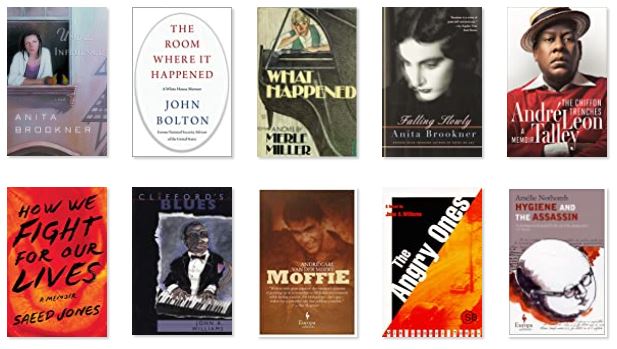
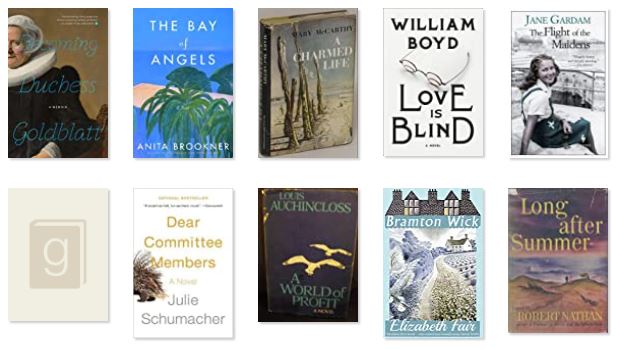
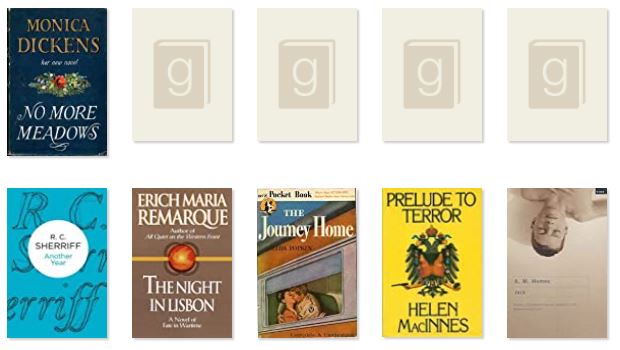
In the Before Times, most of my re-reads were books I had read years ago and then listened to in audio form on my work commute. With nine months of no driving to work, I haven’t listened to any books, but I did do a fair amount of re-reading this year. Another side effect of coping with the pandemic and civil unrest had me looking for books that I knew would make me feel a certain way. (Oddly, the picture below includes no re-reads.)
Most of those blank spaces are E.F. Benson’s Old London books and a few others that have no photos on Goodreads.
Abandoning books with abandon
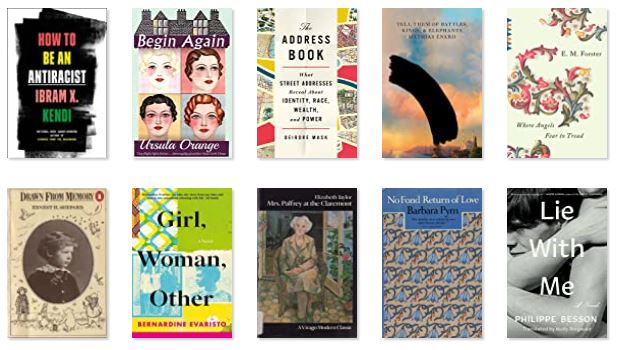
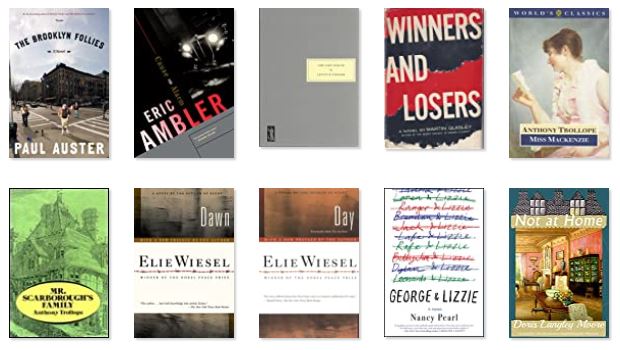
One of the reasons my list of books read was slow to fill early in the shutdown was because I started a lot of books that I just didn’t want to finish. Some were books that I realized early on weren’t going to do it for me. Others were books that I gave up on having already read more than a hundred pages. This is unusual for me. If I can make it past 20 to 50 pages I’m in it until the end. This year? No. I Marie Kondo’d the shit out of books this year. No joy, no read. (And no, the books below are not ones that I abandoned.)
Three of my favorite books this year are in this group. But you will have to wait until the Hoggies are announced later this month.
It is a little hard for me to believe it was 30 years ago that I was a history major at the University of Minnesota. It’s also amazing–and right–that a four-year liberal arts undergraduate degree doesn’t make most students an expert in anything. If my degree gave me the right to any claim about proficiency, it would be in the history of Edwardian England, but even that would be a stretch. It certainly is what I was most interested in. And yes, I wrote my senior paper on Sir Edward Elgar, Bt. OM, GCVO, so there is that.
But really those four years were about learning how to think and write. Language, humanities, geography, logic, music, art history. (Even a bit of physical education. Our Welsh teaching assistant taught the eight of us in the class a highly modified version of indoor cricket.) Even within my major, my learning was broad rather than deep. England, Spain, U.S., Europe (broadly), European intellectual history, ancient Greece and Rome, China, WWII, etc. And, in a bit of foreshadowing for my senior paper on Elgar, I wrote a paper for my Scandinavian history class about the Finnish composer Jean Sibelius.
This degree didn’t directly set me up to get a job, but it did give me a foundation that has proven extremely helpful throughout my career. It’s also why I go out of my way to interview and hire liberal arts majors even though I work in an engineering-related field. And I guess I am forgetting about the time that I was literally paid for 18 months to be a historian, when my job as an urban planner turned into a gig to research and write the history of St. Elizabeths [sic] Hospital.
I stumbled across this the other day. Seems appropriate for my mood.
I think if I could quit my day job and do anything, I would probably come up with a history research project or two. Something that allowed me to spend my days rooting around in archives and libraries.
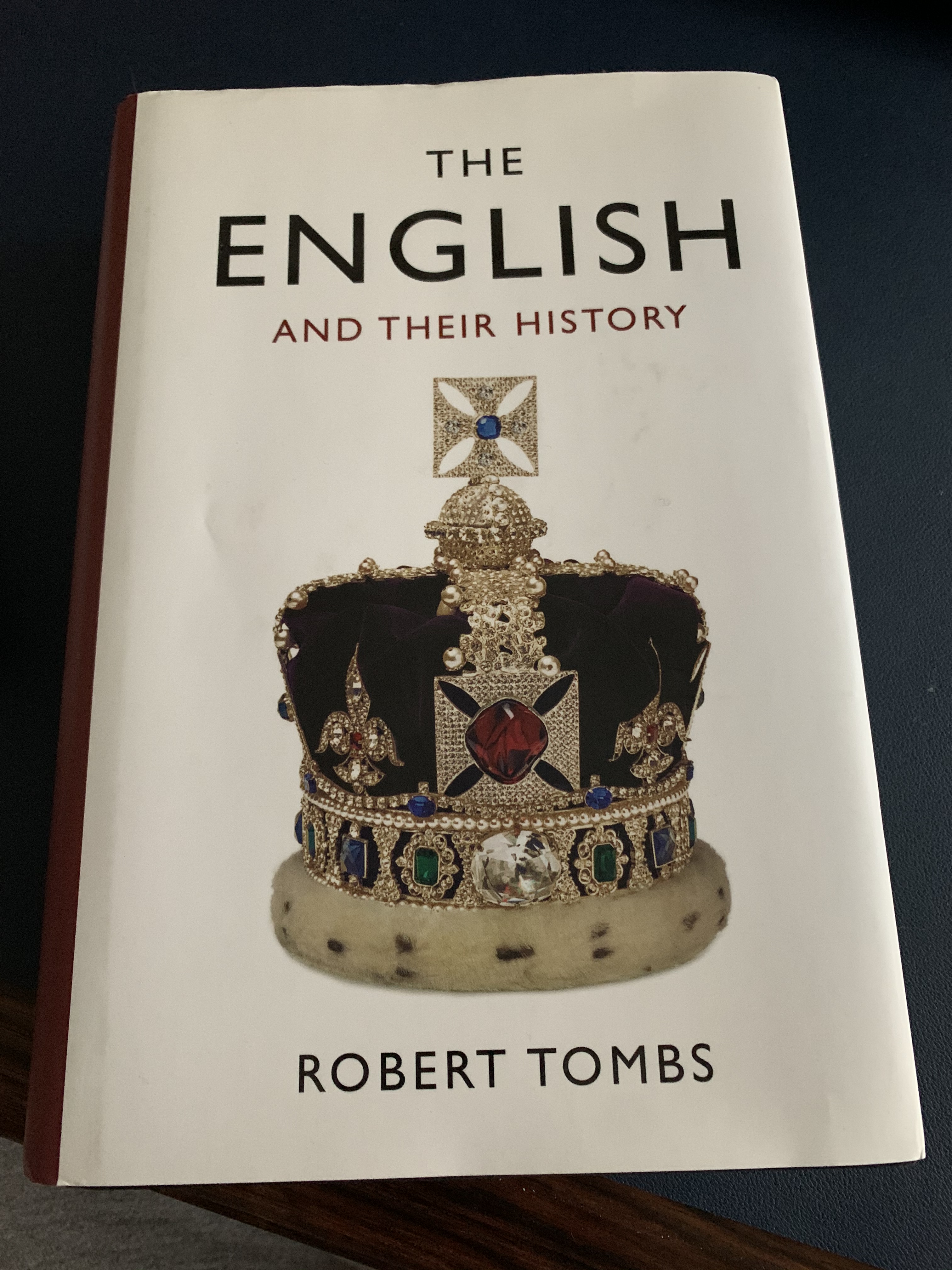
All of this is prelude to the fact that I bought The English and Their History by Robert Tombs at the original Daunt Books on a trip to London in December 2019 (the Before Times) and started reading it a few weeks ago. As much as I know about England, I know very little about what happened before 1066. Also, as a student of history with an interest in the 19th century, I spent very little time thinking about how historians know what they know about ancient civilizations. I may know my way around a Victorian primary source, but when it comes to the Angles and the Saxons it’s all a bit murky to me how we know what we know.
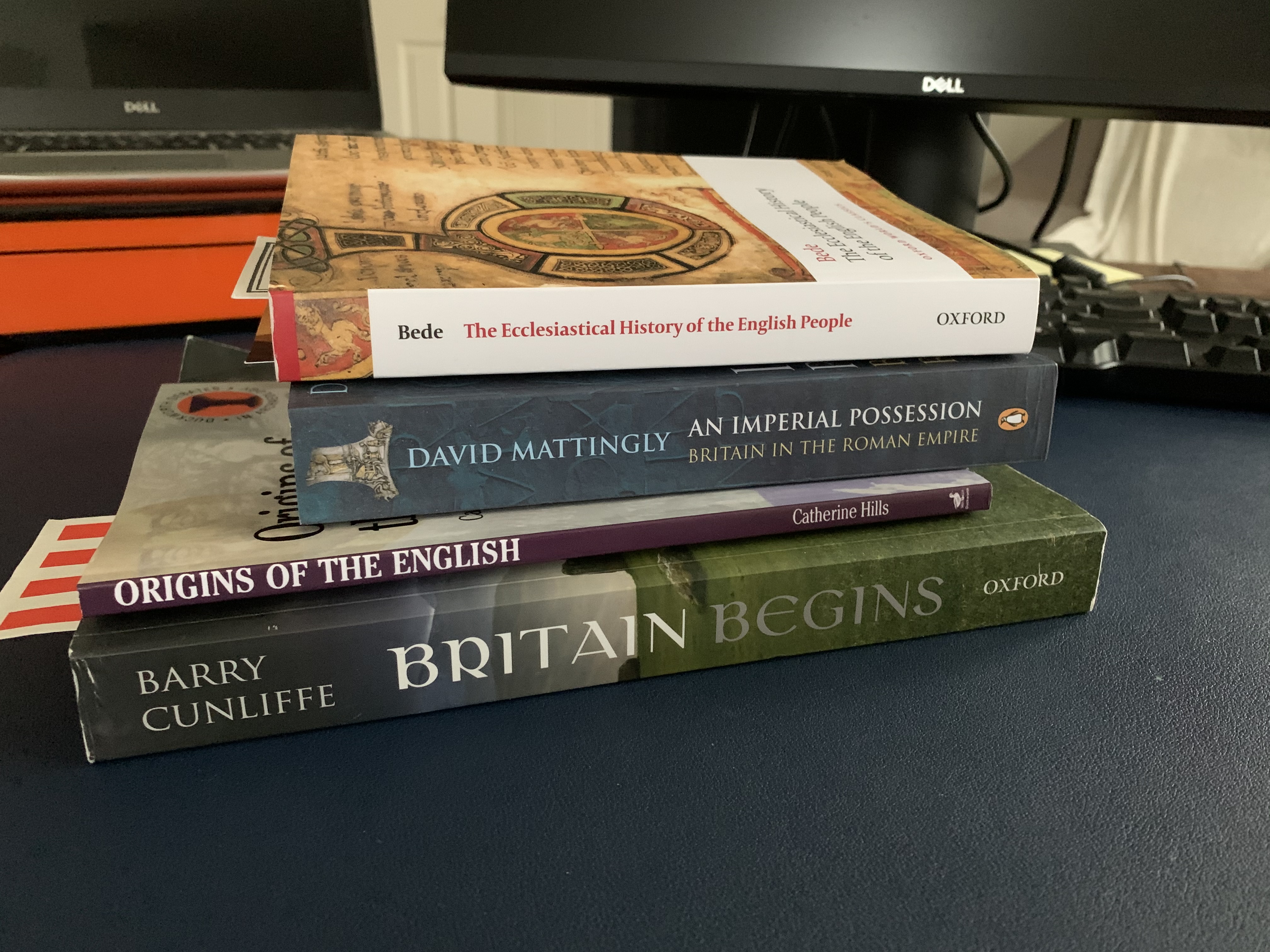
It soon became apparent in my reading that I had far more questions than a survey history could possibly supply. As I combed through the bibliography at the back of the book I hatched an idea to return to school. Not for real. I wish. But why not break this survey down and go in-depth? In general, my free-time fixation on fiction and my efforts to keep up with my Italian, make non-fiction seem almost like forbidden fruit. Do I really have time to add another class, as it were? Maybe I could turn the TV on a little less, and unglue myself from social media.
I would have to set aside the competition I have with myself to see how fast I can hack my way through my fiction TBR. But maybe I could also adjust my expectations in that regard. Who am I racing after all? (Okay we all know that I’m racing death, just like every other reader.) But then the idea to go back to school took root and I decided that although I can’t really go back to school, I could create my own curriculum. So I have decided to break it up and read three to four in-depth sources for each chapter in the Tombs book.
With Tombs’s bibliography in hand, off I went to the internet to place an order with my local indie. I couldn’t be more excited. I am still not devoting the time to it that I would like to, but I am enjoying the exploration immensely. I’m particularly taken at the moment with Britain Begins by archaeologist Barry Cunliffe. This is next level fascinating and makes me wonder what the hell I have been doing for the past 30 years when I could have been plumbing the depths of the historical record on any number of fronts.
None of these books will make me an expert. For anyone who has spent time in academe, many, if not most fields these days write more and more about less and less. Every page I read could be a subject of study in itself. But time is not endless, so that isn’t going to happen. I can, however, have a fun time following whatever bread crumbs I want. I’m already noticing my eye straying toward the Continent to flesh out the Roman Empire and set the context for what happened in England. But that is going to have to wait until I get through Britain Begins. I have lots of barrows and henges to read about.
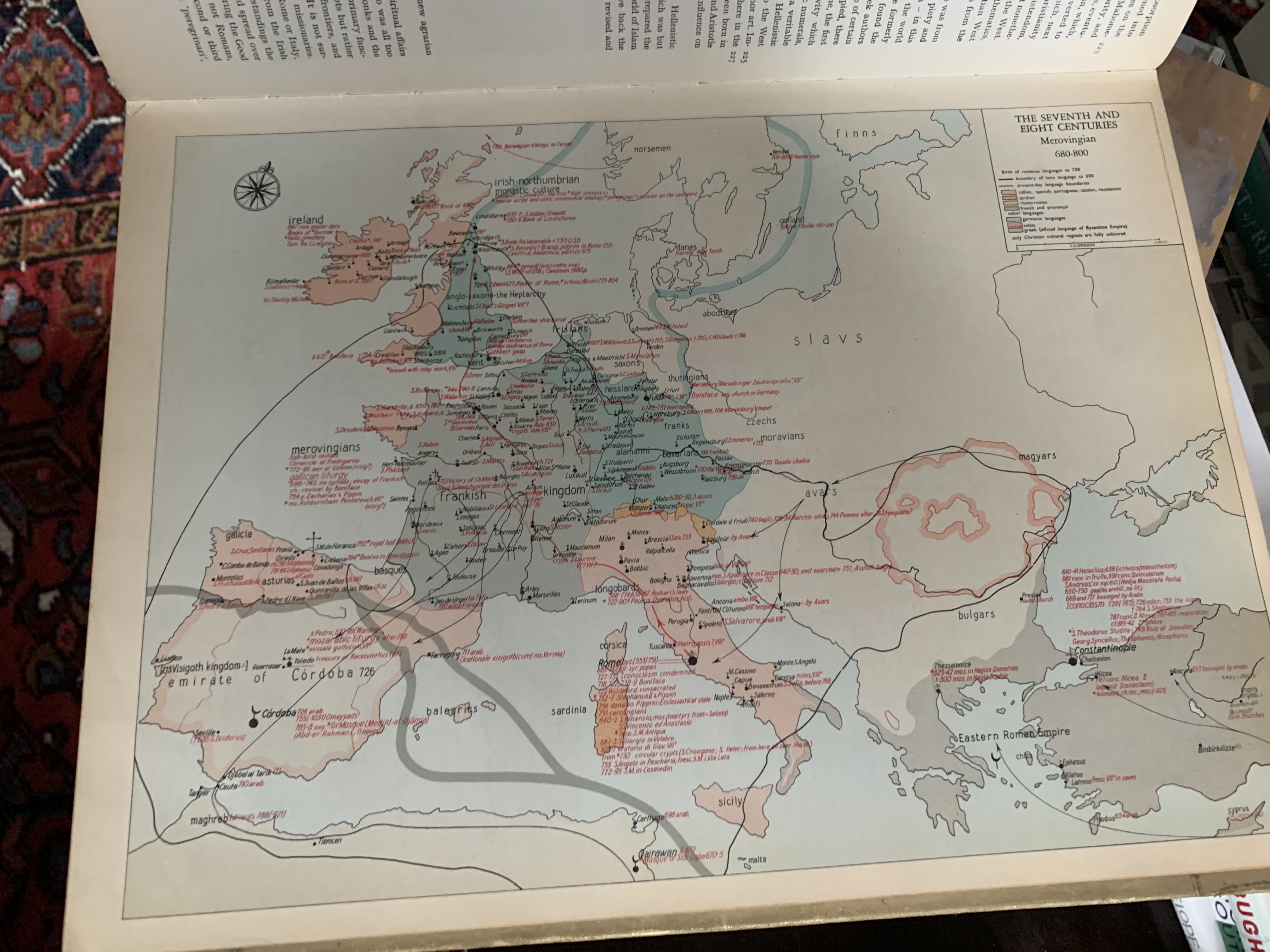
The process has also reinforced my most noble interest in accumulating books. As I was reading Bede, I remembered that I had found an atlas when I was fossicking around in a used bookstore in The Hague last year that might help in my instruction. At the time I bought it because I liked it as an object and had a general interest in having some atlases that showed changes in Europe over time. The internet is not good for everything, after all. (Seriously, if you like used bookstores, click on the link.)
Much to my delight I had this atlas in my library so I could put Bede’s location and world into context. If you zoom in you can see Jarrow and Wearmouth on the northeast coast of the England.
Doing this kind of reading/studying even has me wanting to take tests and write papers again. It has me thinking about my study habits and general incuriosity when I was 19. It has me wanting to visit the great libraries and archives of England to see source material. Now if I could just turn the TV off.
(I can’t mention these vintage films without talking about Our Daily Bread, a two-part look at how commercial bread products were made in England in 1962. It is fascinating on so many levels, and it elevates the whole process to biblical significance. I’ve watched it multiple times. Part I is here, Part II is here.)
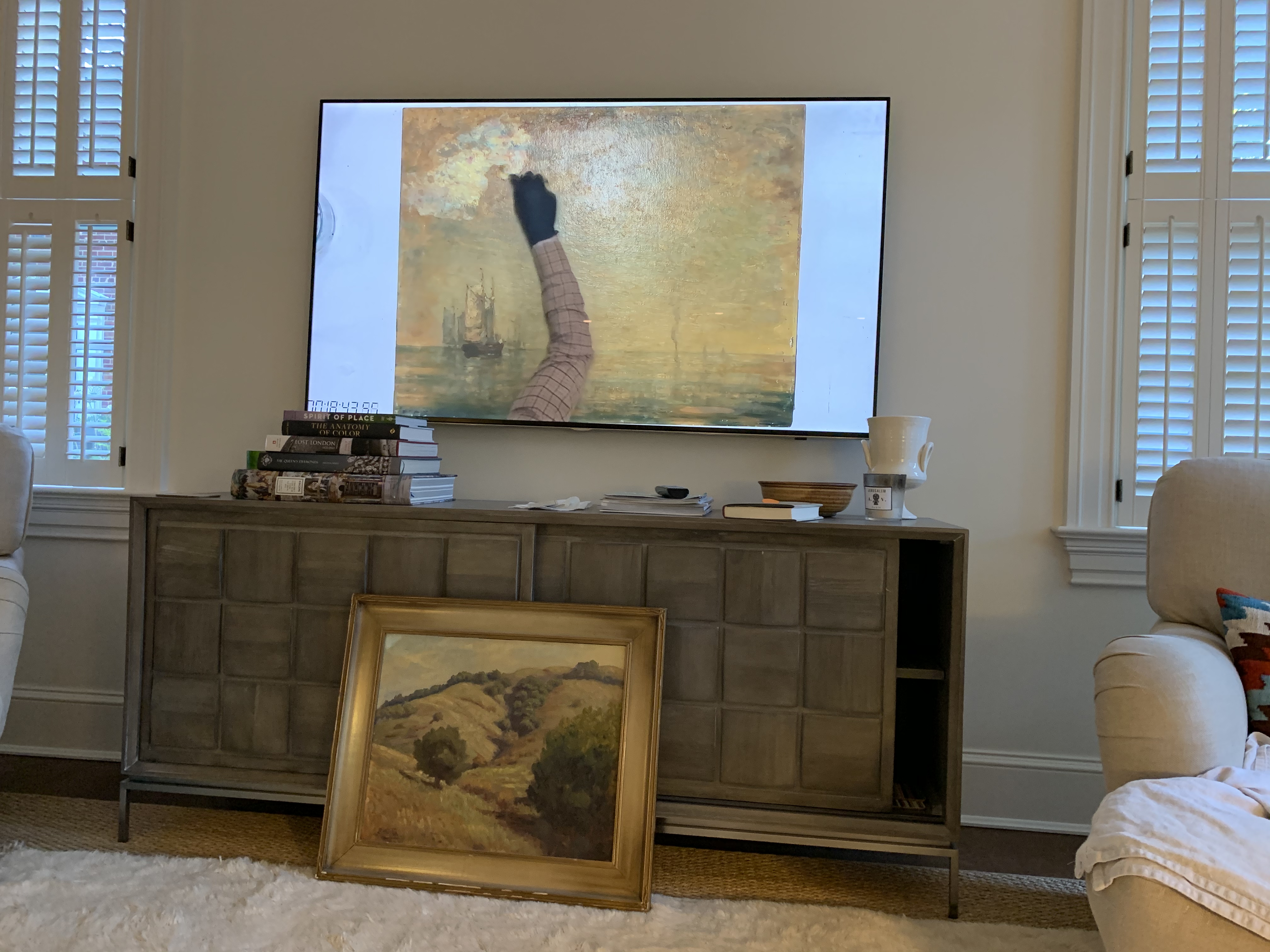
We’ve also watched videos about interior design, architecture, and gardening. But then we stumbled across videos showing art restoration. To my mind, the most interesting and entertaining of these are those posted by Baumgartner Restoration in Chicago. They are particularly fascinating because Julian Baumgartner shows an amazing mix of scientific and art history knowledge, artistic talent and fine motor skills, and a not insignificant number of “that’s how they do that” moments. His studio is as meticulously tidy as his work, and he oozes oceans of calm and patience. (I’d be lying if I said I didn’t have a bit of a crush on him, but that is neither here nor there.)
The video above shows an amazing range of skills Julian employs to restore a painting. The video below, on the other hand, dwells on the satisfying, so, so, satisfying aspects of watching someone clean a really dirty painting.
And it was the cleaning aspect of these videos that really caught my imagination, not only because it is so satisfying to watch, but because it is the one thing that Julian does that I would be capable of doing. I have terrible motor skills and like destroying more than I like creating. Not that cleaning a painting is destroying, but just like I prefer weeding to planting, it’s taking something away to make it better.
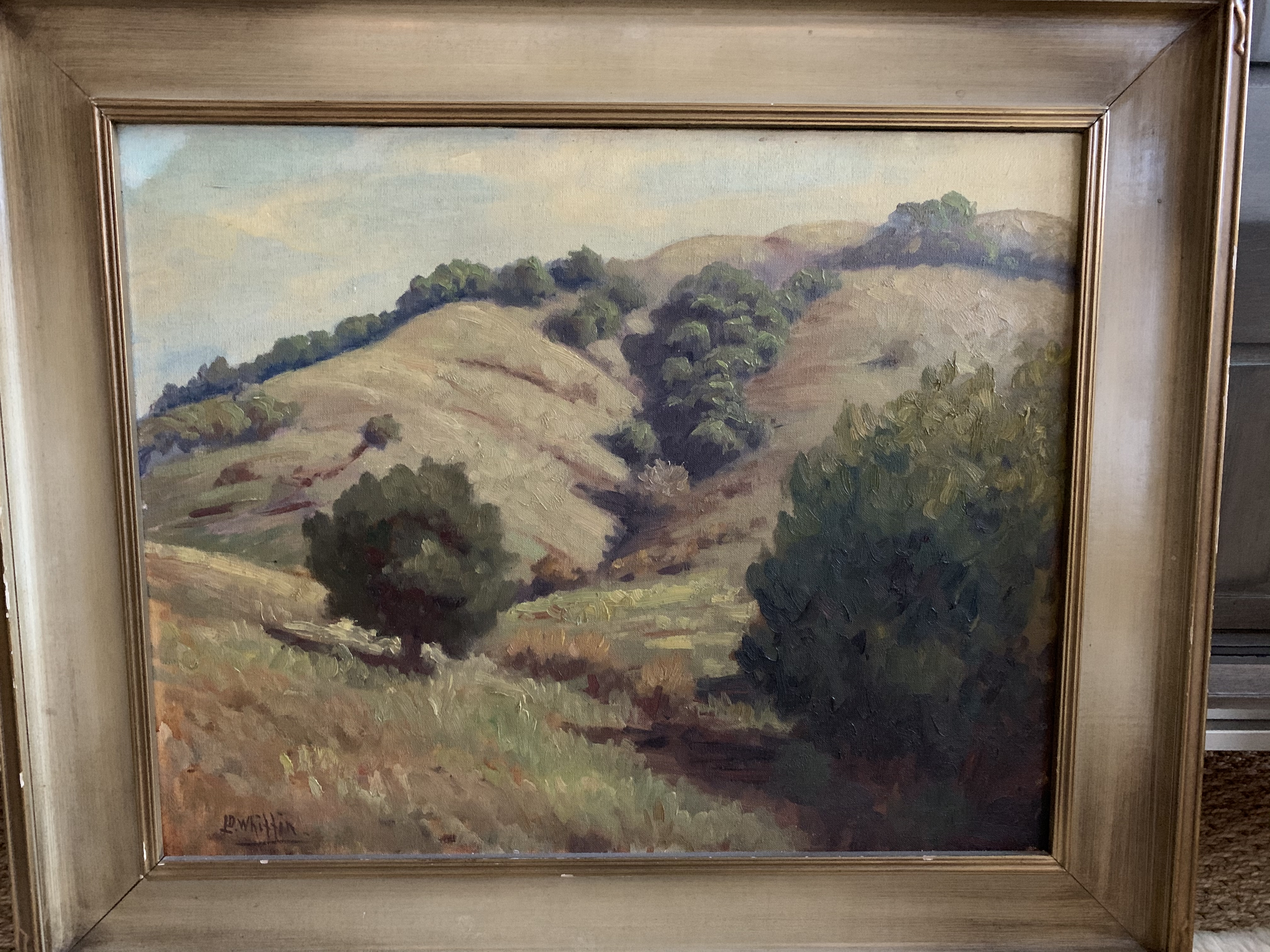
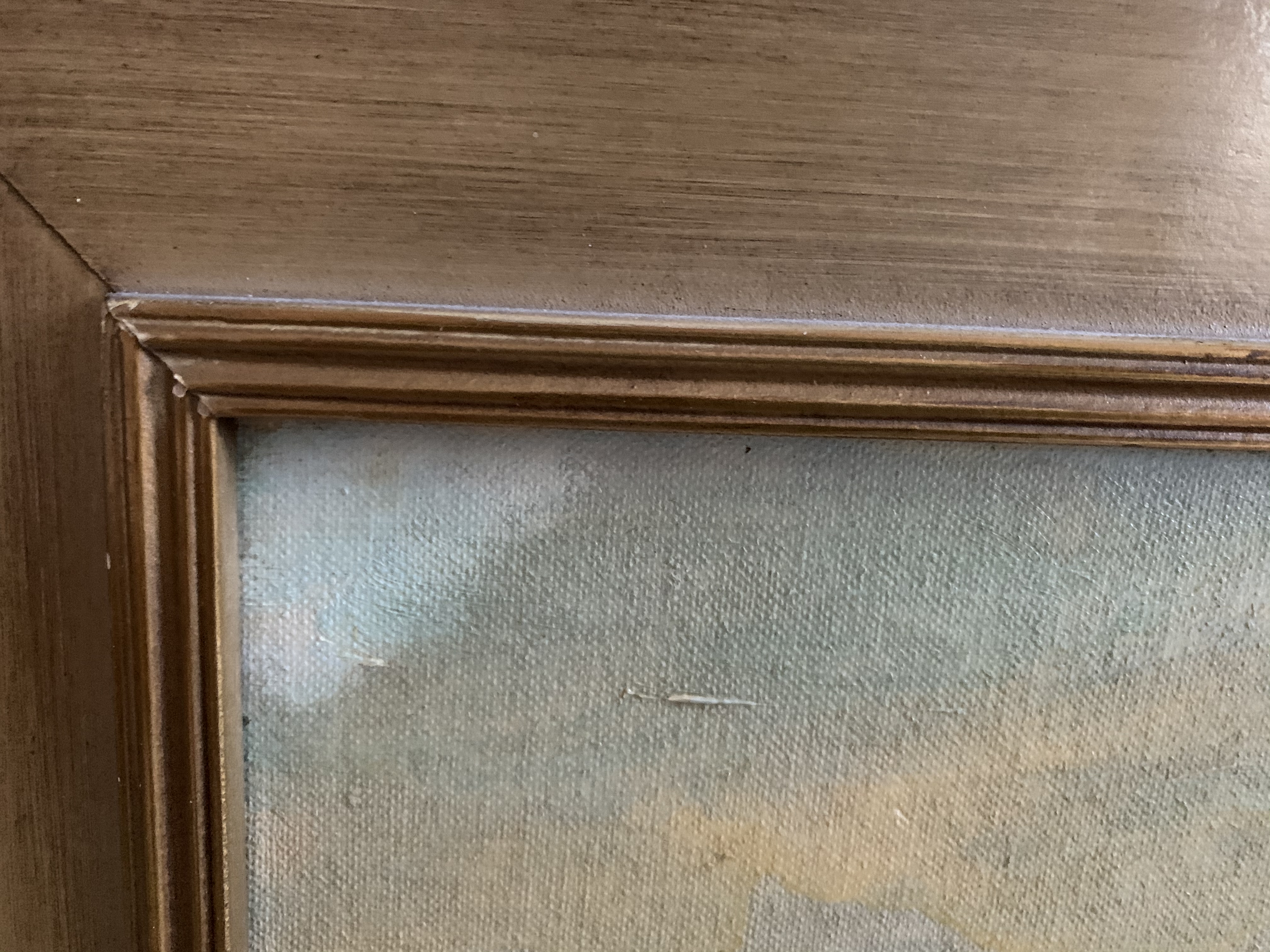
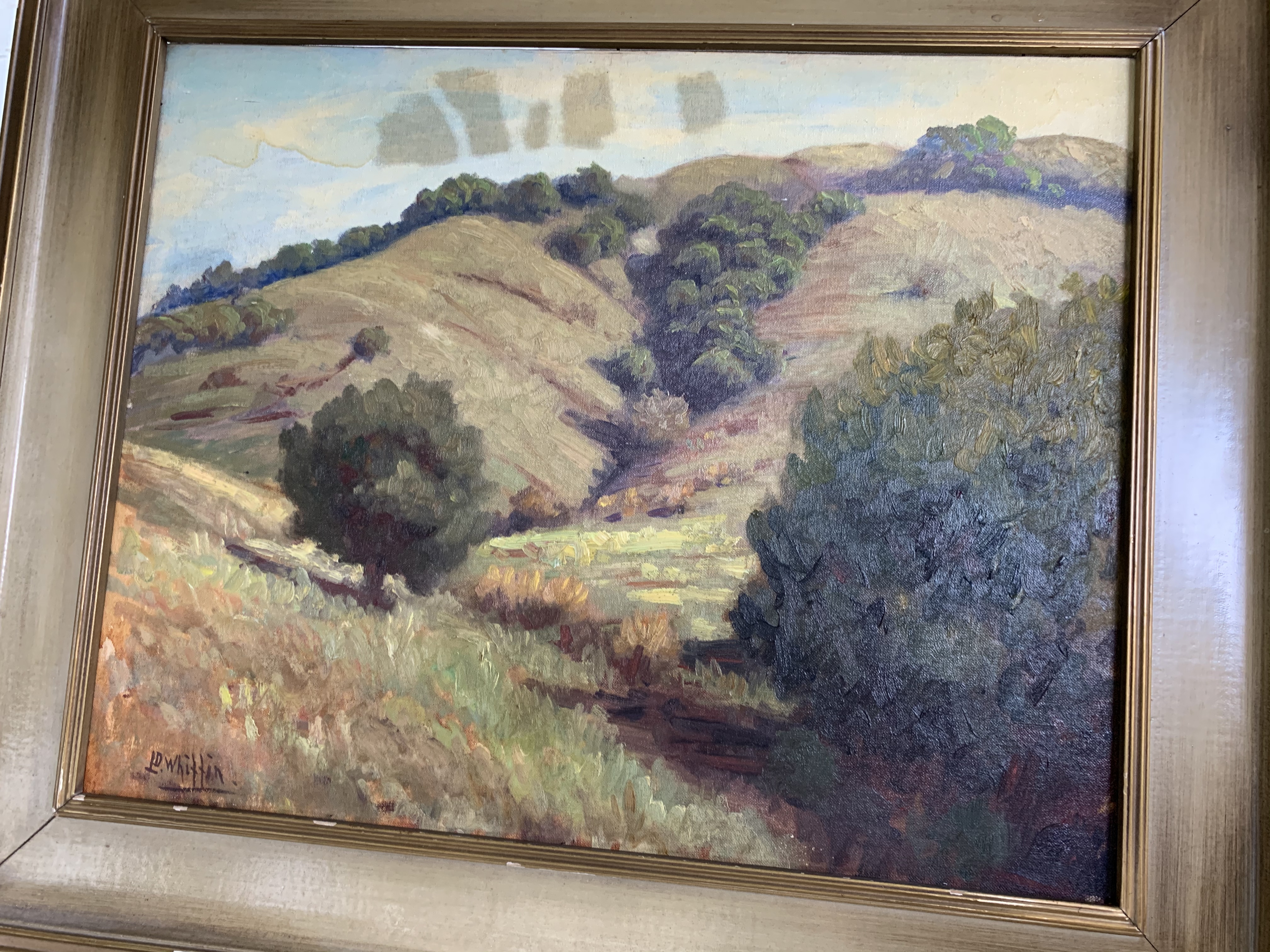
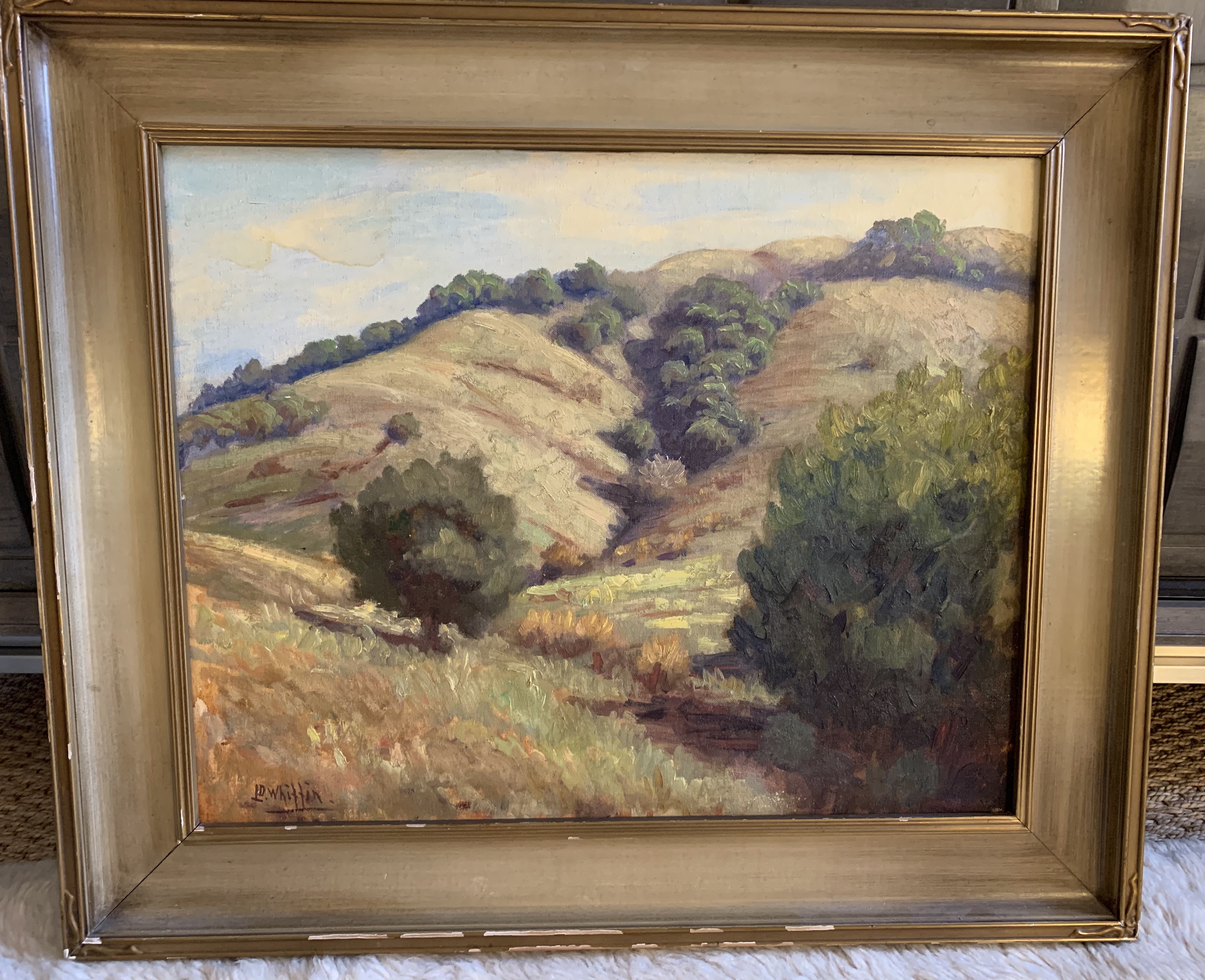
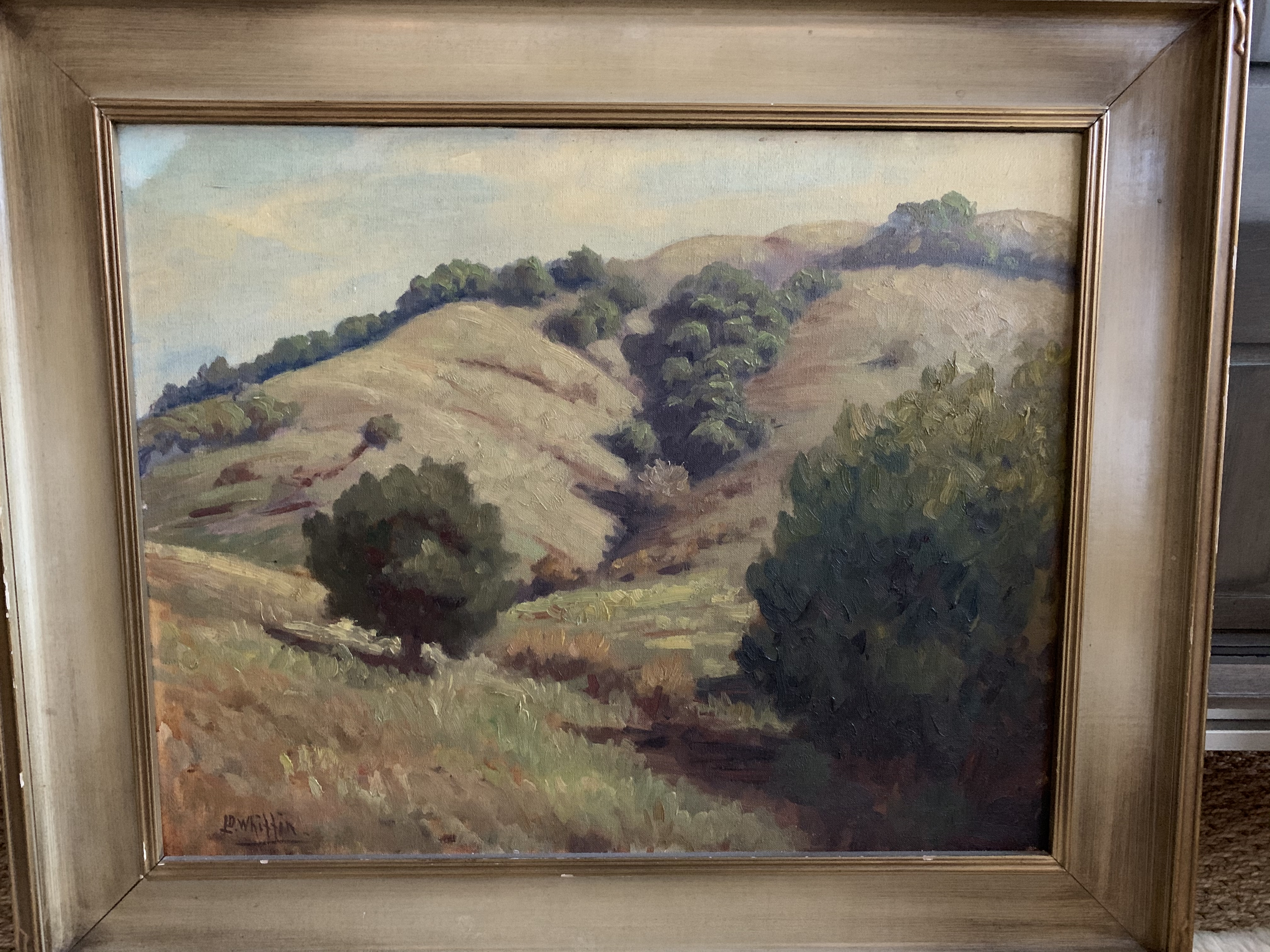
And so, with a half dozen Baumgartner videos under my belt, I was compelled to retrieve a painting we had in the basement that I knew was quite dirty. It was a landscape John purchased online a few years ago that shows the area in northern California where he grew up. It helped that our friend Sarah, with her 30-year old art history degree, was watching with us. She said if I was going to try anything, I should use saliva not water. Julian uses various solvents to clean paintings and remove old varnish based on the chemistry of what is on the painting, but for me, not having that knowledge, and believing that the painting I wanted to clean probably didn’t have discolored varnish on it, I decided that spit would be my only solvent.
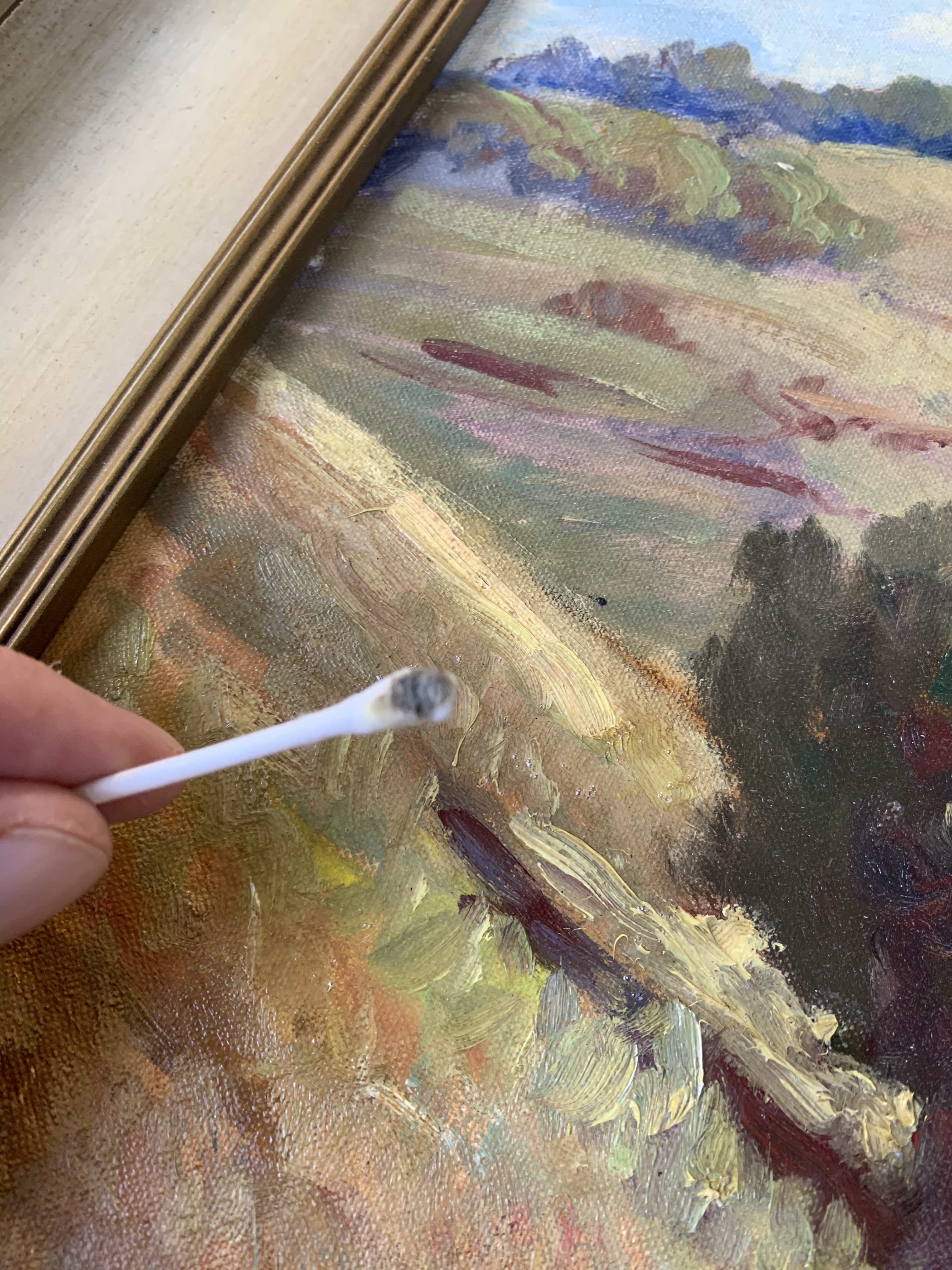
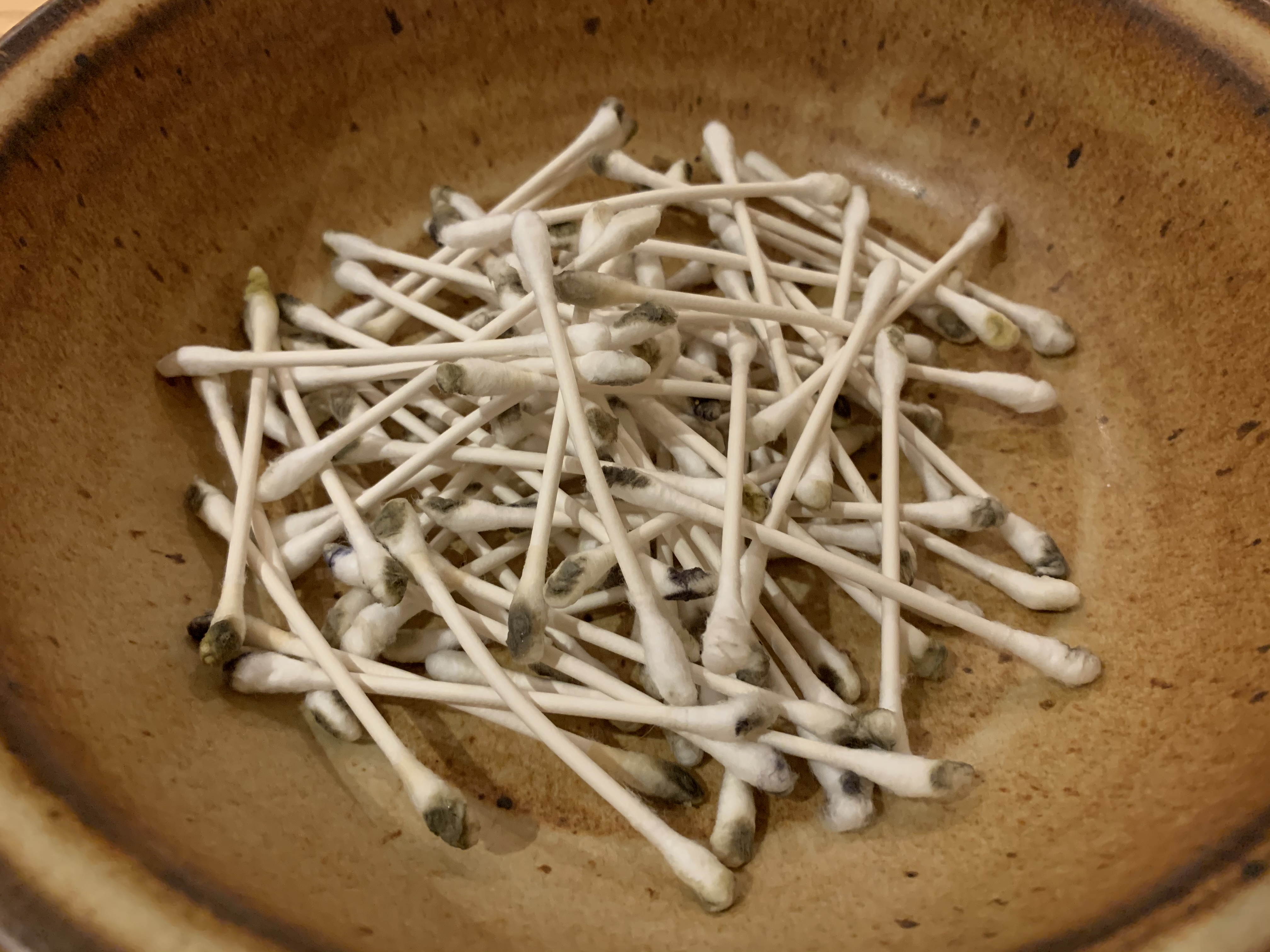
And, oh my God, it was satisfying. Just Q-tips and saliva. At first I wet the Q-tip in my mouth before swabbing the painting. But when I was about a third of the way finished, I discovered that spitting on the painting and then using swabs on the wet area was much faster and way more effective. (Of course, your results may vary, and I am no expert, so I offer no advice or suggestions for your own paintings. You should rely on expert help before embarking on any such project. And see your dentist twice a year.)
The dirty painting with just a bit of the upper left corner cleaned.It’s a painting on that canvas board that they gave you in junior high art class, not actual canvas.Working at the feet of the master.Turns out the sky was blue.I left a few bits of sky for the end as a reminder of my progress.The cleaning completed.And the dirty painting again for contrast.
I really enjoyed doing this. It was so calming and so satisfying to see my progress. I eventually went around the house looking for paintings that might be dirty. Unfortunately, the others we own barely even have dust on them. It makes me want to buy dirty paintings just so I can clean them.
Maybe Baumgartner could start a fantasy camp for people with no skills who want to clean paintings. Or maybe he could buy and resell paintings of little significance that would benefit from a little saliva. He could package them with swabs and sell them as a kit.
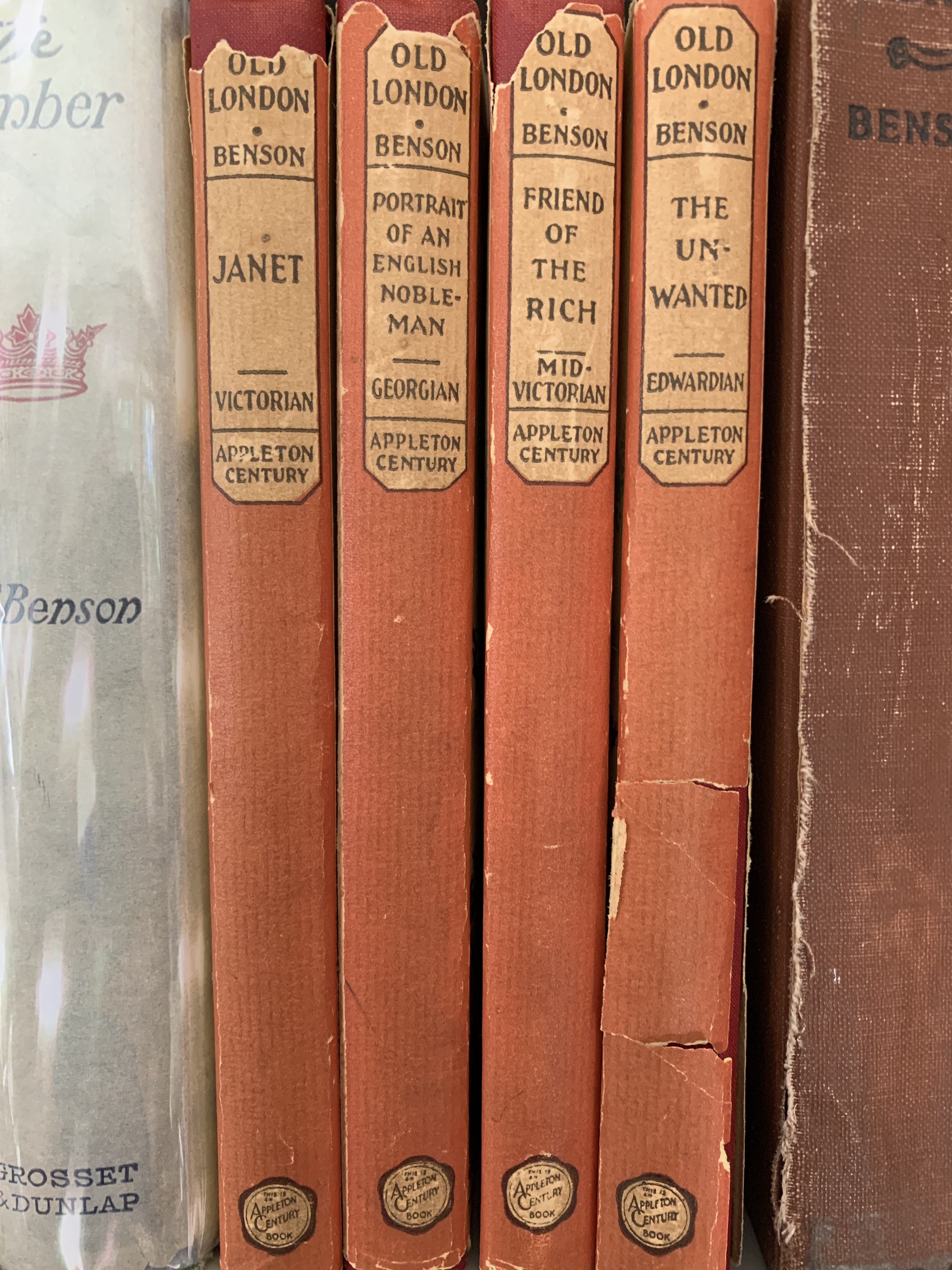
I’ve had this set of E.F. Benson novellas for quite a few years. Originally I only had one of them, realized it was part of a set, and went online to find a complete set (and then donated the single volume). Until a few weeks ago, I had only read one of the volumes (Friend of the Rich), which I enjoyed, but for some reason never picked up the others. When I decided to give the other three a go recently, I enjoyed each of them.
I’m a bit embarrassed that these are out of order.
Each volume depicts a little slice of life of “Old London” in a different era. Georgian, Victorian, Mid-Victorian, and Edwardian. These are not highly descriptive of London itself. In fact, now that I think of it, there isn’t much in the way of description of the locale at all. In the way that Benson does so well, he focuses primarily on the conventions and foibles of class, each volume with a sly twist.
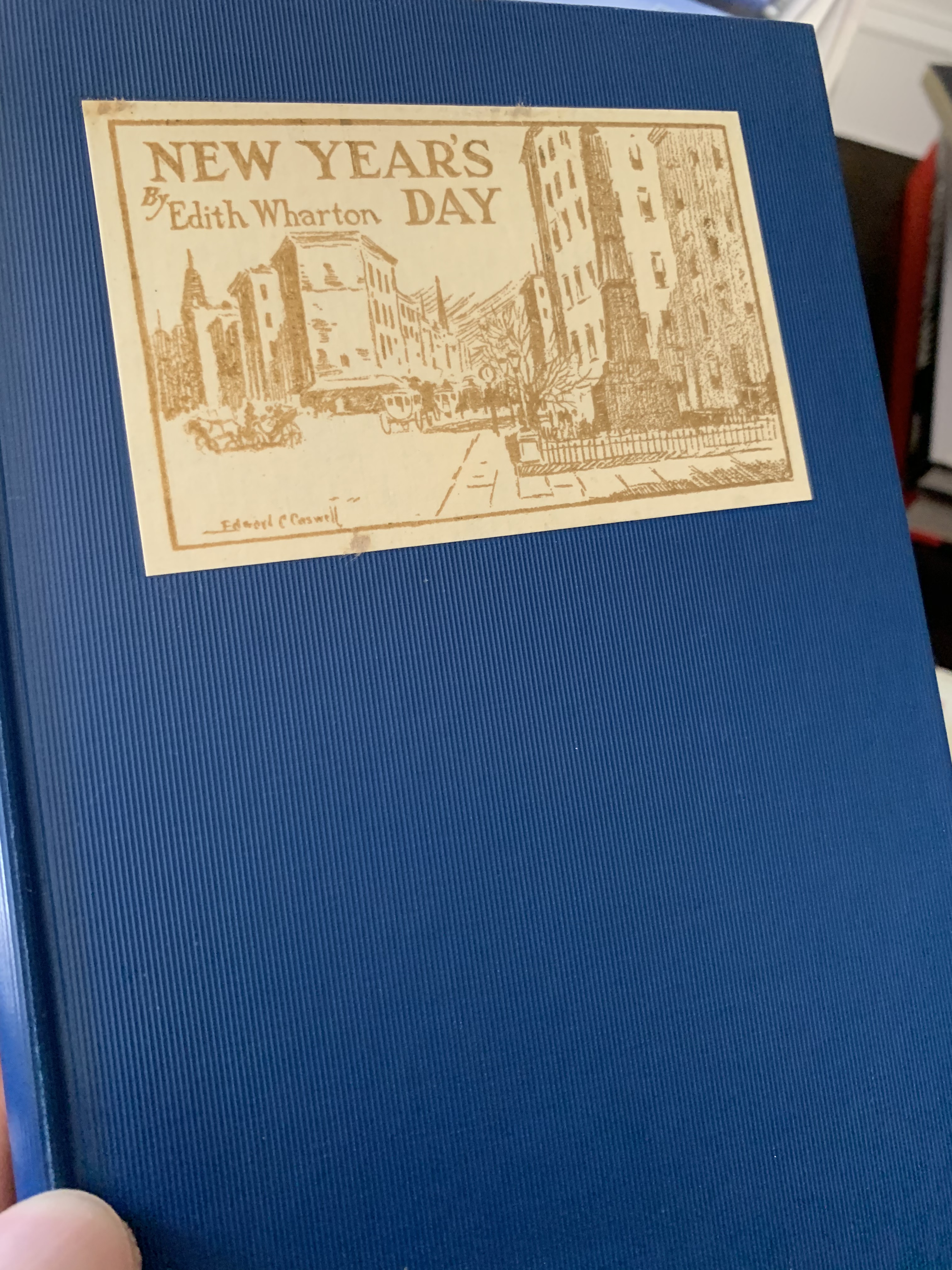
But the real news was an advertisement I noticed on the back flap of the second volume. Not only did E.F. Benson write this Old London series but Edith Wharton wrote an Old New York series? And like the Benson set, each volume was set in a different decade.
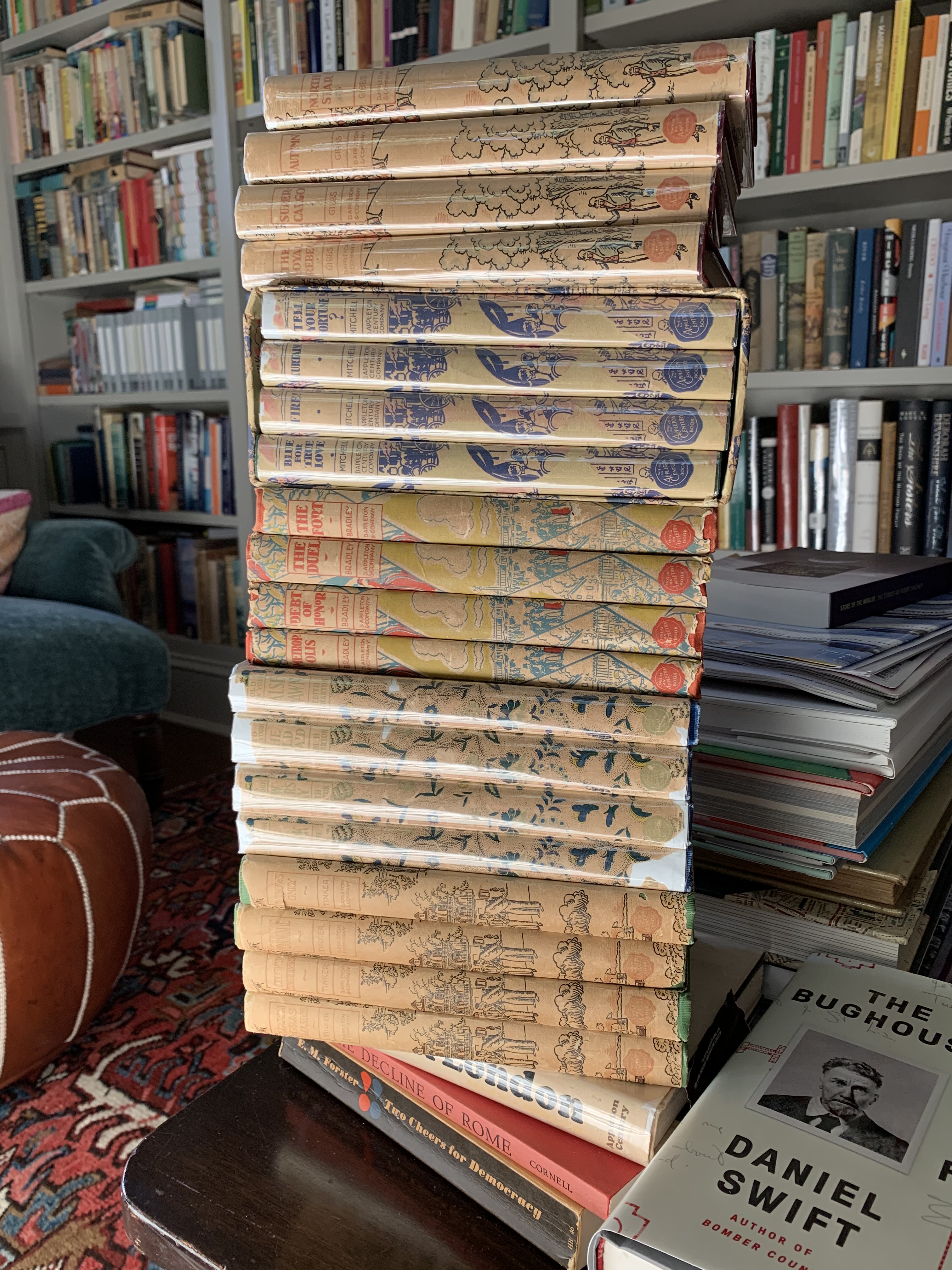
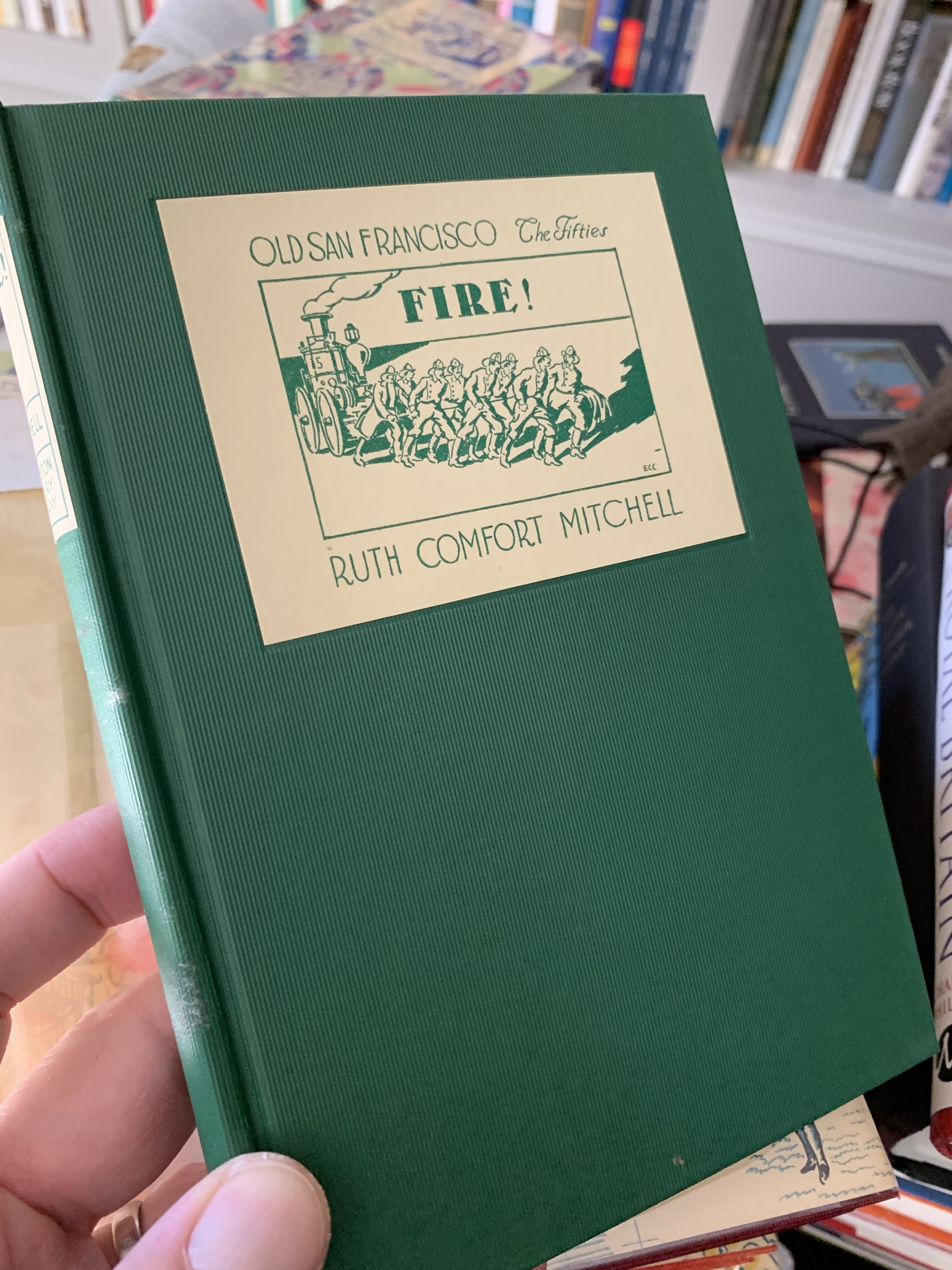
I fully intended to to go online and see if I could find the Wharton set. But then, on another back flap I encountered even more Old [Inset City] sets. All by authors I had never heard of, but the long dormant completist in me suddenly sprang to life.
Much to my delight I was able to find complete sets for each city at fairly reasonable prices. If you are so inclined, there are lots of onesies/twosies out there, but there are also a fair number of full sets available. I even got two sets with their original box. You might think I’m crazy, but I don’t actually like boxed sets or boxed books (like Folio Society volumes). I don’t like the way they look on the shelf. To me they ruin the look of a shelf of “normal” books. I tried to get all deboxed (it’s a word now) sets, but when comparing price and condition, I had to bite the bullet and get two sets with the boxes.
The Chicago series (third from top or bottom) also has a slip case.
It’s a good thing they didn’t do more cities.
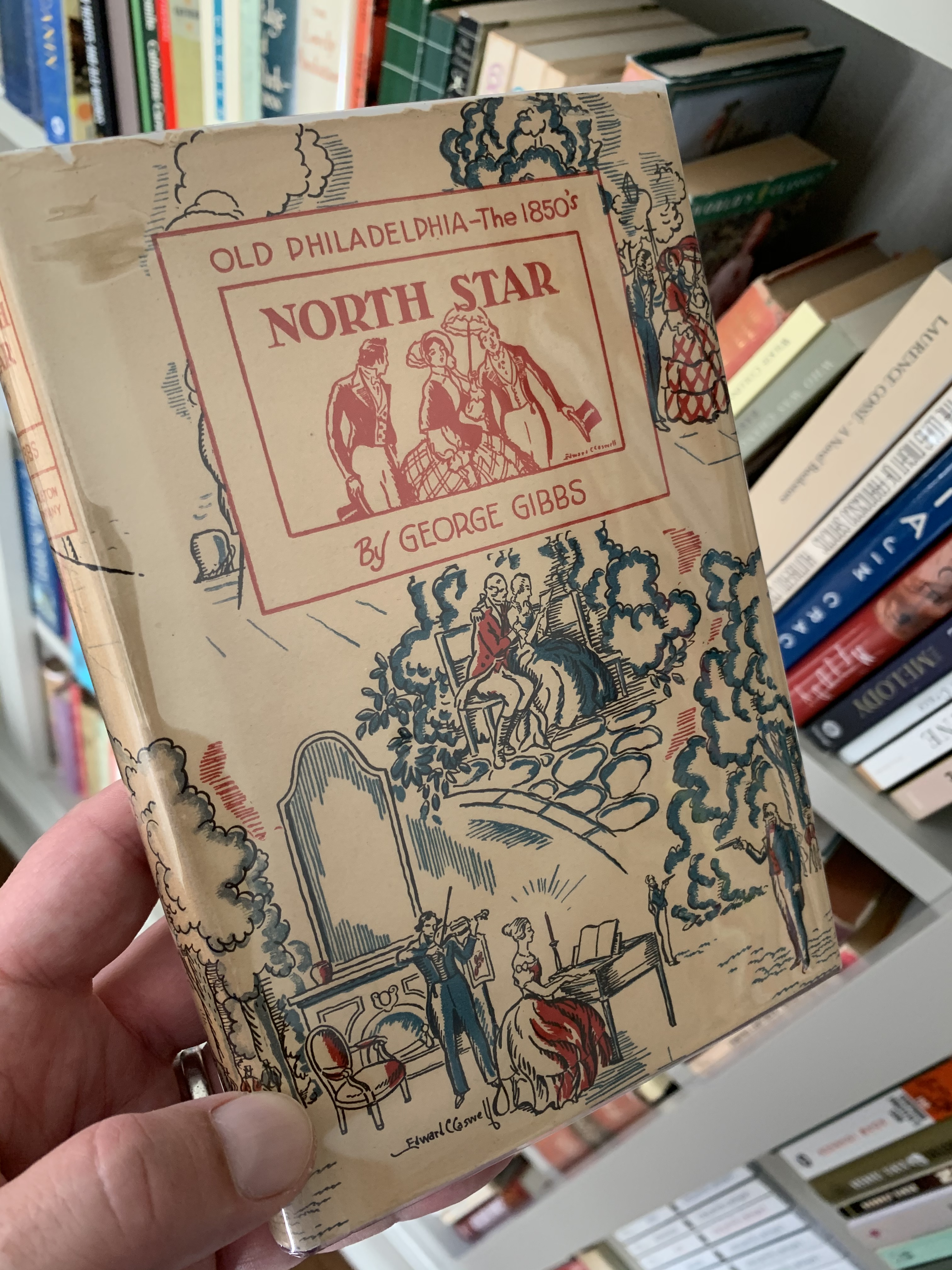
Some of them are nicely covered in plastic. (Something Frances of Nonsuch Book was going to come over and show me how to do until Covid made that impossible.) These are pretty even without the dust jackets.
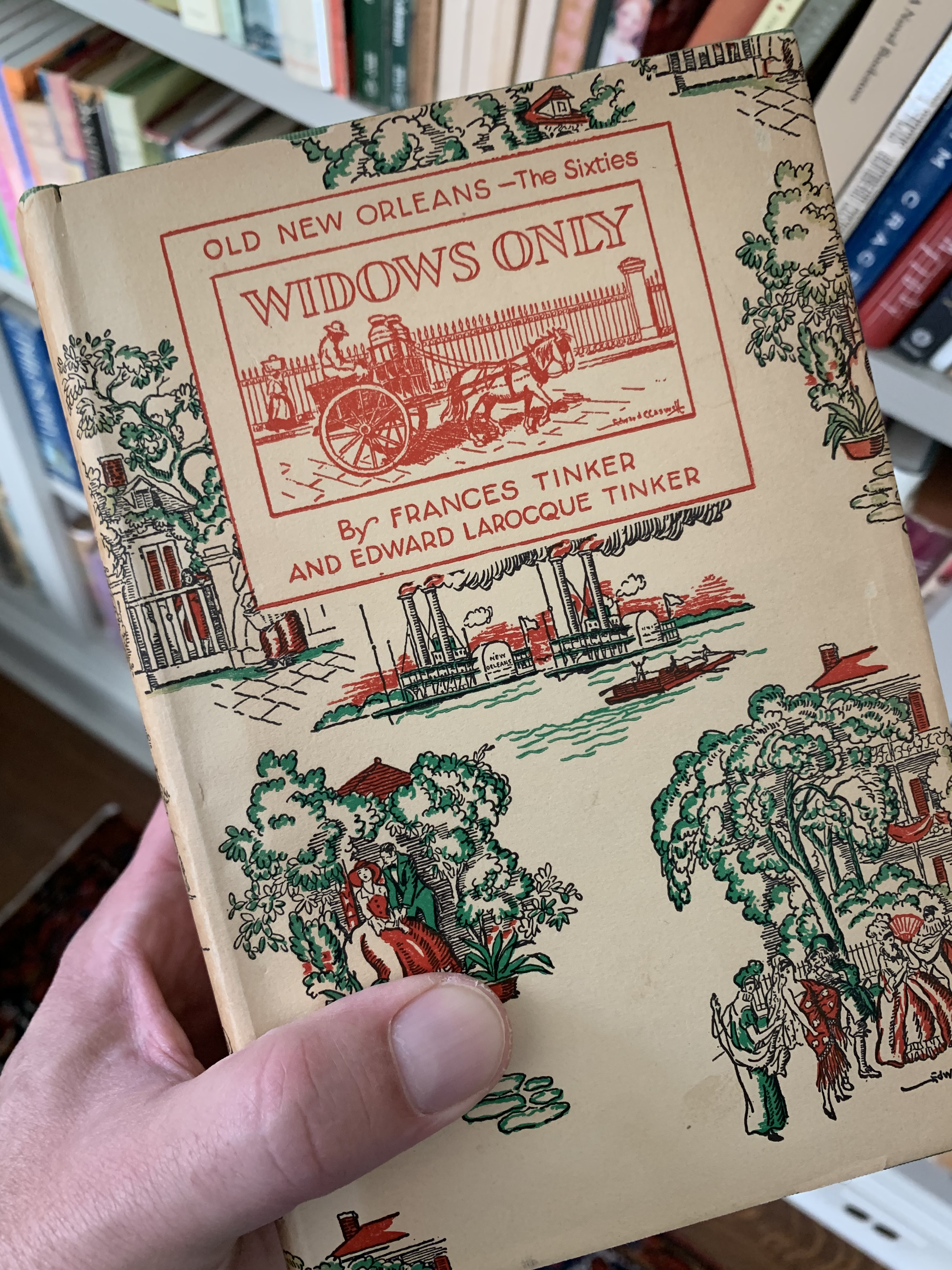
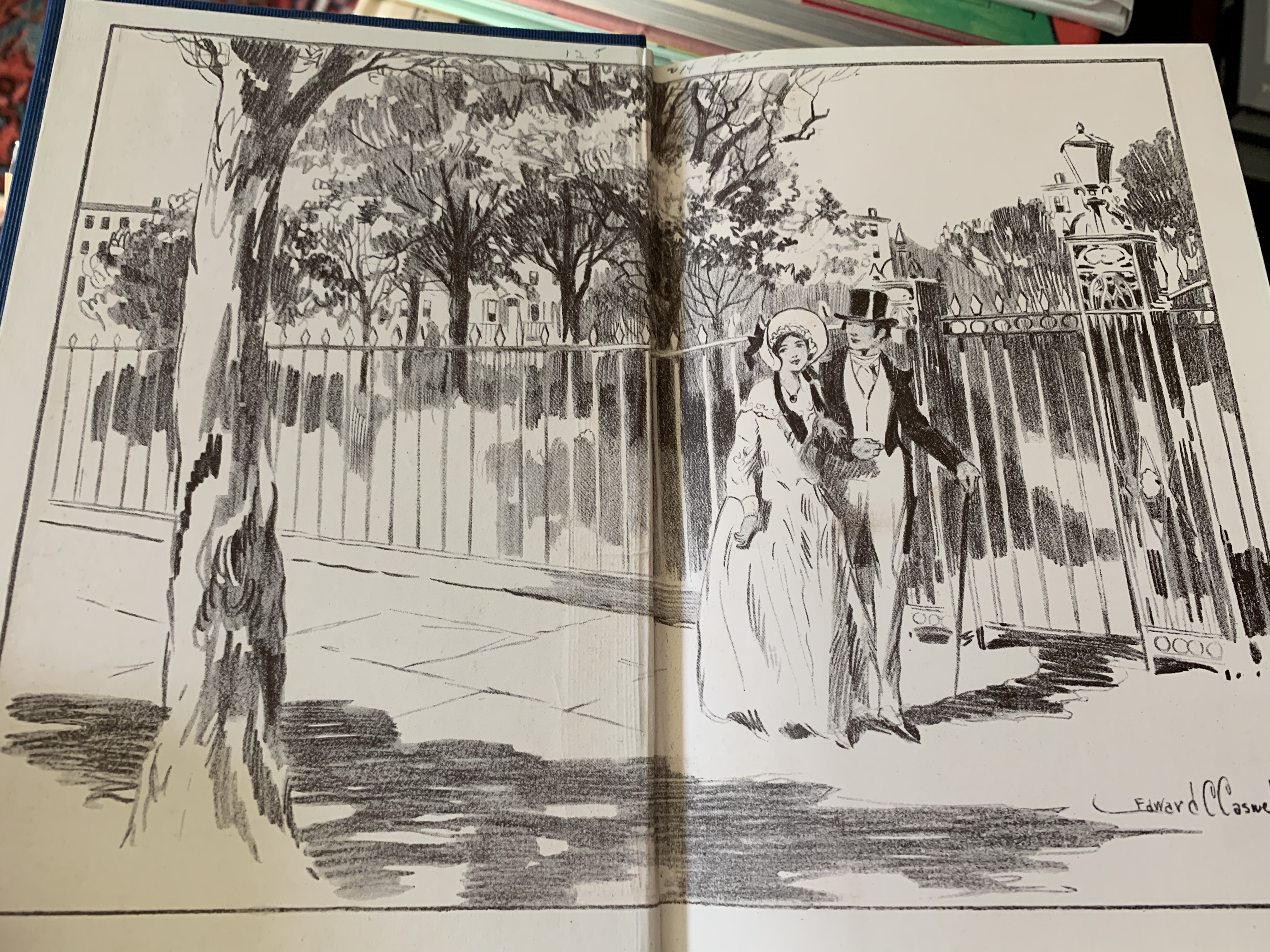
They also each have illustrated endpapers. The Benson series was illustrated by Reginald Birch, with the rest by Edward C. Caswell.
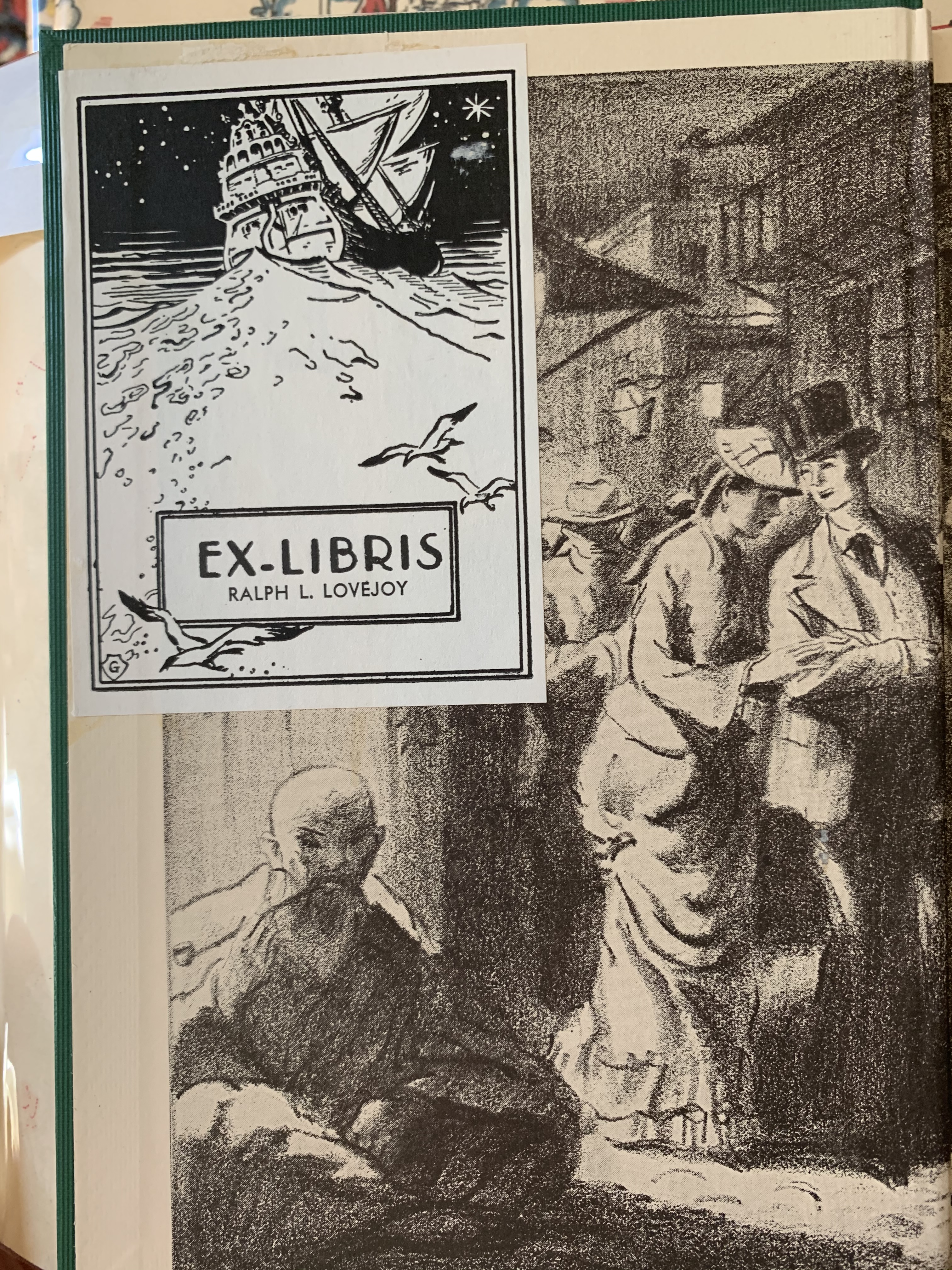
And two sets came with lovely bookplates. But they beg the question about bookplate usage with illustrated endpapers. Especially in this case where the front and back each have different images. (Incidentally, I just looked up Claire H. Keeney. He was a man, and a playwright. Check this out. And this, appears to by Ralph L. Lovejoy.)
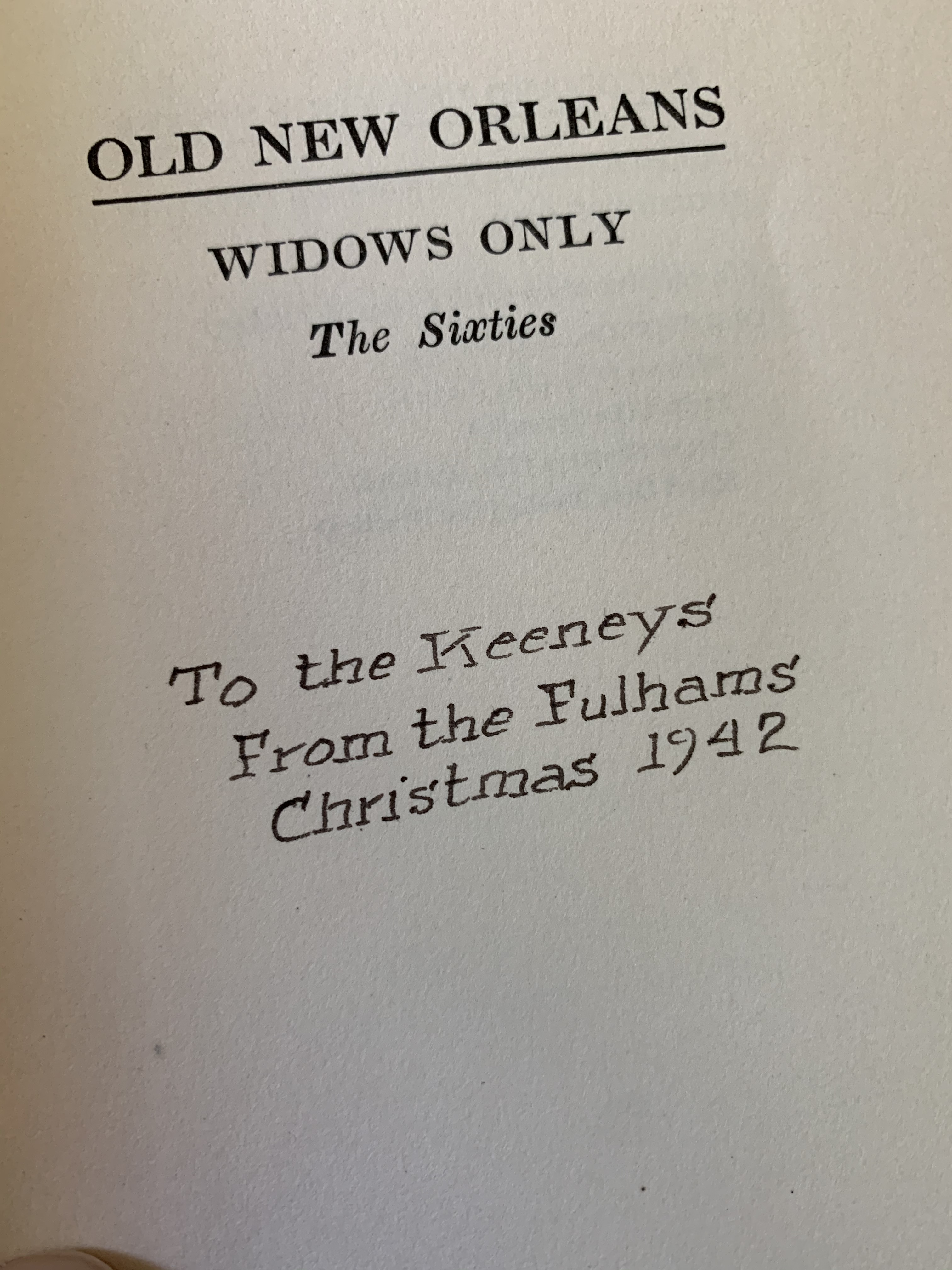
And I loved coming across this inscription that appeared in each of the four volumes in the New Orleans set.
After a serious book cull in 2014 when I got rid of lots of books and book sets that at one point I just had to collect and own, I was a bit shocked at my buying binge. But I’m interested in reading these and not just looking at them so maybe it isn’t as crazy. (It turns out that I actually already owned the Wharton series in a single modern volume and had even read them. Time to give them another go.)
It’s possible I might try and read them all before the end of the month in observance of Novellas in November, but I may have other fish to fry. We’ll see.
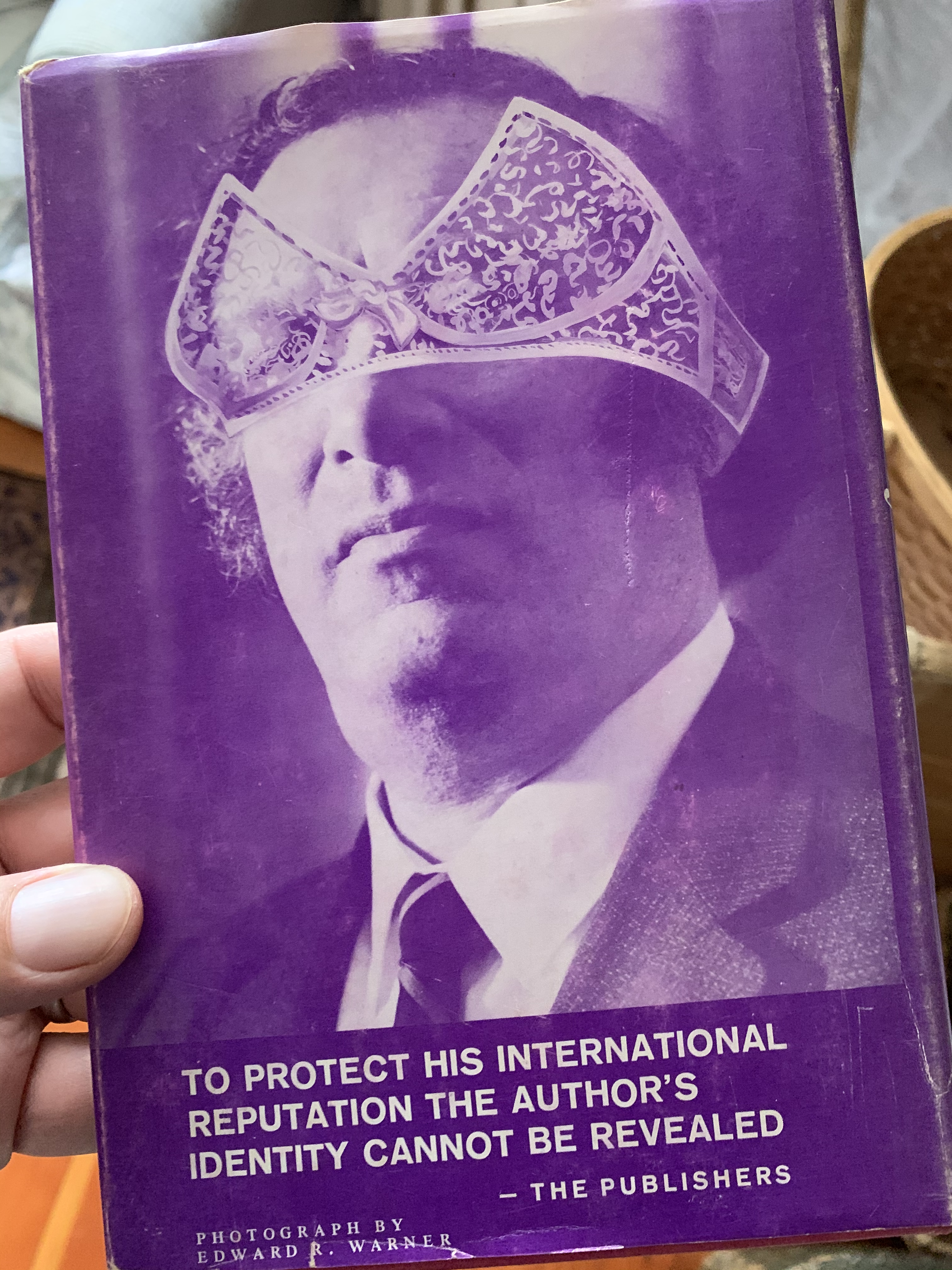
I discovered Monica Dickens over a decade ago because of the Persephone reissue of Mariana which I liked well enough that she became one of those authors I buy whenever I find her titles. Having written about 30 novels for adults, her books are somewhat easy to find in secondhand shops. I found this one several years ago at The Strand in New York City for $2 on one of the carts outside along East 12th Street. The old Book Club edition I found had no cover, so I really had no idea what I might find in the middle–this one didn’t even have a copyright date. When I’m hunting for used books in bargain bins (remember that in the Before Times?) I rarely Google anything. I’m always too worried people are taking books that should rightly be mine. I’ve developed a very quick scanning method where I run my hand over each spine (remember touching things in public?) to make sure my eyes stay focused on one row so I don’t get distracted and miss something along the way.
Of course collecting an author’s catalog without discernment means that books can sit on the TBR for many years before I crack them open. Especially those without any sort of identifying blurb on the outside. Such was the case with No More Meadows until a few nights ago when I was in my library trying to figure out what to read next.
Covid has shifted my interests even more towards dusty old books and away from anything new. Regular readers of Hogglestock will wonder how that could be possible, but it is. Just like I spent the first eight months of lockdown feeling like every day was a snow day or a holiday, making and eating every kind of comfort food I could think of, I have doubled down on my propensity for fiction I am fairly confident I can count on. Which for me, means something with a bit of age. I’ve realized that my thirst for descriptions of times gone by has morphed into a quest for reading that has no relationship with the 21st Century. What a shitty century it has been.
And with that, No More Meadows could not have been more perfect. I mean, it’s early 1950s and Christine works in the book section of a London department store. For those of us who can barely remember a time (especially in the US) when department stores sold books, imagine a time when they did and were actually staffed by five or so employees at a given time. I mean it feels one step away from brown paper packages tied up with string. Add a quirky father, three dogs, and a feisty, supportive, spinster aunt and things really start to fall into place.
As soon as Vinson, the uniformed U.S. Navy officer chats her up in a park you kind of know where this book is headed. As much as I wanted her to stay in London for my reading pleasure, Christine’s move to the U.S. becomes fascinating in its own way. Through Christine’s British eyes, Dickens describes America in the 1950s with anthropological detail that would have set off fact-checker alarms had it not been a contemporary account. Studying a period photograph can illuminate how people lived in a given time but still leave us wondering how people actually moved through, and interacted with those spaces. I’m constantly wanting to time travel (always backwards) to see how people really lived during various periods. Here Dickens does it brilliantly and in great service to the plot.
What made this trip back to the 1950s even more satisfying for me was that Christine’s life in the U.S. takes place in and around Washington DC. I often think about how this city functioned during different periods. I’m not talking official Washington–although we do get a look inside the social milieu of an aspiring naval officer–but how one actually existed in three dimensions. Descriptive fodder for the the historian/urban planner me who looks at the built environment and how people managed “back in the day”. And unlike some more recent novels set in DC, none of the place names or local detail come off as fake or name droppy. It really is a wonderful description for the historical record.
But this is fiction after all, once you pull the historical details out what’s left? Quite a lot. An exploration of relationship dynamics, families, and personal fulfillment. It would definitely stand on its own without my fascination for period detail, but the detail is part of the story. Enforced conformity, suburban ennui, hopelessness, fear, it’s all baked in.
One of the many book cases in the house. I would say about 70% of the books in the house had to belong to the original owners.
This house we stayed at in Maine was owned for 70-some years by the same WASPy family. Seriously WASPy. Based on a few names I found in some of the old books that the new owners kept I was able to construct quite a family tree for the original owners. We are talking Park Avenue mansion and the Mayflower.
Well one of those WASPs had a predilection for books that straddle the line between academic and prurient.
This might be the most academic of the cache of sex-related books I found on the shelves. But even then, a lot to titillate in the pre-internet world.
I realize now, I didn’t skim this one as much as the others and now I am curious about it.
This one was a bit of a ‘how to’. Full of rules, etiquette, demographics. Pretty fascinating.
How I wish this book had been on their shelves.
No doubt a stocking stuffer one Christmas.
One can only imagine how hi-larious it must have been when Chauncey bought this one.
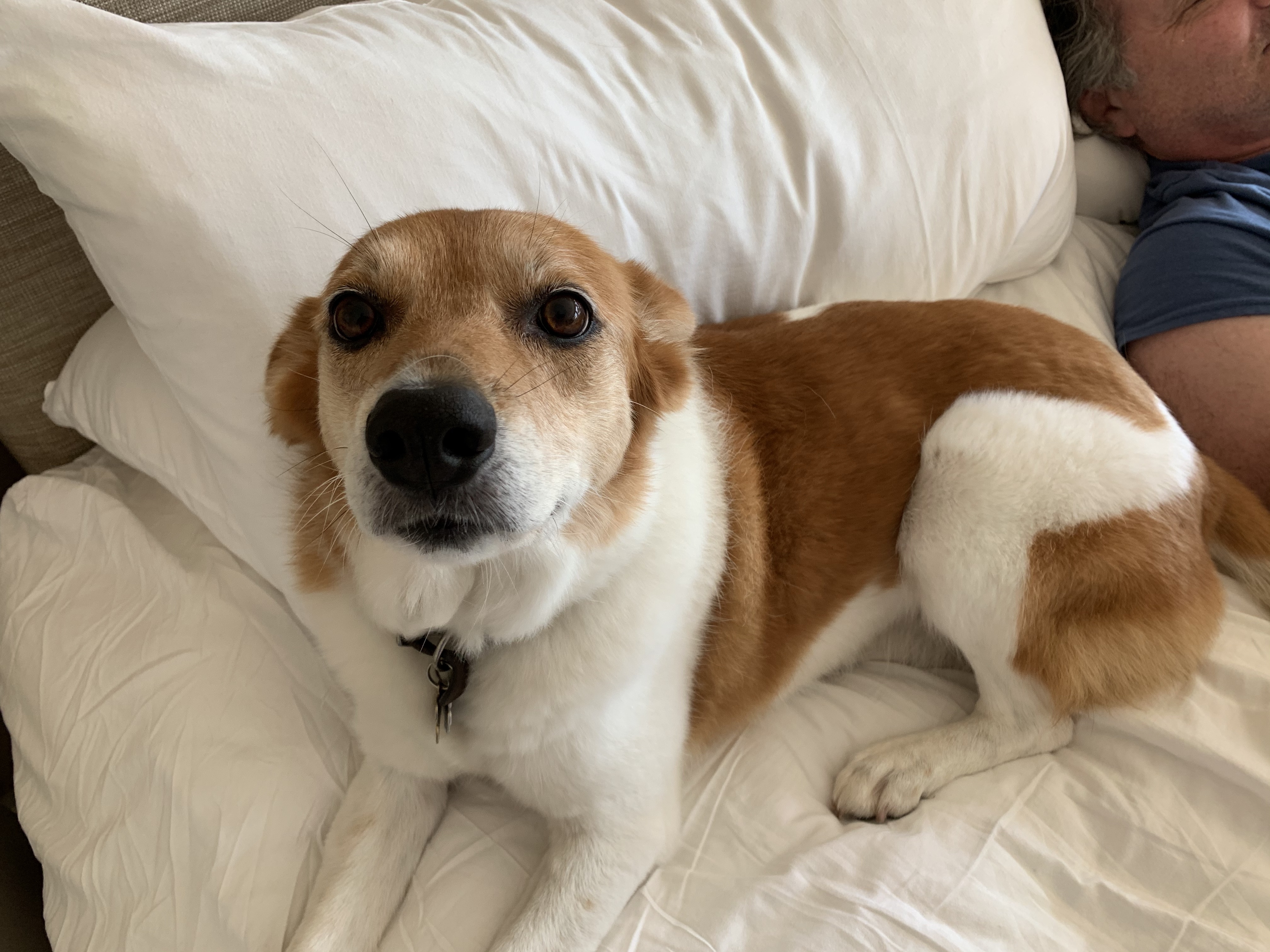
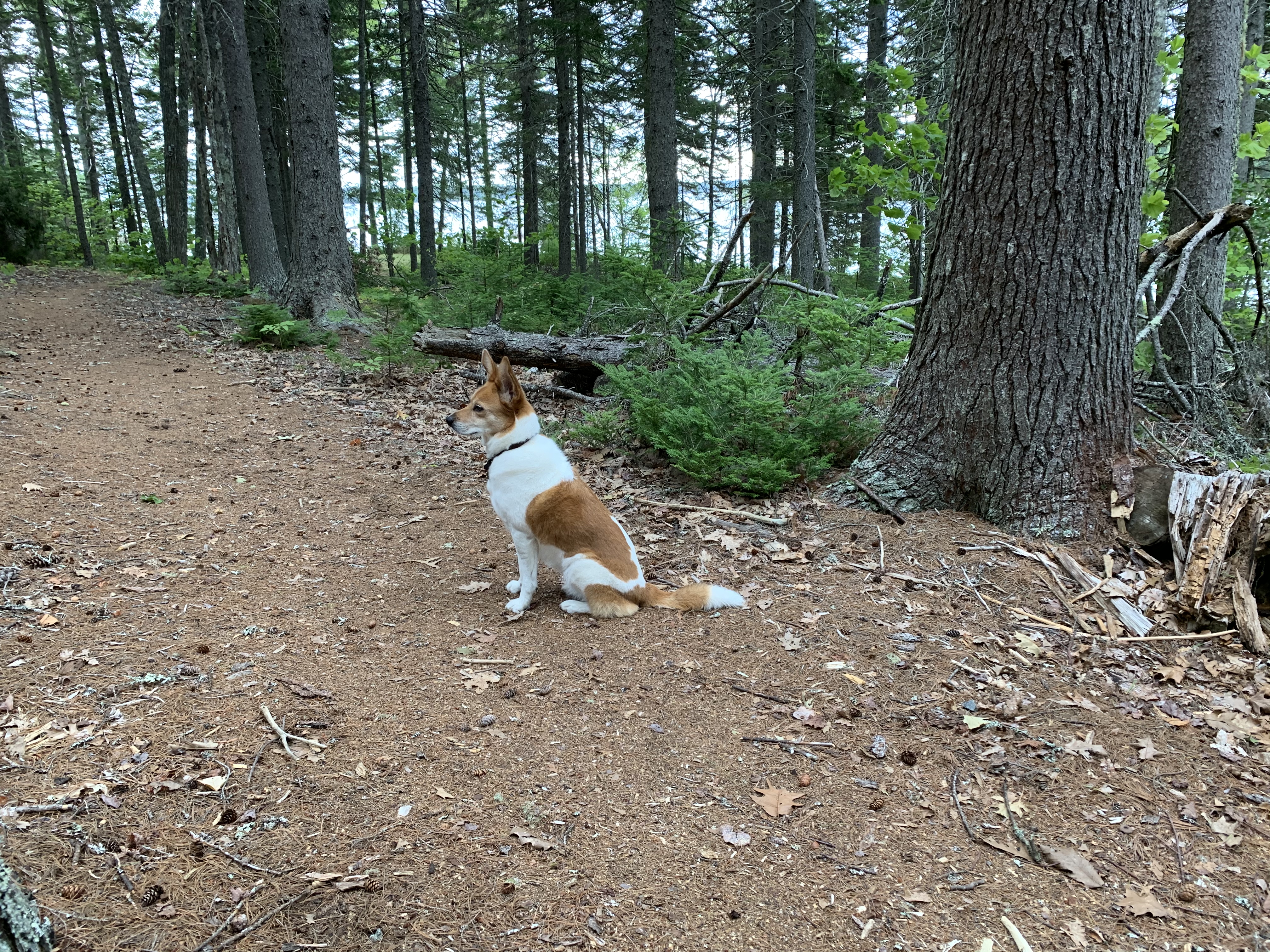
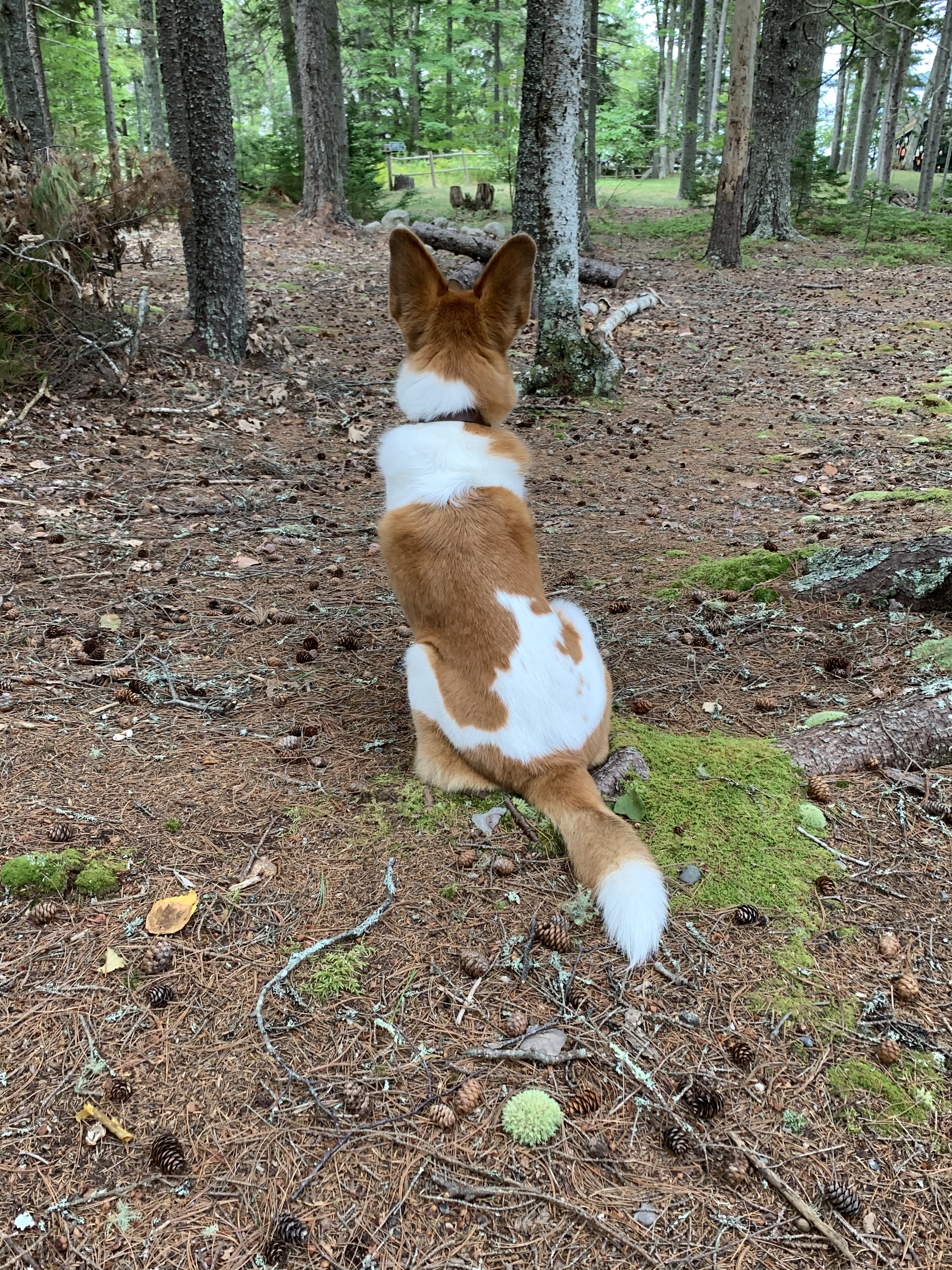
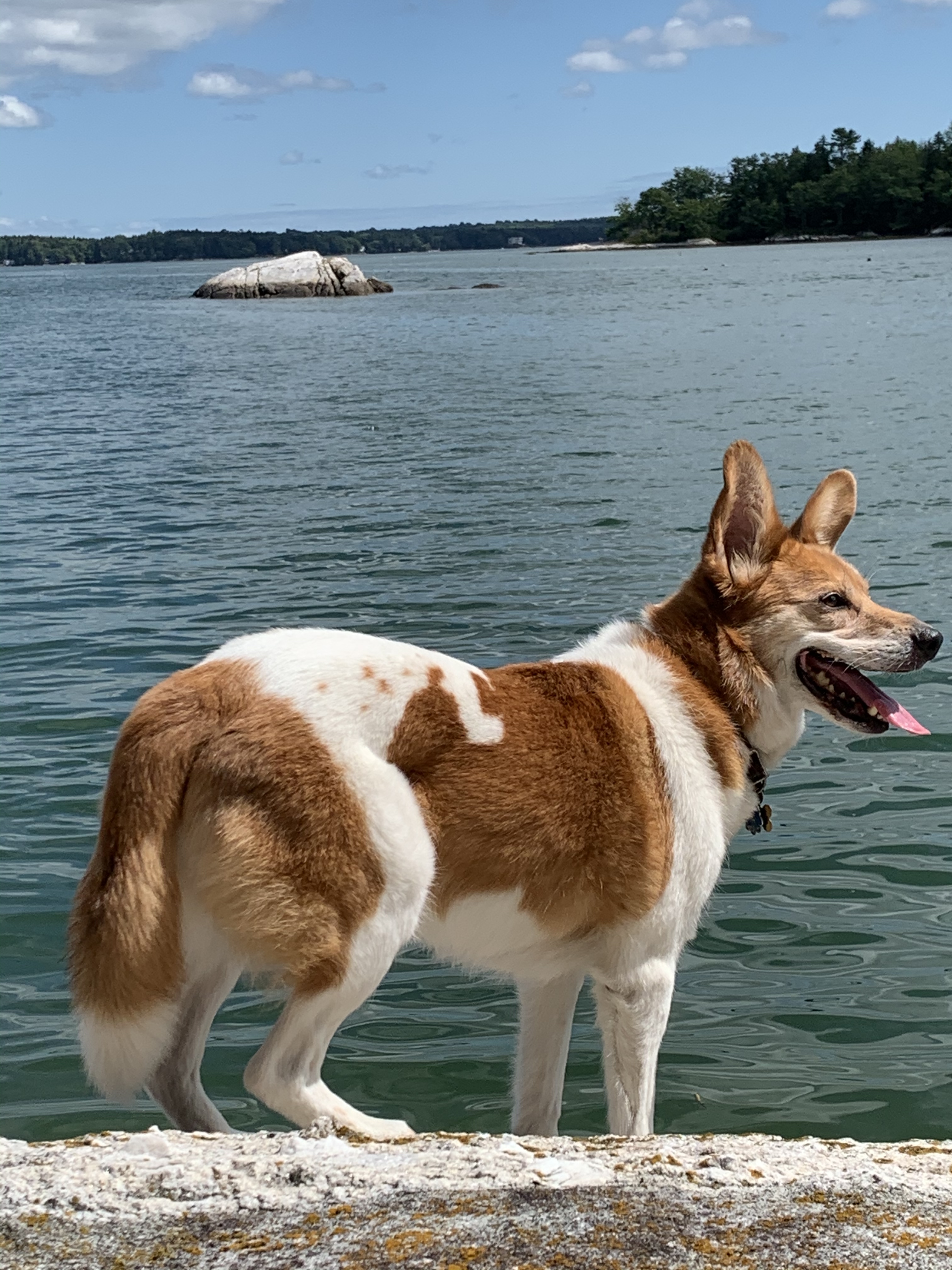
Last month we were on a tiny island in Maine. Four and half acres surrounded by water. This meant Lucy could be off leash for an entire week. I know the dog days of summer tends to connote the most unbearably hot parts of the summer, but in this case the weather was an absolute delight. In fact it was cool enough that we never even jumped in the ocean. Lovely warmish days with cool breezes. So lovely. I will have more pictures from that trip, but for now, how about a gallery of Lucy at her cutest.
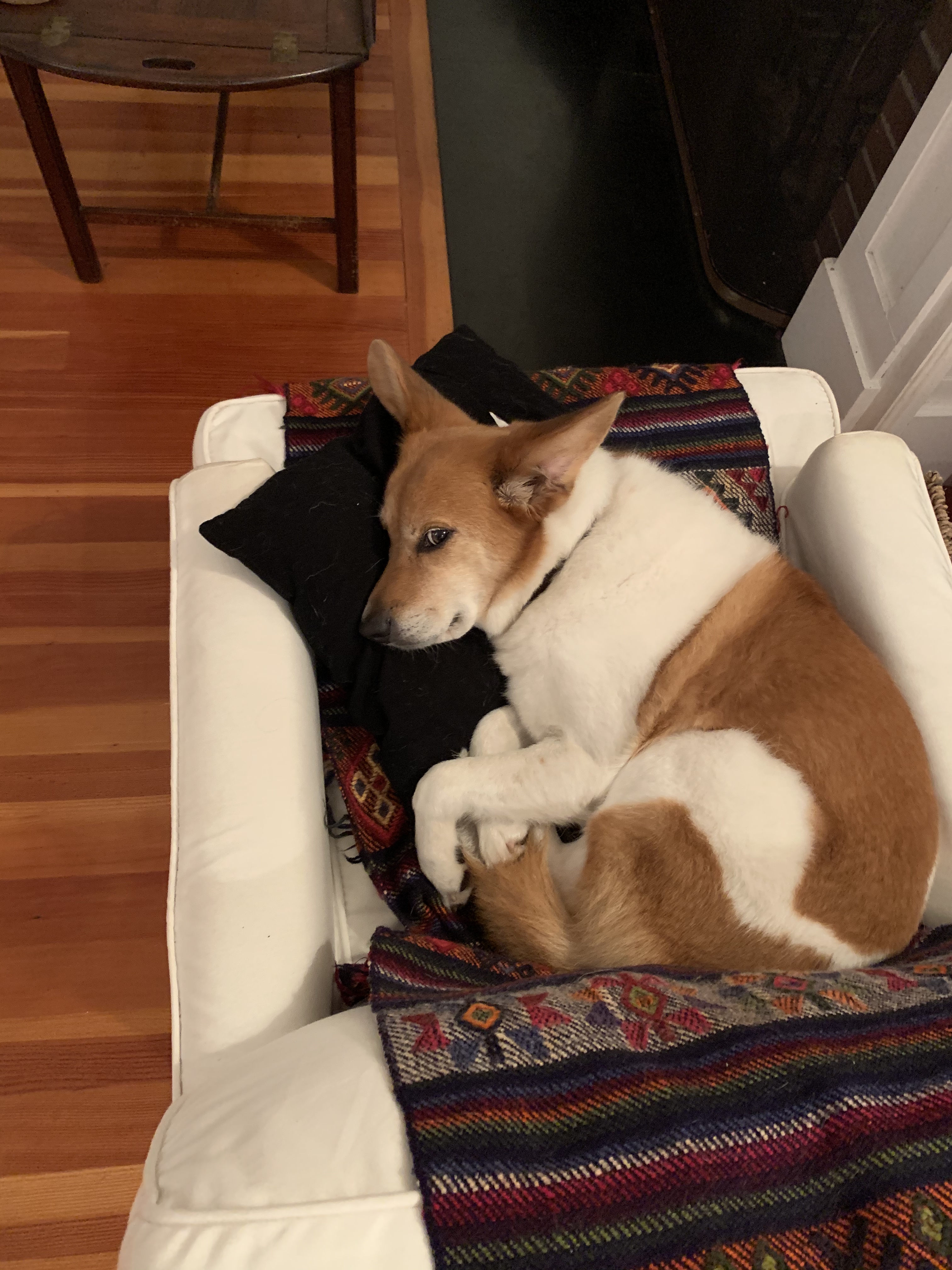
Relaxing in our hotel in New Castle, New Hampshire on our way to the house in Maine.
She loves a cave. Our bed at home is too low for her to get under. She enjoyed her “me time” away from the rest of us.
Always on squirrel patrol.
You should hear her paws as she runs across these soft pine needle paths.
Lucy hates getting in water, but she isn’t afraid to be near it. One morning I was watching her case a squirrel hole when she got herself on a ledge over the water. Just as I asked her how she was going to get off that ledge she tried to turn around and lost her footing. She dropped about three feet into the water and swam to shore. It was a great moment for me because we have never seen her in water, and after having her for 10 years we can now confirm that she can indeed swim.
For as much as we loved being there, Lucy probably had the best time of all.
She can be very patient.
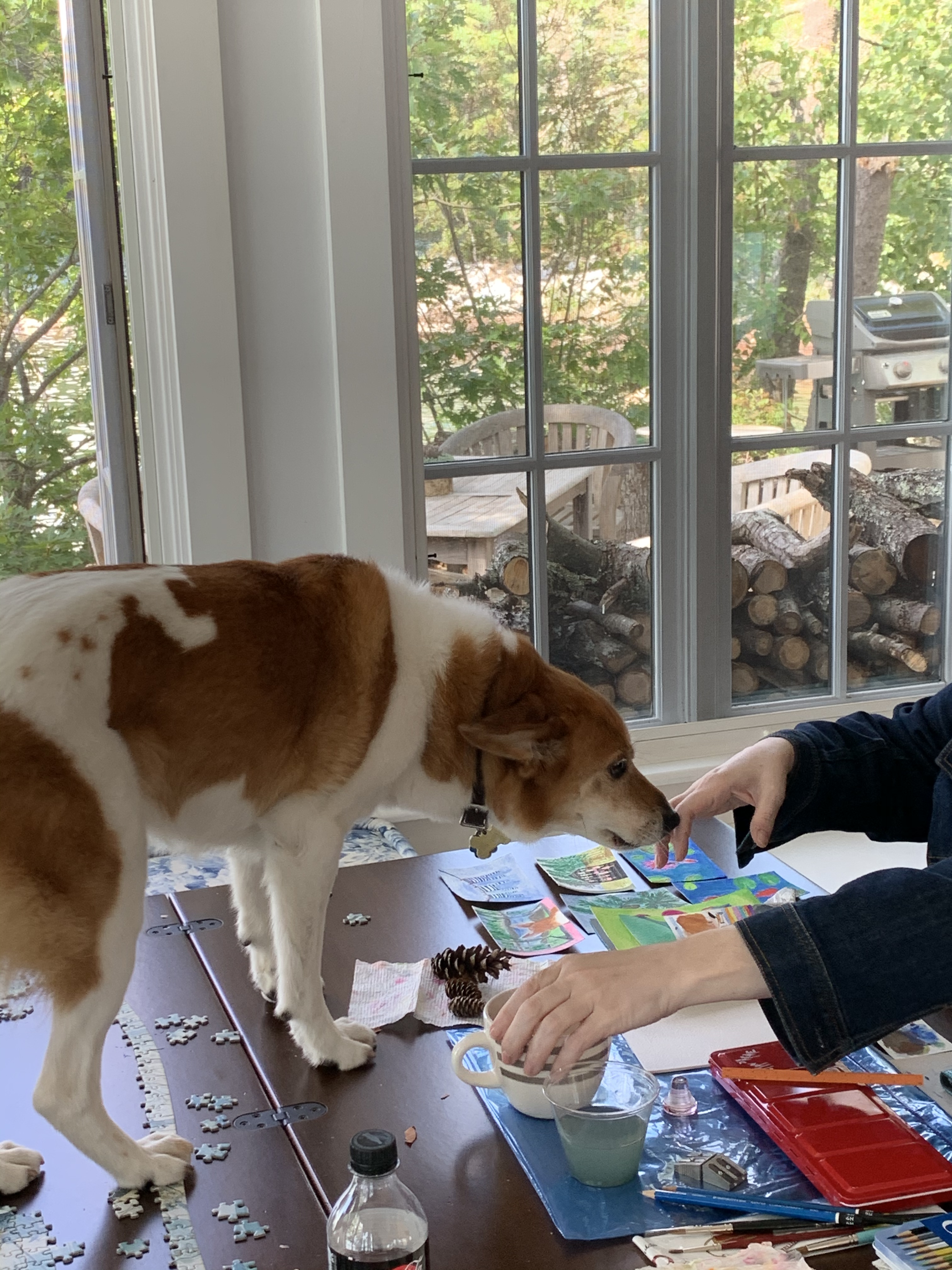
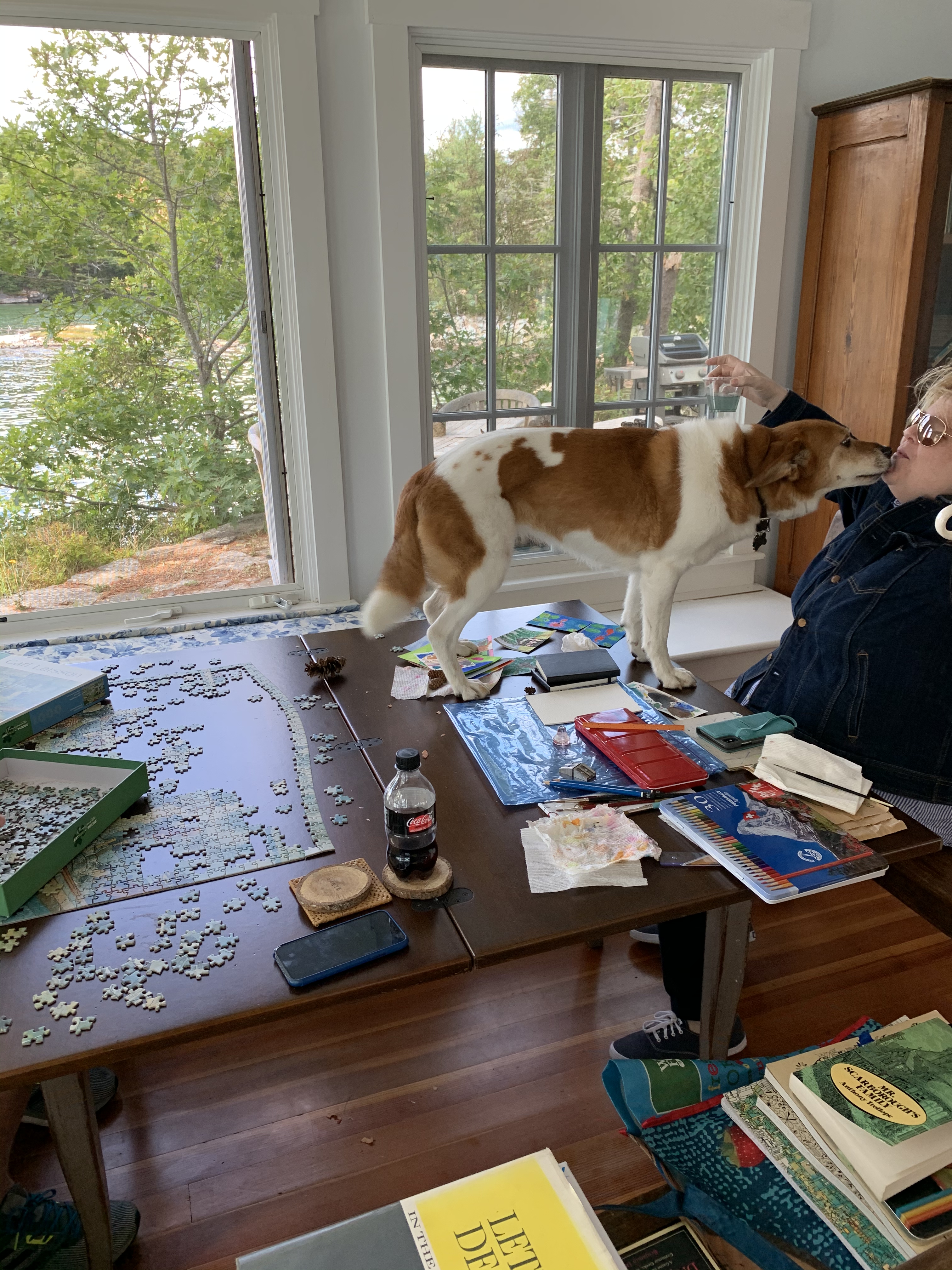
One minute she was on the window seat next to me, the next she was on the table walking across my puzzle.
Getting on the table was crazy enough, but she made a bee line over to Sarah to give her a kiss. Another thing she normally doesn’t do.
My husband tends to read a lot of non-fiction. Occasionally I’ve gotten him to read some fiction (like The Handmaid’s Tale a year ago when we were in Maine), but in general he reads about gardens, gardening, gardeners, and World War II. But since early in the Covid lock down he has been asking me to pick novels for him.
With pleasure.
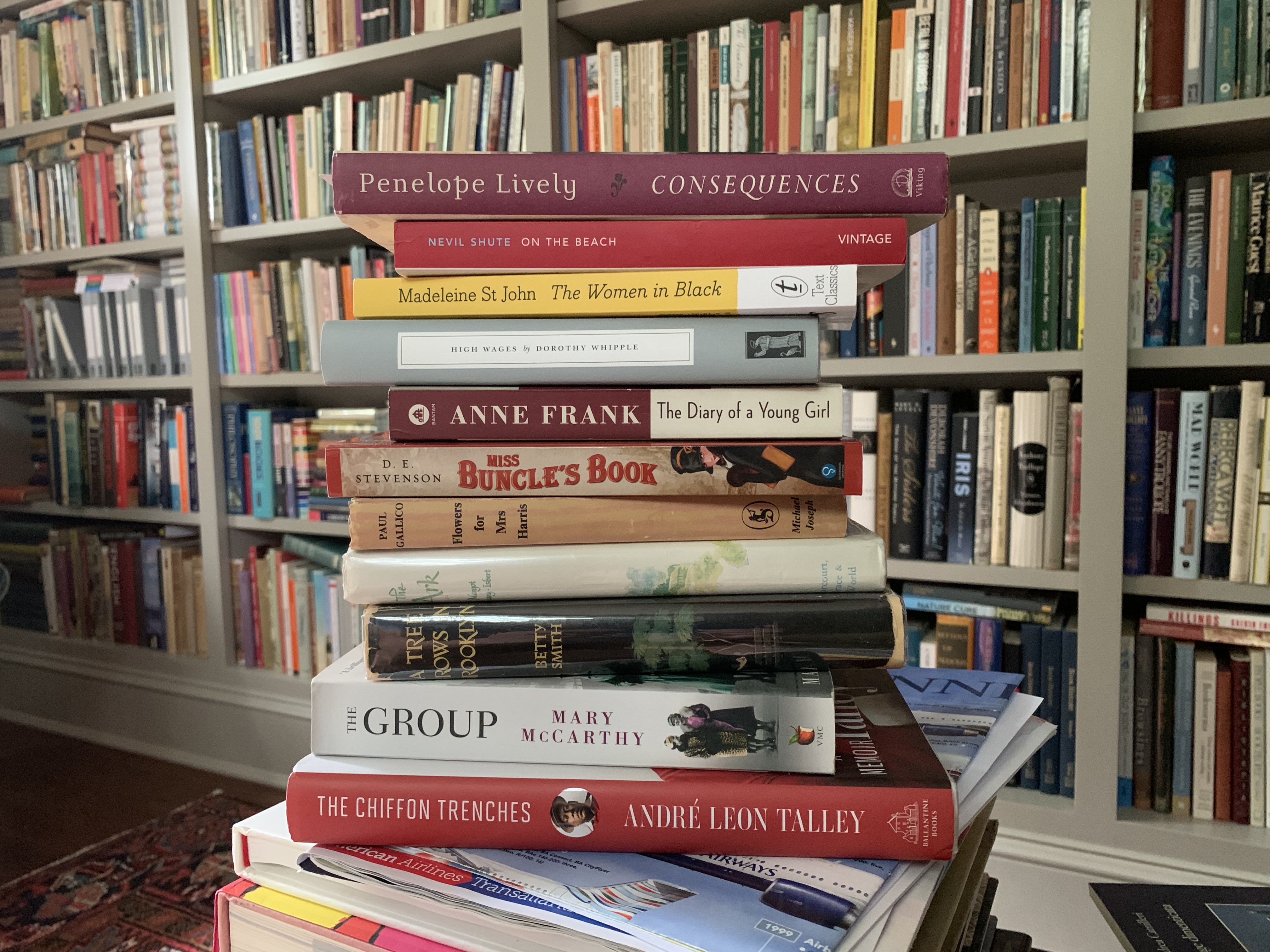
Happily, when I asked him what he was in the mood for, he said “cozy”. That was easy. Miss Buncle’s Book. What’s cozier than that? He loved it and has been enjoying everything I hand over. So far I have limited myself to giving him stuff that I still own. There are many books that I have read that I know he would like, but I don’t still own them all. I might have to start buying books I used to own.
Of course what amazes me most about this is not that he is enjoying himself, but that he lets me choose for him. I can’t remember the last time I let someone do that.
UPDATE: I should have said that his first request was cozy, not all of them have been chosen to be cozy.
This stack so far. It kind of kills me that he isn’t keeping a list. I guess I’ll take a picture every so often so we have a record of it.






















 hogglestock