shelf by shelf : from Goudge to Hemingway

shelf (2)Last time I talked about picking one shelf and reading from end to end. I think if I ever tried that I would have to find a shelf that had the fewest author collections. That is, a shelf with only one or two by any one given author. Otherwise I  could get buried under an author I don’t like or read one I love too quickly. We will see at the end of this if any shelf looks like it could be a possibility.

Studying my shelves in this way does open up all kinds of reading games that I could play. I could find five books by different authors in a row and then read them in order. That might be kind of fun. One that seems even more likely to try out would be to start with Shelf 1 and choose one book from each shelf. That would force me into picking up things I might be ignoring while maintaining a lot of variety. Or I could make a list of the top 10 books most likely to be culled and then give them all fair crack–that is, the Nancy Pearl Rule of 50. The possibilities are truly endless.

Like Shelf 10, Shelf 11 has a fairly low completion rate. Hmm, that sounds like the basis for another reading game …
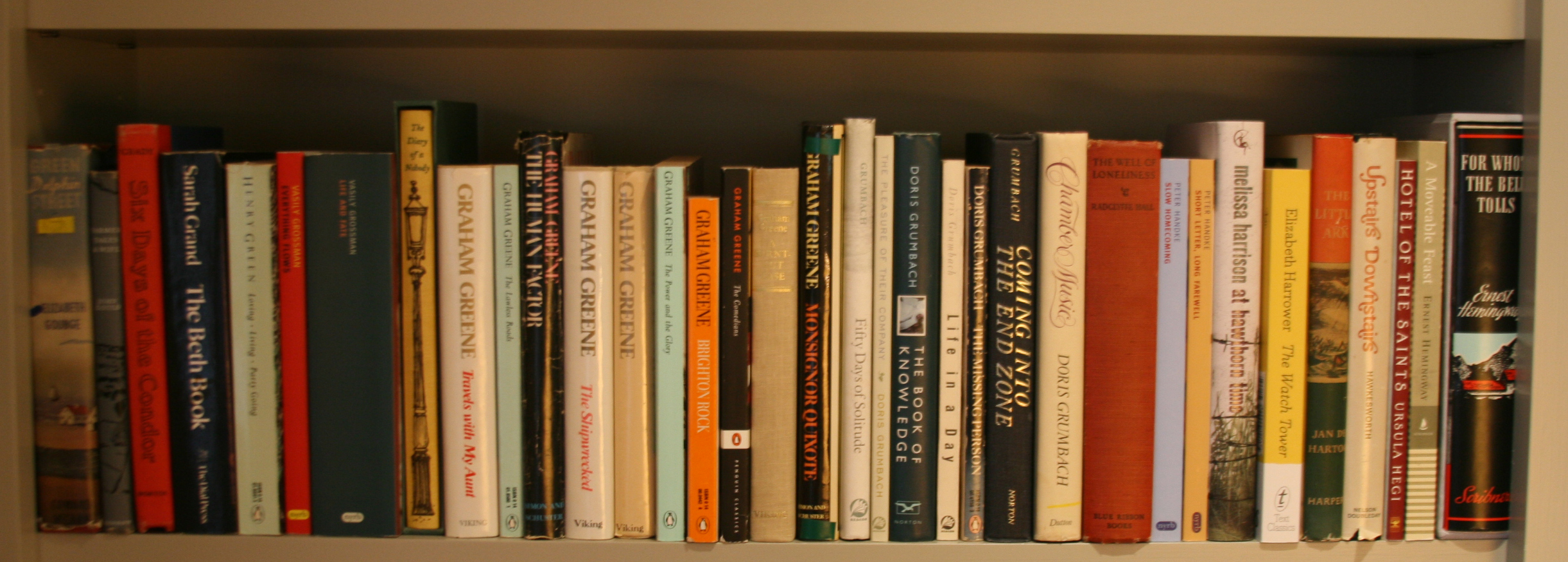
Don't forget to click. Plenty of room to zoom.
Don’t forget to click. Plenty of room to zoom.

SHELF ELEVEN: 37 books, 27 unread, 10 read, 27% completed

Goudge, Elizabeth – Green Dolphin Street
When I bought this I had no idea it was turned into a film with Lana Turner. I’ve read one other  Goudge novel that I didn’t like as much as I thought I should.

Gould, John – Farmer Takes a Wife

Grady, James – Six Days of the Condor (completed)
1970s spy thriller. Looooved this movie with Robert Redford and Faye Dunaway when I stumbled across it on Netflix. And I really looooooooooved the book after I found an old battered copy of it. And then I watched the film again for good measure and still loved it.

Grand, Sarah – The Beth Book

Green, Henry – Loving
Green, Henry – Living
Green, Henry – Party Going
I failed to get into Green when some bloggers held a reading week a few years ago. I am determined, however, to give him another go. This spac- economizing omnibus edition will save it from any culls in the near future.

Grossman, Vassily – Everything Flows
Grossman, Vassily – Life and Fate
Picked these up purely because they were NYRB Classics on a remainder shelf. I’m assuming it will have to be a pretty cold day before I pick up the enormous Life and Fate.

Grossmith, George and Weedon – The Diary of a Nobody
Got this at Powell’s last summer because I liked the illustrations. Have heard from many of you that it is a fun book.

Greene, Graham – Travels with My Aunt (completed)
Greene, Graham – The Lawless Roads
Greene, Graham – The Human Factor (completed)
Greene, Graham – The Shipwrecked
Greene, Graham – The End of the Affair (completed)
Greene, Graham – The Power and the Glory
Greene, Graham – Brighton Rock
Greene, Graham – The Comedians
Greene, Graham – A Burnt-out Case (completed)
Greene, Graham – Monsignor Quixote
Years ago my first Graham Greene was Our Man in Havana. I liked it, but found it a bit too whimsical for my tastes. I recently listened to Jeremy Northam read it and ended up enjoying it more than the first time. Travels with My Aunt was my second Greene and I liked it much better. It wasn’t until I read The End of the Affair that I realized just how amazing Graham Greene can be. Gosh I love that book. Also quite liked The Human Factor and to a lesser degree A Burnt-out Case.

Grumbach, Doris – Fifty Days of Solitude (completed)
Grumbach, Doris – The Pleasure of Their Company
Grumbach, Doris – The Book of Knowledge
Grumbach, Doris – Life in a Day
Grumbach, Doris – The Missing Person
Grumbach, Doris – Coming into the End Zone
Grumbach, Doris – Chamber Music (completed)
I took a chance on Doris Grumbach at Powell’s last summer. I picked up Chamber Music and thought it sounded good, but then thought I might be missing something if I didn’t buy the other Grumbach’s on the shelf. Turned out I loved Chamber Music and liked the memoir Fifty Days of Solitude about half as much. I should note that this a is a case where I have lumped an author’s memoirs in with her novels. You will see that later with May Sarton and perhaps a few others.

Hall, Radclyffe – The Well of Loneliness (completed)
Some of Hall’s prose is definitely awkward, but overall I really loved this 1920s tale of Lesbian love. It is amazing how much of what Hall wrote was progressive and how much still rings true today.

Handke, Peter – Slow Homecoming
Handke, Peter – Short Letter, Long Farewell

Harrison, Melissa – At Hawthorne Time (completed)
Simon Savidge gave me this novel last year when we went on our road trip to Booktopia in Petoskey. I really liked this novel. It was longlisted for the Bailey’s Prize.

Harrower, Elizabeth – The Watch Tower

de Hartog, Jan – The Little Ark

Hawkesworth, John – Upstairs, Downstairs
A novelization of the amazing 1970s TV series of the same name.

Hegi, Ursala – Hotel of the Saints (completed)

Hemingway, Ernest – A Moveable Feast
Hemingway, Ernest – For Whom the Bell Tolls
You will have to wait for my next shelf to see what Hemingway I have read. While he isn’t a favorite of mine, I never quite understand the blanket criticism of his work.

NEXT TIME: Hemingway to Jansson


The death of strawberry ice cream

straw2
Over the past couple of years I have noticed the gradual disappearance of strawberry ice cream at the grocery stores in my area. At first I put it down to the awful, fantastically out-of-date, cramped, mismanaged Safeways that surround us. But then I noticed that other stores in the metro area were similarly devoid of strawberry. The other morning I was in a Harris Teeter near my office and I saw the Edy’s delivery guy. I took a quick look at their freezer case and sure enough, no strawberry. So I asked the delivery man what was up with strawberry. He told me that Edy’s still makes it but that no one on his route orders it anymore.

That. Is. So. Sad.

Now, before you think I am loony toons, let me just say that strawberry ice cream is not necessarily my favorite flavor. But sometimes I get a crazy craving for it and all other flavors pale in comparison. I should also note that not just any ice cream will do. I crave the kind that is so perfectly melty by the time you get it home from the store that the top layer under the lid is sheer perfection. Premium brands will not work–not enough air. No Ben and Jerry’s, no Haagen-Dazs. Mid market Breyer’s (not to be confused with Edy’s sister brand Dreyer’s) is just god awful in any flavor. Its mouth feel and lack of creaminess is just the worst. Some store brands can do in a pinch, but they lean too much to the artificial side. Although I haven’t had it for a long time, my guess is the Kemp’s of my Minnesota childhood would probably still fit the bill as would home-delivered (in some markets) Schwann’s. But none of those are feasible on a regular basis.

Even if I didn’t have a brand preference I’ve noticed lately that I can’t find strawberry at the grocery store at all. Not premium, not store brand, not any brand. So these days I am pretty much limited to getting the occasional scoop at an actual ice cream shop. This can work, but it isn’t quite the same thing (see above, re: melty bit under the lid).

Tonight I went to pick up a sandwich for dinner. (John’s out of town, the kitchen counters were sealed today and can’t be used until tomorrow.) The place I go for sammies has ice cream and lo and behold they had strawberry. So while I waited for them to make my order I sat down outside and had double scoop. (Yes, before dinner.) Today was the first day we haven’t had rain in about a bazillion days so it was really nice to kick back and enjoy some strawberry ice cream in the early evening sunshine. The product itself was just so-so It is a local brand that isn’t bad, but it wasn’t quite right. As I sat there eating it I began thinking about the Trickling Springs Dairy shop at Union Market in DC. It’s a great food venue with lots of great outlets but it is nowhere near our house and kind of a big pain in the butt to get to. I was fantasizing about someone opening a Trickling Springs shop in our neck of the woods which led to me fantasizing about some of the other Union Market offerings moving up here as well, none of which will happen.

Even though it wasn’t perfect, the cup of strawberry hit the spot and cheered me up to no end. Then I began to walk back to my car and was passing our neighborhood cinema when I noticed that their little coffee shop/concession stand had a sign that said “TRICKLING SPRINGS ICE CREAM”! My first thought was “Damn, I just had inferior ice cream.” My second thought was “Who the hell cares, this is Trickling Springs.” So I went inside and got a cup of cookies and cream. Again, all prior to having dinner.

The irony of the situation is that I didn’t even notice if they had strawberry. I had already scratched that itch I guess. There’s always next time. So I guess the moral of the story is so what if my childhood has disappeared from the giant, chain, grocery stores. As long as mom and pop are still making ice cream there is a pretty good chance I will still be able to get what I need. And I probably don’t need half gallon tubs of it in my home anyway.

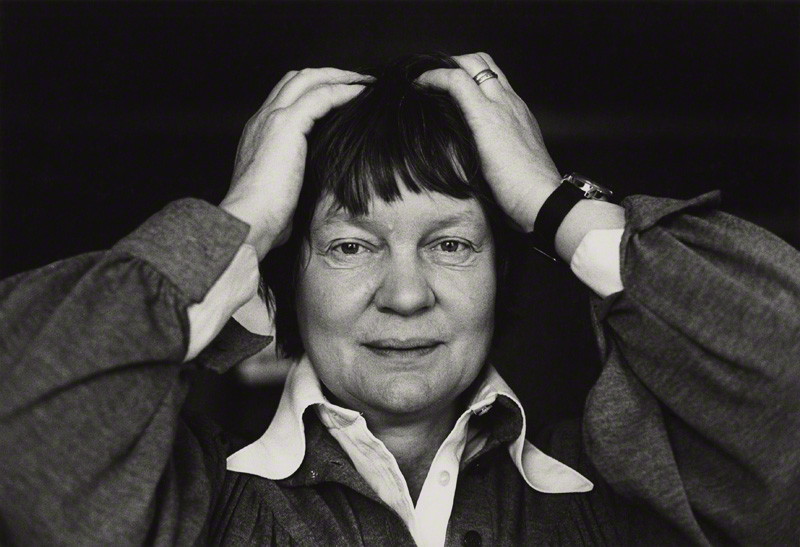
Am I over Iris Murdoch?

by Jane Bown, bromide print on card mount, 1978

I have read 16 novels by Iris Murdoch. I used to count her as one of my favorite authors, but after re-reading The Italian Girl last week, I’m not so sure I like her much anymore. I’ve always felt like her novels were a bit soap opera-esque. Lots of educated, upper class folks hopping around from bed to bed in somewhat unsavory or unlikely combinations. They always seemed like intellectual bodice rippers.

Prior to re-reading it, I didn’t remember much of anything about The Italian Girl. The result this time was that I found it somewhat tedious and the characters insufferable–but not in an interesting way. Have my tastes changed that much? When I first read it in 2003 I gave it an 8 out of 10. I think now I would give it a 4. On my 10-point scale that would take it from “almost loved” to “almost disliked”. Have I been wrong about all of my other Murdoch experiences? The first one I read was Under the Net in 1999 and I gave it a 10 which translates to “all time favorite”. What would I think of that one I wonder?

In addition to the 16 I have already read, I have quite a few more on my shelf that I haven’t gotten to yet. I have a tendency to burn bridges, clean house, etc. and in this case I am looking at all the real estate Murdoch takes up on my shelves and am feeling the urge to do something radical. I would probably end up living to regret that. I think I probably need to re-read Under the Net to see if I can rekindle my interest. I know I also really kind of liked The Sea, The Sea, and The Bell, and I also remember meeting two wonderful women at the Barbara Pym conference in 2013 who are best book pals because of their shared love of A Severed Head, which I haven’t read. I guess I must resist the urge to clear my Murdoch shelf. On the other hand, I should probably also resist buying any more of her work until I can figure out how I really feel.

shelf by shelf : from Galgut to Gordon

shelf (2)It has only been two days since my last shelf by shelf, but I was in the mood to do another one, so why wait. The near constant rain we have been having for the last three weeks is also conducive to blogging.

Taking a quick glance at this shelf I think it may be the exact opposite of shelf 9 in regard to how many I have completed. Maybe I should take a lesson from Phyllis Rose and read the whole shelf from end to end. I know I don’t have that kind of discipline but I like to toy with ideas like that. I was also wondering the other day what it would be like if I got paid to do nothing but read. Each morning at a set time I would have to sit down and pick up a novel and just read until it was time for a break or lunch. No internet, no switching books, just one book, read it until it was done, move on the to the next one. Eight hours a day for a week or two. Would I like that I wonder? Would I actually get much read? Would I eventually stop falling asleep? Would I end up hating reading? I’m sure I will never find out.

Without further ado, I give you, Shelf 10.

Don't forget to click. Plenty of room to zoom.
Don’t forget to click. Plenty of room to zoom.

SHELF TEN: 33 books, 27 unread, 6 read, 18% completed

Galgut, Damon – Arctic Summer
A fictional account of E.M. Forsters time in India. The premise of this book is fantastic and I have it on good authority from Eric at Lonesome Reader that the book is well worth the read. I have read about 50 pages in it, but that was about a year ago, so I will be starting from the beginning when I pick it up again.

Gallant, Mavis – The Cost of Living
Gallant, Mavis – Paris Stories
I like her name, I like NYRB Classics, and I like the promise of stories about Paris. Only thing is, I have never read a word Gallant has written.

Gallico, Paul – Flower for Mrs. Harris (completed)
Easily one of my favorite books of all time. Your heart has to be made of stone to not fall in love with Mrs. Harris. I dream about a really fantastic period film being made of this book with lots of 1950s Dior fashions.

Galsworthy, John – The Forsyte Saga
I have read some of this and enjoyed it immensely. Just put it down for some reason. I loved the TV adaptation made of it in 2002.

Gardam, Jane – Old Filth (completed)
Gardam, Jane – The Man in the Wooden Hat
Gardam, Jane – God on the Rocks
Gardam, Jane – The Queen of the Tambourine (completed)
Gardam, Jane – Lost Friends

Gaskell, Elizabeth – The Cranford Chronicles (completed)
Gaskell, Elizabeth – North and South

Gellhorn, Martha – A Stricken Field
Gellhorn, Martha – Liana

Gibbons, Stella – The Matchmaker
I am really no fan of Cold Comfort Farm so I am not sure how I will feel about this one.

Gibson, William – The Cobweb

Gide, Andre – Corydon

Gilbert, David – & Sons

Giono, Jean – The Man Who Planted Trees (completed)

Gill, Brenden – The Day the Money Stopped

Gilliatt, Penelope – A State of Change

Gilman, Charlotte Perkins – The Yellow Wallpaper etc.

Gissing, George – In the Year of Jubilee

Glaspell, Susan- The Morning is Near Us
Glaspell, Susan- Brook Evans
Glaspell, Susan- The Clock of the Conquest
Glaspell is a Persephone author but I have never read anything by her. For some reason I am compelled to buy her stuff when I come across it. Hoping I love her I guess.

Goldsmith, Oliver – The Vicar of Wakefield
Such a short book, yet I got sidetracked before I got even half way through. I will return to it one day.

Gomez-Arcos, Augustin – The Carnivorous Lamb (completed)
This was one of my favorite books in the late teens and early twenties. I am pretty sure someone important in my life introduced me to it, and it was a big part of my young gay persona, but now I don’t remember the details of how I came upon it. I really need to read it again to see if it is brilliant or embarrassing or somewhere in between.

Gordimer, Nadine – The House Gun
Gordimer, Nadine – None to Accompany Me

Gordon, Mary – The love of My Youth
Gordon, Mary – Pearl
Gordon, Mary – The Other Side

NEXT TIME: Goudge to Hemingway

Going on a walk with Harold

map
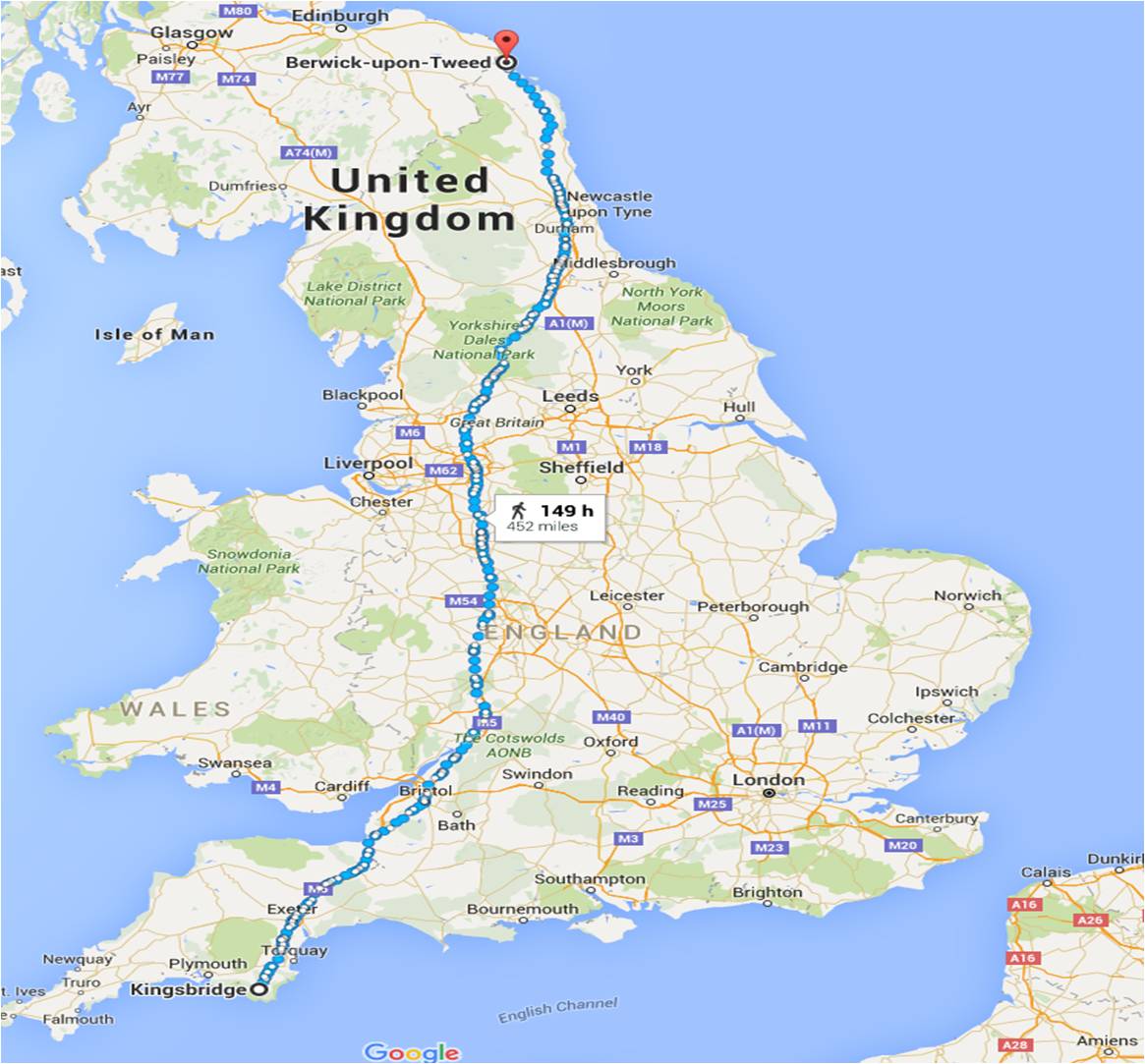
I am a big fan of books where people walk. Bill Bryson’s A Walk in the Woods about hiking the Appalachian Trail. Almost every Anita Brookner novel there is. Leonard Bast in Howard’s End. I’m sure there are others as well. I once walked 10 miles home from work just because I felt like it. From Old Town Alexandria, Virginia to our apartment in Adams Morgan in DC. My hands got puffy and I got caught in a lightening storm and tropical downpour, but it was nice to say that I had done it. I’m not necessarily a walking fanatic, but I do like the healthful, emotionally restorative benefits that walking long distances offers.

And then came Harold Fry.

The Unlikely Pilgrimage of Harold Fry by Rachel Joyce
I could’ve really hated this book. Instead I really, I mean really, loved it. Newly retired Harold Fry gets a letter from Queenie, a former co-worker he hasn’t seen in 20 years that she has inoperable cancer and is living in a hospice in Berwick-upon-Tweed in the very north of England. Harold is touched by the letter but doesn’t quite know now to answer it. He feels that his reply is less than adequate and hesitates to put it in the first mailbox he comes to. He walks on until he finds another one but keeps walking past that one as well. Then he is inspired by the words of a clerk at a gas station and decides to go see Queenie. But he decides to walk. From Kingsbridge in the very south of England. And he doesn’t even go home to get proper walking shoes or his mobile phone, or any other thing that could make his 452-mile trek a little more plausible.

This was the first point I thought I might put the book down. My literal, logical mind would not accept this approach. But happily, I kept going. When his walk turns into a media circus I also got a bit annoyed, but only a little. And by that time I liked Harold so much I didn’t want to leave him. As he goes on his journey Harold meets all kinds of people and we learn bit by bit what his back story is with Queenie and with his wife Maureen.

The thing I so liked about this book was that most of the characters seem to transform for the reader. They don’t necessarily transform in their own lives, but how the reader views them is transformed. The young woman working in the garage–I thought I had her pegged as being an awful, uncaring Catherine Tate character, yet she ends up being the catalyst for the whole story. And then there are those that do transform and shift their way of thinking. And there is Harold’s patience and ability to see the good where others can’t. And there is the fact that there are so many people who are nice to him along the way. I literally walked around with a smile on my face because of this book. It also had me crying at my desk one day at lunch.

So many ways it could have gone wrong. Instead, a total joy to read. Not great art, but such a lovely book.

I think this may be the place to start with Brookner

[Number 9 in my chronological re-read of all of Brookner’s 24 novels.]

When people ask me where they should start with Brookner, I never know quite what to tell them. Part of the problem is that after having read all 24 or them over the course of about a decade, I didn’t really remember enough detail about any of them to really provide a recommendation. I would often default to Hotel du Lac merely because it was her best known and had won the Booker Prize.

Now that I am nine books into my re-reading of all of Brookner’s novels I can say I am much more aware of the differences in the stories and much more appreciative of the variety and depth of her output. And perhaps no more so than with Lewis Percy. And I think, out of her first nine novels, Lewis Percy is a fantastic place to start. Slightly more plot driven than her other novels and with a much younger protagonist.

Our eponymous hero is a 20-something scholar working on his doctoral thesis in Paris. Not long after Lewis returns to London from his year in France, his mother dies and he finds himself a bit untethered. Perhaps having read too much of his mother’s kind of fiction he comes up with a romantic, heroic, and ultimately misguided, notion that he is going to transform Patricia “Tissy” Harper, a young, virginal, agoraphobic librarian, into something much greater by marrying her. I don’t have to tell you that things don’t really work out that way.

Acting the part of the perfect Edwardian wife–albeit in the 1960s–Tissy achieves an outward transformation with updated clothes and hair befitting her age and the era, but it doesn’t translate much beyond that. Not necessarily aware of the paternalistic idiocy of his plan Lewis senses the failure of his marriage but figures he has made his bed and needs to be faithful. Despite falling in love with Emmy, his gay best friend’s actress sister, he repels her advances only to have Tissy believe he was unfaithful. She flees back to her mother’s house, Lewis tries to be a responsible absent father, and no one is happy. Eventually Tissy finds her emotional feet, Emmy and Lewis realize they can’t be together, and Lewis gets a generous academic job offer in the U.S.

And that, my friends, is a lot of action for a Brookner novel. Although her characters are fabulously old fashioned, I also loved Brookner taking on younger characters and nodding to the swinging 60s. In Lewis Percy the reader gets the opportunity to experience a hopeful ending while getting lashings of introspective, complacent, ennui typical of Brookner’s characters. This could be the gateway drug of Brookner novels.

(On a completely unrelated note and apropos of nothing, I also loved the advent of the computer at the library where Lewis worked for years on an index (of what I don’t recall). Lewis is unsure if he wants to stick around to learn the new technology. In trying to convince Lewis to embrace the future and the future of the index, his boss makes this fabulous statement:

‘But my dear fellow!’ exclaimed Goldsborough. ‘This will be the index’s finest hour!’

As with Pym’s No Fond Return of Love, I do love an index in a novel.)

[For more on Brookner and an ongoing guide to Brookner’s London, check out the website for International Anita Brookner Day.]

shelf by shelf : from Findley to Gale

shelf (2)I’ve been trying for a while to deaccession a stack of books that I weeded from my shelves before all of these shelf by shelf photos were taken. I don’t feel the need to make any money from them but I do feel the need to make sure they go to a good home. Often I take them to my local Friends of the Library for them to sell in their well-stocked, well-run sale room. But for some reason, sometimes I feel maybe there is a better place to donate them. So lately I have been placing handfuls of books in those little free library kiosks that people have been installing in their front yards across the USA (and UK? or Canada? or elsewhere?) Good plan, right? Maybe.

I’m about to say something that may be a little controversial. In my normal routine I pass between 8 and 12 of these little libraries on a daily basis. When I first saw them popping up I was so excited. Sometimes taking a book, other times leaving one or two. But now I kind of feel like they are everywhere and I think we may have reached a cupcake shop-level tipping point of ubiquity. Perhaps I wouldn’t mind so much if the quality of the contents of the kiosks were a little better. Now before you call me a book snob, you must realize I am not passing judgement on James Patterson titles or 50 Shades or anything like that. No, I am talking about the fact that either the library keepers or the people leaving books have decided to dump all the junk that charity shops won’t even take. Dated real estate guides, study guides for whatever, thinly veiled religious or political tracts, self published tomes, and perhaps worst of all, self-help books. Perhaps I am being a snob, but if I am, it is in the name and honor and glory of fiction. Don’t waste your time on that other stuff, people! Okay, now I’m starting to sound like a fanatic of another sort.

Maybe my problem is this: In my community we have plenty of access to “helpful” books from libraries, bookstores, and online. Seeking and/or acquiring these titles is more like a transaction than the kind of serendipitous discovery for which these little libraries seem much better suited.

Oh, who am I kidding? I’m annoyed that they aren’t chock full of fiction!

This nation needs to read more fiction. In 2000 I worked a second job at a Barnes and Noble and every time someone came looking for a Chicken Soup for the Soul book or the latest self-help book they saw on Oprah I was always tempted to walk them over to fiction instead. (Nothing against Oprah, I gladly would have walked them over to one of her book club selections.) I’m tempted to remove everything from these little libraries that isn’t fiction and replace them with a curated stack of the novels I am looking to get rid of. Many of those I actually liked and many more are worthy books that I just didn’t care for.

Part of me wants to keep filling them with fiction (my donations do seem to disappear). Maybe rather than be annoyed by them I need to keep filling the neighborhood with fiction. Hmm, now I see myself buying books just for that purpose…

Like I said, I think I am tired of all those damn little libraries.

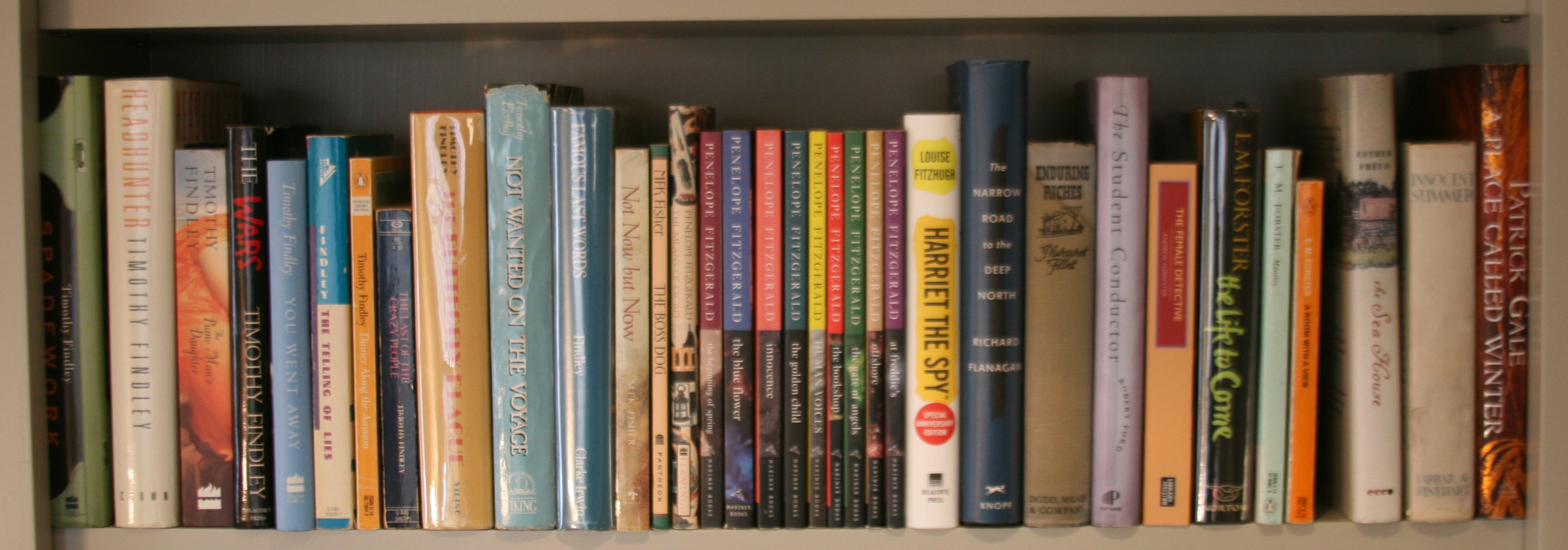
shelf 9
Don’t forget to click. Plenty of room to zoom.

SHELF NINE: 34 books, 12 unread, 22 read, 65% completed

Findley, Timothy – Spadework (completed)
Findley, Timothy – Headhunter
Findley, Timothy – The Piano Man’s Daughter (completed)

Findley, Timothy – The Wars (completed)
Findley, Timothy – You Went Away (completed)
Findley, Timothy – The Telling of Lies (completed)
Findley, Timothy – Dinner Along the Amazon (completed)
Findley, Timothy – The Last of the Crazy People (completed)
Findley, Timothy – The Butterfly Plague (completed)
Findley, Timothy – Not Wanted on the Voyage (completed)
Findley, Timothy – Famous Last Words (completed)
Based on the 10 Findley books listed here that I have read, plus Pilgrim from Shelf 8, and a memoir somewhere else in the library, you would think he was one of my favorite authors. And at one time I may indeed have said that, but I am not sure it has ever been true. Highly recommended by a dear friend, I plowed through most of his work in my late 20s/early 30s. At one point I even went to a reading he did when Pilgrim was published. In fact, it might be the only author event I ever made a point of going to in my entire life. If I am being totally honest my love of Findley’s work was more aspiration and pretense than actual love. I definitely think he writes good books and I enjoyed reading them, but love is not a word I should have used. However, since I was so much younger when I read all of them I think I need to do some re-reading before I make a final judgement. In particular I want to re-read Famous Last Words which, among other things, fictionalizes the Duke and Duchess of Windsor in Bermuda in WWII. I’m also keen to re-read Pilgrim about a character who never dies. And The Wars has one of the most moving scenes of sending children off to fight wars that I have ever read.

Fisher, M.F.K. – Not Now but Now (completed)
Fisher, M.F.K. – The Boss Dog
This is what I wrote in 2013 when I read Not Now but Now: Food writer Fisher’s only novel is really four related novellas. Each one stars a woman named Jennie who one can’t help but root for despite her insanely selfish modus operandi in each story. Jennie is incarnated in England, Europe, and America and she shows up in 1928, 1947, 1927, and 1882. I didn’t expect this kind of mean, wanton hussy from Fisher’s pen. Fascinating stuff.

Fitzgerald, Penelope – The Means of Escape
Fitzgerald, Penelope – The Beginning of Spring
Fitzgerald, Penelope – The Blue Flower
Fitzgerald, Penelope – Innocence
Fitzgerald, Penelope – The Golden Child (completed)
Fitzgerald, Penelope – Human Voices (completed)
Fitzgerald, Penelope – The Bookshop (completed)
Fitzgerald, Penelope – The Gate of Angels 
Fitzgerald, Penelope – Offshore (completed)
Fitzgerald, Penelope – At Freddie’s 
Alphabetically speaking, the first of the two great Penleopes. I know that there are those of you out that that would say there are more than two, but for me they are Fitzgerald and Lively. I also know that some of you have a hard time keeping them separate, but I find them very different and easy to keep straight once you have read one of each. Until I wrote out this list, I thought I had read more of Fitzgerald’s work than I have. Maybe it is because I have read The Bookshop twice. Fitzgerald didn’t start getting published until she was in her 60s. Her work is so good I can only imagine what she might have been capable of if she had started earlier.

Fitzhugh, Louise – Harriet the Spy (completed)
Thanks to my 6th grade teacher Julie Mosman who read it aloud to us, this is perhaps my favorite childhood book. Re-read about a million times then and since, I must admit that my most recent re-read a few years ago left me wondering what the moral of the story is. And thanks to Frances for buying me this wonderful reprint of the first edition with the author’s wonderful illustrations.

Flanagan, Richard – The Narrow Road to the Deep North

Flint, Margaret – Enduring Riches

Ford, Robert – The Student Conductor (completed)
Always a fan of novels that deal intelligently with classical music, this is one of my favorite books of all time. It is about a young conductor set against the crumbling of the Iron Curtain.

Forrester, Andrew – The Female Detective
I love these British Library Crime Classic editions for these covers. I have yet to read any.

Forster, E.M. – The Life to Come (completed)
Forster, E.M. – Maurice (completed)
Forster, E.M. – A Room with a View (completed)
I’ve read all of Forster’s fiction. In fact, I think I have read all of it at least twice each, if not more. I think I have a few more of his titles in a stack of mass market editions that will show up here later.

Freud, Esther, – The Sea House

Frost, Frances – Innocent Summer

Gale, Patrick – A Place Called Winter (completed)
I had never heard of Gale until Simon Savidge gave me this book when we went to Booktopia last year. Not a perfect book but really, really enjoyable and kind of touching. Kind of a Canadian Brokeback Mountain of sorts.

NEXT TIME: Galgut to Gordon


Two excellent women and two okay men

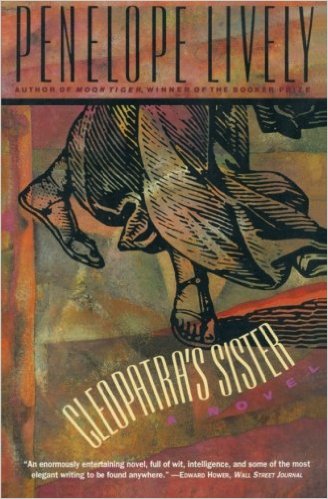
cleopatras sisterCleopatra’s Sister by Penelope Lively
I have long loved the novels of Penelope Lively. Okay, I guess it has only been since 2009 that I first read her, but I became an instant fan and have read many of her novels in those seven years. This particular novel really deserves a stand-alone review, but I fear I will wait too long and forget everything I wanted to say about it. The first part of the book is split into three different points of view. Howard Beamish is a charmingly smart child who becomes a paleontologist, Lucy Faulkner is a charmingly smart child and becomes a journalist. The third point of view reads like non-fiction describing the history of the fictional north African country of Callimbia.

After Lively establishes adult lives for Howard and Faulkner with both of them having had a certain degree of success, she throws them together on a flight to Kenya that is mysteriously diverted to Callimbia which has recently undergone a coup. I don’t want to describe anything that happens beyond that, but it is gripping. Howard and Lucy are thrown into a crisis situation and soon begin to rely on each other.

I really loved this novel. I loved their childhood stories. I loved reading about the successes and failures of their adult lives, and I really got caught up in the emotional situation that brings the stories together. And Lively is a master observer with plenty of smart, witty insight to the human condition and relationships. I love her work and this one probably ties for my favorite with Consequences.

Excellent Women by Barbara Pym (re-read)
When an audio version of Excellent Women became available on audible I nearly lost my mind. There are about five Pym novels that have been recorded but this is the first and only one that has been available on Audible in the U.S. It was wonderful getting reacquainted with Mildred Lathbury and her post-war life in London. And it proved to me once again how great it is to re-read Pym’s work when one doesn’t have a preoccupation with what is going to happen next and the associated need to get to the end to see how it all works out. Pym’s observations and reflections on life are precise and economical without being clipped or unfeeling, and she is wryly funny.


To Walk the Night by William Stone
As always I was drawn to this NYRB Classics at the library by the fact that it was a NYRB Classic. But then I notice that it was a sort of sci-fi mystery novel published in 1937 which falls right into my recent penchant for vintage novels of those two genres. Two college friends are back at their Alma Mater where they discover a former professor murdered in a very mysterious way. The thing about a novel like this is that if it was written recently I probably wouldn’t be at all interested in reading it. It’s the combination of 1930’s period detail and the glimpse of the vintage sci-fi outlook that compelled me to pick this up and enjoy it.

The Time Machine by H.G. Wells
I’ve never read any Wells and, as I noted above, I have a bit of a predilection for vintage sci-fi. And what could be more vintage than reading about a time machine that was imagined by a Victorian author in 1895? The narrator, simply known as the Time Traveller, tells the story of what happens when he uses his newly built time machine to go into the future. What I found particularly interesting is that the author has the time machine go forward to the year 802,000. From my perspective this seems like a rather funny–and too huge–length of time in which to travel. It is more in the magnitude approaching geological time not human time. This may have perhaps been the point. It seems like Wells wanted to see what becomes of the human race when there has been sufficient time for them to evolve in the Darwinian sense of the word. What he finds is fascinating and, in my humble opinion, a little pervy. Makes me wonder if Wells was a pedophile. But I guess that is more of a side note than a focus. The book didn’t blow me away mainly because my time travel objectives and interests would be far different than Wells’.


When re-reading blows your mind

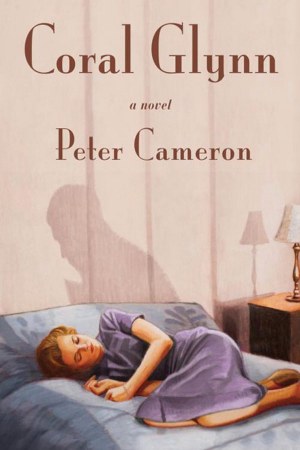
Coral-Glynn-by-Peter-CameronGood God, that title sounds very click-baity. sorry about that.

Coral Glynn by Peter Cameron
I read this novel back in January 2015. All I could remember about it was that I really liked it, but I couldn’t remember one plot point nor any other thing about what was actually printed between the covers. So when I was perusing all the many audio books that the wonderful Simon Prebble has narrated I couldn’t resist the urge to buy his reading of Coral Glynn. I hesitated at first because I had read the book so recently it seemed like wasting money. But I got over it and hit the ‘buy’ button. I’m so glad that I did. I ended up loving the book even more than I remember (and this time I remember what it is about).

The eponymous Coral Glynn is a home nurse for a dying elderly woman and is a bit of an adult orphan with no friends and family. In her more hopeful moods she mentions a friend in London, but when push comes to shove she isn’t willing to test the tenuous bonds of that relationship. There is a housekeeper who hates her in a way that reminds me of Mrs. Danvers and the possibility of an unreliable narrator. In many ways Coral seems to be too damaged or just really poorly equipped emotionally to deal with the world.

When you read Coral Glynn (and you will read Coral Glynn), you will be surprised by how much Cameron manages to pack into this slim volume. Even more surprising is the fact that, although there are bit players, none of the characters seem one-dimensional. They are all wonderfully and tragically believable. It isn’t a perfect book. There were one or two moments that faintly bothered my common sense meter, but now I quibble.

Sometimes I feel like I compare every book I like to those of my favorite authors (e.g., Barbara Pym and Anita Brookner to name two). I felt the urge to do that with Coral Glynn but didn’t want to bring up the connection, until, that is, I came across this review by NPR’s Maureen Corrigan who does exactly that. She also throws in Elizabeth Taylor, and as I allude to above, Daphne du Maurier. I think I would throw Muriel Spark into the mix as well.

I will leave you with one of my favorite things from Corrigan’s review:

I was in my local independent bookstore last week, enjoying the endangered pleasure of wandering around and snuffling through interesting-looking books, when I overheard two women talking in front of the new releases section. “I need a new British novelist,” one of them said. Ladies, I should have spoken up, but the moment passed and, besides, it was too awkward to explain that one of the best British novelists writing today was born in New Jersey.

shelf by shelf : from Dinesen to Findley

shelf (2)It will be a bit before I get to the shelf with Somerset Maugham but as I write this post I have the film adaptation of The Painted Veil on in the background. I read the book years ago and have seen the film before. I think both are pretty brilliant. The story is a little insane. It would make a wonderful opera I think. So much tragedy and star-crossed love. It is rife with musical opportunities. I picture both Kitty’s husband and her lover as baritones, Mr. Waddington is a tenor for sure. Doesn’t leave much room for any soaring tenor arias, but they don’t always have to be the stars. Kitty is a soprano of course, and then there are choruses of nuns and Chinese peasants and soldiers. It would be perfect.

Up to now, although I have really enjoyed doing shelf by shelf, I feel like I have only talked about books and authors that I always talk about. I know this isn’t entirely true, but with this shelf, I am really excited. Part of it is the variety and part of it is that there are so many books here that I really love.

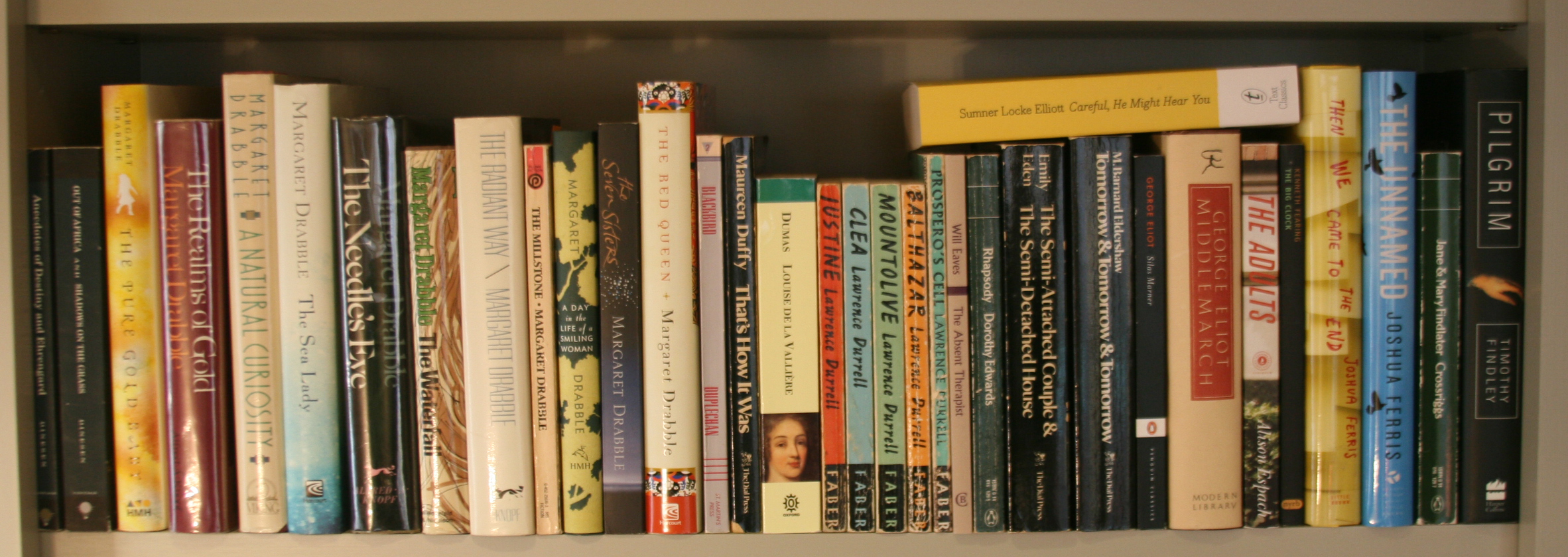
shelf 8
Don’t forget to click it. Plenty of room to zoom.

SHELF EIGHT: 34 books, 18 unread, 16 read, 47% completed

Dinesen, Isak – Anecdotes of Destiny and Ehrengard
Dinesen, Isak – Out of Africa and Shadows on the Grass
One of my favorite movies of all time is the adaptation of Dinesen’s short story Babette’s Feast. I’ve seen the film more times than I can count but I have yet to read the story. I also haven’t quite gotten through Out of Africa either. Or did I finish it? That’s not a good sign.

Drabble, Margaret – The Pure Gold Baby (completed)
Drabble, Margaret – The Realms of Gold
Drabble, Margaret – A Natural Curiosity
Drabble, Margaret – The Sea Lady
Drabble, Margaret – The Needle’s Eye (completed)
Drabble, Margaret – The Waterfall (completed)
Drabble, Margaret – The Radiant Way (completed)
Drabble, Margaret – The Millstone (completed)
Drabble, Margaret – A Day in the Life of a Smiling Woman
Drabble, Margaret – The Seven Sisters (completed)
Drabble, Margaret – The Red Queen
Another example of my shelves not telling the whole story. In addition to the ones noted here, I have read four more. Although I tend to like all of her novels I really, I mean really, loved The Pure Gold Baby and to a slightly lesser degree The Seven Sisters. I need to reread the latter to see how I feel about it since reading the former.

Duplechan, Larry – Blackbird (completed)
A wonderful, funny, romantic coming of age tale. Growing up black and gay in the 1980s.

Duffy, Maureen – That’s How It Was

Dumas, Alexandre – Louse de la Valliere

Durrell, Lawrence – Justine (completed)
Durrell, Lawrence – Clea (completed)
Durrell, Lawrence – Mountolive (completed)
Durrell, Lawrence – Balthazar (completed)
Durrell, Lawrence – Prospero’s Cell
The first four of these titles make up Durrell’s vaunted Alexandria Quartet which counts for one of the Modern Library’s Top 100 Novels of the 20th century. I really need to read them again. They aren’t the easiest to follow but I loved how atmospheric and poetic they are.

Eaves, Will – The Absent Therapist

Edwards, Dorothy – Rhapsody (completed)

Eden, Emily – The Semi-Attached Couple and The Semi-Detached House

Eldershaw, M. Barnard – Tomorrow & Tomorrow & Tomorrow

Eliot, George – Silas Marner
Eliot, George – Middlemarch
I somewhat enjoyed The Mill on the Floss but keep getting stuck on Middlemarch, which, by most accounts is one of the greatest English novels of all time. I’m hoping an audio version will help me get over the hump.

Elliott, Sumner Locke – Careful, He Might Hear You

Espach, Alison – The Adults

Fearing, Kenneth – The Big Clock (completed)
This NYRB Classic is a wonderful mid-century whodunit. No, it’s actually a we know whodunit but wonder if the innocent guy is going to get framed for it. Love this book.

Ferris, Joshua – Then We Came to the End (completed)
Ferris, Joshua – The Unnamed (completed)
I really loved Then We Came to the End. Many didn’t, in part because of it being written in the first person plural. It has my favorite opening line of all time: “We were fractious and overpaid”. I liked The Unnamed, but much less then TWCTTE. His third book rubbed me the wrong way and I didn’t even finish it.

Findlater, Jane & Mary – Crossriggs

Findley, Timothy – Pilgrim (completed)
Much more of him on the next shelf. Stay tuned.

NEXT TIME: Findley to Gale