Book Review: The Pleasures of English Food by Alan Davidson

 
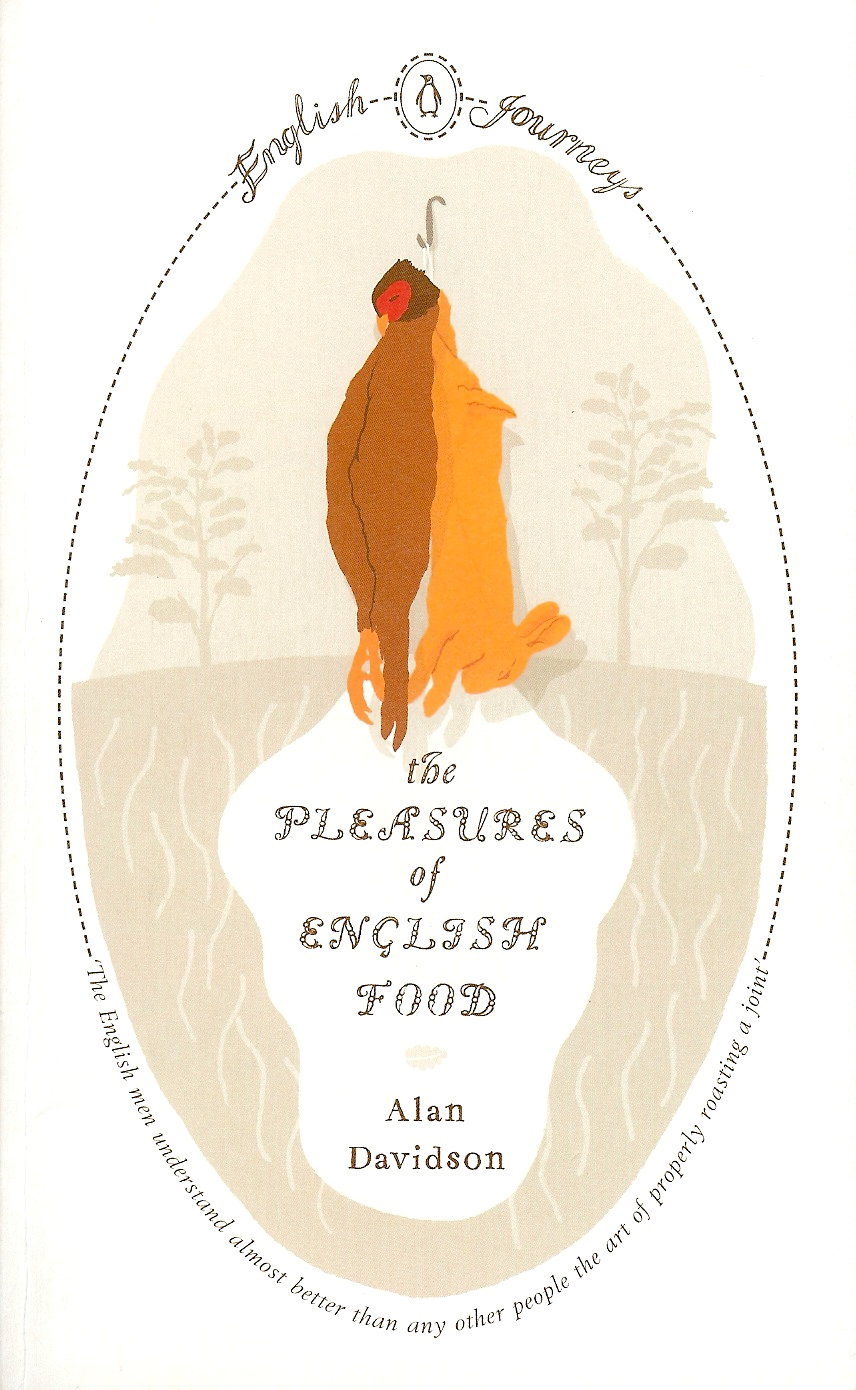
The Pleasures of English Food
Alan Davidson

This is the fourth of 20 volumes of the Penguin English Journeys series. I plan to read all 20 in the month of April.

Written by the author of The Penguin Companion to Food, this volume is a wonderful little primer on English cooking. Organized in alphabetical order like an encyclopedia, The Pleasure of English Food covers the highlights of English food from Afternoon Tea to Yorkshire Pudding. I realize as I write this how seemingly predictable the first and last entries are. Aside from Fish and Chips, I would hazard to guess that Afternoon Tea and Yorkshire Pudding are probably the two most obvious choices that most Americans would reference if asked about English food. But fear not there are just as many non-obvious entries as there are obvious ones.

One thing this book does is impart some really fascinating tidbits of information. For instance:

Beeton, Isabella: (1836-65)…was only 25 when her work appeared in book form and only 28 when she died. […] Given that her book merits such high praise it is all the more unfortunate that [her husband] Sam Beeton ran into financial difficulties…[and] relinquished all his copyrights…from then on it was downhill all the way until eventually, by the 1960s, the revised book did not contain a single recipe written by the author.

Fruitcake: …Making a rich fruit cake in an 18th-century kitchen was a major undertaking. The ingredients had to be carefully prepared. Fruit was washed, dried, and stoned if necessary; sugar, cut from loaves, had to be pounded and sieved; butter washed in water and rinsed in rosewater. Eggs were beaten for a long time, half an hour being comonly directed. Yeast, or ‘barm’ from fermenting beer, had to be coaxed into life Finally the cook had to cope with the temperamental wood-fired baking ovens of that time.

Wash the butter, beat eggs for half an hour…? Yikes

Gooseberry: …In 1905 a mildew disease was accidentally introduced from America, wiping out the whole crop of European gooseberries. The plant was re-established by crossing American species resistant to mildew, but the gooseberry has never fully regained its earlier popularlity.

Mutton: …This version of ‘Vicarage Mutton’ was quoted by Dorothy Hartley; ‘Hot on Sunday, Cold on Monday, Hashed on Tuesday, Minced on Wednesday, Curried on Thursday, Broth on Friday, Cottage pie Saturday.’

Although one discovers later in the book that Cottage Pie is made from beef, Shepherd’s Pie is made with lamb or mutton.

It ocurred to me as I read:

Pease pudding hot
Pease pudding cold
Pease pudding in the pot
Nine days old

that we used to say this as kids (except it was ‘pease porridge’) but I have no idea why. In fact, it wasn’t until I was an adult that I knew what pease porridge was, so why in the world did a bunch of German-Polish American mutts in central Minnesota even know this rhyme?

The regional varieties of British sausage described has me wanting to do a Sausage tour of England so I can taste the flavor variations.

And recently Verity at the B Files blogged about baking Simnel Cakes. Thanks to this little book I now know what they are. And oddly enough the cakes were originally linked to Mothering Sunday which the book goes on to explain in much the same way I did in this blog back on Mothering Sunday.

I wish there had been an entry for Fish Pie. I have always been fascinated by the notion of a fish pie since I first heard it used in the film “A Room With A View”. Towards the end Mrs. Honeychurch is urging them to hurry because cook Mary has made fish pie and everyone knows how Mary gets if her fish pie is spoiled. Oh, well, I guess I could just look up the recipe.

As an Anglophile who loves to cook, I loved this book. But anyone who reads English fiction will appreciate the explanations of historical foodways that pop up here and there in older English novels.

This is a great little book.

Next up: Through England on a Side-Saddle by Celia Fiennes.

Book Review: From Dover to the Wen by William Cobbett

From Dover to the Wen
William Cobbett

This is the third of 20 volumes of the Penguin English Journeys series. I plan to read all 20 in the month of April.

At the risk of offending fans of William Cobbett, I wanted to retitle this book From Dover to the Wen Will This Be Over? Since it is an extract from Rural Rides and is only 110 pages you might wonder why it was such a problem for me. I can’t exactly put my finger on why, but I just found it tedious. So at page 52, I invoked the Rule of 50 and decided I would not spend anymore of my reading time trying to finish it.

The book chronicles Cobbett’s rides/walks through southern England with plenty of radical political rants thrown in for good measure. One of these rants, written in 1823 could apply to economic realities of 2010. The U.S. and perhaps the rest of the industrialized world is in a race to the bottom, paying workers as little as we possibly can with no regard to the impact. We may be able to buy things more cheaply, but at what price? It is a little sad to realize that this state of affairs appears to be eternal. Cobbett describes the problem in his day as he describes the house of a newly grand squire:

One end of the front of this once plain and substantial house had been moulded into a ‘parlour’; and there was the mahogany table, and the fine chairs, and the fine glass…And I dare say it has been ‘Squire Charington and the Miss Charingtons; and not plain Master Charington, and his son Hodge, and his daughter Betty Charington, all of whom this accursed system has, in all likelihood, transmuted into a species of mock gentle-folks, while it has ground the labourers down into real slaves. Why do not farmers now feed and lodge their work-people, as they did formerly? Because they cannot keep them upon so little as they give them in wages…The land produces, on an average, what it always produced; but there is a new distribution of the produce. This ‘Squire Charington’s father used, I dare say, to sit at the head of the oak-table along with his men, say grace to them, and cut up the meat and the pudding. He might take a cup of strong beer to himself, when they had none; but, that was pretty nearly all the difference in their manner of living. So that all lived well.

I’m not advocating for socialism, but there does come a point where quality of life for all should have some impact on the impersonal decisions made by corporations in the never ending quest for increased profits.

Next up: The Pleasures of English Food by Alan Davidson

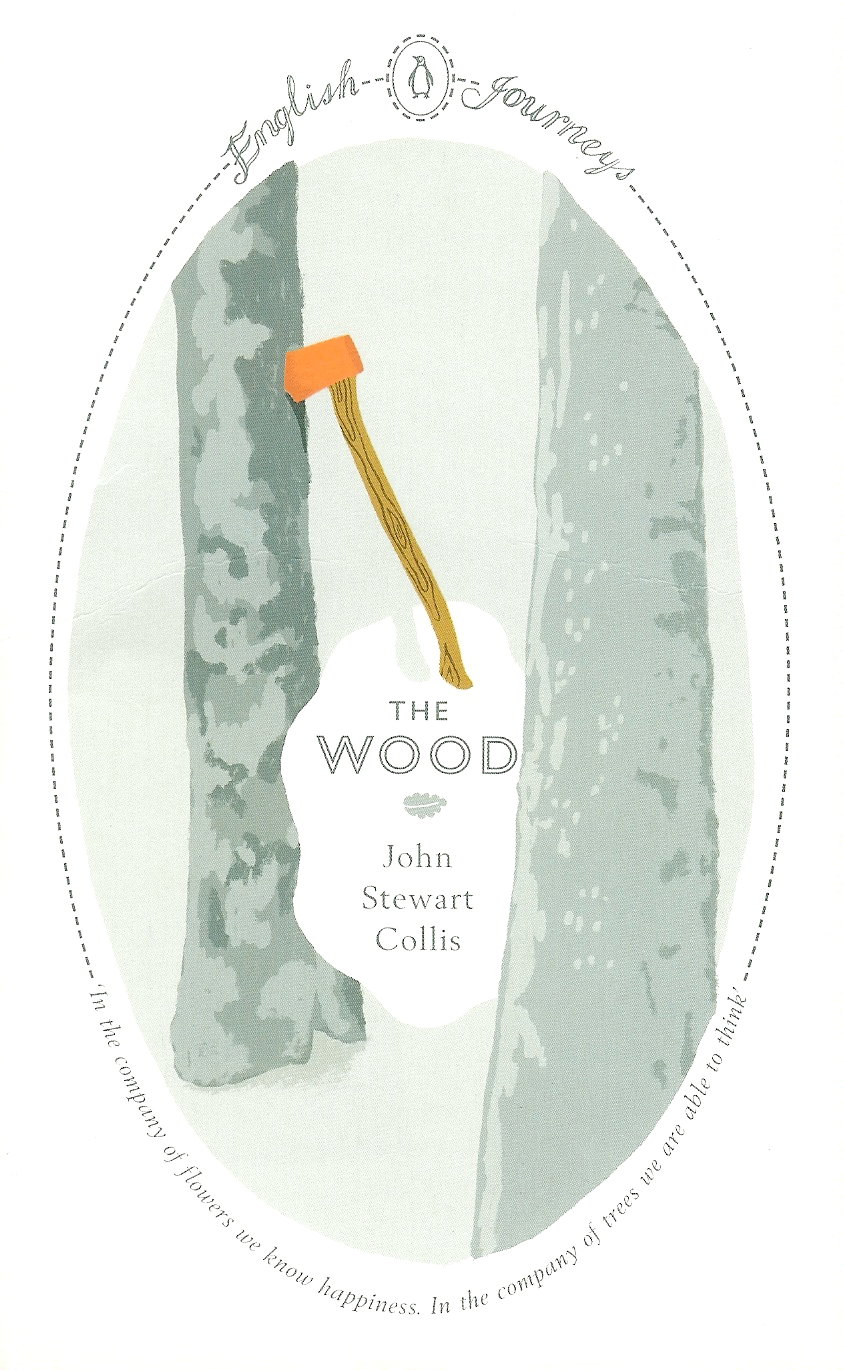
Book Review: The Wood by John Stewart Collis


The Wood
John Stewart Collis

This is the second of 20 volumes of the Penguin English Journeys series. I plan to read all 20 in the month of April.

During World War II writer John Stewart Collis was put to work clearing and thinning an ash wood. My question throughout the book was how does clearing and thinning an ash wood contribute to the war effort? Who had the need and the resources to pay him to do such a thing? And, it is clear he was able bodied so why wasn’t he off fighting the war?

Some of the answer is hinted at in the title of the source book for The Wood. It appears that many of the volumes in the English Journeys series are excerpts from larger works and the source for The Wood is Collis’ longer work The Worm Forgives the Plough which chronicles the work Collis did as an agricultural laborer during the war. It turns out that Collis had served in WWI and was conscripted for WWII as well but was given a domestic posting which in his case turned out to be agricultural work. I assume that in other chapters of The Worm Forgives the Plough, Collis is actually put to work growing food or some other agricultural task directly aiding the production of food. Clearing and thinning an ash wood doesn’t seem to fall into that category. The wood is merely being thinned not entirely cleared so it wasn’t going to be turned over for pasture. I suppose the closest it seems to come to being essential work is that the wood provides fuel for nearby villages. But I am not sure that was the point. It just seems like a lot of busy work.

Don’t get me wrong, I love the notion of thinning a wood. Both the process and outcome really appeal to me. Bringing order to an overgrown forest. Clearing away undergrowth and sick, unstable, and excess trees. Leaving behind a lovely wood of only the finest specimens sounds like time well spent in my book. It is also the case for Collis who relishes his solitary task and the ability to be alone with nature and with his own thoughts.

I would love to have a few acres of land with woodland on it that needed management. I am not sure I actually want to do the work, but the idea certainly intrigues me. No doubt it all goes back to my love of being in control, but I also love the notion of the dreamy woodland that would come out of the foresty chaos. The book was also fascinating because we are probably going to have to take down three rather large trees in the yard of our soon to be new home. Our new neighborhood has lots of mature trees and lots and lots of shade. And shade isn’t very good for gardening, especially not vegetable gardening. So, as much as we love trees (John often prefers trees over people) we will need to fell three of them to open up the yard for our fresh produce and to create habitat for bees and butterflies. Hopefully Collis would approve.

Next up: From Dover to the Wen by William Cobbett.

Sunday Painting: Bunny could talk… by Daphne Confar

  
Several years ago we were in Provincetown, Massachusetts when I stumbled on this postcard at the William Scott Gallery. I don’t even recall if we saw any of Daphne Confar’s works on display, but I was obviously taken with this image, and still am.

Doesn’t she look like a character just waiting for a novel?

Bunny could talk on and on, but always listens to the wind

Book Review: Voices of Akenfield by Ronald Blythe

Voices of Akenfield
Ronald Blythe

This is the first of 20 volumes of the Penguin English Journeys series. I plan to read all 20 in the month of April.

The rule with land is to give–then you can take.
    –  Duncan Campbell, aged sixty-six, sheep farmer.

It is amazing how many quotable moments can be found in this 125-page extract from Ronald Blythe’s Akenfield first published in 1969. Each chapter or section tells the story of a different Suffolk villager in the first person. Taken from interviews conducted in 1967, the subjects, many in their 60s, 70s, and 80s, are witnesses to great upheaval in social mores, technology, and agrarian society. We meet horsemen, shepherds, orchard men, a district nurse, blacksmiths, a saddle maker, and others.

Not only are some of the subjects colorful characters, but they provide an ethnography of a time and setting that I understand intellectually but also find hard to believe ever existed. It brings to life all of those working class characters who make cameos in many a BBC period drama. Any tendency to romanticize these folks and their lives is kept in check paragraph by paragraph by the sheer difficulty and hard-work that characterized their daily lives. Not only did they work hard, but they got little compensation for it and had little opportunity for economic or social mobility. But they were close to family, to the land, and most took great pride in their life’s work. And simple pleasures were life sustaining. I was pleasantly surprised to come across the following lines by Fred Mitchell, a hardworking 81-year old horseman:

But I have forgotten one thing–the singing. There was such a lot of singing in the village then, and this was my pleasure, too. Boys sang in the fields, and at night we all met at the Forge and sang. The chapels were full of singing. When the first war came, it was singing, singing all the time. So I lie; I have had pleasure. I have had singing.

I have known these words in slightly altered form for many years. They were adapted and beautifully put to music by composer Steven Sametz in 1993. And this recording of the work by Chanticleer really does both horseman Fred Mitchell and composer Steve Sametz proud.

The words to the song are slightly different and worth reading while you listen to this short choral piece. I think it is very evocative. Check out this link and listen, see if you aren’t transported.

The singing.
There was so much singing then,
and this was my pleasure too.
We all sang,
The boys in the fields,
The chapels were full of singing, always singing.
Here I lie.
I have had pleasure enough.
I have had singing.

I think my favorite character is William Russ, aged sixty-one, gravedigger. He felt called to be a gravedigger from early days, conducting all sorts of animal funerals as a child, digging his first human grave at 12 and becoming the legal sexton by 13. And he is not afraid to speak his mind. In one case he resents the daughter of an old canon who kicks up a fuss regarding the way Russ has interred her father’s ashes.

Well, of course, as everybody knows, all that family, particularly the daughters, were over-educated. They were old maids. They weren’t cranky because they hadn’t had a man but because they’d had too many old books. Their brains were strained.

He says this about clergy who miscalculate the fees due to the sexton:

And talking of money, I must mention the Table of Fees…You would think it was plain enough but I have to read the damn thing aloud to half the parsons or they’d diddle me out of a mint of money…believe me when it comes to little money matters, parsons are the biggest swindlers on earth.

Russ gets the final chapter and indeed the final word. His bittersweet stream of consciousness is indicative of the kind of honest stories that make up this volume. Having buried 150 to 200 people a year for about 40 or so years, Russ seems particularly candid in summing things up in what could be a metaphor for the ways of life Blythe captures in this time capsule of a book.

I’m not a Christian. I do a lot of things I shouldn’t do, so I can’t count myself as one. Life isn’t as comfortable as it used to be. Nobody wants to know you. I have been widowed for ten years. I go to church every Sunday but nobody speaks to me unless they want something. Snobbish. They’re all snobs now. I’m not blowing my own trumpet, but almost ever since I was born I have been at everybody’s beck and call. I have no family, none at all. No one in all the world is my relation. I never did read a lot. I never could give my mind to it. I talk too much, that is my failing. I come into contact with many people at a serious time, so I have picked up serious conversation. What most folk have once or twice in a lifetime, I have every day. I want to be cremated and my ashes thrown in the air. Straight from the flames to the winds, and let that be that.

Next up: The Wood by John Stewart Collis

This Man is My Latest Obssession


Until today I had never heard of this composer. I was listening to BBC Radio 3 online and came across Wojciech Kilar’s piece Orawa. And now I am obssessed. Thanks Radio 3, I have been searching for classical music that is new to me.

It is amazing. There are many videos of this piece on YouTube but I chose this one because the acoustic of the room makes for an interesting effect and the conductor looks like Iris Murdoch. If you listen to this make sure you give it a minute or two to really get into it. And if you stay to the end you won’t be disappointed.

Book Review: The Dead Secret by Wilkie Collins


The Dead Secret
Wilkie Collins

With an out-of-town guest, the flurry of activity surrounding buying a house, and a quick trip to Philly last weekend, I haven’t had much time for reading or blogging. And then right before the end of March and the start of my April plan to read all twenty of the Penguin English Journey series I picked up this Wilkie Collins.

I enjoyed it, with reservations, but more on that in a minute. So as not to give away the plot I am going to give you a little word cloud of sorts to give you a flavor for what goes on in the story

This is the first Collins I have read since reading The Woman in White (which happened to be my very first Collins and my introduction to his work). The Dead Secret has many of the same qualities as that book but doesn’t come close to being as brilliant. Sure there are secrets and intrigue and unexpected trips hither and yon, and there are definitely moments where you are at the edge of your seat in fear or expectation, but in the end it can only pale in comparison to the 600 plus pages of The Woman in White. In fact at only 359 pages, it practically counts as a short story in the world of Wilkie Collins and his predilection for writing door stops. Like Trollope and Dickens, Collins uses 70 words when seven would do. In fact this is part of their allure for me. The Victorian phrasing and the detailed attention to manners and setting are all part of the charm. Yet unlike The Woman in White, this one really felt Collins was being paid by the word. Lopping off a hundred pages would have made this a better book, but alas would not have made it a Collins. Don’t get me wrong I liked The Dead Secret, but if you haven’t read Wilkie Collins don’t start with this one. And if you have read Wilkie Collins there is no reason not to read this one when you get the chance.


Holy Week at St. Paul’s Cathedral in 1992

 
In 1992 I worked for six months in London. My arrival was nicely timed to coincide with Holy Week. Although still somewhat of a practicing Christian at the time, I was perhaps most interested in the musical opportunities that would be available during that period. My first Sunday service upon arrival was Palm Sunday at St. Paul’s Cathedral.

I don’t remember what the music was that Sunday 18 years ago, but I do remember one of the hymns ended with the use of the State Trumpet stop on the organ. The pipes are en chamade (horizontal rather than vertical) and are high above the nave over the enormous West Door of the cathedral. Since the main bits of the organ are in the choir and in the triforium near the huge central dome of Sir Christopher Wren’s magnum opus, the contrast between the trumpet stops over the West Door and the rest of the organ was truly amazing.

I also spent Good Friday at St. Paul’s and had a mystical music experience of another kind that brought tears to my eyes. The choir sang Allegri’s Miserere. When sung well it is a stunning piece with a solo tenor line and a solo (boy) soprano line that goes soaring up to a glorious high C (I think). I am not sure if they still do it, but that year at St. Paul’s they had a temporary altar set up under the Dome and the choir was under the Dome as well rather than back in the choir stalls. For this particular piece they put the soloists somewhere else in the Cathedral–I think they may have been up behind the high altar. Wherever they were the separation of the solo voices from the rest of the choir made the piece even more stunning. The effect was that the building itself became one of the musicians, enveloping all in an ethereal moment that I will never forget.

Here is the superb choir of Kings College, Cambridge singing the Misrere. If you don’t feel like sitting and watching all 9 minutes, I suggest you hit play, open another browser window and continue your journey through your favorite blogs while the music plays. I can guarantee that you will peek back to check out the video once you hear the boy soprano soar over the top of the rest of the ensemble.