Book Review: Penguin Special by Jeremy Lewis

Penguin Special: The Life and Times of Allen Lane
Jeremy Lewis

Raise your hand if this sounds like fun:

As office boy and general dogsbody, he worked as a packer and as a ‘looker-out – picking particular books off the shelves and matching them up with a bookseller’s order – before graduating to royalties and the accounts department, and his understanding of the trade was improved still further when, in due course, he began to deal with printers, binders, blockmakers and paper merchants; but he really came into his own when he was allowed to go out on the road, first with Uncle John and then on his own account, visiting bookshops in London and the suburbs.

So goes Allen Lane’s first job working for his publisher-uncle at The Bodley Head. Truth is I like doing most of the rather mundane things mentioned, but then add to that the fact that it’s all happening in the fascinating world of pre-war publishing in London. Well geeze, how could I not find that enticing?

For anyone with an interest in publishing, especially those of you out there who love the good old days of vintage Penguin, this book is worth a look. Penguin Special is most successful when it describes the early days of Penguin and the more innovative side of Lane’s approach to bringing good books to as wide an audience as possible. Tales of wartime publishing are also fascinating, not only because of the paper rationing and other challenges but also the role publishers played in the war effort. And then of course there was the unexpurgated edition of Lady Chatterley’s Lover that Penguin published in 1960, as well as lots of stories about some of the greats of 20th-century literature like George Bernard Shaw.

Writing to Shaw in November 1945, Lane revealed that he planned to celebrate the old boy’s ninetieth birthday the following July by reissuing ten of his works in print-runs of 100,000 each. Inspired by gratitude and commercial acumen, the ‘Shaw Million’ was the first of several ‘Millions’, or ‘Tens’ as they were also known, awarded to bestselling authors on the Penguin list: later recipients included Evelyn Waugh, H.G. Wells, D. H. Lawrence, George Simenon and Agatha Christie.

Shaw’s ‘million’ sold out in six weeks.

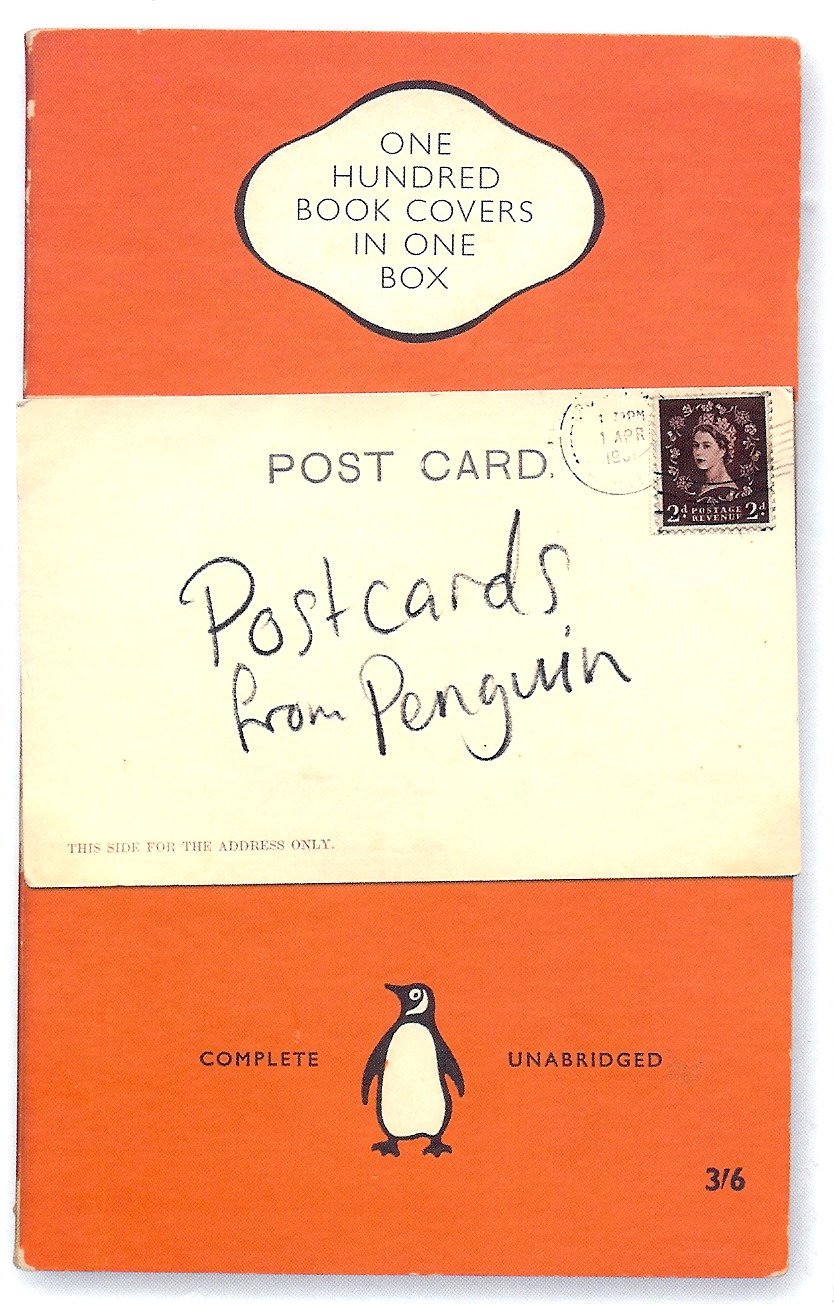
Penguin Special has plenty of pictures, but series of threads in the book that really cold have used more images was the fascinating but somewhat frustrating parts that dealt with design. Like many of you out there, I am a little obsessed with Penguin’s distinctive look and I wanted to see examples to go with the text that described its evolution. Thankfully, all I had to do was walk over to my shelves and pull out two other Penguin products to conjure up images to go along with the text. Penguin by Design by Phil Baines is a great full-color book that delves into the history of the Penguin aesthetic, and Postcards from Penguin, a box of 100 postcards of Penguin covers. Of course the reemergence in popularity of the original graphics-only orange and white covers jumps backwards over many decades of artwork experimentation and innovation that was not always successful. (Lane resisted mightily against illustrated book covers, especially the variety that were first popularized in America.)

Perhaps my only real beef with Lewis’ Penguin bio-history is that a good narrative often got bogged down in too many details. So much so that I kind of wanted to see a table or two, or maybe a timeline, a publishing house “family” tree, anything that would have brought some graphic clarity to the overwhelming amount of detail. All together though I enjoyed this walk through Penguin history and it was a nice way to wrap up the first half of my English Journeys challenge.

This book is fantastic graphic history of the Penguin cover aesthetic. Lots of great examples with just enough text to tell the story.

This is kind of a fun collection of postcards, but to be perfectly honest, for anyone interested in Penguin covers, the Phil Baines book Penguin by Design is much more satisfying. In fact, looking through the Baines book makes one realize that the editor/compiler of the box of postcards didn’t make the best choices when it comes to the covers included. Plus it doesn’t have any of the back story included in Penguin by Design. If you can only buy one, buy the Baines.

Book Review: The Beauties of a Cottage Garden by Gertrude Jekyll

The Beauties of a Cottage Garden
Gertrude Jekyll

Well this is number 10 of the 20-volume of Penguin’s English Journeys series and it will be my last for a while. I had intended to read all 20 in the month of April. I thought a series of books on the English countryside would be an interesting and appropriate thing to read as nature was coming to life outside. And indeed there were moments when that was exactly the case. But rather than each book adding another happy dimension to my enjoyment of the English countryside, it all became a bit samey. I still intend to finish the series, but I think I need to take them in smaller doses. Maybe I will give myself until April of 2011 to finish off the final 10 volumes.

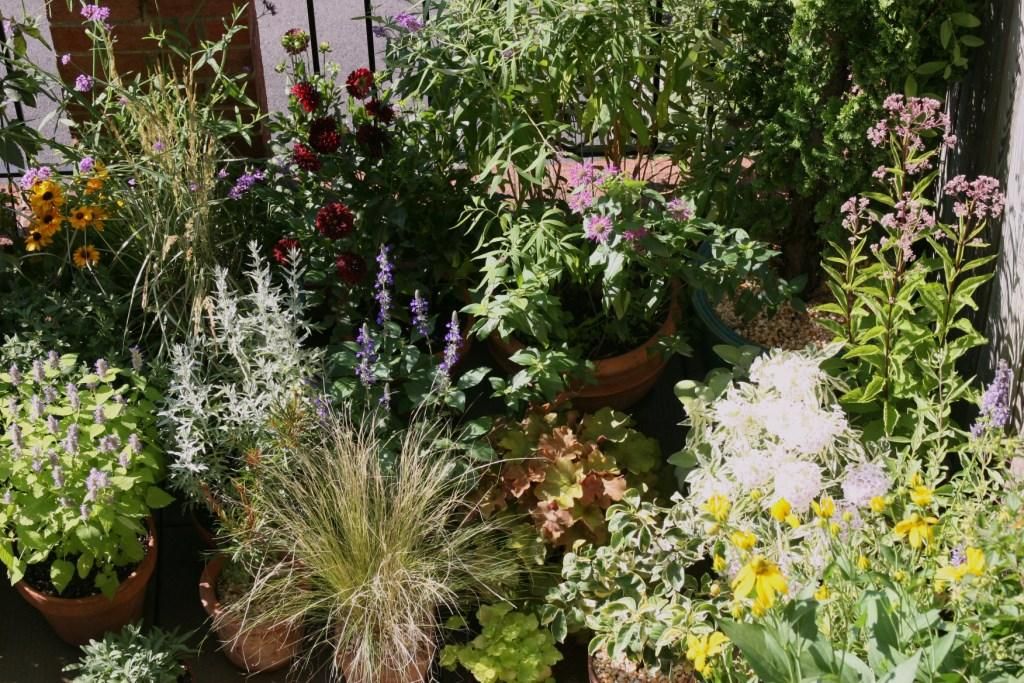
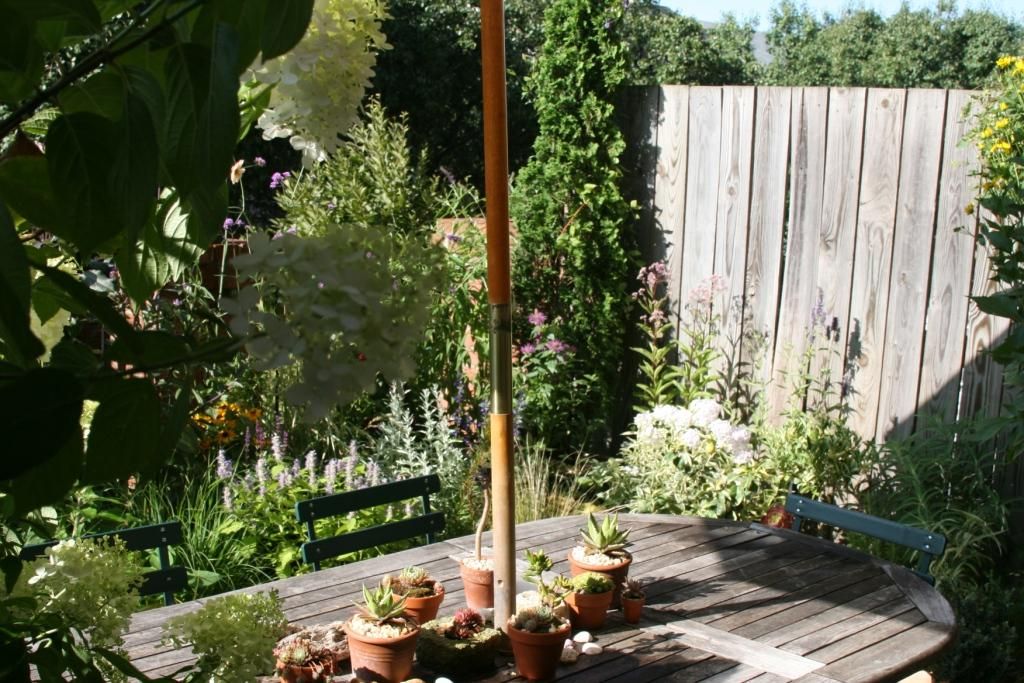
It is unfortunate or at least unfair that I should make this declaration as part of my review of Gertrude Jekyll’s The Beauties of a Cottage Garden as her writing is decidedly more enjoyable than some in this series. My husband is a huge fan of Jekyll and is quite the gardener himself. Over the last five years he has turned our 12’ x 16’ terrace into an English country garden that you would never guess was all grown in pots. You can imagine how excited he is to be moving to a new house with a big yard with lots of room to garden. Jekyll effectively sums up the heart and mind of a true gardener:

But the lesson I have learnt, and with to pass on to others, is to know the enduring happiness that the love of a garden gives. I rejoice when I see any one, and especially children, inquiring about flowers, and wanting gardens of their own, and carefully working in them. For the love of gardening is a seed that once sown never dies, but always grows and grows to an enduring and ever-increasing source of happiness.

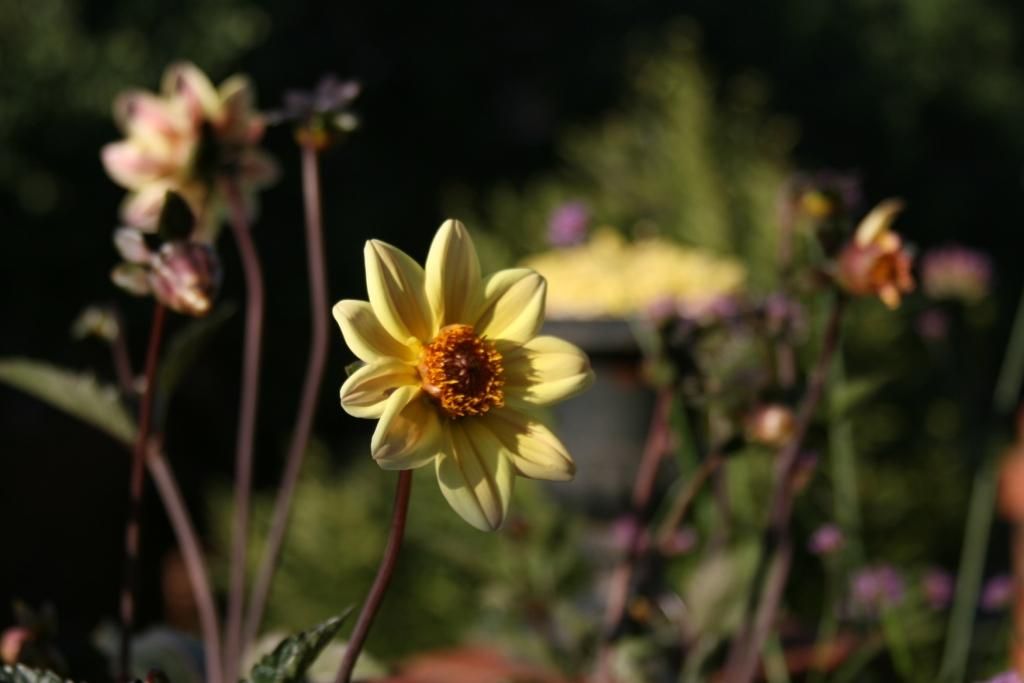
These snaps of our terrace garden from last summer kind of proves Jekyll’s point. Lack of actual ground didn’t keep John from following his passion.

Book Review: Walks in the Wheatfields by Richard Jeffries

Walks in the Wheatfields
Richard Jeffries

These is the ninth of 20 volumes of the Penguin English Journeys series. I plan to read all 20 in the month of April.

This book was definitely more enjoyable than some of the earlier volumes that led to my Penguin English Journey breakdown earlier this week. Richard Jeffries, a writer and the son of a Wiltshire farmer, wrote about his experiences traveling the English countryside until his tragic death from tuberculosis in 1887 at the age of 39.

I liked the book most when Jeffries describes his observations of wildlife. His chapter on the daily habits of the large flocks of rooks in his area I found fascinating. The quantities of birds he describes reminds me of the setting that William Cronon describes in his book Changes in the Land, a wonderful academic look at the changes in the ecology of Colonial New England.

It was also humorous to read Jeffries rant about the visual ugliness that church spires inflict on the natural landscape. From a 21st century perspective of course, those spires are seen by many of us to be part and parcel of the pastoral landscape and quite pretty. But then again we have a lot uglier things that blot the landscape to worry about.

If this review seems shallow, it’s because it is. In the realm of the Penguin English Journey series, this one leans to the enjoyable, but not so enjoyable that I feel the need to tax my brain too much in writing an adequate review.

Uncle! I am crying Uncle!

Close readers of My Porch will know that I really rebel against expectations, even when they are my own. Well, I am beginning to rebel against my self-imposed goal of reading all 20 of the Penguin English Journeys volumes in the month of April.

In terms of page count it really isn’t all that oppressive, but in terms of content it is. I have really liked some of them so far, the one of food, and the more pastoral, nature filled ones seem to be far more interesting to me. And thankfully there are several of those coming up. I am quite looking forward to the Gertrude Jekyll. But ye gadz, some of these are just so tedious. Part of the problem may be that it is too much of one thing all at once. And reading them in number order may not have been the best plan either. I realized that they are are numbered in alphabetical order by author’s last name. It might have been smarter to mix and match so that there was more contrast from book to book.

I am still going to try and read the rest of them, but you are all on notice that I reserve the right not to finish any that I find too tedious to bother with, and to keep my “reviews” of those down to the bare minimum.

Call me a poseur, call me a loser, I don’t care. I have too many other fabulous books waiting for my loving caress. And now, back to our regularly scheduled program:

These are the seventh and eigth of 20 volumes of the Penguin English Journeys series. I plan to read all 20 in the month of April.

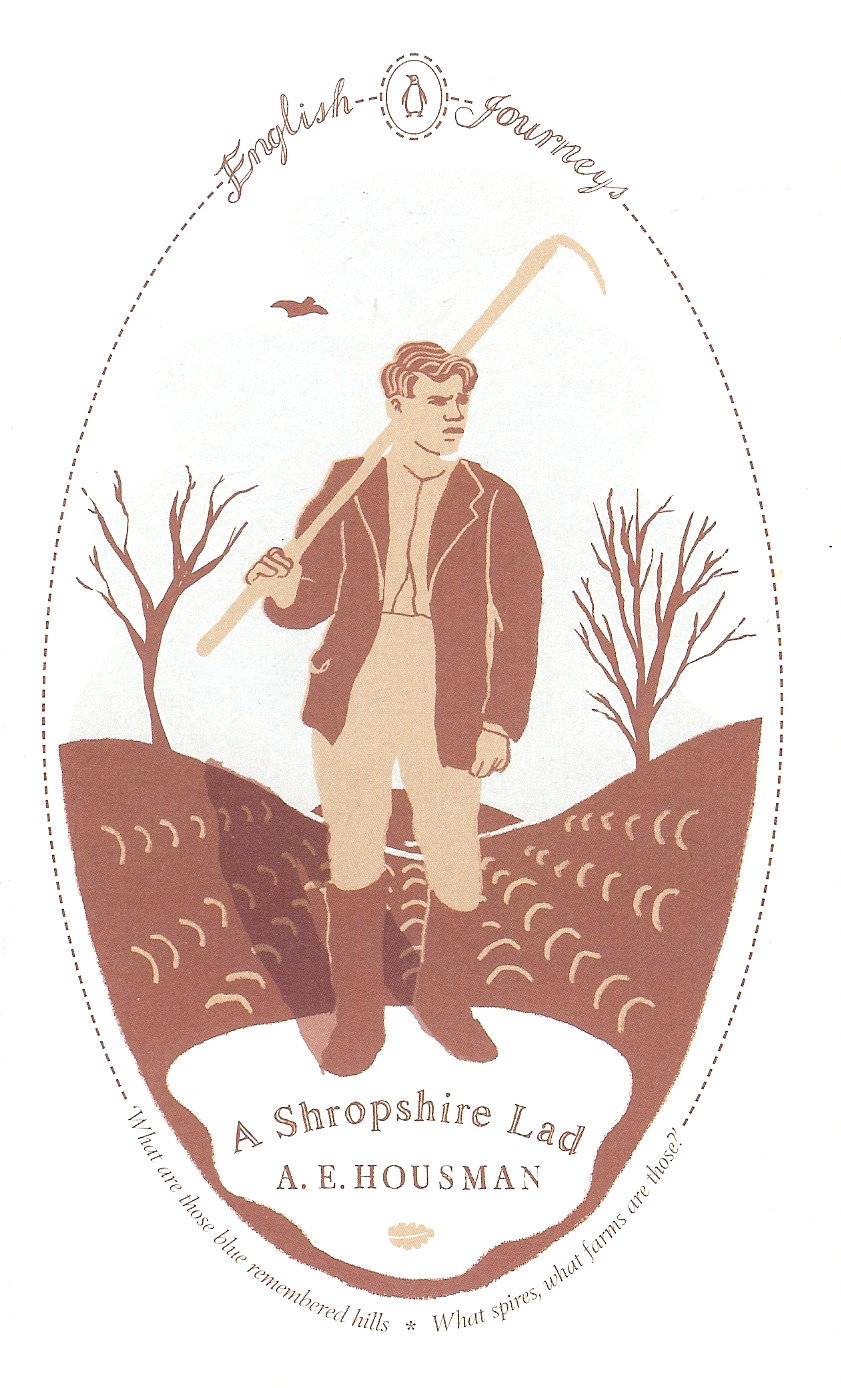
A Shropsire Lad
A.E. Housman

I feel like I said all I could about poetry in my last post. Well, that isn’t true, I could say a lot about Walt Whitman and some other poets who really speak to me. But alas, A Shropshire Lad, though perfectly pleasant, didn’t do too much to elevate my mental plane whilst I read it.

Cathedrals and Castles
Henry James

I am not a big James fan to begin with. Don’t get me wrong, I don’t dislike him, but I never like his books as much as I think I should, and I think Edith Wharton kicks his literary ass. And though James describes some very special places that I have visited (Wells, Chester, Salisbury, etc.) he just makes it so darn boring. Maybe I am hankering for pictures or maybe his language is so prolix and dry. In any event I found myself skimming so much I just had to chuck it to the side.

Despite my current state of annoyance, I am indeed looking forward to the next two titles in the series:

Walks in the Wheat-fields by Richard Jeffries
The Beauties of a Cottage Garden by Gertrude Jekyll

Hopefully I won’t be disappointed.

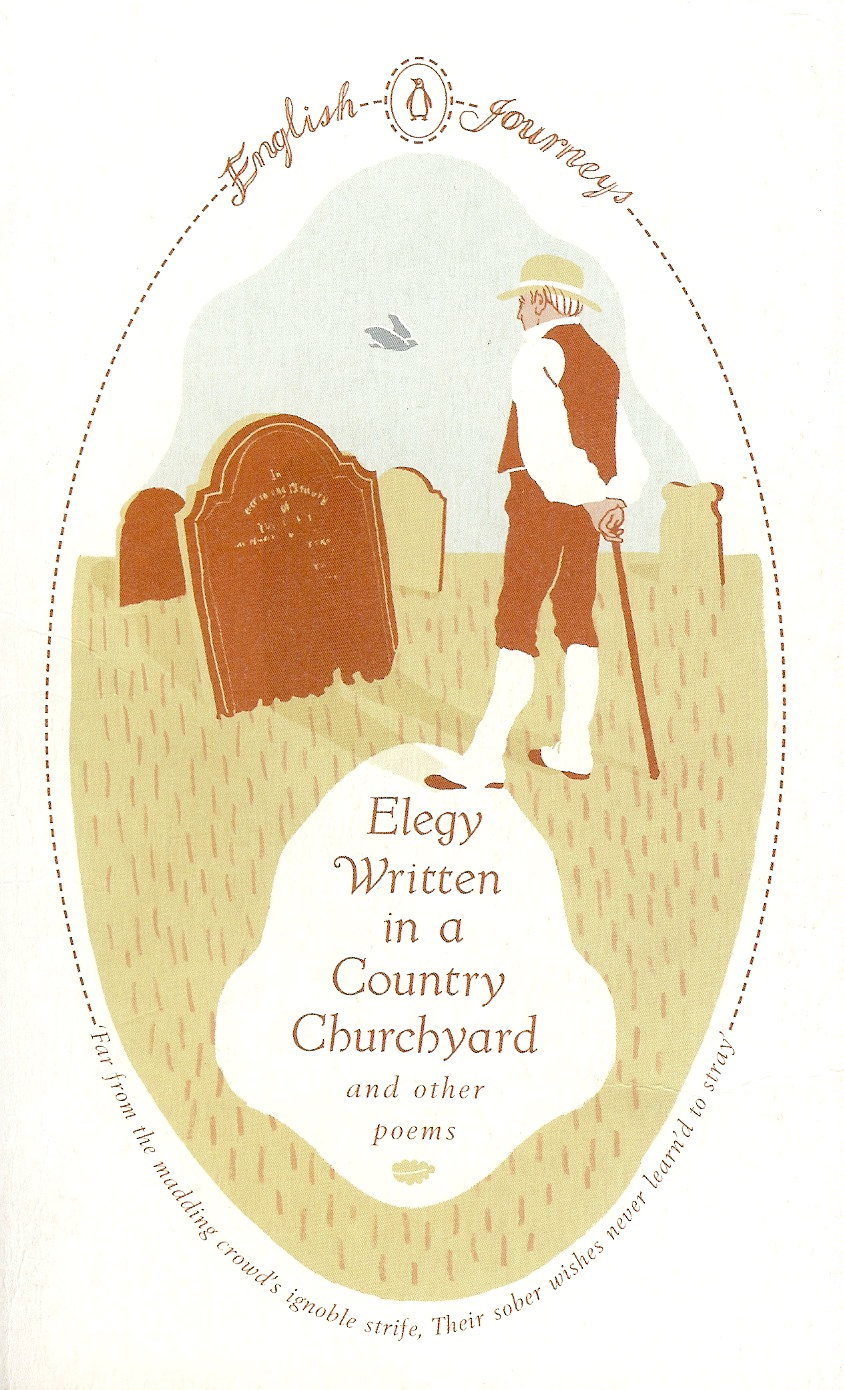
Book Review: Elegy Written in a Country Churchyard


Elegy Written in a Country Churchyard and other poems

This is the sixth of 20 volumes of the Penguin English Journeys series. I plan to read all 20 in the month of April.

I don’t read a lot of poetry. And I understand even less so it makes writing a review of this anthology of poems a bit laughable. With pastoral-y snippets from Alexander Pope, William Wordsworth, Samuel Taylor Coleridge, John Keats, Emily Bronte, Thomas Hardy, and others, there was plenty to enjoy, I just don’t know how to write about it.

Since my hugely enjoyable, but short-lived days as a vocal performance major in college, most of the poetry in my life comes from classical music. German lieder, French mélodie, and English/American art songs: these are the way I experience poetry. So I shouldn’t have been surprised when I opened this volume and the very first line I read suddenly brought a melody to my head. Charles Cotton’s Evening Quatrains jumped off the page and into my ear as I heard Sir Peter Pears, composer Benjamin Britten’s longtime life and artistic partner singing Lord Britten’s “Serenade for Tenor, Horns and Strings”. This has long been one of my favorite pieces by Britten and I love the astringent clarity of Pears voice in the wonderful recording I have of the work. Britten didn’t set every verse of the poem to music, but here are some he did:

The day’s grown old; the fainting sun
Has but a little way to run,
And yet his steeds, with all his skill,
Scarce lug the chariot down the hill.

The shadows now so long do grow,
That brambles like tall cedars show;
Mole hills seem mountains, and the ant
Appears a monstrous elephant.

A very little, little flock
Shades thrice the ground that it would stock;
Whilst the small stripling following them
Appears a mighty Polypheme.

This recording isn’t the fabulous Pears/Britten recording, but it does give you a sense of the beauty of the work.

Next up: A Shropshire Lad by A.E. Housman

Book Review: Through England on a Side-Saddle by Celia Fiennes


Through England on a Side-Saddle
Celia Fiennes

This is the fifth of 20 volumes of the Penguin English Journeys series. I plan to read all 20 in the month of April.

In many ways this book is much like William Cobbett’s From Dover to the Wen. And if you remember, I wasn’t a huge fan of Cobbett’s book. It was good, it just wasn’t my cup of tea. Well this one is even less my cup of tea. It is remarkable in the fact that a woman travelled to every part of England from 1685 to 1703 and recorded what she found in a journal. Unfortunately what she recorded seems more like a laundry list of details than anything that has any kind of interesting narrative arc. Unlike the Cobbett book, I didn’t given this one 50 pages before abandoning it. No doubt the much earlier date of Fiennes’ book and its concomitant use of antiquated language didn’t help me in the likability category.

Each of the English Journey books has a quote from the text highlighted on the cover. The quote on the cover of Through England on a Side-Saddle kind of sums up the tedious nature of the journal. One would assume the cover quote is one of the more compelling lines from the text. So based on this thrilling quote, you tell me if you want to know more.

A great storme of haile and raine met me, and drove fiercely on me but the wind soone dry’d my dust coate…

See what I mean?

Next up: Elegy Written in a Country Churchyard and other poems

Sunday Painting: Spring Landscape by William Keith and Our Weekend at Whitmore Farm

  
This week for my Sunday Painting I decided on something rural and Springy. We spent the last 24 hours out in rural Maryland, about 10 miles from Gettysburg, Pennsylvania. Friends of ours own Whitmore Farm and we had a wonderful time with them collecting, washing, sizing, and sorting these beautiful eggs. Plus we helped tag a lamb that was born over night, clip and clean goat hooves, and move new born chicks out of the incubators into their warm halfway house before they head out doors to begin their lives lunching on grass. With all these English Journey books I am reading, I felt right at home on the farm.

It kills me that we forgot the camera at home since the farm was so green and lush, much like this beautiful image of Marin County, California.

Spring Landscape (Spring in Marin County), 1893
William Keith, 1838-1911