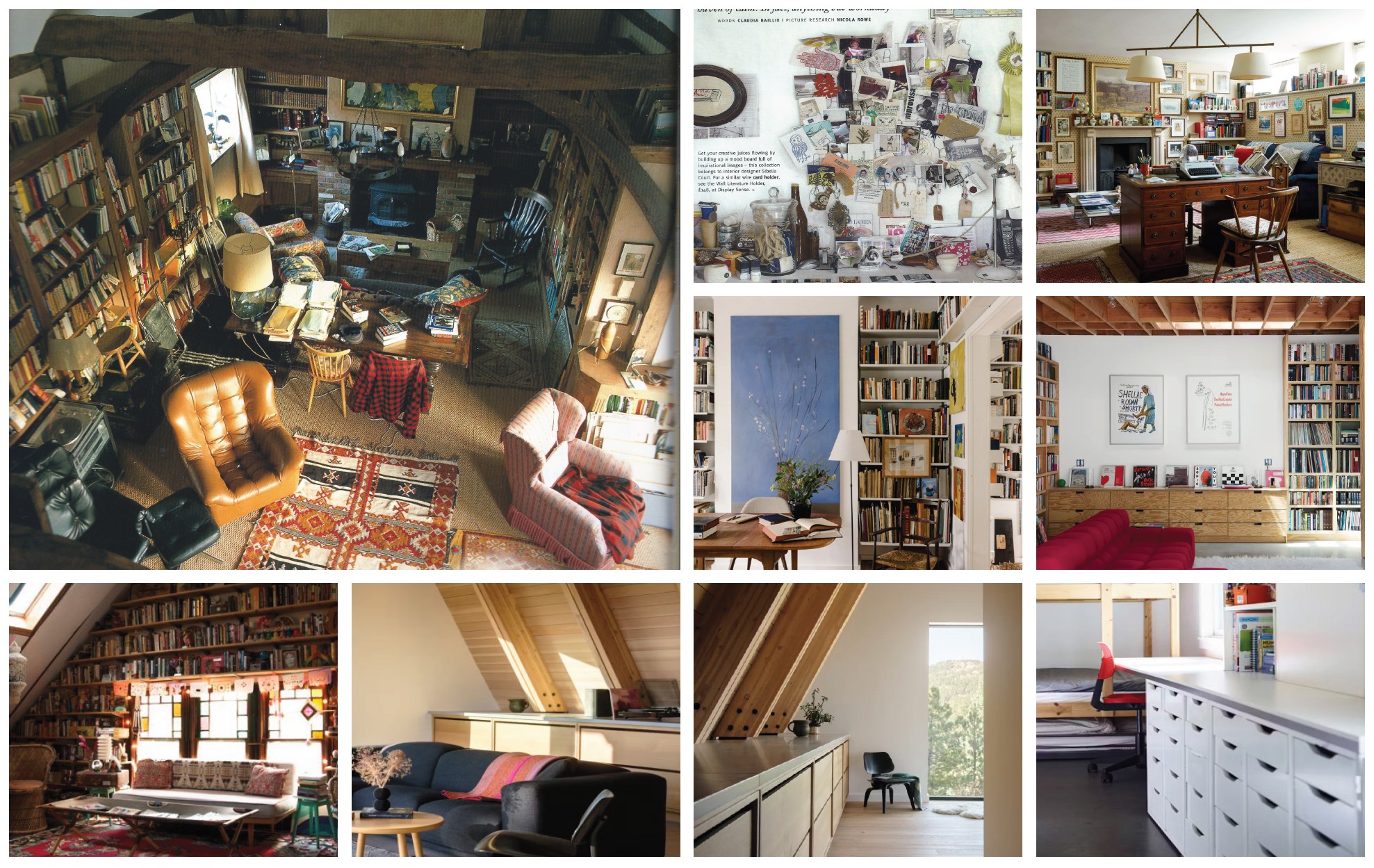
Getting moody about my library

Since I moved back to Minneapolis in August 2024 my books have been smooshed into a den in the condo I’m renting. I was lucky to find a rental that had that much book storage, not sure what I would have done if that had not been the case.

Way back in April of this year, I found a townhouse to buy that is just two blocks from where I am currently living. I really love this neighborhood so I considered it a huge score. After hiring an architect to help me turn it into something that suits my needs and aesthetics, I pulled together the mood board above to help explain to her what I wanted to do with the “attic” space at the top of the house. The overall vibe is meant to be cosy and cluttered and the perfect room for reading, puzzling, listening to my CDs (yes I still buy them), and watching TV. The previous owners were using the space for a bedroom and had a Murphy bed up there and two clothes closets. Those have all been torn out and I will be replacing with a big chunk of bookshelves on the gable end and various kinds of shelves and storage on the bits where the ceiling slants down on the front and the back. The storage units will have a vibe similar to the white painted drawers in the lower right corner, but they will be tucked under the eaves like the two middle bottom photos.

(Regular readers will recognize the big image in the upper left which I blogged about earlier this year.)
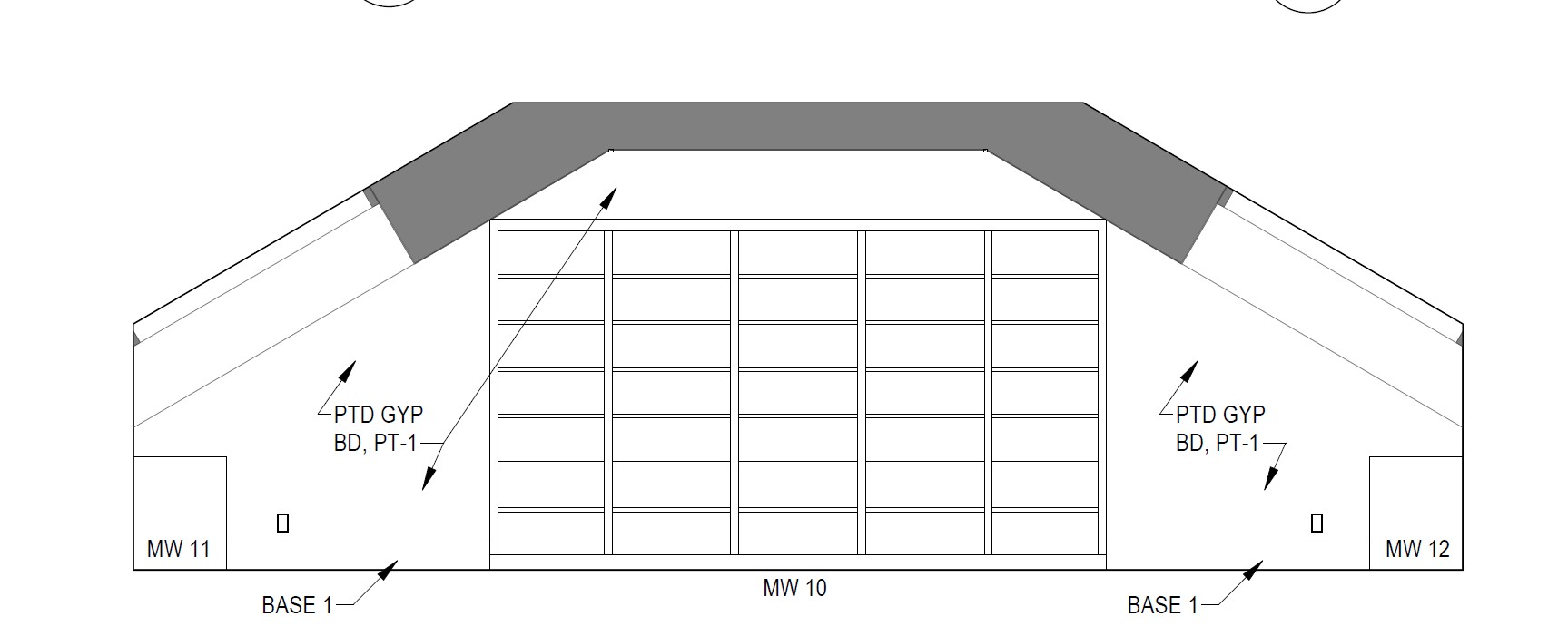
That’s 13 feet (3.9m) wide, so about 91 linear feet (27.3m) for books. Initially, I was going to have the shelves go all the way to the edges similar to the gable end shelves in the lower left of the mood board, but when I decided to add bookshelves to the living room (see below) I thought I could pull back a bit up in the attic. Did I mention the attic has four skylights so the room is quite bright even on a gray day?
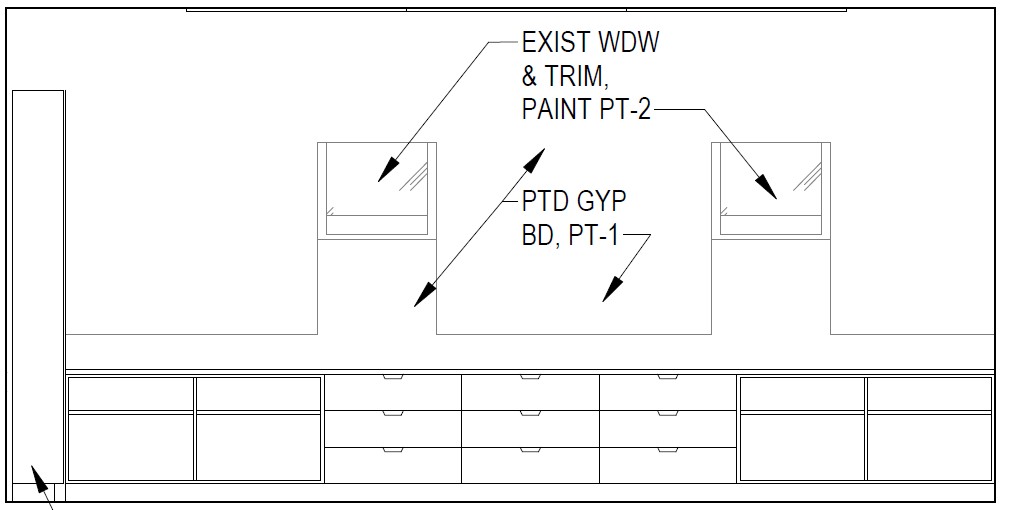
With the wall of books to the left, this shows the elevation of the back wall. Larger shelves for larger books and nine drawers custom-sized for my CD storage. With these cabinets shorter than counter height, you can see how low the ceiling slopes down on this side.
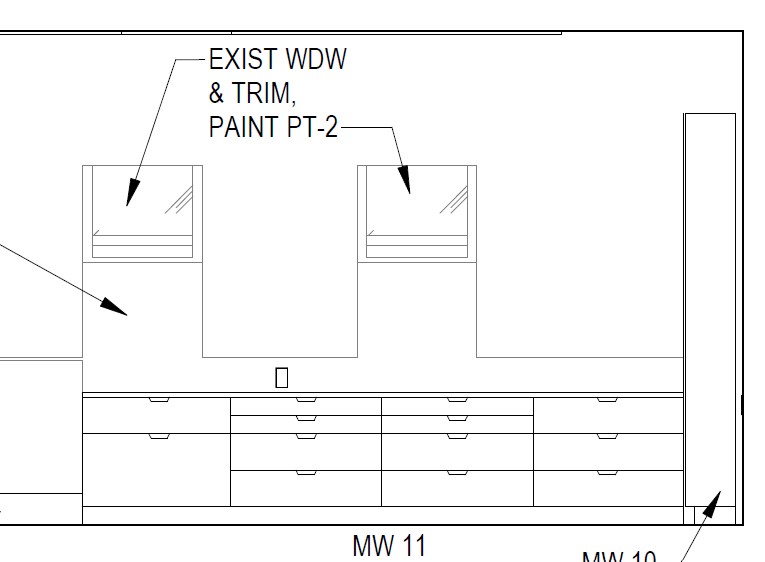
On the opposite wall you can see the configuration of drawers that will be near my desk. Since this drawing I have added more of those shallow drawers so I can treat them a bit like flat files for art and ephemera.

The bit in the bubble is the wall of bookshelves. Furniture layout is conceptual. The sofa is the one currently in my living room. It is low and deep and perfect for napping, I mean reading. The round table is the one I had in my kitchen in DC and will be perfect for laying out larger books for closer study and for jigsaw puzzling. My guess is I’m going to spend a lot of time in this room.
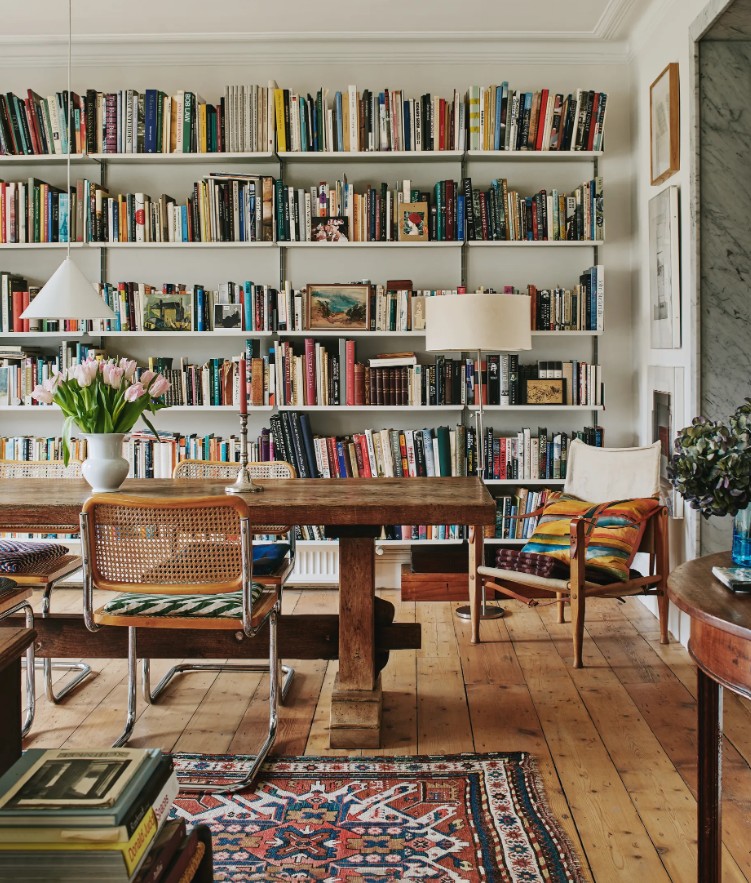
As I worked with my architect, the design for the living room on the main floor was starting to seem like it was going to end up being a museum room. You know, one of those spaces that looks good but no one ever uses. While I was feeling that way I stumbled across this image and decided to add books to my living room. Not only would this warm up the living room and make it a place I would spend more time, but it would also more than double my bookshelf capacity.
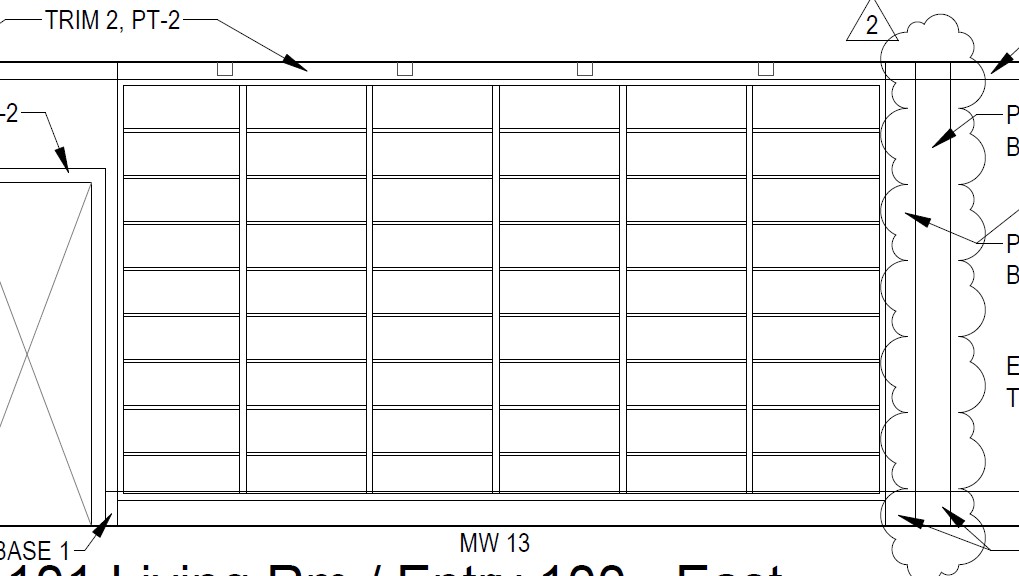
You can’t really see it in this elevation, but there was a long niche in the living room that I decided to fill with bookshelves. This adds 135 linear feet (40.5m) for books. I’m toying with the idea of having one whole row be dedicated to various objets, bric-a-brac, and bibelots, but even taking that out of circulation, I will still have tons of room for books.

For years I’ve pared books back and given so, so many away. Now I have room for all of those and then some. I’m already thinking of book buying projects I might undertake once I move in March. If I can wait that long…

The end (of the year) is nigh

I will probably finish at least one more book in the next 11 days, but given how bad I have been about posting anything here I am going to write this post while the iron is hot.

A rather slow reading year for sure. At 27 books read, that’s one more than my abysmal total of 26 in 2024. I have to go back to the 1990s to find a year with such low numbers. I don’t necessarily want to try for trip digits again. The four years I managed to crack 100 (110, 110, 104, and 122) were notable for not really enjoying the reads as much as I should have. But there is a lot of distance between 27 and 122. I think 2026 is to go back to my goal in 2004 which was to read at least 52 books in a year.

But enough about numbers. What were my top five titles for 2025? (You can look here for all the books I read in 2025.) Not surprisingly most of what I read and most of what I liked could all be considered vintage reading. But anyone who knows me knows I am stuck in the past.

The Doctor’s Wife by Brian Moore was probably the book I loved most this year. Back in 2005 I didn’t really get on too well with Moore’s The Lonely Passion of Judith Hearne but I gave him another chance in 2022 with The Great Victorian Collection which was quirky to say the least and ended up enjoying it quite a bit. So it was a delightful surprise when I settled into The Doctor’s Wife. Published in 1976 it focuses on an Irish woman who goes to visit a friend in France only to turn everything in her life on it’s ear. I loved every damn minute of it. I love a story where the protagonist busts through expectations in search of happiness. Easily my favorite kind of book. It also has me rethinking my earlier experience with Judith Hearne and am planning a reread to see what I may have missed the first time.

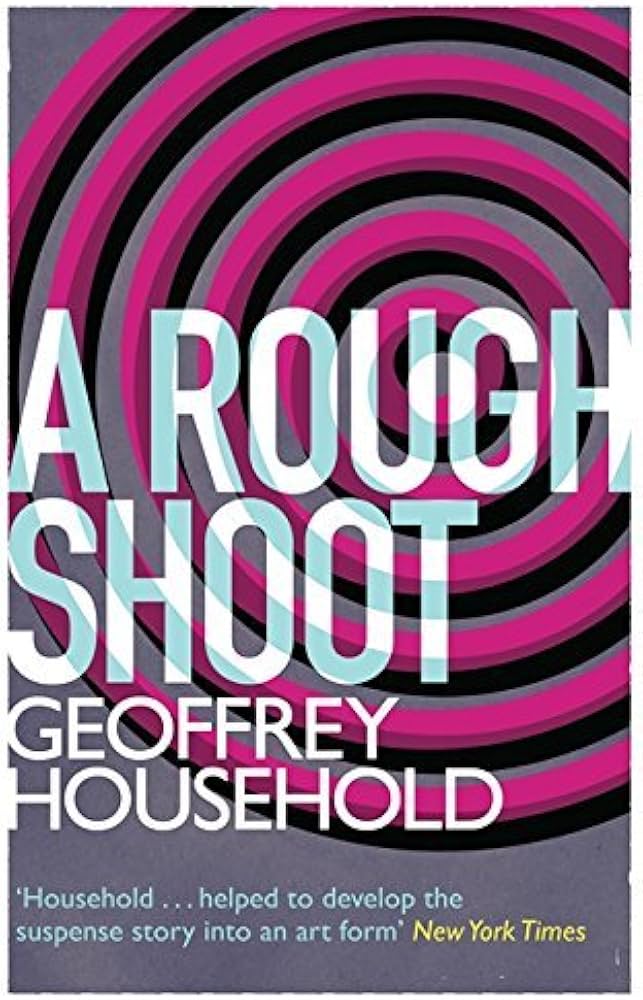
Many of you will recognize Geoffrey Household because of the NYRB Classics edition of Rogue Male. That was certainly my introduction to his work. From my experience so far, Household’s work consists primarily of vintage British spy thrillers. Of course they weren’t vintage when he wrote them, but they are delightfully old fashioned. A Rough Shoot, published in 1951, requires a bit of a leap at the beginning when everyday guy Roger Taine accidentally kills a guy hiding in a hedgerow and then another leap when the action moves from evading his crime to the center of a plot to bring fascism to the UK. Fast paced and short. I could read a million of these. (Incidentally, this was turned into a film written by Eric Ambler, a writer I love and have waxed rhapsodic about on myriad occasions.)

This past year a new bookstore has opened just three blocks from my new place in Minneapolis. Half cafe/half books, the stock is a little Gen Z for my tastes, but I did stumble across this McNally Editions copy of Ex-Wife by Ursula Parrott. I knew nothing about it and ended up enjoying it immensely. Published in 1929, this book has it all, open marriage, divorce, abortion, casual sex, and all sorts. Quite a bit more tragic than The Doctor’s Wife, it still fits my sweet-spot for people finding agency in their own lives.

If you like Mapp and Lucia, you will like Paying Guests. Published in 1929 it may in fact have been the result of Benson coasting of the success of the Lucia series. But for fans this is a good thing. Instead of Major Benjy, there is Colonel Chase obsessed with his pedometer. Instead of a hanging committee refusing Lucia and Georgie’s little daubs there is a self-mounted solo exhibition that goes from failure to triumph. Throw in Christian Science, rubbers of bridge, and a lot of gossip and you get the picture. One caveat, unless you love bridge, there is an entire chapter you can skip.

Finally, something published this century! Mark Haber’s Saint Sebastian’s Abyss published in 2022 focuses on an art historian who has made his life’s work studying and writing about a single painting who is on his way from New York to Berlin to visit his ailing once best friend and colleague who also made his career studying and writing about the same painting. Stylistically, the writing has some charming quirks that could have easily caused me to set the book aside. In recent years I have almost entirely eschewed such creativity for more straightforward prose. I’m a literalist at heart but it felt good to read something that demanded ambiguity and suspension of disbelief. There is also a lot of repetition in the text that feels almost poetic and reinforces the singular nature of the careers of these two scholars obsessed with what I’m assuming is a fictional work of Dutch Renaissance art by Count Hugo Beckenbauer. It is only 130 pages but it is the kind of book you want to discuss with others who have read it.