Bookish Oregon

 
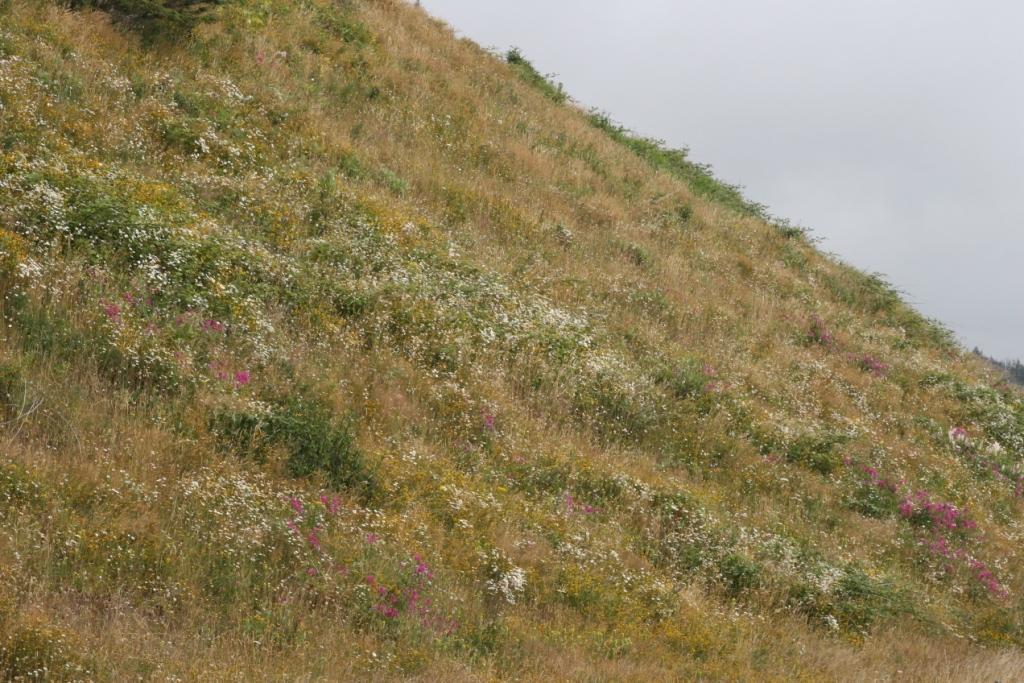
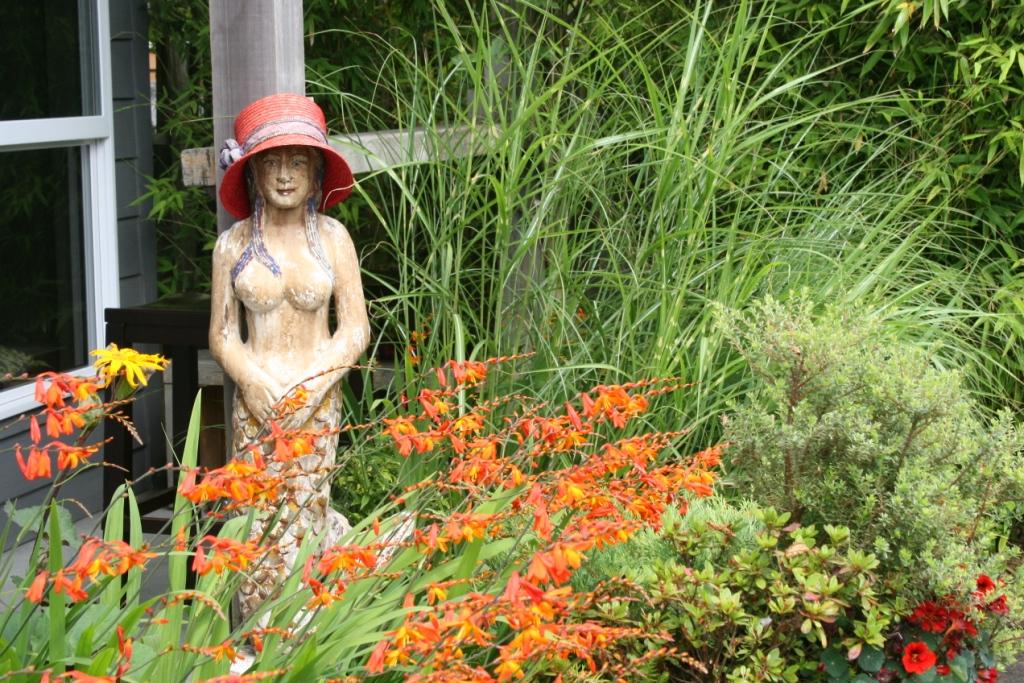
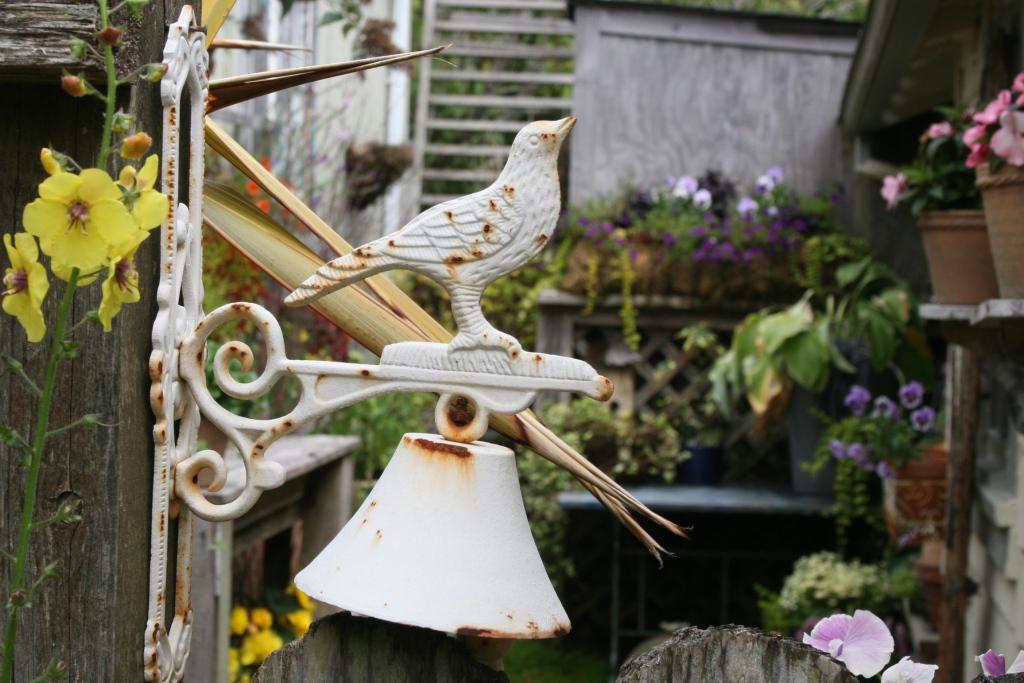
Of course Oregon is the home of Powell’s City of Books, but I didn’t get any pictures of the hours I spent there. I will be showing you a few of my Powell’s finds in the near future, but for now here are a few shots of me finding my natural habitat on the Oregon coast.


Oregon Coast with My Family

 
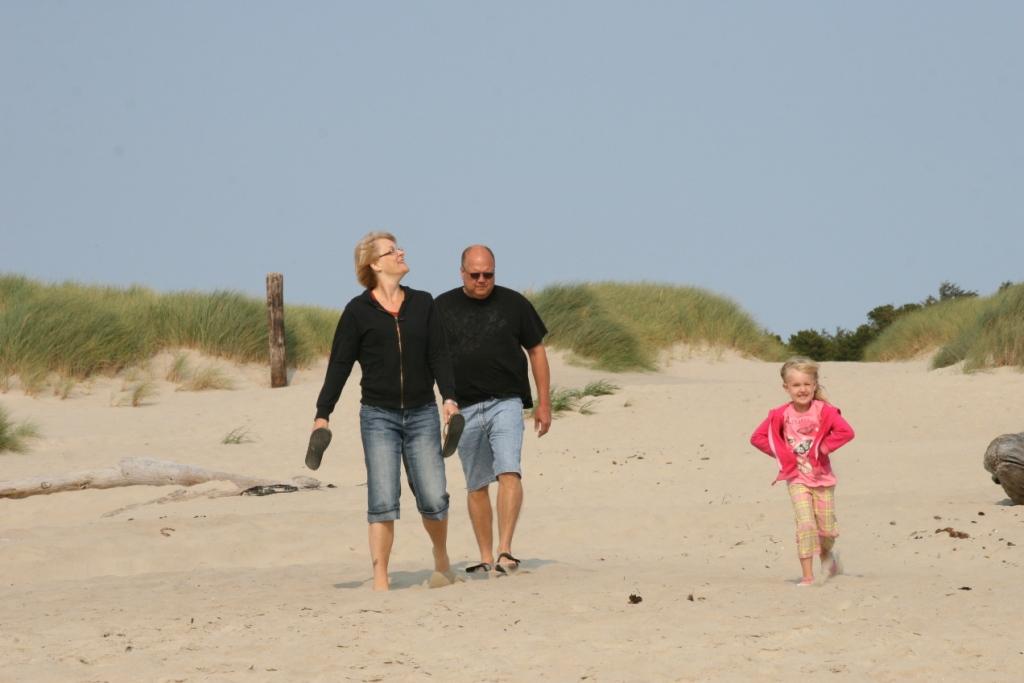
Last summer my sister and I had had enough of hot Phoenix and hot DC and were dreaming of a vacation somewhere cool. Not hip or happening, but cool as in chilly. So we decided to stay for a week this summer on the Oregon Coast. And we weren’t disappointed. It only got up to about 70 degrees at the hottest. most of the time it was in the low 60s. It was heaven.  I am not sure my parent’s agreed. The little cutie is my youngest niece who entertained us all week.

My sister, my brother-in-law, and my niece.
My dad “helping” John fly a kite.
Kaylee “helping” John fly a kite.
My mom and one of three puzzles we put together that week.
Mom and me.
Kaylee coloring with all the crayons at once.
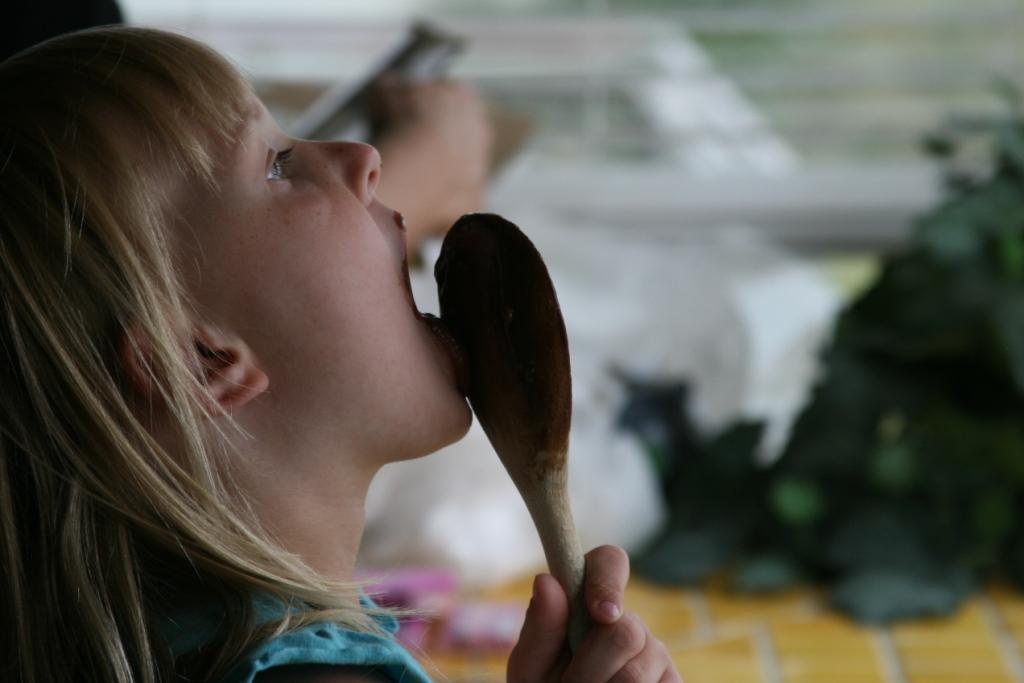
Like the Queen, one is not to photograph Kaylee when she is eating.
Sweet Pea.
Kaylee and Uncle Tom.

Sunday Painting: Mount Hood by Albert Bierstadt

  
Life has been so busy here lately that I feel like I have had very little time to do much more than just get by. Between recent travel, painting, multiple storms with lots of downed branches and in one case a whole tree, the electricity going out three times in the last month, etc. I feel like I have had to ignore not only My Porch but all my friends out in the blogosphere.

Well, I began to recitify that today with two book reviews which you can read below, and also by getting back to my Sunday Painting feature. Since we were in Oregon recently (pictures will be forthcoming) I thought I would show you this wonderful painting of Mount Hood from the Portland Art Museum. I think I may have seen this from the airplane as we came into Portland but I don’t know for sure if it was Mount Hood or some other snowcapped peak.

Albert Bierstadt (American, 1830-1902)
 

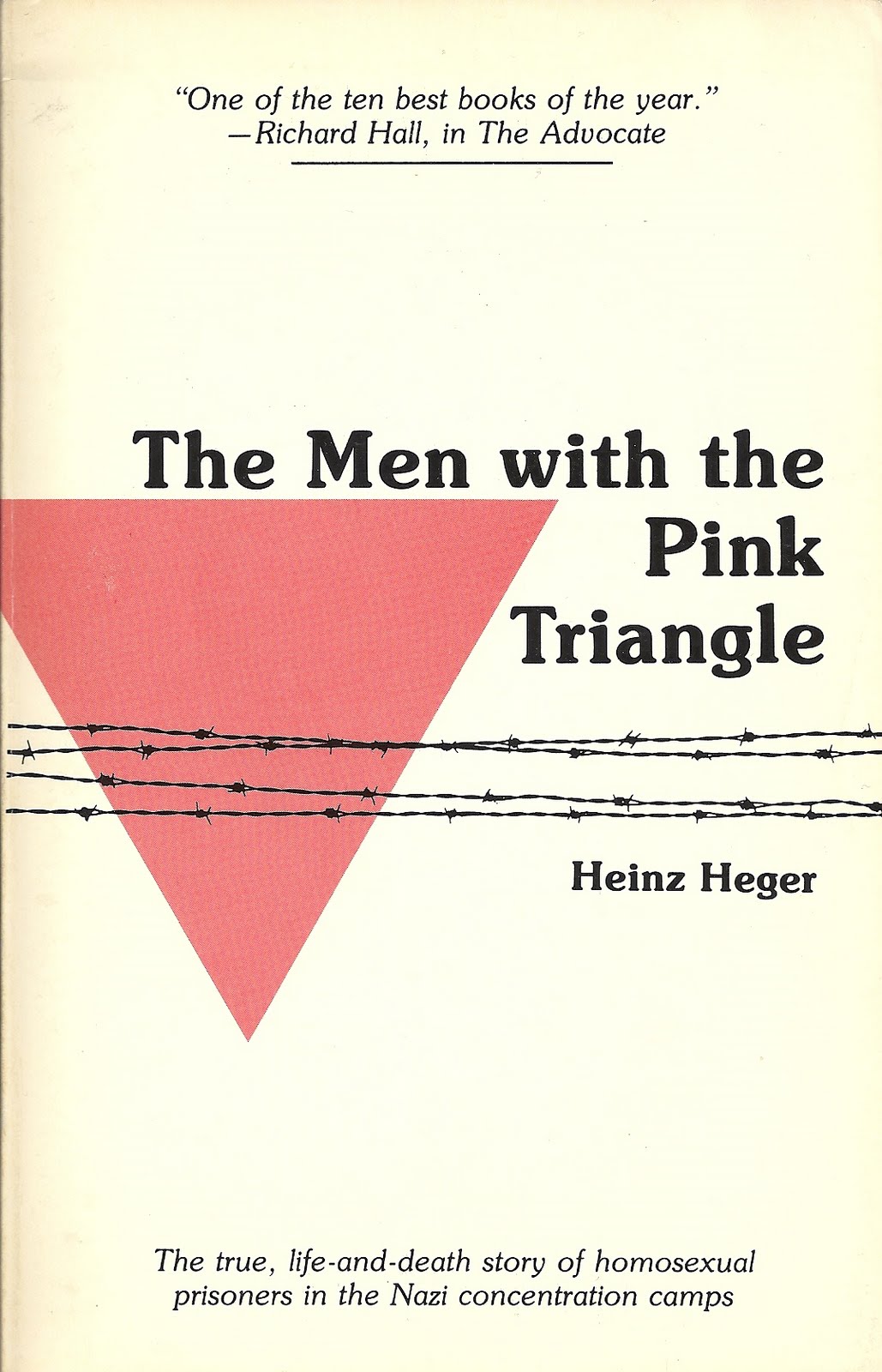
Book Review: The Men with the Pink Triangle by Heinz Heger


A courageous, early, firsthand account of the life (and death) of homosexuals in a Nazi concentration camp.

Heinz Heger was 22 in 1939 when he was sent from his home in Vienna to serve a six month prison sentence for being a homosexual. When he had served his time, however, he wasn’t released but was sent to a concentration camp in Germany where he stayed until liberation in 1945. (For homosexuals, the pink triangle was analgous to the yellow star that Jews were forced to wear under the Nazi regime.) Heger’s crime was having a boyfriend who happened to be the son of a high ranking SS officer. And much like Oscar Wilde’s lover and accuser, Heger’s boyfriend never suffered for his own “crimes”.

This book is an interesting follow-up to my recent read of Sophie’s Choice. Not just because it describes life in a concentration camp, but because like Sophie, Heger, not being a Jew, managed to live through his ordeal. That is not to say that non-Jews always survived, indeed probably hundreds of thousands did not. And like Sophie, Heger was forced into many situations where he traded his humanity for his life.

Heger first told his story in print in 1970, one of the few early accounts to shine a light on an aspect of Nazi crimes that often went overlooked and unreported. Other stories of atrocities that were also slow to come to light were the fate of Gypsies, Jehovah’s Witnesses, and the disabled among others. Being careful not to get into a discussion of who suffered more or less at the hands of the Nazis, one of the poignant aspects of Heger’s story is the fact that when he first told it, homosexuality was still a criminal offence in many developed nations and that he and other homosexuals were not eligible for reparations from the German government because their incarceration was still considered to be a criminal punishment.

Much has changed in the 30 years since 1980 when Heger’s story was translated and published in English. I remember back in high school in the mid-80s hearing about the fate of gays during the holocaust. Certainly not in school, but rather in the gay press. And of course the pink triangle was used not only by groups like ACT-UP but also as a symbol of solidarity and defiance by gays in general. In college, in the days before the ubiquitous rainbow flag, I wore a button with a pink triangle on it on my backpack. In those days it meant nothing to most who saw it, but it still felt like a daring act. There were times when I was certain everyone was staring it and there were times when I wanted everyone to stare at it. It was always interesting when someone would ask what it meant. Talk about a teaching moment. My trip to Dachau in 1992, already emotional and wrenching, was made even more so when I saw a pink triangle displayed in one of the cases.

Of course since then much has changed in both the understanding and acknowledgment of the fate of homosexuals under the Nazis but also, of course, in the human rights of gays and lesbians. One should not forget, however, the state-sponsored violence still perpetrated against gays around the globe for their “crimes”.

Book Review: The Fifth Child by Doris Lessing


Caveat lector: Perhaps not the book for women of child bearing age…(oh, and spoilers galore)

Such a different book from my first (and until now only) Doris Lessing (The Summer Before the Dark). The Fifth Child is a fast moving story that starts off rather conventionally introducing David and Harriet’s happy  and rather mad rush into love, discovery, and warm hospitality but then turns slowly into something akin to a horror story. Not a blood and guts kind of horror story which seems so far from our personal frame of reference, but one which is infinitely scarier. The kind of horror story you can imagine coming true. The kind that might even remind you of someone you know.

Before I get myself into trouble explaining that last sentence or two let me first lay out the plot (spoilers and all) so I don’t have to try and be clever. Harriet and David want a big family. Four kids seem to be the minimum, six might be nice, eight would be even better. In pursuit of their desires they buy a large house that they set to filling both with offspring but also with their extended family and friends. Always the place to go for the holidays, their house is always alive and almost always a happy, loving place. That is until Harriet becomes pregnant with her fifth child. As her pregnancy takes an ominous turn Harriet becomes harder and harder to be around. By the time she gives birth to Ben, her 11-pound fifth child, Harriet is convinced the baby is more beast than human. From there things go from bad to worse. Ben develops into an unusually strong, uncontrollable, anti-social child. As a result the other kids are frightened, the Harriet and David’s marriage is strained and the big family gatherings become less and less appealing to their extended family and friends.

Although published in 1988, the action begins in the 1960s and so Ben’s condition is never explained in a way that we would expect today. Indeed that is part of the problem, Harriet never manages to find the support she needs from either her family or the medical establishment. And it wreaks havoc on her life, the lives of her children and her relationship with her husband. The horror that I mentioned earlier is not about Ben’s differences but about the way society can and can’t deal with those differences and the toll it takes on those responsible. And how not everyone can rise to the challenge of caring for special needs children.

Although the story is disturbing, Lessing is an amazing writer and it is no wonder she won the Nobel Prize for Literature. She works about 20 years into 133 pages and does so in a way that never makes it feel rushed. I have two other Lessing novels on their way to me somewhere in the USPS and I can’t wait to see how they stack up to the two I have already read.

Have you added Lessing to your Nobel TBR?
    

Book Review: Sophie’s Choice by William Styron


Even though I have not seen the film adaptation of Sophie’s Choice, I must say that I had a very difficult time not seeing and hearing Meryl Streep every time Sophie spoke. And while I don’t dislike Ms. Streep, I don’t think she is as brilliant an actor as the rest of the world seems to think. Whenever she plays a role, whether she nails the accent or not, I always just feel like she is Meryl Streep. So to have her flit into my mind repeatedly as I read this often weighty story was distracting to say the least.
Sophie’s horrifying Holocaust experiences are told as a story within a story. The outer story is about our narrator and “hero” Stingo, a struggling, young Southern writer who is living and trying to work in New York City in 1947. The connection between those two stories, besides Stingo’s friendship with Sophie, is ostensibly the similarities between the violence and racism of the Nazi regime and the violence and racism of the American South. One could argue the merits of such a comparison, but I think there are enough parallels that make it worthy of exploration. What was more problematic for me was the juxtaposition of Stingo’s horny, struggling writer story with the heart wrenching tale of Sophie’s life before, during, and after her time in Auschwitz. Oddly enough I think Styron himself was trying to inoculate Sophie’s Choice from that very observation. In the novel, Stingo opines about the hazards of writing Sophie’s story.

A survivor, Elie Wiesel, has written: “Novelists made free use of the [the Holocaust] in their work…In so doing they cheapened [it], drained it of its substance. The Holocaust was now a hot topic, fashionable, guaranteed to gain attention and to achieve instant success…” I do not know how ultimately valid any of this is, but I am aware of the risk.

I do think that Wiesel’s point is valid and I don’t think Styron’s/Stingo’s recognition of the risk is enough to shield Sophie’s Choice from that particular criticism. In fact, I don’t think that novelization of Holocaust experiences automatically cheapens them, but I do think that Styron’s novelization of it does. I think part of Styron’s goal is to address the cosmic inequity of life as Stingo relates the cheerful banality of his own life to that of Sophie. On the day Sophie entered Auschwitz and “fell into the slow hands of the living damnation” Stingo was enjoying a beautiful day in Raleigh where he was gorging himself on bananas. The contrasts are effective, but that, and the thoughtful comparison of the Holocaust and the American South were not enough to keep the day-to-day musings of a horny 22-year old virgin from cheapening Sophie’s story.

Even setting aside the issue of the Holocaust I was somewhat put out by Styron’s focus on Stingo’s libido. I object not for reasons of prudery, but because it just came across as the musings of one of those late middle-age white male writers who seem to think that graphic sex is somehow edgy or shocking. A male writer’s pornographic fantasy trying to masquerade as something symbolic or profound.

Sophie’s Choice is number 96 on the Modern Library’s Top 100 list. I generally don’t make comments about whether or not a particular book should or shouldn’t be on that list. And I won’t do so now, but I was struck by one rather interesting reoccurring aspect of Styron’s novel. Stingo, struggling young writer that he is, mentions many books and authors throughout the narrative and I was struck by how many of them are on the Modern Library list. It got to the point where it seemed like the panel that chose the Top 100 might have used Styron’s novel to create the list. Styron mentions 17 by name and refers to an additional four by mentioning their Top 100 listed novel. Including Styron’s own place on the list, 22 authors—almost a third of the 77 authors on the list—are mentioned in Sophie’s Choice. The Top 100 list is a pretty conventional list of reputedly canonical books so it doesn’t come as too much of a surprise that Styron’s hero’s world of venerated authors is equally conventional. What is kind of amusing is that in the last third of a century of great books that Styron managed to write something that earned him a spot in the pantheon of great writers he so admired. It was almost as if invoking the names of so many “greats” assured him his place on the list.

Despite my challenges with various aspects of this novel (only a few of which are mentioned here), I am glad that I read it and I hope my review doesn’t dissuade anyone from picking it up. It is definitely worth your time, no matter what you ultimately end up thinking of it.


Something to look at while I am away

 
Just got to Portland, Oregon yesterday. This is my third trip to Rose City and it remains as delightful as ever. Today we drive out to the coast for a week with family. I will probably have very limited blogging capabilities so I thought I would leave you with some fun pictures to look at while I am away.

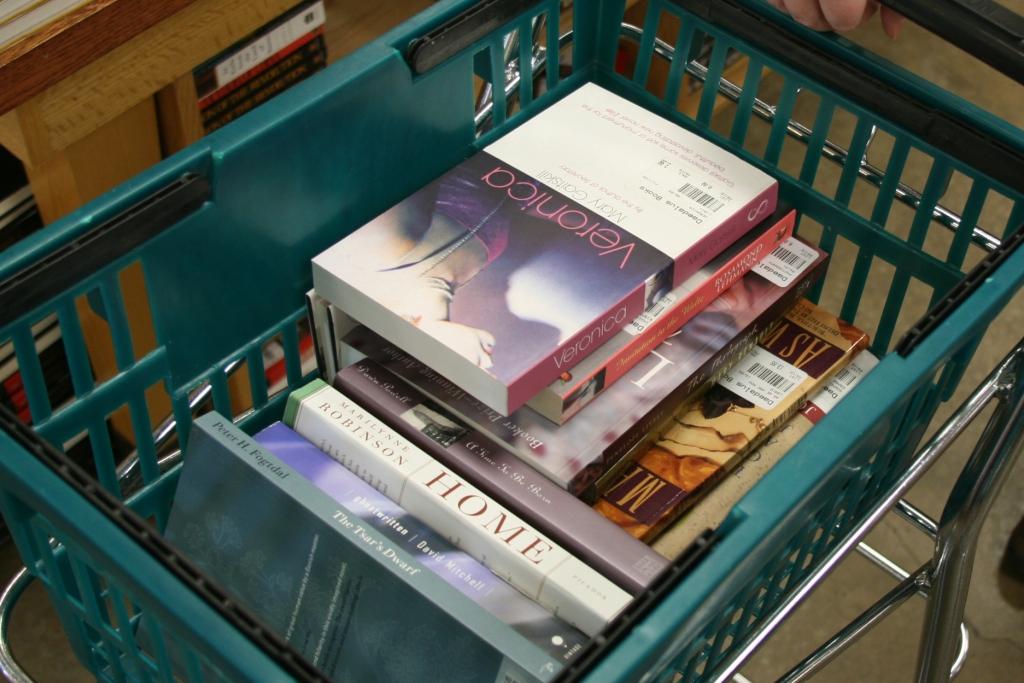
Last Sunday I had the great pleasure of meeting Teresa from Shelf Love and Frances from Nonsuch Book. We headed out to Daedalus Books Warehouse in Columbia, Maryland. Daedalus is one of the world’s largest wholesalers of remaindered books and their warehouse store is a lot of fun. Even more fun though was the great company. We had a hard time browsing from time to time because we were having too much fun talking about books and book blogging. It is always nice when your browsing companions don’t give you a blank look when you mention a book or author. Among the three of us there was enough collective knowledge that we knew a little something about everything we came across. Instant recommendations, gentle warnings, discourse on various editions, and snarky comments about the illustrated Da Vinci Code were all close at hand.

Being slammed with work, home improvements and getting ready to travel, it has taken me almost a week to get around to this recap. Teresa and Frances have already posted theirs here and here respectively.

Here are some pictures of our hauls in progress. Your will note how restrained Francees was compared to Teresa and I.

My Haul

Teresa’s Haul

Frances’ Haul

And now for my haul, in detail….

The Child in Time by Ian McEwan – I haven’t read this one and it is the same edition as other McEwans I own.
Morningside Heights by Cheryl Mendelsohn – The start of a wonderful trilogy about families in the Morningside Heights neighborhood of Manhattan. I’ve read all three but I didn’t own the first volume. Until now.
Somerset Maugham by Jeffrey Meyers – Even though I have read tons of Maugham I know very little about him. This bio should help rectify that.
Selected Letters of Edith Sitwell edited by Richard Greene – I wasn’t sure about getting this one, but when I opend it up to a one line letter to Noel Coward that simply said “I accept your apology.” I couldn’t resist. What crazy thing do you think Mr. Coward did?
After You’d Gone by Maggie O’Farrell – I have loved the three other O’Farrell books I have read (and all this year) so I couldn’t pass this one up.
The Professor’s House by Willa Cather – Not only my favorite Willa Cather, but one of my favorite books of all time, but I didn’t actually own a copy. And since Teresa had never read any Cather I bought her a copy as well.
The Fifth Child by Doris Lessing – I have only read one Doris Lessing (The Summer Before the Dark) so I thought it was time to read another. This one looks slightly disturbing.
Diary of a Bad Year by J.M. Coetzee – His novel Disgrace is brilliant.
Off Shore by Penelope Fitzgerald – Fitzgerald is always worth reading.
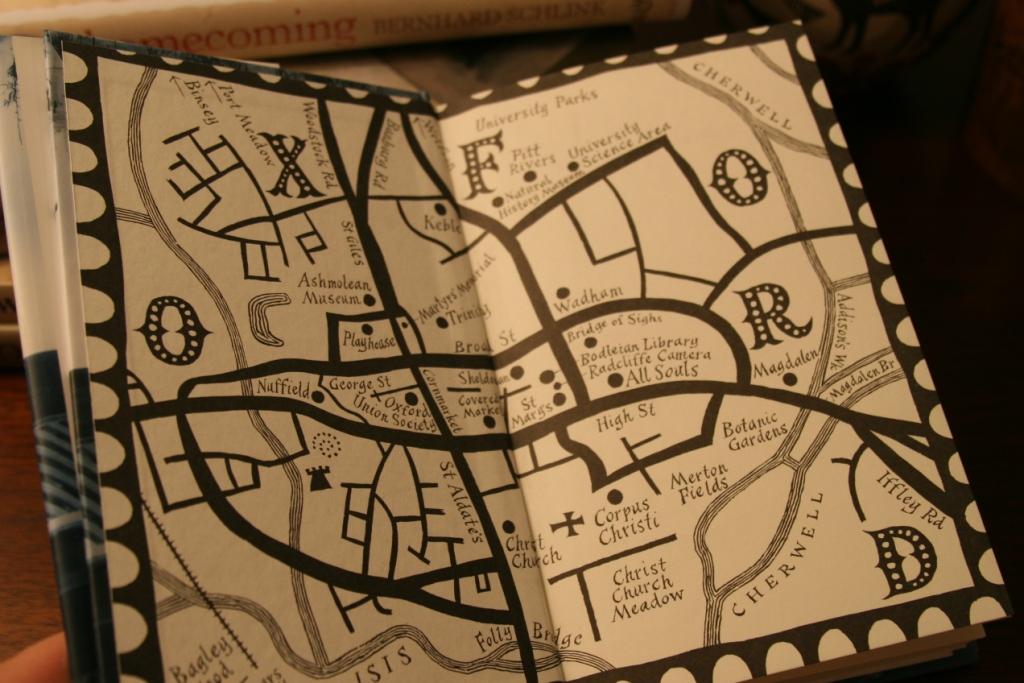
The Secret Garden by Justin Cartwright – A novel with Oxford at its center, I couldn’t pass that up. Especially since this lovely edition is part of its Writer in the City series of which I own a few. It includes Edmund White on Paris and John Banville on Prague. But a note to Bloomsbury and other publishers: When you have a series of books like these, your website should be searchable so that one can see all titles in the series. Why in the world would you make it so hard to find information about books your customers want? It offends my OCD that a publisher would be so bone headed. And if someone comes back and tells me I am wrong that they do have information on the series on their website my criticism still stands because they make it pretty darn hard to find.
Lafcadio’s Adventures by Andre Gide – Last minute impulse buy. I like the translation of the original French title much better: The Vatican Cellars.
The Last September by Elizabeth Bowen – A heretofore unread Bown in an edition I like.
The Pursuit of Love and Love in a Cold Climate by Nancy Mitford – For years I have owned a really nice Folio edition of Love in a Cold Climate, but since it is a follow-up to The Pursuit of Love I have not wanted to read it out of order. Now with this lovely 2-in-1 edition I can finally read them both. I must say, however, I am normally not a fan of 2-in-1 or omnibus editions of anything. I  love collecting complete sets, I just don’t like them in one volume.
The Demanding Dead by Edith Wharton – I had no idea that Edith Wharton had written some ghost stories. I can’t wait to see how she does it.
The Homecoming by Bernhard Schlink – I liked The Reader and am interested to see what else Schlink can do.
The Glass Room by Simon Mawer – Everyone and their dog have already read this one. I love this cover but the totally, totally ruined it with three, not one, not two, but three, promotional taglines. Idiots.
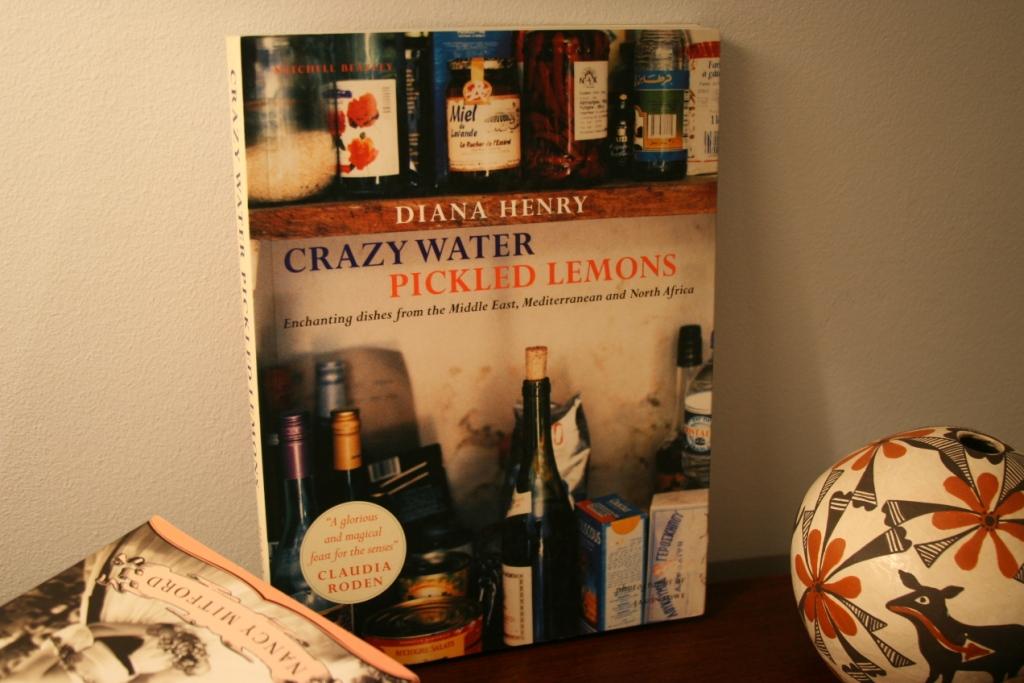
Crazy Water and Pickled Lemons by Diana Henry – This is a perfect example of judging a book by its cover. I loved this cover photo so much I decided to buy even before I knew what it was. Happily it is a cookbook.
An Odyssy in Print – A beautiful look inside the libraries of the Smithsonian Instituion here in DC.
      
Which are your favorites or which one would you most like to read?

  

Book Review: The Closed Door by Dorothy Whipple

 
The Closed Door and Other Stories
Dorothy Whipple

I know I tend to use superlatives when talking about Dorothy Whipple and that doing so too frequently or too effusively can have the opposite of the intended effect. I mention this because I am slightly troubled that all of my past praise of Whipple’s novels makes it all the harder to try and convey to you just how brilliant her short fiction is. In fact, although I truly loved The Priory and High Wages, I never thought them brilliant. They are well written, compelling, and highly enjoyable, but they also have some elements that make the plots a little to neat and tidy. But when it comes to the short story, Whipple’s plotting deficienices, sometimes evident in longer formats, disappear.

I tend not to like short stories because they often leave me scratching my head wondering what exactly happened. They either tend to feel too much like fragments–a slice of life picked out of time–or they just leave too many loose ends and unanswered questions, and I feel like I am not clever enough to understand what I am supposed to feel. But Whipple writes the kind of stories that are quick to draw one in and they have perfect little plot arcs that can be full of twists, but resolve in a way that lets literal-minded me feel satisfied that I “got it”. Of course I realize that this preference for plot resolution is probably something that sets me (and Whipple) apart from the more high minded literati.

My challenges writing plot summaries rises to crisis levels when trying to describe short stories. And these are the kind of stories that one really wants to talk about. But the spoiler alerts alone would take up half the word count so I am going to stick to generalities. Despite it being a joy to read, this collection is not a cozy romp through 1930s and 40s England. These stories deal with abuse neglect, deception, adultery and other types of unpleasantness. Never too desolate (this isn’t Precious after all), but some pack a real emotional wallop. Two of the stories are in a dead heat for my favorite: “The Handbag” for its O. Henry-like plot and “Youth” for its exhilarating resolution that made me want to clap and cry and just plain rejoice that Anne did the right thing. Most of the stories offer at least a glimmer of hope if not outright happiness for the protagonists, but a few of them are just plain tragic. The story “Wednesday” is particularly so.

Many thanks to Verity and Claire who sent this book to me as a prize for Persephone Reading Week. Because they are short stories, I probably would not have gotten around to them until I reard everything else by Whipple. And that would be a mistake.


Books in pictures

 
Channeling Simon of Stuck-In-A-Book, Karen at Cornflower Books posted an image that reminded her of the book she is currently reading (The fantastic novel Stoner by John Williams). She challenged the rest of us to come up with an image that reflected what we are reading. Since my current read is a Persephone collection of Dorothy Whipple short stories the first thing that came to my mind was that the image had to be of a youngish female from the 1930s or 1940s. I certainly had a general idea of what the subject of the image might look like, but more importantly I felt she had to convey a sense of quiet potential. Like many of those Whipple heroines who struggle to reconcile their own hopes and ambitions with their assigned place in society.  I think this portrait of Shelia McManus by Richard Emil Miller fits the bill. What do you think?