All Hail Miss Buncle!

  
I don’t normally post much about a particular book until I finish reading it, but Miss Buncle’s Book is so infectiously charming I couldn’t resist.  I am sitting here on my lunch hour grinning while I read. Makes me want to read everything DE Stevenson has ever written.

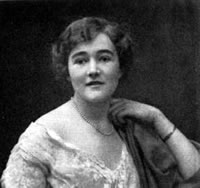
This is DE Stevenson, but in my mind Miss Buncle probably
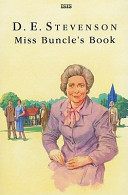
looks a lot like this as well.

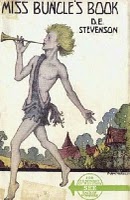
I don’t have this copy. I am reading the
Persephone edition.

Miss Buncle does NOT look like Margaret
Thatcher circa 1982.

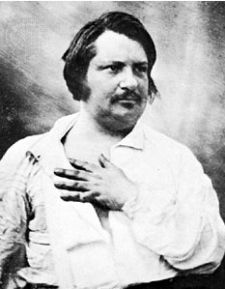
Balzac the Speed Bump (or how Balzac thwarted the best-laid plans)


J’accuse!

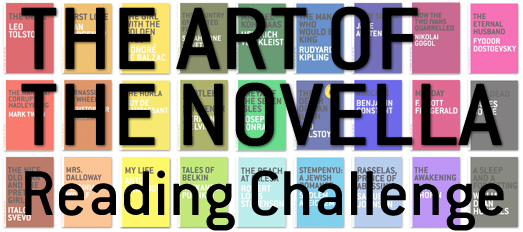
Even though I have only read 16 of the 42 novellas in Melville House Publishing Art of the Novella series, I was harboring hope that I might actually finish all 42 by the end of August.

After the first eleven I realized I was suffering existential angst every time I had to choose the next one to read so I decided to read them in chronological order. So I lined them all up according to when they were written and began with the oldest. (Wag of the finger to Melville for not having the original dates in all of their editions. Most of them have it but about five oddly don’t.) That was going along great, in fact I really enjoyed reading them in chron order, it gave a continuity to the otherwise disparate series of books.

And then, Balzac. Ugh. I didn’t necessarily hate The Girl With the Golden Eyes, but I was really not in the mood for it which made it seem tedious. I could see myself liking this book some other time, but not right now. Pretty much everything else I have read had strong narratives and this one–at least the first 30 pages–read more like an essay. So I put it away.

But the net effect of the Balzac disaster is that I lost my urge to complete the rest of the volumes by the end of the month. Not only did it make me realize that there may be others in the series that I find equally uninteresting right now but it also pissed off my OCD which can’t bear the thought of having a hole in my plan to read chronologically.

So, with my interest in high-style, high-meaning, novellas by classic authors at an all time low, I picked up a Persephone (Miss Buncle’s Book) and I couldn’t be happier.

Overall I am loving this challenge and loving the Melville novella series. And I am still going to try and finish at least five more of the novellas by the end of the month so I can make it to the fittingly named “Obsessed” level of 21 novellas.

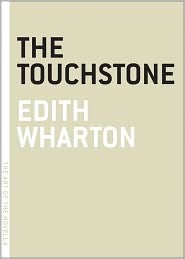
Book Review: The Touchstone by Edith Wharton


I didn’t realize it until I started reading, but I had already read The Touchstone a few years ago. What quickly became clear is that I was liking it much better this time round. I am a pretty solid fan of Edith Wharton overall so I am never too disappointed with her. And there is really nothing to disappoint here, except perhaps the last line as Frances notes.

Glennard, in need of money decides with some hesitation, to sell the personal letters sent to him by a now dead famous author who was in love with him. One of the reasons he sells is to be able to have enough money to marry his girlfriend. Once the letters are publish the become scandalously popular which makes it even harder for Glennard to assuage his guilt over having sold them. He becomes particularly upset that his wife–who only could become his wife thanks to the money he got from selling the letters–is reading the volumes of letters and he is worried what she will think of him if she finds out. Eventually he wants his wife to find out so that he can be somehow redeemed or at least relieved by her scorn for his actions.

I think Glennard’s shame over the publication of the letters has less to do with the fact that he profited from selling them and much more to do with how the published letters put a mirror up the coldness of his soul. And frankly the way he was willing to let a chasm of disinterest and even hate grow between himself and his wife further suggest tha Glennard can be one cold fish.

The Verdict: Vintage Wharton is always worth reading.

Book Review: Mathilda by Mary Shelley


Good god I hated this book. It is a good thing that the front flap told me that father-daughter incest was involved because I never would have figured that out. When I got to the part where it was revealed I had to read it three times because the reference was so opaque that I never would have realized it was incestuous love. I am not unused to books from this period being full of protestations of love that seem over the top by today’s standards but certainly don’t indicate incest. And then once the incestuous fascination of father with daughter is revealed about half way through, the rest of it was just lots of hand wringing and anguish.

Incest is one of those taboos that really makes my flesh crawl. (Are you listening Penelope Lively?) I just don’t want to read about it. But I could have gotten over it if something had happened in this book that would have made it less tediously overwrought.

Jessica from Virtual Margin explains the overwrought part perfectly.

Nicole at Bibliographing is more appreciative of the swooning Romanticism.

The Verdict: Hated it for so many reasons. Go read Frankenstein instead, fewer monsters in that one.

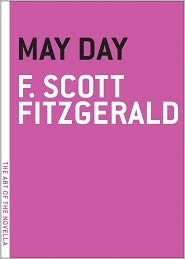
Book Review: May Day by F. Scott Fitzgerald


Although I have read most of Fitzgerald’s novels, it has been a long time since I have read anything by him. In that time I think I may have forgotten just how enjoyable Fitzgerald’s writing is.

Not surprisingly, May Day takes place on May 1st. The year is 1919 and crowds of soldiers recently returned from World War I are plentiful on the streets of New York. Among the characters that populate this novella the conflicts of the American class system play out over the course of twenty-four hours. We see affluent Yalies, working class soldiers who misdirect their leftover angst and agression toward socialists, and two women of vastly different worlds both hoping to make a match with Gordon Sterrett an impoverished artist having trouble readjusting to life after the war. And we see booze. Lots of booze.

Despite much humor, May Day is filled with many minor tragedies that make contentment difficult, life a struggle, and lead to truly tragic closing curtain.

The Verdict: Didn’t want to put it down. Almost missed my train stop.

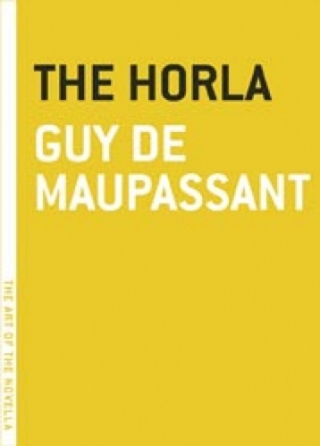
Book Review: The Horla by Guy de Maupassant


Until now I had only ever read one short story by de Maupassant. Does anyone want to hazard a guess which one it was?

This edition of The Horla (roughly translated: “the outsider”) is actually one story told three ways. The Horla (1887), Letter From a Madman (1885) and finally The Horla (1886). Melville House puts the 1887 version first and I think they did the right thing. Not only is it the longest but it is also the most substantive. Letter from a Madman might be interesting in itself, but I think it would have been much less so if I hadn’t had the background of the 1887 version. Finally by the time I got to the 1886 version I am not sure I cared all that much.

The basic story is the protagonist’s descent into madness. Insomnia leads to paranoid delusions. In the end he thinks he has trapped the invisible horla in the house and sets it on fire. What’s that? Oh yeah, when he locked the house up and set it alight he failed to remember the servants sleeping on the top floor.

The Verdict: I was intrigued by the very real seeming descriptions of the descent into madness.

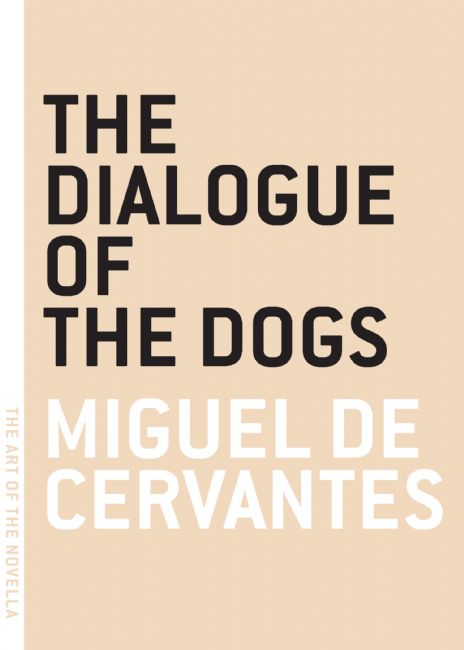
Book Review: The Dialogue of the Dogs by Miguel de Cervantes


In general I am not a fan of talking animals, but I must admit that with Lucy in our lives, I am more amenable to talking dogs now than I would have been previously. Apparently, if you believe the front flap, this is the first instance in western literature of a talking-dog story.

While taking treatment for syphilis, Ensign Campuzano overhears Scipio and Berganza, two Mastiffs talking to each other for what turns out to be their first time. And they have much to say. As Berganza tells Scipio about the different masters he has had over the years he simultaneously transmits Cervantes’ commentary on the vagaries of human nature. According to the front flap of this edition Berganza’s tales (tails?) provided a new way to discuss morality without relying on empiricism. The stories are interesting enough and they are indeed effective in accomplishing Cervantes’ aim. It took a while getting used to the translation which includes enough 21st century vernacular to be a little jarring at first. But I think overall I liked the modern language. It seemed more appropriately whimsical for the dogs than more antiquated language.

The Verdict: While it didn’t knock my socks off, the novella included many interesting stories with moral messages that never got preachy.

John Crace Digested

  
Have any of you heard John Crace’s “Digested Read” podcasts for The Guardian?

I downloaded some to have on the iPod while on vacation. Upon listening to podcasts, my initial confusion over what he was doing led swiftly to annoyance and eventually to a grudging…hmm…respect may not be the right word. Something short of that.

For those of you who haven’t heard these podcasts, author John Crace (haven’t read him) gives these supposedly humorous digested versions of famous/popular books.  I say supposedly humorous because they all seemed a little too snarky and crabby to be truly humorous. I perhaps made the mistake of starting with his take on The Sea, The Sea by Iris Murdoch. I thought it would be an interesting little talk about said book but instead it was just Crace taking the piss out of the book and those that take it seriously. I found it kind of ham-handed like something a too-clever undergraduate thespian might think hilarious. He sounded like the evil vicar on Mitchell and Webb but he seemed to have pretensions at something more profound than the hilarious skits of M&W.  My overall thought was “Why does he hate everything?”.

Then something happened. I listened to one of his Digested Reads of a book I didn’t love and the satire suddenly made sense. Actually I hadn’t even read the book–the gigantic bio of the Queen Mum that came out a few years ago. I probably would enjoy reading it but I still found much humour in the way Crace excoriates the author for being a fawning sycophant.

In the end, and mainly in retrospect, I kind of ended up liking the Digested Read. Just be ready to have your favorite book trashed.
  

At Last

 
Why in the world has no one ever told me about James Last and his orchestra? This stuff is gold. (Well his stuff from the early ’70s is gold. The later stuff gets kind of bad.)

I came across it after JoAnn at Lakeside Musing honored Verity and Ken on their wedding day with a YouTube video of Peter, Paul, and Mary singing “The Wedding Song”. (Since I couldn’t participate in the Verity festivities I offer her my congratulations now.)

Well, a child of the 1970s, I love The Wedding Song. It makes me so nostalgic. So I went to YouTube and listened to many other versions (Petula Clark, The Letterman, Nana Mouskouri, etc.) and then I came across James Last and loved the harmonies. I looked for more like it but instead discovered the world of Jame Last.  And it is awesome. Seriously cheesy and way corny, but so darn awesome I can’t stand it.

Here is the one that got me started

But then this one blew my socks off

And then Orange Blossom Special no less. This was a huge favorite of mine as a kid.

Maine: Monhegan Island

[The last Maine vacation post…I promise]
    
We have stayed on Monhegan Island a few times in past, but this time we had to be content with being daytrippers. The year round population on Monhegan is about 65. In the summer it is an artist colony that used to host the likes of Rockwell Kent and Marsden Hartley.

The  ferry to Monhegan leaves out of Port Clyde.

Lucy did not like the gangplank. Thakfully her life preserver had a handle.

Traffic jam.

This is the busiest road on Monhegan.

Even the “Less Drowsy” formula of Dramamine makes me sleepy.

The weather could not have been more beautiful.

Lucy literally fell asleep with her head resting in this woman’s hand.
Thankfully the woman had been cooing over Lucy
all day and couldn’t have been happier.