
In this my second installment of Shelf Esteem, I’m giving you two shelves to look at. One doesn’t show many books–but it shows them up close, and the other has lots of books in it, but none of the titles are discernible.
I failed to mention in my first installment of Shelf Esteem that John came up with the name. We batted around many bad ideas, and just when I was about to throw in the towel and do something really boring John called out “Shelf Esteem” from the other room. I think it works.
Shelf One

Cozy Factor: I don’t like TVs in libraries, but the existence of this one suggests that there is a comfy couch on the opposite wall. The sunlight streaming in (and the snoozing dog) also suggest that this indeed might be a cozy place to read.
The Books: I feel like I know this person based on the contents of his shelves (yes I think it a he, and probably a gay he as well).
First off there are a few books relevant to my professional milieu of architects, planners, and historic preservationists. Most notably for me are two books that I also have on my shelves: The Urban Wilderness, a seminal planning book by Sam Bass Warner Jr, and Edge City by Joel Garreau a journalistic look at those suburban no-places like Tysons Corner, Virginia. He also has a book that every architect and wannabee seems to own S,M,L,XL by the annoying Dutch architect Rem Koolhaas–or rather produced by his studio. I have never understood the appeal of this book and feel that its ubiquity can only be put down to me-tooism.
So why do I think he is gay? Well if the DVD of Moulin Rouge doesn’t make you think so, he also has The Swimming Pool Library (gay), The World of Normal Boys (really gay–and really good), and a Cunningham on one spine makes me think it must be Michael Cunningham. He also has a book by Paul Monette a gay author who wrote novels that dealt with the early, deadly days of AIDS. I remember liking Monette’s books when I read them in high school and college. But think of that, my young gay self was steeped in the literature of AIDS–how depressing.
The Shelves: I am kind of ambivalent about open ended shelves like these for both functional and aesthetic reasons.
Is this person a reader? Kind of. I think when he does read he either reads stuff for work or he reads non-fiction that he feels he should read. I also think there are some volumes from his grad school days. Strikes me as the kind of person who reads fiction on vacation, would prefer to read Le Carre (he has at least two) but augments that with (again) stuff he thinks he should read like Roth, Irving, and Oates, the gay novels, or things like The Slaves of New York (the gayest of all?). This is a guy I would have wanted to date–being blinded by a few interesting things on his shelves–but ultimately he would have been too conventional for me, and I would have been too irreverent for him. I mean the man owns a book by Bill Gates and one called Winning with Integrity.
The book I would read if I had to pick one: I would probably re-read The World of Normal Boys.
Shelf Two
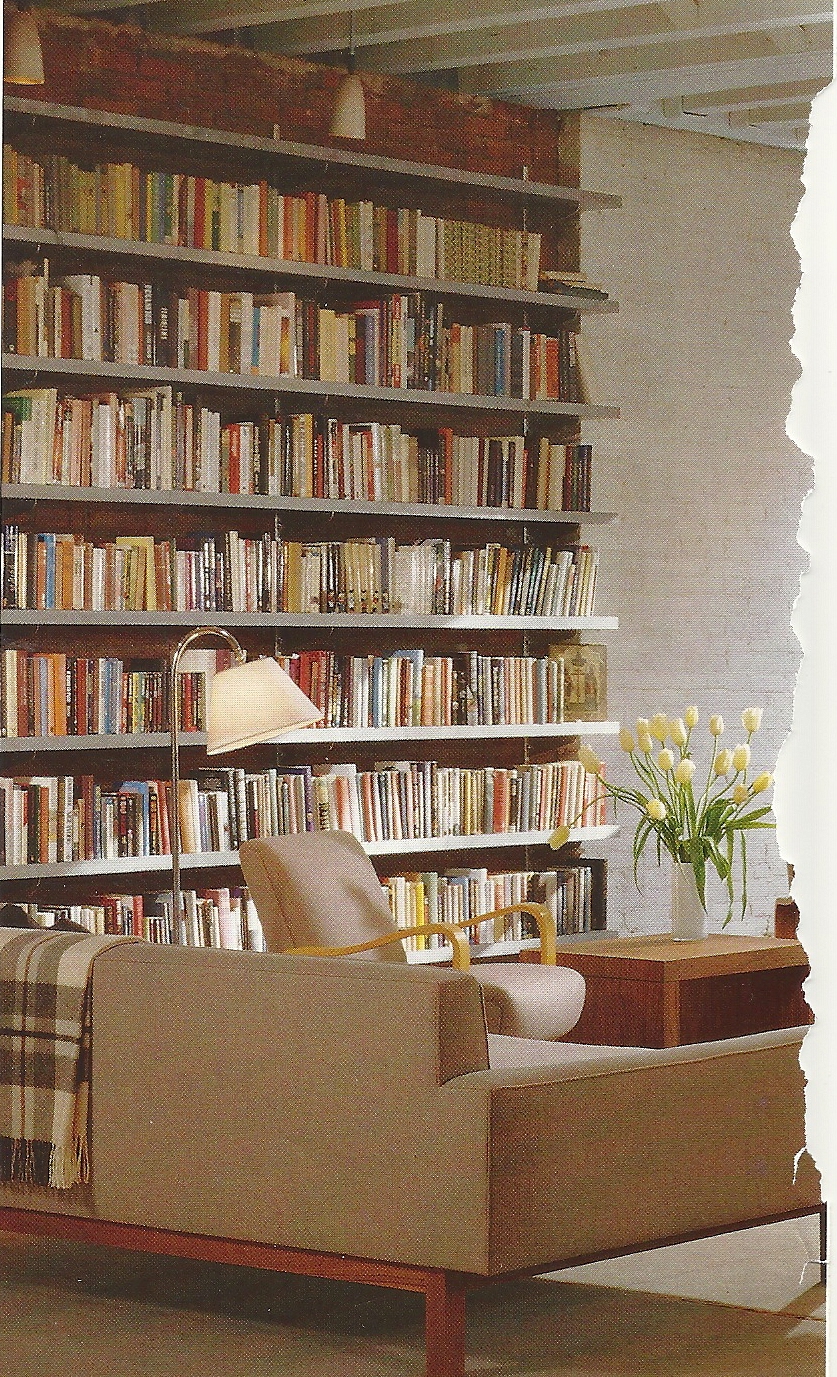
Cozy Factor: The shelves themselves are cozy, but the room is not. I think it could be fairly easily, the comfy blanket helps, but overall too many crisp edges.
The Books: I can’t see any of the titles, which is a crying shame because there are a lot of them.
The Shelves: Again I am ambivalent about the open ended shelves, but I really like the look of these. The uninterrupted horizontal lines really puts the focus on the books.
Is this person a reader? Yes, and yes. Not only because of the volume of volumes and the lack of any other filler, but there doesn’t seem to be any art books or coffee table picture books (not even on the coffee table). Also, none of the spines look like blockbuster spines and the sheer variety suggest they aren’t being purchased to look good–although they look good to me.
The book I would read if I had to pick one: Sadly, I can’t tell.






 hogglestock