Really?


Believe it or not, the graphic above is the number 1,000 in Wingdings 2. I was playing around with fonts to use with the number 1,000 when I stumbled on the Wingdings 2. But why was I looking at the number 1,000 in different fonts? I was all set to do a post this morning with the title “Ending the Year with a Whimper”, but when I went to create the post, I noticed that my last post was actually my 1,000th  So huzzah for My Porch. I am grateful for the platform to blather on and even more grateful that so many of you decide to comment on my blather and in some cases even listen to my blather in person. Perhaps counterintuitively, the cyber world, rather than cut me off from the real world, has actually helped expand my social opportunities with flesh and blood humans.

So why was I going to do a post on ending the year with a whimper? Because I am finding little inspiration in the four books I currently have going. Because I haven’t had any inspiration for a clever blog post in ages. And because I haven’t had time to keep up with all of your blogs. I should note that some of this reading/writing/online ennui stems from the fact that December tends to slow me down on all of these fronts–too many other happy distractions like Christmas trees and socializing. But, the fun in my real life doesn’t distract from the boredom in my reading life. I have half a mind to chuck all four books into the “not going to finish” pile, but I am too far along in each of them to do that. Plus, I kind of want to finish them all off so I can start the new year with a clean slate.


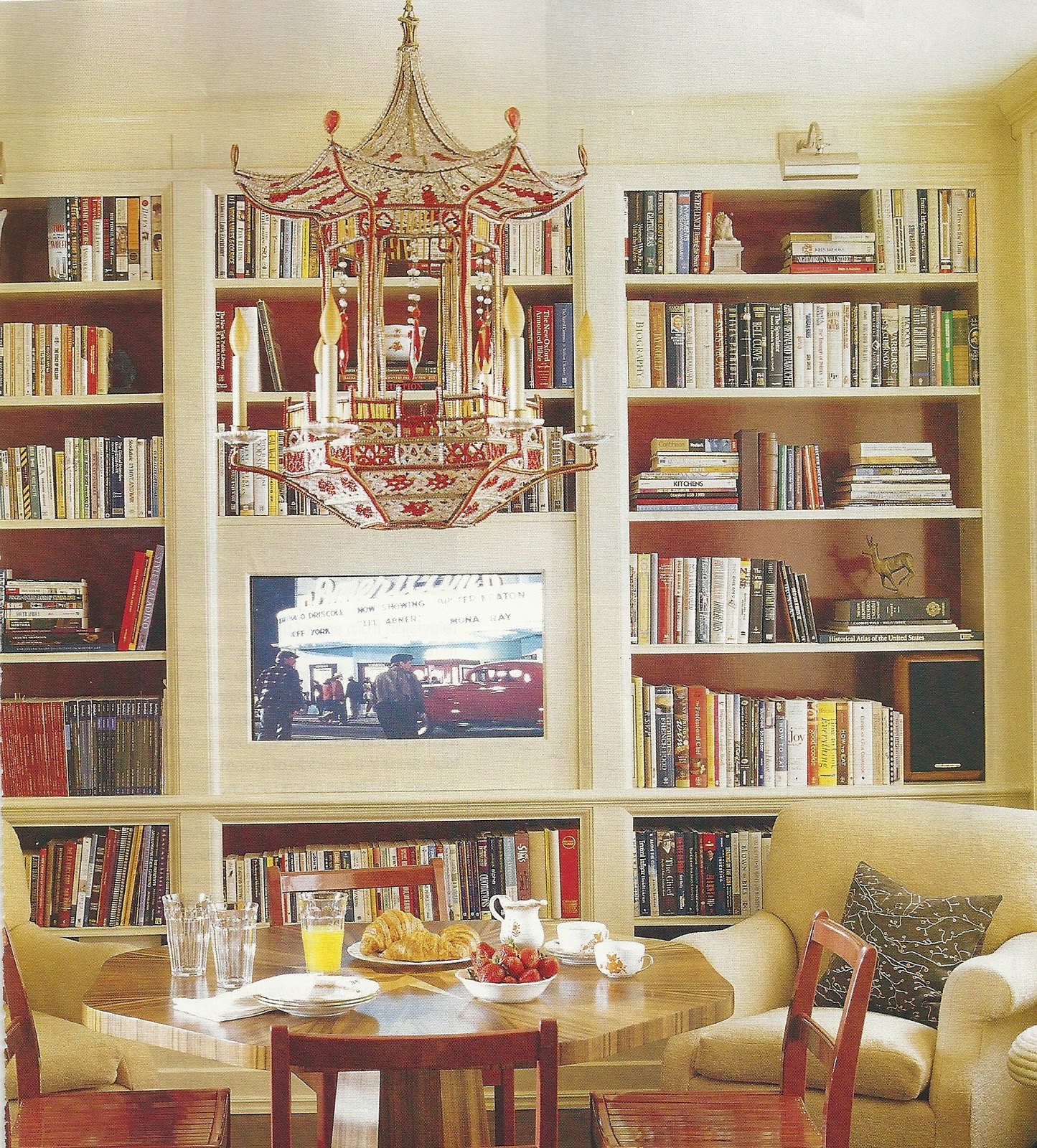
Shelf Esteem No. 6


Cozy Factor: With the warm colors and soft light, I would say pretty darn cozy, although the dining chairs might need a cushion.

The Books: In addition to a shelf of auction catalogs and a shelf of cookbooks and food writing, this person has quite a few book of the month type books and with an emphasis on best selling non-fiction.

  • The Chief (bio of Randolph Hearst)
  • Titan (bio of Rockefeller)
  • Churchill bio
  • Thatcher bio
  • Driven Patriot (bio of James Forrestal – Truman’s Secretary of Defense)
  • The Bell Curve (the controversial book that suggested that there is a correlation between genes and intelligence–with racial overtones)
  • Lies and the Lying Liars Who Tell Them by Al Franken (does this balance out all the conservative stuff or was it a gift from a lefty friend?)
  • George Stephanopolous’ memoir
  • Two books on American financier Bernard Baruch
  • The Triumph of Politics by David Stockman – Stockman was Reagan’s budget guy and progenitor of supply-side economics. Interestingly, Stockman was just quoted in Rolling Stone in November saying: “The Republican Party has totally abdicated its job in our democracy, which is to act as the guardian of fiscal discipline and responsibility. They’re on an anti-tax jihad — one that benefits the prosperous classes.”
  • Undaunted Courage
  • Guns, Germs and Steel

Man, these titles are so typical of the non-creative books that line shelves in DC. Woodward, Iacocca, Trump, Adam Smith… The only fiction I can make out is Tom Wolfe’s A Man in Full (also seen in SE#5) The Firm, and The Da Vinci Code.

The Shelves: I like the way the backs are painted in a darker color but I am not sure I like the proportions and profile of the mill work. I particularly don’t like how the TV is built in. Not because it is a TV in a library but because I think building in any appliance is foolish and the proportions of the trip work look terrible.

Is this person a reader? Pretty sure it is a married couple…Yes they are readers, but I don’t think I would find them very interesting.

The book I would read if I had to choose one: Probably the Thatcher bio. It would get me ready for the Meryl Streep portrayal out next year. Plus I wouldn’t mind reading more about that period of British history.
  

Is the book Possession as badly written as the first five minutes of the film?

3 minutes in: “You’re that American that’s over here.” Brilliant.

4 minutes in: Rich American professor ponders why the poor Irish professor even bothers showing up for auctions at Sotheby’s.

6 minutes in: He couldn’t look obvious stealing the letter from the library if he tried.

7 minutes in: I guess when they are not buying rare manuscripts at Sotheby’s scholars spend all there money paying for spacious London flats.

8 minutes in: even his solicitor landlord is a scholar. How lucky.

11: “How many jars of gooseberry jam did his wife Ellen make in 1850? This is not a job for a grown up.”

14: “what is it you chaps are always saying: ‘how’s it hanging’?” More of that crazy linguistic gulf between the US and UK.

15: “or if you prefer the American vernacular she’s a real ball breaker.”

16: Lincoln University must be paying Gwenyth well, such nice clothes.

17: I really don’t like Paltrow especially when she plays British.

17: all the instant, snarky, we are going to end up in bed banter. Is the book this lame?

19: By all means sit in my office and do your research.

20: And he is already going to spend the night. That happened quicker than I expected.

21: Show her the stolen letter and then you areg surprised that she thinks you did the wrong thing–oh, because you are an American…and why did you have to steal the letter to study it?

22: and then she doesn’t even want to read the letter all the way through. She must really need to use the bathroom.

23: “He’s an American…he’s probably off trafficking drugs…”

25: an invitation for another night in Lincoln. And at he big house this time. Lucky guy.

28: middle of the night tearing apart dolls that apparently have been sitting there uncovered for 150 years.

29: why not bring the letters back to the room that actually has a working light.

I think I need stop watching. I think Glee is on…

Bits and Bobs (Supersize version with hidden giveaway)

  
Sinterklaas Came Early
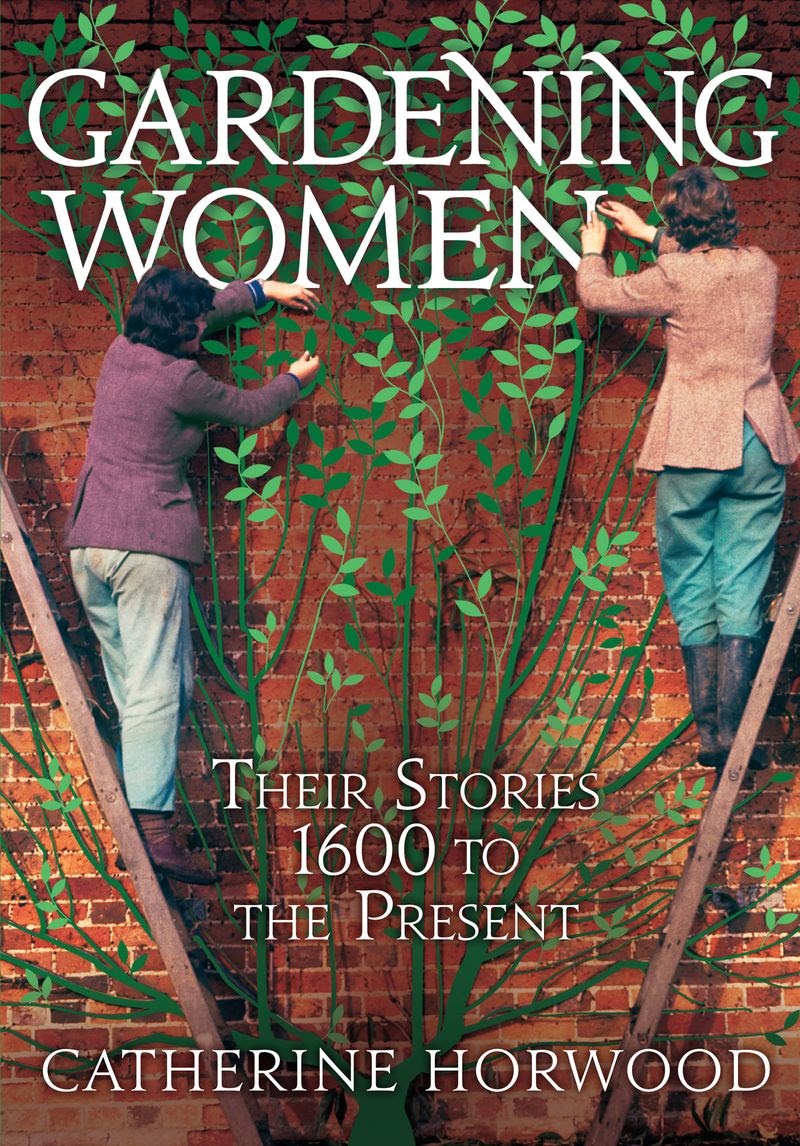
Our good friends Ron and Barry who live in The Hague just sent John copy of this wonderful Virago hardcover book. It even has me a bit interested. I kind of twisted John’s arm into opening the package before Christmas hopeful Ron and Barry (I mean Sinterklaas) won’t mind.

Sinterklaas is part of the rather wacky (to be kind) Christmas tradition in the Netherlands. Pehaps it is time the Dutch updated their holiday files in favor of something less offensive than the following picture which I almost don’t even want to post here but it illustrates my point only too well. No, I take it back, I don’t want to post the picture here, but if you want to see what I am talking about you can check out this link.

Lost in Lost in Austen
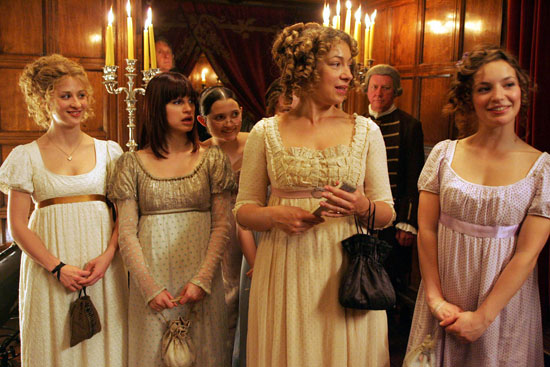
I know there may be die-hard Austenites out there who thought this series was lame, but I really enjoyed watching Lost in Austen. I hadn’t even heard about it until I stumbled across it on Netflix. I found it quite diverting. Like Thursday Next meets Miss Hargreaves meets Jane Austen.

One of these things is not like the other…

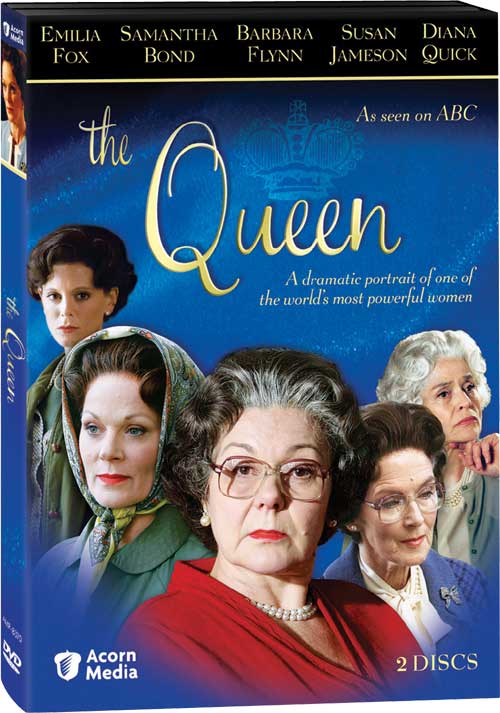
The other The Queen
It is hard to see QEII portrayed on film since Helen Mirren created her miraculous version of the reigning British sovereign in the brilliant film The Queen. Who will ever do a better job? No one. However, I just watched a miniseries called The Queen which intersperses dramatizations with documentary interviews and footage that is really pretty darn fascinating. There is so much about 1970s Britain that I didn’t know much about. For instance Princess Anne was almost kidnapped and her body guard was shot three times in the melee (but survived). Much of the republican antipathy toward the monarchy shown in this docu-drama reminded me of Nevil Shute’s fantastic book In the Wet which imagines a Britain where the Queen’s life is in such danger that the Canadians and Australians create a two-jet fleet that allows the Queen to fly around the Commonwealth in safety until the turmoil in the UK settles down.

All of these actresses are supposed to be the Queen.
Which one do you think looks the least like her?

And speaking of Britain
When we were in New York over Thanksgiving I spent some time at the infamous Strand Bookstore where I normally never buy anything because it is so crowded and hot and overflowing that I can never calm down enough to browse. But I did find these doorstop books on Britain in the 1940s and 1950s. I have seen them around the blogosphere and coveted them, but I managed to pick these up for $12.50 each (instead of $47). Yay for me. They also gave me a free Strand Bookstore tote bag for spending more than $50. I have more totes than I know what to do with. It is nothing special but I will ship it anywhere in the world by randomly picking among the people who leave a substantive comment related to anything in this post as well as stating a desire to win said bag. This means no “that’s cool” or “count me in” or any other throw away comments–let’s have some real interaction here…

Copyright or Copywrong?
When trolling around the interwebs today I came across a book review blog that I found fairly annoying–where books are consumed rather than read just to produce un-insightful, and boring book reviews that the blogger seems to think will land her a spot at the Algonquin round table. I know that the book review posts I do rarely qualify as actual book reviews–but  at least they have a part of me in them. And there is no hint that my blog is a just a machine for churning out ARC-induced advertorials. (Although to this blogger’s credit she does give honest reviews for ARCs.)

Anyhoo, perhaps it was the fact that I already didn’t like her, but even her copyright notice annoyed me. Here is part of it:

This copyrighted material may not be reproduced without express permission from the author. She’s happy to grant permission, so don’t be a jerk about it.

Do  you think this means that one can’t take large chunks or entire posts without getting permission? Or do you think it means that one can’t even quote her written work without permission? I would guess it is the former rather than the latter but something about her makes me think she may have meant the latter. And doesn’t fair use law allow one to quote copyrighted material (with attribution of course) without getting such permission? Does it matter if the person doing the quoting has a commercial site? Wouldn’t newspapers fall into this category? Should I just shut up and look up this stuff myself? Should I wait for Teresa to tell me? Something tells me that she not only knows the answers but will share them with us in a succinct, jargon-free way…what say you Teresa or any of you who write/edit for a living?

And speaking of copyrights statements, should I have one on My Porch? Years ago I had some goon lift an entire post of mine as his answer to a question posed on the website Ask.com. Made me want to find him and rough him up.

Do you have a copyright statement? Do you use a service like MyFreeCopyright?

Something furry is watching…

What fur from yonder window comes?

One can never have too many pictures of Lucy.


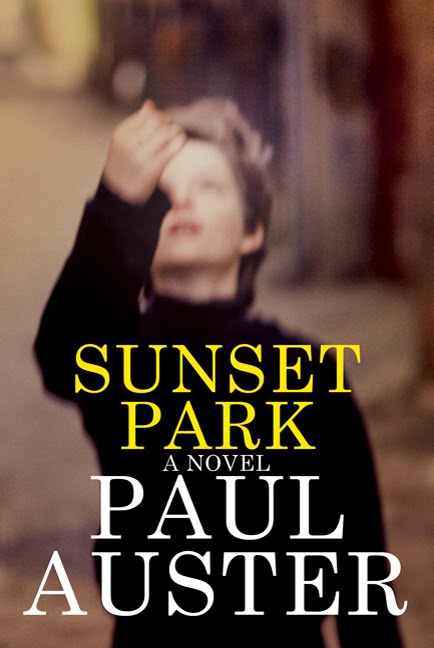
Book Review: Sunset Park by Paul Auster


There must be two Paul Austers. There is the older Paul Auster who wrote The Brooklyn Follies, Man in the Dark, and Sunset Park–all of which I enjoyed. And then there is the younger Paul Auster who wrote with City of Glass (the first book in his New York Trilogy) which, at least in the first 30 pages, seemed to be some kind of absurdist crime story. Since I didn’t read beyond the first 30 pages of the trilogy there might be something I would like that I missed by quitting too soon. And I think I will pick it back up some day and read the whole thing–it isn’t very long. But the trilogy confirms why I didn’t pick up Auster for so many years. It comes off as one of those clever books written by a manly man guy’s guy that just don’t appeal to me. The Brooklyn Follies on the other hand–the first Auster I read–was a totally accessible and highly enjoyable relationship novel about an irascible older man wanting to just retire and eventually die in peace only to have his plans thwarted by the events and people around him. While Man in the Dark has absurdist qualities, I found it quite poignant and enjoyed it as well.

Published in 2010, Sunset Park definitely falls on the “accessible relationship book” end of the Paul Auster spectrum. The book centers around Miles Heller a 28-year old who has been trying to run from his family and his past for eight years. Because of the circumstances surrounding the death of his step-brother Miles drops out of college and moves around the country going from menial job to menial job never telling his family where he is or even letting them know that he is still alive. When the book opens Miles is working in Florida for a company that cleans out houses that have gone into foreclosure, setting the economic recession background of the story. Florida is one of the states that has been hardest hit by the housing meltdown and is synonymous in my mind with cheap, ticky tacky housing developments for people who care about the sun more than about any other factors that make up quality of life. New Yorker Miles, like me, isn’t so enamoured:

…there is no question that he has had his fill of the Florida sun–which, after much study, he now believes does the soul more harm than good. It is a Machiavellian sun in his opinion, a hypocritical sun, and the light it generates does not illuminate things but obscures them–blinding you with its blasts of vaporous humidity, destabilizing you with its miragelike reflections and shimmering waves of nothingness. It is all glitter and dazzle, but it offers no substance, no tranquillity, no respite.

Although Auster was 63 when he wrote this book I think he does an excellent job tapping into the mind of a 20-something–or at least what I remember of those days from my 42-year old perch. In many ways Miles, having run away from his life at age 20 is still kind of stuck there. But there is something wonderful and free about his transient life and his menial jobs. Would I want to go back to that kind of student-like subsistence? No. But Auster did evoke a rush of romantic nostalgia in me as I thought back to those days when I had so little to lose in the way of material comfort that I could remain unbeholden to any particular job or living situation. When my personal responsibilities had a very short time horizon and the future seem endlessly open. However, the lure of youthful potential is not enough to make me want to uproot my life for the sake of freedom.  And of course, adult jobs provide adult resources that in turn make many things possible unthinkable to 20-year old me.

Auster manages to include more than a few erotic adventures without making them seem like the wistful thinking of a wistful 63-year old author. One of my big problems with Sophie’s Choice was that the sex scenes seemed like gratuitous masturbatory fodder for author Styron. Auster’s adventures have a kind of pan-sexual quality to them that make them feel as relevant to the story as they titillating.

Miles is reunited with his family but the outcome is anything but pat. Auster leaves the reader with more than a few questions unanswered and with a worry that things might not work out for Miles.
  

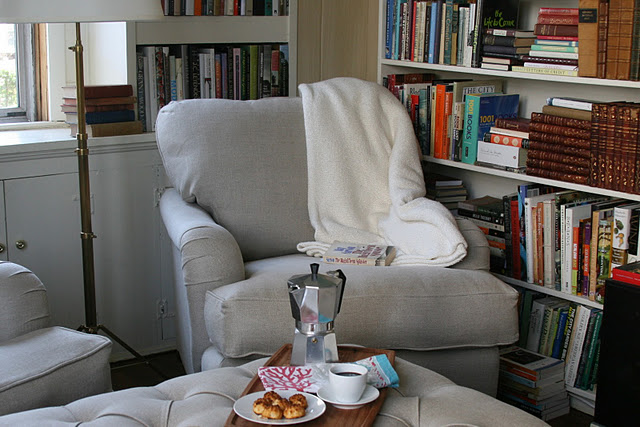
Shelf Esteem No. 5


Cozy Factor: The cool, bright white makes it hard to call this one cozy. But I can imagine being very happy here.
The Books: Mainly fiction from what I can see. Paul Auster Mr. Vertigo, Tom Wolfe A Man in Full, James Joyce Ulysses, Don Delillo Libra, Paul Bowles The Sheltering Sky, Paradise Lost, Tropic of Cancer, a lot of men on these shelves…he has the same exact old paperback of Death in Venice that I have…Leaves of Grass (a favorite of mine), Sister Carrie (a great old American classic) and then finally we get to the obligatory The Bell Jar. But then I spy a little Carol Shields, Iris Murdoch, and even Anita Brookner.
The Shelves: I would be plenty happy with these. I like the way they go over the door and that there is plenty of capacity.
Is this person a reader? Yes. I don’t think he reads as much as he would like to, but he honors books enough that not one of them here looks decoratrive.
The book would I read if I had to choose one: I think I spy a copy of Villette which I own but haven’t read yet.
   

Book Review: Miss Ranskill Comes Home by Barbara Euphan Todd


Miss Ranskill Comes Home is a book that could have gone a lot of different directions. Miss Ranskill is lost at sea on a pleasure cruise in 1939. She winds up on a deserted island being cared for by a working class carpenter who is also stranded on the island. The book begins four years into Miss Ranskill’s ordeal and we find her digging a grave for the recently departed carpenter. Not long after this opening scene she is rescued by a British convoy headed back to England. While convalescing on a destroyer Miss Ranskill learns that England has been at war for four years but nothing she learns on board prepares her for what she will encounter when she gets back to England. She comes back to a country deep into the deprivations of war. She is confused by rationing, almost mistaken for a spy, and unable to find her place in the new world order.

I kind of wanted this novel to be gut-wrenchingly sad. There were certainly moments when it could have been but I found them soon and often interrupted with moments of levity. I didn’t mind the levity and found the book overall to be enjoyable and heart-warming. But there was a part of me that wanted it to be the serious tragedy it could have been. Four years living with a man and they not only never, ahem, got busy, but they didn’t even call each other by their christian names. The confusion when she first returns to England could have ended up with Miss Ranskill in prison as a spy or in an asylum. Her money, inherited by her sister who thought her long dead could have been gone. I should say that not all in this novel was humorous. The book does indeed touch on some of the tragedy of the story and the special perspective Miss Ranskill has on life and class and what’s important.

There was one section of the book when I thought I was going to be unhappy with my reading experience. When she first gets back to England and ends up at the front door of her school friend’s house in ill fitting clothes and no shoes and yet her friend doesn’t slow down enough to find out what happened to her. And worse, Miss Ranskill doesn’t say “Hey! I have been stranded on an island for four years and I am in crisis!” I know that it is stupid of me to ask for such plot-killing clarity. But that kind of confusion reminds me of all those bad, mad-cap sitcoms of my childhood where all the kerfuffle could have been avoided if only someone had spoken up before things got out of hand. Thankfully that kind of craziness didn’t go much beyond that early scene in Miss Ranskill.

Definitely an enjoyable Persephone with a unique plot.

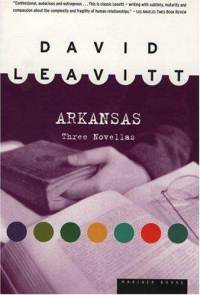
Book Review: Arkansas by David Leavitt


This collection of three novellas by David Leavitt was the perfect book to follow my re-read of the bleak and rather depressing, but brilliant As For Me and My House.

The title Arkansas doesn’t have much to do with any of them but rather refers to an Oscar Wilde quip quoted at the start of the book. But the book is chock a block with references to E.M. Forster. I don’t think they would get in the way for those unfamiliar with Forster’s work but they are fun to spot for those of us who are.

The first, and by far the best novella in the collection, The Term Paper Artist is a hilarious send up of Leavitt’s own problems with plagiarism. For those who are familiar with Leavitt’s better known works (like The Lost Language of Cranes) you are probably aware that Stephen Spender accused Leavitt of plagiarizing parts of Spender’s memoir in his novel While England Slept. The hero of the novella (written in the first person) is Leavitt himself. He has moved in with his father in LA temporarily to escape from all the hoopla over the plagiarism case. Not quite able to focus on his next novel he ends up wasting a lot of time purportedly doing research in the UCLA library. I think my favorite laugh out loud moment is when he goes to the literature section, finds his books on the shelves, and autographs them. Leavitt eventually ends up writing term papers for good looking, straight, male undergraduates in exchange for sex. The novella is not without its steamy sex scenes but it is ultimately more humorous and even sweet than it is sexy.

The second novella, The Wooden Anniversary, takes place in Tuscany and has a kind of Will and Grace quality to it. You know, those episodes of W&G where their relationship was creepily co-dependent with gay Will unable to have healthy relationships with gay men because of his dependence on Grace. I hated those parts of W&G because the underlying message seemed to be that gay men can only expect fulfillment by aping the constructs of straight relationships–and with a straight woman no less. In the case of this novella, the straight girl who never gets over being in love with her gay best friend.  Not unenjoyable to read, but nothing to write home about.

The third novella, Saturn Street, is a late 80s AIDS story is not without poignancy, and better than The Wooden Anniversary, but ultimately forgettable.

Overall, this collection was an enjoyable quick read, but the first novella is the only one really worth seeking out.