Eight is Enough

In the midst of preparing a manuscript that: A) is the culmination of nine months of research, and B) has a final draft deadline of 12/31/12, I am not very favorably inclined to try to come up with clever ways to string together (or even write) reviewlets for the eight books I have read so far this month.

So here they are in the order from the books I liked best to the books I liked least.


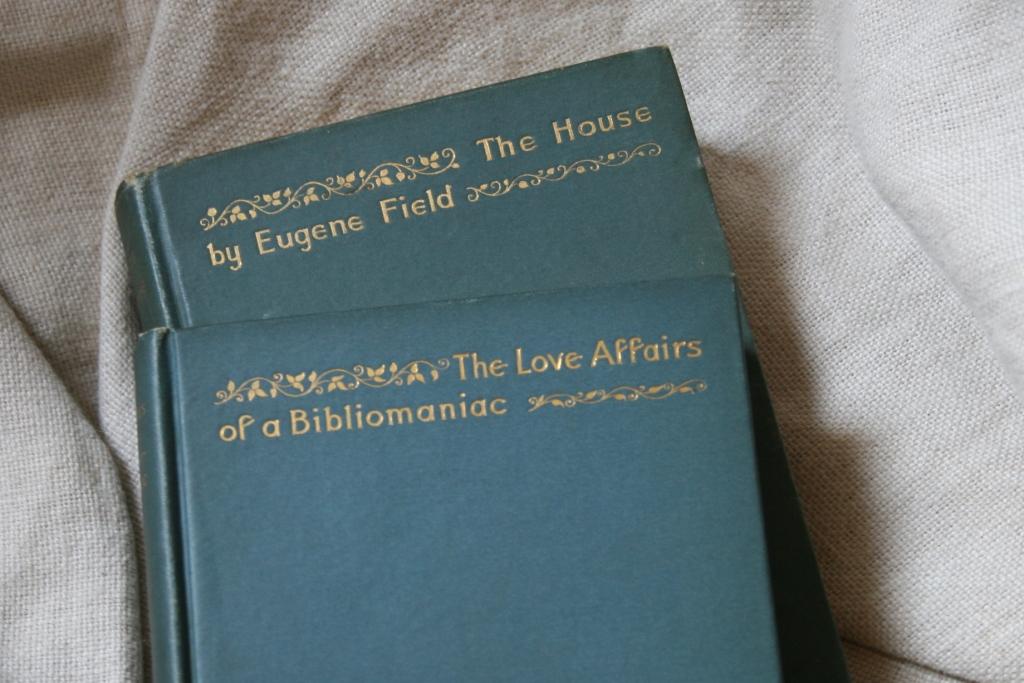
I wish I had this edition.

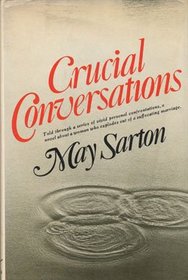
Crucial Conversations by May Sarton
Long married couple Reed and Poppy separate when Poppy realizes she has wasted too much of her life living for others. The collateral damage is much less their children then their closest friend Philip who has been like a third member of their marriage–but in a benign way, not in a Charles, Diana, Camilla way. Or at least it is largely benign for Reed and Poppy, perhaps less so for Philip who left much of his life undeveloped (perhaps a lot like Poppy) because of the satisfaction he got from his close friendships with Reed and Poppy.  In the Pantheon of Sarton books (all of which I love) I would put this in the high middle.

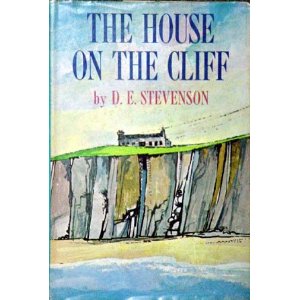
The House on the Cliff by D.E. Stevenson
From the author of Miss Buncle’s Book. Need I say more? Well it is much less clever and more conventional than MBB, but I still loved it to pieces. Poor London actress inherits a mansion on a cliff overlooking the sea. Defies expectations by keeping the house and making her home there. Trusty, helpful servants. Trusty, helpful, and ultimately amorous soliciter. Ne’er do well former object of infatuation leaves protagonist with instant family. Ooops, I might have said too much. But honestly you can see this stuff coming down the pike from a very long way away. Loved it!

A House and Its Head by Ivy Compton-Burnett
It says a lot about the other books I am reviewing here that this ICB is so far up the list. There were moments of this book that I loved. And much of ICB’s writing–which is 99% dialogue–was funny and charming. And I am pretty sure I liked it better than the only other ICB I have read (Manservant and Maidservant) which I also enjoyed to a degree. But my overall thought when I finished was that perhaps after two of her novels I don’t have to read any more. I still have two others unread in my library, but I am not so sure I will get to them anytime soon.

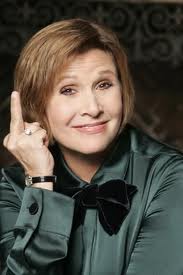
Fisher shows us how she feels.

Postcards From the Edge by Carrie Fisher
I put this one on my Century of Books list for 1987, not only because I assumed it would be a quick, fun, read, but also because it seemed to really capture a slice of pop culture for the year in question. I was right on all accounts. It was a quick, fun, read. And it definitely felt a lot like 1987. A semi-autobiographical novel about a young Hollywood actress going through rehab and figuring out how to live sober. Who knew Princess Leia could write.

Oranges Are Not the Only Fruit by Jeanette Winterson
I liked many things about this coming of age/coming out story set against the looney backdrop of Jeanette’s Pentacostal evangelist mother. There were moments that were funny and uplifting and maddening. This book would have rated higher for me if it hadn’t contained a fantasy story within the story. That never sits too well with me. My eyes kind of glaze over.

The Bachelors by Muriel Spark
I love me some Muriel Spark, but I didn’t love this one. I liked the initial character introductions and had a soft spot for a few of them. But then it just became too much about spiritualist circles and fraudulent mediums. Even then I could have been kind of interested but I felt like Spark may have taken it all a bit too seriously despite the satire involved.

The Name of the Rose by Umberto Eco
I loved, loved, loved, Eco’s novel Foucault’s Pendulum which I have read two or three times. When I first started The Name of the Rose, I thought I was going to like it in a similar fashion. I was wrong. I can see why many find this book wonderful, perhaps if I had been in a different mood I might have as well. Instead I kept thinking I would rather go back and re-read Foucault’s Pendulum.

The Underdogs by Mariano Azuela
The “greatest novel of the Mexican Revolution”, written in 1915, bored me to no end. It might have had to do with my complete ignorance of Mexican history, but I think it is more likely that I was just bored by the episodic nature of the book as well as the rootin’, tootin’, shootin’ kind of vibe it gave off. I might have also expected something of only 149 pages not to feel like it took me a year to finish.
         

Looking at life through a pee-colored lens

Cute cat, but he will be even cuter when his liver disease clears up.
photo credit

I know I may ruffle some feathers with this post, but I have to say it…

I hate Instagram.

I am contrarian enough to dislike it just because it seems ubiquitous these days, but that’s not my real problem. My real problem is that not every snapshot should look like it has been fading for 30 years in a shoebox under someone’s bed. Sure, occasionally it is is kind of fun to see a cool effect that someone has achieved in the pursuit of creating an interesting image. But as a means to convey information about a life? Meh. I don’t find it interesting to see fuzzy, grainy, pictures with distorted colors and a loss of detail.

Like I said, I can understand that there are times when it can be pretty cool, but overall I’d rather look at images that were interesting for their own sake.

From Instagram’s FAQ page:

“Snap a photo with your mobile phone, then choose a filter to transform the image into a memory to keep around forever.”  Because without a filter it just isn’t a memory.

“We’re building Instagram to allow you to experience moments in your friends’ lives through pictures as they happen.” But our friends are so boring we needed to do something to keep us awake. (Or the alternate response: But we think all of your friends’ lives should look alike.)

 “We imagine a world more connected through photos.” And what connects you more than a fuzzy image with all sorts of indiscernible details?

“When we were kids we loved playing around with cameras. We loved how different types of old cameras marketed themselves as “instant” – something we take for granted today.”  We get it, Polaroid is dead and their cameras produced crappy photos.

“Mobile photos always come out looking mediocre.” But not mediocre enough. We decided to magnify the mediocrity.

“Our awesome looking filters transform your photos into professional-looking snapshots.” And what says professional like grainy?

If you use Instagram images on your blog or on Facebook, I still love you. I just wish I could see you more clearly.

Penguin Books hates me (or the U.S., or people who still read books made of paper…)

  
This Anita Brookner novella is only available in e-format and that e-format isn’t available in the United States. (At least according to iBooks, and Penguin’s website.)

HOW LAME!

Another reason to hate e-readers. If this was a real book only available in the UK, I could at least have a friend buy it and mail it to me.

Anyone know a way around this?

A New List for a New Day (1925 was a good year)

After my recent rant about important books that I no longer feel compelled to read, I realized I needed to revamp my A Century of Books list. I thought about abandoning ACOB altogether because it seemed like it was beginning to be a chore. But, revamping the list and getting rid of those literary heavyweights that don’t appeal to me, or that I have found too tedious to read, suddenly made the list much more interesting.

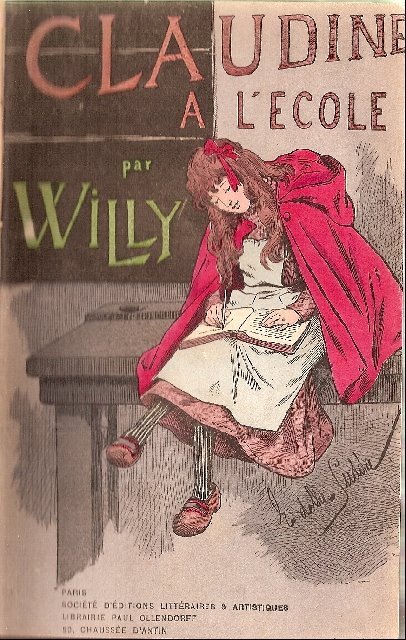
Many of you helped me out with ideas for filling in some of the newly created gaps in my list. Someone gave me Winnie-the-Pooh (1926) replacing Ford Madox Ford, someone else gave me Claudine at School (1900) to replace Conrad, which then led me to throw out Kipling in favor of Claudine in Paris. Now I just hope I like Claudine. And then a friend of mine helped me solve the very difficult 1918 with Patricia Brent – Spinster and she even is providing me with a copy of it.

And then there is 1925. I mean what an amazing year for literature. An American Tragedy (Dreiser), The Great Gatsby (Fitzgerald), Arrowsmith (Lewis), and The Professor’s House (Cather). All of these rank among my favorites. Then we added in Gide’s The Counterfeiters, which I also liked as well as The Mother’s Recompense (Wharton). So many great things to choose from. But I have read them all. What in the world would I choose? And then Mrs. Dalloway revealed herself. Hooray. Not a huge fan of Woolf, but I haven’t read this one and have wanted to since seeing the movie twice (and reading and seeing The Hours). So, woohoo. 1925 solved.

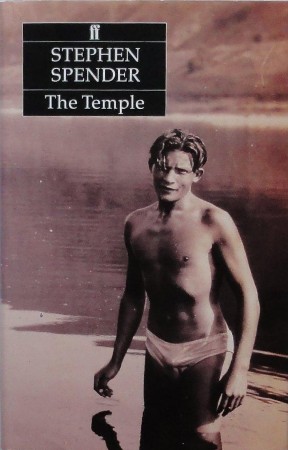
I also updated the 1980s and 1990s to make them a little more representative of those decades. One exception is The Temple by Stephen Spender. It was written in the 1930s but not published until 1988 due to its homosexual content. Normally I would think of this as a 30s book and not appropriate to satisfy 1988. However, I bought my copy of this book in 1989 at Gays the Word bookshop when I was 20 and in London for the first time. It was my first Stephen Spender and I haven’t read it since then. So it seemed right to consider it part of my 80s.

Other new additions that I am happy about: Quartet by Jean Rhys–an author just recommended me today by a new fan of the Anita Brookner website; Talented Mr. Ripley which I have always wanted to read; The Name of the Rose; and Postcards from the Edge–what could be more 80s than that?

So here is the updated, and way more fun, list. [UPDATED 12/9/12]

I have already completed the one’s that are crossed out. Those marked “ML100” are on the Modern Library’s list of the top 100 novels of the 20th century, which I have been working my way through since 1997.

1900 – Claudine at School by Collette
1901 – Claudine in Paris by Collette
1902 – The Immoralist by Andre Gide
1903 – The Riddle of the Sands by Erskine Childers
1904 – Peter Camenzind by Herman Hesse
1905 – The Duel by Aleksandr Kuprin
1906 – Young Torless by Robert Musil
1907 – The Secret Agent by Joseph Conrad (ML100)
1908 – Love’s Shadow by Ada Leverson
1909 – Martin Eden by Jack London
1910 – Clayhanger by Arnold Bennett
1911 – Zuleika Dobson by Max Beerbohm (ML 100)
1912 – The Charwoman’s Daughter by James Stephens
1913 – T. Tembarom by Frances Hodgson Burnett
1914 – Penrod by Booth Tarkington
1915 – The Underdogs by Mariano Azuela
1916 – Under Fire by Henri Barbusse
1917 – Gone to Earth by Mary Webb
1918 – Patricia Brent – Spinster by Herbert George Jenkins
1919 – Consequences by E.M. Delafield
1920 – Queen Lucia by E.F. Benson
1921 – Dangerous Ages by Rose Macauley
1922 – The Judge by Rebecca West
1923 – The Ladies of Lyndon by Margaret Kennedy
1924 – Some Do Not by Ford Madox Ford (ML100)
1925 – Mrs Dalloway by Virginia Woolf
1926 – Winnie the Pooh by A.A. Milne
1927 – Rhapsody by Dorothy Edwards
1928 – Quartet by Jean Rhys
1929 – The Last September by Elizabeth Bowen
1930 – Angel Pavement by J.B. Priestly or The Deepening Stream by Dorothy Canfield
1931 – The Square Circle by Denis Mackail
1932 – Young Lonigan by James T. Farrell (ML100)
1933 – Frost in May by Antonia White or Ordinary Familes by E. Arnot Robertson
1934 – The Young Manhood of Studs Lonigan by James T. Farrell (ML100)
1935 – A House and Its Head by Ivy Compton-Burnett
1936 – Summer Will Show by Sylvia Townsend Warner or Eyeless in Gaza by Huxley
1937 – Lady Rose and Mrs. Memmary by Ruby Ferguson
1938 – Princes in the Land by Joanna Cannan
1939 – Pale Horse, Pale Rider by Katherine Anne Porter
1940 – Sapphira and the Slave Girl by Willa Cather
1941 – The Castle on the Hill by Elizabeth Goudge
1942 – Clark Clifford’s Body by Kenneth Fearing
1943 – Gideon Planish by Sinclair Lewis
1944 – Cluny Brown by Margery Sharp
1945 – The Pursuit of Love by Nancy Mitford
1946 – Every Good Deed by Dorothy Whipple
1947 – Not Now, but Now by MFK Fisher
1948 – The Loved One by Evelyn Waugh
1949 – Love in a Cold Climate by Nancy Mitford
1950 – Our Spoons Came From Woolworths by Barbara Comyns
1951 – A Game of Hide and Seek by Elizabeth Taylor
1952 – The Far Country by Nevil Shute
1953 – Lucky Jim by Kingsley Amis
1954 – Tortoise and the Hare by Elizabeth Jenkins
1955 – The Talented Mr. Ripley by Patricia Highsmith
1956 – The Flight From the Enchanter by Iris Murdoch
1957 – Angel by Elizabeth Taylor
1958 – A Glass of Blessings by Barbara Pym
1959 – The Flame Trees of Thika by Elspeth Huxley
1960 – The Bachelors by Muriel Spark
1961 – Catch-22 by Joseph Heller (ML100)
1962 – A Clockwork Orange by A. Burgess (ML 100)
1963 – The Old Man and Me by Elaine Dundy
1964 – Arrow of God by Chinua Achebe
1965 – Everything that Rises Must Converge by Flannery O’Connor
1966 – The House on the Cliff by DE Stevenson
1967 – My Friend Says It’s Bullet-Proof by Penelope Mortimer
1968 – Sarah’s Cottage by D.E. Stevenson
1969 – The Waterfall by Margaret Drabble
1970 – 84, Charing Cross Road by Helene Hanff
1971 – A Meaningful Life by L.J. Davis or My Own Cape Cod by Gladys Taber
1972 – Augustus by John Williams
1973 – After Claude by Iris Owens
1974 – House of Stairs by William Sleator
1975 – Heat and Dust by Ruth Prawer Jhabvala and Crucial Conversations by May Sarton
1976 – The Takeover by Muriel Spark
1977 – Golden Child by Penelope Fitzgerald
1978 – The Sweet Dove Died by Barbara Pym
1979 – The Safety Net by Heinrich Boll
1980 – The Name of the Rose by Umberto Eco
1981 – Midnight’s Children by Salman Rushdie (ML100)
1982 – Wish Her Safe at Home by Stephen Benatar
1983 – Look at Me by Anita Brookner
1984 – Hotel du Lac by Anita Brookner
1985 – Oranges Are Not the Only Fruit by Jeanette Winterson
1986 – Anagrams by Lorrie Moore
1987 – Postcards From the Edge by Carrie Fisher
1988 – The Temple by Stephen Spender
1989 – A Natural Curiosity by Margaret Drabble
1990 – Then She Found Me by Elinor Lipman
1991 – The Translator by Ward Just
1992 – Arcadia by Jim Crace
1993 – While England Sleeps by David Leavitt
1994 – The Longings of Women by Marge Piercy
1995 – Behind the Scenes at the Museum by Kate Atkinson
1996 – Alias Grace by Margaret Atwood
1997 – Grace Notes by Bernard MacLaverty
1998 – The Book of Lies by Felice Picano
1999 – Cryptonomicon by Neal Stephenson

Random Book Thoughts

1. Dumping my determination to persevering through unenjoyable, “important” books has been one of the best things I have ever done. My reading pace has picked up and my interest in reading has picked up.

2. I am still determined to do the A Century of Books challenge but I really would like to pick up something from the 21st Century sometime soon, but I feel like I can’t when I have the 20th Century to finish. So I came up with a plan that allows me to break my OCD chains a bit. After I finish up the three books I have started now, I am going to read through the 1980s and 1990s novels on my list in chronological order. That will bring me right up to 2000. The plan is to finish those two most recent decades by the end of the year thus (for some reason) freeing me up mentally to read something newer than what is on my ACOB list. I think this would work because: a) it would knock out two decades and make me feel like I have made progress; b) most of the titles on my list from the 1920s to the 1950s are well within my comfort zone and are like candy to me, so they don’t present much of a challenge; and c) I could just throw in one of the older books from the aughts or teens, which even though possibly enjoyable, tend to take more time to read, in between some of the newer or more enjoyable stuff.

3. I went to a comic store yesterday in Austin, TX, and was impressed by the quantity and appealing stock of graphic novels. So many wonderful covers. But I must say, I am always a little disappointed to open them up and see the aesthetic quality of the insides don’t live up to the beautiful covers.

4. Needing to distract a 9-year old going through a difficult time who isn’t really a comic book kid,  I showed him a book I came across of the Garbage Pail Kids. Anyone else remember those disgustingly funny trading cards from the 1980s that made fun of the Cabbage Patch Kid craze? Anyhoo, I was a little worried about their content but then I thought of all the violence in his video games and thought that the GPK book was no big deal. And he loved it. He was laughing his head off. And they proved to be surprisingly educational. Like the character “Adam Bomb” gave us a chance to talk about atomic weapons, “Ultra Violet” offered an opportunity to explain about UV rays and the dangers of sunburn, and “Hole in Juan” gave us a chance to talk about Spanish names and the racial insensitivity of the past.

5. Thanks to Book Woman in Austin for helping me find the comic book store. Sitting in the car at a drive-in Sonic, I knew I had to kill some time. But what do you do with a 9-year old in a city you are unfamiliar with when you have no Internet access? I looked on my GPS system to find some sort of attraction we that would interest him. Well, Book Woman came up as being close by, and although I had an inkling it was a feminist bookstore, I thought I would give it a go. I called up the store and the woman I spoke with was really helpful, she said they had some things that would interest a 9-year old boy, but not whole lot. But she mentioned a few other places not to far away, and although I didn’t manage to find the regular bookstore she told me about I was able to find the comic book store she mentioned. And she ended the call by thanking me for wanting to take a kid to a bookstore. Good karma for Book Woman.

6. Reading A House and Its Head, my second Ivy Compton-Burnett. I am not quite sure where it is headed yet but the banter, and it all seems to be banter, is pretty hilarious in a droll, dry, wry way. I would love to see it acted.

7. I mentioned over at the International Anita Brookner Day blog that Brookner is going to be the one to finally get me to read something on an e-reader. She published a novella in 2011 that is only available as a Penguin e-book. How crazy that AB drags me into the 21st century.

8. With any luck my reading will pick up this month. I decided I was spending too much time living every single peak and valley of this election season on political blogs. It is way too emotional so I have decided to go on a news blackout until election night. Maybe now I can put the computer away and read, or keep the computer on and actually get around to reading all of your blog posts about BOOKS.

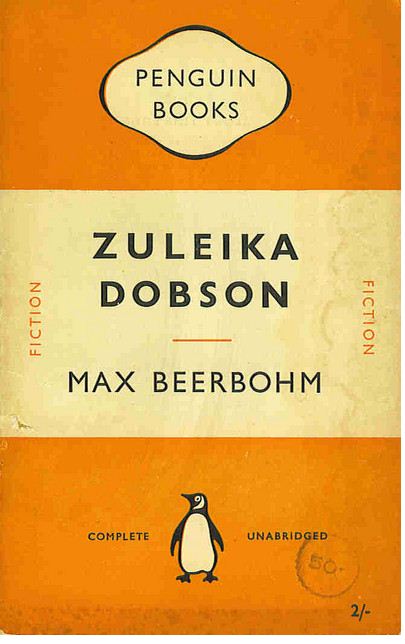
9. I can never do a post without a picture so I did a Google image search on “coolest book cover ever”. The picture above was the number two result.  Remember a while back when I searched for “reading lots of books” and Levi Johnston’s picture came up? Well it did again when I did this search! Crazy.

Imagining Tiverton Square and Three Reviewlets

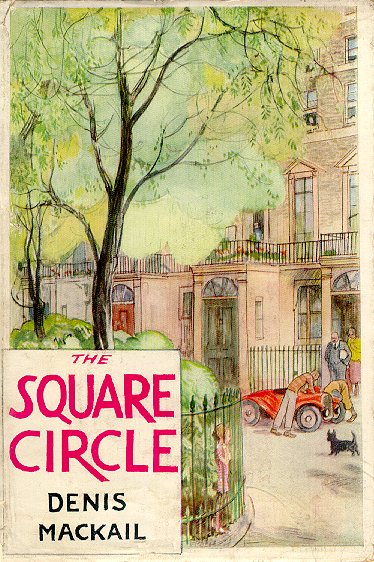
Isn’t this original dust jacket glorious?
I wish I owned it.

The Square Circle by Denis Mackail

Finding a copy of a Denis Mackail novel was one of the highlights of my big book hunt in Maine this summer. I love the Persephone reissue of his novel Greenery Street and was delighted to find another book by him. The title refers to the social circle of the London residents who live on Tiverton Square. The novel The Square Circle follows a year in the life of the square circle. Get it?

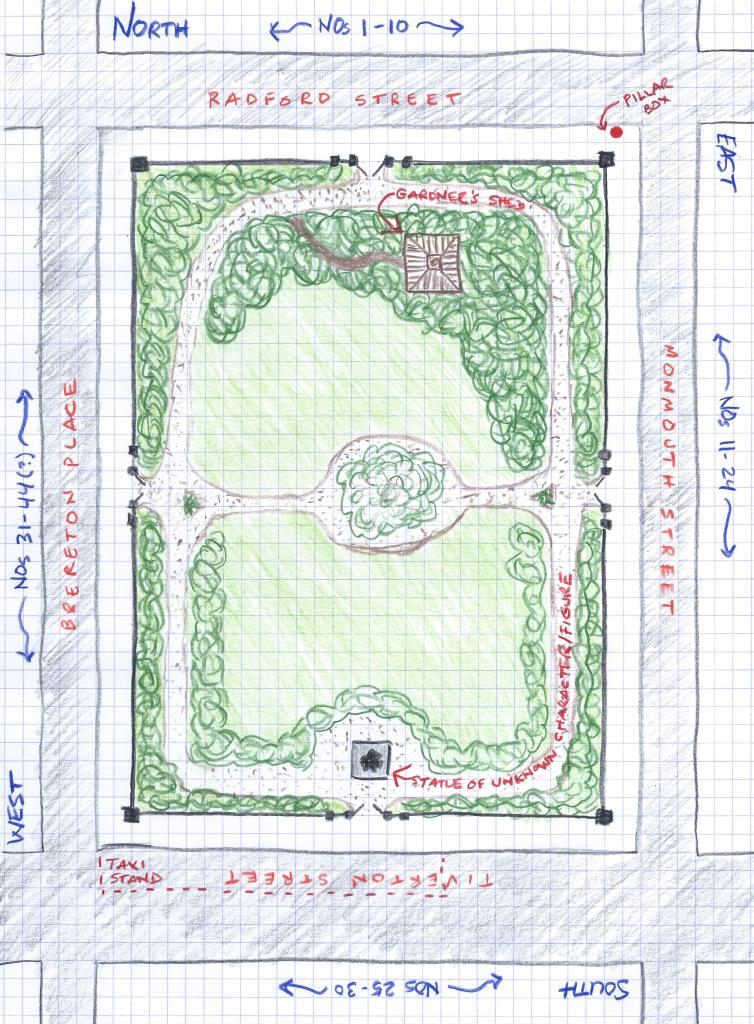
I found the way that Mackail introduces us to residents of Tiverton Square and to the square itself to be quite charming. As the action unfolds and the residents interact in, and with, the square a wonderful little world unfolds. Mackail describes the square, the houses surrounding it, and the residents who live on the square. He even assigns a house number to each resident so you begin to understand who lives where. I was quickly enthralled as I began to build a mental image, and thanks to knowing the house numbers and how they were arrayed around the square, I could easily imagine the route a resident would take as they went to and fro. I became so enamored of the details that I felt I had to write down the details and eventually this turned into the rather crude drawing you see here.

The houses were all built between 1781 and 1831 and are generally cream colored stucco on the first floor with brownish brick above, iron railings and fan lights over the front doors. The houses on the “quietly superior” North Side had an extra storey and seem more remote from the street. The streets fronting the East and West sides are distinctly narrower and closer to the square. The East Side has a cobbled alley in the back with converted mainly converted mews houses. The South Side has the most tenuous relationship to the square with a wide street where traffic “roars and rumbles”.

My version of Tiverton Square.
I know there are problems with it. Like the London streets would not follow such a rigid grid like they would in most American cities, but my drawing skills are quite limited. Also, the streets fronting the square are probably not called the street names that I have listed. Those streets are the ones in the book that lead into the square, but probably do not front the square or those houses. If they did then the house numbers wouldn’t be No. 1 Tiverton Square, etc.) But the streets were the hardest to figure out from the text so, no doubt mistakes were made.

And just in case there are any fans of The Square Circle who stop by My Porch, I thought I would give little Dramatis personae cheat sheet.

North Side (Nos 1-10)

No. 3 – Sir Herbert Livewright
No. 7 – Mrs Gillingham
No. 4 – Miss Leggatt
No. 6 – Peter Gore Blundell
No. 10 – Mr Justice Melhuish

East Side (Nos 11-24)

No. 13 – Colonel Parkinthorpe
No. 14 – The Norton Family
No. 16 – Lady Poley
No. 17 – Miss McGregor
No. 18 – Wiseman
No. 20 – The Bristow Family and Angus the dog
No. 20 Mews – Peter and Poppy Davidson
No. 22 – The Ashton Family
No. 23 – Cresswell

South Side (Nos 25-30)

No. 26 – Joe Aronson, Esq.
No. 30 – Mrs Mumsey

West Side (Nos 31-44 or so)

No. 32 – Miss Kitty Buzzard
No. 34 – Mrs and Miss Carpenter
No. 35 – Master Elphinstone
No. 37 – The Allinson Family
No. 39 – Mr Waveney
No. 41 – Tenterden
No. 42 – Eastwood
No. 43 – Mrs Iremonger
No. 44 – The Schofield Twins

I mostly enjoyed following the characters through a year of their lives, but some more than others. And I did find a place or two where I thought the narrative dragged a bit. But I also found something about the way Mackail describes it all that made me think of Greenery Street. I tried to come up with a way to describe why the two books felt similar and why both of them seem are so evocative of something that I can’t quite put my finger on. It has something to do with appealing to the urbanist in me.

The Sweet Dove Died by Barbara Pym

A wonderful novel by Pym. I know that is a redundant phrase, but it is so true. Leonora goes after antique dealer Humphrey or is it really his nephew she is after. It’s wryly funny and sometimes a bit uncomfortable. Had a kind of Sparkian dark undercurrent to it.

Angel by Elizabeth Taylor

And speaking of a dark undercurrent…Angel is a precocious young girl who literally writes her way out of (near) poverty. She writes fantastical novels that come right out of her imagination and are completely ignorant of the world. Lots of over the top nobility doing things that a poor little girl imagines rich people doing, or book on Greek antiquity that mixes up and interchanges Greek and Roman details willy nilly. Her books are panned by the press and wildly popular with the masses. She ends up creating a really oppressive world for her mother and anyone else who comes near her, yet she seems to think everything is normal.  Even thought this didn’t turn into “young girl makes good and lives happily ever after” as I had at first hoped, I quite enjoyed it and found it hard to put down. The one thing that didn’t ring true to me was that Taylor makes it clear that Angel doesn’t read at all. And she doesn’t have TV or radio, or the cinema, or plays, or church, or anything else  yet she still manages to dream up all these worlds. But how does she do that with no cultural points of reference? She doesn’t write science fiction so it isn’t like her books are total fantasy, so where does Taylor think she gets her fodder?


The Far Country by Nevil Shute

This book is so Shute-ian it would probably take a fan to like it. And I did. Every page of Shute’s simplistic, workman-like prose is dripping with can-do attitude and hatred for socialism and the then newly instituted National Health System.  Shute posits Australia as the antidote to everything that ails the UK. Not surprising since Shute himself emigrated to Australia because of the post-war political situation in Britain. I am know I am making it sound more serious and less fun than it is. But if you have every read a Shute you might get into the groove of this one. If you haven’t, skip it in favor of The Pied Piper, On the Beach, or A Town Like Alice.

A rant, two bits, and one bob

  
If life weren’t so short, I would go back through all of my blog posts and count the number of times I said “life’s too short”. I am generally not one of those people who has a hard time giving up on a book. If I am not enjoying something I chuck it and move on to something else. The only time this becomes a real problem is when I let my OCD get in the way.

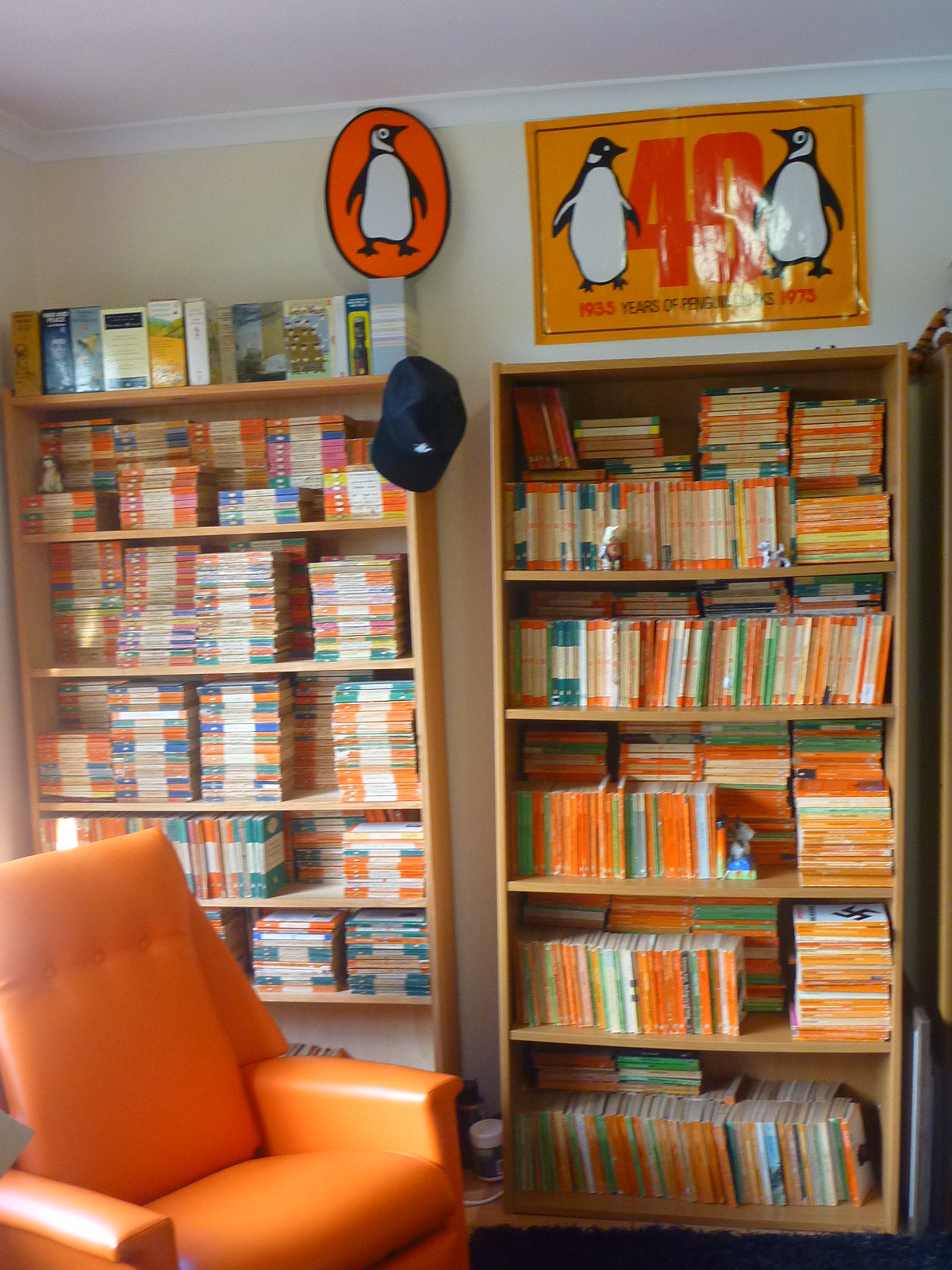
Now, before I go any further, let me say a word or two about my OCD which I talk about here with a frequency that must bore some of you. My case is pretty darn mild. I don’t incessesantly count things, or have to have all of the fibers of a rug facing the same direction. I don’t have to turn a light switch on and off a set number of times before I can leave it on or off. No, mine is your garden variety OCD. Like I needed to have all 100 of the Penguin Great Ideas series because they have numbers on their spines and once I had 2 of them I needed to have the remaining 98. Or I need to make lists of things and then cross them off so I can make more lists. And then there are times when two obssessions (or would they be compulsions) fight for dominance. For instance, I keep all the fiction in my library in author alpha order. But I refuse to shelve the 40 or so dove grey Persephones that I own in with the rest of my fiction. The uniformity of their spines is far too compelling when assembled en masse. My NYRB Classics are at least different colors so I could see them mixed in with the rest of my fiction in alpa order, but to be honest, right now they are instead all grouped together on my shelves, as are my Viragos, and Penguin classics and Melville House novellas.

You can see my need for visual uniformity sometimes trumps my need for organization uniformity.

Anyhoo, to get back to the subject at hand. Sometimes I get on a kick where I am compelled to follow through with a reading plan not because I find it enjoyable, but because I feel like I need to. And why do I need to? Sometimes just so that I can say that I have read something, or so that I can cross something off a list, or so that I can complete some arbitrary challenge that one of you maniacs have cooked up.

One challenge that is really starting to stick in my craw is one that I made up for myself about 13 years ago: that bitch of a list better known as the Modern Library’s list of the top 100 books of the 20th Century. It was a given that I wasn’t going to read anymore Joyce or Faulkner, both of whom appear multiple times on the list. And for some reason I don’t have a problem with the mental asymmetry that that concession creates. But there are other books on that list that are really, really, I mean really, not my cup of tea.

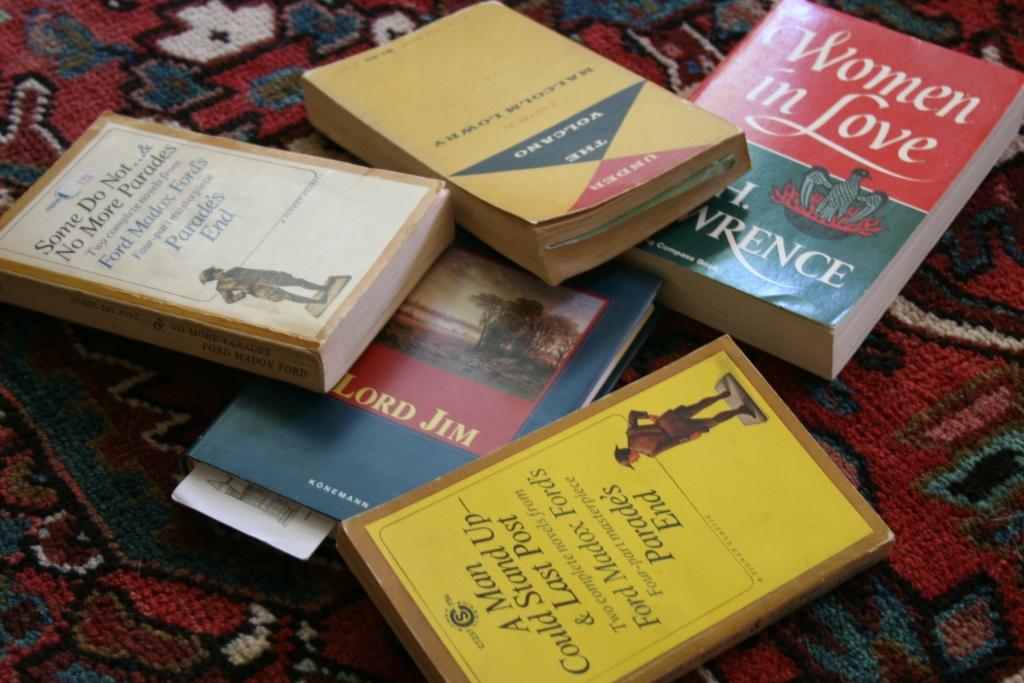
Like anything by Joseph Bloody Conrad. His books exist merely to give English professors job security. Or what about DH Lawrence? What a whopping great bore he is. And a new entrant to my anti-wish list is Ford Madox Ford and his freaking, frustrating, pile of steaming poo known as Parade’s End. Let me tell you sweetie that parade didn’t end fast enough for me.

A pretty picture of a literary pile of poo.

Like I started off by saying at the top of this ramble, I don’t have a problem setting things aside, but my need to finish that ML100 list is starting to impact the quality of my life. Something I am no longer willing to tolerate. In recent weeks I have been reminded in a personal and very profound way that life is too damn short to put up with books I hate just so I can cross them off a list. I mean enough already. If the weather was colder I would throw this pile of books in the fireplace and set them alight. They have been haunting my shelves for too long. The 118 pages of Lord Jim that I have read so far is 117 more than I should have read. The time spent slogging my way through the first third of Women in Love is like a third of my adulthood thrown out the window. And then Ford Madox I couldn’t write a linear narrative to save my life, aren’t I clever Ford. If he thinks I am going to move from Some Do Not to the other three books in his tetrology,  he can turn over a few times in his grave and think again.

I still think I may give the Malcolm Lowry another go. True I have been a little slow about it, but there is something about it that I like. And then all the Henry James on the list? I do kind of enjoy his meandering, rambling style.  And I am still going to give the ML100 books a go. But I am not going to try as hard. If I don’t like them by page 50, they are gone.

Bit #1
Now that I am giving up on some of the ML100 books I need some suggestions for the following years for my Century of Books list.  Extra points for books that aren’t known for their literary groundbreakingness.

1900
1925
1926
1927

Bit #2
I have actually been reading some enjoyable books lately, just haven’t gotten around to writing anything here. Hope to rectify that soon.

Bob
My work project has been in a writing-intensive stage recently which has not only made me very lazy on My Porch, but has made me incredibly lax in keeping up with your blogs. I hope to look a the 188 unread blog posts waiting in my Google reader very soon.

What did lunatics* read in 1928?


The circulating library in 1928. Shown here in 1905 when it was still called The Rest
and was used for a morgue and pathology lab.

While doing research today for work I came across a story about the patient circulating library at a large mental hospital in 1928. Among other things the author of the article describes some of the habits of the patrons. One is a former doctor who comes in each week in a morning coat and pocket watch about 30 years out of date and greets the librarian as if she were one of his former patients. Another refers to himself as “he” and whatever book he checks out comes back having turned every instance of  “the” and “she” turned into “he” by cutting out the offending preceeding letters “t” and “s”. But my favorite is this guy:

There is one patient who will have no books but those of a dark red color. One by one he is reading all the books in the library of that shade—fiction, history, biography, everything. Since this is a fairly popular binding, he has a large field which he is cultivating methodically. No one knows why he should select this color and no other.

And what are the patients reading? Most popular is the Bible, followed by dictionaries, and then arithmetic books. No real surprises there. More interesting to me is the kind of fiction that the patients like to read. The reporter notes that they like the same kind of fiction as the general population: Dickens, Conan Doyle, and Dumas. Again no big surprise there. But then the reporter rattles off a list of more contemporary authors popular at the time. E. Phillips Oppenheim, George Barr McCutcheon, Robert W. Chambers, Harold Bell Wright, and Harold MacGrath


Who?

Hmm. I don’t see any Virago or Persephone authors there. Perhaps these are authors who deserve a new audience.  Thank goodness for Google and Wikipedia.

First off, George Barr McCutcheon turns out to have written Brewster’s Millions. Now I haven’t read the book but I have seen the 1980s movie version with Richard Pryor. But McCutcheon also wrote a ton of other books including his Graustark series which is based on a made-up kingdom in Eastern Europe.

As for Robert W. Chambers, I don’t recognize any of his books but he he seemed to be a jack of all trades. Best known for three collections of stories and most famously for The King in Yellow, which, incidentally is 24 thematically linked stories about people going insane because of the fictitious play The King in Yellow. (I wonder what the patients thought of that one?)  He dabbled a bit in science fiction writing in 1915 about a zoologist who encounters monsters. After WWI he wrote war and adventure stories and after 1924 he wrote only historical fiction.

E. Phillips Oppenheim: Primarily wrote romantic thrillers between 1887 and  1943. Over 100 novels and 37 collections of short stories. Wow. I wonder if any of them are any good? Interestingly was one of the earliest to write spy fiction and about the “rogue male” popularized later by folks like John Buchan. And Hayley, he was born in Leicester.

Harold Bell Wright: A preacher author who earned the animus of his fellow preachers when his third novel was about a preacher who had to resign his call in order to retain his integrity. Said to be the first American author to sell a million books. Noted author Owen Wister didn’t think much of him: “stale, distorted, a sham, a puddle of words,” and “a mess of mildewed pap”.

Harold MacGrath: Another one to write a ton of books and many, perhaps most, were made into films. He also seemed to go for the mixed bag appoach. Love, adventure, mystery, and spies.

The majority of patrons would have been men during this period and these definitely seem slanted in that direction. I will say that I think each of them sound interesting enough to at least give them a go. Something to look out for the next time I am combing through secondhand bookshops.

*By 1928 the term “lunatic” was, at least in mental health professional circles, not used a whole lot, but the press and politicians still used it. And in DC at least, the mechanism for committing patients to the mental hospital was still known as a lunancy hearing–and was heard in an open criminal court with sanity being determined by a jury.


The Last of the Maine Photos (now with extra Lucy)

 
Our camera seemed not to come out as much this year on our trip than it did last year. I am not sure why. I am a big believer that people spend too much time taking snaps instead of enjoying the moment, but to be honest, I say that, but then I rely on all the great pics that John takes to illustrate our vacations on this blog. Anyhoo, I am glad there were fewer this year so I there were fewer to comb through and post–a remarkably tedious process.

So here is a sample of the photos from the rest of our trip.

A foggy day on Monhegan Island

My niece on Monhegan

Tuckered out on Monhegan from all the attention on the ferry

Monhegan

Monhegan

The cener of attention on the Ferry (except for the guy reading!)

Lucy and John

I love this picture of Lucy. She looks like a shark on the prowl.
The second week we moved from Port Clyde to Deer Isle. This is the view from our deck.

Lucy spent a lot of time at this door looking at squirrels and…

…bunnies

The best ice cream in Maine (and that is a high bar)

Relaxing in the car

Seriously delicious Mexican food with a Maine twist

I think Lucy is part mountain goat

We wore her out. [UPDATE: Contrary to how it looks, Lucy’s ears arent’ actually drooping, they were caught in mid-bounce as she ran along the rocks. No matter how tired she is they never droop like that.]

I’ll end with this spectacular sunset from Port Clyde