[Editor’s note: Since a few of the bobs this week are a bit lengthy, the Editorial Board decided that this week’s Bits and Bobs could not be accurately named so. Not wanting to break from the Bits and Bobs format, the Board determined by majority vote to temporarily modify the title of the series for this, and any, occasion when a Bob is long enough as to constitute being a Robert.]
Classic Club Spin 2
At the last minute I decided to take part in the Classic Club Spin 2. The number spun was 6 and so the classic that I must read by July 1st is The Love Affairs of a Bibliomaniac by Eugene Field. I am a little disappointed in the spin. Not because I don’t want to read TLAB, but rather because I was hoping the spin would force me to read something I was less keen to read, like Little Dorritt or Vanity Fair. Still, the spin did its job because the Field is a book that I probably would not have gotten around to for some time. I have half a mind to use the rest of my Spin list as some kind of crazy reading guide for the second half of 2013. As if finishing my Century of Books list isn’t enough.
Letting go of Bowen
Speaking of A Century of Books, one thing the process has forced me to face is that some authors may not be for me. Since I finished the majority of my ACOB list, I decided to read the remaining titles in chronological order. And let me tell you, when I am faced with a book I must read before I can go on to the next year on the list, I really start to get honest with myself about what I think of an author or book. You may remember me jettisoning Virginia Woolf earlier this year. I have read a few of her books, but after really, really struggling to finish the short Mrs. Dalloway, I decided there would be very little Woolf in my future. (I’m still going to try Leonard.)
So I made my way to 1929 and Elizabeth Bowen’s The Last September. In 1999 I read my first Bowen, The Death of the Heart and I remember finding it a little slow but overall liking it. A few years later I read To the North and had a similar experience. When I read The House in Paris in 2007 I quite liked it, giving it 8 out of 10. So I had high hopes for The Last September. But I struggled. I think I reread the first three pages three or four times with nothing sinking in. As I pushed myself forward to about page 60, all I could think was how much I wasn’t enjoying it and how I really couldn’t wait for it to be over. I know I am not supposed to think that way about the great Bowen, but boy it didn’t work for me.
I know very little about formal literary criticism or what constitutes what in terms of literary periods. But, having recently read and hated the “modern” (so I’m told) Some Do Not, the first of the Parade’s End books by Ford Madox Ford, I began to pay more attention to the notion of modernist novels and the fact that I think I may have a tendency to a universal dislike of the style/period. Isn’t Woolf considered modern? And while I wouldn’t lump The Last September in with Parade’s End, it did seem to have a whiff of the modern about it. And because all I could do was think how much I didn’t care about the characters and the fact that I didn’t like the writing itself, I decided it was time to let the Bowen go. Maybe another time and maybe another Bowen.
(If the Studs Lonigan trilogy is modern, I am in trouble since they are coming up on my list.)
Passing by Nella Larsen
Since I eighty-sixed the Bowen I needed to come up with a book from 1929 to fill the gap. Consulting all the relevant lists online and elsewhere, I began to despair. Not only did I not seem to have anything in my library from 1929 but all the titles were totally obscure or weren’t really tripping my trigger. The only title I saw that interested me was the great Dodsworth by Sinclair Lewis. But I read that ages ago. I even began to consider reading some non-fiction. (gasp)

So I left Lucy to chase chipmunks in the backyard so I could consult my shelves. I first went to my tower of unread Viragos. Out of about 40 of them I finally found one from 1929. The Laquer Lady by the oddly named F. Tennyson Jesse, it appeared to be a bit of historical fiction, which I thought kind of defeated the purpose of reading something from 1929. Moving through my unread hardcover collection I found nothing from 1929. Moving yet again over to my unread paperback shelves I came across Goodbye to All That by Robert Graves. Ostensibly a memoir, this also didn’t seem to really capture 1929 in the way I was hoping for. Plus non-fiction would never be my first choice (unless it was 84, Charing Cross Road).
Then I spotted a title that I had seen on the wikipedia list of novels from 1929. Passing by Nella Larsen. I had no idea I owned the book, but once I looked at it I realized I bought it fairly recently. It is one of those pale blue-spined Penguin Modern Classics that have such wonderful covers. I often buy lovely Penguin books at used book sales just because I like their covers. I am sure I picked this one up initially for that reason but I am also sure that I bought it because the subject was fascinating. It actually turned out to be way better than the Bowen in terms of capturing the spirit of 1929. No doubt The Last September is very much about its time, but it also smacks of earlier decades as the characters hold on dearly to the life of tennis parties at a big country estate despite. But in Passing, the 1920s are split open. It captures the spirit of the Harlem Renaissance, paints a picture 1920s Chicago and New York, and vividly describes race relations in middle and upper class society at the time.
The novel focuses on Clare, a light skinned African American woman who “passes” for white and is married to a racist white man who doesn’t know her true racial identity and Irene who can pass for white but doesn’t try to. The two were childhood friends but haven’t seen each other since Clare went off to live her white life. After bumping into each other in a whites only rooftop restaurant in Chicago, their two lives become linked in a way that leads to tragedy. This was a fascinating book for so many reasons. I am so glad the Bowen didn’t work out.
Some progress
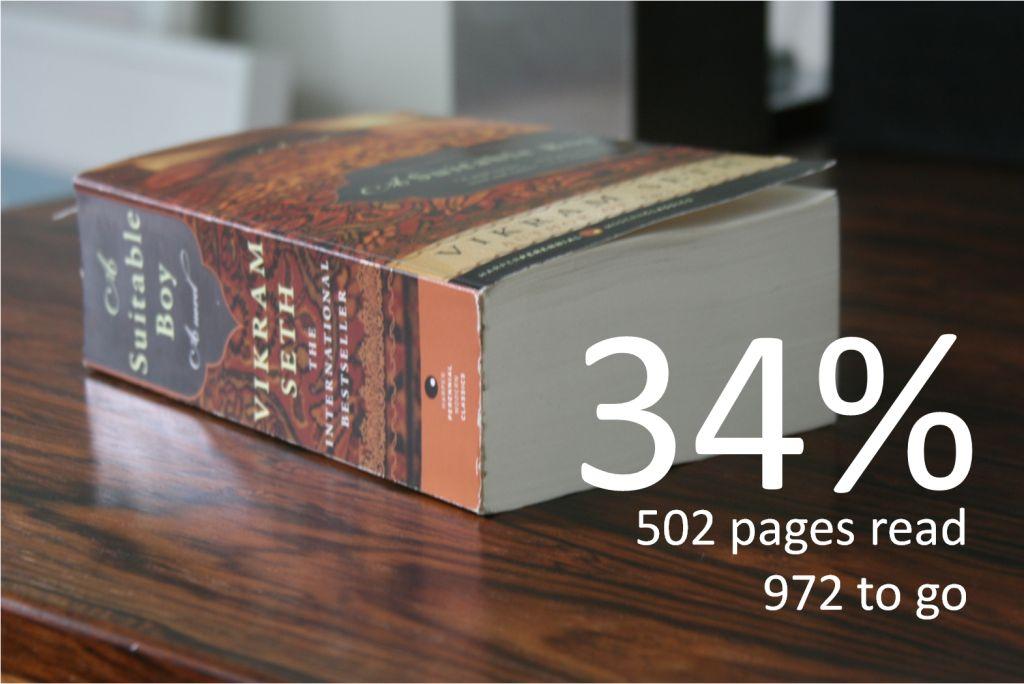
Although I am quite enjoying A Suitable Boy, and find it to be a bit of a page turner, I still find myself needing to accomplish something in my reading. Meaning I have an overwhelming need to finish books more quickly so I have been reading shorter works while I work my way through ASB.
Ready to trip the light Pymtastic?
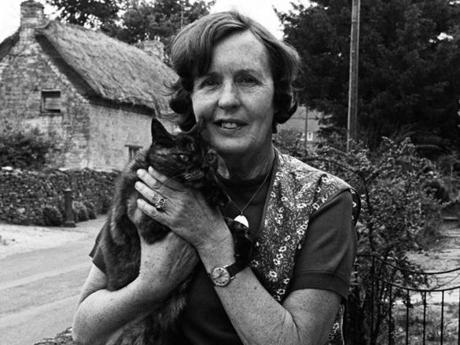
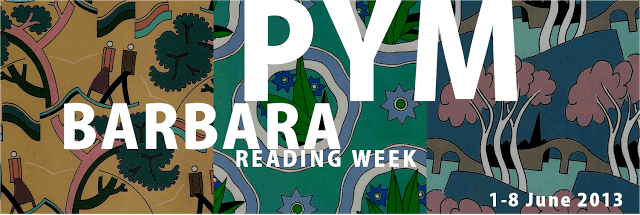
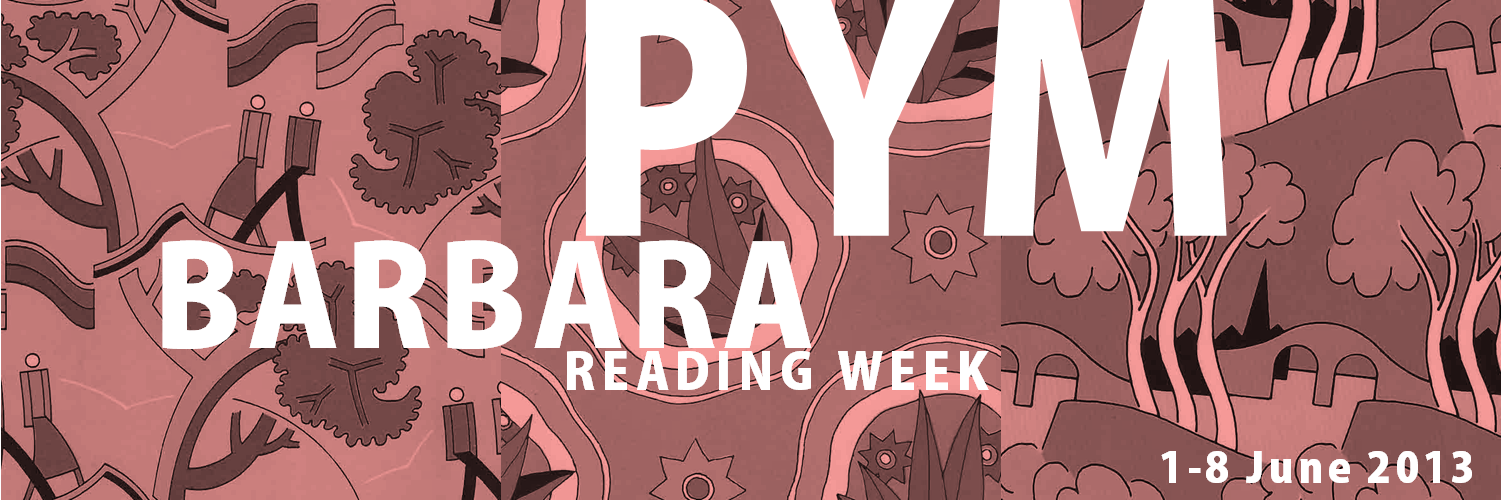
As most of you are aware by now, Barbara Pym Reading Week is just around the bend. Excitement has been picking up in the blogging world, on Facebook, and on Twitter (#PymReadingWeek). It was even featured in the latest issue of Green Leaves, the newsletter of the Barbara Pym Society. For more information on the upcoming reading week just scroll down to the previous post.









 hogglestock