Pym Week Giveaway Winners

Except for the cover contest, the winners were chosen by random draw from all of the people who either commented on My Porch or Fig and Thistle during Pym week or who did a post on their own blog.

Winners, please email me with your mailing addresses. onmyporch [at] hotmail [dot] com

Cover Contest 
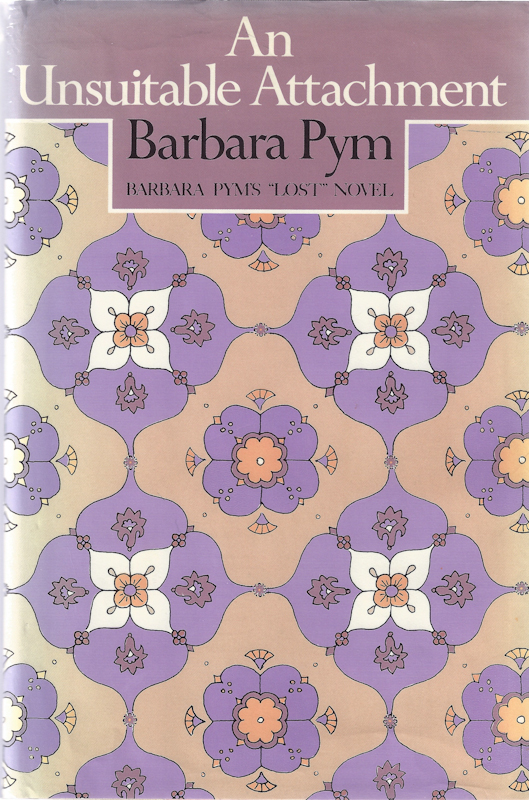
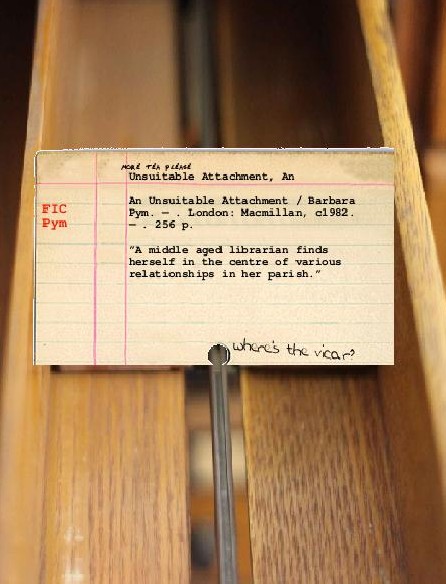
We didn’t have much of a response to our cover contest so I am especially pleased that the one person who entered made two really great covers. It would have been terrible to give a prize to a bad design. So a Barbara Pym tote bag will be going to  Melwyk at The Indextrious Reader. Incidentally, I didn’t read An Unsuitable Attachment until after she submitted her covers. I now know how appropriate the card catalog theme is for this novel.

(There should be an honorable mention for Simon from Stuck-in-a-Book. He made three covers for Some Tame Gazelle, but he submitted after the deadline.)

   
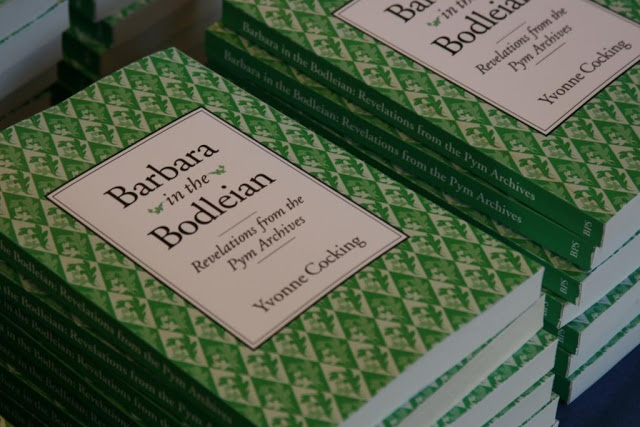
Barbara in the Bodleian by Yvonne Cocking
Mary at Mary’s Library will be getting this wonderful newly published book.

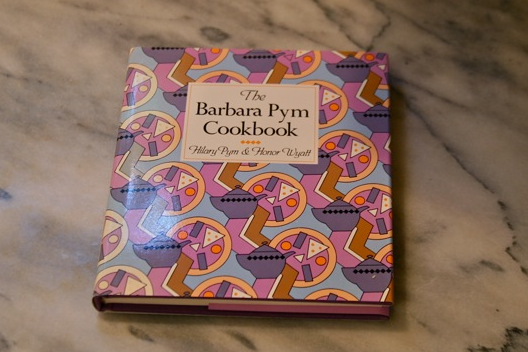
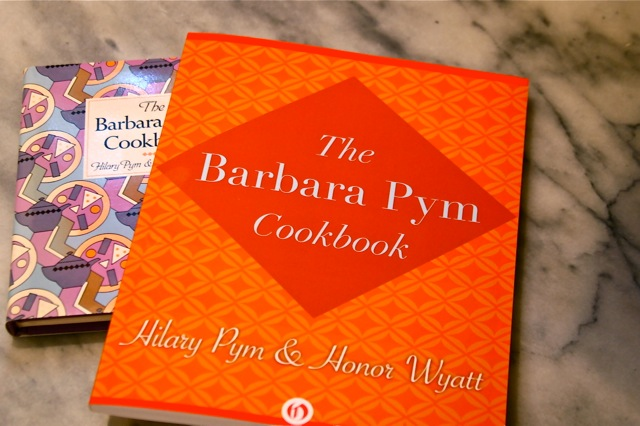
The Barbara Pym Cookbook
Miss Bibliophile, whose post on Crampton Hodnet I seemed to have missed in my recaps. Sorry about that.

Tea Towels Times Three
I have three Barbara Pym tea towels to give away. They go to:

Brona Joy at Brona’s Books

Non-blogger but big time commentor Susan from TX

Liz at Adventures in full-time self-employment

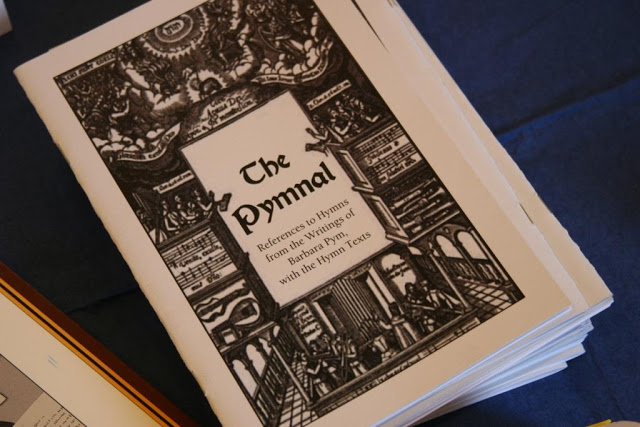
The Pymnal
This compilation of Pym-related hymns goes to Vicki at Bibliolathas.

Now with added Pym!

Blogger works funny on my iPad which is all I have with me in the Netherlands. It won’t let me scroll down in the draft form of my previous post so I can’t add all the great last minute Pym posts. So I will try and post them here in a new entry.

Brona Joy reviews An Academic Question.

LyzzyBee posts not one, but two reviews. No Fond Return of Love and Quartet in Autumn.

Vicki at Biblioathas reads her first five (!) Pym’s and finds a new favorite author. 

Gaskella at Annabel’s House of Books chose Pym’s most serious novel as her first Pym read. Now she is looking forward to reading lighter Pym. 

Simon at Stuck-in-a-Book reads Some Tame Gazelle and designs a few covers.

Bibliographic Manifestations reads and likes her first Pym. This is what I love about reading weeks, it was another reading week post that prompted her to pick up a Pym. yay!

Hayley at Desperate Reader “finally finished” Excellent Women.

JoAnn at Lakeside Musing is giving away a copy of Some Tame Gazelle.

A Super Dilettante has a wonderful dinner party and somehow Barbara Pym shows up.


Pym Week comes to a close


No clever way to end our week of all things Pym. It’s been wonderful seeing so many different people share their Pym experiences. Some of you were old friends with Barbara and some of you had never even heard of her before.  For me, my interest in Pym has increased exponentially. Late last fall when Amanda suggested we do something to recognize Pym for her centenary, it seemed like a great idea, but to be honest, my interest in Pym and her work was just slightly more than average.  As I looked around the Internet for more information on Pym, I soon came across the website for the Barbara Pym Societyand was particularly intrigued by notice for their March 2013 annual conference in Boston. Once I made the decision to go to the conference, things really started to snowball.
In preparation for the conference I reread Crampton Hodnet, Jane and Prudence, and A Glass of Blessings. What I discovered was that rereading Pym is almost better than reading her for the first time. Without wondering where the plot is going, one can really focus on Pym’s amazing ability to paint a scene and create wonderful characters. My fascination with Pym leaped forward considerably. Then I got to the Pym conference in March and was delighted to meet so many friendly people with so much in common and to do nothing for 48 hours except talk about Pym. I am not sure at what point over the weekend that my interest leaned toward the fanatic. Since then I read No Fond Return of Love for the first time which only increased my devotion. And I have never looked forward to a trans-Atlantic flight as much as I did earlier this week. Not just because I was going to visit good friends in the Netherlands, but because I would have almost 8-hours of uninterrupted reading time. Now normally, sleep, inflight entertainment, and general discomfort and ennui can keep me from reading on a flight as much as I want to. But this time, with An Unsuitable Attachment in my hand, the flight literally flew by and I read the whole thing cover to cover.
Thanks to everyone who participated. It was a lot of fun interacting with all of you over our common interest. 

I am particularly happy that through Twitter and all the different bloggers who posted this week, we have introduced Pym to a lot of folks who might not otherwise have ever come across her work.

I have lots of prizes to give away. A couple of books, tea towels, a tote bag, etc.  I am going to wait to announce winners until the upcoming week when I have better Internet access and I have a chance to confer with Amanda. 
In the meantime, here is a recap of Pym posts over the past three days. If I missed yours, as usual, please let me know.
Harriet Devine reviews No Fond Return of Love
Lyn at I Prefer Reading writes about food in Pym novels and the Barbara Pym Cookbook
Sunday Taylor at the beautiful Ciao Domenica gives us a great overview of Barbara and her career
The Indextrious Reader comes up with two great Pym covers
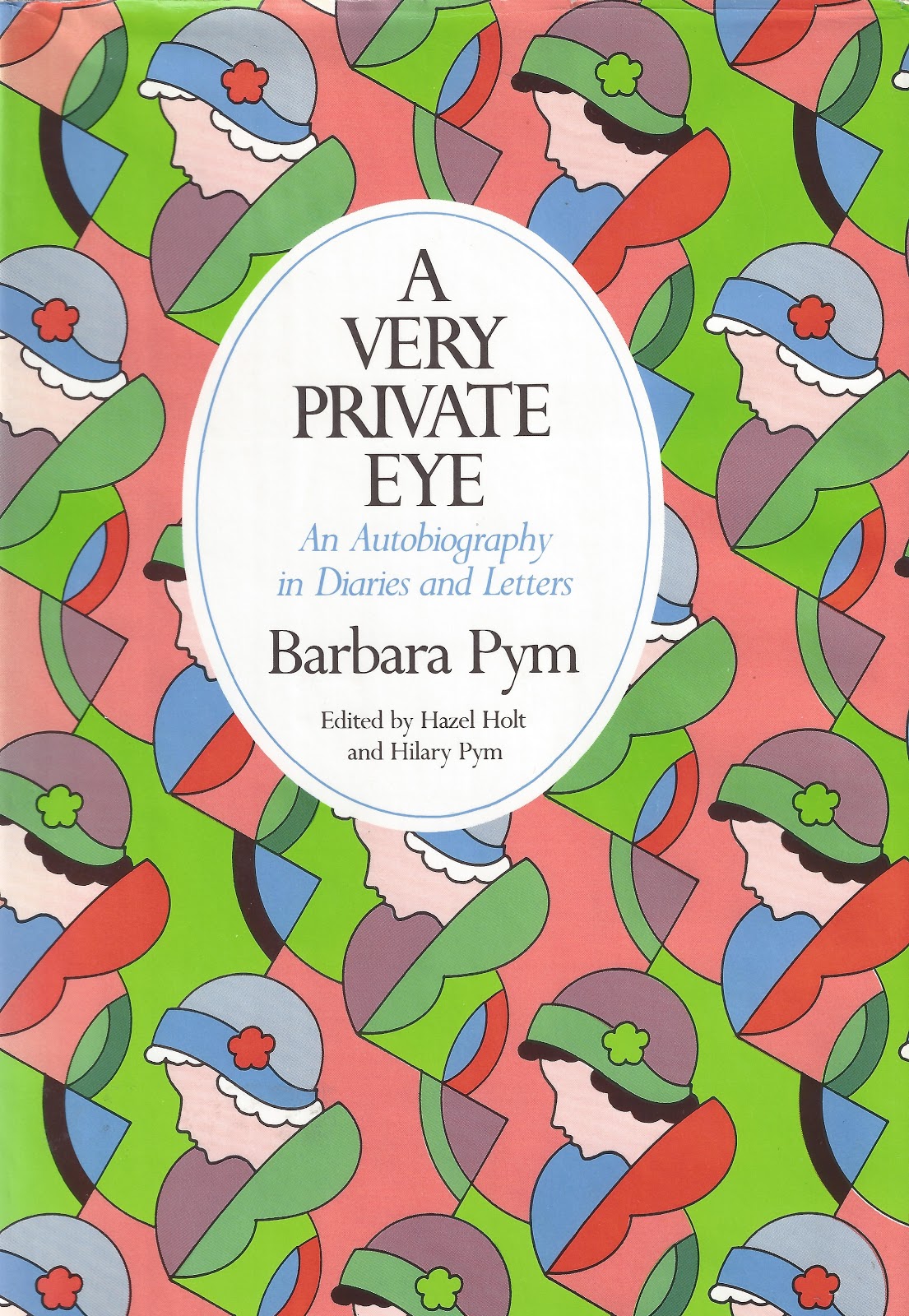
For a look at A Very Private Eye, Barbara’s autobiography, check out Heavenali
Alex in Leeds is giving a way a copy of A Very Private Eye, make sure you sign up by tomorrow
Virago posts a piece by Hazel Holt about her friendship with Barbara
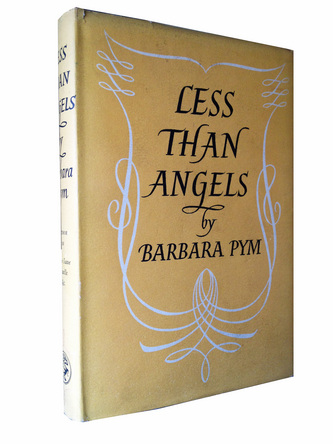
Less than Angels made a fan of first time reader She Reads Novels
Stuart Aken reviews Excellent Women
 Author Harrison Solow writes about her introduction to Pym
Clothes in Books covers No Fond Return of Love and takes on Excellent Women as well

Geranium Cat answers An Academic Question

JoAnn at Lakeside Musing makes cauliflower cheese! (and reviews Some Tame Gazelle)

The Indextrious Reader pours some tea

Bioengineering a new Barbara Pym


Recently @chaosbogey tweeted asking if there were any 21st-century descendants of Barbara Pym. I read so little new fiction that I am not one to come up with much of an answer. What do you think? Are there any authors currently being published that make you think of Barbara Pym? Or what 20th-century authors who came after Pym or may have been influenced by Pym?

The question got me to thinking like an Amazon algorithm “If you liked Barbara Pym you should try…” Could we clone Barbara? If you had to describe Pym by naming authors who would you name?

My thoughts run along these lines:

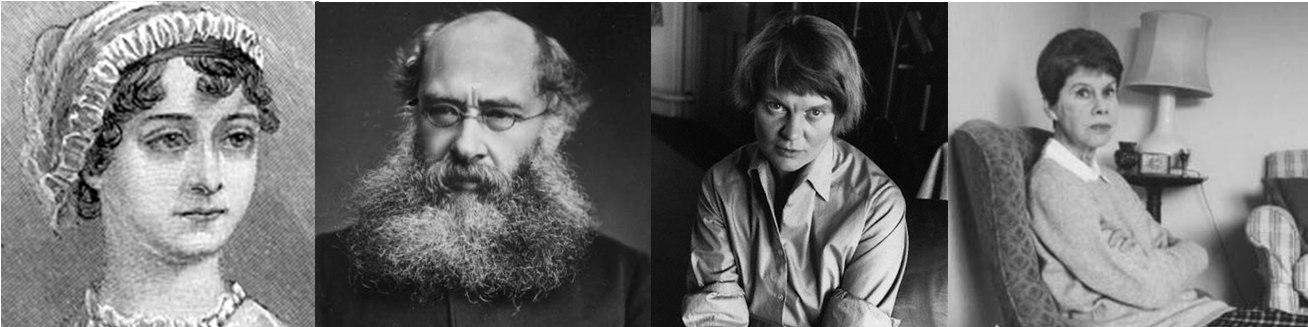
Jane Austen: I think the critics are right. Pym is like a 20th-century Austen. Pym’s style, while contemporary to her time, is not unlike Austen’s and her observational skills and her attention to detail and nuance are certainly Austenesque.

Anthony Trollope: Pym’s witty descriptions of ecclesiastical comings and and goings is more than a little evocative of Trollope’s Barchester series.

Iris Murdoch: Pym’s work has more humor and her characters are less serious than Murdoch’s. Not to mention the fact that Pym’s characters, while not necessarily prudish, don’t engage in endless rounds of adulterous bed hopping as they seem to in Murdoch’s books.

Anita Brookner: The academic interests of many of Pym’s female characters makes one think of similar characters in Brookner. Except Brookner’s heroines, who were all written after Pym’s death, lead far bleaker lives than any Pym character that I have so far come across. And although Brookner is infinitely more serious, her characters share an introspectiveness (introspection?) that is not uncommon in Pym.

What say you?

In a BBC radio broadcast from April 1978 Pym herself discussed some authors who may have had an influence on her writing. At the age of 16 she was convinced she wanted to write a book just like Aldous Huxley’s Crome Yellow. After studying at Oxford Pym discovered Elizabeth von Arnim and recognized that her work might be more a more appropriate model for her own efforts than Huxley’s. Not long after that she encountered Ivy Compton-Burnett’s fiction and for a time took to writing letters to a friend in ICB’s distinctive dialogue heavy manner. She also gives a nod to Austen and Trollope and notes that many compare her work to theirs. But she is a little sheepish about agreeing.

But what novelist of today would dare to claim that she was influenced by such masters of our craft? Certainly all who read and love Jane Austen may try to write with the same economy of language, even try to look at their characters with her kind of detachment, but that is as far as any “influence” could go.

Bringing Barbara to the small screen


Long time readers of My Porch will remember a few years ago when I fantasized about seeing a Pym novel adapted to the big screen. I even included a wish list of actors I thought would make great Pym characters (Fiona Shaw, Fenella Woolgar, Imelda Staunton, etc.). As I was looking for a picture of Sophie Thompson, I stumbled across her sister Emma. In addition to Sophie, it seemed natural that Emma would also make a good Pym character so I included her as well. Incidentally, I also included a few pictures of the incredibly handsome Mr. Emma Thompson, Gregory Wise just because, well, just because he is incredibly handsome. But now, having just read No Fond Return of Love for the first time, it occurs to me that Wise would make a great Aylwin Forbes.

But, I digress.

It is quite amazing to me that there hasn’t been any adaptations of Pym’s work to the big or small screens. Not likely to be blockbusters sure, but certainly exactly the kind of thing for those that like that kind of thing. Rather than just fantasize about bring Pym to life on screen, television producer Linda McDougall decided to do something about it.

McDougall is a British TV producer who has made many well received documentaries with subjects as diverse as Margaret Thatcher and Cot Death. She has twice won awards from the Royal Television Society and is the author of Cherie, the perfect life of Mrs Blair and Westminster Women. McDougall also writes for The Times (London) and the Daily Mail.

What she did and how it ended up is best left to her own words. So I turn over today’s Pym post to guest blogger Linda McDougall.

In 1982 my husband and I bought number 9 Brooksville Avenue in Queen’s Park in northwest London.  I was then a very busy producer/director on This Week, a much watched British current affairs show which could sometimes score nine million viewers. Work was stressful and I was away a great deal. When I was home the demands of four mouthy teenagers kept me firmly focused on the goings on inside number nine. It was quite a few weeks, or even months, before I noticed a blue plaque nestling under the first floor bay window on number 42 on the other side of the street.
Barbara Pym, novelist, 1913-1980 lived here 1960-72
Ours seemed such a modest collection of Edwardian semi- detached brick houses that I couldn’t believe anyone famous had come anywhere near it.
I had never heard of Barbara Pym but I had been a passionate reader of novels since my childhood in New Zealand. My mother and grandmother changed their library books every week, and I scored my own library card when I was five. The habit had lasted so I chose a couple of Pym novels from the Queen’s Park library and took them with me on my next shoot. Television production in the 1980s was still very much a male preserve, especially in news and current affairs, accompanied so a bit of female company was very necessary. I was delighted by Pym from the first page. I think it was Jane and Prudence.  I felt as if I had taken a huge box of chocolates on location and I was going to be able to keep them all to myself.
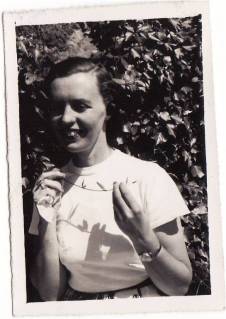
Thirty years have gone by and wherever I go, I still make sure I have a Pym novel tucked in my bag. I’ve changed, Pym hasn’t. But these days rather than a chocolate feast she provides me with a glass of my favourite New Zealand sauvignon blanc:  dry, cold, sophisticated and delicious. How I love the irony and the wry eye.
In 2009 when I’d given up working abroad all the time, I discovered the English arm of the Barbara Pym Society based at St Hilda’s College Oxford. For the first couple of years of my membership I was unusually quiet but very admiring as I watched many excellent women enjoying and honouring Barbara and her work at the annual UK conference. There was some discussion in 2011 about Barbara’s centenary, then only two years ahead. Without thinking it through I jumped to my feet, confessed I was a TV producer, and suggested that Barbara needed at the very least a scripted comedy series with accompanying documentary at prime time on the BBC to celebrate her centenary. “Oh yes!” cried around two hundred Pymsters in unison and I promised I would do what I could to persuade the BBC to commission a series to remember Barbara Pym.
Now, as we mark Barbara’s 100th birthday, I have to admit to humiliating failure. I tried and tried and tried again, but my every attempt was met with the same sort of rejection Barbara had suffered for 17 years when her work went out of fashion in the early nineteen sixties. I started out with high hopes. I fixed a meeting with a good friend who is a talented producer of scripted comedy series. I had employed him to produce a satirical political awards show when he was still in his twenties. He went on to become a commissioning editor at the BBC, and is now the managing director of one of the most powerful and successful production companies in the UK. Together we developed an idea for a six-part series around the Oxford based humour in Jane and Prudence and Crampton Hodnet. We would hire a brilliant script-writer. All the best comedy writers were discussed. We even whispered behind our hands about Alan Bennett. I dreamed all the time of Miranda Hart playing Barbara in the documentary/ biopic.
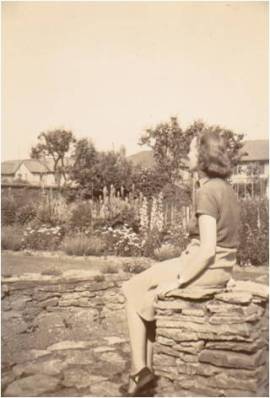
I had offered myself to make the documentary. Much grander folk would put the scripted comedy series together. It took weeks to write the pitch. I was certain we would succeed but I got nervous. For the first time in my life I started filming before anyone agreed to broadcast the programme. I was terrified that in a documentary where all the important characters were in their eighties or nineties we could wake up one morning and find that some of them had gone to join Barbara. 
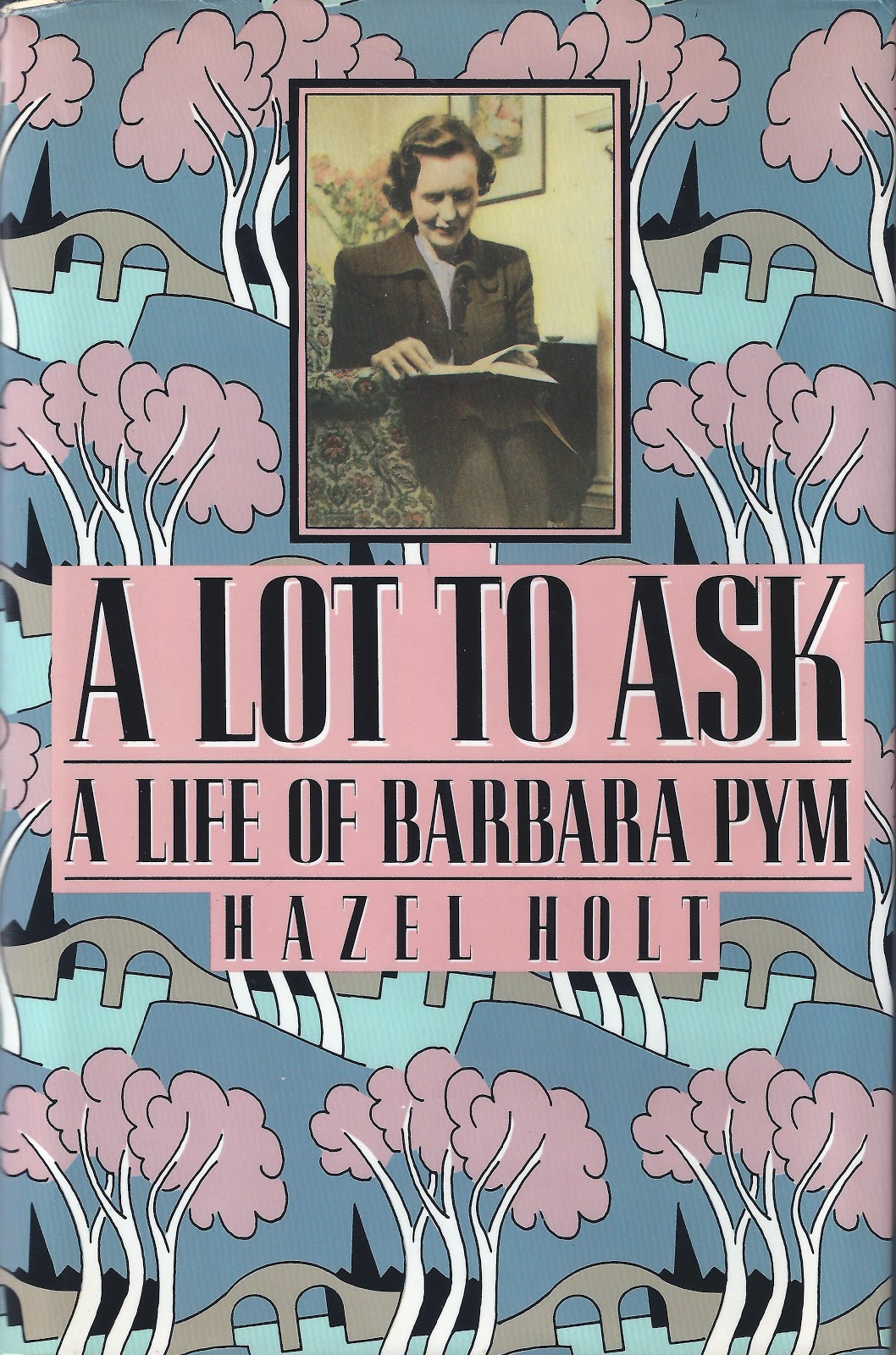
I became friendly with Hazel Holt. Fifteen years younger than Barbara, Hazel is a Cambridge English graduate and had been one of her close friends. Unable to find meaningful work in journalism, Hazel ended up sharing a sharing a room with Barbara and becoming her deputy at the Africa Institute. The two spent their working days together until Barbara’s retirement. After Barbara’s early death, Hazel began her writing career co-editing A Very Private Eye, an annotated volume of Pym’s letters and papers, with Barbara’s sister Hilary Pym Walton. Hazel also went on to complete, edit, and tidy Pym’s unfinished work. She also wrote A Lot to Ask, a marvelous biography of her best friend. In her sixties she wrote her first novel about Sheila Malory, a West Country investigator with Pym’s eager curiosity put to use solving crimes. Since the early 1990s she has been turning out one a year and they are published and enjoyed on both sides of the Atlantic.  
When I first met Hazel in 2011 she was recently widowed and had moved into a small modern bungalow in Taunton, Somerset with her beloved cat Flip, to be near her son the novelist Tom Holt and his family. At the time her health and Flip’s were a cause for concern. Looking back I can see that she was still grieving for her husband and getting used to living alone on a soulless estate after a happy marriage in a seventeenth century country house with grounds.  So I persuaded my son Jonathan Mitchell, an experienced documentary maker, to film a long chat between Hazel and me about her life with her friend Barbara.
Back at the BBC things were moving slowly, and mostly backwards. I was told an executive at BBC2 was a Pym fan, but she liked the later, more serious novels rather than the early comedy of Jane and Prudence and Crampton Hodnet.  Still, we had high hopes at her promise to ponder for a while on the project.  The result, however, was that the project was moved from scripted comedy to the drama department where my producer friend and I had no contacts. The idea for a Pym project still hanging on, but our proposal,  thousands of words with just the right photographs, and a star cast list dropped out of the front line and probably now lies behind some virtual filing cabinet ready to be digitally rediscovered in time for Barbara’s bicentenary.
Undeterred, I began writing to senior people I knew across the BBC and literary London to see if I could get the documentary off the ground.  Total failure. Don’t get me wrong. There may well be Pym fans out there but it seems my passion for Pym was not shared by industry movers and shakers. A high profile documentary boss said Pym did nothing for him and maybe I should talk to a friend of his who had just published a popular love story about an old couple. I wasn’t smart enough to work out why.
I once made a documentary with a British novelist who is grand enough to publish pieces in the New York Review of Books and sits on the board of the London Review of Books. I emailed him and suggested I might write a piece for the London Review which might spark some interest in Barbara for her anniversary and get the documentary off the ground.
“I’m not very up on Barbara Pym. I’m just gay enough to want to read them, but not gay enough to have! But I’ll mention your story to the LRB and see if they bite. “

Of course they didn’t.
By now I had become so determined to make the documentary and found so many wonderful reminiscences about Barbara that I started filming again.
There’s Frances Kendrick in her mid nineties, a former prison governor who was a life-long friend of Barbara. The two met in the Wrens when they were both posted to Whitehall after World War II. She has intriguing stories of her life with Barbara. Frances didn’t marry until she was in her forties so she shared a lot of female single life with Barbara and Hilary.
There’s Julian Glover the actor. He’s in Game of Thrones. He was a boy when his father C.Gordon Glover had a brief fling with Barbara. Glover’s mother Honor Wyatt, a BBC producer and another lifelong friend of Barbara, was furious with her ex husband. How dare he misuse her dearest friend? Julian remembers it all.
And finally, and most intriguing of all there’s Skipper, the last love of Barbara’s life. A gay man, now 84, he lives on a remote island in the Bahamas. “Why do so many women fall in love with homosexuals?” He sighed, and began to tell me the story of his relationship with Barbara.
For the first time in my fifty year career I have filmed a documentary which won’t be broadcast, but somehow I feel I owe it to Barbara. It will have its first showing at the British Pym Conference on August 31st and then it will be available on DVD.
Pym Post for Days 3 and 4

Today marks the beginning of the second half of Barbara Pym Reading Week so I thought I would  take a minute to make a few housekeeping announcements.
First up is that Amanda is having the week from hell with two of her children coming down with acute maladies that required trips to the emergency room. I believe they are both on the mend and are expected to be fine, but the result is that Amanda’s busy world suddenly got much busier. So we may not hear too much from her over the next few days.

Second, I have to move the entire Barbara Pym Reading Week office to the Netherlands today. I am taking advantage of some frequent flyer miles to visit friends in the Hague so the remainder of the reading week will be administered from Dutch soil. The only real consequence is that I am not doing a real post today and the mailing of the prizes will have to wait until I am back in the U.S. But hey, winners can’t be choosers.

Third, don’t forget there is a make your own Pym cover art contest. Submit via email or link in a comment by 6 AM U.S. Eastern Daylight Time on June 7th. Get creative and make a cover image for a Pym novel. Extra points go to those who make it thematic to a specific novel. Multiple entries are acceptable. Paint, draw, sculpt, do a collage, manipulate a photo, you name it, just make sure you put some creativity and originality into your entry.
And finally, if I have missed any of your Pym posts from June 3 or 4, please let me know.

Blog Posts

I am not sure Barbara would approve of my choice of expressions, but I have to say it: OMG.  I just came across the blog Optimal Indexing. The most amazing thing is not that it references Pym, but that the blog exists at all. It is like the characters in No Fond Return of Love have entered the digital age. I wonder if that means they limit themselves to cyberstalking or if they still do it the old fashioned Pym way.

Somehow I missed the Indextrious Reader’s TWO posts on Pym. Post the first is Mel’s story of how she met Miss Pym and post the second features some really delicious looking cucumber sandwiches.

I also missed Adventures in full-time self-employment‘s post about putting on a Pym-like frock and cardy and heading to Heavenali’s tea party.

I am not sure if this blogger knows about Barbara Pym Reading Week but she has a great blog that accompanies her class Miss Charlotte Bronte Meets Miss Barbara Pym.

Read the Gamut prepares for her entry into the world of Pym.

Indextrious Reader reads An Unsuitable Attachment and may have found her new favorite Pym.

Lyn at I Prefer Reading also gives us her take on An Unsuitable Attachment and has an edition I have never seen before.

Mary convinces me I need to get my hands on a copy of Felicity and Barbara Pym by Harrison Solow.

At least one literary soul has been saved. Barbara Pym Reading Week has made a convert out of Brona Joy.

Alex in Leeds takes her Folio Society edition of Excellent Women (with color illustrations!) for a spin.

Elisabeth at The Dirigible Plum, a long time fan discovers an early Pym she hadn’t read before.

After a five-year hiatus, Lizzy’s Literary Life returns to Pym by reading Excellent Women.

JoAnn at Lakeside Musing, unsuspectingly drawn in to reading another Pym this week, entices her readers to do the same with A Few Green Leaves.

Karen K. at Books and Chocolates reviews No Fond Return of Love.

Lisa May at TBR313 reviews Quartet in Autumn.

Anbolyn at Gudrun’s Tights also gives us a review of Quartet in Autumn.

New mom Melanie at Meli-Mello walks to the store to lay in some Pym but finds herself distracted by life.

Cosy Books has a link to the wonderful 1978 Desert Island Discs broadcast with Pym.

Yours truly reviews No Fond Return of Love.

I must say, I am particularly proud of my efforts to expand the digital footprint of the late Jackie Schuman, cover artist for Pym’s U.S. editions.

My new favorite Barbara Pym novel


Out of the six Pym novels I have read, Some Tame Gazelle has been my hands down favorite since I read it in 2009. But now that I have read seven Pym novels, I must say that No Fond Return of Love has replaced STG in the number one spot. I should add, however, that NFRL‘s primacy could be short lived. I have a feeling if I reread STG it might climb back to number one. But for now, I will let No Fond Return of Love enjoy its well earned spot at the top.

Published in 1961, No Fond Return of Love was the last Pym novel published before the dark ages descended and Jonathan Cape and other publishers deemed Pym’s work not commercially viable. Maybe it was the incongruity of Pym’s world and the swinging sixties. Indeed while reading NFRL I found Pym’s occasional descriptions of beehives and short skirts to be a little jarring. Mind you, not poorly written, or inauthentic, but just out of place against my perception of the Pymsian universe I have made up in my head. Given that I am inclined toward sensible ladies drinking tea rather than the visual and cultural chaos of Carnaby Street, this is hardly surprising.

After meeting at an academic conference, Dulcie Mainwaring and Viola Dace, two educated but underemployed single women find themselves stalking the strikingly handsome Aylwin Forbes, one of the learned authors who spoke (and fainted) at the conference. We discover almost immediately that Viola has had some sort of romantic entanglement with Aylwin and is still carrying a torch for him, but it isn’t until later that we find out that Viola is the reason Aylwin’s wife has recently left him. If we believe Viola, there was someting meaningful between them. If we believe Aylwin, he merely meant to thank Viola with a kiss for creating the index for one of his books. (No doubt the truth likes somewhere in the middle.)

The two women stalking Aylwin unfolds rather subtley and in a way that is somewhat surprising given their sensible, decorous personalities. And watching that happen is one of the great pleasures of this novel. It is easy to see why some refer to Pym as a 20th century Jane Austen, No Fond Return of Love has its share of vicars, gossip, and even a trip to the seaside town where folks bump into each other.

Many of the things that so endear Pym’s fans to her work are present here: incredibly precise and concise attention to manners, food, clothing, and emotions; witty, trenchant observations of the social and professional workings of the worlds of literature, scholarship, and the Church of England; and women. We read about and believe in her well drawn male characters, but ultimately Pym’s is a woman’s world. They may be weak or strong or somewhere in between, but they are always authentic. While Pym may lean towards making her female characters more independent minded one rarely feels she is judging any of her women–or men for that matter. Pym’s preference for observation rather than judgment may be a result of her years working for anthropology related organizations, just as the other characteristics common in her work were no doubt drawn from her own milieu.

If you haven’t read any Pym yet, I think No Fond Return of Love is a wonderful place to start.

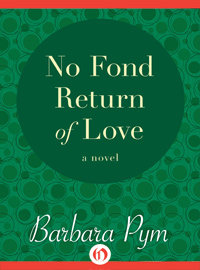
[Incidentally, the copy of NFRL I read was the new reissue of the novel from Open Road Media who also publish e-versions of the work. I’m so glad I bought a copy when I was at the Pym Society Conference in March because I only just found another edition of this title which are a little hard to find on this side of the Atlantic. But more importantly, the Open Road paperback editions are quite lovely. The covers and the paper feel good to the touch, the type is clear and fresh, and the covers don’t try and make Pym look like chick-lit.]

Uncovering the cover artist

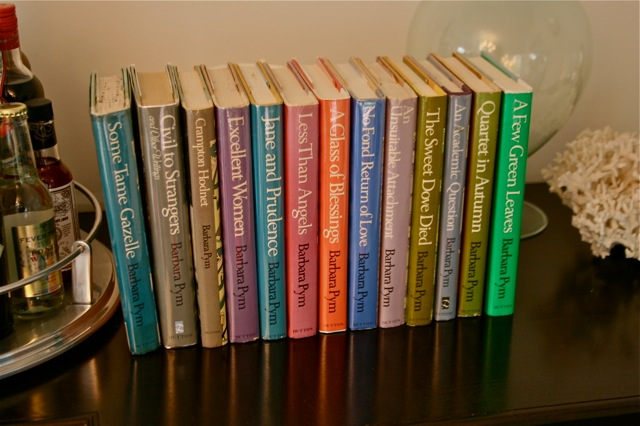
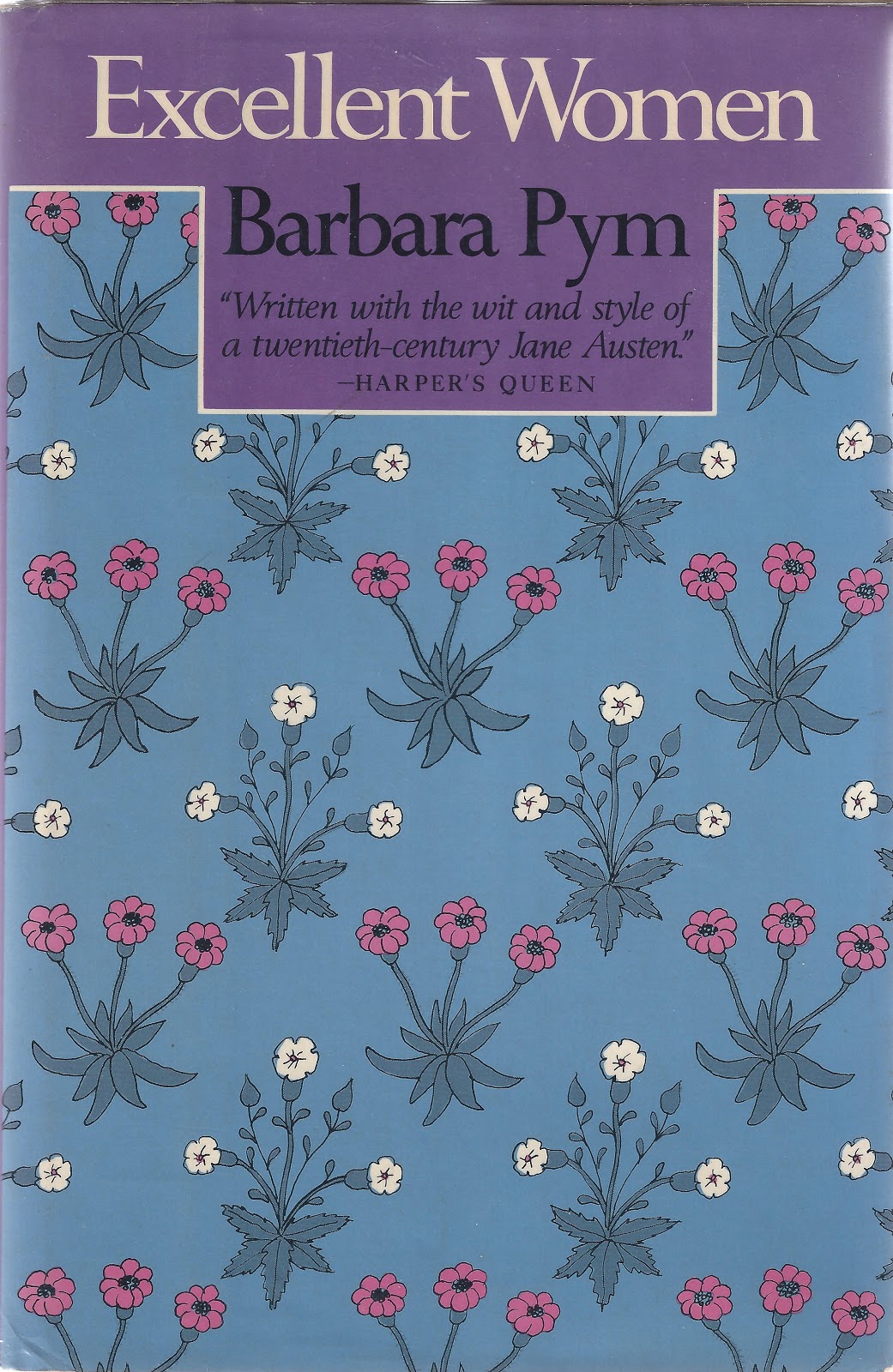
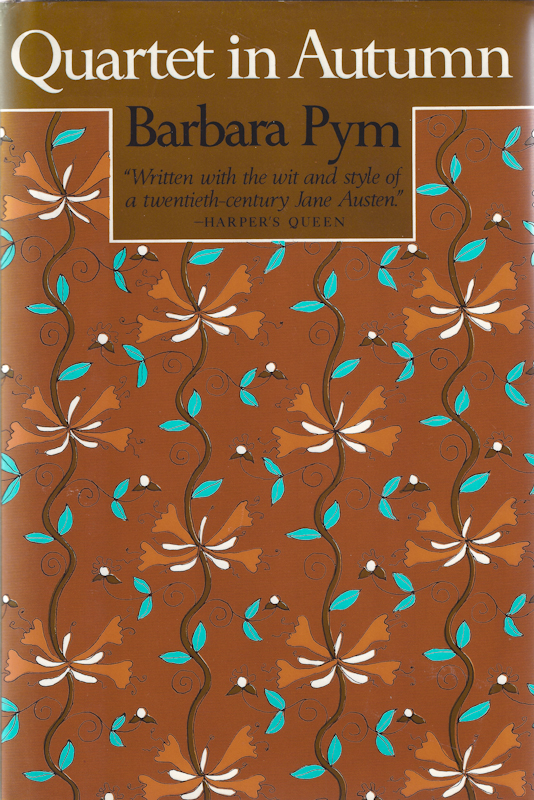
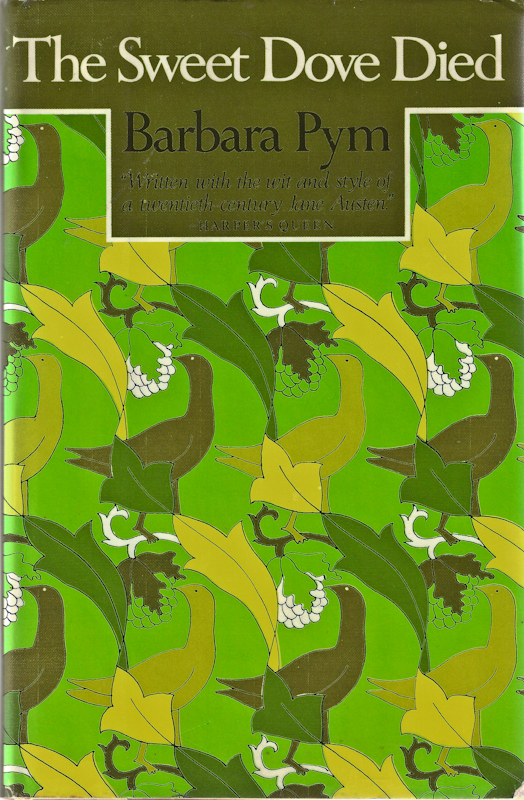
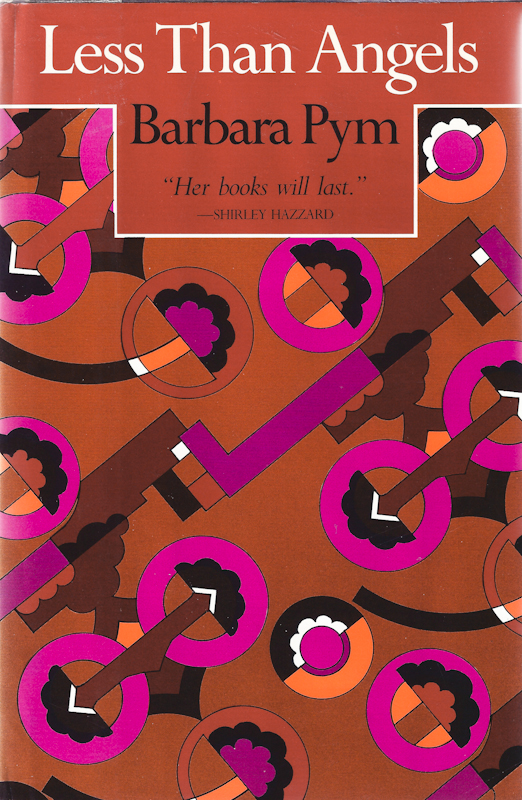
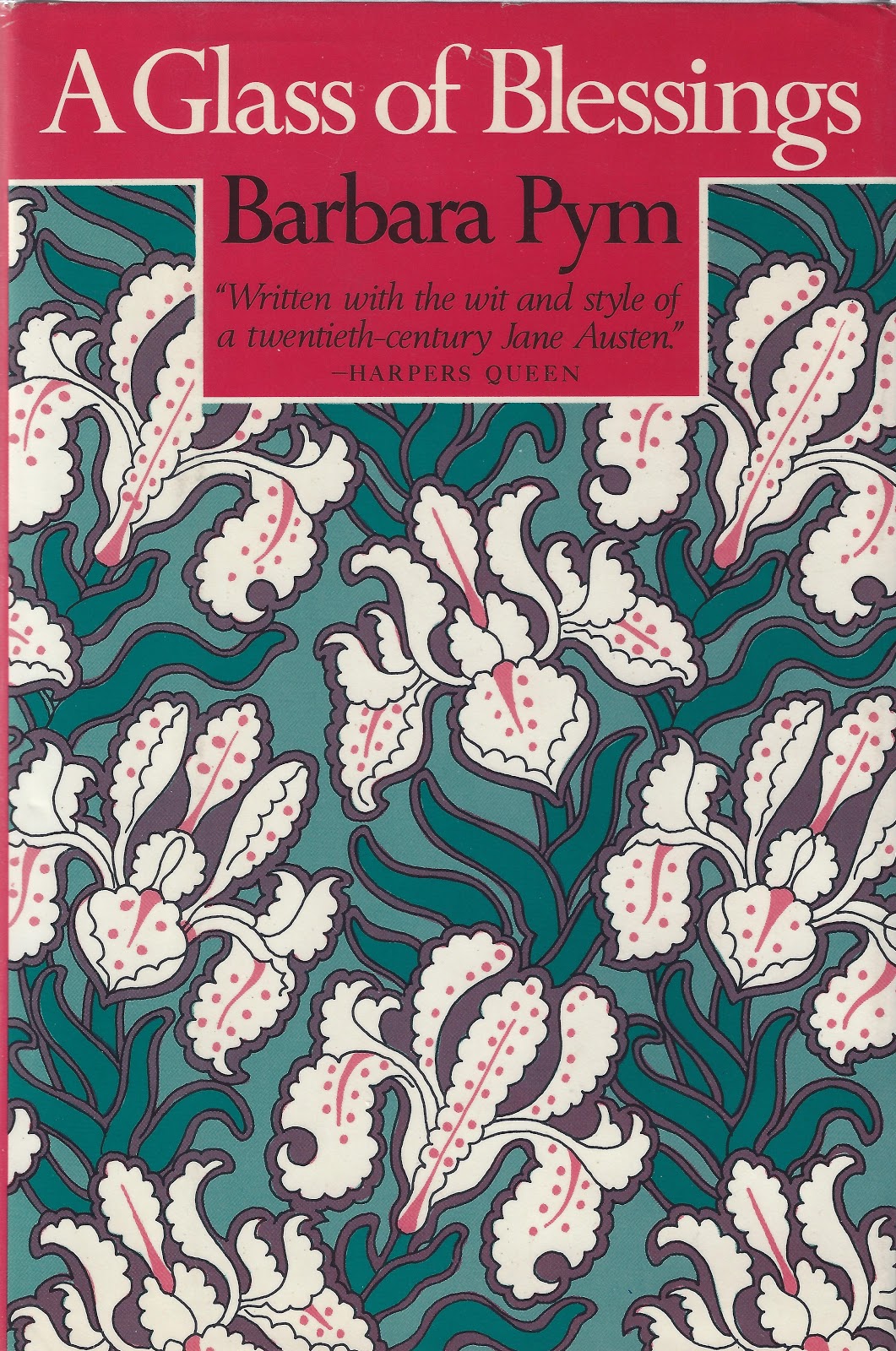
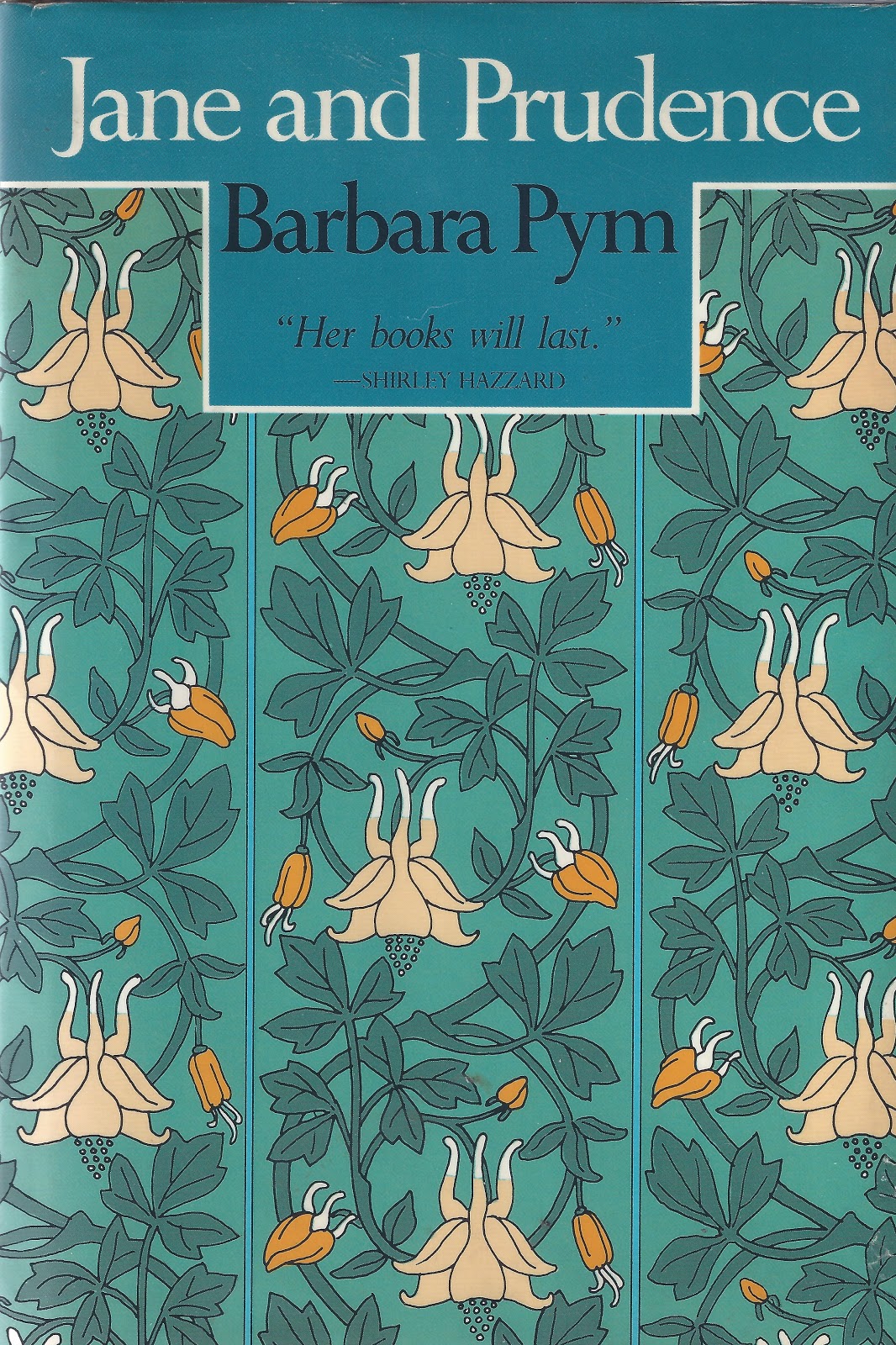
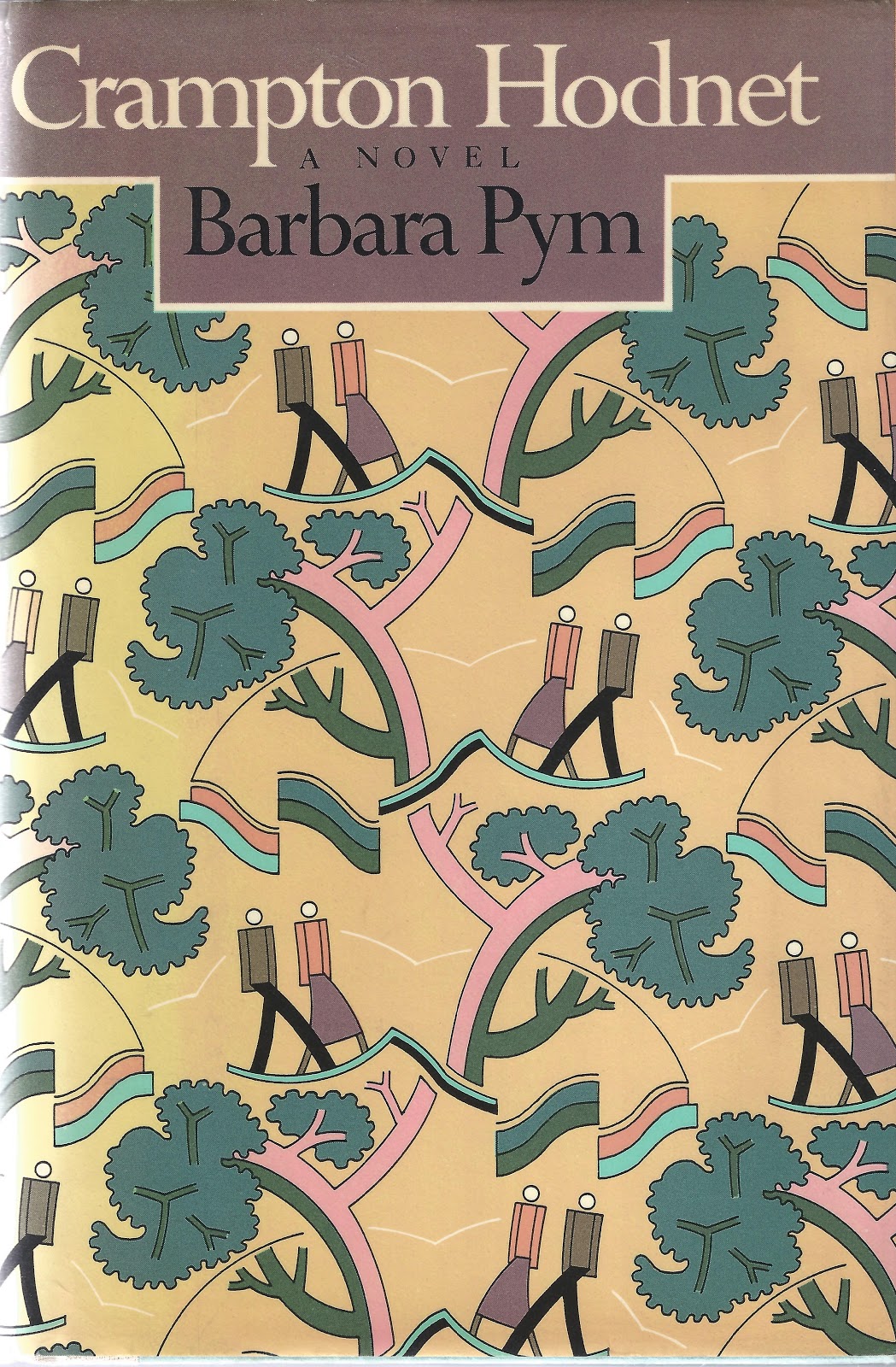
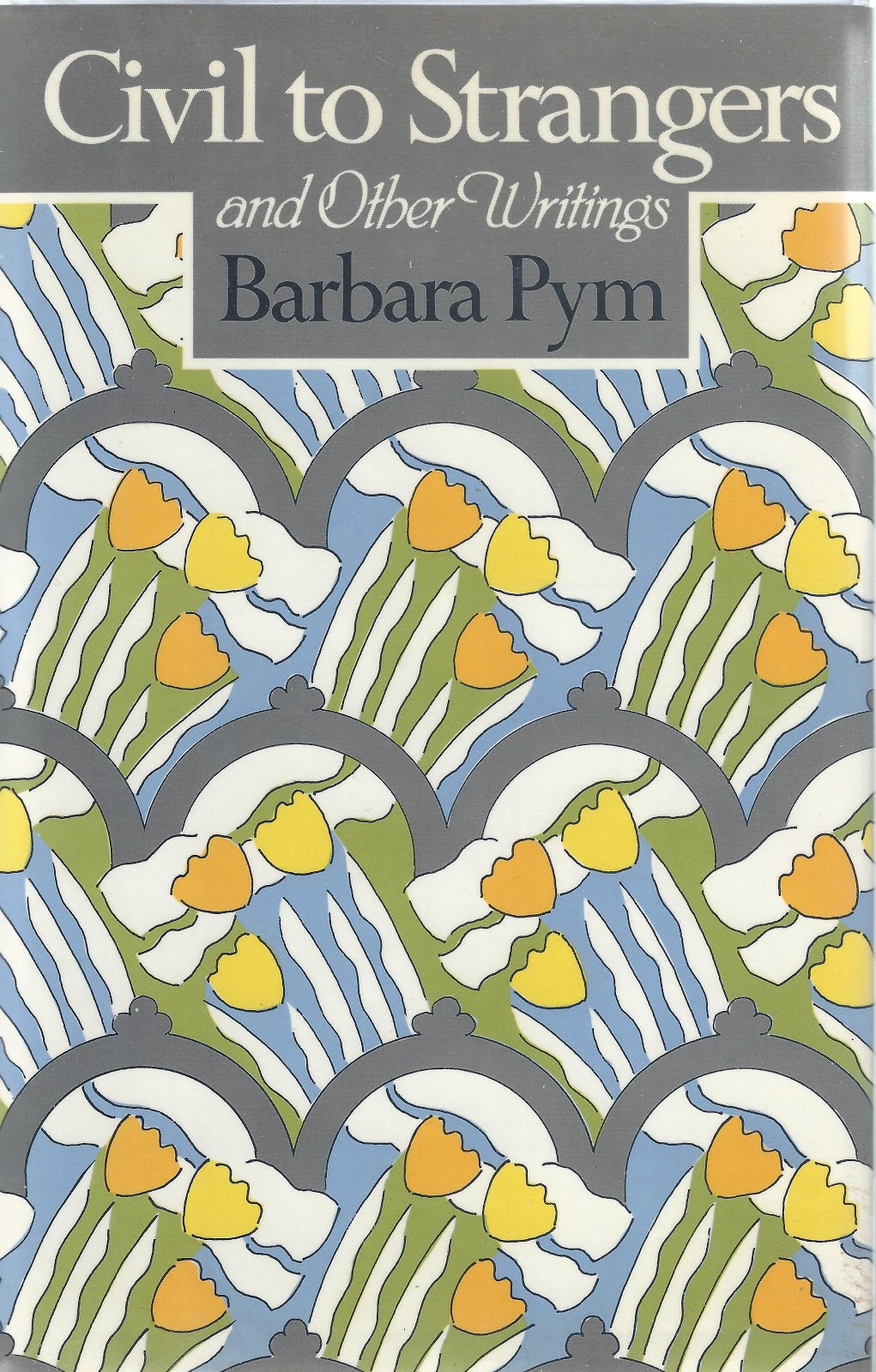
Long before I knew who Barbara Pym was, I knew what her books looked like. The American hardcover editions were all published by E.P. Dutton and featured distinctive cover art with repeating patterns evocative of wallpaper. I remember shelving those Duttons in high school in the late 1980s when I worked at the local library in my small hometown in central Minnesota. Over the years I would bump into them at other libraries as I browsed for reading material. When I decided to give Pym a go in 2002, I remember thinking to myself that I was finally going to read one of those books with the memorable covers. Happily, the rather shabby West End Library here in DC had a shelf of them just waiting for me.

As I began buying copies of Pym novels over the past few years, I purchased whatever was at hand so that I could read them. But as the mishmash of different editions started to pile up I was drawn to the Dutton covers. Not just because their uniform style appealed to my mild OCD, but I felt graphic artist Jacqueline Schuman best captured the spirit of Pym. Michael Adams at Open Letters Monthly has mused that, at least for those of us in the U.S., Schuman’s work made becoming a Pym fan “not only emotionally satisfying, but aesthetically pleasing, too.”

I’ve recently managed to collect all of Pym’s novels in the Dutton editions.

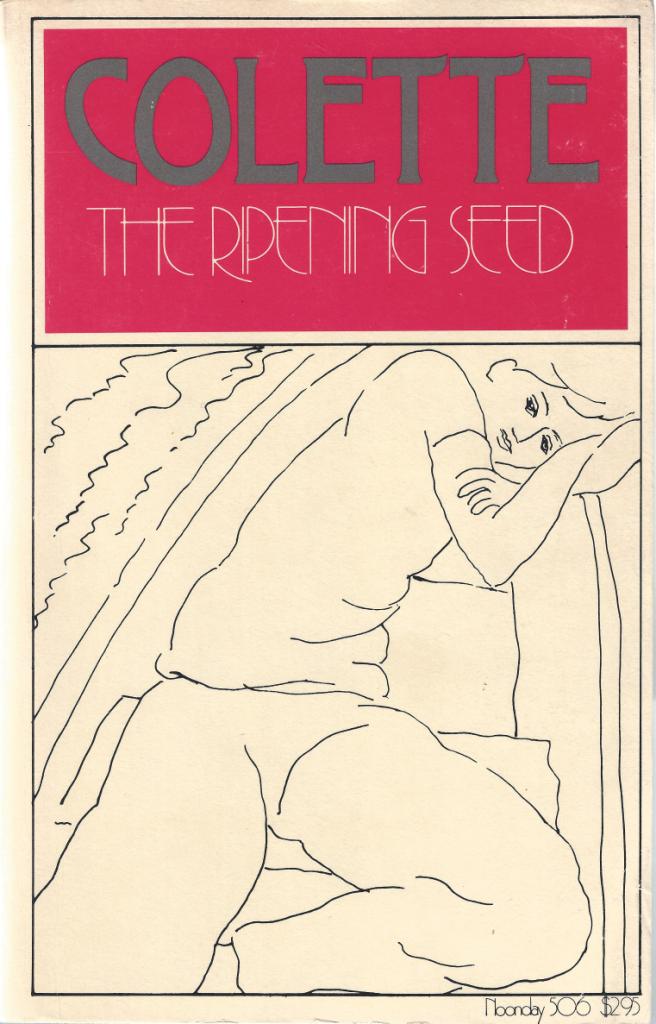
Intrigued by those Dutton covers I went on a Google hunt to find out more about their creator Jacqueline “Jackie” Schuman. The Googs came up with quite a few credits for these Pyms and other book covers designed by Schuman. Most notable is the wonderful Colette series published under the Noonday imprint by Farrar, Straus and Giroux. It was a delight to find out that the old copy of The Ripening Seed sitting on my shelf was one of Schuman’s designs..

But beyond those artwork credits, there was no information about Schuman anywhere. Assuming she lived in the New York area and assuming she was of a certain age I called a Jackie Schuman I found in the white pages but she turned out not to be the Jackie Schuman I was looking for. I called Penguin USA (Dutton’s publishing overlord) and much to my chagrin they don’t have an archivist who could help me out. (By the way, wouldn’t that be a fantastic job, and a rather Pymisan one: archivist at a giant publishing house with lots of legacy imprints? The actual primary resources may not even exist anymore, but one can fantasize…) I then spoke with a very helpful reference librarian at the Rhode Island School of Design who couldn’t find anything. I also emailed a reference librarian at the Library of Congress who did find a reference to her in a directory of women in advertising. (I haven’t made it over there yet to read the entry for Schuman.)

Then it occurred to me to see if the New York Times online had any items that referenced Schuman. Within about an hour of doing that New York Times search, I was on the phone with Jackie’s daughter Kathy Schuman who was happy to talk about her mother’s life and work.

Jackie was born Jacqueline Wilsdon on May 3, 1935 in Windsor, England and lived with her parents at 19 Worple Close in Harrow. During World War II, she was sent out of London to live in the country away from the dangers of the Blitz. Not long after the war Jackie and her mother emigrated to the U.S. arriving in New York on February 8, 1947 on an American Overseas Airlines flight. Kathy says that her mother was teased for her English accent and quickly went about adopting an American accent that would last the rest of her life. Jackie attended the High School of Music and Art, better known in New York simply as Music and Art. At age 16 in 1951–around the time Pym was working on Excellent Women and Jane and Prudence,–Jackie spent two months in England visiting her father.

After high school Jackie attended Cooper Union at night while working during the day. In her early career she was on the staff at the advertising firm Ogilvy and Mather, and then later worked at Doubleday and Co., Harper and Row, Viking Press, and Grossman Publishers. Jackie was married to oboist Henry Schuman but the couple divorced when Kathy, their only child, was still young.

In 1972 she struck out on her own and did freelance work for most of the major New York publishing houses until her death in 2001. Kathy says her mother always did her work the old fashioned way, drawing and lettering by hand and cutting and pasting by literally cutting and pasting. By the time computers were in widespread use in graphic design Jackie felt she was old enough and advanced enough in her career that it she didn’t need to learn the technology.

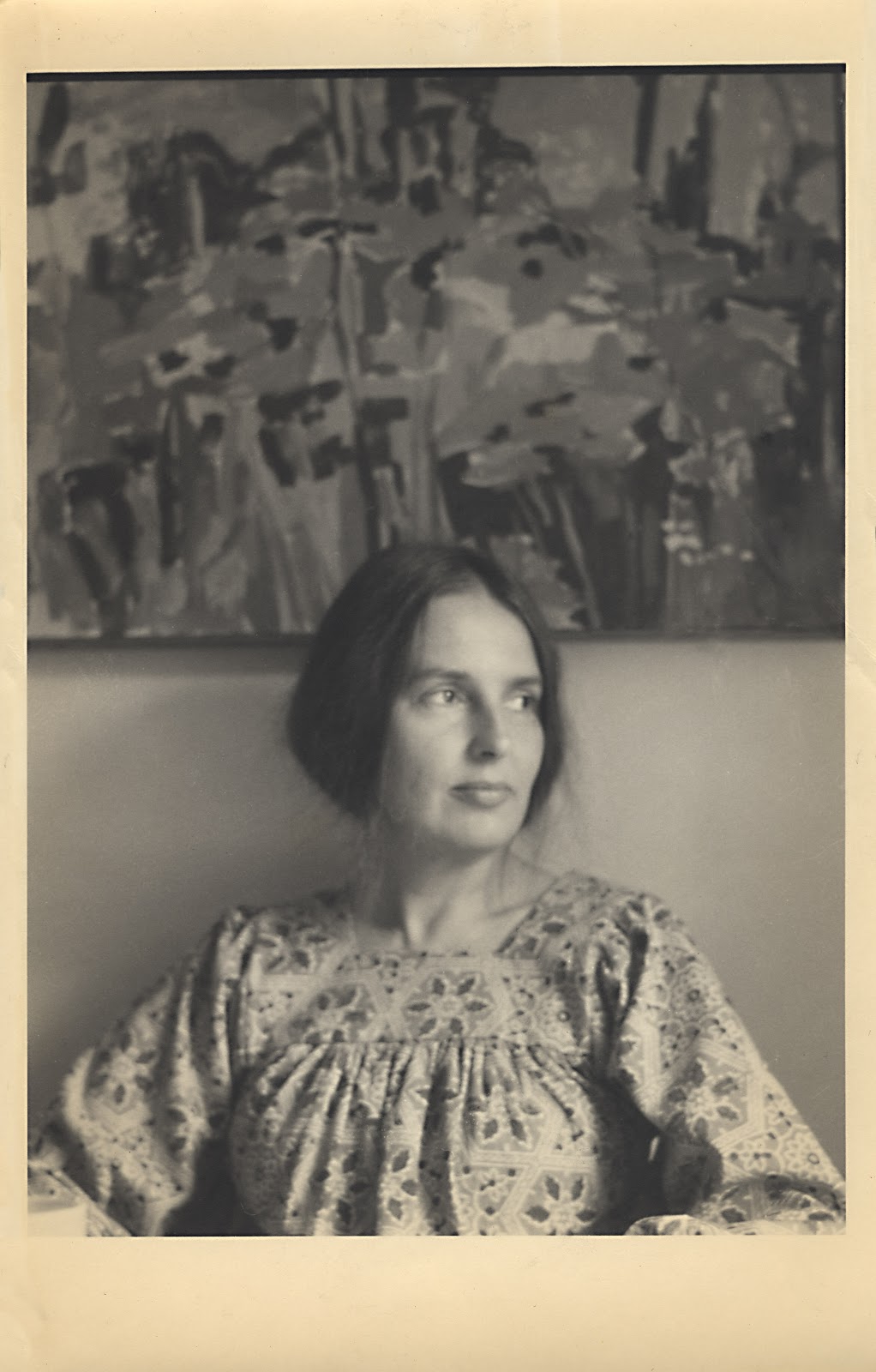
Jacqueline “Jackie” Schuman in the 1970s in front of one of her paintings.
(photo courtesy of Kathy Schuman)

When she wasn’t working, Jackie was an avid reader, a music and opera fan (and a friend of New York Times music critic Anthony Tommasini), sewed, made non-traditional patchwork quilts, and took and developed photographs. In the 1970s she did some abstract paintings but later decided she didn’t like them and destroyed all but three of her pieces.

Jackie died of cancer on July 20, 2001 at the age of 66 (incidentally the same age as Pym when she died of breast cancer in 1980).  Given that Schuman died at a time when the Internet was not quite the catch-all that it is today, it was easy to understand why she didn’t leave much of a digital footprint. It seems appropriate that as we celebrate the work of Pym, an artist whose work almost disappeared, that we recognize another artist whose work shouldn’t disappear.

1978 (written 1949-51, published UK 1952)


1978 (written 1973-76, published UK 1977)


1979 (written 1963-69, first published UK 1978)


1980 (written 1953-54, first published UK 1955)


1980 (written 1955-56, first published UK 1958)


1980 (written 1977-79, first published UK 1980)


1981 (written 1950-52, first published UK 1953)
1982 (written 1957-60, first published UK 1961)


1982 (written 1960-65, first published UK 1982)
1983 (written 1935-50, first published UK 1950)


1985 (written 1939-40, first published UK 1985)


1986 (written 1970-71, published UK 1986)
1987 (written 1936-38, published UK 1987)

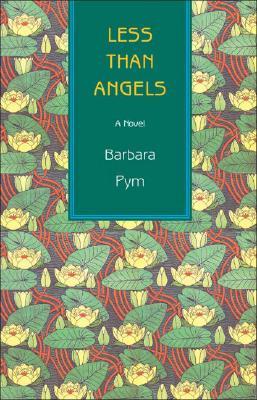
The covers for the Moyer Bell editions and the recently issued Open Road Media editions of Pym’s novels seem like a nod to Schuman’s work.

Moyer Bell. If anyone has this book leave a comment and let me know who designed the cover.


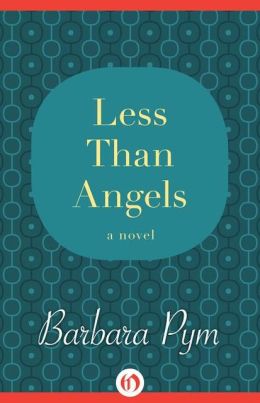
Open Road Media has paperback and electronic editions with covers designed by Mimi Bark.


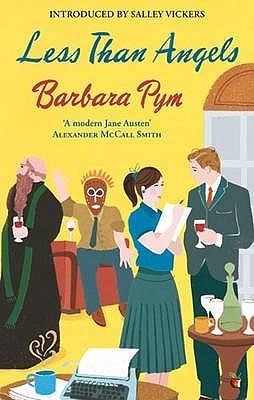
Virago’s reissue. Appealing to a younger audience?
Cover art by Jessie Ford.


Harper and Row Perennial Library edition cover design by Fred Marcellino


The original UK first edition.
(photo: John Atkinson Fine and Rare Books)


1984 Jackie Schuman


Jackie Schuman designed the background art, Neil Stuart designed the jacket, Christine Rodin hand tinted the photograph.


I think this may be my favorite Pym cover by Schuman.

More Schuman covers can be seen here.

Design your own Pym cover art!
Don’t forget about our cover contest. Submit via email or link in a comment by 6 AM U.S. Eastern Daylight Time on June 7th. Get creative and make a cover image for a Pym novel. Extra points go to those who make it thematic to a specific novel. Multiple entries are acceptable. Paint, draw, sculpt, do a collage, manipulate a photo, you name it, just make sure you put some creativity and originality into your entry.


Pym Post for Days 1 and 2

So many fun things going on today. Here is a recap of all the Pym posts that have popped up over the past two days. If I missed yours please leave a comment or email me at onmyporch [at] hotmail [dot] come.

Blog Posts

Amanda at Fig and Thistle describes getting over her own cool self and letting Pym into her life.

Audrey at Books as Food mentions the restorative/healing power of a Pym novel and she gives us lots of wonderful background behind the writing of Some Tame Gazelle before she comments on her own experience with the novel.

MarysLibrary introduces us to Pym and mentions a Yahoo literature group (a spin-off of a Trollope group!) that has been focusing on Pym.

Leticia at Spectrum of Perspectives paints a lovely picture of her friendship with Barbara Pym.

Claire the Captive Reader shows us a fantastic 1990s cover for Quartet in Autumn, that looks like it could have been a presentation board for a 1970s campaign to raise funds for a new library.

Lyn at I Prefer Reading provides links to three of her reviews (Excellent Women, Jane and Prudence, and Less than Angels), but she also mentions listening to Pym books…tell us more about that, Lyn.

Harriet Devine posts a review of Jane and Prudence.

Anna van Gelderen spreads the Pym gospel to the Netherlands and other parts of the Dutch-speaking world.

Alex in Leeds writes about her first date with Pym and Some Tame Gazelle.

Elecrtric Witch declares The Sweet Dove Died as “THE greatest camp work in history”.

Kaggsysbookishramblings is listening to Barbara on Desert Island Discs and reveiwed A Glass of Blessings.

Victoria Corby discovers Barabara Pym’s books.

Frances at Nonsuch Book reviews Jane and Prudence.

Heavenali gives us her thougths on No Fond Return of Love.

Amanda and her kids bake up a birthday treat for Barbara.

Pym fan Kerry at Pickle Me This (I love that blog title) bakes Barbara a cake and reviews Excellent Women.

Pym sends Hayley at Desparate Reader to church.

Valerie buys all Pym’s e-books in one fell swoop.

Other links

There was a wonderful piece in The Awl on Pym’s centenary.

A nice, if a bit shallow, shout out in The Guardian.

Open Road Media have done a mini video documentary on Pym’s centenary.

Philip Hensher toasts Barbara Pym in The Telegraph.

Raina Lipsitz write about Patron Saint of Quiet Lives at Ploughshares.

orna B Raz writes that archival material suggests that Pym was a Nazi sympathizer. (Yikes.)

Here, the same orna B Raz explains why she Pym is worth writing about.

Having Tea With Miss Pym (and a Birthday giveaway)

 
[Later this evening, I will post a recap of Pym links from Days 1 and 2 of Barbara Pym Reading Week.]

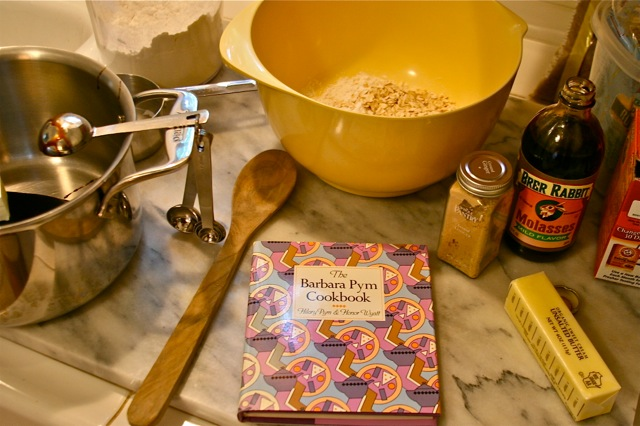
Today Heavenali is hosting a virtual tea to celebrate the 100th anniversary of Barbara Pym’s birth. Folks from around the world are sitting down to a special tea today to honor the life and work of Miss Pym. Amanda had a great idea to bake something from The Barbara Pym Cookbook to mark the occasion, this seemed like a fantastic idea (like her idea for the reading week in the first place) so I am following suit.

Not being English, I have always been fascinated by English cakes. You know, the kind that one often sees in films that are eaten with the hand and not a fork. Solid looking wedges kept in tins for god knows how long. Many in this country would think of the holiday fruitcake as being an example of this, but there are many other kinds that have popped up over the years in my Anglophilic reading and viewing frenzy. One of my favorite movie scenes of all time is from Howard’s End where Margaret and Helen Schlegel ply Leonard Bast with cake in their drawing room. There is one round cake in that scene that always fascinates me. And of course there are years of Mrs. Bridges’ various cakes–especially her cherry cake–that I have always wanted to try. In reality I don’t like nuts in cakes so there are probably many English cakes that I would not like. But that doesn’t stop me from being fascinated.

The Barbara Pym Cookbook

I wanted to choose something from the Pym cookbook that would be one of those cakes that gets pulled out of a tin to be served to an unexpected guest. The one from the cookbook that stood out for that purpose was the Parkin cake.  One thing you need to understand about this cookbook is that it is more of a literary gift than a serious cookbook. After Pym’s death her sister Hilary and Honor Wyatt seemingly decided to capitalize on Barbara’s popularity by producing a cookbook that featured recipes for food featured in her novels. To give you an example, the lead up to the Parkin cake recipe is an extended quote from Crampton Hodnet in which, on a wet July afternoon, Mrs Cleveland frets about what to serve old Mrs. Killigrew who she feels obligated to invite in out of the cold for tea. She asks Anthea “Is there any cake in the house?” The cookbook goes on to say “If someone had thought to make a parkin, that is a very good cake for keeping.” In other words, this cake was never mentioned in any Pym book and Pym never necessarily made such a cake.

At the Pym conference in Boston in March, the food historian Laura Shapiro gave a wonderful paper on food in Pym’s novels. (What is it about food writers that make them so enthusiastic about life? Laura’s energy made me think of Ruth Reichl’s wonderful books.) Part of the discussion after her paper focused on the Pym cookbook. No one who spoke had really put the cookbook to practical use and many were dubious about its value as a source of recipes. With that knowledge, I thought it might be best if I compared the Pym recipe to other recipes for Parkin cake that others online had actually tried making. I soon discovered the different types of Parkin cake (oats in the north, no oats in the south), the fact that it was often made to be eaten on Bonfire Night, that it gets better and stickier with age, and that every recipe called for ground ginger and/or mixed spice. The Pym cookbook recipe called for no spice. The Pym cookbook is also short on direction. No mention of what size pan for this recipe. I ended up going off recipe a bit by adding ginger, a pinch of salt, and baking it for only 45 minutes (45 minutes fewer than the recipe called for). I also made it yesterday so it would have at least 24 hours to groovify and get some of the stickiness. Essentially the cake is a ginger or spice cake with dark treacle (or molasses) and dark sugar, and, since I wanted to go the more traditional Yorkshire route, oatmeal.

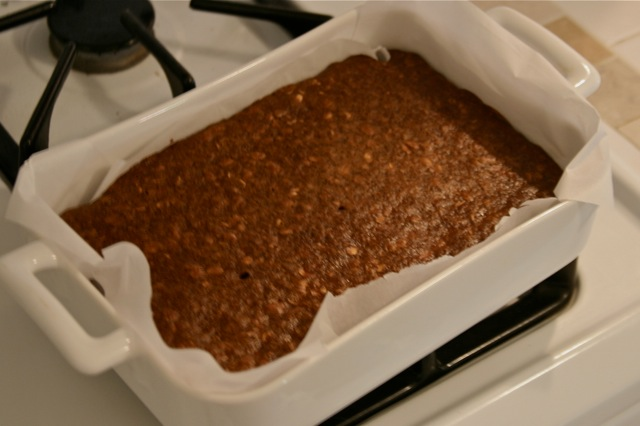
The Parkin Cake in progress.

I also wanted to test the cookbook’s version of Victoria Sandwich, one of my all time favorite treats when I am in England. For those who have never had this glorious cake, it is two layers of sponge with raspberry jam in between the layers and a dusting of sugar on top. I normally make a version that is in the cookbook from the Tea and Sympathy tea shop in New York City which calls for a layer of butter cream frosting on top of the jam, which is delicious. And I have had versions in England that have a what seems to be a sort of non-sweetened dairy cream. Like clotted cream in taste but lighter. In this instance I wanted to go with the basic version and the Pym recipe could not have been more basic. My main qualm about the Pym version is that it calls for a much hotter oven than other recipes I have used or seen.

The Result

So how did the The Pym Cookbook fare? Way better than expected. For a new baker it might be a little too short on information. And both recipes needed slight adjustments, but I am by no means a scientific baker and I managed those adjustments quite successfully. Neither recipe called for any salt. I added a pinch to each because I think everything benefits from a pinch of salt.

And the taste? Dee-licious. The Parkin cake was dense and moist and had a hearty, malty, gingery kind of taste with a bit of chew from the oats–my oatmeal may have been slightly thicker than the medium oats that most recipes call for. It is perfect for tea. Especially, as the cookbook alludes, for those off the cuff teas where something needs to be pulled out of the larder for an unexpected guest. The Victoria Sandwich was really lovely and light and flavorful. And the batter was delicious as well. I probably could have taken it out of the oven a tiny bit earlier, but still really good.

The completed Parkin.

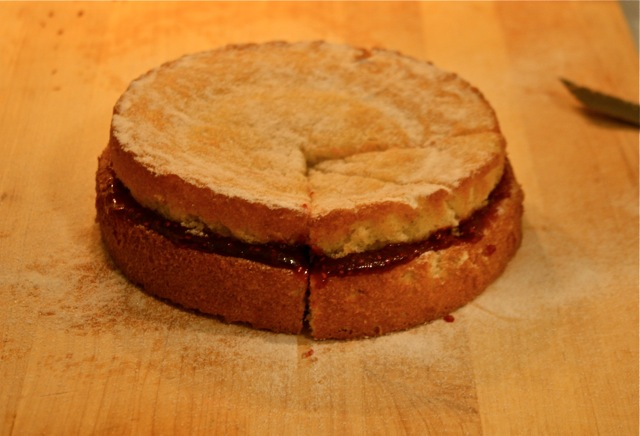
The completed Victoria Sandwich. The layers are different sizes because I had to use two types and sizes of cake tins, neither of them the 7″ size the cookbook called for.

The most amazing thing about both of the recipes is how darn easy and quick both of them were. Very few ingredients and really easy to mix and assemble. I am really quite pleased with the results.

So, happy birthday Barbara. You may not have had anything to do with this cookbook, but the results brought your novels to life for me. Like J. L. Carr wrote in the wonderful novella A Month in the Country it was like eating disposable archaeology.

The Giveaway

I have a copy of the Open Road Media reissue  of the cookbook to give away. Simply leave a comment or email me at onmyporch [at] hotmail [dot] com to enter the drawing by 6 AM eastern US time on June 7th to qualify for the draw.

Incidentally, Open Road also has a little mini video about Pym’s centenary that includes comments from food historian Laura Shapiro.

The orange one is up for grabs.