Everything about this book has grown on me

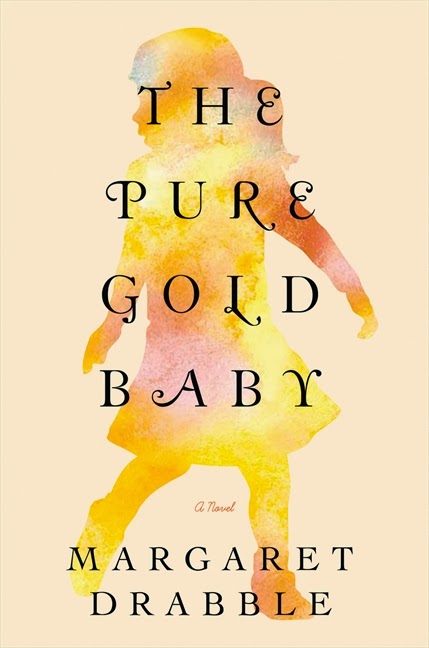
The Pure Gold Baby
Margaret Drabble

At first I didn’t like the cover. I also wasn’t so sure I liked the title. I’m not sure what I thought it referred to, but it evoked nothing for me. The anthropologically focused opening paragraphs left me wondering why I spent good money on a hardcover, something I almost never do. And although I like Margaret Drabble, I have discovered recently that my fondness for her work can’t be universally applied to all of her novels.

So what happened? First I discovered that the pure gold baby refers to Anna, a sweet and well-loved developmentally disabled child. Normally I am one to feel uncomfortable around disability, but there is something about both Anna’s sunny disposition and Drabble’s unflinching honesty about her that made me embrace not only the pure gold baby, but The Pure Gold Baby as well.  Suddenly the title seemed brilliant and the cover of the American first edition came to life. (Had I even recognized that the seemingly bland cover art was the silhouette of a young girl?)

The novel is narrated by Eleanor, a friend of Anna’s mother Jess. In fact, the story is less about Anna and more about Jess, her career, her friends, her lovers, and the world they inhabit over the course of fifty-odd years. Into the tale Drabble deftly weaves in the aforementioned anthropology, issues surrounding disability, institutionalization, changes in health care, aging, mortality, and even the meaning of life.

The product of an affair with an older married professor, Jess’ love for Anna and the support of her friends (and the NHS) help soften the difficulties of being raised by a single mother. And each of her friends have offspring who are Anna’s playmate and have their own potential for success and failure. Drabble’s narrator inspires an optimism that makes me want to be a parent. (Indeed passages in this book are like antidotes to the despair that pervades Doris Lessing’s The Fifth Child.)

Our children were so good, our hopes for them so high. Goodness seemed to be their birthright. […] How could any of them go astray? The gap-toothed boy, the pure gold baby, the freckled fox girl, the dusky little despot, the white-faced flower, the luminous lamb, the lion charmer. […] They were all beautiful, all good, all in bud. Even Andrew, subject as he was to spasms and to fits of incoherent rage, was beautiful, and full of undisclosed personal promise.

Of course nothing in life is as sunny as that and Anna and every other character in the book face challenges along the way.

Our little children, what becomes of them? They set off so innocently on their long journey. It is hard to bear, it is hard to grow old and see the children age and suffer. It is hard to see them grow bald, and estranged, and some of them lonely.

Knowing next to nothing about how the learning disabled learn, I was fascinated and grateful for Drabble’s many little inclusions about such things. And knowing a bit about mental asylums (remember I wrote a book about one…), I was fascinated by her explorations of various institutions in England and the changes in how mental illness has been treated and mistreated over the years.

Fascinating for bibliophiles, Drabble also explores the lives of “problematic children in less enlightened times” including Jane Austen’s brother George, Arthur Miller’s Down’s syndrome son, Kenzaburo Oe’s disable son, Pearl Buck’s daughter Carol and other authors dealing (or not dealing) with disability.

As much as The Pure Gold Baby is about any of these things it is also a long slow discovery of life. What we are all doing here, where we will all end up, and what it all means. Not only did I find much in this book profound, I was also taken by all of the mundane details of a life and society that is no more. This is kind of a “in the good old days” kind of moment for me, and I think, probably for Drabble. Not that everything in the good days is good, and there is certainly plenty in the bad old nowdays that is infinitely better.

When Simon and I contemplated our most recent episode of The Readers I was inspired by the early parts of The Pure Gold Baby. When I came across a description of the town hall in Islington I googled it to see how well Drabble did. Based on the image search I did, I would say pretty well. So full of interesting details and factoids, there were many moments I wanted (and did) look things up online. What I didn’t realize is the importance that the the power of the Internet would play later in the book. As the characters age they find the Internet reconnecting them in ways they never could have imagined. Drabble also contemplates how the digital footprints of the notable people in the recent past (just before the Internet) are often more obscure than their older, equally (in)consequential peers. (Kind of like my ‘discovery’ of the designer of those Barbara Pym covers.) The narrator contemplates a poet Jess knew in her twenties.

[His] name seems to have faded from the literary record, his early promise unfulfilled. […] he seems to have slipped away into obscurity […] You can find his name through the web — you can find almost anyone’s name through the web — and there are some early poems there […] There is no surrounding integument of critical discourse, there are no links feeding his poems out into a living network. His work is islanded in the recent past. It has not yet hooked up with the expanding  interconnecting digital world. Minor Edwardian poets with their entourage of minor commentators and minor biographers and minor research scholars are better connected than he. He is in a limbo, in the land of the unreborn.

Jess herself would experience a fraught moment that was created and solved all with a bit of googling. A moment that would not have had the same immediacy twenty years ago before the Internet became what it is today.

Jess knows that she ought to google the Professor, to see if he is alive or dead. The depth of her terror at the thought of initiating this act, this investigation, scares her, and interests her. […] She has procrastinated for so many years, and during these years technology has altered beyond any possible expectations. All she needs to do is to type in his name.

I know many of you are like me and like things a bit on the old fashioned side. We think longingly of card catalogs, rotary phones, and typewriters. So for you, I plucked out some of the more innocuous moments of the glorious past, and others from the inglorious present, that make appearances in The Pure Gold Baby.

  • Katie worked part time at Bush House for the BBC World Service, reviewing new poetry from the Commonwealth and chairing a poetry quiz.
  • Everybody was photographing everybody else with mobile phones, in the bizarre self-referential mode of the third millennium …
  • Why had she never been back to Africa? She could have cajoled a friendly editor, in the days when there was easy money in print journalism.
  • That useful if vulgar and irritating little phrase, that journalistic, cheap-popular-psychology phrase ‘comfort zone’ hadn’t existed in those early days …
  • I tried Radio 4 and listend for a while to a soothing well-balanced programme about solar energy and wind farms, then moved to Radio 3 and wintry Sibelius. The natural world would survive us whatever we did to it. We could cement and tarmac it over and turn it into a motorway a mile wide, but it would break through in the end. That’s what Sibelius was telling us.
  • Soon Jess and Bob and Anna will be in the Jacaranda Hotel, in reach of mobile-phone signals and texts and newspapers and news. What will have happened while they have been away? There has been time for births and deaths, scandals and revelations. The banks may have crashed, governments may have fallen. […] But she was trying to put these irrelevant updates on the world out of her mind and to let it drift back over Africa.

The Pure Gold Baby is by no means a perfect book, but I found it full of wonderful prose, fascinating details, and much to contemplate in the days to come.
Gearing up for the greatest event of the literary year


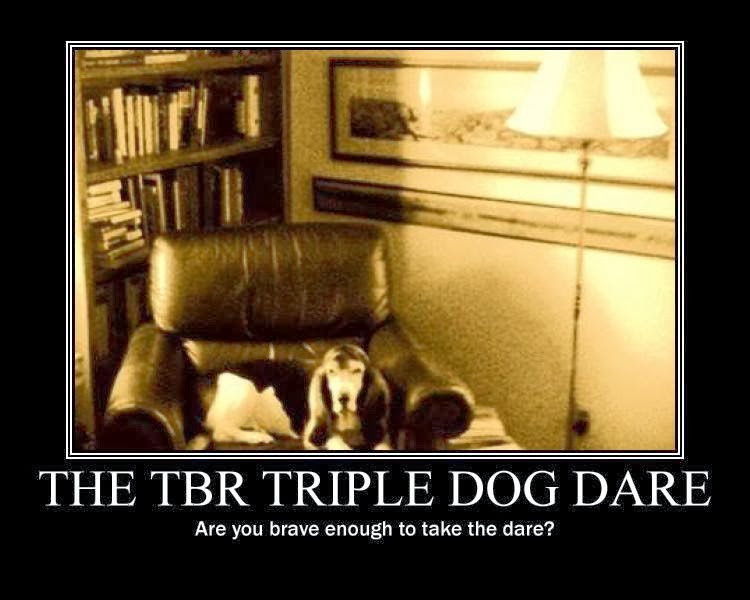
A little hard to believe we are fast approaching the end of the year. Since I am not quite ready to begin compiling my favorite reads for 2013 I thought I would look forward before I look back. For as long as he has been doing it (this will be the 4th year) I have gleefully participated in CB James’ TBR reading dare. Okay, I may start off gleeful and then go through other less positive emotions during the course of the dare. And there was the one year where I gave up a week before it was over. But let’s not get stuck in the details.

This year the annual reading dare is the TBR Triple Dog Dare. The rules are the same as every other year, from midnight December 31st until April 1st you can only read books that are already in your possession (in your To Be Read pile) on New Year’s Eve. This doesn’t mean you can’t buy books during that time, you just can’t read the ones you buy until after April Fool’s Day. It is this point that make the TBR dare fairly doable. One can still scratch the book buying itch and stay on the wagon.

This may be the last year CB does the TBR dare so I decided to make it extra difficult for myself. Go out with a bang as it were. With any luck John and I will finally be starting an 11-month renovation in the early part of the new year. The project in comprehensive enough that it means we need to put all of our stuff into storage and move into an apartment (probably a studio). So my thought was that I can only read from my TBR pile while we are out of our house. This would make my TBR dare 11 months instead of three. It is nuts and I am almost sure I will fail, but I am going to try nonetheless. And given that we will be living in very small digs and be needing every penny we can find for the project, I am going to refrain from buying books during that period as well.

Besides being mentally ill, the thing that really draws me to these additional parameters is that when the renovation is complete, my library will have all new bookcases. Somehow I feel like I need to earn those new shelves.

For those of you toying with the idea of the much more sane three-month dare I highly recommend it. We all complain about our bulging TBR piles. Plus I have found that it is a great way to finally try long overlooked gems hiding in plain sight–as well as dispensing with long overlooked pieces of crap that we have felt compelled to keep for some reason.

You still have a month and a half to decide to join in…and it fits in with all those misguided New Year’s Resolutions you are already starting to mull over…do it…

Mini-break in Sedona for a wedding

 
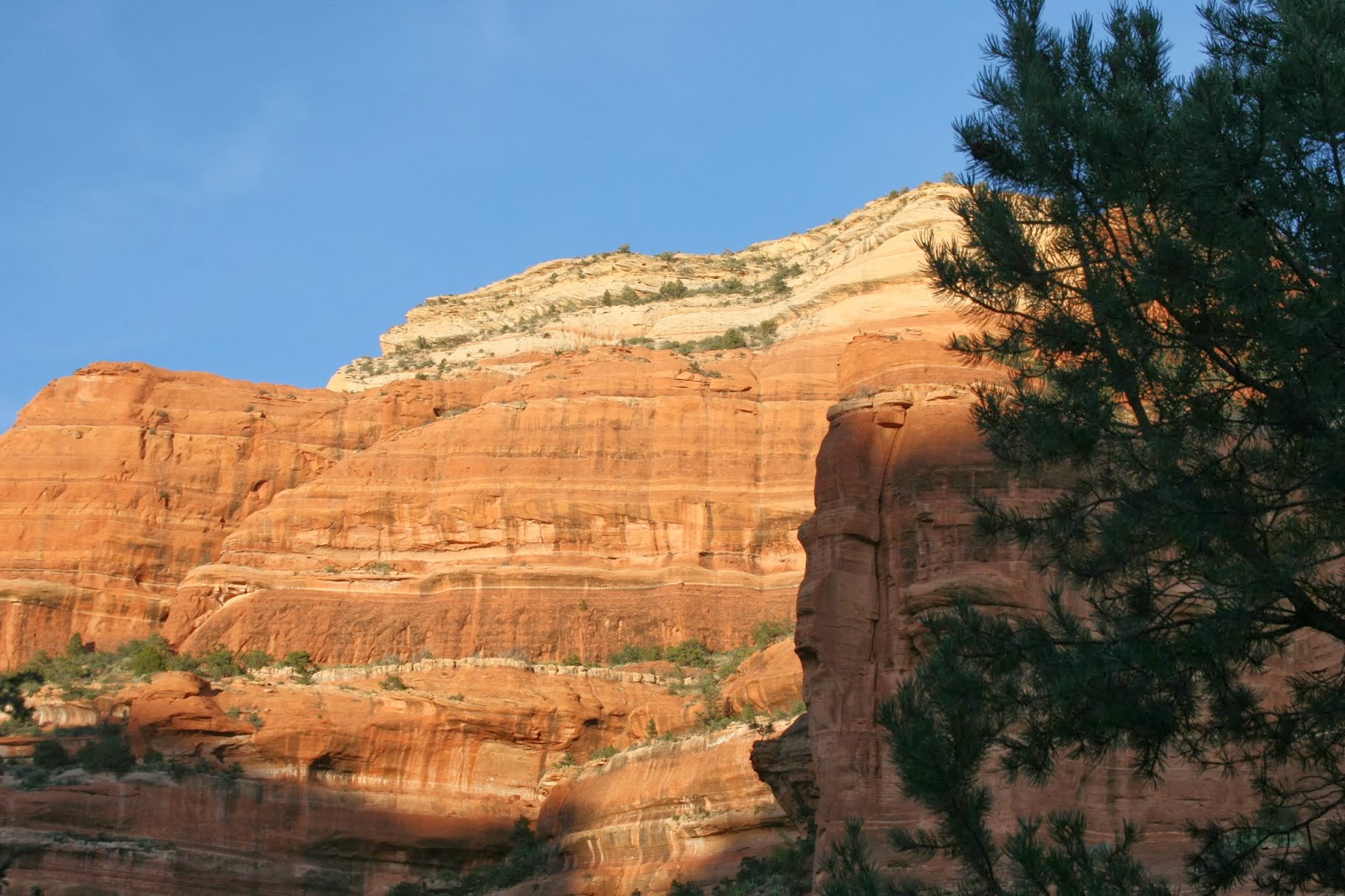
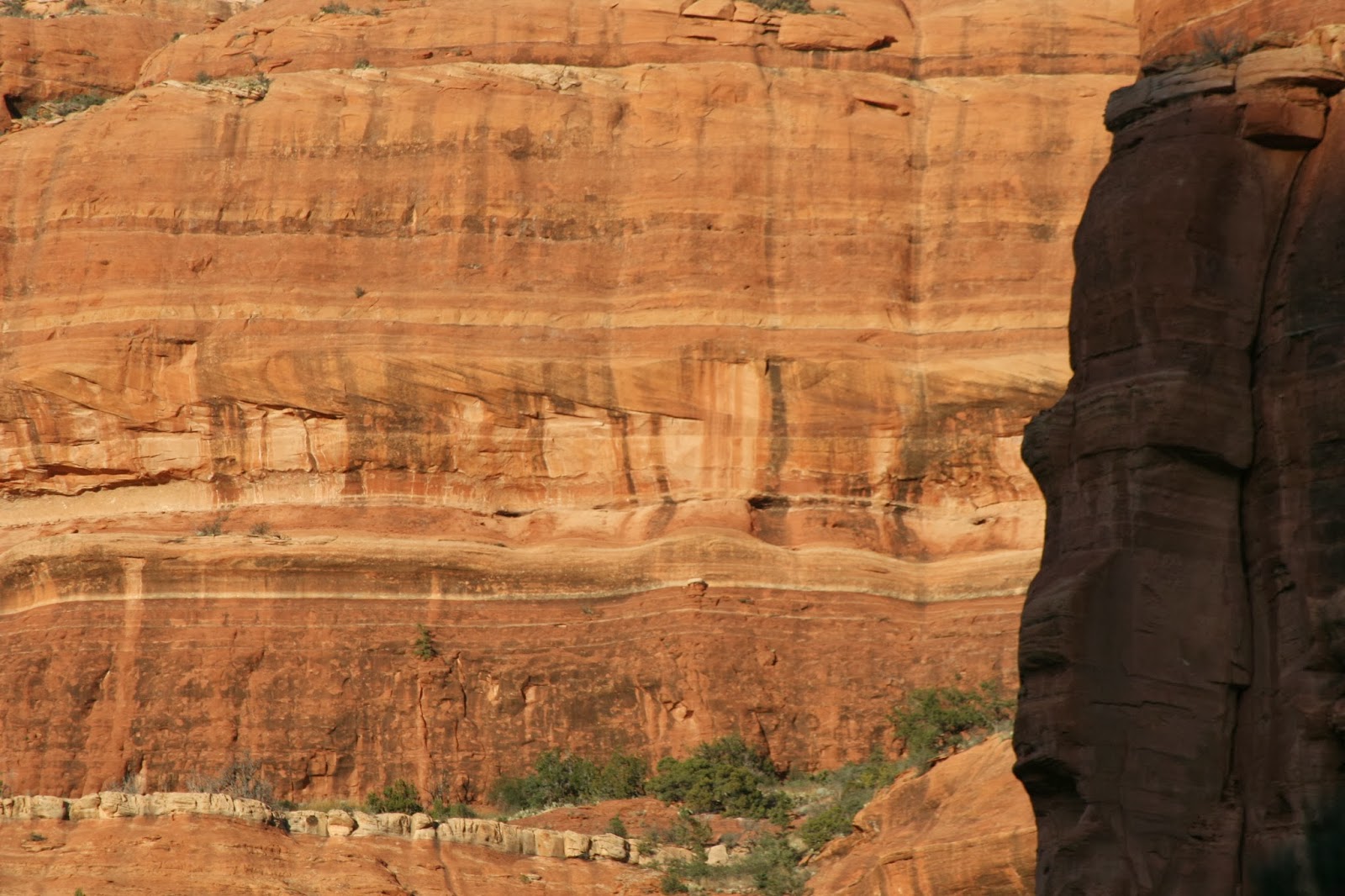
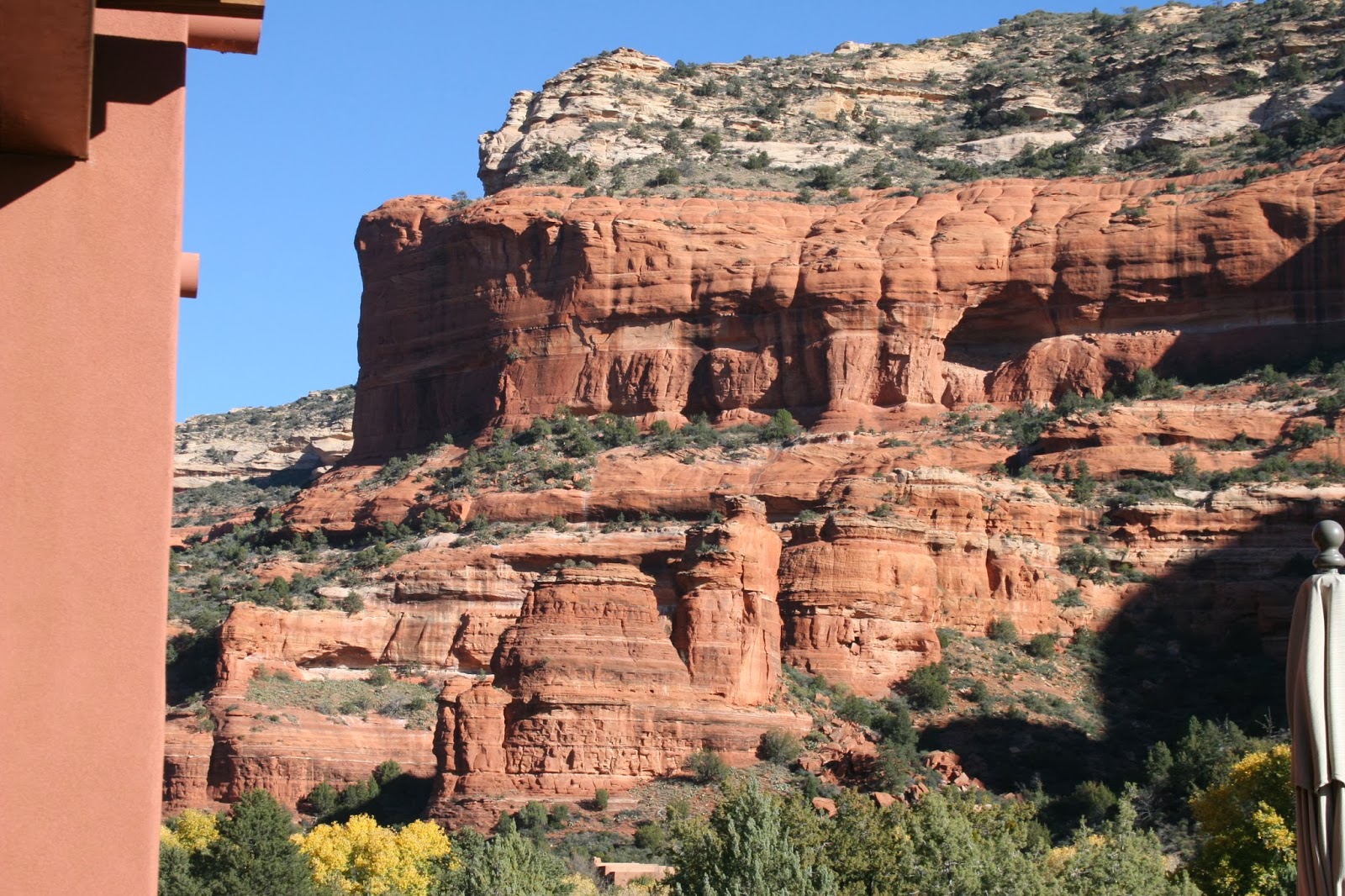
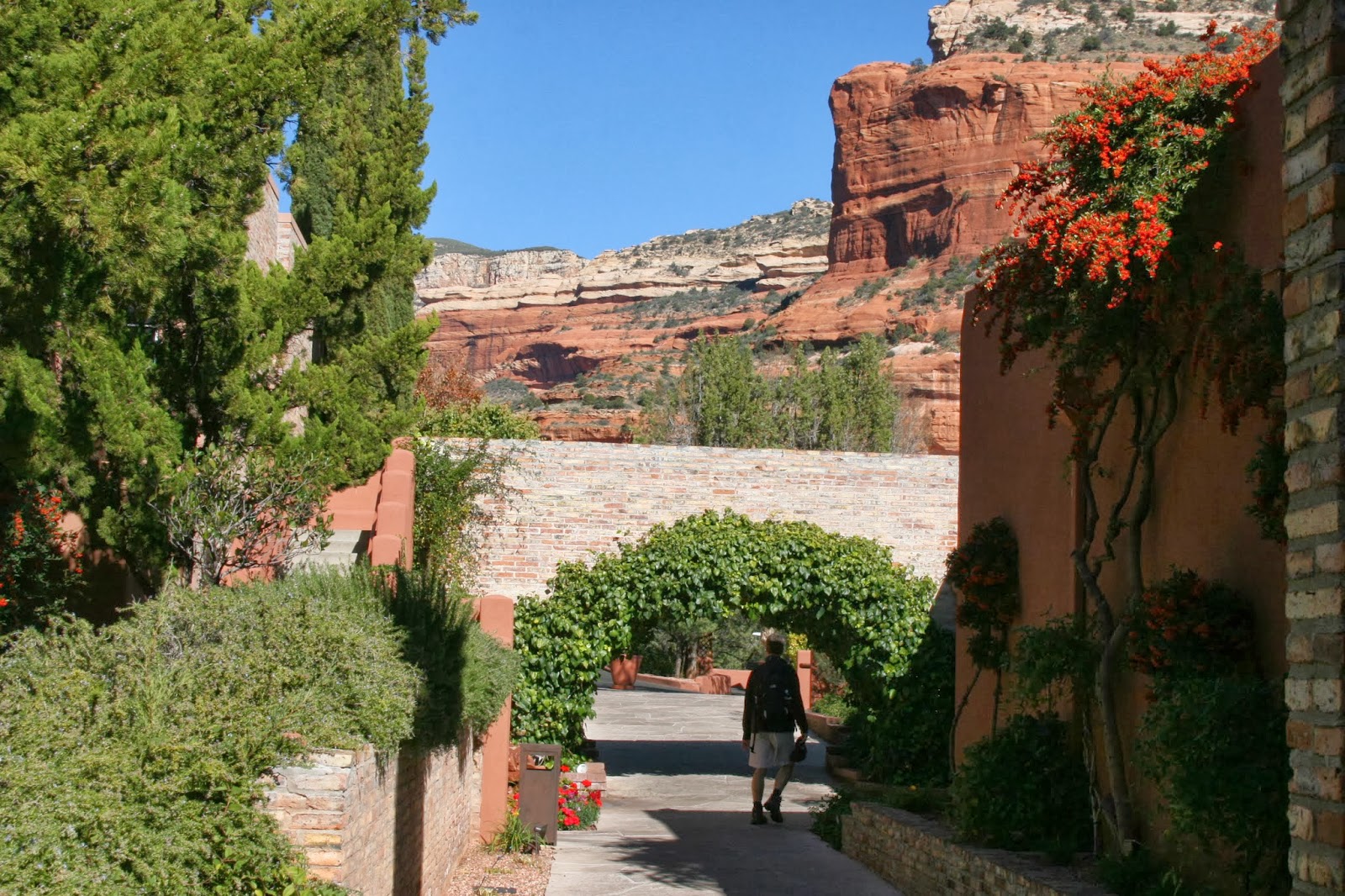
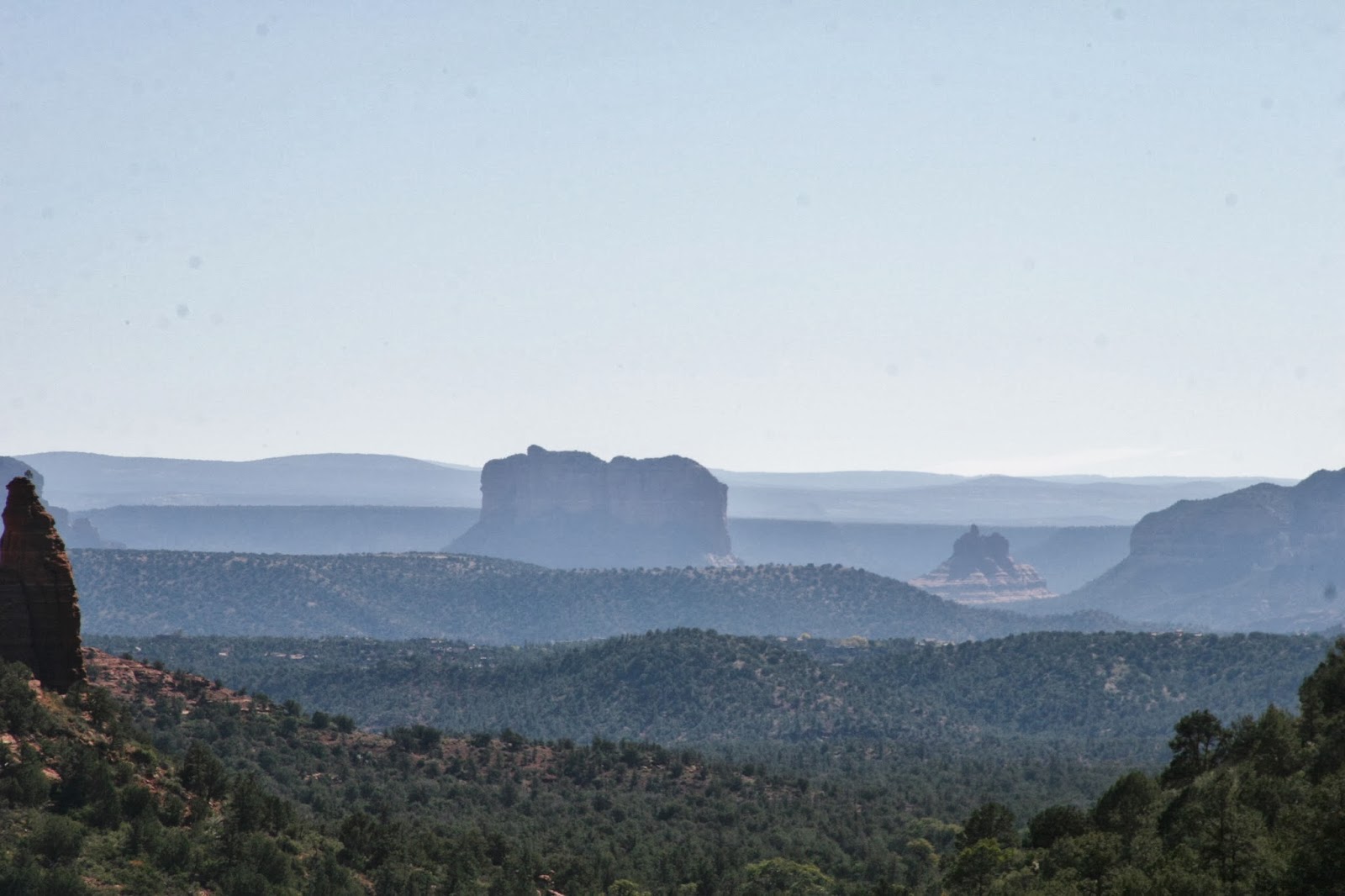
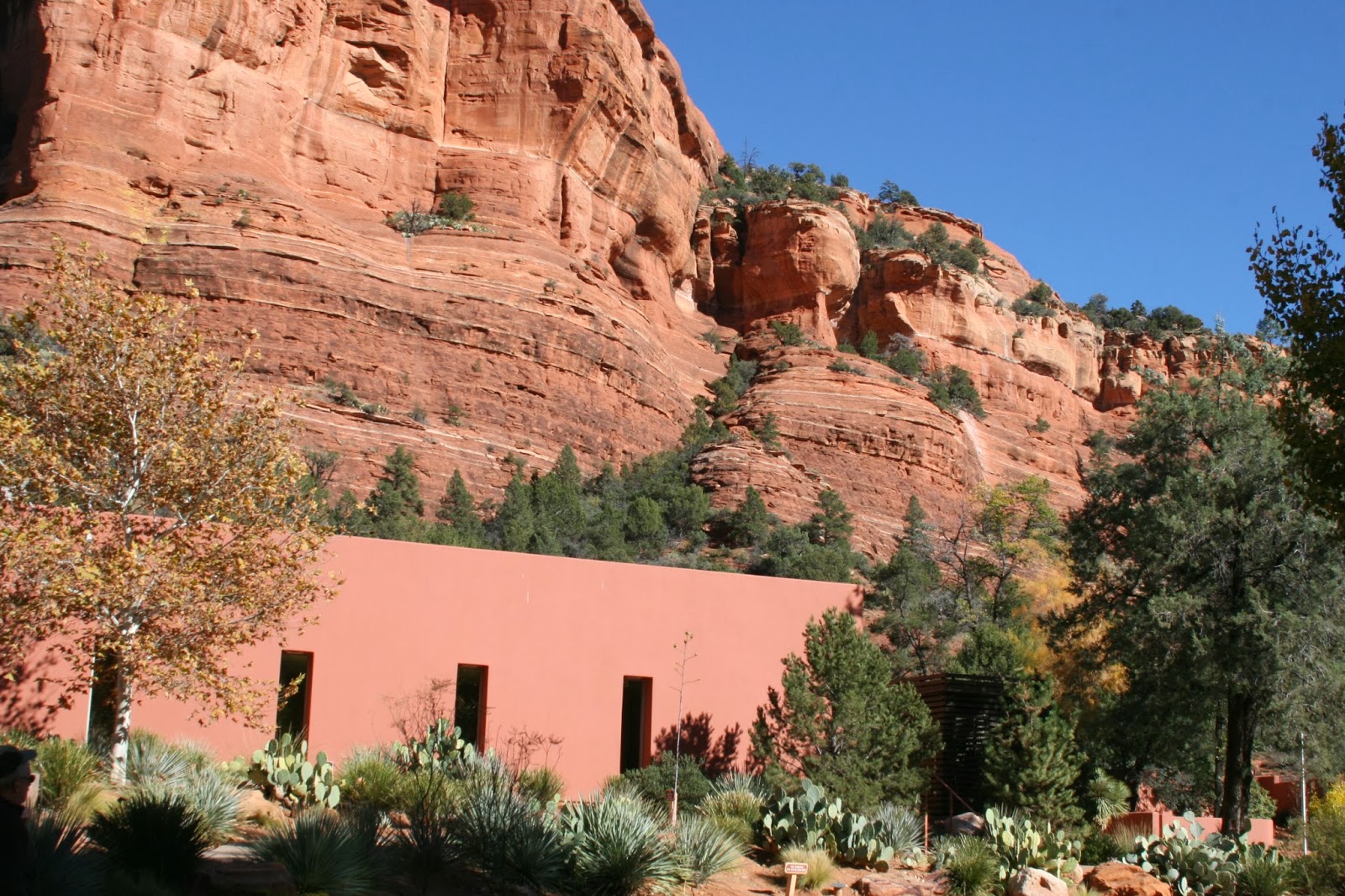
My beautiful niece got married in beautiful Sedona, Arizona last weekend. About two and half hours north of the Phoenix airport, it wasn’t long before John and I began four days of saying “this is so beautiful” about every ten minutes. We have been lucky enough to travel to a lot of amazing places and Sedona is easily in the top five in terms of natural beauty.

We stayed at the Enchantment Resort which is nestled in its own canyon about 10 minutes outside of the town of Sedona. It couldn’t have been a more perfect spot. And the weather. Sunny, mid 70s during the day and lovely crisp 40s at night. So lovely.

It made me want to read Willa Cather. Even though I had six books with me for four days, Cather was not among them.

See the smiley face?

A good review of a bad book (aka a positively negative review)


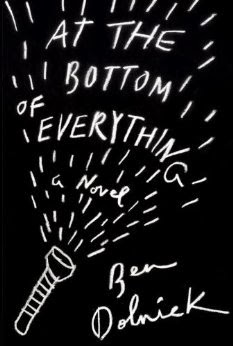
I think bloggers and reviewers are being too nice to best-selling author Ben Dolnick and his most recent novel At the Bottom of Everything. This flawed, albeit readable, 239-page book is about childhood friends who grow apart after one of their boneheaded hi-jinks leads to tragedy. It had the potential to be a very intriguing story of the gut-wrenching, life-changing dilemma the two friends faced. But, well, something just wasn’t right.

Do you ever read a novel that feels like the author is trying too hard to be a novelist? Where all the ingredients are present but none of it feels organic? This one falls into that category for me. It makes me wonder about the annual November novel writing challenge NaNoWriMo, which I was very tempted to join this year. Those who participate challenge themselves to write 50,000 words during the course of the month. Although I am sure some brilliance comes out of the challenge, there must be a lot of participants who would be happy for their efforts to be as mediocre as Dolnick’s. (It all reminds me of that hilarious scene in Family Guy where Stewie makes fun of Brian’s efforts to write a novel. A clip is posted below.)
I should admit that the setting of At the Bottom of Everything was, for me, like waving a big piece of bloody chum in the water. Set, not just in Washington, DC, but in the part of DC in which I live, I was hyper sensitive to Dolnick’s use of place names and local color. In a few cases I think he may have gotten a few things wrong–not so embarrassingly that I feel the need to hop on the Metro and confirm whether or not this is the case–but wrong enough not to trust the author’s eye. Perhaps worse, and far more prevalent was the Mad-Lib quality of the locales used in the book. Except instead of being asked to insert nouns and verbs, etc. the author was asked to insert blindingly obvious upper NW DC place names. It got to the point where I began to think that Dolnick did a two-month internship in DC and went back home thinking he was a native. But when I Googled him it turned out that he was born and raised in DC–kind of. He grew up in Chevy Chase, Maryland, the toniest of first ring DC suburbs. Our answer to Westchester County. So what, right? That doesn’t preclude him from writing authentically about the city. (In fact, in some ways he writes very authentically about it, after all I live among a lot of precocious white kids who shuttle each day to their private schools. In a way he did capture that experience.) But it all just felt so clumsy. Even the name of his fictional school, Dupont Prep was a little too corny and obvious to be believed.


At this point you may be thinking one of two things: 1) who cares, this could only matter to a local; and 2) it’s a piece of fiction, it doesn’t have to exist in reality. True on both points, but then don’t feel the need to give everything a name. The number of times he mentions Macomb Street is a little crazy. It is completely irrelevant to the plot and isn’t descriptive enough to mean anything to someone who doesn’t know the street. “The car rolled down the street onto Connecticut Avenue…” would have been just fine.

And not only is there no such thing as the Cleveland Park Police, but drawing attention to the name adds absolutely nothing, nothing, nothing to the story.

What’s worse than all this clumsy, local name dropping, is what Dolnick leaves out. More than a few details about some of the plot pivots that would have been very helpful and given the book more dimension are left out entirely.

  • After being fired from one job he gets another one that never gets mentioned (or did I skim over that point?).
  • He goes from sharing an apartment to having his own without any sense that his character could afford it.
  • He abruptly heads off to India to find his friend but there is no mention of how he was able to leave this new mystery job or how he was bankrolling the trip.
  • Both his big romantic break-up and the rebound affair he has with his employer that play such a prominent role in the first part of the book just kind of disappear without any meaningful follow-up.
  • One of the peripheral characters whose life is tremendously impacted by the tragedy is completely ignored until the denouement.
  • [spoiler alert] How does a car roll down a hill and cause an accident yet miraculously stop so that it doesn’t hit or get hit by the swerving SUV; is not seen by anyone but the other driver despite the fact that the author tells us that the street in question is never without activity; and is backed up the hill by two teenage boys so that no one ever finds out?

Then Dolnick adds in a bunch of email that neither advance the plot nor provide much more than philosophical filler. And of course a superfluous vision quest to India so the characters can have catharsis.

And then, and then, who cares.

Reading reviews of this book on Goodreads, on other blogs, and in the mainstream press leads me to think that people have really low expectations for contemporary literary fiction. It also makes me want to rethink my recent interest in books published this century.

Funniest clip ever about writing a novel…

A baker’s dozen of reviews (minus the two I dropped)

 
My reading life has been good lately. Not only have I read eleven books over the past 30 days, but I have enjoyed most of them and even loved some of them. As is the fashion these days on My Porch, my reviews will be on the short (but delightful) side. Coincidentally, the first three of these are about World War II.

Trapeze (The Girl Who Fell From the Sky) by Simon Mawer
The story of a woman who volunteers to be dropped into Nazi-occupied France for a top secret mission. Overall this was an enjoyable read BUT the fact that our heroine kept divulging her secret mission to just about everyone she knew made it a little hard to believe in the story. It was so glaring to me (and to Teresa) that I was shocked Mawer could be so sloppy. Especially after having read his brilliant The Glass Room which I thought was nuanced and layered and so much better than Trapeze. Still Trapeze is worth it if you find a cheap copy or pick it up at the library.

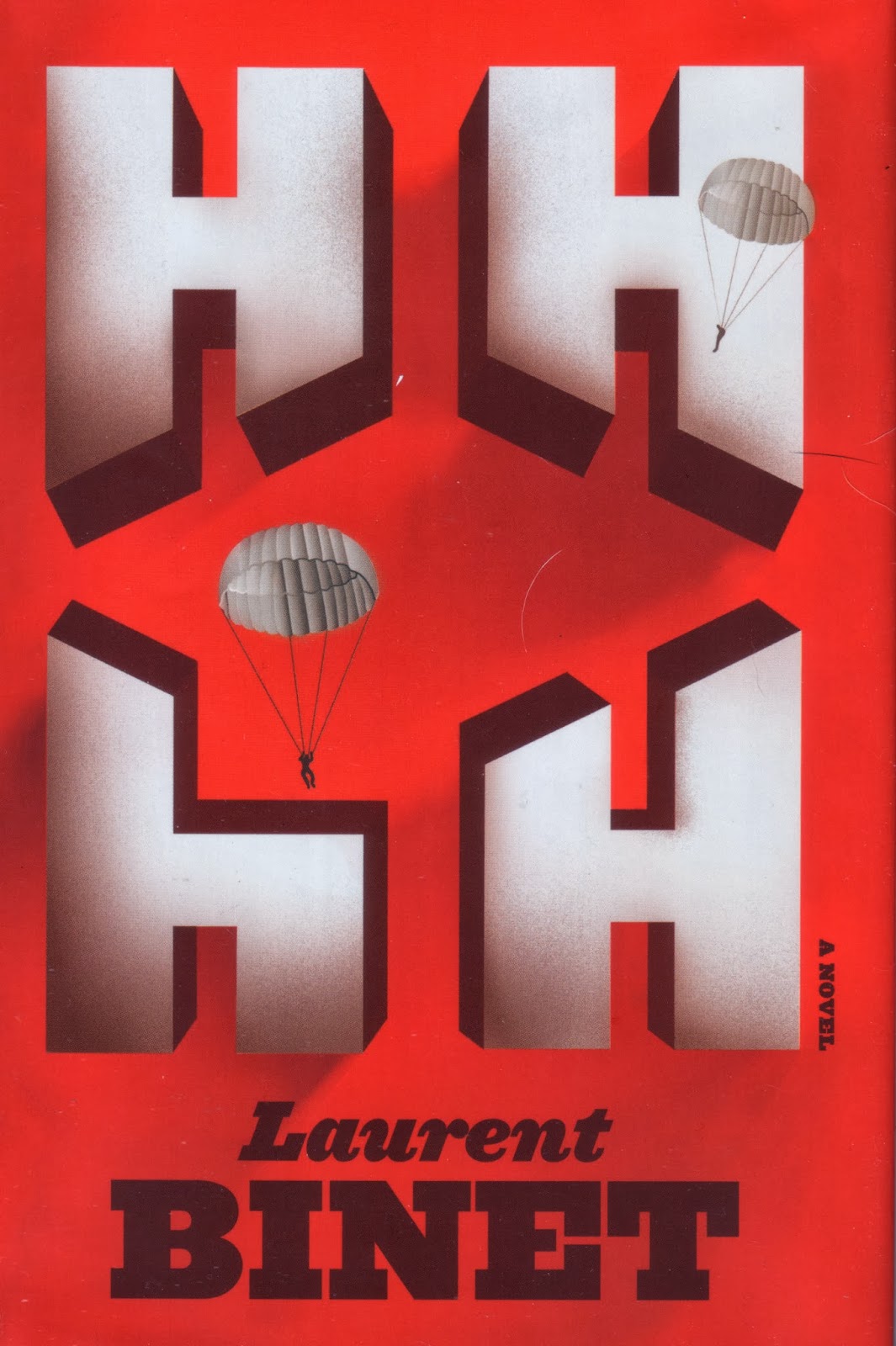
HHhH by Laurent Binet
I only picked this one up because Simon Savidge kept mentioning it. He and Gavin and Rob and Kate read it and discussed it on the inaugural episode of their podcast Hear…Read This. I really, really enjoyed this book which tells the story of the assassination of Reinhard Heinrich, Himmlers right hand man who was also in charge of the Reich in Prague. Not only is the story fascinating in itself, but the way Binet tells it is also fascinating. Essentially he tells the story while also talking about the process of writing a historical novel. I just loved it. The four co-hosts of Hear…Read This have a wonderful discussion about the book which I listened to only after finishing reading it.

The Two Hotel Francforts by David Leavitt
Two couples meet in 1940 in Lisbon as they wait for the SS Manhattan to arrive to shuttle stranded Americans back to the USA. I really wish I could say I liked this book but I found it really clumsy and not very believable on so many levels. Leavitt, who has written many things I have liked did a much better job pulling off the period in his flawed by likable novel While England Sleeps.

Mr. Penumbra’s 24-Hour Bookstore by Robin Sloan
I thought this book was charming and funny and a wonderful, quick read. Young man in San Francisco takes a job in a very odd bookstore. And then lots of stuff happens. It is like a nerdy love fest. Books, computers, typography, archaeology, a yarn museum, and a dozen other things that will appeal to your inner nerd. This book was also part of the first episode of Hear…Read This. Two of the four co-hosts hated it. I can understand their critique, but I don’t agree with it. They rightly point out that everything happens a bit too conveniently. Resources, clues, money, and romance all appear exactly when they should with not a lot of tension. But I loved it anyway. I liken it to a Nevil Shute novel or a DE Stevenson novel where everything turns out hunky-dory and you know it will the whole way through.

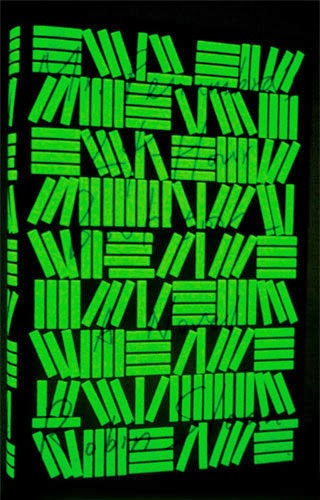
Supposedly the hardcover glows in the dark. I’m not sure if my paperback version does.


Fletchers End by D.E. Stevenson
And speaking of Stevenson, this one was like at the non-Buncle rest. Chaste romance, some sort of dwelling being set right, and likable servants whose only goal in life is to make their employers happy. I love all of her books, but I will admit that this one was perhaps one of the weaker ones.

The Interestings by Meg Wolitzer
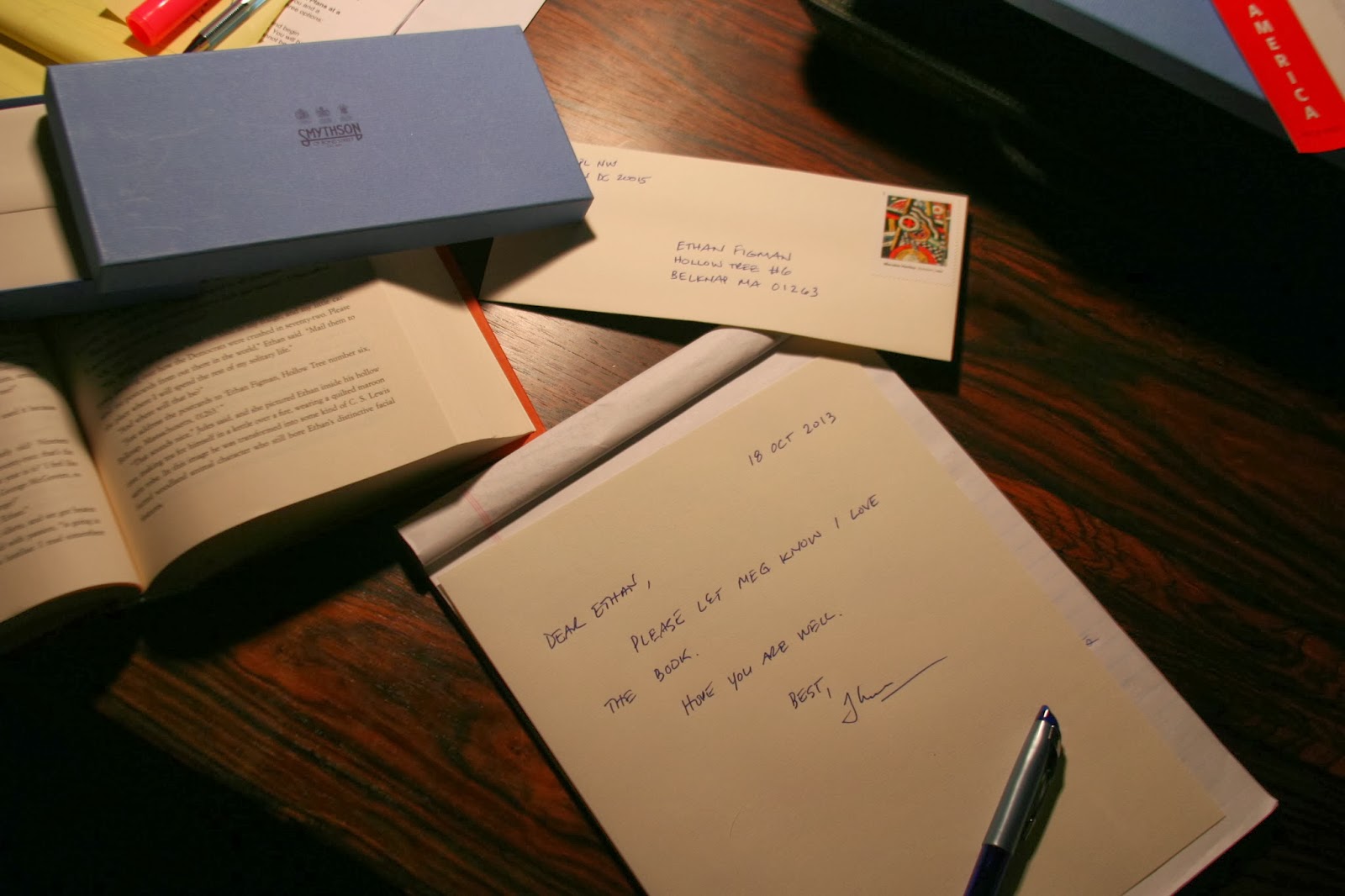
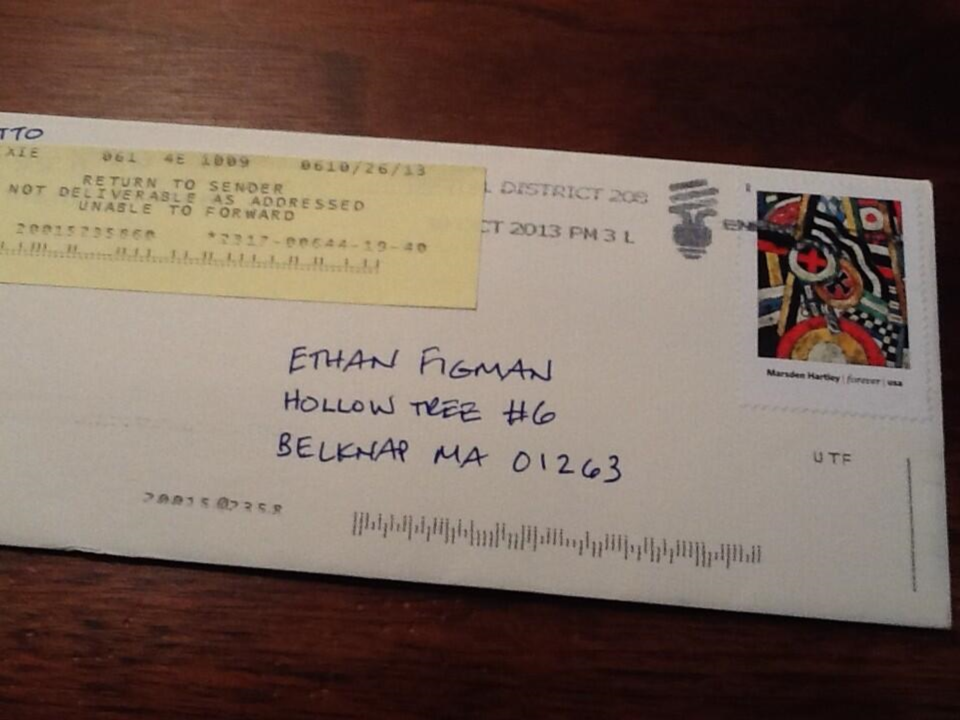
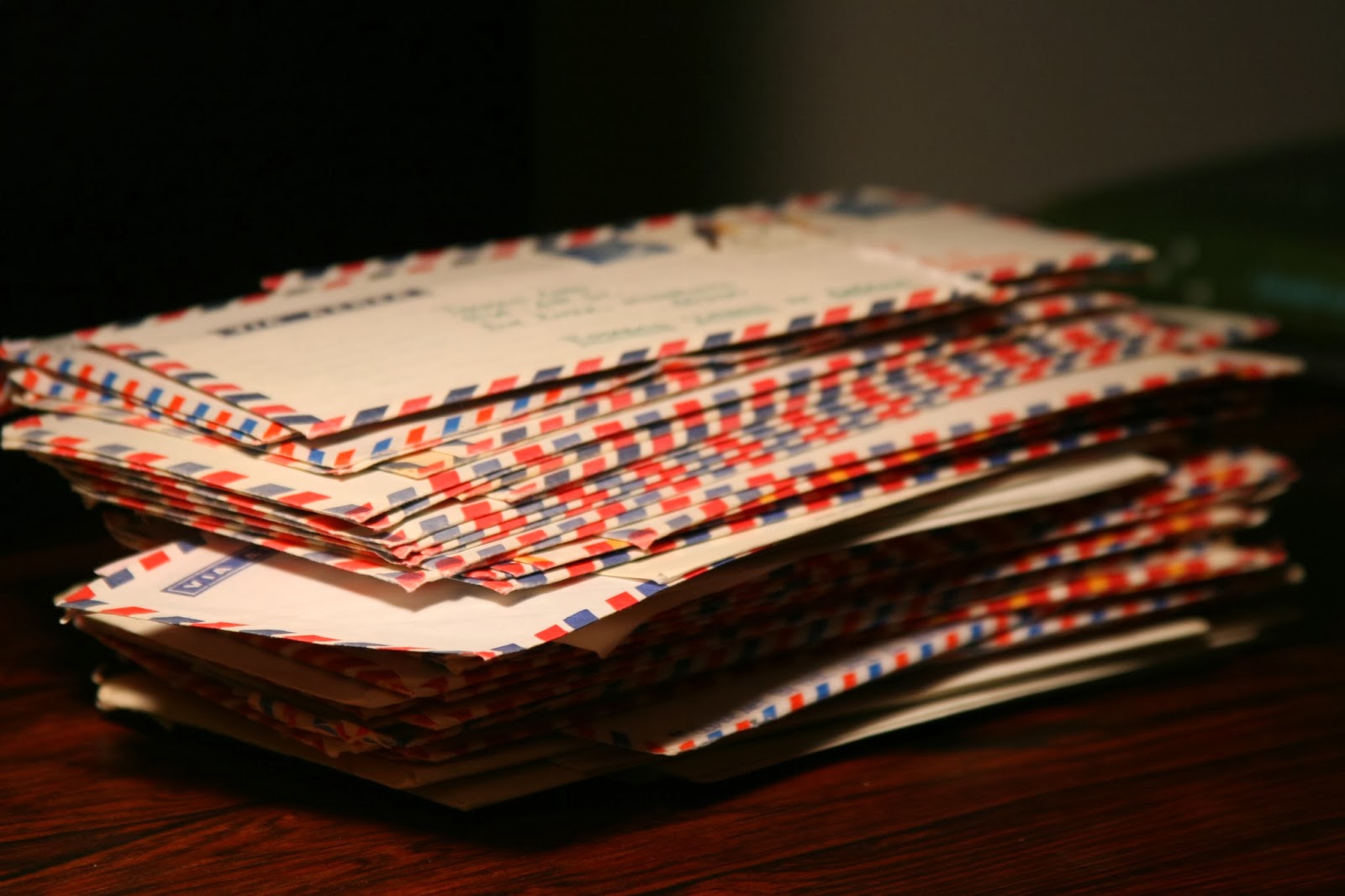
I have been a big fan of Wolitzer since I read The Wife several years ago. In The Interestings we have the story of a group of friends who meet at summer camp in Massachusetts in the 1970s and remain close well into their adult lives, in fact for the rest of their lives. One night when I was reading it one of the characters nostalgically makes up an address for their former summer camp where he can be reached. The thing that struck me was that the address included a zip code. Being a bit of a U.S. Mail nerd I was intrigued that Wolitzer had included a zip code. So, at 1:00 am I found myself writing a letter to the address to see what would happen. Not surprisingly the letter was returned as undeliverable. Unfortunately the days of the postal service stamping the envelope “return to sender” are over. Instead a sticker is affixed to the envelope largely covering the address. Luckily the sticker is removable so I was able to remove it and place it elsewhere on the envelope. After all the only reason I sent the letter was so that I could Tweet a picture of the returned envelope to @MegWolitzer. Happily she retweeted.

The letter I wrote at 1:00 AM

The returned letter.

Dancing Backwards by Salley Vickers
A few weeks ago I asked the Twitterverse which newish, readable novels in paperback by authors I may not have heard of I should read. I got four responses for which I am grateful. One was from Teresa at Shelf Love who not only recommended Dancing Backwards, but also gave me a copy. It is a shipboard tale of a woman sailing from England to New York where she plans to meet an old friend she hasn’t seen for decades. On the voyage she wrestles with the baggage associated with this relationship. When I first started reading I was a little distracted by some details that didn’t ring true to me and there were some plotting elements that didn’t ring true to me either. Still, I totally enjoyed reading the book and got totally lost in it. Just what I had wanted.

If I had seen this at a bookstore, the cover image would have kept me from even picking it up to read the blurb.

A Time to Dance and other stories by Bernard MacLaverty
So far I have enjoyed everything I have read by MacLaverty. Nothing that makes me want to jump up and down and tell people about him, but he does write thoughtful books with sympathetic characters using very good prose. Some of these stories in this collection are on the dysfunctional family side of the spectrum but still enjoyable.

The Eustace Diamonds by Anthony Trollope
So far my favorite of the Palliser series. Shallow, climber, opportunist young widow decides that her dead husband’s family diamonds belong to her not to his estate. Unlike the other Pallisers I have read so far this one is low on politics.

The Fur Person by May Sarton
The perfect little book for people who love cats or May Sarton.

Go Tell It on the Mountain by James Baldwin
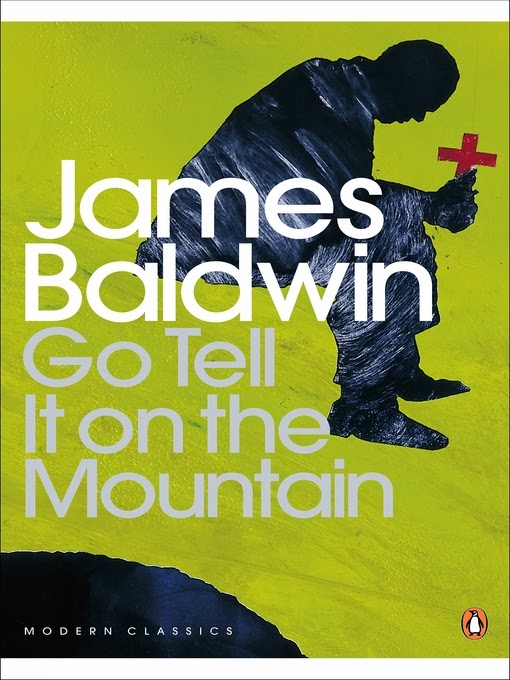
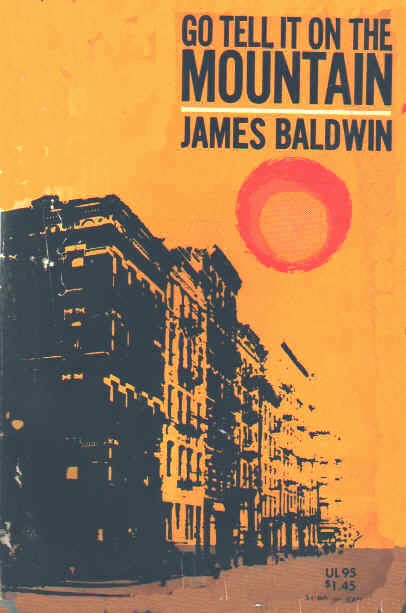
I first read this book so long ago that I couldn’t remember much about it except for the fact that it was set in New York. Before I included it on my list of ten books that represent the USA I thought I best reread it to make sure it was as brilliant as I remember. And it is. When I first started rereading I was struck by how much religion is in the book. I knew it had that element but I started to feel there was too much of it. In the decades since I first read the book my views on religion and faith have changed dramatically. I began to think I no longer liked the book because it was so heavy on the religious aspect. But I am so glad I stuck it out until the end because the book is still as brilliant as I remember. And it packs an emotional punch that rewards those who stick through to the end. I realize this makes it sound somewhat unreadable, which it is not, I was just impatient with some of the content.  But what is it about? A semi-autobiographical tale, young Black man in 1930s Harlem deals with family, religion, and being gay. But don’t be fooled, the gay theme is never acknowledge but is, instead, just an undercurrent that resonates for those who recognize it.

Going crazy at the bookstore

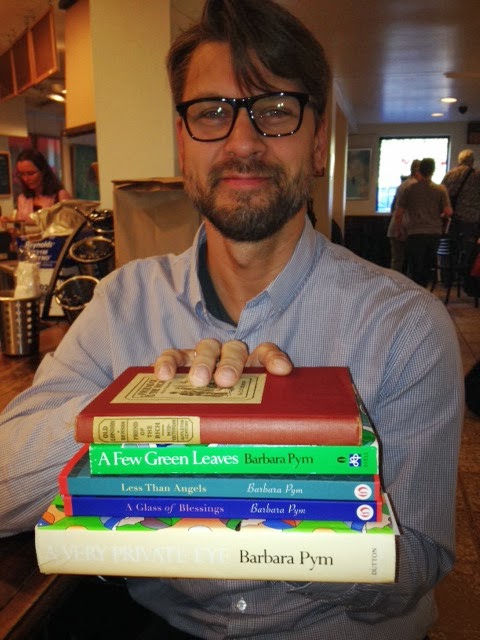
Recently I got together with Frances from Nonsuch Book for coffee.

Since I needed to make room on my shelves for new books, I brought Frances a few duplicates to satisfy her Barbara Pym cravings (and an EF Benson to boot). 

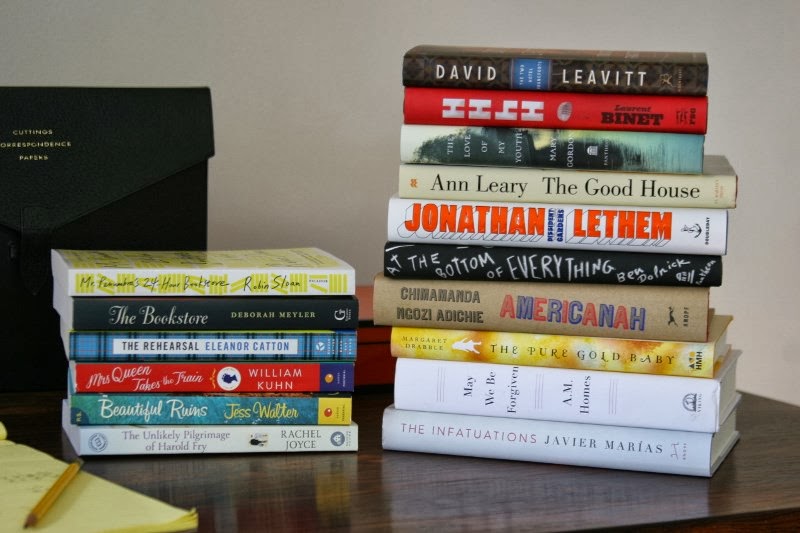
Given that the cafe where we met is in the basement of the area’s best independent bookstore, more than hot cocoa was purchased. My reading tastes and my penchant for combing through used bookstores, means that I don’t often I buy new books. But lately I have had a hankering for books published this century.

All this is to say, I had a big itch to scratch. And boy did I scratch.

Even crazier, is the fact that I bought so many hardcover books. But I really wanted some recent stuff so I had to take the plunge. And I should mention that at least four of the HCs were remainders and cheaper than their PB editions.

(In order, beginning with the stack on the left.)

Mr. Penumbra’s 24-Hour Bookstore by Robin Sloan
I bought this one because it is one of the two books discussed on the recent inaugural episode of the podcast Hear…Read This. I am going to wait until I read these books before actually listening to the podcast.

The Bookstore by Deborah Merler
Not surprisingly, I bought this because it has the word “bookstore” in the title. No more to say about that.

The Rehearsal by Eleanor Catton
I remember looking at this book several months ago and thinking I may like it. This was way before I heard of The Luminaries. More recently Frances said she was going to read this one as a warm-up to The Luminaries. But it wasn’t until Frances pointed it out to me at the bookstore that I realized that they were the same book.

Mrs. Queen Takes the Train by William Kuhn
I think Alan Bennett’s The Uncommon Reader, and perhaps Nevil Shute’s In the Wet are the only two books I have read that get the current royal family right in fiction. Oh, and Peter Lefcourt does a good job in Di and I.  Emma Tennant really gets it wrong in The Autobiography of the Queen and Mark Helprin really got it wrong in Freddy and Fredericka. Where will this one land I wonder?

Beautiful Ruins by Jess Walter
First the cover got my attention then the blurb “…rocky patch of Italian coastline…” how could I not pick it up. Oddly “Jess” is a man. I am guessing it isn’t short for Jessica.

The Unlikely Pilgrimage of Harold Fry by Rachel Joyce
I hadn’t even noticed this book until Frances pointed it out. I think she was skeptical because of the Oprah endorsement, I was skeptical because the title is so god awfully cute. In the end we both bought it. At least I think Frances did as well. I was sold on “…small English village…” on the back cover.

The Two Hotel Francforts by David Leavitt
I’ve liked pretty much everything Leavitt has written so I picked this one up without even reading the dust jacket flap. Now that I open it and take a gander I can see I made the right choice. Two couples wait in Lisbon in 1940 for a ship to take them back to the U.S. I might have to start this one soon.

HHhH by Laurent Binet
This is the second of the books on the first episode of Hear…Read This. I have already started reading this one and finding it pretty fascinating. A tale of Nazi mastermind Reinhard Heydrich but the story is told in a pretty interesting and unconventional way.

The Love of My Youth by Mary Gordon
I have moderately enjoyed other Gordon novels so this seemed a good choice from the bargain table.

The Good House by Ann Leary
I’ve seen a few friends bring this up on Goodreads and I love a New England setting.

Dissident Gardens by Jonathan Lethem
This one was on the bestseller list at the bookstore. Daughter moves away from her communist mother in Queens to Greenwich Village. The title helped push me over the edge as well.

The Bottom of Everything by Ben Polnick
Also a bestseller at the bookstore and it appears to be set in Washington DC which doesn’t happen too often.

Americanah by Chimamanda Ngozi Aichie
The story of a Nigerian woman studying at Princeton and dealing with life as an African in the US (in contrast to being an African-American). Sounds fascinating and my reading list is way too white.

The Pure Gold Baby by Margaret Drabble
I like Drabble a lot and since I was buying so many books, one more didn’t seem like a bad idea.

May We Be Forgiven by A.M. Holmes
I have never read anything by Holmes and this one is on the longlist for the Green Carnation Prize.

The Infatuations by Javier Marais
Frances said this was excellent and it takes place in Madrid. I think I have spent more time in Spain (ten days) than I have read books set in Spain. Doesn’t seem very worldly of me does it?

Have you read any of these? Do you want to?

How would you sum up your country in 10 books?


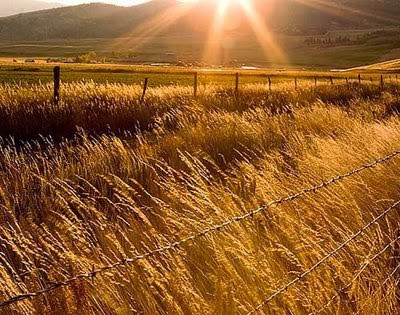
That’s right, those are amber waves of grain.

On the most recent episode of The Readers podcast Simon Savidge and I each came up with a list that we thought summed up our respective countries. He made a list of the ten novels which he felt represented Great Britain and I came up with a list of ten novels which I felt represented the U.S. Rather than try and sum up our countries by theme or national characteristics, we decided to represent our countries geographically. (Not surprisingly, doing so did indeed illuminate a national or regional characteristic or two along the way.)

Given the incredibly vast size of the USA I had quite a difficult time narrowing it down to just ten titles. But, since this was my personal list based on my own reading history, I eventually got over the notion that I would even come close to doing AmLit any justice. The other thing that was paramount in my mind as I selected my list, is that I did not want to choose anything too obvious, and I specifically tried to stay away from those grand classics of American literature that every Tom, Dick, and Harry might rattle off the top of their heads. I also made a conscious effort to include “newer” things. A quick glance at my list will show that I didn’t do too well on this front. I think only two of them were written this century.

If you want to here more about why I selected the books I did, you will have to listen to the podcast. But my question to you is: If you had to come up with ten books that you think best represent your country, what would they be?

New York – Tepper Isn’t Going Out by Calvin Trillin

Photo credit Stuck In a Book

New York – Go Tell It on the Mountain by James Baldwin

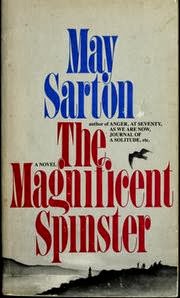
New England – The Magnificent Spinster by May Sarton


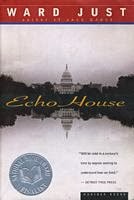
Washington, DC – Echo House by Ward Just


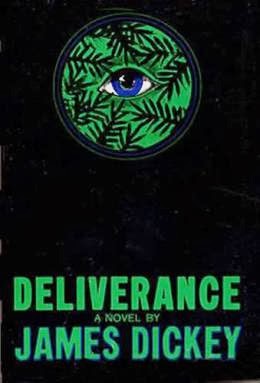
The South – Deliverance by James Dickey


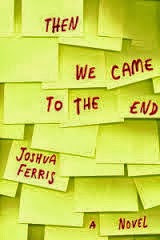
Chicago – Then We Came to the End by Joshua Ferris


Midwest – Main Street by Sinclair Lewis


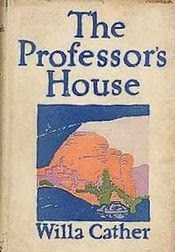
Southwest – The Professor’s House by Willa Cather


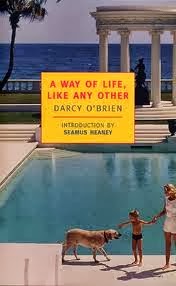
Southern California – A Way of Life, Like Any Other by Darcy O’Brien


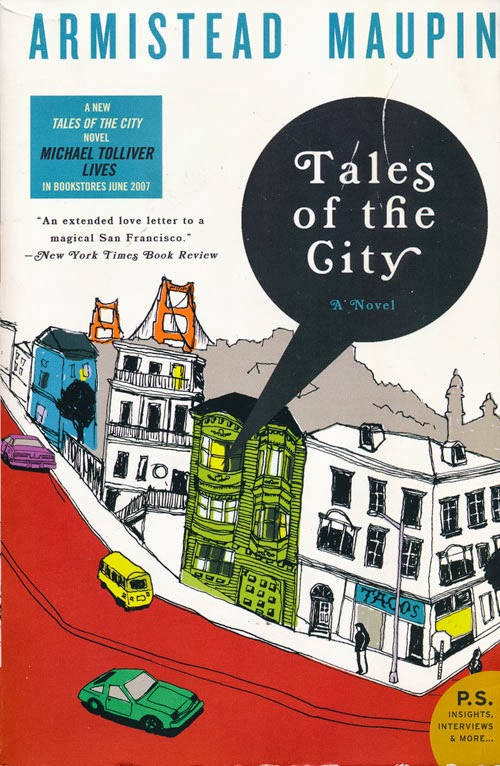
Northern California – Tales of the City by Armisted Maupin


Bits and Bobs

 
Looking backwards and forwards at American novels
On last week’s episode of the The Readers podcast, Simon Savidge and I discussed American novels. It was fun discussing AmLit with my British co-host. During the discussion, Simon had the brilliant idea that each of us come up with a list of 10 novels that represent our countries. Being a big fan of BritLit, I can’t wait to see his list, and may I just say, I have had a blast coming with my own top ten for the U.S. We haven’t recorded the episode yet but it should air on Tuesday, October 22nd. The only thing I will say about my list is that it doesn’t have all the usual suspects on it. No group of august scholars would come up with these ten titles.

Bloggers go a huntin’
The other Simon, Simon Thomas, made his inaugural visit to the U.S. this week to hang out with his best pal Lorna who moved to DC recently. Sadly, all of the amazing free attractions in DC were closed because of the government shutdown, but happily he had lots of time to go book stores. Yesterday Simon and Teresa from Shelf Love piled in the car and made our way to northwestern Virginia to go huntin’ for books.

Our first stop was to a library book sale in near Winchester where the selection was pretty good and the prices couldn’t be beat (mass PBs were 50 cents, trade PBs a dollar, and HCs a dollar). It might not have been worth the hour and half drive from DC but it also gave us a chance to check out three used book shops in the area. Simon, being wary of his ever expanding luggage was quite restrained while Teresa and I didn’t really try to hold back. You can see her stack here.

Add caption
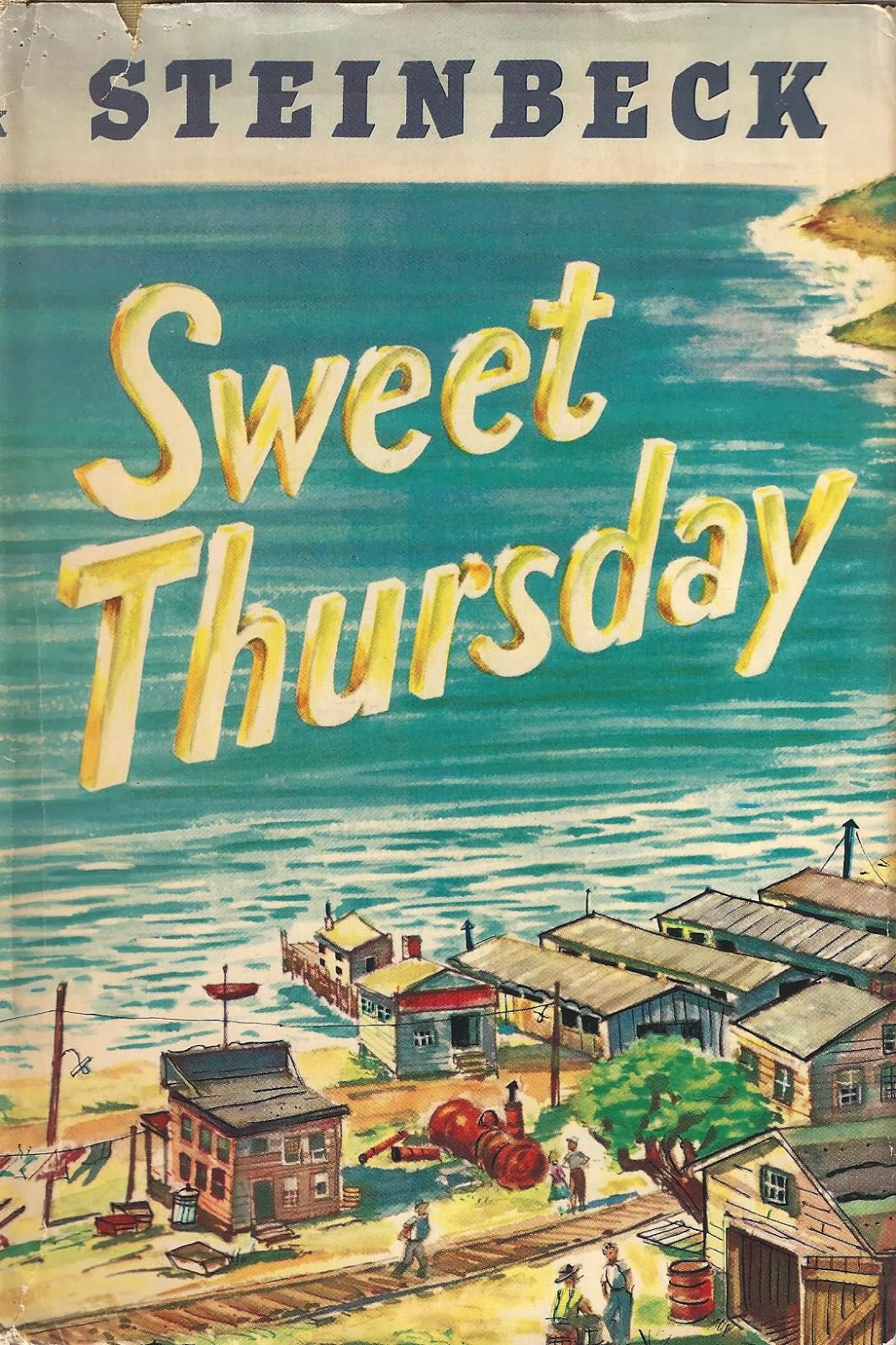
I couldn’t resist the cover. And only $2 for a hardcover.

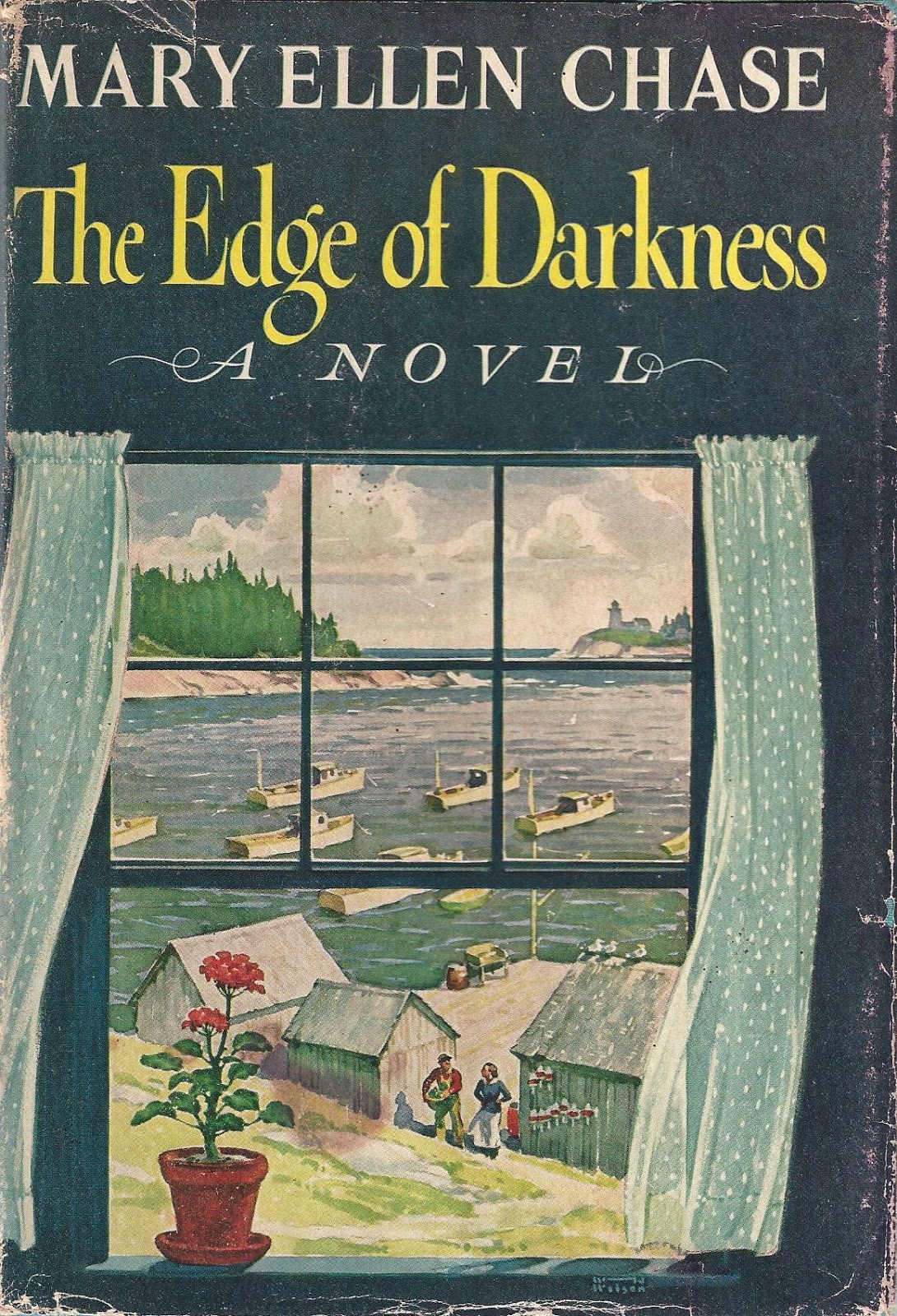
Have no idea if this is any good, but that is Maine through the window. 

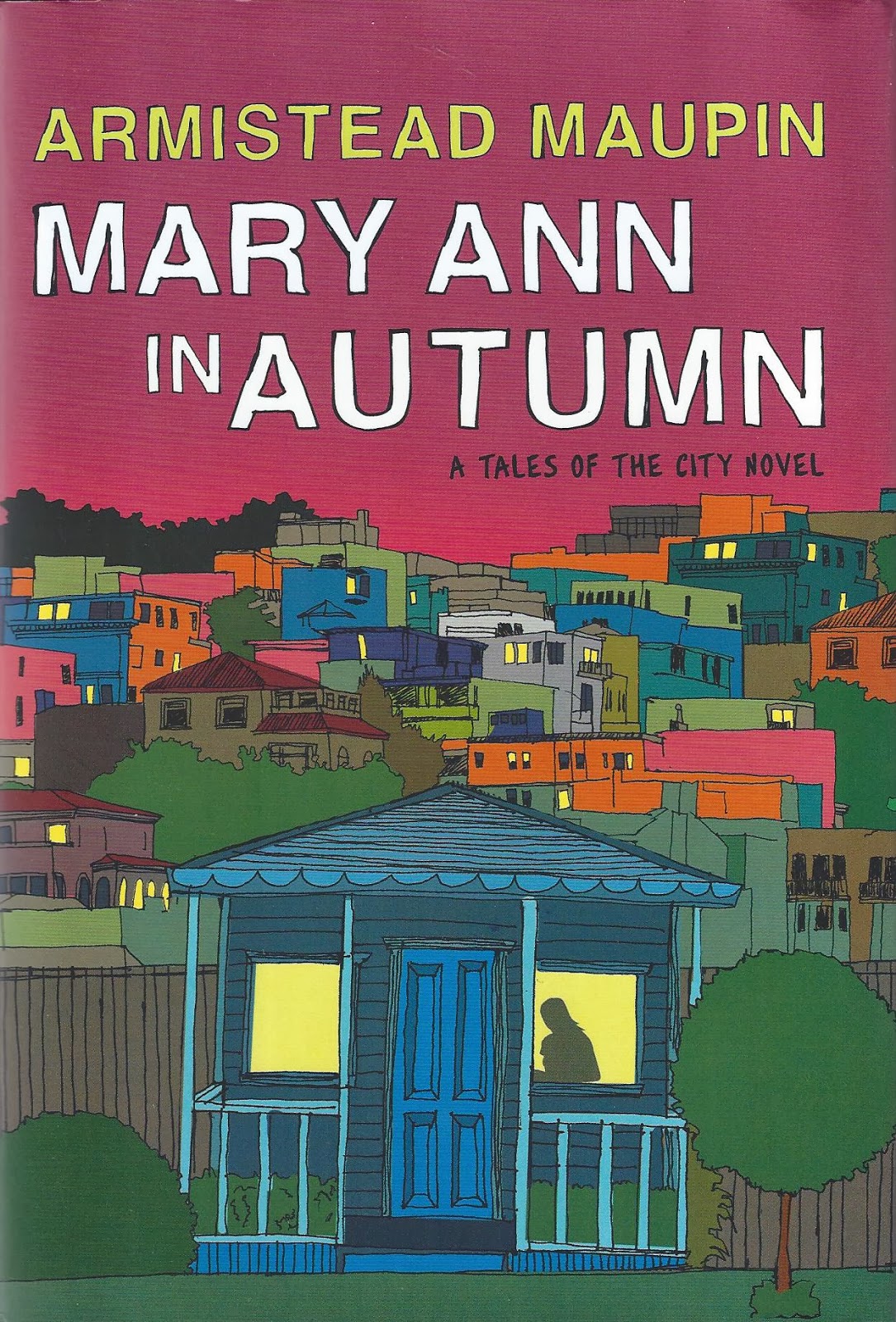
I enjoyed the Tales of City series back in the day, but I couldn’t resist this cover.
I love the illustration by Gregg Kulick.

The road trip also gave Simon the opportunity to have his first buttermilk biscuit…

and his first Dairy Queen…

Simon had some sort of Blizzard. Regular readers might recall that I am a huge fan of the DQ. As such I can never decide between the simplicity of a plain vanilla cone or something more elaborate. So when all was said and done I ended up having a small vanilla cone, a small Oreo Blizzard (but I had them add two scoops of chocolate that they use for dipping cones which gets all hard and crunchy when cold–it makes it like a chocolate covered Oreo Blizzard), and then finding Teresa’s strawberry sundae irresistible, I went back up to the counter and got myself a small strawberry sundae. Yum.

Novellas
Whilst the three of us were out and about Simon T. said something about a novella reading weekend. Since the discussion topics were coming fast and furious from all of us, I didn’t have a chance to follow up but from what I understand, sometimes Simon will spend a weekend reading nothing but novellas. I think he does it occasionally to try and put a dent in his TBR. When he mentioned this I vaguely recalled some sort of novella challenge from a few years ago. Looking back at my blog from November 2009 I participated in a November novella challenge hosted by Bibliofreak J.T. Oldfield. (When I try and follow the link to Oldfield’s blog now it takes me to a spam site.)

In any event, this got me to thinking I might want to do a novella read in the near future. I’m in the mood to do it now, but I figure that wouldn’t be fair to my friend Roz who is currently in a race with me to get to 100 books this year. I think I may be in the lead, but reading a bunch of 150-page novella’s may not endear me to her. So do I wait until one of us reaches 100? Do I wait until the new year? Although I like the sound of Novella November, I also like the idea of starting 2014 by knocking out 20 books in short order.

Or maybe the urge to read novellas will pass.

Book adaptations

There was a meme going around a week or two ago where bloggers listed the ten books they would like to see adapted to the screen. I couldn’t resist, I think of this stuff all the time. Unlike most of the other blogposts about this, I don’t have many recent books on my list. I know, that isn’t much of a surprise.

Here are my ten. Keep in mind, all are fabulous books and deserve to be read even if they don’t make it to Hollywood. (Which makes me think, I am not sure I want Hollywood making these films. They usually really screw it up. But I am sure we could find enough Ang Lees and Merchant/Ivory’s to make these all work.)

In no particular order…

1. Flowers for Mrs Harris by Paul Gallico. 
This would be not just the feel good picture of the year, but also a visual stunner. Imagine a meticulously made period piece full of Christian Dior post war fashions brought gloriously to the screen. A kind of 1950s The Devil Wears Prada meets, oh I don’t know, who is the sweetest, most uplifting female character you can think of? [Stefan reminds me in the comments below that this has already been made into a movie with Angela Landsbury. I knew this in the back of my brain somewhere, but still want it (re)made into a film.]

Dior in 1957 right before his death. Mrs. Harris was published in 1958.

2. The Student Conductor by Robert Ford
Both novelists and filmmakers have a really hard time making enjoyable products about classical music that don’t either dumb it down or make it so name droppy you want to strangle the writer for his/her pretensions. However, in The Student Conductor Robert Ford has created a fascinating, well written novel about life in the music world in Germany around at the time of reunification. And Ford is a playwright, so I am guessing he could really come up with a good screenplay.

I couldn’t decide on just one young conductor.
(l to r) Kevin Griffiths, Oliver Zeffman, Han-Na Chang

3. The Piano Shop on the Left Bank by Thad Carhart 
Only in Paris would one find a piano shop that is essentially open by invitation only–you have to know someone who purchased a piano there before they will let you in. Thakfully they let Carhart in because it inspired to write this wonderful book the shop and pianos in general. I don’t think I want this one fictionalized. How about just a really good documentary based on the book?

Possibly the actual shop.

4. Disgrace by J.M. Coetzee
A powerful, beautifully written novel written about an extremely dramatic period of South Africa’s history. My only request is that they hire South African’s to play the roles. That’s a hard accent to nail.

The cover on the right is more indicative of the content, but the cover on the left is so wonderful I couldn’t resist.

Bam. I was looking for cover art and came across this. Apparently the film has already been made.
Check out Literary Kicks for more on that.

5. Tender at the Bone and Comfort me with Apples by Ruth Reichl
Two memoirs of a life loving food writer would make a wonderful fictionalized adaptation. It could be like Julie and Julia meets Augusten Burroughs meets Under the Tuscan Sun. Reichl has such a joie de groove it is hard not to be swept up in her life.

6. The Hopkins Manuscript by R.C. Sherriff
The best part about turning this one into a film would be to not update anything. The novel is a WWII-era story of the moon on a collision course with Earth. It would be no fun if the film used 21st century technology to track and deal with the problem. I want the film to be just as cozy and old fashioned as the book. My review is here.

An alternate title.

7. Shadows on the Rock by Willa Cather
This is perhaps not the novel that is most representative of Cather’s writing, but it is such a wonderful book. Just imagine Little House on the Prairie meets Anne of Green Gables, except it doesn’t take place in the Midwest or the Maritimes, but Quebec. My review is here.

8. The Uncommon Reader by Alan Bennett
I’ve said this one a million times before. Helen Mirren needs to reprise her QEII and turn this most delightful book into screen magic. My ecstatic review is here.

This rather uncomfortable photo could be a before image. As in before QEII discovers the pleasures of reading.

9. The MaddAddam Trilogy by Margaret Atwood
There are so many bad scripts that get turned into really, really expensive films. Why not take these three fascinating, expertly written novels, turn them into three excellent scripts without dumbing anything down, and then spend about a billion dollars filming all of them. I want epics! I want to see liobams and pigoons and those “living” chicken breasts and perhaps above all, I want to see the mo’hairs. But here is a question: Do the Crakers run around naked in the film? Do we get to see the giant blue penises? My review is here.

10. All of Barbara Pym’s novels
 I left this one for last so those who are tired of my Pym cheer-leading don’t write off this whole post. Unlike Murdoch or Brookner whose works deal so much with what is going on in a character’s head, Pym’s characters’ mental tics are easily translatable to visual expression, physical action, or sensitive stage dressing. As I have said many times before, I think I would start with Some Tame Gazelle and then just film them all in the order they were written. I’ve written about Pym in many places, here is something about bringing her work to the screen.

Atwood’s Hat-trick


I am so glad I went back and reread Oryx & Crake and The Year of the Flood before I sunk my teeth into MaddAddam. I think each of them can be enjoyed on their own, but I got so much out of reading all three of these novels back-to-back. It was wonderful to go back and re-experience the first two. I loved them both the first time, but I got so much more out of them the second time around. Being able to finish one and pick up the next immediately was the best kind of binge reading.

For those of you who think you wouldn’t like this kind of speculative, dystopian future, you need to summon all of your will and give them a try. Atwood is such a gifted writer that you soon forget about the novelty of the situation, the characters, and the animals (sheep that grow human hair for one) and just get swept up in the story.

I am not going to try and give a synopsis. Not only am I never very good at that, but in this case I know it would be next to impossible. Atwood provides the right amount of character development and description to make her world feel three dimensional, but she also keeps the plot chugging along in a way that makes it hard to put down at night. Indeed I read all three of the books over the course of five days. MaddAddam doesn’t necessarily tie everything up with a bow, but it does resolve enough to make it seem like a good place to stop.

I also won’t try and describe the world Atwood creates in these three books, but a few things in MaddAddam I found particularly interesting. For instance I love the idea of a creature that “purrs” over people when they are ill. It sounds so comforting–and unlike, hmm religious purring–so non-judgmental. I also got a chuckle out of Toby’s (and eventually Blackbeard’s) requests to the Crakers to stop singing. But more than anything I really loved the Pigoons in this book. I wish I could say more about the Pigoons–just think really smart pigs–but I don’t want to give anything away.

It has been about four days since I left the post-plague, climate changed, deserted planet Earth of MaddAddam but I find myself thinking about it a lot. Not the connection between current human activity and the possibility of Atwood’s dystopia coming true, but rather the characters, human and non-human. I really kind of enjoyed hanging out with them.

Photo credit: Canadian Press / Rex Features

One thing about the whole trilogy that gave me pause–and this isn’t really a criticism, more an item for discussion–was the portrayal of gender roles and the absence of people of color and gays. Set in some near future period I felt like gender roles were a bit retrograde. I think that may have been Atwood’s point in many cases, but I wonder. It is possible as well that any number of characters could have had undescribed brown skin, but since Atwood does describe someone as Black in MaddAddam, it kind of makes one assume that everyone else is presumed white. And gays were either non-existent or “gay” was referred to in a way that felt very 20th century.

Quibbles. Only quibbles. Go read these books. (And I would say read them in order. Go back and start with Oryx & Crake. In many ways I think it is the best of these three brilliant books.)

Here is what I thought of The Year of the Flood when I first read it back in 2009. In skimming it myself, I notice I made a similar comment about gender roles back then.

As for Oryx & Crake, I wasn’t book blogging when I finished reading it, so I have no review to link to.