The Human Factor by Graham Greene


When Simon Savidge’s book-loving Gran passed last year, many of her fans joined in Simon’s month-long Greene for Gran tribute. I had previously read three Greene novels (Our Man In Havana, The Heart of the Matter, and Travels With My Aunt and they all ended up getting really high ratings–8, 9, and 9 respectively) but it had been a while since I had read any of his work. In fact, if it wasn’t for Simon’s tribute to his Gran’s favorite author, I’m not sure when, or if, I would have gotten back to him.

For Greene for Gran I picked up The End of the Affair and thought it was absolutely amazing in so many ways. It ended up getting a 10 on my 10-point scale. I enjoyed it so much that I picked up quite a number of Greene novels that I came across at various used book sales since then. (Thankfully Greene’s work is quite easily available here in the U.S.) One of those books I picked up was The Human Factor which turned out to be a smart, somewhat sad, page-turner of a spy novel and it easily ranks a 9 on my scale.

Maurice Castle who works for the British Secret Service during spent years working for the service in Apartheid South Africa where we met and married one of his informants, a Bantu woman named Sarah. Since his affair with her broke the race laws in South Africa, Castle and Sarah flee the country one step ahead of he South African police. Seven years later Maurice is working for ‘the Firm’ but now at a desk job in London when a possible security leak is discovered in his division.

About halfway through the narrative, what I thought was a whodunit turned into a whydunit and a how will it enddunit. Throughout my read I found myself wanting to turn off the TV and computer and get back to the action, but when it got to the whydunit phase I become slightly more obsessed. I ended up staying up until 2:00 am to finish it. Without going back and looking at my list of books read, I can’t remember the last time I found a book that compelling.

In the world of thriller/mystery type books, of which I read very, very few, I definitely lean toward the cerebral as opposed to the action filled or violent and I definitely like one with a good spy angle. But Graham Greene’s writing and emotional depth transcends any attempt to plug this book into a genre. And I think his range as an author also keeps him out of any genre even though much of his work is set in a similar spyish milieu. At least that’s how it looks to me having read only five of his 26 novels.

I’m so glad Granny Savidge’s favorite author was Graham Greene because now he is one of mine as well.

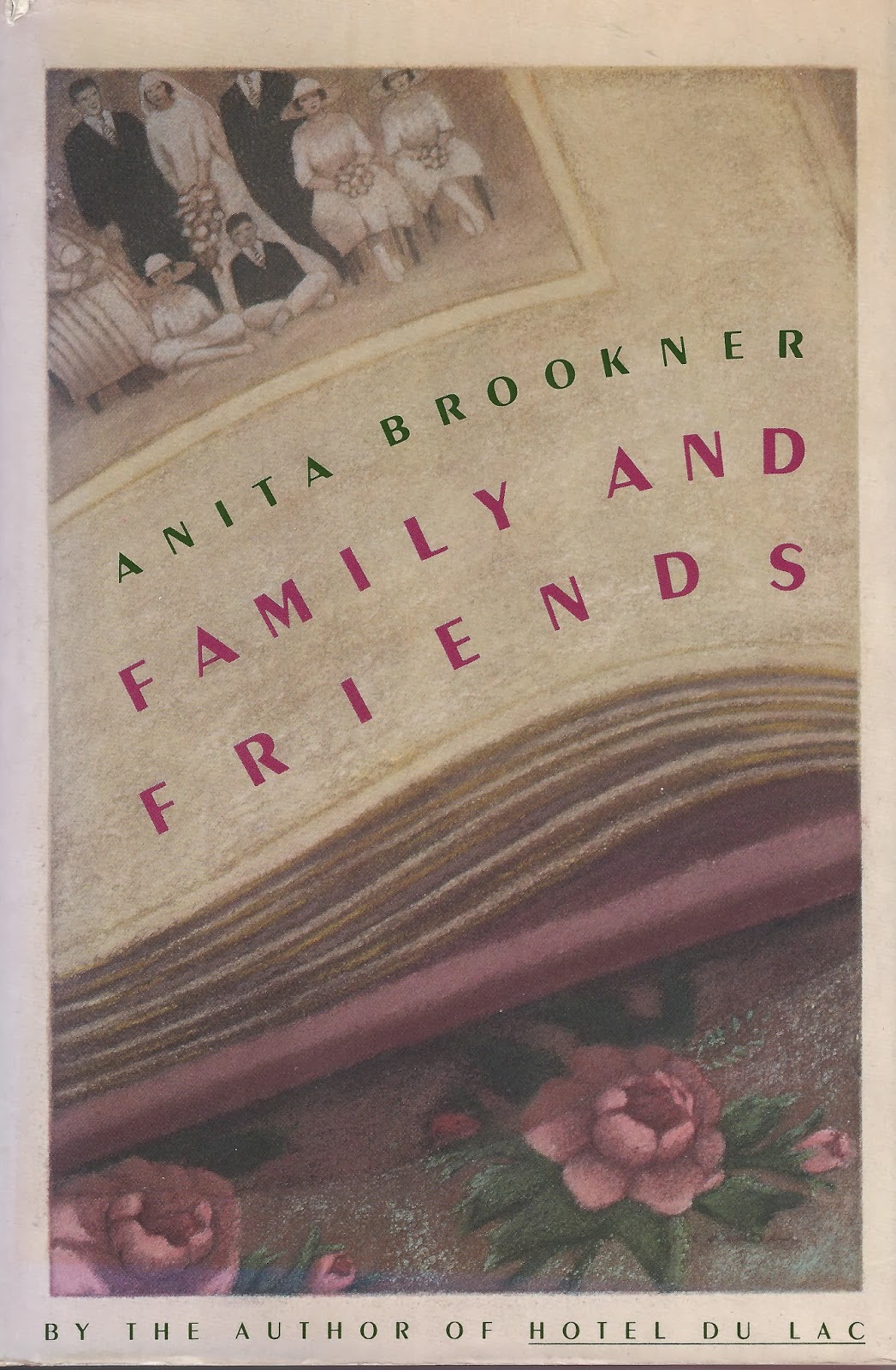
Book Review: Family and Friends by Anita Brookner


One of the best reading ideas I ever had was to re-read all of Anita Brookner’s novels in chronological order. My challenge in writing reviews for these re-reads is whether or not I dare to try and put each of them into context with all the others. Given that Brookner has written 24 novels (so far, fingers crossed for 25…) to try and do so would be foolish for someone of my limited critical abilities. Twenty-four books is a lot to try and keep straight and seeing as I started reading them about 15 years ago, I certainly don’t remember each of them as if I read them yesterday. Of course I often couldn’t even tell you what I actually did read yesterday so you start to see my challenge.

Published in 1985, Family and Friends was Brookner’s fifth novel and her first to focus on an entire family rather than her more usual focus on a single individual. To be sure, matriarch and widow Sofka Dorn is the center of the book and the actions of each of her four children are presented in relation to Sofka’s dominance and needs, but unlike so many Brookner novels, these kids actually go out and live their lives. That is, at least two of them do. It is debatable whether or not the other two do. Oldest son Frederick isn’t all that much interested in running the family factory and begins to place much of the burden on his 16-year old brother Alfred. Oldest daughter Mimi, is more beautiful than her younger sister Betty, but being the much more serious of the two, she seems destined to be the sad Brookner heroine we fans have grown to expect (and love). Meanwhile Betty takes life by the horns and refuses to let go until she has things just as she wants them.

As with most Brookner novel’s Family and Friends is set in London, but unlike most of her works, the action takes place in years leading up to World War II. Here and there Brookner gives just the slightest sense of the political winds on the Continent. There may be refugees working in her kitchen and neighbors from the old country needing help, but they are really just background, or they show up to help define the main characters. In fact this is one of the brilliant things about Brookner in general. Her books are such fantastic studies of emotions and personalities that the rest of the world barely exists. She doesn’t waste a lot of time creating a world outside her characters’ heads but she does that so well one doesn’t miss it. It’s a kind of writing that requires a fair amount of cultural fluency. To be honest, the first time I read this book I missed much of that background.

Each of us to some degree is influenced by our family. But some families constitute a more closed ecosystem than others. Not surprisingly, Sofka has created–but is ultimately unable to maintain–a world that seems to kits her children out to be nothing else than their mother’s children. The boys were tutored at home and the girls given a governess. “They wound up with numerous accomplishments but no real education.”

“To Frederick [Sofka] is an oasis of sanity in a world peopled by increasingly difficult women.”  Even today, I bet each of us can point to at least one man that fits that bill–no woman can serve him as well as mama did.  “To Alfred Sofka is quite simply a deity … He knows no one as beautiful as Sofka … she has seen to it that his life never will escape her … ” Frederick ends up marrying Evie, someone quite unexpected and perhaps exactly the kind of difficult woman his mother was not. The two of them move to Italy to run a hotel owned by Evie’s family. Alfred, on the other hand, never leaves his mother but also seems subconsciously to be punishing her for imprisoning him. He has mistresses under his mother’s nose, takes up a weekend house in the country she doesn’t entirely like with a cook she doesn’t approve of, and even moves them into a very masculine flat with rooms the color of cigars.

But what of the girls? Mimi, thwarted in love by the younger, less pretty Betty decides to lead a nun-like existence until she marries the much, much older major domo of the family business. (I read this book while in the early pages of Middlemarch and I couldn’t help but see some slight similarities between Mimi and Dodo.) Betty, meanwhile decides to stay in Paris rather than continue her journey to Switzerland for finishing school. She dances on the stage for awhile before marrying a movie producer and moving to California.

Ultimately Mimi and Alfred stay by Sofka’s side until the end while Frederick and Betty don’t even bother come back to visit. Not ever. Not even when she is dying.

Although Family and Friends has far more action than a typical Brookner novel, one doesn’t read Brookner for action. One reads her for her ability to develop a character and describe them with great nuance and economy. Instead of being painted by a famous painter, I would love to be described by Anita Brookner. I’m sure I wouldn’t like it, but I would love the way she said it.

For those who haven’t read Brookner before, I think this would be a good one to ease into her style and the sadness that pervades much of her work. In fact there were moments of Family and Friends that actually seemed joyful.

This review is cross posted on the blog for International Anita Brookner Day. You can also check out my eventually exhaustive list of London locations featured in Brookner’s novels.

Bits and Bobs (the bits and bobs edition)

 
It seems like all I do these days is Bits and Bobs posts. Some swirl of being busy and being lazy has kept me from anything more ambitious. But then, if you are like me, you prefer bookish gossip to most other forms of book blogging anyway, so maybe there is nothing…

(a) …about which I should feel bad

or

(b) …to feel bad about.

Is (b) really wrong?
Wouldn’t you agree that 99% of us would finish our sentences that way? Is (a) betterer (sic)?

Slow start
Last year I read like a champion, finishing 111 books when all was said and done. This year is off to a much slower start. I finally finished my first book of 2014 last night (Brookner’s Family and Friends). Granted, I have two other books in progress at the same time (Middlemarch, and Mitford’s Don’t Tell Alfred), but still, this doesn’t bode well. I have certainly been preoccupied, nay busy, with our house renovation. Not only have I been working on contractor negotiations, sub-contractor visits, and getting the financing all lined up, but I have also been busy packing up our belongings ahead of our temporary move.

A library of Sophie’s choices (but oddly no Sophie’s Choice)
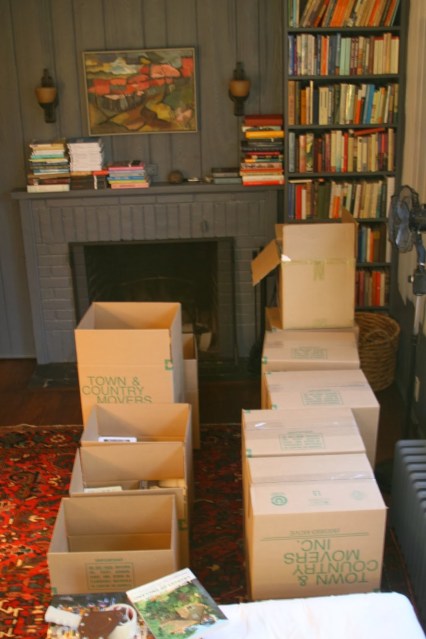
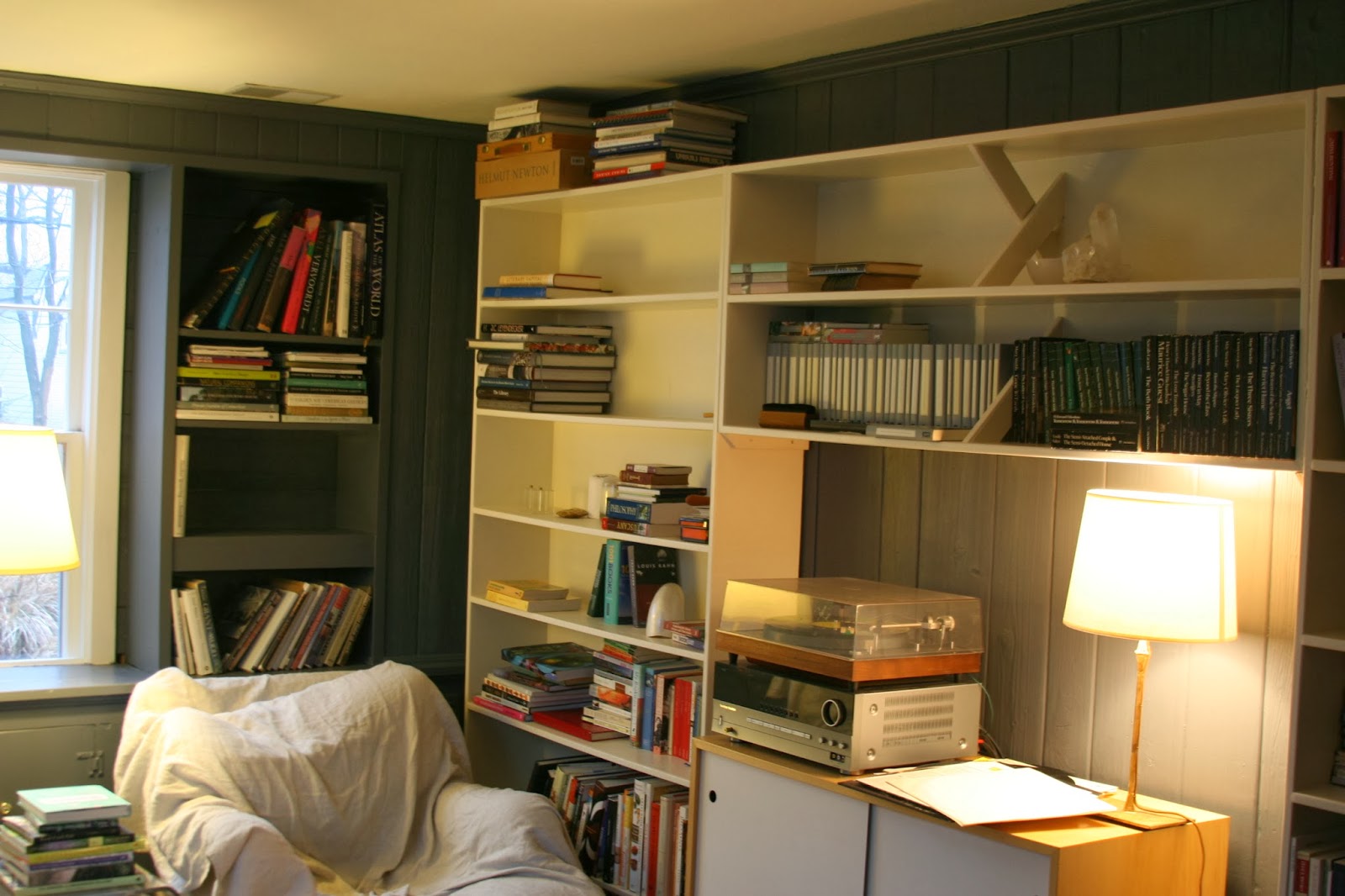
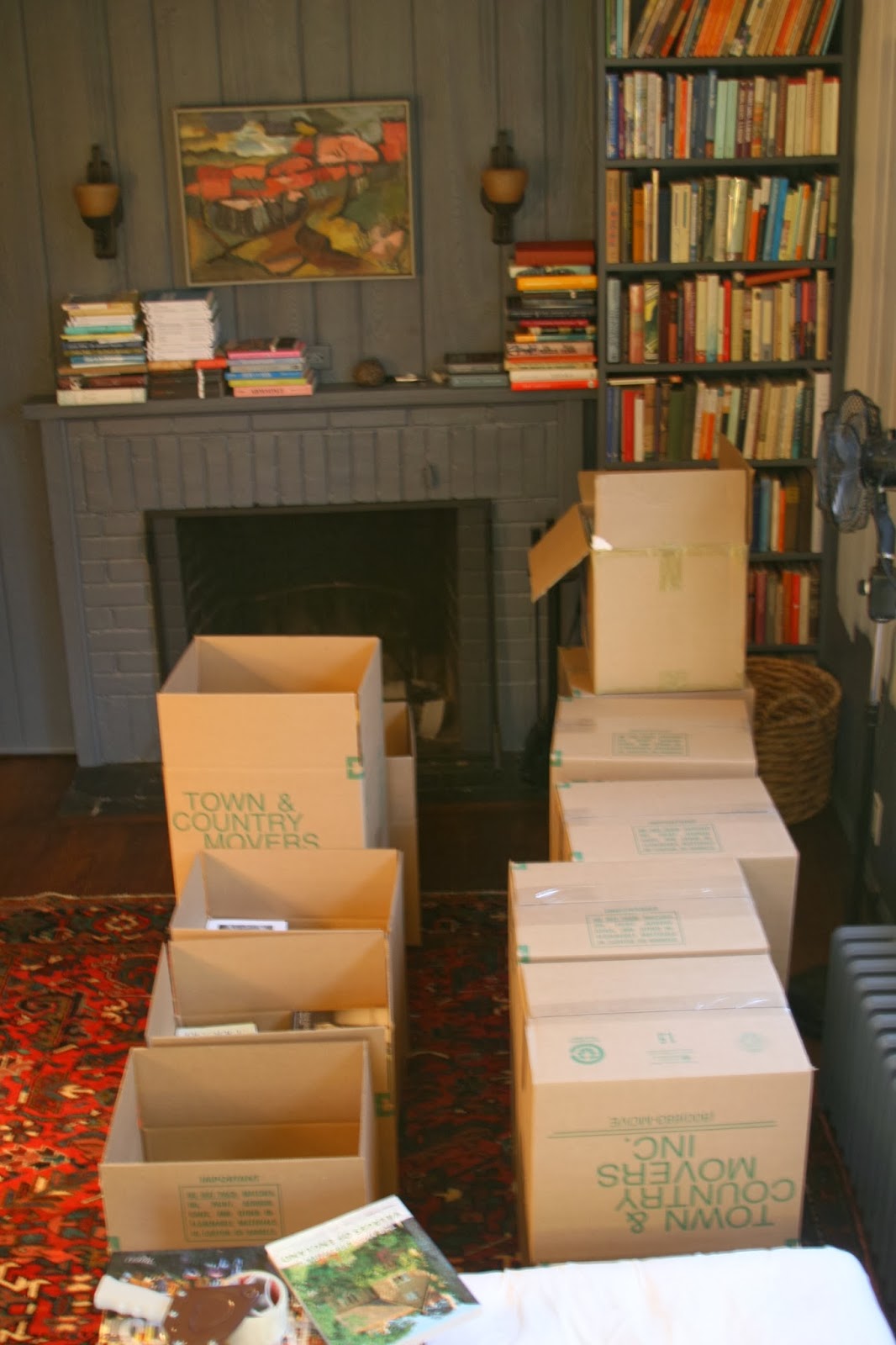
One of the biggest challenges in packing up the house has been dealing with all of our books. I am determined to squeeze all of our stuff into our two-bedroom rental. This means that all of my books except for my extensive TBR pile (see picture below) will be tucked away in boxes and hidden in closets. So even though our temporary quarters has tons of closet space, it still seemed like a very good time to weed the collection.
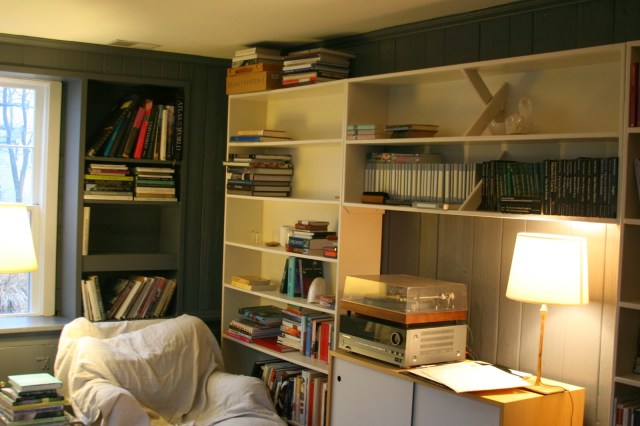
The once packed shelves looking considerably diminished.

Some of the boxes of books that will remain in hiding for almost a year.
The books still on the shelves next to the fireplace represent the books in TBR that I will have access to. Everything I will read in the next eleven months is on those shelves.

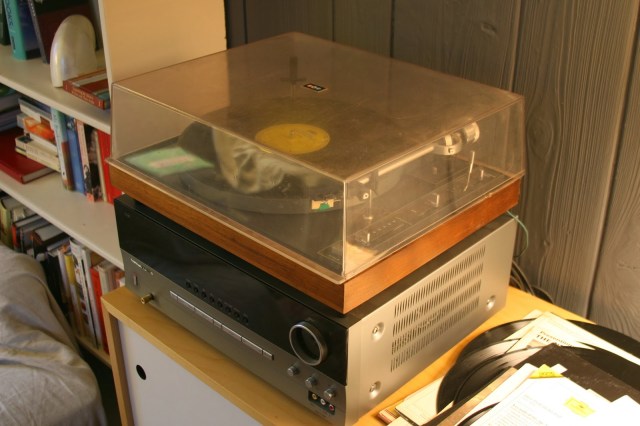
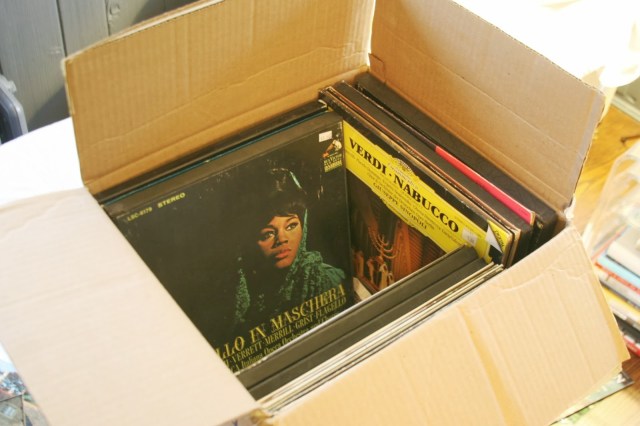
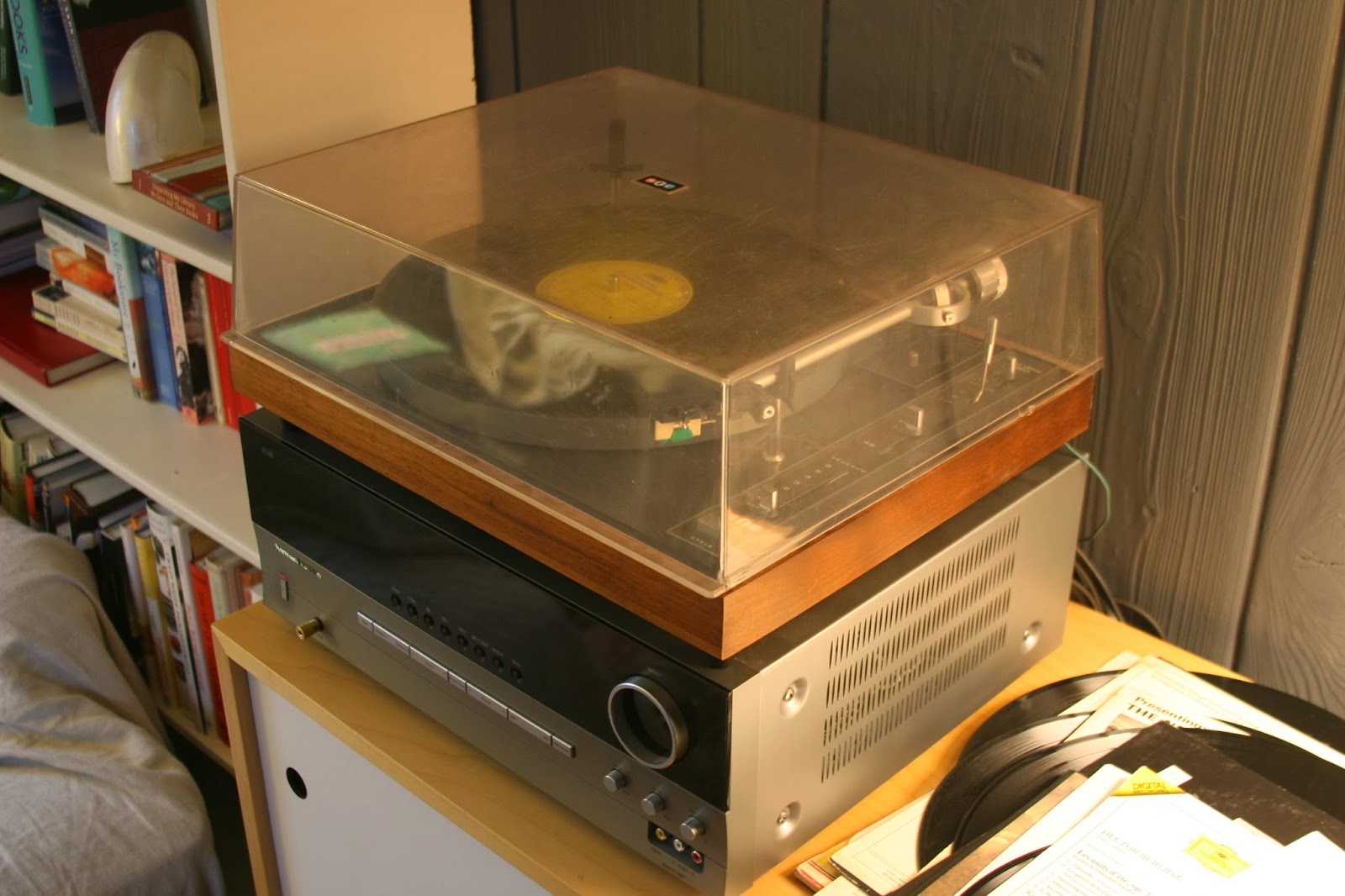
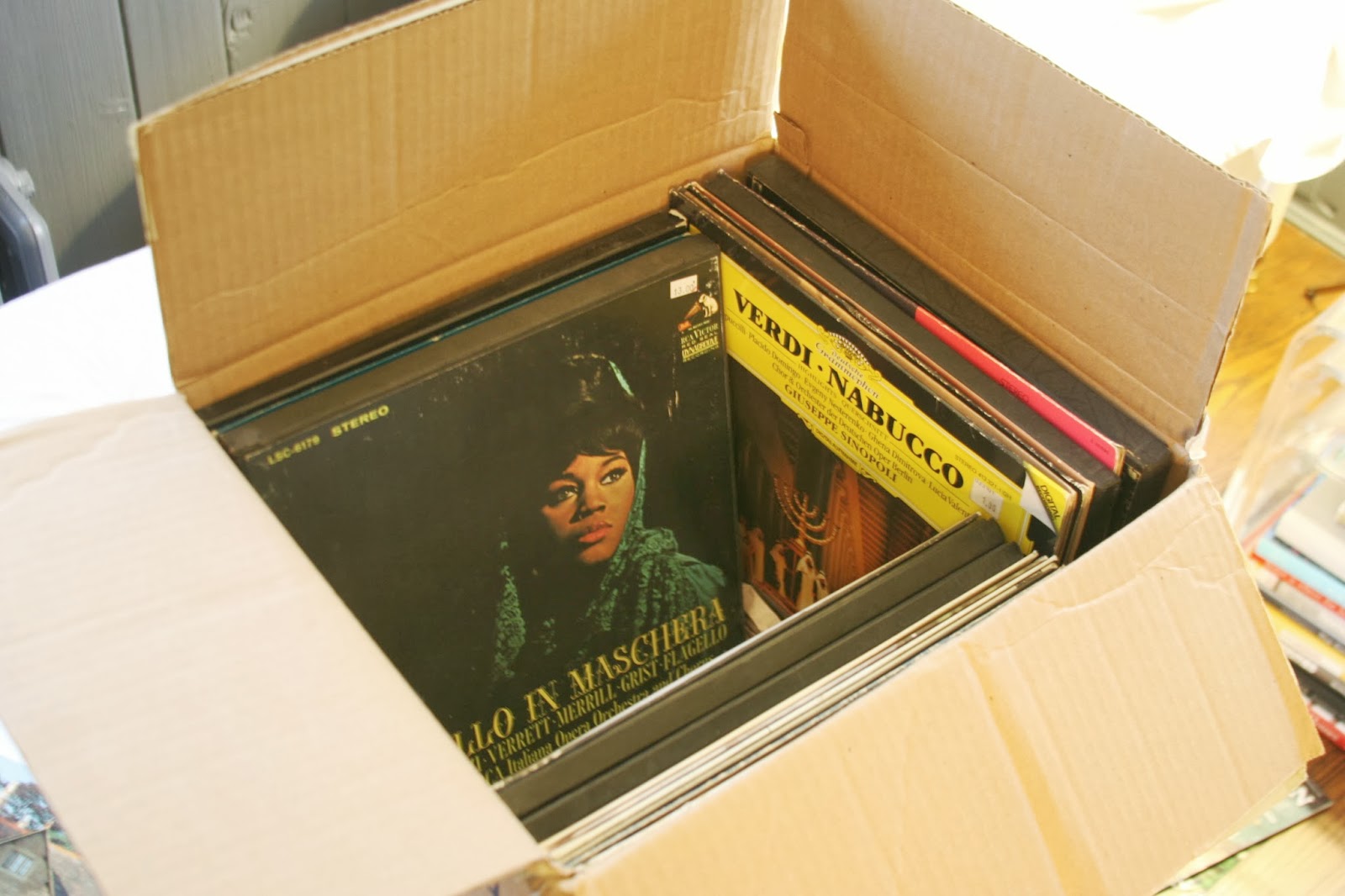
Getting ready to move I had to figure out whether or not to keep the turntable and my collection of mainly classical records. Haven’t used the turntable for about seven years. Once I put a few of them on I knew I couldn’t get rid of them. They sound so good.

Vintage Leontyne waiting for her spin on the turntable.

As the available book boxes filled up, I made remarkably little process emptying the shelves. It was the bookish equivalent of Willa Wonka’s everlasting gobstopper. So I began to get aggressive with my book cull. So far about 12 shopping bags of books have been donated to the Friends of the Library. A good thing, I know, but some of them were hard to let go. Especially as I contemplated the volunteers not knowing that they had treasures in their hands. I began putting sticky notes on some of the more esoteric books that I thought needed a little explaining so they didn’t get tossed in the pulp pile just because they were old and unknown. And then came the collections and sets…

A conversion on the road to Hay-on-Wye
(If Saul became Paul, will I become Rhomas?) As I ruthlessly tossed out old friends and asked the hard questions about what to keep, I tried not to notice the various collections and sets that were tucked away here and there. These were books that I just had to have. Some combination of bibliophilia and the need to shop. Books that I was quite sure I would never read, but I felt the need to possess them. Beautiful covers, numbered spines, editions that were limited, collectors, or special. What to do, what to do? I have noted before that I much prefer reading copies of books over other more special editions. Ratty old paperbacks please me far more than the shiniest or rarest hardcovers. And I had already decided some months ago that I really didn’t need four HC editions of Oryx and Crake (one Canadian first, one US first, and two UK firsts). So it seemed time to not only cull the collection of collections, but it also made me realize I was a bit foolish to buy them in the first place. I know I got pleasure out of them for a while, and if our house was nothing but room after room of books, I might have continued to get pleasure out of them, but I certainly wasn’t like to read many of them. So I think my days of buying a book just because I want to possess it are over. Unless I am truly intent on reading something, it just doesn’t make much sense to me to keep buying books as objects.

Some of the casualties
Some collectible books may indeed have some monetary value, but unless you are willing to sit on them for months or years while you try to sell them online, it is highly unlikely that you get much of anything for them. Most shops that are buying books pay next to nothing. I am not sure what a typical mark-up is in the antiques trade, but in used books it seems to be somewhere in the 1000% range. So handing something over for 50 cents in store credit doesn’t really feel so good. And selling on e-bay is not much better. Giving them away to charity can make one feel good but I think, as I mention above, that many of those books can end up pulped because they are too old and esoteric for the charity to bother with them. It was in doing this math, and realizing that even giving books away can be difficult that helped push me toward my no collecting conversion. I know many of you would love to possess some of my cast-offs, but you all live a million miles away and postage is a bitch.
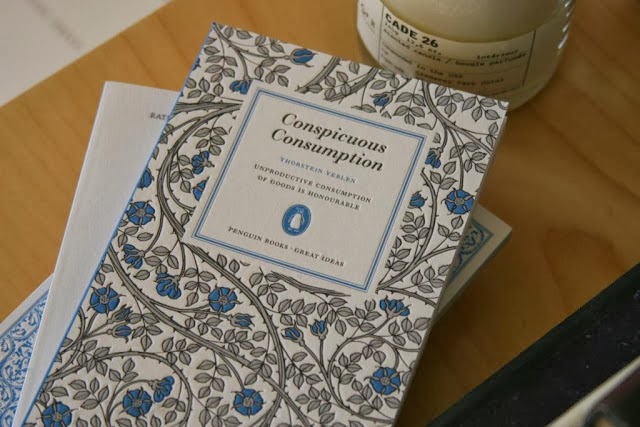
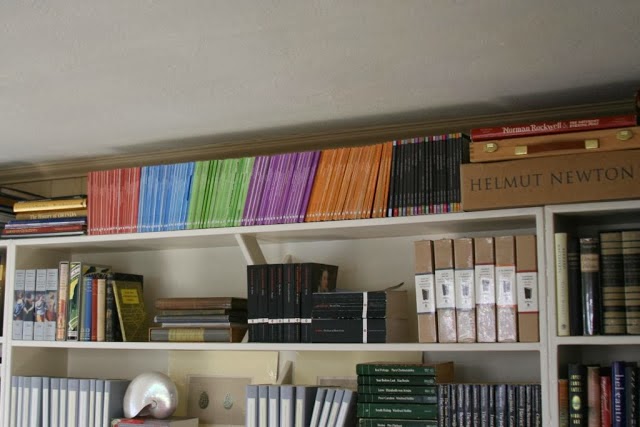
I ran around London collecting all 100 of the Penguin Great Ideas series seen on the top shelf.
Seems a fitting title for realizing I need to stop buying “collectible” books. They are just beautiful, but I am never going to read them and they take up too much space. Tried to sell them at on ebay, but when I saw how low the bidding was and how much I loved them still, I took them off the market. Then one of the bidder’s, who happens to live locally, contacted me with a really good reason why she wanted them and with a decent offer. So I feel good about letting them go.

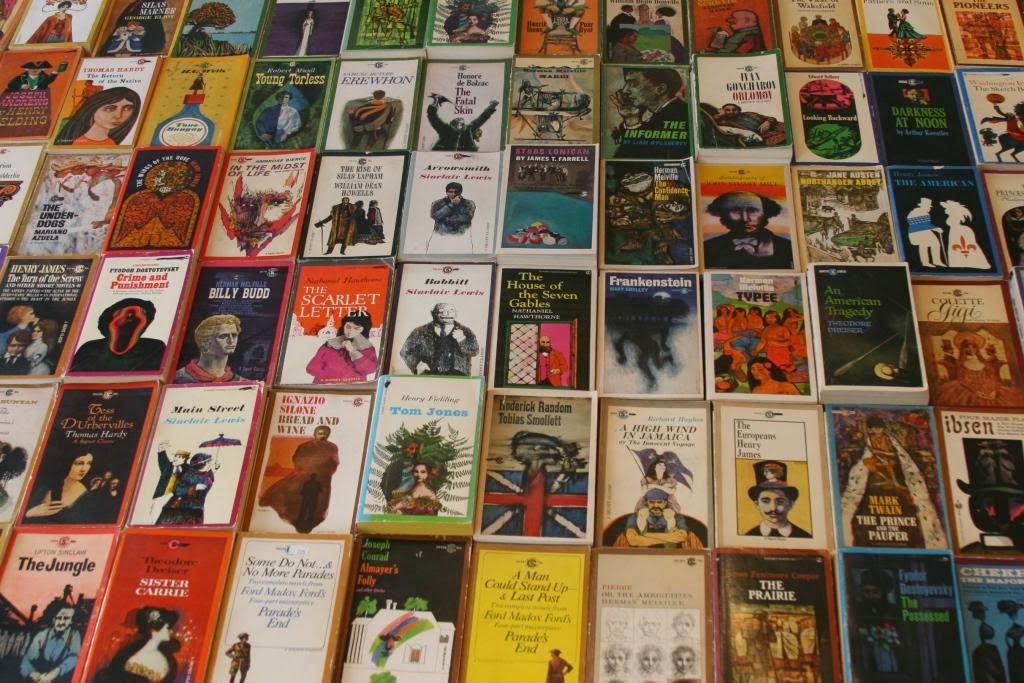
I had so much fun collecting these wonderful old Signet Classics. They have lovely, fun, interesting covers, but really ugly spines. I found a former lit major in my neighborhood who is now the proud owner of these 60 volumes.

Sending a book a page at a time
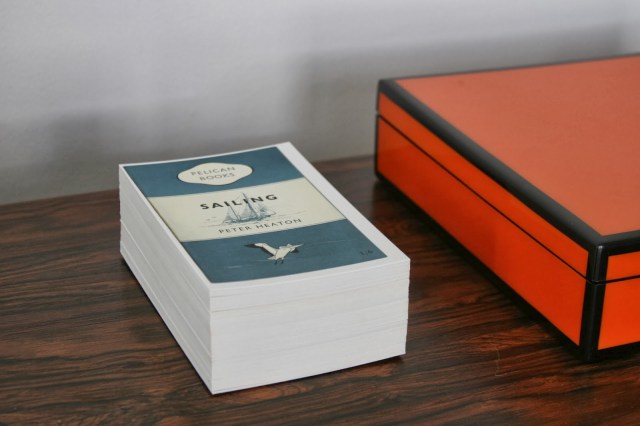
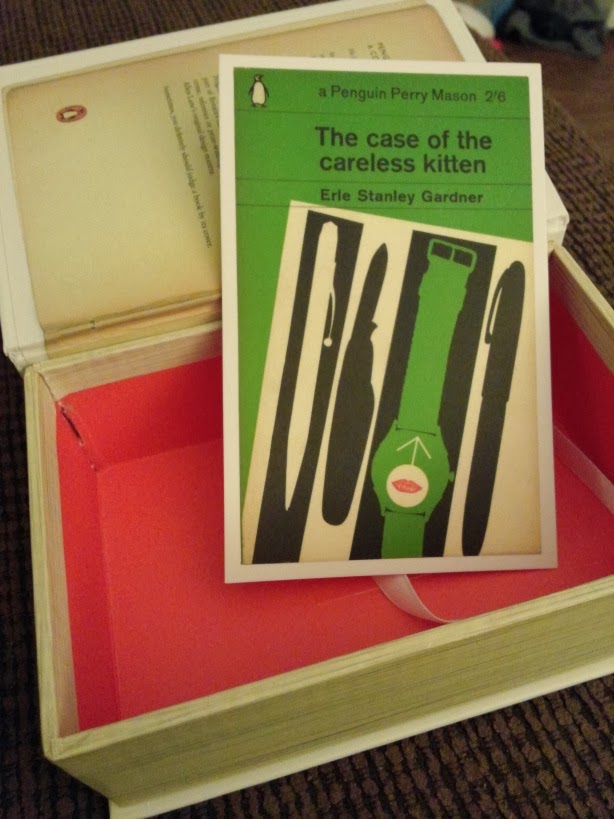
Well it isn’t really a book, but it looks a bit like a book. And they aren’t pages so much…yes, even my collection of 100 Penguin postcards was culled. It is true, I could easily have kept this volume on my shelf for ages and it wouldn’t have bothered me one bit. But I began thinking about my post late last year about letters and such. And I know many bloggers over the years have bemoaned the lost art of letter writing. And then an idea began forming in my head. But no, could I really give them up? But yes, that would be quite fun. What to do? So I took the plunge.  I emptied out the lovely book-like box that the postcards came in and shipped it to another blogger with just one postcard inside with the note “Keep. This. Box.” written on the back. I think you can figure out what is going to happen at least 99 times.

Whatever sadness I feel at giving up this treasured possession is ameliorated by the fun I am having writing postcards to Amanda. And I know that she will enjoy the cards not only as fun, bookish surprises showing up from time to time in her mailbox but also as pieces of correspondence. One of the added benefits is that I keep the stack of postcards on my desk and find I am getting more pleasure looking at whatever card is on top of the pile at the moment, than I would have if they stayed tucked away in their box. Thankfully I don’t have to write all 100 postcards at once.
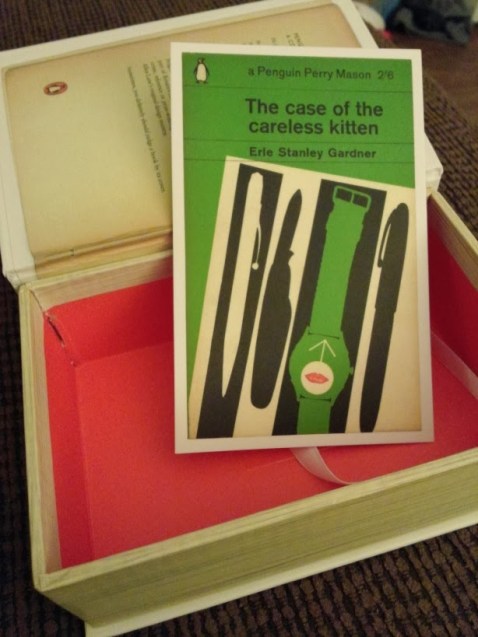
Amanda’s picture of the box and first of 100 postcards to make its way from DC to Georgia.

The rest of the cards providing visual interest on my desk while they wait their turn.

Bits and Bobs (the new beginnings edition)


Roz and Layla about five years before they went mental with all-out reading mania.
(Photo credit: Helen Maybanks)

I wish the year was over so I could start my reading list over
I know that sounds stupid, but I am tired of adding to this year’s list. I think it is because once I reached 100 books for the year back in October I didn’t have a goal anymore. As much as I complain about how reading goals stress me out, I now seem to be stressed out because I don’t have a reading goal.

Resisting the urge to bulk up my TBR
As I have mentioned before, I plan to participate again this year in the Triple Dog TBR Dare where for the first three months of the year, I can only read books in my possession as of midnight on New Year’s Eve. Since John and I will be living in temporary quarters for 11 months, I decided to extend the TBR to a full 11 months. Essentially I am only going to read books from my TBR until we move back into our house and my new book shelves are in place. And that will be sometime in November (fingers crossed). I can see myself failing, at least after the initial 3 months are over, but still something to shoot for.

Roz and Layla throw down the gauntlet
In 2013 my friend Roz and I had a contest to see who could read 100 books first. For 2014 she and her wife Layla have challenged a whole group of their friends to do the same. Although I would certainly like to reach at least 100 again next year, I don’t think I am going to officially participate because it makes me too bent on finishing books rather than enjoying books.

Just 5 authors for 50 years
Because it took me about 20 months to finish the 12-month A Century of Books challenge the first time Simon at Stuck In A Book hosted it, I will most certainly not be joining him again in 2014 when he attempts to do it again. I invite him to look at my ACOB list of books read with caution. Some of them were real stinkers.  I also took the liberty of filling out his list for the second fifty years of the 20th century with five fantastic female authors. No need to read anyone else Simon. I gotcha covered. You’re welcome.

1950 – PYM Some Tame Gazelle
1951 – STEVENSON Shoulder the Sky
1952 – PYM Excellent Women
1953 – PYM Jane and Prudence
1954 – MURDOCH Under the Net
1955 – PYM Less Than Angels
1956 – MURDOCH The Flight from the Enchanter
1957 – MURDOCH The Sandcastle
1958 – PYM A Glass of Blessing
1959 – STEVENSON Still Glides the Stream
1960 – STEVENSON The Musgraves
1961 – PYM No Fond Return of Love
1962 – MURDOCH An Unofficial Rose
1963 – PYM An Unsuitable Attachment
1964 – MURDOCH The Italian Girl
1965 – MURDOCH The Red and the Green
1966 – MURDOCH The Time of the Angels
1967 – STEVENSON Sarah Morris Remembers
1968 – MURDOCH The Nice and the Good
1969 – MURDOCH Bruno’s Dream
1970 – MURDOCH A Fairly Honourable Defeat
1971 – MURDOCH An Accidental Man
1972 – ATWOOD Surfacing
1973 – MURDOCH The Black Prince
1974 – MURDOCH The Sacred and Profane Love Machine
1975 – MURDOCH A Word Child
1976 – MURDOCH Henry and Cato
1977 – PYM Quartet in Autumn
1978 – MURDOCH The Sea, the Sea
1979 – ATWOOD Life Before Man
1980 – PYM A Few Green Leaves
1981 – BROOKNER A Start in Life
1982 – BROOKNER Providence
1983 – BROOKNER Look at Me
1984 – BROOKNER Hotel du Lac
1985 – BROOKNER Family and Friends
1986 – BROOKNER A Misalliance
1987 – BROOKNER A Friend from England
1988 – BROOKNER Latecomers
1989 – BROOKNER Lewis Percy
1990 – BROOKNER Brief Lives
1991 – BROOKNER A Closed Eye
1992 – BROOKNER Fraud
1993 – BROOKNER A Family Romance
1994 – BROOKNER A Private View
1995 – BROOKNER Incidents in the Rue Laugier
1996 – BROOKNER Altered States
1997 – BROOKNER Visitors
1998 – BROOKNER Falling Slowly
1999 – BROOKNER Undue Influence

Listening to audiobooks for free


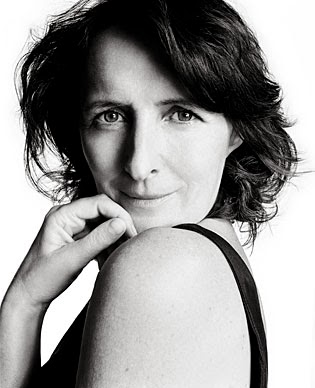
Fiona Shaw

I’ve never really listened to an audiobook. I don’t have a driving commute or other time of day where listening to the audio makes much sense. Being a child of television means that audio is something one has on when one is doing something else. And I think that listening to a book requires actual concentration so I don’t think I would get much out of it if I tried to do something else. The other challenge for me is that I find spoken word recordings to have a lovely soporific quality and that seems to defeat the purpose as well.

But I have been intrigued lately with the idea of audiobooks. I will never belong to the camp who believes that listening = reading, but I thought it might be fun to listen to one while actually following along with the book itself. I thought of this particularly about Anita Brookner novels. I am in the process of rereading all of her work in chronological order and thought it would be fun to hear someone read it to me while I followed along.

It was in that mood that I clicked on Audible.com last night. I had never been to the website before but I had seen it mentioned on many a blog and Twitter feed. The first thing I did was type in ‘Anita Brookner’. Was well pleased to see that there are ten of her 23 novels available in audio format. I first clicked on the sample of Prunella Scales reading A Closed Eye. I love Scales’ voice, but didn’t find it entirely suited the Brookner voice in my head. Then I went on to Anna Massey who reads two of them. This was much better. (Wasn’t Massey in the film version of Hotel du Lac that I saw years ago and can’t find these days on DVD?) Still, I wasn’t convinced that this worked for me. So I clicked through to other things Massey recorded. This began an odyssey that kept me up until 2:00 in the morning.

Thoughts:

  • Emma Thompson is wonderful reading Howard’s End. I wish she would do more recordings.
  • I came across a dramatized version of Sinclair Lewis’ Babbitt that had a truly all star cast including Ed Asner, Ted Danson, Richad Dreyfus, Hector Elizondo, Stacy Keach, and Ed Begley, Jr.
  • Was intrigued by Claire Danes reading The Handmaid’s Tale, but not sure if I actually liked it.
  • Elizabeth McGovern reading Alias Grace could possibly make me like that book which I didn’t really care for despite reading it twice.
  • As I surfed around it seemed to me that some books work better than others. Nevil Shute novels seem to work particularly well in audio version.
  • I think Pym works well, but I am not sure I like the narrator doing a special voice when reading the letter from the archdeacon.
  • Then I stumbled across Fiona Shaw reading the letters of Jane Austen. Now that was a success. Fiona Shaw. How fabulous. And then to see that she also reads Brookner’s A Family Romance. How did I miss that earlier? She is the perfect Brookner reader.
  • Penelope Wilton is amazing and should do more of these.
  • Penelope Keith is the bee’s knees. She is an amazing narrator. Too bad almost everything she records is Agatha Raisin. She is so good though she might actually make me like Raisin.
  • Victorian literature seems well suited for reading aloud. Not sure I think much of contemporary books being read.
  • Paul Auster reads his own novels really well. Not surprisingly his voice is just right.
  • I love the various author interviews available.
  • Disappointed that May Sarton isn’t represented. Need someone with a flintly but friendly voice with a mildish New England accent.
  • Lucy Scott who reads The Making of a Marchioness is wonderful.
  • Emilia Fox is fantastic reading everything Austen, Mitford, Christie, Archer, and she does it all justice.
  • The unknown narrators are usually better than the famous actors. Not because the actors are bad. but because I find myself distracted by the fact that I know their work.

As I listened on and on, jumping around sampling all sorts of my favorite books, struggling to keep my eyes open at 1:53 a.m., I realized something. I love listening to these wonderful voices reading wonderful books but I still don’t think I could follow a whole book. This, added to the fact that I am trying not to spend money these days means that I probably will not become a member of Audible or other service (if there is any) anytime soon. I realized that I enjoyed the free sample recordings enough that it actually sated my desire for spoken word. And let’s face it. If a four minute sample satisfies my urge, could I ever really sit through eight hours?

One Sentence Reviews

Here are eight books I have read recently that I have yet to comment on I have placed them in rough order of how much I liked them. Best to worst.

Knulp by Hermann Hesse
Another sad, beautiful Hesse musing on life and death.

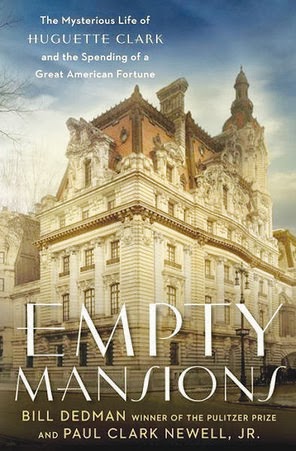
Empty Mansions by Bill Dedman and Paul Clark Newell, Jr.
A brilliant non-fiction tale of a copper heiress who chose to spend the last 20 years of her life in a hospital despite owning four mansions.

Gerald and Elizabeth by DE Stevenson
Two parts Stevensonian romance, one part Nevil Shutian nose to the grindstone success story, one part Wilkie Collinsonian clear my name with the help of letters and anecdotes.

A Touch of Mistletoe by Barbara Comyns
Kept waiting for Vicky to stop being so damn poor in this enjoyable autobiographical novella.

Minnie’s Room by Mollie Panter-Downes
Definitely worth a read, but not as good has her wartime stories in Goodnight, Mrs. Craven.

Nest of Vipers by Tod Claymore
Old fashioned, green covered Penguin mystery with all the plot and logic leaps characteristics of the genre.

Smut by Alan Bennett
I don’t need to read about perverted grannies.

Mrs Queen Takes the Train by William Kuhn
Better than Emma Tennant’s lame attempt to fictionalize QEII making an escape, but miles away from the brilliance of Alan Bennett’s The Uncommon Reader.

The word was made flesh and dwelt among us

 
Like many of you, I am charmed by paper. I like the way it looks, smells, and feels. I’m charmed by ink as well. I’m a sucker for a good font, lovely handwriting, and everything from an intricate engraving to a lowly doodle. When you put paper and ink together you certainly end up with something that is (usually) more than the sum of its parts. For most of us, the pinnacle of this mash-up is the book (cue the spotlight and heavenly chorus). That amazing flesh and blood/paper and ink bundle of joy that will never be replaced by a circuit board and screen.

But books aren’t the only printed matter than make me a little weak in the knees. Although many are cutting back their Christmas card habit, I am going the other direction. I love getting them (the newsier the better) so I figured I needed to give some to get some. (And how odd that in this day and age it took the annual Christmas card to find out that a casual friend who lives just miles from me is moving with his family to Thailand.)

The start of this year’s collection. That would be Amanda being Merry and Bright.

Each year when the Christmas cards begin to arrive I start thinking wistfully of the days, not really that long ago, when getting the mail really meant something. I certainly love the immediacy of email and the ability of the internet in general to keep us all better connected than I ever could have imagined when I was in college, but there is something so nice about real mail.

When I was in high school, I fell in love for the first time–with a college boy. We met the summer before my Senior year of high school as he was getting ready to spend his Junior year of college abroad in Madrid. Not long after the school year started we began corresponding. Every day I would practically run home from school to see if there was one of those distinctive airmail envelopes waiting for me. Some weeks there would be multiple letters.

No relationship in the 1980s was complete without a mixed tape.

The ‘liner notes’ from a mixed tape he made for me in college.
We were still long distance, I was in Minneapolis, he was in Madison.

I have tried to make up for the fact that letters are a thing of the past by buying pretty paper and imagining all sorts of things that will never really happen.

I’m a total sucker for Moleskine notebooks. But with my poor handwriting and lack of artistic talent, I buy them and they sit empty. I recently gave a few of them away to Stefan at ArchitectDesign because I know that he will find a good use for them.

And what book blogger worth their salt can think of Moleskine without thinking Matt at A Guy’s Moleskine Notebook?

While looking for images of Moleskine, I came across Matt Jackson, a gaming blogger who makes these wonderful maps. Just the kind of thing I wish I could do.

(Matt Jackson)

(Matt Jackson)

I’ve had better luck with this little lovelies filled with graph paper. Good for lists and for sketching out my dream kitchen.

And all of this reminds of S by JJ Abrams and Doug Dorst. Simon and I talked about it on the latest episode of The Readers. It is a book made to look like an old library book with loads of things (postcards, maps, clippings) tucked away in between pages and a marginalia conversation that is as important, perhaps more so, than the book text itself.

I’m not sure I would like the book, but I really want to own it.

I’m also a sucker for nice thank you notes. At least I use these.