Libraries are popping up everywhere

  
No doubt many of you have come across wildcat mini-libraries popping up in peoples’ yards, in old callboxes, and any number of other places. Until recently, I had only seen these online. But then one day, walking with Lucy about six blocks from our temporary apartment, I ran into one in real life. A few weeks later I saw another one. And then a few days ago I saw a third one. And all within walk distance of our digs.

Of course each time I pass one I have to see what books lurk inside. For the most part I don’t see much that interests me. And being here in DC, I also come across more non-fiction than I think is healthy. :) But the other day I saw a book I really wanted and so I took it. And not just “oh, that might be interesting”, but rather “oh, I’ve been looking for this book, hooray”. So this morning when I took Lucy out for her walk I filled up my messenger bag with books so I could leave some items in the two mini-libraries we would pass by.

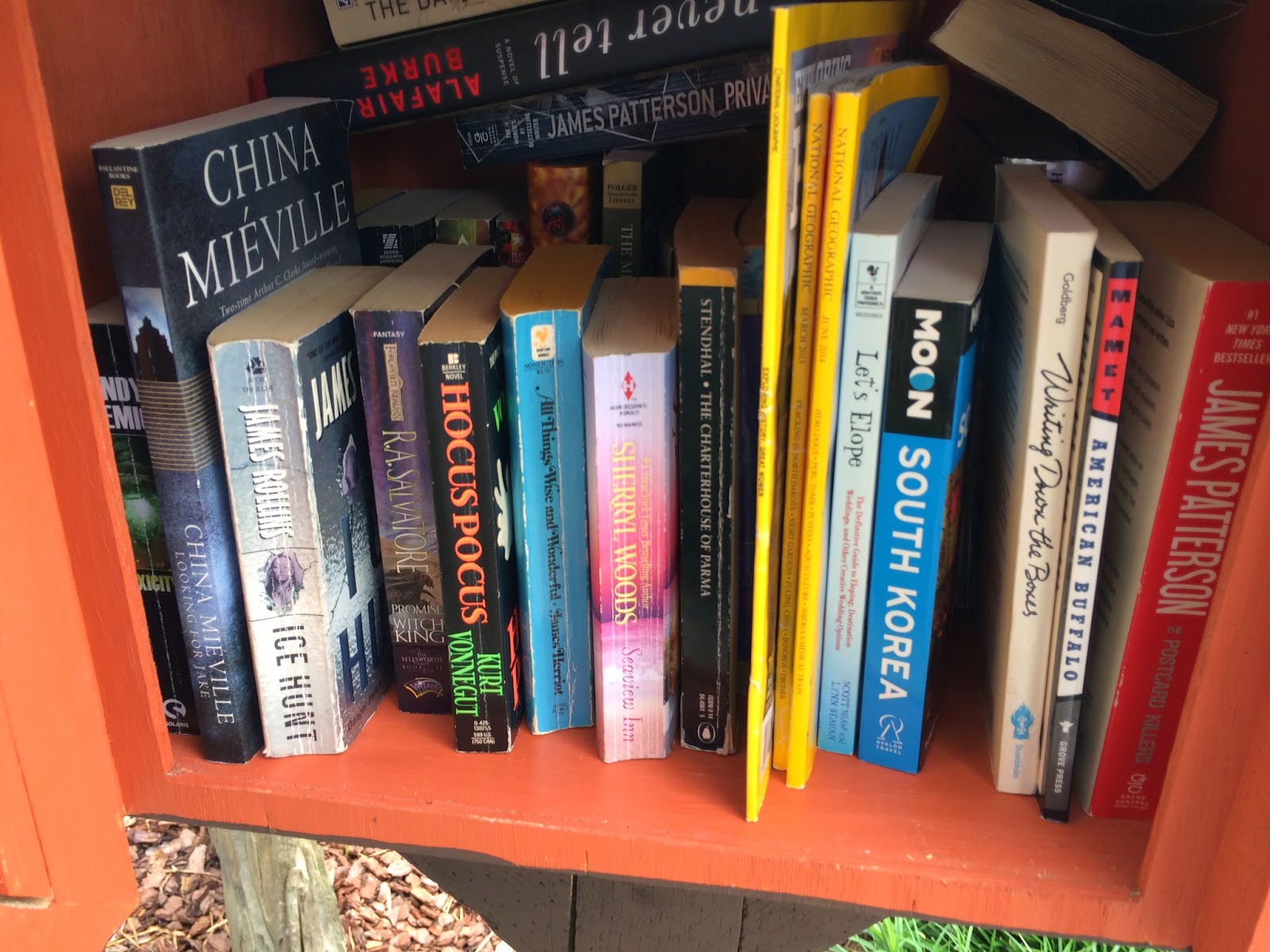
This is the first little library I came across.

This was the situation when I arrived. Now I realize I missed that Vonnegut and it is one that I haven’t read. Shoot.

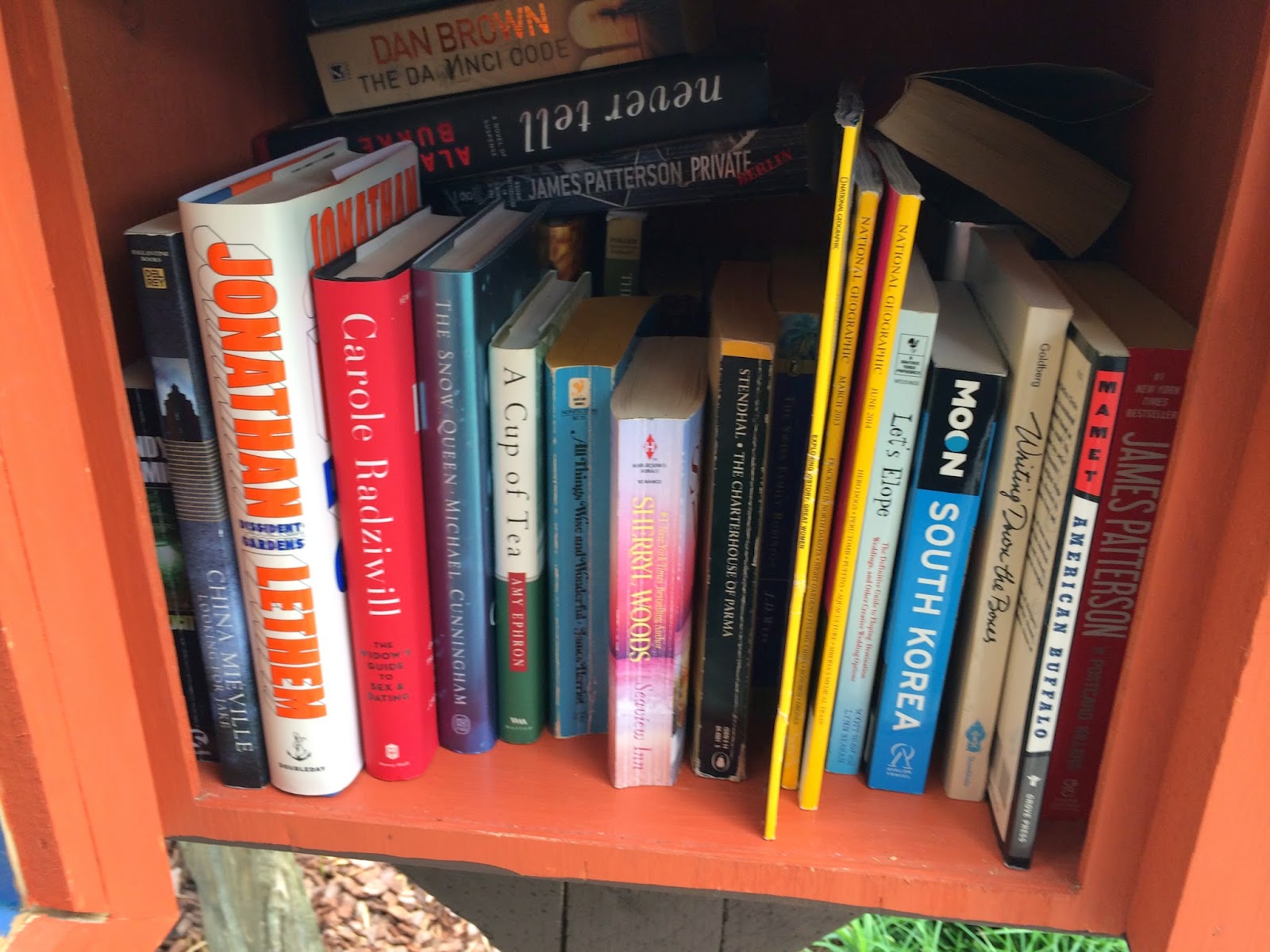
My four additions (starting with Dissident Gardens and ending with A Cup of Tea). Is it wrong I only added books I didn’t like? I do know, however, that each of those four have an audience and will be enjoyed by those who enjoy that kind of thing.

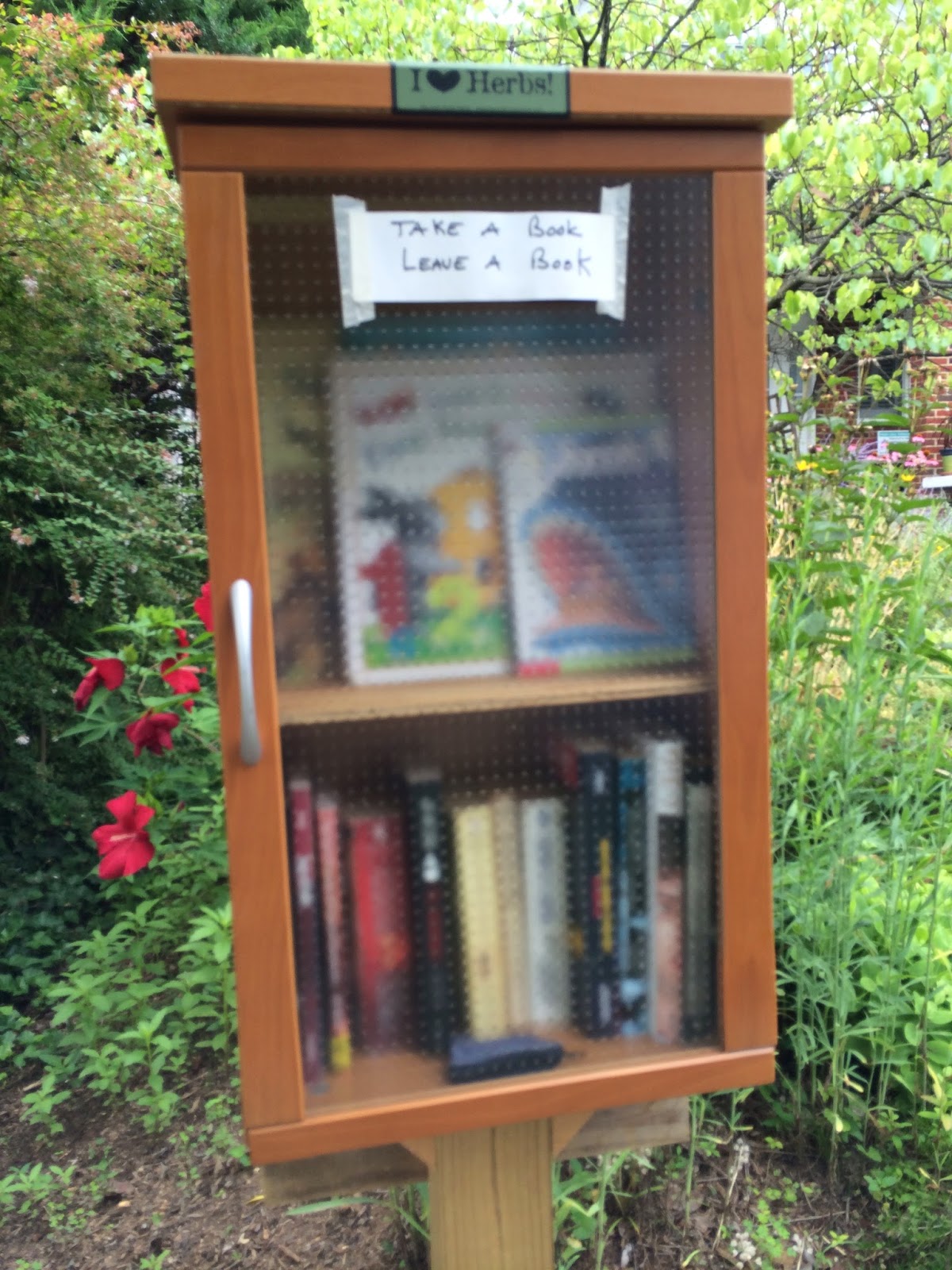
I was told by the keeper of the first mini-library, that this one, just a few blocks further down the road is an old medicine cabinet. And the owner apparently loves herbs.

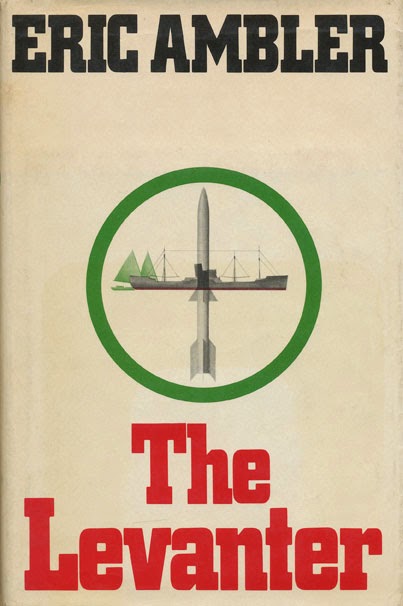
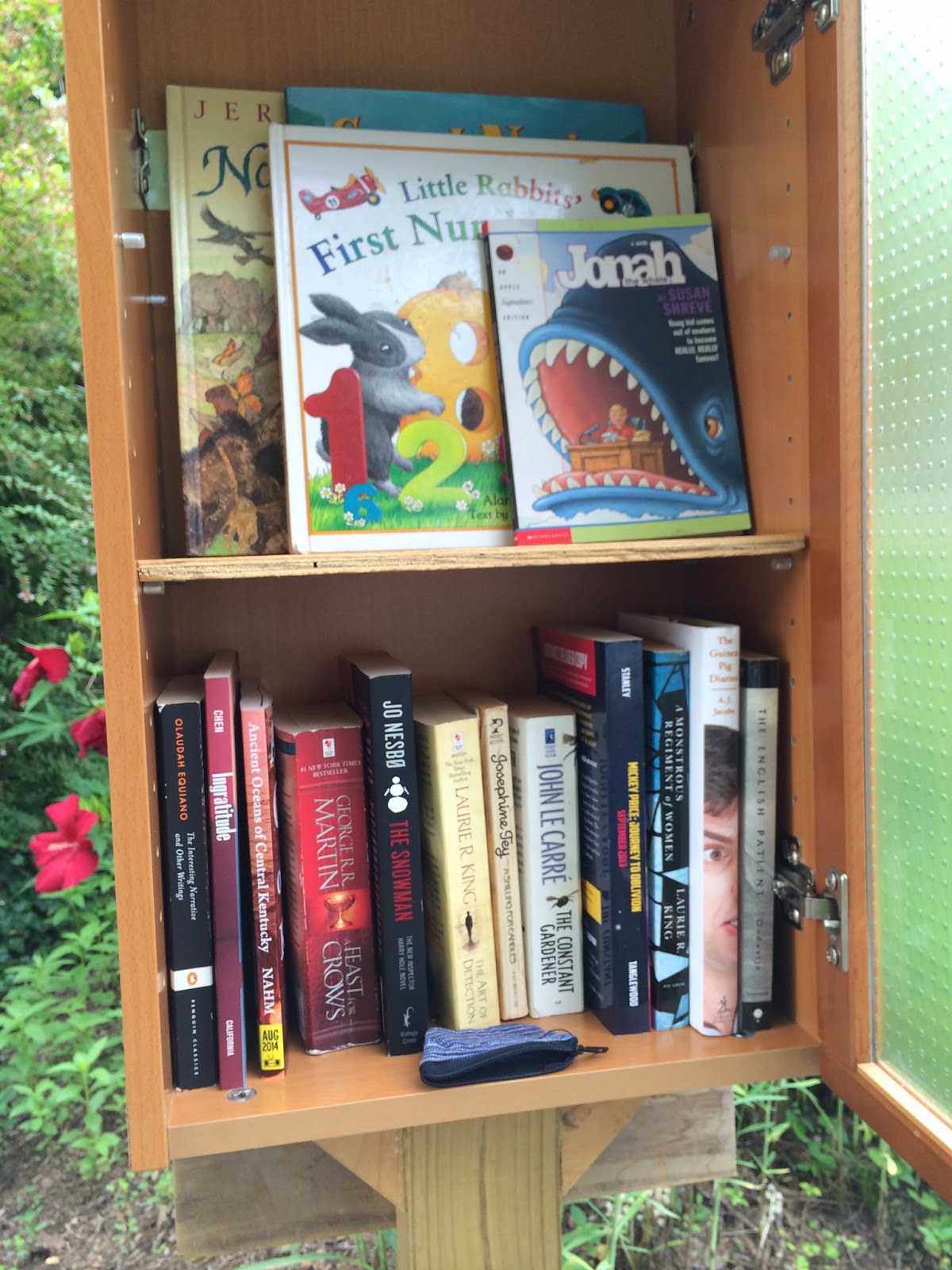
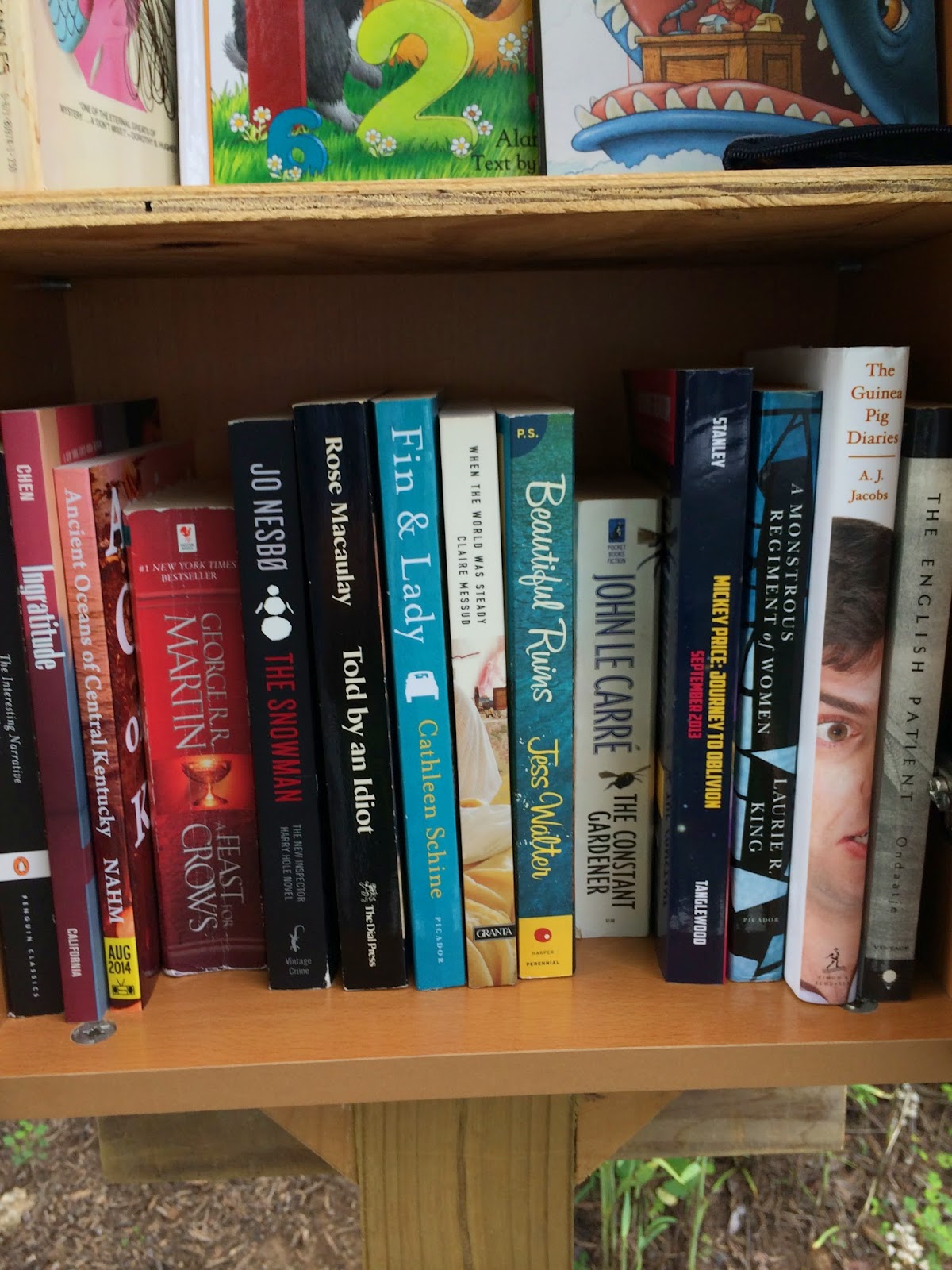
The situation when I arrived. This is the place I found the Ambler pictured below.

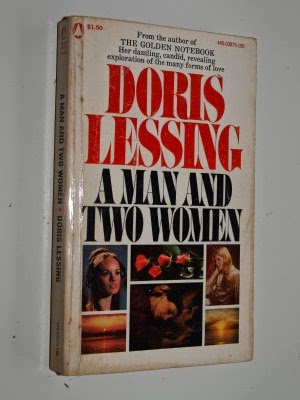
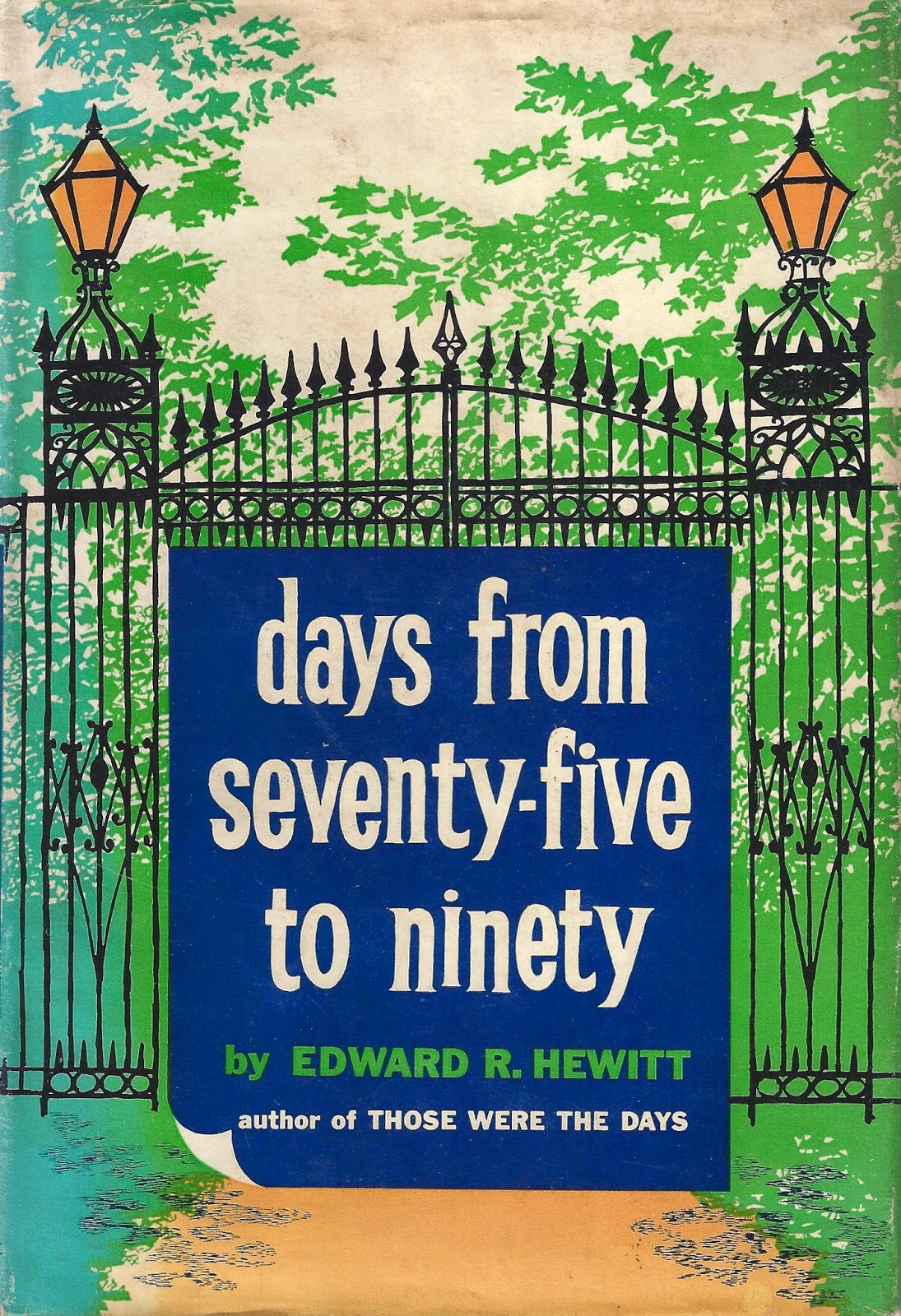
The situation when I left. Normally I like Rose Macaulay, but this one not so much, plus I have a HC edition at home. Fin & Lady was just okay, the Messud is a duplicate, and Beautiful Ruins I didn’t like.


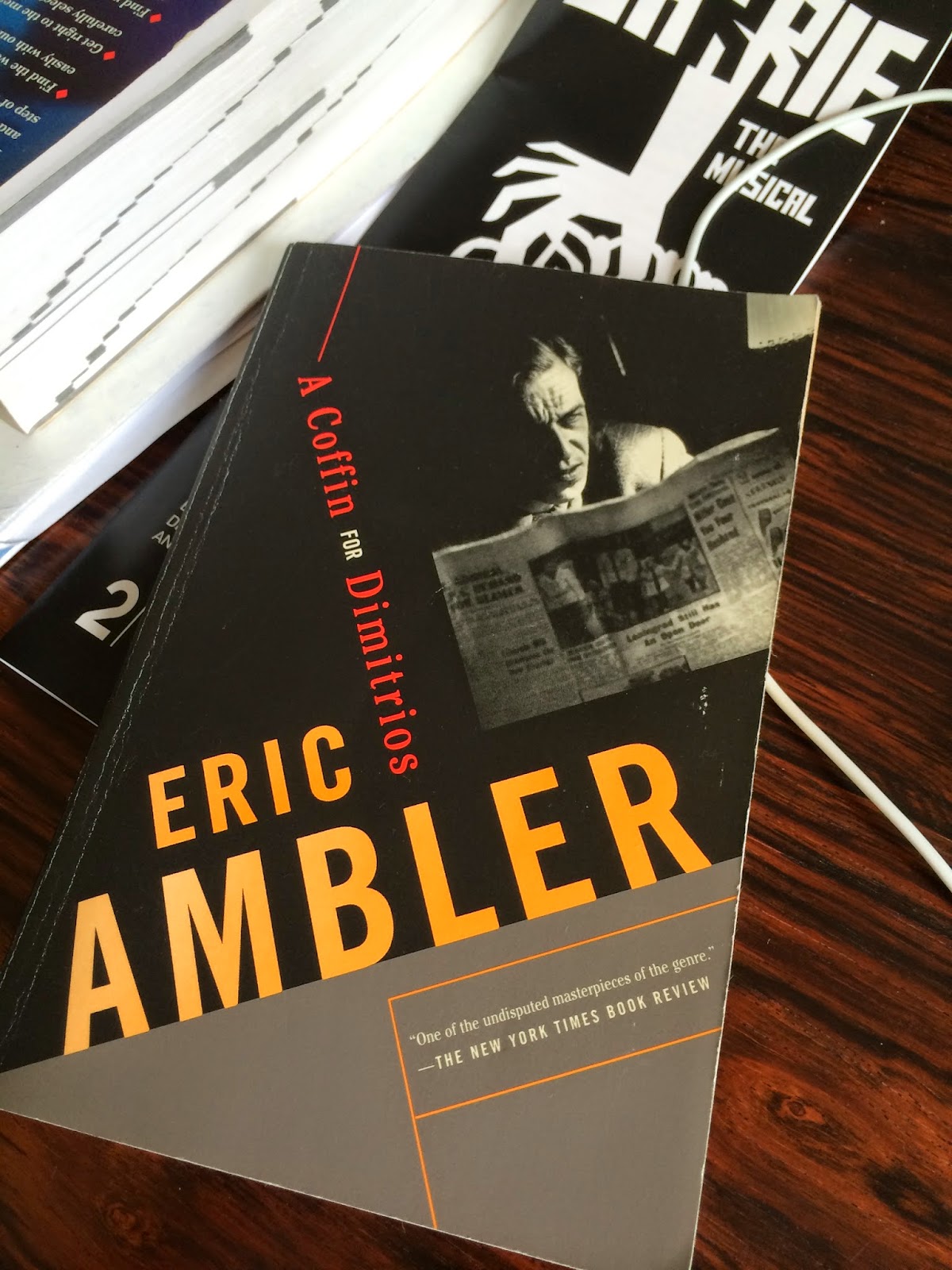
This was the book I was so giddy to find. I’ve become a big Ambler fan this year and I haven’t read this one yet.

Lucy helped.


Ugh!


Many of you will know that one of my biggest pet peeves in fiction is inaccuracy in factual details. So far in my experience, the author Julia Glass seems to piss me off the most. Some of you have pointed out that if the writing is good enough one is less likely to notice such things.

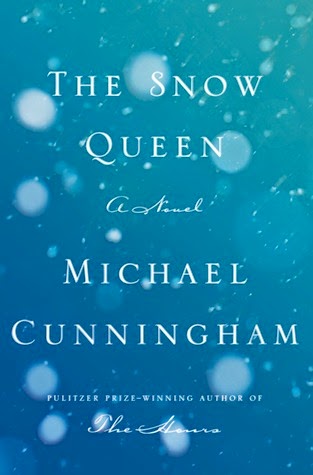
And then came Michael Cunningham’s latest novel The Snow Queen. I’ve liked every Cunningham novel I have read (and I have read them all). Granted, it took me a second try to warm up to Specimen Days, but, overall I like his work. After over 100 pages of TSQ, I just don’t think I care enough to go on. I think I may be having trouble because it has a kind of searching, what’s it all about, kind of vibe and I am just not in the mood for that right now.

But more than anything the thing I can’t get over is that much of the imagery of the book is based on snow. Snow that supposedly happened on November 1, 2004 in New York City. Well, guess what?

It didn’t freaking snow on November 1, 2004 in New York City.

I’m not a total nut job, I didn’t go look that fact up just to look it up. I looked it up because it was the night before the Bush-Kerry election–which is also part of the story–and I remember distinctly what the weather was that day because I was knocking on doors in Cleveland trying to get out the vote for John Kerry. I know Cleveland and NYC can have different weather, but based on how the weather was that day in Ohio, I had a hard time believing there was snow in NYC. Not to mention the fact that snow that early in November is a rarity.

It just feels like Cunningham had a metaphor he was just dying to play out and couldn’t be bothered to make it plausible.

Well, I can’t be bothered to finish it.

Bits and Bobs (the holy moly you are lazy edition)

With house guests, being busy with the house project, and having to deal with insane jackhammer noise in our temp quarters, I haven’t been much of a blogger lately. Lots of clean-up to do.

Went to get a copy of The Night Guest for the summer read along (see below) and ended up walking out with a Messud-she isn’t my favorite, but good enough to keep trying; A Cathleen Schine novel which is turning to be perfect summer reading; and the latest from Kathleen Tessaro who does wonders incorporating fashion into wonderfully readable, smartish, rom-coms.

A funny thing happened at the dry cleaners (or The Ark by Margot Benary Isbert)
Some of you may recall me blogging about this book in 2011. It was a favorite from my childhood. It’s about a WWII-era refugee family in Europe who make their home in an old railroad car and includes a pet goat named Rachel.  I love this book. The other day I was in our neighborhood dry cleaners and I saw three books on the window ledge that looked like they were some sort of lost and found pile. It just so happened that this hard to find book, one of my favorites, was sitting right there and free for the taking. The dry cleaner was more than happy to let me have it.

A happy story for sure, but it turns a little bittersweet. The book is a discard from the Chevy Chase Library just across the street from the cleaners. I wondered if maybe it was the same one I checked out in 2011. When I went back and looked at my post from that re-read, I realized that the copy that I now have in my possession was the same exact copy I checked out in 2011. It was the only one in the DCPL system, and now, sadly, it has been discarded. Never to be read by another young mind. Big sad face. On the other hand, the book found its way to me, one of its biggest fans.

Treasure Island!!! by Sara Levine
Is an unreliable narrator the same thing as a crazy narrator? I think in the case of this novel the answer is probably yes. One of those situations where you find yourself rooting for the main character and then you begin to realize she may not be worth rooting for. A twenty-something woman who decides to start living her life boldly like the characters in Treasure Island which she has just read for the first time. Turns out she is a bit of a misguided, mixed-up, lazy, nutter. It’s funny and frustrating. Reminded be a tad bit of After Claude by Iris Owens.

This is the Story of a Happy Marriage by Ann Patchett
I am a big fan of Patchett and there were moments in this collection of mostly previously published essays that I enjoyed. I particularly liked the essay about opening her bookstore. But overall I often find collections like these a tad boring because I feel like they aren’t quite as topical as when they were written. Many essays don’t age very well, or they seem less interesting or important because the heat of a particular issue has long since faded. This is really no knock on Patchett, there are many authors and essayists of grander stature who have bored me in this way. But I guess if this compilation gives her more time to work on her next novel I surely won’t complain.

Half of a Yellow Sun by Chimamanda Ngozi Adichie
After I read and loved Americanah I went out and bought all of Adichie’s other books. Half of a Yellow Sun takes place in the years leading up to and during the Nigeran-Biafran civil war. It is a brilliant novel that definitely takes the reader on an emotional roller coaster. This is not melodrama, however, it is just really good writing about a really civil war where millions of civilians died. Adichie is good with plot, characterization, pacing, language, and believe-ability. She deserves to be a superstar.

I might be giving up on…
Joshua Ferris’ most recent novel, To Rise Again at a Decent Hour. His first novel Then We Came to the End is one of my favorites of all time. His second novel I found rather conventional but still enjoyed it very much. This one? I’m about half way through and I really am not very interested in going back to it. And I even bought it in hardcover.

Summer Read Along
Some listeners to the podcast The Readers were on Goodreads clamoring for a summer read along. Somehow Simon Savidge said yes, a consensus was formed, and I had to go find myself a copy of The Night Guest by Fiona McFarlane. On page 56, I am glad I forced into reading this one. It is pretty fascinating and enjoyable. And it is nice to read something that takes place in Australia. If you want to join in pick up a copy and read it by August 20th. Then send any questions or comments for the discussion to me here or check out the topic on The Reader’s Goodreads message boards. Simon is going to be in DC at the end of August so we may end up recording it in the same room.

The much more interesting UK edition of The Night Guest from Simon’s blog.

Background to Danger by Eric Ambler
I could give you an outline of the plot, but if I haven’t convinced you yet to pick up the highly enjoyable Eric Ambler, I probably never will.

Is it wrong to read everything you like all at once?

  
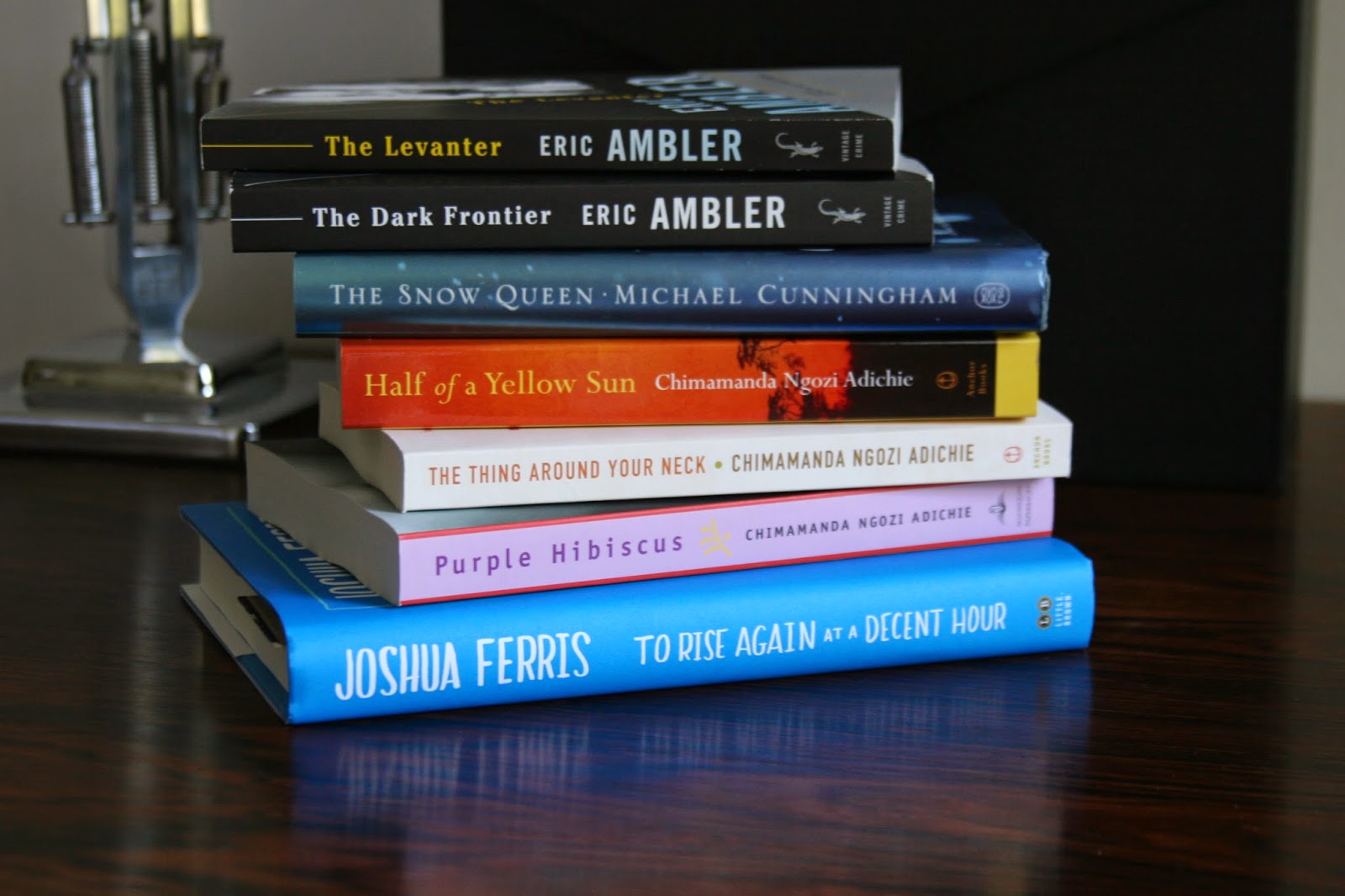
The other day my friend Ron and I were in Barnes and Noble killing a bit of time. Since I loved Americanah so much, I looked to see what other Adichie titles they had (only one Purple Hibiscus), and then I noticed the new novels by Michael Cunningham and Joshua Ferris. I had all of these in my hand and was ready to go to the cashier when I realized that I should be buying them at my local independent instead. This may not seem like such a revelation to most of you, but I buy so few new books I often forget the fact that Politics and Prose, probably the best indie bookstore in the DC area, is in my neighborhood. And it just so happened that we had plans for that night to go out to dinner just a few doors down from the store. So while we waited for our table at Comet Pizza I made a beeline for Adichie, the new Cunnigham and Ferris novels, and for good measure, I looked to see if they had any Eric Ambler on their shelves.

It isn’t often that every single book I buy in one trip is a book I can’t wait to sink my teeth into. Usually I pick up a few thing that I feel I might get to at some distant point in time. My dilemma is: is it wrong to just go ahead and plow throw these seven books? Have a bit of an orgy of enjoyable reading. I’ve already started the Ferris and am having a great time with it? Should I ration these or should I make up time that I lost earlier in the year to less than enjoyable books that I forced myself to read and others I gave up on?  If I toss in the three D.E. Stevensons I bought a month or so back I could really go on a fun book binge.

Hmm. It is summer after all. Why not? It is possible I will want to throw something else into the mix along the way. I have about two stories yet to finish in a Doris Lessing collection, and I still have 3/4ths of the 800-page Forsyte Saga to go. And it would be nice to read and review a novel or two that are still in hardcover. I know a few of you couldn’t believe that I got to Americanah so soon after publication.

What would you do?

Americanah by Chimamanda Ngozi Adichie

Several months ago I was browsing at a local independent bookstore with Frances (Nonsuch Book) when I decided I needed to inject my reading with some new, recentish, books. So I went a little crazy. I think I bought about five new hardcovers and about as many paperbacks, knowing almost nothing about any of them save what was written on their covers. My success with the books I bought that day has been less than stellar. Beautiful Ruins: Did Not Finish. Dissident Gardens: DNF. At The Bottom of Everything: Really Disliked. And there might be one or two others that faced similar fates.

And then I picked up Americanah. What a fantastic book. The main character’s voice and Adichie’s easy, smart prose drew me in from the get go. When I was in the middle of enjoying this novel I saw someone Tweet about how she was struggling with getting into the book. It was one of those moments when you think that a person must be crazy. I suppose I could give that Tweeter a pass if there were things about the book that weren’t her cup of tea, but to struggle with it? Some people.

Although it is both a relationship book and a coming of age story, Americanah is so much more. As Ifemelu navigates through her school days, her relationships, and becoming an independent person, she does it all while transitioning from the life she has known in Nigeria to a new and very different life in America. And Adichie does it so well. There is lots of humor, there is much that one can identify with on a personal level, there are observations about US and UK culture that I found highly insightful, and there is a fascinating look at life in Nigeria.

It is too easy to reduce Africa to that single word ‘Africa’ and call it a day. As with many things that I am not actively studying, I have had a murky understanding of most aspects of life on that enormous continent. I have a good friend from college days whose family emigrated to America from the west African country of Liberia, I spent a week on safari in Kenya, and I have another good friend who is a white South African, but all of my other notions about Africa were highly jumbled and taken from little bits and pieces of history and news headlines. My recent time-killing exercise of learning how to name all 196 countries in the world in less than 12 minutes actually turned out to be quite a good thing. Being able to place the countries in Africa on a map has been immensely helpful in understanding the continent and how the different countries that make up that jigsaw puzzle relate to each other. Reading Americanah was a wonderful way to help fill in one of the many gaps in my database.

But as the title suggests, Americanah is also a book about America. I was astonished how frequently I found myself chuckling and agreeing with Adichie’s insight into American culture. And not just in an “oh, look at how different things are between Nigeria and America” kind of way. Adichie certainly offers that kind of commentary, but just as often it takes America on its own terms.

Easily one of my favorite books for the year.


"…an award-winning author." – Simon Savidge, The Readers, Episode 100


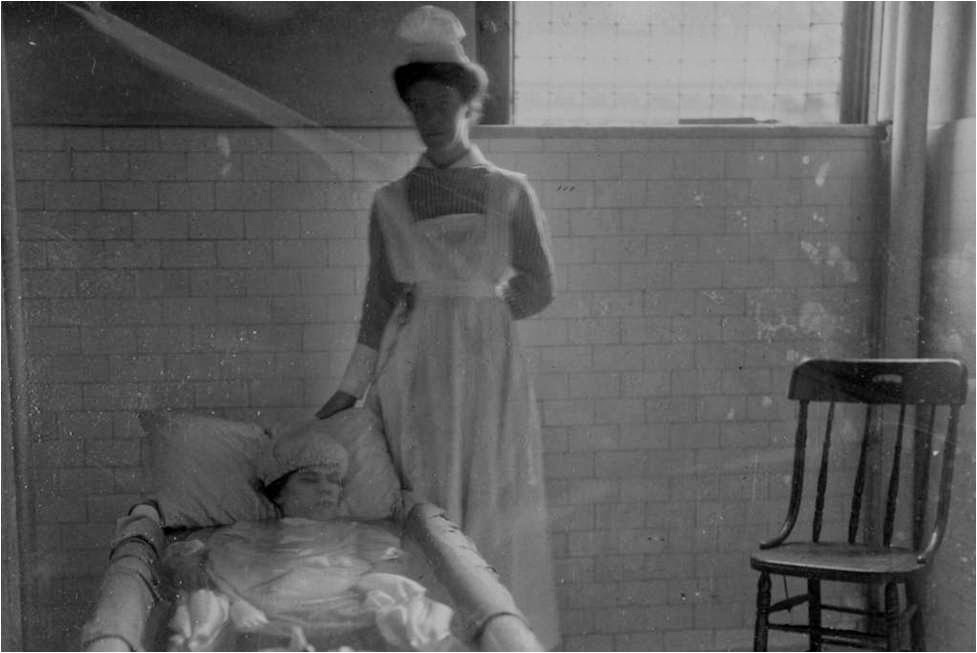
I listened to the fantastic 100th episode of The Readers the other day. It was a supersize episode with three hosts, not two, and it seemed to go on and on forever covered so many interesting topics. One of the things host Simon Savidge talked about was a fascinating history of a Victorian mental asylum. Apparently, like the amazing novel Stoner or the fabulous works of Barbara Pym, this history has been out for a while, but it is only now garnering the attention it so rightly deserves.


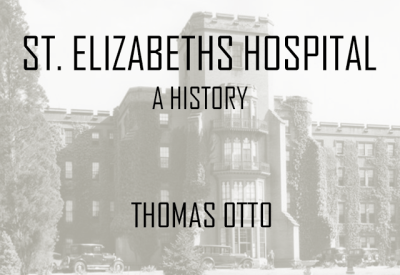
Published about a year ago, St. Elizabeths Hospital: A History, was recently fêted at an awards ceremony at Constitution Hall here in Washington, DC. In front of an audience of thousands about 500, author Thomas Otto accepted the Mayor’s Award for Historic Preservation Excellence in Public Education. At the awards ceremony a image-rich video was played describing both the history of the hospital and Otto’s process. If you’re impatient (or an inpatient), you can fast forward to 1’22”.

The best part about this history is that because it only exists in PDF format, it is available for free online, and, with no printing budget limitations, the book is chock-a-block with historic photos that can be enlarged to show otherwise hidden details.  If you want to read the book or just look at the pictures, you can follow this link.

For much of its history, St. Elizabeths was as much village as it was hospital. Sitting on a hill overlooking Washington, DC, it was home to patients and staff for over 150 years. Opened in 1855, the hospital was the first federal facility for the mentally ill and was often at the forefront of the field of psychiatry. Hundreds of boxes of archived documents, photos, and plans tell the story of this hospital where staff lived among patients, patients helped maintain the hospital farm, and the hospital farm kept them both fed. Now that history comes to life in this full-length history of St. Elizabeths Hospital.

You can read the history here. (15MB pdf file)

Three British women and one rogue male

 
I have been very lucky in my reading choices lately, loving eleven of the twelve most recent books that I have read. This is particularly gratifying since I have had such a difficult time getting out of my reading slump this year.

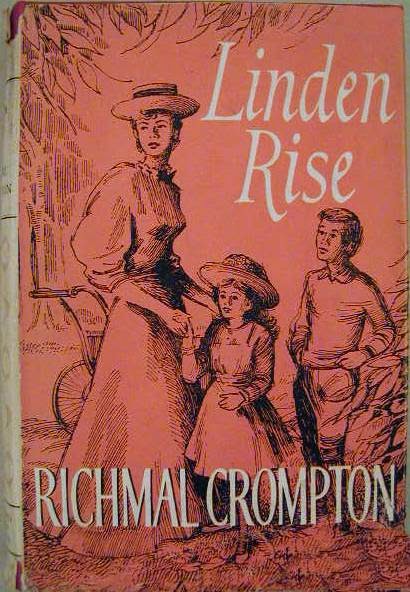
This is not how I pictured the characters.

Linden Rise by Richmal Crompton
I know that Crompton has written about 4,000 William books, but that is not how I know her. Never having read any of those, my only experience with Crompton has been with her fantastic novel Family Roundabout republished by Persephone. Recently when I was about to make a purchase of three vintage D.E. Stevenson books from an independent online bookseller based in the UK, I noticed he also had a Crompton for sale. Impossible to find in the US, I snapped it up without hesitation.

Like Family Roundabout, I loved, loved, loved, Linden Rise. Although it isn’t as nuanced or complex as Family Roundabout, both novels focus on families of adult children headed by widowed (or eventually widowed) matriarchs. In this case, the action centers around young Matilda Pound a 15-year old who enters service for the first time at a country cottage called Linden Rise. When she first arrives the house is about to be leased by the Culvertons looking to escape London for the summer. (Or was it some other city? One forgets.) Tilly, as Matilda is known, is one kick-ass housemaid who eventually becomes cook and housekeeper. Tilly knows her place for sure, but that doesn’t keep her from intervening with one or two family members when they are being pills. And she does it fabulously in ways that make you want to cheer. She is like an action hero without the super powers or violence. In fact, she deserves to be made into an action figure. That would be awesome.

I finished Linden Rise about ten days ago, but I could sit down right now and read it all over again. It was such an enjoyable read. If only some publisher would reissue all of Crompton’s adult fiction. Prices for some of her books are really crazy expensive. If you are ever out book shopping and see one of Crompton’s adult novels for less than 20 pounds, just buy it.

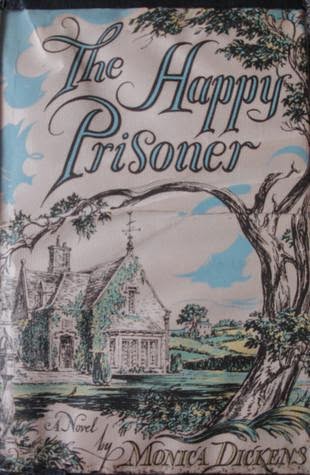
The Happy Prisoner by Monica Dickens
Dickens is another Persephone author, but unlike Crompton, my first experience with Dickens, her novel Mariana, left me somewhat ambivalent.  I enjoyed it, but couldn’t muster much enthusiasm. My “review” was only one sentence followed by some visual analysis of the fantastic Persephone cover.  Having now read another of Dickens’ novel, I am inclined to go back and re-read Mariana to see if I would like it more now.

In The Happy Prisoner, the center of attention is on Oliver North (no Americans, not the Iran-Contra felon), a wounded WWII soldier convalescing at his family’s country home. And it literally centers around him in the ground floor study that has been turned into his hospital room. The entire novel is set in those four walls with action outside of it being described by the family and friends who come in and out of the room. There could be a little more omniscience that I am forgetting at the moment, but this could easily be dramatized on stage without the need for any set changes.

I liked The Happy Prisoner only slightly less than Linden Rise. It also had shades of D.E. Stevenson as multiple marriages ensue and everyone comes up smelling like roses in the end.

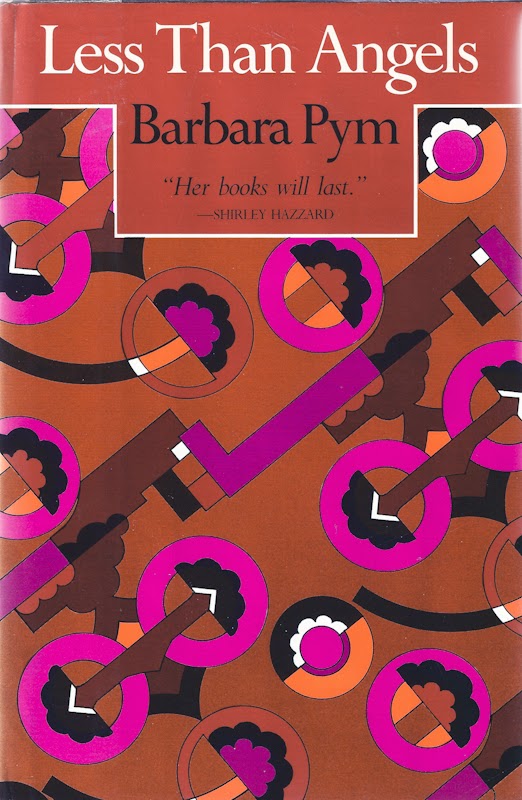
Less Than Angels by Barbara Pym
Typical Pym, this. Which means it’s bloody brilliant. Unlike the two wonderful novels already mentioned in this post, Pym’s work is easily a cut or two above. They are deep, and clever, and humorous in ways that push her from mere author into the genius category. The novel is full of the usual cast of Pym characters, academics, and clergy, and librarians, and so many excellent women. Catherine Oliphant is a writer living with her anthropologist boyfriend. He begins an affair with another woman, an anthropology student and eventually Catherine begins to move on, developing an interest in an older anthropologist. One can imagine Pym sitting in the corner with a pad and paper taking notes on the mating rituals of this tribe of British anthropologists.

As enjoyable as it was, Less Than Angels, is not my favorite Pym. But that is a pretty high bar.

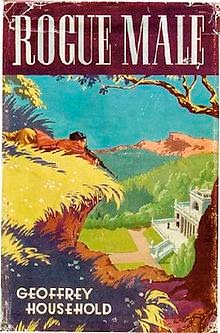
Rogue Male by Geoffrey Household
I have a giant stack of NYRB Classics that I bought just because they are such beautiful books. When it comes to this publisher I tend to err on the side of buying every one of them unless the blurb makes it absolutely clear it isn’t going to interest me. It was wonderful then to pick this one out of my TBR and realize how perfectly it fit with my recent interest in mid-century spy/crime fiction. In this case an Englishman in the 1930s attempts to assassinate an unnamed European despot (it’s really Hitler) and finds himself fleeing back to England where he continues to be hunted by the multiple parties who want him captured. This book is pure adrenalin and suspense. Published in 1939, it is fascinating to see how hard it is for someone to disappear in 1930s England. One would think it would have been easier to disappear back then, but apparently not. This book is one part Ambler and one part Shute. A fantastic book.

I’ve become a counter-revolutionary

Photo credit: John Schiffmayer for Lit Reactor

Remember a few week ago when Simon Savidge threw down the gauntlet and challenged us all to be a part of a Reading Revolution? In a quest to find novels that were under the radar and relatively undiscovered, he suggested we go to the library and take out a stack of recent-ish titles that didn’t get much in the way of popular notice. I dutifully went off my local library and checked out nine novels that fit the bill. I found it all very exciting at first. And then I started to read them.

Niccolo Amaniti’s I’m Not Scared may have gotten praise from some of my readers, and I recognized it was well-written, but when the kid didn’t tell his parents he found the body of a dead boy, I was just annoyed and didn’t feel like reading it. I had better success with Miss Fuller, an historical novel by April Bernard that explores the life and early death of the writer Margaret Fuller who was part of the Transcendentalist movement. But then I moved on to Remembrance of Things I Forgot by Bob Smith and things really started to go bad. I only read about the first five pages. It is such a piece of crap. I was prepared for the fact that it was science fiction–a (gay) man, working for the government, builds a time machine–but I wasn’t prepared for how bad it wold be. I was willing to suspend my disbelief for the time travel bit, but I was unwilling to suspend my disbelief for how clueless Smith is when he writes about the world of top secret government projects or even the scientific process. If he was so sloppy with reality, how lame would his fantasy be? Ugh. It really pissed me off. I dipped into other books, and well, I found them all to be trying a little too hard and I decided to abandon the rest of them.

You may be thinking I gave up too soon. I probably did. But, at the same time I was trying to read through that stack, I was also reading two books by Eric Ambler that I picked up on that same trip to the library. The difference is that Ambler’s work has not been under the radar and I didn’t pick him up randomly, but rather he had been recommended to me. This just reinforced for me that the best way to find something good to read, under the radar or otherwise, is from personal recommendations. The interesting thing about this recommendation is that I didn’t get it from someone I actually know. I got it from a knowledgeable book seller.

Several weeks ago, contrary to type, I was in the mood for some old fashioned crime or spy novels and had this exchange on Twitter.

So when I made my trip to the library for the Reading Revolution I couldn’t help looking to see if they had any Ambler on the shelf. They had two of his novels at my local branch and I checked them both out. The first I read was State of Siege which is not so much a spy novel as, hmm, maybe just suspenseful. An Englishman who is about to return home is caught in the middle of a coup attempt somewhere in Southeast Asia. It was written in 1962 and had a exactly the kind of old fashioned vibe I was looking for. I loved it.

And then I moved on to Kind of Anger which I loved even more. Written in 1964 it is a tale of confidence tricks and international espionage. An Iraqi exile gets murdered in his Swiss home, a magazine journalist is under huge pressure to find a story on the case which the police have all but given up on, and he ends up getting caught in the middle of way more than he bargained for. But he also goes rogue on the assignment and hopes to make some serious cash by getting a little too involved with his subject. Not only does it take place in the south of France but there are land record offices involved, land lines, messages at hotels…just the kind of thing I was looking for.

I can’t wait to read more Ambler. The curious thing is, I don’t really know the man who recommended him. I somehow follow John (aka @johnnie_cakes) on Twitter, but I don’t have a clue why I first decided to follow him. I certainly don’t know enough about his reading tastes to know if I should trust him. But, being the good indie bookseller that he is, he sure knows how to recommend books. He is a the publicity manager for Murder by the Book in Houston, (@murderbooks) and I must say he does his store proud. (Hmm, I wonder if they have any Ambler on their shelves…) My only trips to Texas are to visit my brother-in-law in Austin, but if I ever do make it to Houston I am putting Murder by the Book on my itinerary. I am intrigued by the possibility that I may like mysteries more than I have always thought–at least as long as they are the right kind.

Photo credit: John Schiffmayer for Lit Reactor

You can, of course, follow John and/or Murder by the Book on Twitter, but John also has a great book blog.

Personal recommendations: 1
Reading Revolution: 0

My literary doppelganger

Since I loved Mary McCarthy’s novel The Group and liked The Groves of Academe, I couldn’t pass up this lovely hardcover edition of  Birds of America that I found recently at a book sale.

It’s 1964 and Peter Levi, an American with an intellectual Italian father, a classical musician mother, and more than a few step parents, heads off to Paris to study for a year at the Sorbonne. Although student riots and the escalating Vietnam War form a part of the story they are by no means the focus of this fairly humorous but very thoughtful coming of age novel. One of the things I appreciated so much about this book is that it is a contemporary account. One doesn’t have to wonder whether or not the author got the historical details correct. Some of the details and message seem so familiar to me I had to keep reminding myself that it was published in 1965. This was especially the case when Peter predicts the legalization of pot and more or less describes the car sharing programs that are in so many cities today. Although in his formulation, use of the cars would be free.

As much as I loved Peter’s life in Paris, it was nothing compared to how I felt about his life in the US which makes up the first third of the book. He is an old soul and he loves New England and was old fashioned even for 1964. He is a nerd and more than a little OCD. In other words he is a character after my own heart, and indeed I felt a very strong connection to his weird ways.

I have trouble asking questions unless it is a forum for questions, then I can’t ask enough. But in the real world, either because I don’t want to disturb people or out of fear of embarrassment, my inclination is not to ask for help. Here is Peter’s take:

Except in the classroom and of people he already knew outside it, Peter loathed asking questions. When he was little, he could not bear to have his mother stop the car and call out to a native for directions. “They won’t know, Mother! Please go on!”

John and I talk about retiring in the northeast and would love the opportunity to pull out a map and choose a spot. After divorcing her second husband, Peter’s mother decides they should leave Berkeley, California and move east. She let’s Peter choose where they will live. A romantic notion for sure, but I am also charmed by their pre-internet research and the possibilities and pitfalls that entailed.

She got the state guidebook out of the college library and looked up Rocky Port; she found the name of a real-estate agent in a directory of realtors and sent off a letter with their specifications, asking about schools and transportation.

When they get to Rocky Port on the Massachusetts coast, they set out to live their idea of America–chock full of nostalgia, and full of so many of the things that make me want to transplant myself to a small town in New England.

She had her own notions of what was American, going back to her own childhood. Reading aloud to children in the evening, Fourth of July sparklers and fireworks, Easter-egg hunts, Christmas stockings with an orange in the toe, popcorn and cranberry chains on the Christmas tree, ducking for apples at Halloween, shadow pictures on he walls, lemonade, fresh cider, picnics, treasure hunts, anagrams, checkers, eggs goldenrod, home-made cakes, muffins, popovers, and corn breads, fortune-telling, sweet peas, butterfly nets, narcissus bulbs in pebbles, Trillium, Spring Beauty, arbutus, lady’s-slippers, cat’s cradles, swings, bicycles, wooden ice-cream freezers, fishing with angleworms, rowing, ice-skating, blueberrying, hymn-singing.

The move also compels his mother to abandon her interests in cooking international food to focus on the foods of America. Peter’s worries that a diet consisting solely of American food will quickly become monotonous are soon laid to rest.

They had pot roast and New England boiled dinner and fried chicken and lobsters and scallops and bluefish and mackerel and scalloped oysters and clam chowder…They had codfish cakes and corned beef hash and red flannel hash and chicken hash (three ways), spoon bread and hominy and Rhode Island johnnycake and country sausage with friend apple rings and Brown Betty and Indian pudding and pandowdy and apple pie and cranberry pie…The rules of the Rocky Port kitchen were that every recipe had to come out of Fannie Farmer, had to be made entirely at home from fresh–or dried or salted–ingredients, and had to be, insofar as possible, an invention of the New World. Pennsylvania Dutch dishes were permitted, but gnocchi, they sadly agreed, although in Fannie Farmer, did not get under the wire…A dish, his mother decided, did not have its citizenship papers if it had been cooked in America for less than a hundred years–discriminatory legislation, Peter commented.

In the days when foodies like Julia Child were just beginning to change how Americans approached food and ingredients, Peter and his mother scoured the town for old fashioned things like beanpots. They also found it surprisingly hard to come by fresh fish even in a fishing village.

Like the curmudgeon that he is, Peter believes that tourists should have to pass an entrance exam before being allowed to see certain things like the Sistine Chapel. This is exactly what I said when we went on safari in Kenya. I want tourist spots preserved for me. The rest of you should stay home. He also laments his mother’s choice of phonograph player. “Does it have to be stereo?” Even in the details Peter and I share a lot in common, both of us favoring “The trumpet shall sound” from Messiah for the solo trumpet part. I listened to that endlessly as kid.

Feeling that Peter was a kindred spirit and enjoying the description of his world was the icing on a very thoughtful and funny cake. I think it may even land a 10 out of 10 on my reading scale which would make it an all time favorite.