The library that is, the year that was


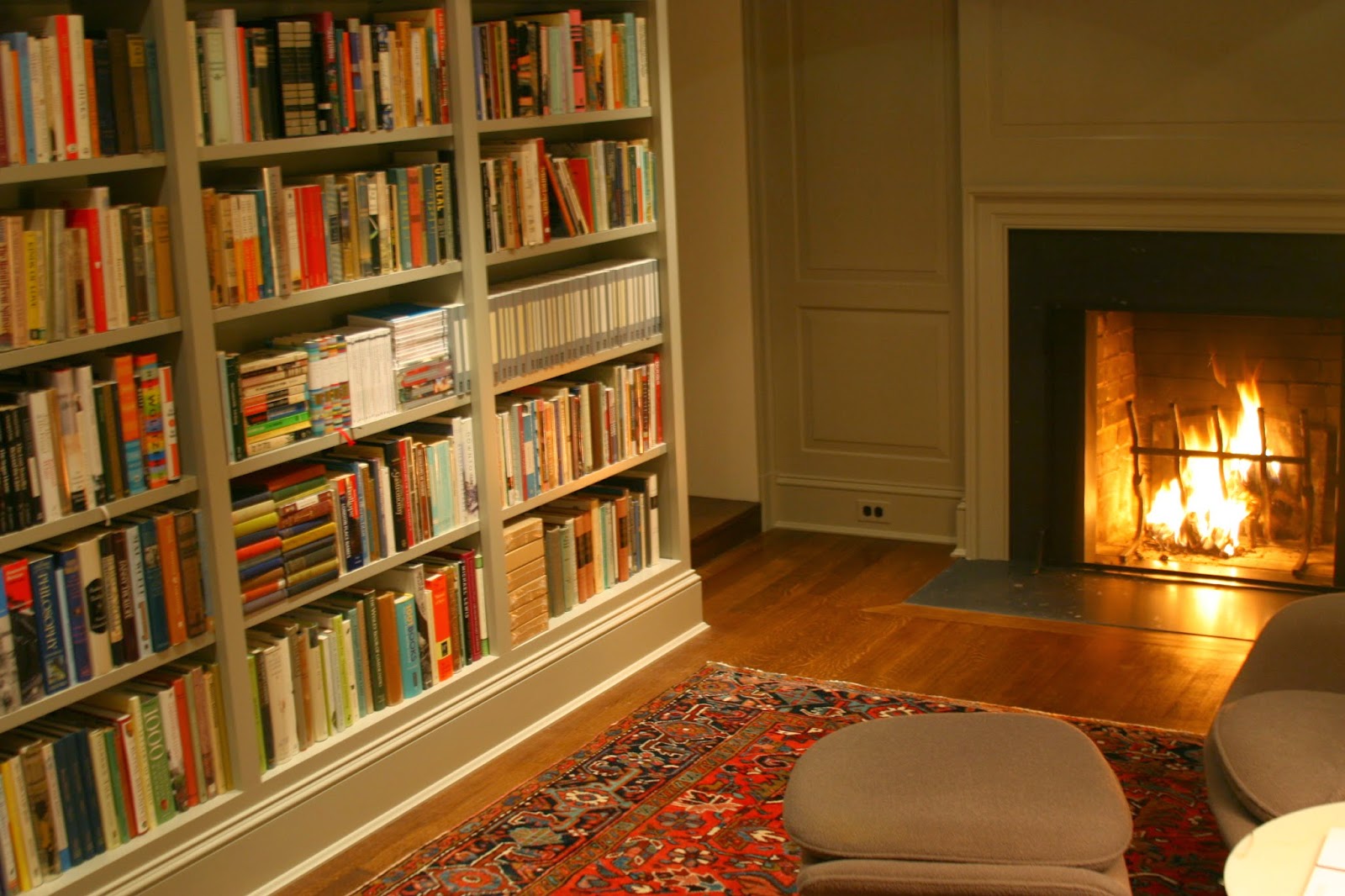
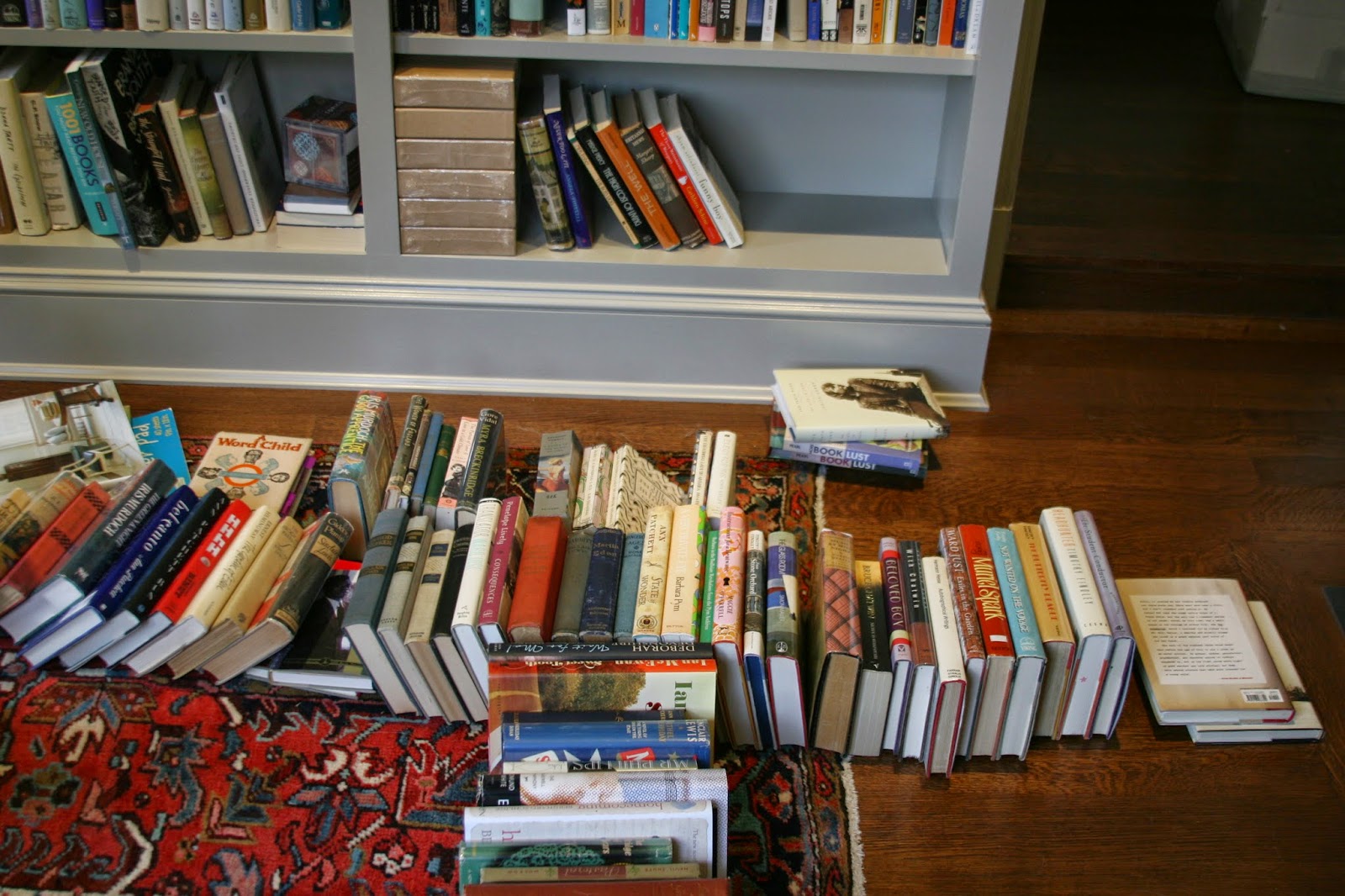
The row of grey Persephone books mark the end of the fiction. The two rows below that are various non-fiction books that have yet to be organized. I ran out of time.

There is so much that is overwhelming about moving back into a renovated house after eleven months away and with just five days to go until Christmas. Certainly much to be happy about but also much that is stressful and discombobulating. The holidays, work, impending appraisal and mortgage closing, aggravating punchlist items, frustrating utility providers, and the list goes on.

All of this makes it a little hard to get motivated to blog about the fun stuff, like organizing my new and improved library, and recapping my favorite reads for 2014. To aid my efforts, I have decided to use two handy crutches: photos and lists.

Top Five Yawns of 2014
Some of these titles had some redeeming qualities, but the overall impression they left was boredom, especially when viewed through the lens of a year-end recap.

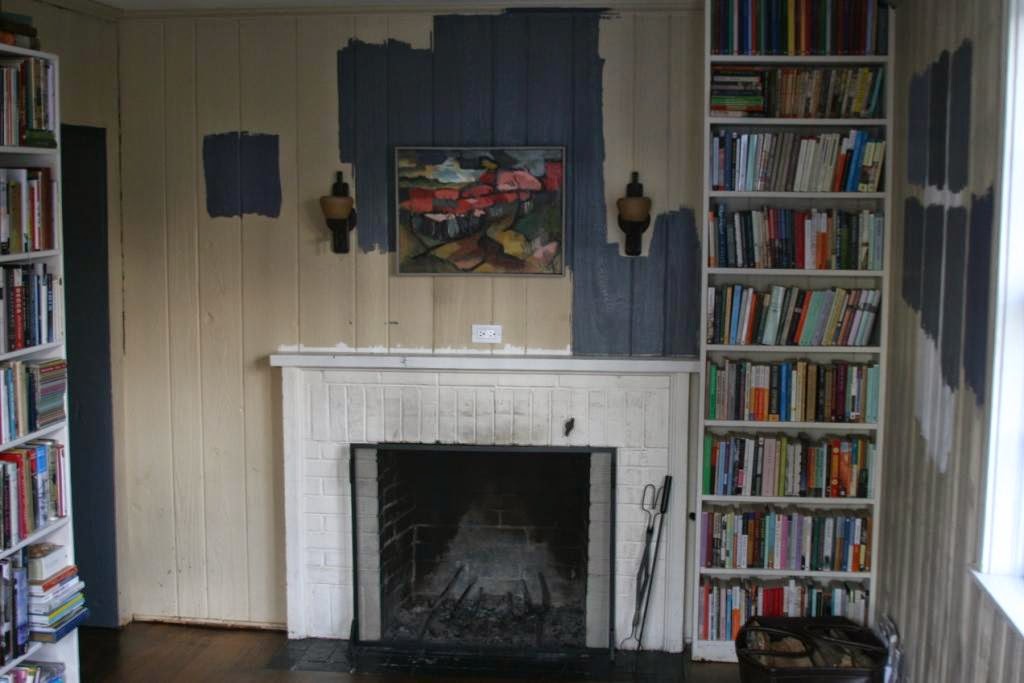
Same fireplace when we first moved in and were thinking about a grey paint for the library.

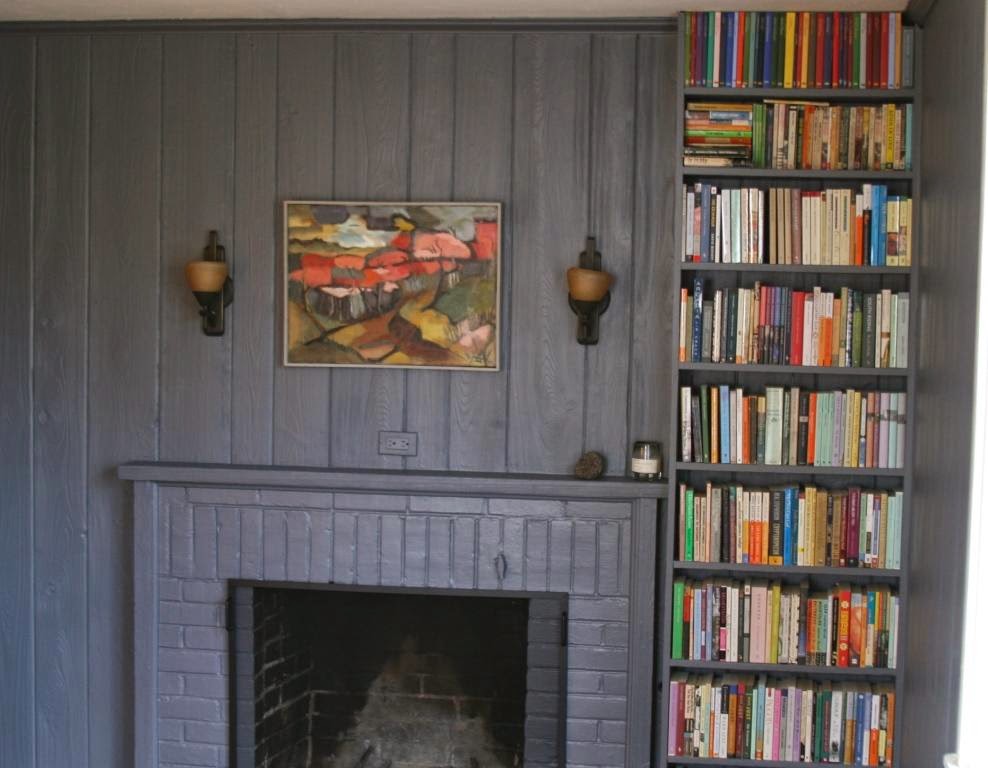
After over a year of living with those color swatches on the wall, I decided just go ahead and paint the library even though it would be torn up in a year. It was also a good experiment in what turned out to be a color and color direction we really didn’t want to go in the new library. The shelves to the right of the fireplace were not replaced. I gained some additional shelf space elsewhere in the library, but I will miss this odd bit. It’s where I kept most of my TBR.

Looking the same general direction showing a bit more of the shelves. We ended up going with a much warmer grey with a little more brown and green in it.

Top Five Pleasant Surprises of 2014
All of these novels were written by authors who were new to me. Three of them were recommended to me and two (Leary and Cameron) were just ones I thought I would give a go. Much to my surprise, I enjoyed all of them quite a lot.

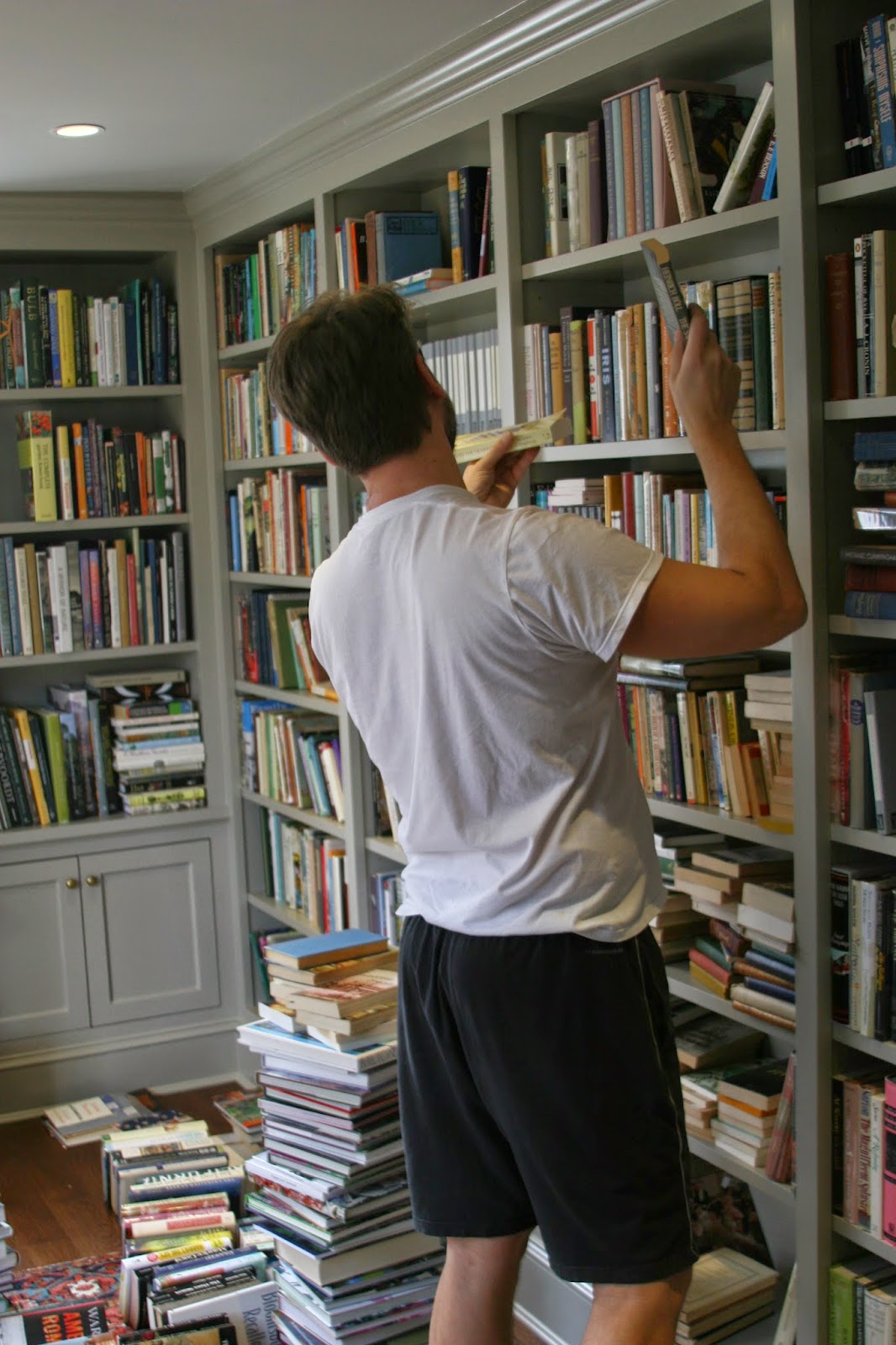
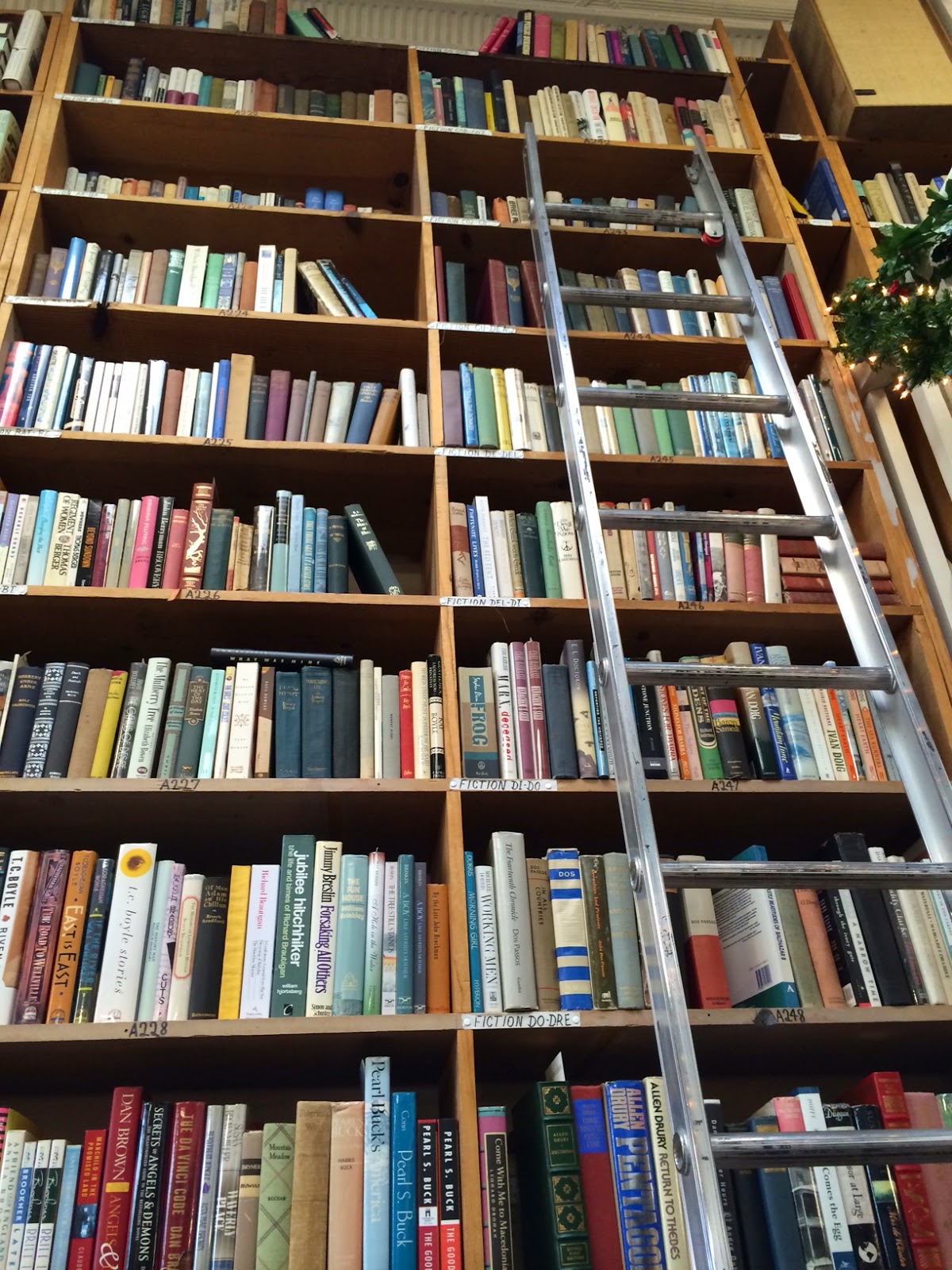
All of the books had already been put on the shelves, but they weren’t in any order. It took me most of a day to just get the fiction set right.

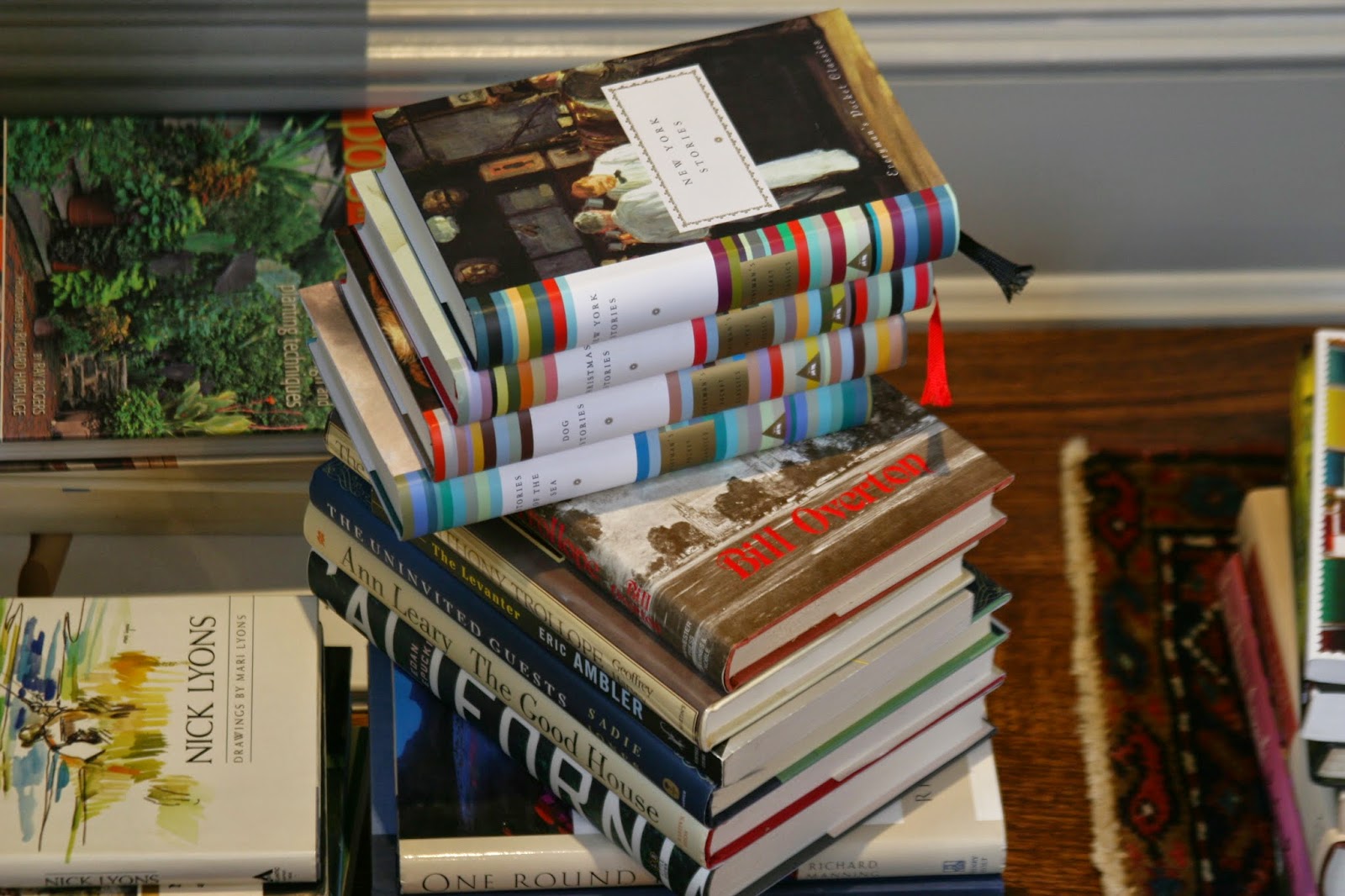
I haven’t read any of the stories in these Everyman collections, but their covers have been too darn pretty to pass up. 

The end wall shelves are deeper and will house mainly art, gardening, and coffee table books.

Early in the process. I was still on the Bs.

Five Books I Knew I Would Like
With all the upheaval in my life in 2014 it is no surprise I sought out some comforting authors to get me through it all. The Brookner was part of my re-read of all her novels while the rest are authors I have been able to rely on when I need a good, cozy read. Big surprise, all are British and all are women.

Another ‘before’ picture for comparison. I’ll admit this is looking pretty cozy.

Five Favorite Spy/Thriller/Intrigue Novels of 2014
There have been many years when I wouldn’t even have a single title that could fit this category. But this year I got a bit of a bug and a good tip off on Eric Ambler. What they all have in common is they are a bit old fashion and don’t have much, if any, violence. I unequivocally loved all of these.

One of the challenges I faced as I organized the fiction was whether or not to keep certain well-loved editions of books together or integrate them in alpha order with all of the other novels. In the end I kept the Persephones together but the NYRB and Viragos were split up.

Top Five Reads of 2014
In no particular order.

  • Americanah by Chimamanda Ngozi Adichie. I picked this one up with a bunch of other new hardcover fiction to get a bit more current stuff into my TBR. In the end this was the only one I ended up liking and I really ended up liking it. It made me go out an buy all of her other books.
  • Half of a Yellow Sun by Chimamanda Ngozi Adichie. A wonderful, if often tragic novel.
  • Birds of America by Mary McCarthy. Best known for her novel The Group, McCarthy has lots of other novels that are well worth reading. I took a particular shine to this one. I loved the main character and I love the fact that I picked it up by chance at a second hand book sale.
  • Quartet in Autumn by Barbara Pym. Not surprising a Pym makes the list. Full of Pym’s amazing character observations and witty prose but with a rather bleak outlook. Think of Brookner with a sense of humor.
  • The Human Factor by Graham Greene. Easily the best of the thriller type books I read this year and a close second to The End of the Affair which I read in 2013.

This has nothing to do with the library but everything to do with cute.

My bookish but not so bookish Thanksgiving

It’s well known I love choosing books to take on trips. As I contemplated our Thanksgiving trip out to San Francisco (the East Bay) my joy was somewhat dampened by the fact that I was going to have to do some work on the trip, not to mention the fact that our time was going to be pretty busy with family and friends and trips to Loard’s for Peppermint Stick ice cream. Still, I popped three books in my bag: The Dinner by Herman Koch, Arctic Summerby Damon Galgut, and Cold Light by Jenn Ashworth. But then, even with all these great things to read, I was distracted by two things: 1) Our plane had about 50 movies to choose from. I ended up watching American Hustle and Saving Mr. Banks, and 2) John bought The Andy Cohen Diaries at the bookshop at Dulles which immediately made me want to read something really fun like that. I ended up being rather bored by the flashback scenes in Saving Mr. Banks so I read bits from the Andy Cohen book while I waited for Emma Thompson to come back on the screen. (By that time John had put the book down to watch Boyhood.)
Despite being pretty busy once we landed I did manage to finish The Dinner by Herman Koch. It was quite disturbing for sure, but I loved it. Apparently it is often mentioned in the same breath as Gone Girl and indeed Gillian Flynn has a blurb on the front cover of the paperback. I understand why people make the connection but the Koch book is so much better written and provides way more food for thought than Gone Girl. I was smitten enough with Koch to buy his latest book Summer House with Swimming Pool at Book Passagein the Ferry Terminal on Small Business Saturday. I wasn’t sure I would necessarily like other work by him but a quick read of the opening paragraph had me instantly hooked. I also ended up buying Richard Flanagan’s Booker Prize winning novel The Narrow Road to the Deep North. Normally I wouldn’t buy a Booker winner in hardcover, but Simon has had so much good to say about it that I couldn’t resist. And since he was the one who put The Dinner in my hands when he visited in August, I thought I might be able to trust him. At least this once.
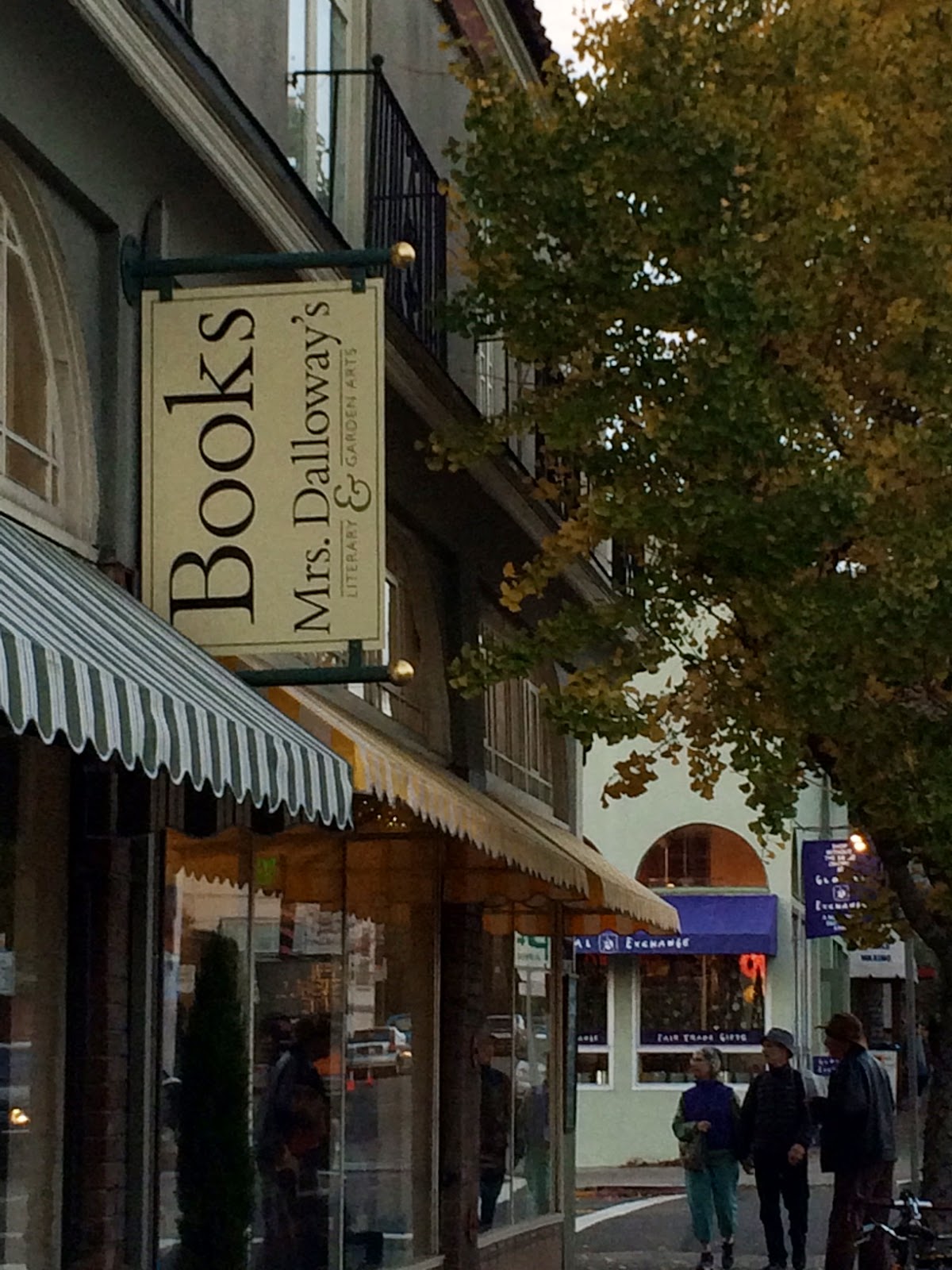
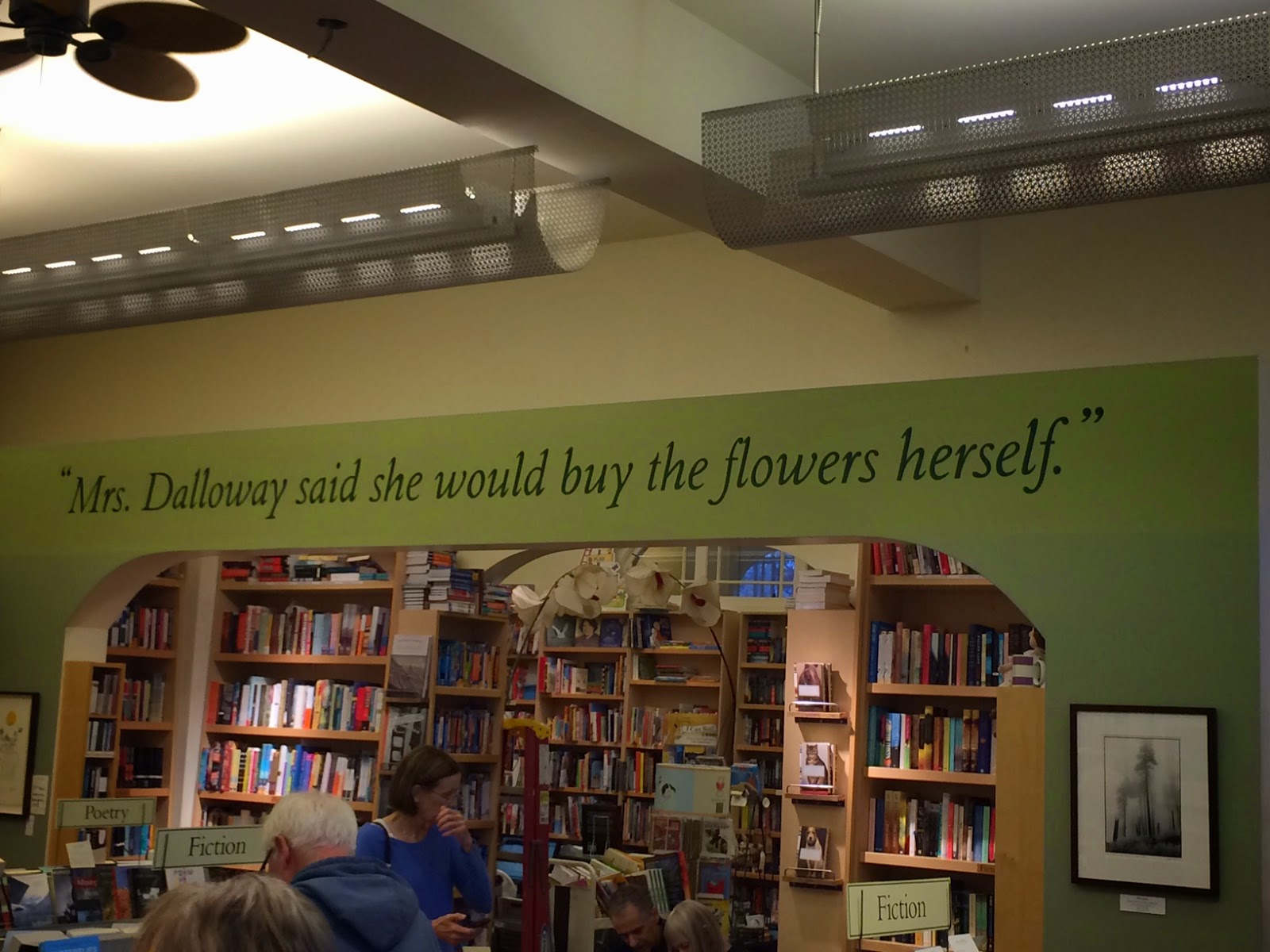
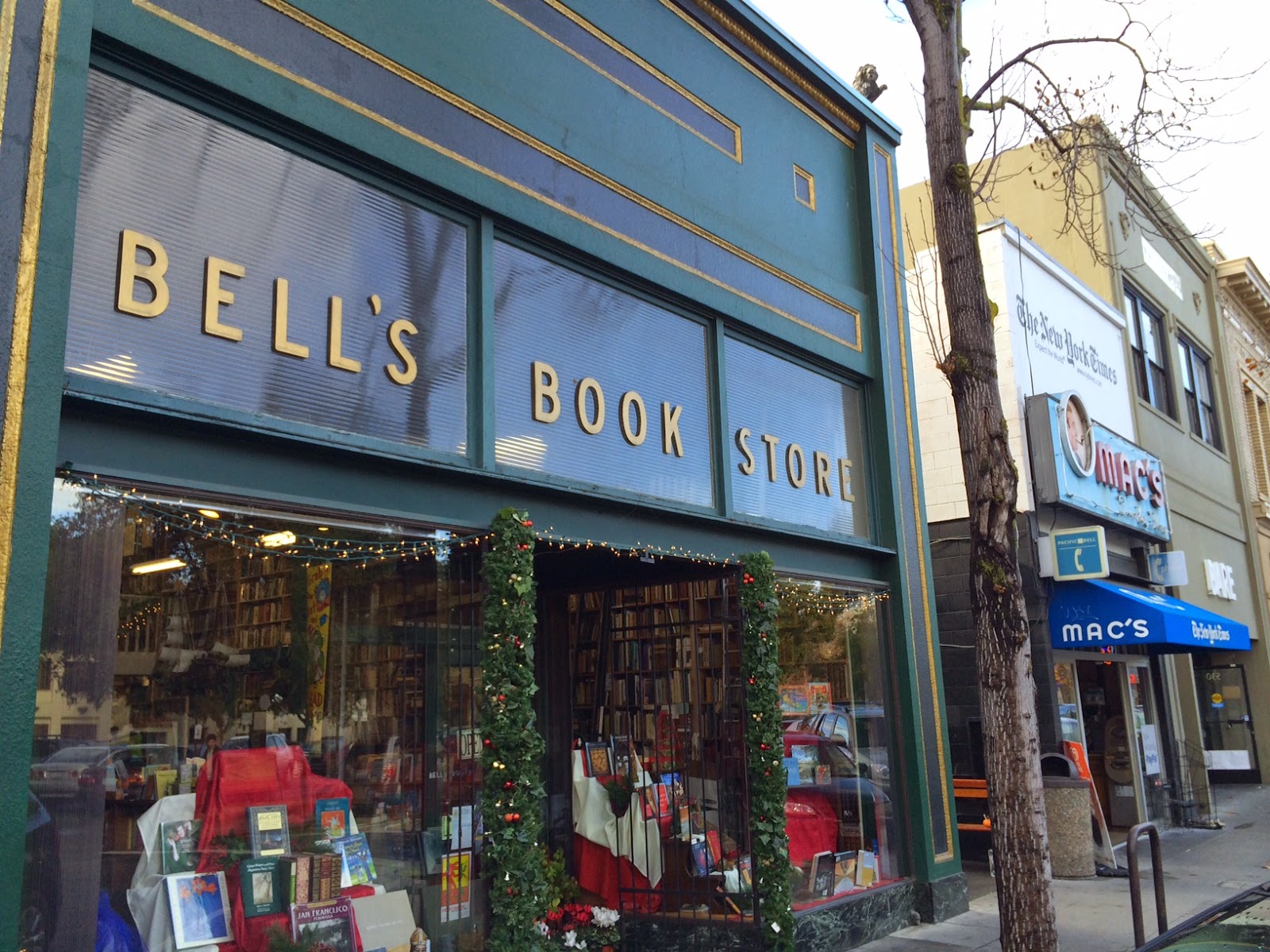
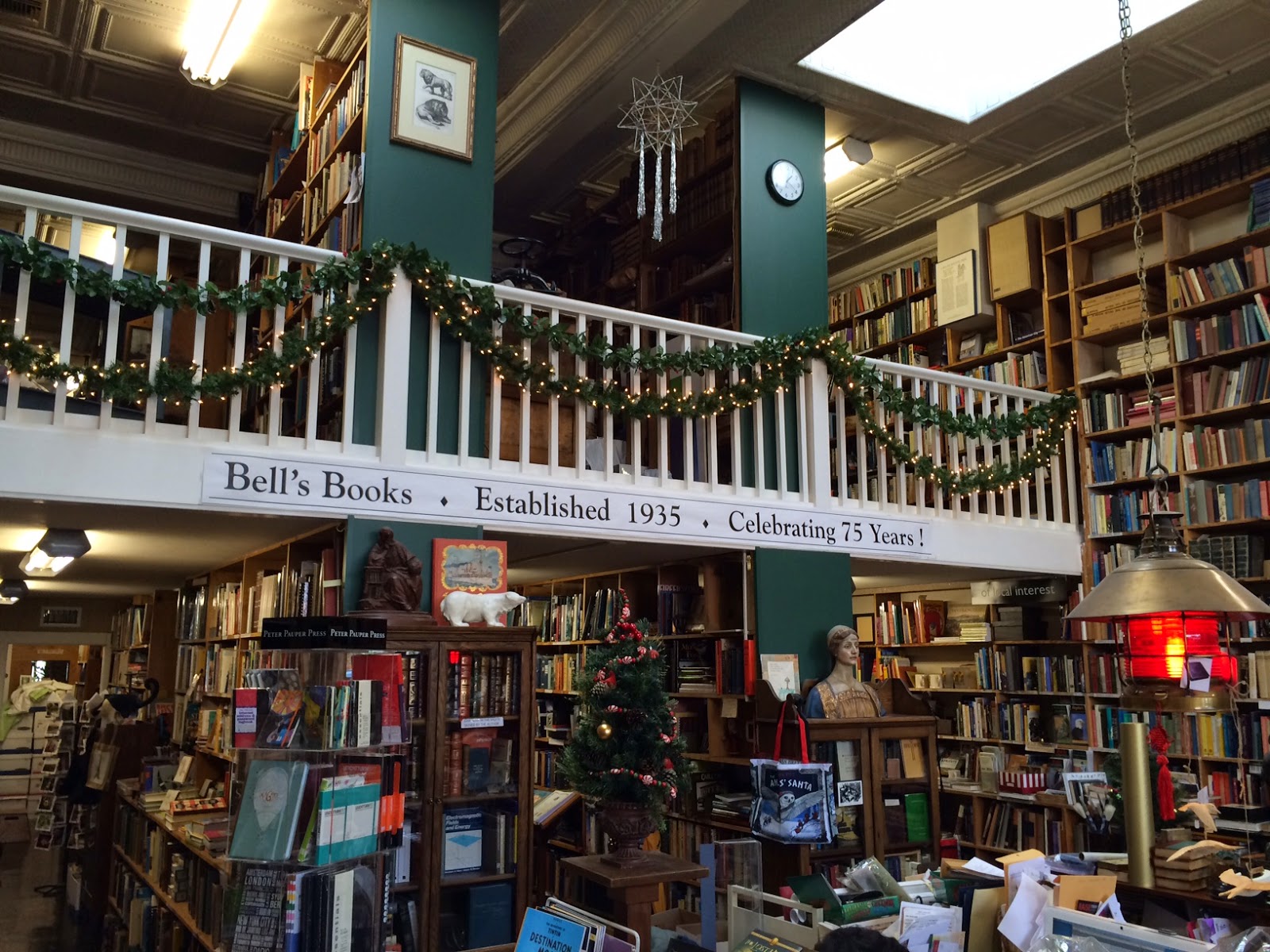
Although I wasn’t really in the market for any books and only bought two on this trip, I did poke my head into three book stores.  In addition to the above mentioned Book Passage, I also had a look at Mrs. Dalloway’s in Berkeley and Bell’s Books in Palo Alto.

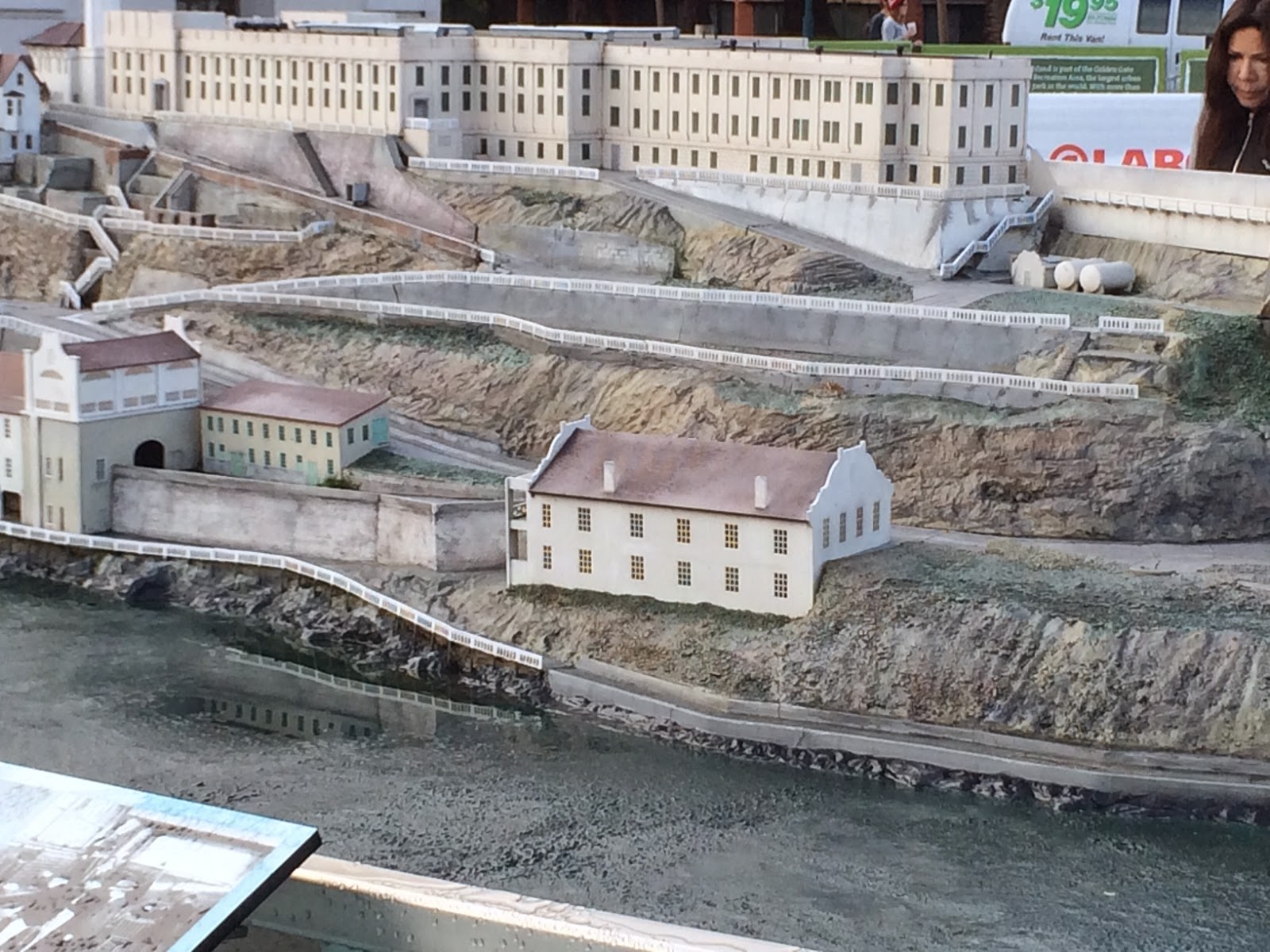
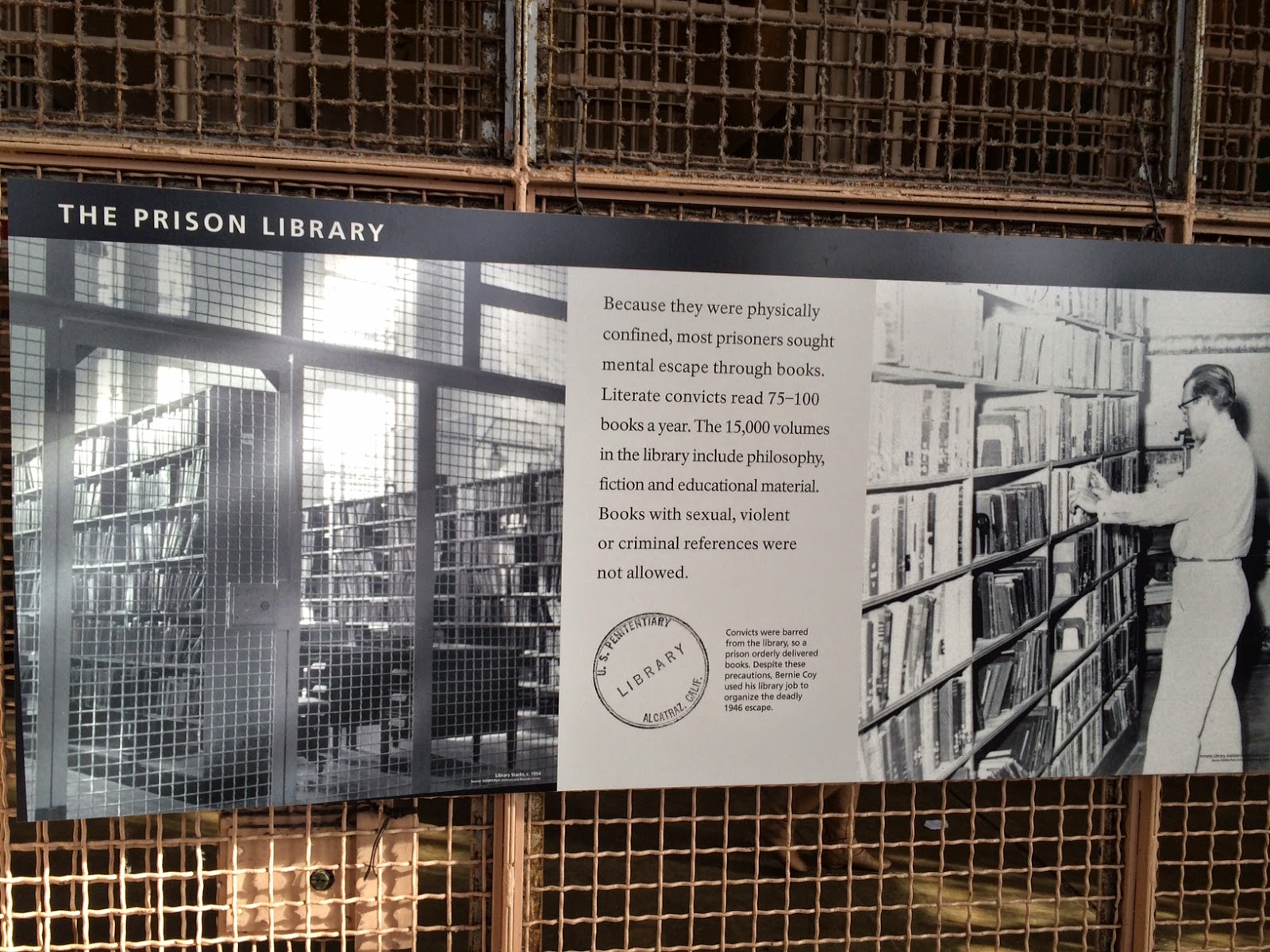
I couldn’t go to Alcatraz without getting a picture or two of the space that used to house the prison library.
Looking at the scale model of Alcatraz while we waited for the ferry.

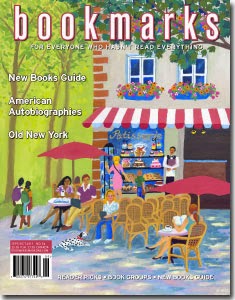
On our last day in the Bay Area we visited friends who I don’t get to see more than once a year. John has been friends with his friend John since they were about three, and with John’s wife Pamela since they were all students at Berkeley in the mid-80s. Of course it was fun to catch up and share some laughs, but I also had the unexpected pleasure of being able to sit down and have a good chat about books with Pamela who is an avid reader. Now, I know you all have had those holiday visits where you come across another reader who automatically starts recommending books willy-nilly—most of which you know you will hate. But with Pamela this was not the case. In fact, now that I think of it, I might have been the one who was recommending more than I should have. During the course of our conversation she pulled out a magazine called Bookmarks. Yes, an actual, printed, hold in your hand and turn the pages, kind of magazine. And it’s all about books. How have I never heard of this magazine? From what I could see it takes a lot of cues from its readers in terms of what it covers and how it compiles various lists of what to read next. One thing that particularly interested me was a feature on science fiction. Kind of a beginner’s guide to exploring the genre. As most of you know sci-fi isn’t necessarily my thing, but my recent reading of The Sparrow piqued my interest, so that kind of quick guide was just the ticket.

After all this book chat with Pamela, and right after I pronounce my dislike for Joseph Conrad, I find out that not only was John an English major, but he wrote his thesis on Conrad. That’s me, always putting my foot in it. Thankfully John hasn’t devoted his life to the study of Conrad so I don’t think the (paper)cut went too deep.

Something for everyone: Truly random thoughts

 
1. My brother and his family got two new puppies recently.

2. United’s merger with Continental has done no favors for us here in the DC market.

3a. I wonder how much of Audible’s sales are attributable to erotica?

3b. Speaking of Audible, it is amazing how much a part of my “reading” life audiobooks have become. So much of my anti-audiobook bias has fallen away. I am even tempted to start counting them on my “books read” list because the feeling when one finishes one is pretty much the same.

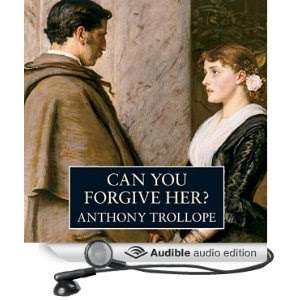
3c. I love the way Tim West pronounces the word “club” in his Trollope narrations. The guy reading my current Nevil Shute isn’t quite as plummy when he says it.

4. I kept trying to replace a comma with a period. Then I realized it was gunk on my screen.

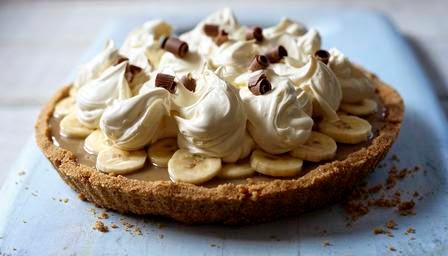
5. I need your banoffee pie recipes. As I asked my FB friends to discuss their favorite pies, a British ex-pat friend of mine living here in DC bemoaned the lack of good banoffee pie available here in the US. I was actually surprised it was available at all. She has challenged me to make one from “a proper British recipe” and with biscuit, not pastry crust. I’ve been looking around online and can’t decide if I have found anything acceptable. Do you have a favorite recipe for it? Mary Berry says that today’s condensed milk packaging with the pull tops make it inadvisable to do the boiled can method, so I don’t think I will try that–although I would love to.

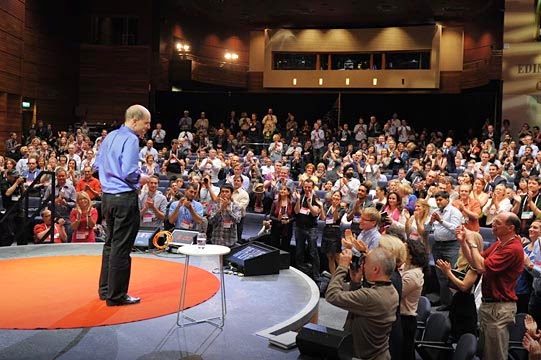
6. I wouldn’t mind if Ted Talks disappeared.

7. Since I’ve gone back to work in September my sleeping schedule has been decidedly old mannish. I don’t seem able to sleep past 6:30, even on weekends and then I want to be in bed by 10 pm. And I’ve always been a  night person. Plus it is wreaking havoc with my reading time, much of which used to happen after 10.

8. Going to northern California for Thanksgiving next week. Always fun to choose reading for a trip. But I fear my free time while we are out there is going to be taken up with work, as my previously scheduled trip is now in the middle of an unexpected deadline.

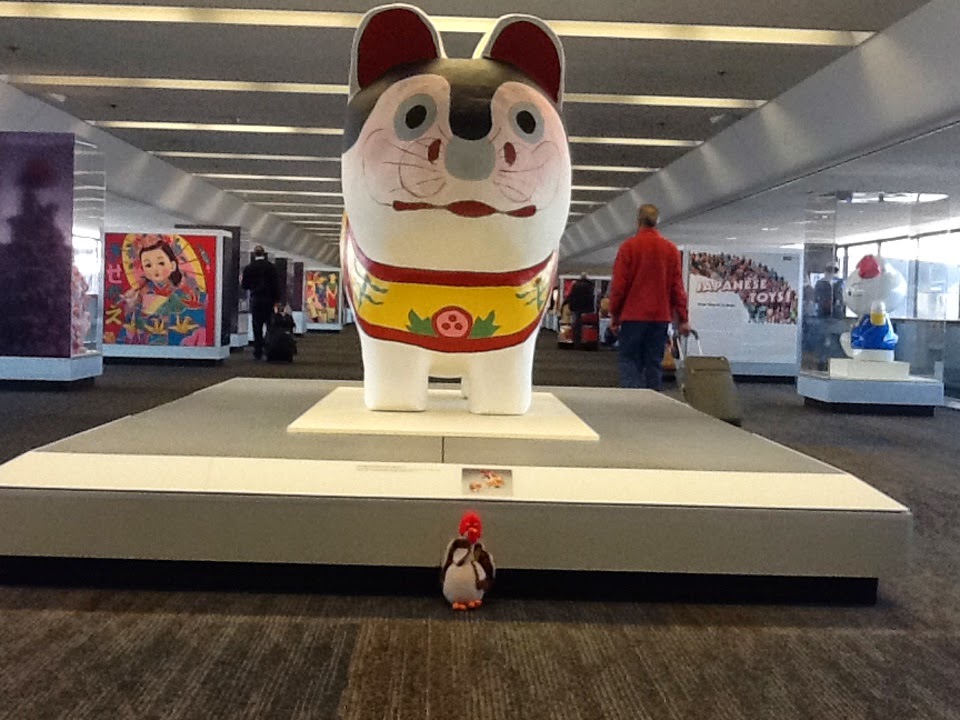
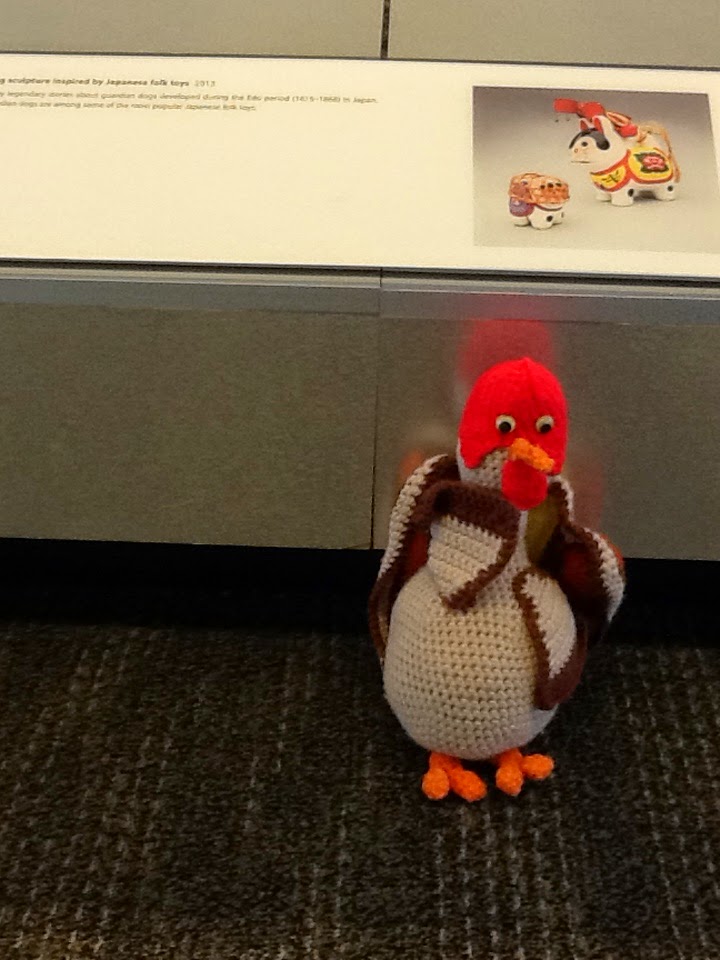
Helmut the crocheted turkey posing at the San Francisco airport last Thanksgiving.

Helmut wishing you all a Happy Thanksgiving

9. I’m amazed I made it to #9 without mentioning our house. We move back in in 26 days. Not only am I really looking forward to filling up those shelves, but John and I have kind of given up on this apartment. Our interest in keeping the place tidy has reached a nadir.

10. I’ve noticed that the book blogging world is like a college newspaper in the way that old ideas/issues are brought up every so often as if they had never been addressed before. After I graduated from college and after I worked in London for six months, I ended up in a job at the University of Minnesota Hospital so I was back on the campus of my alma mater five days a week. I continued to read the school’s newspaper and couldn’t help notice that both news and feature articles seemed to be retreads of ideas and issues that had cycled through once or twice during the four years I was a student. I guess one can’t blame each new crop of students has to hash things out for themselves in an endless loop.

Old news : Old books

 
I have been so bad at keeping up with my blog feed. It has been about 30 days since I really looked at it and I had about 500 blog posts to look at. Actually, as I write this I still have about 390 yet to go through. I’m just now hitting all the readathon posts, and you all know how long ago that was.

I also just came across Simon’s post about the man who got locked in the Trafalgar Square Waterstone’s. This is also a topic we have chatted about on The Readers. For those of you who haven’t heard the story, a man accidentally got locked in the store and Tweeted about it and it was a big, fun, hullabaloo, especially for us bookish types.

The thing is, I actually wouldn’t find that at all interesting. Well, let me qualify that, the only way I would find it interesting is if the store was a secondhand bookshop. I would find a new book, bookshop realllllllly boring. Here’s why: I would be too keyed up to want to read anything and there are no surprises in a new bookshop. I pretty well know what I would find, so short of reading, there wouldn’t be much that would interest me. Whereas in a used bookshop, the whole night could be spent rooting around for hidden gems. I never have enough time in a used shop to really comb the shelves and dig through the many layers books stacked here and there.

And, as an added bonus, I would have the time to organize and clean the store. This is a fantasy of mine. I would love to be let loose in a messy store in need of alphabetical rigor. I once spent 20 minutes at the main public library putting all their Trollope in proper title alpha order. It was fun and in the process I found five copies of the book I was looking for. (Of course, you are probably wondering why in the world the library shelves were out of order, but alas, that is the state of the sad DC public library system.)

Once on vacation I visited a great used bookstore in Nyack, New York. It was a store I had spent some time in about five years previously. It was clear that in the intervening years the owner had given in to his obvious hoarding tendencies and couldn’t keep up with the mountains of books he was acquiring. I told John I could spend the rest of my vacation just organizing that store. If only.

But in a new bookstore. Oh look, there is Atwood. Oh look, there is Dickens.  Oh look, there is…see what I mean? No surprises, everything in order, yawn.

Places I would like to get locked in:

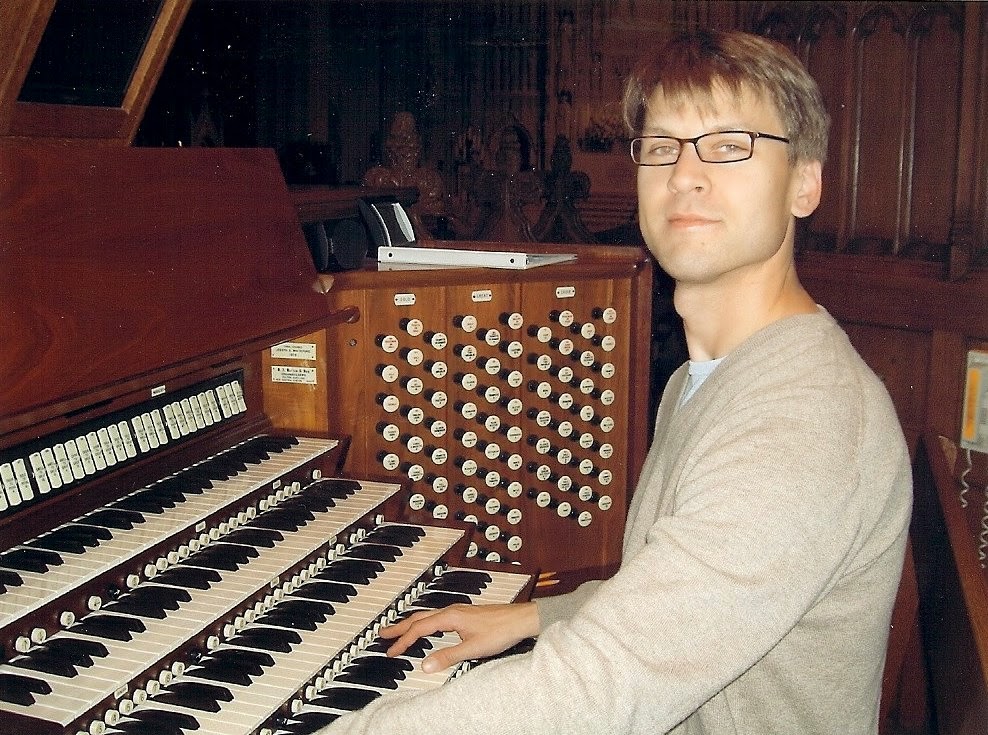
1. A cathedral with a giant pipe organ. I can’t actually play the thing, but I would like unlimited time to play around with the stops and see what does what with no time constraints. John once bought me an hour with the organist of the National Cathedral here in DC which was almost as good.

2. A grand old English house like Chatsworth, but also preferably one that hadn’t been kept up too well. I want to see all the rooms that the public doesn’t get to see like attics and such.

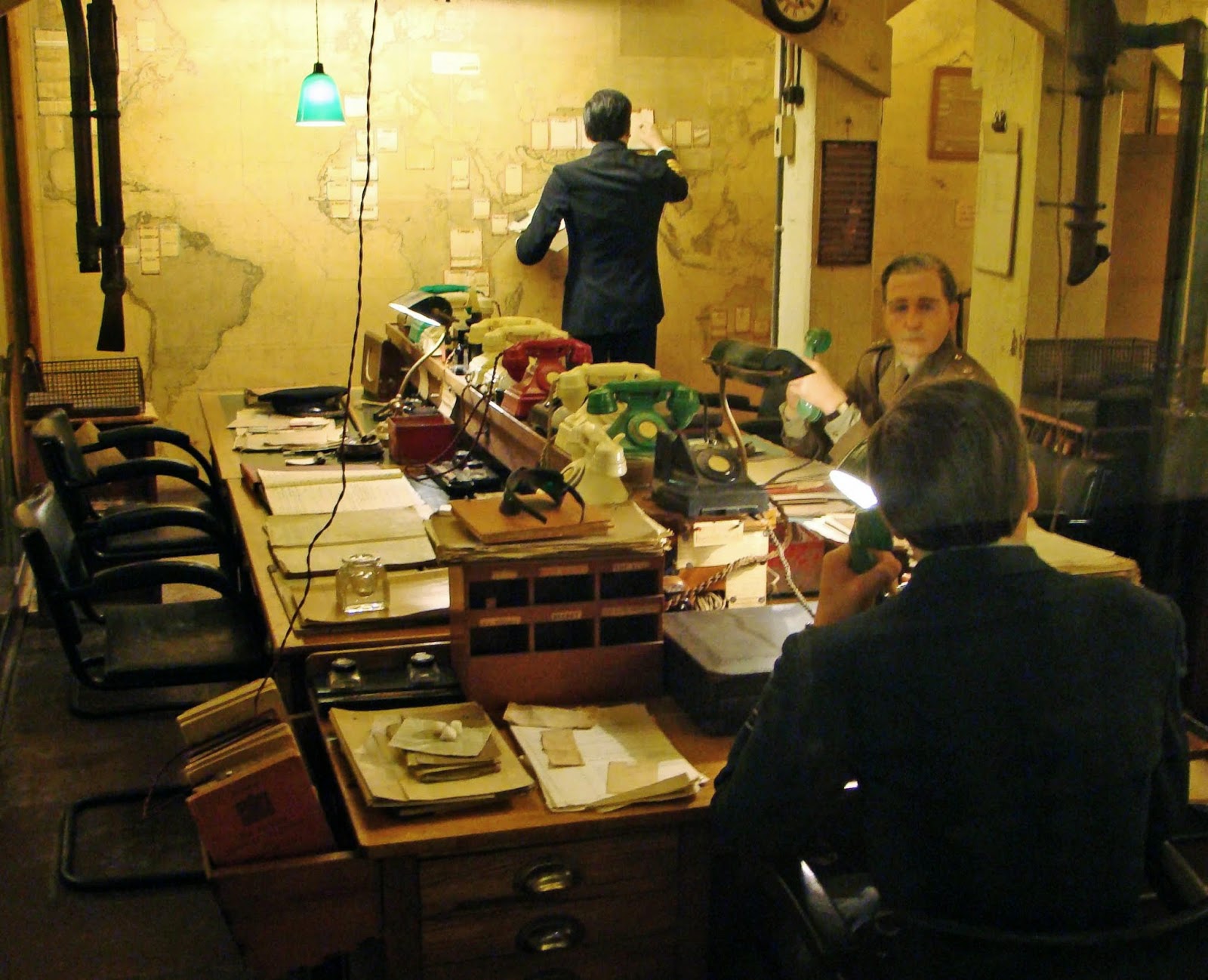
3. The Cabinet War Rooms in London. They are set up just like they were during World War II. So many files and push pins and typewriters. It would be fun to play around.

4. Buckingham Palace. For a similar reason to number two above, but also because I would love to comb through the Queen’s collections of jewels and clothes. See what’s on her bedside table, etc.

5. The V&A. Of all museums, I think this one would be the most fun. Again, lots of attic-fossicking action.

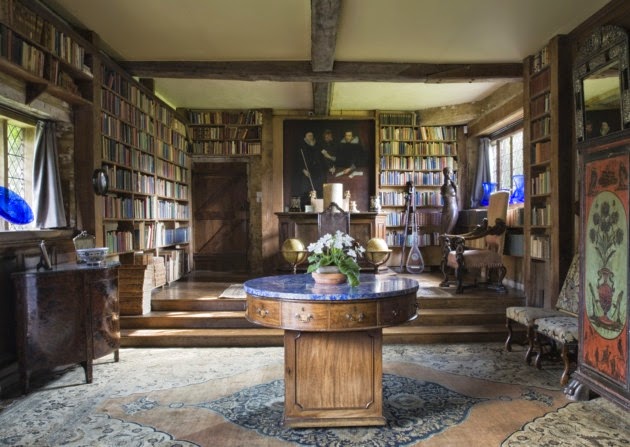
6. The library at Sissinghurst. Not only because it is a library, but because it is chock full of early 20th century fiction. No doubt I would find some gems there. Would also like access to Vita’s study up in the tower which also is lined with books.

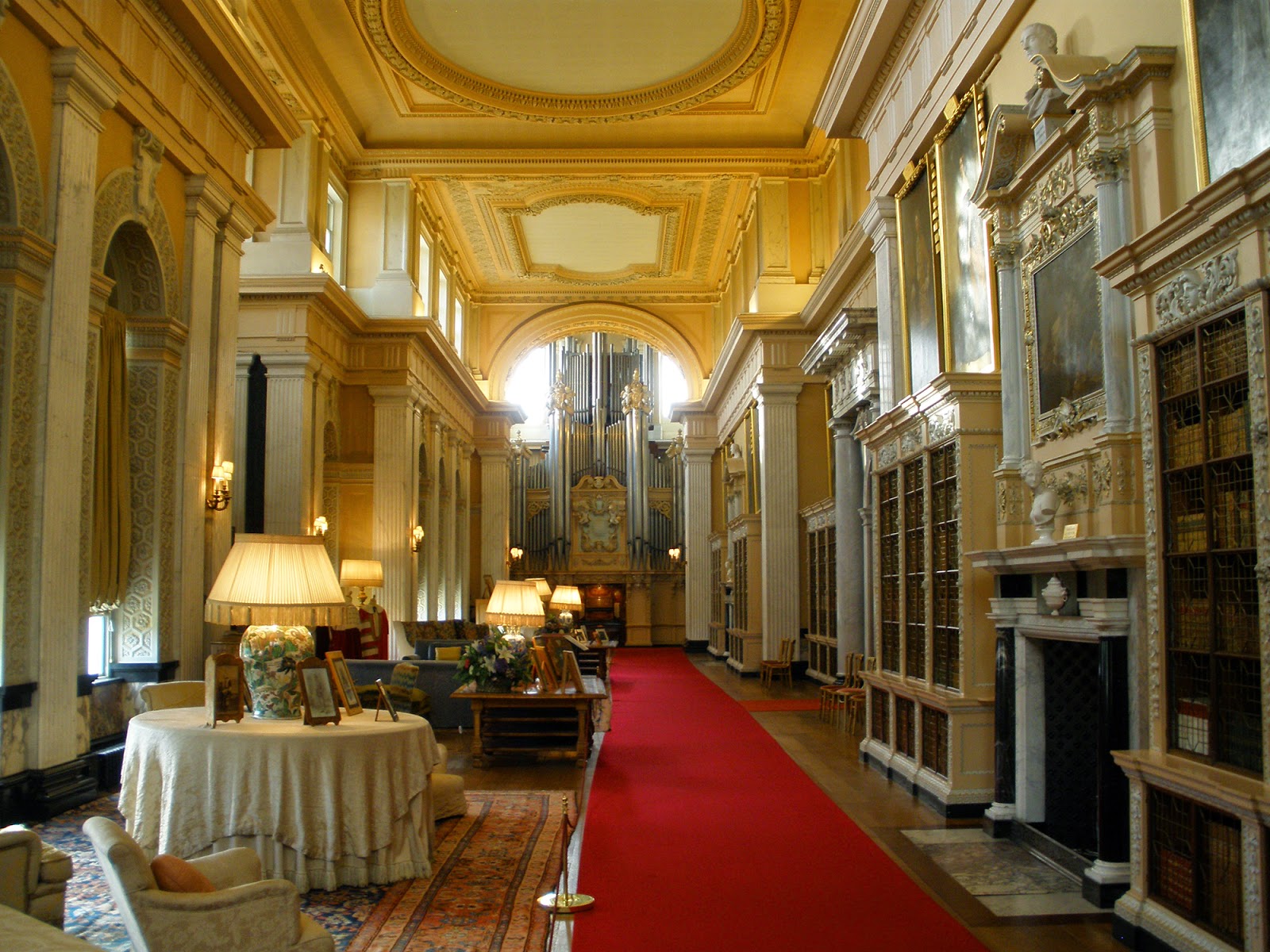
7. The library at Blenheim. I’ve noticed when I have been to Blenheim, that not all the books in the library are ancient. Plus there is a pipe organ and really comfy furniture.

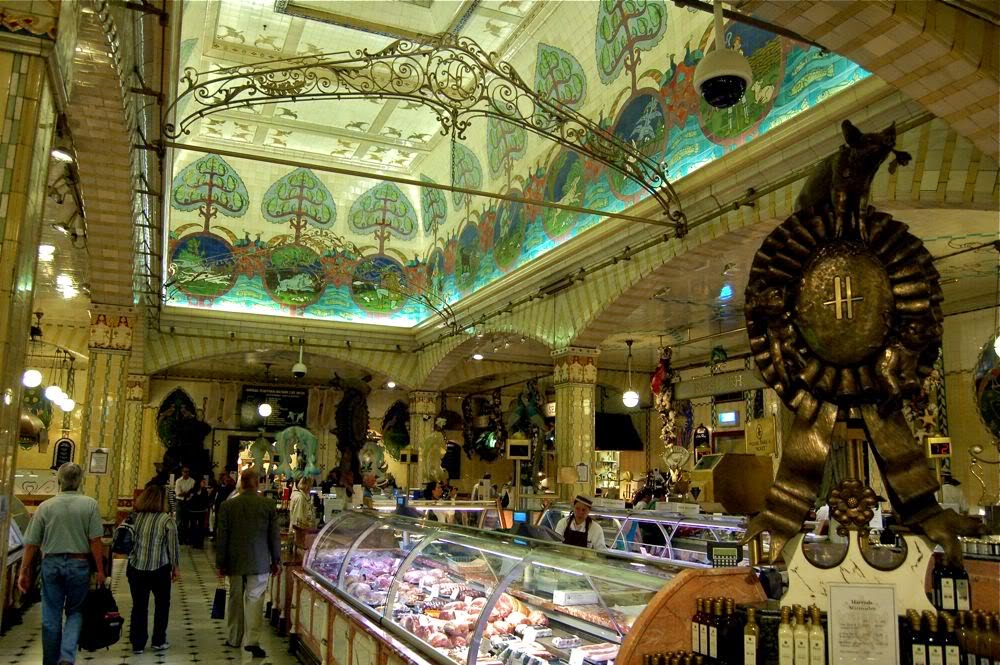
8. The food halls at Harrods.
The perils of reading more than one book at a time

The new job appears to be having an impact on my reading habits. I just don’t seem to have the energy to do as much reading. I can’t really complain about not having the time, I just choose to waste it in front of the TV these days. Hopefully that won’t last forever, but that is where I am.

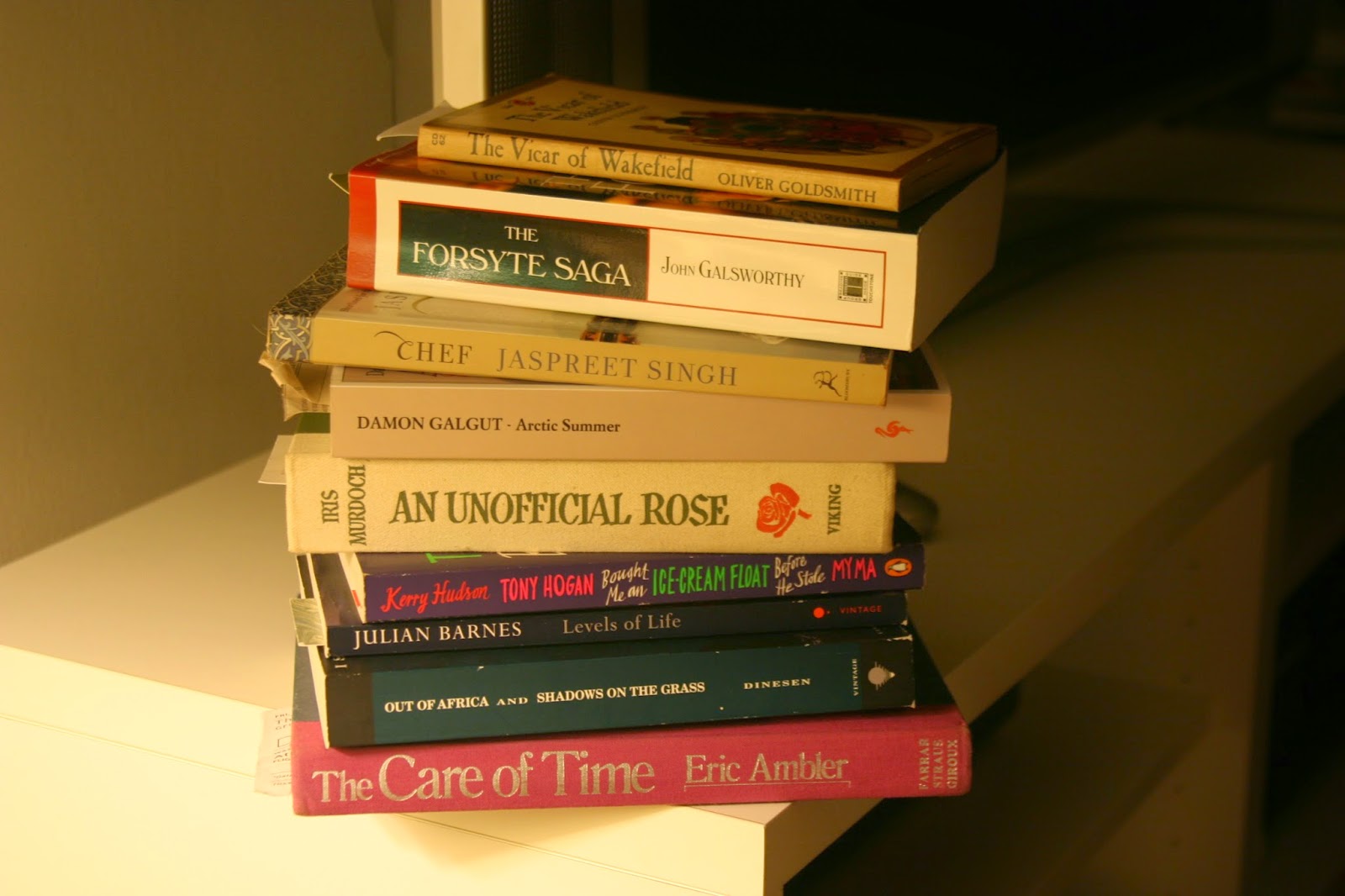
Some of this stack, like Out of Africa, The Foryste Saga, and The Vicar of Wakefield, I started what seems like eons ago. I didn’t put them down for any reason other than I picked up something else(probably more frivolous) to read.

Others like Chef and Levels of Life have proved to be a little more tedious than anticipated. I will finish the Barnes because it is so short and I have so few pages left to read, but I am not so sure about Chef. I haven’t found it very compelling and I would have to probably start over to reacquaint myself with the characters and plot.

I’m almost done with the Kerry Hudson, which I have been enjoying, but as I started my job, I found myself needing something a little less gritty and a little more comforting.

I am enjoying both the Murodoch and Artic Summer by Damon Galgut, I just let other things like The Sparrow get in the way. The Galgut incidentally is a fictionalized account of E.M. Forster’s travels in India. I’ve been wanting to read it since Eric first wrote about it at Lonesome Reader.

And finally, Eric Ambler’s The Care of Time is the page turner that is keeping me from getting back to everything else in the stack. During the readathon I was going to devote 12 hours to finishing up more than a few of these, but that weekend, I had to bring home work.

Even as I sit looking at the stack, I don’t feel all that compelled to pick any but the Ambler up. On the other hand I could knock out the Barnes and the Hudson in short order. And I could jettison Chef and not feel badly at all. That would still leave six in the stack. Hmm.

Waiting

As we slide into the final two months of our renovations and have to pay for moving expenses, floor coverings (probably sea grass in most places), and transition from construction to permanent financing, the last thing we needed was another expense. And I haven’t even mentioned the deferred maintenance on the car finally, and unavoidably, caught up with us. So what do we do? We buy a painting.

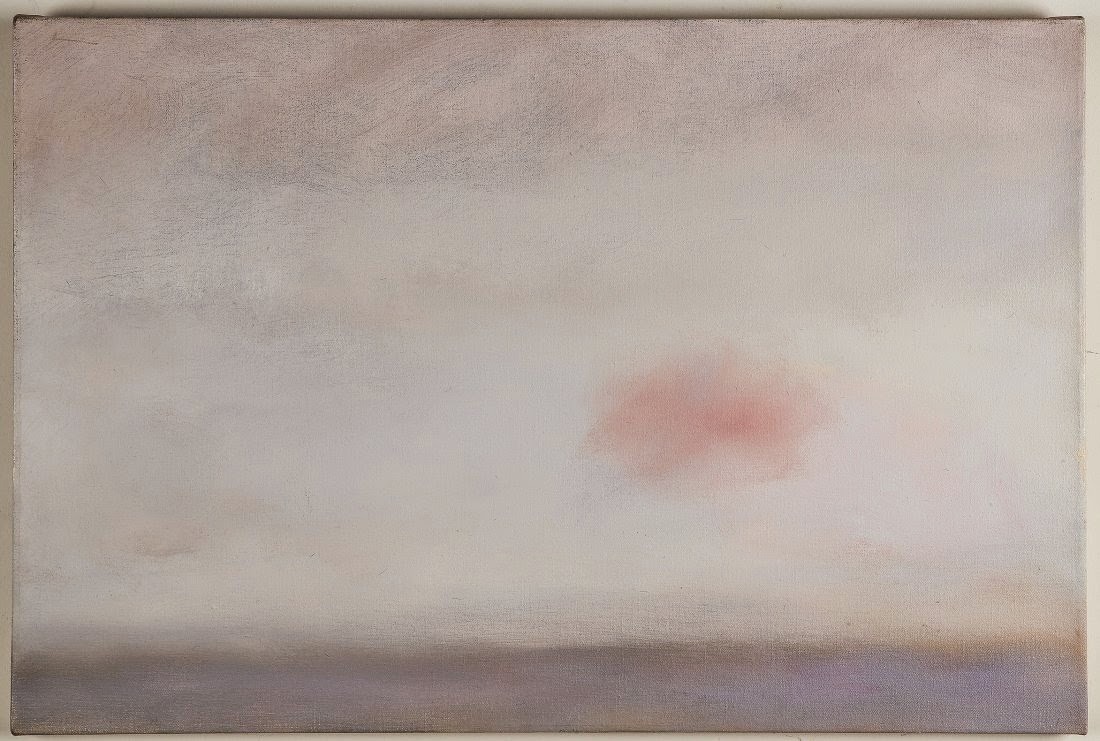
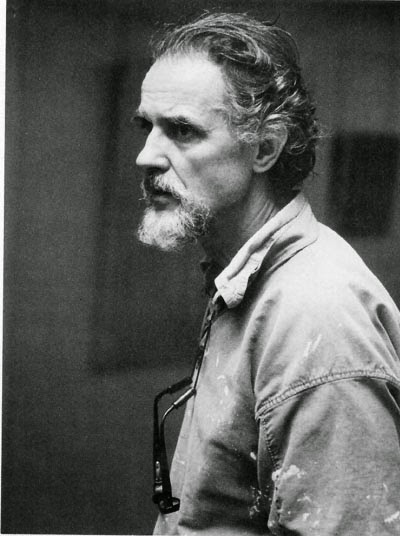
When I met John he was a huge fan of the abstract expressionist artist Jon Schueler (1916-1992), a member or the New York School of painters who swirled with the likes of Rothko. Through his cousin in New York, John was friends with the artist’s wife Magda (she is too lively to be thought of as a widow). Our first Thanksgiving together was spent in Greenwich Village where I not only met Magda, but got to see three or four really amazing Schuelers that belonged to his cousins. On a subsequent trip to New York, John got a chance to pick out his very own Schueler painting, albeit a small one. About 10″ x 12″. It was painted in 1979 and is called “Galeforce: Waiting”. It’s a subtly beautiful study of the sky and ocean off the coast of Mallaig, Scotland, presumably while there was some weather happening. It has had pride of place in the four different bedrooms we have occupied in the past decade. In all cases it has been interesting to see the various moods it takes on in the changing, indirect light, that filters into our mostly north-facing rooms. No doubt, almost like the changing moods of the skies over Mallaig.

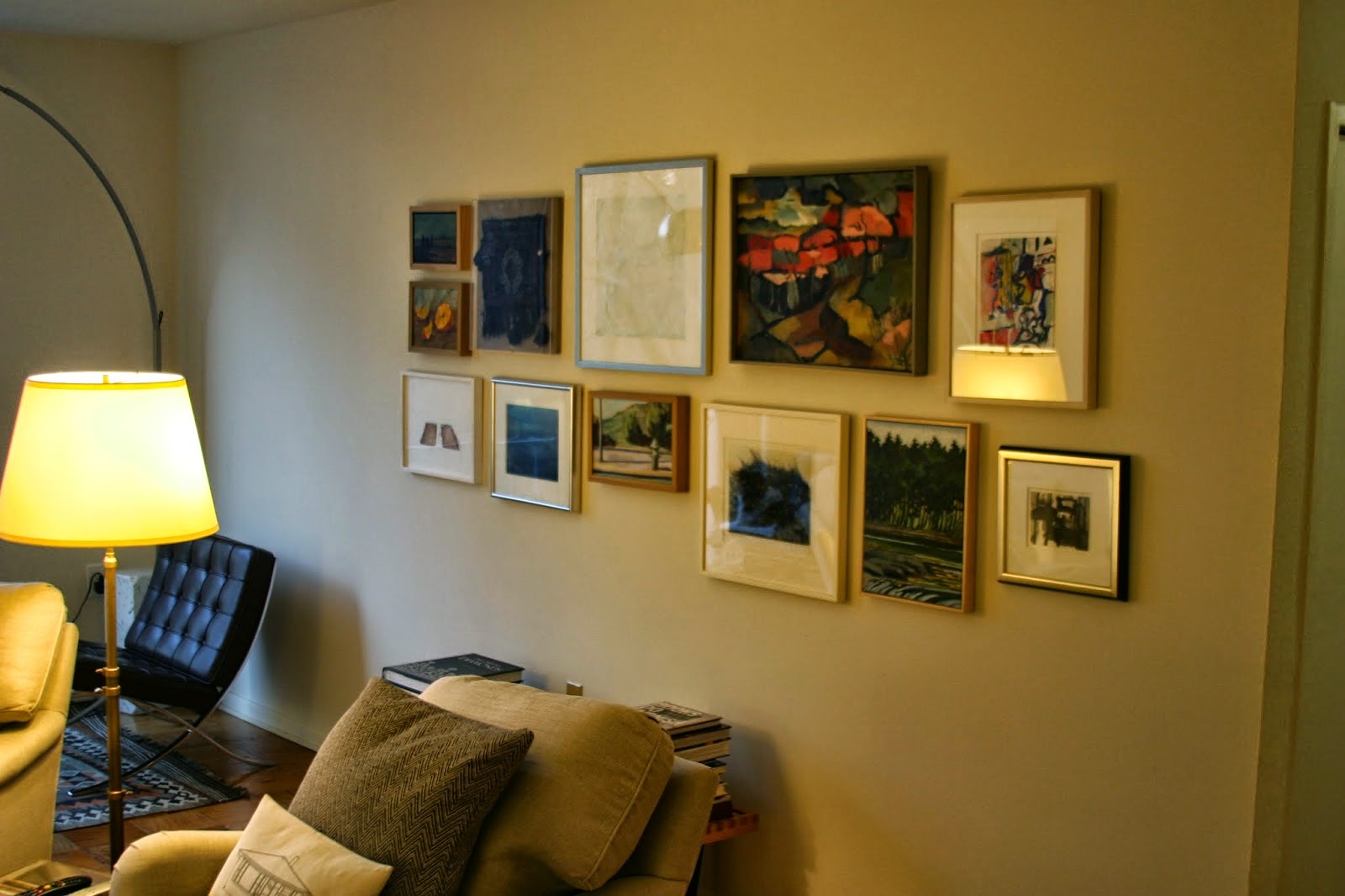
When we moved into our house in 2010, we realized that our small, art collection was really a small-art collection. With one exception, we really didn’t have anything of a big enough size to hold it’s own on even a modestly, big wall. Most of what we had was picked up here there, often while traveling, and, while enjoyable, didn’t really give us much to work with. We needed something bigger.

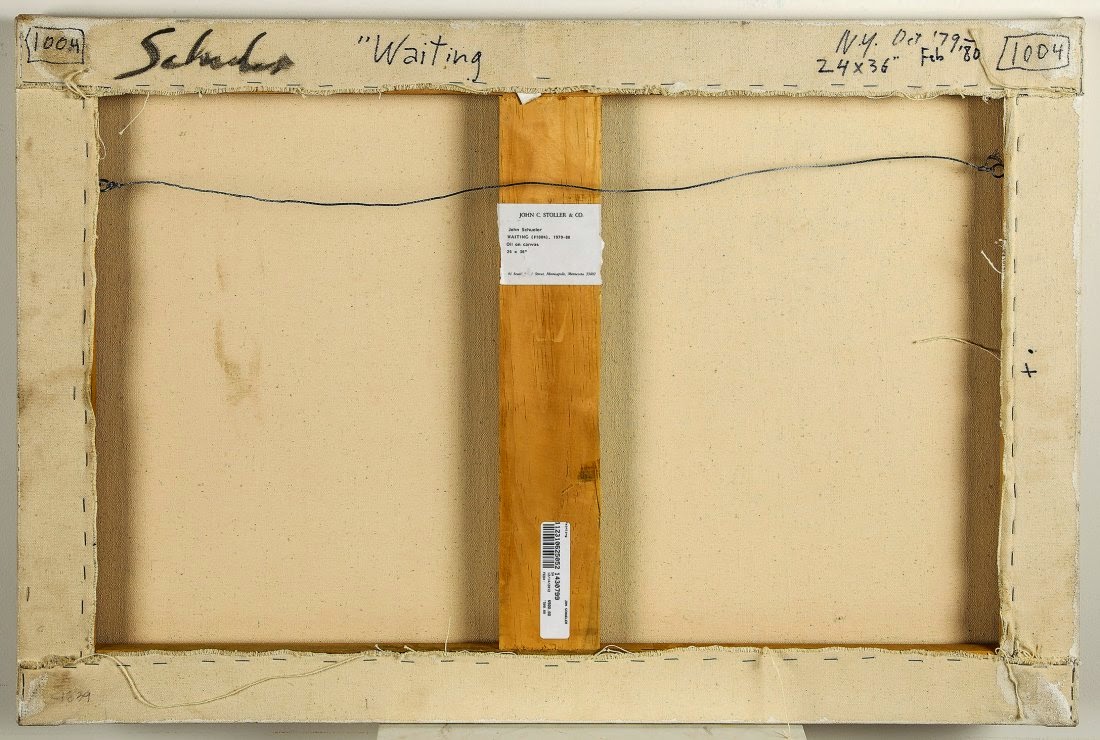
Then, a few weeks ago, John came across a Schueler up for auction and we decided it was too good to pass up. It was from the late 70s/early 80s which is the period of Schueler’s work John likes most. At 24″ x 36″ it was a size that could comfortably fill a real wall, and it was buried in an auction catalog with a bunch of frou-frou antiques and fussy figurative painting so we thought we could actually have a chance of winning it. Which we did. Similar to our existing Schueler, it is called “Waiting” and it is beautiful. The title seems particularly apt given that we have been waiting so long to start and now complete our house project, not to mention that we will still need to do a bit more waiting before we can go back to New York to pick out another one.

Our mish-mash of enjoyable, but small art.
 
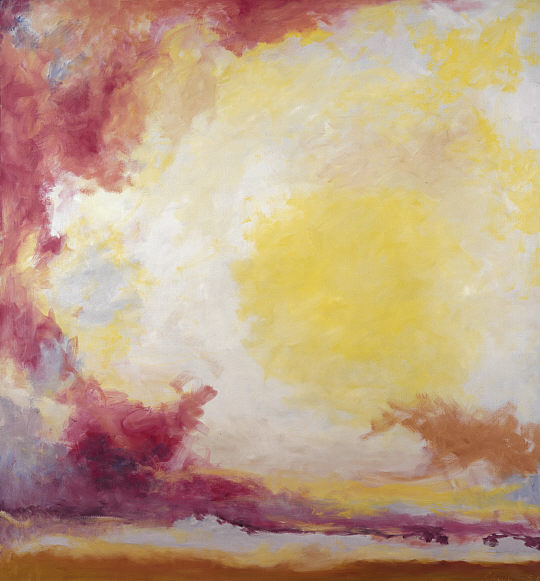
A few earlier, bolder Schuelers.
 
 
A Yellow Sun (1958)
National Galleries of Scotland
 
Snow Cloud Over the Sound of Sleat, New York 1959

(Cross posted at Lucy’s Forever Home)

My travels in outer space with The Sparrow by Mary Doria Russell

This is my favorite Sesame Street song of all time. I could not get enough of it when I was a kid. Susan gives a lot soul to the thought that kids will one day live in space. Somewhat apropos for this review.


I think the fact that the first couple of chapters in The Sparrow by Mary Doria Russell take place in Italy and Puerto Rico made it easier to get into this science fiction tale. True, the action is set in 2059 and 2019 respectively, but the familiar setting made it all feel quite ‘normal’ at first. The basic plot is this: After radio transmissions are discovered to be emanating from the Alpha Centauri star system, a group of Jesuit priests convince their hierarchy to fund an exploratory trip to find the sentient beings sending the signals. I’m no expert on Jesuit exploration throughout history, but if I believe this text, their intent seems to be more about seeking knowledge then it is about converting anyone–anything–to Christianity.

While the rest of the world loses interest in the alien radio signals and/or takes years debating what to do with the knowledge, the Jesuits use their vast financial and intellectual resources to to mount a secret trip of their own.  But wait how is that possible? Well, the novel, which was published in 1996 posits that in the year 2019 there will be a whole lot of technology that makes such a trip possible. The main thing being that asteroids which had been mined for various natural resources could be used like a spaceship to fly the couple of light years it takes to get to the source of the signal.

Like all good expedition stories, and I guess all good expeditions, this one has a cast of characters who have a complementary set of skills and make a fairly well-rounded team. They have a linguist, a medical doctor, scientists, a musicologist, and they are all smart as whips and can do just about anything. About 4 or 5 of them are priests with two women and additional two men.

On many levels I liked this book a lot. As someone who mainly reads things based in facts as we know them today, I enjoyed letting myself into other times and other worlds. I enjoyed the optimism of a future that may have included the reintroduction of indentured servitude but didn’t seem to have anything to say about the doom and gloom of global warming (the number one angst-inducing, underlying current in my psyche). I also enjoyed reading about likable characters who use their abilities to get something done. I love it when people use their talents to achieve things, whether it is baking a pie, organizing a drawer, or travelling through space.
It was also fun to read about the world they encountered when they make it to Rakhat. Ah yes, Rakhat–thankfully the book is relatively low on made up words and language. Didn’t make my eyes cross.

And that is where I will end the recap. Enough to give you a flavor without giving away too much or taxing my limited abilities to describe plots.  But, I do have plenty more to say about the book. There was so much to stimulate thought and conversation. Here are some of my hot button topics:

  • It is amazing that in 1996 an author thought that indentured servitude would make a comeback so that it would be old hat by 2019. Ditto for asteroid mining. I wonder what I would think 23 years into the future could be like?
  • It was nice to see the part of the Catholic church that is interested in expanding, rather than closing, minds. On the other hand, I found all of the ‘God’s will’ stuff to be a little tedious at times. It’s not entirely heavy handed in that regard, but it does seem to be wanting to work out theological issues about belief about which I am pretty apathetic.
  • Not that I have read much sci-fi, but it would be nice for someone to come up with a future or alien world that doesn’t cleave so much to our understanding of gender roles. The aliens in this book kind of challenge it but the human characters don’t so much, and the way the author explains the alien gender issues seems so rooted in the past–as in our present. Why do the child-bearing aliens have to be considered the females? It is interesting how our imaginations can turn asteroids into spaceships but can’t comprehend a future that is more fundamentally different.
  • Kudos to Russell for understanding the importance and prevalence of electronic tablets. I know other science fictions, like Star Trek, have also predicted this as well. It was also kind of interesting to see how she wrote about the Web from her 1996-vantage point. She definitely sees it as a useful tool, but one doesn’t get the feeling she entirely understood how important the web would become. And I think it is accurate to say that she didn’t realize that all those tablets would use the Web as their content server.
  • I had a few quibbles with the plausibility of certain situations, but nothing that I can even remember and nothing that detracted from the overall enjoyment of the book.

I really liked the characters, but I would have liked to have seen them encounter more things and do more things on Rakhat, and maybe see a bit more about how the rest of humanity responded to their expedition. But it didn’t seem incomplete, just kind of left me wishing for more.

The next, and final statement is kind of spoilery, so caveat lector

As much as I wanted them to explore more, I liked the fact that the author wasn’t afraid to kill most of the human explorers off. Just think of all the explorers throughout history who have died mid-exploration. Their discoveries, and those of explorers after them, eventually fill in the blanks for us looking back at the past–or indeed form part of our overall frame of reference and how we understand the world, but if we break down those discoveries into their component parts, we come to individual humans who die in the middle of what they were doing. Their stories interrupted.  You see what I mean about this book being a good conversation starter?

, but was also gratified that the author wasn’t afraid to, well this really is going to be spoiler-y, kill so many of them off.

Bits and Bobs (the question mark edition)


Could Science Fiction be not as bad as I thought?
For those who listen to The Readers, you will know that Simon accepted a challenge when he recorded a special episode with Michael and Ann from Books on the Nightstand. They decided that the four of us would read each others’ favorite books. Ann’s choice was The Sparrow by Mary Doria Russell. I groaned when I heard that it was science fiction. Despite my absolute love of Atwood’s “speculative fiction” MaddAddam trilogy, I can’t say that the genre interests me much. I (most certainly wrongly) equate it with all kinds of too colorful covers, made up facts, unpronounceable names, and pimply, greasy-haired teens with “Why be Normal” buttons pinned to the lapel of the vintage overcoat they picked up at Ragstock for $5.

Much to my surprise I ended up liking The Sparrow quite a lot. It hooked me quickly. I founded it compelling enough that it pushed aside about four other books I was reading at the time. I was going to write a quick paragraph about it in this post, but then I realized I actually want to write a real review of it. There were so many things about the book and my experience reading it that I feel the need to talk about it. No doubt I will have a chance to do that on The Readers but I don’t think we are going to have that discussion until 2015. It’s one of those books you want to talk about. Even absent knowing anyone in real life who has read it, or who would read it, I started talking about it with friends. That conversation didn’t go very far.

So I figure it this way, any book that I find so compelling to both read and talk about can’t be too bad right? I know there are large swaths of sci-fi that I would not find compelling at all, but it made me think there might be more opportunities for me to enjoy the genre than I previously thought.

Why don’t I have a favorite book?
Choosing my book for the above mentioned favorite book challenge on The Readers and Books on the Nightstand was not easy for me. I just don’t have a favorite book. I know that many real readers (like some of you all) are capable of coming up with one book about which you don’t mind saying “this is my favorite book”. Even though you have ten other books that are closely jockeying for the top spot, you still feel okay, perhaps even good, choosing just one. I just can’t. I have had favorite books at different times in my life, but to look at all of them and say “this is the one” seems like a ridiculous and ultimately unfulfilling activity. Heck, even if I segment it into periods of my life I can’t narrow it down to a single book.

Grade School: Harriet the Spy (Fitzhugh) and The Ark (Benary-Isbert)
Junior High: I read a lot, but no real recollection of a favorite.
High School: Narcissus and Goldmund (Hesse) and On the Beach (Nevil Shute)
College: The Edible Woman (Atwood), Where Angels Fear to Tread (Forster), and The Carnivorous Lamb (Gomez-Arcos)

And then, after that it degenerates into a mass of really good books that I really liked and sometimes loved, but nothing that comes close to being able to beat out all the others that I also really love. In the end, for the challenge on the podcast I made my choice not just by choosing a well loved book by one of my favorite authors, I also kept in mind what I thought others might enjoy and what I thought deserved a broader audience. A book that I knew that bookish people would love if they knew it existed. That’s how I came up with my choice of Swann by Carol Shields. But even with that, I haven’t read it in years. Will it still be a favorite?

Anyone else annoyed by Goodreads’ iPad update?
I’ve never been much of a fan of Goodreads’ iPad app. Compared to the webpage interface, I always found it a bit clumsy and lacking in easy functionality. I tended only to use it for viewing information. For any sort of input I would go to the web version. Well they updated the app and I must say I find it even worse than it was before. Has anyone else been similarly annoyed? I thought since the deathstar purchased Goodreads and began scooping up NSA-level data on our habits the product would get better. Then again, I also expected all sorts of aggressive advertising, and pay-walls for certain features. Of course that might be still to come. Still, don’t you hate it when something new turns out to be something worse?

The good old days before they made an okay thing worse.

How is it possible I didn’t enjoy a book sale?
My new job is walking distance to the Arlington County Central Library which has a big, blowout book sale each year. When I showed up with my empty book bags two weeks ago, it was a week too early. My disappointment was palatable. So when I got there on the right day this past Friday I was loaded for a good time. The fact that I was able to go during a week day rather than on the crazy, busy weekend also had me quite excited. But when I got there I was almost immediately disappointed. As I looked at the first shelf I thought “you didn’t like this book sale last year”. Then I tried to figure out why.   One of the big reasons is that it takes place in a parking garage and I think the light levels are a little too low for good book hunting. Unlike many other big book sales this one has most of its offerings on shelves rather than tables. This makes it much hard to comb through the stock. They also have the fiction broken down in a way that isn’t very helpful. Mass market classics, trade paper, hardcovers that seem to also have mystery and sci-fi mixed in, a section called literature, and then one simply called “old books”. And aside from the rather dusty, not very interesting old books, most of the stock seemed to consist of lots of recent titles. I tried my best to focus but realized this sale, as big as it is, just isn’t for me. Still I did manage to buy three. But none really made me jump up and down.

Are we really here for the books?
I know we all found each other over our love of books and reading (two different things in my estimation), and I know I couldn’t turn this blog into just a big dump about the ups and downs of my life and have you all still show up from time to time. But it is amazing to me (in a good way) how posts about more than just books always do better in both page views and comments than the ones solely focused on books. I know other bloggers have found this as well. Is this the online equivalent of the book club that is really a wine drinking in the presence of books club? Even if that is so, I don’t think it matters. If book are the very pleasant excuse for humans to interact with each other, why not?

My new reality – the end of my blogging days?

Continuing the chronicle of my re-employment, it seems appropriate that I examine the future of my blogging life. Having a job that has me writing eight hours a day, do I really have the mental energy to come home and write a blog?

I know some of you love a naval gazing blog post, and others loathe them. I’m kind of in the middle, I kind of like them but I also feel like some bloggers take it all way too seriously. If you aren’t having fun, pack it in. No one is paying you (and, I hate to break it to you, probably never will).

Rather than blather, I can sum it up it up pretty quickly: I am not going to stop blogging. I like the social network blogging provides too much to let it go. Facebook, Twitter, Goodreads and The Readers podcast just aren’t enough.

So you are stuck with me. And, since I have a pile of books that I really need to say something about, I am going to say something about them.

The Bookstore by Deborah Meyler
British woman moves to New York to get a Ph.D at Columbia. Gets job in used bookstore. Gets pregnant. A somewhat mediocre but also somewhat enjoyable read. I found myself having to suspend my disbelief a bit too much for such a non-fantastical, everyday sort of story.

contrary to this cover, I didn’t listen to this book

Gone Girl by Gillian Flynn
I was forced to read this by Simon Savidge and his Booktopia-induced peer pressure. I didn’t hate it but would have put it down at 20 pages had it not been for the aforementioned peer pressure. I’m not sure I can describe what I didn’t like about the writing, it felt a little too something. Clever isn’t the right word. Forced. I think forced is the word. Flynn had a great idea and honestly comes up with twists and turns that are fascinating and compelling, and perfectly anxiety inducing. But it felt kind of forced. No interest in seeing the film at all.

The Bookseller by Mark Pryor
I enjoyed this book-based mystery way more than I thought I would. I’m not much of a mystery person. I hate murder mysteries. They are too often too pat and more disturbingly, I don’t like the casual way they treat murder. This one was low on violence and high on book-related intrigue in Paris. The first of the Hugo Marston mysteries. I wonder if I would like any of the others?

An Untamed State by Roxanne Gay
I chose this one so I could participate in Aarti’s A More Diverse Universe event she hosted on her blog Book Lust. My reading tends to be pretty white and Anglo-American so I welcomed the chance to branch out a bit more. Plus I had read two Adichie novels this year and loved them so I was interested in reading more great fiction by authors of color. Unfortunately my new job kind made it somewhat difficult for me to get my stuff together in time to participate. I did, however, really like An Untamed State. The story of a Haitian woman, married to an American and living in the US who gets kidnapped while visiting her wealthy parents in Haiti. She suffers unspeakable acts for 13 days while her father tries to out macho the kidnappers. Then the novel follows her trying to come to grips with her life once she is free and back in the US. Pretty compelling reading and Gay’s writing has me wanting to keep my eye out for future novels.

I had two other books I was reading for this challenge. One was a graphic novel written by a Chinese woman which I found tedious and didn’t finish. And one is a slightly boring story of an Indian chef during the time of partition. That one I still intend to finish. I guess when all was said and done Aarti’s event was good for me. Got me to expand my horizons a bit and remind to continue to make a bit of an effort to be more diverse going forward.


The Shadows of the Wind by Carlos Ruiz Zafon
Another bookish mystery, but much more complex than the Mark Pryor mystery. This one has a bit of everything. Lots of old books, secret libraries, a fire-damaged villain, a masochistic policeman, connections that will make your head spin, and all set in Franco-era Barcelona. I really enjoyed this book. It was like Alexandre Dumas meets Wilkie Collins meets someone a little more modern.

Sarah Morris Remembers by D.E. Stevenson
This may fall in the bottom third of all the Stevenson novels I have read. But I still loved it. It was the perfect comfort read as I started my new job and needed something to unwind with. I won’t bother with any plot description. If know me and my blog, you know the general gist of her work. If you don’t just use the search window to see what else I have written about her.

My Wish List by Gregoire Delacourt
Story of a provincial French woman who wins the lottery and keeps it secret until she figures out what to do about it. In some ways I loved this book. It had a touch of Mrs Harris Goes to Paris about it, but deeper and more thought provoking than that. And the overall message of the book I found interesting and comforting. But there was a twist, that really annoyed me. I didn’t want it to be that book. Now that I know that twist, I think I would enjoy the subtleties of the story more than I did the first time around.

My new reality – catching up on the world of reading


I’ve been back to work for two full weeks now. It is amazing how good it feels to be busy all day. The second day of getting up at 6:30 in the morning I thought “oh god no”. But then I reminded myself how billions of other people have to get up every morning as well. I was just part of that club again. Believe it or not, that actually worked. The other thing that propels me out of bed in the morning is looking forward to my 30 minutes of audio book listening on my commute.

Audio Books
Yes, after all your suggestions, I did indeed download an audio book for my commute. Most of you know I don’t think that audio book listening is reading and I have had a bit of an attitude about them as a result. But, I must say I love listening and it really makes the time fly. It even keeps me calmer in traffic. A few things have made it work for me. One, I chose a book I have already read, Nevil Shute’s In the Wet. I have been wanting to reread it for some time now. This gives me the perfect opportunity to visit the story again. Two, I chose a book with a really straightforward narrative. My mind wanders too easily. I need something that keeps moving forward. Three, the audio book app has a feature where with one tap you can go back 30 seconds. This has proven very helpful when I tune out momentarily to switch lanes or something similarly captivating.

I can’t believe how much I love audio books. What a revelation.

Revisiting a corny, elitist, and utter delightful dystopian screed
As I mentioned, the book I am listening to is Nevil Shute’s In the Wet. As a piece of literature it is so problematic and certainly not Shute’s tightest work. When the exact same information gets repeated about 20 minutes after the first time you hear it, you know there was a sleeping editor somewhere. Then again it was the 1950s, maybe he was drunk after a long Mad Men style lunch.

Shute, unhappy with the direction the UK was headed after WWII emigrated to Australia. And this book is his ‘Fuck You’ to dear old England. The novel centers around an opium-induced hallucinogenic flash to the future of the 1980s. Shute imagines an England where the socialist governments have turned everything the country into a sad, joyless, drab, corrupt, shameful, decaying mess. A million people a year emigrating to other parts of the Commonwealth. Rationing (forty years after the war) so bad that people haven’t seen pineapples or hams for years. And the Royal family more or less gets run out of town, at least temporarily. On the other hand, Australia is everything England isn’t. Prosperous and plenteous and run by fine men–not the idiotic, illiterate union bosses running and ruining England.

Oh, and toss in the repeated, casual use of one of the most reprehensible words in the English language and you have yourself a book. Shute was clearly a racist, but not in the KKK kind of way, but in the highly paternalistic, everyone know your place, isn’t he articulate, kind of way. We could discuss how much difference there truly is between these two types, but I will defend Shute a tiny bit on this aspect of his character. At least against the virulent and violent types.

Anyhoo, one of the things I had forgotten about was how Shute imagines a voting system that was adopted in in Australia in the 1960s where one person can have up to seven votes in electing the government. The ways one can obtain those seven votes really sums up Shute’s elitist outlook. I may have the exact order slightly wrong…

First vote: Everyone 21 or older gets at least one vote

Second vote: Education. A college degree or becoming a commissioned officer in the military gets you a second vote.

Third vote: Foreign travel. Making your living for two years abroad gives you another vote. Many who fought in WWII got this one.

Fourth vote: Family. Raising two children to the age of 14 without divorcing gets you a fourth vote. I guess after 14 divorce isn’t traumatic or disruptive. And what about single people? Nope.

Fifth vote: Achievement. This translates to money. If you make at least 5,000 pounds a year you get another vote.

Sixth vote: Religion. For religious officials, vicars, or anyone who does a “real” job for a “Christian” church.

Seventh vote: Given purely at the pleasure of the monarch.

Can. You. IMAGINE. such a system? Would it be better or worse than the unelected oligarchs who currently buy our politicians?

At any rate I am only about a third of the way through the book. The narrator is quite slow and just about as corny as Shute’s writing. But still quite enjoyable. Listening to the book I was reminded of how I skimmed the beginning of the book when I read it. It really just sets up a vehicle for the hallucination, but it takes Shute so long to do it. After not skimming through this part in the audio version, I can guarantee you that you could easily skip it and get to the interesting bits and not miss a thing.

And I haven’t even gotten to the part where our protagonist flies HM and the Duke from one Commonwealth country to another when it is deemed too dangerous for them to stay in the UK. That part of the story dovetails nicely with Shute’s fascination for aeroplanes and engineering in general. How can you not love a book that uses the word aerodrome?

I played a bit of the book for John and he, who already had a dubious opinion of much of my reading material, was a bit nonplussed at how ridiculous and mundane it is. I guess he just didn’t really get the significance of the pineapple scene. And I get John’s criticisms. But I still love this book. A fascinating story but so ridiculous in so many ways and I love it. I want to make it into a film. Most of you would hate this book. But some of you would love it.

I can’t wait for my Monday commute so I can continue the story.

Books at lunch
We’ve had some nice weather so I didn’t fully grasp that my new work situation doesn’t really offer much in the way of locations for lunch time reading. Hmm. But then I noticed that I am only about five blocks from the central library for Arlington County. Cool. A sandwich at my desk, a seven-minute walk, and then 45 minutes at the library. Could be a whole lot worse.

Catching up
Having a job that is writing intensive makes blogging, and social media, and reading blogs, and replying to email, and just about everything else that’s not TV a little more difficult to get to. No doubt I will find a pattern. And hopefully sometime soon I will have a chance to recap what I have been reading (and not listening to) lately.