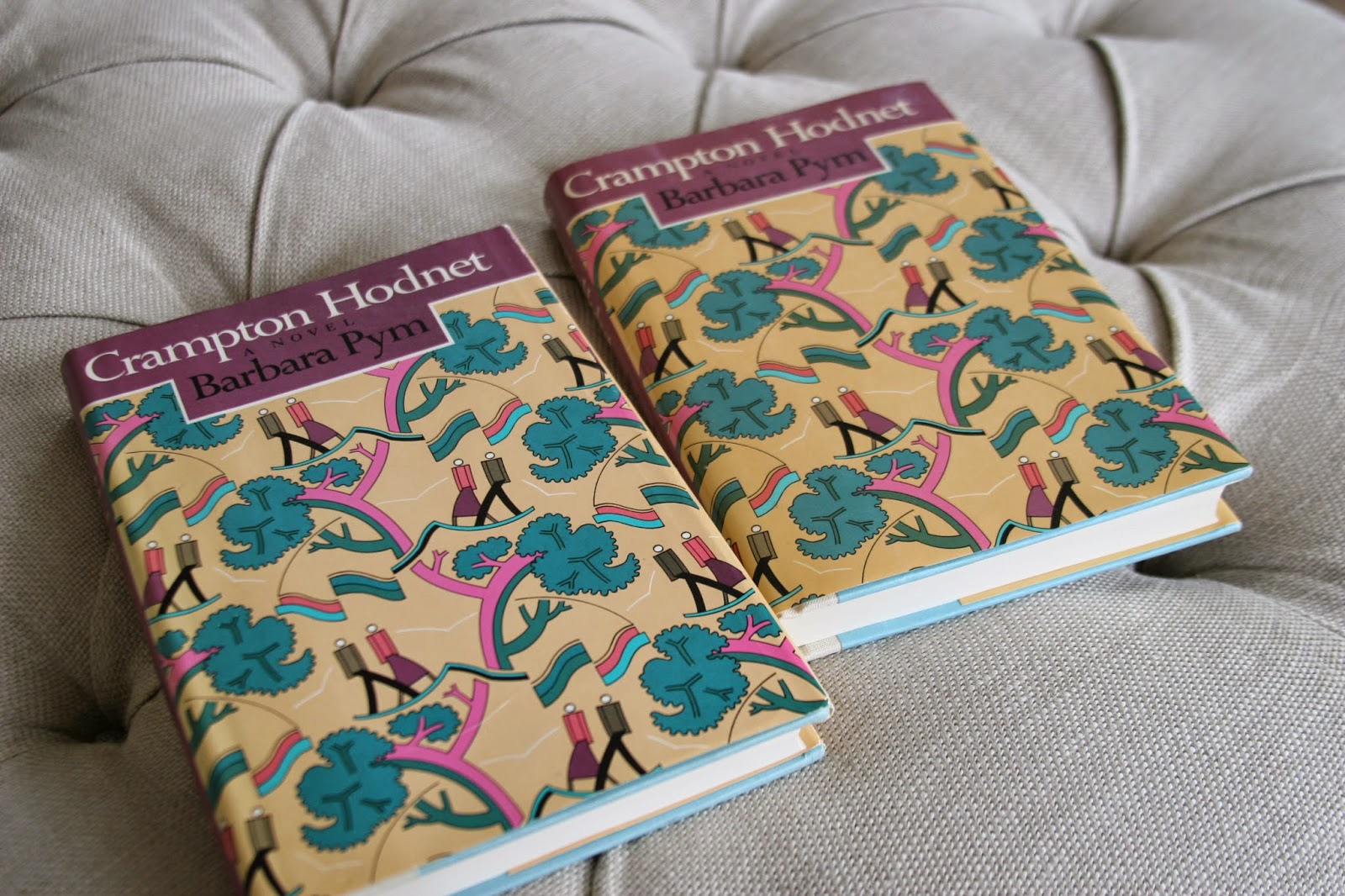
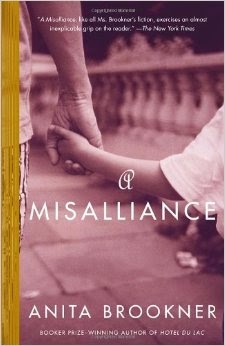
I know Brookner is an acquired taste and many will find any number of faults with her content and style, but good God I love her work. She is like Barbara Pym without a sense of humor. I’m up to number six in my chronological re-read of all of Brookner’s 24 novels. Here is my attempt to ‘review’ it.
You will also find it crossposted over at the International Anita Brookner Day blog.
Just about every relationship in The Misalliance (or A Misalliance in the UK) could be considered a misalliance.
After being left by her husband of twenty years Blanche spends her days wandering the National Gallery and her solitary evenings with a bottle of wine. She spends a fair amount of time in musing on the reasons why her husband left her and the type of woman he left her for, but I never got the feeling that that was the point of this novel. In many ways Blanche seems rather complacent about her husband’s departure, as if it had been her own fault for not being the right kind of woman. That in itself is tragic given that she devoted her married life to becoming the kind of public and private companion that her husband Bertie seemed to want.
While volunteering at the local hospital one day Blanche is drawn to Sally Beamish, a young mother who is there trying to get help for her three-year old daughter Elinor/Nellie who is mute. Blanche is immediately taken with the child, seeing her as a patient, old soul putting up with a flighty mother and an absent father. Indeed she sees Nellie as a kindred spirit and she moves to offer assistance to Sally whose life is a bit of a self-imposed mess. Her husband Paul is off being a factotum for a wealthy American family who have oddly decided to only pay him in one lump sum at the end of an extended trip. By the end of that trip, however, Paul is essentially accused of embezzling funds and is unlikely to get the pay coming to him. This situation never amounts to anything with legal implications but Blanche is coerced into intervening on Paul’s behalf –a man she has never even seen before.
Throughout all of this Blanche’s ex-husband Bertie continues to drop in most evenings ostensibly to see how Blanche is doing. This struck me as Bertie wanting to have it both ways. Why give up the comforts of a trusted, supportive ex-spouse just because you have moved on to a younger, more dynamic wife? Although Blanche looks forward to these meetings and retains an emotional attachment to Bertie, I never got the feeling that they were necessary to her well-being. If anything I felt they might be keeping her from moving forward. Also part of the story is Patrick, a suitor in the days prior to Bertie with whom she has remained friends over the years. She asks for his advice on how to best help Sally and Nellie and he ends up falling in love with the much younger Sally. Nothing ever comes of it, Sally uses Patrick for support in the same way she uses Blanche, but it is enough for Blanche to see Patrick for what he really is.
Blanche is a bit of a victim of male behavior and privilege, and although she is a bit stuck trying to make sense of it all, I kind of felt like she might be on the cusp of something. Perhaps it’s a recognition that the men in her life are really rather weak and certainly not to be relied upon. Blanche’s decision to leave them all behind and go off traveling for an extended, undefined period is, I suppose, at least partly out of desperation. But I couldn’t help projecting my own wishes for Blanche. This was going to be the moment of her triumph. The moment when she leaves it all behind and discovers who she really is.
And then at the eleventh hour Bertie returns–and seemingly for good. Is this vindication for Blanche and the restoration of her married life? Perhaps, but rather than finding it something to celebrate, I found it no more than a threat to her ultimate happiness. A return to her life in a comfy prison. But Brookner leaves us hanging as to what happens next. My feeling is that if Blanche does take him back it won’t stick. He may not leave her again but she will realize he isn’t what she wants and this is the real misalliance of the book. Not the first 20 years, not the connection with Sally and Nellie, but what happens after Bertie’s return. His return may delay her self-realization, but it won’t preempt it entirely.
——-
This thought may not be worth much, but it is something I want to memorialize for my own edification. I loved the scenes where Mrs. Duff comes to Blanche’s rescue despite the fact that Blanche has never shown her more than a begrudged politeness. Mrs. Duff’s simple, but helpful assistance when Blanche fell ill seems like the only bit of altruism in the book. Brookner doesn’t make much of it. But she must have had something in mind. I can think of a few things, but I really just mention it because I was warmed by those scenes.
 This may see a little premature, but I am already starting to think about what kind of reading material I am going to take on my August vacation. Usually this means I have two weeks of reading opportunities that I need to try and fill. If we are headed somewhere via car, often up to Maine, it means that I take about 10 books for 14 days and buy 20 more along the way. But this year we are headed to Idaho to go on a whitewater rafting trip. Not only is this kind of trip probably not very conducive to reading, but we have severe luggage limitations. For six days on the river we are limited to a fairly small “wet bag” and most of that needs to be filled with things like thermal clothing and rain gear.






















 hogglestock
