[Number 9 in my chronological re-read of all of Brookner’s 24 novels.]
When people ask me where they should start with Brookner, I never know quite what to tell them. Part of the problem is that after having read all 24 or them over the course of about a decade, I didn’t really remember enough detail about any of them to really provide a recommendation. I would often default to Hotel du Lac merely because it was her best known and had won the Booker Prize.
Now that I am nine books into my re-reading of all of Brookner’s novels I can say I am much more aware of the differences in the stories and much more appreciative of the variety and depth of her output. And perhaps no more so than with Lewis Percy. And I think, out of her first nine novels, Lewis Percy is a fantastic place to start. Slightly more plot driven than her other novels and with a much younger protagonist.
Our eponymous hero is a 20-something scholar working on his doctoral thesis in Paris. Not long after Lewis returns to London from his year in France, his mother dies and he finds himself a bit untethered. Perhaps having read too much of his mother’s kind of fiction he comes up with a romantic, heroic, and ultimately misguided, notion that he is going to transform Patricia “Tissy” Harper, a young, virginal, agoraphobic librarian, into something much greater by marrying her. I don’t have to tell you that things don’t really work out that way.
Acting the part of the perfect Edwardian wife–albeit in the 1960s–Tissy achieves an outward transformation with updated clothes and hair befitting her age and the era, but it doesn’t translate much beyond that. Not necessarily aware of the paternalistic idiocy of his plan Lewis senses the failure of his marriage but figures he has made his bed and needs to be faithful. Despite falling in love with Emmy, his gay best friend’s actress sister, he repels her advances only to have Tissy believe he was unfaithful. She flees back to her mother’s house, Lewis tries to be a responsible absent father, and no one is happy. Eventually Tissy finds her emotional feet, Emmy and Lewis realize they can’t be together, and Lewis gets a generous academic job offer in the U.S.
And that, my friends, is a lot of action for a Brookner novel. Although her characters are fabulously old fashioned, I also loved Brookner taking on younger characters and nodding to the swinging 60s. In Lewis Percy the reader gets the opportunity to experience a hopeful ending while getting lashings of introspective, complacent, ennui typical of Brookner’s characters. This could be the gateway drug of Brookner novels.
(On a completely unrelated note and apropos of nothing, I also loved the advent of the computer at the library where Lewis worked for years on an index (of what I don’t recall). Lewis is unsure if he wants to stick around to learn the new technology. In trying to convince Lewis to embrace the future and the future of the index, his boss makes this fabulous statement:
‘But my dear fellow!’ exclaimed Goldsborough. ‘This will be the index’s finest hour!’
As with Pym’s No Fond Return of Love, I do love an index in a novel.)
I’ve been trying for a while to deaccession a stack of books that I weeded from my shelves before all of these shelf by shelf photos were taken. I don’t feel the need to make any money from them but I do feel the need to make sure they go to a good home. Often I take them to my local Friends of the Library for them to sell in their well-stocked, well-run sale room. But for some reason, sometimes I feel maybe there is a better place to donate them. So lately I have been placing handfuls of books in those little free library kiosks that people have been installing in their front yards across the USA (and UK? or Canada? or elsewhere?) Good plan, right? Maybe.
I’m about to say something that may be a little controversial. In my normal routine I pass between 8 and 12 of these little libraries on a daily basis. When I first saw them popping up I was so excited. Sometimes taking a book, other times leaving one or two. But now I kind of feel like they are everywhere and I think we may have reached a cupcake shop-level tipping point of ubiquity. Perhaps I wouldn’t mind so much if the quality of the contents of the kiosks were a little better. Now before you call me a book snob, you must realize I am not passing judgement on James Patterson titles or 50 Shades or anything like that. No, I am talking about the fact that either the library keepers or the people leaving books have decided to dump all the junk that charity shops won’t even take. Dated real estate guides, study guides for whatever, thinly veiled religious or political tracts, self published tomes, and perhaps worst of all, self-help books. Perhaps I am being a snob, but if I am, it is in the name and honor and glory of fiction. Don’t waste your time on that other stuff, people! Okay, now I’m starting to sound like a fanatic of another sort.
Maybe my problem is this: In my community we have plenty of access to “helpful” books from libraries, bookstores, and online. Seeking and/or acquiring these titles is more like a transaction than the kind of serendipitous discovery for which these little libraries seem much better suited.
Oh, who am I kidding? I’m annoyed that they aren’t chock full of fiction!
This nation needs to read more fiction. In 2000 I worked a second job at a Barnes and Noble and every time someone came looking for a Chicken Soup for the Soul book or the latest self-help book they saw on Oprah I was always tempted to walk them over to fiction instead. (Nothing against Oprah, I gladly would have walked them over to one of her book club selections.) I’m tempted to remove everything from these little libraries that isn’t fiction and replace them with a curated stack of the novels I am looking to get rid of. Many of those I actually liked and many more are worthy books that I just didn’t care for.
Part of me wants to keep filling them with fiction (my donations do seem to disappear). Maybe rather than be annoyed by them I need to keep filling the neighborhood with fiction. Hmm, now I see myself buying books just for that purpose…
Like I said, I think I am tired of all those damn little libraries.
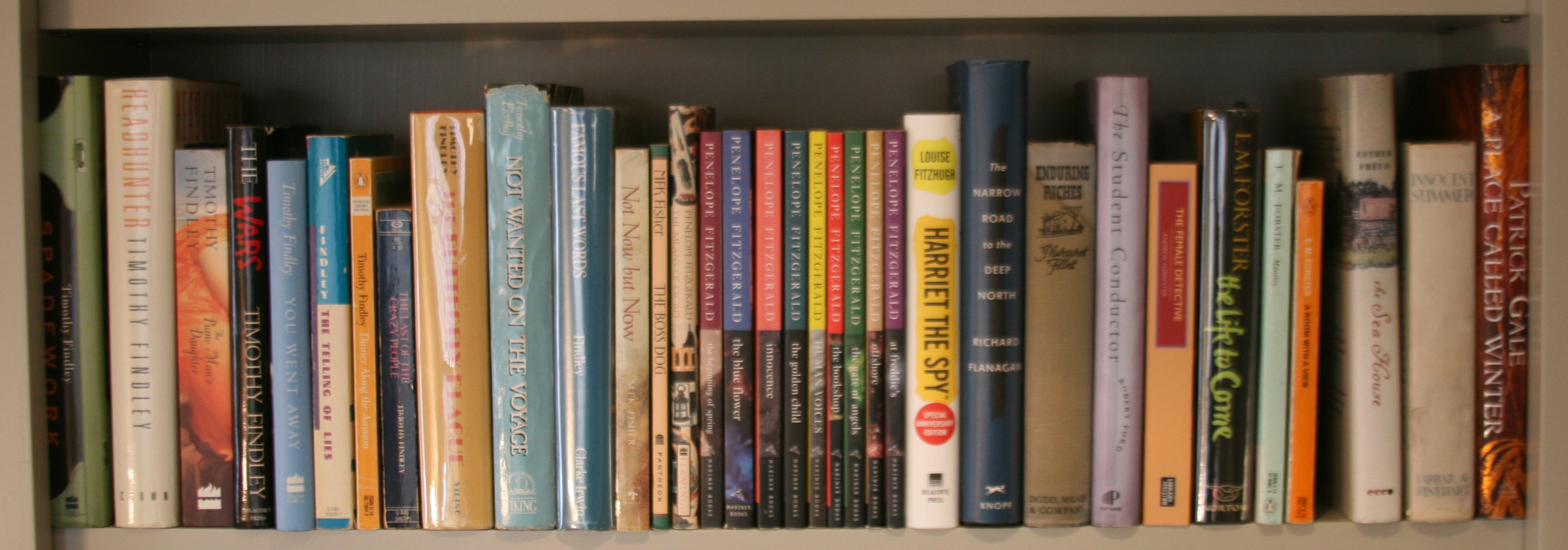
Findley, Timothy – Spadework (completed) Findley, Timothy – Headhunter Findley, Timothy – The Piano Man’s Daughter (completed) Findley, Timothy – The Wars (completed) Findley, Timothy – You Went Away (completed) Findley, Timothy – The Telling of Lies (completed) Findley, Timothy – Dinner Along the Amazon (completed) Findley, Timothy – The Last of the Crazy People (completed) Findley, Timothy – The Butterfly Plague (completed) Findley, Timothy – Not Wanted on the Voyage (completed) Findley, Timothy – Famous Last Words (completed)
Based on the 10 Findley books listed here that I have read, plus Pilgrim from Shelf 8, and a memoir somewhere else in the library, you would think he was one of my favorite authors. And at one time I may indeed have said that, but I am not sure it has ever been true. Highly recommended by a dear friend, I plowed through most of his work in my late 20s/early 30s. At one point I even went to a reading he did when Pilgrim was published. In fact, it might be the only author event I ever made a point of going to in my entire life. If I am being totally honest my love of Findley’s work was more aspiration and pretense than actual love. I definitely think he writes good books and I enjoyed reading them, but love is not a word I should have used. However, since I was so much younger when I read all of them I think I need to do some re-reading before I make a final judgement. In particular I want to re-read Famous Last Words which, among other things, fictionalizes the Duke and Duchess of Windsor in Bermuda in WWII. I’m also keen to re-read Pilgrim about a character who never dies. And The Wars has one of the most moving scenes of sending children off to fight wars that I have ever read.
Fisher, M.F.K. – Not Now but Now (completed) Fisher, M.F.K. – The Boss Dog
This is what I wrote in 2013 when I read Not Now but Now: Food writer Fisher’s only novel is really four related novellas. Each one stars a woman named Jennie who one can’t help but root for despite her insanely selfish modus operandi in each story. Jennie is incarnated in England, Europe, and America and she shows up in 1928, 1947, 1927, and 1882. I didn’t expect this kind of mean, wanton hussy from Fisher’s pen. Fascinating stuff.
Fitzgerald, Penelope – The Means of Escape Fitzgerald, Penelope – The Beginning of Spring Fitzgerald, Penelope – The Blue Flower Fitzgerald, Penelope – Innocence Fitzgerald, Penelope – The Golden Child (completed) Fitzgerald, Penelope – Human Voices (completed) Fitzgerald, Penelope – The Bookshop (completed) Fitzgerald, Penelope – The Gate of Angels Fitzgerald, Penelope – Offshore (completed)
Fitzgerald, Penelope – At Freddie’s
Alphabetically speaking, the first of the two great Penleopes. I know that there are those of you out that that would say there are more than two, but for me they are Fitzgerald and Lively. I also know that some of you have a hard time keeping them separate, but I find them very different and easy to keep straight once you have read one of each. Until I wrote out this list, I thought I had read more of Fitzgerald’s work than I have. Maybe it is because I have read The Bookshop twice. Fitzgerald didn’t start getting published until she was in her 60s. Her work is so good I can only imagine what she might have been capable of if she had started earlier.
Fitzhugh, Louise – Harriet the Spy (completed)
Thanks to my 6th grade teacher Julie Mosman who read it aloud to us, this is perhaps my favorite childhood book. Re-read about a million times then and since, I must admit that my most recent re-read a few years ago left me wondering what the moral of the story is. And thanks to Frances for buying me this wonderful reprint of the first edition with the author’s wonderful illustrations.
Flanagan, Richard – The Narrow Road to the Deep North
Flint, Margaret – Enduring Riches
Ford, Robert – The Student Conductor (completed)
Always a fan of novels that deal intelligently with classical music, this is one of my favorite books of all time. It is about a young conductor set against the crumbling of the Iron Curtain.
Forrester, Andrew – The Female Detective
I love these British Library Crime Classic editions for these covers. I have yet to read any.
Forster, E.M. – The Life to Come (completed) Forster, E.M. – Maurice (completed) Forster, E.M. – A Room with a View (completed)
I’ve read all of Forster’s fiction. In fact, I think I have read all of it at least twice each, if not more. I think I have a few more of his titles in a stack of mass market editions that will show up here later.
Freud, Esther, – The Sea House
Frost, Frances – Innocent Summer
Gale, Patrick – A Place Called Winter (completed)
I had never heard of Gale until Simon Savidge gave me this book when we went to Booktopia last year. Not a perfect book but really, really enjoyable and kind of touching. Kind of a Canadian Brokeback Mountain of sorts.
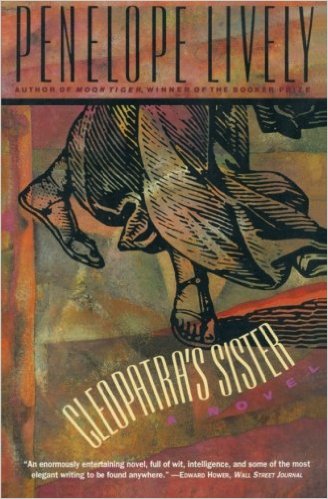
Cleopatra’s Sister by Penelope Lively
I have long loved the novels of Penelope Lively. Okay, I guess it has only been since 2009 that I first read her, but I became an instant fan and have read many of her novels in those seven years. This particular novel really deserves a stand-alone review, but I fear I will wait too long and forget everything I wanted to say about it. The first part of the book is split into three different points of view. Howard Beamish is a charmingly smart child who becomes a paleontologist, Lucy Faulkner is a charmingly smart child and becomes a journalist. The third point of view reads like non-fiction describing the history of the fictional north African country of Callimbia.
After Lively establishes adult lives for Howard and Faulkner with both of them having had a certain degree of success, she throws them together on a flight to Kenya that is mysteriously diverted to Callimbia which has recently undergone a coup. I don’t want to describe anything that happens beyond that, but it is gripping. Howard and Lucy are thrown into a crisis situation and soon begin to rely on each other.
I really loved this novel. I loved their childhood stories. I loved reading about the successes and failures of their adult lives, and I really got caught up in the emotional situation that brings the stories together. And Lively is a master observer with plenty of smart, witty insight to the human condition and relationships. I love her work and this one probably ties for my favorite with Consequences.
Excellent Women by Barbara Pym (re-read)
When an audio version of Excellent Women became available on audible I nearly lost my mind. There are about five Pym novels that have been recorded but this is the first and only one that has been available on Audible in the U.S. It was wonderful getting reacquainted with Mildred Lathbury and her post-war life in London. And it proved to me once again how great it is to re-read Pym’s work when one doesn’t have a preoccupation with what is going to happen next and the associated need to get to the end to see how it all works out. Pym’s observations and reflections on life are precise and economical without being clipped or unfeeling, and she is wryly funny.
To Walk the Night by William Stone
As always I was drawn to this NYRB Classics at the library by the fact that it was a NYRB Classic. But then I notice that it was a sort of sci-fi mystery novel published in 1937 which falls right into my recent penchant for vintage novels of those two genres. Two college friends are back at their Alma Mater where they discover a former professor murdered in a very mysterious way. The thing about a novel like this is that if it was written recently I probably wouldn’t be at all interested in reading it. It’s the combination of 1930’s period detail and the glimpse of the vintage sci-fi outlook that compelled me to pick this up and enjoy it.
The Time Machine by H.G. Wells
I’ve never read any Wells and, as I noted above, I have a bit of a predilection for vintage sci-fi. And what could be more vintage than reading about a time machine that was imagined by a Victorian author in 1895? The narrator, simply known as the Time Traveller, tells the story of what happens when he uses his newly built time machine to go into the future. What I found particularly interesting is that the author has the time machine go forward to the year 802,000. From my perspective this seems like a rather funny–and too huge–length of time in which to travel. It is more in the magnitude approaching geological time not human time. This may have perhaps been the point. It seems like Wells wanted to see what becomes of the human race when there has been sufficient time for them to evolve in the Darwinian sense of the word. What he finds is fascinating and, in my humble opinion, a little pervy. Makes me wonder if Wells was a pedophile. But I guess that is more of a side note than a focus. The book didn’t blow me away mainly because my time travel objectives and interests would be far different than Wells’.
Good God, that title sounds very click-baity. sorry about that.
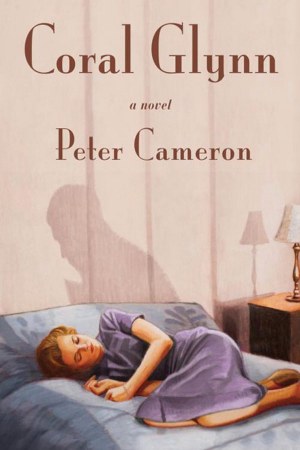
Coral Glynn by Peter Cameron
I read this novel back in January 2015. All I could remember about it was that I really liked it, but I couldn’t remember one plot point nor any other thing about what was actually printed between the covers. So when I was perusing all the many audio books that the wonderful Simon Prebble has narrated I couldn’t resist the urge to buy his reading of Coral Glynn. I hesitated at first because I had read the book so recently it seemed like wasting money. But I got over it and hit the ‘buy’ button. I’m so glad that I did. I ended up loving the book even more than I remember (and this time I remember what it is about).
The eponymous Coral Glynn is a home nurse for a dying elderly woman and is a bit of an adult orphan with no friends and family. In her more hopeful moods she mentions a friend in London, but when push comes to shove she isn’t willing to test the tenuous bonds of that relationship. There is a housekeeper who hates her in a way that reminds me of Mrs. Danvers and the possibility of an unreliable narrator. In many ways Coral seems to be too damaged or just really poorly equipped emotionally to deal with the world.
When you read Coral Glynn (and you will read Coral Glynn), you will be surprised by how much Cameron manages to pack into this slim volume. Even more surprising is the fact that, although there are bit players, none of the characters seem one-dimensional. They are all wonderfully and tragically believable. It isn’t a perfect book. There were one or two moments that faintly bothered my common sense meter, but now I quibble.
Sometimes I feel like I compare every book I like to those of my favorite authors (e.g., Barbara Pym and Anita Brookner to name two). I felt the urge to do that with Coral Glynn but didn’t want to bring up the connection, until, that is, I came across this review by NPR’s Maureen Corrigan who does exactly that. She also throws in Elizabeth Taylor, and as I allude to above, Daphne du Maurier. I think I would throw Muriel Spark into the mix as well.
I will leave you with one of my favorite things from Corrigan’s review:
I was in my local independent bookstore last week, enjoying the endangered pleasure of wandering around and snuffling through interesting-looking books, when I overheard two women talking in front of the new releases section. “I need a new British novelist,” one of them said. Ladies, I should have spoken up, but the moment passed and, besides, it was too awkward to explain that one of the best British novelists writing today was born in New Jersey.
It will be a bit before I get to the shelf with Somerset Maugham but as I write this post I have the film adaptation of The Painted Veil on in the background. I read the book years ago and have seen the film before. I think both are pretty brilliant. The story is a little insane. It would make a wonderful opera I think. So much tragedy and star-crossed love. It is rife with musical opportunities. I picture both Kitty’s husband and her lover as baritones, Mr. Waddington is a tenor for sure. Doesn’t leave much room for any soaring tenor arias, but they don’t always have to be the stars. Kitty is a soprano of course, and then there are choruses of nuns and Chinese peasants and soldiers. It would be perfect.
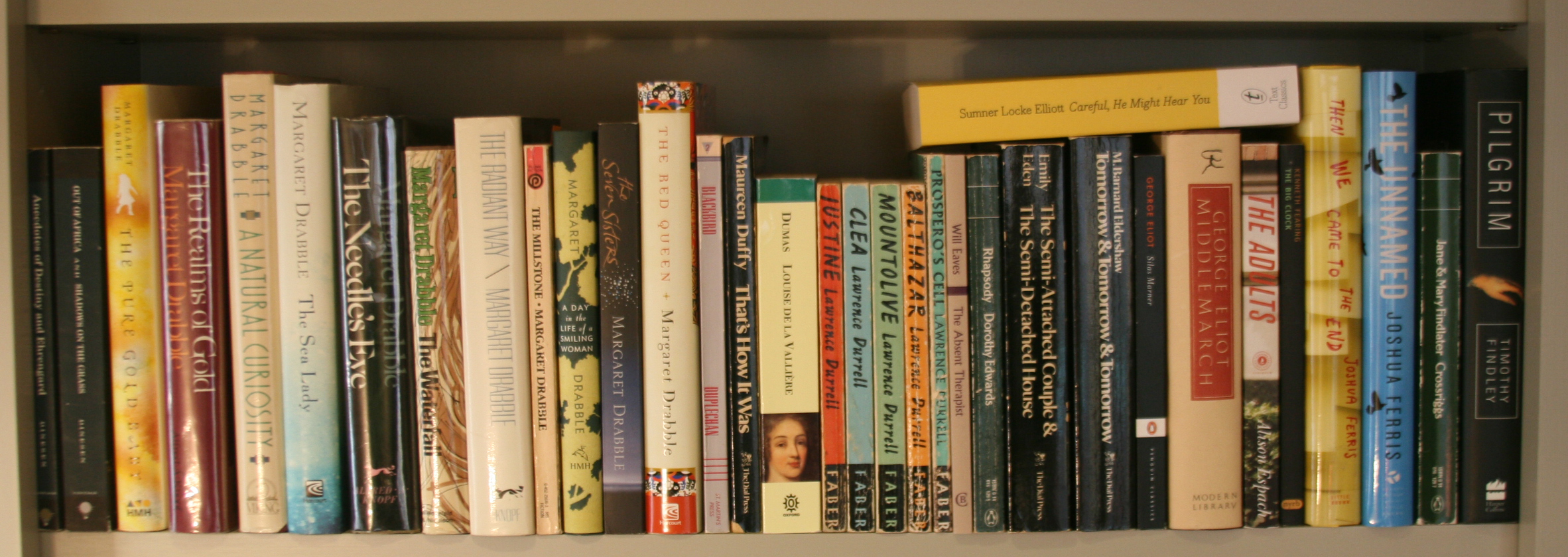
Up to now, although I have really enjoyed doing shelf by shelf, I feel like I have only talked about books and authors that I always talk about. I know this isn’t entirely true, but with this shelf, I am really excited. Part of it is the variety and part of it is that there are so many books here that I really love.
Dinesen, Isak – Anecdotes of Destiny and Ehrengard Dinesen, Isak – Out of Africa and Shadows on the Grass One of my favorite movies of all time is the adaptation of Dinesen’s short story Babette’s Feast. I’ve seen the film more times than I can count but I have yet to read the story. I also haven’t quite gotten through Out of Africa either. Or did I finish it? That’s not a good sign.
Drabble, Margaret – The Pure Gold Baby (completed) Drabble, Margaret – The Realms of Gold Drabble, Margaret – A Natural Curiosity Drabble, Margaret – The Sea Lady Drabble, Margaret – The Needle’s Eye (completed) Drabble, Margaret – The Waterfall (completed) Drabble, Margaret – The Radiant Way (completed) Drabble, Margaret – The Millstone (completed) Drabble, Margaret – A Day in the Life of a Smiling Woman Drabble, Margaret – The Seven Sisters (completed) Drabble, Margaret – The Red Queen Another example of my shelves not telling the whole story. In addition to the ones noted here, I have read four more. Although I tend to like all of her novels I really, I mean really, loved The Pure Gold Baby and to a slightly lesser degree The Seven Sisters. I need to reread the latter to see how I feel about it since reading the former.
Duplechan, Larry – Blackbird (completed)
A wonderful, funny, romantic coming of age tale. Growing up black and gay in the 1980s.
Duffy, Maureen – That’s How It Was
Dumas, Alexandre – Louse de la Valliere
Durrell, Lawrence – Justine (completed) Durrell, Lawrence – Clea (completed) Durrell, Lawrence – Mountolive (completed) Durrell, Lawrence – Balthazar (completed) Durrell, Lawrence – Prospero’s Cell
The first four of these titles make up Durrell’s vaunted Alexandria Quartet which counts for one of the Modern Library’s Top 100 Novels of the 20th century. I really need to read them again. They aren’t the easiest to follow but I loved how atmospheric and poetic they are.
Eaves, Will – The Absent Therapist
Edwards, Dorothy – Rhapsody (completed)
Eden, Emily – The Semi-Attached Couple and The Semi-Detached House
Eldershaw, M. Barnard – Tomorrow & Tomorrow & Tomorrow
Eliot, George – Silas Marner Eliot, George – Middlemarch
I somewhat enjoyed The Mill on the Floss but keep getting stuck on Middlemarch, which, by most accounts is one of the greatest English novels of all time. I’m hoping an audio version will help me get over the hump.
Elliott, Sumner Locke – Careful, He Might Hear You
Espach, Alison – The Adults
Fearing, Kenneth – The Big Clock (completed)
This NYRB Classic is a wonderful mid-century whodunit. No, it’s actually a we know whodunit but wonder if the innocent guy is going to get framed for it. Love this book.
Ferris, Joshua – Then We Came to the End (completed) Ferris, Joshua – The Unnamed (completed)
I really loved Then We Came to the End. Many didn’t, in part because of it being written in the first person plural. It has my favorite opening line of all time: “We were fractious and overpaid”. I liked The Unnamed, but much less then TWCTTE. His third book rubbed me the wrong way and I didn’t even finish it.
Findlater, Jane & Mary – Crossriggs
Findley, Timothy – Pilgrim (completed)
Much more of him on the next shelf. Stay tuned.
Girl Walks into a Bar… by Rachel Dratch
I’ve always liked Rachel Dratch. Definitely one of the funnier cast members on SNL back in the day, great cameos in the first season of 30 Rock, and a fun guest on Watch What Happens Live. This book is one third showbiz, one third coming of age, and one third relationship/family. I decided to listen to the audio book just because I wanted something light and not taxing. It is that, but I wasn’t expected to find it as charming as I did. Dratch is a great story teller and narrator and makes me wish I could hang out with her.
The Schirmer Inheritance by Eric Ambler
An American lawyer in the early 1950s has to track down the heir to a large estate or the whole kit and caboodle goes to the Commonwealth of Pennsylvania. His search takes him to a Europe still trying to figure things out in the aftermath of the war. I’ve said before that I love Ambler so much because his thrillers are low on violence and high on files, and timetables, and messages left with hotel porters. This one had a bit of a surprise towards the end that leaves me really wanting to discuss it with someone else who has read it.
Not That Kind of Girl by Lena Dunham
I really like the HBO show Girls. I think it is one of the best written shows on TV. I don’t necessarily like any of the characters, but I do like bits of most of them. As a whole they are pretty insufferable, but the are fascinating in their outlook and creativity and sheer looniness. And through it all there are amazingly powerful and endearing moments. The same goes for this book of essays. Having seen her film Tiny Furniture and watched Girls, and followed her for a while on Twitter and now having listened to her read this collection of essays, they all kind of blend together and there is a certain amount of repetition. It was only after finishing this book that I remembered the fact that I had followed her on Twitter and stopped because I found her feed to be too much like her character. For as much as I find her fascinating and witty and smart, she can also be tediously precocious. I do think she is a bit of a genius, and on balance I like her work a lot, but it isn’t without it’s annoyances.
The Accompanist by Nina Berberova
I’m always on the lookout for fiction that includes classical music in an intelligent way. This novella certainly does that but I found it all a little too Russian for my tastes. I kept hoping for some glimmer of happiness or success.
Under the Udala Trees by Chinelo Okparanta
I picked this up at the library just because I wanted to take a chance on something I new nothing about and because I could use more ethnic diversity in my reading list. What started out as a tale of the Nigerian Civil War (like a less devastating Half a Yellow Sun) turned into a Lesbian coming of age tale. Given the age was the 1960s and the place was Nigeria, this is LGBT territory I had never encountered before. The book was fascinating for that reason, but it was also a good story in its own right. It’s finding a book like this that makes me want to eschew my TBR pile and spend more time getting more things from the library.
The Prince’s Boy by Paul Bailey
This story of gay love in 1927 Paris may be a bit artier and Proust-obsessed than it needed to be, but it was still a lovely, tragic tale with more than a little shade of Giovanni’s Room kicked in for good measure.
I was sitting in my library a few nights ago finishing up Chinelo Okparanta’s novel Under the Udala Trees and was pleased to note how the room now thoroughly smells like a lovely used book store. Thankfully no must or mildew, just the smell of old paper and bindings. I first noticed it a few months ago, but I don’t know if it was air movement in the room or what, but every so often as I read the smell would waft up into my nose. I’m guessing most of you are book sniffers, some perhaps more than others. But there are some out there who would mock us.
I used to belong to a book club where there was no set book each month. Everyone would just bring in what they had read recently and then lend the book to others in the room who were interested. Over time some books would get read by most in the group and the discussion about it would flow from month to month. One night at book club someone pointed out how I was opening books and sniffing them. I was a little surprised that they were surprised by this behavior. How can one not sniff a book? There are maybe four or five different basic book smells. Sometimes it’s the paper, sometimes the ink, some smell older and warmer, some smell newer and sharper. Like a bouquet of mixed flowers, the disparate smells don’t compete, but rather come together to create something even better.
So, for this installment of shelf by shelf I am going to tell you what each book smells like. Just kidding, I’m not. That would be crazy.
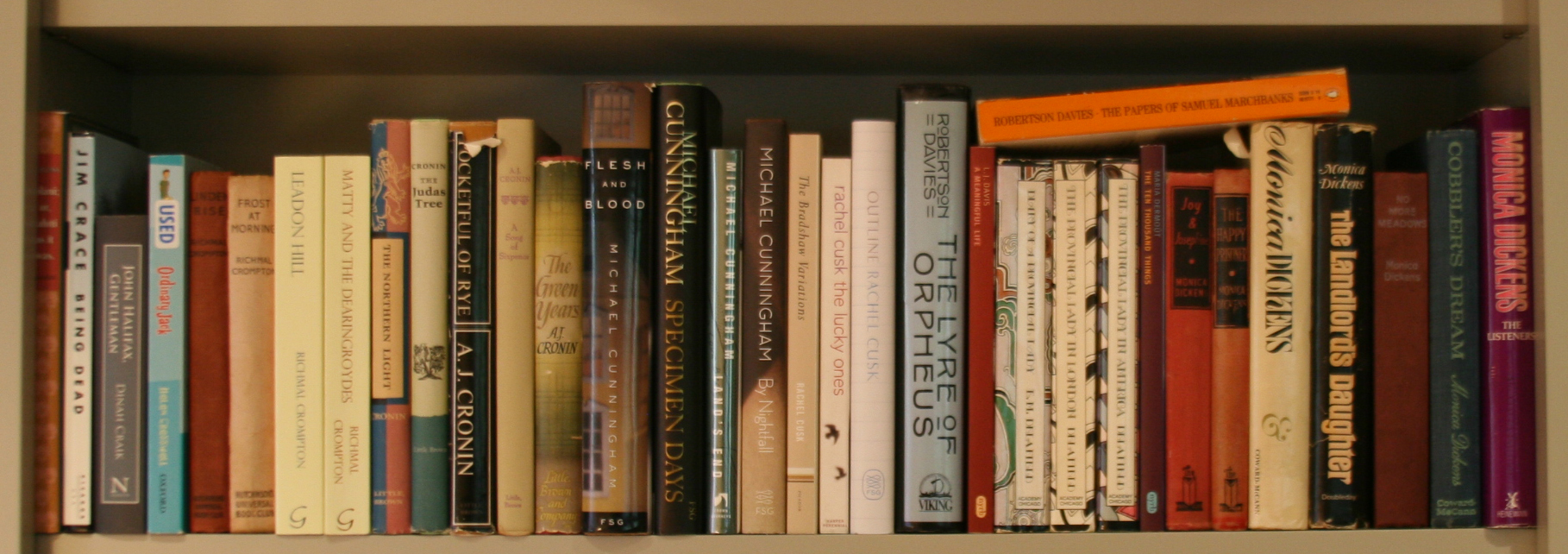
Collins, Wilkie – Iolani; or, Tahiti as it was
This seems to be a relatively new edition of a Collins manuscript that I’m not sure was published in his lifetime. It will be interesting to see if it stands up to his other work.
Crace, Jim – Being Dead
I only know Crace from his snarky takes on fiction that he has recorded for the BBC. At first I didn’t quite understand what he was doing in those snarky takes, but am now mildly amused by them.
Craik, Dinah – John Halifax, Gentleman
Cresswell, Helen – Ordinary Jack (completed)
I first bought and read this book when I was in the 4th grade. I had been given a gift certificate for a small (and short-lived) bookstore in my hometown. For some reason I was drawn to this book by British author Helen Cresswell. Jack’s family is a little eccentric and the book is filled with details of British life that the young me didn’t understand but was somehow still fascinated by. When I came across a copy of it recently, I couldn’t pass it by. I am excited to read it again and see what the adult Anglophile in me thinks of it now.
Crompton, Richmal – Linden Rise (completed) Crompton, Richmal – Frost at Morning Crompton, Richmal – Leadon Hill Crompton, Richmal – Matty and the Dearingroydes (completed)
Fell in love with Family Roundabout by Crompton and have been very interested to read more of her work. When Claire (formerly Paperback Reader) visited DC she brought me three of these. I think I had already stumbled across one of them at some book sale.
Cronin, A.J. – The Northern Light Cronin, A.J. – The Judas Tree Cronin, A.J. – Pocketful of Rye Cronin, A.J. – A Song of Sixpence (completed) Cronin, A.J. – The Green Years
Not great literature, but Cronin provides good, solid, readable novels, often about doctors.
Cunningham, Michael – Flesh and Blood (completed) Cunningham, Michael – Specimen Days (completed) Cunningham, Michael – Land’s End Cunningham, Michael – By Nightfall (completed) I really like Cunningham’s work but found his most recent novel, The Snow Queen, annoying enough that I didn’t finish it.
Cusk, Rachel – The Bradshaw Variations Cusk, Rachel – The Lucky Ones Cusk, Rachel – Outline (completed)
I picked up Outline in my attempt to read the shortlist for the Bailey’s Prize last year. It turned out to be the one I enjoyed most and one of my favorite books of the year.
Davies, Robertson – The Lyre of Orpheus Davies, Robertson – The Papers of Samuel Marchbanks
I went through a Davies phase in the late 1990s with the Deptford Trilogy.
Davis, L.J. – A Meaningful Life
Delafield, E.M. – Diary of a Provincial Lady (completed) Delafield, E.M. – The Provincial Lady in London (completed) Delafield, E.M. – The Provincial Lady in America (completed)
Dermout, Maria – The Ten Thousand Things
Dickens, Monica – Joy and Josephine Dickens, Monica – The Happy Prisoner (completed) Dickens, Monica – Kate and Emma Dickens, Monica – The Landlord’s Daughter Dickens, Monica – No More Meadows Dickens, Monica – Cobbler’s Dream Dickens, Monica – The Listeners
In the US, people make sandwiches. In the UK, people cut sandwiches. I have loved this Britishism since my first trip to England when I kept seeing signs for “fresh cut sandwiches”. In most Nevil Shute novels there is some sort of quest/mission/journey for which someone—usually the hero’s romantic interest—cuts some sandwiches to take on the quest/mission/journey.
In So Disdained, as our hero prepares his plane for a long distance flight set for early the next morning, all I could think was “Somebody has to cut him some sandwiches!” But it was already late at night and his chaste love interest wasn’t on the scene. Who in the hell was going to cut him some sandwiches? When he returned to his cottage later that night, the love interest shows up and finds out about his impending flight. She makes no indication she is going to see him off, but I know my Shute. I knew as I read that somehow she was going to get him some sandwiches to take along and probably a flask of something. Alcohol? No he would be flying, can’t fly under the influence. Coffee? Yes, she was going to give him a flask of coffee to go with the sandwiches. That must be it.
Lo and behold, Moran is roused the next morning by the girl (I really wish I could remember her name). She is going to make him breakfast before his flight. I wondered if that would take the place of the sandwiches. Two poached eggs wouldn’t really hold him over long…wait…what’s happening…oh look she has indeed cut him some sandwiches to take along. And she produced a flask of coffee? No, it was alcohol after all, a flask of brandy to go with the sandwiches he stuffs in his pockets.
I bet they were delicious. And what says love more than someone making you a sandwich?
So Disdained by Nevil Shute
Having already read about 12 of Nevil Shute’s novels, you need to understand how surprised I was to be surprised by So Disdained. I thought I had a pretty strong handle on the Shutian hero. To a fault, he always does the right thing. One could argue on a philosophical level whether the right thing to do is always the right thing to do, but in Shute’s case the right thing to do is generally very much tied up with God and country (metaphorically speaking, I’m not sure how Shute felt about God). And although Shute hated Britain’s drift toward Socialism—so much so that he emigrated to Australia in the 1950s—his heroes tend to act pretty selflessly for the sake of others and of society as a whole. His thesis seems to be that humans, when given the freedom to do so, will do the right thing. But now that I sit here thinking of it, my thesis may not hold water. I’m not sure the protagonist in What Happened to the Corbetts was thinking very altruistically. But let’s just set that aside for the moment.
A 1920s Le Breguet – Similar to Maurice Lendon’s spy plane? Imagine six hours in this thing with no enclosed cockpit.
Published in 1928, So Disdained is Shute’s second novel and was written a good decade earlier than the next earliest of his novels that I have read. A brief description of the plot set-up will demonstrate why I was so surprised. While driving home late at night near Winchester, Peter Moran (the estate manager for Lord Arner) picks up pedestrian in the middle of the countryside. It turns out that the man, Maurice Lendon, was one of Moran’s squadron mates in 1917. Not long after the two are reunited Moran realizes that Lendon is on an aerial spy mission for the nascent Soviet Union. And, here is where the surprise comes in, Moran acts on loyalty to his old squadron mate rather than loyalty to his country. The surprise is compounded by the fact that Lord Arner is a government minister and Moran is soon part of high level discussions about the search for this spy plane and he chooses to lie and cover for Lendon rather than assist the government. Later in the book Moran/Shute praise the fascists in Italy, but that is a whole other kettle of fish—and is a means to end, to stop the Soviet’s in their spying. So why was Moran/Shute so morally squishy at the start about where his loyalty should be? Part of me thought it might be because the Soviet Union wasn’t as poisonous politically in 1928 as it became in later years. But Shute’s alliance with the fascisti in Italy to defeat the dirty communists suggests that that wasn’t true. Loyalty to his squadron at the possible expense of his country? Closer, but not entirely right wither. Compassion for Lendon and his somewhat messed up personal life? That seems to be the most believable reason. But still seems somewhat un-Shutian.
It’s fiction and it’s a long time ago, does it matter? Bottom line is I thoroughly enjoyed the book.
The Summer Before the War by Helen Simonson I quite liked Simonson’s first novel Major Pettigrew’s Last Stand. Although I remember thinking at the time that the title was a cheap attempt to cash in on the popularity of Miss Pettigrew Lives for a Day. I really don’t think the use of the surname was a coincidence. Major Pettigrew, while enjoyable, seemed designed to manipulate. Like that potato peel pie book—I enjoyed it, but it was clear the author set out to pander to a certain type of reader (me).
But who am I am to shy away from a bit of pandering? It was in that spirit that I picked up The Summer Before the War and for the first several chapters I was not disappointed. And then the horrible specter of Downton Abbey started to creep in. It all just started feeling way too expected and formulaic. It was as if Simonson got a hold of Julian Fellowes’ checklist of obvious WWI-era clichés and made sure she put a tic in every box. White feathers, telephones, suffragettes, photography—oh my how new and unexpected in these period times!
And then she thought, hmm, E.F. Benson sure has a loyal following desperate for all things Mapp and Lucia. Maybe if I set the novel in Rye and included endless pages about tableaux vivant, I could tap into that market. Her depiction of the society lady sun bathing in the nude also made me think of Lucia and her calisthenics in her bathing costume.
I found myself just wanting it all to be over. There was nothing unique about Simonson’s characters or plot. And it seemed like there were lots and lots of details that only existed to appeal to people with a penchant for ye olde times. Despite the fact that I am one of those people, I find that living authors try too hard when trying to evoke an era. They seem to feel the need to make sure they mention every little detail in a way that E.F. Benson, or E.M. Forster, or anyone else writing in the period, never would have. (I felt that same way about the one Maisie Dobbs’ mystery I read.)
I was also a bit annoyed that unlike the title suggests, the majority of the action takes place during the war itself. And why couldn’t our heroine Beatrice have been a little less boring? Short shrift is given to her successes and failures as Latin master which the opening chapters of the book suggest is going to play a significant role. Instead it is just a clumsy ruse Simonson uses to get Beatrice to Rye.
In fact, everything about this book felt like a clumsy ruse.
Cather, Willa – The Professor’s House (completed) Cather, Willa – Alexander’s Bridge (completed) Cather, Willa – Sapphira and the Slave Girl (completed) Cather, Willa – One of Ours (completed) Cather, Willa – Collected Stories (completed)
This is an example of having read pretty much everything an author has written but not owning all of them. Happily most Cather’s stay in print so I don’t really need to keep them, but observers may think I am not as much of a fan as I am. Plus I really do need to reread O Pioneers! and My Ántonia. It has been too long.
Carlotto, Massimo – Gang of Lovers (completed) Carlotto, Massimo – The Columbian Mule (completed)
In the mood for something different and compelled by Europa’s covers, I picked up Gang of Lovers not too long ago off a table at Politics and Prose and have found myself oddly delighted by this hardboiled noir novels.
Catton, Eleanor – The Rehearsal
Channon, E.M. – The Honor of the House
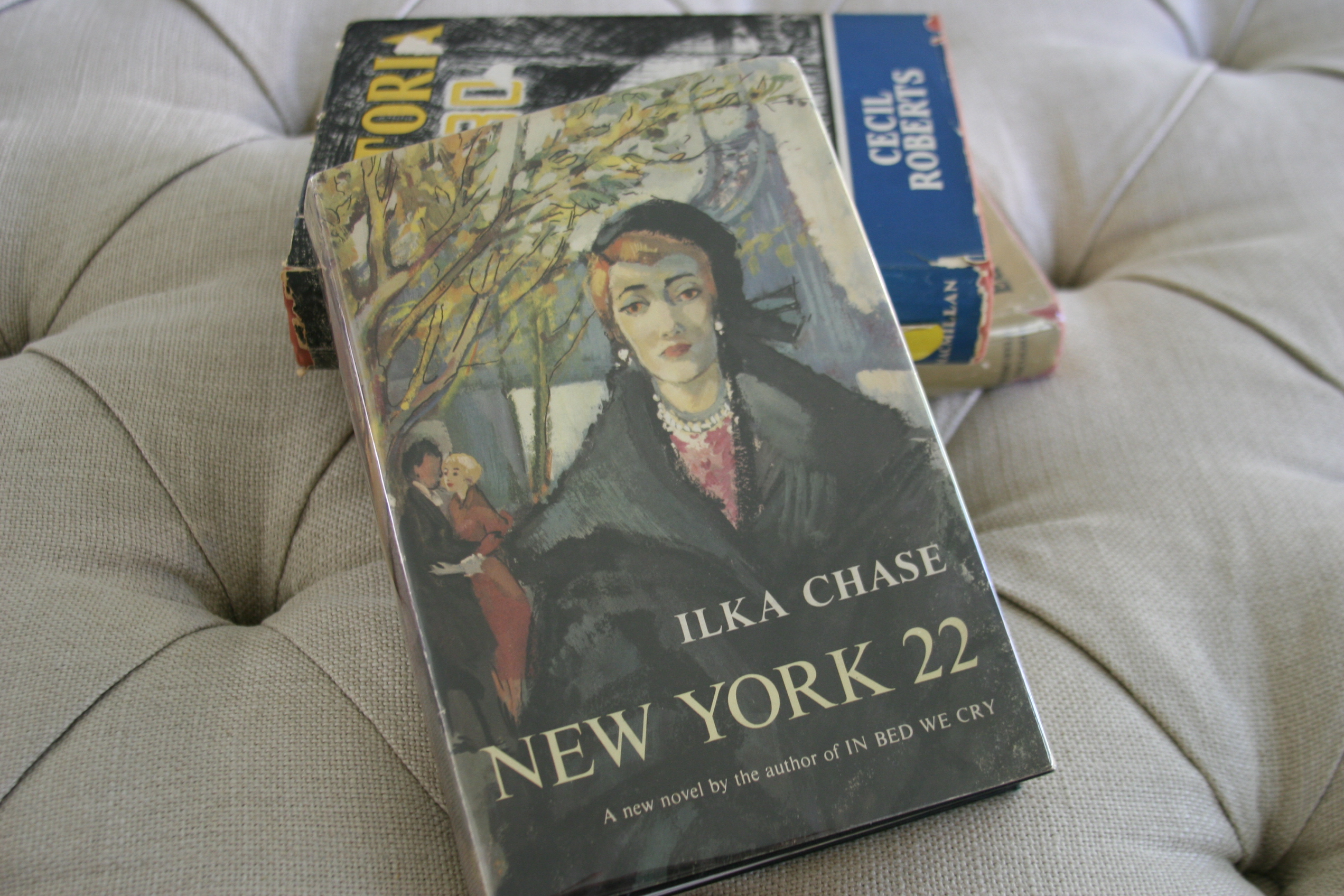
Chase, Ilka – New York 22
I couldn’t resist this cover at Powell’s last summer.
Chase, Mary Ellen – The Lovely Ambition Chase, Mary Ellen – The Edge of Darkness
Cool covers and mid-century New England (I think).
Chatwin, Bruce – The Viceroy of Ouidah Chatwin, Bruce – On the Black Hill (completed)
Even though On the Black Hill is one of my favorite novels of all time, I have had less success with Chatwin’s other writing.
Chesnutt, Charles W. – The House Behind the Cedars
Chesterton, G.K. – The Father Brown Stories
I’ve never read any of these but they seem like the should be up my alley.
Cholmondeley, Mary – Red Pottage
Christie, Agatha – Sad Cypress The only Christie I have read is And Then There Were None. It was fine, but not really my thing. The only reason I own this one is because I found cheap or free somewhere.
Clark, Walter van Tilberg – The Ox-Bow Incident
Coe, Christopher – I Look Divine (completed) Coe, Christopher – Such Times
Coetzee, J.M. – Disgrace (completed)
Coleman, Emily Holmes – The Shutter of Snow
Colette – The Ripening Seed (completed)
Colette – The Pure and the Impure
Colette – My Mother’s House and Sido
Colette – The Other One
Colette – The Shackle Close viewers will note I have two copies of My Mother’s House and Sido. Didn’t realize that until I made this list. I was not a big fan of the Claudine books that I forced myself to read for A Century of Books. I did, however, really enjoy The Ripening Seed. I hope I like all these other volumes which I pretty much bought simply because the covers feature line drawings by Jackie Schuman, the cover artist for Barbara Pym’s Dutton editions.
Comyns, Barbara – Who Was Changed and Who Was Dead Comyns, Barbara – Our Spoons Came From Woolworths (completed) Comyns, Barbara – The Vet’s Daughter (completed) Comyns, Barbara – The Skin Chairs (completed)
Looking at the three Comyns novels I’ve read so far makes me realize how impressive she is. Three very different books but all fantastic. I believe What Was Changed and Who Was Dead is her best, so I guess I have something good to look forward to.
Compton-Burnett, Ivy – A God and His Gifts Compton-Burnett, Ivy – Manservant and Maidservant (completed) Compton-Burnett, Ivy – A House and Its Head (completed) Compton-Burnett, Ivy – The Present and the Past Compton-Burnett, Ivy – A Family and a Fortune Compton-Burnett, Ivy – Brothers and Sisters
ICB is an acquired taste and I’m not entirely sure if I’ve acquired it. They are clever and funny and use lots and lots of dialog. More dialog than you would believe possible. And she definitely likes an “and” in her titles doesn’t she?
Collins, Wilkie – Basil Collins, Wilkie – The Bitter Bit and other stories Collins, Wilkie – The Moonstone Collins, Wilkie – Blind Love (completed) Let me just say I have also read The Woman in White and Armadale even thought I don’t own copies.





 hogglestock