Book Review: House-Bound by Winifred Peck

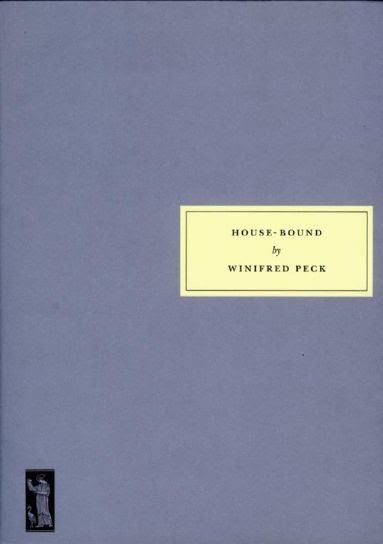
House-Bound
Winifred Peck

The first time I browsed the Persephone catalog I was drawn to House-Bound. Ostensibly, it is the story of Rose Fairlaw’s attempt to keep house when World War II-induced labor shortages make it near impossible to find servants. Rose’s struggle to bring her large house to heel and keep up standards is at times humorous, but also provides a framework for a broader look at whether or not those old standards and ways of life will survive the democratizing effects of the War. I think it can be justifiably said that the beginning of the end of the traditional master-servant dynamic in the UK was sealed in the previous World War when those “in service” got war jobs in factories that paid far better than their usual servant wages and with fewer rules imposed. The massive loss of life during the Great War caused many to question the value of upholding the old order. In that way the Great War played a part in a perfect storm of class consciousness over the course of a couple of decades that included the death of the Victorian era, massive labor strikes, a revolution in Russia, and the inevitable pull of popular culture and its ever-loosening moral standards. (Or perhaps I should say the democratization of loose moral standards. The gentry had long participated in behavior deemed unacceptable for the lower classes.)

But I digress. Suffice it to say similar tensions are at play in House-Bound. They are not, however, as central to the action then one would think at the outset. They get a fair amount of play at the beginning and a bit of lip service at the end, but the central chapters of the book have much more to do with family joys and sorrows as the Fairlaws cope with war. Perhaps most surprising is a storyline about Rose’s daughter that catches one a bit off guard, not only because it is unexpected but it also feels so much more modern than the trials that have preceded it.

Overall House-Bound feels a bit episodic. It is as if Peck had too many ideas floating around her head and found it difficult to either settle on one or two of them or to provide the necessary framework to fully develop them all in a mini-epic. This is no more evident than the role of Major Hosmer, an American who always seems a little too conveniently placed, propelling the story forward in somewhat unnatural ways. Rather than feeling like he is part of an organic literary whole, he seems more like an omnipresent deus ex machina whose only value is to help Peck advance the action. Major Hosmer’s presence is also indicative of Peck’s inability to really commit to any number of themes. On the one hand Peck wants Hosmer to represent the future: open, democratic, and slightly socialistic. On the other hand he is dismissed by some of the characters in a way that suggests that Peck is similarly dismissing him and what he represents. She wants to show Rose breaking free from her house-boundedness but she seems unwilling to commit to all that that would entail. As if Peck wants to break free of everything but class privilege.

Although I have quibbles with the overall arc of the book it was worthy of a read if for no other reason than for the critical thinking that it provoked. And many of the episodes were enjoyable in their own right. Some were comic, some were fascinating with domestic detail, and some were touching and hopeful. But in the end House-Bound falls short of being more than the sum of its parts.

Blogging Christmas: 9:00 PM – (Not your traditional) Christmas Eve Fare

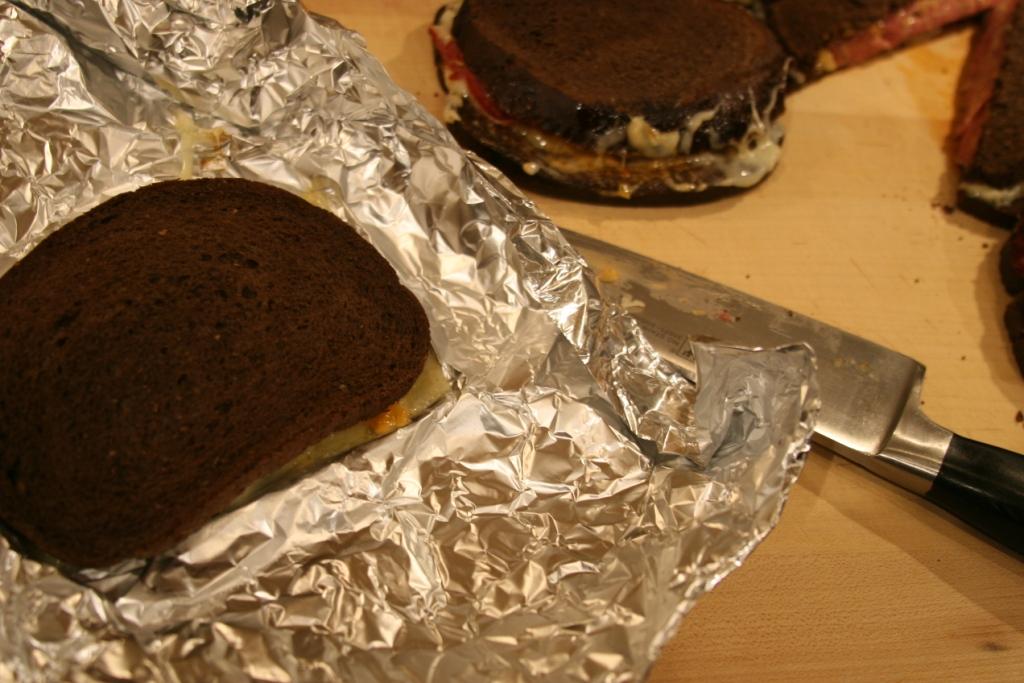
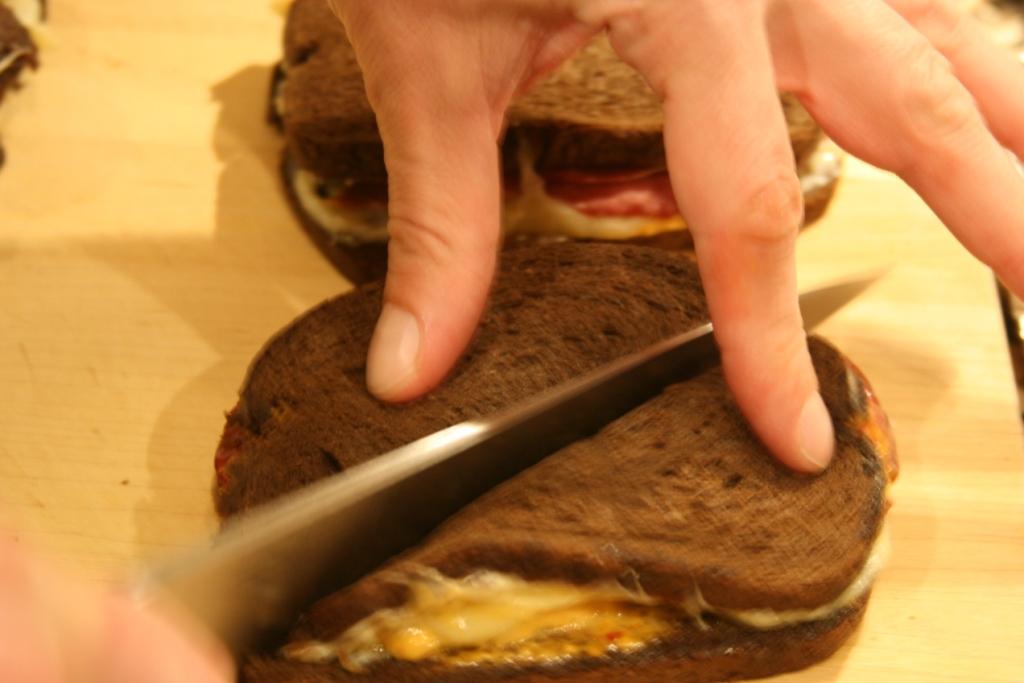
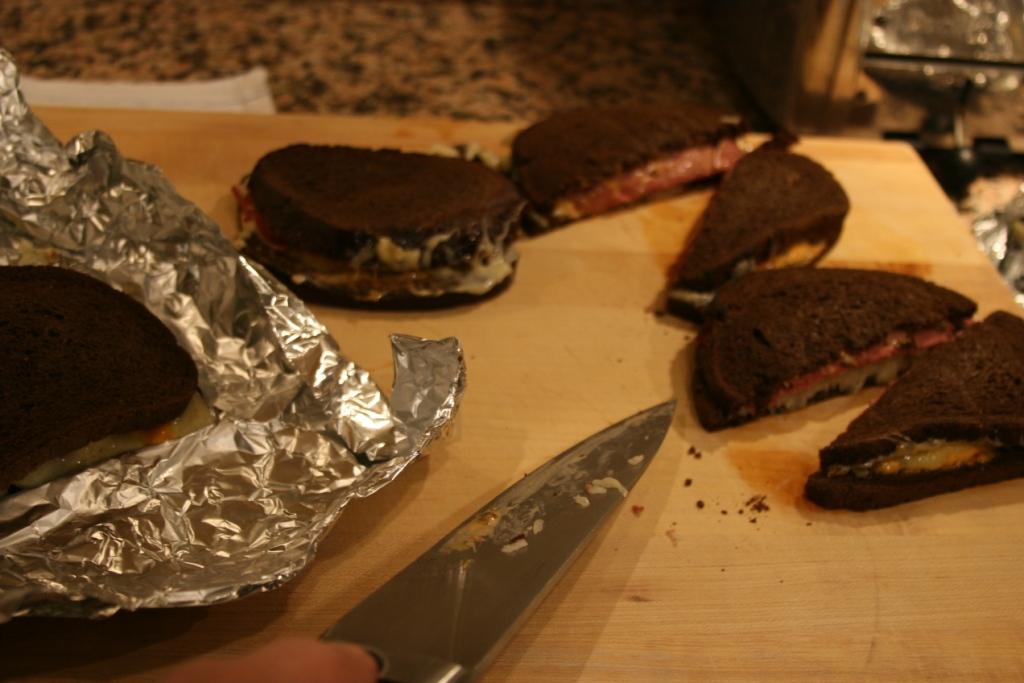
The traditional Christmas Eve meal in my family has been the Ruben for about as long as I can remember. I don’t know how it ever got started but one year we made Rubens for Christmas Eve, and because we enjoyed it so, and because it was so easy to clean-up afterwards, it became a tradition. And one that I have chosen to carry forward into adulthood.

When I first met John and told him about it he thought I was a little nuts. That is until he had his first Christmas Eve Ruben. And so the tradition lives on.

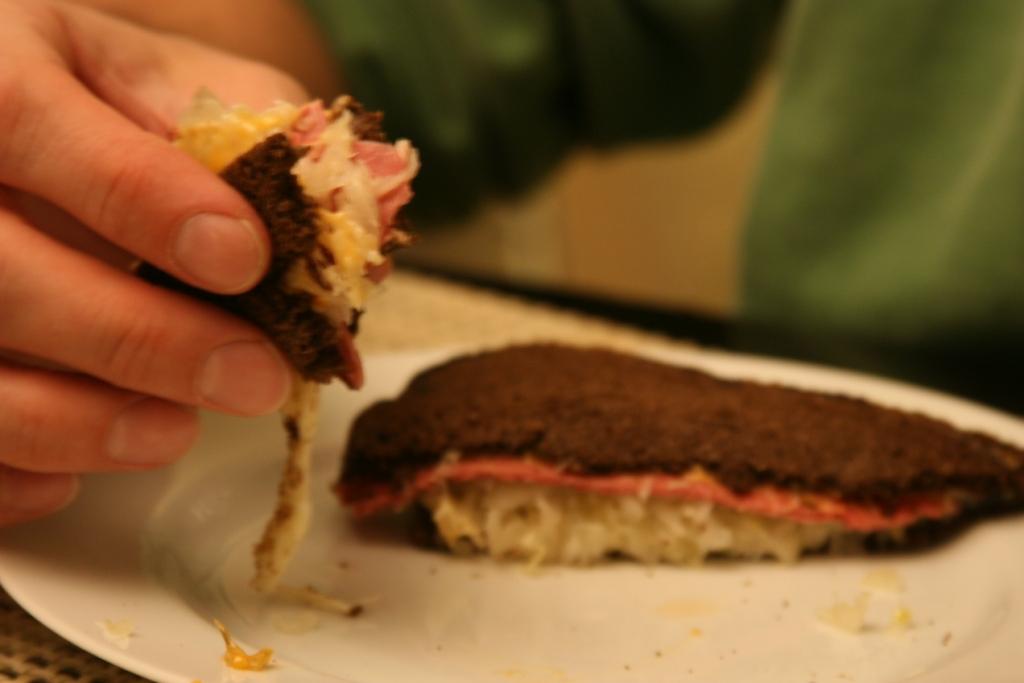
For those of you don’t know, a Ruben is a hot sandwich made with Pumpernickel bread, Swiss Cheese, Corned Beef,  and Saurkraut. In delis and restaurants they are often made with Thousand Island or Russian dressing as well. But that isn’t something I added to my recipe until a few years ago. Then you wrap them in foil and put them in a 350 oven for about 15-20 minutes.

Not something most would consider appropriate holiday food. But they don’t know what they are missing.

Blogging Christmas: 5:40 PM – Prep Work for Tomorrow

Normally we have prime rib on Christmas Day. But this year we felt like we didn’t get enough in the way of Thanksgiving leftovers (sandwiches!) so we decided on turkey.

But turkey dinner means a fair amount of prep work.

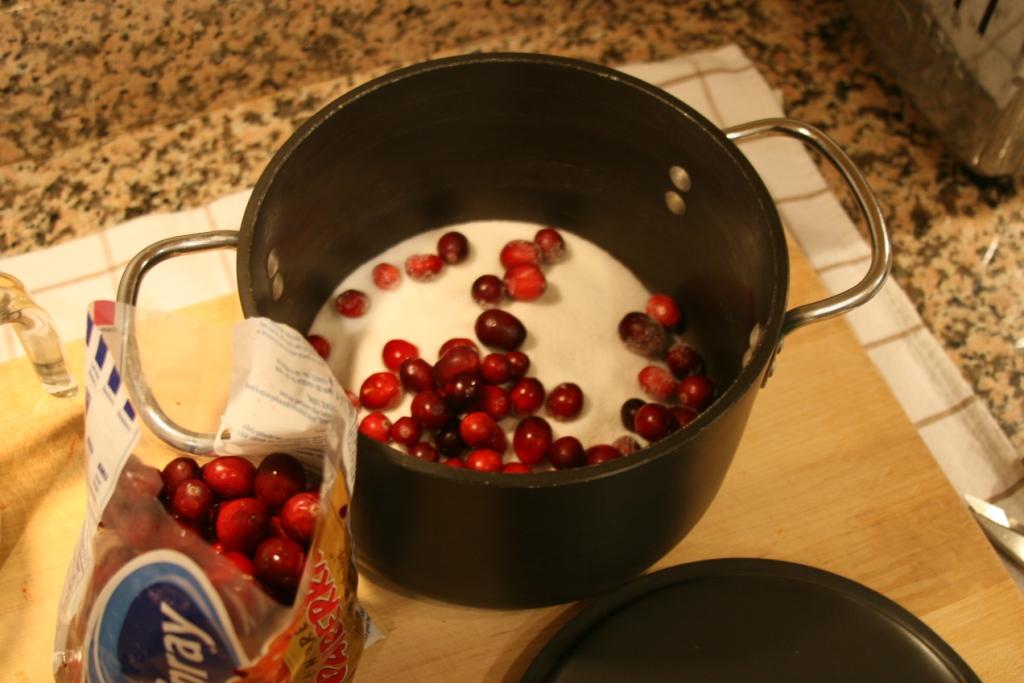
Cranberry sauce needs to be made. (This is crucial for the sandwiches.)

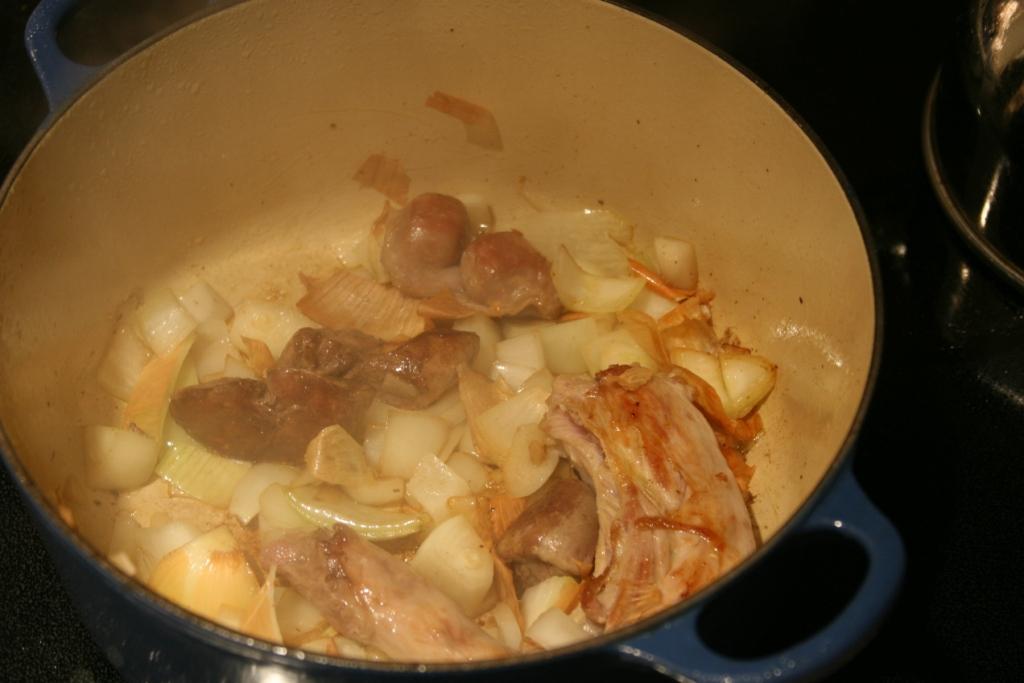
Stock for the gravy needs to be made.
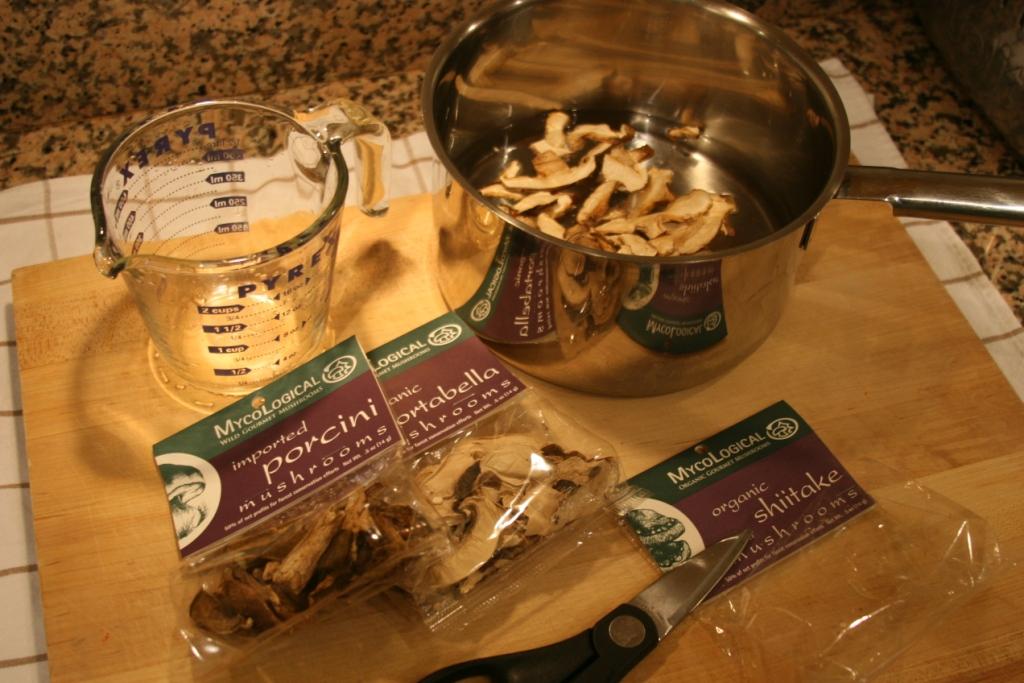
Dried mushrooms rehydrated for the stuffing. The rehydrating liquid also gets used in the stuffing.
Everything all a’simmer.