Book Review: Stoner by John Williams

Stoner
John Williams

Our hero, William Stoner grew up dirt-poor on a farm about 40 miles from Columbia, Missouri. In 1910, at the age of 19, he is sent off to the state University in Columbia to study agriculture. Two years into his studies, however, he discovers literature and decides to give up studying agriculture in favor of becoming a scholar. In due course he earns his Ph.D., stays on at his university as instructor, becomes an assistant professor, and teaches there for forty years until he retires and soon after dies.

There are so many themes in this book worth exploring, it is hard to know which ones to focus on or even mention here. Perhaps the first one that becomes apparent is Stoner’s challenges in living in two worlds. His poor parents, with no education beyond the 6th grade, know nothing of his intention to study literature and not return to the farm until he finally confesses to them after his undergraduate commencement. And for about six years of his education he lives with distant relations remaining caught between his old and new lives as he earns his keep by working on their farm.

He became conscious of himself in a way that he had not done before. Sometimes he looked at himself in a mirror, at the long face with its thatch of dry brown hair, and touched his sharp cheekbones; he saw the thin wrists that protruded inches out of his coat sleeves; and he wondered if he appeared as ludicrous to others as he did to himself.

By the time he finishes his degrees and begins teaching he is fairly well-acclimated to his new world. The novel is not really about Stoner being a fish out of water. In fact his years of study are somewhat compressed in the overall arc of the narrative. The novel also deals with his troubled marriage. His wife waging a forty year war on her husband who she seems to hate, often using their daughter as a weapon against him. It is hard to know exactly what is going on with his wife, but she certainly seems bipolar to me. Many of the challenges in their relationship are exacerbated by their inability to communicate anything that is important. Imagine the paralysis of communication that takes place in Ian McEwan’s brilliant book On Chesil Beach and dial it back about forty years with all the associated differences in social and sexual mores and you start to get the idea.

Equally engaging was Stoner’s life at the University and the political intrigue and fighting that seems to be unavoidable in the hierarchy of an academic department. It is true that I love a book with an academic setting, but I am not sure I have ever been pulled into that milieu in such an emotional way. There is one scene in the book where Stoner fairly and firmly confronts a student and a colleague during oral exams that had me so wound up that my heart was literally racing. And the fact that Stoner wins the battle but ultimately looses the war makes it even more heart wrenching.

There is certainly joy in Stoner’s life, including a well-deserved love affair, but overall his life sometimes seems like more of a trial then anything. In an interview, author Williams, however, warns against taking this view of Stoner.

A lot of people who have read the novel think that Stoner had such a sad and bad life. I think he had a very good life. He had a better life than most people do, certainly. He was doing what he wanted to do, he had some feeling for what he was doing, he had some sense of the importance of the job he was doing. He was a witness to values that are important…

It is hard for me to do justice to this book given my limited ability in literary criticism, but it really is a great book both in style and content and is definitely worth a read.


Wuthering Heights

Recently I was reminded of this Monty Python classic where they perform Wuthering Heights in Semaphore. I find it especially funny when the flags get bigger when Edgar begins to yell.

There is a bit of animation at the beginning. The Wuthering Heights bit starts at about the one minute mark.

Book Review: The Priory by Dorothy Whipple


The Priory
Dorothy Whipple

First it was the not-so-small band of book lunatics—I mean bloggers—who were constantly raving about Persephone. Not being one to miss out on book lunacy I got the catalog, ordered 12 of them, joined the Pesephone Secret Santa, got the Persephone logo tattooed on my shoulder…okay I really didn’t do the last one but it does have a certain appeal, the logo would make a good tattoo.

Then I began to notice that the Persephone Pack was raving about one Persephone author more than any other. It was all “Dorothy Whipple this”, and “Dorothy Whipple that”. And the Persephone catalog did seem to have a lot of Whipple in it. Being a sucker for an anachronistic sounding name, I felt myself being drawn in and wishing I had a Whipple to read. When lo and behold, I realized that I had actually included a Whipple in my original Persephone order.

By the way, I defy any American to claim that they don’t think of Charmin toilet paper when they hear the name Whipple. And even for those outside the US who use toilet roll rather than toilet paper and have no idea who Mr. Whipple is, thinking of Ms. Whipple just might make you think of some sickly sweet dessert with a ripple of something running through it. And if there are any fans of “The Fall and Rise of Reginald Perrin” out there you can probably even hear Reggie (brilliantly played by the late Leonard Rossiter) talking about Sunshine Desserts latest flavor, Strawberry-Lychee Ripple.

But I digress. The real question is, how do I feel now that I have read my first Whipple? Did the Whipple Wing of the Persephone Pack lead me astray? Let me put it this way, I have had to hide all the credit cards lest I go on a Whipple buying spree.

The Priory was an amazingly good read. Its 528 pages joyfully flew by. A book where you are dying to see what happens next but at the same time you don’t want it to end. The plot revolves around the decaying Saunby Priory somewhere in the British Midlands and the decaying lives of the cash poor family who inhabit it. In the make it, invest it, and lose it progression of wealth common in so many moneyed families, the Marwoods are deep into the third stage and don’t have a clue what to do about it. Widower Major Marwood lives for cricket. His young twenty-something daughters have never bothered to move out of the nursery and are not equipped for much of anything (life, work, or love) outside the expansive grounds of Saunby. The somewhat potty aunt who spends all her time painting despite not having an ounce of technique or talent. And then there is a cast of servants, outside elements are introduced into the story, the focus shifts, etc. I am not going to say much more about the plot, except that there is a lot of it and that it is fascinating and compelling.

And like most good novels, the characters have dimension and never fall strictly into hero or villain categories. Just when you think one of the characters is bad they show some redeeming quality that makes one not hate them after all. I have a little quibble over one part of the story line that never gets fully developed (Penelope refusing to have kids), and the fact that the novel’s wrap up leaves Penelope’s fate somewhat unknown. But when I said it was a quibble, I meant it was a quibble. This is a fantastic book.

My joy in reading The Priory was accompanied by a desire to see it dramatized for TV or the big screen. Which made me think of all the great books that would make for great TV or a great film. Which, in turn, started to annoy me a bit. I mean do we really need 172 filmed versions of Emma? Don’t get me wrong, I love a good period Austen film, but c’mon, there is a world of literature just waiting to for period costumes and Emma Thompson. (Given Ms. Thompson’s current age, I would probably cast her as Anthea or Aunt Victoria, but neither role seems meaty enough.) But I guess that doesn’t matter too much. Movie or not, you will enjoy The Priory.

See what other members of the Whipple Wing of the Persephone Pack have to say about Ms Whipple:
Bloomsbury Bell
A Book Sanctuary
Book Snob
Dovegreyreader Scribbles
The Literary Stew
Paperback Reader
Skirmish of Wit
Stuck In A Book

If you don’t know Nina Simone, you should

In 1964 Nina Simone put the brakes on her burgeoning career in the US for all the right reasons. Having already achieved a certain amount of popular success prior to that time, Simone reacted strongly to the death of Medgar Evers in Mississippi and the bombing of a black church in Alabama by writing the song “Mississippi Goddam”. It was the beginning of Simone’s involvement in civil rights and the end of little old racist white folks enjoying her version of jazz standards. Still, she made over 40 recordings and died a music legend in 2003 at the age of 70.

Mississippi Goddam. Sorry this is just a still image, but the audio is good.

Four Women. Again no video but the lyrics–which are amazing–scroll through the video.

Ain’t Got No. Finally some actually video of Nina Simone.

Book Review: The Dearly Depared by Elinor Lipman


The Dearly Departed
Elinor Lipman

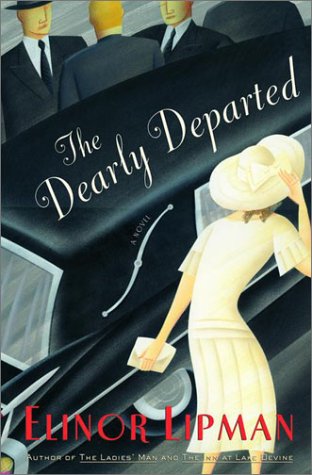
As some of you may recall, the first book I read by Elinor Lipman was her fantastic novel The Inn at Lake Devine. Since then I have read Ladies Man (fun but not as good as Lake Devine), and My Latest Grievance (fun and almost as good as Lake Devine). The Dearly Departed is my least favorite of the four that I have read. That is not to say, however, that it isn’t fun and interesting. It is. And Lipman does her usual great job of creating characters that are interesting and likable and a plot that is both fun and engaging.

Sunny Batten is the distant, adult daughter of Margaret Batten a single mother who is mostly loved by folks in the small town of King George, New Hampshire. At the unexpected death of Margaret and her somewhat secret fiancé, Sunny is forced to go back to her hometown not only to deal with her grief but also with the same cast of small town characters who made her adolescence less than happy. She is also confronted with the existence of her almost potential stepbrother who turns out to be somewhat more involved in her future than she might have otherwise guessed.

As usual with Lipman there is plenty of humor and plenty of good writing in The Dearly Departed. But if you haven’t read Lipman, put this one on the list somewhere after The Inn at Lake Devine.

Too much blogging, not enough reading…

Between posting all of the travel pictures and catching up on 194 (at last count) bookish blogs, and all of the fabulously bad TV waiting for me on TiVo, I have done very little reading lately. So this snowy weekend I plan to do some quality reading.

UPDATE: Mlle Paradis rightly points out that I didn’t note the name or location of this wonderful bookstore. It is O’Gara & Wilson. It is in Chicago near the University of Chicago. If you take the EL out to the Museum of Science and Industry, when you are done at the museum cross under the EL tracks and you will not only find this gem of a store but there is also a branch of the famous Portland-based Powells on the same street.