Book Review: School for Love by Olivia Manning


Final day of NYRB Classics Reading Week
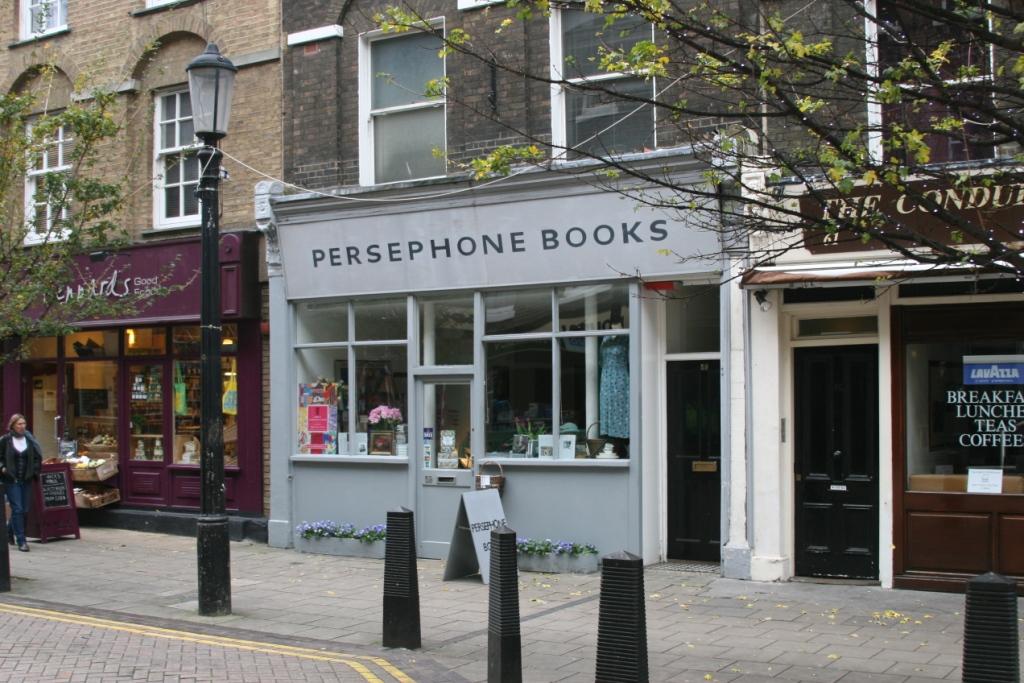
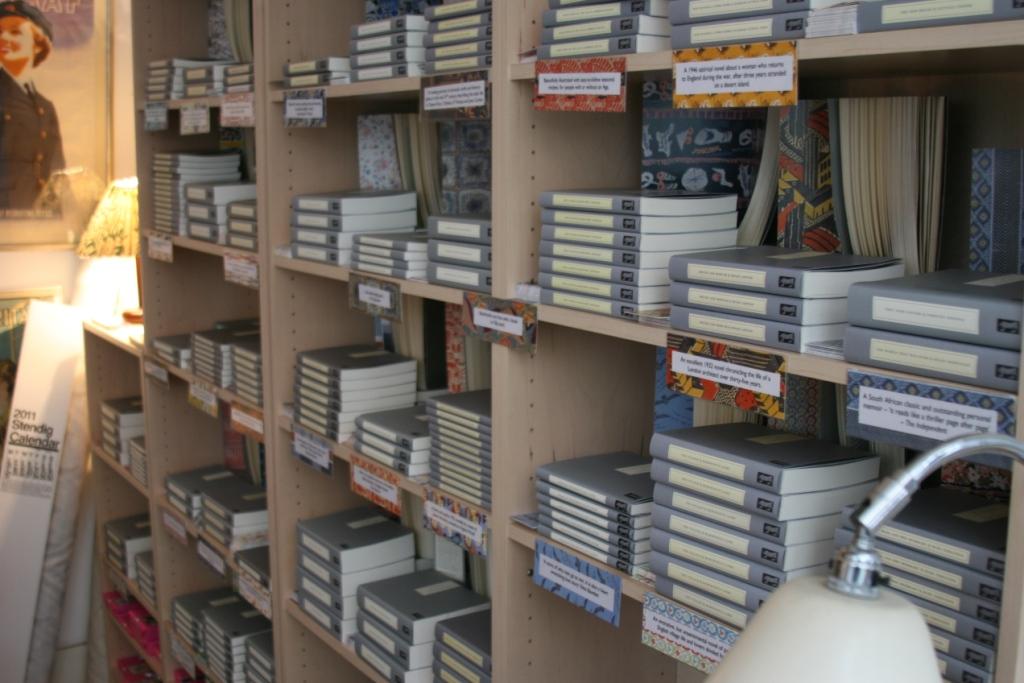
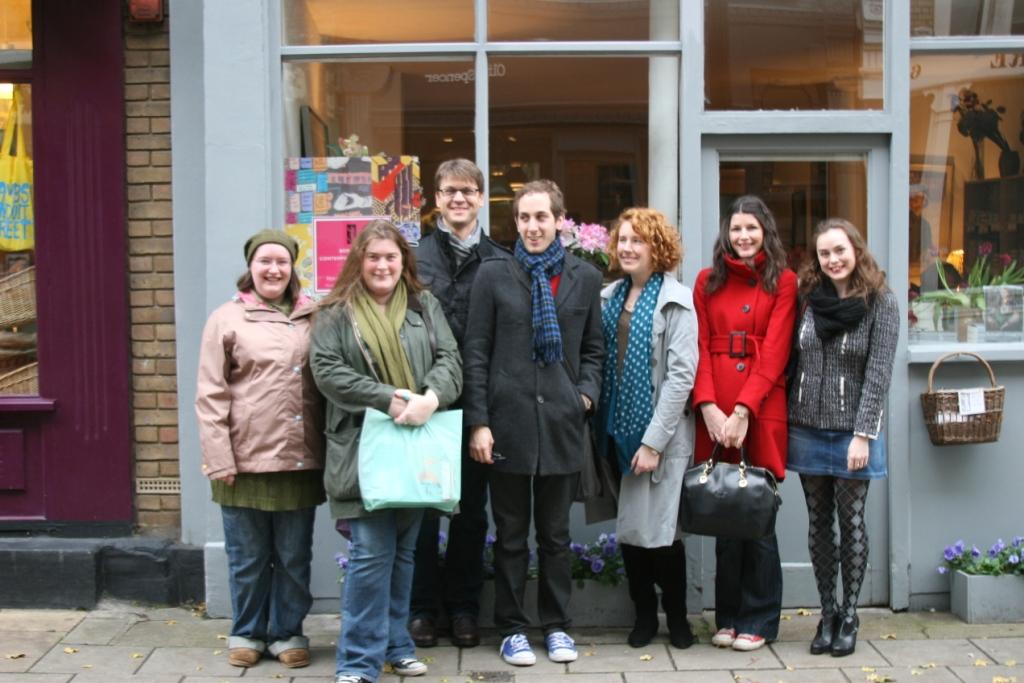
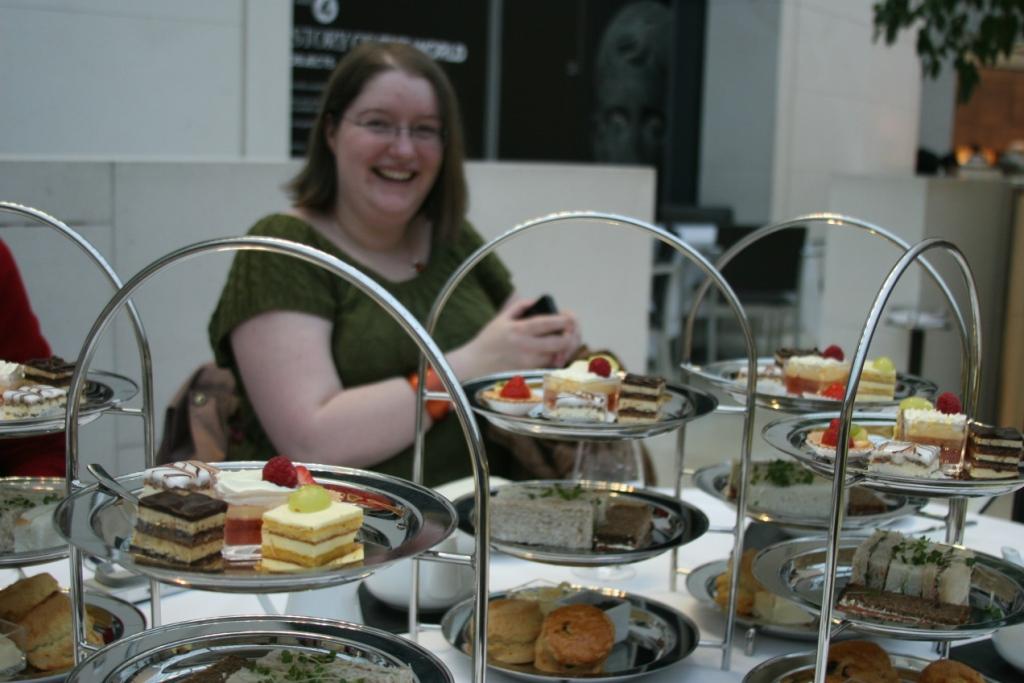
Well, I started out out strong (and organized) with my NYRB posts this week. I planned ahead so I would have a variety of stuff to write about this week, but then things got very busy and time slipped away. And now I sit here with my mind somewhat blank. I am in London right now and going to meet up with a bunch of UK bloggers this afternoon so I just feel a bit distracted. It is kind of interesting that I am wrapping up my participation in NYRB Classics Reading Week just in time to go visit Persephone Books for the first time. Persephone and NYRB Classics have much in common, rescuing long forgotten quality fiction in beautiful, quality editions.
I finished the last 20 pages of School for Love on the plane. In fact, quite unusual for me, those were the only 20 pages I read on the whole six hour, twenty minute-flight. Normally on a transatlantic flight I get lots of reading done, but John and I were both so wiped out that we skipped the in flight meal and just about everything else and slept for about five hours. I don’t think I have ever managed to sleep that much at once in a coach seat. It was great, the flight whizzed by and we got to London feeling really refreshed. But it meant that I didn’t get much reading done.
School for Love is the story of an English teenager, Felix Latimer who finds himself in Jerusalem in 1945. Orphaned while living with his parents in Iraq, he is unable to get passage back to England in the final days of WWII. He is sent off to live with Miss Bohun, a friend of his father’s family. Miss Bohun is a stingy, churchy, old maid–the kind that gives old maids a bad name She runs a miserable boarding house taking advantage of her lodgers by charging them the going, rather exorbitant, rate but maintaining near poverty-like conditions in the house. All the while acting like she is doing them all a favor. Her duplicity about the cost of lodging is echoed in her duplicity in spirit. A holier-than-thou Christian waiting for the second coming, she acts in a most dishonest and un-Christ-like way to Felix and the others who live in the house. Perhaps worse than her meanness of spirit is the fact that she tries to cover it up with her piety.
The teenage Felix matures while staying with Miss Bohun. Like a child when he arrives, he reveres Miss Bohun thinking that others who think less of her are being unkind and unjust. But as the story unfolds Felix begins to see her for what she is. However, much to my chagrin, Miss Bohun never gets her comeuppance. In fact, just the opposite. I think School for Love is probably meant to teach us something profound about the human need for love, but I found Miss Bohun to be such a meany, I didn’t want to sympathize with her at all. I would have loved to have seen her transformed, but Manning seems intent on making us love unpleasant Miss Bohun just as she is. Might be a profound message, but it didn’t obviate my desire to see her get what she deserved.
Despite my slight disappointment with the ending, I really enjoyed School for Love. In addition to telling the somewhat emotional tale of each of the characters, it describes life in a very diverse and interesting Jerusalem, which is both literally and figuratively foreign to me. And there are moments of humor, like when Miss Bohun presses one of her adult private students into harvesting her mulberry bush as part of his lesson. And she seems to be using somewhat antiquated texts that seem most unhelpful for teaching English as a second language. One has a hard time imagining how sounding out the word “postillion” is going to be of much value to someone trying to learn the basics of English.
This was my favorite of the three NYRB Classics I read this week. But none of them came close to some of the brilliant titles I blogged about earlier in the week. I wouldn’t say the three I read this week are necessarily lesser works, but they just didn’t catch my imagination as the others did.

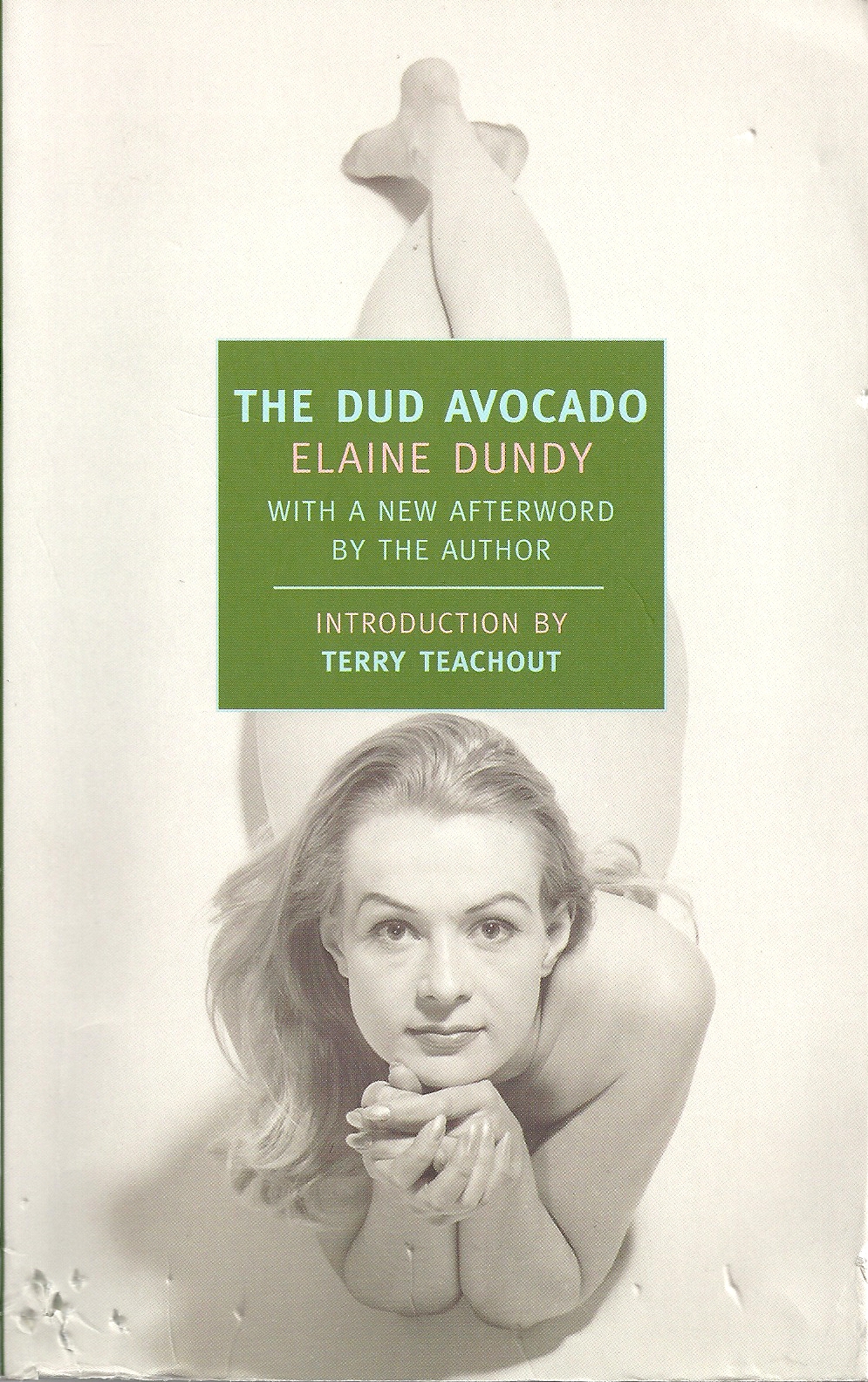
Book Review: The Dud Avocado by Elaine Dundy


Day Four of NYRB Classics Reading Week

[The observant among you may have noticed that my scan of this book cover shows Lucy’s first (and hopefully last) attempt to read  a book.]

There is something about living abroad in one’s early 20s that really can’t be replicated. No matter how many times I go back to Europe, nothing will ever compare to the six months I spent working in London when I was 21. This is an age when you are old enough to enjoy the experience but still stupid enough to live with a certain amount of abandon. Our heroine in The Dud Avocado, Sally Jay Gorce, seems to have a little more of the latter and not so much of the former.

Thanks to a generous uncle, Sally Jay is spending two years living in Paris. During that time she hooks up with all sorts of artistic (and not so artistic) characters while she somewhat half-heartedly pursues an acting career. Like many 20-somethings, her ambition and common sense ebbs and flows and seems to dissapate at the first sign romance. Although I did plenty of stupid things when I was abroad in my 20s, I never really lost control of my overall trajectory. Sally Jay on the other hand seems to go with the flow more than is good for her. Of course, to many this is the charm of The Dud Avocado. To someone like me, who likes order, predictability, and people who follow the rules and don’t make waves, the book is somewhat less charming. But that doesn’t mean it isn’t worth reading. It just meant that I had to adjust my expectations. This is not your cosy, girl blossoms in foreign land kind of story.

For me, for the reasons noted above, this book was hard to warm up to. But just when I thought it was going to be a slog from beginning to end, it suddenly caught my interest in a meaningful way. Around page 140 I stopped trying to rewrite it in my head to make Sally Jay more responsible and found myself actually starting to care what happens next.

I realize this doesn’t sound like a ringing endorsement for The Dud Avocado, but I will say that if I had expected something less picturesque and more madcap I would have enjoyed it much more than I did. But even that doesn’t do it justice, there are some serious themes that make for compelling reading. Published in 1958, it also deals with female sexuality in a pretty frank way that must have been somewhat scandalous for the time. And I am sure there are many feminist and not so feminist themes that could be teased out. But I am too intellectually lazy at the moment to do so.
    

My favorite NYRB Classics (so far)

 
Day Three of NYRB Classics Reading Week

As I mentioned earlier this week, my introduction to NYRB Classics was thanks to their great cover art. If it wasn’t for those covers I probably never would have come across these great books. These four titles are good enough reads that it really doesn’t matter what your reading interests are. They are all worth a read.

Stoner by John Williams.  Easily my favorite NYRB Classic and one of my favorite books of all time. Money quote from my own review:
It is true that I love a book with an academic setting, but I am not sure I have ever been pulled into that milieu in such an emotional way. There is one scene in the book where Stoner fairly and firmly confronts a student and a colleague during oral exams that had me so wound up that my heart was literally racing.
The Big Clock by Kenneth Fearing. This one took me one or two attempts before I got into the swing of it. But once I did, I loved it. A really interesting whodunit, where you already know whodunit right from the start. This is suspense novel that is good even for those of us who don’t usually read that kind of thing. My review is here. Money quote from my review is actually Raymond Chandler:
I’m still a bit puzzled as to why no one has come forward to make me look like thirty cents. But except for an occasional tour-de-force like The Big Clock, no one has.
A Way of Life Like Any Other by Darcy O’Brien. This was a total sleeper for me. In general not a big fan of Hollywood related stories but this one is really witty and smart. And told from the point of view of a kid trying to cope with his once famous parents. From my review:
The [family] dysfunction [described in the novel] reminded me a bit of a more benign version of Augusten Burroughs’ memoirs. Except that O’Brien’s novel is much more a piece of literature than Burroughs’ David Sedaris-like regurgitation of his childhood. Plus O’Brien isn’t gay, which I only mention now because his attempts at wooing females and his quest to get laid are pretty comic.
The Enchanted April by Elizabeth von Arnim. Many of you have read this one, and it certainly is one of the better known NYRB Classics titles out there. And if you haven’t read this book and are looking for a wonderful, uplifting story, this is it. Much better than movie in my humble opinion. My review here.
       

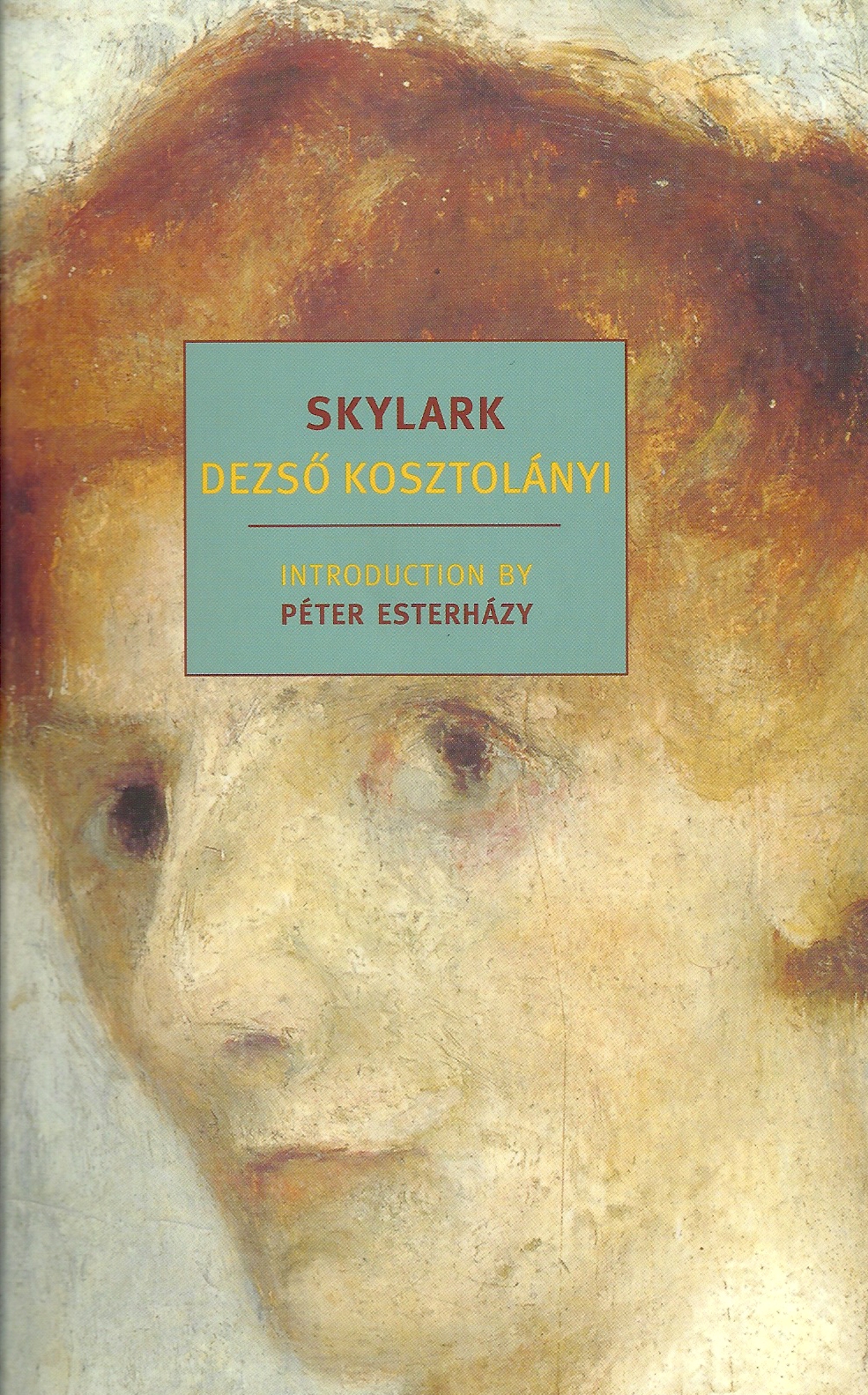
Book Review: Skylark by Dezso Kosztolanyi


Day Two of NYRB Classics Reading Week

Skylark is a wonderful example of why I like New York Review Books Classics. A long forgotten novel first published in Hungary in 1924 is one that would be hard enough to find in a library let alone a bookshop. But thanks to NYRB, there it is just waiting for someone like me to pick it up and read it. I love Penguin Classics, but c’mon those are the greatest hits or in some cases the B-sides* of well known authors. NYRB has a few B-side novels in their catalog, but more than anything they have a lot of A-sides by authors who have long passed out of popular consciousness. The literary equivalent of reissuing hits of long forgotten one-hit wonders. Keeping in mind of course that many one-hit wonders have a back list that may not have been popular but is still eminently worthy of attention.
Another reason I like NYRB Classics is because they often take me out of my emotional, geographic, and topical comfort zone. And so it is with Skylark.
Skylark Vajkay is an unmarried 35-year old woman living with her parents in a provincial city in Hungary around 1900. The three Vajkays live a rather sedate, abstemious life. The opening chapters rather charmingly describe preparations for Skylark’s trip to spend a week with relatives in the country. Although Skylark processes some very complex emotions and is alternately playfully humourous and gut-wrenchingly sad, its plot arc is rather simple. With the complete action of the book’s 221 pages taking place over the course of just one week, it is somewhat hard to describe much about this book, let alone its plot, without giving too much away.
Suffice it to say that Skylark and her parents learn much about themselves and each other while she is away in the country. In that short period Kosztolanyi manages to distill 35 years of the Vajkay’s family dynamics and explore some of their deepest feelings about themselves and each other.
The sentence that follows this one and the rest of the paragraph are very spoiler-y in nature. I must admit I was heartbroken that the character transformations were ultimately arrested, and that nothing was left in the end but despair. The happy, or at least amusing, ending that seemed to be in the works was not to be. Yet the unhappy ending retroactively gave the rest of the novel a depth that made the book much more compelling for me than it would have been with a happy ending.
Not my favorite NYRB, but definitely worth reading. And one that I like better the more I look back at it.
*For those of you born after 1980 and who don’t understand the “B-side” reference: Once upon a time popular music songs were released on small vinyl disks that played at 45 revolutions per minute on what was called a record player. The hit song was the song on side “A” of the disk. Depending on the artist’s output, the song on the “B” side didn’t often achieve the popularity of the hit on the “A” side.

What do you read when your mind won’t shut off?


Last night I had the hardest time getting to sleep. I was plenty sleepy and did doze off for a bit, but then I woke up and couldn’t clear my mind long enough to fall back to sleep. Even before I went to bed I knew that I was stressed out when I couldn’t figure out what to read. Sometimes I can get a bit restless and have trouble picking something to read. But this was different. I wasn’t restless so much with my current reads but almost annoyed. Don’t get me wrong I like everything I am reading right now. But all of it seemed too complicated for my mood. I needed something deeply comforting.
The last 150 pages of The Golden Notebook weren’t going to help.
Margaret Drabble’s memoir wasn’t going to help either. It is kind of a comfort book, but alas too cerebral to fit my anxious mind last night.
I am in the final third of The Dud Avacado by Elaine Dundy, but I am a little unsympathetic to the main character so I wasn’t going to find much comfort there.
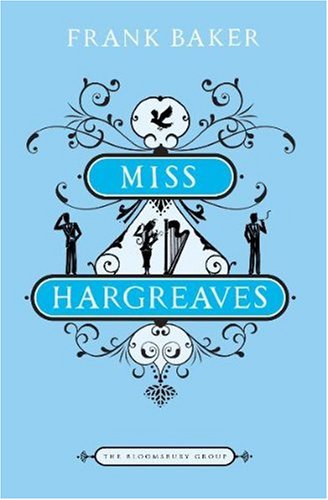
I am in the first third of Miss Hargreaves, which I am really liking, but the madcap crazy of that tale is hardly the thing to calm one down.
I ended up picking up and starting something new: The Birth of a Grandfather by May Sarton. I find her journals to be so comforting, even though they sometimes deal with big issues like her ongoing depression. At first The Birth of a Grandfather was doing the trick. The opening paragraphs describing the beginning of a gloriously long summer spent in a family cabin on private New England island seemed to be just the right level of calm for me. But then on page 3 marital complications popped up. Alas, a comforting read to help clear the stress from my mind was not to be.
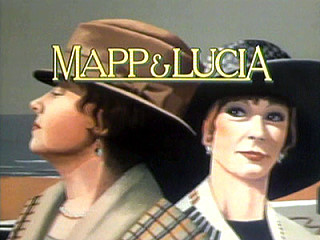
In the past E.F. Benson’s Mapp and Lucia books were a sure fire way to calm me down and make me forget my troubles. But I don’t own any of those.
So in the end I just stared up into the dark worrying about the million things on my mind.
What do you read when you need your mind to shut off?

NYRB Classics Reading Week is closing in fast, but still time to join us…

  
The NYRB Classics Reading Week hosted by A Literary Stew and Coffeespoons begins on November 7th and goes through the 13th.

Do you have one on your shelf that you haven’t read yet? Or maybe you have one you loved and haven’t blogged about it yet. Or maybe you have a NYRB wish list that you want to share with those who might be prone to give you a book. Whatever your interest it would be fun to have you reading along.

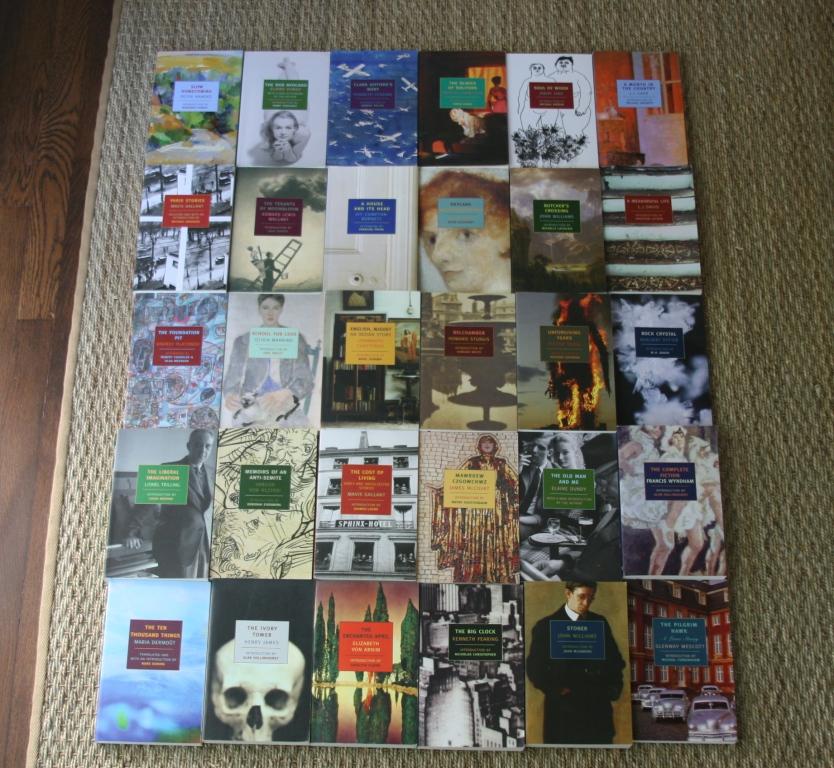
I took the picture below the same day I took the other one that so many of you liked. This one is fun because you can see some of the great cover art that NYRB uses.


Sunday Painting (+ our new Dog!): The Dog by Francisco de Goya

     
Since we picked up our brand new shelter dog today I had to make today’s Sunday Painting one with a little canine flair.

The Dog
Francisco de Goya
Museo del Prado

 And not to be outdone by Goya, here is our “new” dog. Her full name is Happy-Go-Lucy, but we call her Lucy for short.

 We got her at the Washington Animal Rescue League.

She was absolutely perfect in the car. She seems to be completely toilet trained. She told us when she wanted to go out. She walked very well on the leash. Gets along with kids and other dogs. We may have found the perfect dog for us.

Ready to see her new home.

Checking everything out.

She seems to love the library.

With her part Corgi ears, Lucy is ready for Halloween.