IABD: Anita Brookner’s 24 novels (so far)


When I first announced that Savidge Reads and My Porch would be hosting International Anita Brookner Day (IABD) blogger Verity at The B Files asked me if I would supply a reading list and/or recommendations. I can certainly give you a reading list but I hesitate to give recommendations. One of the reasons is because–and I know this may bother some when I say it–her novels are so similar in theme and tone that it is a little hard for me to keep them straight. Perhaps closer readers with better recall can more easily differentiate one from the other, but I really can’t. I know that Hotel du Lac, besides being a Booker winner is the one that takes place at a hotel in Switzerland. But beyond that I am hard pressed to give too many details for the rest of Brookner’s novels.

For those of you who have yet to read Brookner you may be wondering what all the fuss is about. If all of them are similar why bother right? You should bother because each of her novels, regardless of plot, is a perfectly wrought gem of introspective genius.  And once you discover that you love one of them, you have 23 others still to read.

Okay, so they are introspective, but what else? Most are set in London. Many include trips to (or plans to go to) the continent, (usually France or French speaking Switzerland). The protagonists often have an academic bent. I think without exception all are upper middle class, usually with a financial legacy that makes employment unnecessary. Almost all are female but Brookner has written a few male leading characters. You might assume that her heroines tend to be spinsters but they just as likely, or perhaps even more likely to be widows. And for some reason I imagine them all wearing lots of beige and cantaloupe-y colors. Maybe because all of the 1980s US first editions from Pantheon are in beigy, mauvy tones.

I realize as I wrote that last paragraph that although the thoughts are mine, I may be subconsciously cribbing the general outline from Peta Mayer’s fabulous blog dedicated to all things Anita. Not only will I be referring to Peta’s blog from time to time over the coming months, but she has agreed to write something about AB especially for My Porch.

So, without further ado, here are Anita Brookner’s 24 novels. I have included year published. Since I am not giving any recommendations, I thought I would include how each title scored in my ranking system, but when I went to look at my list all but one ranked a 9 (Loved ). Only (and perhaps oddly) Hotel du Lac got less than a 9. It got an 8 (Almost loved). No single Brookner title achieves a perfect 10 (All time favorite) but her fiction as a whole does indeed garner a 10 on the My Porch scale.

1981  A Start in Life (US title: The Debut)
1982  Providence
1983  Look at Me
1984  Hotel du Lac (Booker Winner)
1985  Family and Friends
1986  A Misalliance
1987  A Friend from England
1988  Latecomers
1989  Lewis Percy
1990  Brief Lives
1991  A Closed Eye (The ONLY one I haven’t read.)
1992  Fraud
1993  A Family Romance (US title: Dolly)
1994  A Private View
1995  Incidents in the Rue Laugier
1996  Altered States
1997  Visitors
1998  Falling Slowly
1999  Undue Influence
2001  The Bay of Angels
2002  The Next Big Thing (US title: Making Things Better)
2003  The Rules of Engagement
2005  Leaving Home
2009  Strangers

Some of you have already told me which Brookner novel(s) you have in your TBR pile and plan to read for IABD. For those of you who don’t have one at hand, in my experience they are pretty easy to find in secondhand shops and in public libraries. You can also find newer hardcover remainders fairly often as well. So, no excuses.
  

Who knew? This is just over three hours from my house.

Well, John knew. He is always trying to get me to take jaunts out of the city on weekends but I almost always say no. And of course I knew that the ocean was only about 3 1/2 hours away (in good traffic), but near DC, I had only ever been to Rehoboth Beach, Delaware which is way too busy and commercial to feel very special to me. Plus they have those awful little planes with banners advertising things flying over the beach. So it was quite a surprise yesterday to discover a beach so beautiful so close to DC. The March weather meant that the Assateague Island National Seashore in Maryland was pretty quiet.

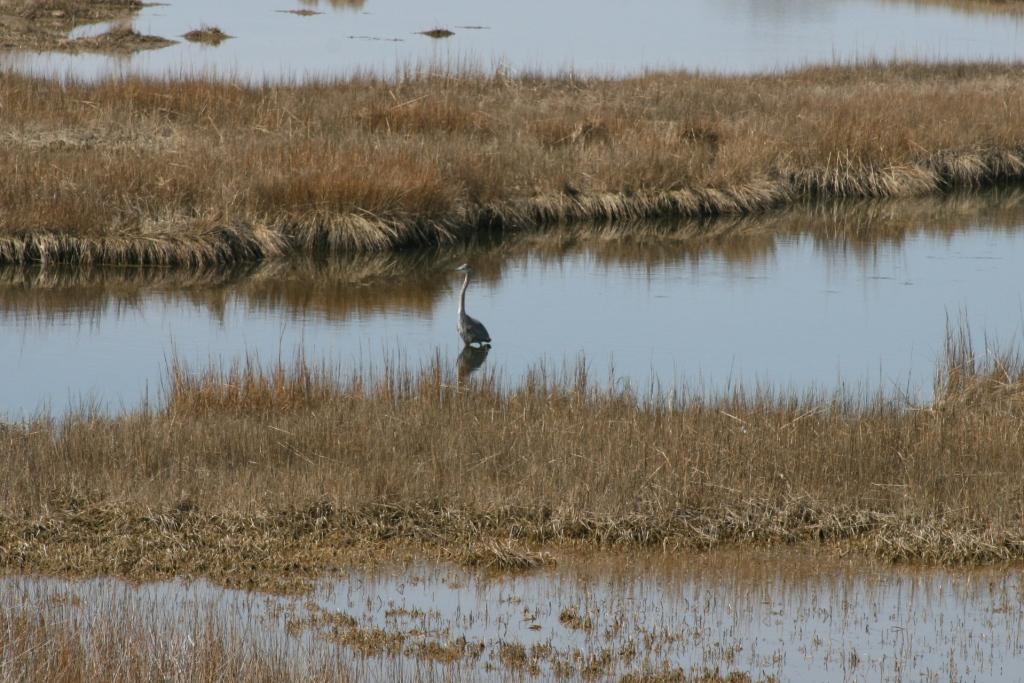
Assateague is famous for the wild horses that live there. They are often down
by the beach, but this is the closest we got to them when they were on the bay
side of the barrier island.

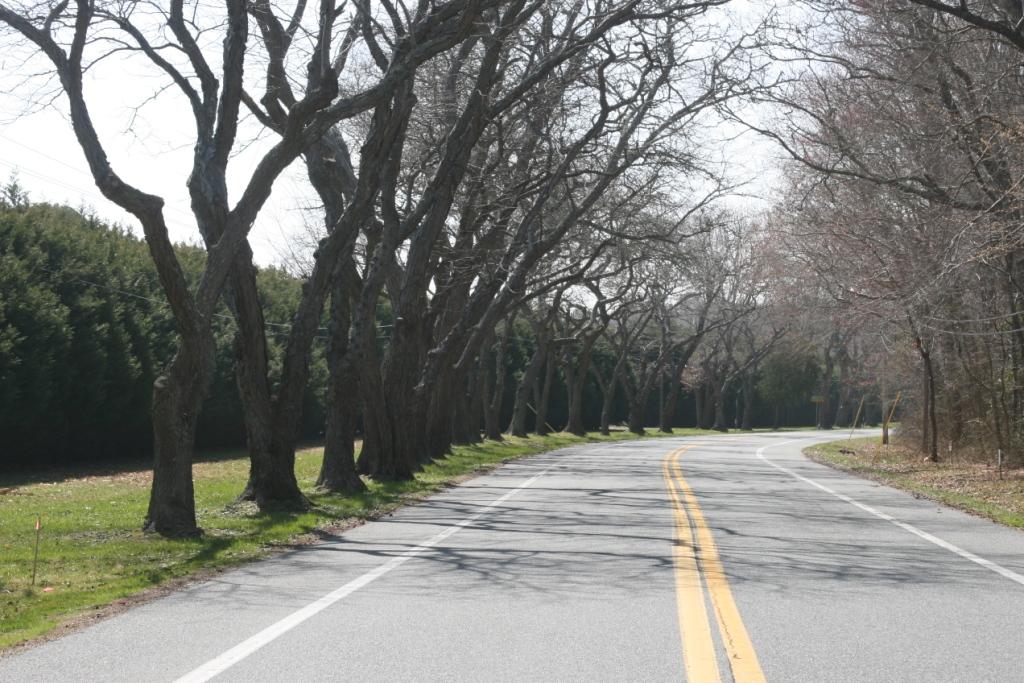
The road from Berlin, Maryland, the nearest town.

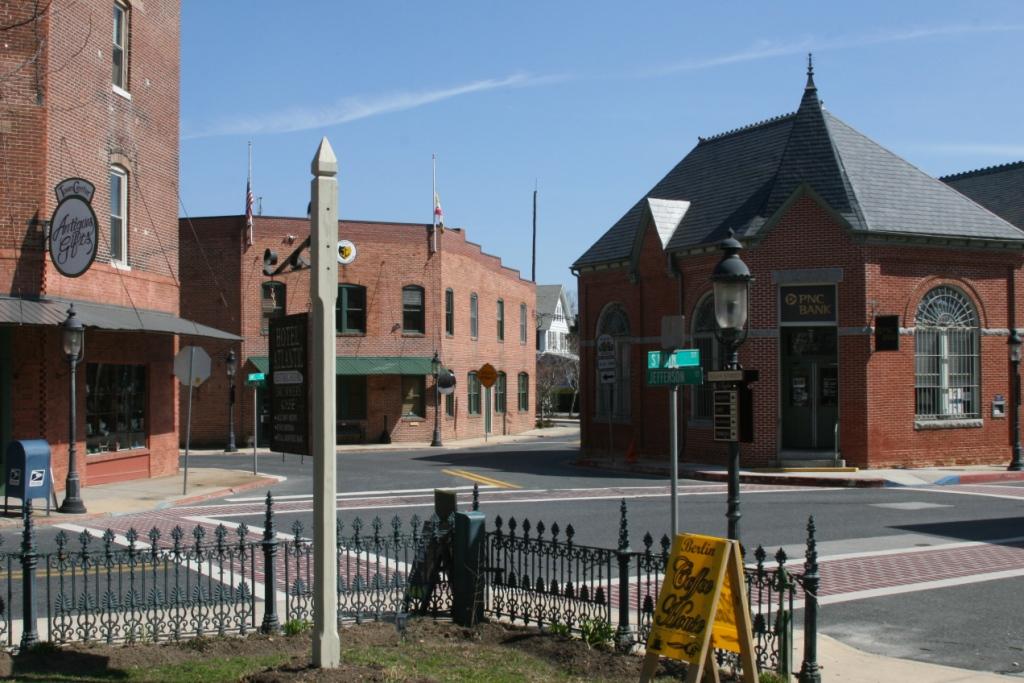
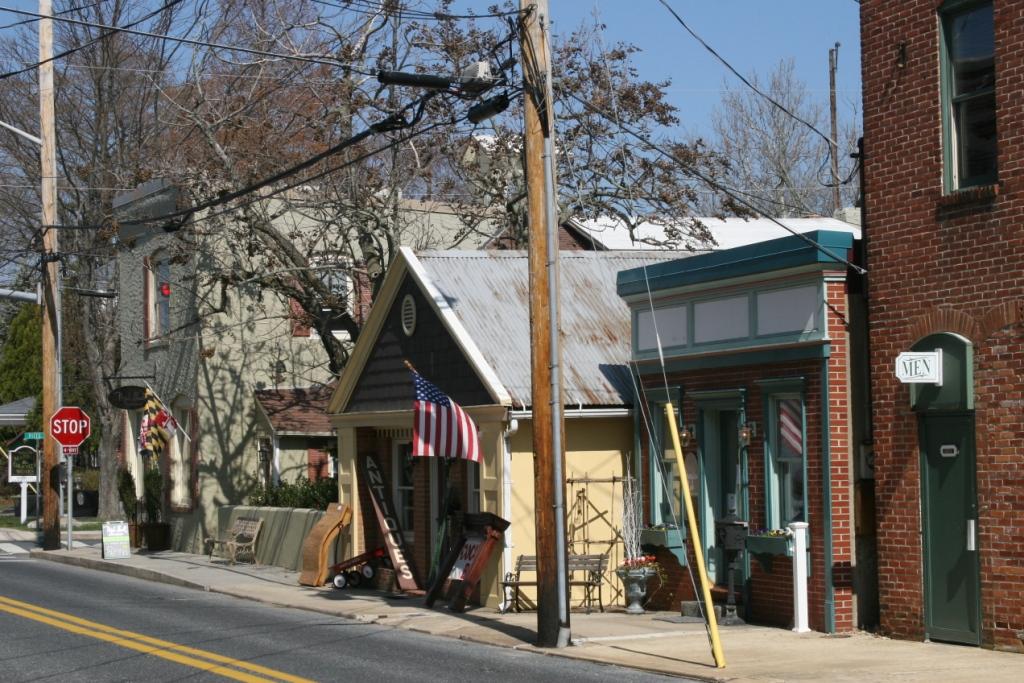
Berlin, MD

176 Points!

      
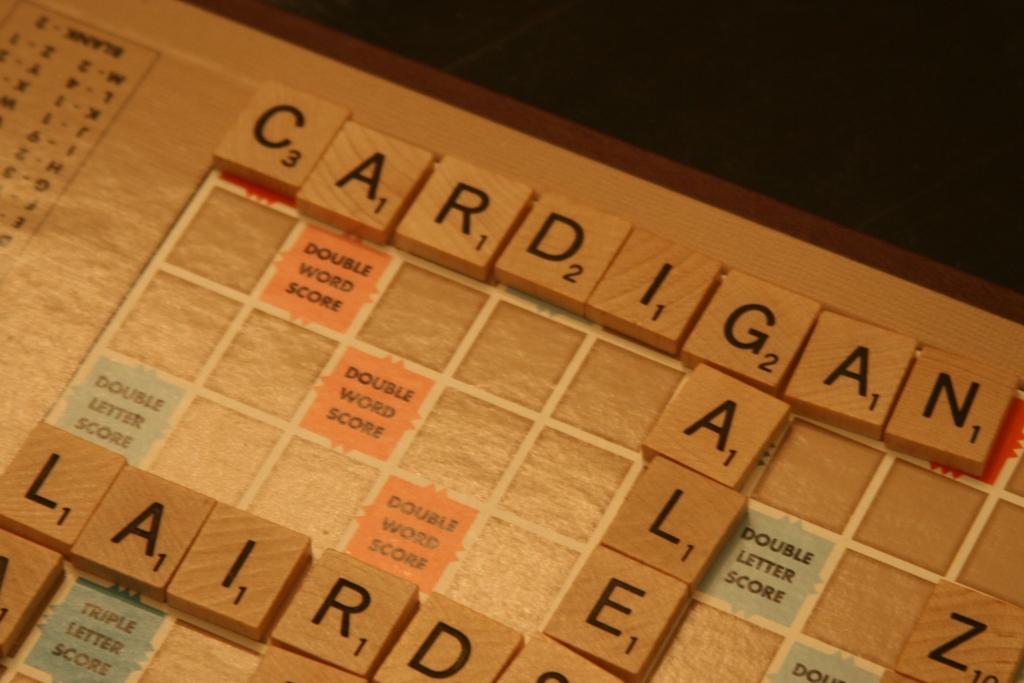
That’s right folks, 176 points for one word. My sister and her family are visiting from Arizona and this was our third game since Sunday. And the fact that the word was “cardigan” made the moment even more special. (Remember my post about the Cardigan Mafia?)

The breakdown:

14 points for the word (including one double letter score for the “D”.

I got to triple the word twice because it fell on two Triple Word Scores. (We verified this scoring with the official rules on the printed in the box.)

And then, because I used all of my seven tiles I got an additional 50 points.

Needless to say this is the highest score I have ever gotten for one word in Scrabble. Too bad the word didn’t have a “Z” or “Q” in it.

Book Review: This Secret Garden by Justin Cartwright


To quote Simon T. completely out of context: “Meh”.

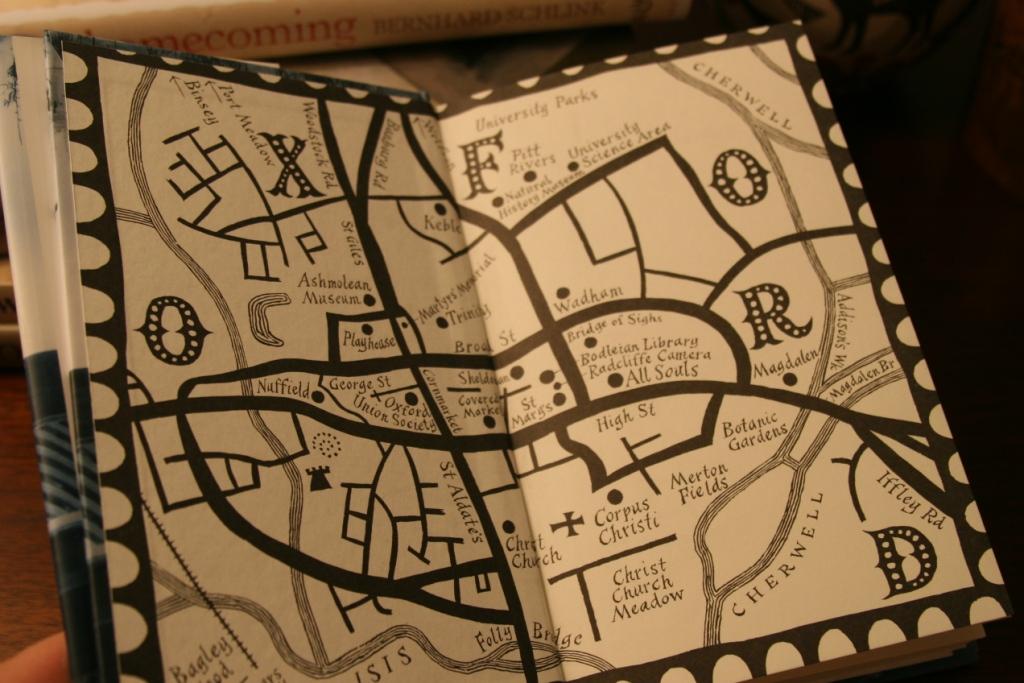
I bought this memoir of Oxford because, well, c’mon, it was about Oxford and because the edition could not be cuter. Plus I have read about 3 or 4 of the other titles in this “The Writer and the City” series. I had never heard of Justin “One of the finest novelists currently at work” Cartwright. He may indeed write amazing novels but after reading this somewhat tedious memoir I am not so sure. I wonder if one could interpret that quote from the Guardian quite literally by defining the word “currently” very narrowly as the exact second the quote was written. How the Guardian writer knew that Cartwright was working at that exact moment, I don’t know.

I started off liking this memoir but then he seemed to go on about Oxford folk I had never heard of, which wouldn’t necessarily be off-putting, but he didn’t make it interesting enough for me to care. I think this might be a better read for someone who has studied at Oxford. He says next to nothing about the city of Oxford.

I have many other quibbles with this book, but I think the biggest problem happens when Cartwright goes on a bit about the Brideshead myth. I understand the reference to the wonderful Evelyn Waugh book but then Cartwright makes a fatal error. He refers to the fictional Lord Sebastian Flyte’s teddy bear as “Algernon”. Algernon?! Now anyone worth their salt knows that Sebastian’s bear’s name was Aloysius. I mean come on.

Cartwright, game over.

One more thing, why the title This Secret Garden? I mean I understand why he would want to call it that, but he didn’t think it sounded too much like another book? Was he hoping someone might confuse it with The Secret Garden?

International Anita Brookner Day Button is Ready for Use

   
Simon of Savidge Reads will join me in hosting International Anita Brookner Day in honor of her 30 years of writing fiction. As I mentioned before, just read an Anita Brookner novel between now and her 83rd birthday on July 16, 2011 and then let us know what you thought about it, or you can post your own Anita Brookner-related post that day.

I think I finally managed to come up with a button that is worthy of IABD. Pleae feel free to use it on your own blogs to spread the news.

Seen on the Subway

  
Loot and other stories by Nadine Gordimer
The Reader: An African woman wearing a purple knitted hat who works at the World Bank.

The Book: South African Gordimer won the Nobel Prize for Literature in 1991. This collection was published in 2003. The description of the title story in the New York Times using phrases like “whimsical allegory” makes me unsure if I would like it. I don’t do well with allegory. Even this description confuses me:

…death is a treasure, the mirror of the self. Set in the aftermath of an earthquake so strong that it ”drew back the ocean as a vast breath taken,” ”Loot” describes a world of lost things revealed: ”People rushed to take; take, take.” One among them, a retired man, long divorced, joins the crowd in search of a single unknown and unnamed object. It turns out to be a mirror, and even as he seizes it, he is drowned.

The Verdict: I read some Gordimer not long after she won the Nobel. I am not sure I was ready for it but I always meant to go back and read more. Seeing this one reminds me that I need to do that. I am not sure, however, if I would choose short stories.

Skinny Dip by Carl Hiassen
The Reader: A gentleman with longer than normal (for Washington) dark, curly, hair. He wasn’t very far along in the book and had a fidgety look on his face that suggested that he either didn’t read much or didn’t feel like reading at the moment. It was rainy this morning so he was wearing a really bright yellow rain slicker over a thick sweater. Now, it may not yet be balmy here in DC, but I was hot just looking at him in what must have been a very warm sweater. There is a disease here in DC that makes folks dress way too warmly despite what the weather is doing. Rain makes people think they need to bundle up. But if the temps aren’t that cool, and if the Metro car is toasty, why all the clothes? A variation on this is when, usually in the spring or fall, it is quite chilly in the morning but warms up significantly during the day. Yet, despite the warm afternoon weather they still put on the scarf, gloves, and hat for the commute home as if it was still cold out, apparently unaware that those items would easily fit in a bag or briefcase.

The Book: I don’t really like crime fiction but this one sounds kind of amusing. Man thinks he has killed his wife. Rather than come back from the dead and have him prosecuted, wife decides with the help of another to make her husband’s life unravel. The Washington Post thinks the characters could have been written by Evelyn Waugh. Somehow I am skeptical.

The Verdict: I have seen Hiassen’s books over the years, but, judging them by their covers, determined they weren’t for me. After reading the synopsis of this title I am inclined to think I probably made the right call.

Fresh Air Fiend by Paul Theroux
The Reader: Tall, skinny guy with glasses and an orange rain jacket. His copy was pretty battered and he was headed into the homestretch of this 422-page book.

The Book: Thank god for the powers of Barnes and Noble’s search engine because I only managed to see the first two words of the title and no author. Turns out it is a collection of travel essays and articles. From Maine to Hong Kong.

The Verdict: I read Paul Theroux’s novel The London Embassy years ago and kind of liked it. But I really have to be in the mood for this kind of episodic travelog. The man in the organge jacket reading it looked like he was ready to grab a backpack, get on a plane, and follow in Theroux’s footsteps.

Time to get ready for International Anita Brookner Day


The Case 
Thirty years ago next month, Anita Brookner had her first novel, the aptly titled A Start in Life (or The Debut in the U.S.) published at the tender age of 53. An art historian by profession and author of works of nonfiction, she has managed to produce an additional 23 novels since that first one. So in 30 years Brookner wrote 24 novels, that’s 0.8 books per year including the 1984 Booker-winning Hotel du Lac. In my humble opinion each one is brilliant in its own quiet, often depressing way.

The Plan
On July 16th (Brookner’s 83rd birthday) I will be hosting International Anita Brookner Day.* I don’t quite have the details worked out and more importantly I have yet to come up with a cute, clever button to go along with it. But it is going to be great. Expect prizes.

The Intent
My hope is to get more people to pick up at least one of her 24 novels and give it a try. I know some of you have already read some Brookner, but it seems like there are many more of you out there who have always meant to read something by her and just haven’t. Well now is the time. Brookner may not be for everyone, but you have to find that out for yourself.

The Ask
No big commitment. Just read at least one Anita Brookner novel between now and July 16th. Then either come to My Porch on July 16th to tell me what you thought of the book you read or post a link to your review or other Brookner-related post.

***SPECIAL REQUEST: If you are a blogger submitting, please when you submit the link to your review/music post via email, can you also copy and paste the HTML draft of your review/musing in its entirety in the body of your email. I know in Blogger when you are editing a post you can click on the “Edit HTML” tab and then copy every single bit of info there and past it into the body of your email. Hopefully other blog platforms allow you to do likewise. This will greatly help streamline getting your post up on the IABD website.***

Bloggers, once I have my clever graphic ready I am hoping some of you will help me spread the word even if you don’t plan to participate yourself.

*As a citizen of the world I felt it was completely appropriate for me to declare July 16, 2011 International Anita Brookner Day. Simon Savidge may be cohosting, he was the one who first put the idea in my head.

13 March – UPDATE
Simon Savidge will indeed be cohosting International Anita Brookner Day. And, I finally came up with a button that I think is worthy of the day. Hopefully you will agree and use it liberally.

Book Review: Shadows on the Rock by Willa Cather

  
In Shadows on the Rock, Willa Cather tells a story of Quebec in the 1690s. As I consider what to write about this book, three things immediately come to mind. The first is how well Cather evokes different places and different times in her novels and how she piques my interest in uniquely North American experiences that wouldn’t necessarily be of much interest to me. No surprise to regular readers of My Porch, but I get a little fixated on Western Europe and the genteel, urban Northeast of the U.S. But whether writing about the prairies, the Southwest, or the early days of French Canada, Cather not only holds my interest in these places, but also creates a real enthusiasm for them that makes me want to experience them first hand.

The second thing that comes to mind is what a great book this would make for kids. I don’t have kids so maybe I am off base. Maybe there is a theme or two that may not be appropriate for young eyes, but then again maybe not. The action centers around a young Cecile and her widowed father. The two lead a pretty happy life that put me in mind of the book Heidi. I think Shadows on the Rock is more complex and sophisticated than Heidi, but Cecile reminded me of Heidi’s joy and zest for life. Cecile and her father have the perfect relationship. Caring father and doting daughter, each taking good care of the other and so clearly happy with each other’s company.

The fact that the father and daughter rely so much on each other brings me to the third thing that jumps out at me when thinking about Shadows on the Rock. They have to rely on each other because of the long, often harsh winters, but also because of the frontier isolation of  Quebec in 1697. The book begins in October just as the last ship of the season leaves for France, cutting off the city from the rest of the world until things warm up again in the spring. Quebec’s only link to the rest of the world during the winter was via the rarely used overland connection to the English colonial port in New York which stays open throughout the year. I don’t tend to read much historical fiction so I am always a little in awe when an author manages to immerse me in another world. And, as a North American, I am also in awe of the fact that there is a North American story that is as old as the 1690s. I know intellectually that Europeans were active in North America much earlier than that, but I don’t think I ever really took onboard what that would mean in real terms. I am probably also stunted by my upbringing in the Midwest which has a history that doesn’t really get going until the 19th century. And when it comes to the East Coast, my mind doesn’t really check-in until the years leading up to the Declaration of Independence in 1776. So I guess Cather manages to chip away at my decidedly limited conception of North American history.

I am not sure if Shadows on the Rock is a good candidate to represent who Willa Cather is as a novelist, but it is a darn good read and is rather uplifting, and to a certain degree lighthearted. I think it would a be great try for someone who isn’t quite sure if Cather is their cup of tea.

Things to look at on a rainy Sunday


1. My review of the Booker Prize winning Offshore by Penelope Fitzgerald.

2. My Sunday Painting.

3. My post on neglected literary classics. I want to hear what you think. And I did a random draw and Claire from Paperback Reader won my extra copy of As for Me and My House by Sinclair Ross. Maybe I should send it with delivery confirmation since she only has three months from reciept of the book to read it and write a review…that was the deal Claire, no backing down. (Oh, and can you email me your address?)

4. My latest intallment of Seen on the Subway.