Spark vs. Spark

 
Wasn’t sure what to post today for Muriel Spark reading week until I saw Simon’s post about Spark book covers. It made me go to my shelves and pull down all the Sparks I own to take a look at their covers. Out of the thirteen I own (which aren’t actually the same as the thirteen that I have read) most of them have really bad covers. In some instances there are covers that I don’t particularly like, but they at least capture something about the book or author that makes them seem just right.

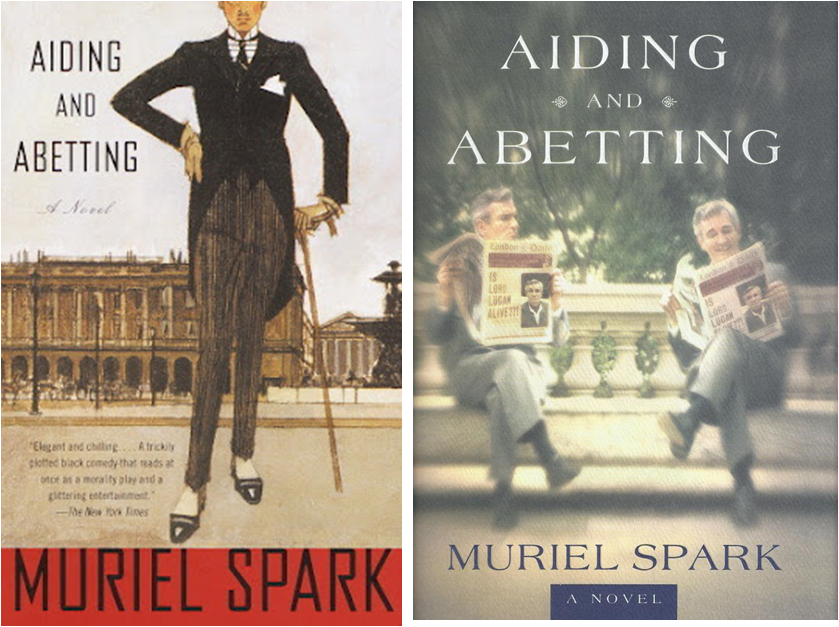
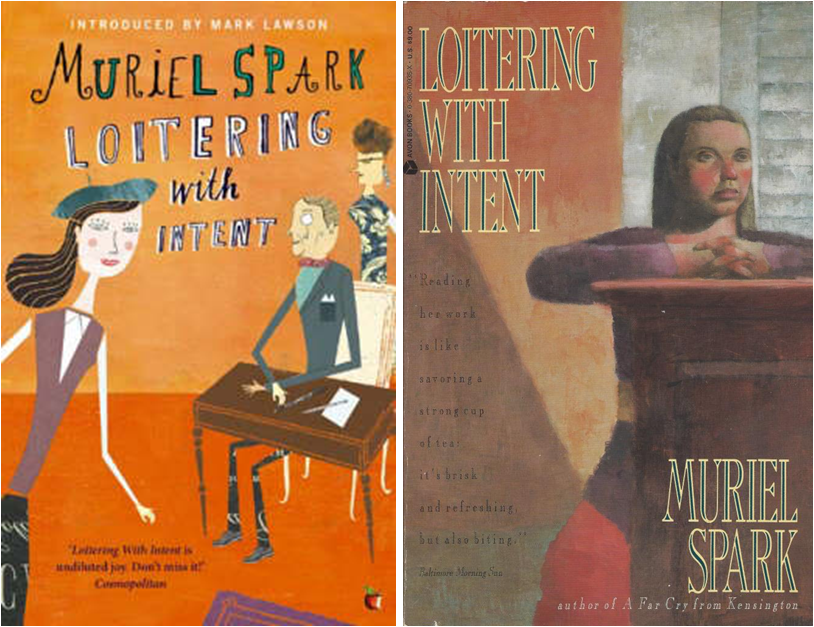
I decided to do a side-by-side comparison.  (After you are done looking at these, you really should go over to Simon’s blog where he has some much more interesting ones. I particularly like the old Penguin covers from the 1960s.)

I think both are bad design. I like the image better in mine on the right, but the photo is a bit misleading.
I really like Simon’s cover on the left, but I think it is more appropriate for something by PG Wodehouse.
I think the one on the left from Simon’s blog wins hands down. Not only is it a million times better
than my lame cop, but it is interesting and evocative in its own right.
I don’t like the one on the left in general because I tend not to like this kind of photo illustration. Plus this one
makes the book look like chick-lit. The one on the right captures the subversive
quality of Spark like a Blathus painting.
While this book is pretty amusing, I think it has bite as the cover on the right says.
The one on the left is just too frivolous.
These are both boring as toast. (Although I love toast, and love books and movies
that have English people buttering toast.)
I really don’t like my copy on the right in person, but I kind of like it better on the screen. But overall
I would say that Simon’s version is more Sparkian. Although I haven’t read this particular title.


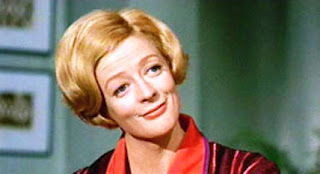
42 years before Downton, Maggie won an Oscar


Forty-two years before Dame Maggie Smith dominated Downton Abbey as the Dowager Duchess, and seventeen years before she brilliantly played “poor Aunt Charlotte” in A Room With a View, Maggie Smith won an Oscar for Best Actress for her role in the film adaptation of Muriel Spark’s The Prime of Miss Jean Brodie.

If you haven’t seen the film, what are you waiting for?  If a young, glamorous Maggie Smith isn’t your cup of tea, maybe you could be enticed by a young, virgorous Gordon Jackson (Hudson from the original Upstairs Downstairs).

Ready, Steady, Spark


I know I am jumping the gun a bit on Muriel Spark Reading Week which starts tomorrow, but one must use the blogging time one has when one has it. And once I finish a blog post, I have a hard time not hitting the publish button. Plus, I figure the topic of my post might provide some guidance to anyone not sure where to start with Spark.

My first encounter with Muriel Spark came back in 1999. Her most famous novel The Prime of Miss Jean Brodie was included in the Modern Library’s Top 100 Novels of the 20th Century and I had decided to read the books on that list, so it was only a matter of time. I think I may also have gotten additional encouragement from Nancy Pearl’s Book Lust.

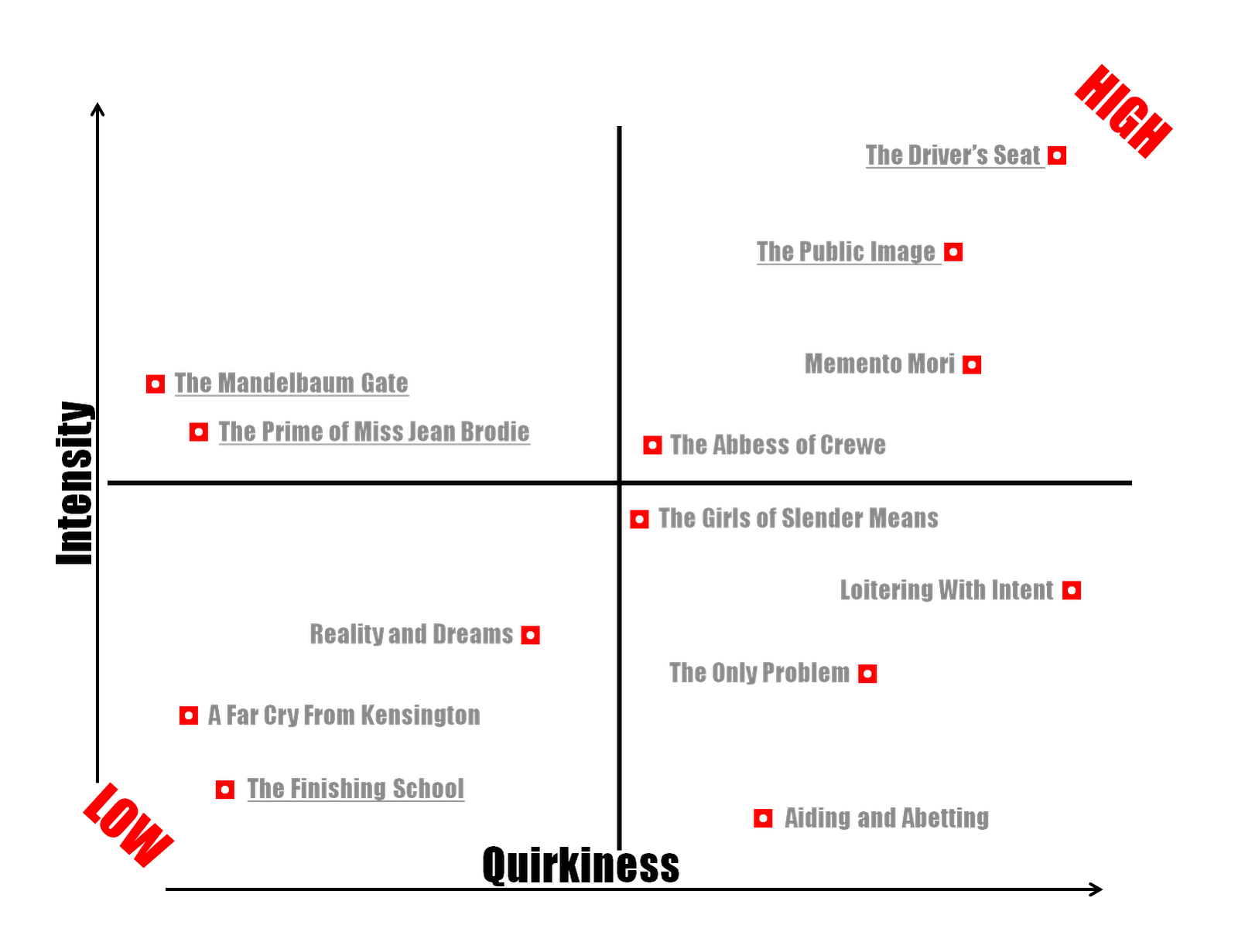
As I started to make my way through Spark’s many novels and novellas, I quickly noticed that she definitely had a quirky side, and often a subversive side.  Upon analysis, it is easy to see how Spark’s novels are all clearly written by the same person, but at a cursory glance her books can seem like the work of many different authors. For instance The Prime of Miss Jean Brodie is a pretty straight forward narrative with characters who, while a little quirky, don’t seem too far outside mainstream ideas of normal. Despite making one chuckle and smile the novel ultimately ends up being more intense than those chuckles would initially indicate, but still a pretty conventional narrative structure. In contrast, with The Driver’s Seat, I almost immediately sensed that the book wasn’t a run of the mill tale of a woman off on a holiday. It is like a one-person psychological thriller that I found pretty intense. The Public Image on the other hand was less quirky and more amusing, but ratchets up the intensity in a different way. And then I ran into The Mandelbaum Gate which is so conventional it almost feels like Iris Murdoch could have written it. And I am not saying conventional is bad (god knows I love me some Iris Murdoch), but it is wholly serious and reads today like historical fiction about the early days of Israel and the accompanying religious and political tensions. But then I bounced back to the quirkier  side of Spark but this time with a decidedly much lighter touch in Aiding and Abetting And then there are those like the The Only Problem, and Loitering With Intent, where the quirkiness and intensity is almost entirely in service of comedy.

As I thought about the chameleon like quality of Spark’s work, I thought it might be easier to show my thoughts graphically. The graph is not perfect but it comes close to approximating the variation in the thirteen Sparks I have read. Just keep in mind that intensity doesn’t always mean serious.

The My Porch Quirktensity Index of the Works of Muriel Spark
among the 13 Spark novels/novellas I have read to date
(titles underlined are books that I particularly enjoyed)
[Note from the Simon Thomas Chair for I Can Read a Book But Not a Graph Studies: The higher a title is on the graph, the more intense it is. The further to the right it is the quirkier it is. But now that I have teased Simon, I realize that a 2 x 2 matrix generally does include arrows as part of the labels that help in comprehension. I will add those now.]

Space Shuttle Delivered to Smithsonian

This morning the Space Shuttle Discovery made its way, piggyback on a Boeing 747, from Florida to the Smithsonian’s Udvar-Hazy Air and Space Museum next to Dulles Airport just outside of DC. On its way to the Smithsonian it buzzed the Capital a few times along the Potomac and over the National Mall.  This particular Shuttle made 39 trips into space.

I remember back in the late 1970s when I saw on TV footage of when they first put a Shuttle on top of a 747. Kind of cool that 30 some years later I get to see it in person for its last piggyback ride.  I still wonder how they whole darn thing doesn’t just fall off.

Unfortunately, my lense was dirty.

Bits and Bobs

 
What’s a serial reader to do?
My friend Roz just finished Trollope’s Chronicles of Barsetshire series and she doesn’t know where to turn next. And don’t bother saying the Palliser novels because she finished those this year as well. In fact, she read both series in the span of two years all the while voraciously reading a million other things. I suggested there are lots of other Trollope novels to read (thirty-five others, in fact) but I think she will miss the serial form as much as the fact that it is Trollope. And when I say “serial form” here, I don’t mean a long Victorian novel that was serialized in a newspaper or periodical, I mean a multi-novel series like the Barset and Palliser novels.  So what say all of you? Where should she go next? I haven’t read The Forsyte Saga or A Dance to the Music of Time, so I have no idea if those would be appropriate. Is The Forsyte Saga even made up of separate novels? I have read The Alexandria Quartet by Lawrence Durrell, and as much as I liked it, I am not sure it is a good replacement for Trollope.  Is Miss Read (may she rest in peace) too simple? Thoughts?

And speaking of Roz…
It just occurred to me that you all would like Roz and her wife Layla. First and foremost because they are readers, but also the fact that I met them thanks to their acquaintance with blogosphere luminaries Polly (Novel Insights), Claire (Paperback Reader) and (I think) Simon (Savidge Reads).  They were all part of a book club in London. When Roz got a VIJ (very important job) in Washington, DC, those bloggers said “you should meet Thomas”. And so she has. Always happy to have bookish friends, I wasted no time in getting acquainted with Roz and Layla.

Meeting them within the first week of their arrival in the United States, I stopped into Kramerbooks to find an American novel or two to welcome them. My enthusiasm in choosing American novels for them bordered on the evangelical. I ended up choosing five novels each representing a different geographic part of the U.S.: Main Street for the Midwest, A Confederacy of Dunces for New Orleans, Paul Auster’s Brooklyn Follies for New York, Then We Came to End by Joshua Ferris for Chicago (which is also the Midwest but in a much different way than Main Street) and of course they needed a novel about their new home, so I chose Ward Just’s brilliant Echo House about a dynastic political family in old Washington. (I realize I totally missed the West Coast, but nothing popped into my head as I hastily purchased the five books.)  The best part about choosing these books for Roz and Layla, is that they actually read them with alacrity and, while they liked some more than others, didn’t find a dud among them. And what is more gratifying for a book lover than to have someone enjoy one of your recommendations? How many times have you given, or lent, or recommended a book to someone only to have the book go unread? I might now be afraid to recommend anything else to them lest I choose a clunker.

And Roz and Layla are convinced that, despite the fact that I didn’t like the movie (twice), I will indeed like Cold Comfort Farm. So they bought me a wonderful Penguin edition. I wonder if they know that the cover illustrations are by another Roz (Chast) who does lots of illustrating for The New Yorker?

Muriel Spark Reading Week is coming up
Mustn’t forget that Muriel Spark Reading week begins on April 23rd. Simon of Stuck-in-a-Book and Harriet at Harriet Devine’s Blog will be hosting the festivities. I am definitely going to read at least one Spark novel so I can join in. Spark’s work is funny and subversive and quirky and she was prolific. I have read about 12 of her novels to date and am excited to see which one I read next. I have a few on the TBR pile to choose from.

Two Sentence Reviews

Gideon Planish by Sinclair Lewis: Con artist makes a living proselytizing about intellectual nonsense not unlike modern think tanks. Good if you are in the mood for the satirical dry wit of Sinclair Lewis and have already read his masterpieces.

The Pursuit of Love by Nancy Mitford: A satisfying and often funny family saga from interwar England that will leave you craving the other two books in the trilogy. Will also leave you wondering why no one ever mentions Don’t Tell Alfred, the third book in the trilogy.

A Glass of Blessing by Barbara Pym: I don’t know why this was in my TBR pile since I read it back in 2002. Pym is brilliant and based on this experience, I think her novels are the kind one can read over and over.

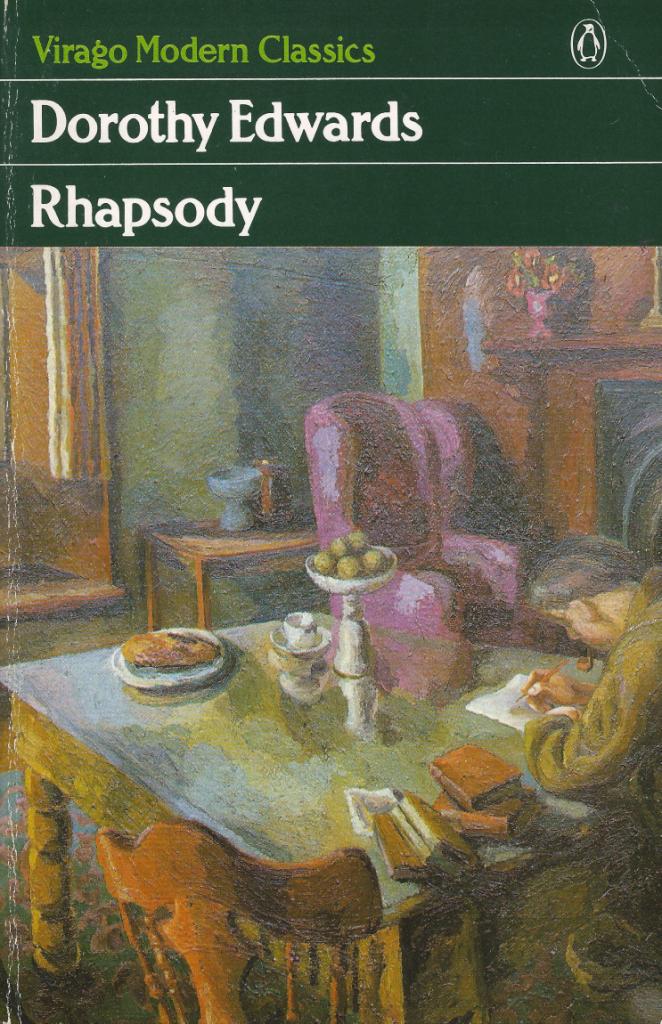
Rhapsody by Dorothy Edwards: A collection of short stories most of which have music and musicians as part of the story. All are about love (both requited and unrequited) and relationships and, oddly, all are told from the perspective of a male character.

Bossypants by Tina Fey: A quick, fun read IF you are Tina Fey fan. I only needed one sentence for this one.

Samuel Pepys I am not


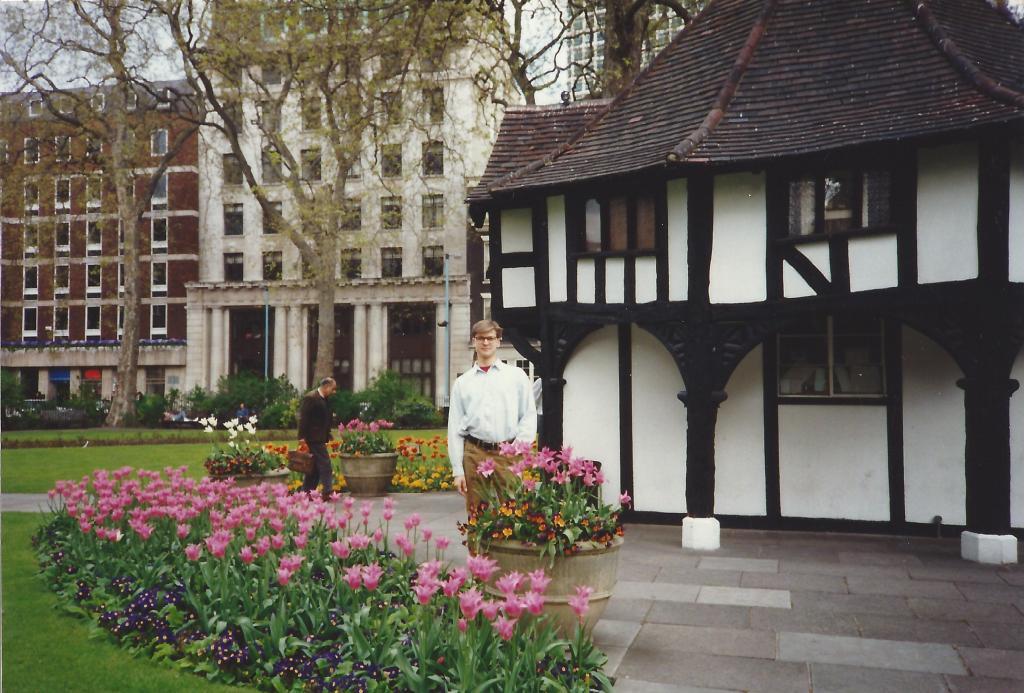
Soho Square, Spring 1992

Twenty years ago this week I arrived in London to work for six months. I had been to the UK once before for about six weeks in the summer of 1989, but going there to work was an adventure of an entirely different sort. I was there as part of a now defunct (but recently so) program through the British Universities North America Club (BUNAC) which allowed college students, or the recently graduated like myself, to get a work permit to work in the UK. I kept a journal the whole time I was there, but alas it is short on detail and high on the emotions of a 22-year old. I wish it were the other way around. I read through the journal last week and was astonished what I no longer remember. I mention people and events for which I can muster absolutely no visual image. If only I had been more descriptive of people, places, and things, and less concerned with mind-numbingly boring and generic statements about my feelings.

However, I consider the following quote to be one of the more refreshingly evocative passages from that journal:

You know boogers are consistently black in London.

My only Pepysian entry had nothing to do with the Great Fire in London but it did have to do with a great fire in Los Angeles when a white jury found the LAPD officers who beat the crap out of Rodney King not guilty. Seeing the photo of the burning LA neighborhoods on the cover of someone’s Evening Standard on the Tube was a startling juxtaposition to my life in London.

I ended up settling down in the BUNAC hostel for my six months. I shared a room with three other people and a kitchen with 26 others for the cost of 45 pounds a week. It ate up about forty percent of my income, but I couldn’t have had a more central location, just a stone’s throw from Charing Cross Road, Soho, and the British Museum (and Persephone Books which didn’t exist at that time).

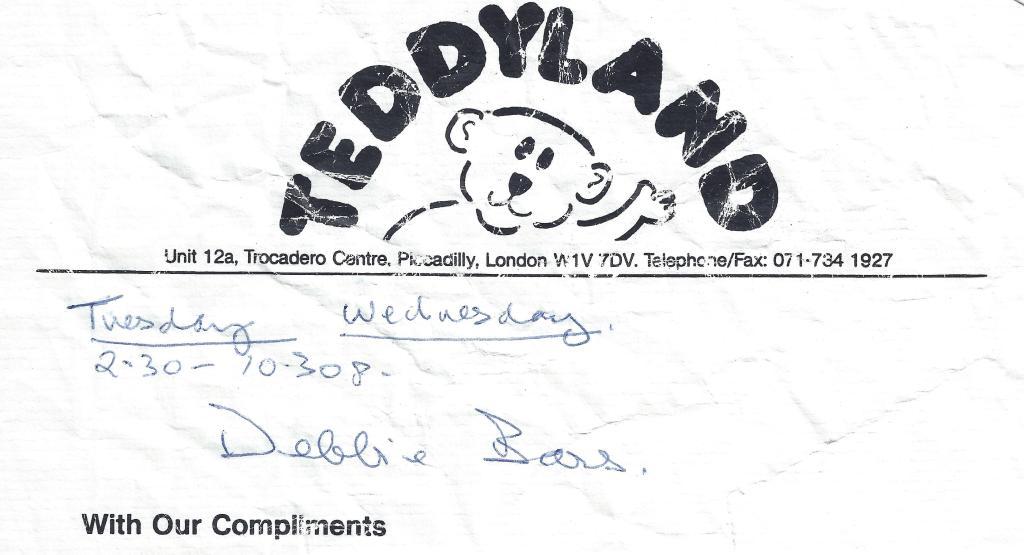
I didn’t get a job I interviewed for at the Westminster Abbey Bookshop. Thank god. What would it have been like to wait on tourists for six months? I did, however, take the first job that was offered to me. It was working in a store in the Trocadero Centre at Piccadilly Circus. Talk about tourists. It was absolutely awful. I had just finished my college degree (the first in my family to do so) and this was the best I could do. I quit about 45 minutes into my 8-hour shift. I offered to stay for the whole shift, but thankfully the manager (the owner’s daughter) let me leave. I have never felt so relieved in my life to walk away from a job. I felt like I escaped a prison sentence.
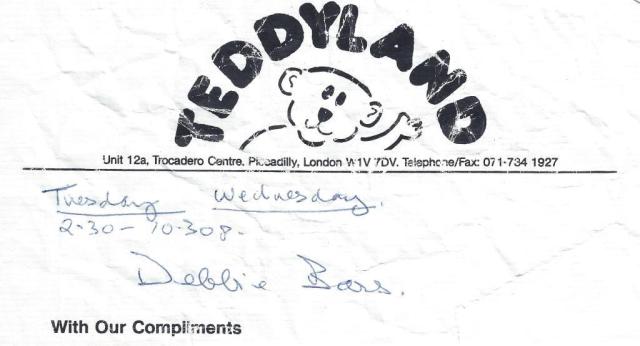
I only worked 45 minutes of that Tuesday evening shift.

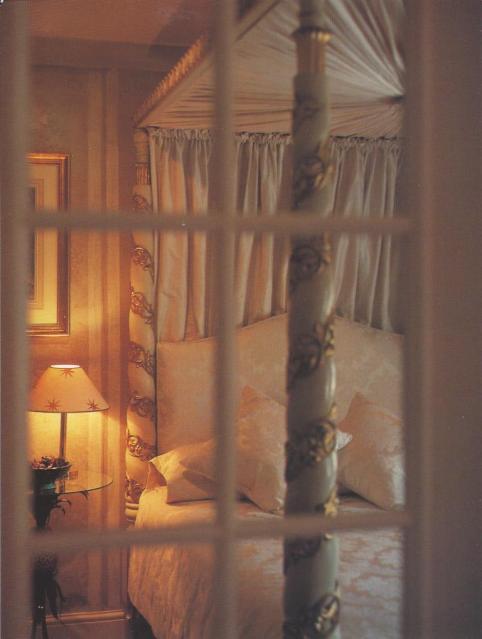
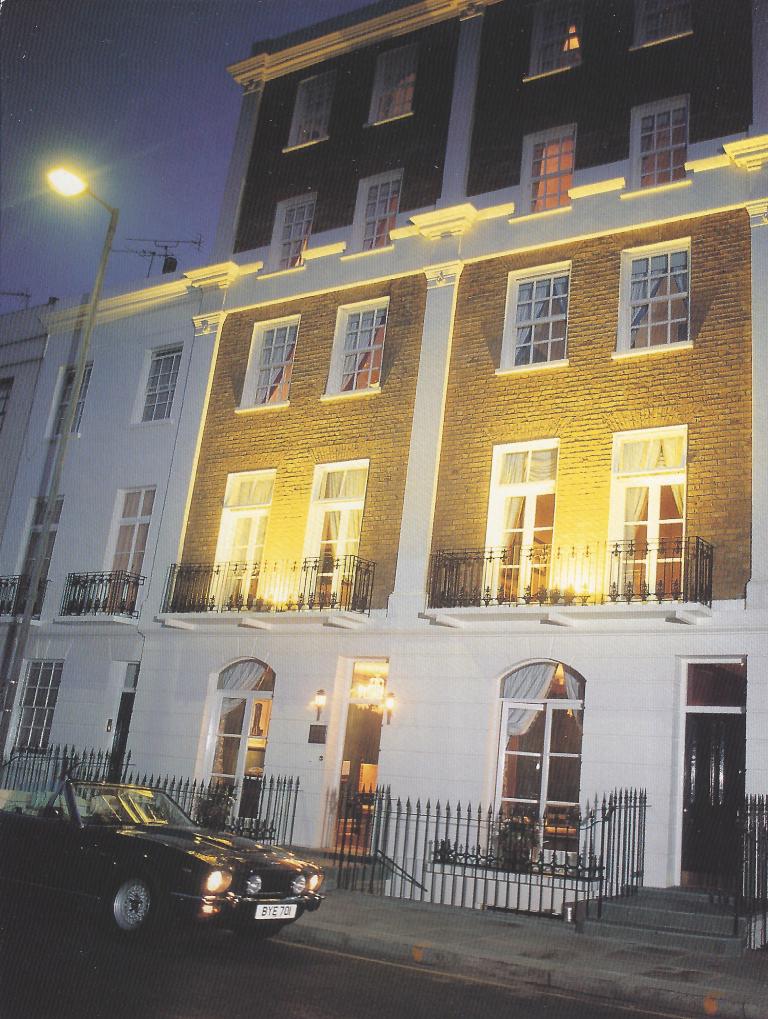
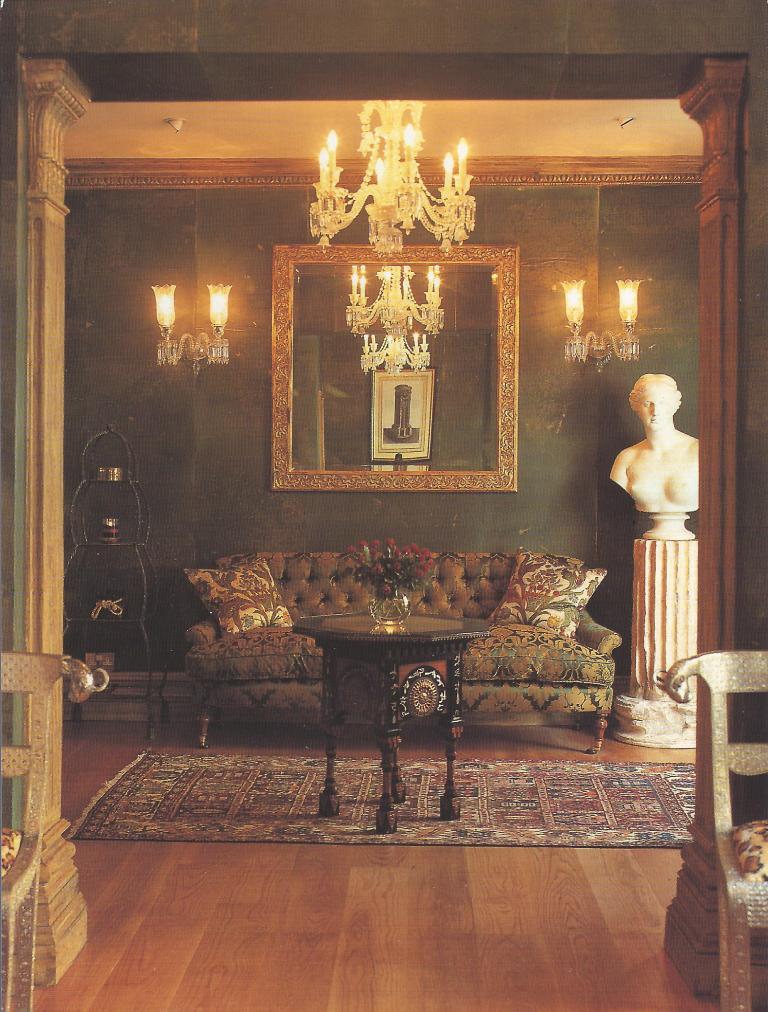
A few days later I interviewed for a job at the Sydney House Hotel in Chelsea.  When I made the appointment for the front desk clerk job that was posted at the BUNAC office, I assumed it would be a crappy little back-packers hotel like the one I stayed at in Bayswater when I first arrived in London. Shows how much I knew about Chelsea at the time. It turned out to be a wonderful little jewel box hotel with 21 rooms in two old townhouses. It had been open for about a year and was run by an amusing but intimidating French speaking Swiss man who had also done all of the decorating. For someone who came from modest means and who had just spent four years being a poor undergraduate (and who indeed was sharing a hostel room with 3 others, etc.) the hotel was opulent. The chandeliers in the lobby were Baccarat, the bathrooms were swathed in marbled, the robes were plush, the amenities were Molten Brown, and the lobby perpetually smelled of  stargazer lilies. And each of the rooms had its own distinct design. (Understandably, but somewhat sadly, the Sydney House updated their decor many years ago, so it doesn’t look much like the place I remember.)

They lobby always smelled wonderfully like stargazer lilies which
are oddly absent from this photo.

Lots of red toile made up the Paris room.

This was called the “Honeymoon Room”

I don’t remember the name of this one.

If you have ever watched Fawlty Towers then you know what my life was like for six months. Granted, none of the managers were like Basil Fawlty, but I think all of the guests from Fawlty Towers were reincarnated as guest of the Sydney House. Do you remember when Mr. Fawlty asked a deafish old fussbudget if she wanted the hotel “moved a little bit to the left”? There were a lot of guests like that.

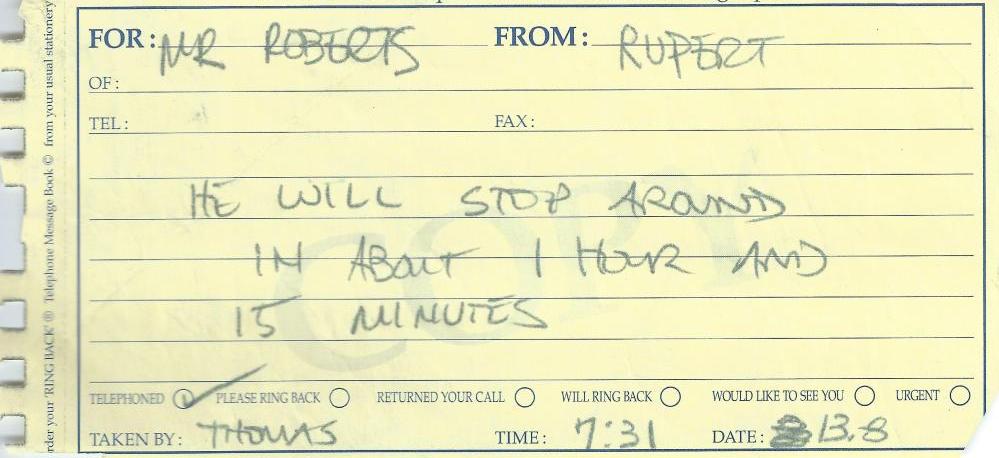
And speaking of guests, we had a few interesting ones come through. Although he was only there to pick up a guest at the hotel, the Texas millionaire who was caught on film sucking Fergie’s toe came in one night. But most importantly to my young gay self, was my brush with Rupert Everett. Now, in 1992, Everett had only been in one or two independent films and was pretty unknown in the U.S. That is, except for those of us who fell in love with him in the beautifully elegiac film Another Country. One quiet August night while manning the front desk I took the following message for one of our guests:
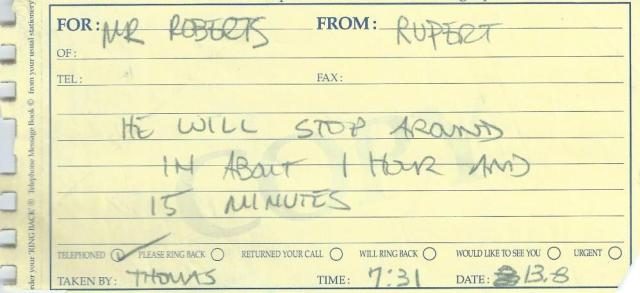
The carbon copy of the actual message I took from Rupert Everett, my imaginary boyfriend.

[There was a whole paragraph here that Blogger decided should magically disappear for no apparent reason. It described the moment when Rupert Everett entered my life ever so briefly. I wonder if he still thinks of the young American who gazed up at him wistfully from the front desk of the Sydney House Hotel?]

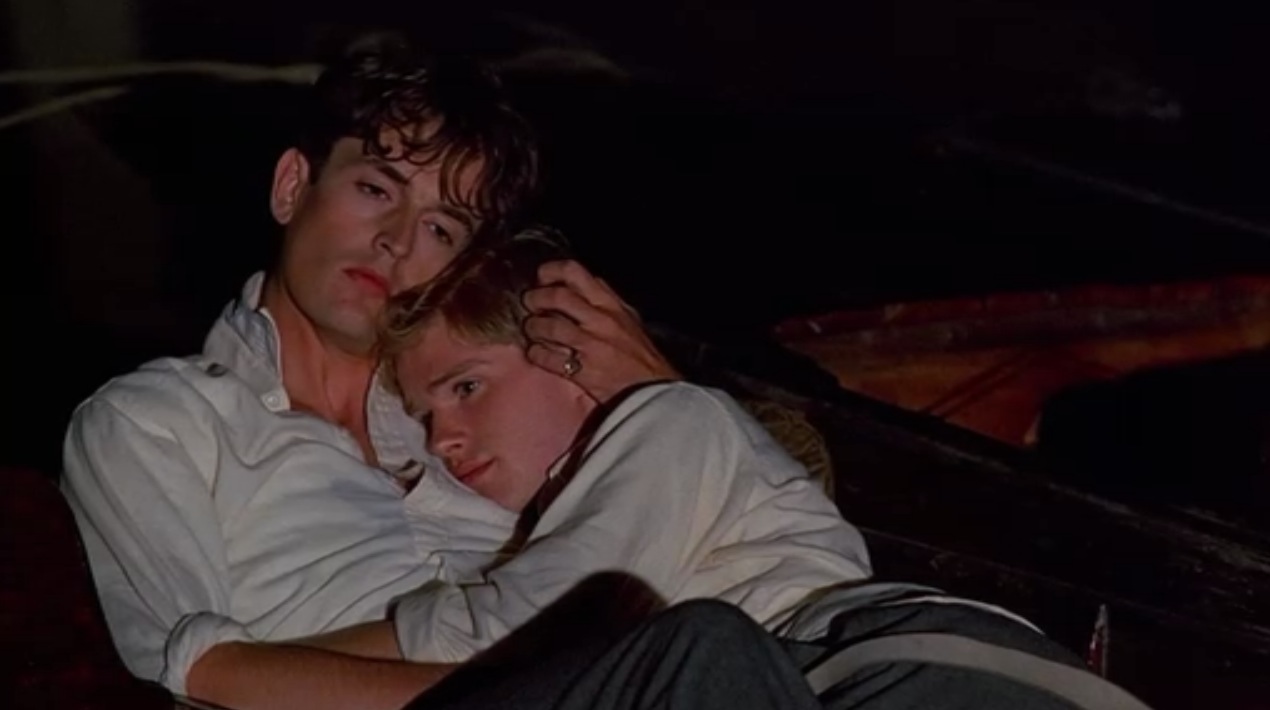
Rupert Everett cuddling Cary Elwes in Another Country

And speaking of skipping my dinner break [which I was before Blogger deleted it], one of the great things about my job at the Sydney House was that employees got a hot, free meal made by a west African woman named Joyce who always called me Thompson. She was also responsible for keeping the cooler stocked with room service staples like her amazing lemon tarts which I secretly wolfed down when no one was looking.

In some ways that job in London seems like a million years ago and in other ways it seemed like it just happened. I wish my journal from that time was a different kind of journal. But it does remind me that on 4 May 1992 I went into a second shop and bought my first Virago Modern Classic: All Passion Spent by Vita Sackville West and A Single Man by Christopher Isherwood which I think was my first Isherwood. A nice little bit of information from the days before I started by reading log in 1994. As is my follow-up commentary on those purchases:

With these books around who wants to read stupid old Jack Kerouac? Not me! On the Road has to be the lamest “classic” I have ever come across.

Not much has changed in 20 years.

Battle of the Buttons

  
Today is March 31st, the last day of the TBR Double Dare. For those of you who don’t know, the double dare involves only reading books that you already own (i.e., in your To Be Read pile) as of the stroke of midnight on December 31st for a full three months. Last year I gave in a week early because I really wanted to read My Life in France by Julia Child and couldn’t wait another week to do so. This year I have comfortably managed to make it all the way to end. I doubt there will be any slip ups between now and midnight.

I was helped with the TBR Double Dare this year, with my foolish wise decision to also take part in A Century of Books where the goal is to read one book from each year of the 20th century. It was easy to find books in my TBR pile to fill in the years. But now I face a conundrum. I find I am getting a bit obsessed with only reading stuff from the 20th century. Since there is no way I will complete all 100 books this year, I think I need to give myself two years to finish it. That way I can actually read more than just 20th century lit.

Thankfully the Muriel Spark was a 20th century writer because I want to participate in Muriel Spark Reading Week. I have read many of her novels and they are all fascinating in their own way and have a tendency toward quirky subversiveness.  I think I am going to read The Bachelors which in my TBR and will count toward A Century of Books. I might also re-read something of hers so I have a bit to reflect on when the reading week comes up.

I think I may knock out a year or two of the 1980s with Anita Brookner. I have already read all of her 23 (or is it 24 novels) and have started over in chronological order. Even though I am not promoting International Anita Brookner Day like I did last year, I think I re-read novels 3 (Look at Me) and 4 (Hotel du Lac) in time for Brookner’s 84th birthday on July 16th.

Pretending it’s 1945


I am not sure how it is where you live, but here in Washington, DC, and most of the eastern U.S. we had and unusually warm winter and June arrived in early March. But this weekend it has been grey, and rainy, and on the chilly side. Since we still have a large stack of firewood in the back yard I thought we should take advantage of the cooler (and certainly more seasonal) weather to use up some of the wood. But it was the discussion of leaving wood ash in the grate in Chapter 3 of The Pursuit of Love by Nancy Mitford that really put me over the edge. So at 10:00 this morning I built a fire and have been enjoying the snap, crackle, pop of the burning wood.

The cozy library and Nancy Mitford (and a hunger pang or two) made me think that something was missing. So I whipped up a batch of scones, John made a pot of tea, and we went back to the library to settle in with our treats. Not being able to read and stuff my mouth full of scone at the same time I said to John that what was missing was Radio 4. Not having a wireless that picks up the BBC, after all Broadcasting House is about 4,000 miles away, I had to resort to a wireless of another sort. I fired up the laptop, logged on to www.bbc.co.uk/radio4 and now we are happily settled in and listening to a profile of Dame Edna Everage.  I guess the subject matter isn’t exactly 1945, and of course me blogging about it isn’t very 1945, but the fire, and the tea, and the scones, and the “wireless” has me pretending it is. But now that I think about it, I probably have used more than our sugar, cream, and butter ration would have allowed us in 1945.  And now the Shipping Forecast. I never understand a word of it, but it is so evocative.

All of this of course is getting me primed for our trip to England in May. We are off to Sissinghurst, Rye, the Cotswolds, and a quick stop in Oxford. But even before that we have so many fun things are coming up. Best friends are coming to visit from the Netherlands for two weeks. Then my parents will be here for 10 days, then a few weeks later more best friends from Atlanta will be with us.

And I should mention I am enjoying The Pursuit of Love.  I have tried reading this more than a few times but never got past the first page. Just never seemed to be in the mood for it. But I picked it up last night before bed and it was just the right thing. And is perfect for today. I hope you are enjoying your Sunday as much as I am enjoying mine.