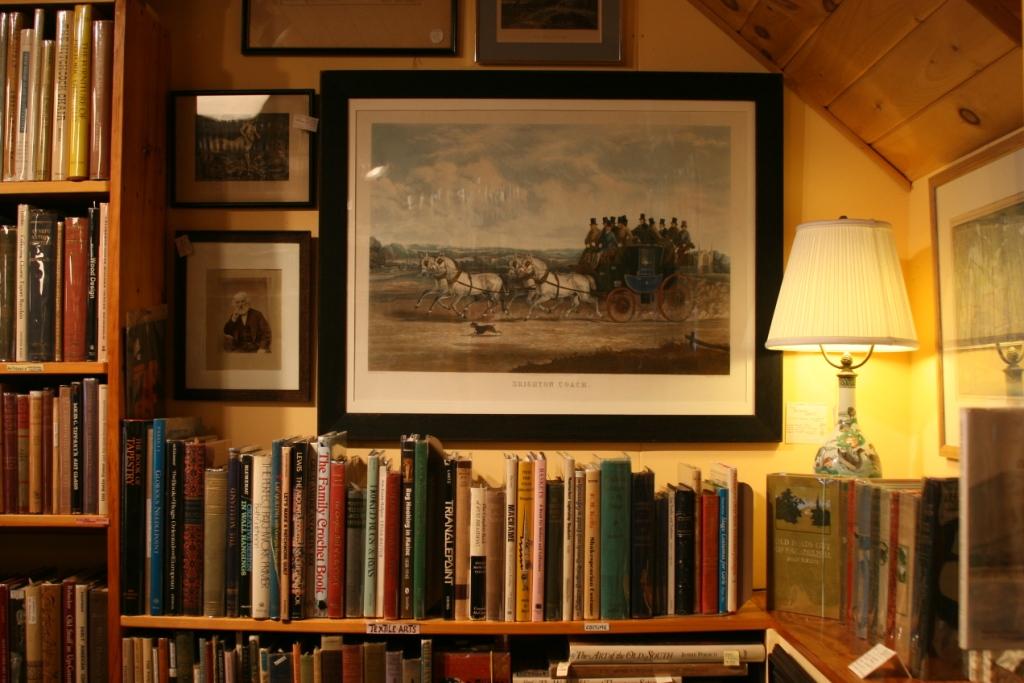
What did lunatics* read in 1928?


The circulating library in 1928. Shown here in 1905 when it was still called The Rest
and was used for a morgue and pathology lab.

While doing research today for work I came across a story about the patient circulating library at a large mental hospital in 1928. Among other things the author of the article describes some of the habits of the patrons. One is a former doctor who comes in each week in a morning coat and pocket watch about 30 years out of date and greets the librarian as if she were one of his former patients. Another refers to himself as “he” and whatever book he checks out comes back having turned every instance of  “the” and “she” turned into “he” by cutting out the offending preceeding letters “t” and “s”. But my favorite is this guy:

There is one patient who will have no books but those of a dark red color. One by one he is reading all the books in the library of that shade—fiction, history, biography, everything. Since this is a fairly popular binding, he has a large field which he is cultivating methodically. No one knows why he should select this color and no other.

And what are the patients reading? Most popular is the Bible, followed by dictionaries, and then arithmetic books. No real surprises there. More interesting to me is the kind of fiction that the patients like to read. The reporter notes that they like the same kind of fiction as the general population: Dickens, Conan Doyle, and Dumas. Again no big surprise there. But then the reporter rattles off a list of more contemporary authors popular at the time. E. Phillips Oppenheim, George Barr McCutcheon, Robert W. Chambers, Harold Bell Wright, and Harold MacGrath


Who?

Hmm. I don’t see any Virago or Persephone authors there. Perhaps these are authors who deserve a new audience.  Thank goodness for Google and Wikipedia.

First off, George Barr McCutcheon turns out to have written Brewster’s Millions. Now I haven’t read the book but I have seen the 1980s movie version with Richard Pryor. But McCutcheon also wrote a ton of other books including his Graustark series which is based on a made-up kingdom in Eastern Europe.

As for Robert W. Chambers, I don’t recognize any of his books but he he seemed to be a jack of all trades. Best known for three collections of stories and most famously for The King in Yellow, which, incidentally is 24 thematically linked stories about people going insane because of the fictitious play The King in Yellow. (I wonder what the patients thought of that one?)  He dabbled a bit in science fiction writing in 1915 about a zoologist who encounters monsters. After WWI he wrote war and adventure stories and after 1924 he wrote only historical fiction.

E. Phillips Oppenheim: Primarily wrote romantic thrillers between 1887 and  1943. Over 100 novels and 37 collections of short stories. Wow. I wonder if any of them are any good? Interestingly was one of the earliest to write spy fiction and about the “rogue male” popularized later by folks like John Buchan. And Hayley, he was born in Leicester.

Harold Bell Wright: A preacher author who earned the animus of his fellow preachers when his third novel was about a preacher who had to resign his call in order to retain his integrity. Said to be the first American author to sell a million books. Noted author Owen Wister didn’t think much of him: “stale, distorted, a sham, a puddle of words,” and “a mess of mildewed pap”.

Harold MacGrath: Another one to write a ton of books and many, perhaps most, were made into films. He also seemed to go for the mixed bag appoach. Love, adventure, mystery, and spies.

The majority of patrons would have been men during this period and these definitely seem slanted in that direction. I will say that I think each of them sound interesting enough to at least give them a go. Something to look out for the next time I am combing through secondhand bookshops.

*By 1928 the term “lunatic” was, at least in mental health professional circles, not used a whole lot, but the press and politicians still used it. And in DC at least, the mechanism for committing patients to the mental hospital was still known as a lunancy hearing–and was heard in an open criminal court with sanity being determined by a jury.


The Last of the Maine Photos (now with extra Lucy)

 
Our camera seemed not to come out as much this year on our trip than it did last year. I am not sure why. I am a big believer that people spend too much time taking snaps instead of enjoying the moment, but to be honest, I say that, but then I rely on all the great pics that John takes to illustrate our vacations on this blog. Anyhoo, I am glad there were fewer this year so I there were fewer to comb through and post–a remarkably tedious process.

So here is a sample of the photos from the rest of our trip.

A foggy day on Monhegan Island

My niece on Monhegan

Tuckered out on Monhegan from all the attention on the ferry

Monhegan

Monhegan

The cener of attention on the Ferry (except for the guy reading!)

Lucy and John

I love this picture of Lucy. She looks like a shark on the prowl.
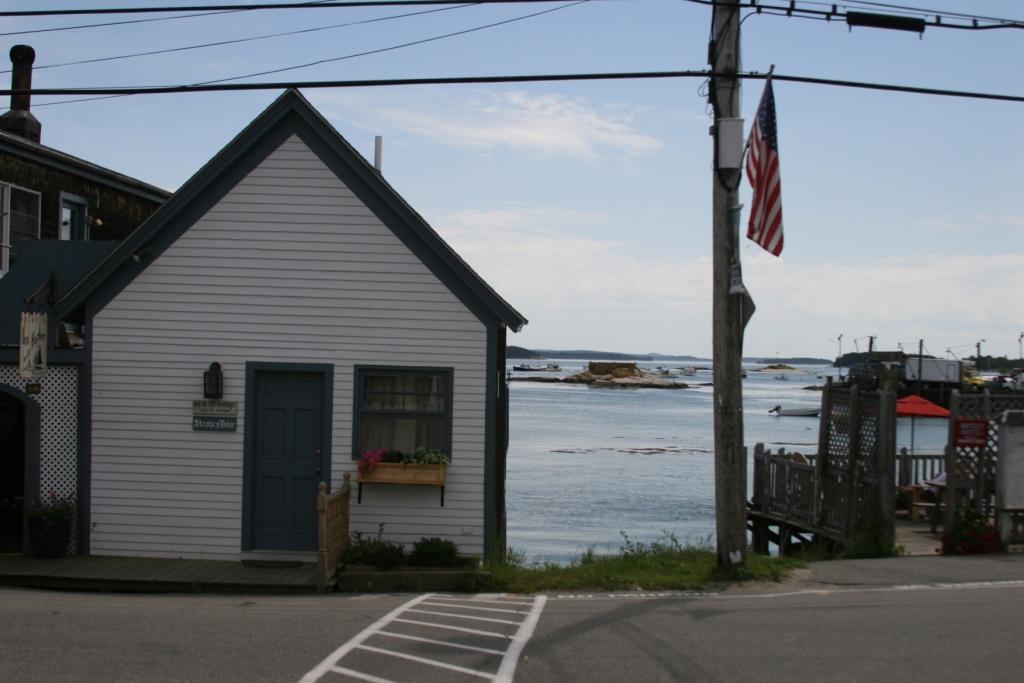
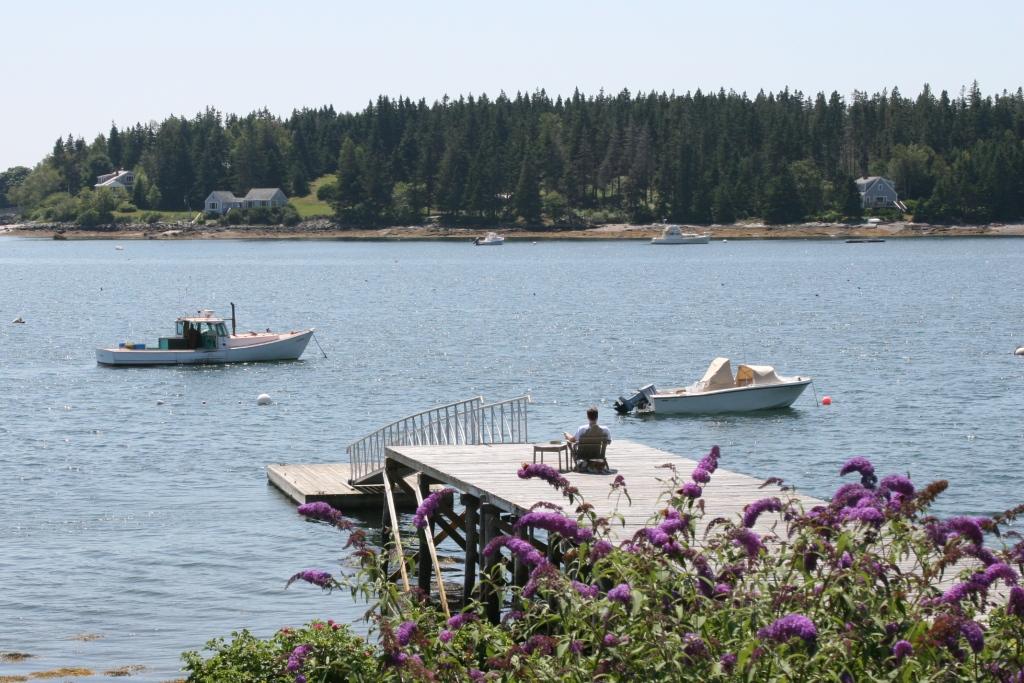
The second week we moved from Port Clyde to Deer Isle. This is the view from our deck.

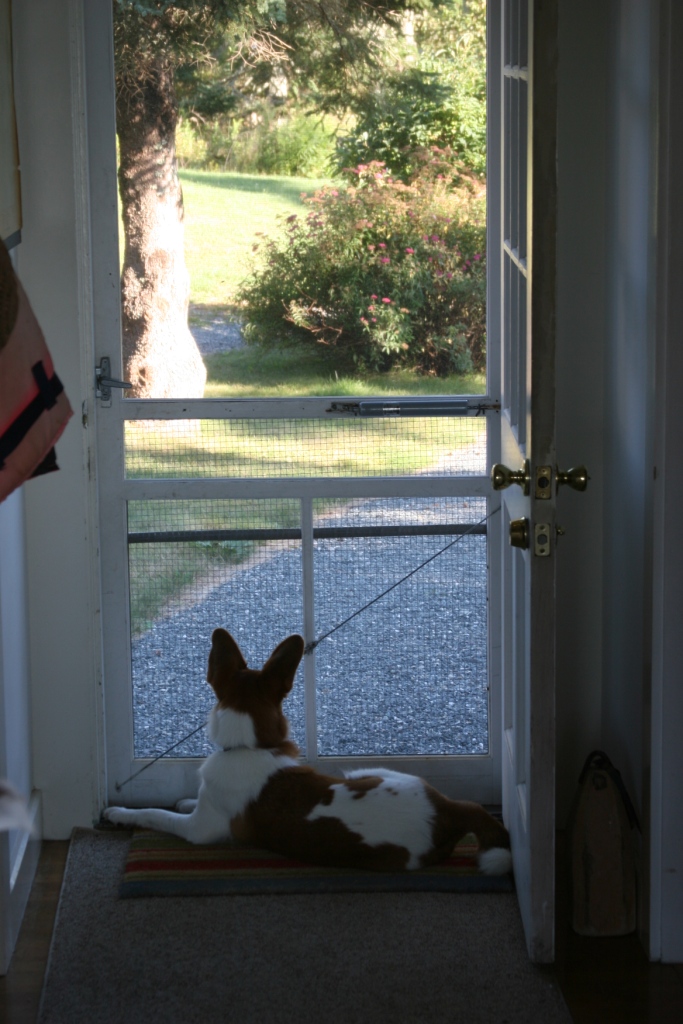
Lucy spent a lot of time at this door looking at squirrels and…

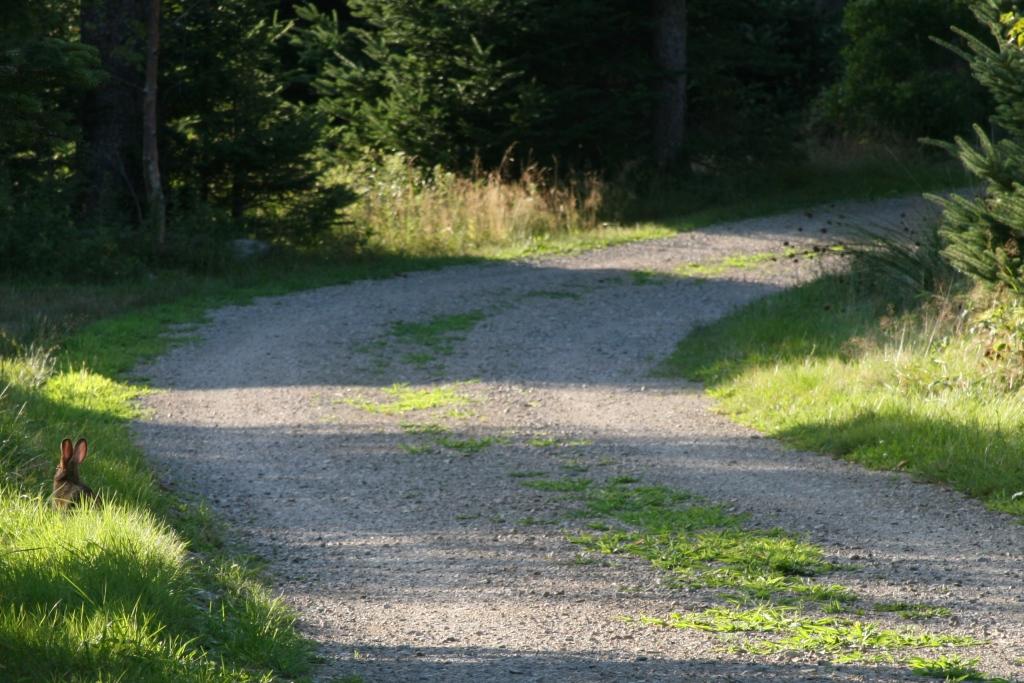
…bunnies

The best ice cream in Maine (and that is a high bar)

Relaxing in the car

Seriously delicious Mexican food with a Maine twist

I think Lucy is part mountain goat

We wore her out. [UPDATE: Contrary to how it looks, Lucy’s ears arent’ actually drooping, they were caught in mid-bounce as she ran along the rocks. No matter how tired she is they never droop like that.]

I’ll end with this spectacular sunset from Port Clyde

Three Book Reviewlets

  
In my continuing effort to record impressions of what I have been reading without writing a full-fledged review…

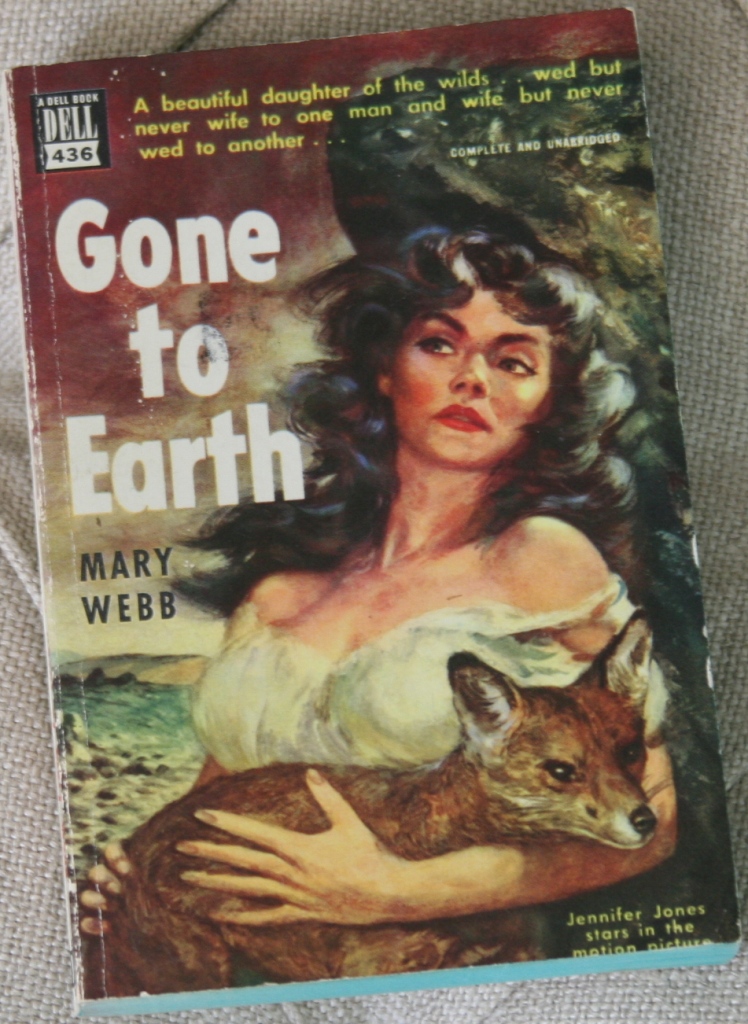
Gone to Earth by Mary Webb
Simon recently wrote a hilariously scathing review of the first 1.5 pages of this novel. I read his review with equal parts merriment and worry — Gone to Earth has been on my Century of Books list for some time and on my TBR shelf even longer. Not to mention the fact that I had just purchased a second copy of the book because the cover was so comically bad and so unlike the rather pretty Virago cover. How could I get through it now? I could always swap it out and find something else from 1917. But then I picked it up just to see if it got any better after 1.5 pages. What I found is that the prose gets much better — or at least a lot less laughable — almost immediately after the point Simon decided to stop reading.

Now, I don’t blame him for stopping. The opening really is bad. I know that if I hadn’t read his review I might have given up as well rather than push on a little further just to see there was anything redeeming about it. And even though I ended up kind of enjoying the story, the dialect dialogue never gets better. I am really not a fan of trying to read through dialect. Usually when I force myself to, I can get into the rhythm of it and it becomes less troublesome. But I must admit that in the case of Gone to Earth, I had a hard time all the way through to the end. (I still don’t know what the word “leifer” was supposed to be. Context wasn’t particularly helpful in figuring that one out.) And although the majority of the writing isn’t too terrible, the bloated prose of the first pages reappears from time to time. I suppose if I am honest I could also find some serious problems with the plot itself. (Naive country girl with pet fox can’t decide between love and lust and [spoiler alert] ends up being killed by a pack of fox hounds…) But for some reason I still enjoyed reading it. Would I seek out another Mary Webb? Probably not.

My Friend Says It’s Bullet-Proof by Penelope Mortimer
I really didn’t know anything about Penelope Mortimer, but since I have had such good success with the Penelopes Fitzgerald and Lively (not to mention actress Keith), I thought I would give it a go. Plus I needed something for the year 1967. And for 1967, I found this novel quite contemporary in its prose and plot. It could indeed have been written by Penelope Lively or Marge Piercy or Julia Glass or someone else more recently. (Although it is probably darker than the latter two.) It is the story of Muriel, an English journalist who visits what sounds like Boston on a PR junket with a group of male journalists. Having recently gone through breast cancer and a mastectomy Muriel is a little emotionally unsure as she gets to know three different men on the trip. I definitely enjoyed and will add Mortimer to the list of Penelopes I read.

Some Do Not by Ford Madox Ford
This is the first novel in Ford’s four part series known collectively as Parade’s End. All four of them are are on the Modern Library Top 100 list as one title and I am always looking to knock out a few on that list whenever I get the chance, but it was also an opportunity to knock off four spots in the 1920s on my Century of Books list.   Everything started off great — World War I era England — but then Ford gets into the whole temporal shift thingy that left me confused more than a few times. Why are so many of the books on the ML100 so hell bent on make the reader struggle to understand? I am all for being challenged to think about things differently, but when the narrative structure is so confusing that I don’t even understand what is going on? Eh. Still, I am determined to read the other three. Maybe it will get better for me as I go along.

A Perfect Day in Maine

  
Our whole trip to Maine was wonderful, but there was one day early on when we were staying in Port Clyde when everything was absolutely perfect. The weather was glorious, the kind of weather where you keep repeating, even to yourself, how wonderful the weather is. The sun was warm, the breezes were cool and fresh. And for all the bookhunting I did on the trip, this was a day where our only excursion was a lovely evening walk with Lucy. We read, lazed, napped. It just doesn’t get better.

Sigh.

I resisted the temptation to put these photos in categories and instead post them here in strict chronological order.


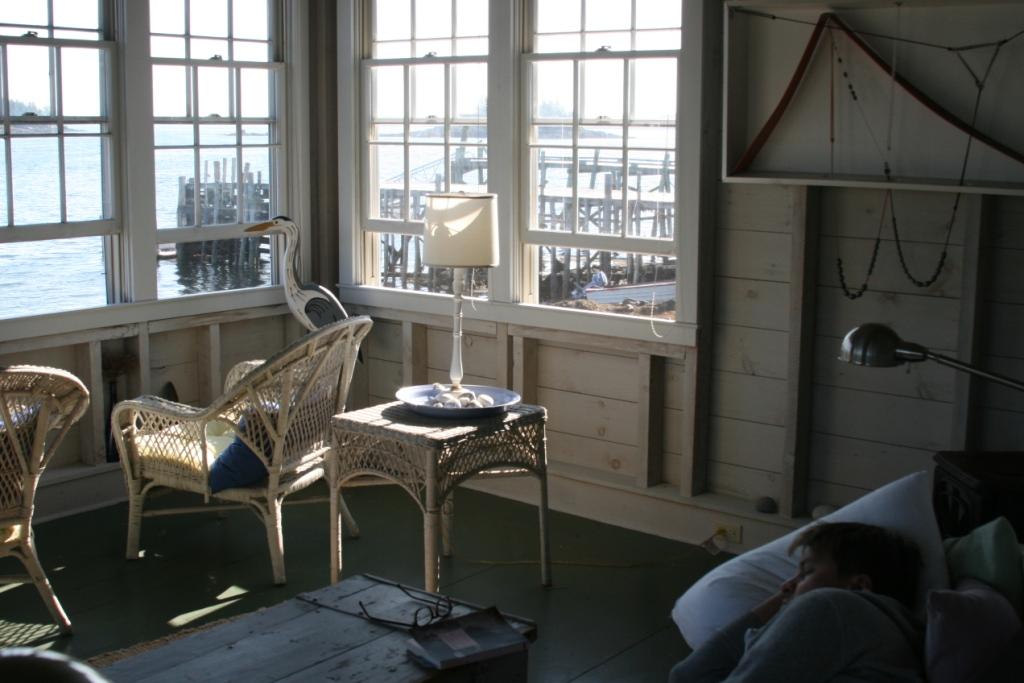
Lucy in the boathouse.

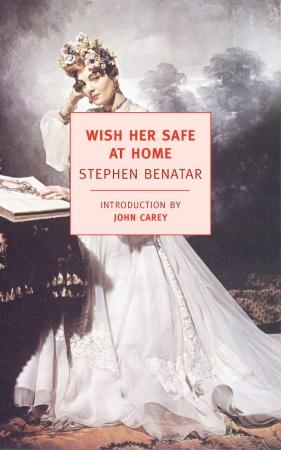
I didn’t get very far in Wish Her Safe at Home before I gave in to what turned out to be one of the top 10 naps of all time.

This wonderful hedge screens our cottage garden from the little used road. And the garden was full of greens that we picked each night for dinner.

16 used bookstores in 14 days

  
I know you all are thinking “oh, how fun”. But I had 26 on my list! What if all the best books were at the 10 I didn’t get to? Especially the two that we stopped at that were inexplicably closed.

Still, it was great fun. Unlike most vacations, I took a small number of books along with me to read (only 4) because I knew I had to leave as much room in the car as possible for books I would pick up along the way. And pick up I did. I purposely have been saving most of my book buying budget for this trip. You may remember I recently spent 10 days in the UK and I didn’t buy one single book. I don’t even think I went into any bookshops. (I take it back I did go into at least one while I was in Rye.) I was saving up all my pennies for our trip to Maine.

You might be thinking “But, Thomas, you doofus, most of what you love is hard to find British fiction. Why wouldn’t you look while you were in England?” Well, first and foremost I knew we were going to a bookstore rich area of Maine for two weeks and I wanted to have some book budget to spend while we were there. Second, carrying books back from England is a lot harder than it is on a road trip. Third, I like the needle in a haystack approach to book browsing. It is no fun when everything you want is right there in front you. I like to hunt for things.

Would I find any of my type of books in the wilds of Maine? Yes.

Since getting away from the DC-Baltimore-Philly-NYC-Boston megalopolis was the main point of our vacation, I purposely didn’t want to look for books until we got to Maine. Armed with my list of 26 shops along our projected route I began to realize that Maine used booksellers fall into three general categories:

  1. Those general sellers who know what they have and price accordingly.
  2. Those who have stock that doesn’t look like it has turned over at all in the past 40 years. And not in a good way either. Most of it was shite 40 years ago and is still shite today.
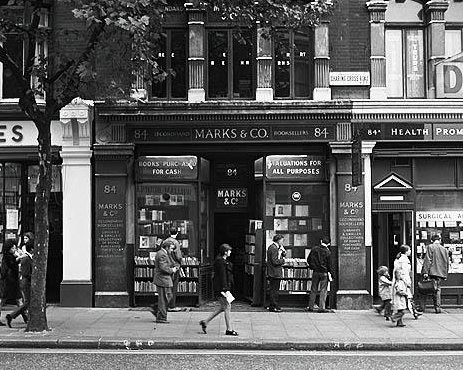
  3. Those who have antiquarian books that Helene Hanff would have gotten cheaply from Marks & Co.

Seller types 1 and 2 generally had a few gems just waiting for me to find them. 

We only took pictures of a few of the 16 that we went to. That was mainly due to weather or not we bothered to take the camera out of the car or not. These aren’t necessarily the best we came across. (Although they all do fall into category 1.)

Sarah’s Books at the Antique Marketplace in Bangor truly was the best one of the 16 we went to. You may remember last year when we were on Islesboro and I met an artist and bookseller who knew me from my blog and who gave me two lovely books when we met. I can honestly say that her bookstall at the antique market was not only the tidiest, best stocked stall I have ever come across in such a market, but it was also probably the best organized store with the best stock that we came across in Maine.

Not only was her stock interesting and varied, but the books, even the cheap ones, were in really good shape. We ended up buying 14 books from her stall, more by far than any other store we went to. And it is no surprise that she stumbled across my blog once upon a time. Her stock was a real My Porch delight, most of you would have loved it as well. There were a few displays on her shelves that seemed to be set up just to entice me. I really wish we had had our camera that day (these are taken from her blog) so I could have taken pictures of some of collections she had highlighted. I am afraid I ruined the aesthetic appeal of one of the Evelyn Waugh display by buying four of his travel memoirs in mataching Penguin editions.

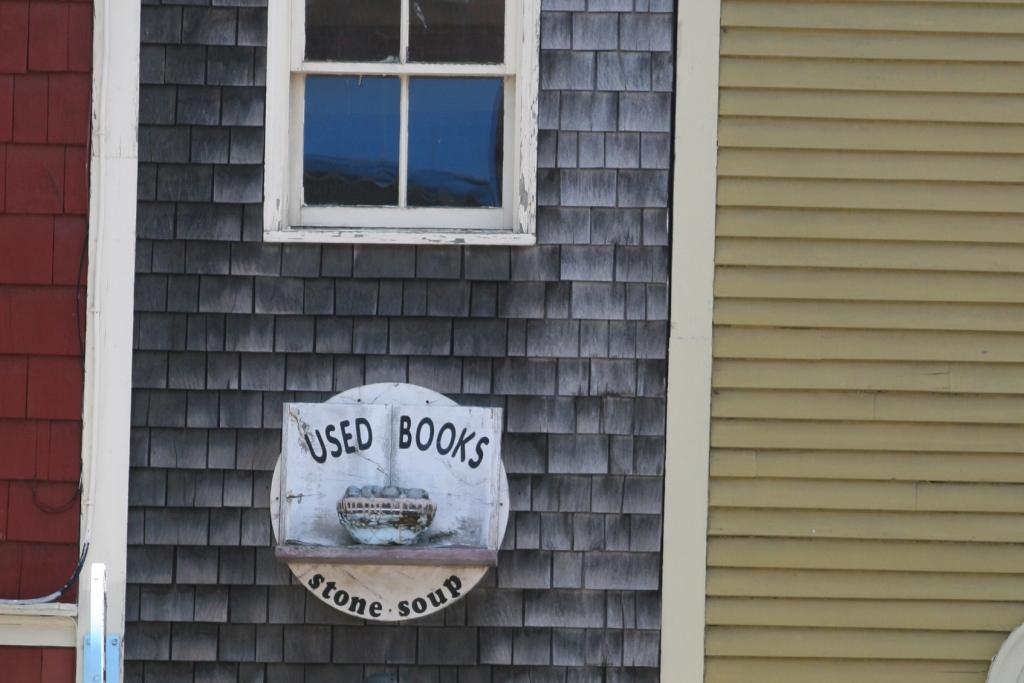
Camden, Maine had two used bookstores. This one, on the second floor had lots of great reading copies.

I chose a few titles here that left the bookseller unable to discern my areas of interest.
We had a nice chat about Ambrose Bierce.

Northeast Harbor, Maine is a more af a wide spot on the road on Mount Desert Island. But what a cute wide spot it is.

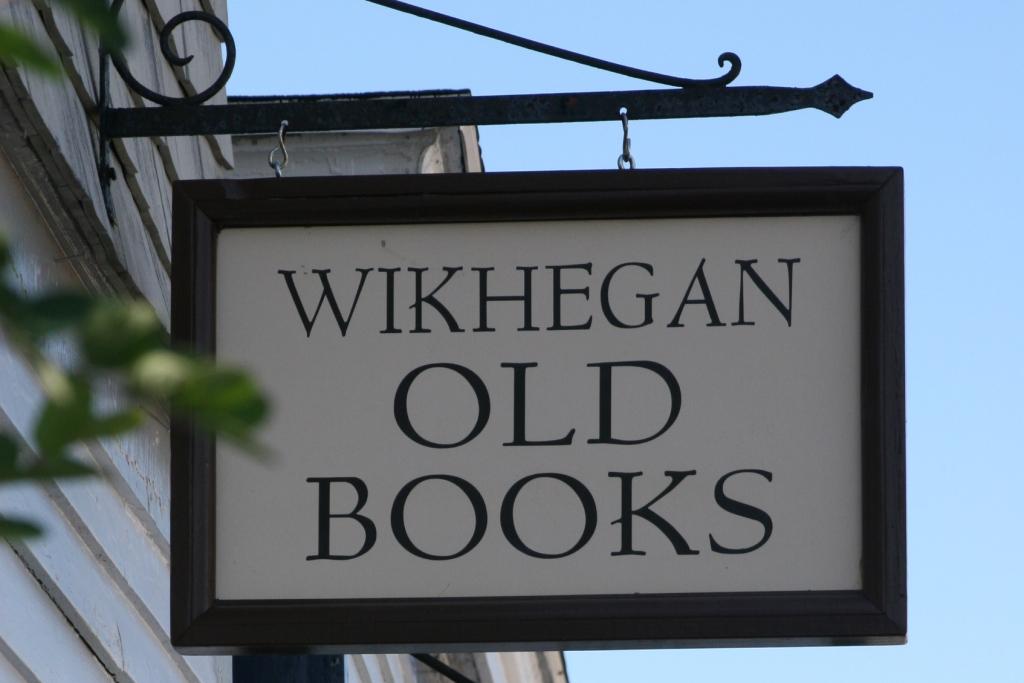
After re-reading 84, Charing Cross Road, I was in the mood for this truly antiquarian shop. It didn’t have much of what I like to buy, but it was still a joy to browse. I ended up buying some expensive ephemera that I will blog about in the future.

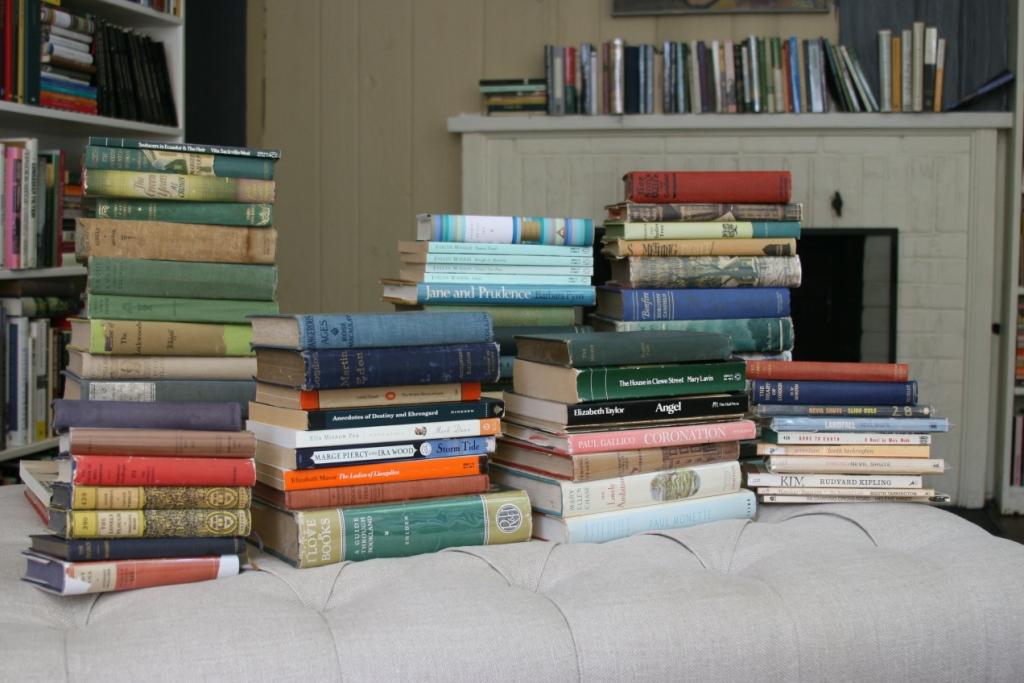
This was my haul. Including some of John’s that aren’t in this picture, we bought about 75 books. Time to weed out the library to make room for these.

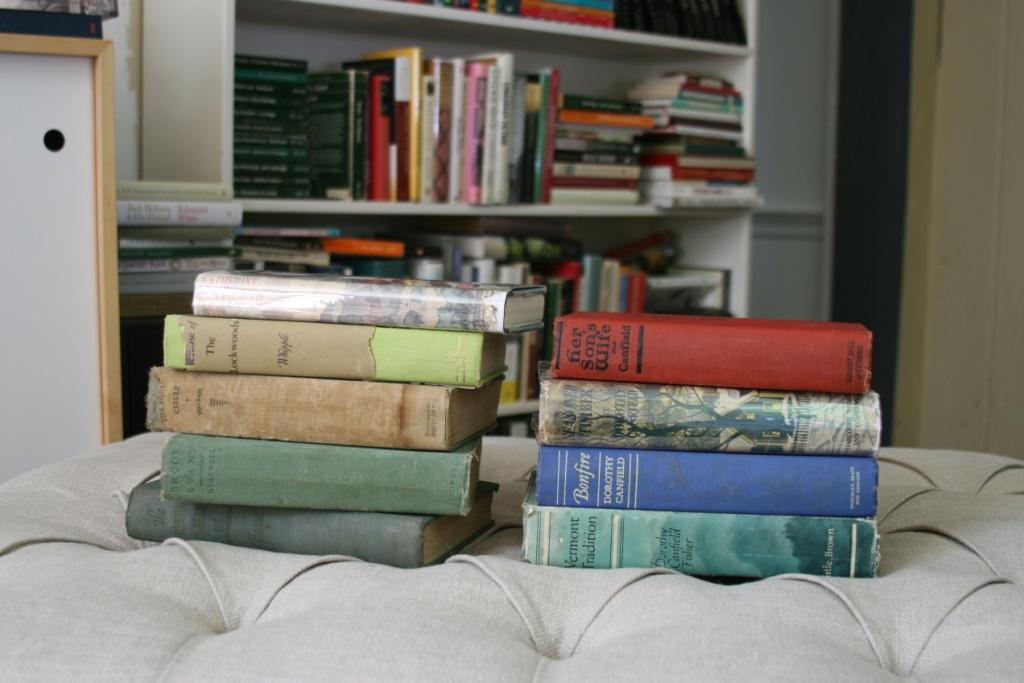
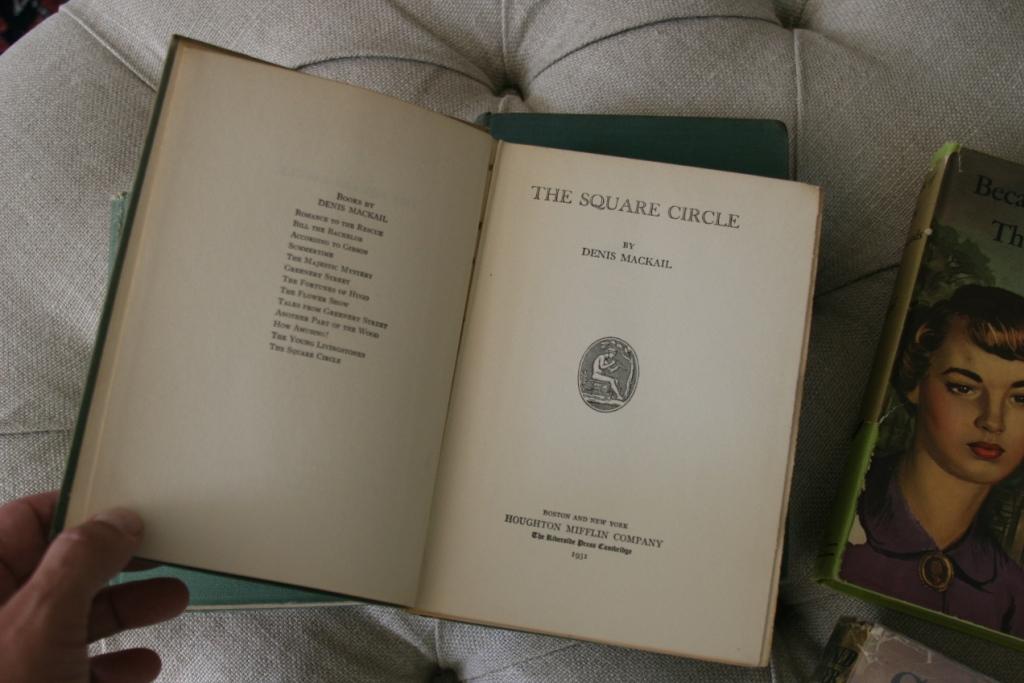
This is what I call the Persephone Collection. Four by Dorothy Canfield Fisher that aren’t published by Persephone; a non Persephone Whipple which I already own (Because of the Lockwoods) but I couldn’t pass it up; a DE Stevenson, two Glaspells, one a Persephone and one not, and a Denis Mackail.

Denis Mackail wrote the wonderful Greenery Street published by Persephone. I was armed with a list of Persephone authors to see if I could find their other titles. I considered finding this one a big coup. Can’t wait to read it.

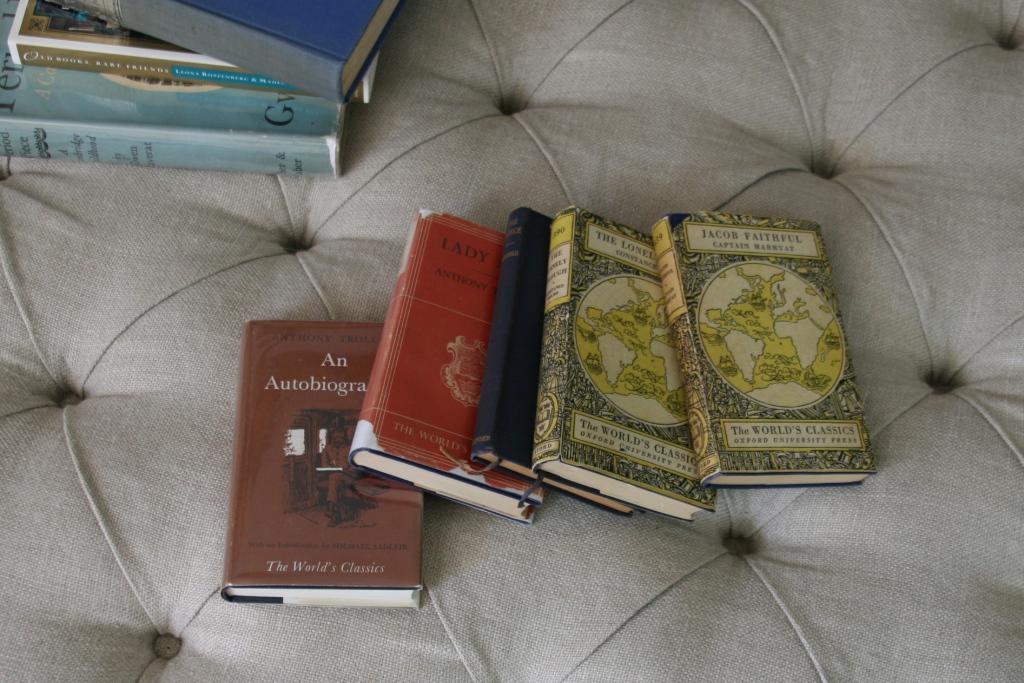
I will blog about this more sometime in the future, but I think I am going to try and collect all 600 or so of Oxford’s The World’s Classics in these cute little pocket editions. I already had a few Trollopes in this edition and couldn’t resist these others when I came across them. The Trollope autobiography is one that I have wanted to read for some time.

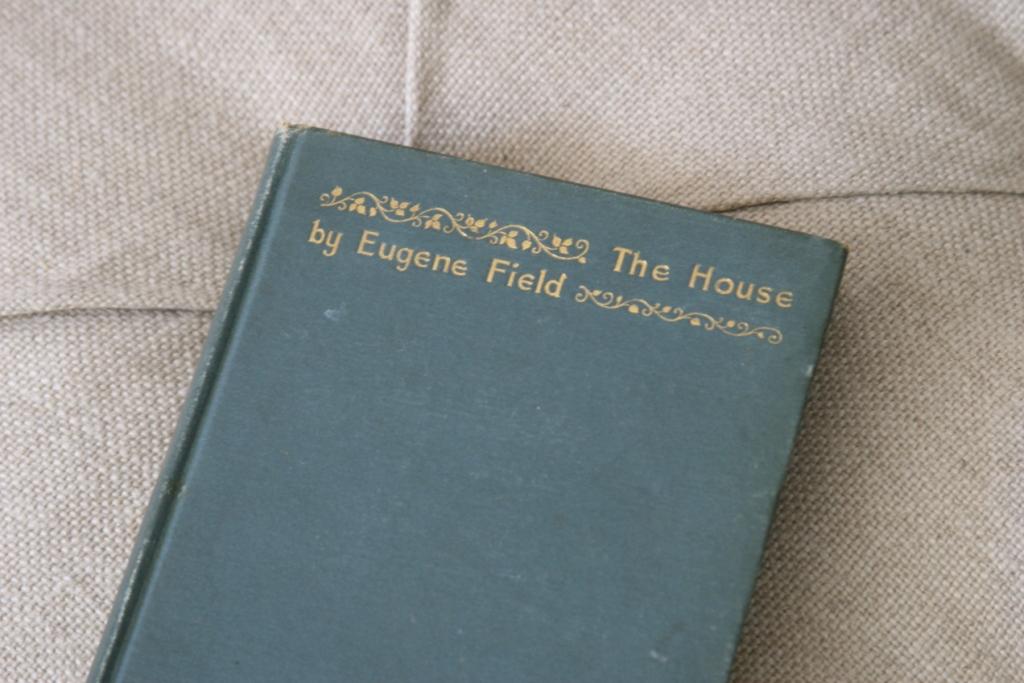
I had never heard of Eugene Field, but the look of this one and the first few paragraphs really drew me in. Oddly, very oddly, the very same day I bought this Simon T. posted a comment on my Helene Hanff post about Field’s book about bibliophiles. Can’t wait to find that one.

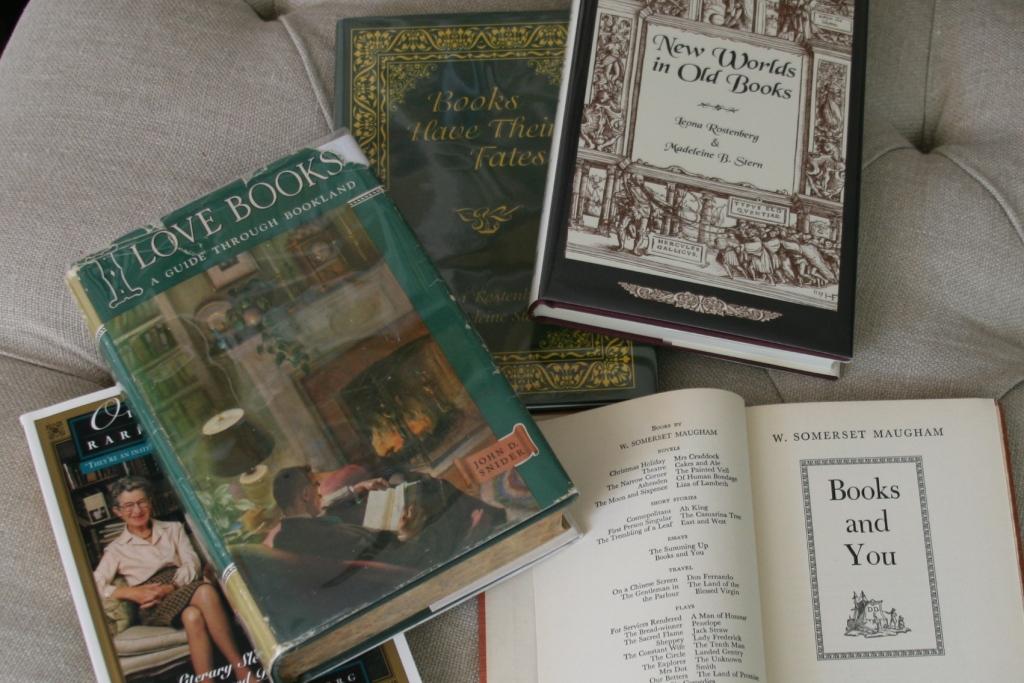
Books on books. Can never get enough of these. What’s missing is the copy of 84, Charing Cross Road that I bought and re-read on the trip.

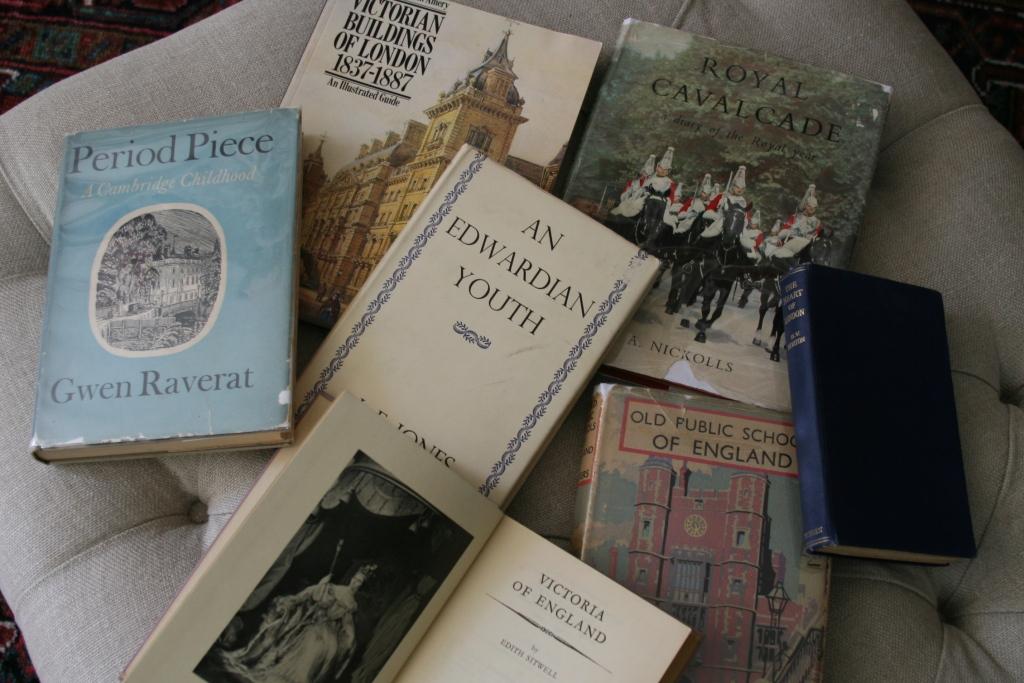
This will help flesh out my Anglophilia collection.

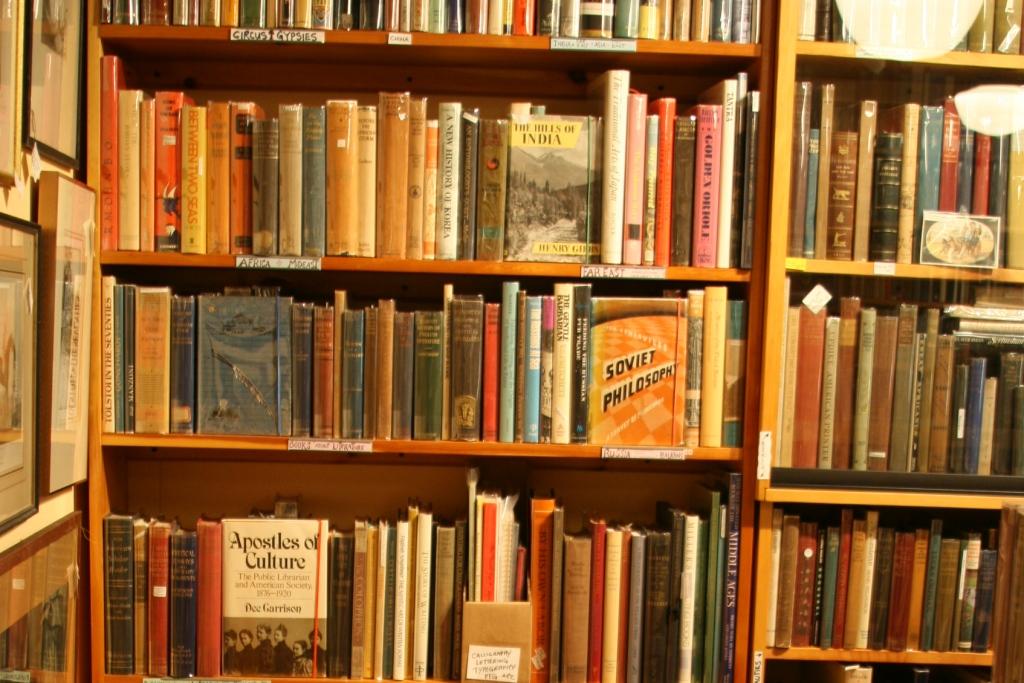
The Goose River Exchange in Camden, Maine. Somehow this one got out of order. I bought some of the England books here. Overall the stock doesn’t have much fiction, but is so interesting I would love to work here. The combo of books, magazines, ephemera, and antiques would make this a wonderful place to pass the time.

Message to future Thomas

   
Since this is a message to the future me, I thought I would write it in the 2nd person.

This is what you thought of these two books:

Wish Her Safe at Home by Stephen Benatar
You loved the cover as you love most of the covers issued by NYRB Classics. And you seemed to remember lots of other bloggers reading this one and generally praising it. Not one to jump on the band wagon you waited a considerable number of months, perhaps even a year or more to read it for yourself. (Putting it on your list for the A Century of Books challenge seemed to help assure that you might actually get around to it.)

At first you were charmed by the thought of middle agish (?) Rachel moving off to Bristol to start a new life after her aunt left her a big old house there. You were particularly taken with Rachel’s description of her work leaving “party” just before she moves. It had a kind of And Then We Came to the End kind of office vibe and introduced us to the notion that Rachel may be one of those people that is the butt of most of the office jokes. All going along great at this point. Quirky Rachel, exciting new adventure. Then Benatar ratchets things up a bit when it seems that Rachel longtime roommate may actually have thought that they were in a Lesbianic (albeit platonic) relationship. Then it is off to Bristol where it starts to become clear that Rachel might not be the most reliable of narrators. Not long after this she kind of keeps swimming and swimming to the deep end of the pool. Somewhere in there you started think of a Jane Gardam character with some seriously dark Muriel Spark thrown in to boot.

At first you worried that Rachel was going through her savings too fast and you wished that she would at least get a part time job to pay expenses. But when it became clear that she was headed for some sort of fantastic mental day of reckoning, you started to cheer her on in her spending. The mental climax would no doubt come when she reached the end of her economic tether.
And now, future Thomas, I must disappoint you. You waited too long to write about this book and the two week delay has rendered you unable to remember exactly how this finishes. You think it was mildly unresolved. Oh well, at least this way you won’t spoil the surprise for your readers.

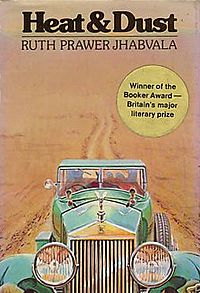
Heat and Dust by Ruth Prawer Jhabvala
You have a vague recollection of seeing part of the film adaptation of this book. You rented it decades ago when you couldn’t get enough of Merchant-Ivory films which all seemed to use book adaptation screenplays written by RPJ.  Not being full of Forster-esque tea sipping and such your youngish, untrained mind was bored. You decided to dust the book off (you didn’t intend the pun) when the year of its publication (1975) was one that you needed to fill for the A Century of Books challenge.

So when you picked up this Booker prize winning novel on your vacation in Maine, you were immediately drawn in–delighting in the fact that the cool Maine breezes were the antithesis of the heat and dust in book. For much of the book you couldn’t decide if you like the 1923 story line better or the 1975 story line better. You also kept wondering how anyone can live in such heat, especially in 1920s English clothing. Good lord, how about a sari or sarong.

You were intrigued by the possibility that women’s reproductive choices in the 1970s were in some ways less political than they are today and you wondered whether or not RPJ, who is Indian only by marriage, painted an accurate portrait of life in India in the 1920s and 1970s. But then you thought that that was kind of a dumb question because the sheer number of points of view (i.e., people) living in India, whether English or Indian, make words like accurate a little fraught.

In the end you enjoyed it and vowed to put Heat and Dust on your Netflix queue.

84 Copies of 84, Charing Cross Road

Well, not really. In fact not even close. But I did just buy yet another copy of 84, Charing Cross Road. I think I have four editions already at home, and I now I have a duplicate of one of those editions. As we spend a few weeks along the Maine coast I have been going into used bookstores at a pretty steady pace and for some reason couldn’t resist buying another copy, even though at the time I wondered why. And I also thought of a recent email from Simon T. in which he states he has a no duplicates policy.

Rather than pure obsession, it might have actually been kismet that I picked up my fifth copy of 84CCR. A little further down the road John wanted to spend some time in a beautiful furniture maker’s store and shop and so Lucy and I decided to cool our jets in the shade. It was a good thing for him the 84CCR was close at hand. I was immediately drawn back into it and happily passed the time reading. Had I not been so engaged, John’s browsing time in the furniture store would have been considerably shortened.

So what did I think of my fifth or sixth reading of the lovely 84, Charing Cross Road? I thought it was just as delightful as the first time I read it. In fact, I think it is the best book about books ever written. Maybe it helps to also be an Anglophile, but I defy you to find me a book about books as charming as this one. (Actually I challenge you to find me such a book. If there is a more charming one out there it would be a banner day indeed. And don’t just phone this one in. No off hand suggestions of books on books that you liked. It should really knock your socks off, after all, it needs to stand up to what I consider to be perhaps the most perfect reading experience of all time…hmm…NO WAIT, although my prose gets more and more hyperbolic I am realizing that I DO want to hear about all your books on book feedback, even if it has no shot of dethroning 84CCR from my affection. Two that come close for me are Anne Fadiman’s Ex Libris and Allan Bennett’s The Uncommon Reader. Good lord, is this still a parenthetical thought?! Now you might start to get an idea of what it is like to talk to me in person.)

Where was I?  Oh yes, my thoughts on the re-re-re-re-re-reading 84CCR.

1. A little startled by Helene’s brash sense of humor and way of communicating. Nora wrote that Frank liked, and shared Helene’s sense of humor, but I still worry retroactively that Frank may find it off putting. No doubt has to do with my own insecurities when I visit the UK. Always feel like a bull in a China shop.

2. Similar to #1, it must have been a pain for the folks at Marks & Co to deal with Helene’s cash payments in US dollars. Early on Frank suggests in a very tactful and gracious manner their preferred method of receiving payment only to have Helene miss the point and swat it away.

3. I am struck by Helene’s openness and honesty about her income. When did the English lose their ability to talk about personal income? Trollope is stuffed full of who makes what. And I love reading about who makes what. And from a more serious social historical point of view, Helene’s occasional discussion of how much she makes, and her living conditions gives us an interesting glimpse into the life of a writer.

4. As most of you know, I love fiction and almost never read non-fiction or essays or anything of that sort. But Helene is the opposite. How can I love her so much when she actually dislikes fiction? Yes, she does fall in love with Pride and Prejudice and she enjoys poetry, but otherwise everything she loves to read sounds very old and dry and dusty. On the other hand, with this latest (but never last) reading, I am kind of interested in tracking down some of these multi-volume works to see if I have any interest in them. Would I find the description of a battle as interesting as Helene did when she read the couple of pages that were used as wrapping material for one of her purchases? I doubt it, yet I am fascinated by the notion and kind of wish I would. When you think about the libraries that Marks & Co would have been buying in the 1940s and 1950s, and how Frank describes their editions and bindings, etc., and the titles themselves, it just puts one in mind of all those libraries in National Trust properties. Sure the books are pretty, but would I want to read them? Helene would.

5. When I first stared obsessing over the UK when I was about 12 years old, it seemed like an absolutely impossible dream that I would ever be able to visit. Yet at 19 I managed (with help from my parents) to make my first trip to England, Scotland, and Wales.  And then I think of hard working Helene and the decades she had to wait before she could finally make it to England. I am glad she eventually got there and am even more glad (and grateful) that I have been able to visit many times.

6. Frank’s death really hit me hard this time. I knew it was coming, but was still shocked when it happened.

7. I really want to see the film version again. I have seen it about 10 times but it has been several years.

Bits and Bobs (the 1918 edition)


Public Speaking with Fran Lebowitz
Until last night I didn’t know who Fran Lebowitz was. I think I may have thought she was the photographer Annie Leibovitz. Turns out that isn’t the case. She is a writer. Martin Scorsese has made a wonderful, hilarious documentary about Lebowitz that consists mainly of her talking to Scorsese and clips of Q&A portions of her public lectures, including one conducted by Toni Morrison. You may not always agree with her point of view (although I do more often than not) but she is a total straight shooter and really, really funny. She is a wonderful literary, cultural throwback to another time. This is definitely worth watching.

1918Recently I reposted my “A Century of Books” list asking for your help to fill in a couple of holes I had on the list. I couldn’t find anything for 1911, 1918, 1921 and I was looking for something to bump DH Lawrence out of 1920. Many of you took the challenge and helped me find good stuff for each of those years except 1918. To be accurate, many of you suggested books for 1918 as well, but I had already read those fantastic books: My Antonia (Willa Cather), and The Return of the Soldier (Rebecca West), so I was still left with a 1918 hole.

That is until today when I saw a comment that Toward Infinity left on that post. TI pointed me towards Goodreads which allows one to do a search that returns the 200 most popular books (as rated by the Goodreads users who added the books to the GR database) for 1918. It really came up with some interesting titles.

  • A few I have already read: The Magnificent Ambersons (Booth Tarkington) and Eminent Victorians (Lytton Stratchey).
  • Many I wouldn’t want to read.
  • Some non-fiction that sounded kind of fascinating like one called American Negro Slavery–I can only imagine what the perspective might have been on that with only about 60 years separating the end of the Civil War and the publishing of the book.
  • I also could add a Bobbsey Twin book, or one of the Forsyte Saga, but I am the kind of person who needs to start at the beginning.

But I also came across  a few that really caught my eye. How could I, or any My Porch reader, pass up a book called Patricia Brent-Spinster (Herbert George Jenkins). And there was another one called Confessions of a Young Man (George Augustus Moore) that apparently has a gay theme–from 1918 no less. [Update: The Goodreads info on the Moore book seems to be wrong, it wasn’t published in 1918 and I’m not sure the theme is what the reviewer claims it is.] These are two that I am defnitely going to add to the list. Now if I can only find them.


Dodo Press
I couldn’t help but notice that several of the books on the 1918 list were published by the Dodo Press. If I had a better memory, I would have recalled that Elaine wrote about the imprint about a year and half ago. Looks like a great resource for finding all kinds of out of print stuff. I am going to have to spend some time exploring.

Goodreads
I hadn’t been on Goodreads for almost two years. I love it and I hate it. I love it because it is a great way to keep track of things. I hate it because it makes me go into OCD meltdown and consumes too much time when I could be doing something more interesting, like reading.

Could this help with my Faulkner phobia?


I have not had success trying to read Faulkner’s work. I read about 2/3rds of Absalom, Absalom in grad school. And then when Oprah read three of his, I bought the Oprah editions thinking if her viewers could do it, so could I. Except I didn’t.
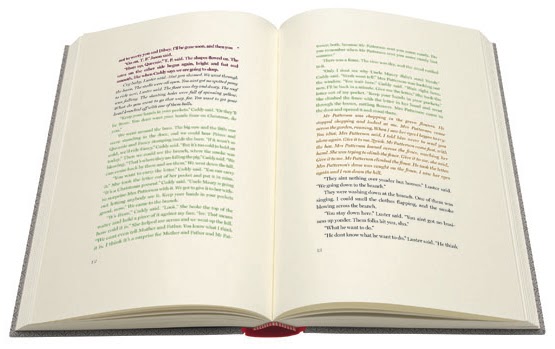
But now, the Folio Society has a version of The Sound and the Fury that uses colored ink to differentiate between the different time periods in the novel. I think I would find this quite helpful. But I don’t think I am ready to pay $345 for one book from an author whose work has not proven successful for me.  I wonder if I could buy a cheap copy and get out the highlighters…

Apparently, this is the way Faulkner wanted to publish it but the technology of the time didn’t allow.