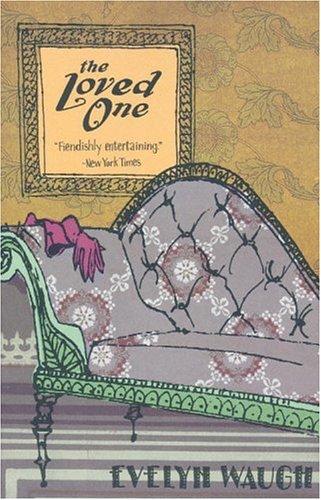
In Evelyn Waugh’s novel The Loved One, the British protagonist Dennis, a young has-been poet living in post-war Los Angeles, confides in his boss at the Happy Hunting Ground pet crematorium:
“Through no wish of my own I have become the protagonist of a Jamesian problem. Do you ever read any Henry James, Mr. Schultz?”
“You know I don’t have the time for reading.”
“You don’t have to read much of him. All his stories are about the same thing – American innocence and European experience.”
That about sums up my feeling about Henry James–at least the part about not needing to read much of him. A few years ago I had to kind of force myself to like Portrait of a Lady, but I did end up enjoying it. I did the same with The Spoils of Poynton. I finished, but I didn’t enjoy it. Washington Square I’ve read twice and didn’t enjoy it either time. So for my A Century of Books challenge I plugged The Golden Bowl in for 1904. It is also on the ML100 list so I could kill two birds with one stone. But 200 pages in with 400 more to go I just could not have cared less about finishing. So with my new attitude about life being too short. I chucked it.
In its place, I picked up The Loved One which was hilarious. If you like Wodehouse, you will like The Loved One.
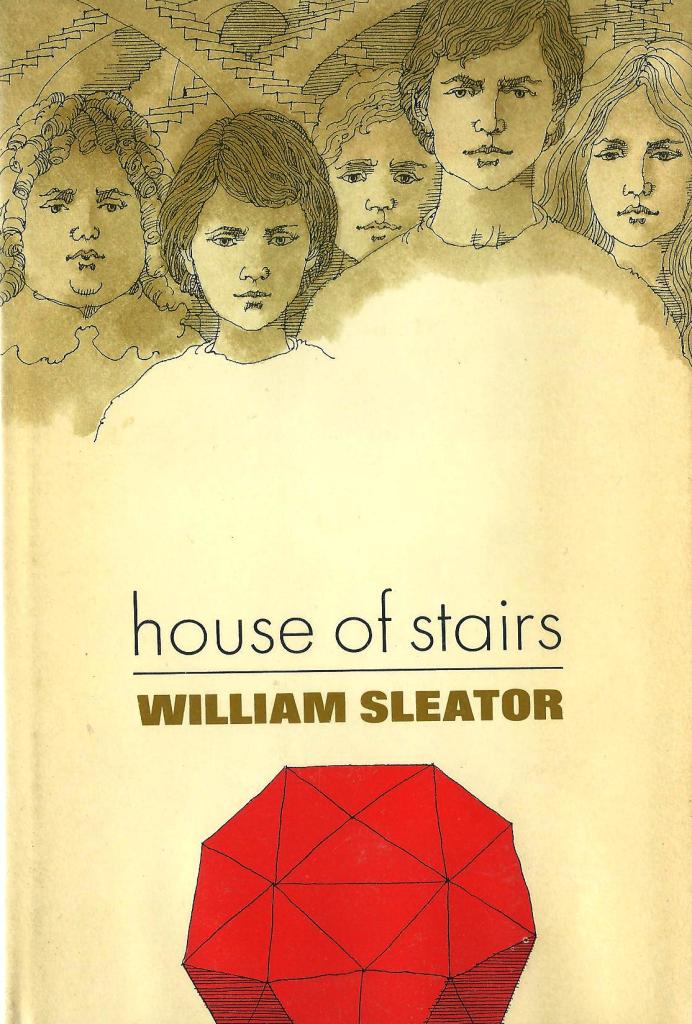
House of Stairs by William Sleator
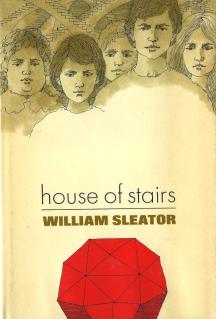 |
| This is the cover I remember |
I also recently finished House of Stairs, William Sleator’s young adult dystopian novel from 1974. I first read this book when I was about ten years old. Parts of the book have stuck with me for the intervening thirty-some years. Unfortunately the title wasn’t one of things that stuck. Thanks to one of you who blogged about this book a year or two ago, I was reminded on the title.
Five sixteen-year-old orphans find themselves in a white horizon-less room full of nothing but stairs and landings. It is quickly apparent to an adult reader that they are being subjected to some sort of Pavlovian conditioning. Three things struck me about my second reading of this book.
1. It is still an enthralling read. Albeit a much quicker one at forty-three than it was at ten.
2. The experiment perpetuated on the orphans is almost like a foreshadowing of reality TV where the “stars” are conditioned to fight each other. The characters in the book do awful things to each other to get enough food to stay alive. The characters on Big Brother or The Real Housewives do it for fame and money.
3. There is a distinctly gay sub-storyline that doesn’t take a queer theorist to recognize. In fact, I would suggest that both Peter and Lola are gay. And, it turns out, the heroes of the book. I wonder if the subconsciously gay ten-year-old me subconsciously picked up on that thread? If so, I had no recollection of it.





























 hogglestock