Pym Post for Days 1 and 2

So many fun things going on today. Here is a recap of all the Pym posts that have popped up over the past two days. If I missed yours please leave a comment or email me at onmyporch [at] hotmail [dot] come.

Blog Posts

Amanda at Fig and Thistle describes getting over her own cool self and letting Pym into her life.

Audrey at Books as Food mentions the restorative/healing power of a Pym novel and she gives us lots of wonderful background behind the writing of Some Tame Gazelle before she comments on her own experience with the novel.

MarysLibrary introduces us to Pym and mentions a Yahoo literature group (a spin-off of a Trollope group!) that has been focusing on Pym.

Leticia at Spectrum of Perspectives paints a lovely picture of her friendship with Barbara Pym.

Claire the Captive Reader shows us a fantastic 1990s cover for Quartet in Autumn, that looks like it could have been a presentation board for a 1970s campaign to raise funds for a new library.

Lyn at I Prefer Reading provides links to three of her reviews (Excellent Women, Jane and Prudence, and Less than Angels), but she also mentions listening to Pym books…tell us more about that, Lyn.

Harriet Devine posts a review of Jane and Prudence.

Anna van Gelderen spreads the Pym gospel to the Netherlands and other parts of the Dutch-speaking world.

Alex in Leeds writes about her first date with Pym and Some Tame Gazelle.

Elecrtric Witch declares The Sweet Dove Died as “THE greatest camp work in history”.

Kaggsysbookishramblings is listening to Barbara on Desert Island Discs and reveiwed A Glass of Blessings.

Victoria Corby discovers Barabara Pym’s books.

Frances at Nonsuch Book reviews Jane and Prudence.

Heavenali gives us her thougths on No Fond Return of Love.

Amanda and her kids bake up a birthday treat for Barbara.

Pym fan Kerry at Pickle Me This (I love that blog title) bakes Barbara a cake and reviews Excellent Women.

Pym sends Hayley at Desparate Reader to church.

Valerie buys all Pym’s e-books in one fell swoop.

Other links

There was a wonderful piece in The Awl on Pym’s centenary.

A nice, if a bit shallow, shout out in The Guardian.

Open Road Media have done a mini video documentary on Pym’s centenary.

Philip Hensher toasts Barbara Pym in The Telegraph.

Raina Lipsitz write about Patron Saint of Quiet Lives at Ploughshares.

orna B Raz writes that archival material suggests that Pym was a Nazi sympathizer. (Yikes.)

Here, the same orna B Raz explains why she Pym is worth writing about.

Having Tea With Miss Pym (and a Birthday giveaway)

 
[Later this evening, I will post a recap of Pym links from Days 1 and 2 of Barbara Pym Reading Week.]

Today Heavenali is hosting a virtual tea to celebrate the 100th anniversary of Barbara Pym’s birth. Folks from around the world are sitting down to a special tea today to honor the life and work of Miss Pym. Amanda had a great idea to bake something from The Barbara Pym Cookbook to mark the occasion, this seemed like a fantastic idea (like her idea for the reading week in the first place) so I am following suit.
Not being English, I have always been fascinated by English cakes. You know, the kind that one often sees in films that are eaten with the hand and not a fork. Solid looking wedges kept in tins for god knows how long. Many in this country would think of the holiday fruitcake as being an example of this, but there are many other kinds that have popped up over the years in my Anglophilic reading and viewing frenzy. One of my favorite movie scenes of all time is from Howard’s End where Margaret and Helen Schlegel ply Leonard Bast with cake in their drawing room. There is one round cake in that scene that always fascinates me. And of course there are years of Mrs. Bridges’ various cakes–especially her cherry cake–that I have always wanted to try. In reality I don’t like nuts in cakes so there are probably many English cakes that I would not like. But that doesn’t stop me from being fascinated.

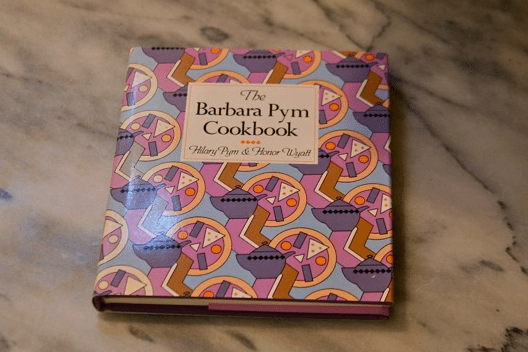
The Barbara Pym Cookbook

I wanted to choose something from the Pym cookbook that would be one of those cakes that gets pulled out of a tin to be served to an unexpected guest. The one from the cookbook that stood out for that purpose was the Parkin cake.  One thing you need to understand about this cookbook is that it is more of a literary gift than a serious cookbook. After Pym’s death her sister Hilary and Honor Wyatt seemingly decided to capitalize on Barbara’s popularity by producing a cookbook that featured recipes for food featured in her novels. To give you an example, the lead up to the Parkin cake recipe is an extended quote from Crampton Hodnet in which, on a wet July afternoon, Mrs Cleveland frets about what to serve old Mrs. Killigrew who she feels obligated to invite in out of the cold for tea. She asks Anthea “Is there any cake in the house?” The cookbook goes on to say “If someone had thought to make a parkin, that is a very good cake for keeping.” In other words, this cake was never mentioned in any Pym book and Pym never necessarily made such a cake.

At the Pym conference in Boston in March, the food historian Laura Shapiro gave a wonderful paper on food in Pym’s novels. (What is it about food writers that make them so enthusiastic about life? Laura’s energy made me think of Ruth Reichl’s wonderful books.) Part of the discussion after her paper focused on the Pym cookbook. No one who spoke had really put the cookbook to practical use and many were dubious about its value as a source of recipes. With that knowledge, I thought it might be best if I compared the Pym recipe to other recipes for Parkin cake that others online had actually tried making. I soon discovered the different types of Parkin cake (oats in the north, no oats in the south), the fact that it was often made to be eaten on Bonfire Night, that it gets better and stickier with age, and that every recipe called for ground ginger and/or mixed spice. The Pym cookbook recipe called for no spice. The Pym cookbook is also short on direction. No mention of what size pan for this recipe. I ended up going off recipe a bit by adding ginger, a pinch of salt, and baking it for only 45 minutes (45 minutes fewer than the recipe called for). I also made it yesterday so it would have at least 24 hours to groovify and get some of the stickiness. Essentially the cake is a ginger or spice cake with dark treacle (or molasses) and dark sugar, and, since I wanted to go the more traditional Yorkshire route, oatmeal.
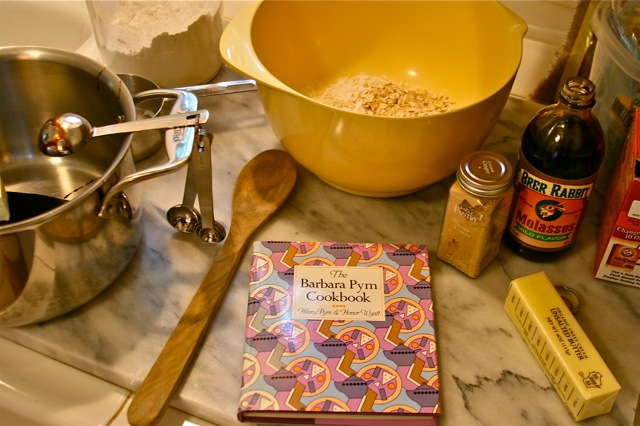
The Parkin Cake in progress.

I also wanted to test the cookbook’s version of Victoria Sandwich, one of my all time favorite treats when I am in England. For those who have never had this glorious cake, it is two layers of sponge with raspberry jam in between the layers and a dusting of sugar on top. I normally make a version that is in the cookbook from the Tea and Sympathy tea shop in New York City which calls for a layer of butter cream frosting on top of the jam, which is delicious. And I have had versions in England that have a what seems to be a sort of non-sweetened dairy cream. Like clotted cream in taste but lighter. In this instance I wanted to go with the basic version and the Pym recipe could not have been more basic. My main qualm about the Pym version is that it calls for a much hotter oven than other recipes I have used or seen.

The Result

So how did the The Pym Cookbook fare? Way better than expected. For a new baker it might be a little too short on information. And both recipes needed slight adjustments, but I am by no means a scientific baker and I managed those adjustments quite successfully. Neither recipe called for any salt. I added a pinch to each because I think everything benefits from a pinch of salt.

And the taste? Dee-licious. The Parkin cake was dense and moist and had a hearty, malty, gingery kind of taste with a bit of chew from the oats–my oatmeal may have been slightly thicker than the medium oats that most recipes call for. It is perfect for tea. Especially, as the cookbook alludes, for those off the cuff teas where something needs to be pulled out of the larder for an unexpected guest. The Victoria Sandwich was really lovely and light and flavorful. And the batter was delicious as well. I probably could have taken it out of the oven a tiny bit earlier, but still really good.
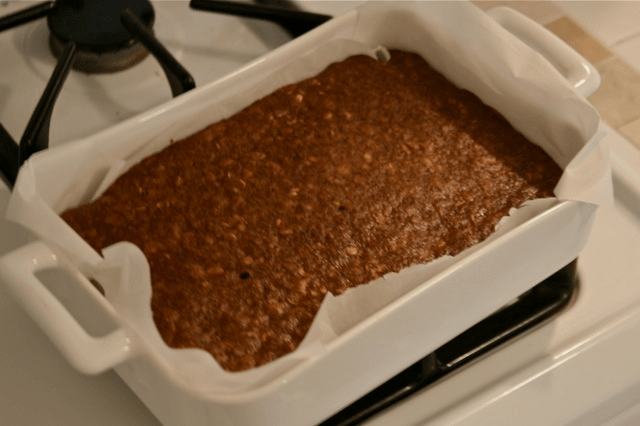
The completed Parkin.

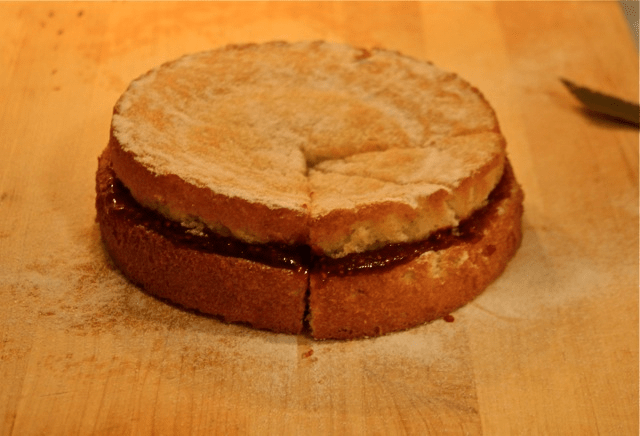
The completed Victoria Sandwich. The layers are different sizes because I had to use two types and sizes of cake tins, neither of them the 7″ size the cookbook called for.

The most amazing thing about both of the recipes is how darn easy and quick both of them were. Very few ingredients and really easy to mix and assemble. I am really quite pleased with the results.

So, happy birthday Barbara. You may not have had anything to do with this cookbook, but the results brought your novels to life for me. Like J. L. Carr wrote in the wonderful novella A Month in the Country it was like eating disposable archaeology.

The Giveaway

I have a copy of the Open Road Media reissue  of the cookbook to give away. Simply leave a comment or email me at onmyporch [at] hotmail [dot] com to enter the drawing by 6 AM eastern US time on June 7th to qualify for the draw.

Incidentally, Open Road also has a little mini video about Pym’s centenary that includes comments from food historian Laura Shapiro.
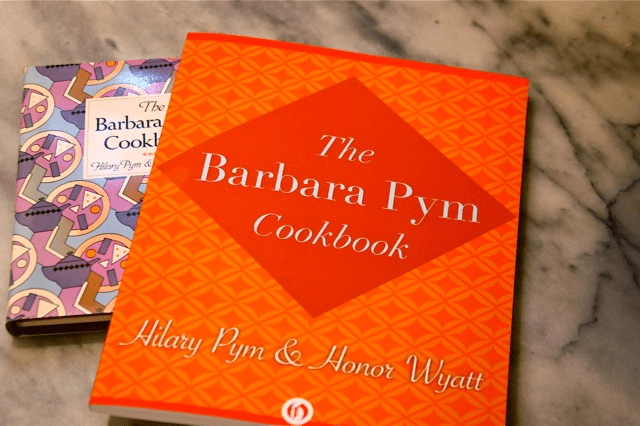
The orange one is up for grabs.

Barbara Pym Reading Week


Scroll down to the next post if you want to skip BPRW housekeeping and get right to the heart of the festivities.

The RULES for Barbara Pym Reading Week:

  1. There are no rules.

Seriously, it’s anything goes for the next eight days, but there are a few things to keep in mind:

  • Both Amanda at the Fig and Thistle and I will be posting Pym-related content all week.
  • Other bloggers from all over the world will be posting things as well which we will link to here and at Fig and Thistle.
  • If you are a blogger and have posted something about Pym please leave a comment with a link to your post.
  • If you aren’t a blogger we want to know what you think send us an email or leave a comment.
  • We have lots of Pym PRIZES (books, bags, tea towels, tea bag parkers). Those who leave comments on either My Porch or Fig and Thistle will be entered into a random draw.
  • We are also having a Pym Cover CONTEST. Submit via email or link in a comment by 6 AM U.S. Eastern Daylight Time on June 7th. Get creative and make a cover image for a Pym novel. Extra points go to those who make it thematic to a specific novel. Multiple entries are acceptable. Paint, draw, sculpt, do a collage, manipulate a photo, you name it, just make sure you put some creativity and originality into your entry.
  • For a LIST OF PYM’S NOVELS and the story of how I met Miss Pym, scroll down to the next post.
  • Follow the fun on Twitter #PymReadingWeek and #BarbaraPym100

Have fun. We look forward to reading your comments and seeing your blog posts.

Meeting Miss Pym


I first met Barbara Pym thanks to Nancy Pearl’s Book Lust. At the time I was in my early 30s and hadn’t really developed my penchant for the kind of fiction that I most like now. I was still a bit stuck in one of those typically late 20s kind of reading loops that relied on the “in” literary novel of the moment coupled with lots of canonical books that I had never read in college or grad school. And although I had already embarked on my love affair with Anita Brookner, it was still early days for me. I hadn’t quite grown to fully appreciate the character-driven, plot-optional, novels that so permeate my reading life these days.

So I may have been a little too young for my first date with Barbara in 2002. I checked out Crampton Hodnet from the library, and while I enjoyed the experience, I really didn’t remember too much about it. But there must have been something about it since I picked up A Glass of Blessing five months later. I followed up in 2004 with Jane and Prudence, but it really wasn’t until I read Some Tame Gazelle while in the south of France in 2009 that I really began to appreciate just how brilliant Barbara Pym’s novels are. Since then I have read Excellent Women and The Sweet Dove Died and reread CH, AGoB and JaP. But that is a story best left for later this week.

Since Pym’s publishing history is a bit odd to say the least, I thought it might be helpful to provide a list of her fiction. She had six novels published in the UK between 1950 and 1961. But then her publisher Jonathan Cape declined to publish her next two novels and so did everyone else. It wasn’t until 1977 when both Lord David Cecil and Philip Larkin cited Pym as the an underrated author in a piece in the Times Literary Supplement. Pym was the only author to be mentioned twice and it thrust her work back into the spotlight and provided new publishing opportunities not only in the UK, but she was also published in the US for the first time.

Pym’s Fiction in the order it was written…
Since the information varies from place to place, I have relied here on the publishing history in Hazel Holt’s wonderful biography of Pym A Lot to Ask. Publishing dates are for first issue. Note how long it took some of her work to find its way to America. Anything after 1980 was published posthumously.

Some Tame Gazelle (Written 1935-50 / first published UK 1950 / first published US 1983)
Civil to Strangers (1936-8 / 1987 / 1987)
Crampton Hodnet (1937-8 / 1987 / 1987)
Excellent Women (1949-51 / 1952 / 1978)
Jane and Prudence (1950-2 / 1953 / 1981)
Less Than Angels (1953-4 / 1955 / 1980)
A Glass of Blessing (1955-6 / 1958 / 1980)
No Fond Return of Love (1957-60 / 1961 / 1982)
An Unsuitable Attachment (1960-5 / 1982 / 1982)
The Sweet Dove Died (1963-9 / 1978 / 1979)
An Academic Question (1970-1 / 1986 / 1986)
Quartet in Autumn (1973-6 / 1977 / 1978)
A Few Green Leaves (1977-9 / 1980 / 1980)

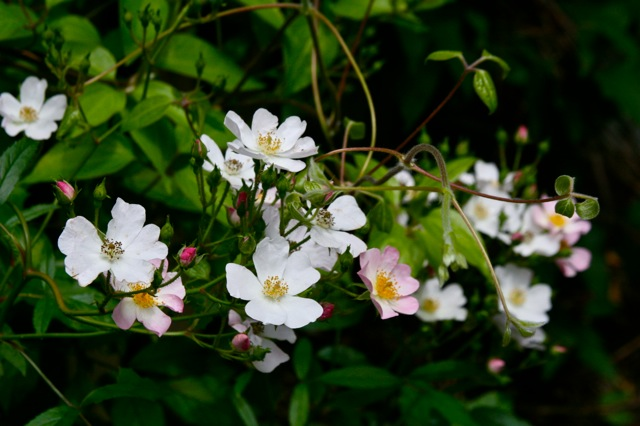
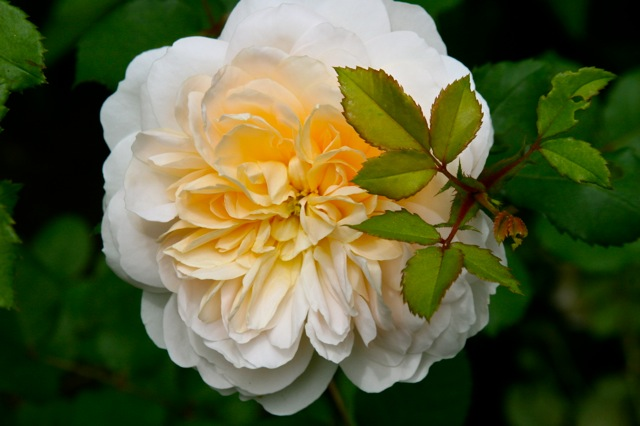
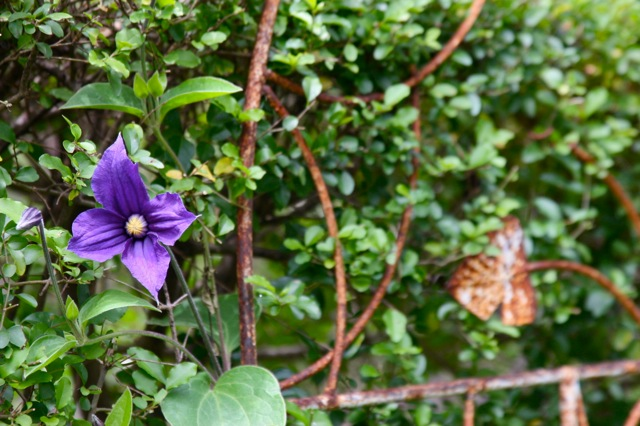
John’s garden interlude

   
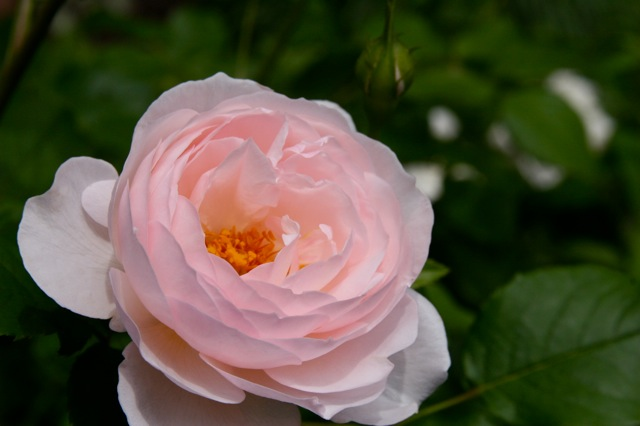
I tried to explain to John that a post filled with garden pictures would inerrupt the flow of my Pym countdown and that the countdown would be followed by eight days of Pym posts. He seemed to think that there is always room for garden pictures. So I am indulging him. Of course one imagines that Ms. Pym would approve.


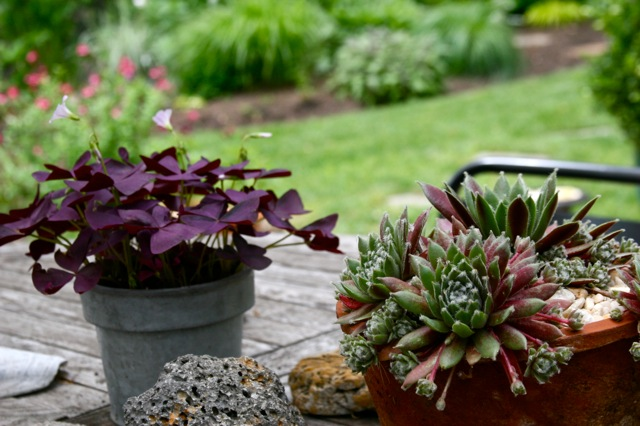
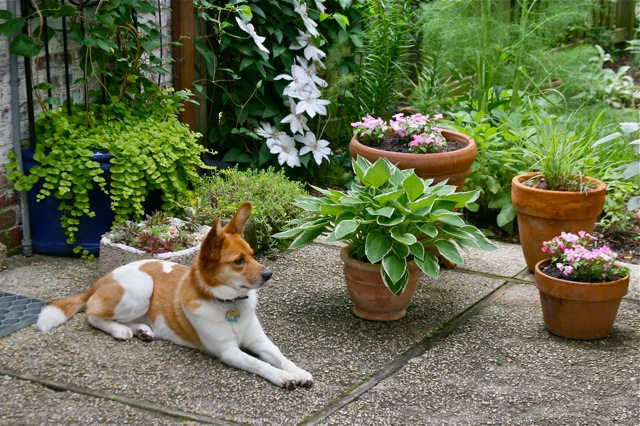
The bulbs for the Love plant (oxalis) to the left was given to us by a friend who
took them from a plant I gave him back in 2000.

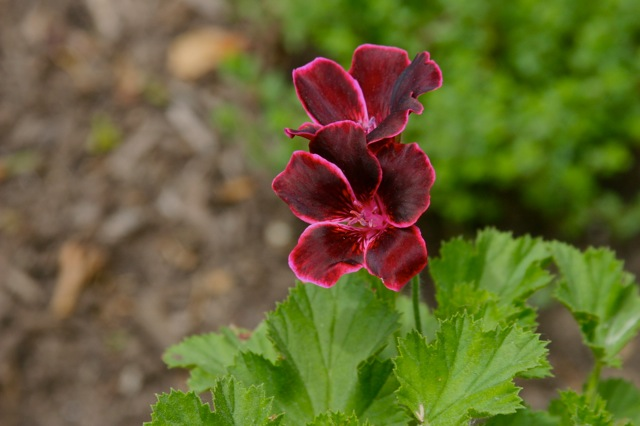
We first saw this ‘Lord Bute’ pelargonium at Sissinghurst about six years ago. John finally found a supplier in the US.