A final bit of everything

I am determined this year to write something, no matter how inane, for every book I have read. I’ve already done a few omnibus posts in recent months to try and clear up the enormous backlog and this promises to be the last. Knowing what I am reading now, anything I will finish before the end of the year will be easily, and I hope interestingly dispatched. My reading tends to slow around the holidays as well so that should make it easier. I’m clearly not going to make it to 100 this year, but maybe a nice even 80.

This is a case where the cheesy cover actually closely approximates the text and tone of the book.

The Postman Always Rings Twice by James M. Cain
I think I probably grabbed this audiobook in a recent sale on Audible because the title was so familiar. I thought that was the case because I knew it as a movie title, but it turns out it is also one of the Modern Libraries Top 100 novels of the 20th century. I can see why. It’s a fun, fast-paced read about a couple of miscreants who like rough sex and don’t think twice about murder. In a way it reminds me a little bit of the fabulous Tobacco Road. They are roughly the same vintage and portray rather tragic characters who nonetheless make you chuckle at them rather than with them.

Emma by Jane Austen
Not having read much Austen, I decided to join in the December read along of Emma in honor of its (or Austen’s?) 200th anniversary hosted by Dolce Bellezza. Well, it was a bit of a mixed bag for me. I’ve enjoyed all of Austen’s films, but I am not in love with her books. I definitely enjoy books that are more about manners and atmosphere, but I just don’t find hers all that compelling. In terms of the story itself, I find Emma a completely unpleasant person. I love the crazy, uncouth, social climbing Mrs Elton, and the nattering Miss Bates. But Emma herself, not so much.

The Acceptance World by Anthony Powell
A Buyer’s Market by Anthony Powell
Books two and three of Powell’s twelve-book series A Dance to the Music of time. All twelve of these books, which consist of 3,300-some pages and are most often found in four, three-book volumes, count as one single book on the Modern Library’s Top 100 list. That is absolutely nutso and I was so happy to be finally making progress in the series after having a lovely four volume-edition on my shelves for about five years. I enjoyed the first book which takes place during the narrator’s school days, but I must say I found the second two to be a little tedious. From what I understand the series sweeps through the 20th century following the same cast of characters. It reminded me somewhat of William Boyd’s excellent Any Human Heart. But I think Boyd does it better–and his book is actually enjoyable to read. I don’t think I am going to continue with the remaining nine books. If I do, it will only be to tick another box on my Modern Library list.
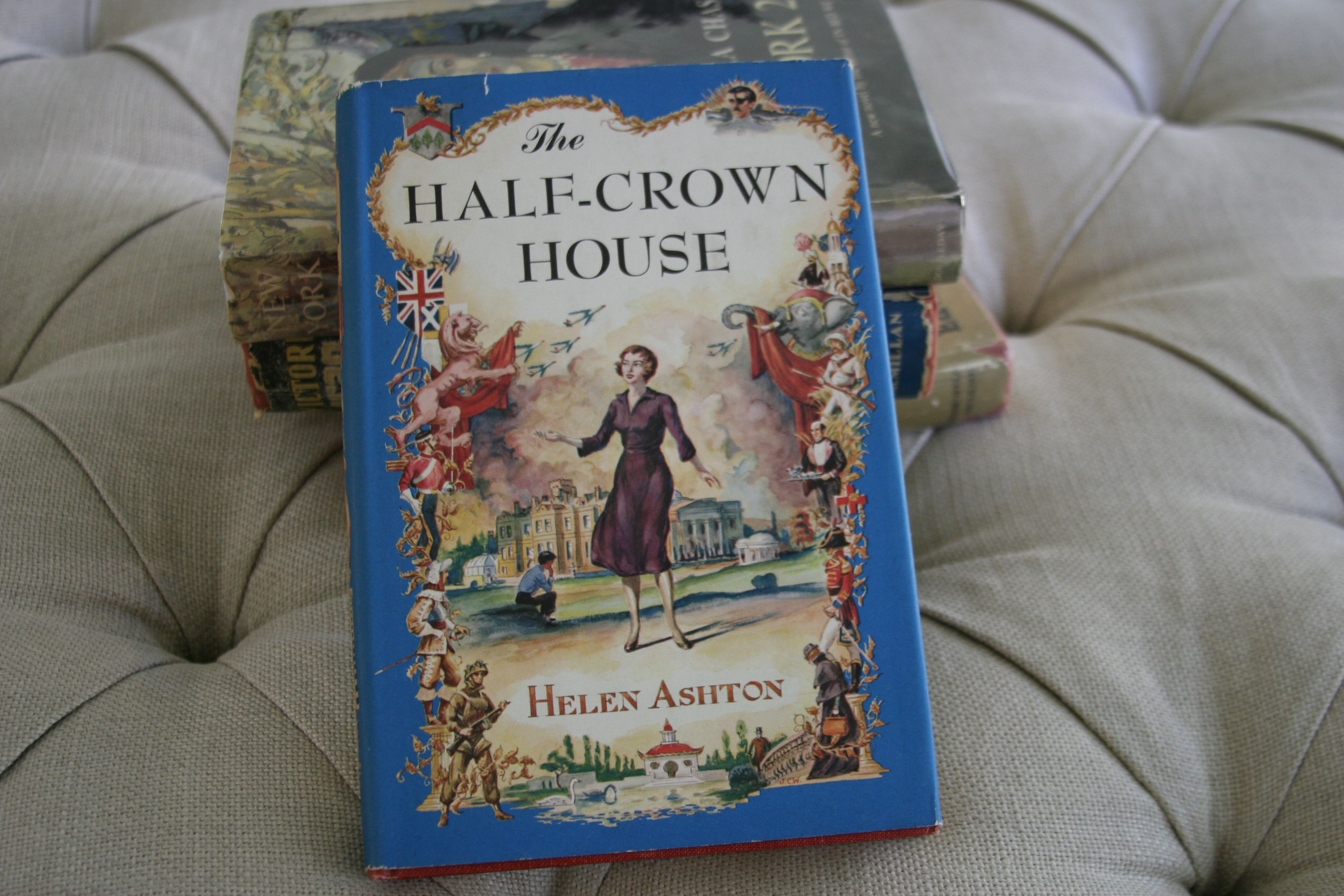
034Half-Crown House by Helen Ashton
I stumbled across this book and its fabulous cover during one of my book buying binges this summer and thought it was worth six dollars regardless of content. It was only after a blogger friend of mine here in DC posted a picture on Facebook of his recently finished copy of the exact same edition that I picked it up to read it. It was at that same time that I realized that Ashton also wrote Bricks and Mortar which Persephone reissued. I thought Bricks and Mortar was an enjoyable, interesting novel about a female architect so I expected more from Half-Crown House. But the book, which is about life in and around an old manor house that is open every so often to tourists for a half-crown, is really quite boring. I found myself waiting for it to be over. I think others will find it much more interesting than I did.

Fifty Days of Solitude by Doris Grumbach
Novelist Grumbach’s curated journal from 50 days of self-imposed solitude. I enjoyed it, but it wasn’t as good as Grumbach’s wonderful novel Chamber Music which I read this year and it didn’t enchant me like May Sarton’s wonderful journals.

Red Anger by Geoffrey Household
Not as good as Household’s Rogue Male, but they have some things in common and has a lot to recommend it. This one is a cold war spy chase through the British countryside. I love this kind of book.
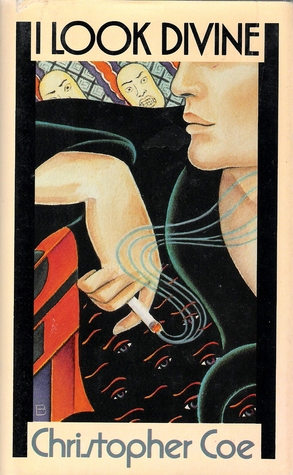
i look divineI Look Divine by Christopher Coe
I found this slim volume by chance and picked it up as an afterthought when I spent an afternoon outside of New Haven in a giant book barn with about 2 million books. I’m not quite sure what to make of the story itself but I found it so sad and beautiful. Coe wrote two books before he died in 1994 at age 41 from AIDS-related complications. As I read this hard cover first edition with a very tight binding, I couldn’t help but think of this clearly unread copy, discovered like a needle in a haystack, as a metaphor for all those authors and artists and everyday people who died too young. In the bigger picture all human life is fleeting, but I was taken with the feeling that opening up this almost forgotten volume was breathing life back into the tragically short life of a talented man.

The Bedwetter by Sarah Silverman
A hilarious, fun, but not inconsequential memoir of the hilarious, fun, and not inconsequential comedian Sarah Silverman. And I listened to Sarah read it so it was like being best friends with her for a week.

Latest Readings by Clive James
With a cancer diagnosis Clive James reconsiders his reading past and his reading future. It was an interesting read but James appears to be a much more serious reader than I am so my enjoyment could only go so far. He was, however, responsible for getting me off my ass to open up A Dance to the Music of Time.

The Musgraves by D.E. StevensonAfter 
I think with this little blurb, I am going to vow to not write recaps or impressions of D.E. Stevenson’s novels. I love them all in varying degrees, but they definitely all fit into a niche. So unless I read one that breaks free from the chaste-until-married, everything-turns-out-great, mold, I am going to forgo saying anything about them. We’ll see.

The Professor’s House by Willa Cather
Rebecca by Daphne du Maurier
Any Human Heart by William Boyd
What do these three books have in common? Not much, except that they were part of the reading challenge that Simon and I participated in with Ann and Michael of Books on the Nightstand. The four of us each read favorite books chosen by the other three. I chose the Cather, Simon chose Rebecca, Michael chose Any Human Heart, and Ann chose The Sparrow by Mary Doria Russell which I quite liked and wrote about in 2014. I won’t say much about any of them here and will instead direct you to the episode of The Readers where we chatted about two of them (with links to the BOTN chat about the other two). However, in short, after reading it for a third time the Cather is still one of my favorites, on listening to the audio version of Rebecca, I am now a fan of the book which I didn’t like when I first read it, and I thought Any Human Heart was a wonderfully epic book that was a joy to read.

A Coffin for Dimitrios by Eric Ambler
You can never go wrong with Ambler if you are looking for intelligent, vintage, spy thrillers. Having said that, this one was not my favorite Ambler. It might have been that I read it on a river rafting trip which may not have been conducive to that kind of taut writing.
Dredging up ancient history

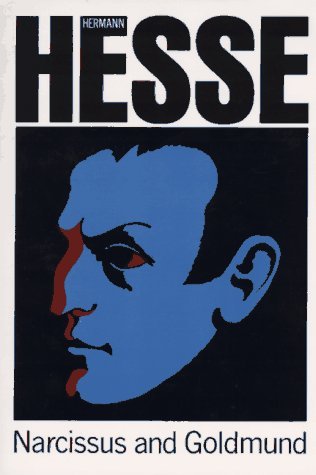
narcissusIn many ways re-reading Narcissus and Goldmund by Hermann Hesse was the re-read of all re-reads. It was a novel I read in high school and considered it to be one of my favorite books. It was also the first Hesse novel I read and it spurred me on to read most of his other novels and short stories over the years. Vaguely remembering what it was about (think medieval monastic cloisters) I wasn’t sure if I would still find it interesting. When I read it the first time I was highly impressionable and read it for a very specific reason. As a young gay-in-training in the mid 1980s in smalltown Minnesota, I often found myself reading gay novels that were over my young head but venerated them anyway because they were hard to come by. My only source of gay fiction was to buy them at A Brother’s Touch bookstore in Minneapolis and my $3.35 an hour part-time job at the Elk River Public Library didn’t leave much spending money for books.

In one of those contemporary gay novels–I think it may have been A Boy’s Own Story by Edmund White–the main character talks about reading various books and references the gay subtext of Narcissus and Goldmund. Since this could easily be found at the library–perhaps even the school library–I was quick to pick it up and dive in. And the author wasn’t wrong. The story of monk-in-training Narcissus and the slightly younger, and beautiful pupil Goldmund was just the thing to warm the heart of a young gay boy who often felt isolated in a sea of hetero classmates all able to live their high school romances out in the open. Narcissus and Goldmund have a chaste but very close relationship that ends when Goldmund meets a girl and spends the rest of his life drifting, and boozing, and womanizing, and murdering, and sculpting. When the two are reunited towards the end of the book they speak of their love for each other in a way that is hard to believe is not homosexual in nature. I know that in less macho times, same-sex friendships were written about using much more intimate language than we would today, but even taking that into account there is something that feels very gay about these two. And so I choose to believe that were indeed in love with each other. I need to go find out what Hermann Hesse had in mind when he wrote this, because it seems to me that it couldn’t have been an accident.

For decades I have conflated Hesse (1877-1962) and the composer Gustav Mahler (1860-1911). Not that I ever got them confused, but in my head they just seemed to go together. Both are of Teutonic origin and of a similar vintage, and both explore fate, love, existence, faith, art, body, and soul. And Narcissus and Goldmund certainly does that. No doubt the young practicing Catholic me would have appreciated the religious exploration more than the agnostic adult me, but not so much of  difference that I couldn’t still appreciate it.

Overall I was surprised by how much of this novel stayed with me over 30 years and how much of it didn’t. There were more than a few moments when I could vividly remember what it felt like to read it the first time. In particular I remember reading it one day in class when we had a substitute teacher. In the first place I remember how great it was to be transported by this book into a lovely, interesting place while I sat in the middle of gabbling high school students. In the second place, the young female substitute teacher we had that day said “Oh, you are are reading one of my favorite books.” Words to make a young book nerd’s heart soar for sure. And then, it wouldn’t be high school without the bullies, one of my regular tormenters said “It must be written by [insert name of well-known local gay]”. I was crushed that this a-hole had ruined a lovely moment I was having with the sub, and self-conscious that he had somehow guessed the gay content of my book. Of course he didn’t, but the threat of exposure seemed real enough. I tell this story somewhat apropos of nothing other than how much this book, and the reading of this book made a mark on my young reading life–and in some ways on life in general.

So did it hold up after so much history? It did. I liked it for some of the same reasons I did 30 years ago and was intrigued to become reacquainted with the plot and some forgotten themes. Is it still one of my favorite books? No, not really. I don’t even think it is one of my favorite Hesse books, but a fantastic book nonetheless.

Think of all the novels you’ve read about the horrors of Nazi Germany

Most of us who love to read novels have read dozens of them about the horrors of Nazi Germany. We’ve read incredibly powerful, sad, moving, stories of people who fought against fascism, about those who survived concentration camps, and about millions of people who died at the hands of society who chose to elect a narcissist spewing hate and bigotry. We’ve railed against the atrocities, we’ve wept for the dead, we’ve marveled at how something so seemingly impossible became possible. We vow, never again, never again, never again.

So why now do we sit on our hands and talk politely about books?

When I first started my blog I would occasionally get political but since about 2009 I’ve mainly avoided such posts. But if there were ever a time for us to dust off our outrage and make the connection between all those WWII novels and what is happening right now in the U.S., the time is now.

Do it for The Glass Room
Do it for HHhH
Do it for Sarah’s Key
Do it for Maus
Do it for The Boy in the Striped Pajamas
Do it for Schindler’s Ark
Do it for Everything Is Illuminated
Do it for Sophie’s Choice
Do it for The Shawl
Do it for The Assault

You choose. You’ve read some. Just do something, say something, don’t stay quiet.

Cruel, funny, sad, and brilliant

tobacco road1
Good

I could just leave this review of Tobacco Road by Erskine Caldwell blank and refer you back to the blog post headline. But that wouldn’t adequately convey what an amazing book it is.

When I was browsing Audible recently looking for books to listen to on my commute I stumbled across Tobacco Road and vaguely remembered it was on the Modern Library list of Top 100 Novels of the 20th Century. (I also immediately thought of the amazing song Tobacco Road by Lou Rawls.) Needing something for that day’s commute, I took a chance.

As I listened I wasn’t sure what to make of the book. The first five chapters seemed to be about nothing but God and a bag of turnips. Well, and the fact that the forty-something Lov couldn’t get his 12-year old wife Pearl to share his bed with him. But even that discussion quickly turns to turnips. When Lov tries to convince Pearl’s father Jeeter Lester to talk with her, Jeeter makes his help conditional on getting some of those turnips. Lov refuses and rather cruelly begins eating raw turnips in front of Jeeter and his starving mother, wife, and daughter. This goes on for some time. Then, Ellie May, Jeeter’s 18-year old daughter with a harelip, is so comically in need of a man that she begins to rub all over the equally desperate Lov who is then distracted enough for Jeeter to steel the bag of turnips.

Better
Better

After making a joke about God and turnips on Twitter it was suggested that the book was supposed to be funny, not necessarily just tragic. This was bit of a revelation to me. Up to that point I could only think how miserable and ignorant the characters are. And they are. But when you believe that Caldwell was being satirical and probably trying to provide commentary on the plight of poverty-stricken white farmers in rural Georgia in 1932, the whole thing takes on more dimension.

There is something disturbing about the way that Caldwell draws one in to wallow in the tragedy and to laugh at the suffering characters. I felt bad as I blamed these victims of circumstance for their own misfortune and laughed at them along the way. It was the same kind of feeling I get when I watch Honey Boo-Boo. But it is hard not to laugh. Case in point: Jeeter’s 16-year old son Dude (yes, his name is Dude) agrees to marry a forty-something preacher woman who bribes him with the promise of a new automobile. She is ready to take all of her $800 in savings (a HUGE amount at that time for these poor people) to buy a new automobile so she can bed wed young Dude.

Best
Best

For his part Dude almost seems more interested in the automobile’s horn than anything else. He can’t get enough of sounding the horn. The shiny, brand new car gets totally trashed almost the second they drive it off the lot and just about every time they take it anywhere. And after spending $800 on a brand new car that is so quickly trashed, they are all still starving and don’t have  a decent roof over their heads, or have adequate clothes. It kind of makes you want to scream in despair but it’s also funny.

Is this book cruel to be kind, or just plain cruel? I can’t exactly tell. What I do know is that Caldwell crafts the story brilliantly. I relished in it as I read it and it continues to grow in my esteem the longer I think about it.

A little more of everything

jessye-norman
I’m making progress on blurbing out all those books I’ve read this year that I haven’t gotten around to writing about.  

Stand Up Straight and Sing by Jessye Norman
Imperfect Harmony by Stacy Horn

Two books on singing. Imperfect Harmony is a memoir of a woman who finds healing and community by singing in a choir. And Stand Up Straight and Sing is a memoir by the incredible soprano Jessye Norman. Both were nice reads but didn’t leave much of an impression. Norman’s book in particular was a bit disappointing because I really wanted some opera gossip and she is a bit too principled to delve to those depths. Some might even say the book is uplifting.

Elizabeth and Her German Garden by Elizabeth von Arnim
I know that Elizabeth von Arnim can write some gritty fiction, well, gritty for her (cf Love), but with this title I was hoping something that was more like wonderful The Enchanted April. And it was. Kind of. I really loved the parts where she talked about her garden and garden mania. With her writing and sense of humor I could really just read page after page of garden chat.

The Prime Minister by Anthony Trollope
Phineas Redux
by Anthony Trollope

The Eustace Diamonds by Anthony Trollope
I’ve been working my way through the Palliser series with the help of Timothy West’s brilliant audiobook recordings. I had already read The Eustace Diamonds and it was a delight to listen to. It’s probably the least political of this political series. The other two I half read/half listened to which is not only delightful but also a good way to make a lot of progress on these giant books when one’s car commute keeps one from being able to read as much as one would like. I was rather bored by the earlier volume Phineas Finn and at first was a little bored by Phineas Redux, but after a while it picked up and I ended up enjoying it. The Prime Minister may be my favorite so far. That evil Fernando Lopez! What a villainous cad. Way too much (and too little) happens in Trollope, I would never try to truly review his work. I will say I am excited to read the final volume in the series The Duke’s Children. It would be kind of cool to finish by the end of this Trollope bicentennial year. But with only a month and a half to go and Emma to read in December among many other things, I am not sure I can make the time.

The Young Clementina by D.E. Stevenson
A darker side to DES? Kind of. A messy divorce is not something I expected. But, like all DES novels some of the characters are virtuous and do all the right things. If you like DES, you will like this one.

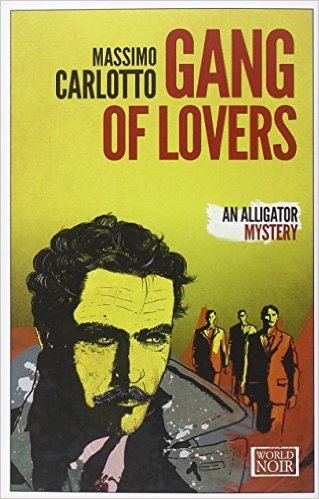
carlottoGang of Lovers by Massimo Carlotto
A gritty noir mystery from Europa. I knew nothing about this when I bought this one except I was in the mood for something different and European. The main character was kind of an awful person but he was surrounded by other awful people so one kind of ends up rooting for him. Part of Carolotto’s Alligator series, I’m definitely going to check out more of his work, it also makes me want to look into more Europa mysteries as well.

The Paying Guests by Sarah Waters
This was my first go around with Sarah Waters. While I enjoyed it, I’m not sure why she is as well regarded as she is. In retrospect, after reading that awful A Little Life, The Paying Guest really didn’t have too much wrong with it. And it was definitely a page-turner. Perhaps my biggest quibble was that I wanted it to be somewhat happier. You know me, I always want everyone to do the right thing.

A little bit of everything

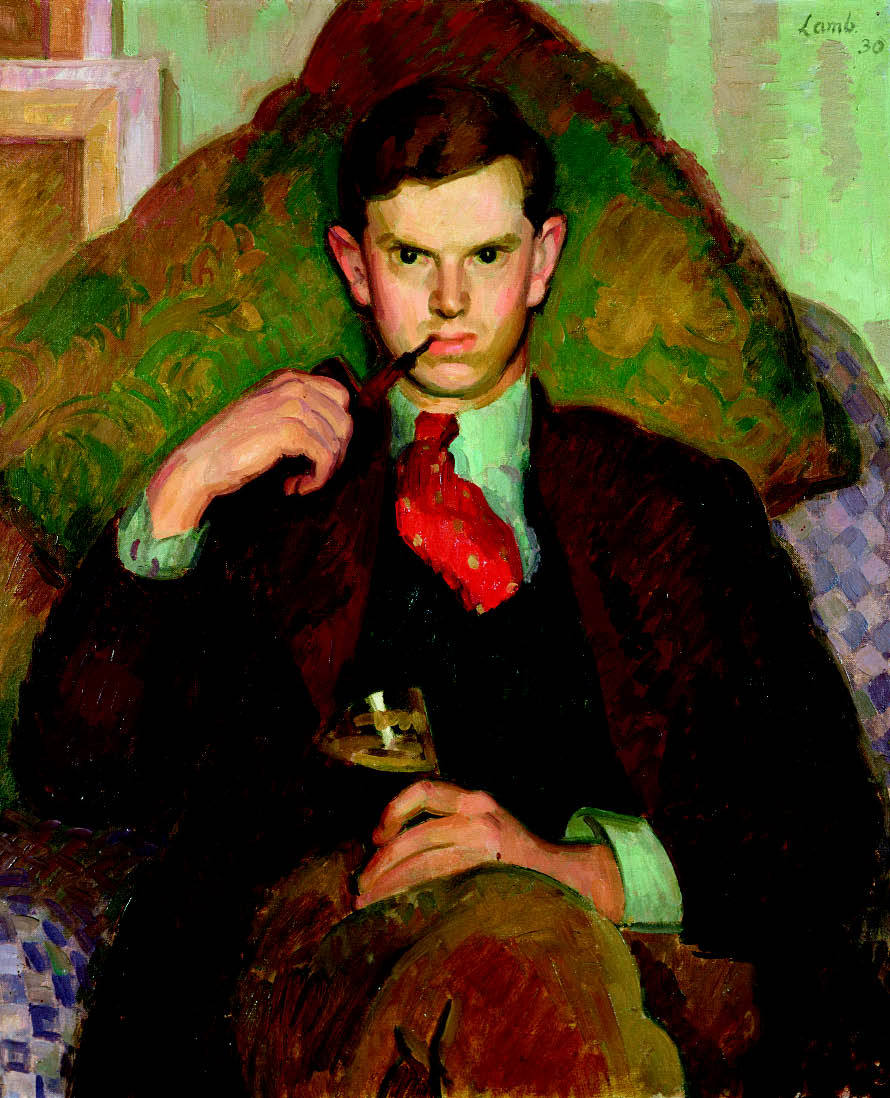
Portrait of Evelyn Waugh by Henry Lamb

I’m so behind on making notes on books that I have read this year. I was going to try and blurb them all in one long post but I was making slow progress so I thought it might be better to throw a bunch of them up there right now and try to get to the rest in one or two more posts.

Mr. Loveday’s Little Outing and Other Sad Stories by Evelyn Waugh
I so enjoyed these quirky, rather dark and twisted short stories. So much so I had to go out and buy all of his collected stories. Not sure if they will all have this kind of twisted point of view but I hope so.

MinotaurMinotaur by Benjamin Tammuz
An Israeli secret agent sees a beautiful young woman on his 41st birthday and falls in love with her a first sight. He feels she is the person he has been expecting his whole life. He starts up a correspondence with her–but she never finds out who he is. Part Two moves on to a teenager who falls in love with the same girl and then a spoiler happens. Part Three is another man who meets her later in life and falls in love with her. And then Part Four goes back to man number one, but we get his story from childhood and from a rather different perspective. So many things were unconventional, and quirky, and disturbing, and quite sad and beautiful in a way. There were so many things about this story and unconventional narrative style that might have annoyed me, but it didn’t, not even slightly. Kind of made like it even more.

The Heart Goes Last by Margaret Atwood
As much as I love, love, love Atwood’s MaddAddam trilogy, it was fun to read something from her that wasn’t from that sequence. The Heart Goes Last is still dystopian, but a different kid of dystopia. Also, not the best Atwood, but hey, it’s still an Atwood.

A Town Like Alice by Nevil Shute
Beyond the Black Stump by Nevil Shute
Alice was a re-read, this time on audio, but Beyond the Black Stump was a totally new Shute for me. And as far as I can recollect, it is the first Shute I have come across that deals with the USA. Much of Shute’s writing in the 1950s and later not so subtly points out how great things are in Australia (usually at the expense of Britain) but I wasn’t expecting how much Shute seemed to love America. It is slightly possible that he was being somewhat satirical, but given his abstemious, good-two-shoes outlook, I’m not sure Shute was capable of satire. So if I take his writing about the U.S. at face value, he definitely saw it as the promised land–especially the frontier west. Paragraphs are devoted to how hardworking Americans are and how it was a land of opportunity and appliances and gigantic, beautiful cars. Written in 1956, you can imagine the post-war boom that Shute was admiring. In the end he seems still to prefer Australia but not too much at the expense of the U.S. Clearly not the socialist wasteland of the UK that Shute was trying to escape. In a nutshell, a young American geologist is sent to a sheep station in western Australia to look for oil. A few orange juices later he’s taking the rancher’s daughter back to the U.S. As with all Shute novels, there is plenty of engineering talk and every single plane type flown in is mentioned by name.

A Dangerous Place by Jacqueline Winspear
I was in the mood for a little cozy crime and this audiobook was on sale. Set just prior to WWII, Maisie Dobbs, still smarting from the loss of her husband and fetus decides to get off the boat in Gibraltar rather than face family and friends back in England. I enjoyed the first half of the book if for no other reason because I liked all the mundane details Winspear includes. Lots of bowls of soup being sent up to her boarding house room. But ultimately it just got kind of boring. Could stand losing about 50 pages.

The Burnt-out Case by Graham Greene
People run hot and cold on Graham Greene, but I am beginning to think he could do now wrong. A famous architect tries to escape himself by moving to a leper colony in the Congo run by some Roman Catholic priests. Greene is often talked about for being a Catholic author, and I can see how that comes through, but I never get the feeling that he is in any way preaching. At least for the Greene’s I have read, his characters struggle with religion more than embrace it. If I didn’t know better, I would think Greene was casting a critical eye that direction. He may be, I’m not sure. I mention it here to dispel a notion that you have to be interested in such things to get along with Greene’s more Catholic output. It wasn’t my favorite Greene but it was still a fantastic, touching book.

Evensong by Beverly Nichols
Poor girl goes to live with her aging opera start aunt. I liked a lot about this lighthearted novel but found it kind of tedious about half way through. Nichols is probably best for his garden writing.

A Question of Upbringing by Anthony Powell
I have finally started the sequence of twelve novels that Anthony Powell published between 1951 and 1975 that make up a four-volume “book” collectively known as A Dance to the Music of Time, and count for just ONE of the Modern Library’s list of Top 100 novels of the 20th century. That’s over 3,000 pages that count for only one of those hundred. Although I have heard good things about ADTTMOT over the years and have owned it for almost as long, I have somehow never been able to crack it open. But then I noticed that there was an audio version read by Simon Vance one of my favorite narrators, and thought this might be a way to get myself into it. Worked like a charm. Once the audio version had me hooked I was able to dive right in to the written version. The first novel, as the title alludes, is all about the school days and young adulthood of Jenkins and his school chums. So far it is a bit of a cross between Evelyn Waugh and William Boyd’s A Human Heart (also narrated by Simon Vance). I think this may turn out to be an enjoyable 3,000 pages.

This is how it’s done

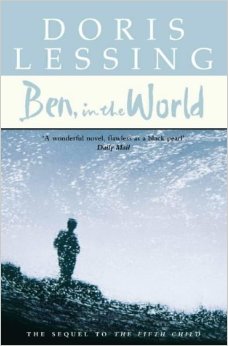
BenAs I read Ben, In the World by Doris Lessing I couldn’t help comparing it to Hanya Yanagihara’s A Little Life. Although vastly different in style and scope, both books have a male protagonist who is out of sync with society at large–damaged, abused, odd, fragile, and ultimately unknowable and unreachable. Both are taken advantage of and betrayed and suffer a similar fate. As for the books themselves both are noticeably ahistorical and both are entirely implausible and/or allegorical depending on how generous one feels.

The big difference is that Ben, In the World is brilliant and packs an emotional wallop in 178 pages that Yanagihara didn’t come close to in her unwieldy 720. Ben’s experiences are arguably much less horrific than those cataloged in A Little Life, but Lessing’s story is deeply devastating while Yanagihara’s feels like sadistic voyeurism. I forgive Lessing her implausibility because Ben reads more like a macabre fairy tale than a novel trying to convince the reader of its plausibility. There were more than a few times when my overly analytical brain started to question a detail or plot device but not so much that it took me out of the emotional space of the story.

But enough about the comparisons. Ben, In the World is a sequel to Lessing’s equally disturbing novel The Fifth Child. One doesn’t need to read the first book to enjoy the second but the background does put the reader more quickly in the right frame of mind for understanding Ben and his troubles. After a difficult childhood, Ben’s family seem no longer able to care for him, and he ends up wandering from situation to situation trying to survive and being perpetually misunderstood and taken advantage of. He meets kindness along the way but no one is really in a position to help him even when they want to. When I read The Fifth Child I came to the conclusion that Ben was probably somewhere on the autism spectrum: anti-social and prone to inappropriate behavior and violence. I took things like his mother thinking of him as more beast than child as metaphor. But in Ben, In the World, Lessing plays up the beast part of the story to the point where some sort of developmental disability doesn’t begin to explain his appearance and behavior. Without giving away any spoilers, Ben ends up in Brazil where his yearning to find people like himself comes to an emotional head.

As I alluded to earlier, this is not a perfect book, but it is a brilliant one. Unlike much (perhaps all) of Lessing’s other work, both The Fifth Child and Ben, In the World, are decidedly fantasy. Rooted in the familiar and mundane, but dark and definitely not of the real world. I think I like them so much because this is a place I don’t often allow myself to go in fiction and Lessing does it in a way that I find captivating and unbelievably moving.

This New York Times review really hits the nail on the head for both books.

Being polite about Nazis

IMG_0384[Number 8 in my chronological re-read of all of Brookner’s 24 novels.]

In Latecomers, Anita Brookner strays away from her more typical solitary protagonist and gives us an ensemble cast. There are life-long friends and business partners Hartmann and Fibich, their wives Yvette and Christine (respectively), and their children Marianne and Toto (respectively). The emotional center of the book, and what there is of a plot, definitely revolve around Hartmann and Fibich. The chronology starts with them. Thrown together as youths when refugee Fibich comes to live with Hartmann and his aunt, the two become like brothers, go into business together, and end up living in the same apartment building for all their adult lives. In the meantime both acquire wives and one child each.

Despite this symmetry, it’s clear Hartmann is the one in charge. It’s his aunt who raises them. He is the first to get married. The one to find and buy a flat and then eventually grab one in the same building for Fibich and his wife. And the one who is, or at least appears to be, the steadier of the two. More certain of himself, more confident in business, love, and family, and less troubled by his past. Their wives reinforce the power dynamic. Hartmann’s wife Yvette is one of those people who demands attention. Pretty, elegantly put together, coquettish, and seemingly bent on becoming the boss’ wife. Paying only enough attention to her duties at Hartmann and Fibich’s office to keep her job long enough to hook and marry Hartmann. I don’t think she necessarily set out to seduce him but her flirtatious nature and desire to be set up in a life, far from the world of her mother’s reduced circumstances, made it a bit inevitable.

Christine on the other hand is the hired help in Hartmann’s aunt’s house–although her implied intellect and class status, if not her actual duties, make her feel more like a ladies’ companion than a maid. When she helps Fibich nurse the aunt through her final illness, the two become close and eventually marry and move into the flat Hartmann has found for them in his building.

And then the children happen. Marianne seems a bit quieter, less sure of herself, and less glamorous than Hartmann and Yvette. And Toto is confident to the point of arrogance which makes him feel decidedly different than Fibich and Christine.

In some ways I expected Latecomers to have a little more to say about the lives of the two children and the contrast with their respective parents. Instead the novel has much more to do with Fibich trying to make sense of his past. He becomes increasingly discomfited by all that he can’t remember of his short childhood in Germany and the parents who were lost to him at the hands of the Nazis. Hartmann’s family was similarly impacted but with much less effect on Hartmann’s life.

The fascinating thing about the way Brookner writes about the impacts of Nazism on Hartmann and Fibich is that she never mentions the Nazis or what they did. I think the only explicit mention is the blurb written by her publisher on the jacket flap. In the novel itself it is only hinted at in the most oblique ways. Not only are details or proper names never mentioned, but even the generic word atrocity would seem out of place. Brookner tends to do that–she will write in great detail about emotions, or small details, but the outside world, the one where news and history happen, never really comes up. To me, this is never a problem. Brookner has created a world that is less of an ahistorical bubble than it is a delivery system for deep personal feeling.

I didn’t want to hate this book

Trying to turn that frown upside down.

I first heard about A Little Life by Hanya Yanagihara back in the spring when Teresa from Shelf Love ranted about it at a blogger get together here in Washington when Simon Thomas was in town. Her main challenge with the book, if I remember correctly, was that the constant stream of awfulness in one character’s life stretched her ability to suspend disbelief. Being a bit of a literal reader myself, her description of A Little Life and the drumbeat of horrific things that happened to main character Jude, made me think that I would be similarly annoyed. But after the novel was longlisted for the Man Booker Prize I began to wonder if I should read it. By the time Simon Savidge and Frances of Nonsuch Book and I discussed it on The Readers in September I had heard enough about the book (most of it good) that I decided I wanted to read it. So much so that I couldn’t wait for the paperback to come out as I had intended to do. It even floated way to the top of my TBR pile despite having purchased over 200 books this summer. I thought that knowing Teresa’s complaints about the book might inoculate me from disliking it.

As I began the book I fully expected to be put through the emotional wringer. Instead my initial thoughts were how tedious it was. Four friends at an unnamed college in Boston (probably Harvard) is the kind of thing I would normally eat up, but I just found it kind of boring. It got to the point where I couldn’t wait for the bad stuff to start happening just to alleviate my boredom. That may sound a bit flip and harsh, but frankly it is Yanagihara’s fault. Teresa was exactly right, the amount of awful in Jude’s life defies belief. To the point were one is completely desensitized and it starts feeling like cartoon violence and virtually impossible to take seriously. The only moment in the book I felt any sort of sadness was when one of the characters dies. And the final 20 pages made me think that if Yanagihara had let her editor do his job, it could have actually been a decent book–but that is cold comfort after reading 720 pages.

As I have written about before, I can overlook unlikely occurrences or inaccurate details in a novel as long as the writing is good. But good writing is pretty much absent from A Little Life. Added to the implausibility of all the horrors that befell Jude was a cavalcade of implausible events and one dimensional characters that makes it seem like all of the characters in the book exist solely so they can interact with Jude. Despite Yanagihara throwing in all sorts of detail about most of the characters, none of it feels like real back story, or makes one think for even a moment that any of them exist when they aren’t on the page with Jude.

So much of A Little Life reads like something a high school student might think up. I’m not saying the prose is that bad (but in parts it is), but so many things sound like something a breathless teenager who hadn’t really experienced much of the world would think up. And I am not even talking about the violent parts. I am so tempted to catalog all of the ways in which Yanagihara makes shit up just so she can have a vehicle (and I’m not talking about the one that ran over Jude) to write about a feeling or advance the plot. The one situation that most annoyed me was that Jude was raised in a monastery. Abandoned in a dumpster as a newborn he falls into the hands of some good Christian brothers who take him in, and because the authorities can’t place the baby immediately, he ends up staying there for about 10 years. Even if there is a real life example of this happening at some point in modern history, it is implausible enough that the author should have known better than to include it. A monastery might be a place where a young mind can learn Latin, and mathematics, and piano, and how to sing German lieder, and a million other things (all of which come up repeatedly later in the story and forms the operational foundation of Jude’s later life and accomplishments) but it is hardly the place where a baby could be raised. What about all those years of crying and feeding and shitty diapers? The good monks put up with all of that because they knew one day they would get to rape him? No, no, and no. There are a million different ways and reasons that that infant would have been placed somewhere else (regardless of his mixed race appearance). Even if the state authorities somehow never found a foster family for Jude, the Catholic church has an extensive network of social services that they either run themselves or have access to. If nothing else they would have sent him to some Dickensian orphanage run by a bunch of mean old nuns.

And that is just the tip of the iceberg. I’m convinced that Yanagihara had Jude get a graduate degree in pure mathematics purely so she could use the Axiom of the Empty Set as a metaphor. It’s also amazing that this genius gets his math degree at MIT at the same time he is getting a law degree from another school (probably Harvard) and working two jobs–one of course as a semi-skilled baker, which allows us to understand how he can do a lot of wonderful, complicated baking later in life.

Years ago I came across a blog about a gay lawyer and his gay lawyer-in-training boyfriend and their totally perfect life. I think I first found it because they lived in Minneapolis (my home town) but had met in DC (my current hometown) and went to lots of classical music events. At first I thought it was great. But the more I read the more it seemed like it had to be made up. The blogger had created such a magical world of cultural events, sporting events, church going, the most loving family that ever existed, and endless wholesome meals of baked chicken-oh, and did I mention the perfect dog? It all seemed like someone’s very time consuming fantasy. After a while even the comments on the blog started to seem too good to be true. Here is how the blog writer described himself.

I am a lawyer, born and reared in the Twin Cities. Family is everything to me. My mother I adore and my father I worship (my father is also a lawyer). I have two older brothers whom I love dearly: one, 39, is married and has a young son and daughter and works as a financial analyst; the other is 36 and single and works as a civil engineer. My brothers and I were dispersed for years while being schooled and while establishing careers (Boston, Palo Alto, London, New York; Ames, Fort Collins, Denver; Princeton, Vienna, Washington, D.C., Boston), but we are all home now—and, it is my hope, we are all home for good. The newest member of my family is Joshua, whom I met in Washington while I was in my last year of law school and while Josh was in his last year of undergraduate studies. We immediately became inseparable and have faced the world together practically from the day we met. We have recently returned to the Twin Cities from Boston, where Josh gained his Juris Doctor. We have many interests and participate in numerous and diverse activities, yet we are mostly homebodies, playing sports, reading history tomes (and passionately discussing them) and spending time with family.

For a long time this blog drove me crazy. I knew there was something fake about it but couldn’t prove anything. After ignoring the blog for several years someone else discovered that it was allegedly the creation of a middle-aged, female flutist who is also a JFK assassination conspiracy theorist. As I read A Little Life I kept thinking of that fake blog and how much the two had in common (minus all the rape). When I explained briefly to John my problems with Yanagihara’s book he said “That sounds like Andrew and Joshua”. Yes it does. Completely and totally made up and completely and totally implausible.

Some reviewers have complained about the ahistorical quality of the book. All this stuff happening in New York City and no mention of 9/11? To me, that is a non-issue. I don’t mind that she sets the lives of these characters against nothing but their own world. What I do have a problem with, however, is that her characters live in a world that denies the existence of any sort of change or progress when it comes to psychology, medicine, and the legal and social focus on child rape in the Catholic church to name just a few things. I don’t think Yanagihara was making some larger comment on the interior worlds of her characters. I think she is either incapable of writing nuance or was unwilling to upset the naive, immature fantasy she cooked up in her head. The latter would also explain whey she wouldn’t let her editor do his job.

The book is 720 pages and I could write so much more about what pissed me off about it but I feel like I have already given Hanya Yanagihara a little too much of my own life.

#TheReadersRoadtripWrapUp

As you will see in the series of posts below, I bought lots of books and couldn’t wait to mete them out slowly over several days. Somehow I don’t think any of you will mind. Here is a sampling of the non book-buying moments from the trip.

Not only the site of Willa Cather's childhood home, but the site of Simon losing his passport. To read the gory details check out Simon's account.
Not only the site of Willa Cather’s childhood home, but the site of Simon losing his passport. To read the gory details check out Simon’s account on his blog.


We totally lucked out on this first morning in finding this amazing breakfast. Totally great home cooked meal at the Bird's Nest in the cute town of Bedford, PA.
We totally lucked out on this first morning in finding this amazing breakfast. Totally great home cooked meal at the Bird’s Nest in the cute town of Bedford, PA.


After the absolutely crazy downpour at Niagara Falls.


The lovely view from my hotel window in Petoskey, MI. Even lovelier was the breeze that came in off the lake. Bliss.


One of the nicest gifts ever from Booktopian Karen. If you have ever seen the fantastic book My Ideal Bookshelf by Jane Mount, you will recognize this lovely print. Karen had the artist do a drawing of the four books we chatted about with Michael and Ann at Booktopia.


Looking back at Petoskey from the shore of Lake Michigan.


I might have skipped out of the final night's Booktopia program in order to enjoy a glimpse of the lake at sunset.
I might have skipped out of the final night’s Booktopia program in order to enjoy a glimpse of the lake at sunset.