Q2 Quarterly Reporting

At the half way point, I have read 51 books of the 100 I need to read for my A Century of Books challenge. I made slower progress this quarter because I allowed myself to do more non-ACOB reading, particularly while I was on vacation. I could check off a few more years, but I am only counting books that were in my TBR at the start of the year.

Last quarter I said the 1950s was most enjoyable, this time there is no decade that really stands out, most were a mixed bag except for the 2000s. I really enjoyed the two of those. And the 1990s remains my least read decade so far.

19teens

Completed last quarter.

1920s

I read so much of the 1920s  last quarter there wasn’t much left to read. I did one this quarter and only have 1927 to complete to finish off this decade.

1928 – Quicksand by Nella Larsen

1930s

Last quarter a lot of my 1930s selections were mysteries/thrillers. Although I loved High Rising, I wouldn’t say it was a thriller, but Brighton Rock was (and I kind of hated it).

1933 – High Rising by Angela Thirkell
1938 – Brighton Rock by Graham Greene

1940s

The 1940s continue to be a slow decade for me. I think it’s more a function of saving them for a rainy day rather than avoiding them.

1944 – The Friendly Young Ladies by Mary Renault
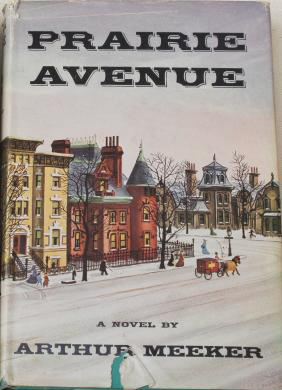
1949 – Prairie Avenue by Arthur Meeker

1950s

My one book this quarter from the 1950s could easily have been from the 1930s. 

1950 – Brat Farrar by Josephine Tey

1960s

Unlike the three books from the 1960s I read last quarter, at least two of this quarter’s books are starting to feel like the ’60s. Not Butcher’s Crossing (which was amazing) but the other two for sure. 

1960 – Butcher’s Crossing by John Williams
1963 – A Day in Late September by Merle Miller

1969 – Fat City by Leonard Gardner

1970s

The Stern and the Nagle were very much of their period, at least content wise. The Central American background of the Ambler was in keeping with the times as well, but Ambler’s books are happily more old fashioned than that.

1973 – Other Men’s Daughters by Robert Stern
1974 – Doctor Frigo by Eric Ambler

1975 – The Odd Angry Shot by William Nagle

1980s

A decade of conflict for sure.

1982 – A Pale View of the Hills by Kazuo Ishiguro
1985 – The Tenth Man by Graham Greene

1988 – Beirut, Beirut by Sonallah Ibrahim
1989 – Damascus Nights by Rafik Schami

1990s

Apparently I avoided the 1990s last quarter.

2000s

A fantastically misogynist Carlotto (as usual) and a fantastic Auster.

2000 – The Goodbye Kiss by Massimo Carlotto
2003 – Oracle Night by Paul Auster

20teens

I finally got going on the 20teens. The Marcus and the Williams were dystopias and definitely reflect our times. 

2012 – The Flame Alphabet by Ben Marcus
2014 – The Golden Age by Joan London
2015 – Skyfaring by Mark Vanhoenacker
2017 – When the English Fall by David Williams

The Whole Century So Far

1919 –  Free Air by Sinclair Lewis

1920 – Happy House by Jane D. Abbott
1921 – Vera by Elizabeth von Arnim
1922 – A Son at the Front by Edith Wharton
1924 – The Unlit Lamp by Radclyffe Hall
1925 – Rex by E.F. Benson
1926 – Marazan by Nevil Shute
1928 – Quicksand by Nella Larsen

1929 – The Bride’s House by Dawn Powell

1930 – Journey’s End by R.C. Sherriff and Vernon Bartlett
1931 – Mystery in the Channel by Freeman Wills Crofts
1932 – Invitation to the Waltz by Rosamond Lehmann
1933 – High Rising by Angela Thirkell
1934 – The 12:30 from Croydon by Freeman Wills Crofts
1938 – Brighton Rock by Graham Greene

1939 – The Confidential Agent by Graham Greene

1944 – The Friendly Young Ladies by Mary Renault
1948 – Catalina by W. Somerset Maugham
1949 – Prairie Avenue by Arthur Meeker

1950 – Brat Farrar by Josephine Tey
1954 – Slide Rule by Nevil Shute
1956 – The Hunters by James Salter
1959 – Passage of Arms by Eric Ambler

1960 – Butcher’s Crossing by John Williams
1961 – The Chateau by William Maxwell
1962 – Morte D’urban by J.F. Powers
1963 – A Day in Late September by Merle Miller
1965 – My Dog Tulip by J.R. Ackerley
1969 – Fat City by Leonard Gardner

1971 – Not to Disturb by Muriel Spark
1973 – Other Men’s Daughters by Robert Stern
1974 – Doctor Frigo by Eric Ambler

1975 – The Odd Angry Shot by William Nagle

1976 – Agent in Place by Helen MacInnes

1980 – Recovering by May Sarton
1982 – A Pale View of the Hills by Kazuo Ishiguro
1985 – The Tenth Man by Graham Greene

1986 – To the Land of Cattails by Aharon Appelfeld
1987 – In the Country of Last Things by Paul Auster
1988 – Beirut, Beirut by Sonallah Ibrahim
1989 – Damascus Nights by Rafik Schami

1990 – The Boss Dog by M.F.K. Fisher
1993 – Saving Agnes by Rachel Cusk

2000 – The Goodbye Kiss by Massimo Carlotto
2002 – My Lover’s Lover by Maggie O’Farrell
2003 – Oracle Night by Paul Auster

2006 – In the Country of Men by Hisham Matar

2012 – The Flame Alphabet by Ben Marcus
2014 – The Golden Age by Joan London
2015 – Skyfaring by Mark Vanhoenacker
2017 – When the English Fall by David Williams
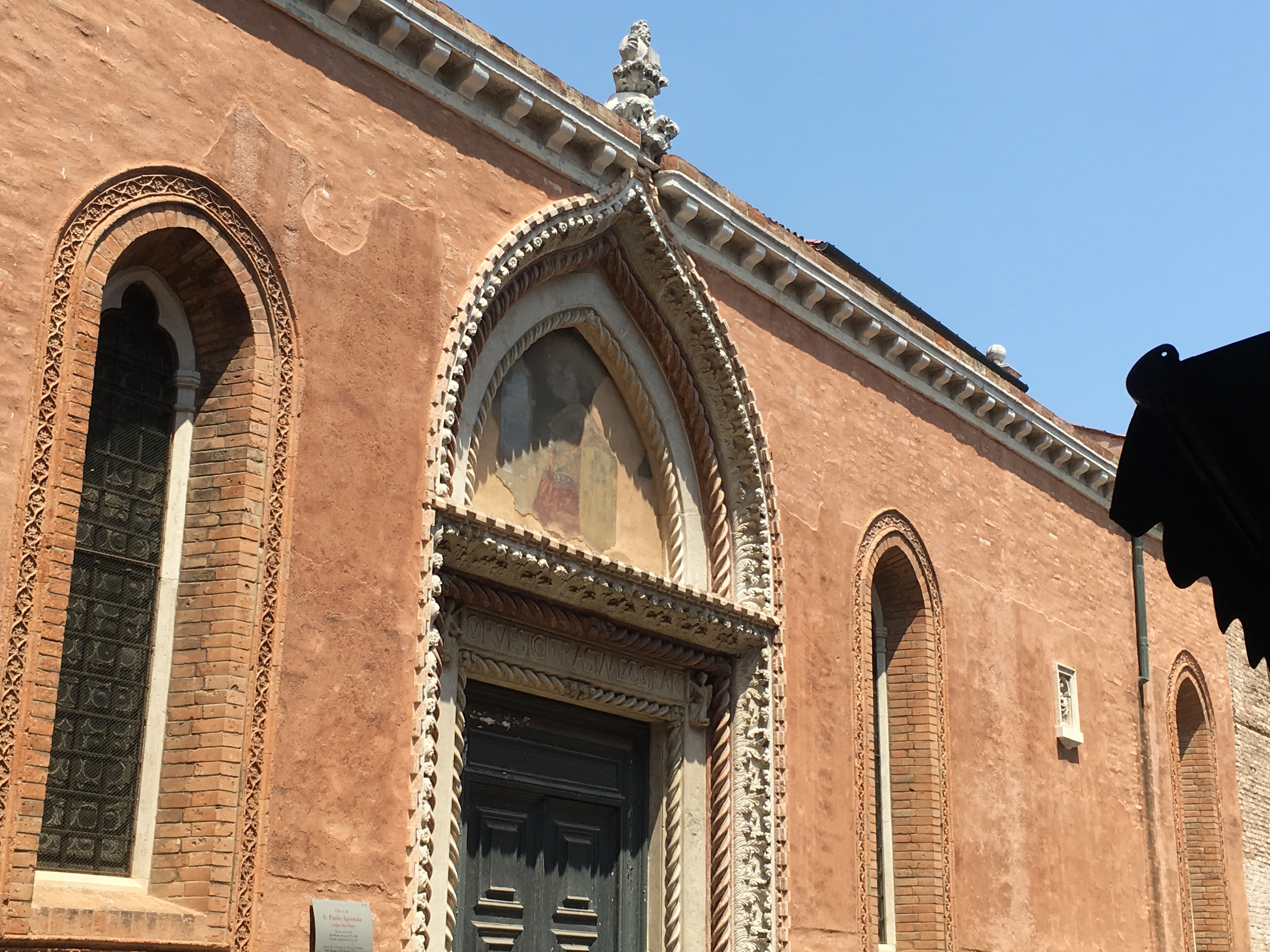
Comprare di libri in Italia*

*Buying books in Italy

What does one do when one is an English speaker/reader and one travels in a foreign country? One buys books. One buys books.

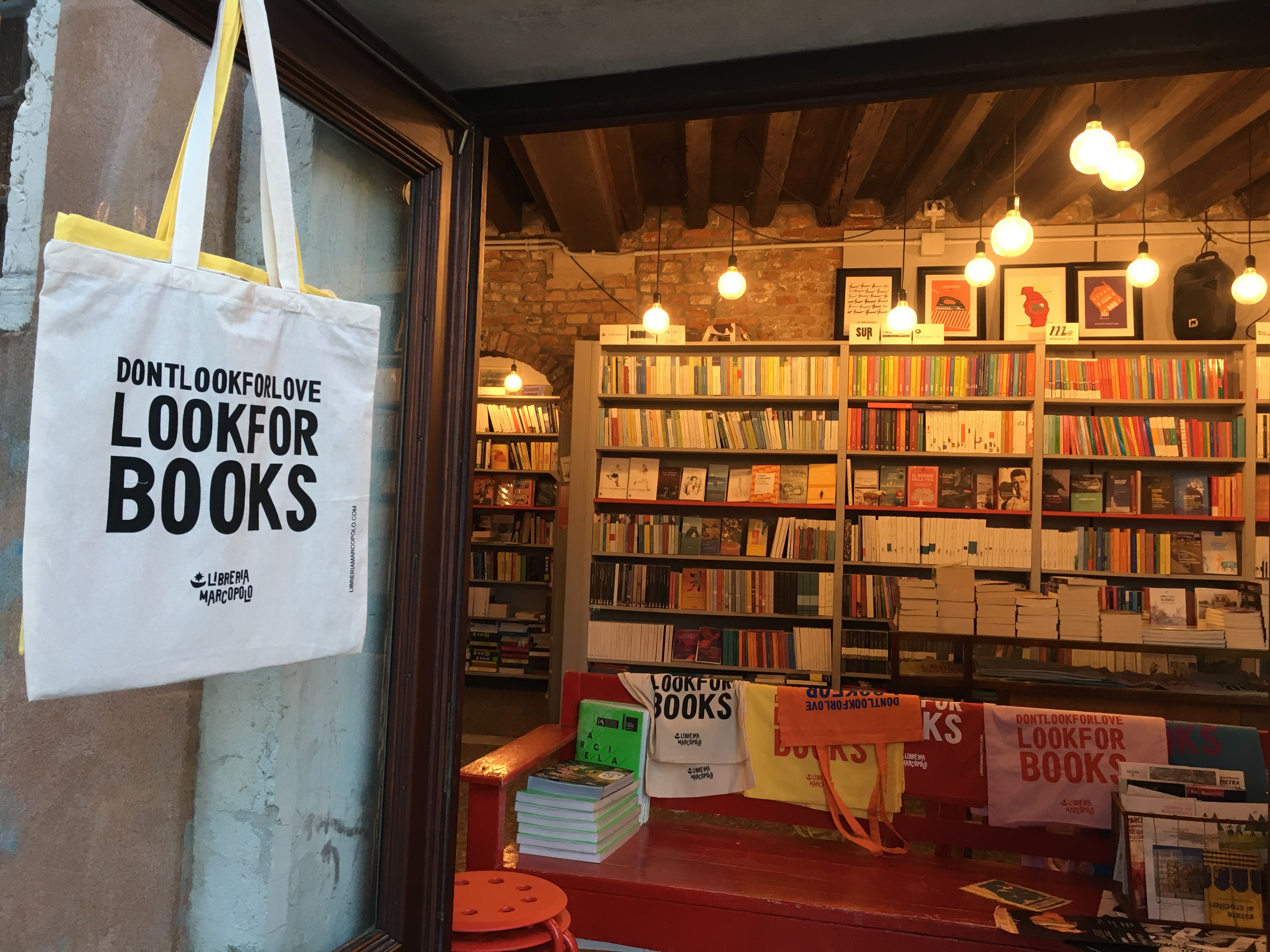
Kind of funny that a store with very few English books had this bag prominently displayed. I got one of them to give out as a prize at the Reader’s Retreat in San Francisco this fall.

For the past year I have been trying to resurrect my college Italian by taking classes and being tutored. One of my strongest desires is to be fluent in another language before I die. In fact, that is second only to my desire not to die. So when I stumbled across this bookstore in Venice I couldn’t resist. They had books in English but it seemed silly to buy any of those. Plus, some of the Italian language books were so interesting looking. So I figured that in order to make progress with my Italian language studies I would need something in Italian to read.

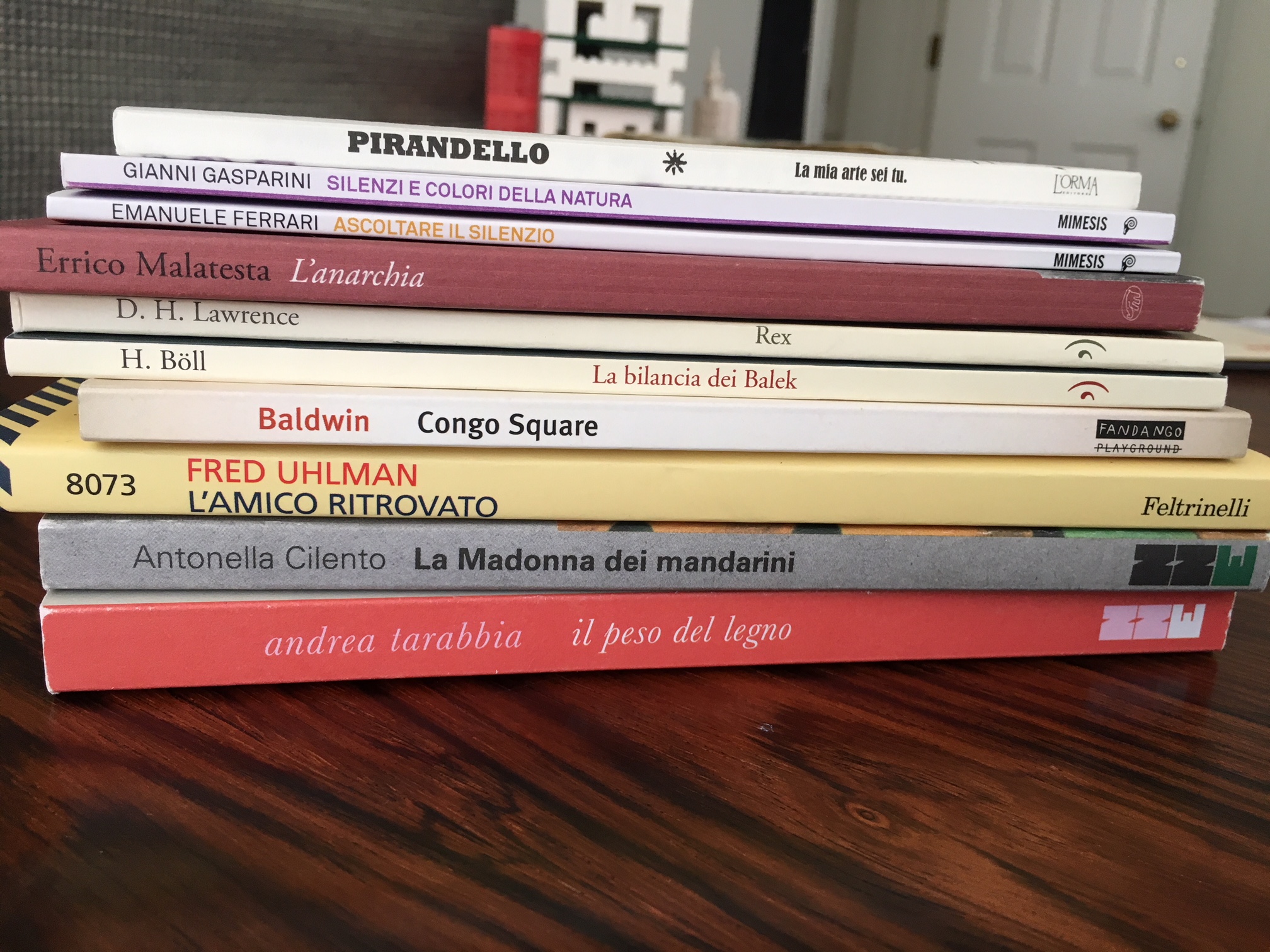
The whole stack.
I’m not sure what the Academy of Silence is up to, but I thought these thin volumes would make good study material.


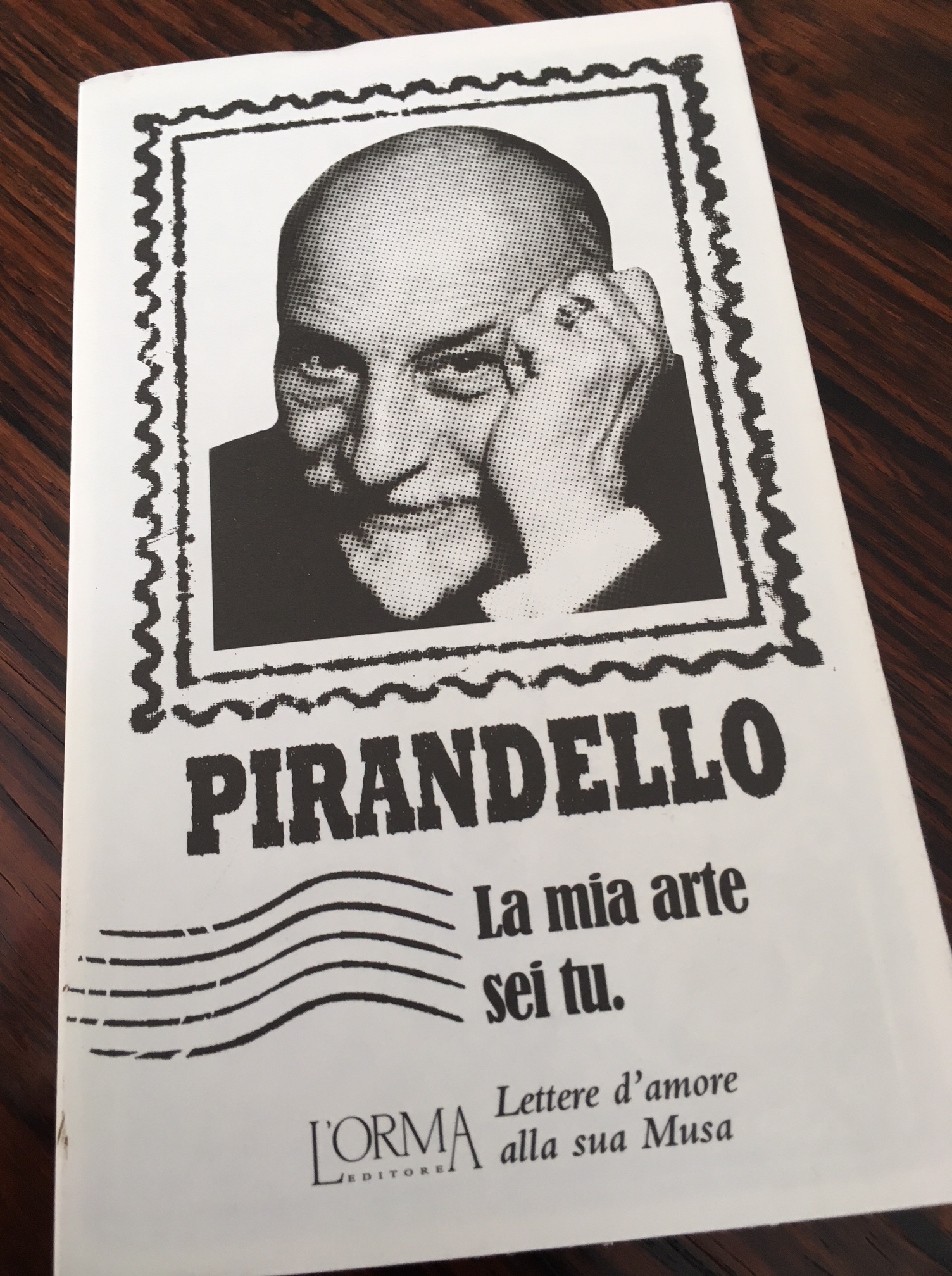
I love reading letters.
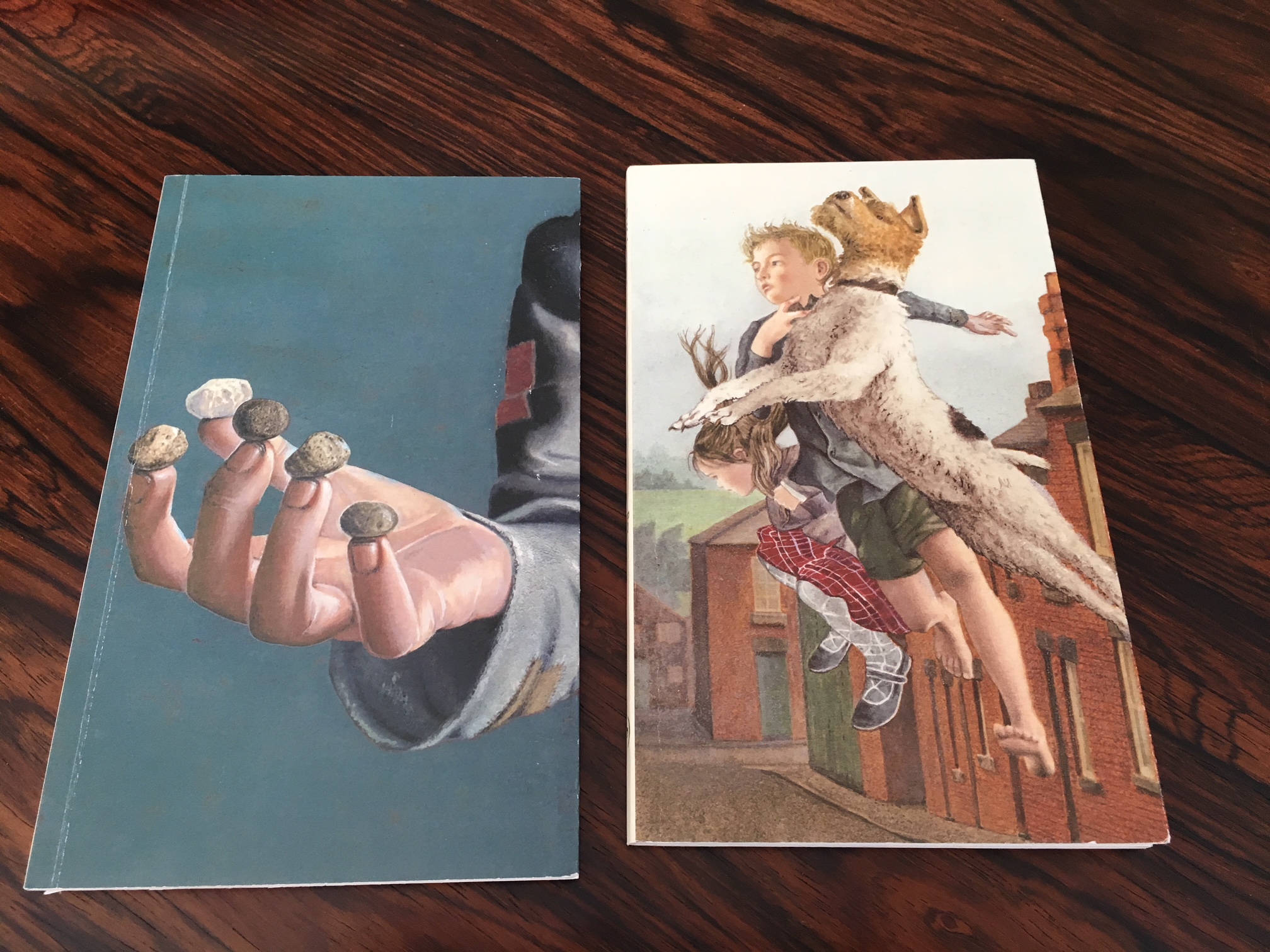
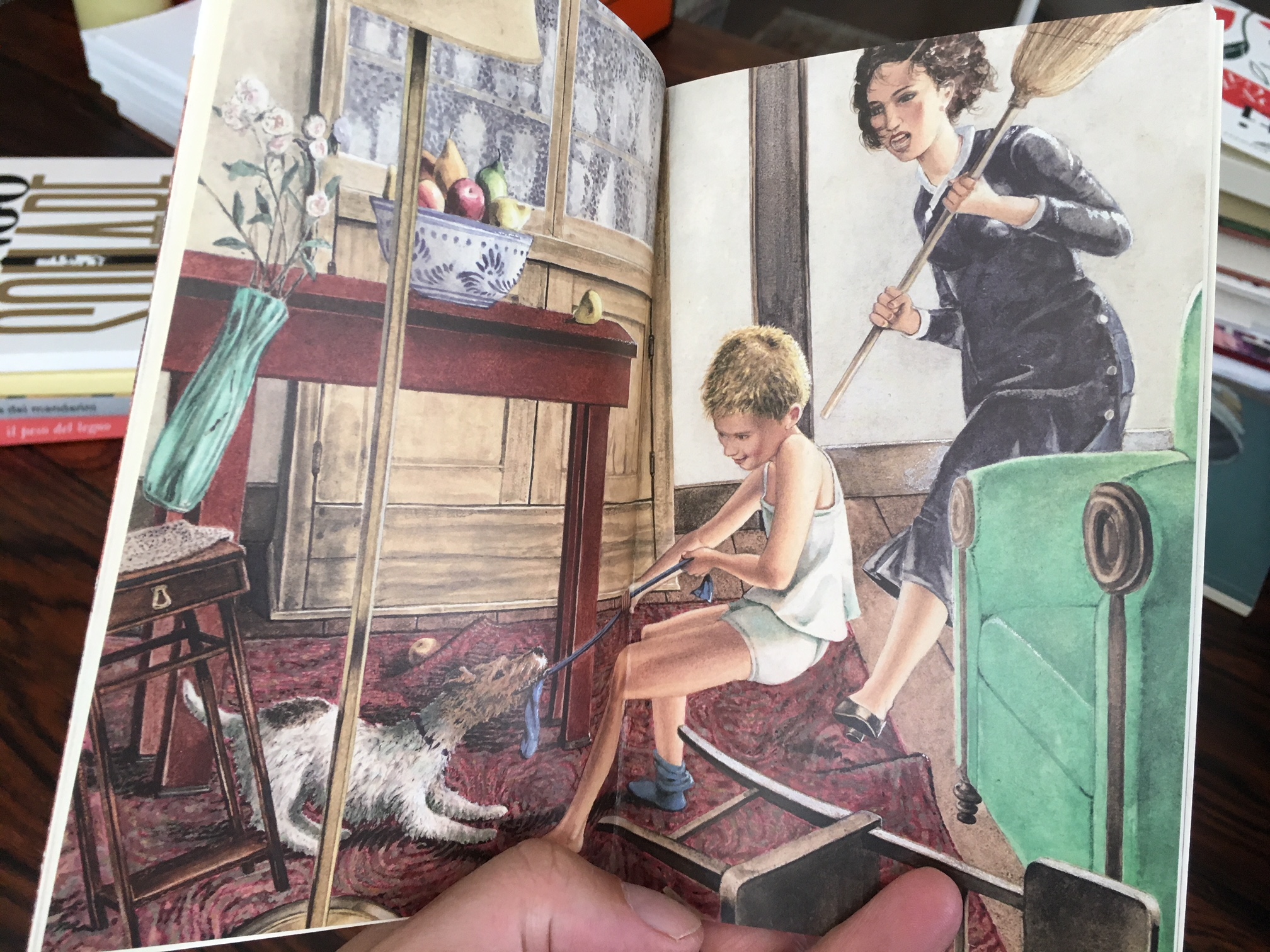
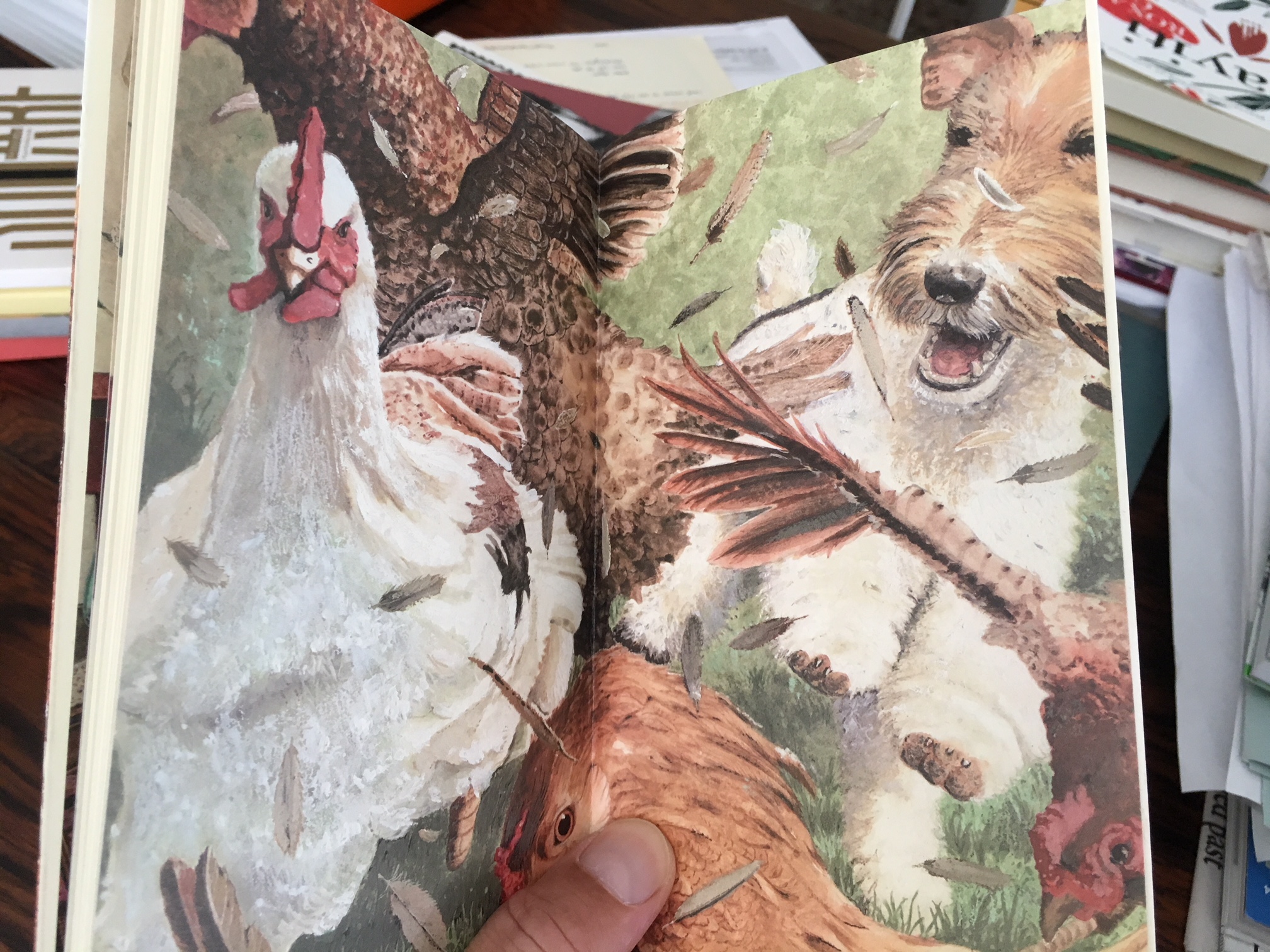
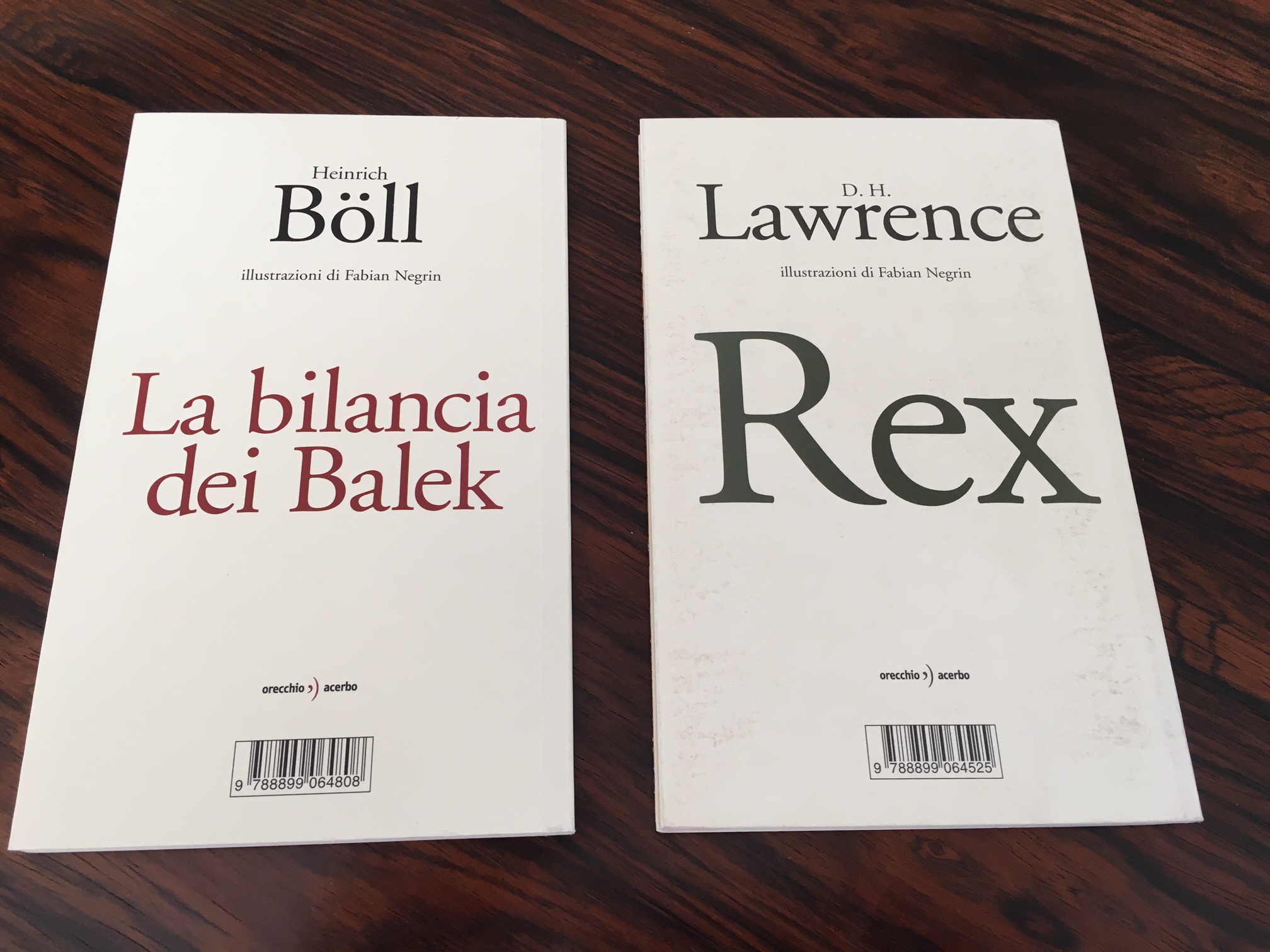
The covers on these short stories were too gorgeous to pass up. If they had had more in these editions, I would have bought them too.
The back covers.
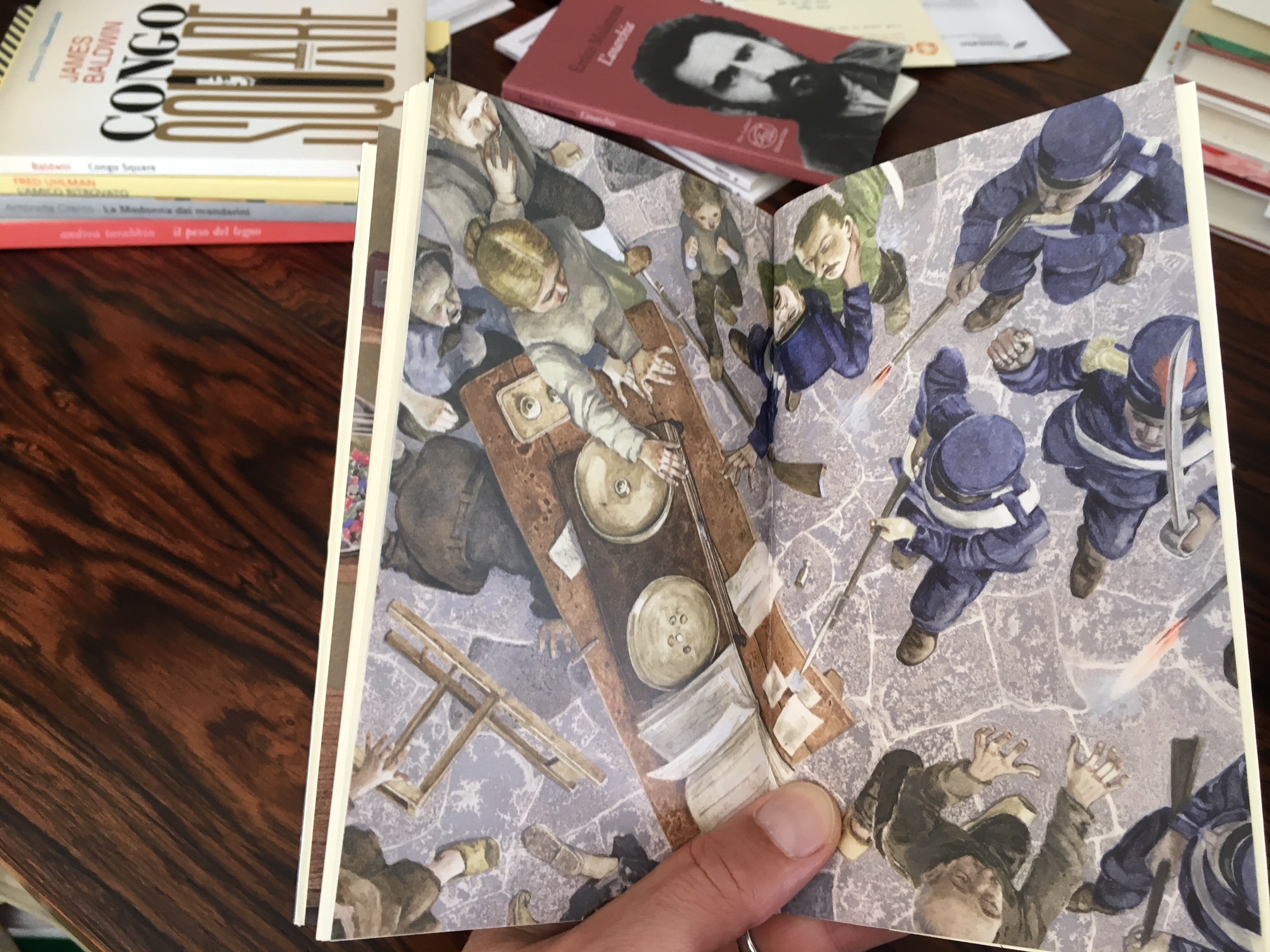
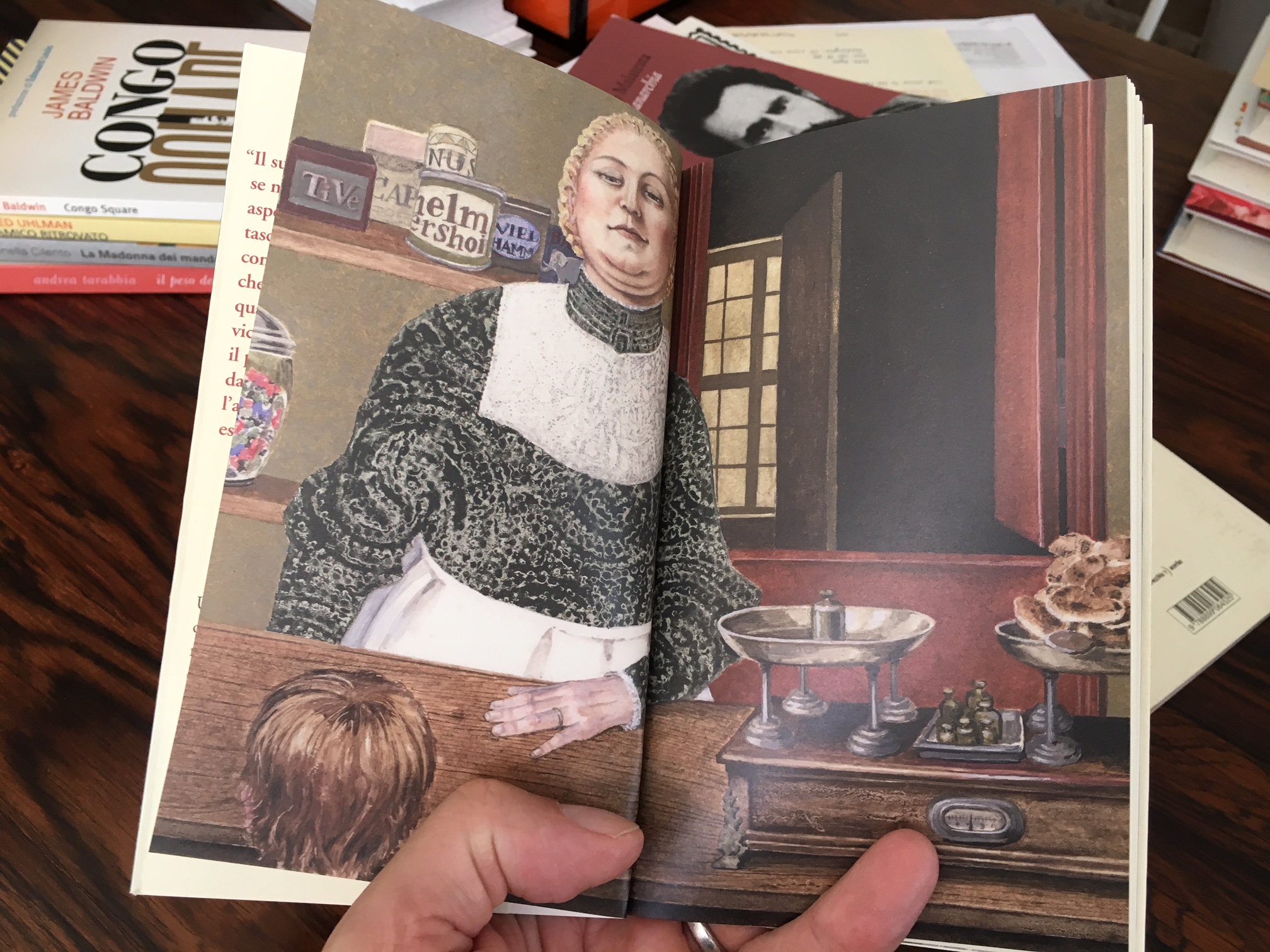
Front papers of the Boll.
End papers of the Boll.
Front papers of the Lawrence.
End papers of the Lawrence.
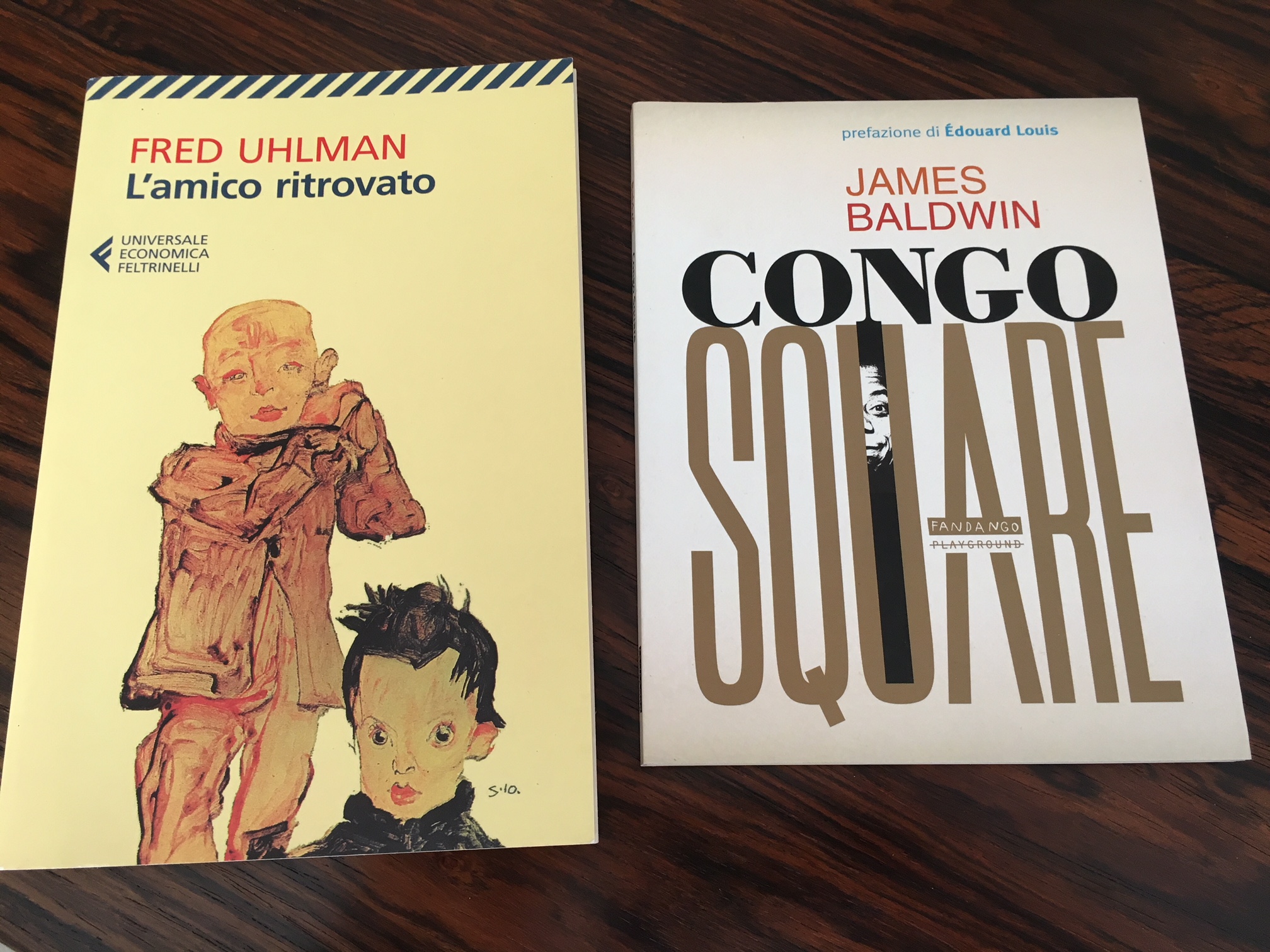
I’ve read the Uhlman in English and liked it a lot. Since I still own the book I thought I could use this one and do a side-by-side reading.
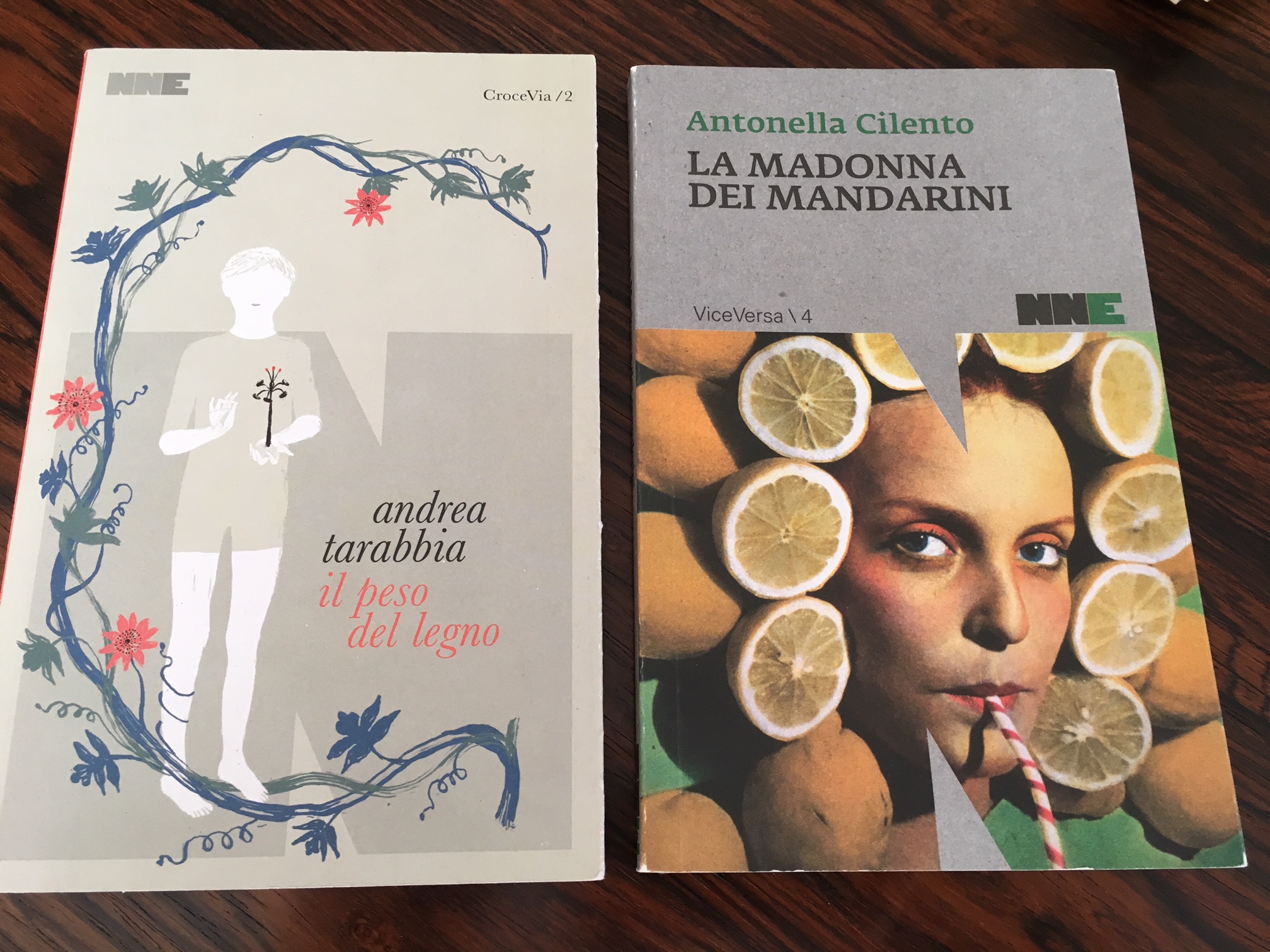
No idea about either of these novels. I just tried to find something by Italian, female writers.

2,137 pages

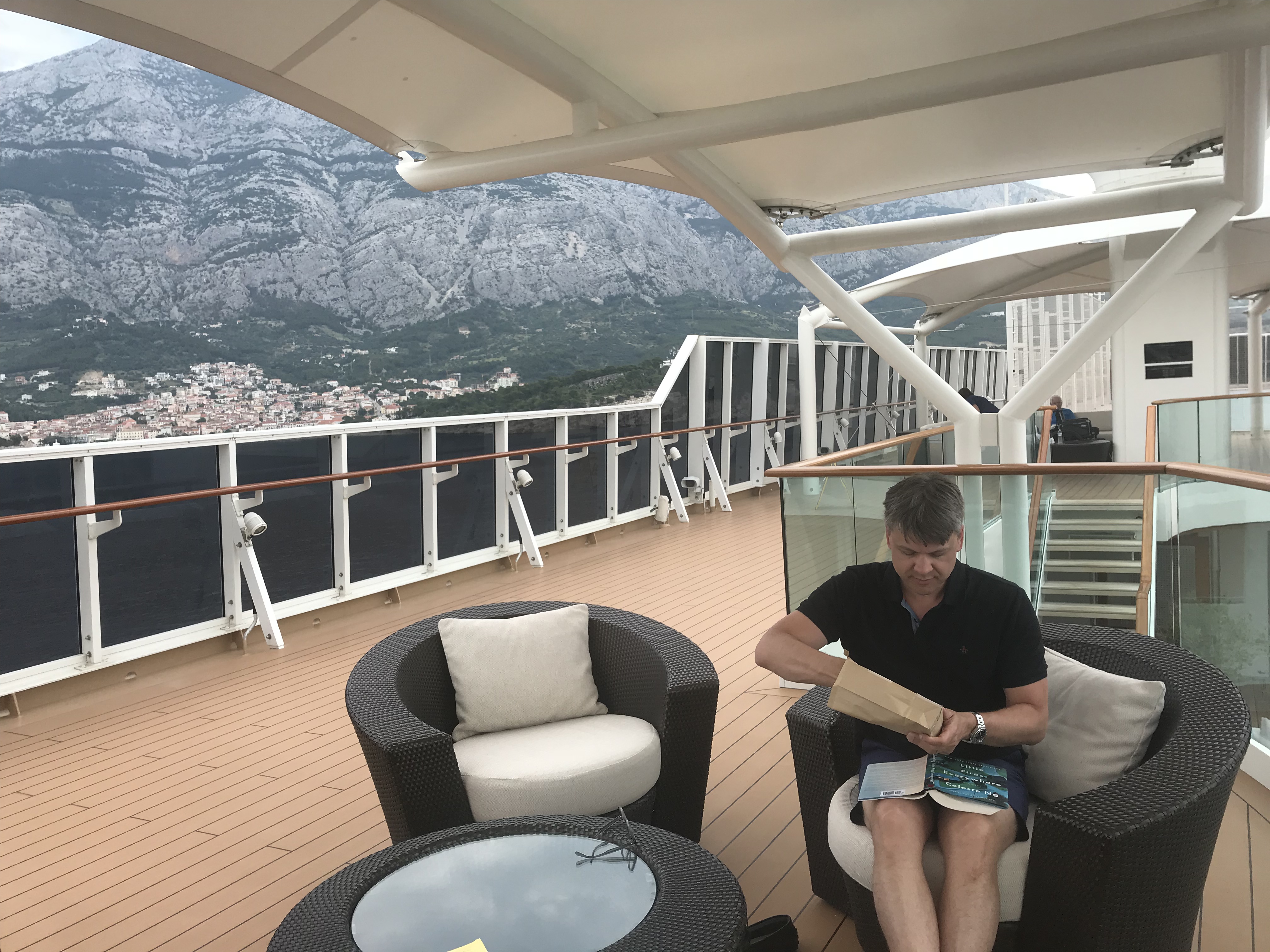
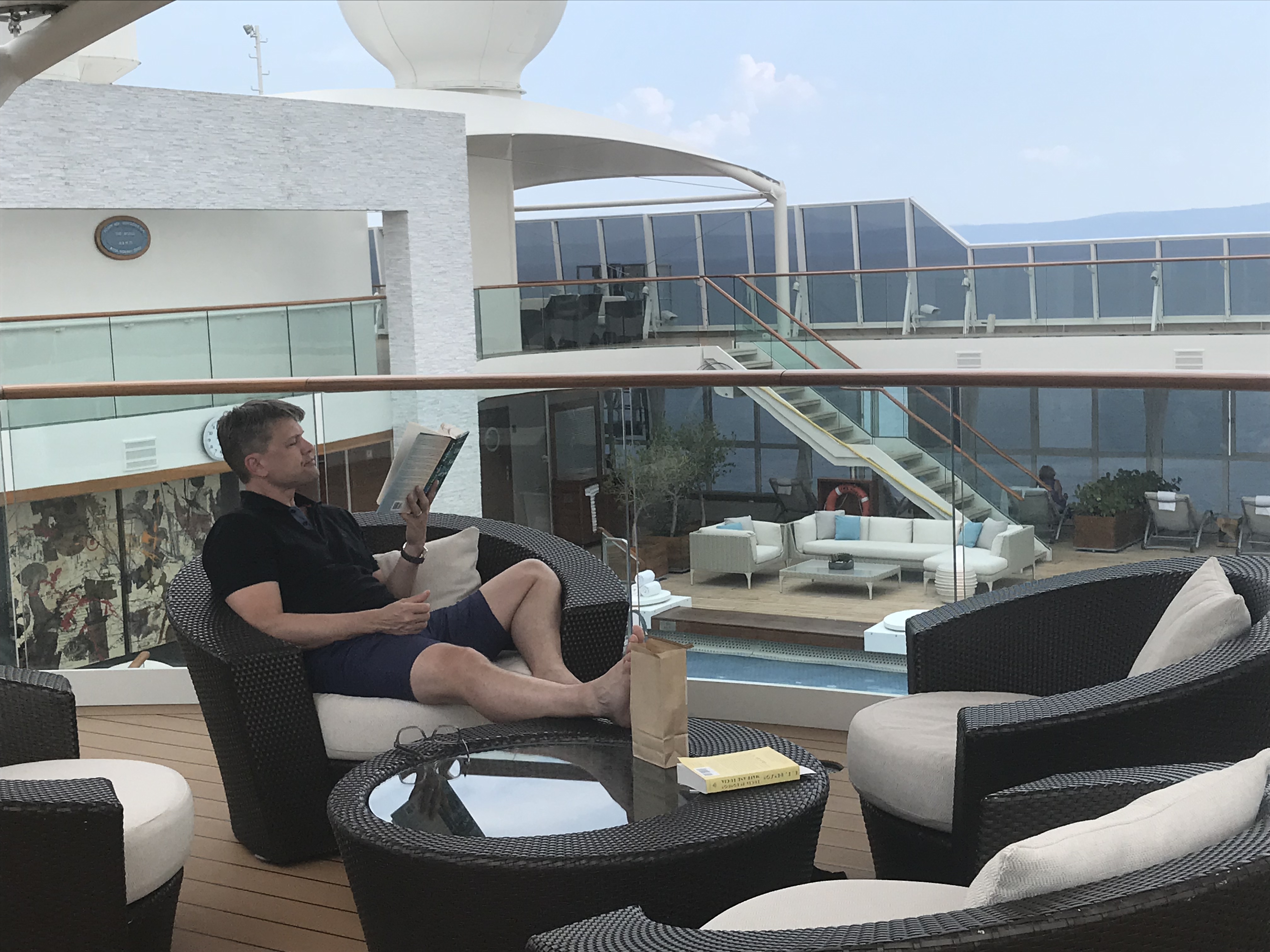
I left the country for two weeks with 13 books which totaled 2,625 pages of fiction to read. Since our trip was to Italy and Croatia, this might have seemed foolhardy. But we were also on a boat for much of that time and the flights to and from Europe…so maybe it wasn’t so stupid.

As it turned out, it wasn’t so stupid. I read a respectable 2,137 pages. But 3 of the 9 books I read were not even from the stack I took with me. And then there was one book I did not finish (and won’t–A Schilling for Candles by Josephine Tey–I just wasn’t interested in the 1930s Hollywood/West End actress milieu. So boring to me.). I also read a fair amount of Sebald’s Austerlitz on the plane over, but its lack of dialog started to make me really angry. To the point where I wanted to leave it behind on the plane. But I decided that it is probably a book I will like when I am in the mood for that sort of thing.

Anyhoo, here is the recap, and the winner of my contest.

6/9 The Strange Case of Dr. Jekyll and Mr. Hyde by Robert Louis Stevenson, 103 pages
What can I say about this other than it was just a boring drop of medicine to be gotten through before I could read something that was actually enjoyable.

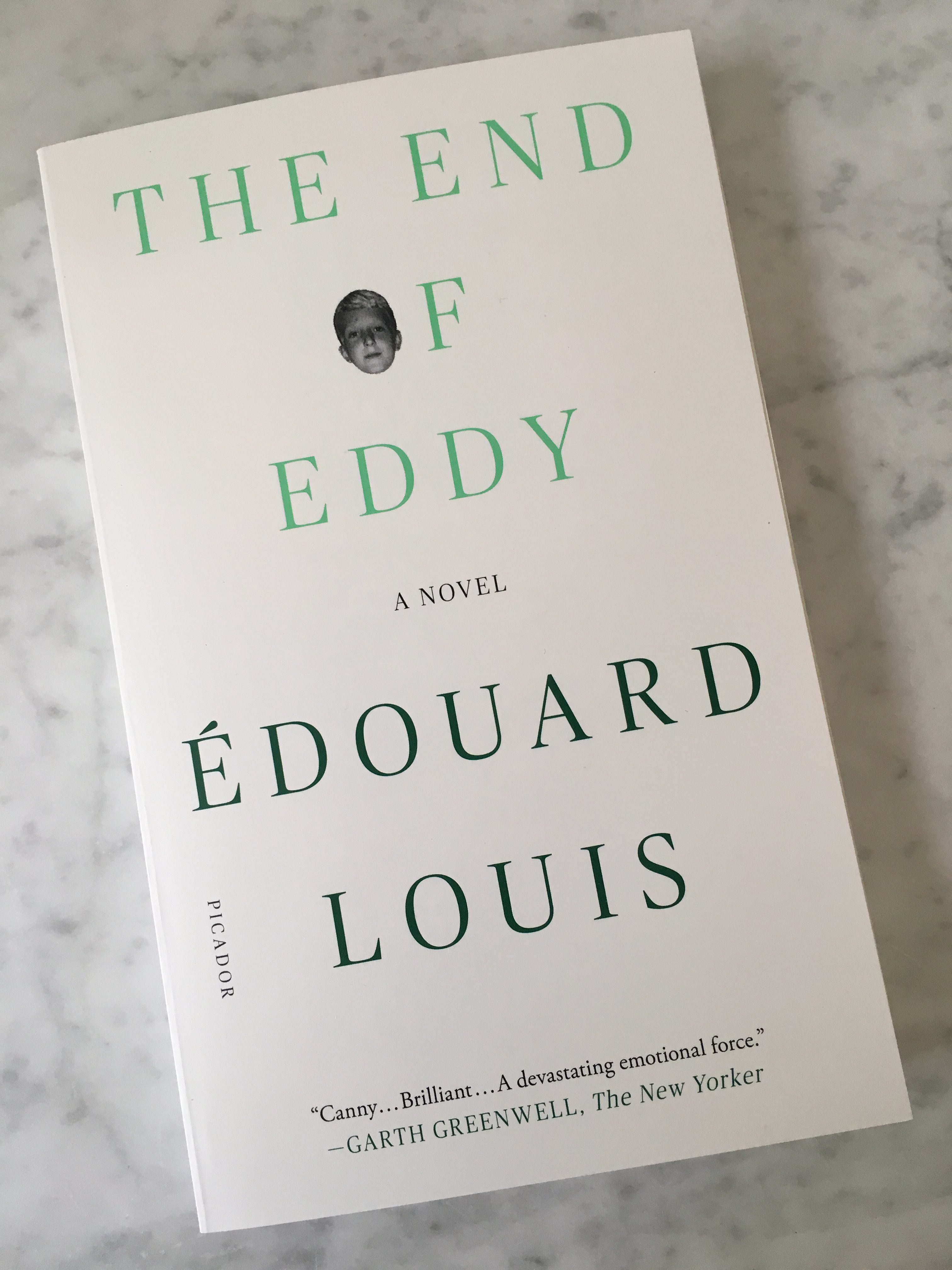
6/11 The End of Eddy by Edouard Louis, 192 pages
I’m not sure why I loathed this gay coming of age story. Maybe because everyone in the book was loathsome?

6/12 Airframe by Michael Crichton, 351 pages
As you will see below for Skyfaring, and my overall obsession with Nevil Shute, that I have a thing for commercial aviation. So when I saw this in the ship’s library I couldn’t resist. I know from reading Jurassic Park (before the movie was made) and The Andromeda Strain (before I saw the movie) that Crichton writes fascinating plots. And this was certainly that. His writing kind of sucks and his characterization is straight out of the Hollywood playbook, but a fun read that is perfect for vacation.

6/13 The Tenth Man by Graham Greene, 157 pages
Almost a fairy tale–in the Grimm sense of the word. Very interesting.

6/15 Skyfaring by Mark Vanhoenacker, 329 pages
A memoir of sorts by a commercial airline pilot. Although the book is full of great details about all the stuff that pilots do, I wish there had been more of that sort of detail. At lunch sometimes I watch YouTube videos of air traffic control recording transcripts and I wanted more to feed that obsession. It was well written, I just wasn’t in the market for the author’s philosophical musings on space and air and time and place, etc.

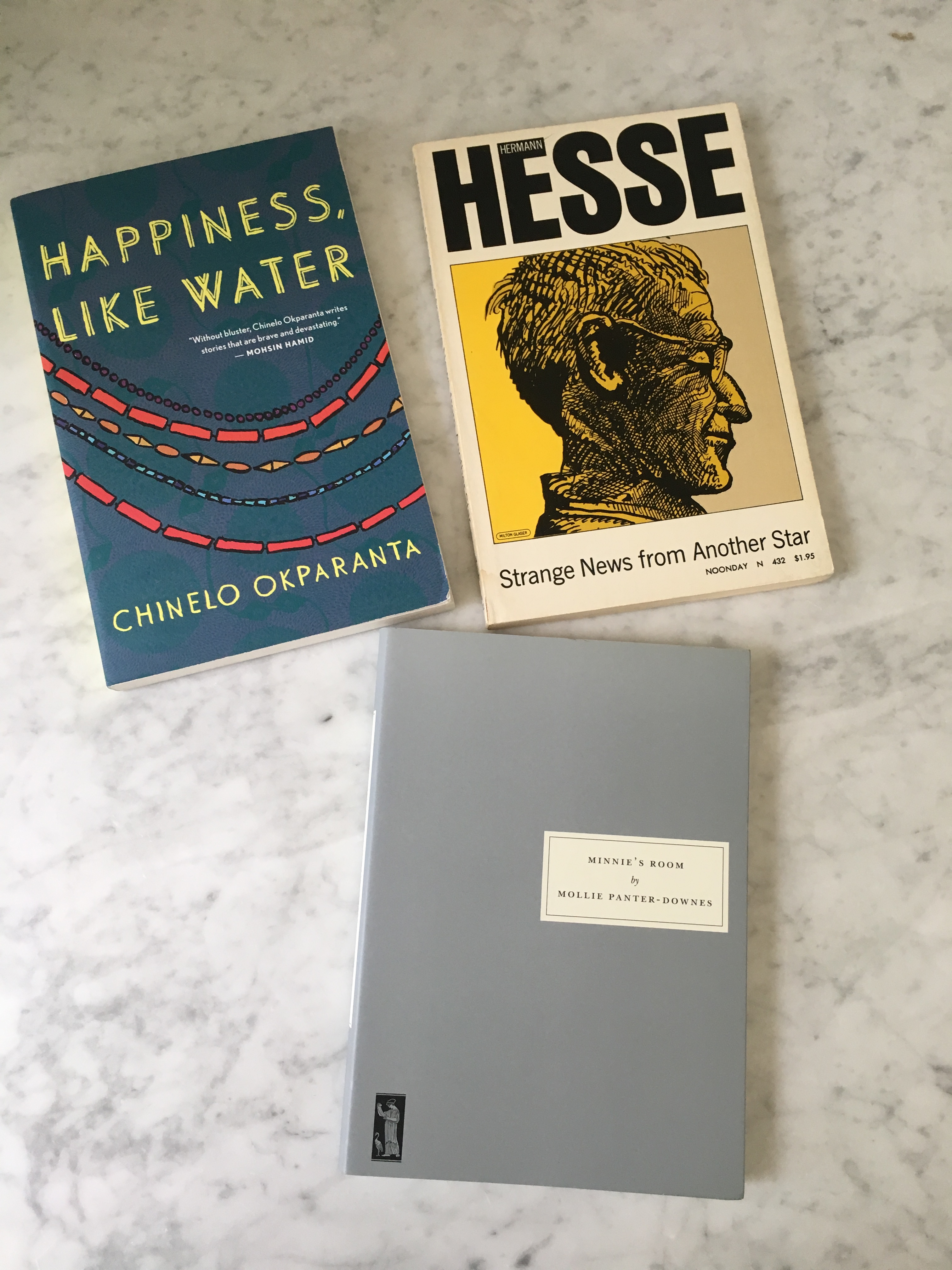
6/16 Minnie’s Room by Mollie Panter-Downes, 125 pages
When I finished this all I could think was “It was fine, but I don’t get all the fuss about MPD–or at least this volume.” Then come to find out, I read it 5 years ago and didn’t remember anything about it. At no point in my re-read did any of it seem familiar. I know I am getting old, but I think this says more about how humdrum this slim volume is.

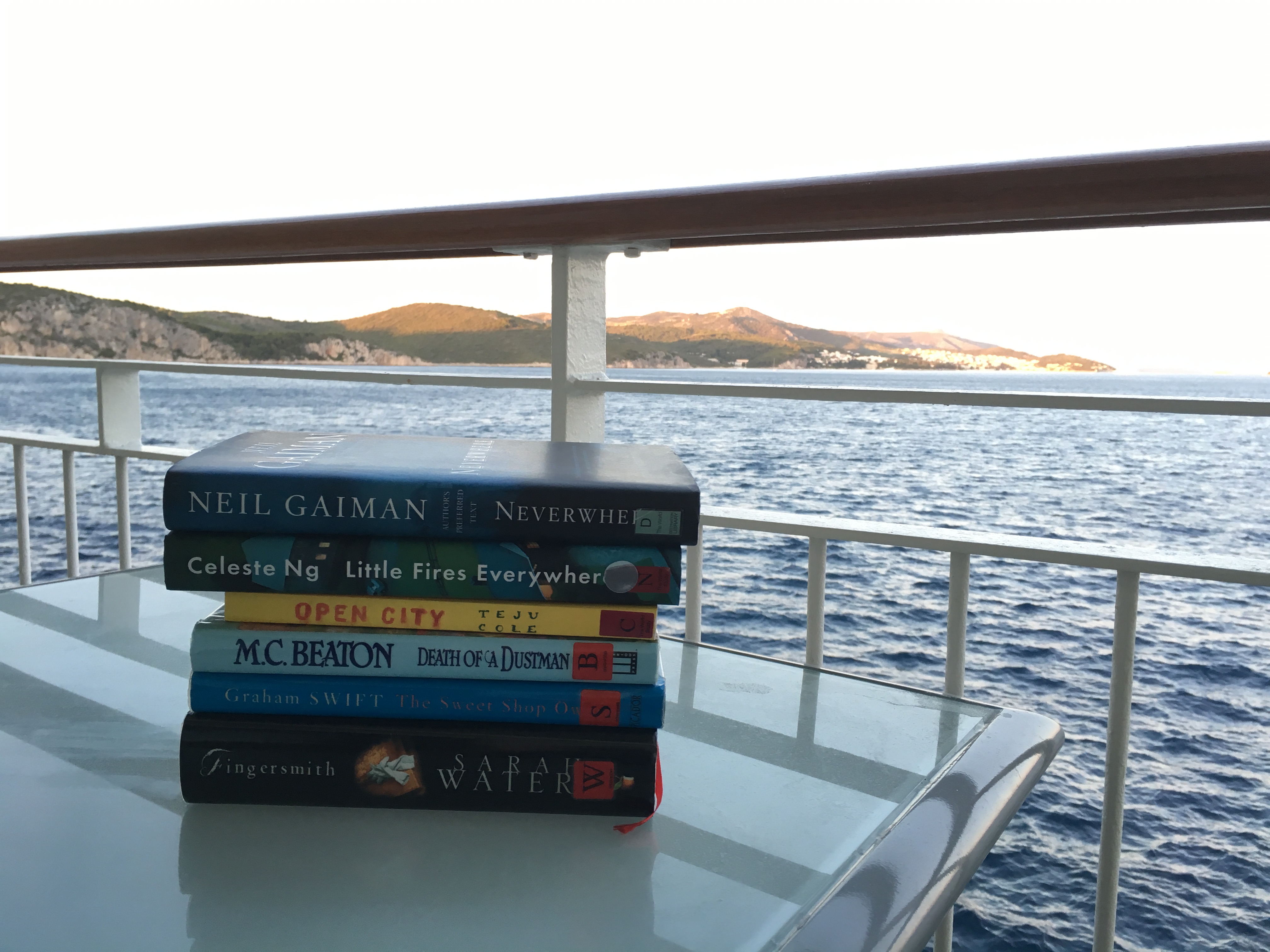
6/17 Little Fires Everywhere by Celeste Ng, 336 pages
Another book I found in the ship’s library. I was enticed to read it because it falls into the “everyone has read it and it is still fairly new” category which I rarely read. Hmm. I like Ng’s writing (and I like her as a human on Twitter), but I found the plotting really clumsy and hackneyed. This could be one of those books where I list out all of the many ways it made me roll my eyes. But life is too short. And that is petty. But not beneath me. But still, life is too short.

6/19 Open City by Teju Cole, 259 pages
Yet, another book I found in the ship’s library. I really enjoyed this story of a Nigerian doctor doing his residency in NYC. Quite poetic and full of interesting ideas. Because it was the ship’s book I had to leave it behind. But I liked it enough that I will probably purchase a copy for myself so I can read it again one day. I think I am also going to buy one for a friend who I think would like it.

6/23 Siracusa by Delia Ephron, 285 pages
Totally fun read. More of a film script. Made more fun by the fact that I read it while I was in Siracusa.

So who won my page count contest?

Ali from Heavenali, with her guess of 2,143

Not only does she win a novel of her choice from the Book Depository, she wins two novels of her choice because she came within 25 pages. She was only 6 away! What would I have done if she guessed it bang on the nose?

A delightfully surprising find

What is more exciting than buying a book on a hunch or a whim, knowing only what’s on the cover flap, only to find you love the book? When that book is an old one, by an author you’ve never heard of, and out of print, the excitement is a little bittersweet. It’s a fantastic feeling of  finding a needle in a haystack but it’s also frustrating because I always fear that I have the last known copy and if I don’t somehow do something to ensure its future survival that it will disappear forever and it will be my fault. It’s moments like this when I wish I had my own publishing house and could do a fabulous reissue. A Persephone or Capuchin Classics all of my own.

I don’t remember where I picked up my copy of Prairie Avenue by Arthur Meeker. I do remember that I bought it for the cover. Who wouldn’t be charmed by the illustration? And you know I love historical fiction that isn’t really historic fiction–or in this case historical fiction written by someone who can remember the time in which the book is set. Despite its cover and its promises about ye olde Chicagoe, I was a little worried that it wasn’t going to be very good. Either too dry or too twee. But it wasn’t either. This how Kirkus described it in 1949 when it was published:

Prairie Avenue, in the era of its grandeur, 1885 to the turn of the century, is really the hero of the story– Aunt Lydia, grande dame, whose past could not be unearthed is the heroine — and Ned Ramsay is merely the interlocutor, the interpreter of the passing scene. Ned had had no roots, his early youth was patterned by the good times and the bad times as his father’s fortunes ebbed and flowed. Only when he went to Aunt Lydia and Uncle Hiram, in one of the bad times, did he find that Prairie Avenue claimed him as her own. Wiser than his years, he explored the reasons behind the facade:- Aunt Lydie’s coterie of men was more than just “company”; and Mrs. Kennerly’s “nerves” had a less fashionable significance. But Ned kept his knowledge to himself, and became the staff on which the others- old and young alike- learned to lean. The novel takes the reader behind the scenes, and the mores of the bombastic young city of 1885 to 1904 become real. There’s nostalgia here for an older generation; there’s a march of time, American-wise, for those who would explore the not so distant past of bedizened splendor and easy wealth; and there are the stories of the loves and deaths that made up life on Prairie Avenue. Chicago was their monument; Prairie Avenue was their background; money their goal.

I really loved slipping into this story and picturing Chicago as it once was. As I alluded to earlier, the fact that Meeker wrote this from a mere 60-year remove, having been born into it in 1902, and having first hand background accounts from his relatives makes it so much more of a treasure for me. It allows me the freedom to trust the author and not second guess their research and dialog like I do with contemporary historical fiction. Even if Meeker’s 1949 mind got it wrong, his mistakes are less apparent (if at all) and carry their own historical charm. I realize with each passing day I love to live in the past. Not a very sophisticated approach to literature I agree. But it’s cozy there.

Also interesting is a throw away moment at the ice skating rink that made me think “This author must be gay!” It was a subtle moment but one that had me convinced that if the author had written Prairie Avenue 40 years later Ned’s love interest would have been a he not a she. Turns out I was right. Meeker’s Wikipedia page supports my notion.

Regular readers will remember my delight over finding the hitherto unknown to me novel Victoria 4:30 by Cecil Roberts. Although Prairie Avenue doesn’t quite thrill me as much as that one, it is definitely a delightful book.

And to that end, I have an extra copy that I am going to give away to a good home. If you live in the U.S. (sorry rest of world) and would like to be placed in a drawing for my extra (and somewhat smelly) copy, leave me a substantive comment below. Takers who just say “I’ll take it” or “Put my name in the hat” will not be eligible. You don’t need to be Scheherazade, but give me something, anything. Why you want to read it, what’s the last serendipitous book find you had, you’re favorite book, something. I love to talk about me, but I do like hearing what other people have to say.

I missed Paul

It wasn’t until I started listening to Oracle Night that I realized how much I missed Paul Auster’s voice. After the 30-some hours of Auster reading 4 3 2 1 I came to see him as a close friend. And like 4 3 2 1, Oracle Night is fantastic storytelling. In Oracle Night, which was published in 2003, you can see the germs of 4 3 2 1, the layers of storytelling, stories within stories, a certain meta quality. And for me at least, Auster’s storytelling is fascinating and has real heart.
Sidney Orr is a writer recovery from a long, serious illness that no one expected him to live through. The discovery of a Portuguese notebook in a stationary shop provides Orr with the incentive/inspiration to begin writing again. Like “Sole Mates” in 4 3 2 1, Auster gives us a story within the story which I found totally captivating. I was dying to know how it would end but Auster plays a trick on the reader that is both plot and metaphor. As we go along and Orr becomes physically stronger all manner of things go wrong in his life. His work, his wife, his literary mentor, his security, his future. It all gets tossed around in ways that could seem outlandish but didn’t somehow.

The thing that amazes me about Auster is that his brain must be like the stacks of the New York Public Library. Vast, and full of interesting information.

Even if I wasn’t a big fan of this book (I am) the first scene in the stationary store is enough to make it worth the read for an officephiliac like myself.

And did I mention that it has footnotes? It has footnotes. Long ones. I loved it.

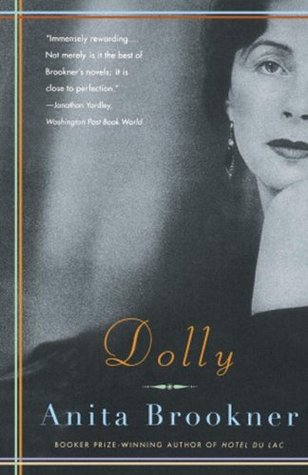
Dolly/A Family Romance

As I work my way through a chronological re-read of all 24 of Anita Brookner’s novels, it becomes harder and harder for me to write what passes for a “review” on this blog. I’ve never been very good at bringing any real light to the books I read, but when the  writing in a novel is so taut and precise and perfect, it just makes anything that comes out of my mouth seem like garbage. For as much as I love Brookner’s work I’ve not really read anything about her writing process. She was a bit reclusive so perhaps she never really shared that information, but I have to wonder, was Brookner like Mozart whose work allegedly came out of his head fully formed, or are her manuscripts illegible because of all the strike-throughs as she hunted for the most elegant version of perfection?

In the US Anita Brookner’s 13th novel is called Dolly. In the UK, and perhaps everywhere else, it is called A Family Romance. For those who know Brookner’s work, you could not be faulted for thinking that there was no way that she wrote a hearts and roses kind of romance. And you’d be right. This tale sits squarely on the less used, secondary definition of ‘romance’ that is synonymous with “wild exaggeration” and “picturesque falsehood”.

I first thought that the US title Dolly was far more descriptive given that the character Dolly is like a force of nature blowing her way across every page with hurricane force. But really, this book is about Jane Manning, the niece of Dolly’s late husband Hugo. Dolly would hate that I would take the spotlight away from her, and Jane would be appalled that anyone might think she was drawing attention to herself. But for all that Dolly dominates the book and Jane’s life, the fact that we see all of this through Jane’s eyes and we understand the impact Dolly is having on Jane one begins to realize that this has much more to do with Jane than Dolly. This seems particularly true somewhere along the way when Jane’s role of narrator takes on an omniscience that seems, upon reflection, to be much more about what Jane imagines than what we know for a fact Dolly actually does. One could suppose that Brookner got sloppy and couldn’t figure out how to convey the  action without making Jane omniscient. But I don’t think Brookner was capable of sloppy.

In terms of plot and setting, all of the Brookner hallmarks are there. A young woman of modestly independent needs (and that’s all relative, as Brookner even admits in the text) spends her time being lonely and wanting to be alone and at the same time. There is a francophone element, lots of walking through London, and lots of suppressed emotion. More specifically, Jane finds herself orphaned at 18 with only an aunt by marriage (Dolly) to call family. As the holder of inherited wealth she has also inherited the self-imposed responsibility to see that Dolly is financially secure.

And then there is Dolly. Raised by a single hard-working, but poor mother, Dolly never gets over being poor and she never gets over not belonging. Although Dolly finds security in Jane’s uncle Hugo (before Jane was born) his untimely death leaves her untethered and without an audience and status. Her need for financial assistance first from Hugo’s mother, then Hugo’s sister (Jane’s mother), and finally from Jane, has more to do with Dolly’s need to buy friends (and attention) then it has to do with economic security. With catch phrases like “Charm, Jane, charm!”, I had a hard time not hearing the voice of Penny from the British TV show “As Time Goes By”.

In the final chapter Jane is in America on a lecture circuit of women’s colleges where she has trouble connecting with the young female students whose every discussion focuses on gender. At first I had a hard time understanding the point of all of this other than an opportunity for Brookner to go after political correctness–which she does in a characterization of progressive male partners/husbands that could have been background for a character on Portlandia–but a closer read indicates that there is more to it than that. Just like Dolly’s abhorrence over Jane’s unmarried state, most of these young feminists have husbands, and despite their feminism, seem to have a hard time relating to her because she was unmarried. Jane has a hard time convincing them that she is “any kind of woman”.

It is not that they would necessarily want me to find love and marriage, in the sense of a happy ending. But if I were sharing household chores with some cheerful fellow in jeans and a shirt ironed by himself they could understand me better. How then to disappoint them by telling them that I prefer the fairy-tale version, and will prefer it until I die, even though I may be destined to die alone?


No doubt Jane would have an even harder time explaining that notion to Dolly whose quest for the fairy-tale version has resulted in less than fairy-tale circumstances over the years–and an old age that still has her dying alone.

Crossposted on the International Anita Brookner Day website.

175 pages a day – A Contest

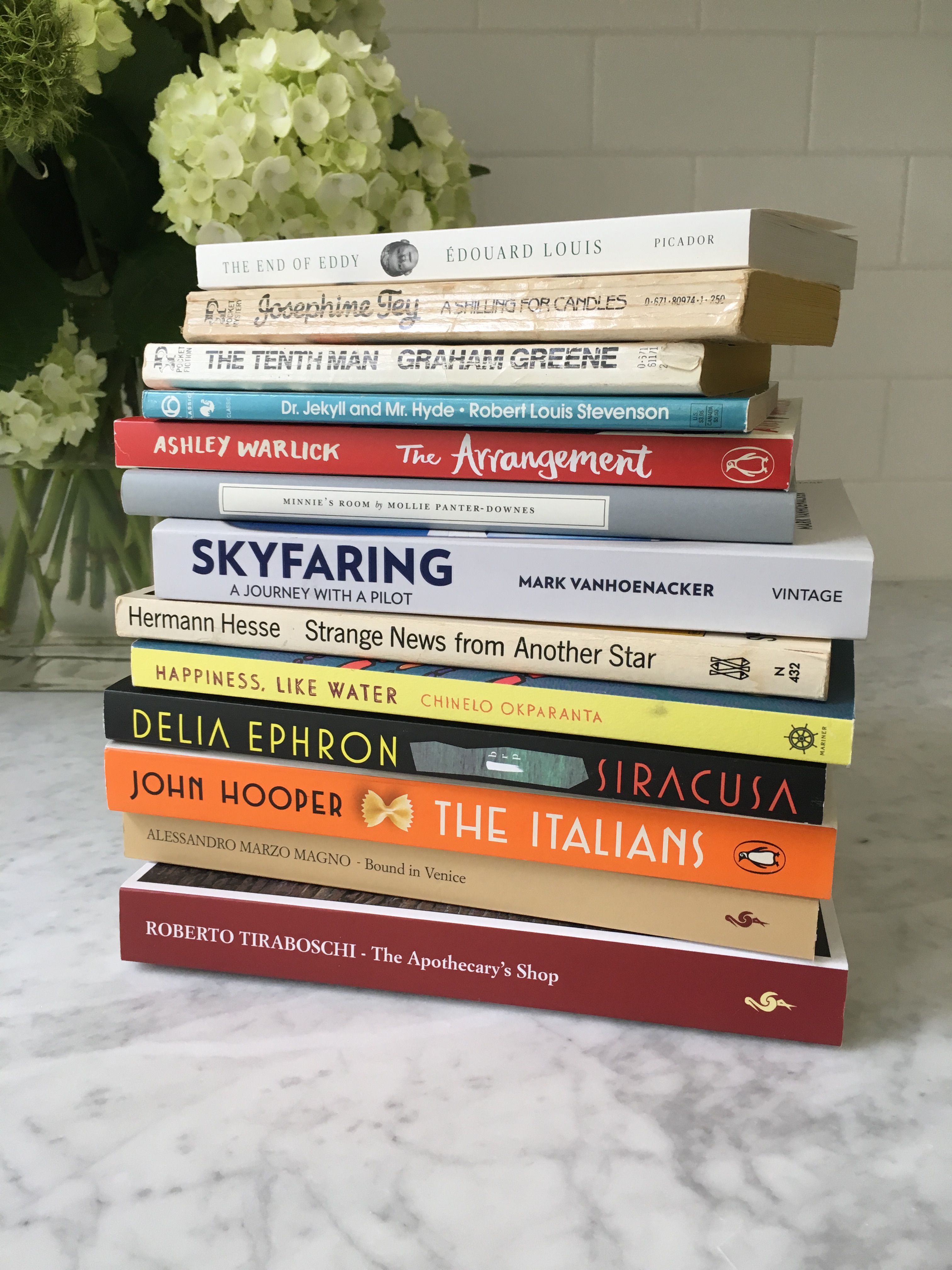
This is the stack of books I intend to take with me on an upcoming vacation. Thirteen books, 2,625 pages, 15 days. That’s 175 pages a day. This is actually doable. Two transatlantic flights are involved and we will be on a ship for 12 days. This is a recipe for power reading. The last time we went on a cruise I took 12 books for 14 days and ended up reading 10 of them. Oddly enough, the last time we were on a ship, I also was doing ACOB.

This time, things are a bit different. On the pro-reading side of the ledger, we will be on a private ship (more on that in future posts) and there are likely to be fewer distractions. On the anti-reading side of the ledger instead of going to a beach for a few hours during the day, we are going to be in Italy and Croatia. Destinations bound to keep me busier than a lazy day on a Caribbean beach. We will also probably get Italian television on the ship. The only reason this interests me is because I have been diligently trying to resurrect my college Italian language skills in recent months.

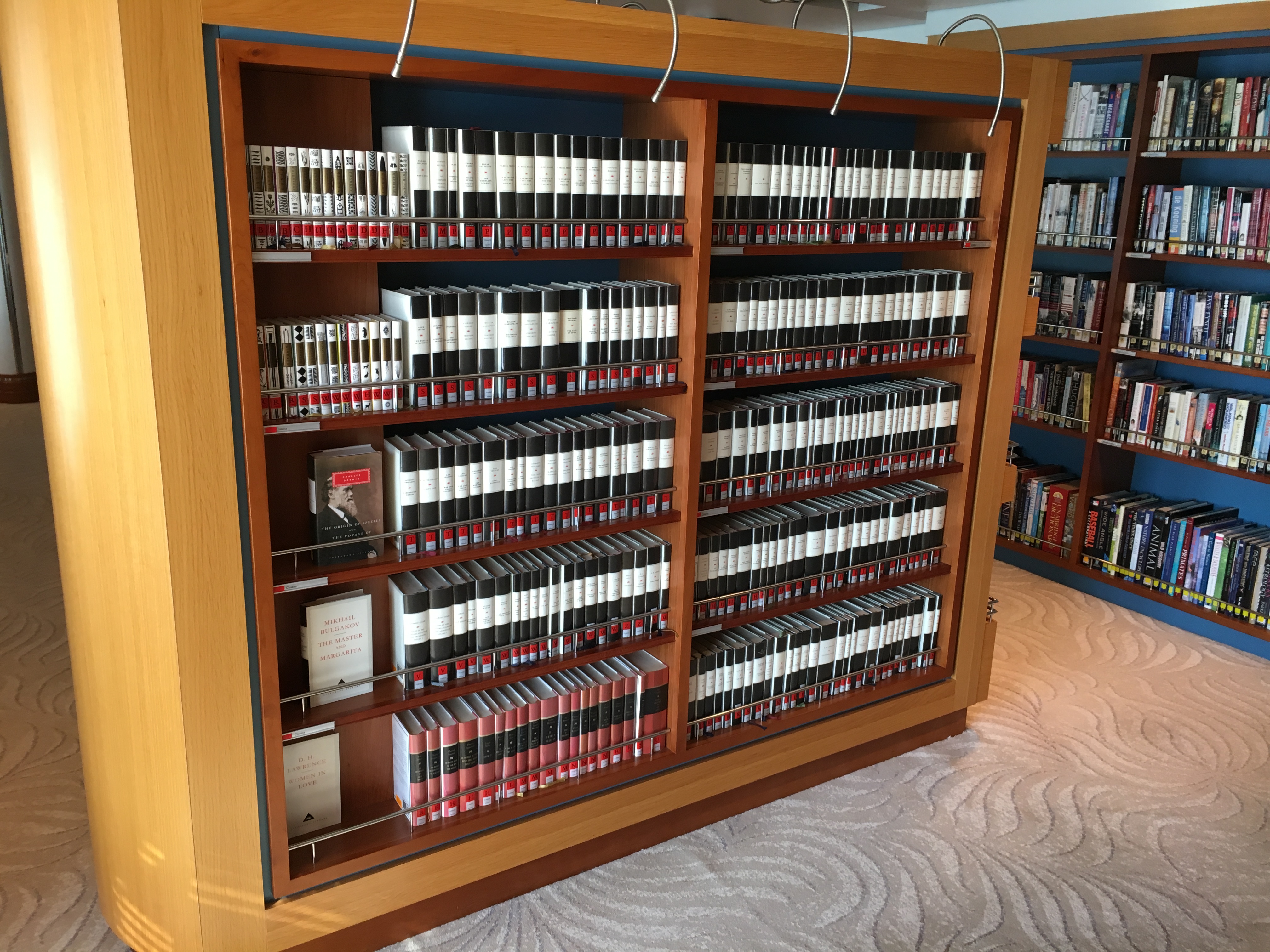
Also, unlike a smattering of a few hundred books in the library of typical cruise ship, the library on this ship has about 2,500 volumes. I am bound to be distracted by this. In fact, I am going to make it my goal to read at least one book that is new to me from the library.

I can already guess which of these books will go unread, if indeed any do go unread. But first, the stack.

Only three of these will count towards my ACOB goals. But, since that is 100 books and I am on track to read at least 120 this year, I have about 20 that don’t need to meet the ACOB goals.

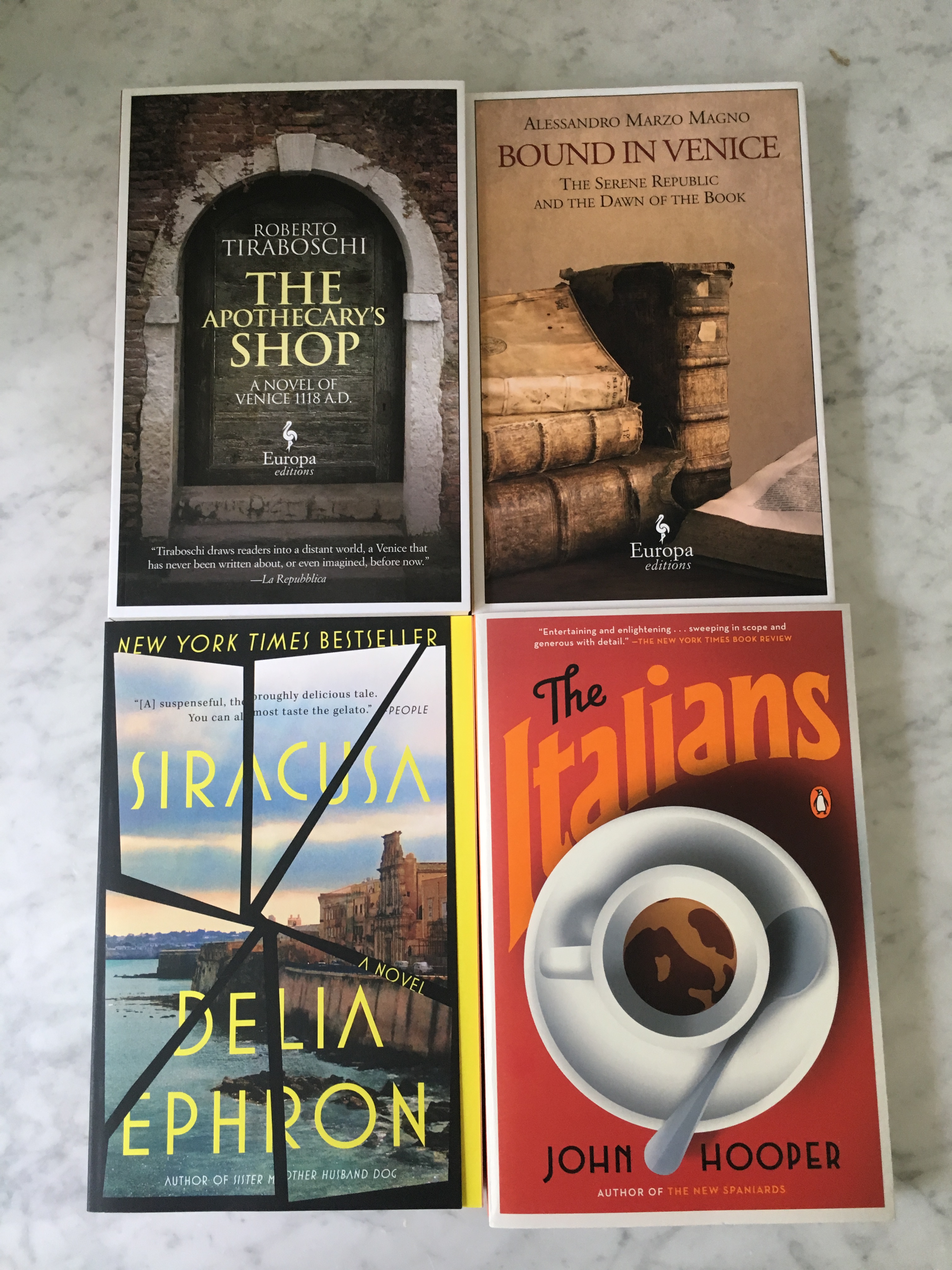
This is something I almost never do. Location-specific reading while on vacation. Not only does the Delia Ephron look fun, but we are actually going to be in Siracusa. Do I read it before we get there, while we are there, or after? I can see benefits to all three approaches. Bound in Venice and The Italians are non-fiction. I couldn’t resist the Venetian setting of The Apothecary’s Shop because we are also going to be in Venice.


When I organized my unread fiction earlier this year, I discovered how many short story collections I own and never seem to read. And since I am not counting any collections in ACOB tally, I wasn’t anticipating getting to any of these this year. I like this mix a lot.


Vacations always make me want to read mass market paperbacks. Doesn’t matter how battered they get and I can leave them behind when I finish them.


I watch a lot of YouTube videos about planes (air traffic control communications, plane spotting, flight reviews, airline news, etc.) so this book should by right up my alley. I bought this in at the train station in Milan in November. Now it’s making its way back to Italy.


Picked this one up at Politics and Prose last weekend when my parents were in town. This is probably the one that I am most excited to start.

My guess is that I am most likely not to finish The Italians. Looks like a fascinating book but I tend to skip non-fiction if given the choice. I’m also a little worried about The Apothecary’s Shop. Although I know nothing about Venice in 1118 AD, I am bound to constantly be second-guessing the author’s research and dialog. The volume I am most likely to pinch my nose and be glad when it is over: Dr. Jekyll and Mr. Hyde.

Overall, I predict I will read something over 2,000 pages, but it won’t be 2,625 pages. The person who guesses the closest (over or under) will get the novel of their choice from The Book Depository. (This will include all pages read, even if they aren’t in this stack, and even if I don’t finish the book.) To be eligible, guesses must be posted in the comments below by June 24th. In the event of a tie, the winner will be chosen at random from the winning answer. If the winner is within 25 pages she/he will get to choose two novels from The Book Depository.

Shelves that fill up faster than you can build them

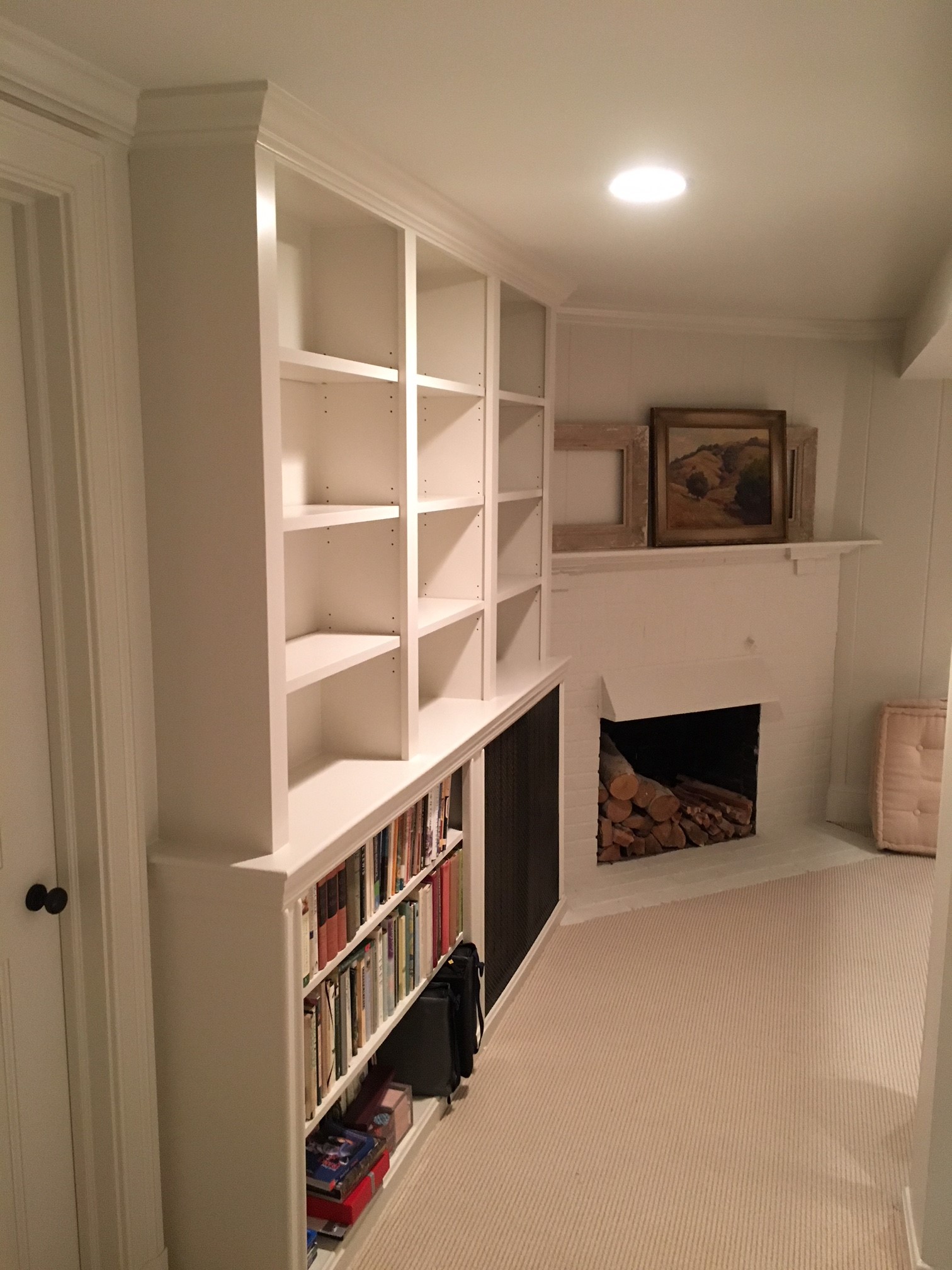
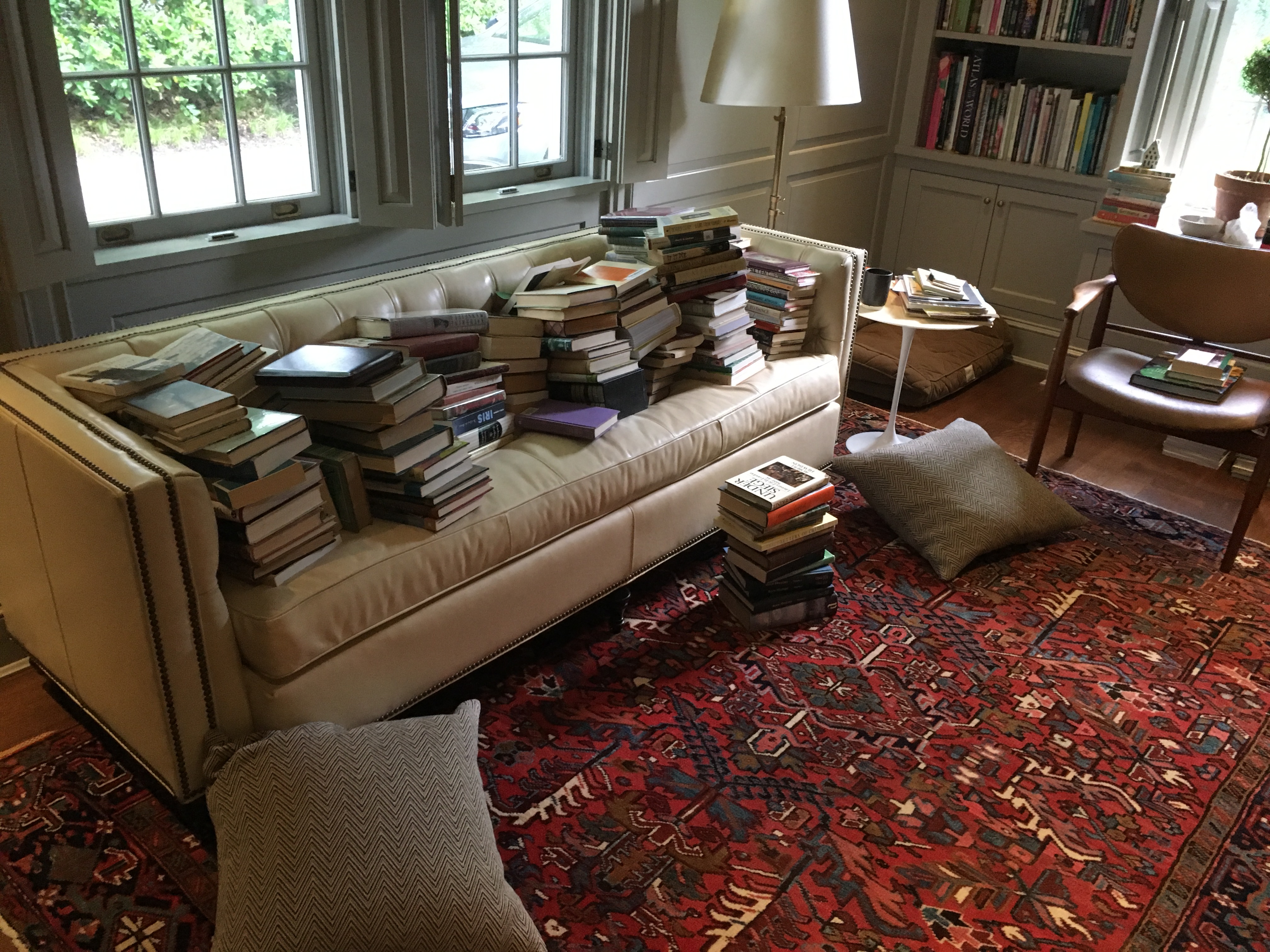
I love having books stacked up on the floor of my library. John doesn’t. What I didn’t realize when we decided to have some additional shelving built in the basement was that he was going to then consider floor stacks to be a thing of the past. Oh well. I guess we will cross that bridge when we come to it. For now, with my new shelves, I have some open space.

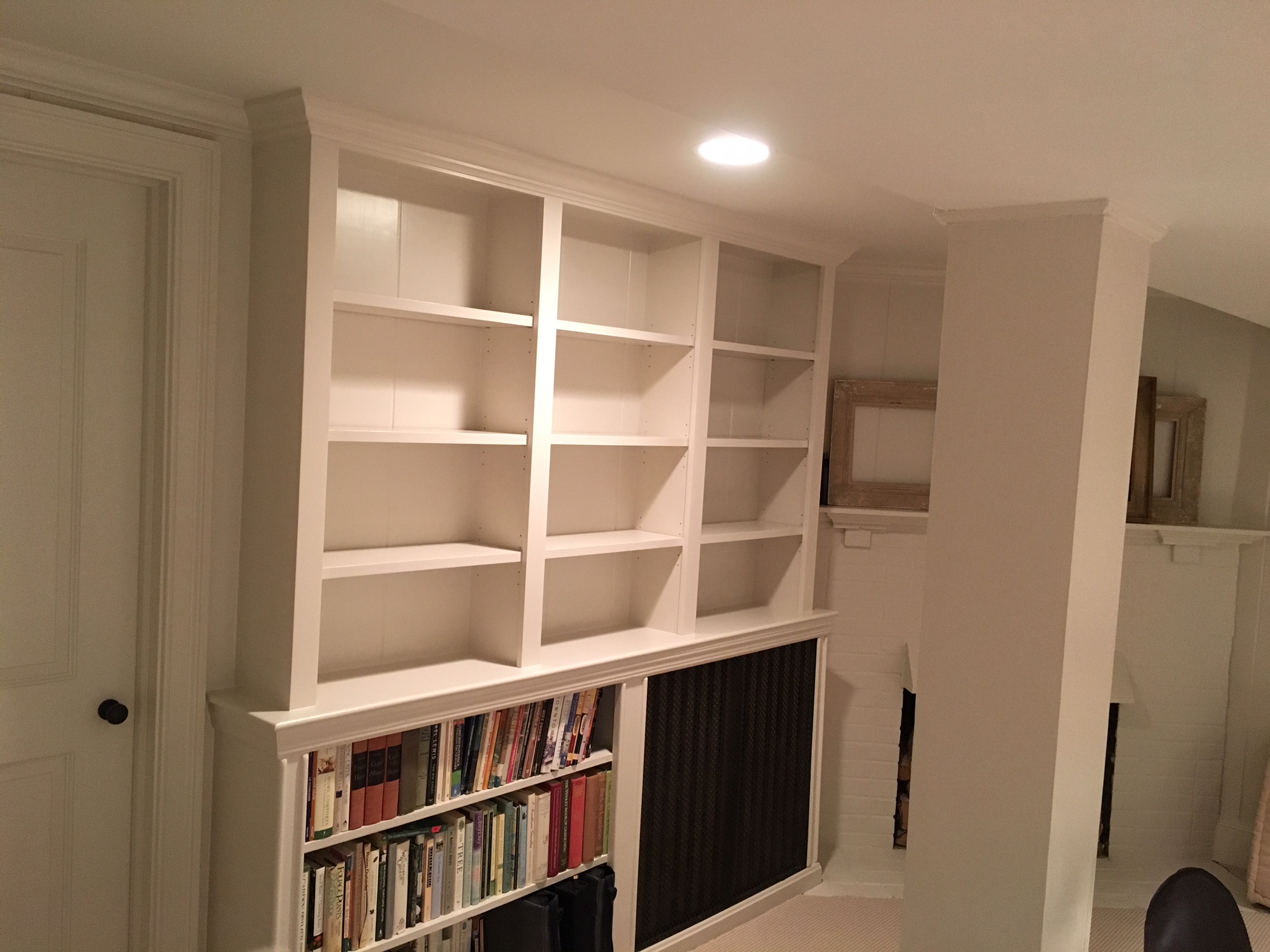
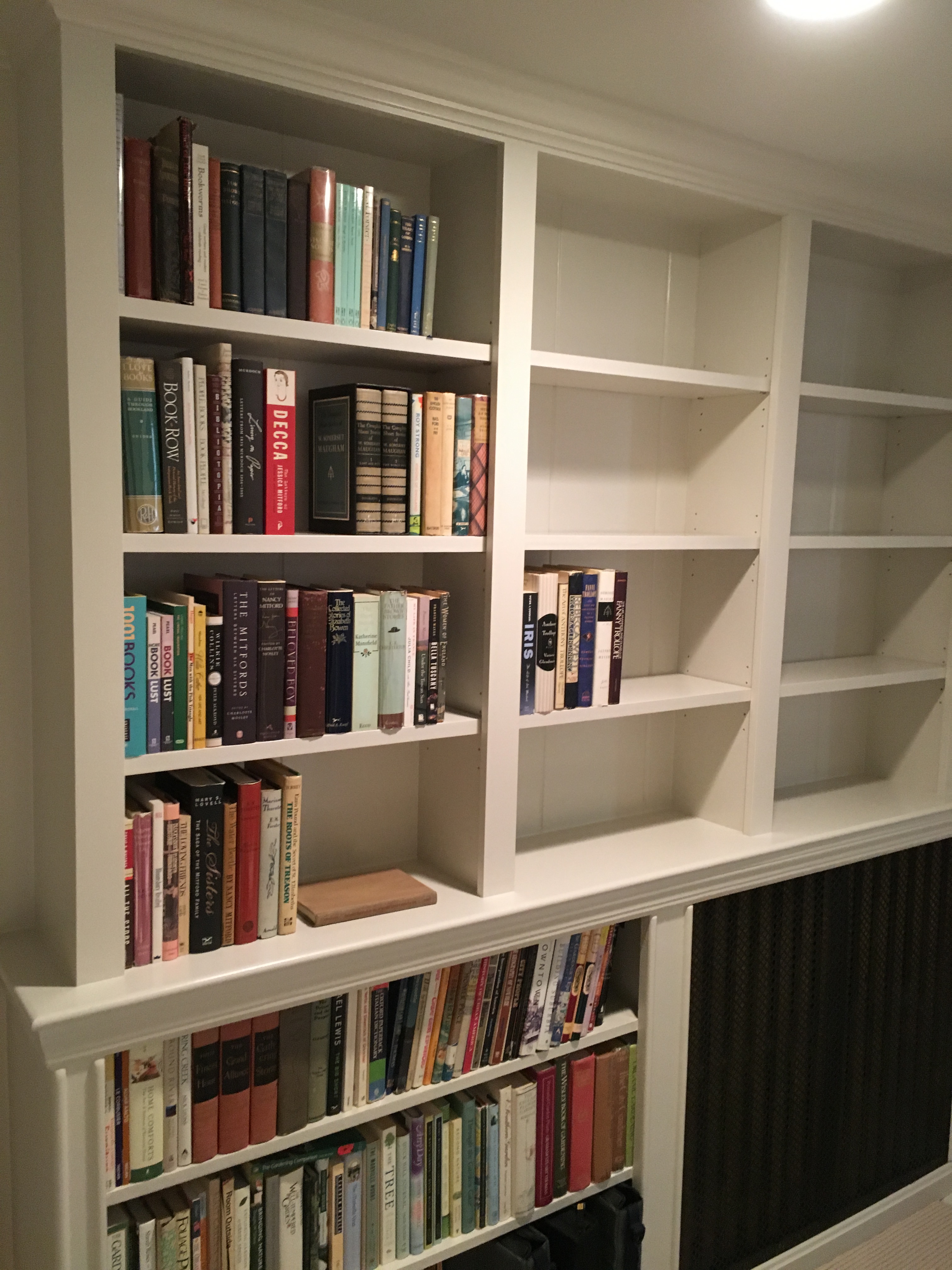
The bottom part of this unit was in the house when we moved in. Half of it is devoted to a radiator and the other half has some of my urban planning books, a small portion of John’s gardening books, guide books, CDs and some other odds and ends. The top part of the unit is brand spanking new.
The geometry and layout of the basement is funky enough that the three over two of the new configuration isn’t as jarring as it could be.
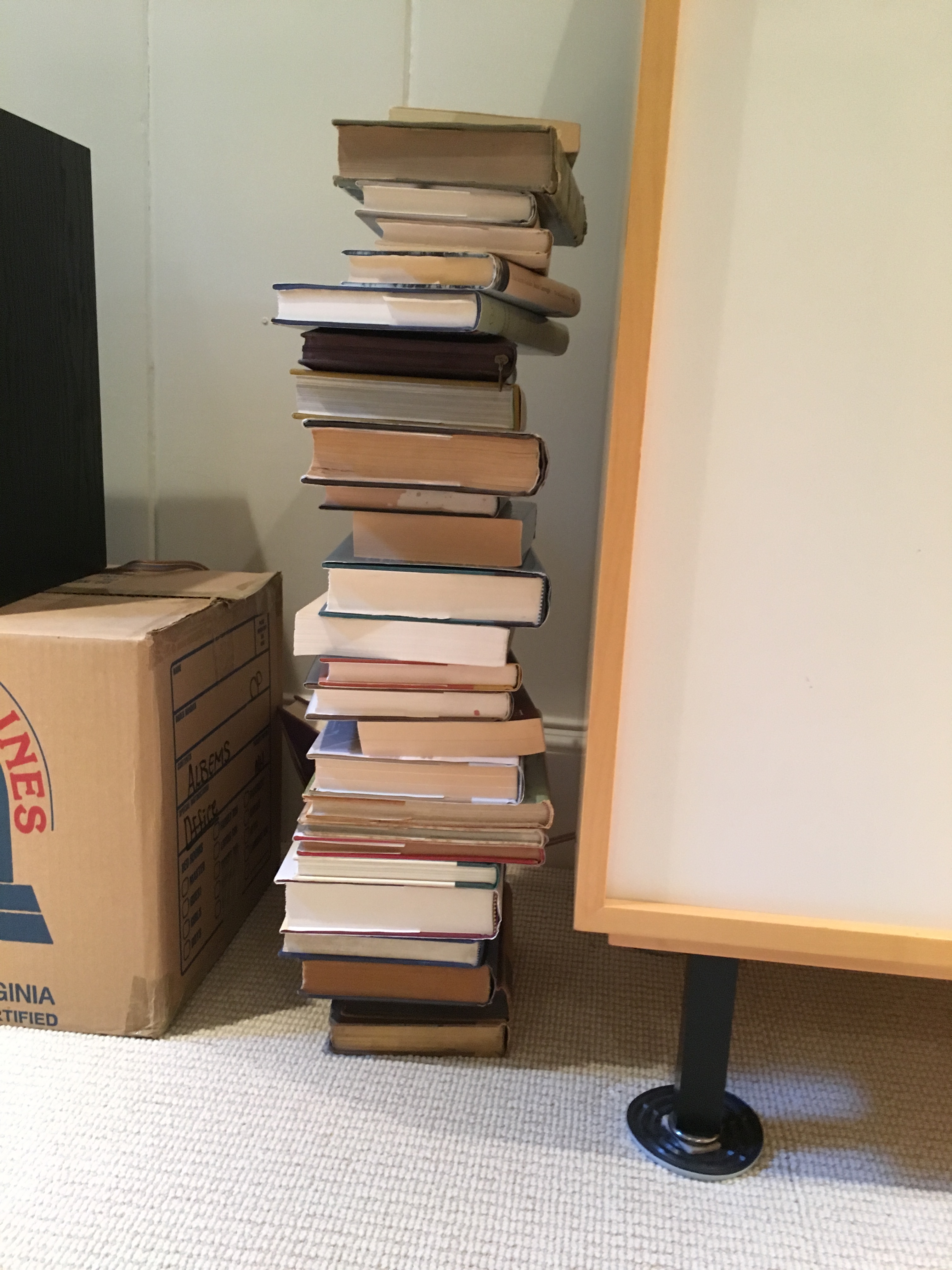
Surely this could get taller without falling over? Little hard to look at any of them though.
More orphaned books from the library that needed a place to go. The majority of the books that were to go on the shelves are non-fiction. Author memoirs and bios and books on books, books on royalty and the UK, etc.
So I got this far in the process of loading the shelves when I realized I didn’t like how things were going. The problem is that most of these non-fiction and short story collections are things that I am unlikely to read from cover-to-cover. They are the types of books I want to dip into now and again. It seemed to me that if they were down in the basement, that kind of serendipitous browsing was highly unlikely.
So this is what I did: I moved the fiction that I have already read down to the basement. After many years of culling I am down to books that I truly believe I will read again, but I don’t need to see them on a regular basis. Even this, however, presented a problem. The new shelves didn’t have enough space to hold everything. My OCD brain needed criteria for leaving some of that already read fiction upstairs. So I decided to leave those books by authors whose work I have a lot of. So all my 24 Brookners and my Shutes and Sartons and a few others stayed up in the library.
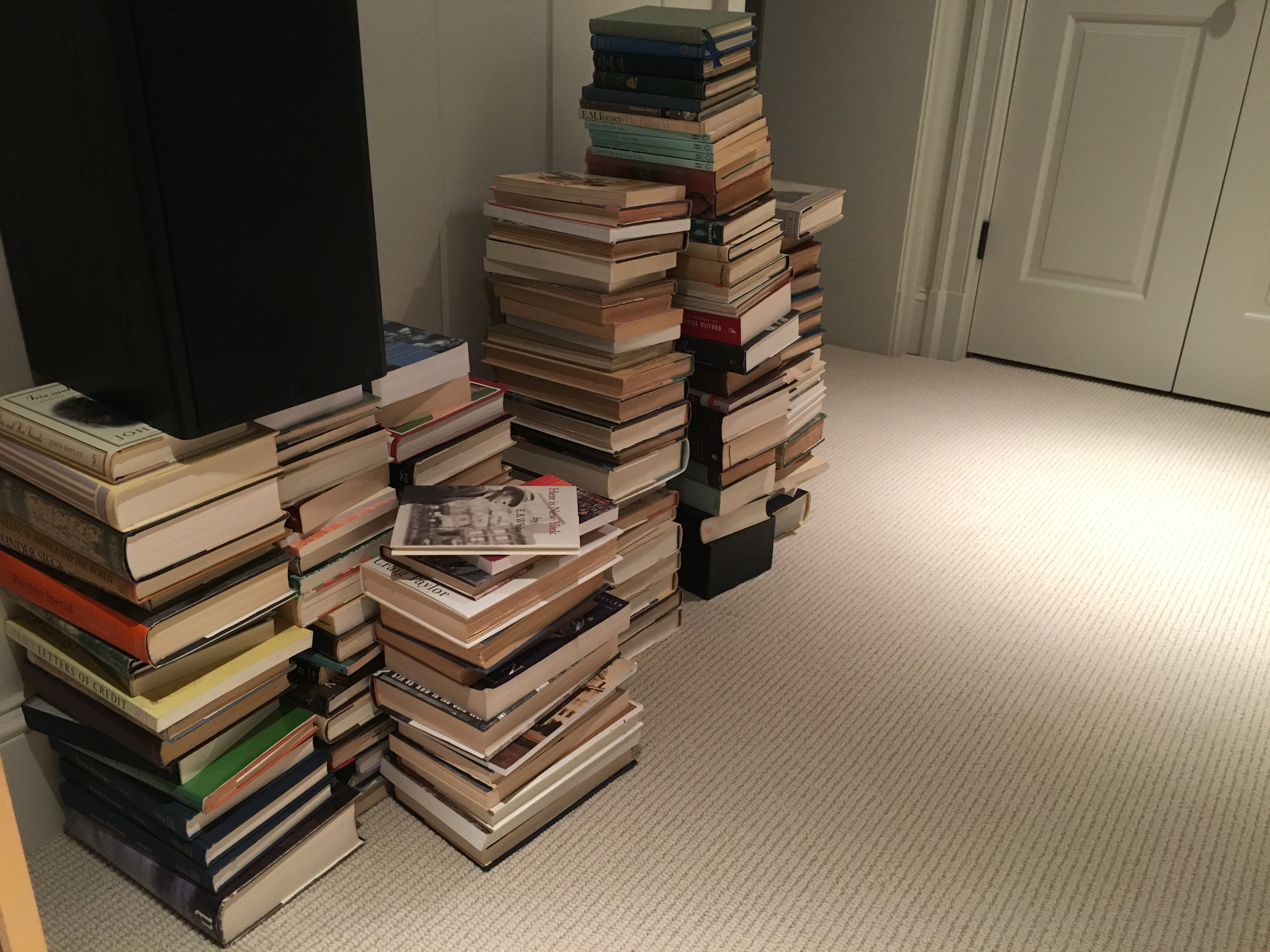
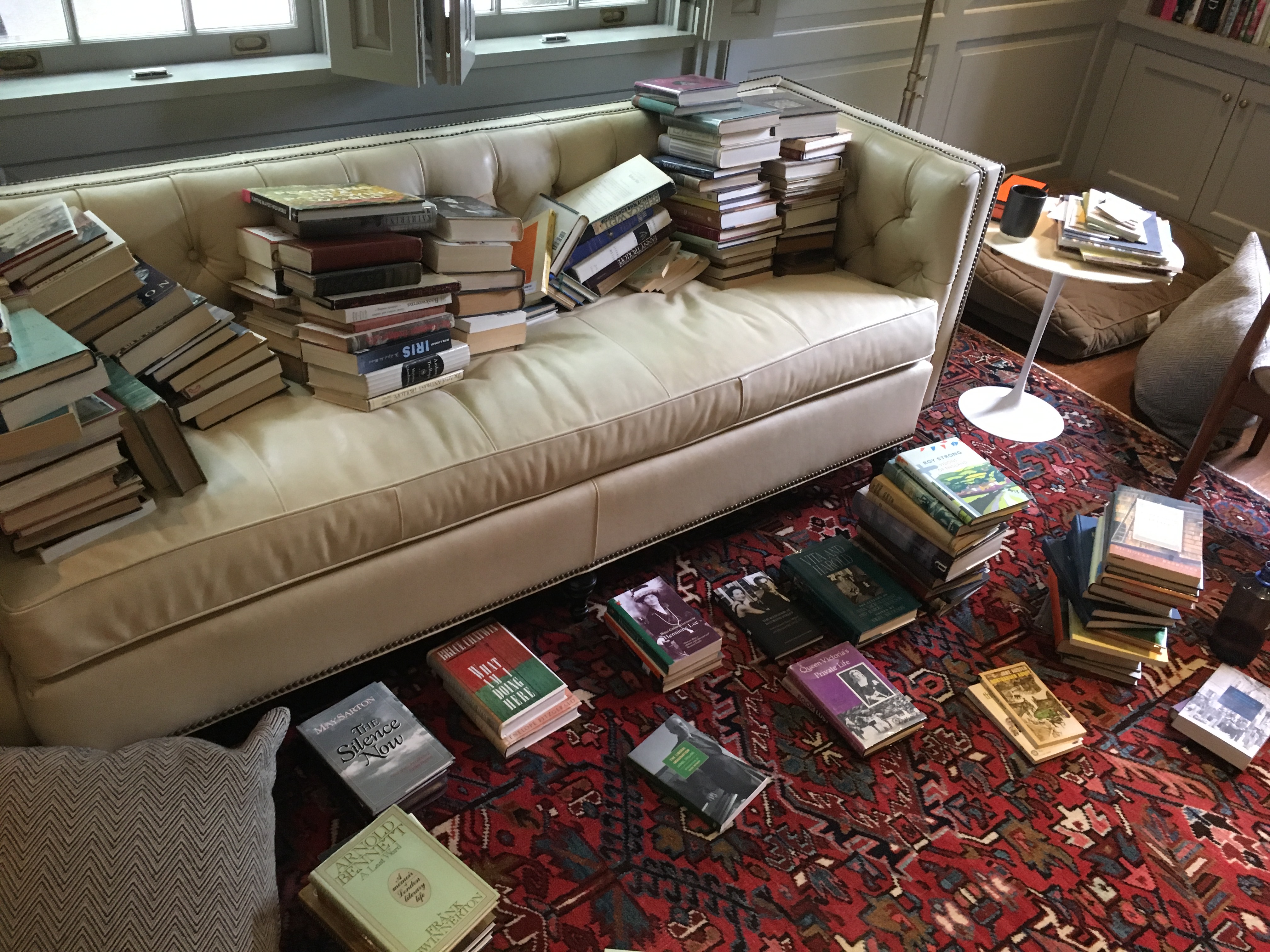
This is what it looked like when I got the non-fiction, my reference library, up to the library. It was at this point that John needed some smelling salts.
Things got worse before they got better. Most of what you see towards the right is my chronological TBR shelves. the emptyish area on the left contains my author and publisher fiction that I have read that didn’t make the trip down to the basement.
Organizing my non-fiction was not the easiest thing to do. There was enough crossover between categories that all attempts to have an iron-clad classification system were pretty frustrating. I wanted all my volumes of letters in one place, but then I had the urge to have letters of one author next to their memoir or bio or some other author-related volumes. And then the volume of Gustav Mahler’s letters. I wanted to put them with my books on music. Did books on the Bloomsbury Set go with my books on books or with my books on England? In the end I did a very rough job of organizing them. No doubt another rainy Saturday will take care of that.
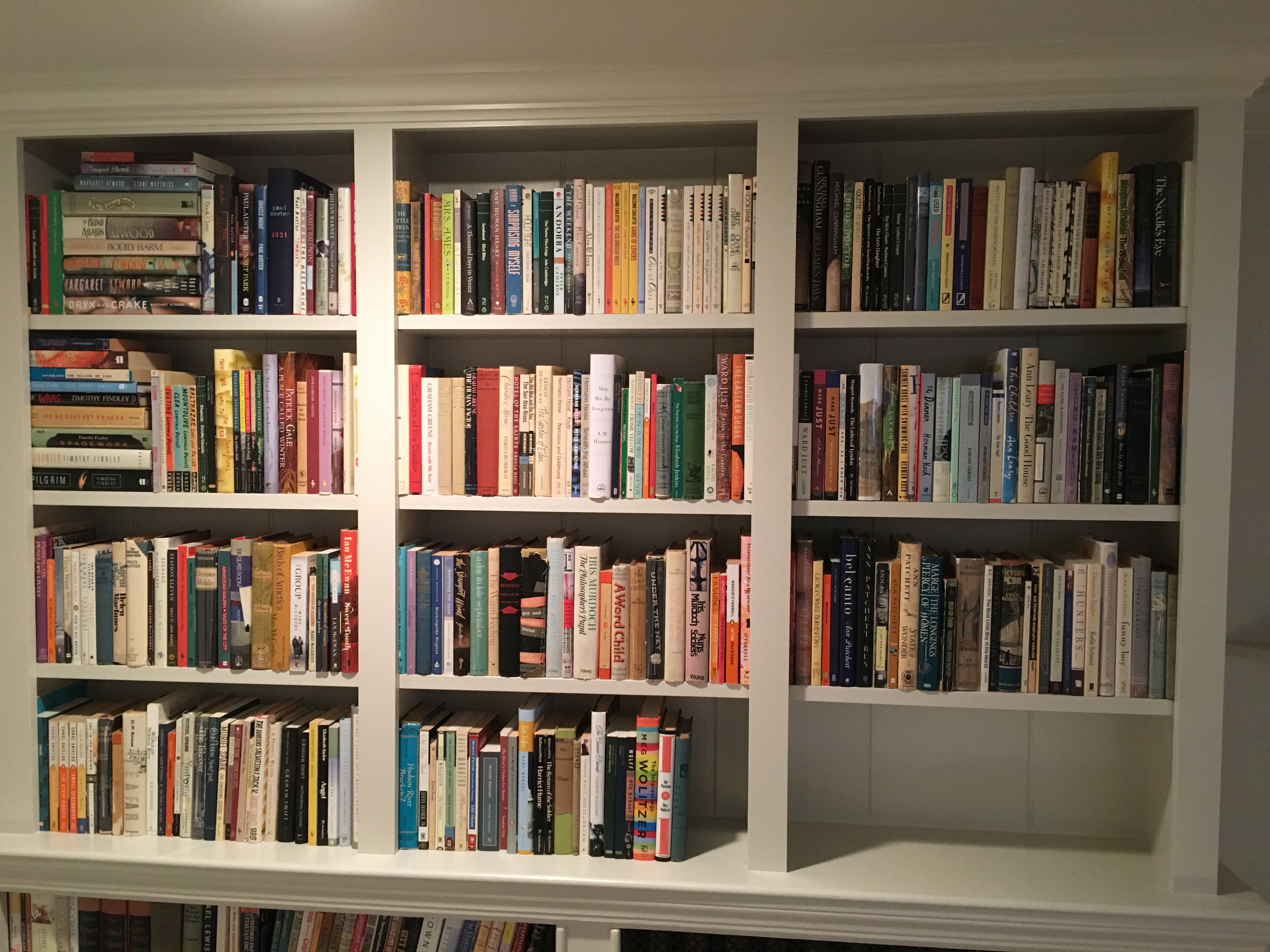
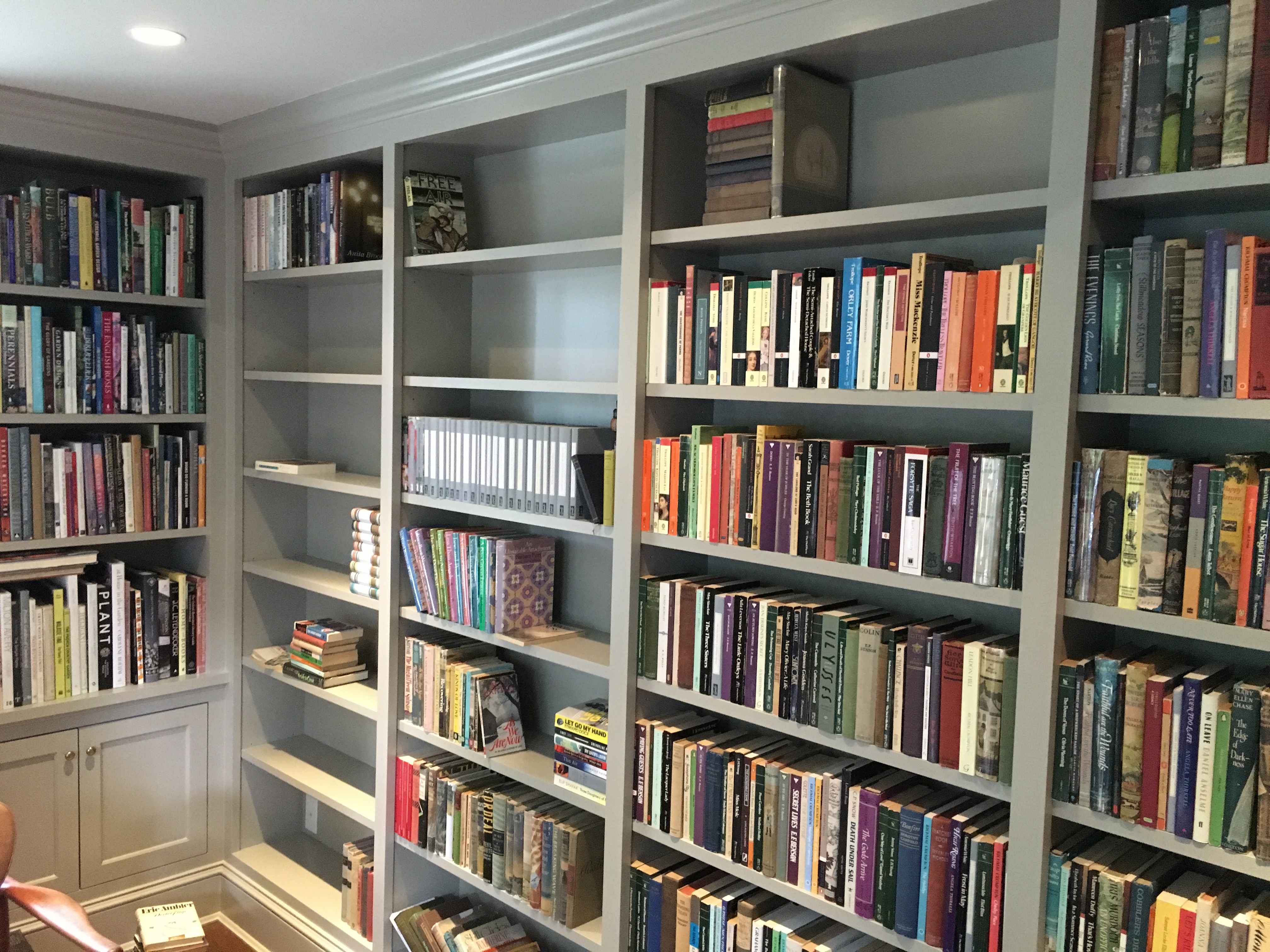
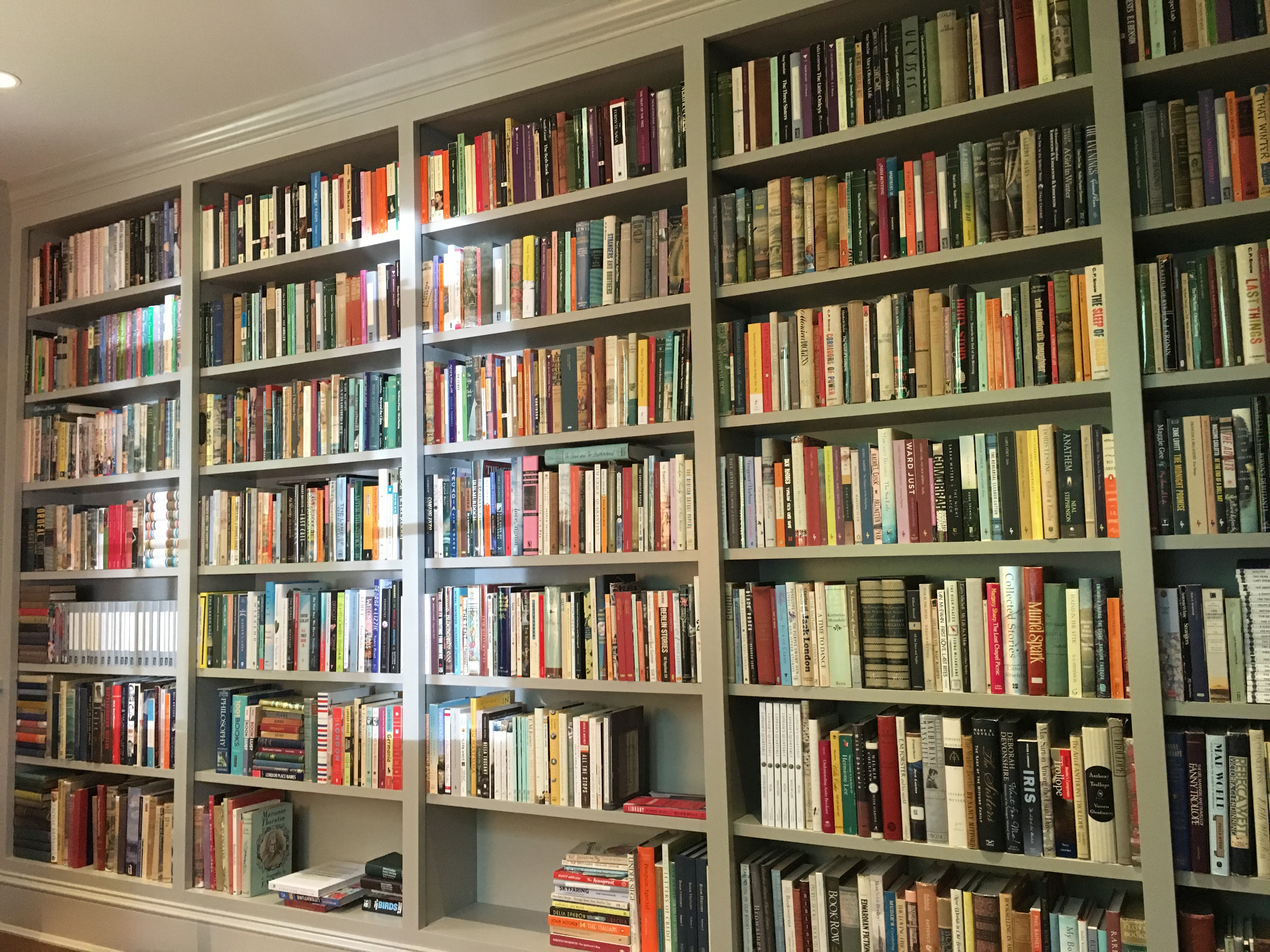
And here is the final mishmash. Books I have read that didn’t go downstairs take up the top five shelves on the left-most bay. The top four shelves of the four right-most shelves contain my TBR in chronological order. Row five has a bit of that as well as my short story collections. The rest is all of my higgedly piggledy non-fiction that I am happy to have back in the library. You never know when I will want to look at my 1950 Street Atlas of London. Or maybe I need to peek into one of the two bios I have of Fanny Trollope. Nice to have it all close at hand. For shelf voyeurs, this photo enlarges pretty nicely if you click on it. And just look at all of that empty space.

TJ Booker


There has been  a lot of talk lately about the Golden Booker. In celebration of 50 years of the Booker Prize they have decided to take what a panel of judges considers to be the best Booker winner from each decade and pit them against each other. I’m not paying too much attention to who they have picked for the short list. I’ve read a fair number of Booker short-listed books, but not that many winners and I doubt I would agree with the panel anyway.

And here is what I don’t get, the first award was given out in 1969, so why are they celebrating 50 in 2018? I’m as old as the Booker Prize and I will be damned if I am going to call myself 50 even one second prior to my birthday in 2019.

What I have compiled below is a top 10 list of all of the Booker short-listed novels I have read.  Since my list is made up not just of winners but of short-listers, I’ve noted in brackets if a short-lister was also a winner.

Top 10

1. Quartet in Autumn by Barbara Pym 1977
2. On Chesil Beach by Ian McEwan 2007
3. The Sense of an Ending by Julian Barnes 2011 [winner]
4. Oryx and Crake by Margaret Atwood 2003
5. The Driver’s Seat by Muriel Spark 1970 (Lost Booker)
6. The Handmaid’s Tale by Margaret Atwood 1986
7. Hotel du Lac by Anita Brookner 1984 [winner]
8. 4 3 2 1 by Paul Auster 2017
9. A Month in the Country by J.L. Carr 1980
10. The Glass Room by Simon Mawer 2009

Huh. This list surprises me as much as it may surprise you. Pym is in the top spot because I find her writing to be the result of literary alchemy. Others can write well, but she has a quality, an underlying sparkle and shimmer that all the other fine writers that follow cannot match–even though they may actually be better writers. Both On Chesil Beach and The Sense of an Ending really hit me in an emotional way. When I first created this top 10 list I was surprised how high up I put the Barnes, especially as  it knocked out some real heavyweights in the Hogglestock Pantheon. The two Atwoods and The Driver’s Seat are clever in a way that none of the others in the top 10 are. A Month in the Country is such a perfect little gem it is hard to believe it is as recent as it is. 4 3 2 1 and The Glass Room are both just amazing story telling. In the case of Mawer I feel The Glass Room really outshines his other fiction.

quite enjoyable

Bruno’s Dream by Iris Murdoch 1970
Heat and Dust
by Ruth Prawer Jhabvala 1975 [winner]
The Road to Lichfield by Penelope Lively 1977
The Sea, The Sea by Iris Murdoch 1978 [winner]
The Bookshop by Penelope Fitzgerald 1978
Offshore by Penelope Fitzgerald 1979 [winner]
According to Mark by Penelope Lively 1984
Moon Tiger by Penelope Lively 1987 [winner]
The Gate of Angels by Penelope Fitzgerald 1990
The Stone Diaries by Carol Shields 1993
Grace Notes by Bernard MacLaverty 1997
Disgrace by J.M. Coetzee 1999 [winner]
Unless by Carol Shields 2002
Satin Island by Tom McCarthy 2015

There is no way that any Penelope Fitzgerald, Penelope Lively, or Carol Shields would ever fall below the Quite Enjoyable category.

enjoyable

The Nice and the Good by Iris Murdoch 1969
The Public Image by Muriel Spark 1969
A Bend in the River by V.S. Naipaul 1979
Midnight’s Children by Salman Rushdie 1981 [winner]
The Comfort of Strangers by Ian McEwan 1981
Small World by David Lodge 1984
Nice Work by David Lodge 1988
The Remains of the Day by Kazuo Ishiguro 1989 [winner]
Cat’s Eye by Margaret Atwood 1989
Amsterdam by Ian McEwan 1998 [winner]
Headlong by Michael Frayn 1999
The Blind Assassin by Margaret Atwood 2000 [winner]
Never Let Me Go by Kazuo Ishiguro 2005
Swimming Home by Deborah Levy 2012
A Spool of Blue Thread by Anne Tyler 2015

enjoyable adjacent

In a Free State by V.S. Naipaul 1971 [winner]
The Folding Star
by Alan Hollinghurst 1994
Brick Lane by Monica Ali 2003
The Sea
by John Banville 2005 [winner]
Exit West by Mohsin Hamid 2017

Meh

Oscar and Lucinda by Peter Carey 1988 [winner]
Utz by Bruce Chatwin 1988
The English Patient by Michael Ondaatje 1992 [winner]
Remembering Babylon by David Malouf 1993 [winner]
The God of Small Things by Arundhati Roy 1997 [winner]
In the Country of Men by Hisham Matar 2006
Eileen by Otessa Moshfegh 2016
Lincoln in the Bardo by George Saunders 2017 [winner]
Autumn by Ali Smith 2017

Unless I missed it, it kills me that Bruce Chatwin’s On the Black Hill was never shortlisted. One of my favorite books and far better than Utz. I started off really enjoying Oscar and Lucinda but then it got very boring for me. I pretended to enjoy The English Patient back when I first read it (prior to film being made) but I think in retrospect I would probably hate it.

painful / tedious

The Line of Beauty by Alan Hollinghurst 2004 [winner]
How to Be Both
by Ali Smith 2014
A Little Life by Hanya Yanagihara 2015

It’s a mystery why April was thrilling

April was kind of a weird reading month for me. The three books I liked best were mysteries/thrillers, which is not normally my cup of tea. Actually, I probably should stop saying that because it has become clear to me over the past couple of years that as long as it is the right kind of mystery/thriller, I actually pretty much love them. It just needs to be somewhat old fashion, low to no blood, Europe helps, extra points for papers, archives, books, details, etc. You get the picture.

Here’s my month of April in order of most enjoyable to least enjoyable.

Brat Farrar by Josephine Tey
People who like older mysteries are always telling me how much they like Josephine Tey and how good Brat Farrar is. Well they were right. Having this one under my belt I feel like Tey will be a resource for me in future. Kind of the antidote to Carlotto (see below).

Doctor Frigo by Eric Ambler
Ambler never disappoints. Published in 1974, this time Ambler’s perfect political thriller takes place in Central America rather than central Asia or central Europe. Ernesto (Dr. Frigo) is enlisted to help install the next leader of his country, who also happens to be a man who was responsible for killing Ernesto’s father some years previously.

The Goodbye Kiss by Massimo Carlotto
Except for the Europe part, Carlotto’s hardboiled crime novels don’t really fit the parameters I described above. And they are so damn sexist. The way he treats women is just appalling. I don’t know how a non-misogynist could write this kind of stuff. Having said that, I really enjoy reading Carlotto’s books. I just wish he didn’t have to be such an asshole.

A Day in Late September by Merle Miller
An American writer (or was he a painter? I forget, it’s been a month) is back in the US and hopes to take his teenage son back with him to Europe. But first he has to convince his ex-wife and her highly competent and wealthy husband. He also needs to convince his mistress that she needs to finally break with her husband. In doing so we are introduced to a reserved but secretly scandalous, 1950s, east coast social circle. It was my Merle Miller tweet that had Nancy Pearl tweeting me and even offer to send me a book. (You may recall she wrote about him in her first Book Lust volume.)

The Odd Angry Shot by William Nagle
A Vietnam War combat tale told from an Australian point of view. Nagle really makes you feel the heat and smell the stink.

Let Go My Hand by Edward Docx
A son, and eventually his two half brothers take their dying father to Switzerland where he wants to check out on his own terms. Road-trip, family drama, memoir. Good but not great.

A Pale View of the Hills by Kazuo Ishiguro
I gave up this book a few years ago and only kept it because I liked the cover. I was set to send it on its way when I thought maybe I would give it a go. At first I was kind of enjoying it and couldn’t understand why I had given up on it previously. Overall it wasn’t bad, I just found it kind of boring. I think I may be done with Ishiguro. I liked The Remains of the Day as a film but found the novel a soporific. Never Let Me Go was interesting, the Buried Giant one doesn’t interest me much. It’s nice to let go of an author. Makes time for others.